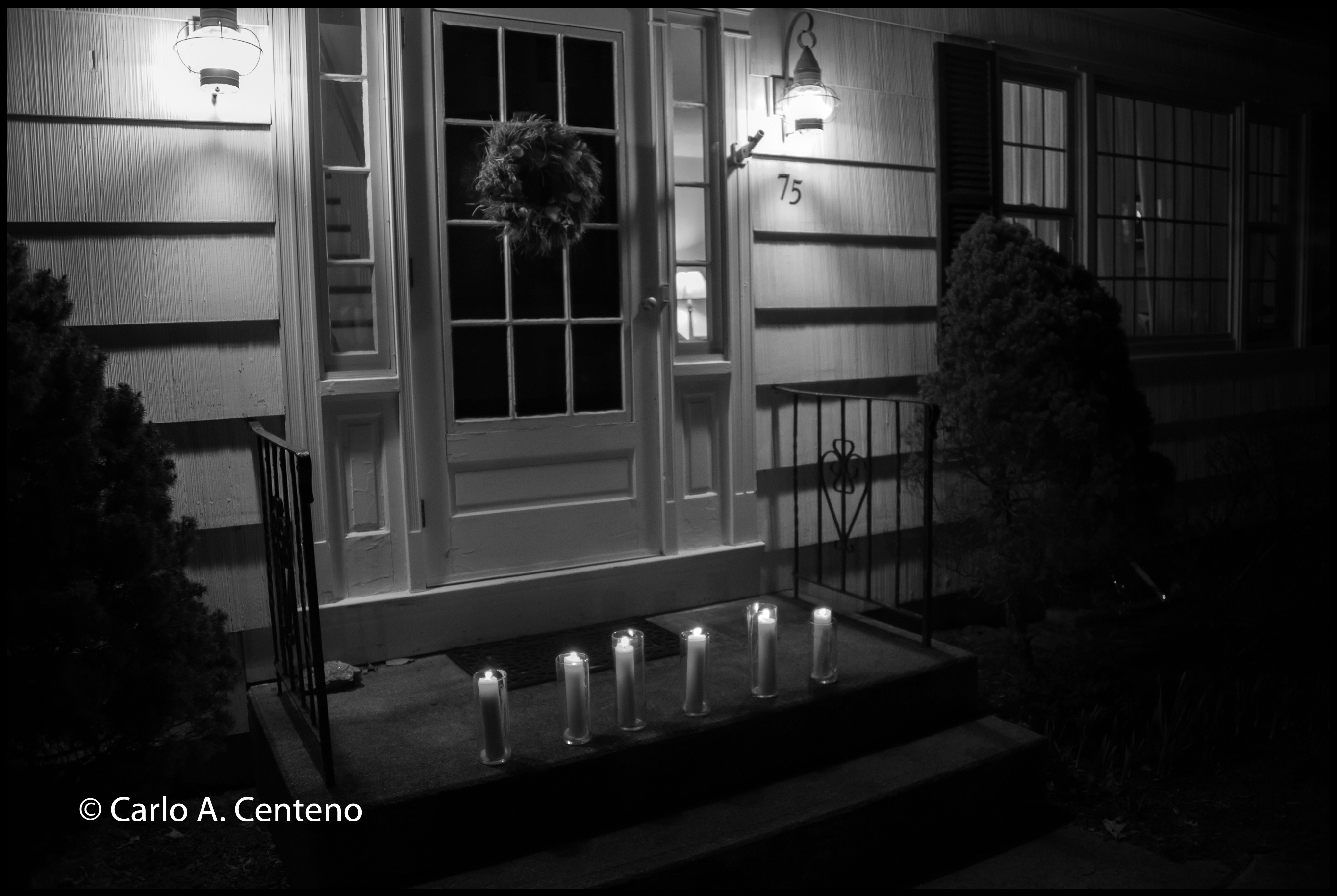
A good friend sent a text message saying that today—as a way of expressing our gratitude to first responders and healthcare workers—we should set some candles in front of our homes, and light them at 7:00 pm.
I know several healthcare professionals. Two couples are close friends. They’re bon vivants, emphasis on ‘bon’; we enjoy dining out [or in] to catch up, laugh, share and wonder about the vicissitudes that have changed the way we live, think, feel and behave. The friendships run so deep they’re essentially family. Actually, any one of these friends could take the place of a hundred bad relatives and acquaintances.
Three of the healthcare professionals on my roster are family. There’s my sister-in-law, an office administrator who works in a practice made up of general practitioners and hospitalists; my brother, an educator and primary care M.D., is up to his eyeballs in northern New Jersey; and my father, a retired vascular surgeon, is hunkered down in Florida.
Like most of us these days, we’re also hunkered down. We’re out of sight. In a metaphorical sense, if the virus can’t “see” us, then it can’t infect us. That’s very simplistic, but you get the idea.
Time and again I’ve heard comparisons to war, that the very people on the front lines are in a fight unlike any other. We know that, but we have very little visceral sense of the actualities playing out in crowded hospital rooms, hallways, ICU wards and all the places where the sick and the caregivers are equally overwhelmed. To say we’re being in the moment cannot compare to being there, to be immersed in the chaos unfolding right in front of you.
Whether you believe in karma or life existential, God, or something that is in effect, bigger than oneself, all that’s in motion is connected to each of us. Is it ironic that this pandemic is playing out during humankind’s most pious weeks on the calendar?
A lit candle—a universal and timeless symbol of hope, gratitude, peace, sorrow, love, contrition—is also an icon for life.
 Carlo Centeno