Japanese Wood Block Prints

I’m sure many know that life’s journey produces a few, “….well, I didn’t know you did that….” Through the years, I’ve worked with a lot of talented professionals who have made me look good because of their skills and various competencies. I’m a practitioner from the, let-them-work-from-their-strengths school. There are some things better left to those who really know what they’re doing.
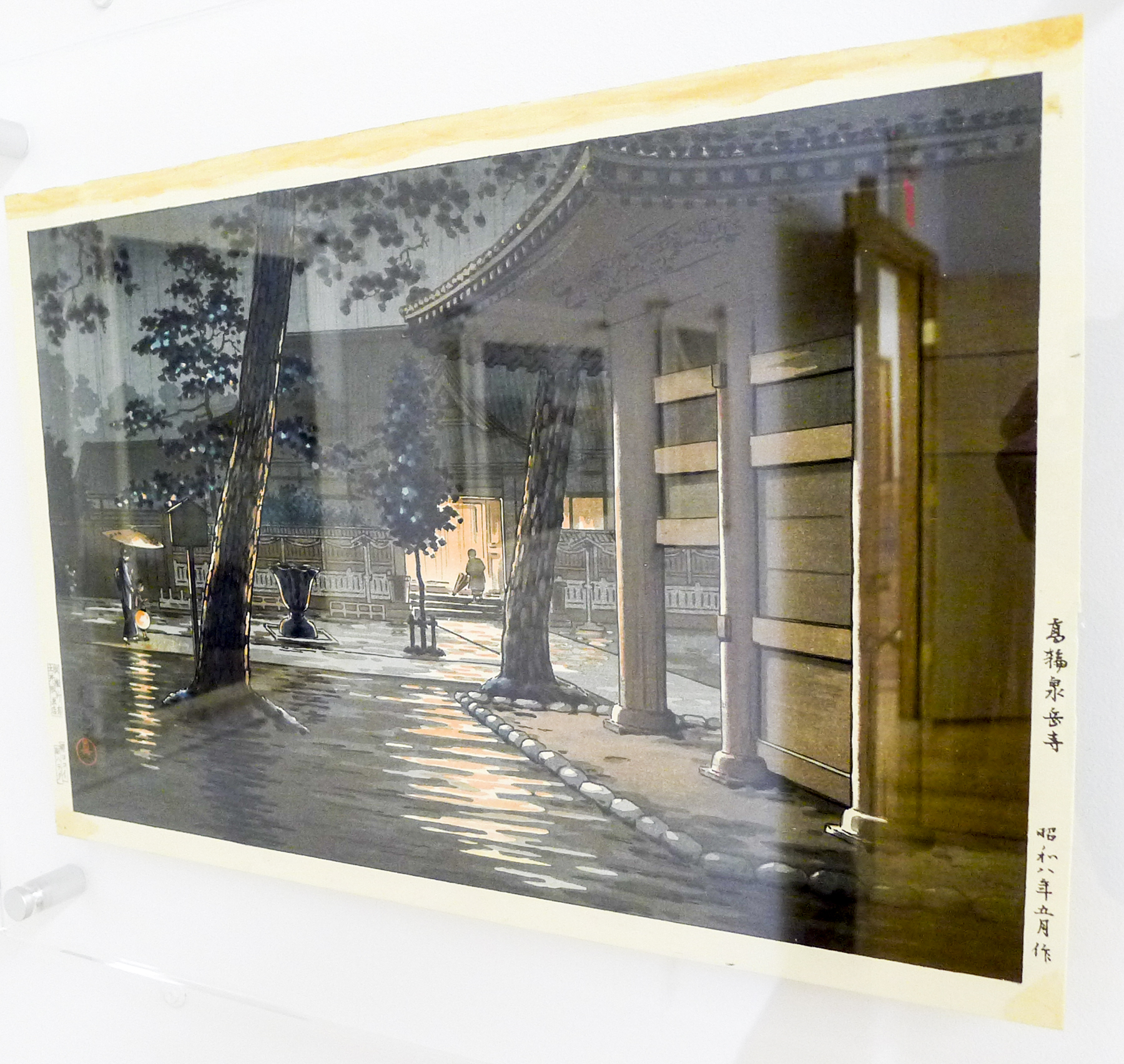
Recently at MAP Gallery in Easthampton, MA, David Kutcher, the principal of Confluent Forms, had a show of Japanese wood block prints. Together David and I have worked on corporate communication projects through his digital and website firm. He sent me an invitation to this opening. I knew something about his interest in Japanese prints, but as I told David at this show, I simply said, “…I didn’t know that you were involved with collecting actual Japanese wood block prints.” It’s a fascinating art form with a long-standing tradition that not many folks hear about, let alone having an opportunity to see an actual print.
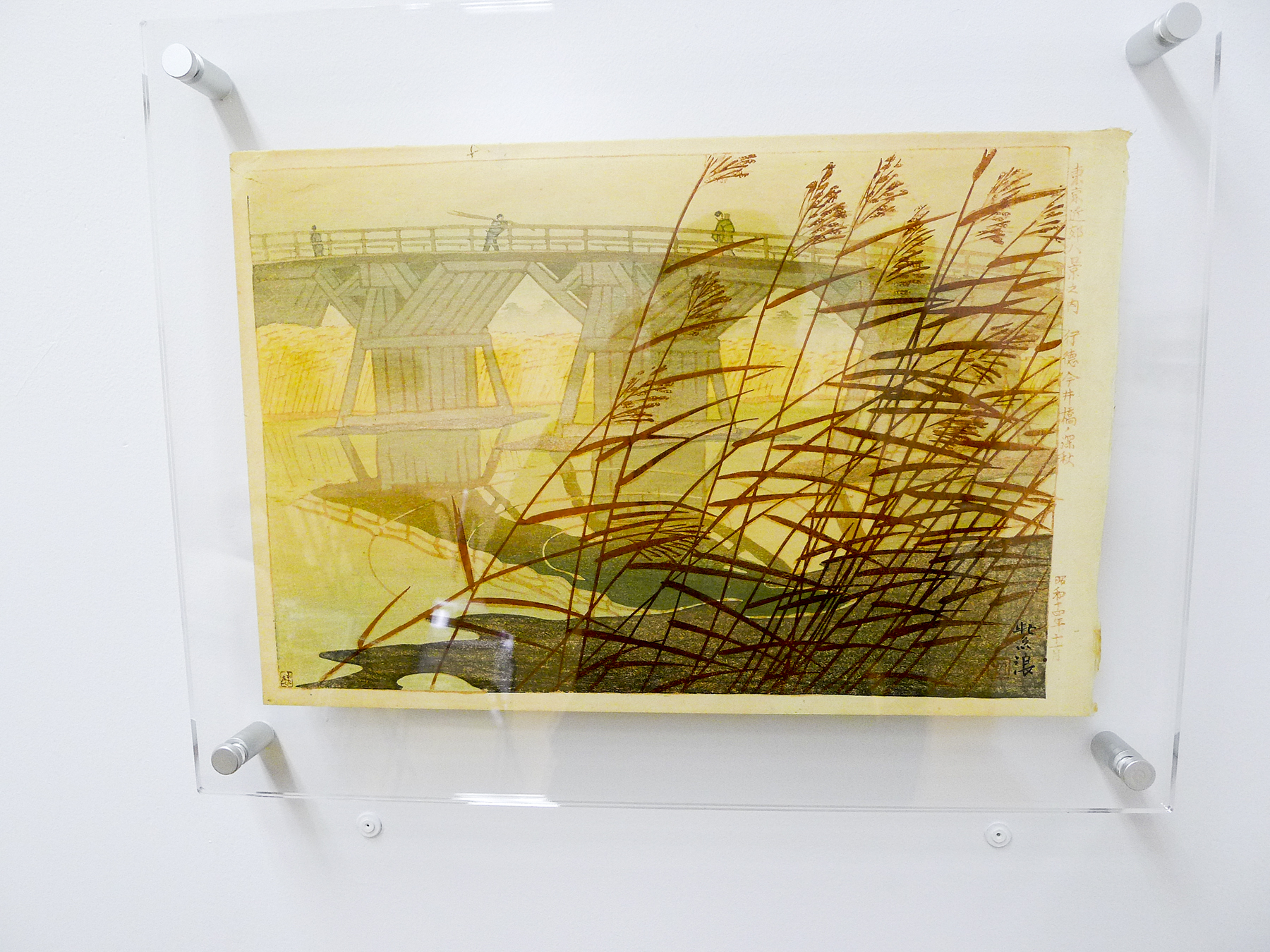
All pieces are original, some signed by the artists and others being initial production proofs that have an attraction all their own for aficionados and collectors. The details, colors and registration of the art are nothing short of incredible. I’m oversimplifying, but each color on the paper is made from an imprint from a series of wood blocks. If 4-colors are required, then 4 specific wood blocks containing details would be created. I wouldn’t be out of line if I thought the entire creative process was painstakingly purposeful and lengthy.
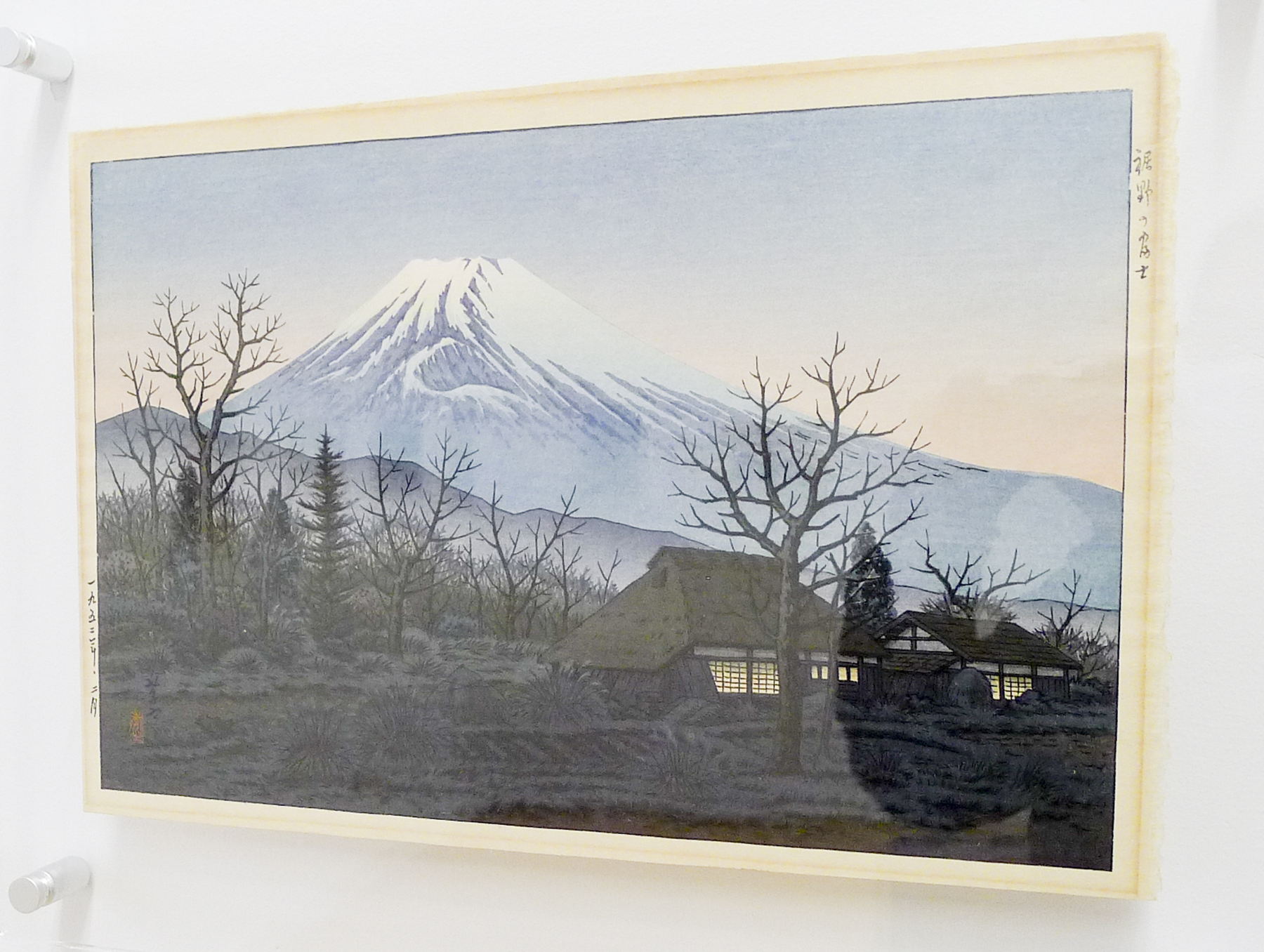
However, the end justifies the means. You need to see, even touch, one of these beautiful prints. Nothing compares to seeing these prints in person. It’s taken years for David to build a collection and working knowledge of the who’s who of this medium. In fact, his knowledge has been sought after by collectors, museums, art dealers and galleries.
Surprise! Surprise…!

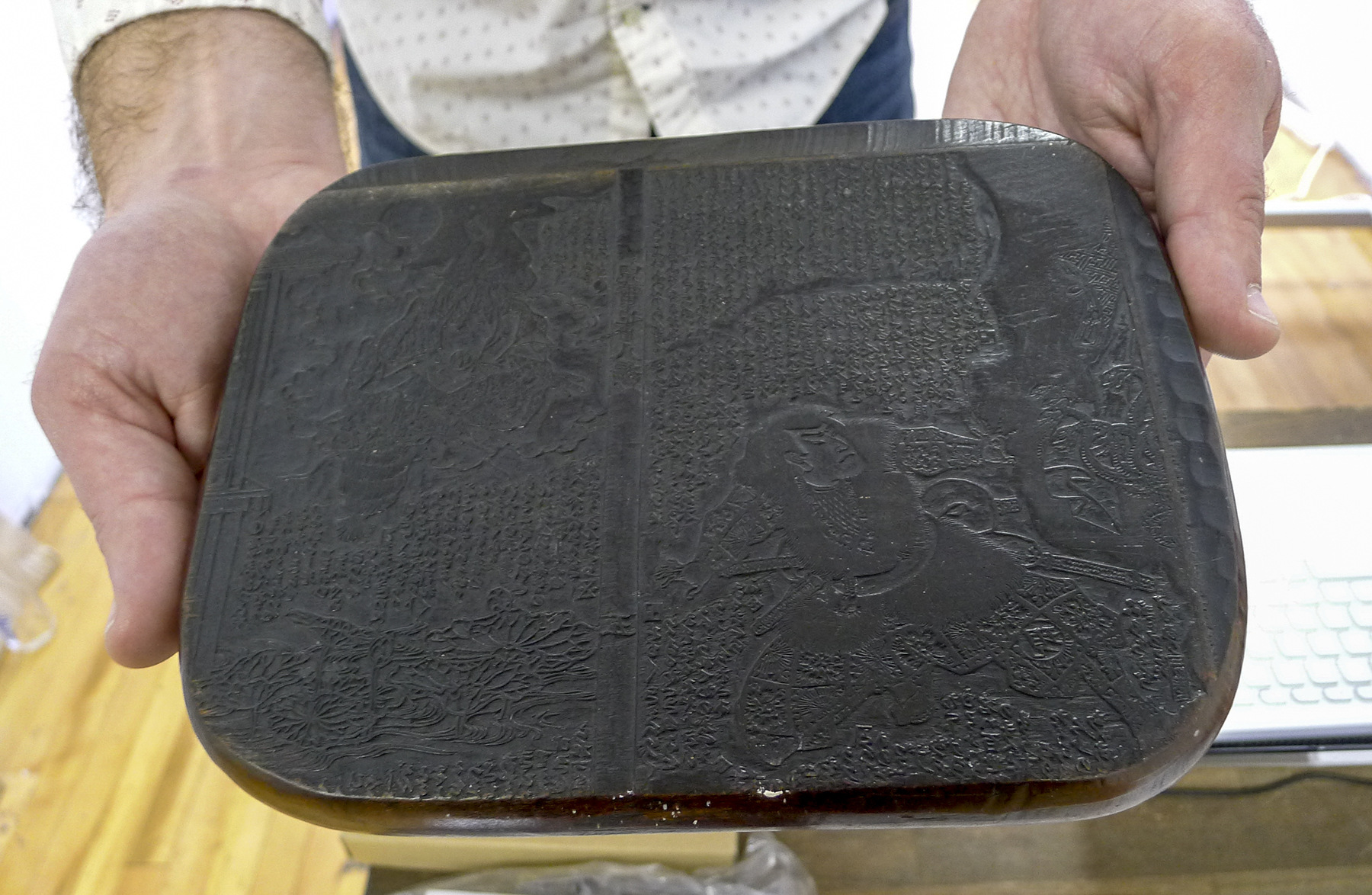
One of the more unique acquisitions he owns is a candy tray, a wooden candy tray. For years its sole function was just that. I can see how a family could use this pretty piece of wood as a repository for wrapped chocolate mints or lifesavers. However, it was more than just a pretty tray to hold a postprandial treat.
Flip it over and note the bottom was designed to purposely create a print. After scanning the block and tweaking the digital image for clarity and legibility, David did some research and discovered that the block he owned was part of a series that made up a leaflet or booklet.

The “candy tray” wood block and the cover of the leaflet that holds that page.

This was quite a find and a unique bridge tying both the finish artwork and a block used in its creation. While his day job keeps him quite busy, his time studying, collecting and marketing wood block prints is an endeavor that keeps his mind, body and soul in an enthusiastic and balanced way of managing life’s uncertainties.
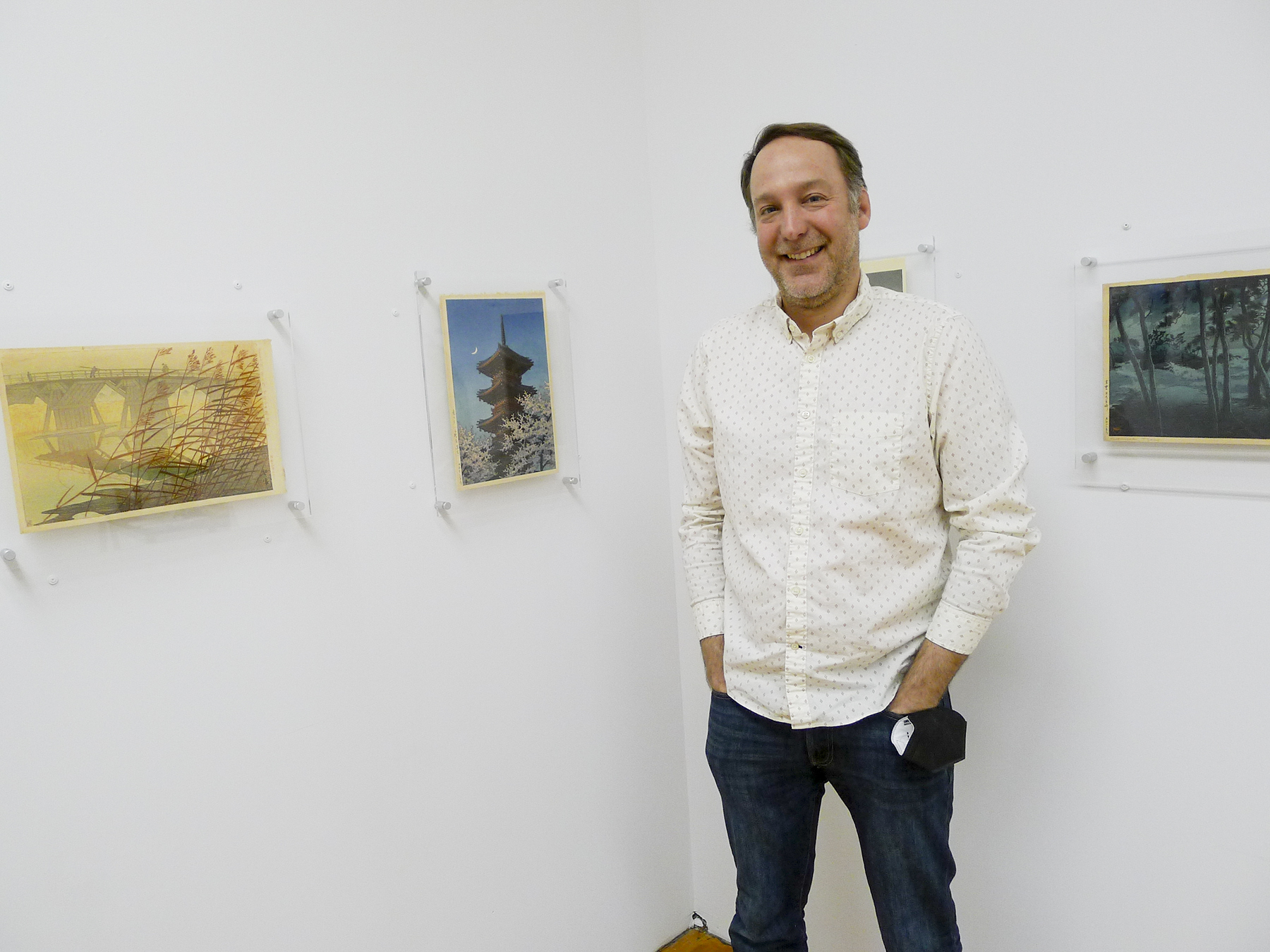
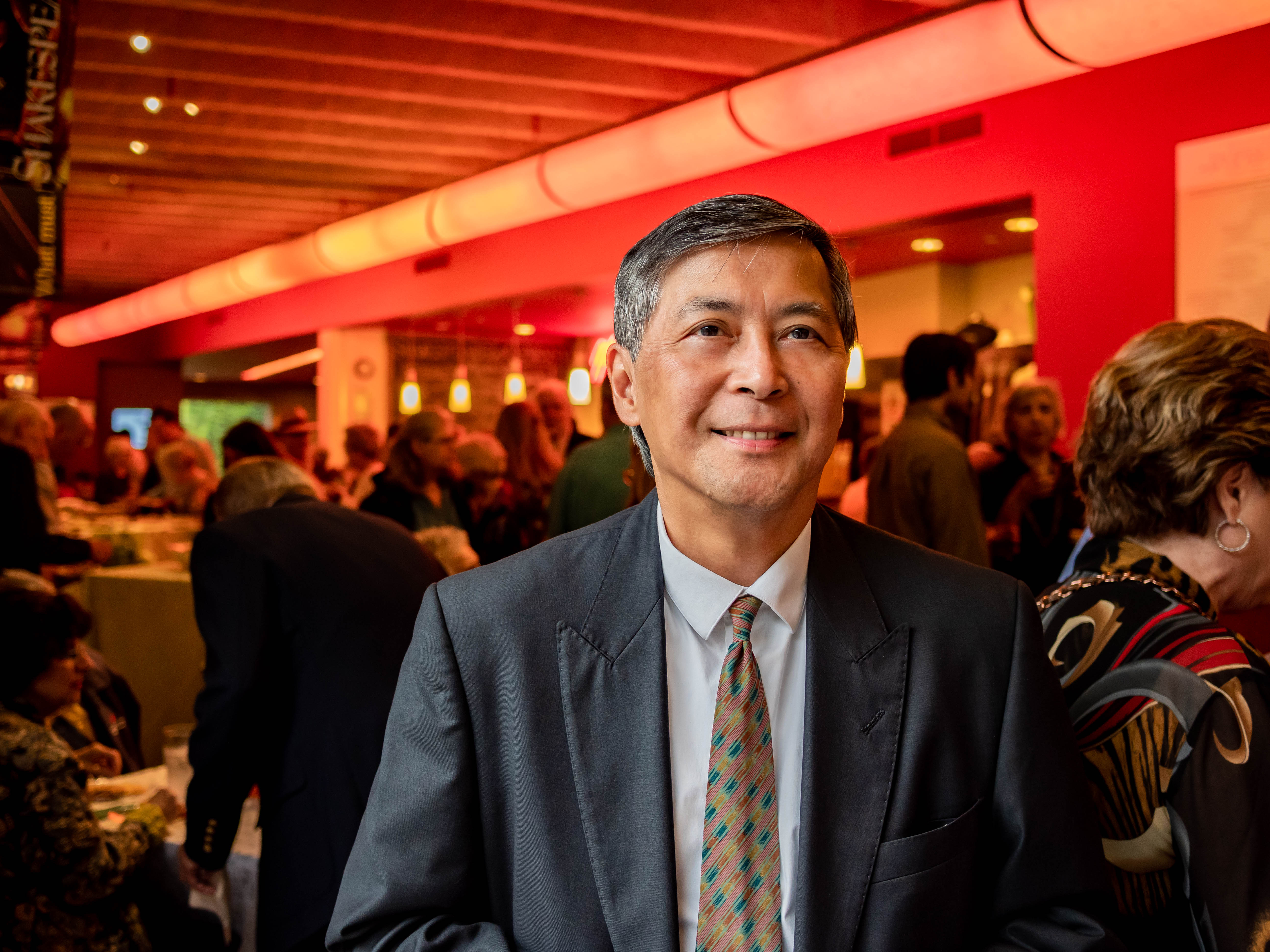
Mr. David Kutcher
Published
Categorized as POV

Analogies

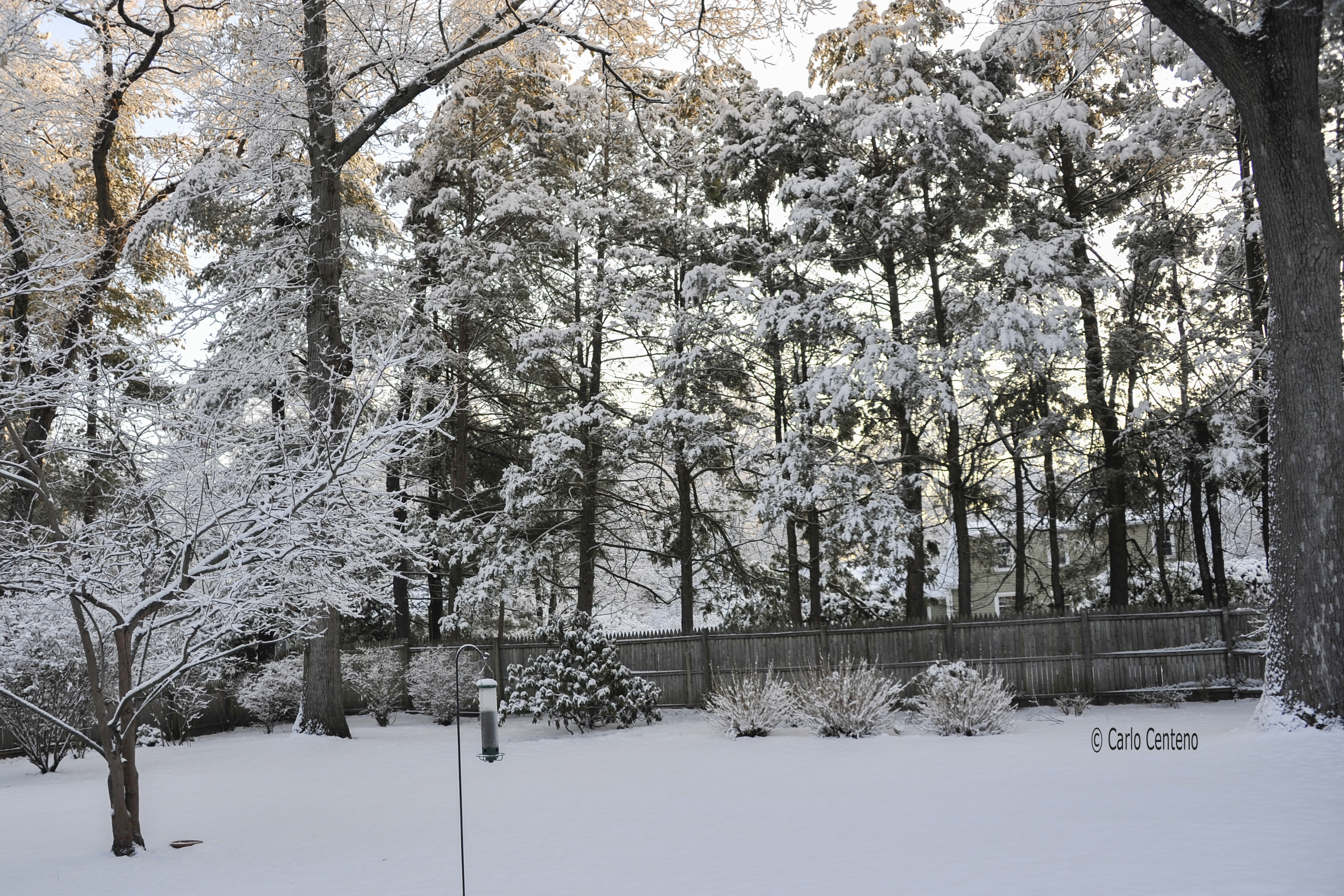
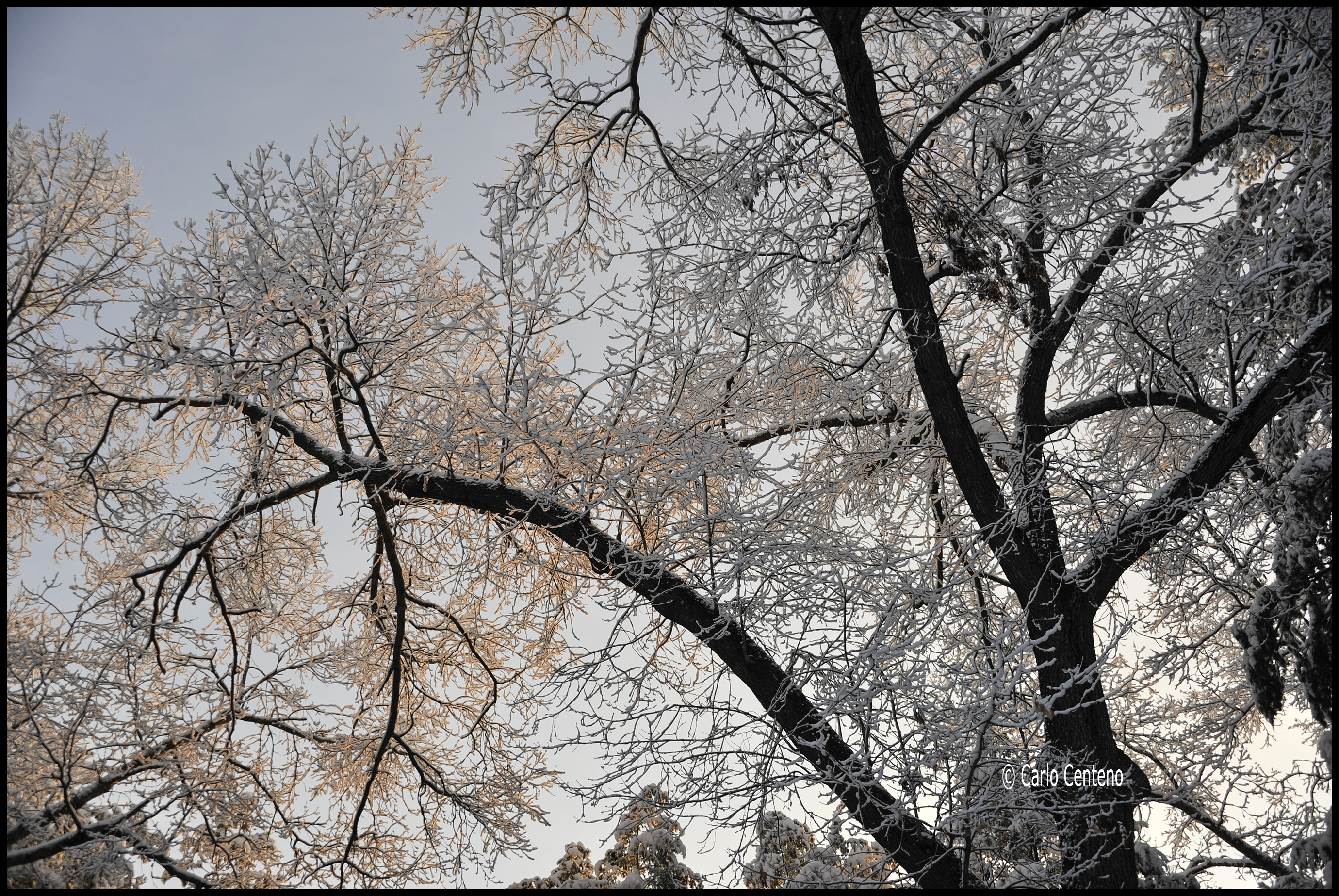
They’re all around us. Analogies are everywhere. This morning several analogies appeared after an overnight snow powdered trees, shrubs and bare ground. There is value in being part of your surroundings, and depending on your frame of mind and mood, the time spent can be cathartic. The morning’s analogies are fleeting, ephemeral. For the most part, the majority are short-lived.

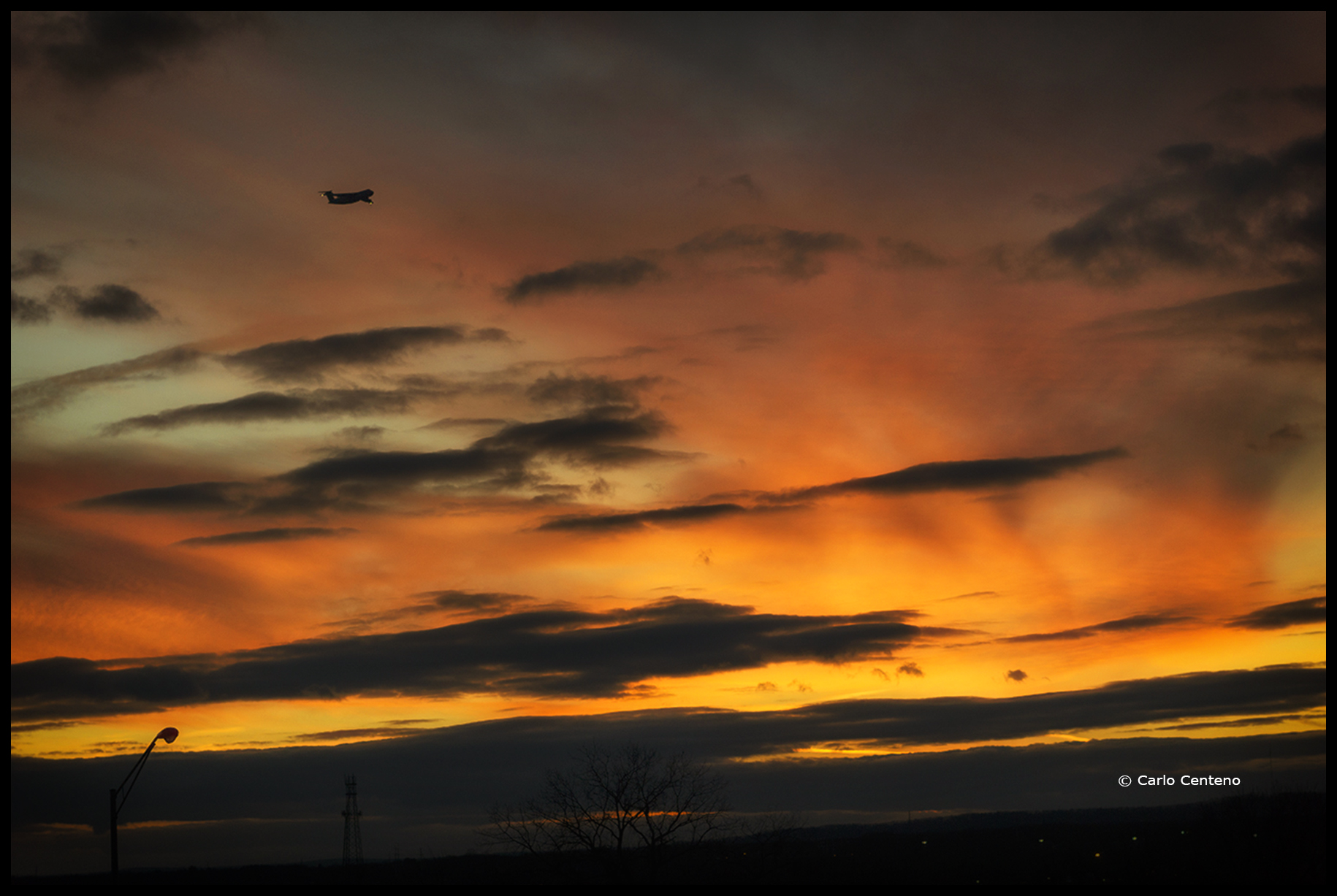
My waking-up-time leaves much to be desired as I totally missed a fiery sunrise. From a window in the dining room, the bold orange and red brushed across the eastern sky is a familiar calling card for this anachronism with a camera. However, by the time I was ready, the sky instead gave me an anticlimactic pale blue. Gone in the blink of an eye.

I’m reminded of the proverb, “He/she [my pronouns] who hesitates is lost.” I had lost my opportunity earlier this morning when I failed to get outside to photograph that spectacular burst of color. This adage comes from playwright Joseph Addison’s play, Cato in 1712, and its adaptation is as universal as any other truism.
I’m not the least bit surprised at the lesson the saying delivers. In an attempt at action and decisiveness, there seems to be a lot of hesitation. And when one hesitates, that window of opportunity often closes in short order.

Hesitation can infer caution just as it can suggest a lack of confidence. For the former, it means we’ve avoided some form of discomfort or harm, as for the latter, I believe that having little confidence is what causes most of us to choose not to do anything. Hesitation–whether in avoiding some perceived element of danger or wanting some level of certainty and sense of purpose–means either choice denies us any affirmation of what could have been.

After several minutes, the snow started falling away. Pine boughs loaded with snow started lifting just as the snow fell. Clumps dropped from many of the trees, the branches were once again dark and monochromatic against the blue sky. It seemed the snow vanished in the blink of an eye. Ultimately everything appeared as they were before: familiar though dark, even mysterious.

The fast-melting snow was like time running its course in the last minute of a hockey game or any other sporting contest. Was there an opportunity early on to change the game’s outcome? Ultimately it comes down to an either or decision. Actually, the third action is not to do anything at all, but the complexity of choosing inaction is an essay for another posting.

I’ve lost count of the moments I hesitated making a decision. Similarly, that count is lost on the moments when I did not hesitate, only to wonder if my action was perhaps just too fast.

Many things go pass us with nothing more than a slight pause of time. Sunrises, sunsets, snow melting, a game played in overtime and so on. Time for me to do something else.

From a Distance

……From a distance
You look like my friend
Even though we are at war.
From a distance
I just cannot comprehend
What all this fighting’s for.
From a distance
There is harmony
And it echoes through the land
And it’s the hope of hopes
It’s the love of loves
It’s the heart of every man
It’s the hope of hopes
It’s the love of loves
This is the song for every man.
God is watching us
God is watching us
God is watching us
From a distance.

Excerpt from the song, “From a Distance” by Julie Gold ©1985*
*Songwriter Julie Gold composed this song when she was working as a secretary at HBO. She wrote during her free time. The song has been covered several times by other artists such as Nanci Griffith and Bette Midler.

Springfield, Massachusetts

On a recent flight home, 2 songs came to mind. An epiphany of sorts became apparent as I looked down on Springfield, Massachusetts and Ski Sundown in New Hartford, Connecticut.

Ski Sundown in New Hartford, Connecticut

In light of the Ukraine-Russia war, it’s not a stretch to understand the effect of distance when watching something from afar. Things are not always as they seem, but up close, enough details emerge to create a clearer picture.
Most of us see what’s happening from a distance, from the safety of our screens playing out “breaking news” of the terror and the maddening reality of one country imposing its incorrigible intentions on an independent nation.

At 29,000 feet [8,839 meters]

At altitude, it’s easy to “not see” the actualities of what’s coming and going at ground level. And yet what impacts me the most is how the innocents and defenders suffer and die, of how the children struggle to understand this detestation that arrived from nowhere. Modern journalism can report events as visceral and undiluted, anywhere at anytime. In that sense, we see more than what we want to.

I leave this post with the words Enjolras sang during the scene At the Barricades, from the musical, Les Miserables.

Do you hear the people sing?
Singing a song of angry men?
It is the music of a people
Who will not be slaves again.

When the beating of your heart
Echoes the beating of the drums.
There is a life about to start
When tomorrow comes.

Les Miserables by Victor Hugo
Les Miserables, the London Musical, trademarked by Cameron Macintosh Overseas.

A Change

Yes, I made a change to this blog.

courtesy: Shakespeare & Co.

I’ve essentially distilled it down to 2 things: life with a pen in one hand, a camera in the other. I dropped the nav tabs on marketing, personal branding and emotional branding [that 3rd one, I’m not 100% certain of]. Did I do a screen capture of the previous home page before making these changes? Heck, no. And it doesn’t matter quite frankly.

A lot of my waking time is spent on marketing, which is well and good, but all marketing and no play makes this mortal’s life a bit one-dimensional, don’t you think? I might be struggling with idiopathic post-Superbowl advertising distress which is what likely prompted my actions regarding my blog tweak. Yes, the commercials were interesting, entertaining and in some cases worth remembering, but did you remember the advertisers, and if you did, which ones? Hence, my idiopathic distress, which prompted my attention to simplicity.

We have enough complexity in our world today; think Occam’s Razor, often referred to as the principle of simplicity.

In just the past 2 years, there’s been quite bit of change and we know still more changes are coming. In an abstract yet very real sense, change is always in motion. No sooner when one particular action or event “completes” a change, then somewhere else, another action or event changes.

And we know of some companions that are inseparable from actual change: the shadows of discomfort, frustration, ambivalence and cognitive dissonance that move us out of our comfort zone.
So, we resist or adapt. We deny or cope. We make the best of what’s handed to us and move on as we must.

When I allow myself a moment of observation in the present, or to live in the moment, I may see or sense a common attribute with change. We are creatures of habit, and most reactions to change are defensive: that’s not how things are done around here. The discomfort supports notions such as the saying, if it isn’t broke, don’t fix it. Granted, some actions and procedures may not be broken, but certainly many things can be improved.

No doubt the Hubble telescope still works, but humankind also possesses a good amount of, “so, let’s try this for a change….” in our quotients of intelligence and emotion. If we didn’t, then the amazing Webb telescope would never have been created. Change affords us an opportunity for improvement, the chance to move from the rote and familiar, to a condition of both collective and individual betterment.

Open your arms to change,
but do not let go of your values.

Dalai Lama

Published
Categorized as POV

Cold Light

I am an odd person out. I’m certain I shared this in a previous post, namely that winter, the shorter days, the snow and the cold don’t bother me the way I know it really bothers a lot of other people. However, when freezing rain, relentless winds from the north and sleet show up, doubts perk up about my relationship with winter.
My enjoyment of this season is greatly enhanced by a few other small details: no biting insects, most nasty smells are frozen in place, it’s easier to layer up to stay warm versus shedding attire to get cool. Fireplaces are invaluable for the way they comfort our weary minds and bodies.
And then there’s the light. By late October, shorter days manifest that longing for days that end at 9:30 in the evening, versus 4:15 in the afternoon. But for me on any given day, winter light can be nothing short of amazing [well, to my eyes anyway].

For those enamored with snow, it doesn’t matter how you enjoy it, just as long as you get out to enjoy it. Snowshoes. Boards. Skis [alpine and cross country]. Insulated tie-up boots [aka “moon boots”]. Building snow forts, a snowman/woman/sculpture. Tubes, sleds, and toboggans. They all generate smiles at one time or another.

Even the most ardent worshipper of other seasons can understand why winter can be a favorite. There’s a sense of solitude, even in the busiest of urban environments. Indeed most folks are rushing—as it’s often said—to get out of the cold, to get inside to warm up. And yet there are those who look to get out to be invigorated by the cold air. When it’s cold, it’s only natural that you move to stay warm: motion generates heat and heat consumes calories and the consumption of calories means soothing cups of hot coffee, hot chocolate, hot soup, hot tea among other choices awaiting your selection. Admittedly, it is bliss having such hot consumables balance out the chill at the end of a day. The yin-yang of warm & cold becomes apparent.

A cold drink can bookend a hot summer day just as a hot toddy can on a cold winter day. This radiating cocktail of hot water, lemon, honey and a bit of whiskey is also hydrating, indeed soothing since it’s a drink perfect for sipping.

Cold light, winter light, is especially sharp when it reaches across a landscape as far as you can see. The shadows are longer and details stand out like bas-relief etched into tree trunks. On ski trails, the tendrils left by carving skis add to that dimension of depth, or even height, as if lengths of dark thread randomly lie atop the snow.

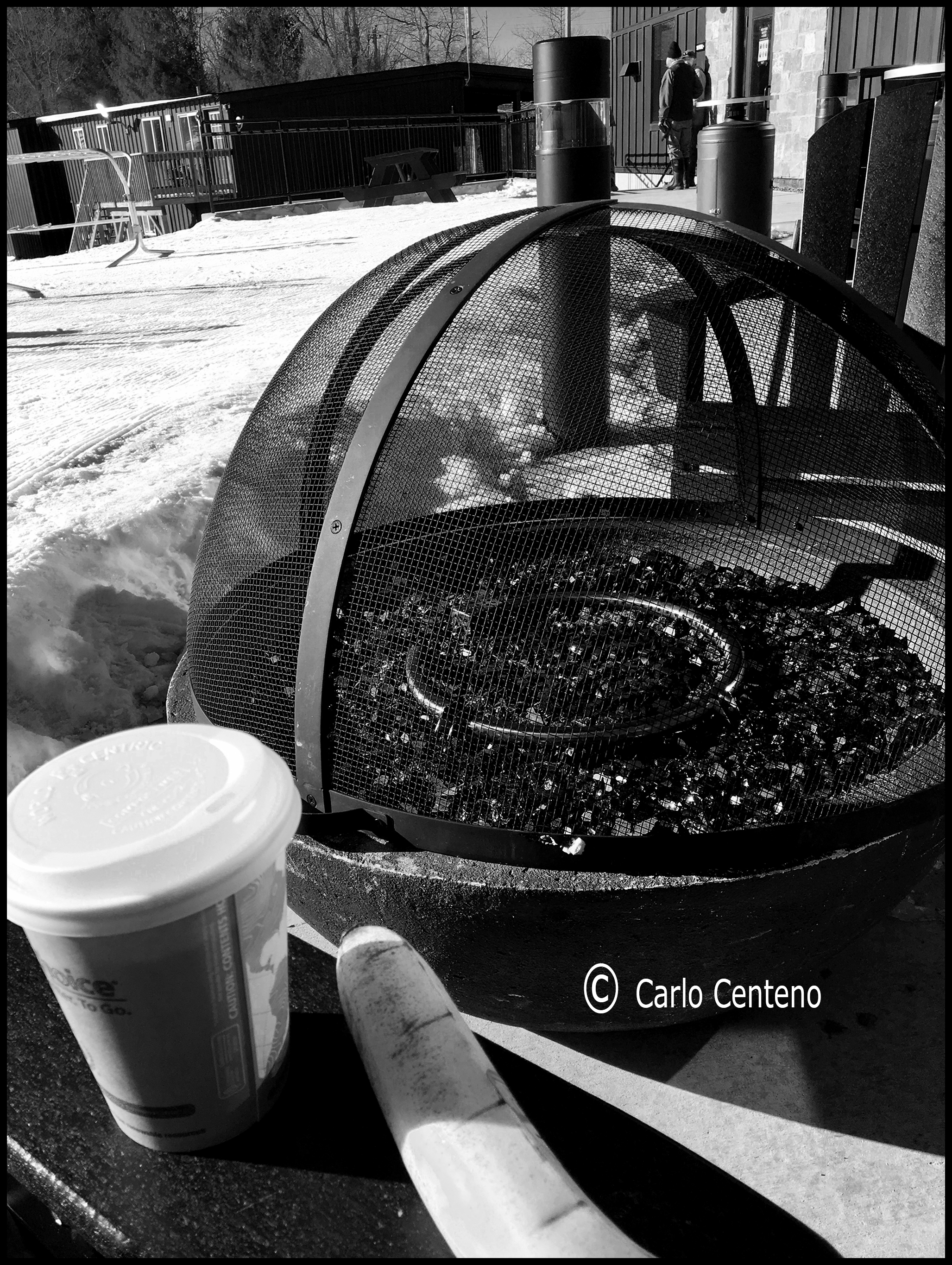
Winter’s light—especially later in the day—can feel cathartic and the sun’s warmth enhances this catharsis. A cup of hot chocolate, a banana, a comfy, large Maine Adirondack chair and a pit fire are all good company.

Cleansing Breaths

A benefit of changing seasons is precisely that: change. Here in New England, the 4 seasons do more than adjust amounts of daylight, colors of sunrise and sunset, the appearance/disappearance of flora, the transitions of both diurnal and nocturnal activities, owing in part to the amount of daylight/nightlight available for particular pursuits from tennis to star gazing. The change in seasons are as much physical as they are metaphysical, philosophical and experiential. The seasons are what you make them to be.

25th Floor–Just after a rainstorm

Often my cleansing breaths are interpreted as sighs of disappointment, or relief, a reaction to someone or something that gives purchase to both feelings. Since the arrival of Covid, I’ve made a conscious effort to use more cleansing breaths. I’m reminding myself there are far worse things to be disappointed with, and using some calming behaviors can make a difference.

25th Floor–North

The benefits of regularly using cleansing breaths has a way of taking edges off of things [vis a vis, the stress produced by today’s level of uncertainty]. Deep breaths and exhales do have physical and mental benefits. Gentle stretches [another cleansing breath, please] coupled with a proactive mindset that focuses on out with the bad, and in with the good has a lasting effect on our overall demeanor.

Ground Floor–Cape Cod

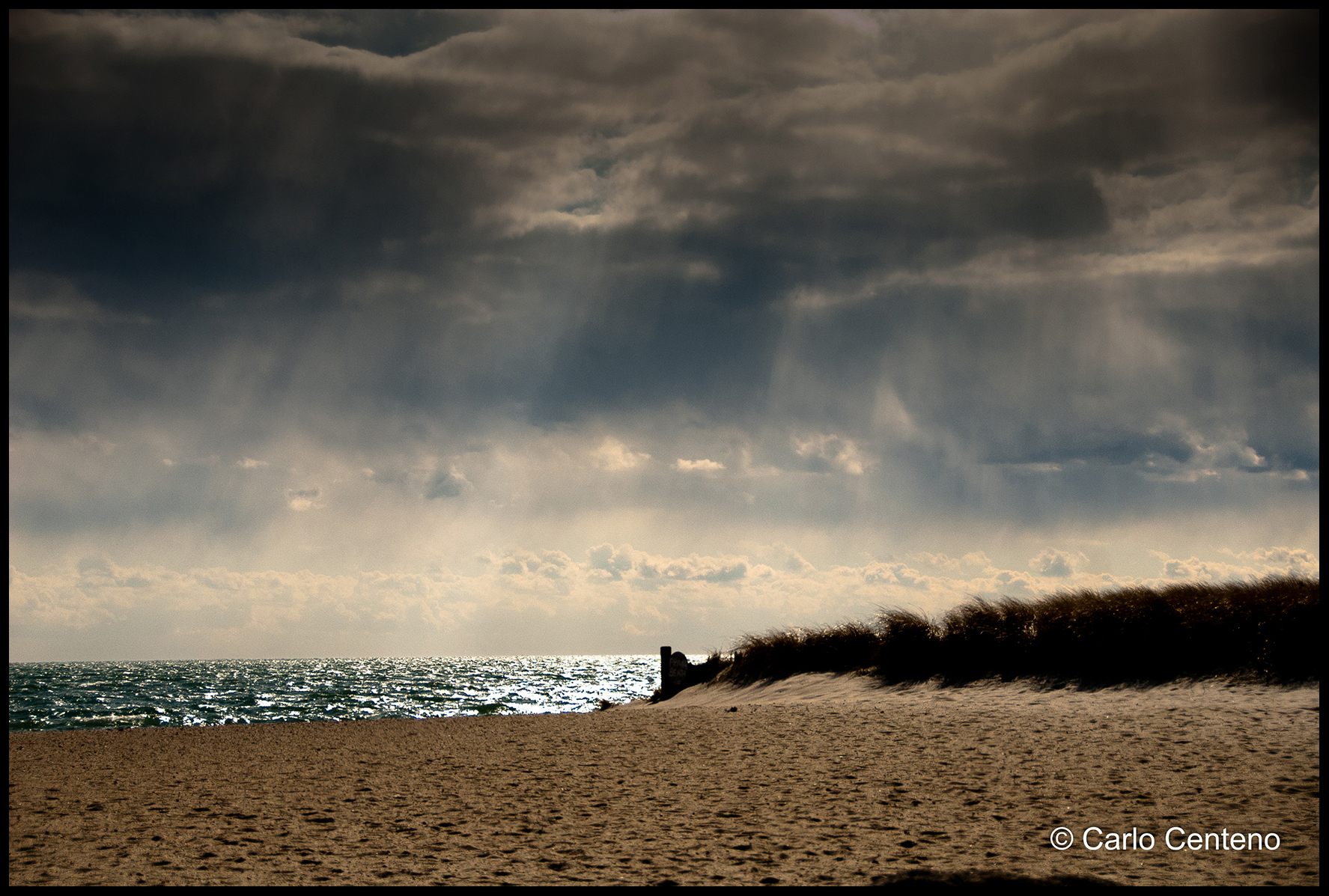
By extension, whenever I see a changing sky—especially one with clouds or on windy days—I attribute these shifts of clouds and air to cleansing breaths. However these are done by Mother Nature on behalf of our troubled planet. Earth is having a hard time rejuvenating much of what humankind has taken for granted, even wasted or destroyed.

Colorado

Whenever I’m out and about, feeling that need for solitude and distraction-free thinking, I load up on cleansing breaths and allow myself the chance to attain “groundedness” a term, I believe, coined by Stephen Hayes, Ph.D., professor of psychology at the University of Nevada. To avoid any confusion, I’ll merely say that attaining a semblance of groundedness means accepting and facing the here and now [however uncomfortable], and to make a commitment or shift of working on things that can mentally/emotionally help you.

Boulder, CO at sunset

The simplest example I can think of is this feeling or acceptance that one’s worklife/career is a dead end and wouldn’t be a dead end if the company your worked for was “better.” There are a myriad of other reasons to choose from. Instead of losing yourself and using up energy on this discontent, nurture a way to make yourself stand out. This isn’t about writing the great American novel or closing on a stupendous sale; it’s more in the line of working from your known strengths to optimize your “here-and-now” going forward.

Nantucket Island, Massachusetts

Now, before you do anything else, take that cleansing breath….

Catskills

There are several places I always look forward to visiting. The Catskills is one of those places. Marketers have positioned it a number of ways, two which I can refer to: the first being that author Mr. Washington Irving created a mystical dimension about these mountains and valleys as demonstrated in two of his works, Rip Van Winkle and The Legend of Sleeping Hollow. The second is that these same mountains are the birth place of American fly-fishing, this, toward the end of the 19th century.

The eponymous short story tells the tale of Rip Van Winkle, who after accepting a drink or drinks from other Dutchmen, went into a deep slumber. A twenty year slumber at that. And to think that suspended animation had yet to be imagined. Like Irving’s other short story, The Legend of Sleeping Hollow, there’s no denying the intrigue and fascination with the dark arts as it were, an ethereal construct of feeling displaced, out of touch and powerless. The spells, debauchery and intrigue hold the reader captive, and the Catskills is both crucible and container to the kind of narrative that keeps young and old awake at night.

Along the roadways that weave up and down and around these mountains you’ll see places with names like The Washington Irving Inn, Sleepy Hollow Mercantile, Rip Van Winkle Golf, etc. etc. From eateries to where locals meet and catch up on recent news, to bed and breakfast attractions, there are many hints at Catskills history and folklore.

As for the fly-fishing, there’s enough rivers and streams to keep you occupied. Certainly there’s enough real estate to get you lost as well or put another way, give you solitude and quiet like no other in the northeast. I’m told that Mr. Theodore Gordon is the one credited for starting American fly-fishing in the 1890s. This feeling of where fly-fishing started in the USA is supported by a smattering of fly shops and other related businesses, several found close to the rivers. For many die-hard enthusiasts, these are sirens that are as strong as the waters and fish that beckon us to get our fly lines in the water.

Covid has altered some of our pursuits, but it hasn’t put a dent on my love or time in the outdoors. Factor in the openness and scale of outside and one can understand the fascination, the desire to get up and out of the house/office and do something for yourself or for perhaps someone else. It’s rare to see another person here in the Catskills or in other wooded areas I’ve been in. Social distancing is a non-issue. In our uncertain world, being wrapped in the outdoors is invigorating and yes, even fulfilling.

Social Distance 2.0

Not again. I can’t imagine the number of times I have thought of that remark let alone the times I’ve said it. I’ve been fortunate on many fronts and I’m more than grateful. The past 13-14 months or so, has been a journey of minor inconveniences compared to what others had to suffer through. I have no reason to complain. Then again with the Delta Variant on a rampage, I can’t help but wonder yet hope that common sense will prevail….

Two renaissance men: my son-in-law and his father.

I have a handful of avocations, each having one thing in common: I am comfortable when it’s me and myself involved. That sounds a bit self-absorbed, but it simply means I’m fine being alone. Being alone and lonely are two different things, obviously. Having alone time is important for one’s rejuvenation, at least for me.
Photography, journaling, letter writing, playing the piano and fly-fishing are welcome pursuits for me. Granted the first and last distractions can be shared and done with others. On several occasions my wife, daughters and other family members have kept me company on nearby waters. Our fly rods might look like conductor batons in a free-for-all, an ensemble of asynchronous metronomes, where each length of graphite is tuned to the individual holder.

On those days when I’m out with a camera, my wife keeps me company. In the city, she waits for me to catch up when I stop to take a photo. After awhile though, the distance and the time it takes to catch up get a tad longer. On jaunts through the woods, the converse is true: our pace is calmer, slower than the one we use in the urban environment. Time takes its time [read: less frenetic] in natural spaces; and for me that’s how it should be.

To see something in the wild is often fleeting: the songbird you hear only to take flight once you actually see it; the whitetail deer that suddenly, inexplicably pops out from the background in what feels like a whisper’s distance, only to bound away just as you look to acknowledge its presence.

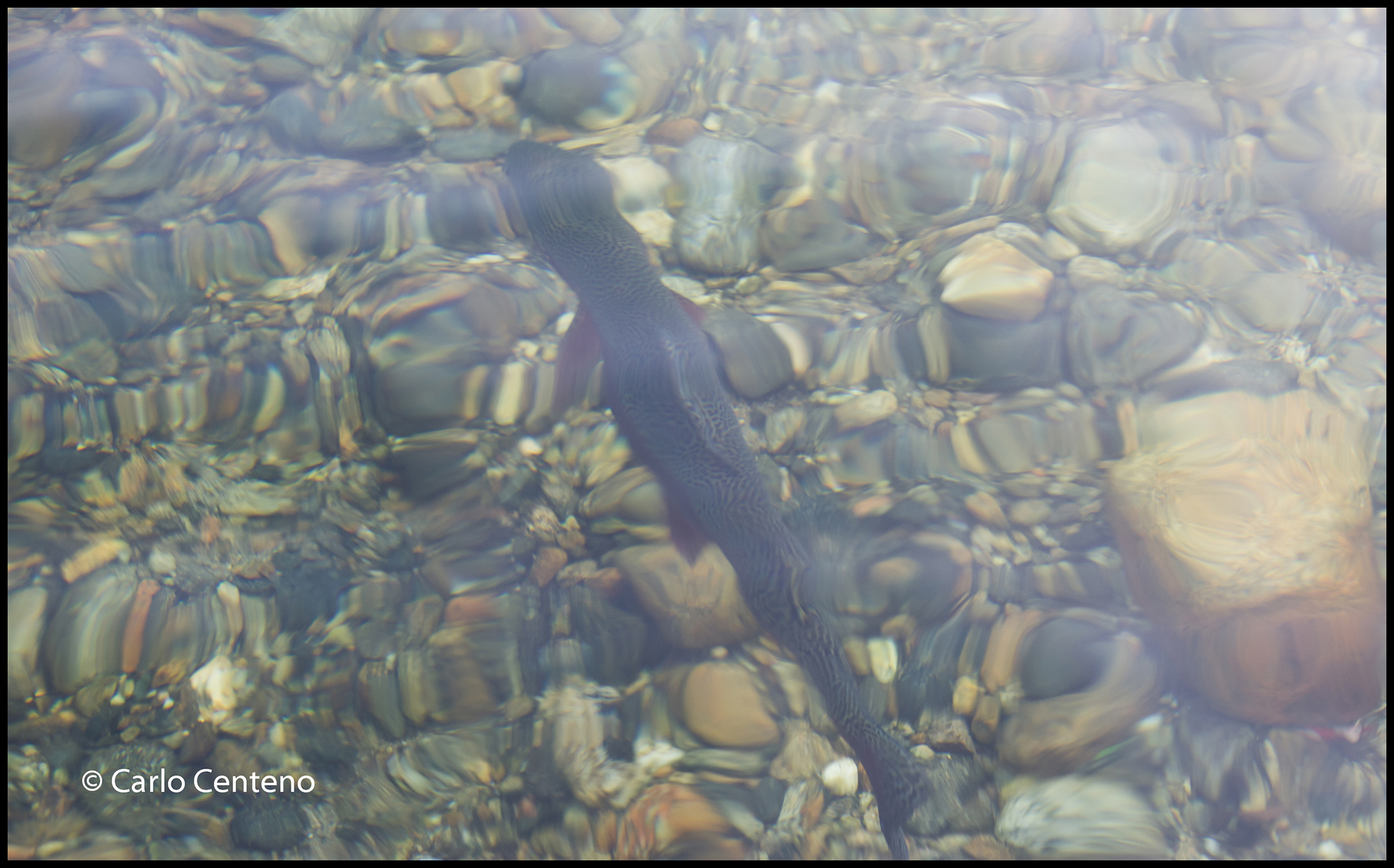
And then I’m handed a “pause” button. Fly-fishing can put a slight pause in what you’re looking at before the moment disappears. Having a landing net is an appreciation multiplier. It allows an opportunity to add a few seconds to really appreciate what you’re seeing. The Eastern Brook Trout is a jewel among fish. I never tire of catching this wild* freshwater creature that can only live in a healthy river or stream. Healthy, as in cold, clear and running. The existence of wild trout means the habitat we’re visiting is good for the fish and everything else that’s dependent on the river and surrounding area.

Ours is a symbiotic relationship with the natural world. Unfortunately, that relationship is out of balance and all things wild and natural are being short-changed by humankind’s behaviors. I find the safest social distance in the outdoors and the time there prompts me to examine the symbiotic and personal relationships I hold dear.

*wild versus native: a wild trout is one that’s been born in the very water it lives in. Wild trout/fish reproduce naturally in their habitat and sustain their populations. A native fish are those that have lived and thrived in areas that have had no or very little human interaction. A stocked fish is from a hatchery that’s typically managed by the state’s wildlife management. Regardless, please make an effort to carefully release these fish [a fly-fishing practice called catch-and-release]. It’s good for the neighborhoods we visit.

When Nostalgia Visits

James Cain

I started out in search of ordinary things
How much of a tree bends in the wind
I started telling the story without knowing the end
I used to be darker, then I got lighter, then I got dark again
Something too big to be seen was passing over and over me
Well, it seemed like a routine case at first
With the death of the shadow came a lightness of verse
But the darkest of nights, in truth, still dazzles
And I work myself until I’m frazzled
I ended up in search of ordinary things
Like how can a wave possibly be?
I started running, and the concrete turned to sand
I started running, and things didn’t pan out as planned
In case things go poorly and I not return
Remember the good things I’ve done
In case things go poorly and I not return
Remember the good things I’ve done
Oh, oh, oh, oh-oh
Done me in
copyright Bill Callahan from the album, Sometimes I Wish We were an Eagle.

I’m told that feelings of nostalgia can be dangerous, dangerous in the sense that you can lose yourself enough to miss out on being in the moment. Possibly true, but in an attempt to put balance into my thinking here, I’d like to think that whatever and whenever nostalgia or recollections unapologetically come to mind—whether good, bad or ugly—I can use them to better appreciate what being in the moment means.

The lyrics to Bill Callahan‘s song, Jim Cain, never fails to stir something in me. Jim Cain was an American novelist, an author often referred to as the archetype of “hard-boiled novels.” Three of Cain’s novels found its way to the screen, each receiving critical acclaim: Double Indemnity, Mildred Pierce and The Postman Always Rings Twice.

The eponymous song is haunting yet contains elements or conditions which feel relevant. I make no claim to be an expert on Mr. Cain’s life or his work, and yet every time I listen to this specific song, sensations of deja vu slip in. Mr. Callahan’s style, his sound is wholly unique [IMHO], and indeed that character of voice and music composition reinforces key feelings in my ephemeral journey of 4 minutes, 39 seconds .

Several verses strike a chord [pun intended], however three lines ping my empathetic sensors:

I started running, and things didn’t pan out as planned
In case things go poorly and I not return
Remember the good things I’ve done

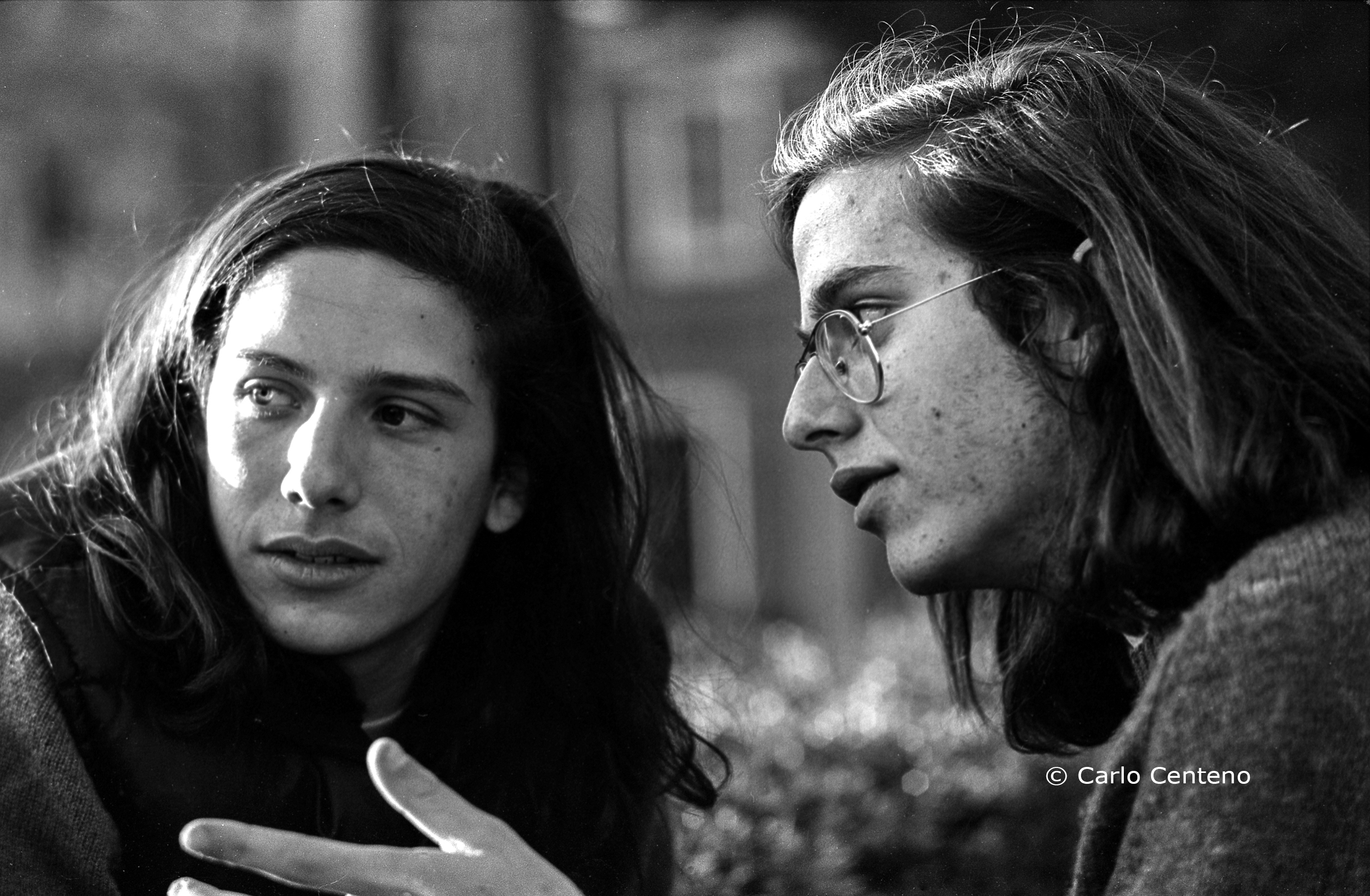
The photos in this gallery reach back 4 decades to a time that will always mean much to my personal and professional journeys. I’m convinced that most of us are running—some more determined than others—hoping to optimize careers, relationships, and of course, one’s sense of self. And yet in spite of shortcomings that can toss us off the saddle, we get up, and with additional effort we manage to return to the point where we stumbled. We carry on as we must.

When I look at these photos in the company of the music and lyrics of the aformentioned song, I recall the people, events and lessons which remain relevant. I’m reminded that many things in life are good and that some of that good is actually a product of my own doing or in collaboration with someone else or those in a group. Why reflect on the banal, the unpleasant, the incorrigible, among other soul-dampening sentiments? Because without them, you achieve little balance to various positives that fate hands you. Indeed there are plenty of those ill-feelings to weigh down our resolve to do better, day in-day out. Think back to an event ,a person, a vicissitude if you will, that later proved to be a turning point which led you to where you are now, or perhaps pushes you to finish a journey still in progress.

There are some years that snap and engage your entirety as a person, because it clarifies statements such as, “yup, been there, done that” to any number of realizations, each based on a chance or intention: “Yeah…that was stupid…and I’m not doing that again!” Over the years, we hear reprimands from parents, teachers and coaches, even our peers, which we in turn offer to our own children. I’d like to think that most reprimands are lessons filled with hope and expectation. We hope our young charges “get the message.”

To open archives of a time long ago produces a reawakening of feeling, dissonant and concordant. It all depends on context. My cohorts line up alongside nostalgia, in ways that yes, brings up yearning but also that understanding of, “I don’t think I would’ve made it this far if it weren’t for _________.” That blank line between “for” and the “.” has possibilities. For me, the ones I’ve chosen were life-changing. The elements of personalities, a moment in time–and especially at a specific point–are sealed. They are irrevocable and part of me.

Clearly on many levels, I am a better person because of such experiences. Throughout life, we move forward and as people and events become things of the past, of things which somehow shaped you, regardless of where you are and with plans you’ve made, you certainly have done good things worth remembering.

Spring Colors in the City

Spring is springing though the thermometer begs to differ. I have one of those old-fashioned stick thermometers encased in a brass sleeve attached just outside a window. It read a chilly 41-F [5-C], at 8:23 this morning.

Whatever the temperature, we know that another season is here, although some of us are still bundled up. I think that’s better than huddling inside whining about the cold. In New England like the rest of the northeast, you expect the unexpected.
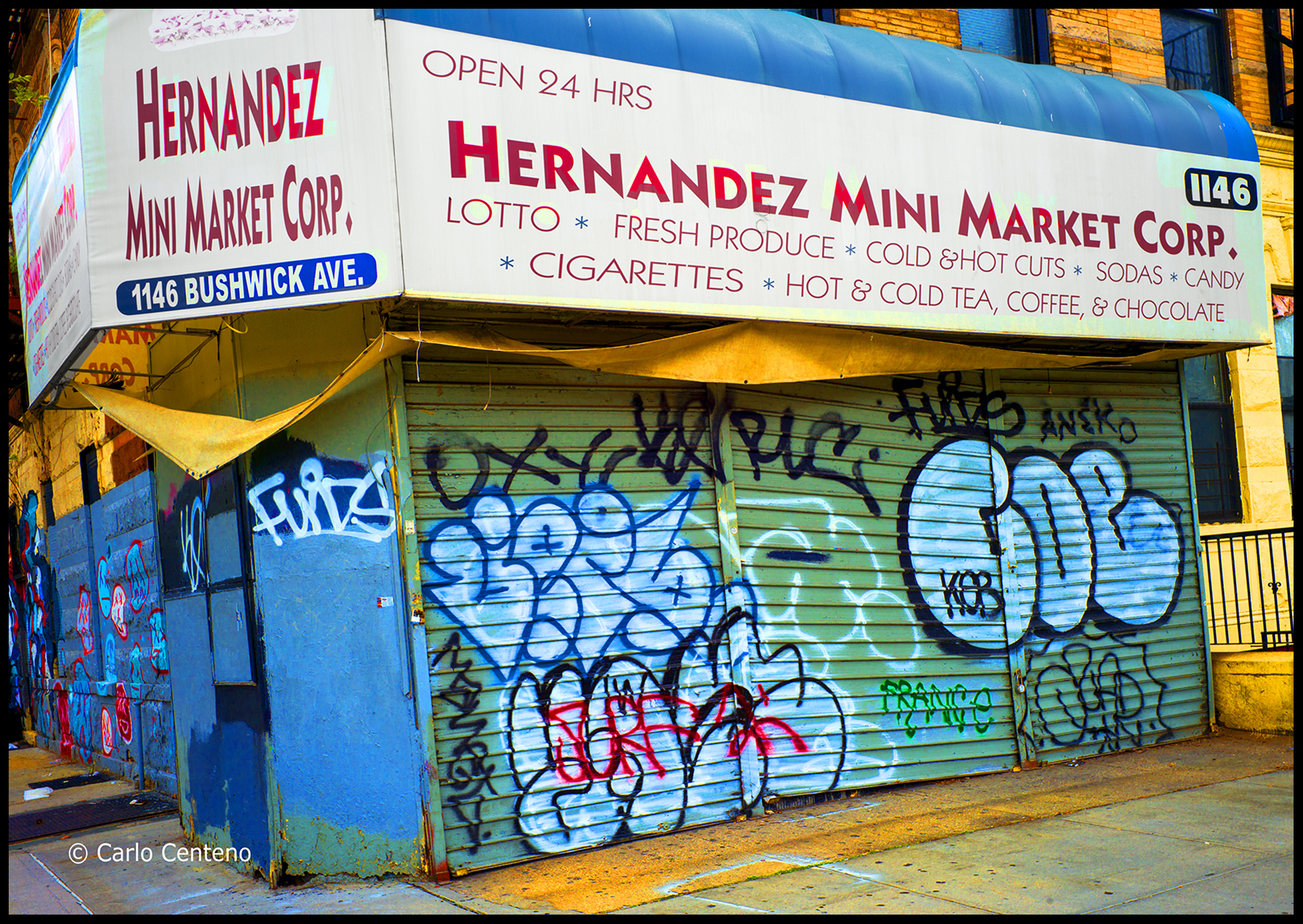
An urban environment does have its share of color, especially those on display from flowering trees and shrubs. Yet I’m drawn to other colors which “pop” in front of me.

I find it a bit odd that not more people are out walking whether by themselves, or with a friend, or from behind a stroller or in the company of a dog. In most cases, it’s the dog walking the handler; I’m empathizing from the dog’s POV. More than likely, I have to keep on walking in order to see others coming and going to wherever they need to be. I need to continue my exploring and allow whatever creative divining rod I may possess to guide me.

It’s a bit ironic that in a city so large, not many were out. It wouldn’t surprise me that NYC could be mentioned as the city with the largest number of street photographers per square mile, whatever that number might be. Who knows, my sortie was on a so-so day at a time when more than not, folks just decided to stay put.

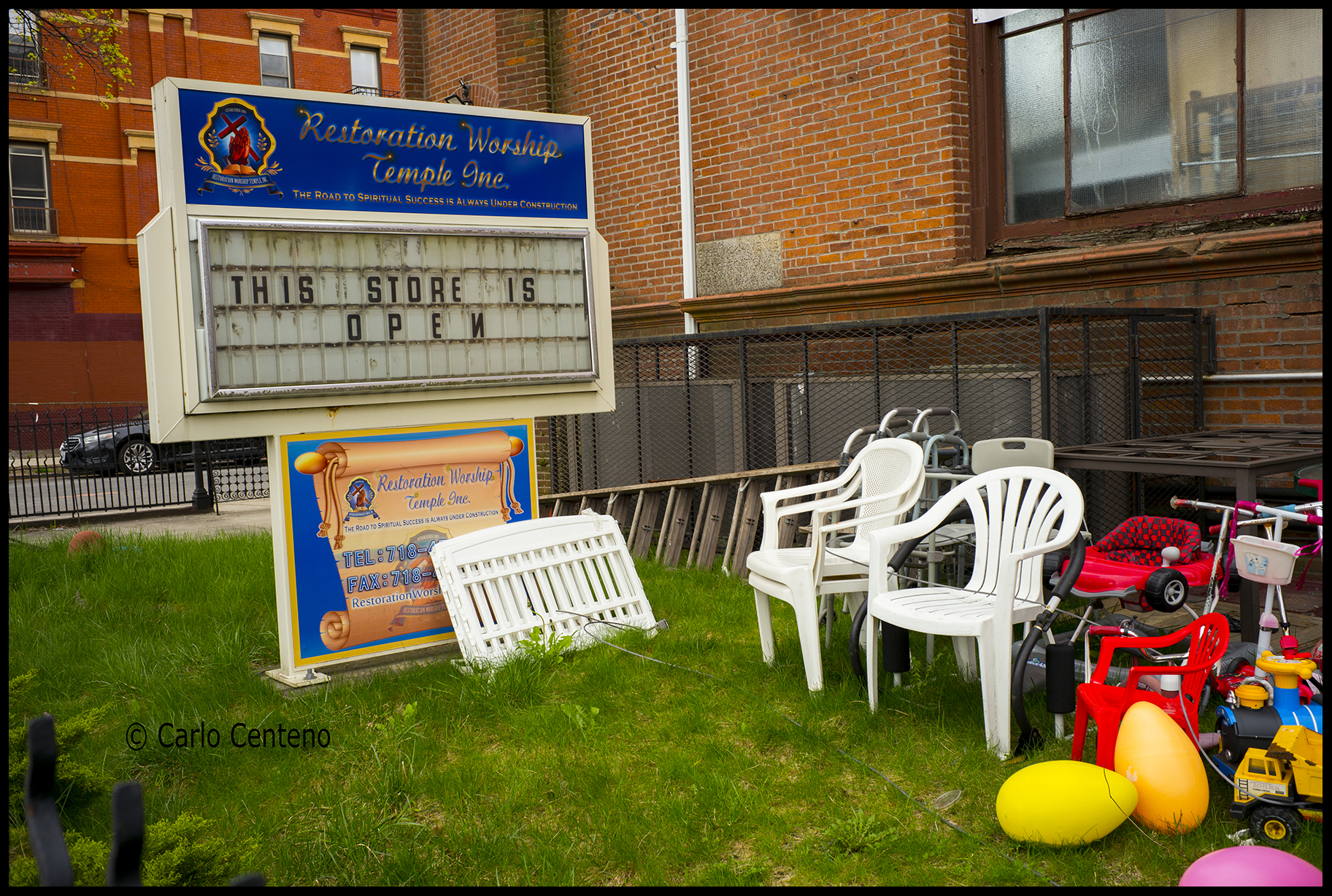
On the above marquis, the tagline to this church reads, “The road to spiritual success is always under construction.” For most of us, it means no one can attain spiritual success. This is akin to Sisyphus rolling his boulder uphill, only to fail when he comes so close to the top. His pathway to salvation is under construction in perpetuity.

The Pen is More Personal…

A few of us have been [hand] writing for as long as we can remember. More specifically, letters, postcards and greeting cards. Conceit aside, I’m one of those anachronisms [I use fountain pens & bottled ink] and I enjoy writing in all its archaic forms.

Because of the pandemic, there’s a renewed interest in writing, whether a letter, in a journal, even on a page or two of plain paper. I find it all encouraging as voiced in this recent article in The Critic. Writing a letter isn’t what it used to be, but a few of us still find satisfaction in such a personal construct of thought and emotion. A part of me is contained therein. Some days, the pen skims across the paper and other times, it’s hard to get out the first sentence or two.

Decades from now, no one will need an app to read its content. Sentimental as it is, perhaps some of my family and friends will keep them in a shoe box of sorts. Each envelope containing a capsule of time and place.

A journal can capture and hold—albeit brief—a particular sentiment, an observation, an epiphany perhaps more. And like letters, there is an enduring permanence to what’s put into and left on the paper. In a recent [April 13, 2021] issue of the Wall Street Journal, staff writer Ellen Byron wrote, “How Journaling Can Help You Live Your Best Life.” The Byron article reads more like a primer on the hows and whys of writing and using a journal.

Journal writing is cathartic and offers a number of ways to express practically anything. I write to an alter-ego, directly to myself and at times even address myself in the third person. When I move myself from the “I” to “he,” the dynamic changes. Writing in the third person creates a buffer of sorts, a moat if you will which separates the person in the moment from the person that offers perspective.

A large part of the catharsis revolves around time slowing to a less frenetic cadence. The efficiency or speed of the digital realm fosters an expectation of click-it-now, get-it-now. Letters and journals are the antithesis of such expectations.

Go ahead. Take a pen and some paper and write something, anything, that comes to mind. What matters is you’ve made a decision to place part of yourself right in front of you.

The Birdman

By all appearances, he patiently cares for his pigeons. While I cannot verify if he’s out regardless of weather, my sense is he’s devoted and committed to his feathered friends. I have this feeling he’s been at this for a long time. The 3 or 4 times I’ve seen him on the roof is a study in stoicism, or maybe a purposeful, self-administered state of calm and reflection which is part of his daily schedule. Click HERE to learn more about the hows and whys of raising pigeons.

On a cold March afternoon, I was surprised to see a large flock of birds flying closely together, first in one direction, then back toward the direction they came from. When they hovered and eventually landed, I noticed someone walking on a flat roof top, nothing more than his head and shoulders visible from the street below.

Having access to the roof of an apartment across the street, I made my way up and discovered the gentleman sitting on a bench, his back against a column of white-painted brick. His focus was on a rather large screened-in coop housing perhaps a hundred or more pigeons. Having nothing to compare this to, seeing it was impressive.

I only know of 3 reasons why someone would raise pigeons: some enthusiasts race them, another group trains them to return home to their roost and others rear them for special occasions. During some festivals, you might see a flock released from a specific area often during a program within that festival. Or you may witness a blur of white-feathered pigeons take flight moments after an officiant proclaims the union of two lovebirds [indeed, pun is intended].

It’s unwise to assume. Assumptions often miss their mark, but in this case, I believe the birds and their caretaker have a strong connection. It’s a reciprocal relationship.

For his efforts, the pigeons have shelter, food and water. He in turn relishes his role and acquires satisfaction knowing his handiwork allows him a unique form of social interaction.