The most dedicated, most creative, most influential.
It’s fair to say that the Berkshires has a depth of culture, arts, eateries, education, health care, outdoor activities, community outreach and more, that can be as strong as other like-minded communities. The diversity of such offerings is all-encompassing and that’s clearly reflected in this year’s Berkshire 25. This is Berkshire Magazine’s annual selection of 25 individuals who have made life here feel more special, complete and worthwhile. That may seem like an exaggeration, but that’s due to the contributions from folks like the Berkshire 25 that make the region “the most beautiful place to live.”
Examine the roster of recipients. Their talents, soft skills, areas of expertise and so forth are as varied and diverse as the individuals themselves.
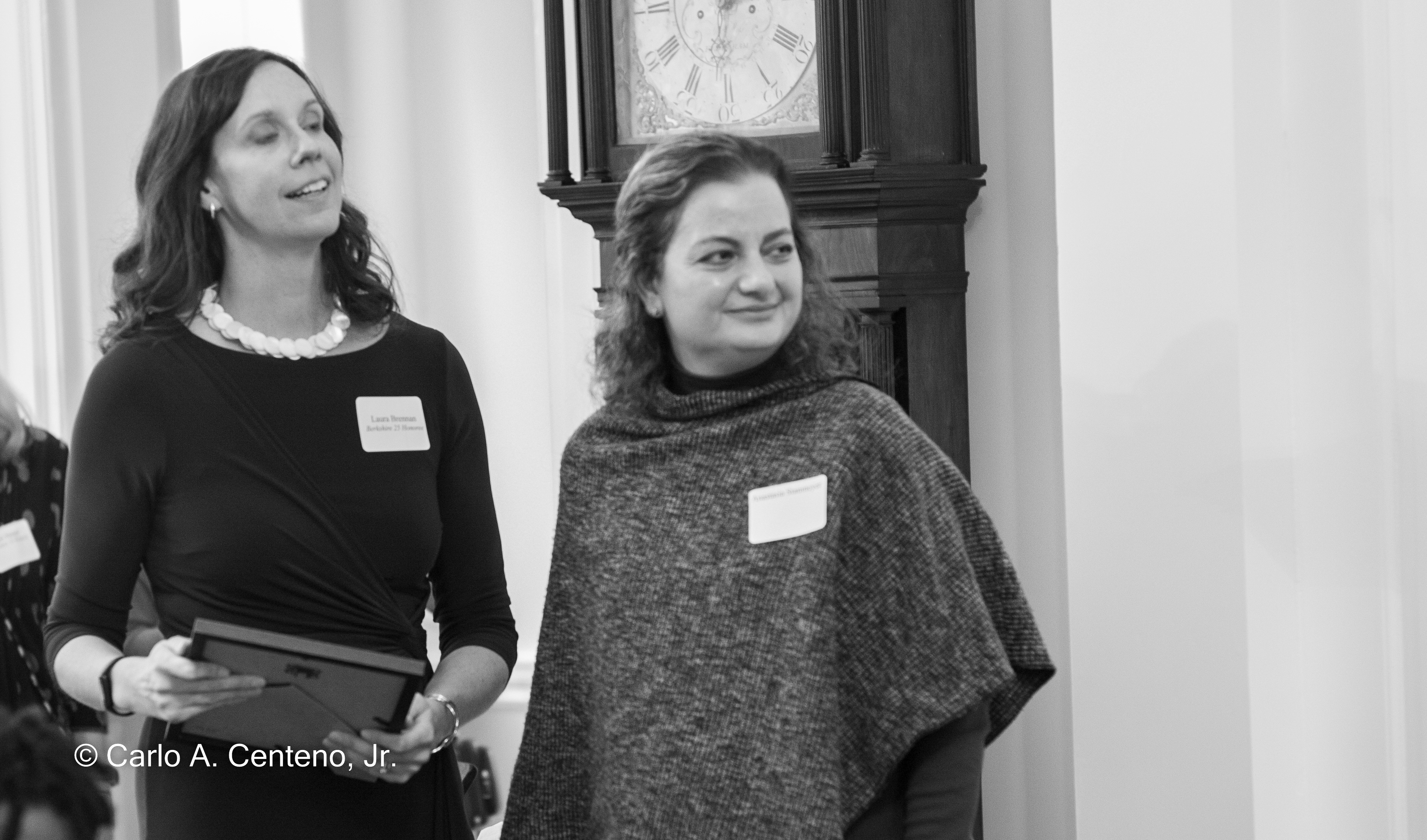
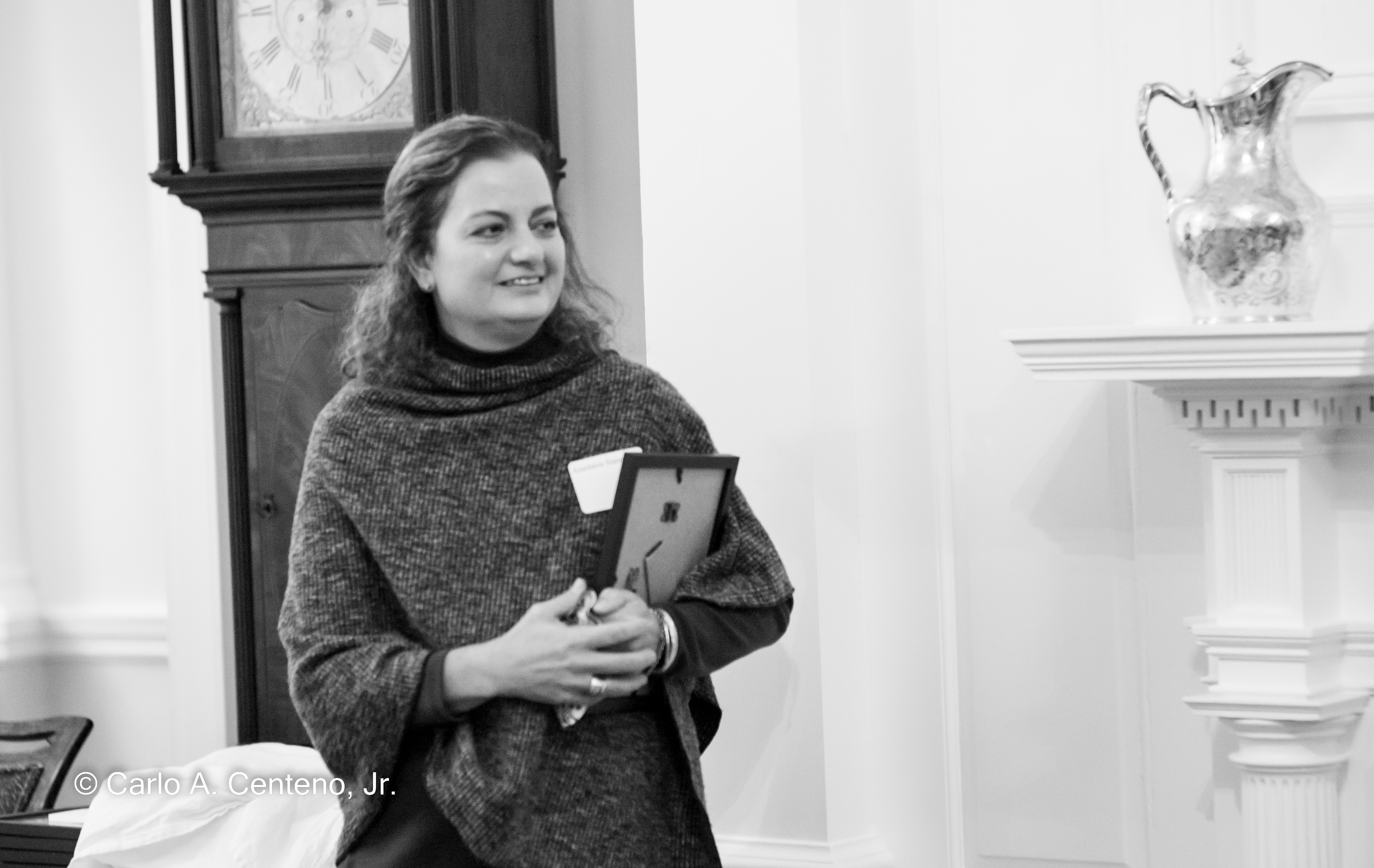
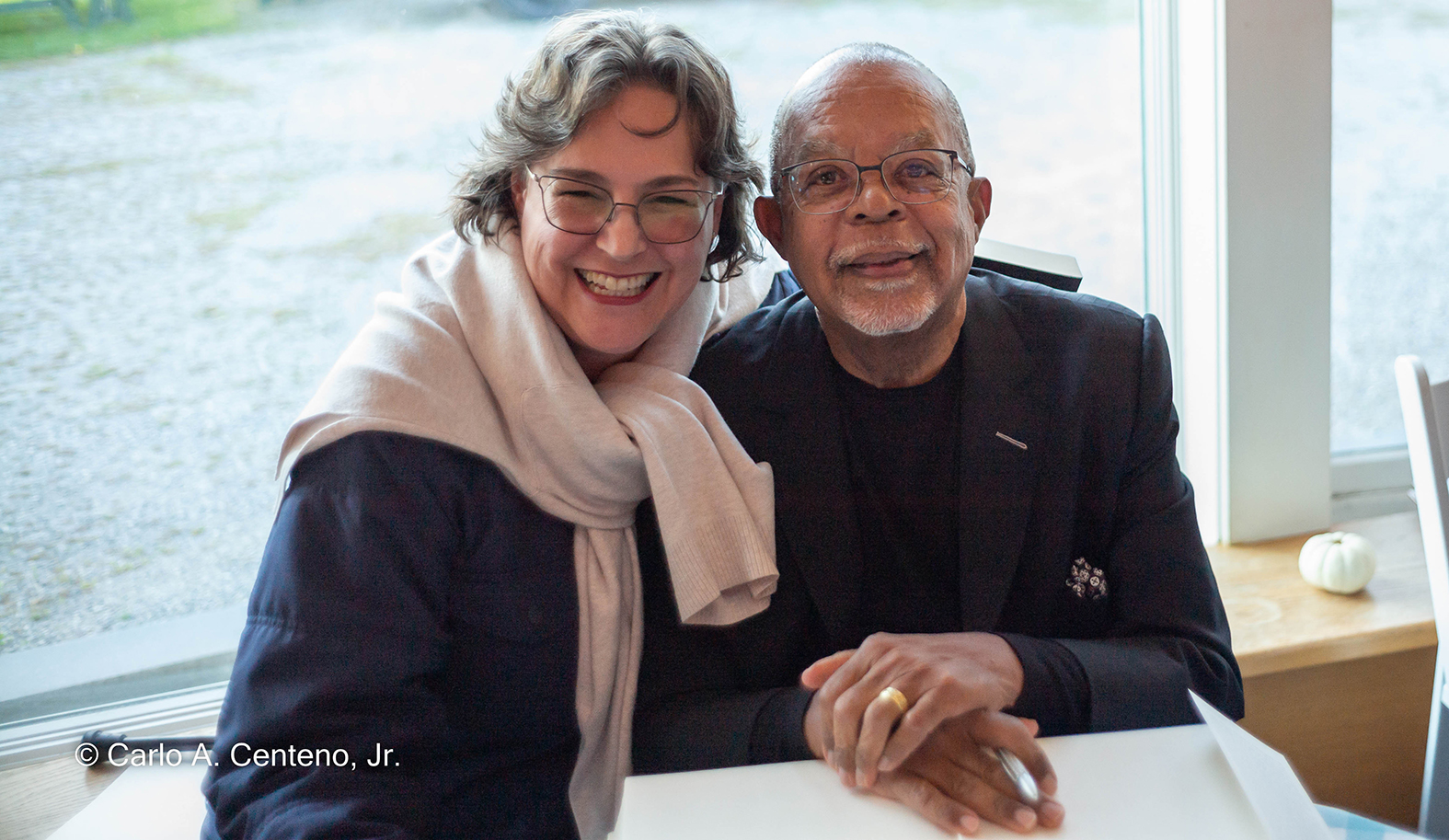
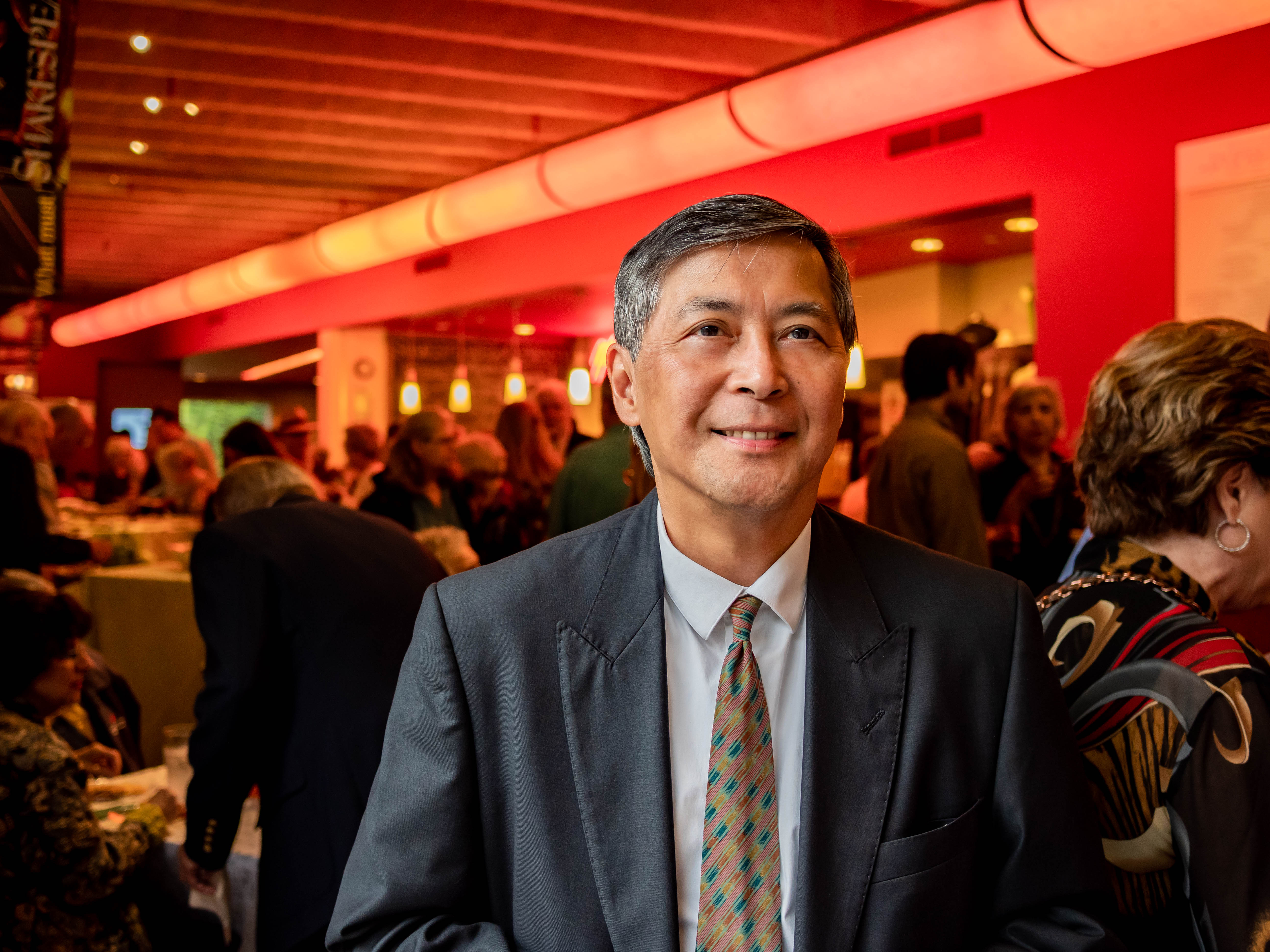
Honoree Ms. Laura Brennan [L] with editor-in-chief, Ms. Anastasia Stanmeyer
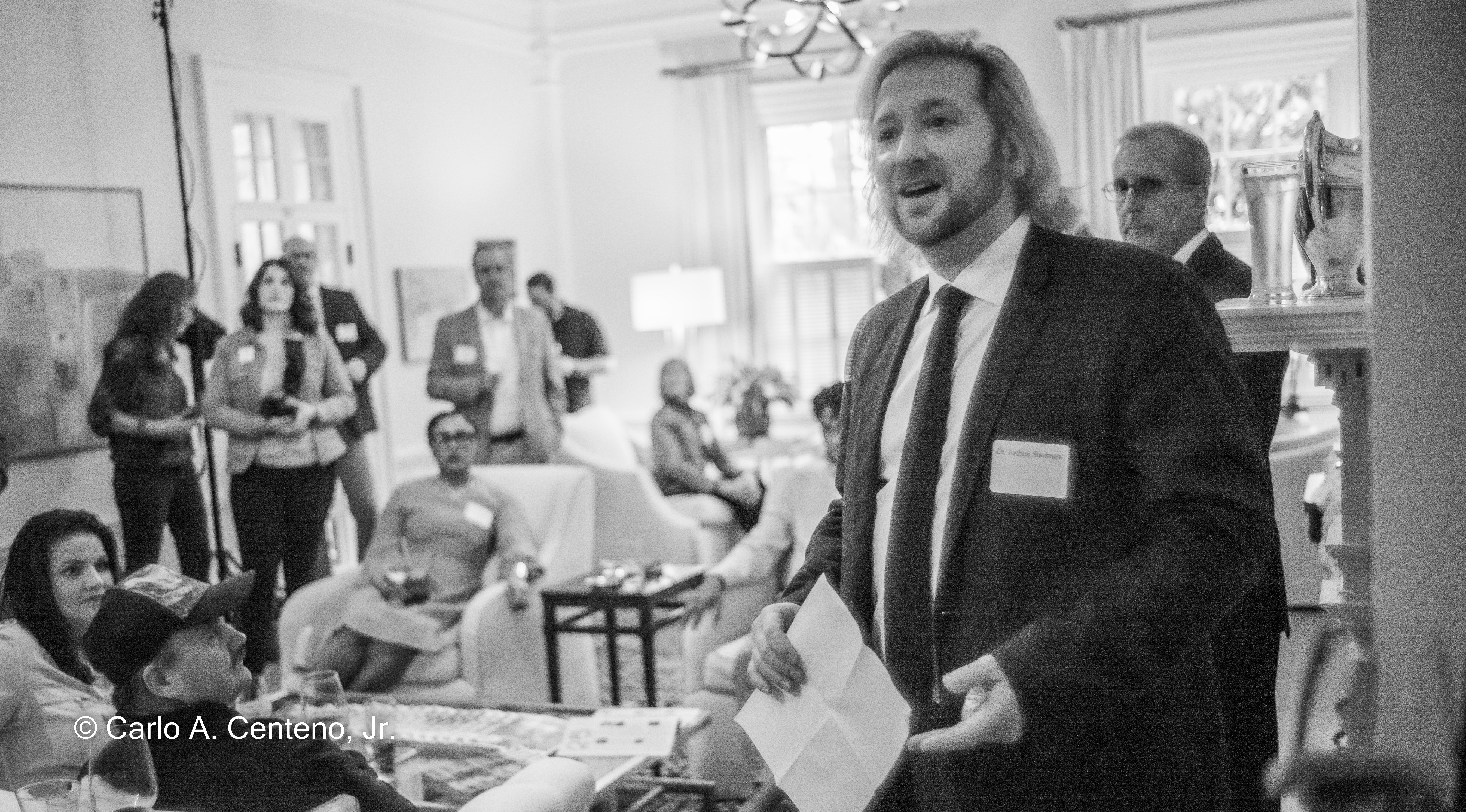
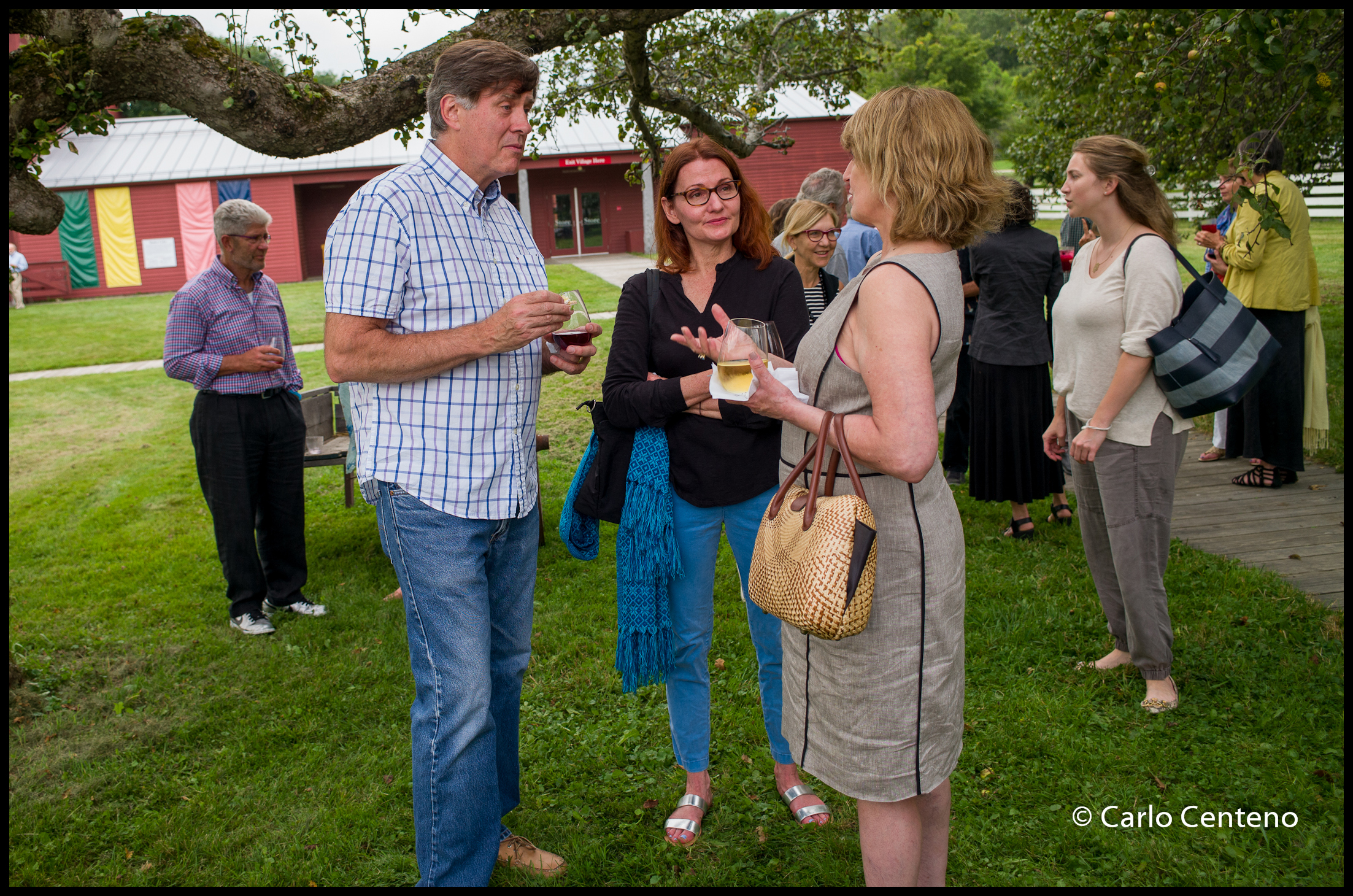
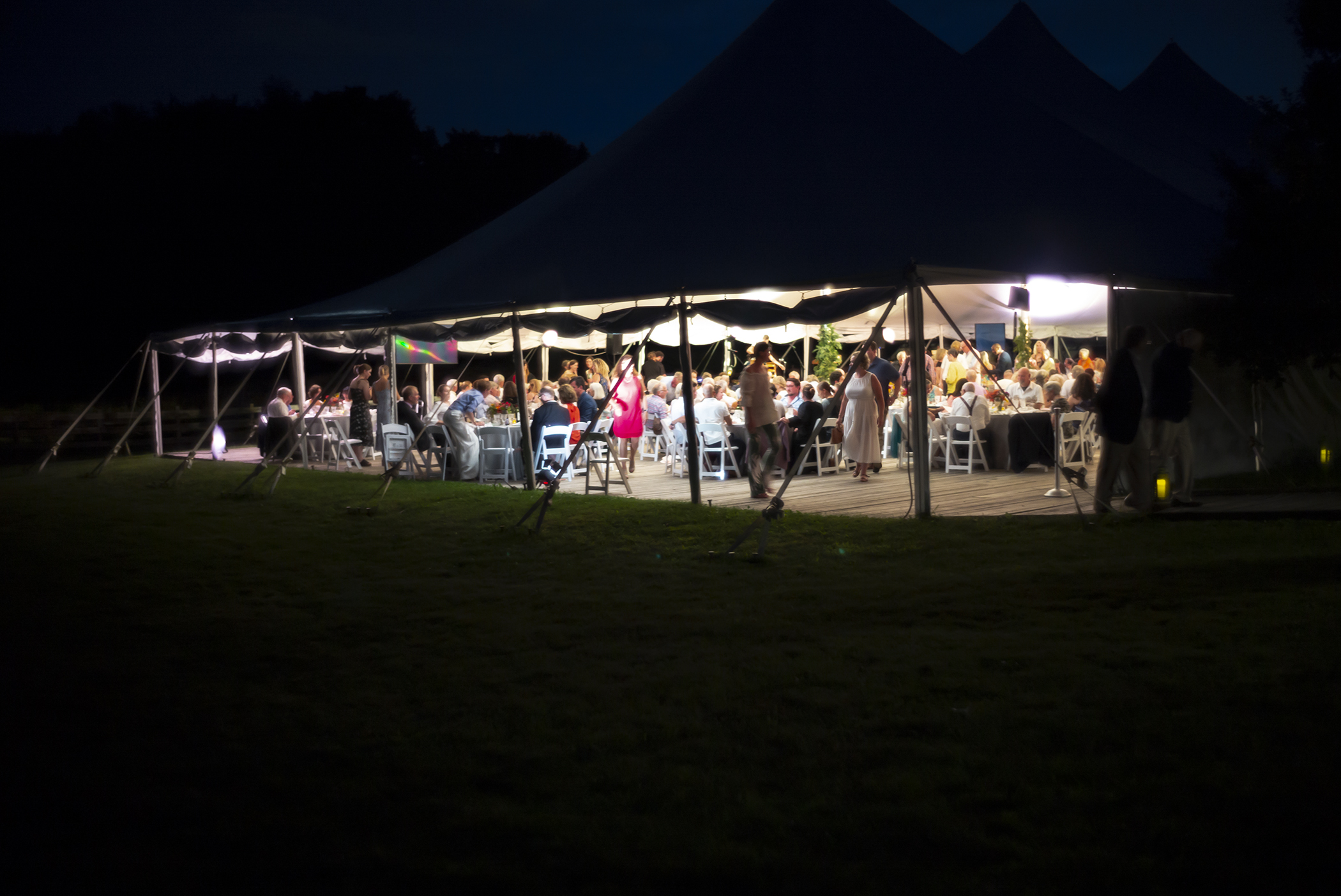
Ms. Maud Mandel, PhD, president of Williams College [below], graciously opened her home to host the event.
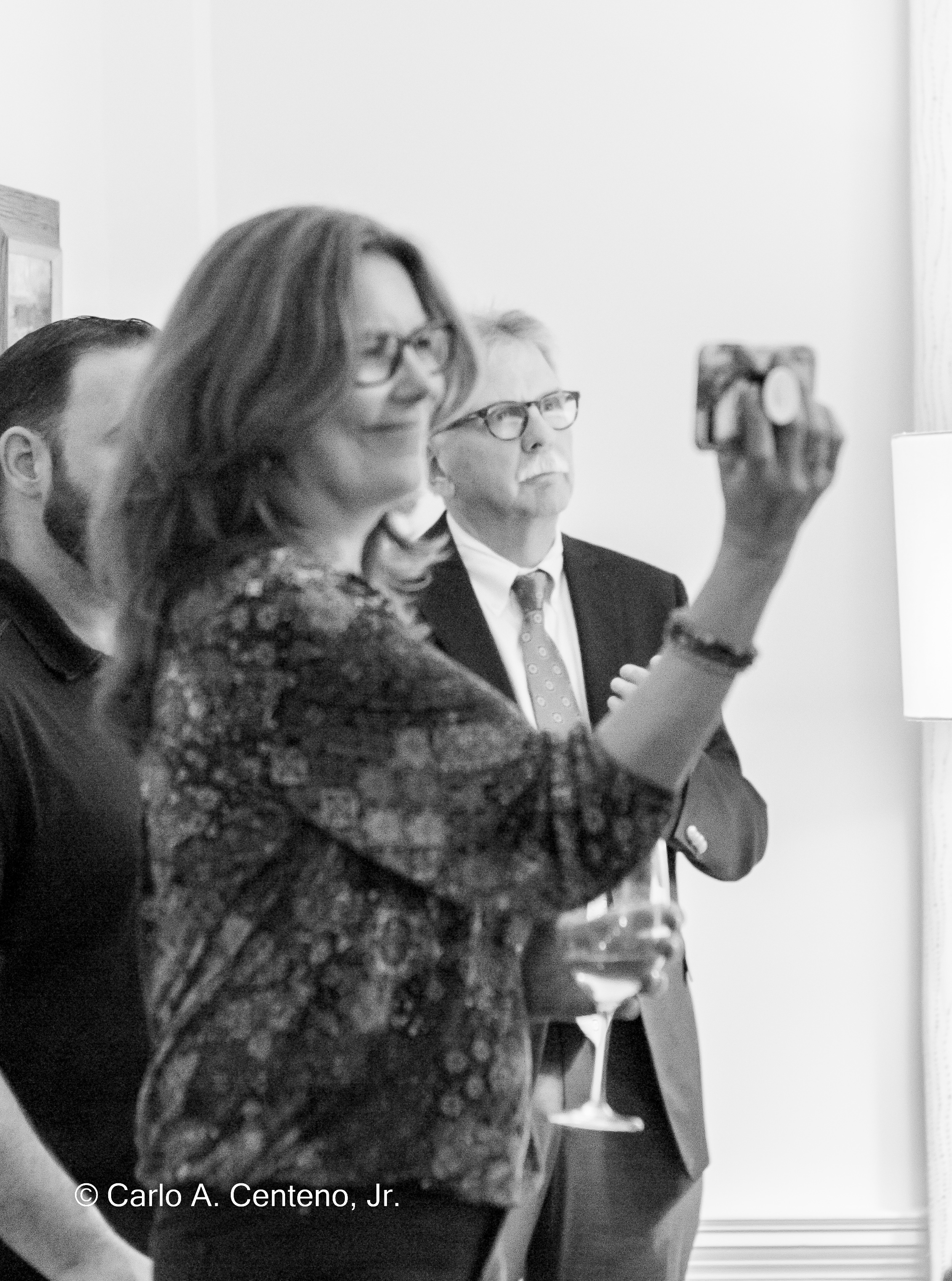
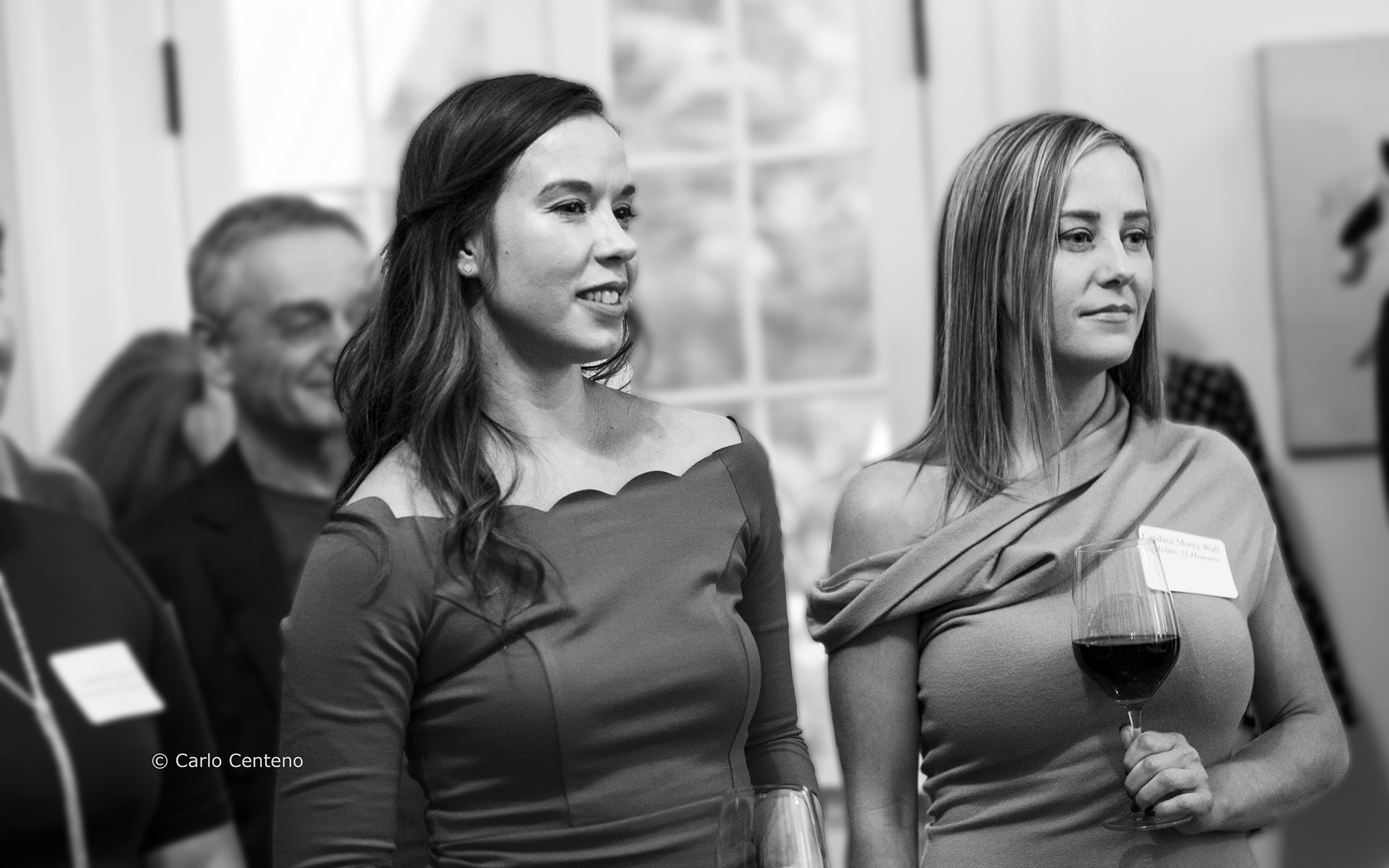
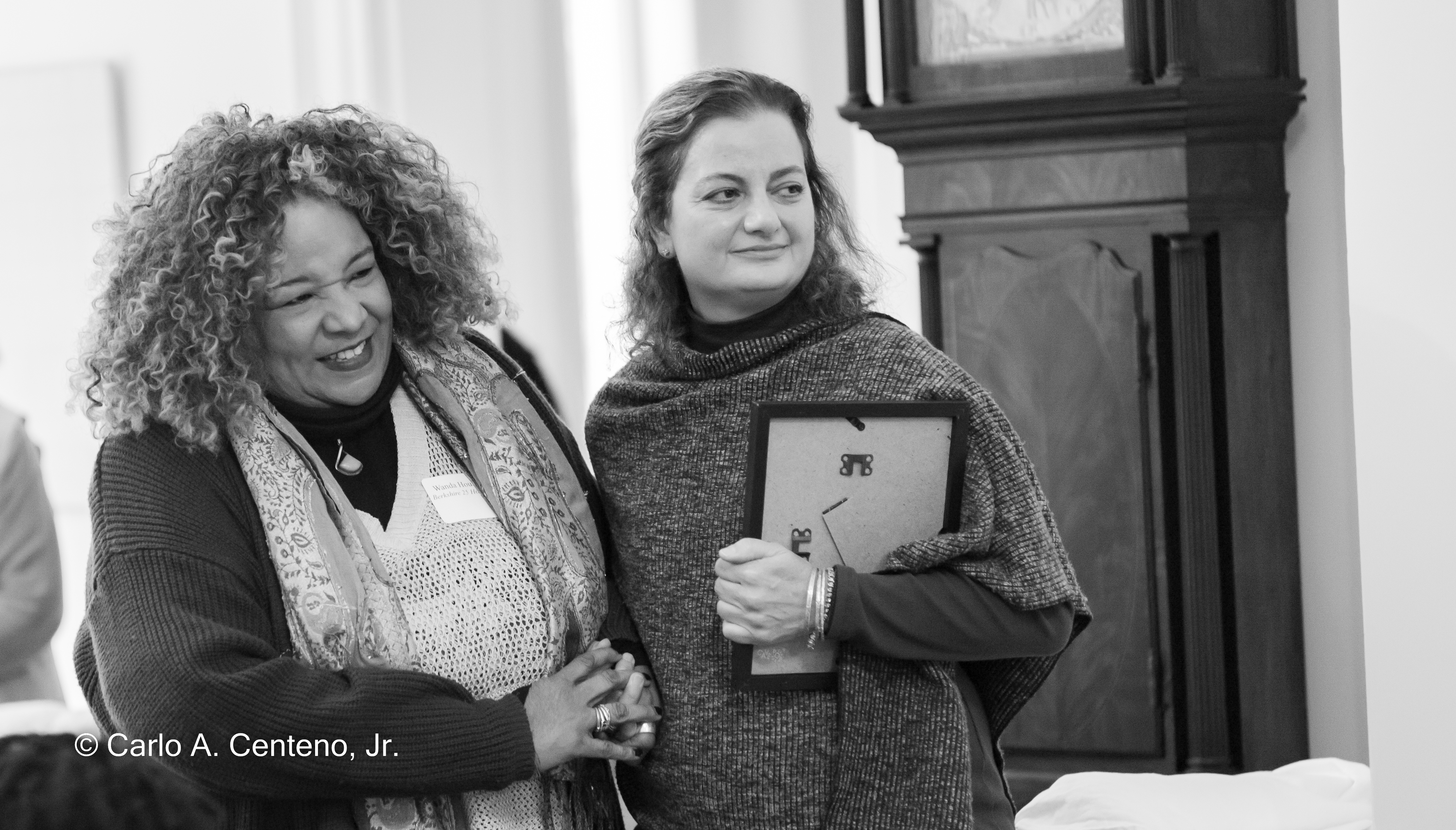
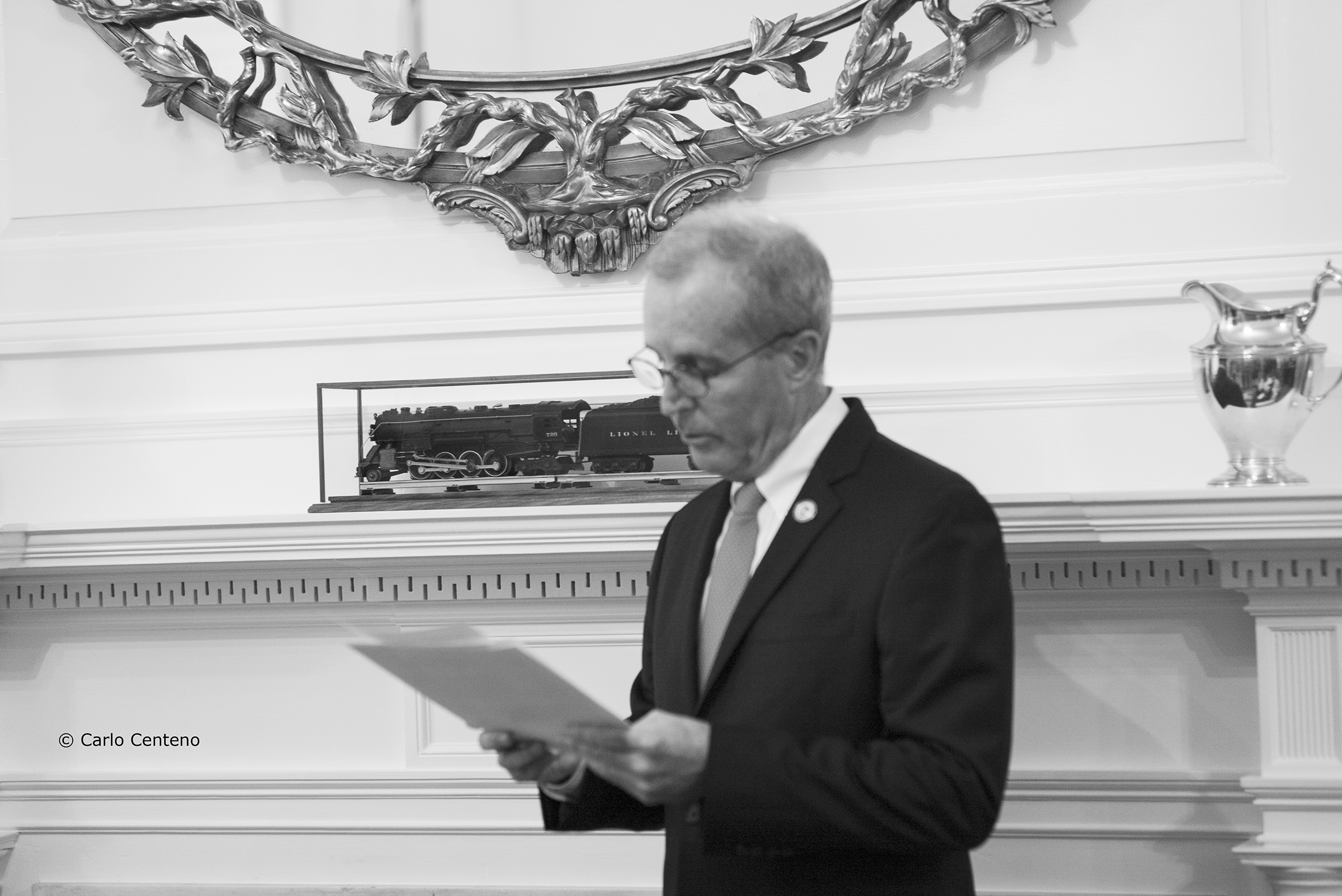
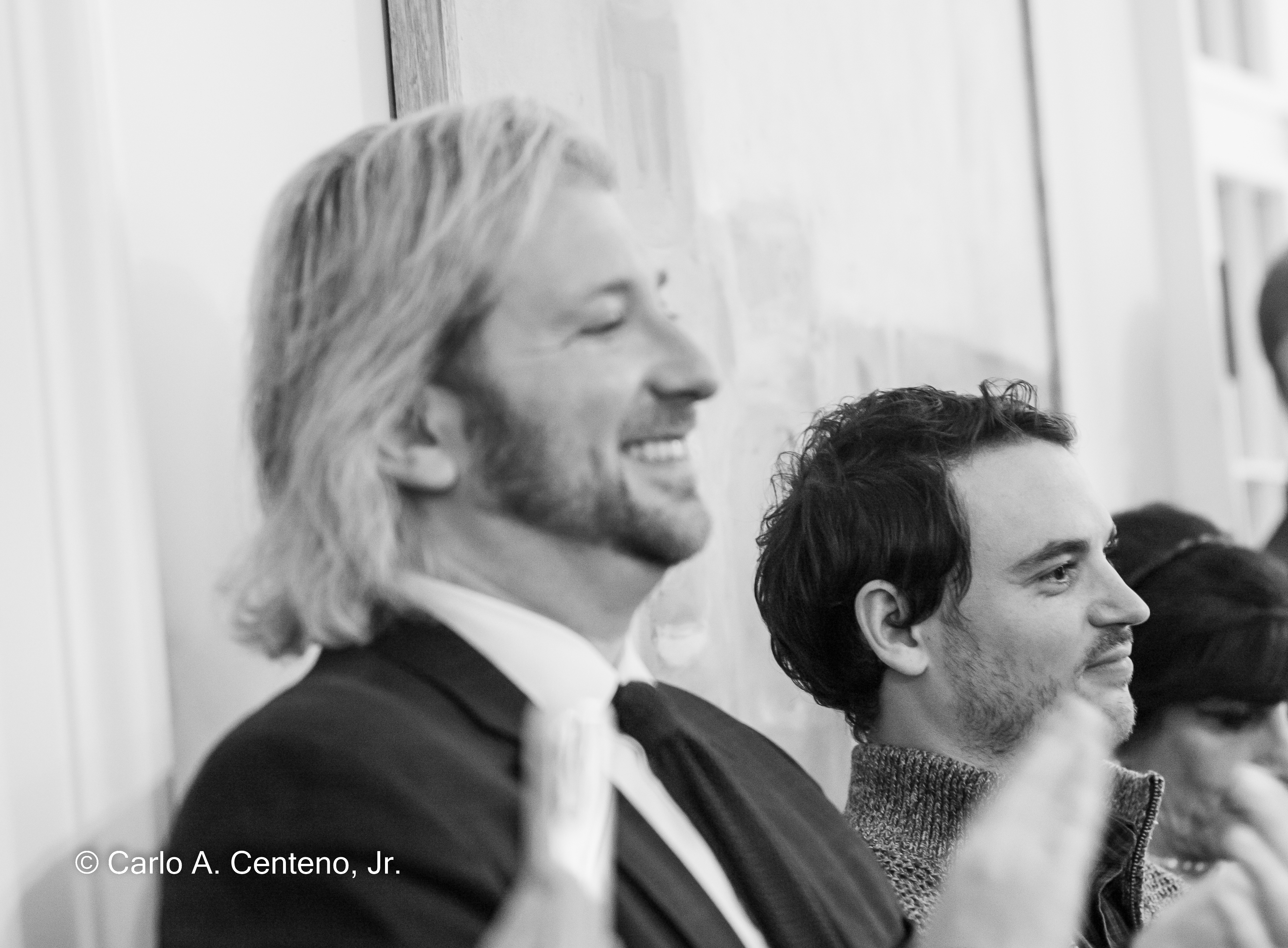
courtesy: Williams CollegeHonorees on the couch: L-R, Mr. Jack Brown; Marge & Ed BrideHonoree Ms. Mia Shephard [L]Honoree Ms. Candace Morey Wall [r][L] Honoree Ms. Wand HoustonRep. Smitty Pignatelli, an engaging & entertaining MC.Honoree Ms. Rachael Plaine
The cynics among us may feel that such occasions are self-serving, each designed to stroke egos or expand bragging rights. You can think that, but I believe no one that evening felt that notion at all. At the conclusion of the event, Rep. Pignatelli mentioned that these individuals represent the best of what people can do, that such care and outreach nurtures the magnetic vitality of the Berkshires. Lightheartedly, he added that politicians like to think that they drive a lot of what’s positive. However, he quickly reinforced that a lot of what makes a community/region attractive and inviting has to do with the very people who understand what it means to be selfless.
The inaugural 3-day, WIT Festival recently finished here in the Berkshires. Authors, journalists, novelists and playwrights gathered to engage participants in this year’s theme, Reimagining America. This was an opportunity to broaden one’s understanding of critical issues and concerns coursing through our current–and varied– socioeconomic and political points-of-view. The festival is the brainchild of The Authors Guild Foundation, the largest organization of its kind in the USA that “educates, supports and protects American writers across the country.” It’s been noted that the Authors Guild Foundation is “the sole group of its kind dedicated to empowering all U.S. authors.”
Ms. Lynn Boulger, executive director of the Authors Guild Foundation, welcoming authors, attendees, patrons and friends.
Berkshire County lies in western Massachusetts. Its rectangular shape stretches north-south with New York state at its west border, Connecticut to the south, Vermont to the north and to the east it borders with Hampden, Hampshire and Franklin counties. For many, the Berkshires is more than a destination: it’s a way of life.
Dan Brown, author of best-selling novels The Da Vinci Code and Angels & Demons.
Presentations/discussions took place at Shakespeare & Company in Lenox. For the most part, the 3-day festival sold out, however a roster of those wanting to attend were placed on a list just in case of cancellations. I did not hear of any registrants calling to back out.
Ms. Nikki Maniscalco, associate development manager, The Authors Guild Foundation.
I think the salient detail I took away was in finding a connection with the speakers. Whether through their anecdotes and experiences or with discussions that were enlightening or instructive, discovering these connections became visceral. The connections answer to or affirm my own perceptions, creative risks and even the most profound sentiments I keep close to the proverbial vest. As effective podcasts can be, for me there’s a lot more to glean from such happenings when they’re done in person. There’s an intimacy about gatherings as you hear, see and feel more than just commentary. And in that collective presence, you may pick up emotions inferred or otherwise demonstrated in tone, expressions and body language.
One cannot dodge a glance or ignore a gesture, or miss a light-hearted remark to loosen up a room. As good as podcasts are—and they have an important place in communications and education—being there does make a difference.
Henry Louis Gates, Jr.David W. Blight–Pulitzer Prize-winning author.
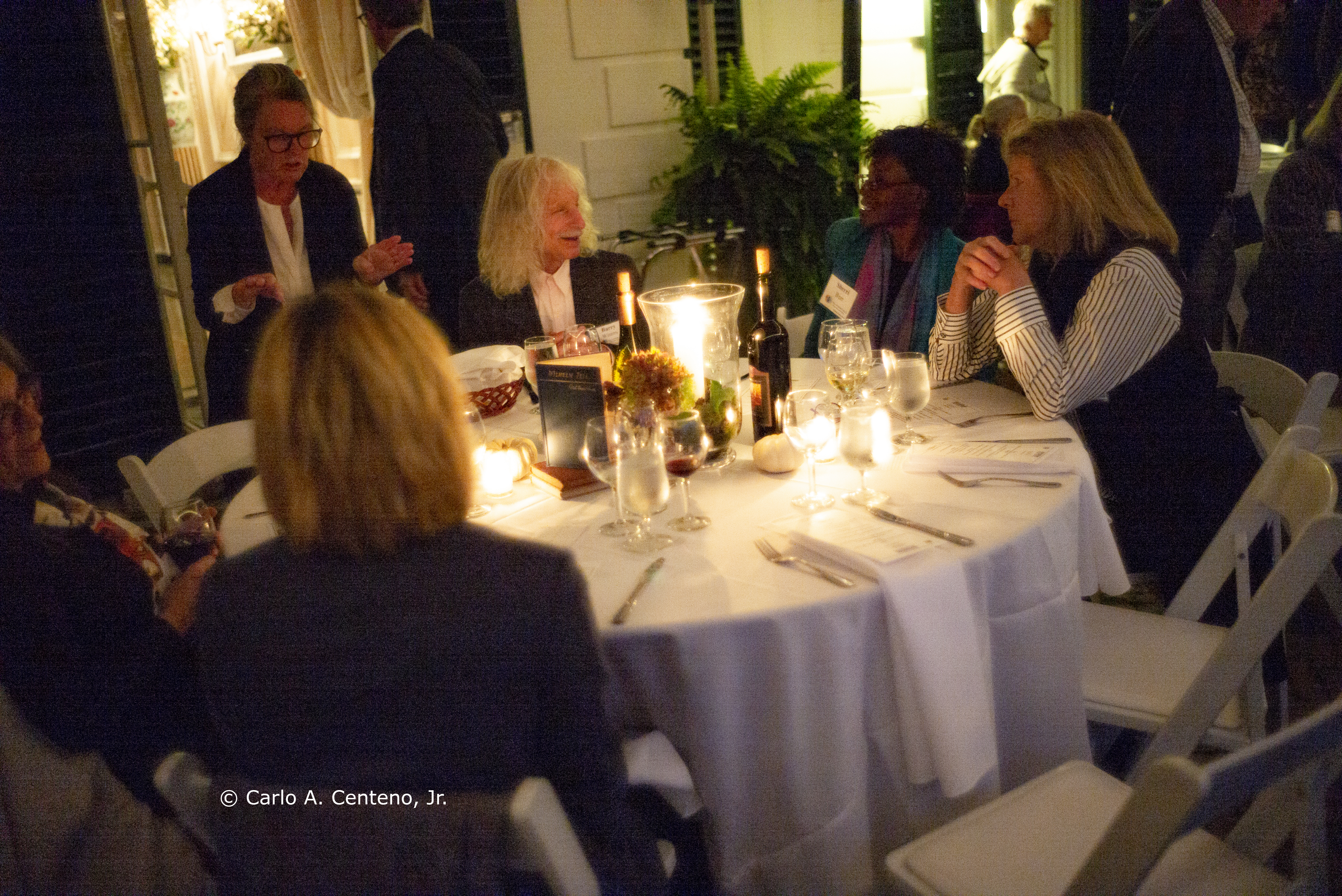
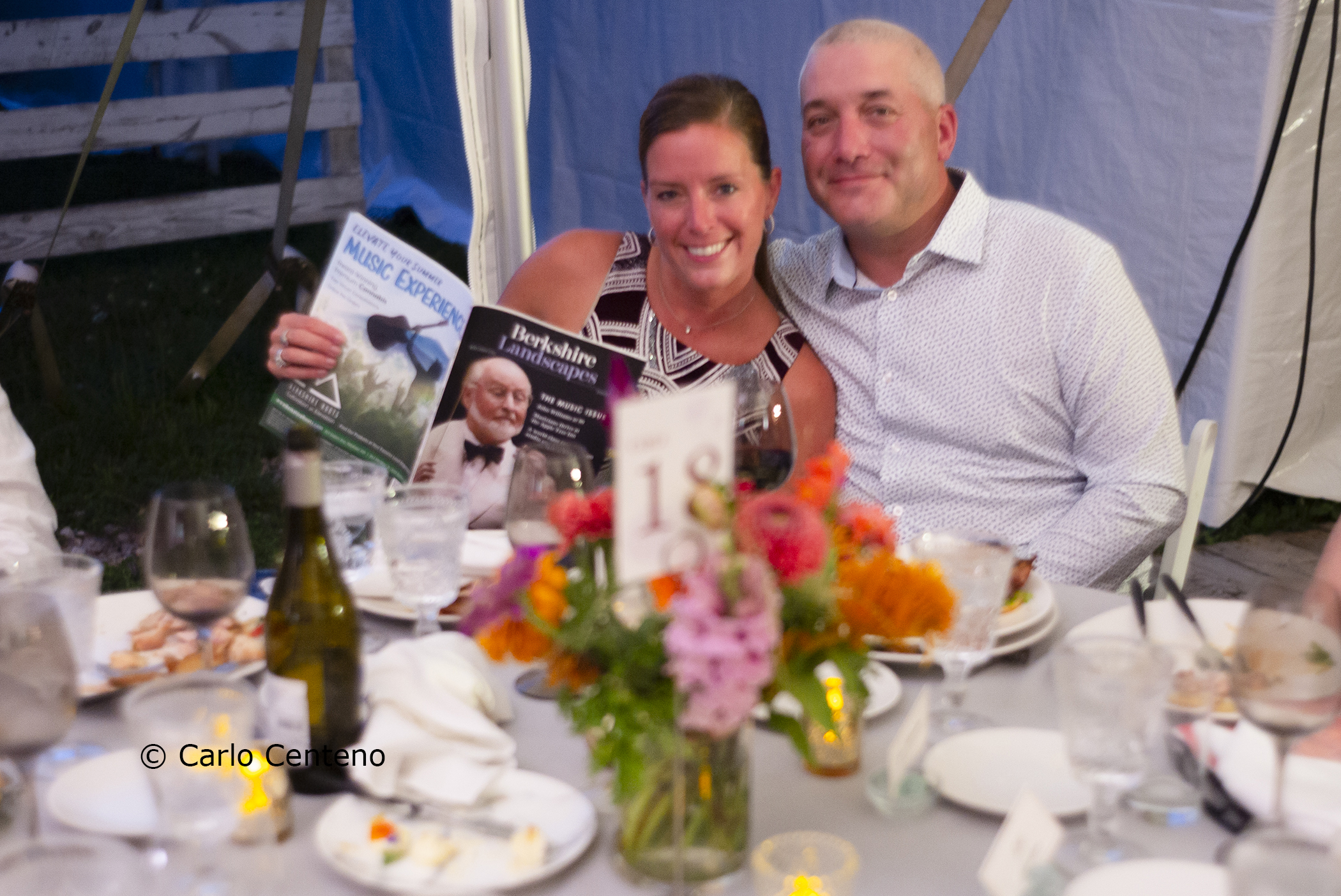
The dinner, served at The Mount: Home of Edith Wharton, was cleverly engaging. Instead of table numbers, the names of authors took their place. Your seat was placed at a designated table which bears the name of the author at the bottom of your name tag [Jean Cocteau] Your actual seat is marked by a small piece of paper with your name handwritten on it.
Each table had a visiting author/writer or playwrite to serve as a moderator. Our discussion started with introductions which quickly morphed into an eclectic blend of reality’s “top stories.” It didn’t take long to connect the dots. To hear one’s writing experience through the years did have a common denominator: persistence. No doubt I’d wager that most of the writers in the room have had to deal with many types of rejection. The cacophony of conversations, the tinkling of flatware against plates and the the intermittent sound of laughter made it clear that many, if not all, enjoyed being in this festival.
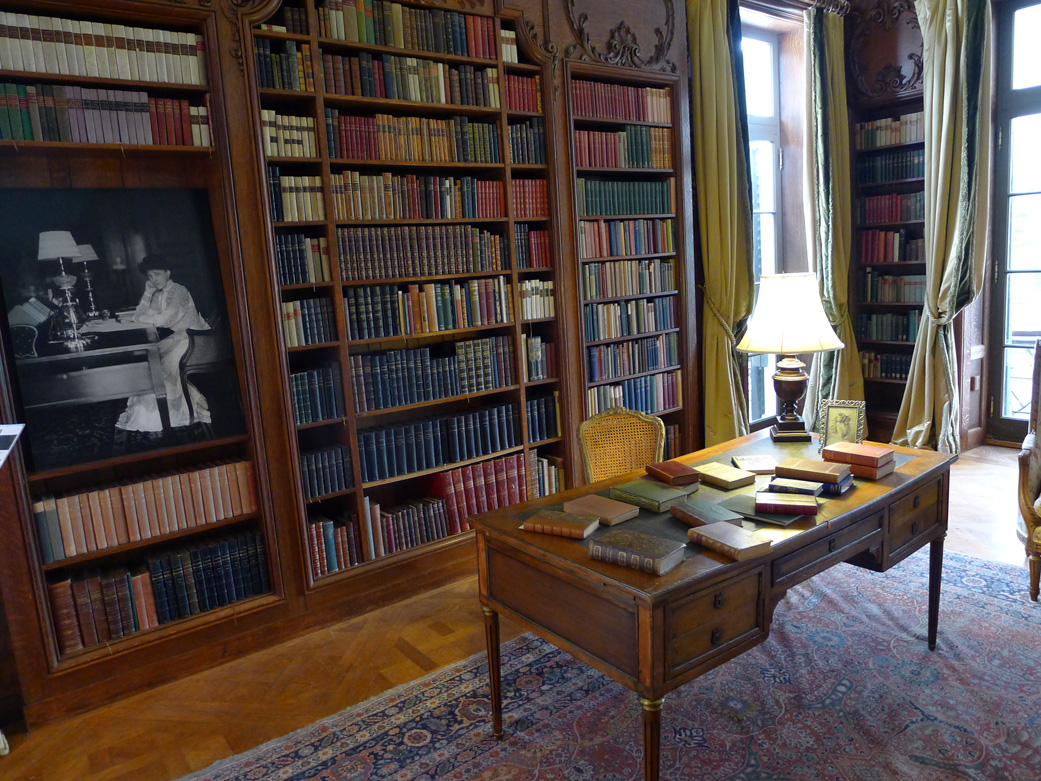
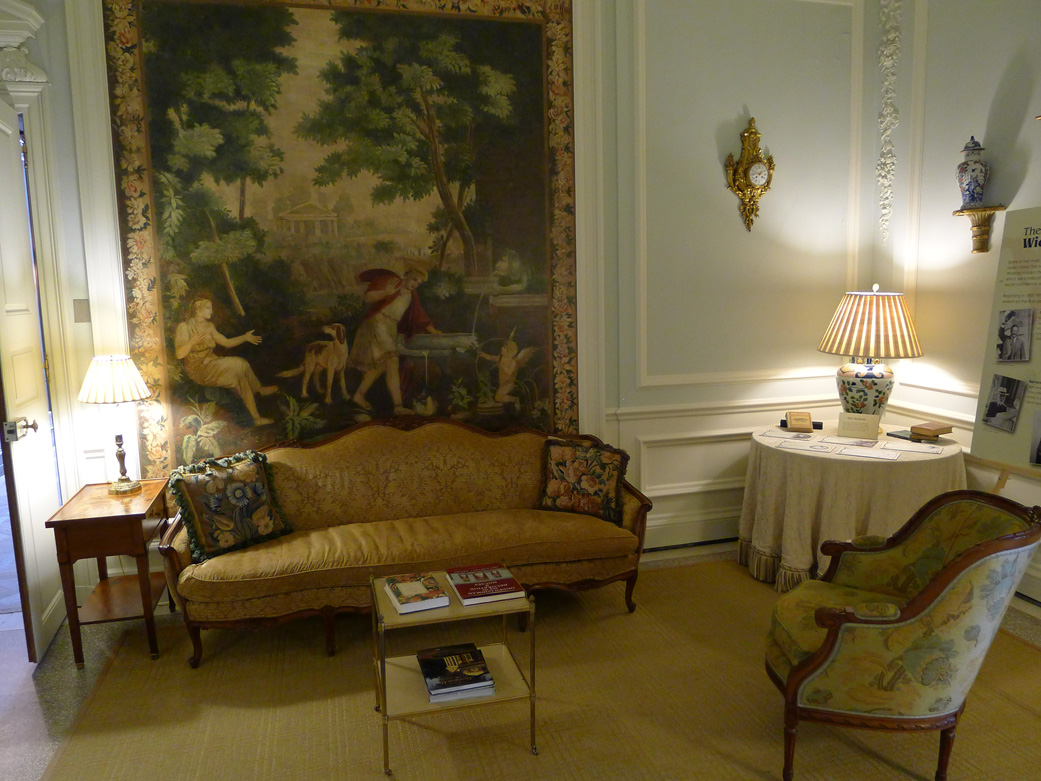
If you happen to visit the area, make a point of stopping at The Mount. Bear in mind that Ms. Wharton lived in that home. I marveled at the scale of its history, its art, design and much, much more .
All in all, I appreciated even more, the permanence and accessibility of books. They are tangible, finite in its content and physical features, yet infinitely capable of challenging your imagination and expectations. Such is the attractive symbiosis of humankind and the inanimate. Both are needed to create and sustain history, the arts, the sciences, and the stories that take shape into something palpable. A lot of my creative and professional work involves digital technologies. The past 2-years have made that more than obvious. Zoom meetings, laptops & desktops, flash drives and the always-on platforms in social media. We can access a myriad of things electronically, online of course, and the ease of that can make astringent our feeling and thinking from engaging in life that’s face-to-face. Books tend to provide the opposite for me. The pages in a novel can transport me to wherever. The sensory experience of turning and feeling pages are the toner that can spark my imagination and involvement in life. Recall Emily Dickinson’s poem, There is No Frigate Like a Book. To me it’s the leitmotif, that binds our imagination through the settings created by writers and authors. And I don’t need an app or device to open books.
As mentioned earlier, the Berkshires is more than a destination; for many, it’s a way of life.
There is no Frigate Like a Book There is no Frigate like a Book To take us Lands away, Nor any Coursers like a Page Of prancing Poetry – This Traverse may the poorest take Without oppress of Toll – How frugal is the Chariot That bears a Human soul. Emily Dickinson
Time, energy and focus are 3 KPIs [Key Performance Indicators] for mulitasking. And likely there are other indicators, and for those, I’ll need an ombudsman to help reset my already overloaded brain. In any one of these factors, you either have it, lose it or want it. For the most part, I’d say most people want them all, or to at least hold onto whatever’s in you.
However, multitasking is not really multitasking.
Ms. Nancy Napier, Ph.D. and contributor to Psychology Today identifies it more as “switch-tasking.” For decades we’ve heard that new electronics and computers and software are supposed to help make our professional lives much easier and faster, that’s rarely the case. Many of my marketing projects are open—actually minimized—on my screen. Perhaps “minimizing” those open windows and apps is in actually diluting the strength of your project[s]. Dr. Napier points out switching between projects is counter productive. In fact, it takes a good amount of time and energy to realign your mental details jumping from one open project to another. All of this creates stress [but we already knew that].
As Dr. Napier puts it, multitasking is mentally and physically rough on anyone. The mode of working start-stop-start-stop-restart becomes a catalyst for mistakes, inefficiency and time lost. As the saying goes, “Well, there’s 30-minutes I can’t get back.”
Did you happen to notice the bee in the first photo [the sunflower]? No, well, were you multitasking….excuse me, “switch tasking?”
If you want to feel good about yourself, do something good for someone else.
When I attend corporate events, I typically fly beneath the radar. That’s especially critical when I bring along my camera [which is most all the time]. I take photos—mostly candids—at these gatherings for “professional use.” Our website’s “In the Community” page—as well as other online channels—[Wordpress; LinkedIn, e.g.] needs frequent feedings. Relevancy and recency make for a stickier post and in turn help garner additional impressions from visitors and referrals from around the web.
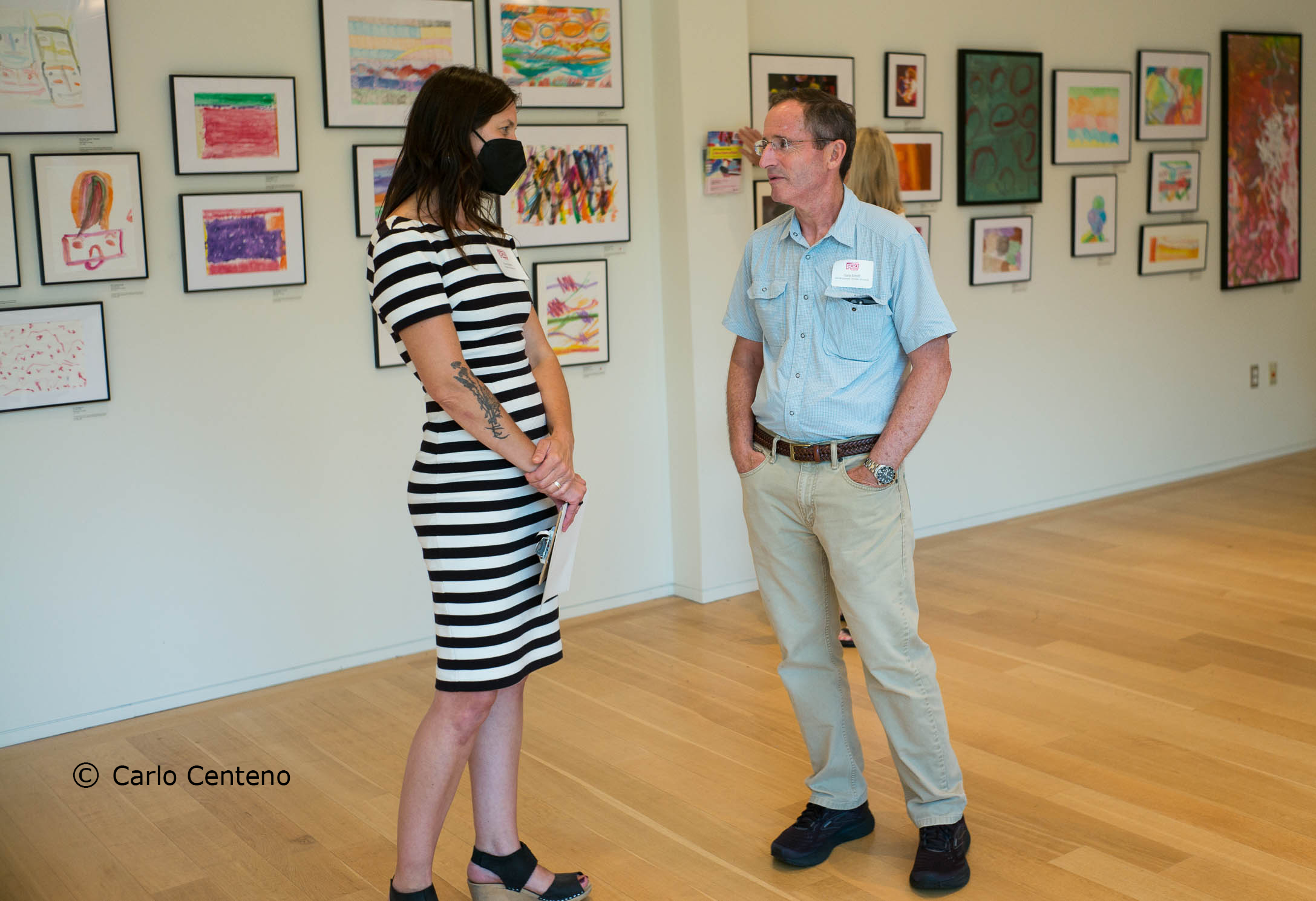
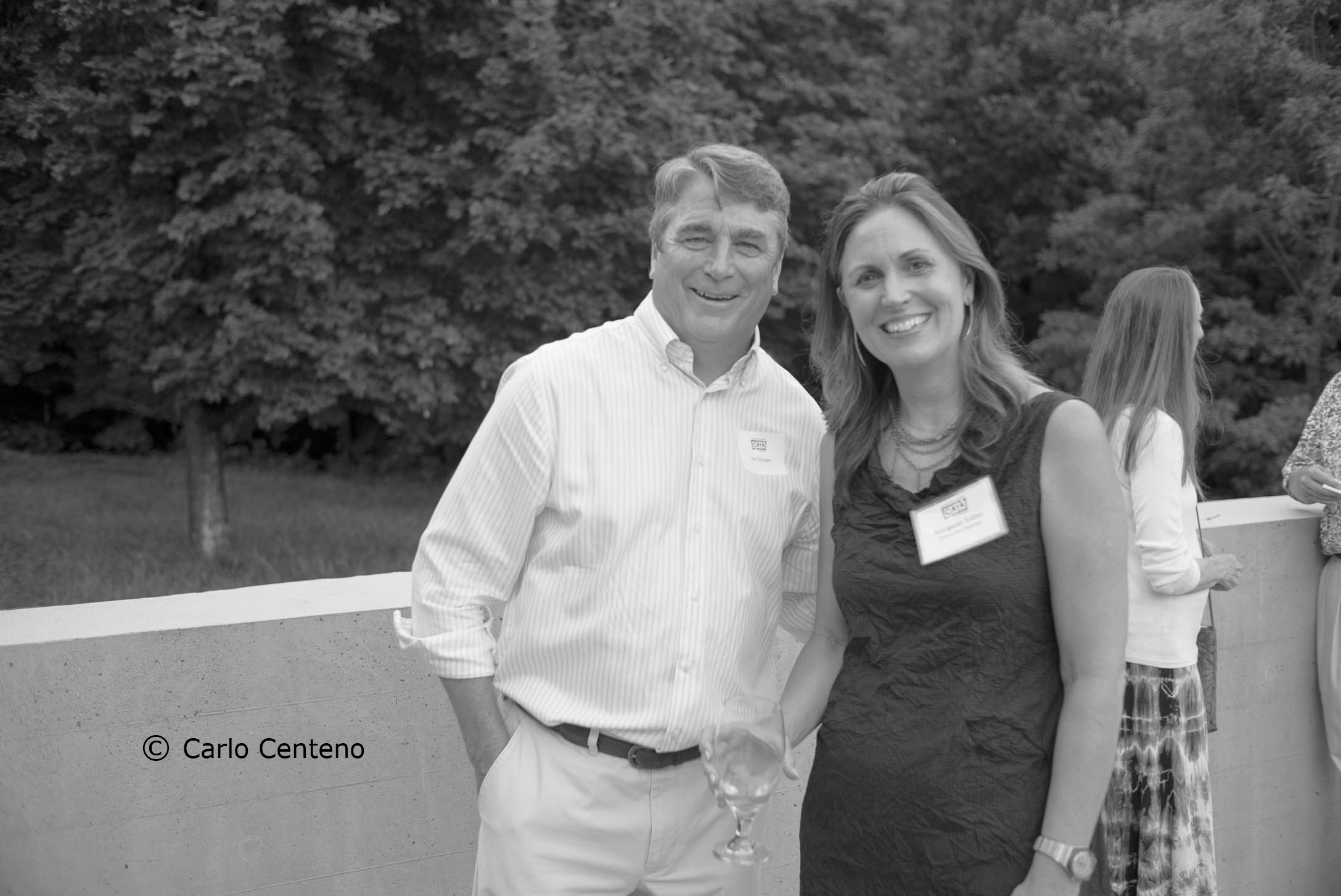
Community Access to the Arts, aka CATA, is a non-profit that continues to captivate many in our region. Their mission is peerless in a number of ways; physically challenged artists have a way to express themselves via painting on a canvas [or on acrylic, wood, among others]. They also have the opportunity to earn a commission from the sale of their work. Executive Director Margaret Keller along with founder Sandra Newman and many others have made CATA into an agent of life, possibilities, renewal, community and stewardship. Getting to its current form took a lot of invaluable, selfless giving on their part and from others.
The CATA annual summer art show started with an exhibition at The Clark Art Institute in Williamstown, MA. It’s an impressive collection of work. Click here for a virtual tour of the CATA exhibit along with other information about CATA and the othering offerings here in the Berkshires. There’s still plenty of summer left, so get out and enjoy what’s available. Immerse yourself in the possibilities.
Hancock Shaker Village
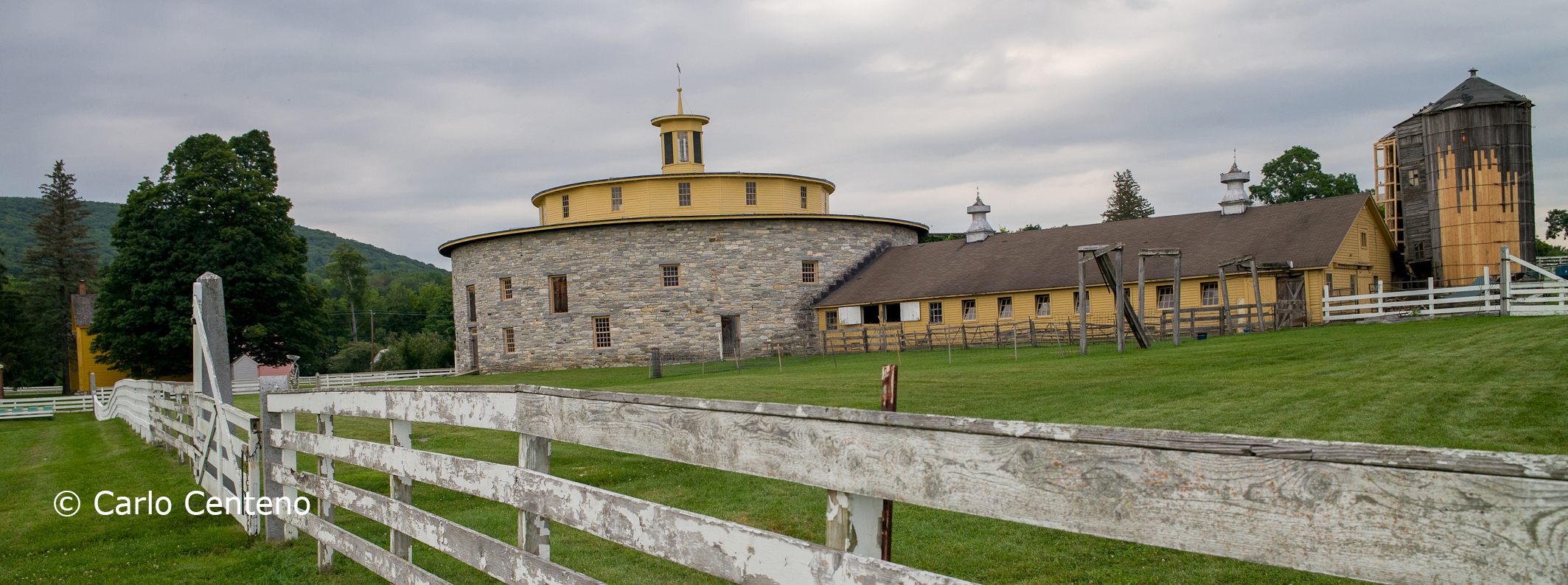
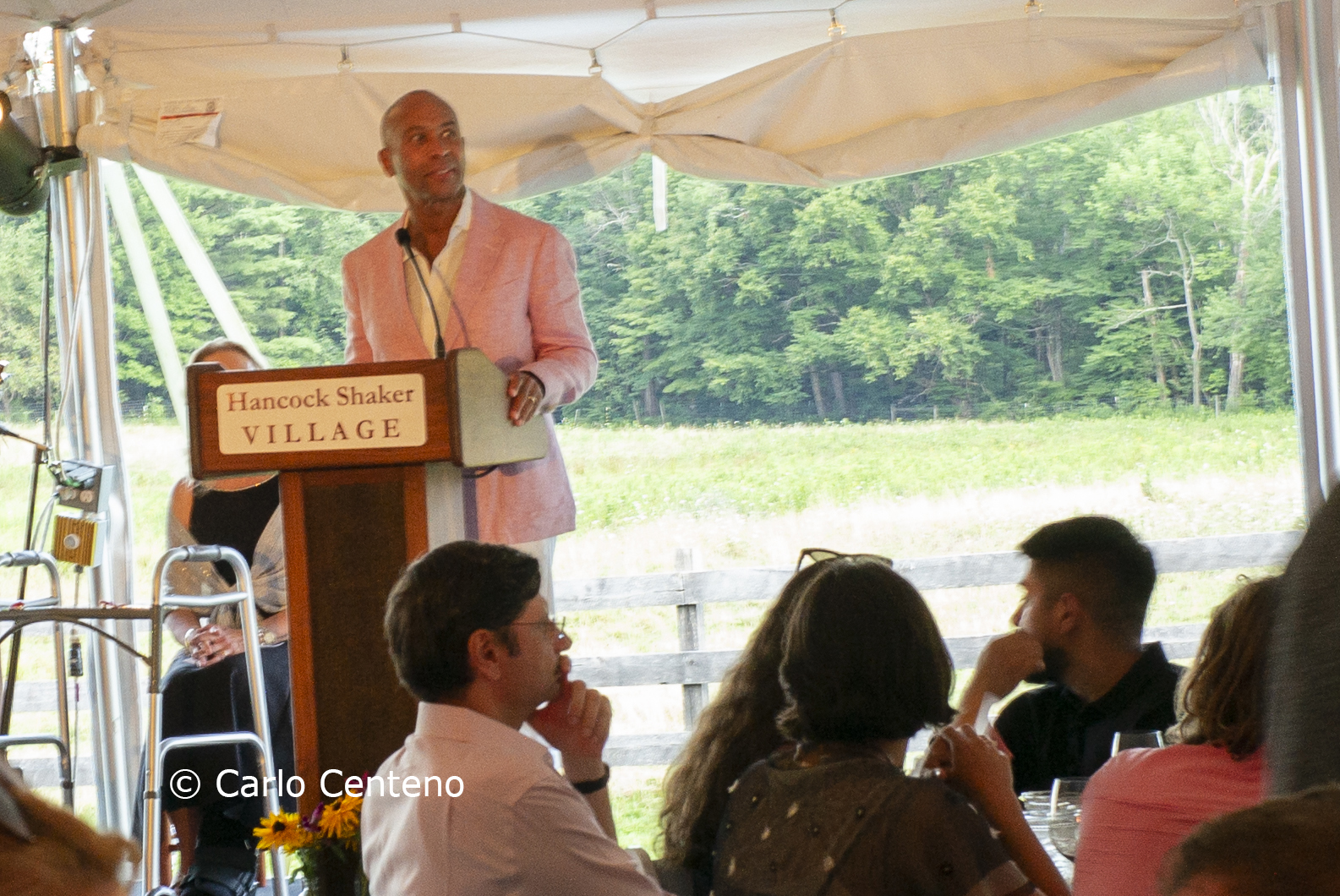
From the Clark, travel southwest to the town of Hancock and you’re sure to encounter a timeless, living museum.HSV is that and a lot more. The Shakers were a religious order dating back to the late 1700s in England. More than that, they were part of a movement that contributed to the freedoms and cultural growth that are integral to the broad fabric of American history. At the annual summer gala, Executive Director & CEO, Jennifer Trainer Thompson spoke of her time at HSV, a 6-year slice of time that, as they say, happened in the blink of an eye. As mentioned above regarding CATA, it takes a tremendous amount of giving to make Hancock Shaker Village the place that it is now. The combination of time, energy, and financial support, given to these 2 non-profits [like other non-profits, for that matter] make these institutions an indelible resource for many communities, near and far.
What a strange, odyssey we are on. Are we in the initial stages of a pre-dystopian epoch? That’s an unnerving take on our tomorrows. I am as guilty as the next for failing to live in the moment. Thus you could–and perhaps should–interrupt my ruminating about the past while also worrying about the future.
No one can undo history and the future is not promised to any of us. So, it’s the here and now, the very present moment where we consciously or rotely go through our lives with purpose or with routine motions of day-to-day life.
Fly fishing for many, for me, is part of life. Time spent on the water delivers familiar notions of preparation, anticipation and the knowledge that the day is, quite frankly, a gift. With all that’s going on in the world, I would say most readers looking at this are doing much better than many others. And having the gift, a day such as being able to go fly fishing is one that should not be taken for granted. Getting to a favorite spot–whether somewhat new or all-too-familiar–jump starts my awareness for the here, for the right now. For those few important things that are usurped by the ephemeral things that entangle us, yes, we all need to live in the present moment!
So, on this Independence Day weekend, take a chance. Make the most of whatever day you have. Any one is a gift. Even when things go awry [I fell into the water moments after releasing this trout!], or not according to plan [I could’ve left the water empty handed but for the wet clothes that chilled me to the bone!] , don’t dwell on what might’ve-could’ve-should’ve happened. That’s done.
I think you’d be much better off acknowledging how far you’ve come.
And for the aspiring fly-fisher, that beautiful brown was caught and released on an an unusually cool late June, mid-morning [10:00 am?]. The details: o I used a #16 pheasant’s tail nymph I tied with a barbless Partridge hook [unweighted]; o tied to a 5X fluoro tippet about 2-to 2 1/2 -feet in length; o attached to a tippet ring on a 6-foot furled dacron [?] leader; o to a 4WF fly line; o spooled onto a Grey’s cassette reel with #20-backing o all collaborating with a Winston Biiix 9-foot 4WT fly rod
To be a master of something–musician, painter, composer, fine art photographer, athlete, dancer, among others–one must be willing to dedicate 10,00 hours to become a master. Author Malcolm Gladwell in his best seller, Outliers: the Story of Success, offers that requisite number in order to reach the pinnacle of your skill set. Gladwell has a point, but his critics have also noted that time and practice are only part of the formula required to achieve mastery.
Firefly and Fan on a Plate
It’s been said that the 10,000 hour rule is not a complete answer; in fact it’s only part of an even greater whole that involves, an individual’s patience, persistence, motivation and commitment to arriving at that zenith of expertise. And then there’s the detail about the ambitious student and the environment she/he lives in. Dynamics in culture, support, the actual starting age [5 vs 35 years of age], the type of discipline being pursued and so on. I know I’m missing some important research areas, but I’ll admit my interpretation in becoming a master of something is duly influenced by past and current understanding.
The Hare with Amber Eyes
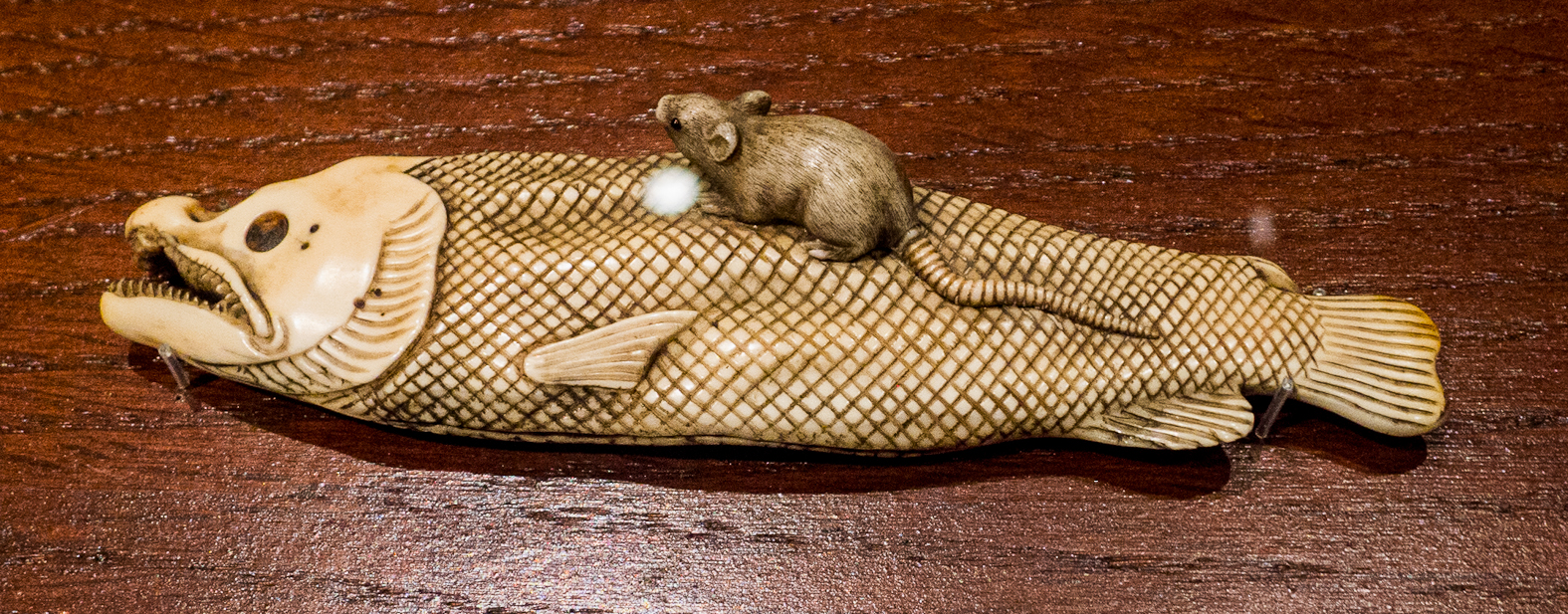
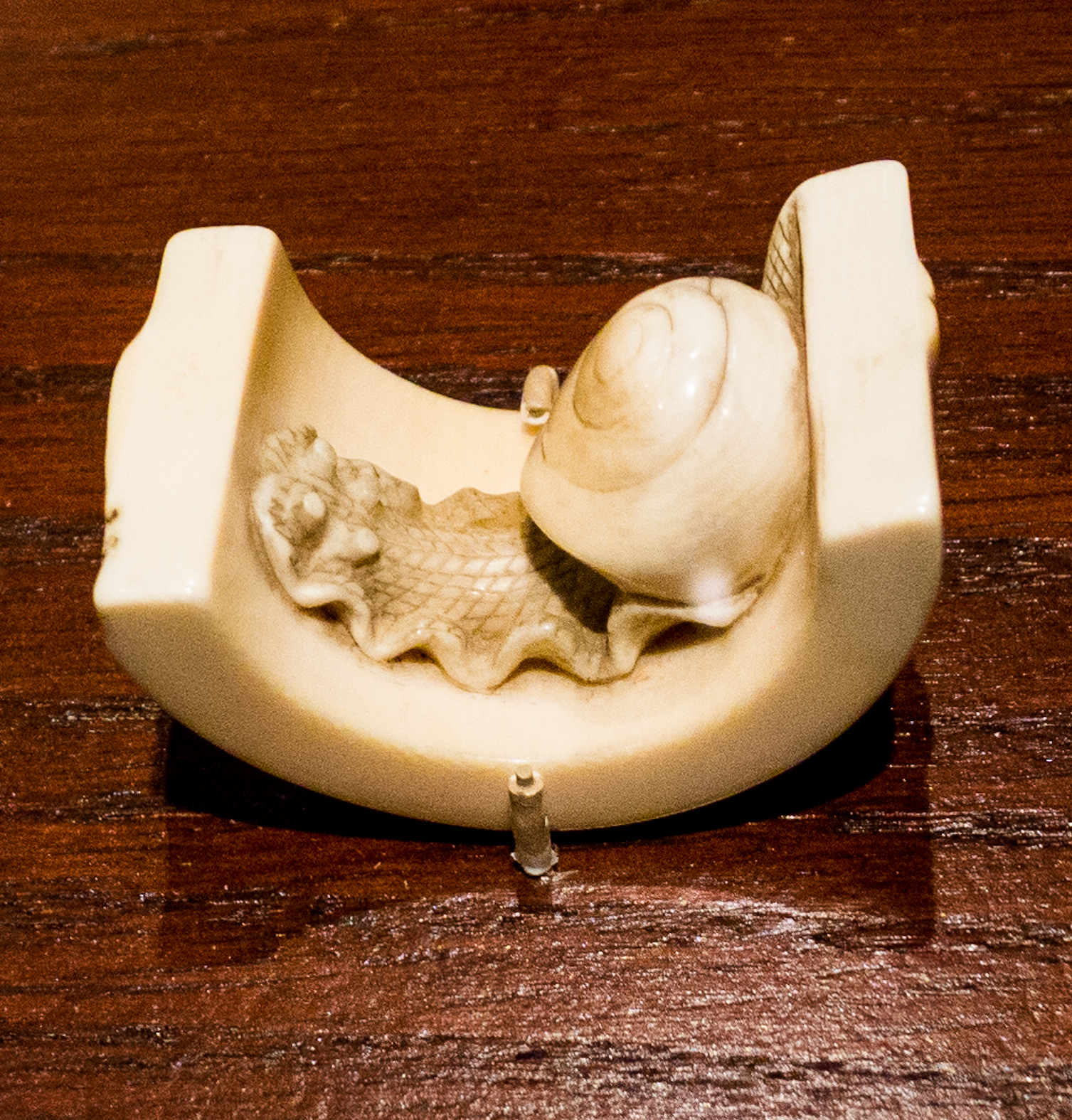
You’re looking at buttons, or Netsuke, each hand carved to represent some aspect of Japanese culture. Many of these small pieces offer an amazing amount of detail, some of such complex design, I wonder how any of the work could’ve been done long before laser and water cutters were invented.
Mouse on a fish [the white dot is a reflection on the glass]
At the turn of 17th century Japan, these buttons or toggles were crafted to hold pouches and small items onto the sash [“obi”] of a man’s traditional attire. Seeing no pockets were fabricated in the clothing, the only way to carry a pipe or talisman or something else small, one needed a netsuke.
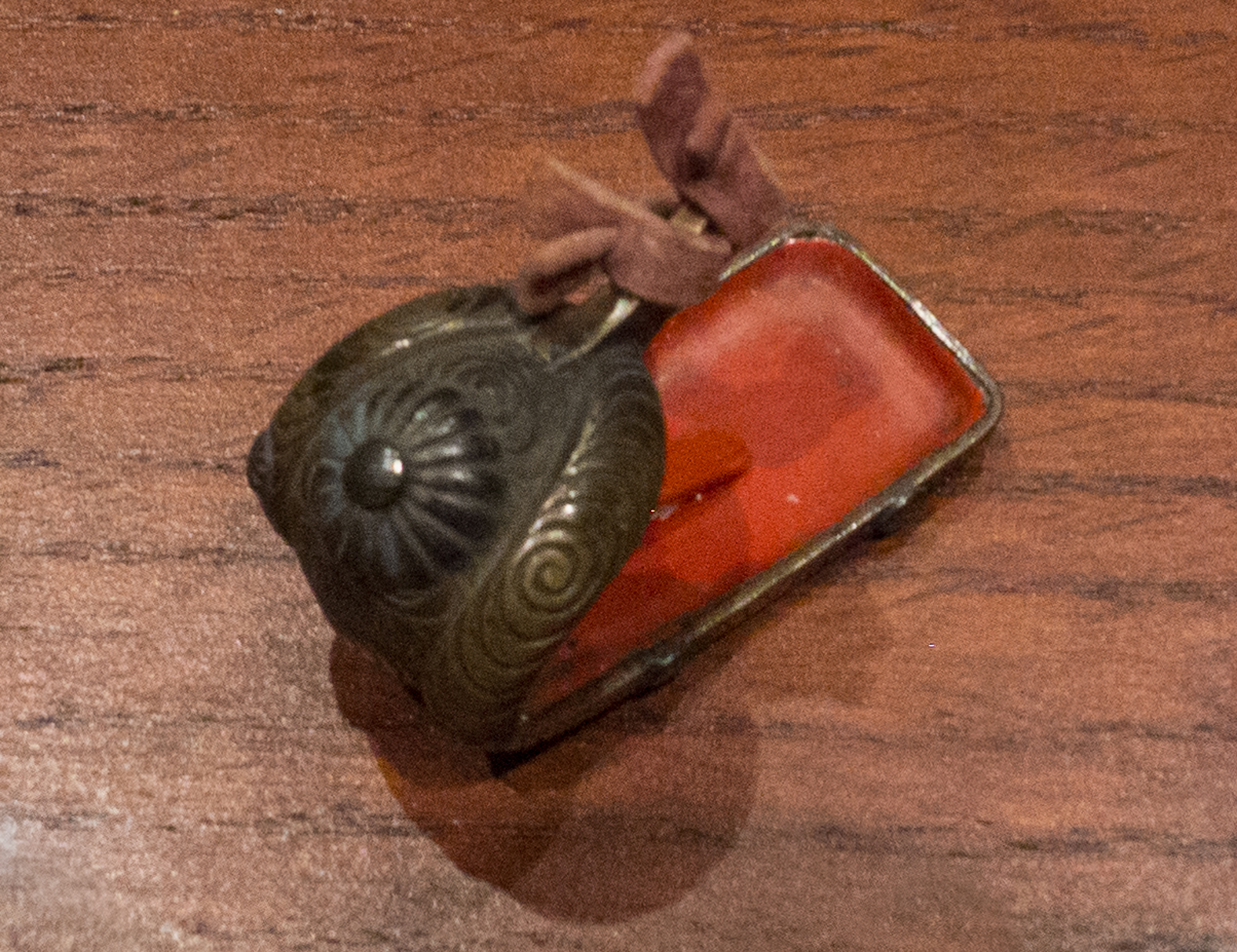
A stirrup fashioned from hardwood.
A myriad of designs and materials were used to create them, and the cognoscenti of these artifacts cherish them as not just statements of culture and tradition, but as pieces of art, of craftsmanship and a tangible expression of patience. I’ve read that some of the more valued netsuke have actual layers layed up onto the main body. Some of these additions included gemstones and other esoterica pertinent to Japan and/or the creator.
I’m sure many know that life’s journey produces a few, “….well, I didn’t know you did that….” Through the years, I’ve worked with a lot of talented professionals who have made me look good because of their skills and various competencies. I’m a practitioner from the, let-them-work-from-their-strengths school. There are some things better left to those who really know what they’re doing.
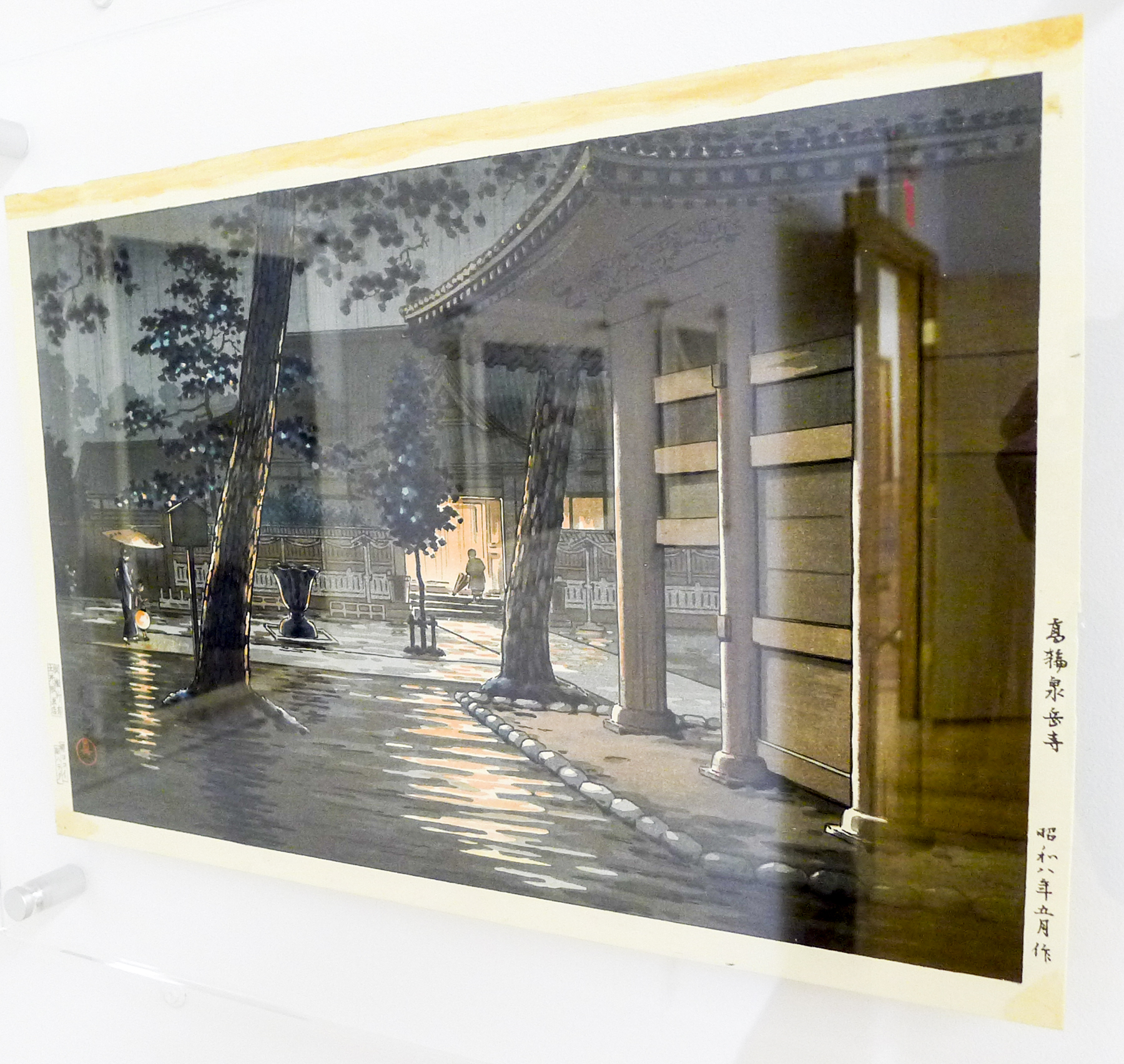
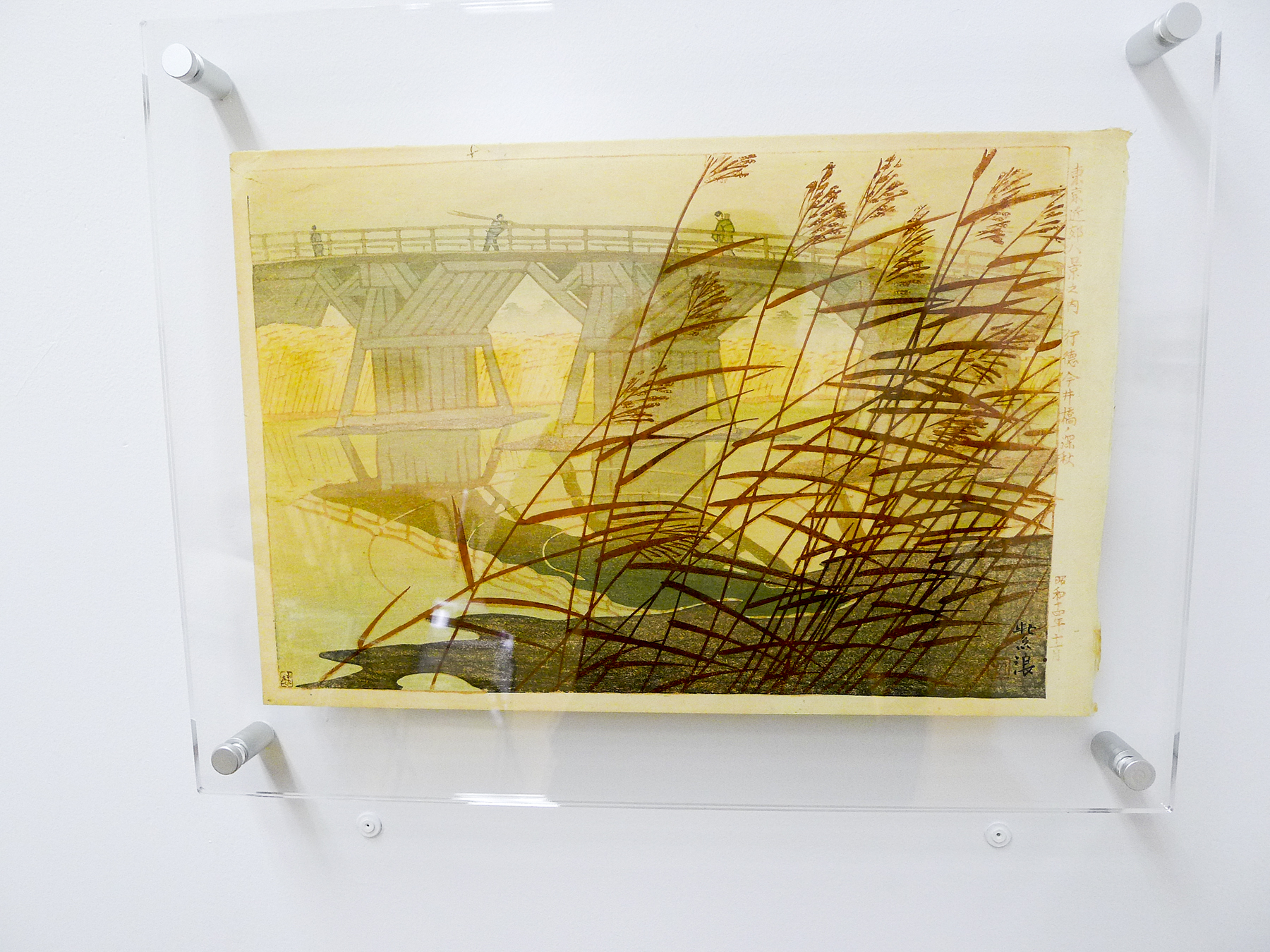
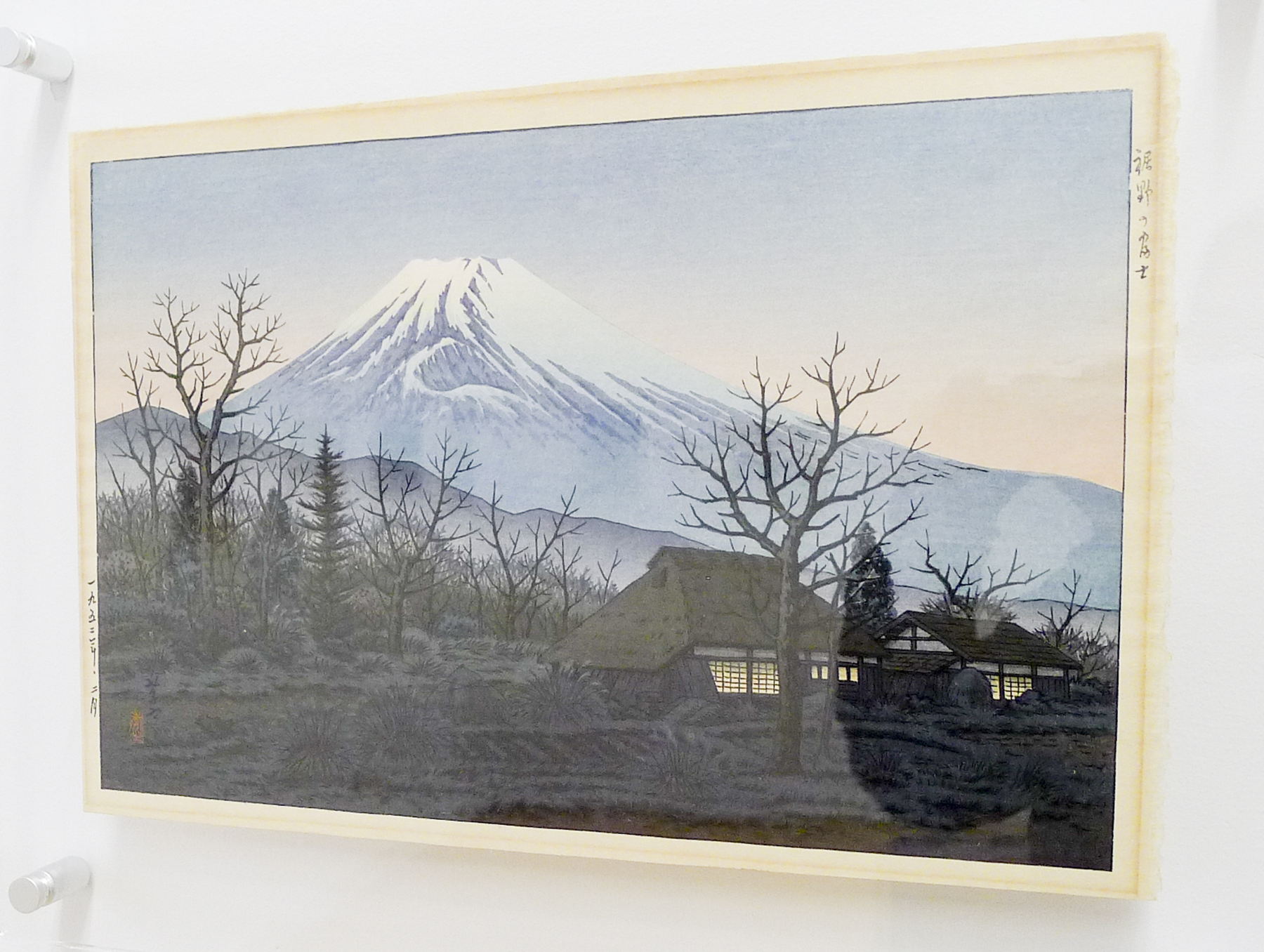
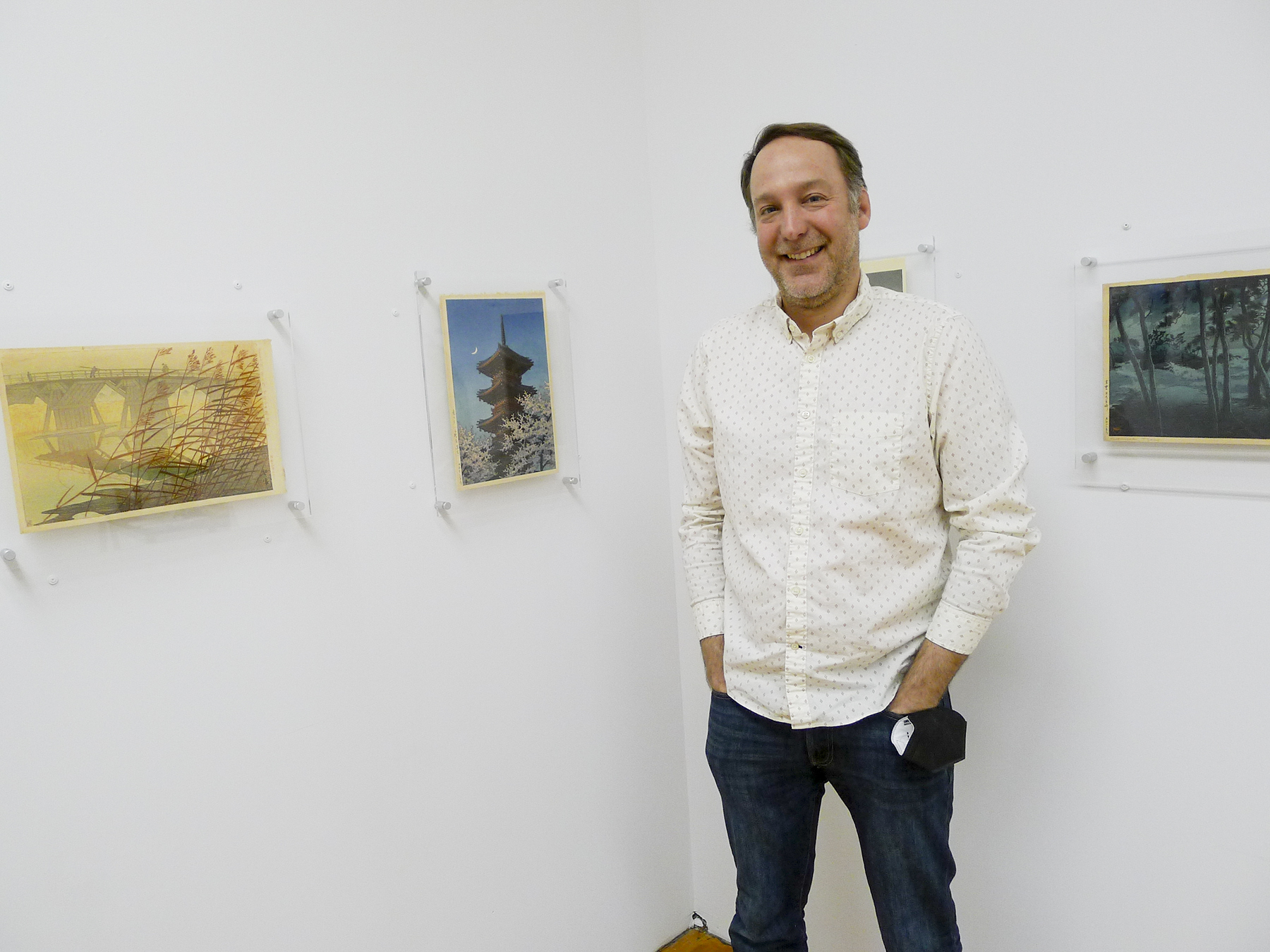
Recently at MAP Gallery in Easthampton, MA, David Kutcher, the principal of Confluent Forms, had a show of Japanese wood block prints. Together David and I have worked on corporate communication projects through his digital and website firm. He sent me an invitation to this opening. I knew something about his interest in Japanese prints, but as I told David at this show, I simply said, “…I didn’t know that you were involved with collecting actual Japanese wood block prints.” It’s a fascinating art form with a long-standing tradition that not many folks hear about, let alone having an opportunity to see an actual print.
All pieces are original, some signed by the artists and others being initial production proofs that have an attraction all their own for aficionados and collectors. The details, colors and registration of the art are nothing short of incredible. I’m oversimplifying, but each color on the paper is made from an imprint from a series of wood blocks. If 4-colors are required, then 4 specific wood blocks containing details would be created. I wouldn’t be out of line if I thought the entire creative process was painstakingly purposeful and lengthy.
However, the end justifies the means. You need to see, even touch, one of these beautiful prints. Nothing compares to seeing these prints in person. It’s taken years for David to build a collection and working knowledge of the who’s who of this medium. In fact, his knowledge has been sought after by collectors, museums, art dealers and galleries.
Surprise! Surprise…!
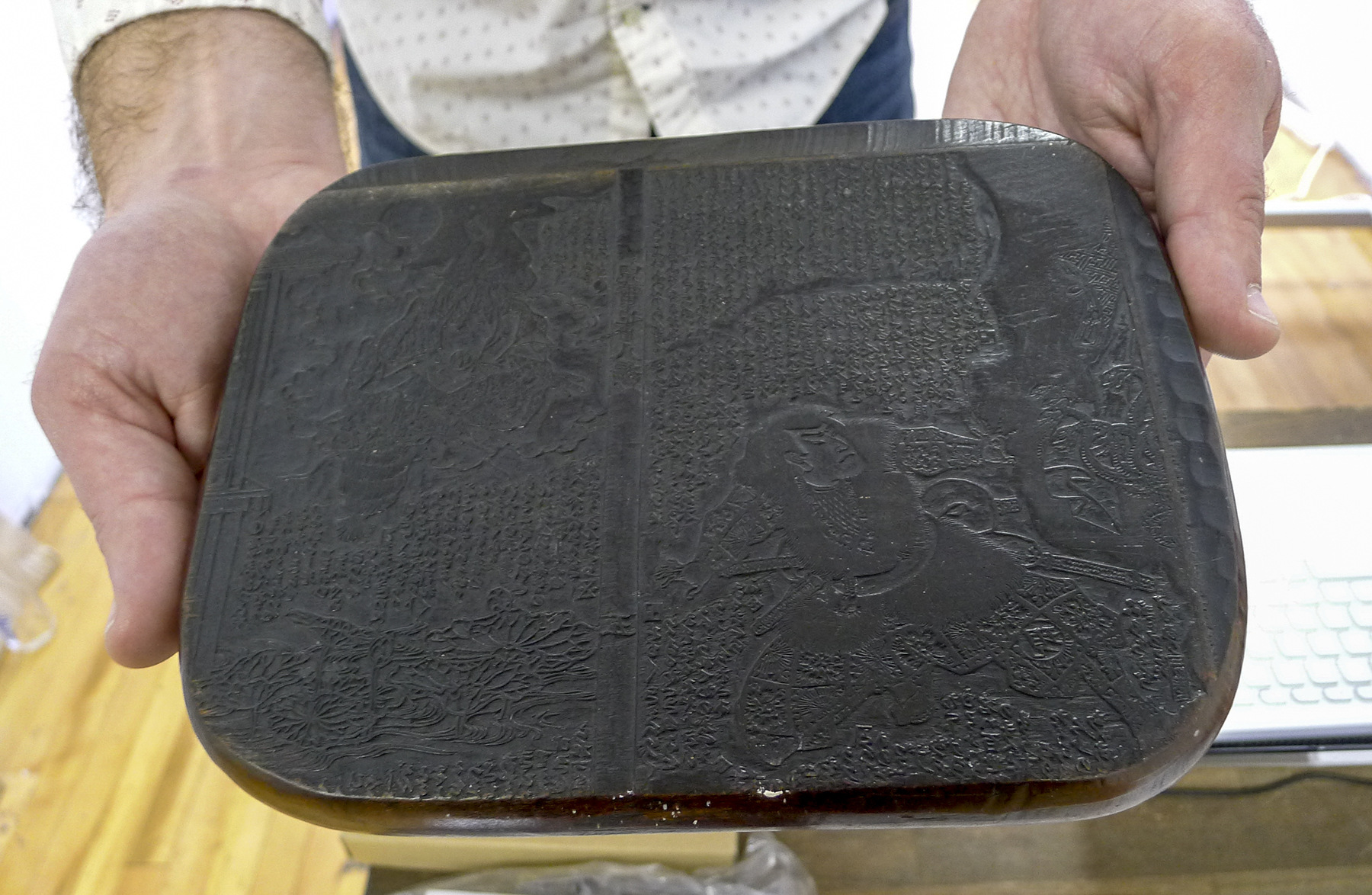
One of the more unique acquisitions he owns is a candy tray, a wooden candy tray. For years its sole function was just that. I can see how a family could use this pretty piece of wood as a repository for wrapped chocolate mints or lifesavers. However, it was more than just a pretty tray to hold a postprandial treat. Flip it over and note the bottom was designed to purposely create a print. After scanning the block and tweaking the digital image for clarity and legibility, David did some research and discovered that the block he owned was part of a series that made up a leaflet or booklet.
The “candy tray” wood block and the cover of the leaflet that holds that page.
This was quite a find and a unique bridge tying both the finish artwork and a block used in its creation. While his day job keeps him quite busy, his time studying, collecting and marketing wood block prints is an endeavor that keeps his mind, body and soul in an enthusiastic and balanced way of managing life’s uncertainties.
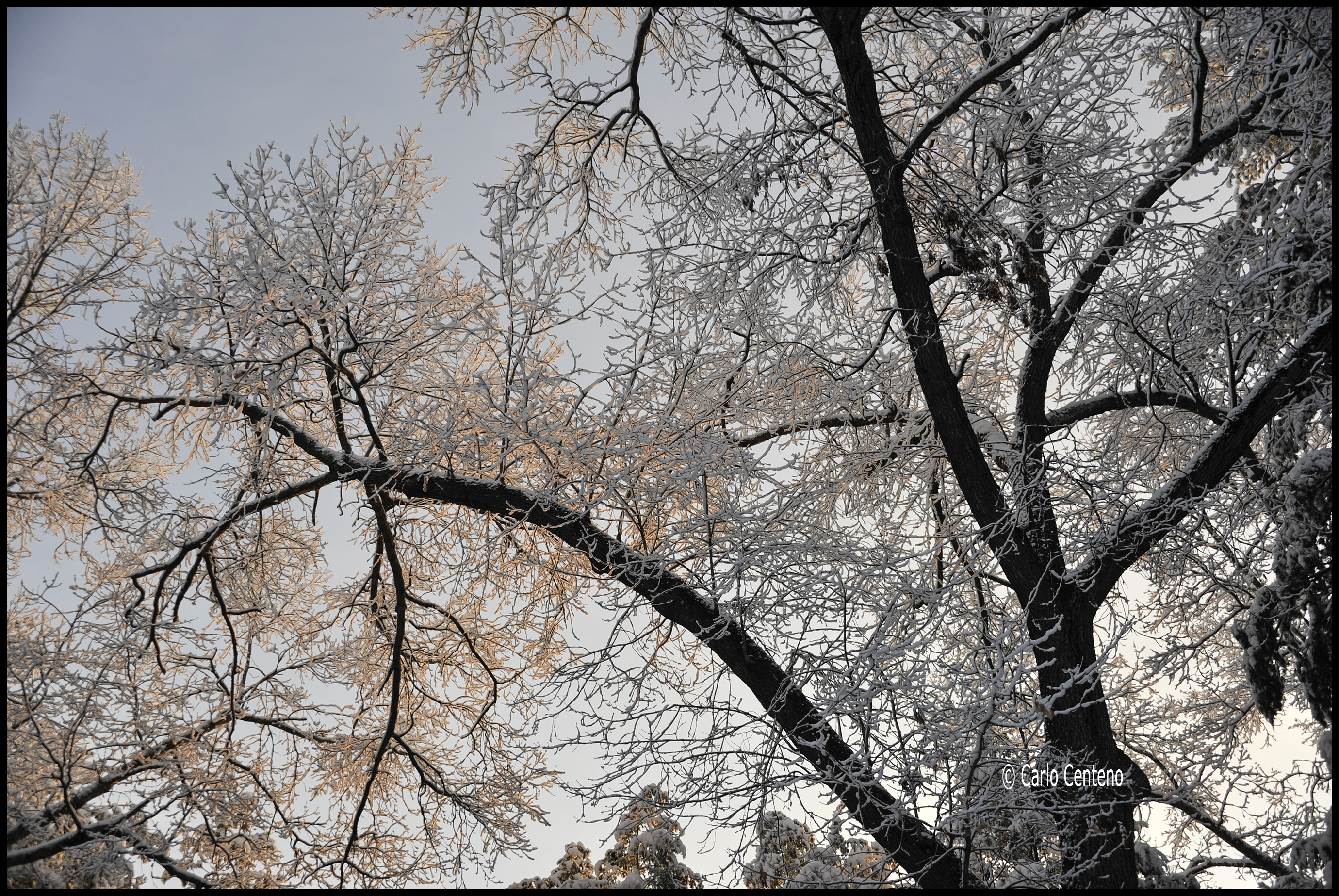
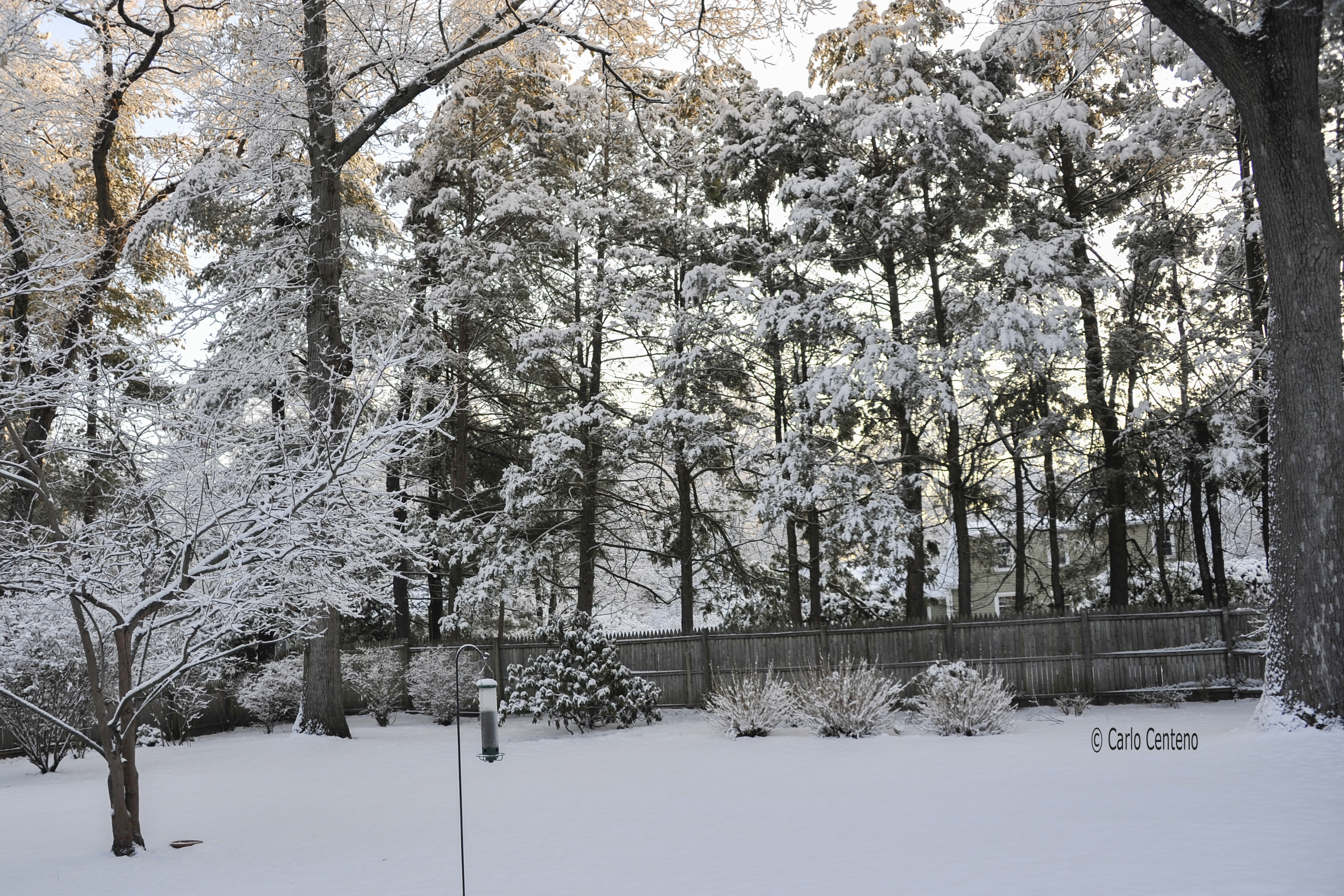
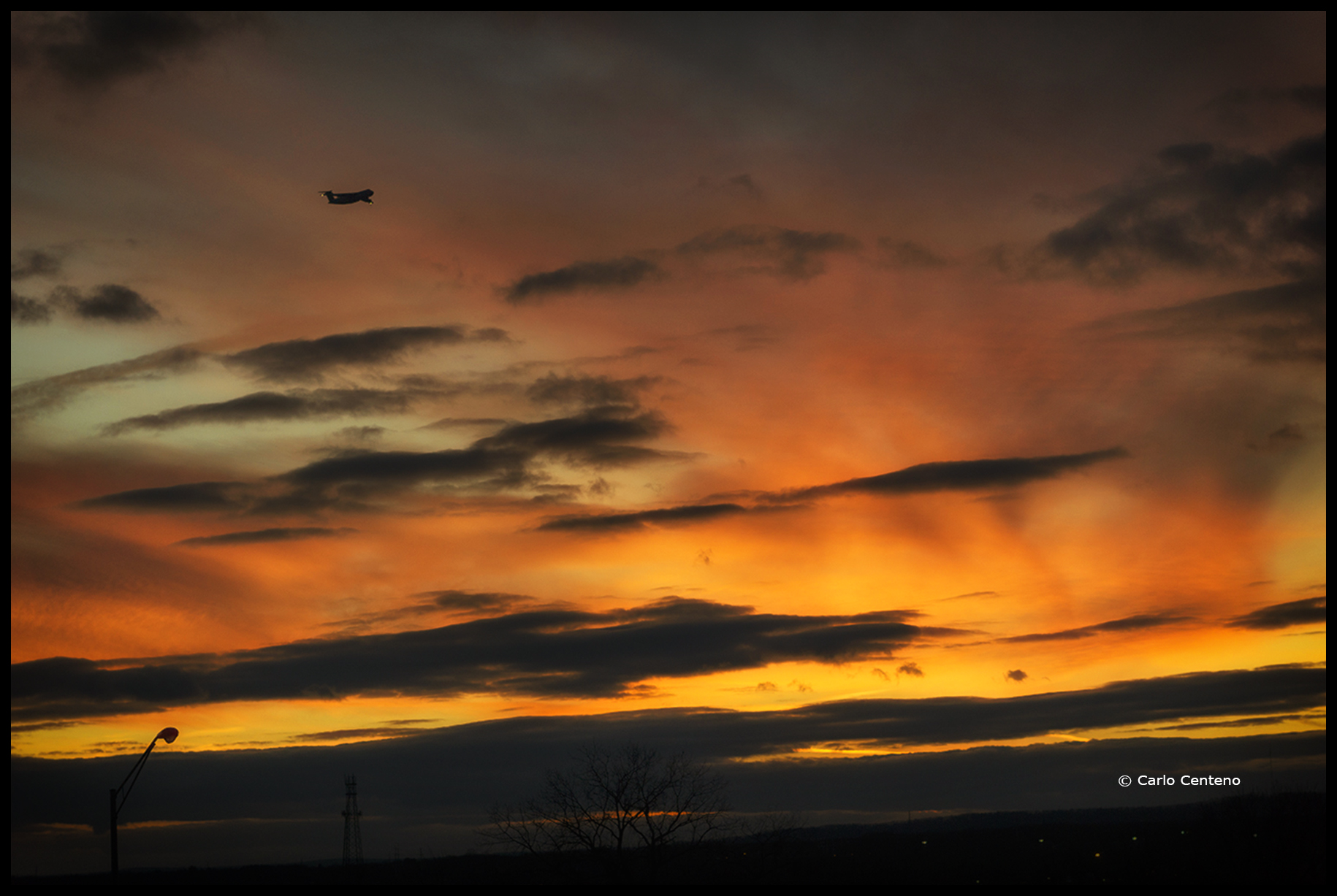
They’re all around us. Analogies are everywhere. This morning several analogies appeared after an overnight snow powdered trees, shrubs and bare ground. There is value in being part of your surroundings, and depending on your frame of mind and mood, the time spent can be cathartic. The morning’s analogies are fleeting, ephemeral. For the most part, the majority are short-lived.
My waking-up-time leaves much to be desired as I totally missed a fiery sunrise. From a window in the dining room, the bold orange and red brushed across the eastern sky is a familiar calling card for this anachronism with a camera. However, by the time I was ready, the sky instead gave me an anticlimactic pale blue. Gone in the blink of an eye.
I’m reminded of the proverb, “He/she [my pronouns] who hesitates is lost.” I had lost my opportunity earlier this morning when I failed to get outside to photograph that spectacular burst of color. This adage comes from playwright Joseph Addison’s play, Cato in 1712, and its adaptation is as universal as any other truism. I’m not the least bit surprised at the lesson the saying delivers. In an attempt at action and decisiveness, there seems to be a lot of hesitation. And when one hesitates, that window of opportunity often closes in short order.
Hesitation can infer caution just as it can suggest a lack of confidence. For the former, it means we’ve avoided some form of discomfort or harm, as for the latter, I believe that having little confidence is what causes most of us to choose not to do anything. Hesitation–whether in avoiding some perceived element of danger or wanting some level of certainty and sense of purpose–means either choice denies us any affirmation of what could have been.
After several minutes, the snow started falling away. Pine boughs loaded with snow started lifting just as the snow fell. Clumps dropped from many of the trees, the branches were once again dark and monochromatic against the blue sky. It seemed the snow vanished in the blink of an eye. Ultimately everything appeared as they were before: familiar though dark, even mysterious.
The fast-melting snow was like time running its course in the last minute of a hockey game or any other sporting contest. Was there an opportunity early on to change the game’s outcome? Ultimately it comes down to an either or decision. Actually, the third action is not to do anything at all, but the complexity of choosing inaction is an essay for another posting.
I’ve lost count of the moments I hesitated making a decision. Similarly, that count is lost on the moments when I did not hesitate, only to wonder if my action was perhaps just too fast.
Many things go pass us with nothing more than a slight pause of time. Sunrises, sunsets, snow melting, a game played in overtime and so on. Time for me to do something else.
……From a distance You look like my friend Even though we are at war. From a distance I just cannot comprehend What all this fighting’s for. From a distance There is harmony And it echoes through the land And it’s the hope of hopes It’s the love of loves It’s the heart of every man It’s the hope of hopes It’s the love of loves This is the song for every man. God is watching us God is watching us God is watching us From a distance.
On a recent flight home, 2 songs came to mind. An epiphany of sorts became apparent as I looked down on Springfield, Massachusetts and Ski Sundown in New Hartford, Connecticut.
Ski Sundown in New Hartford, Connecticut
In light of the Ukraine-Russia war, it’s not a stretch to understand the effect of distance when watching something from afar. Things are not always as they seem, but up close, enough details emerge to create a clearer picture. Most of us see what’s happening from a distance, from the safety of our screens playing out “breaking news” of the terror and the maddening reality of one country imposing its incorrigible intentions on an independent nation.
At 29,000 feet [8,839 meters]
At altitude, it’s easy to “not see” the actualities of what’s coming and going at ground level. And yet what impacts me the most is how the innocents and defenders suffer and die, of how the children struggle to understand this detestation that arrived from nowhere. Modern journalism can report events as visceral and undiluted, anywhere at anytime. In that sense, we see more than what we want to.
I leave this post with the words Enjolras sang during the scene At the Barricades, from the musical, Les Miserables.
Do you hear the people sing? Singing a song of angry men? It is the music of a people Who will not be slaves again.
When the beating of your heart Echoes the beating of the drums. There is a life about to start When tomorrow comes.
Les Miserables by Victor Hugo Les Miserables, the London Musical, trademarked by Cameron Macintosh Overseas.
I’ve essentially distilled it down to 2 things: life with a pen in one hand, a camera in the other. I dropped the nav tabs on marketing, personal branding and emotional branding [that 3rd one, I’m not 100% certain of]. Did I do a screen capture of the previous home page before making these changes? Heck, no. And it doesn’t matter quite frankly.
A lot of my waking time is spent on marketing, which is well and good, but all marketing and no play makes this mortal’s life a bit one-dimensional, don’t you think? I might be struggling with idiopathic post-Superbowl advertising distress which is what likely prompted my actions regarding my blog tweak. Yes, the commercials were interesting, entertaining and in some cases worth remembering, but did you remember the advertisers, and if you did, which ones? Hence, my idiopathic distress, which prompted my attention to simplicity.
We have enough complexity in our world today; think Occam’s Razor, often referred to as the principle of simplicity.
In just the past 2 years, there’s been quite bit of change and we know still more changes are coming. In an abstract yet very real sense, change is always in motion. No sooner when one particular action or event “completes” a change, then somewhere else, another action or event changes.
And we know of some companions that are inseparable from actual change: the shadows of discomfort, frustration, ambivalence and cognitive dissonance that move us out of our comfort zone. So, we resist or adapt. We deny or cope. We make the best of what’s handed to us and move on as we must.
When I allow myself a moment of observation in the present, or to live in the moment, I may see or sense a common attribute with change. We are creatures of habit, and most reactions to change are defensive: that’s not how things are done around here. The discomfort supports notions such as the saying, if it isn’t broke, don’t fix it. Granted, some actions and procedures may not be broken, but certainly many things can be improved.
No doubt the Hubble telescope still works, but humankind also possesses a good amount of, “so, let’s try this for a change….” in our quotients of intelligence and emotion. If we didn’t, then the amazing Webb telescope would never have been created. Change affords us an opportunity for improvement, the chance to move from the rote and familiar, to a condition of both collective and individual betterment.
Open your arms to change, but do not let go of your values. Dalai Lama
I am an odd person out. I’m certain I shared this in a previous post, namely that winter, the shorter days, the snow and the cold don’t bother me the way I know it really bothers a lot of other people. However, when freezing rain, relentless winds from the north and sleet show up, doubts perk up about my relationship with winter. My enjoyment of this season is greatly enhanced by a few other small details: no biting insects, most nasty smells are frozen in place, it’s easier to layer up to stay warm versus shedding attire to get cool. Fireplaces are invaluable for the way they comfort our weary minds and bodies. And then there’s the light. By late October, shorter days manifest that longing for days that end at 9:30 in the evening, versus 4:15 in the afternoon. But for me on any given day, winter light can be nothing short of amazing [well, to my eyes anyway].
For those enamored with snow, it doesn’t matter how you enjoy it, just as long as you get out to enjoy it. Snowshoes. Boards. Skis [alpine and cross country]. Insulated tie-up boots [aka “moon boots”]. Building snow forts, a snowman/woman/sculpture. Tubes, sleds, and toboggans. They all generate smiles at one time or another.
Even the most ardent worshipper of other seasons can understand why winter can be a favorite. There’s a sense of solitude, even in the busiest of urban environments. Indeed most folks are rushing—as it’s often said—to get out of the cold, to get inside to warm up. And yet there are those who look to get out to be invigorated by the cold air. When it’s cold, it’s only natural that you move to stay warm: motion generates heat and heat consumes calories and the consumption of calories means soothing cups of hot coffee, hot chocolate, hot soup, hot tea among other choices awaiting your selection. Admittedly, it is bliss having such hot consumables balance out the chill at the end of a day. The yin-yang of warm & cold becomes apparent.
A cold drink can bookend a hot summer day just as a hot toddy can on a cold winter day. This radiating cocktail of hot water, lemon, honey and a bit of whiskey is also hydrating, indeed soothing since it’s a drink perfect for sipping.
Cold light, winter light, is especially sharp when it reaches across a landscape as far as you can see. The shadows are longer and details stand out like bas-relief etched into tree trunks. On ski trails, the tendrils left by carving skis add to that dimension of depth, or even height, as if lengths of dark thread randomly lie atop the snow.
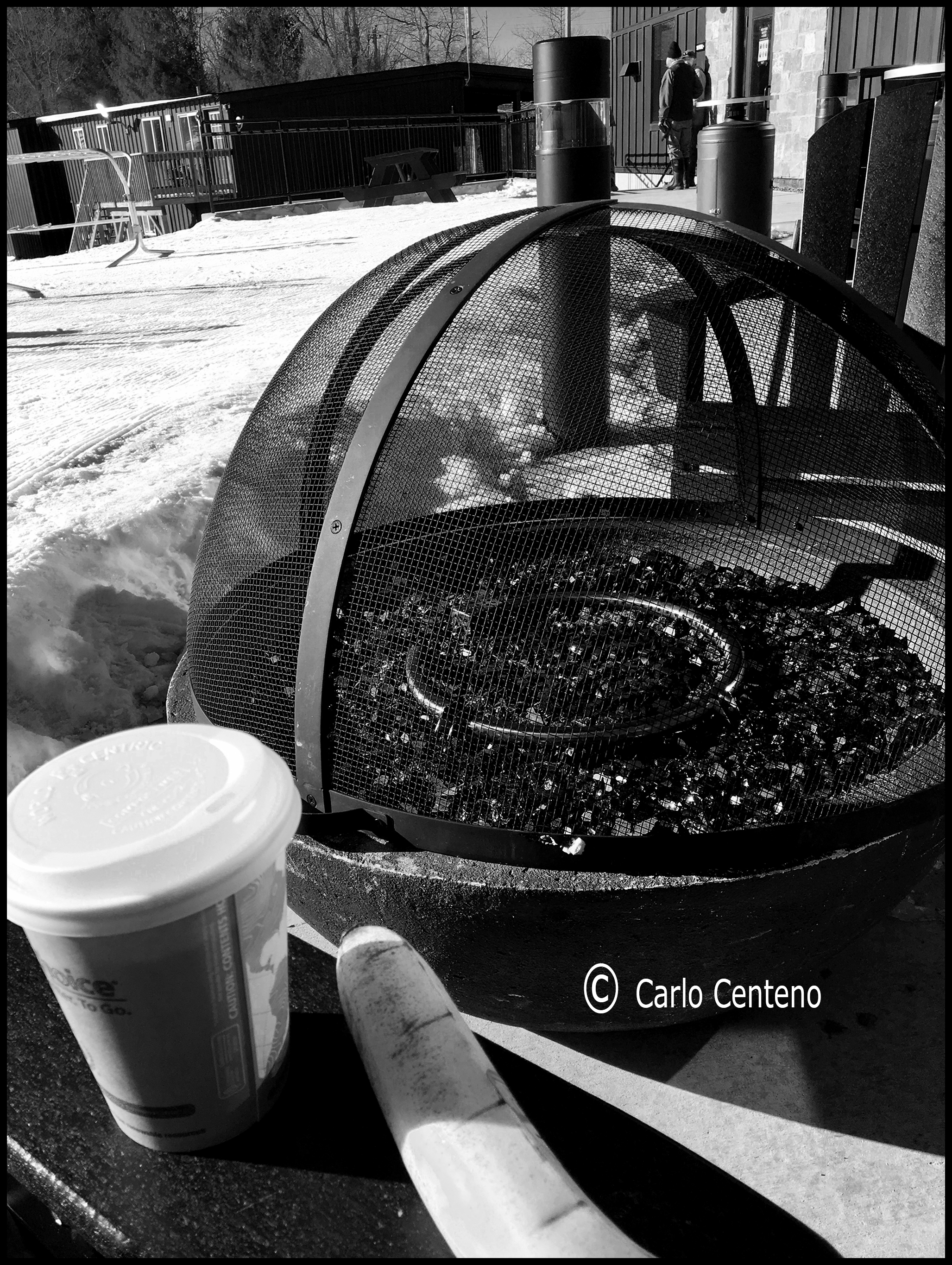
Winter’s light—especially later in the day—can feel cathartic and the sun’s warmth enhances this catharsis. A cup of hot chocolate, a banana, a comfy, large Maine Adirondack chair and a pit fire are all good company.
A benefit of changing seasons is precisely that: change. Here in New England, the 4 seasons do more than adjust amounts of daylight, colors of sunrise and sunset, the appearance/disappearance of flora, the transitions of both diurnal and nocturnal activities, owing in part to the amount of daylight/nightlight available for particular pursuits from tennis to star gazing. The change in seasons are as much physical as they are metaphysical, philosophical and experiential. The seasons are what you make them to be.
25th Floor–Just after a rainstorm
Often my cleansing breaths are interpreted as sighs of disappointment, or relief, a reaction to someone or something that gives purchase to both feelings. Since the arrival of Covid, I’ve made a conscious effort to use more cleansing breaths. I’m reminding myself there are far worse things to be disappointed with, and using some calming behaviors can make a difference.
25th Floor–North
The benefits of regularly using cleansing breaths has a way of taking edges off of things [vis a vis, the stress produced by today’s level of uncertainty]. Deep breaths and exhales do have physical and mental benefits. Gentle stretches [another cleansing breath, please] coupled with a proactive mindset that focuses on out with the bad, and in with the good has a lasting effect on our overall demeanor.
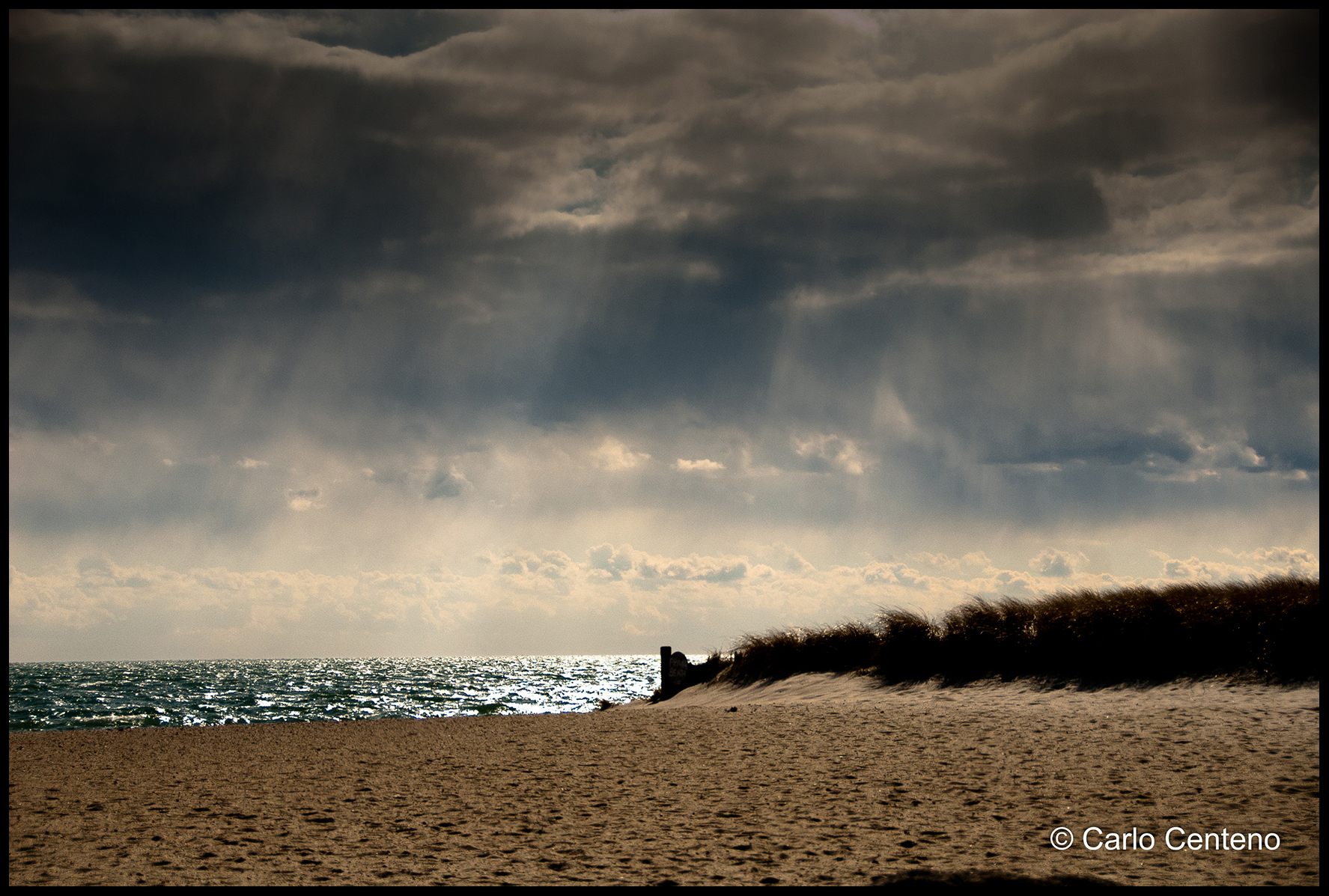
Ground Floor–Cape Cod
By extension, whenever I see a changing sky—especially one with clouds or on windy days—I attribute these shifts of clouds and air to cleansing breaths. However these are done by Mother Nature on behalf of our troubled planet. Earth is having a hard time rejuvenating much of what humankind has taken for granted, even wasted or destroyed.
Colorado
Whenever I’m out and about, feeling that need for solitude and distraction-free thinking, I load up on cleansing breaths and allow myself the chance to attain “groundedness” a term, I believe, coined by Stephen Hayes, Ph.D., professor of psychology at the University of Nevada. To avoid any confusion, I’ll merely say that attaining a semblance of groundedness means accepting and facing the here and now [however uncomfortable], and to make a commitment or shift of working on things that can mentally/emotionally help you.
Boulder, CO at sunset
The simplest example I can think of is this feeling or acceptance that one’s worklife/career is a dead end and wouldn’t be a dead end if the company your worked for was “better.” There are a myriad of other reasons to choose from. Instead of losing yourself and using up energy on this discontent, nurture a way to make yourself stand out. This isn’t about writing the great American novel or closing on a stupendous sale; it’s more in the line of working from your known strengths to optimize your “here-and-now” going forward.
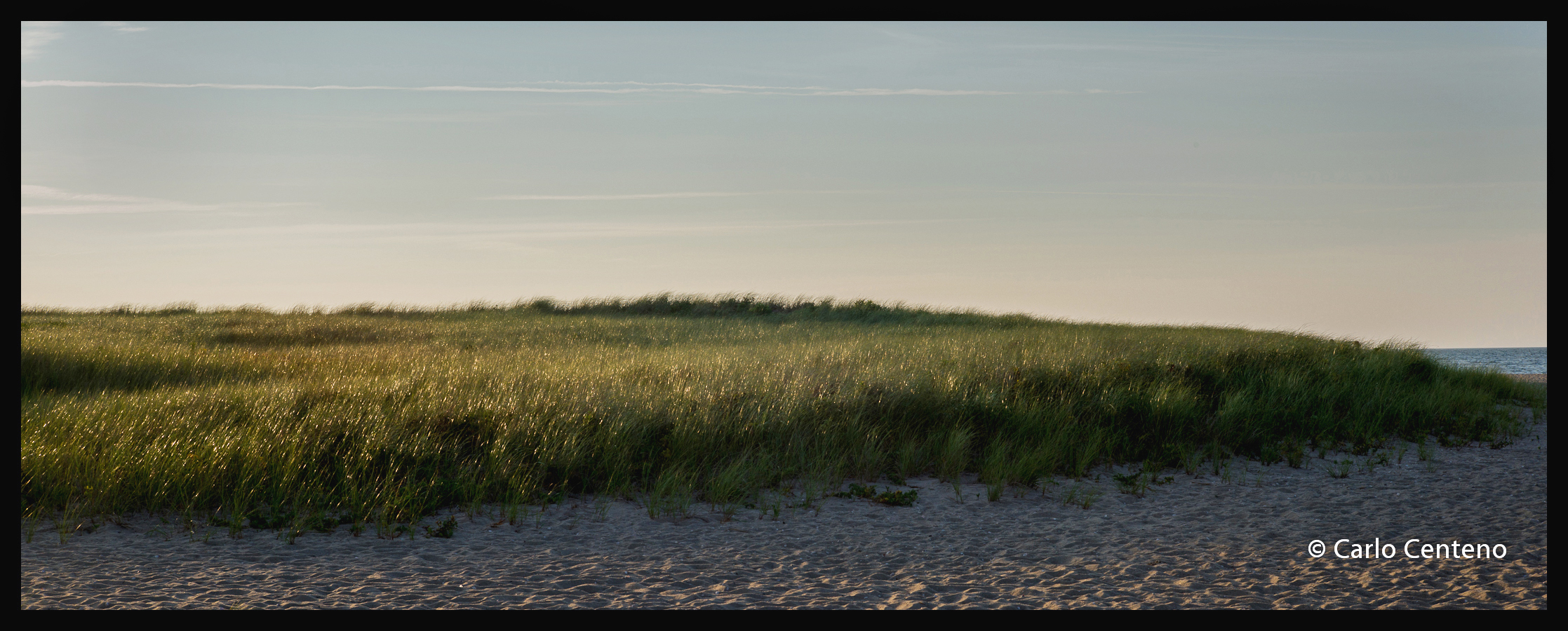
Nantucket Island, Massachusetts
Now, before you do anything else, take that cleansing breath….

































 Carlo Centeno