
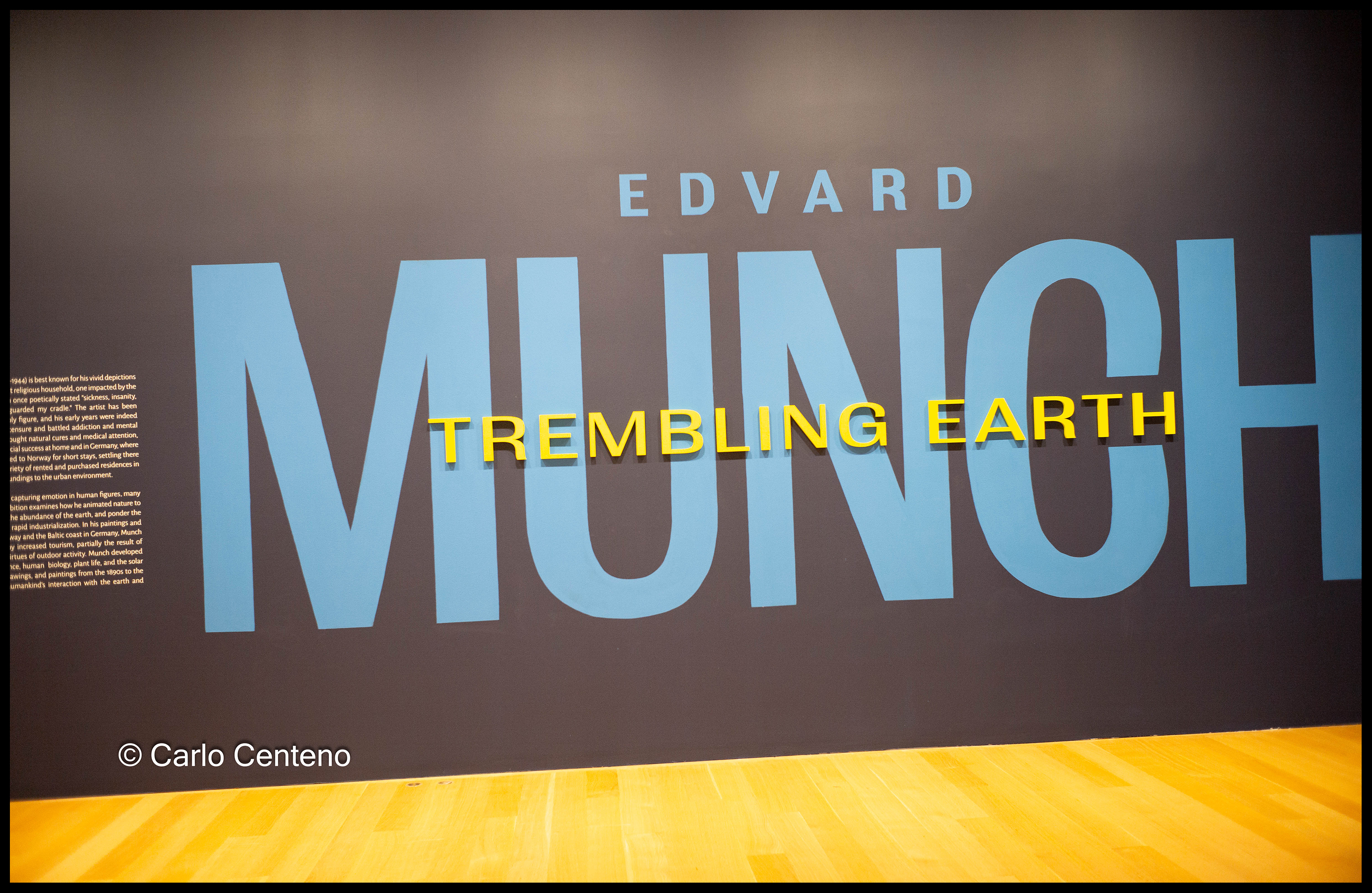
At the Clark Institute of Art, running through October 15, 2023, is a special exhibition, Edvard Munch: Trembling Earth. Munch’s [“Edward Moonk” Norwegian pronunciation] most recognizable, iconic painting is The Scream, and yet not many know of his other work which includes a number of self-portraits, prints, figure portraits and landscapes. The latter showed what he felt was a confluence of the natural world and humankind where nature provided a kind of salve that the urban environment could not deliver. The artist’s life contained the antagonists that shaped many of his creations: life and death; love and loss; loneliness and despair. And yet Munch as a protagonist, allowed us to see and feel the very antagonists that took hold of his deepest emotions.
I found the entire exhibit revealing if not eerily prescient. The power of art in all its forms allows us not to just see the obvious, but to measure if not ascertain a) what behooved the artist to produce his/her creation and b) what, if anything, draws your attention to the work?
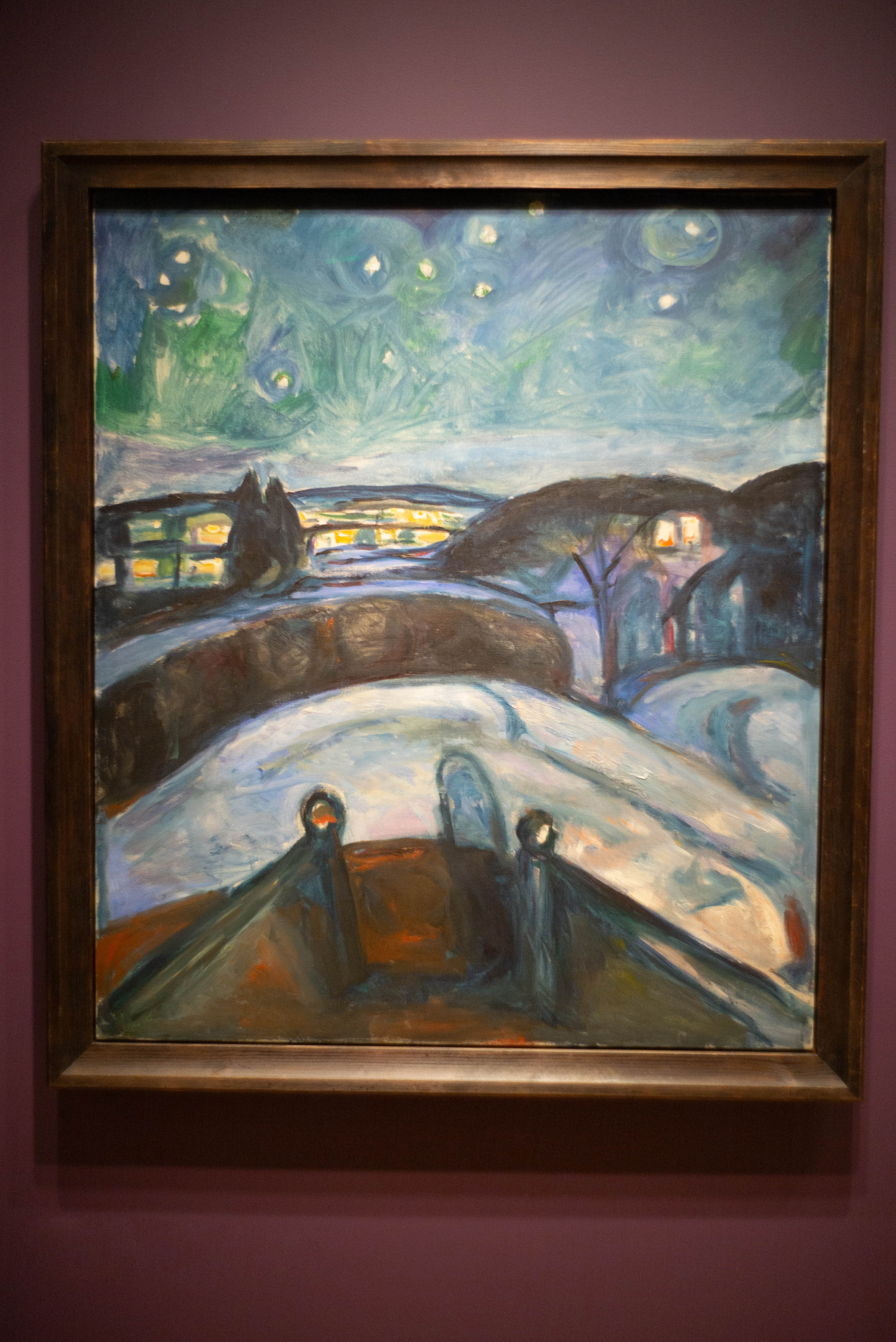
While some of his paintings hint at Vincent van Gogh [1853-1890], there is a quality that makes Edvard Munch’s work stand apart: his apotheosis of anxiety, loneliness, longing and loss are indicated by the despair of his faceless human subjects. The hue of uncertainty and angst lay claim to troubled souls.
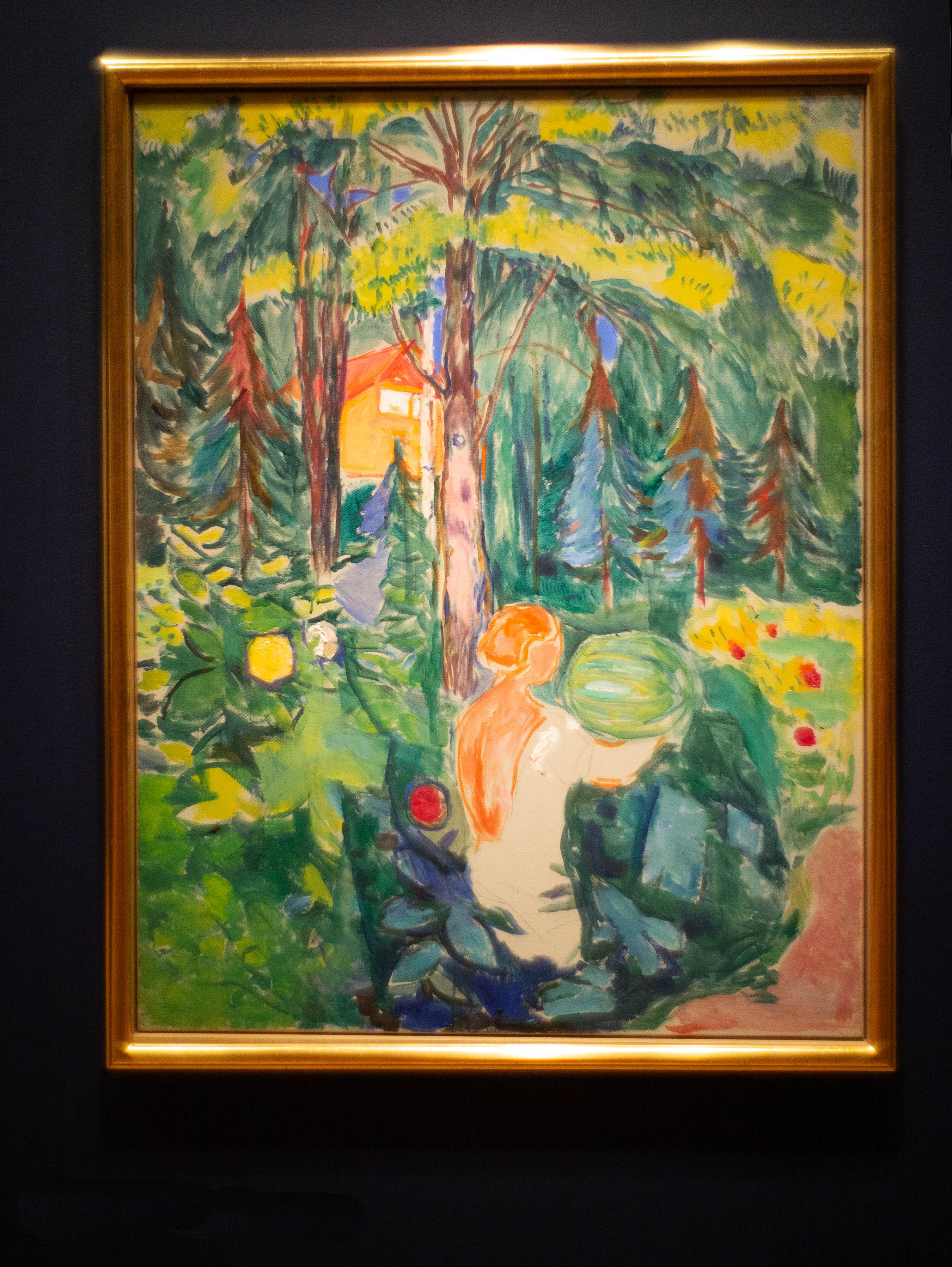
This is one of my favorite paintings, Woman with pumpkin. Its creation captures a sense of lost, and longing. The symbolism could be anything and everything. The pumpkin and the dark green color appear as if a person is holding the woman. Note the 3 “fingers” on the hip of the woman. In fact, the greenery next to the woman appears to be kneeling on its right knee, its “left leg” bent with a “foot” planted directly on the ground close to her back. Hence, the figure is resting its head on the woman’s right shoulder, the right arm suggesting a pillow.
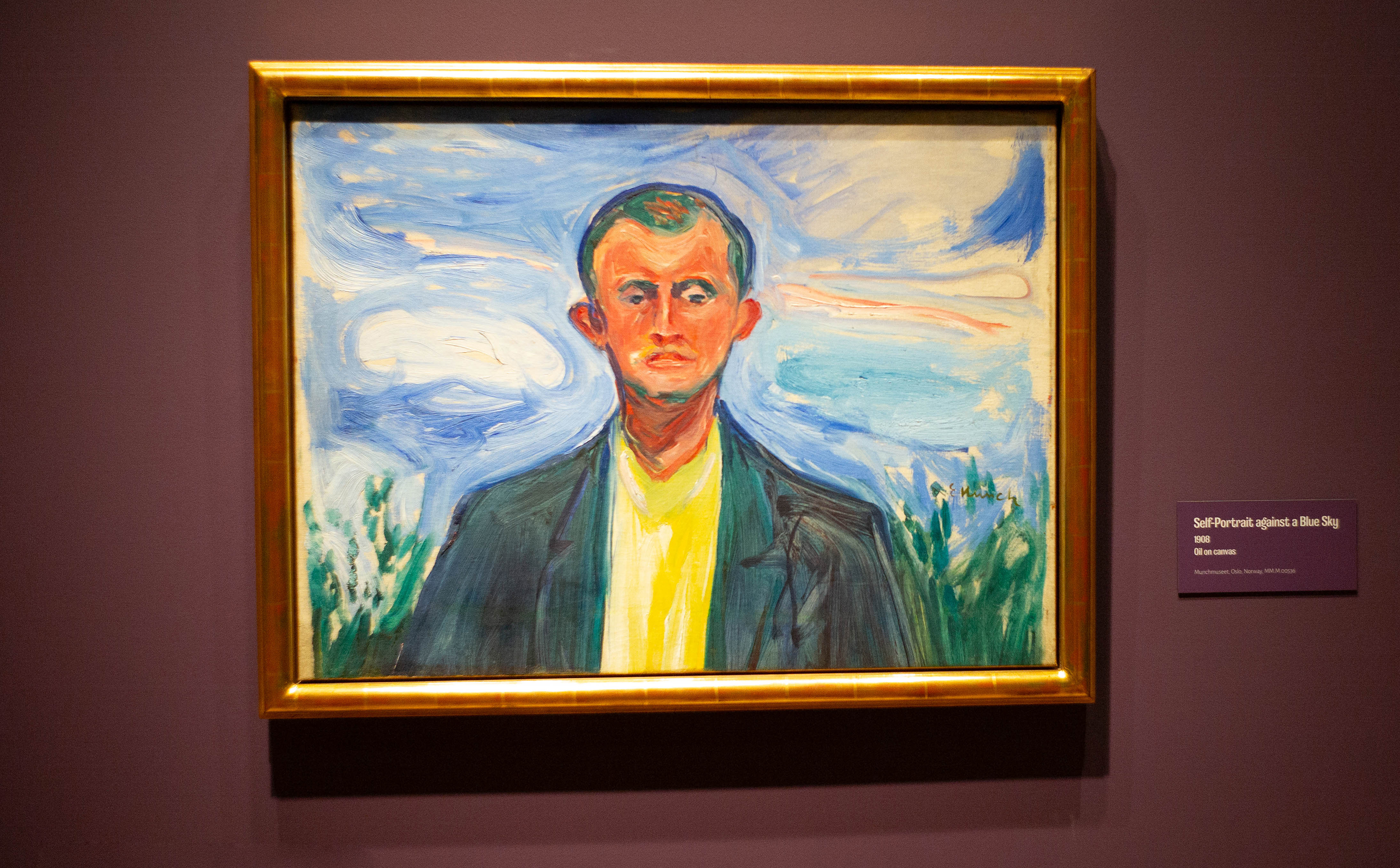
Whatever you see and however you see it, Munch is a captivating study of conflict. You can feel it in most all of his works. The landscapes provide contrasts regarding our ability–and inability–to co-exist not only with the natural world, but with each other. Put another way, Munch is caught within an insatiable push-pull between the Id [our instincts], the Ego [reality] and the Superego [moral strength].

No artist lives a life of order and predictability. It’s contrarian to that world of creativity and expression. Munch’s self-portraits demonstrate a fortitude within his reality that dices with the likes of the Id and the Superego. Each of us deal with the instability created by our instincts and morality, our actions and reactions, our angst and distress. In a way Munch’s paintings brings form to what is often abstract yet palpable, even vicarious and visceral.
.


 Carlo Centeno