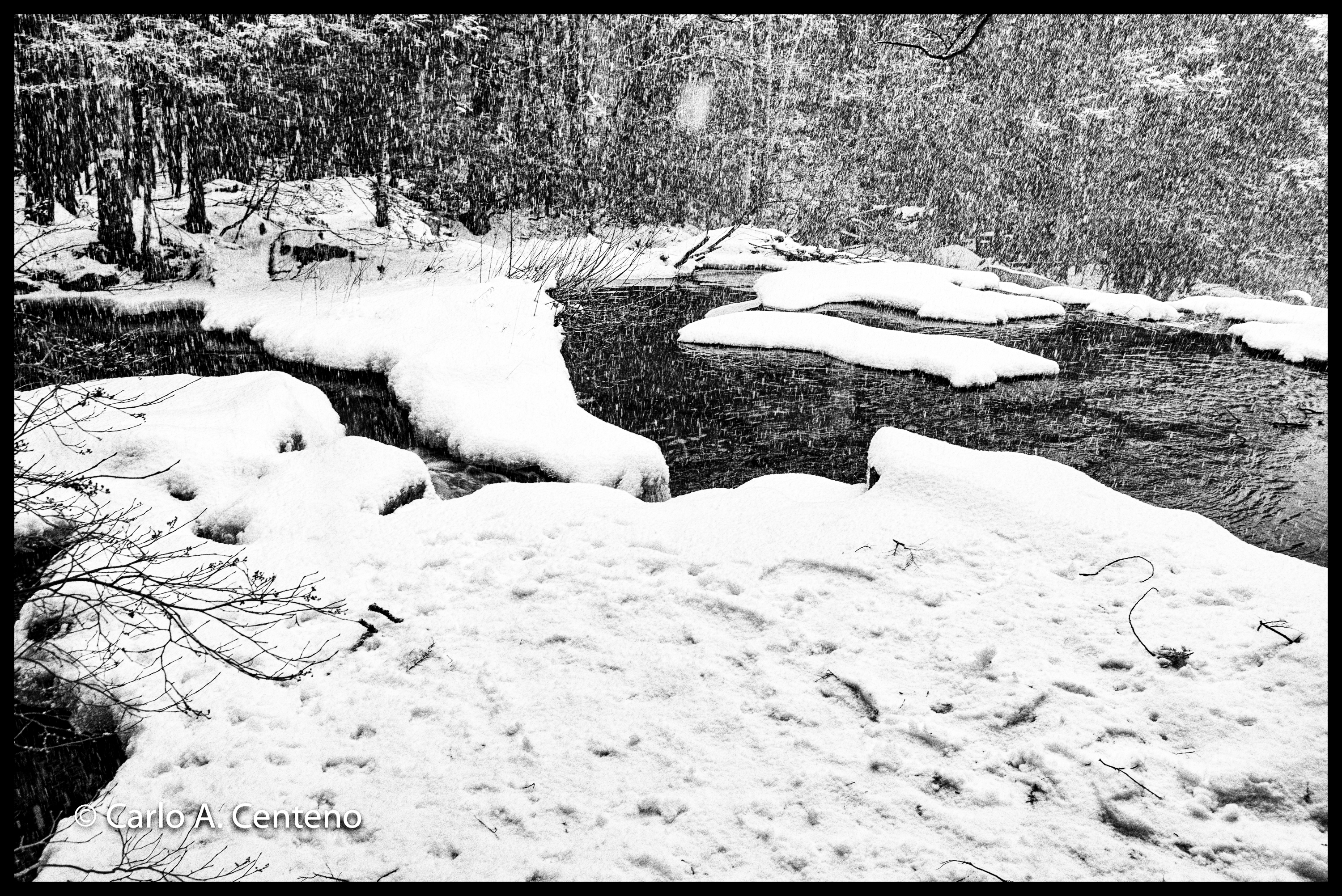
I was in a different bubble yesterday, away from the angst, the uncertainties, the frustration and disappointment of recent times. It was wonderfully quiet save the waterfall cascading over an edge some 20-yards away. That rushing sound had a soft, roundness to it, a barrier or suppressor of sorts that kept disheartening sentiments at bay.
I was in a snow dome.
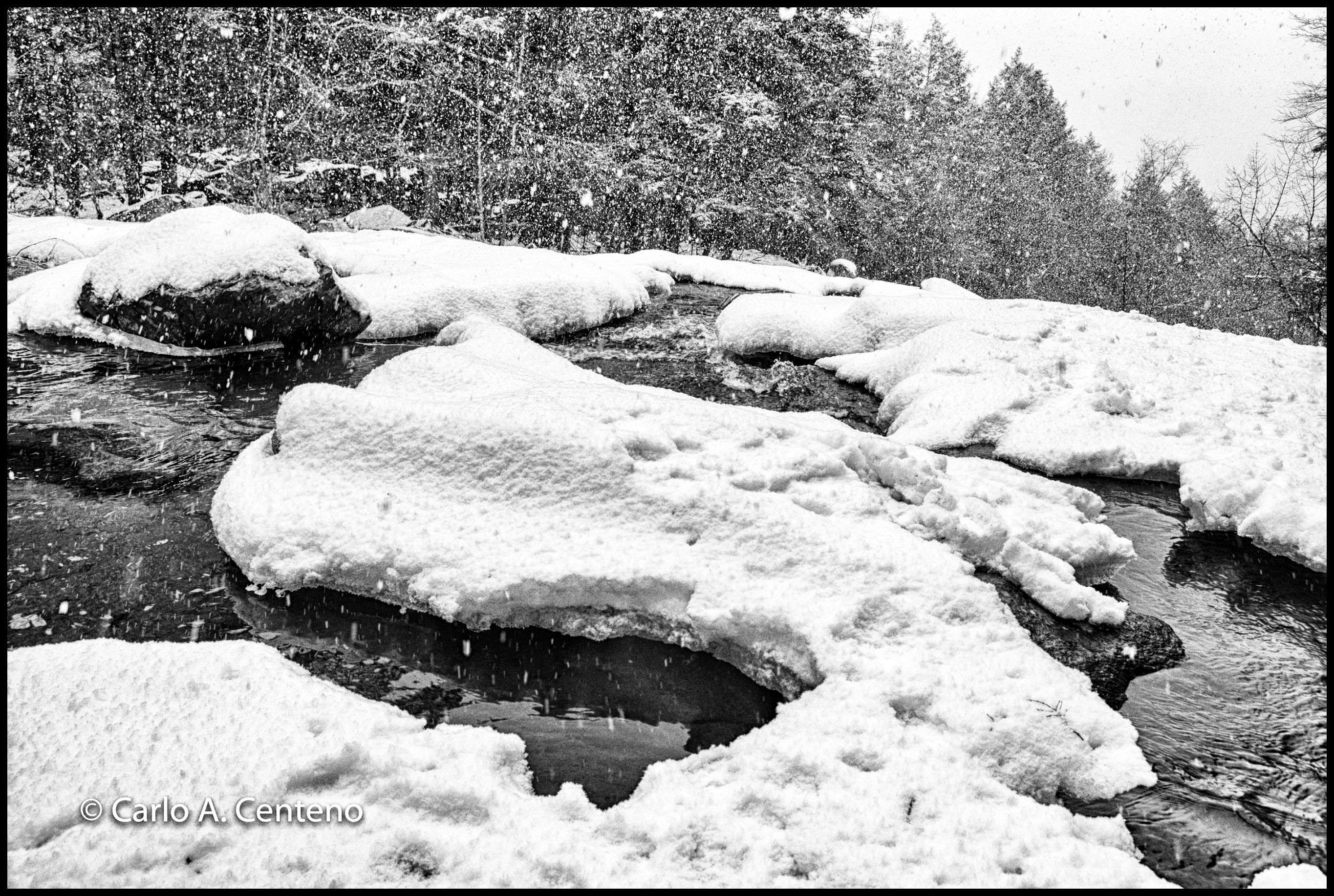
With 4-inches already on the ground, a sudden burst of flakes quietly fell, quickly dusting tree limbs as well as foot prints left by other visitors: someone in a Sorel, perhaps a size 10 1/2 which lay opposite the basket imprints from a hiking staff. Only one set of human footprints was there, the other prints from a deer, a squirrel, a group of birds and others I wasn’t sure of or missed altogether.
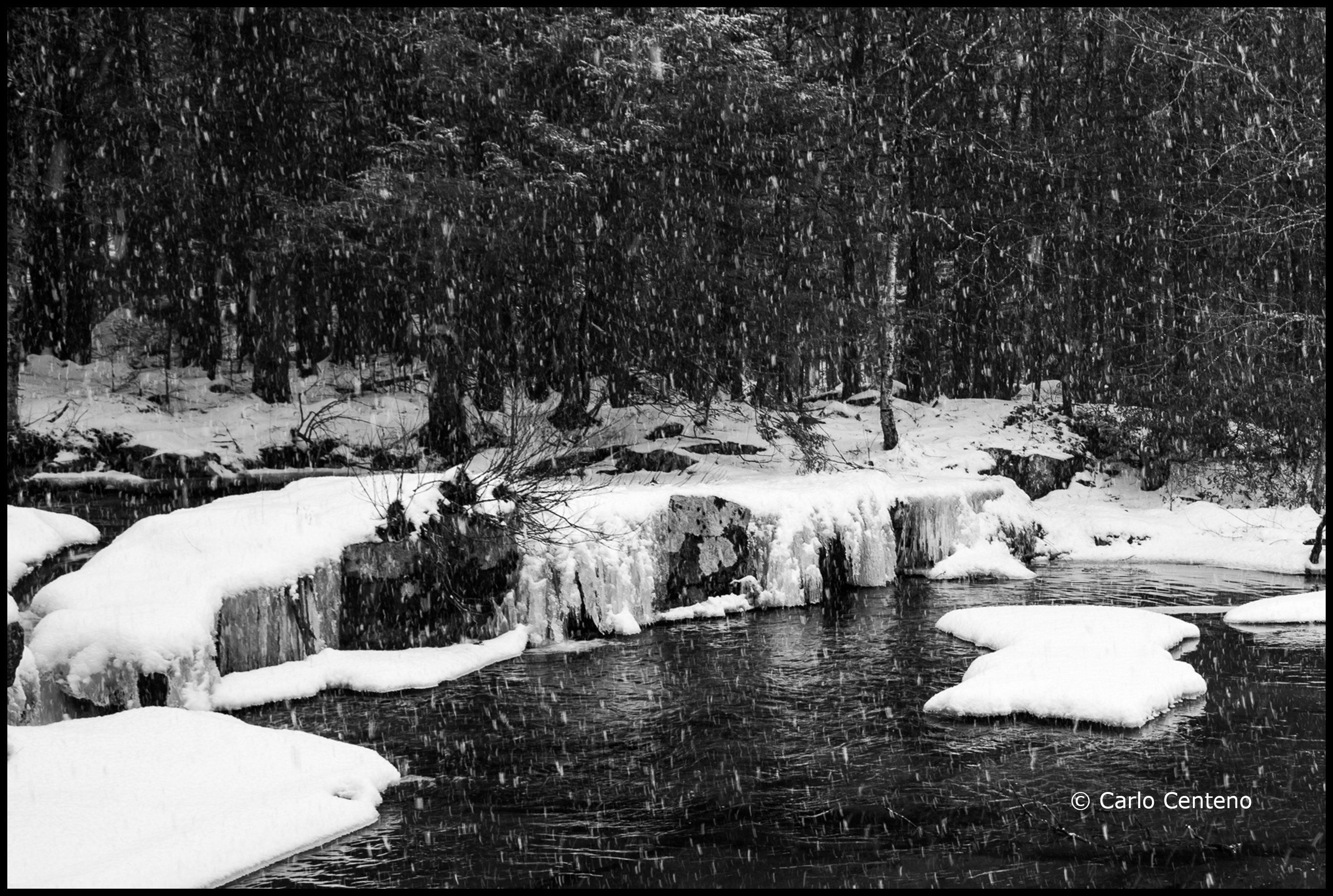
This kind of place—where the simplest of what is before and around you—covers the burrs of unhealthy tensions and feelings. Indeed, a blanket comes to mind when snow covers a landscape. On some days—for me anyway—it’s more like a comforter. A comforter does not align with what snow feels like. Visually however, is a different matter. There is loft, an expanse of uniformity and balance that can remind one of a comforter. The solitude, the absence of man-made noise, reinforces that sense of comfort. Within my snow dome comes a particular calm that allows me to think and feel purposefully and openly. I consider possibilities beyond the familiar and rote. I dwell beyond the probable, but lie in the realm of things that are possible. As Martin Luther King, Jr. noted:
“Put yourself in a state of mind where you say to yourself, ‘here is an opportunity for me to celebrate like never before by my own power, my own ability to get myself to do what is necessary.'”

The saying, “this quiet, this silence is deafening…” runs contrary to my time in this snow dome. I feel reassured, positive, even happy. Embraced by such stillness, you can hear yourself think. You can engage all your senses with minimal distraction. You come face-to-face with who you are and in spite of yourself, you can choose to dwell in what should have happened—and thus remain predictably the same as always—or take a contrarian step, one that could make a difference. I’ll let Martin Luther King, Jr. have the last word. He has captured an enduring leitmotif of the human condition:
“The soft-minded man always fears change. He feels security in the status quo and has an almost morbid fear of the new. For him, the greatest pain is the pain of something new.”
 Carlo Centeno