


With a pen and camera

The changing seasons has a way of rebooting my perspectives on life’s moving parts. It’s also an opportunity for me to find, even create, connections that could lead me to alternate choices about work and family, problems and challenges, as well as my own professional and personal goals. The fall suggests possibilities with a palette of colors where each one suggests a sentiment to whatever I’m feeling or thinking. More often than not, I make one, perhaps 2 attachments of color to an idea, an attitude, or even a condition that’s been entrenched in a mood of some sort which I cannot correlate or let go of.
However, when the maples, birch, oaks and other trees reveal their once covered limbs, I see a “wireframe” ready for a season of open air, of white space and a period of quiet and rest. Once again, it’s a reboot of sorts given the visual clues of autumn.
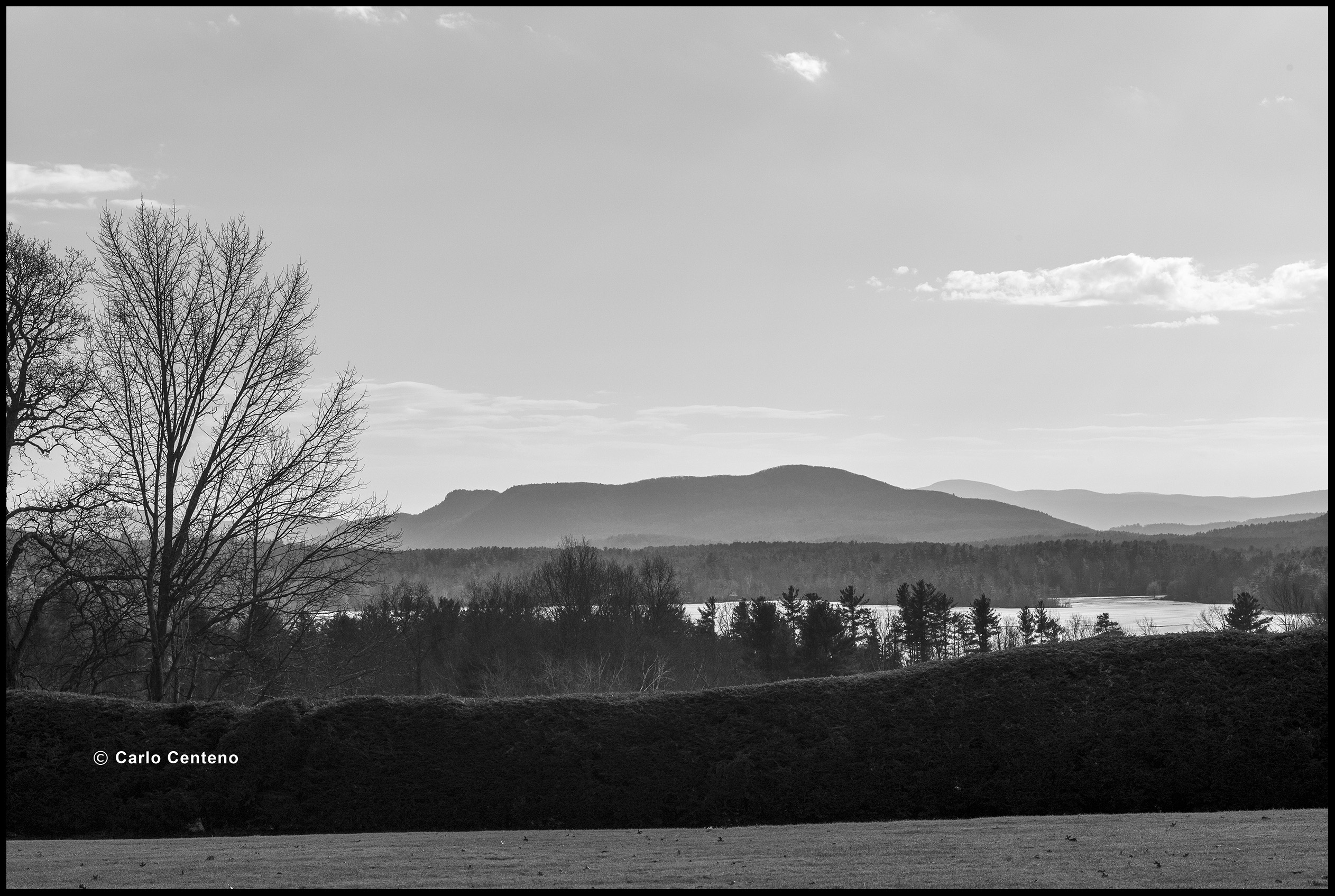
From a distance these bare trees take on an innocuous albeit familiar appearance. You realize that these wireframes silhouetted against a grey forest floor or an overcast sky has the potential to stimulate your way of visualizing beyond the obvious and the rote. Late fall and bare trees are midwives to modified or new byways to thinking and feeling.
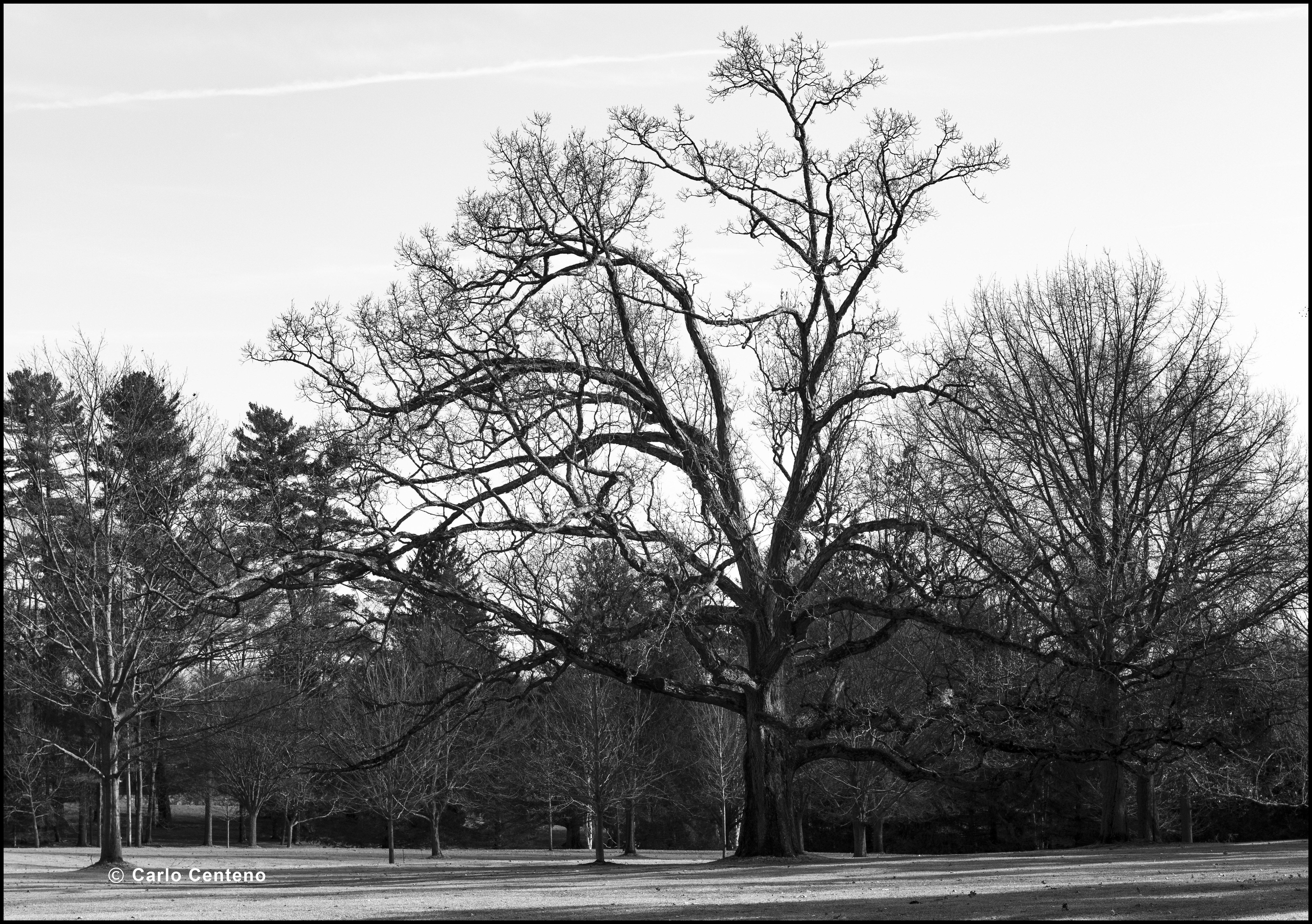
Such possibilities make bare trees special. True, this past autumn the colors were fantastic, vibrant, even spectacular, more so than years past as far as I can tell. That festival of color has its own cathartic energy. Compared to just a few weeks ago, these now dormant, quiet trees are a type of dopamine, a suitable follow-on for my busy “monkey-mind.” There’s a levity and sense of calm with bare trees that’s akin to starting anew and refreshed.
The trees are steadfast and immobile and yet there’s a fluid-like form that draws your attention. And because you can see between the branches, openings of various shapes and dimensions become apparent. That white space becomes a cocoon for imagination and emotion, of things improbable that feel possible if only in theoretical form. What can you jettison from your mind into those spaces now in front of you? There are things each of us can let go of.

Many of the trees are straight up and down although the oaks and maples have a grace manifested by the sweeping reach of higher branches. The silhouette of these branches appear as arms with a soft curve, its ends like fingers gently reaching for the sky.
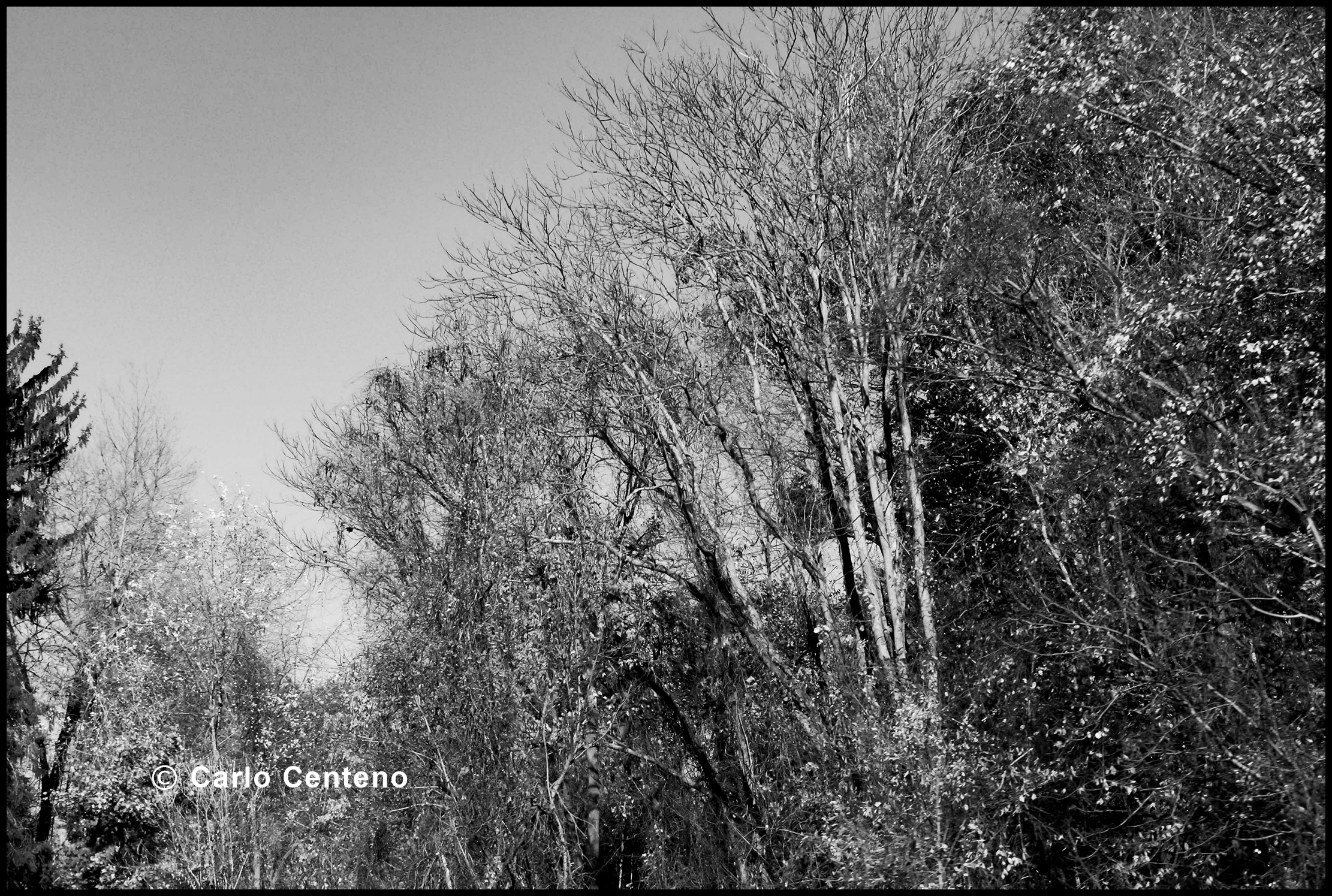
Late fall and bare trees are markers of change. In its most obvious forms, it means shorter days, cooler temperatures, fantastic light and shadow and a time change. The latter is likely the least wanted change this time of year. And yet the markers also remind us that still more change is to come. Some welcome winter [like me] and others can’t wait for spring.
In a personal way bare trees are anthropomorphic. They go through cycles of change just as we do with our life stages. And as in life, some of the bare trees will remain so in the months ahead. Just as some of us will, our own thoughts and feelings leaving our physical selves.
Bare trees can mirror our own life qualities season to season. Or maybe it’s the other way around; after all, trees have long existed before we arrived.

The inaugural 3-day, WIT Festival recently finished here in the Berkshires. Authors, journalists, novelists and playwrights gathered to engage participants in this year’s theme, Reimagining America. This was an opportunity to broaden one’s understanding of critical issues and concerns coursing through our current–and varied– socioeconomic and political points-of-view.
The festival is the brainchild of The Authors Guild Foundation, the largest organization of its kind in the USA that “educates, supports and protects American writers across the country.” It’s been noted that the Authors Guild Foundation is “the sole group of its kind dedicated to empowering all U.S. authors.”

Berkshire County lies in western Massachusetts. Its rectangular shape stretches north-south with New York state at its west border, Connecticut to the south, Vermont to the north and to the east it borders with Hampden, Hampshire and Franklin counties. For many, the Berkshires is more than a destination: it’s a way of life.

Presentations/discussions took place at Shakespeare & Company in Lenox. For the most part, the 3-day festival sold out, however a roster of those wanting to attend were placed on a list just in case of cancellations. I did not hear of any registrants calling to back out.

I think the salient detail I took away was in finding a connection with the speakers. Whether through their anecdotes and experiences or with discussions that were enlightening or instructive, discovering these connections became visceral. The connections answer to or affirm my own perceptions, creative risks and even the most profound sentiments I keep close to the proverbial vest. As effective podcasts can be, for me there’s a lot more to glean from such happenings when they’re done in person. There’s an intimacy about gatherings as you hear, see and feel more than just commentary. And in that collective presence, you may pick up emotions inferred or otherwise demonstrated in tone, expressions and body language.
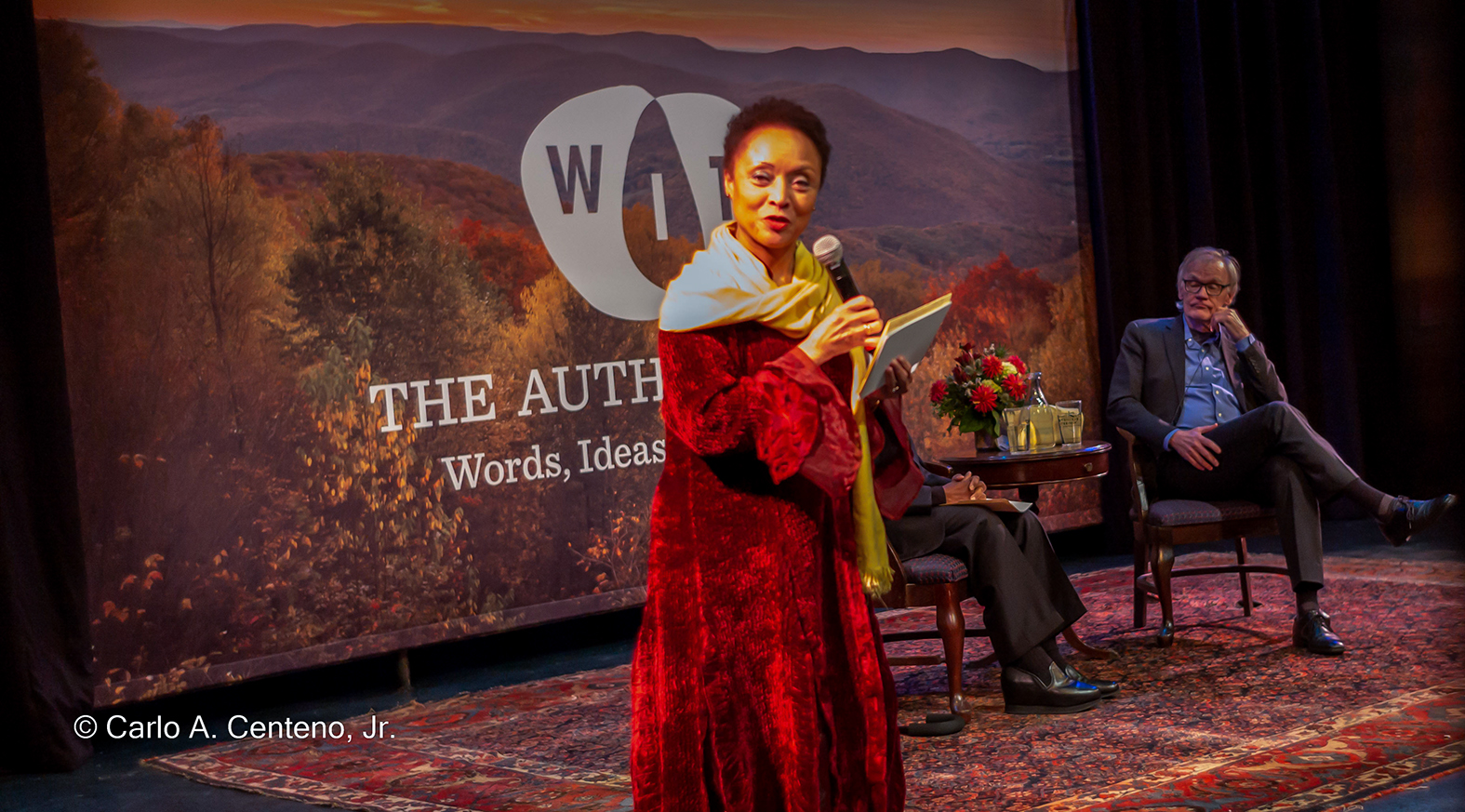
One cannot dodge a glance or ignore a gesture, or miss a light-hearted remark to loosen up a room. As good as podcasts are—and they have an important place in communications and education—being there does make a difference.

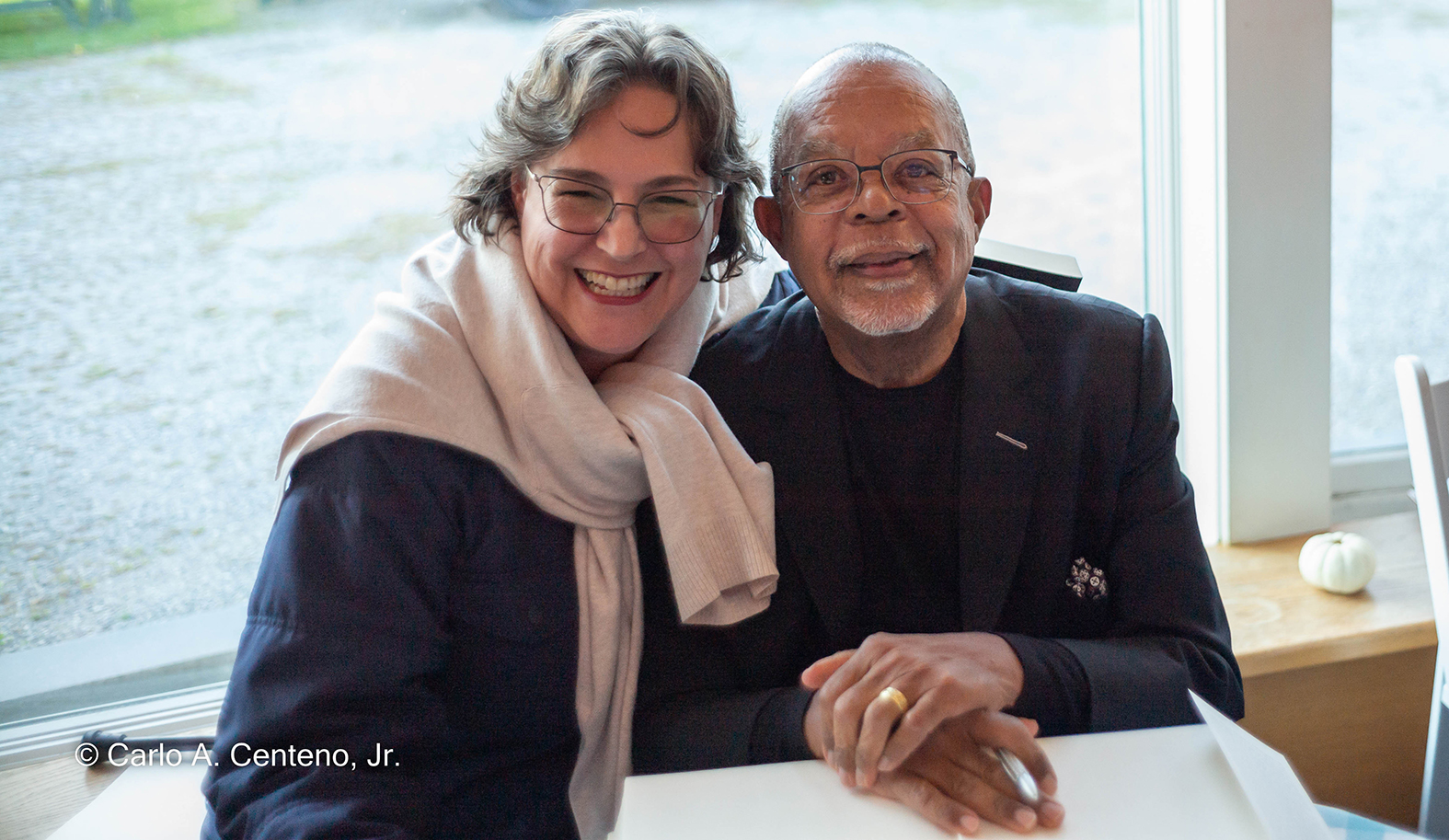


The dinner, served at The Mount: Home of Edith Wharton, was cleverly engaging. Instead of table numbers, the names of authors took their place. Your seat was placed at a designated table which bears the name of the author at the bottom of your name tag [Jean Cocteau] Your actual seat is marked by a small piece of paper with your name handwritten on it.

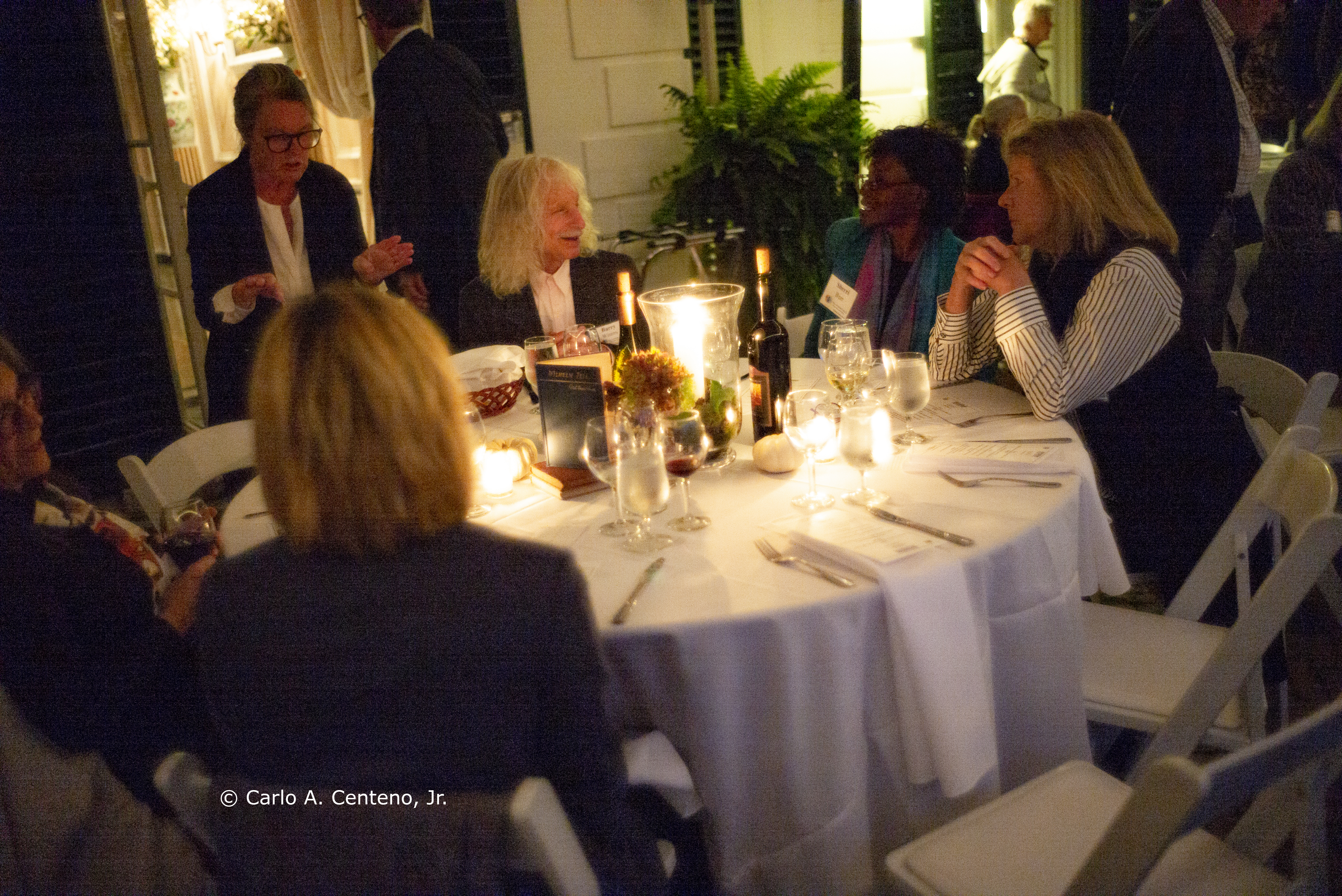
Each table had a visiting author/writer or playwrite to serve as a moderator. Our discussion started with introductions which quickly morphed into an eclectic blend of reality’s “top stories.” It didn’t take long to connect the dots. To hear one’s writing experience through the years did have a common denominator: persistence. No doubt I’d wager that most of the writers in the room have had to deal with many types of rejection. The cacophony of conversations, the tinkling of flatware against plates and the the intermittent sound of laughter made it clear that many, if not all, enjoyed being in this festival.

If you happen to visit the area, make a point of stopping at The Mount. Bear in mind that Ms. Wharton lived in that home. I marveled at the scale of its history, its art, design and much, much more .
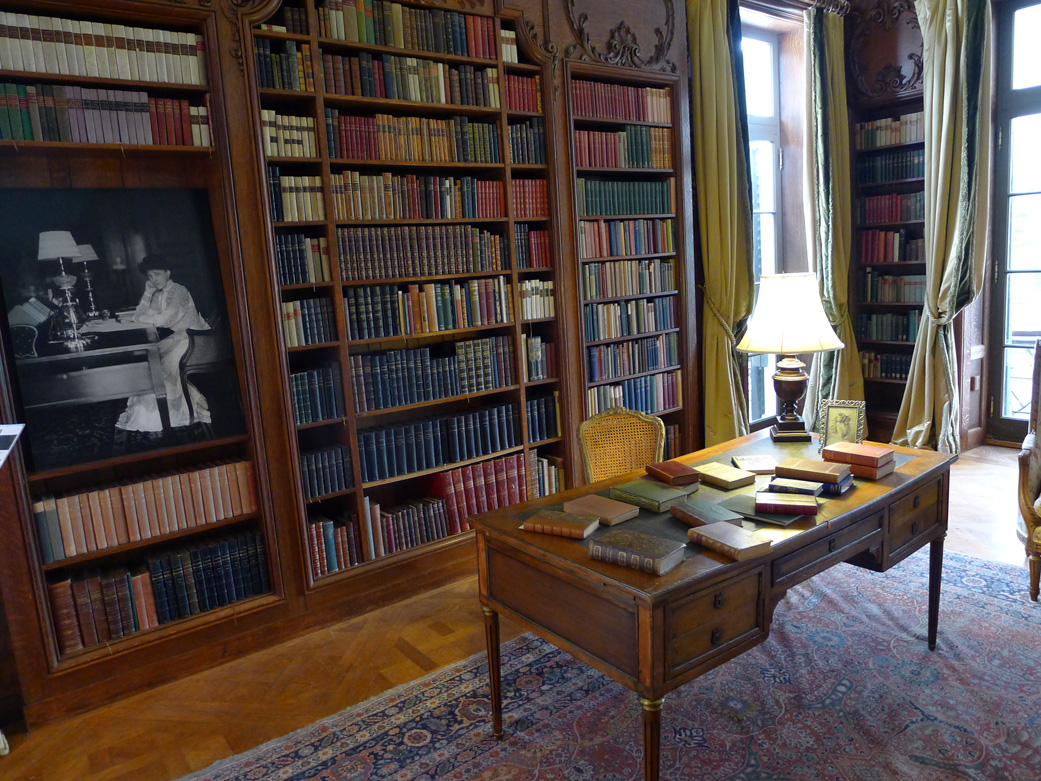

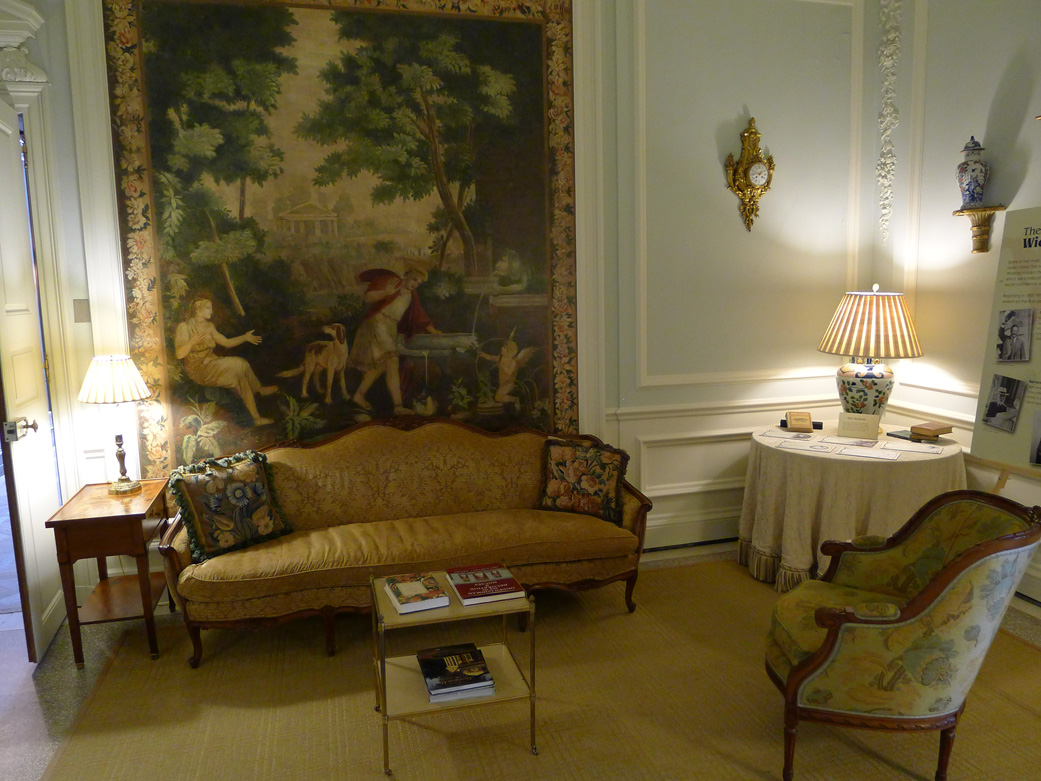

All in all, I appreciated even more, the permanence and accessibility of books. They are tangible, finite in its content and physical features, yet infinitely capable of challenging your imagination and expectations. Such is the attractive symbiosis of humankind and the inanimate. Both are needed to create and sustain history, the arts, the sciences, and the stories that take shape into something palpable.
A lot of my creative and professional work involves digital technologies. The past 2-years have made that more than obvious. Zoom meetings, laptops & desktops, flash drives and the always-on platforms in social media. We can access a myriad of things electronically, online of course, and the ease of that can make astringent our feeling and thinking from engaging in life that’s face-to-face. Books tend to provide the opposite for me. The pages in a novel can transport me to wherever. The sensory experience of turning and feeling pages are the toner that can spark my imagination and involvement in life. Recall Emily Dickinson’s poem, There is No Frigate Like a Book. To me it’s the leitmotif, that binds our imagination through the settings created by writers and authors. And I don’t need an app or device to open books.

There is no Frigate Like a Book
There is no Frigate like a Book
To take us Lands away,
Nor any Coursers like a Page
Of prancing Poetry –
This Traverse may the poorest take
Without oppress of Toll –
How frugal is the Chariot
That bears a Human soul.
Emily Dickinson

Time, energy and focus are 3 KPIs [Key Performance Indicators] for mulitasking. And likely there are other indicators, and for those, I’ll need an ombudsman to help reset my already overloaded brain. In any one of these factors, you either have it, lose it or want it. For the most part, I’d say most people want them all, or to at least hold onto whatever’s in you.
However, multitasking is not really multitasking.
Ms. Nancy Napier, Ph.D. and contributor to Psychology Today identifies it more as “switch-tasking.” For decades we’ve heard that new electronics and computers and software are supposed to help make our professional lives much easier and faster, that’s rarely the case. Many of my marketing projects are open—actually minimized—on my screen. Perhaps “minimizing” those open windows and apps is in actually diluting the strength of your project[s].
Dr. Napier points out switching between projects is counter productive. In fact, it takes a good amount of time and energy to realign your mental details jumping from one open project to another. All of this creates stress [but we already knew that].

As Dr. Napier puts it, multitasking is mentally and physically rough on anyone. The mode of working start-stop-start-stop-restart becomes a catalyst for mistakes, inefficiency and time lost. As the saying goes, “Well, there’s 30-minutes I can’t get back.”
Did you happen to notice the bee in the first photo [the sunflower]? No, well, were you multitasking….excuse me, “switch tasking?”
A benefit of changing seasons is precisely that: change. Here in New England, the 4 seasons do more than adjust amounts of daylight, colors of sunrise and sunset, the appearance/disappearance of flora, the transitions of both diurnal and nocturnal activities, owing in part to the amount of daylight/nightlight available for particular pursuits from tennis to star gazing. The change in seasons are as much physical as they are metaphysical, philosophical and experiential. The seasons are what you make them to be.

Often my cleansing breaths are interpreted as sighs of disappointment, or relief, a reaction to someone or something that gives purchase to both feelings. Since the arrival of Covid, I’ve made a conscious effort to use more cleansing breaths. I’m reminding myself there are far worse things to be disappointed with, and using some calming behaviors can make a difference.

The benefits of regularly using cleansing breaths has a way of taking edges off of things [vis a vis, the stress produced by today’s level of uncertainty]. Deep breaths and exhales do have physical and mental benefits. Gentle stretches [another cleansing breath, please] coupled with a proactive mindset that focuses on out with the bad, and in with the good has a lasting effect on our overall demeanor.
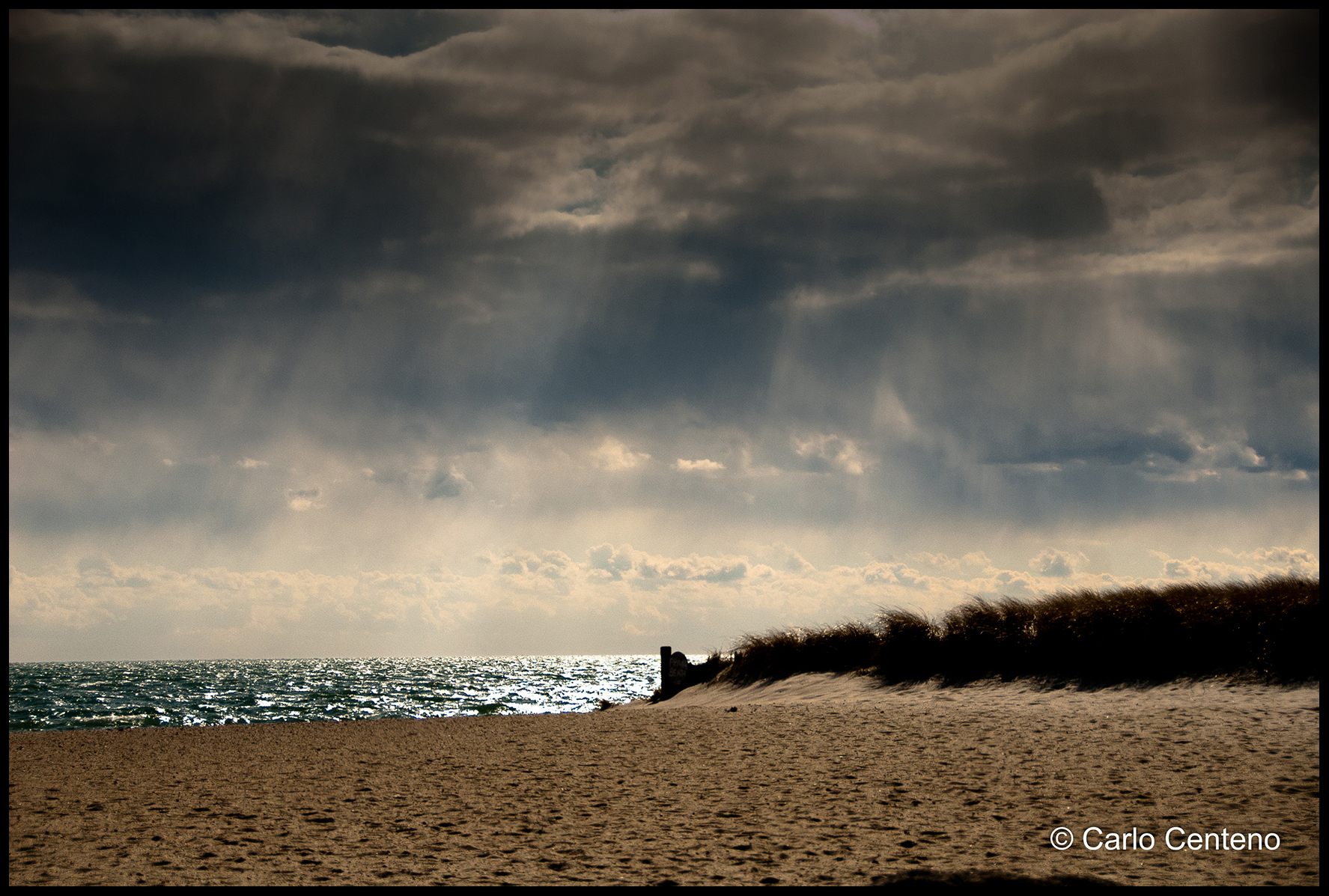
By extension, whenever I see a changing sky—especially one with clouds or on windy days—I attribute these shifts of clouds and air to cleansing breaths. However these are done by Mother Nature on behalf of our troubled planet. Earth is having a hard time rejuvenating much of what humankind has taken for granted, even wasted or destroyed.

Whenever I’m out and about, feeling that need for solitude and distraction-free thinking, I load up on cleansing breaths and allow myself the chance to attain “groundedness” a term, I believe, coined by Stephen Hayes, Ph.D., professor of psychology at the University of Nevada. To avoid any confusion, I’ll merely say that attaining a semblance of groundedness means accepting and facing the here and now [however uncomfortable], and to make a commitment or shift of working on things that can mentally/emotionally help you.

The simplest example I can think of is this feeling or acceptance that one’s worklife/career is a dead end and wouldn’t be a dead end if the company your worked for was “better.” There are a myriad of other reasons to choose from. Instead of losing yourself and using up energy on this discontent, nurture a way to make yourself stand out. This isn’t about writing the great American novel or closing on a stupendous sale; it’s more in the line of working from your known strengths to optimize your “here-and-now” going forward.
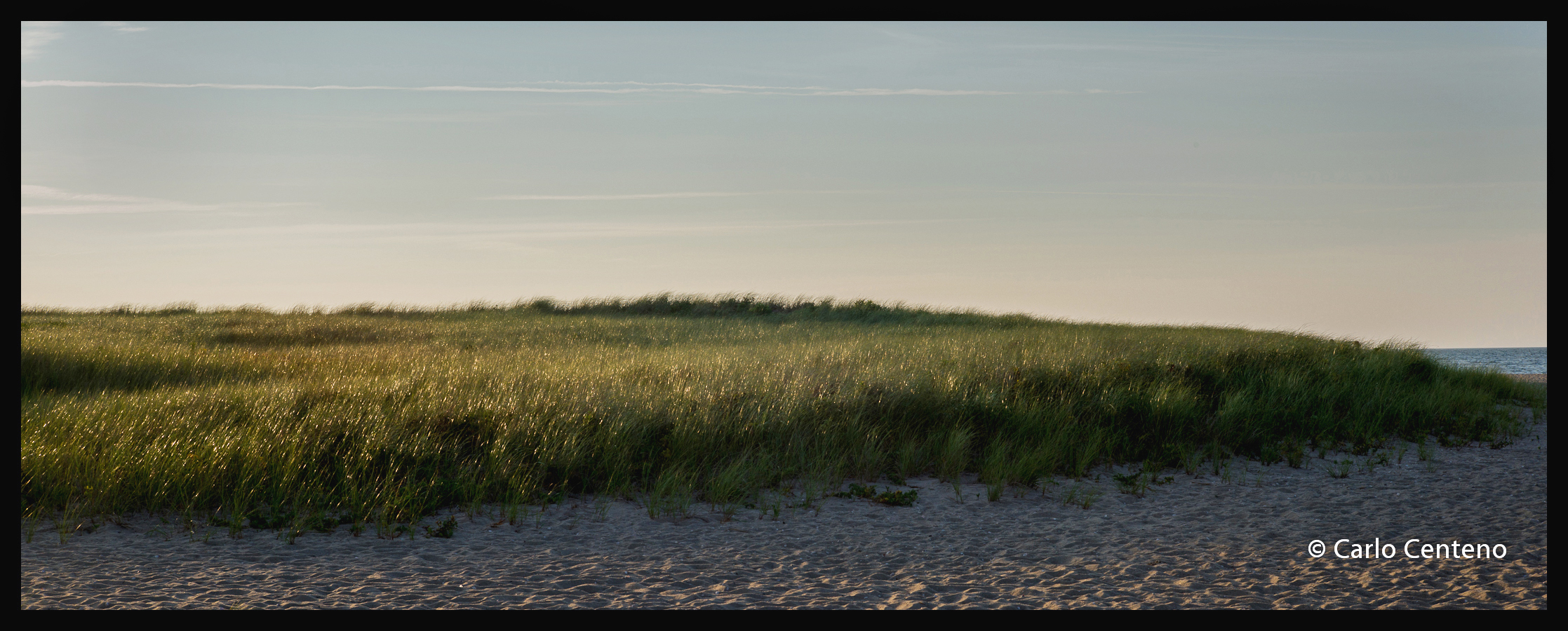
Now, before you do anything else, take that cleansing breath….

There are several places I always look forward to visiting. The Catskills is one of those places. Marketers have positioned it a number of ways, two which I can refer to: the first being that author Mr. Washington Irving created a mystical dimension about these mountains and valleys as demonstrated in two of his works, Rip Van Winkle and The Legend of Sleeping Hollow. The second is that these same mountains are the birth place of American fly-fishing, this, toward the end of the 19th century.
The eponymous short story tells the tale of Rip Van Winkle, who after accepting a drink or drinks from other Dutchmen, went into a deep slumber. A twenty year slumber at that. And to think that suspended animation had yet to be imagined. Like Irving’s other short story, The Legend of Sleeping Hollow, there’s no denying the intrigue and fascination with the dark arts as it were, an ethereal construct of feeling displaced, out of touch and powerless. The spells, debauchery and intrigue hold the reader captive, and the Catskills is both crucible and container to the kind of narrative that keeps young and old awake at night.

Along the roadways that weave up and down and around these mountains you’ll see places with names like The Washington Irving Inn, Sleepy Hollow Mercantile, Rip Van Winkle Golf, etc. etc. From eateries to where locals meet and catch up on recent news, to bed and breakfast attractions, there are many hints at Catskills history and folklore.

As for the fly-fishing, there’s enough rivers and streams to keep you occupied. Certainly there’s enough real estate to get you lost as well or put another way, give you solitude and quiet like no other in the northeast. I’m told that Mr. Theodore Gordon is the one credited for starting American fly-fishing in the 1890s. This feeling of where fly-fishing started in the USA is supported by a smattering of fly shops and other related businesses, several found close to the rivers. For many die-hard enthusiasts, these are sirens that are as strong as the waters and fish that beckon us to get our fly lines in the water.

Covid has altered some of our pursuits, but it hasn’t put a dent on my love or time in the outdoors. Factor in the openness and scale of outside and one can understand the fascination, the desire to get up and out of the house/office and do something for yourself or for perhaps someone else. It’s rare to see another person here in the Catskills or in other wooded areas I’ve been in. Social distancing is a non-issue. In our uncertain world, being wrapped in the outdoors is invigorating and yes, even fulfilling.


A few of us have been [hand] writing for as long as we can remember. More specifically, letters, postcards and greeting cards. Conceit aside, I’m one of those anachronisms [I use fountain pens & bottled ink] and I enjoy writing in all its archaic forms.
Because of the pandemic, there’s a renewed interest in writing, whether a letter, in a journal, even on a page or two of plain paper. I find it all encouraging as voiced in this recent article in The Critic. Writing a letter isn’t what it used to be, but a few of us still find satisfaction in such a personal construct of thought and emotion. A part of me is contained therein. Some days, the pen skims across the paper and other times, it’s hard to get out the first sentence or two.
Decades from now, no one will need an app to read its content. Sentimental as it is, perhaps some of my family and friends will keep them in a shoe box of sorts. Each envelope containing a capsule of time and place.
A journal can capture and hold—albeit brief—a particular sentiment, an observation, an epiphany perhaps more. And like letters, there is an enduring permanence to what’s put into and left on the paper. In a recent [April 13, 2021] issue of the Wall Street Journal, staff writer Ellen Byron wrote, “How Journaling Can Help You Live Your Best Life.” The Byron article reads more like a primer on the hows and whys of writing and using a journal.
Journal writing is cathartic and offers a number of ways to express practically anything. I write to an alter-ego, directly to myself and at times even address myself in the third person. When I move myself from the “I” to “he,” the dynamic changes. Writing in the third person creates a buffer of sorts, a moat if you will which separates the person in the moment from the person that offers perspective.
A large part of the catharsis revolves around time slowing to a less frenetic cadence. The efficiency or speed of the digital realm fosters an expectation of click-it-now, get-it-now. Letters and journals are the antithesis of such expectations.
Go ahead. Take a pen and some paper and write something, anything, that comes to mind. What matters is you’ve made a decision to place part of yourself right in front of you.
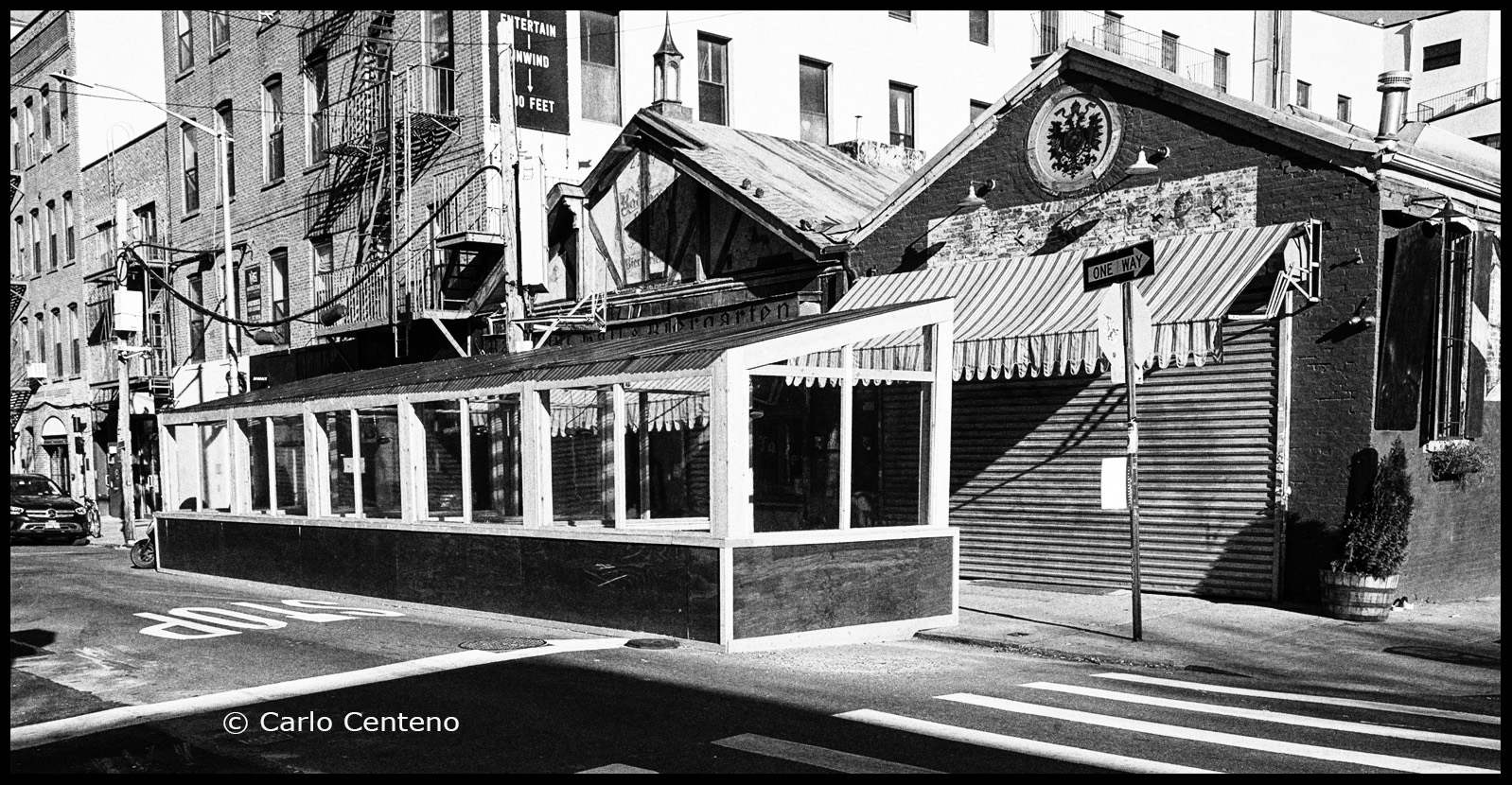
On a cold, windy January day, I took a walk to familiarize myself with another area of Brooklyn. As I do on such sorties, I have a camera in hand. It’s just an integral part of me carrying that, along with a fountain pen. In combination, perhaps an odd idiosyncrasy. Go figure.
There has been so much news about struggling businesses in an economy best described as uncertain if not scary. Regardless of your own standing, uncertainty feeds fear. It’s like that for many, even those who still have a job. There have been a myriad of changes in less than a year, and many of them are unprecedented as we know.
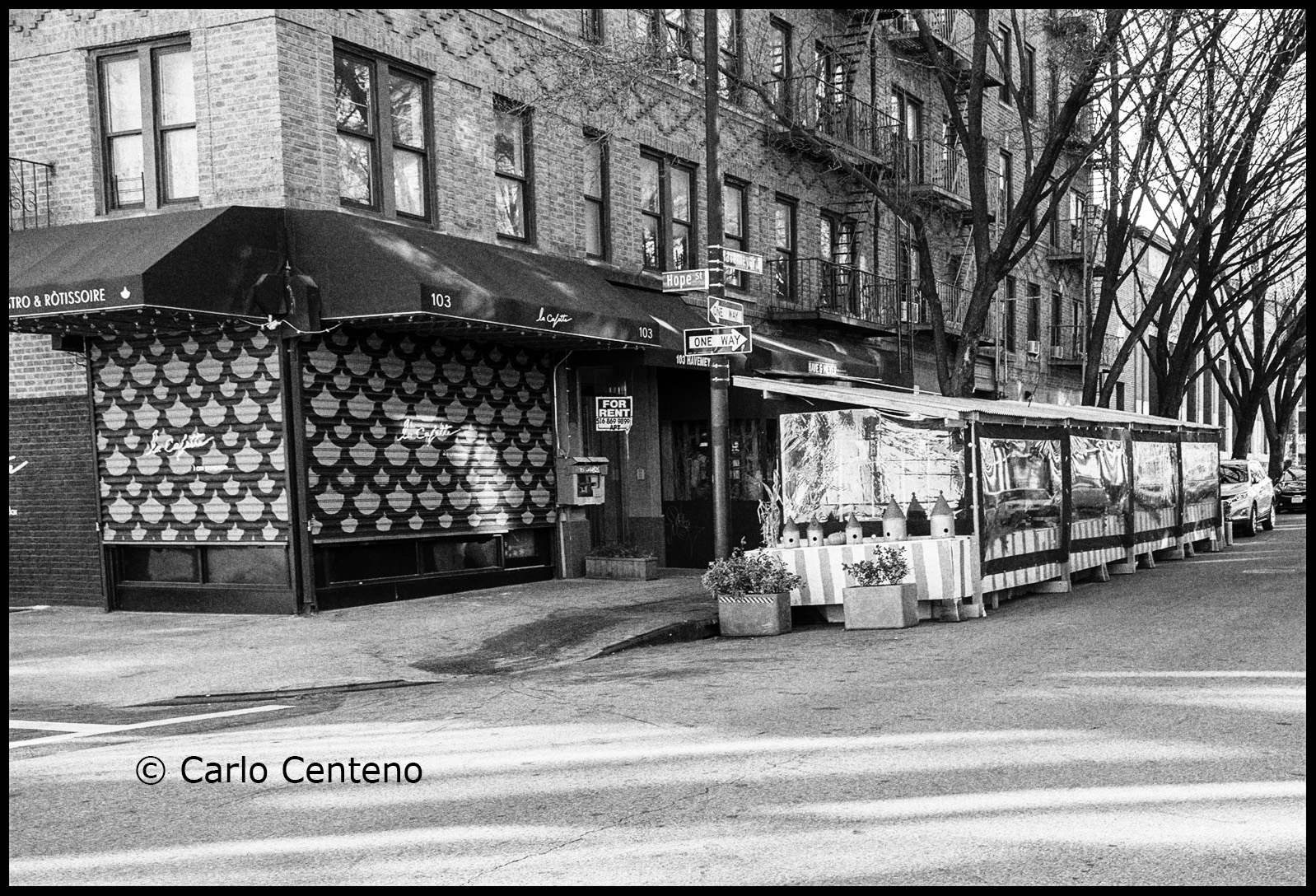
And yet I’m encouraged with the way businesses evolve, regardless of the risks and constraints of an unrelenting pandemic. Adaptation abounds. As I pass several restaurants and eateries small and large, I can’t help but notice the physical changes in these venues. Where there was once a length of curb used for parking has now been pre-empted by saw horses and orange pylons, cuts of plywood fashioned into walls and even structures with lockable doors, sliding windows, and other things that can make or break an outdoor dining experience. Being early in the day, most of these venues were still closed.
The way these dining improvisations unfold reminds me of a line from Shakespeare’s Richard III, which says,
Now is the winter of our discontent
Made glorious summer by this sun of York;
Summer is still several months away, but we can long for it. For now, our discontent, our malaise and all that has transpired has made burdens to bear heavier by the frigid air. Winter can represent discontent, but I can also make an argument for the hot, unbearably humid days of summer offering the same.
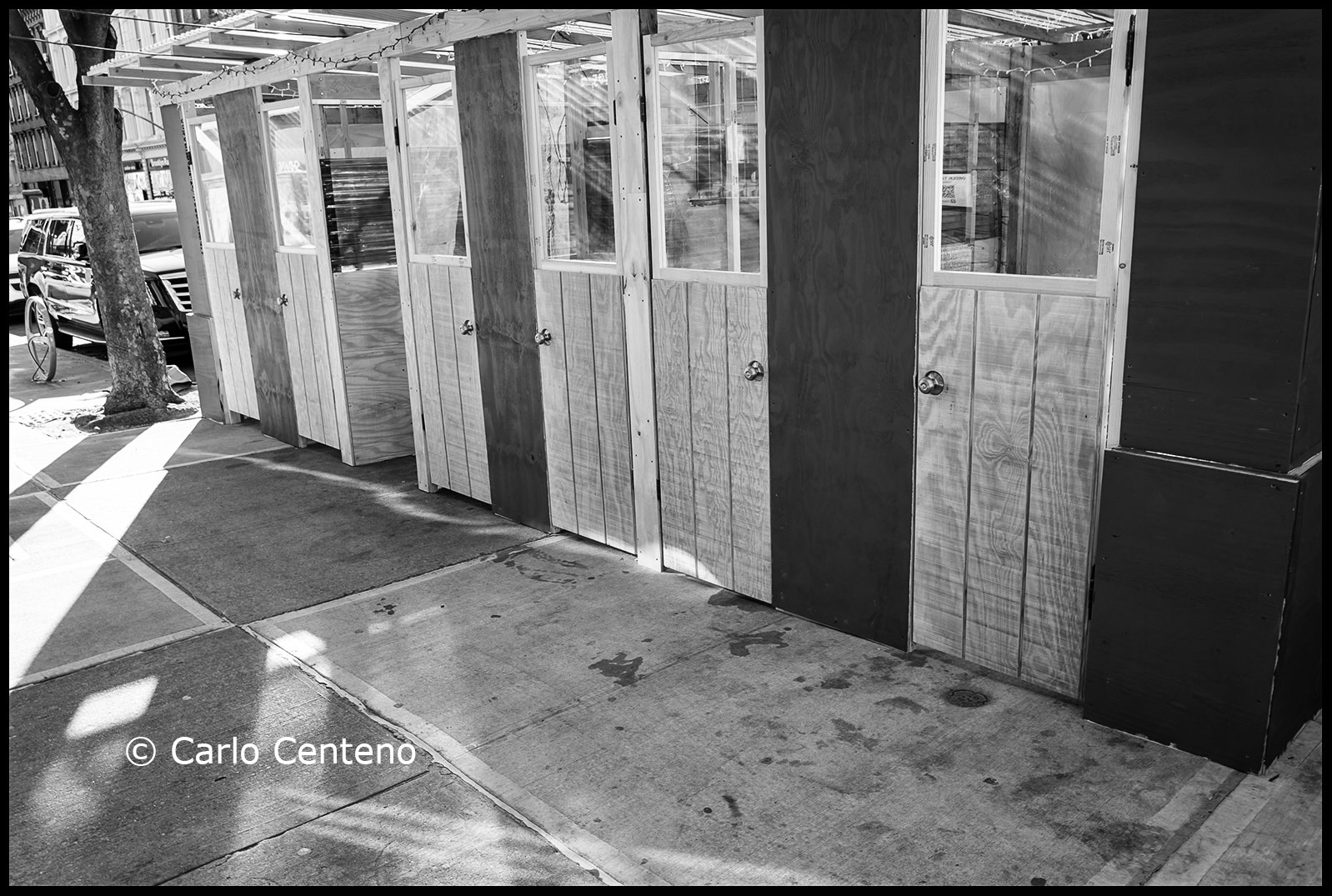
Bricks and mortars have had to survive with 25% capacity. As anyone who owns a restaurant or pub will tell you, to survive is one thing, but to thrive means sustainability. And sustainability means recency and frequency of patrons through limited seating, curbside pick-up and delivery. All modes need to be deployed.
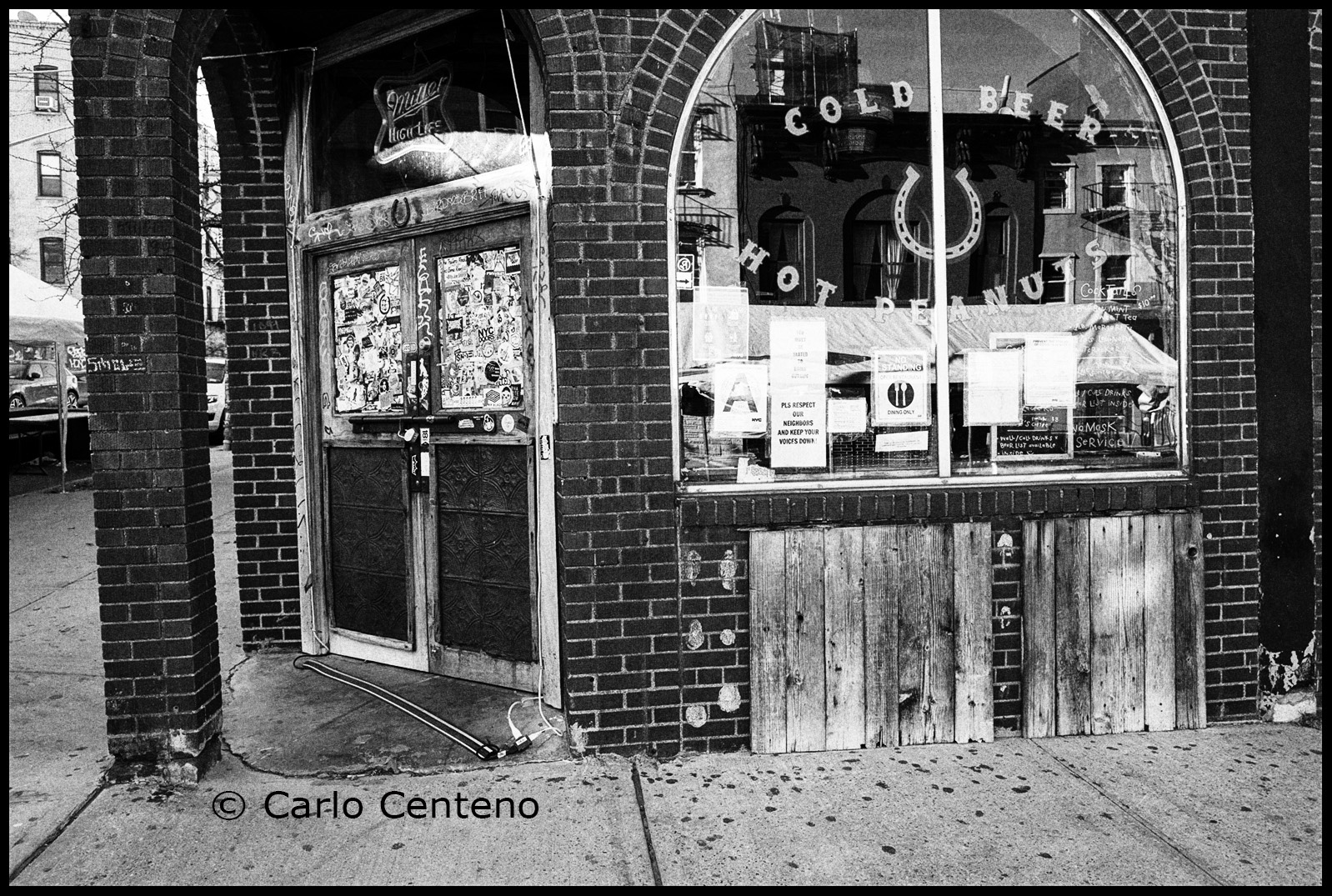
Let’s take the 80-20 rule, where 80% of a business is generated by 20% of the total customer base, and extrapolate to a pandemic index of sorts. I think if this entire 20% group supports their favorite restaurant, diner, food wagon or cart at least once a week for say the first 6 months of 2021, well, that recency and frequency in commerce and service could make a difference. For patrons, a feeling of outreach and support; for the eateries, a glimmer of hope and possibilities heretofore unseen if not improbable.

Perhaps my thinking is too simplistic, too unrefined and certainly enough to have my MBA stripped from my CV. But who am I not to think outside the box, to consider actions however “small” as things unworthy of effort and possibility? Because there’s enough doubt to go around these days, I’ll let Shakespeare have the last word:
Our doubts are traitors, and make us lose oft what we might win, by fearing to attempt…
“Happy New Beginnings!” doesn’t have the same cache as the tried and true, Happy New Year! Yet in many ways the first greeting has some weight behind it. There’s a strong inference to starting over, partially or completely. Everyone has a different take on “starting over.”
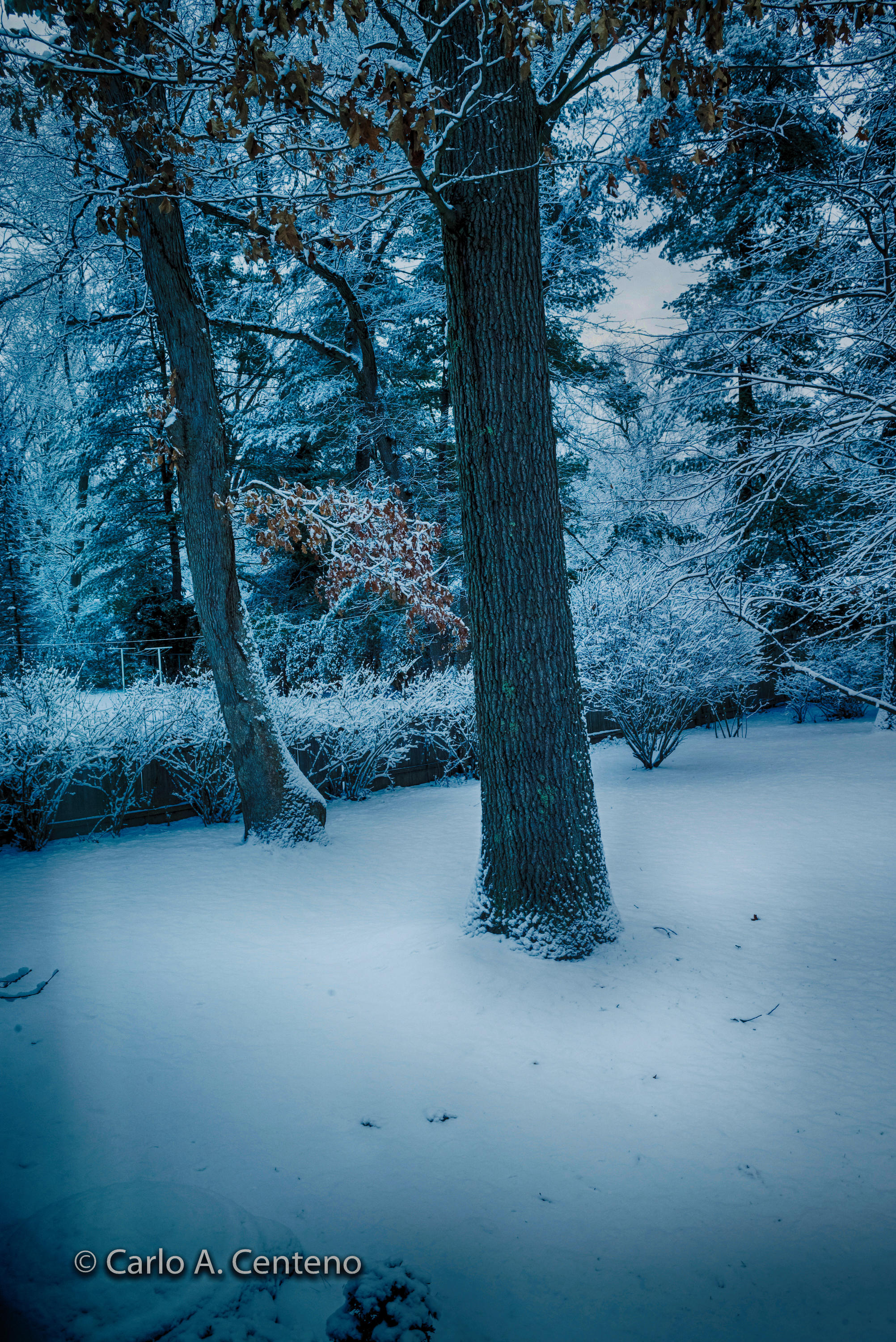
The action of a rising and setting sun, is starting over; the former begins a new day, the latter a new night. Starting over can literally be that: it’s an attempt to put in place what’s transpired with a second [or third, fourth, etc.] attempt to make something work.
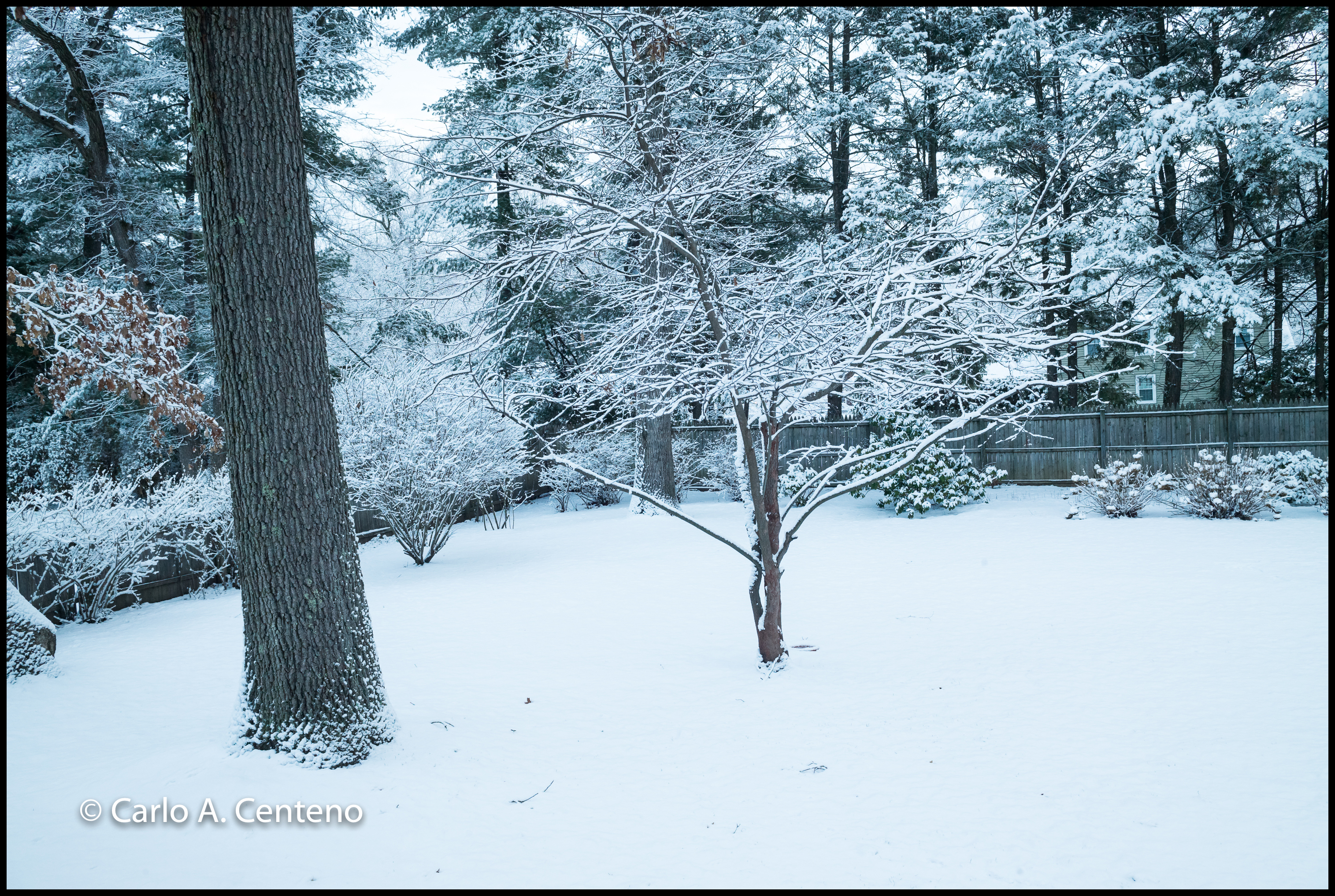
This business of New Year’s resolutions—depending on whom you ask and why—is often predestined for failure. This is especially true with the “new and improved” ways to diet, to lose weight, to increase your brain power, your stamina and so on. For many it’s deja vu, a familiar redux from the year prior with the same if not similar results and attendant disappointments. Many successes become commercialized, specifically when a product is recognized as “effective.” On the one hand, you have the wannabes, individuals who for one reason or another did not accomplish their goal and likely through no fault of their own. So, the achievers draw the attention and accolades. No surprises there. Their testimonials reinforces product or program efficacy. Quite frankly, it’s marketing.

My notion behind beginnings [aren’t most beginnings new, BTW?] is that sometimes, we make a list that’s unreasonable: too many to pursue. It’s a big enough challenge to succeed with one, so why burden your good intentions with one or two, or even three. More than one is often simply one too many. Think about it.
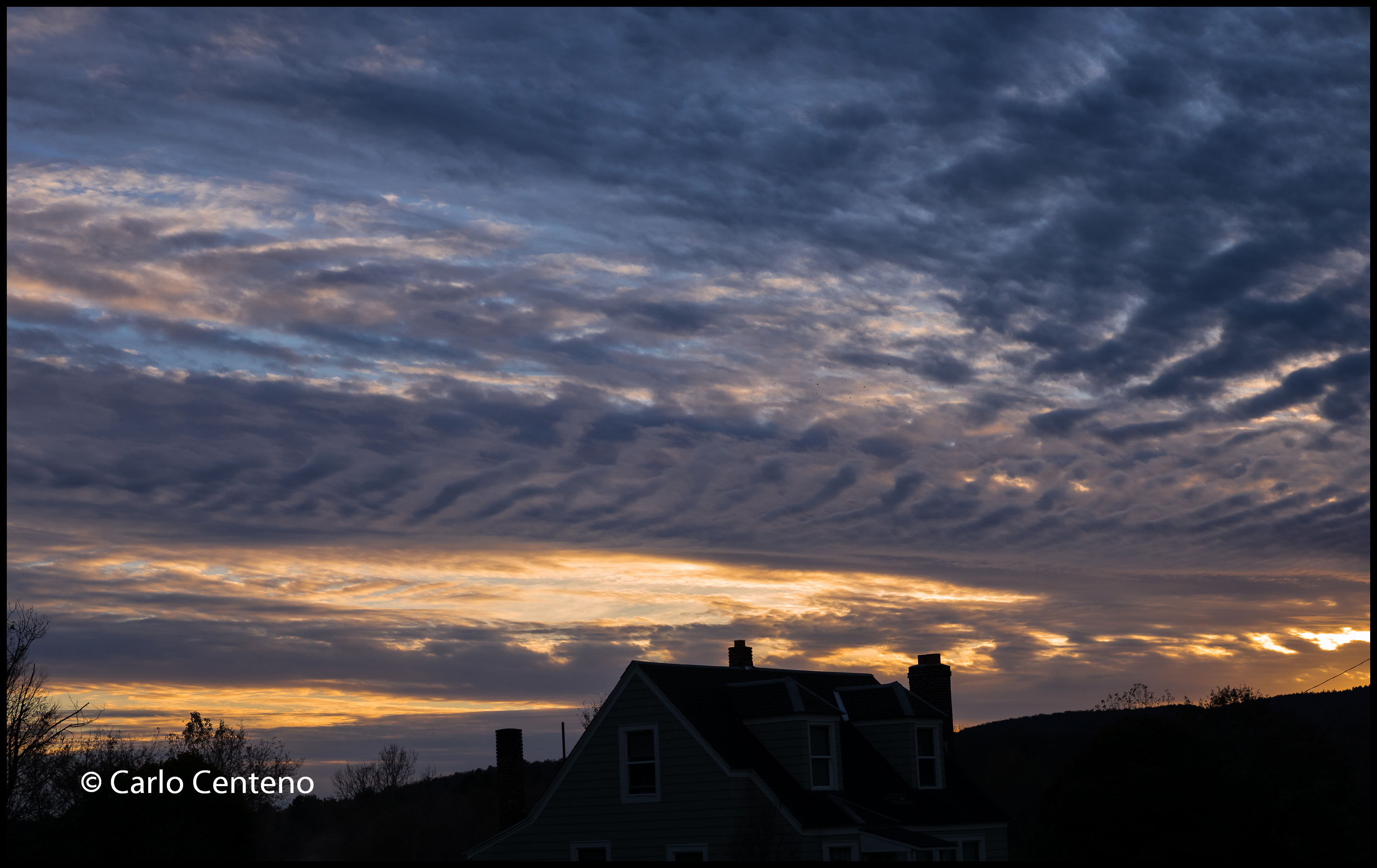
There is a bigger challenge in starting over, in a willingness to start over with perhaps new or different tactics and strategies. Make goals more realistic. For me, to say I’ll master conversational french in 2021 is a real dream. I must’ve drank way too much wine on December 31st. And while I can read and write a good amount of francais, it’s quite another to hold a meaningful conversation [assuming I have someone I can converse with]. Indeed, make your goals lofty, but ensure beginnings are grounded.
My own journey contains many beginnings across many facets of life. For the most part, much of them are still a work in progress. Ultimately, something’s got to give. Endings contain their own nuances, good or bad, sad or happy. However, beginnings should always contain hope.

Autumn is my favorite season for a variety of reasons: the cooler, drier air is both invigorating and refreshing, the quality of light is remarkable, at times appearing clearer on even overcast days. Even time feels slower with a more gentle cadence though by mid-November, I wonder how it went by so quickly. Certainly it goes without saying that the foliage change can be magical, even personally restorative.

Many years ago, I attended a photojournalism workshop at what was then called The Maine Photographic Workshops in Camden, now known as Maine Media Workshop located in Rockport, a mere stone’s throw from Camden. Located half-way up the coast of Maine, the town of Camden sits next to Penobscot Bay. I haven’t been back since, so I hope it hasn’t lost its New England charm. It was quaint, quiet and photogenic to be sure.
You can glean techniques and technical knowledge from more places today than back then [now a surfeit of info sits on the web]. Convenience is nice, but for me, being engaged with a like-minded person is all the more rewarding. Levels of inspiration come to me when I visit an exhibition, a gallery or listen to or converse with a speaker whose work clearly validates that person’s passion for his/her choices.

I was fortunate to have heard and seen in person Jay Maisel, Ernst Haas and Dick Durrance. Titans of their craft, I learned more than just technique, but a whole lot more about this passion to see things in a new way, to transcend the connections of light, color, subject, interpretation and meaning. My brain needed to do some real lifting and learning, and was thus able to do so when my soul became the catalyst to assist with that lifting and learning.

I like to think of seasonal transitions as a form of recalibration. It’s more than a reset, because to reset anything is effectively returning to its default state. Recalibration is a nuance in alignment. If I’m not sure of what I’m feeling when I look through a viewfinder, I move a few or more steps to one side or another, as well as toward or away from my subject. Recalibrating.

There are similarities in writing, but they’re a bigger challenge for me to describe. I suppose the very title of this post lends itself to recalibrating: adjust the “color” of your words such as tone, passive versus active voice, even a tweak in aliteration to keep your narrative—and your thinking—interesting.

Autumn just doesn’t land here in the northeast; when it does arrive it’s akin to that sense of belonging, of knowing that your journey—in spite of personal hills and valleys—continues with the expected and as well as the unexpected. I like all the seasons, but fall is the one which captures the zeitgeist of the rest of the calendar. It’s a short period of time, that in its most fundamental form, feels like the comfort food that’s been sorely missing for more than half the year.

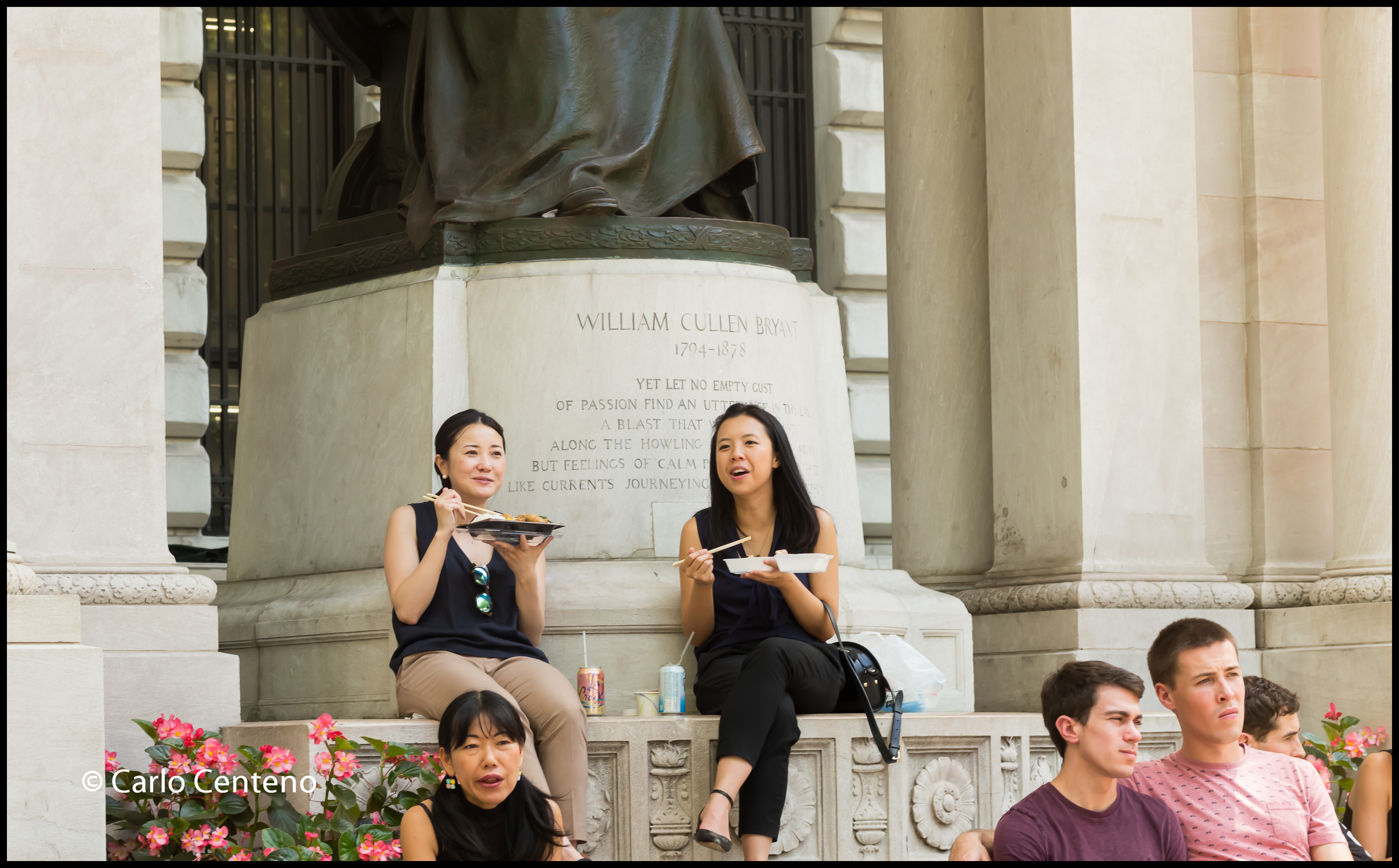
Modern life has been tossed into a blender of our own making. Whatever comes of that mix will be unrecognizable. It’s a blend never before seen or experienced, though to some degree, many of us hope that what pours forth is something that has meaning and value. It could be something we’ve longed for across time immemorial, and yet I’d like to think that most of us are hopeful of what’s been created.
At present, uncertainty unceasingly hovers over us, as if poised to pour change across social, educational, medical, cultural, environmental, financial and governmental policy mores. And like other things we’ve thought of and created, none of it will ever be perfect. No one can please everyone every time.

The work-in-process strategies and machinations will take some getting used to. In fact, everyone should tune-up their listening skills. As the saying goes, We have one mouth and two ears, and good listening is always important. We’ve been challenged with practices to keep the new coronavirus at bay and confronted with racism and ideological thinking and approaches that touch the far left, to the center, to the far right. A virus—whether new or old—is looking for a host regardless of your ancestry and your present location in this world. Like COVID-19, racism is a virus that must be eradicated, that and along with other –isms which undermine our empathy, our ability to tolerate, our desire to compromise and our willingness to see that, indeed, the glass is half full.
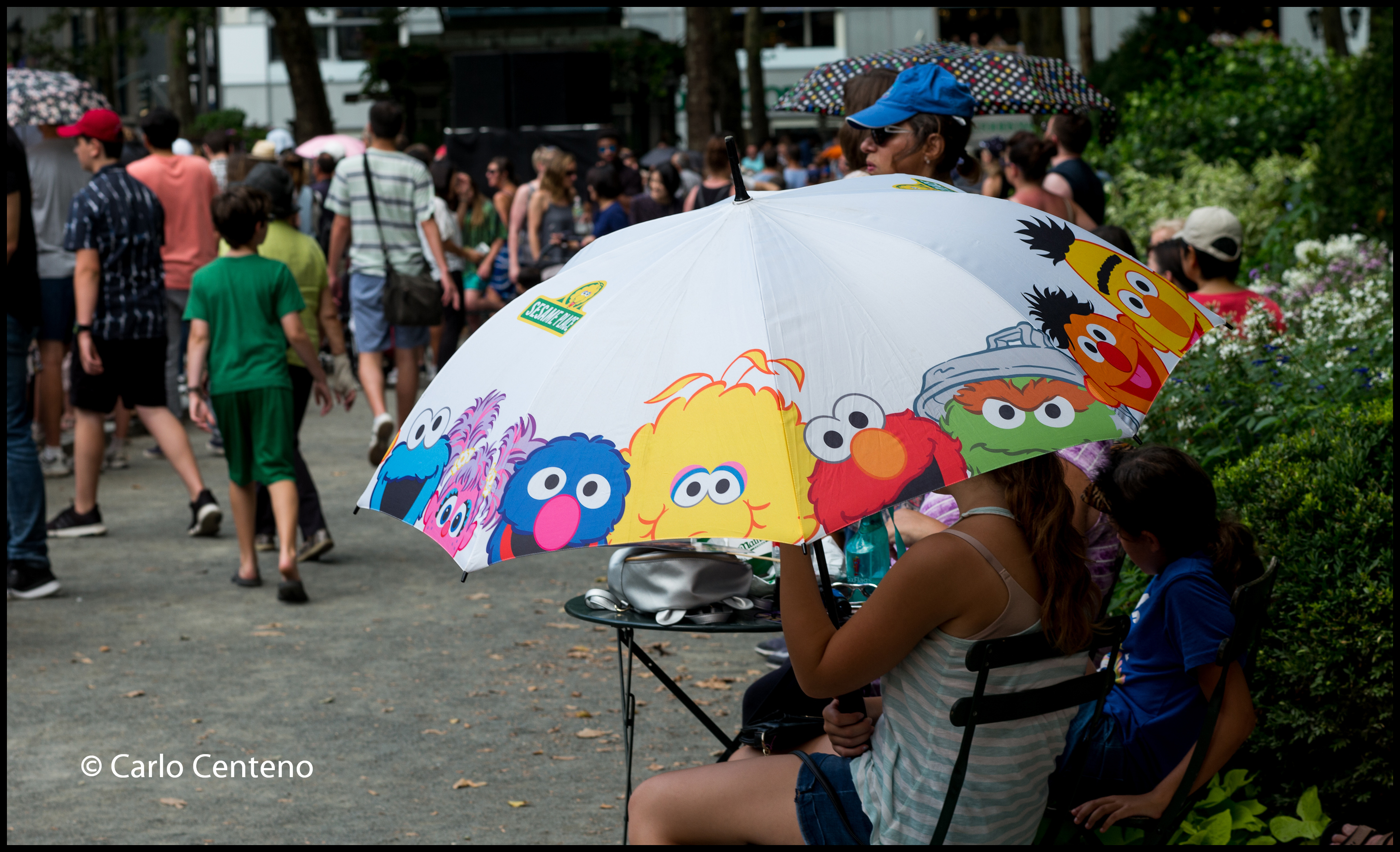
Eleven weeks has kept many of us quarantined regardless of age, fitness level and overall hierarchy, whether familial or professional. I’m still adjusting my return to work, as several safeguards are in place: my office door stays closed, open areas in the office space require a mask, wipes and hand sanitizer are located along travel routes.

All of this will take some getting used to. Like many, I miss the energy and engagement of being around people. It’s just part of being human. Though I enjoy journaling, writing letters, taking photos as such, nothing can replace a good conversation, the sight of an expression [good or bad, preferably the former] and the sounds of laughter, exclamations, even the cacophonies that make Life all the more interesting.
Be well. Stay healthy.
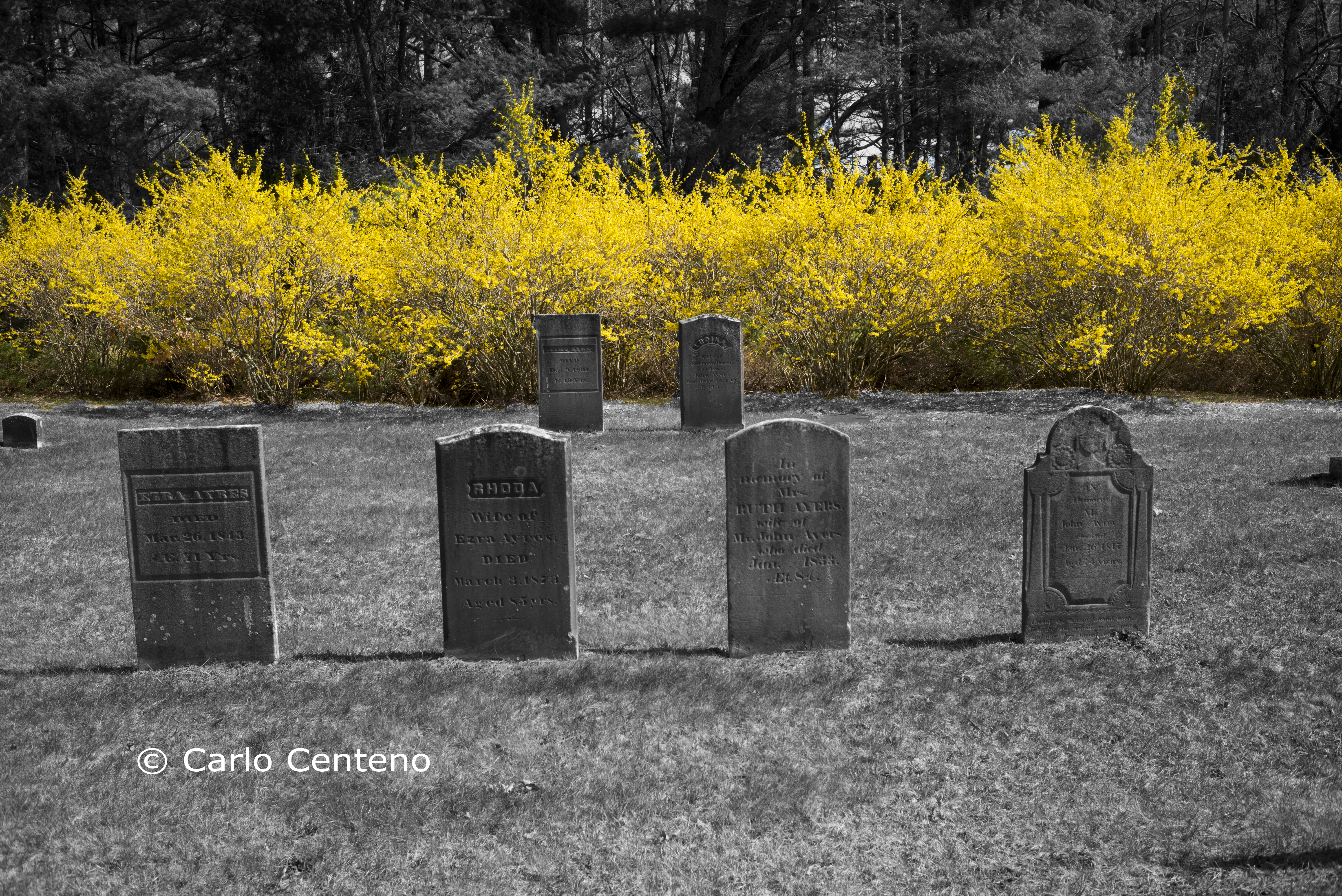
Generations of my wife’s family are interred in a local cemetery, a cemetery that honors among others, veterans, the ordinary, the extraordinary and in particular, the residents who lived in one of the 4 towns that were evacuated in order to create the Quabbin Reservoir. The reservoir was built to provide potable water to those living in and around Boston.
Anyway, MJ’s family lived in the town of Prescott, which like the other towns in Dana, Enfield and Greenwich now lie about 151-feet [46-meters] beneath the water’s surface.
Yes, we are at the mercy of the new coronavirus and the possibility of becoming ill with COVID-19. However we must put things into perspective, because there are many dealing with far heavier, more costly burdens that pale to what some of us may deem a hardship. The majority of us are dealing with inconveniences; yet others are fighting for their lives. The residents of the Swift River Valley left homes and homesteads, jobs, family and friends and most certainly a way of life.
Last week there was the amazing story of the Bello family. A couple with 3 young children, the father, Jim, teetering on life’s edge fighting COVID-19. It’s an amazingly powerful, somber treatise about love, faith, and unwavering determination in the face of incomprehensible odds.
If cabin fever makes one feel a bit cuckoo, then get out and do something. Take a drive into the country, take a walk on a trail, visit a landmark, break out the camera, the hiking shaft, the binoculars, the bicycle and more. With the majority of us driving less, you may have heard there’s less air pollution. For the introvert, having so much quiet and alone time could be a godsend. The opposite holds true to the extrovert dealing with social withdrawal.
There are times when we feel enlightened by some cause, an emotion, an observation, anything from the mundane to the spectacular can prompt this feeling. Walking through the cemetery renewed a sense of purpose in me, an awareness of who I am and what I should do versus what I can do. To the rest of the world, I am just another being among millions of others. So what?
I suppose relishing my time—essentially doing nothing—allowed me to have a more acute perspective on being mindful. Perhaps I was due for a spiritual tune-up, and I think got one. A better way to feel enlightened is to think of it this way: “If you want to feel good about yourself, do something good for someone else.” My spinning instructor always says that after a class.
Be well. Stay healthy.
 Carlo Centeno