Frisson…..it’s French for a chilling sensation, a shiver. It’s typically a pleasurable response to a stimuli that “moves you.” At times we refer to this reactive sensation as something that, “gives me the shivers.” You get goosebumps, you feel the small hairs on your arm or the back of your neck stand up, your breathing and pulse become quicker.
Frisson is that short-lived somewhat intense satisfaction often brought on by music, art, an event, a person, a book, essentially whatever it is you witness that generates a momentary elevation of pleasure. The brain and body experience something akin to adrenaline and dopamine reaching peak levels.
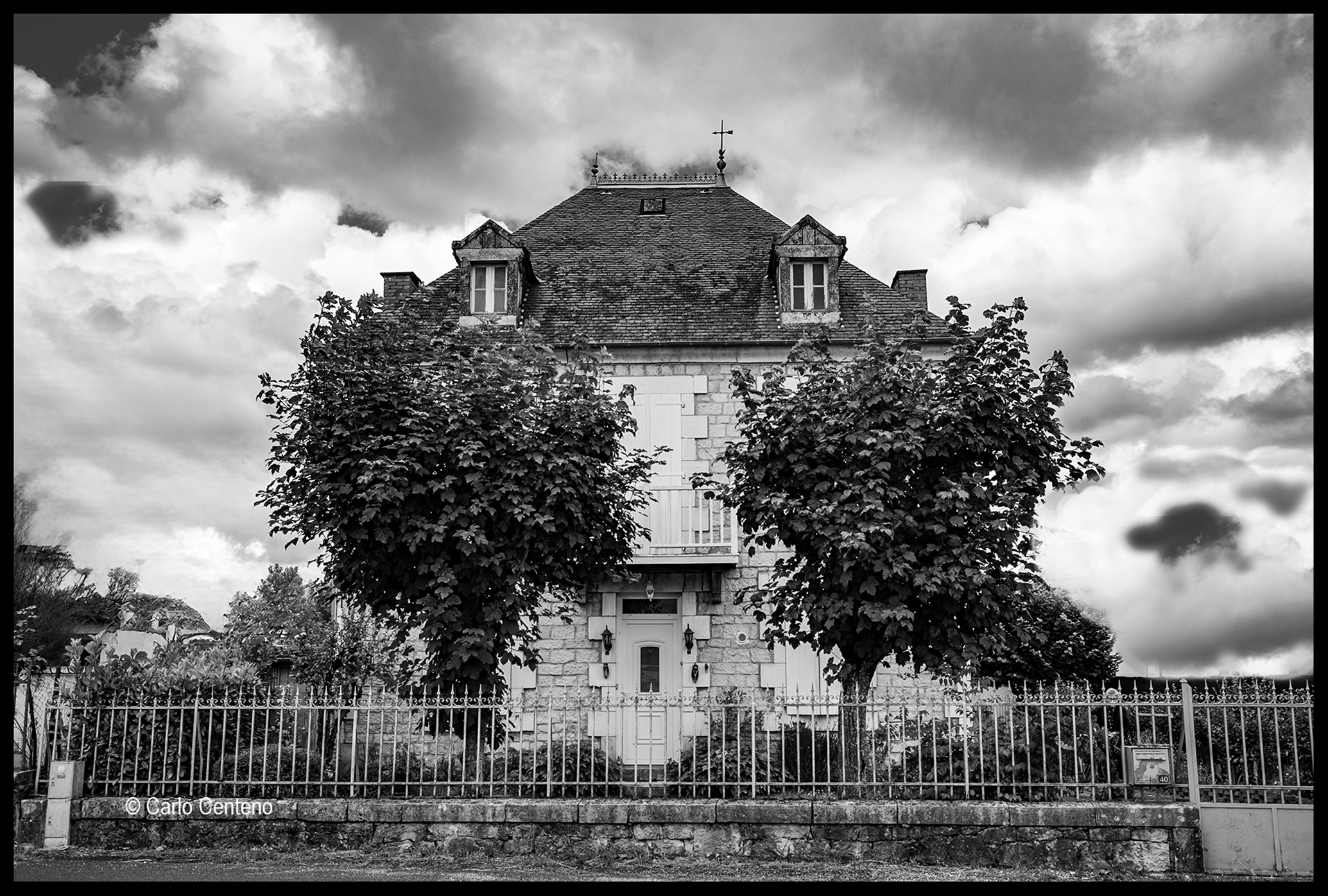
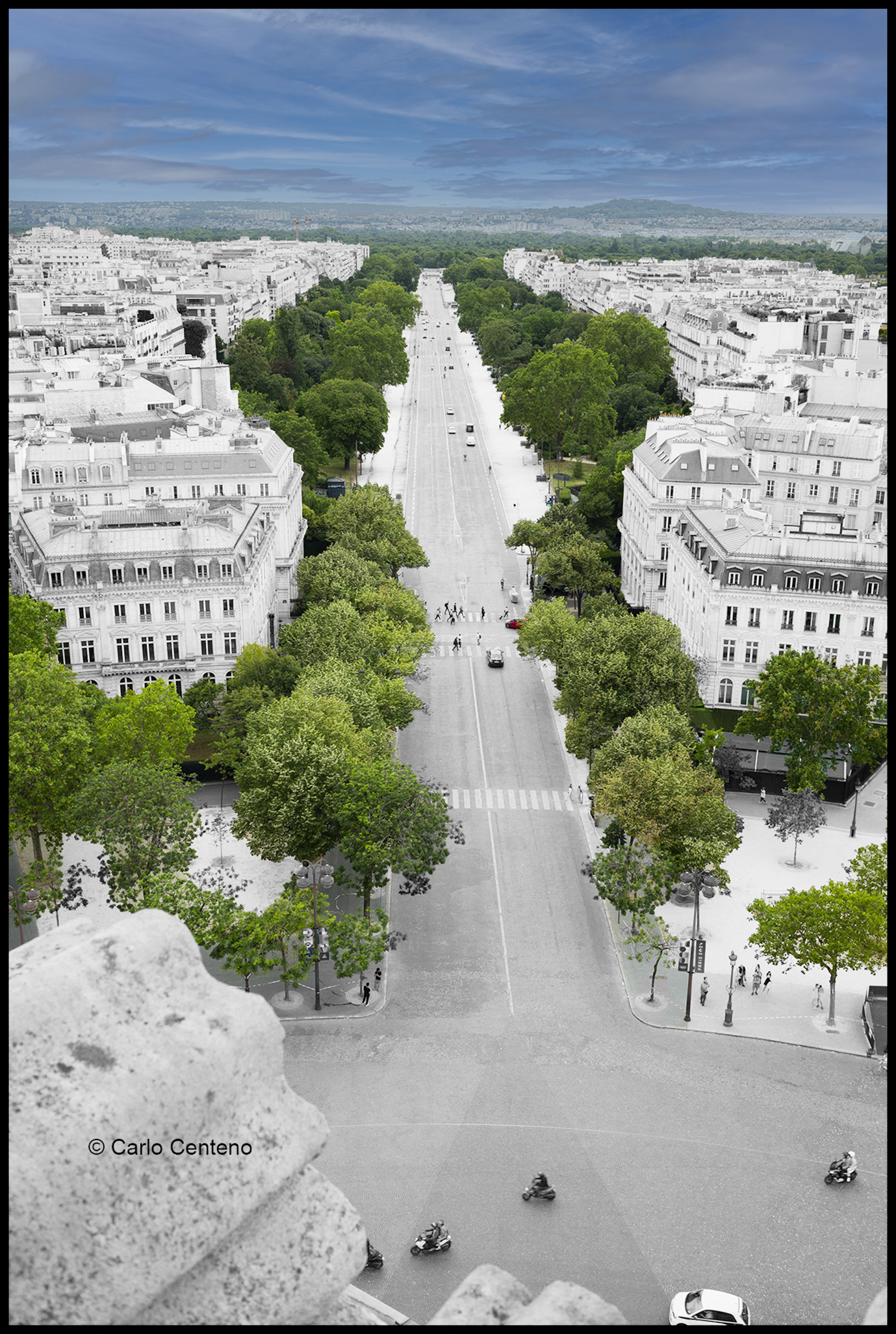
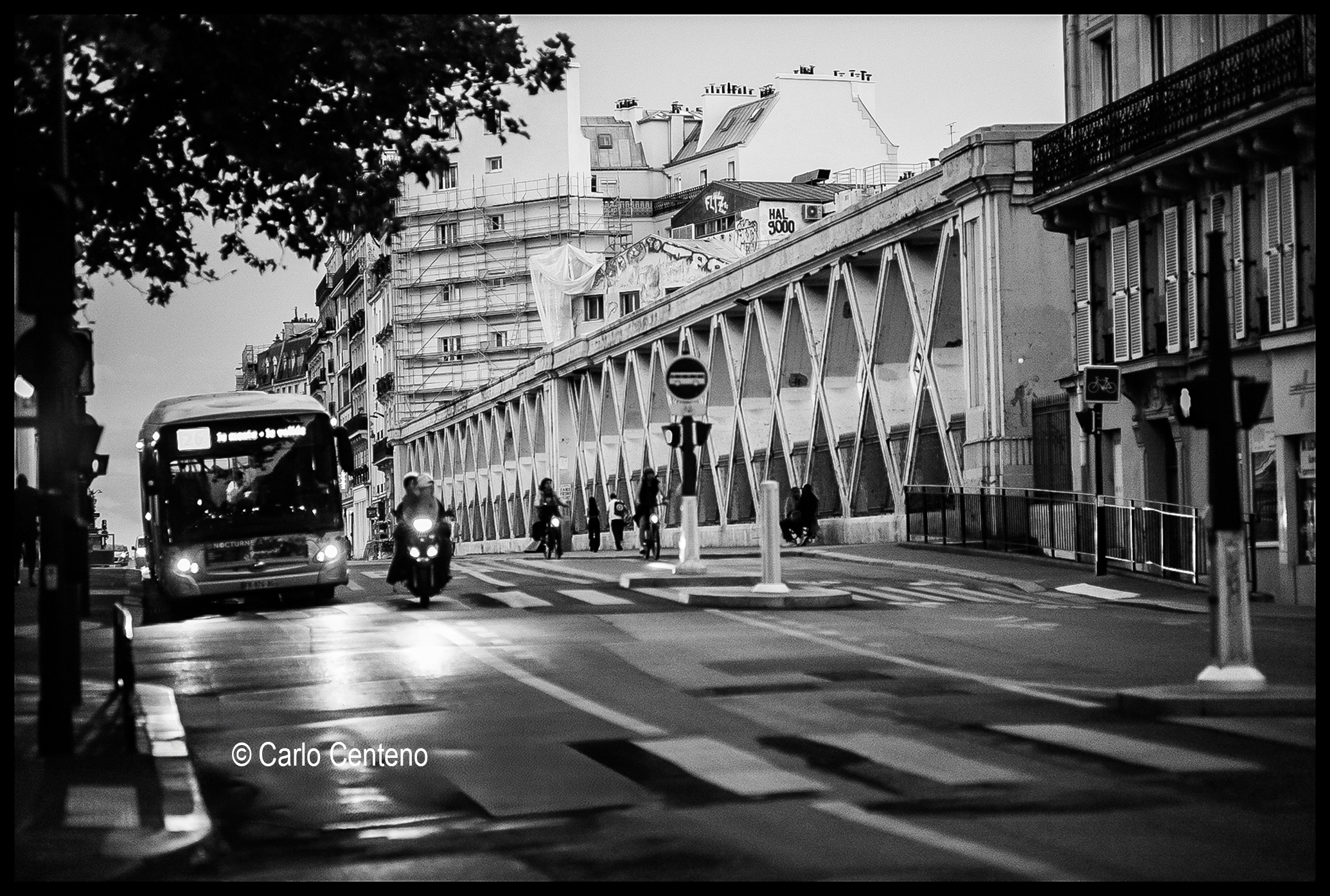
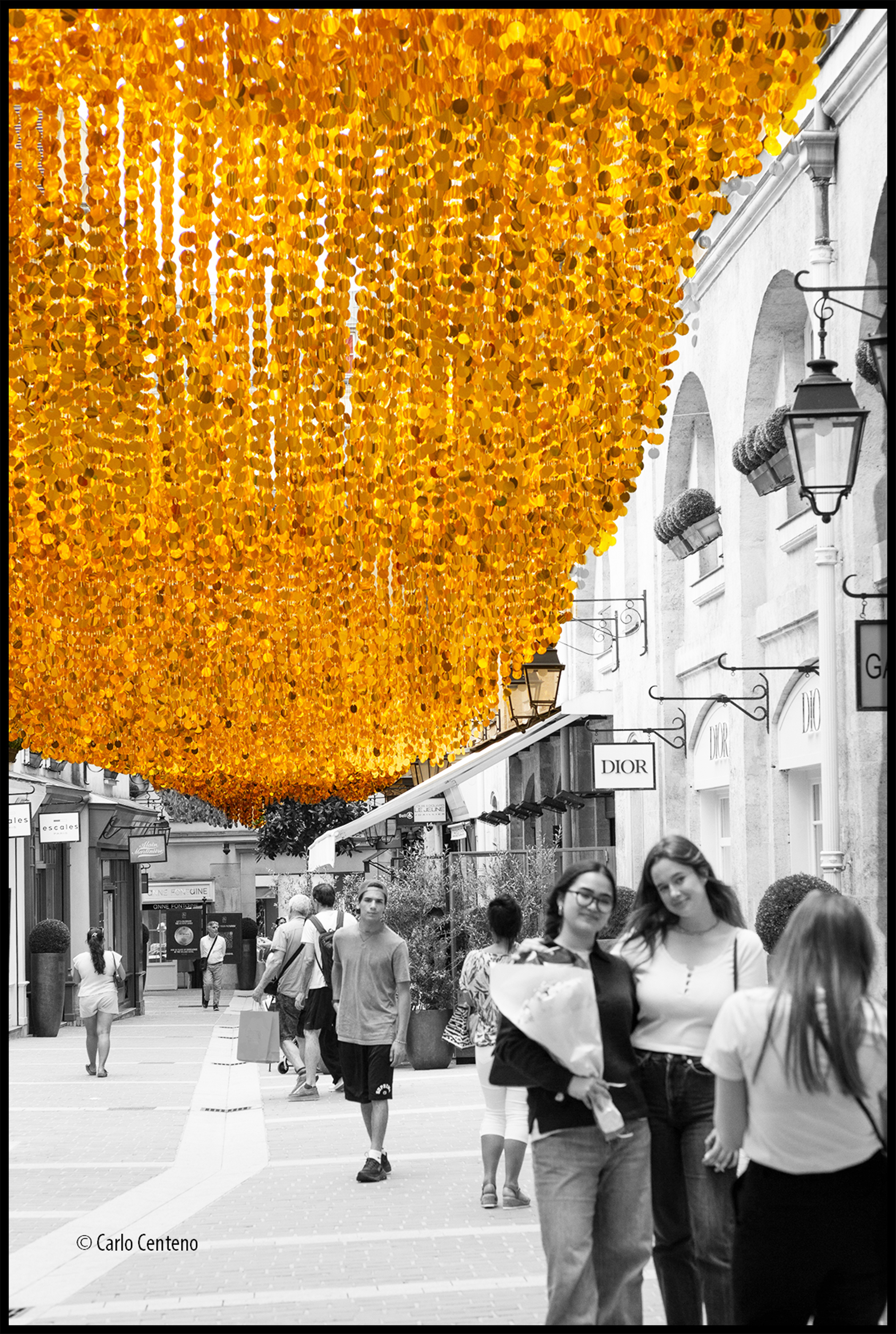
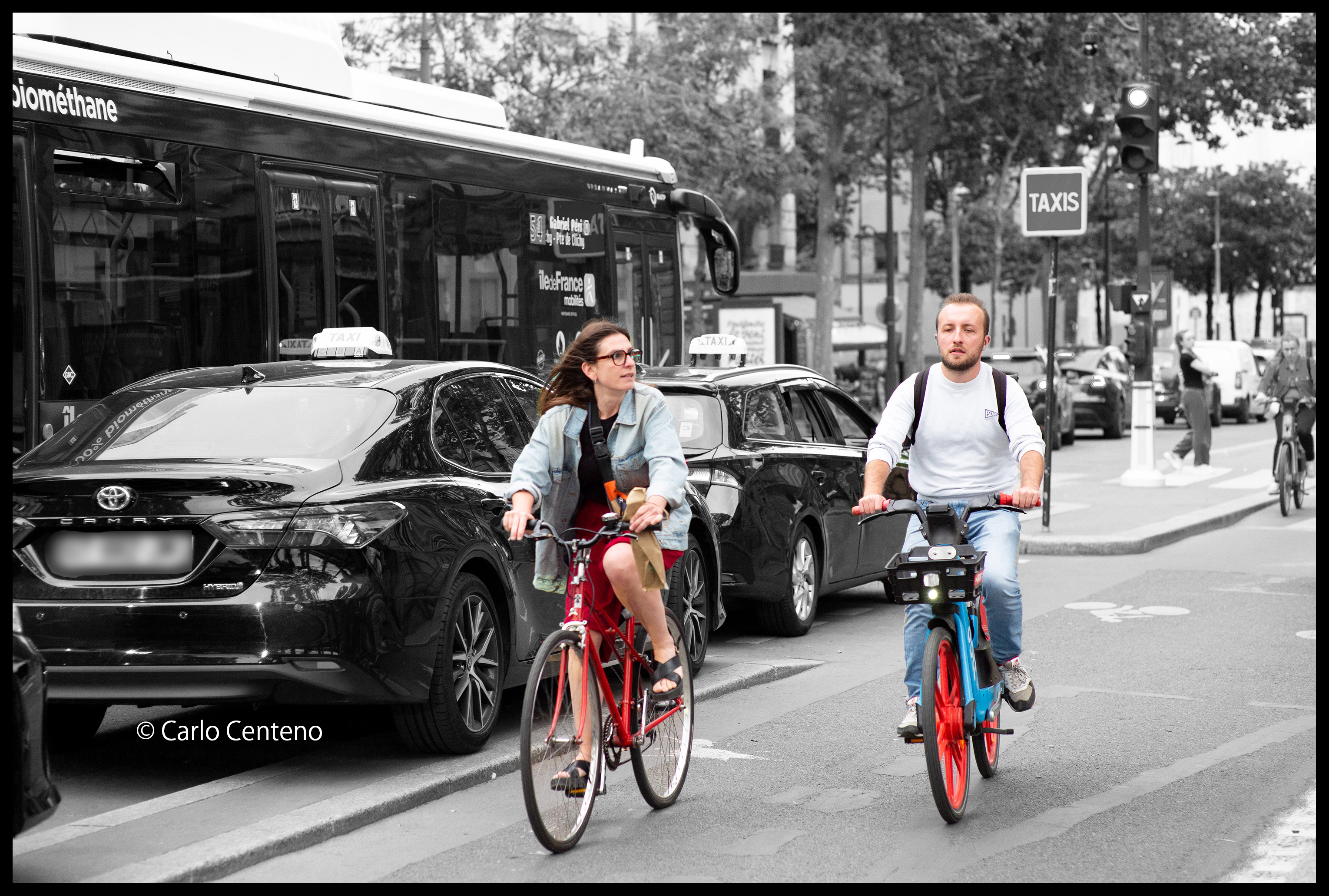
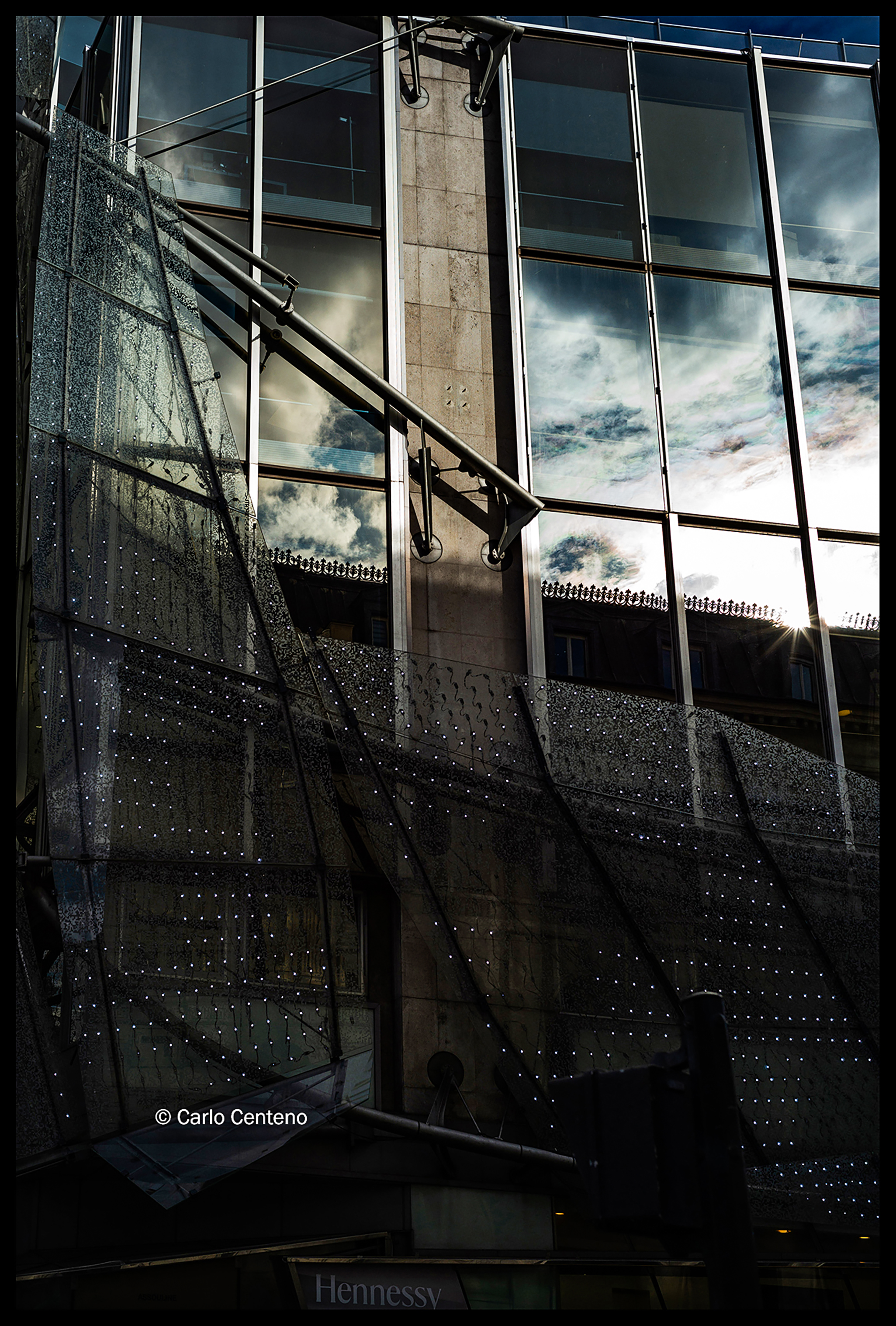
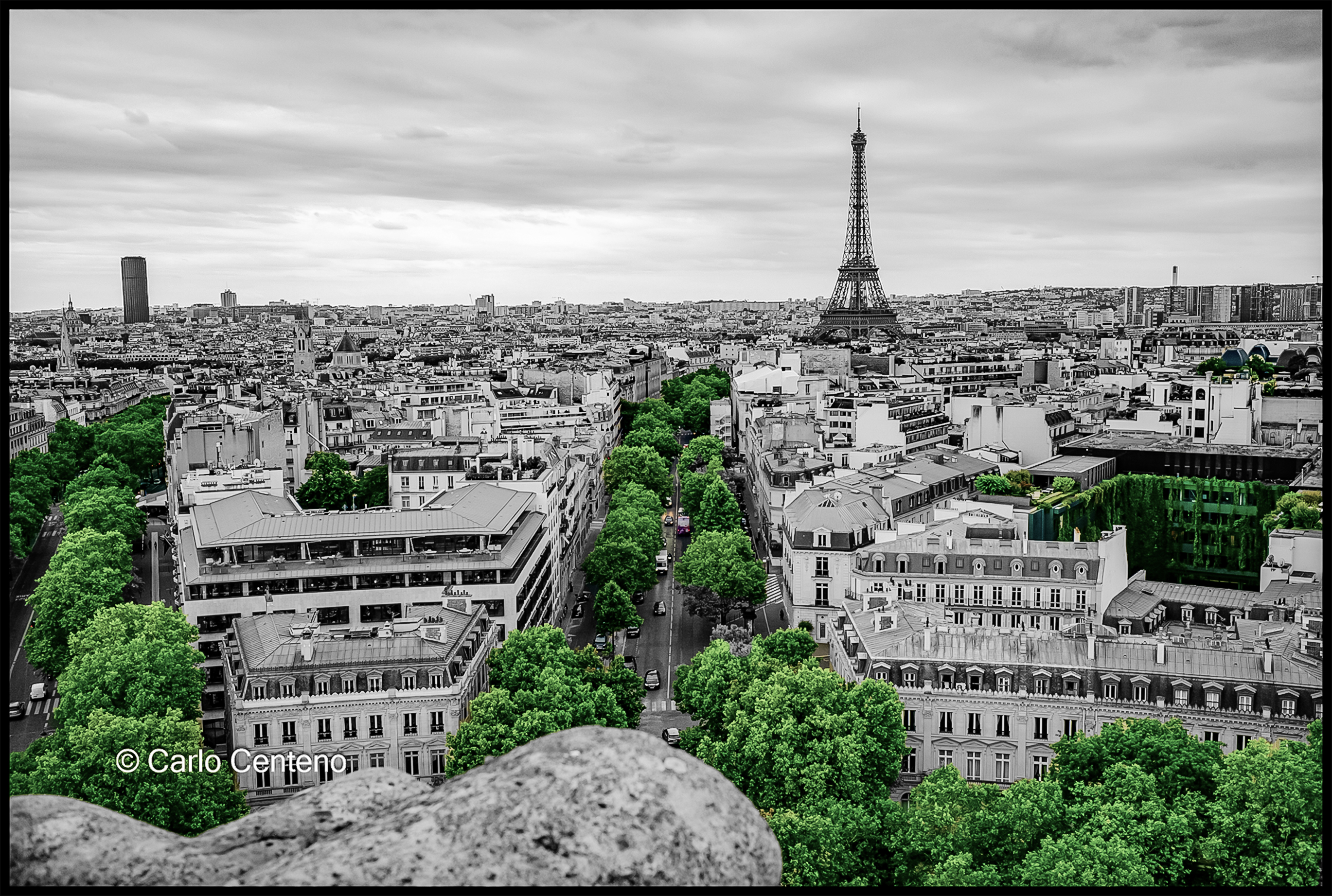
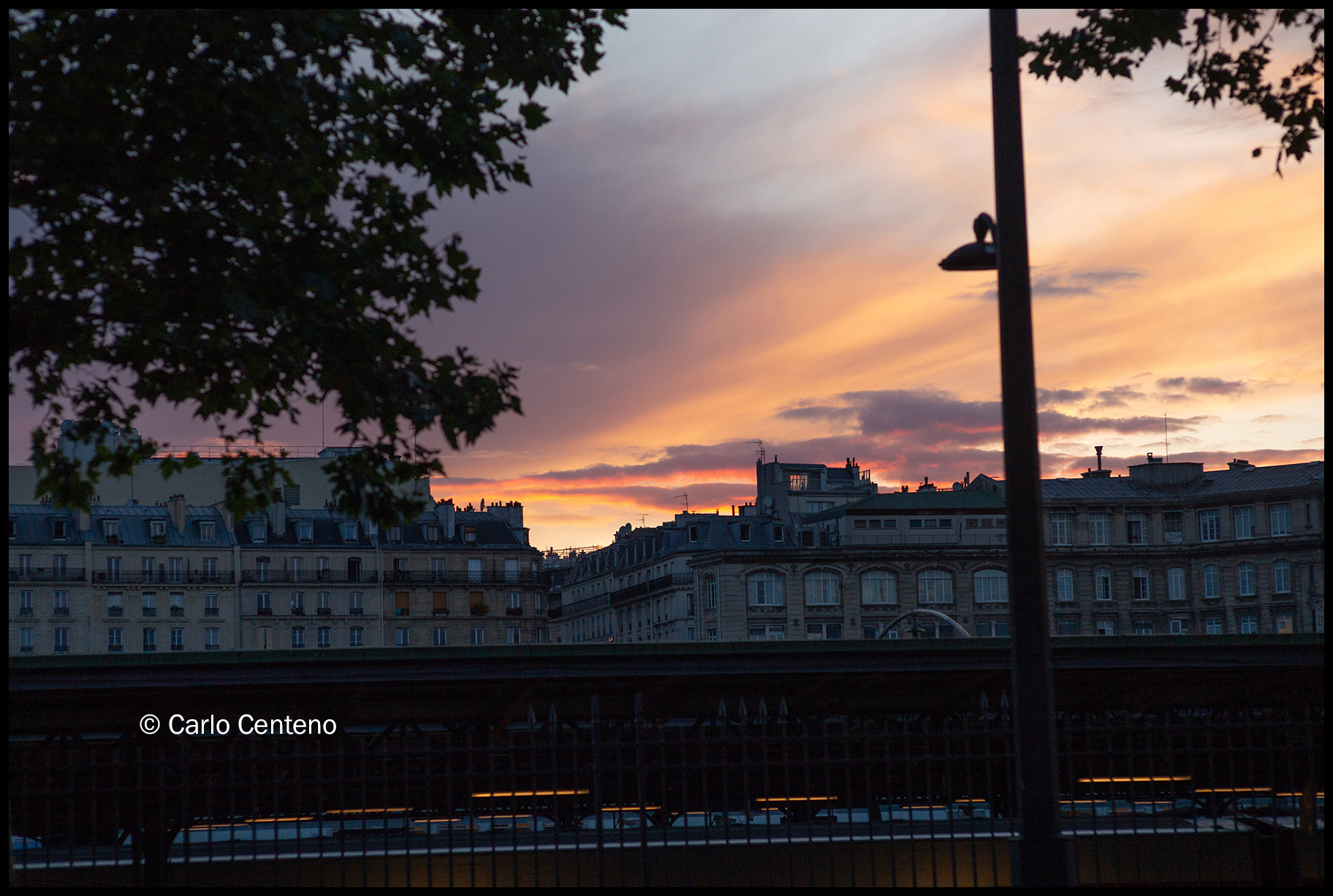
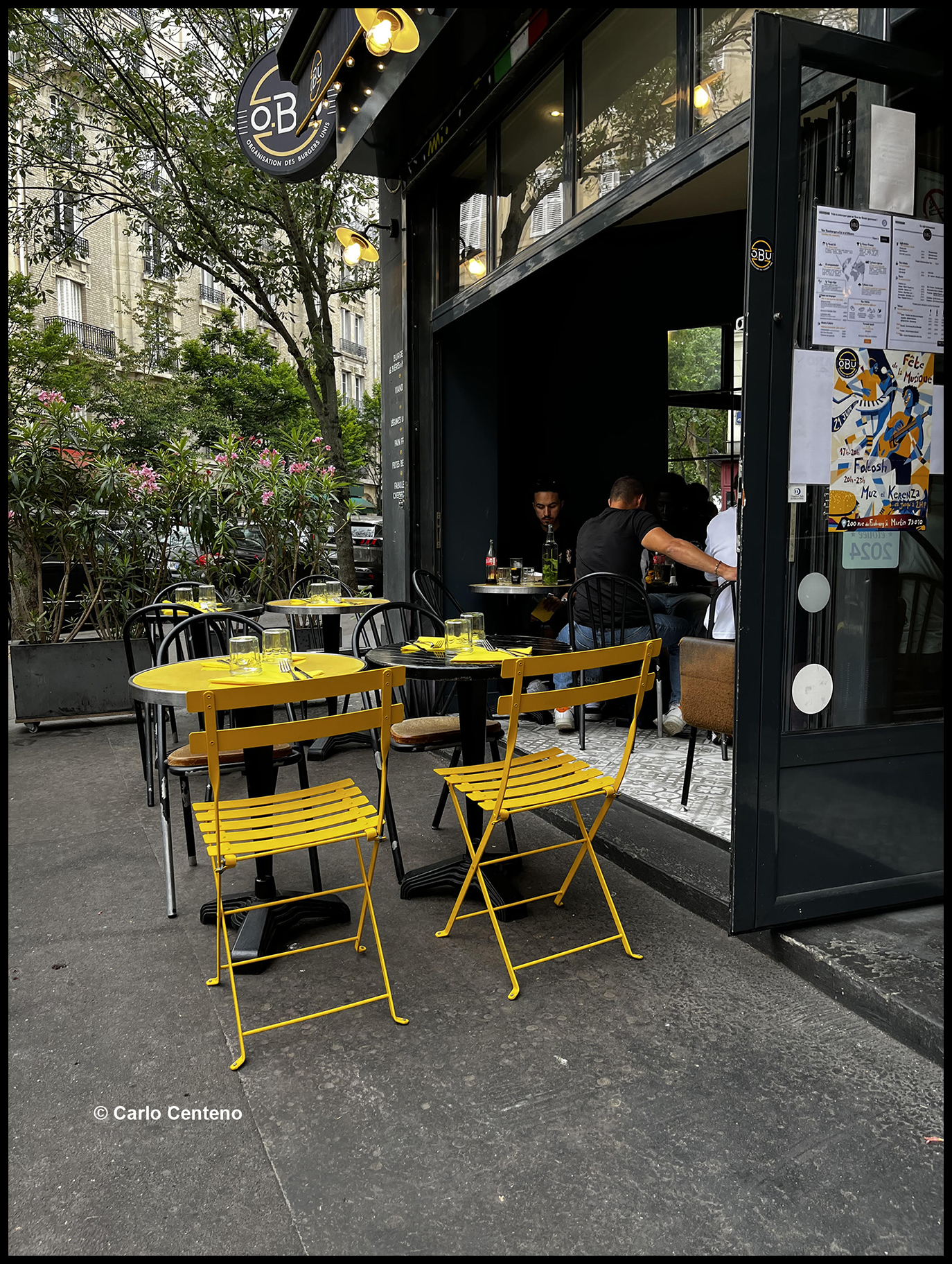
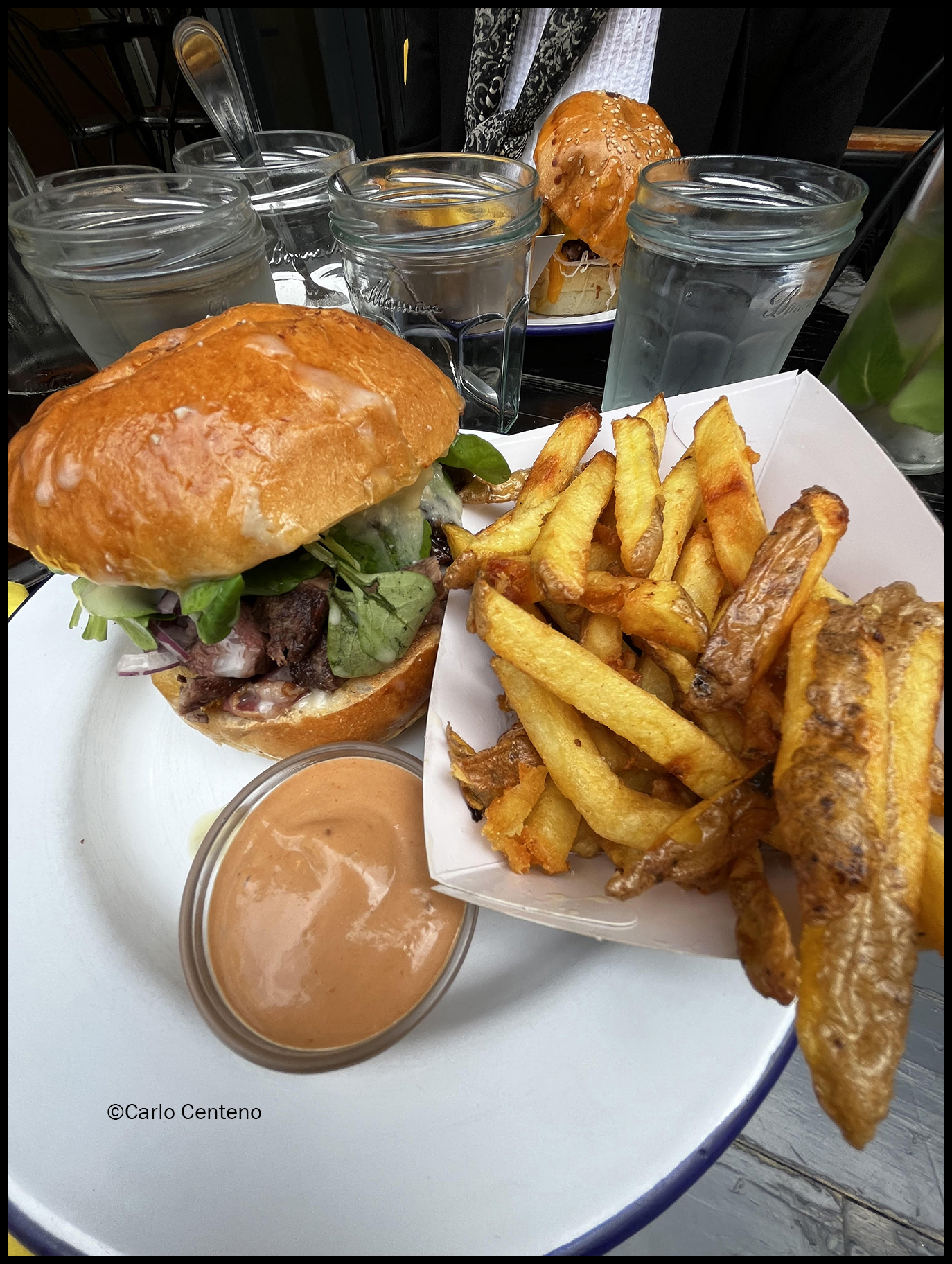
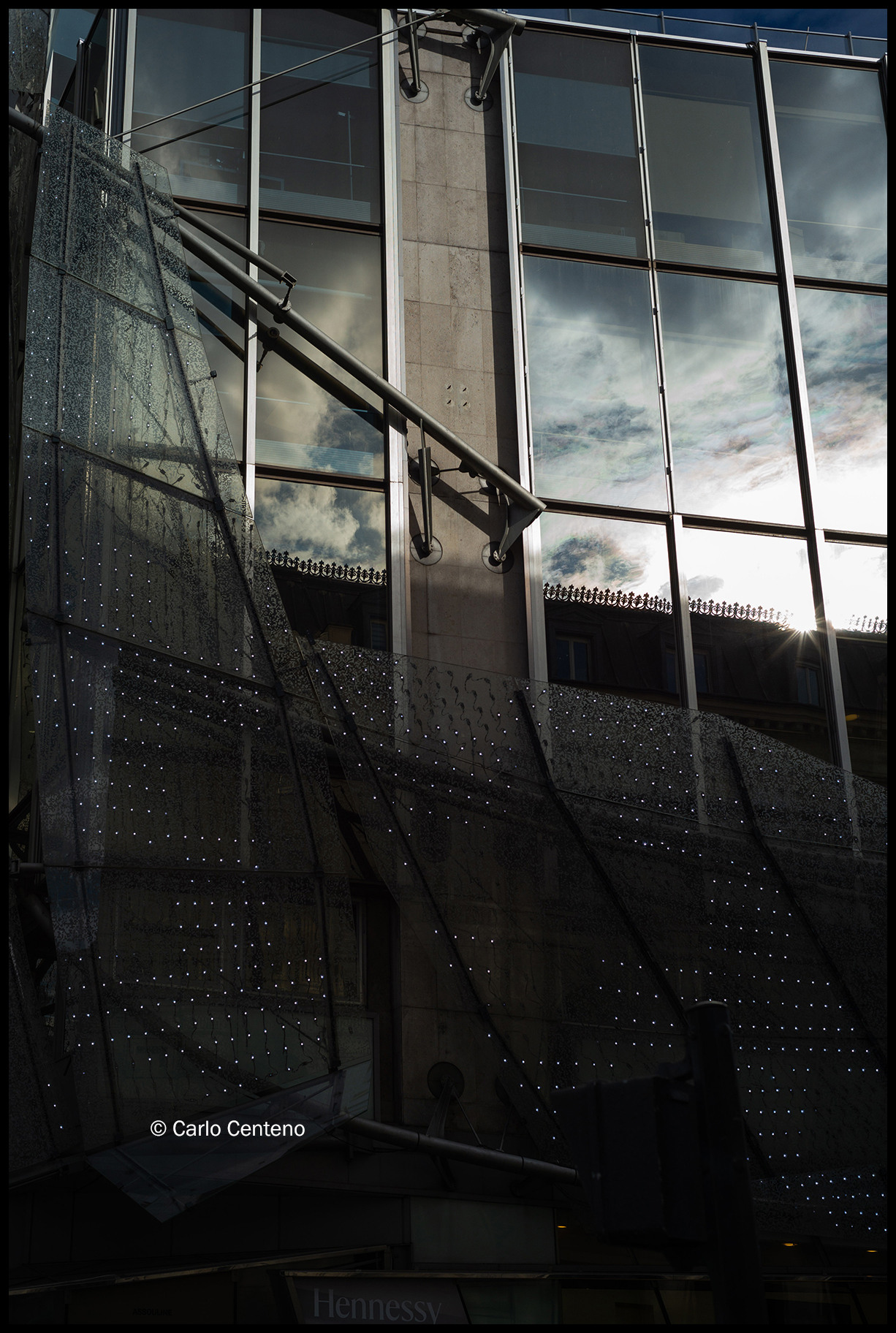
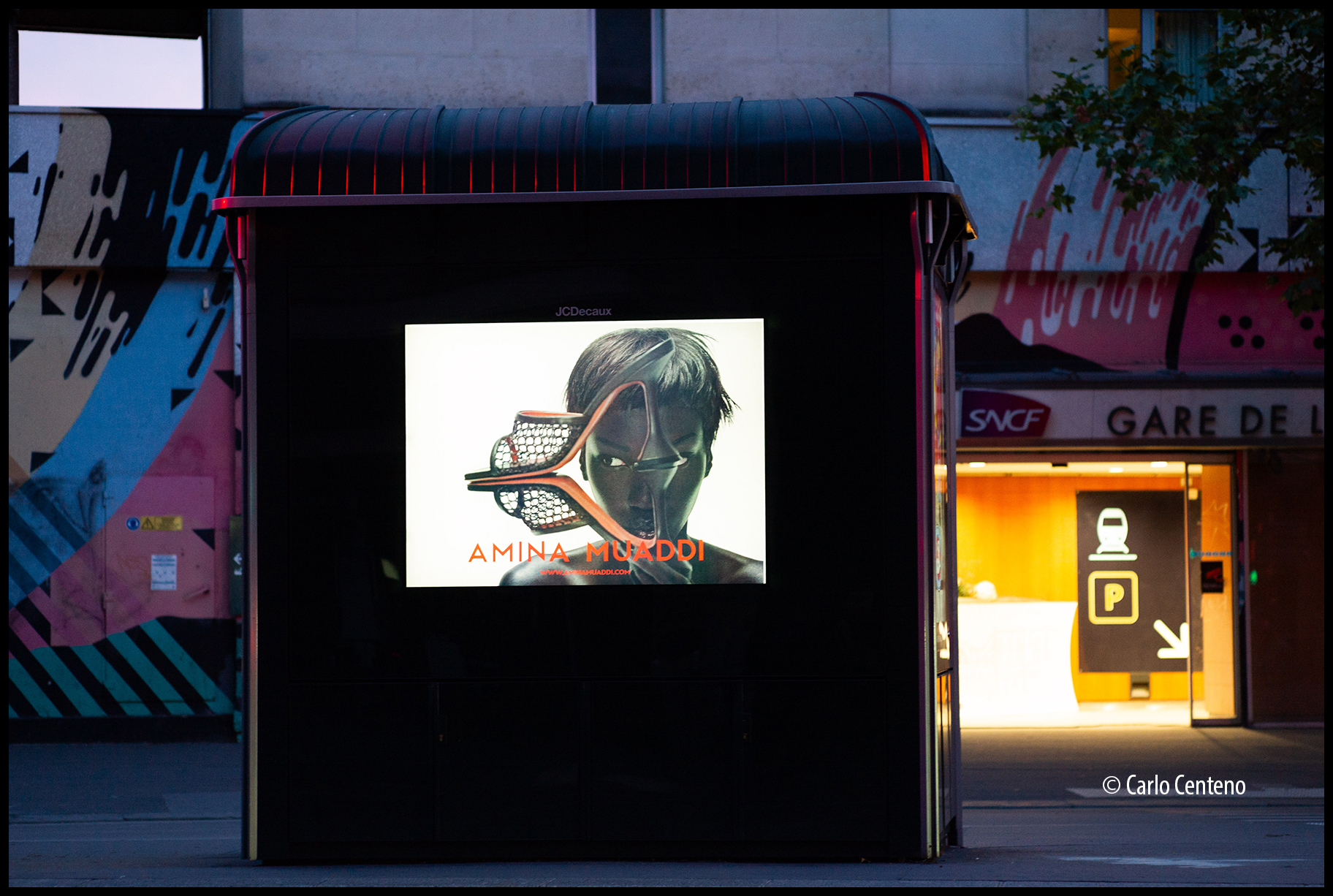
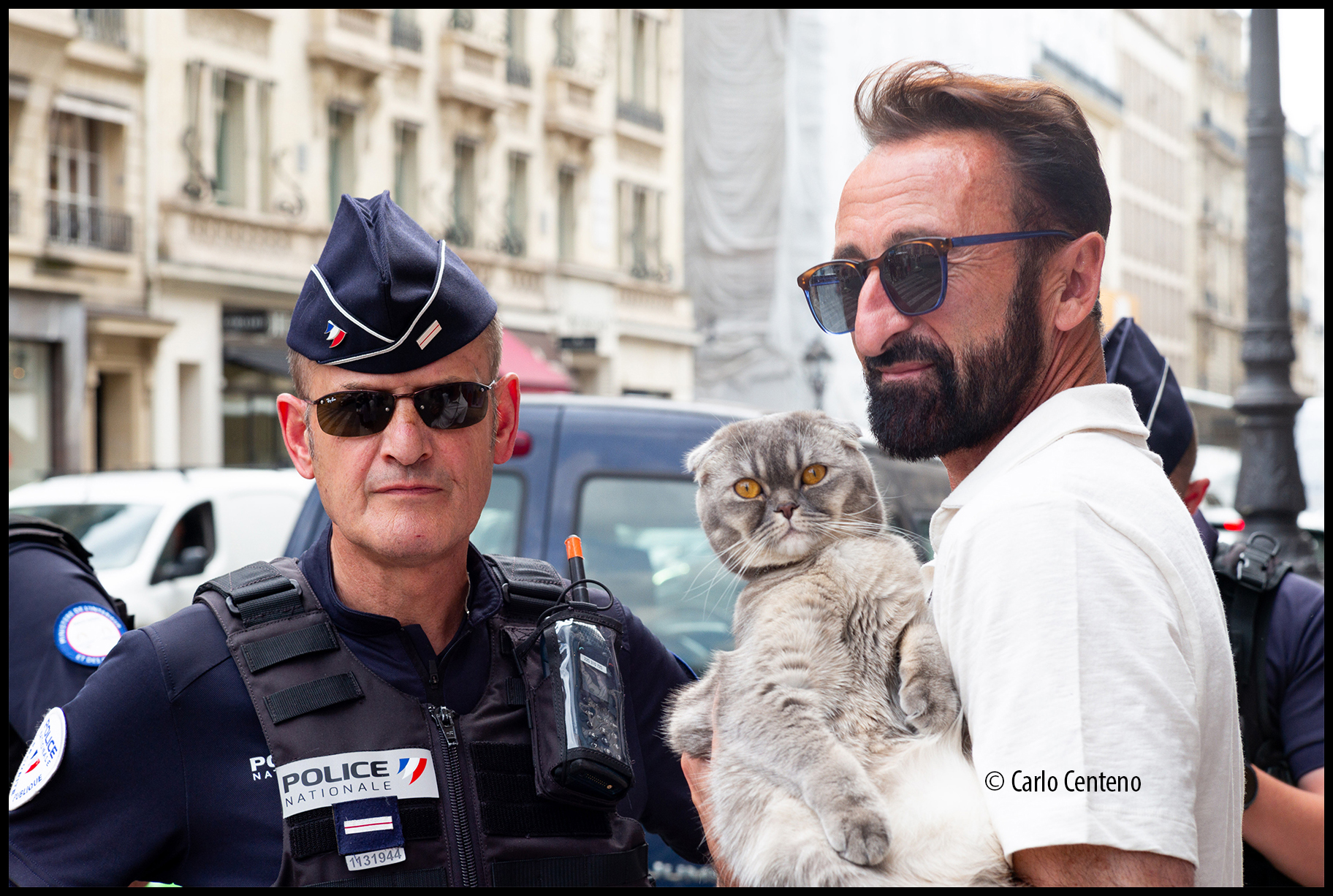
The following images are some of the “frissons” I felt while in France. I enjoyed the “shivers” and enjoy bringing them to life here. Hope you find something to like…..
In our current state of dystopia, many of us choose to distance ourselves from news media in all its forms. All that noise creates too much anxiety, along with all the other discomforts that accompany “news and information.” We are exposed to a colossus of news briefs, articles and “breaking news at this hour” enough to ignite [or bore] the minds of writers/authors well versed in our state of fear, hopelessness, frustration, suffering et al.
Misery knows no bounds, but so does hope and happiness.
Relevance and purpose can hold both good and bad in thoughts and actions, but your choice in one or the other adjectives relies in your beliefs and values that help you deal with your day-to-day. You may not realize–or even think about–your own stoic qualities.
Consider the opening paragraph of Charles Dickens A Tale of Two Cities.
“It was the best of times, it was the worst of times, it was the age of wisdom, it was the age of foolishness, it was the epoch of belief, it was the epoch of incredulity, it was the season of Light, it was the season of Darkness, it was the spring of hope, it was the winter of despair, we had everything before us, we had nothing before us, we were all going direct to Heaven, we were all going direct the other way–in short, the period was so far like the present period that some of its noisiest authorities insisted on its being received, for good or for evil, in the superlative degree of comparison only.”
When you realize you can’t control everything, but manage the ones you can, then you’re in a better place than many others.
I’ll admit that it can take a lot out of you when winter conditions pin indicators below the norm [temperature, wind chill], or above the line [accumulation and severity of snow/freezing rain/sleet]. By February, a good number of folks are pining for—some hoping through a telekinetic event—the arrival of spring. Yet in spite of our incongruous sentiments about winter, its been said that residents of Scandinavian countries can make the best of it. Perhaps their overall acceptance of this perennial cold, snow and short days has something to do with the their countries having “the happiest people in the world.” Is there an attitude, a perception that we’re altogether missing? Warmer clothing compared to ours?
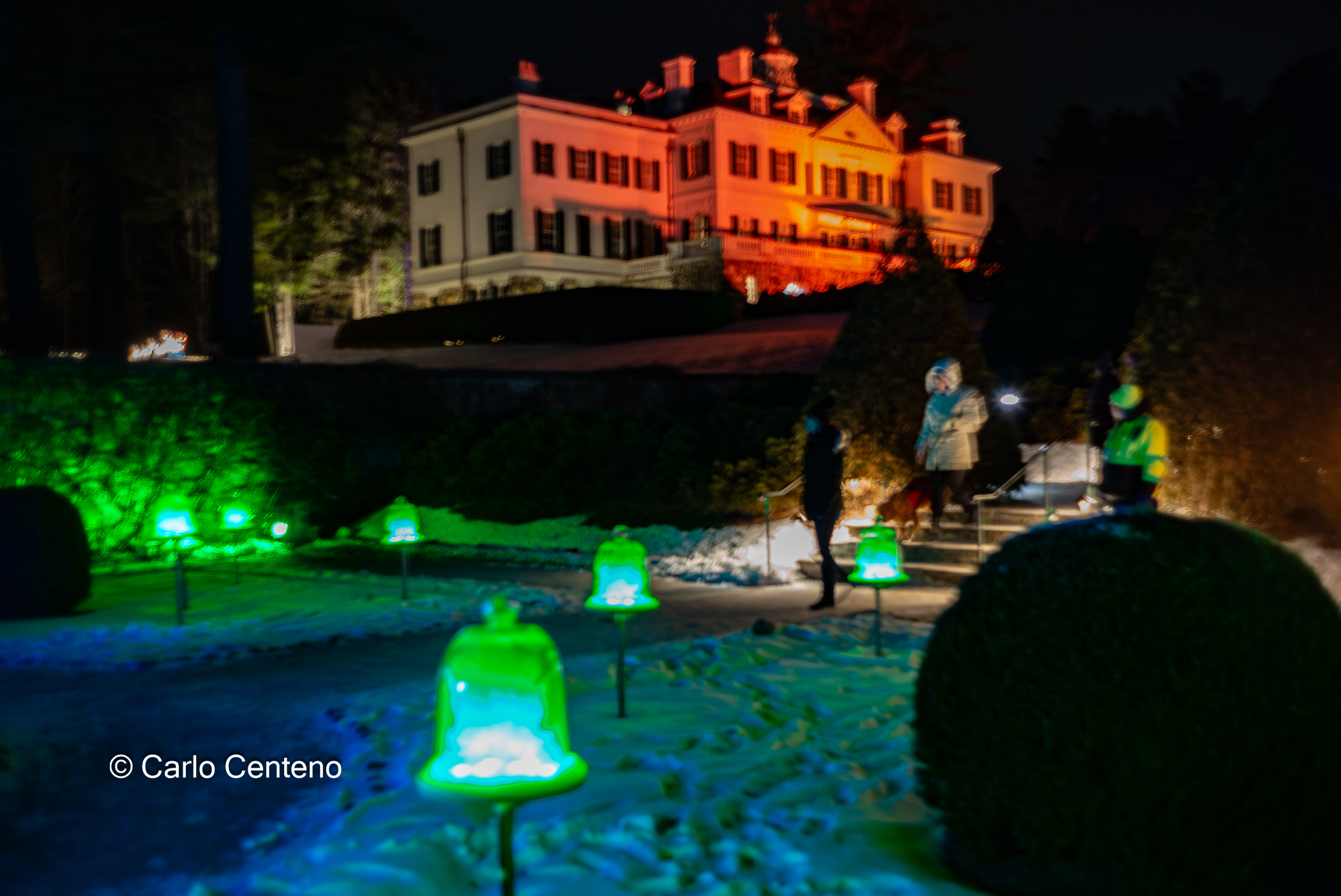
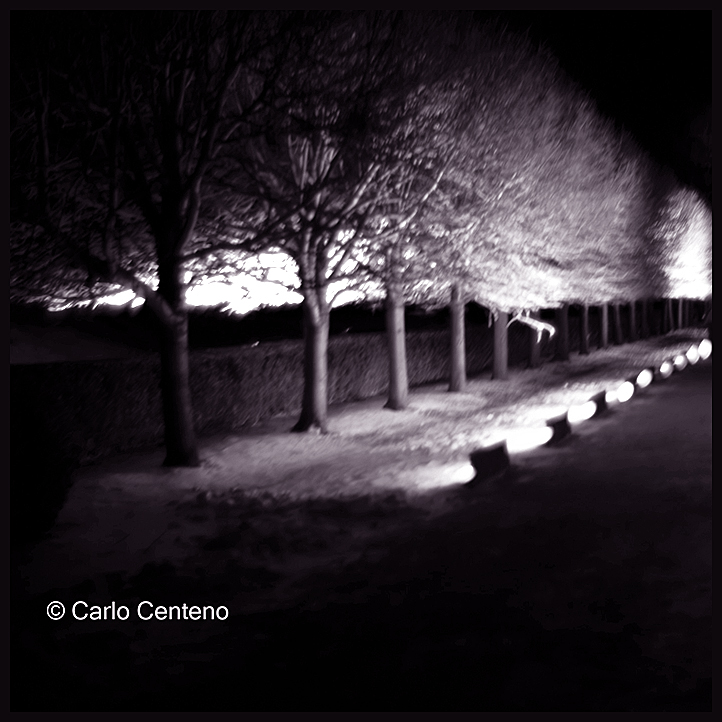
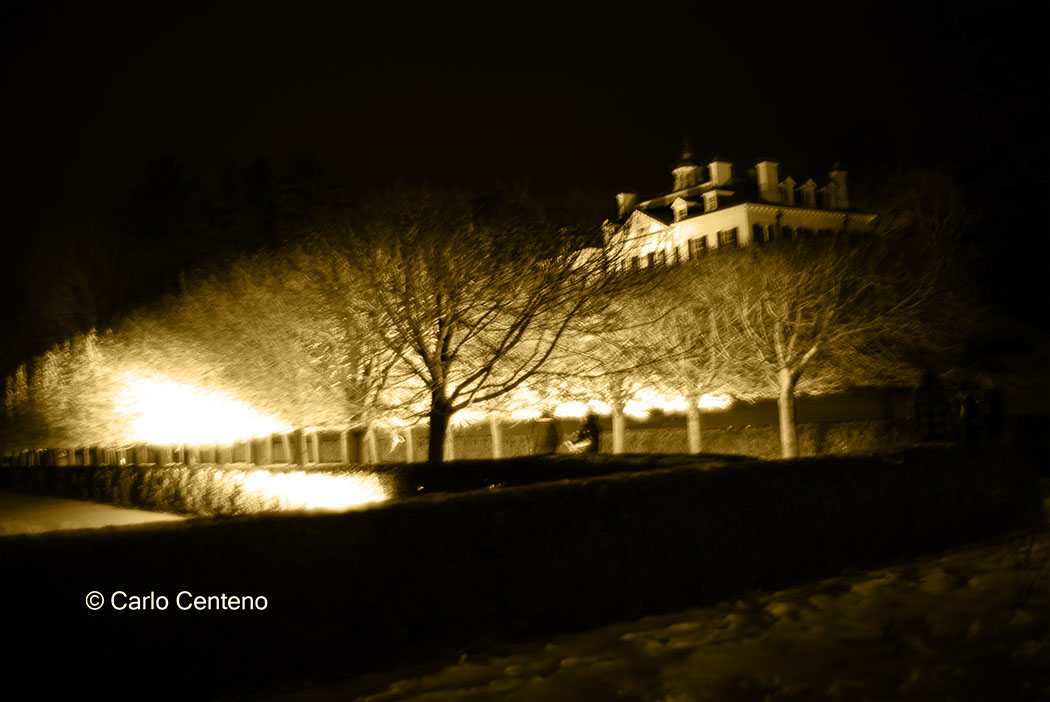
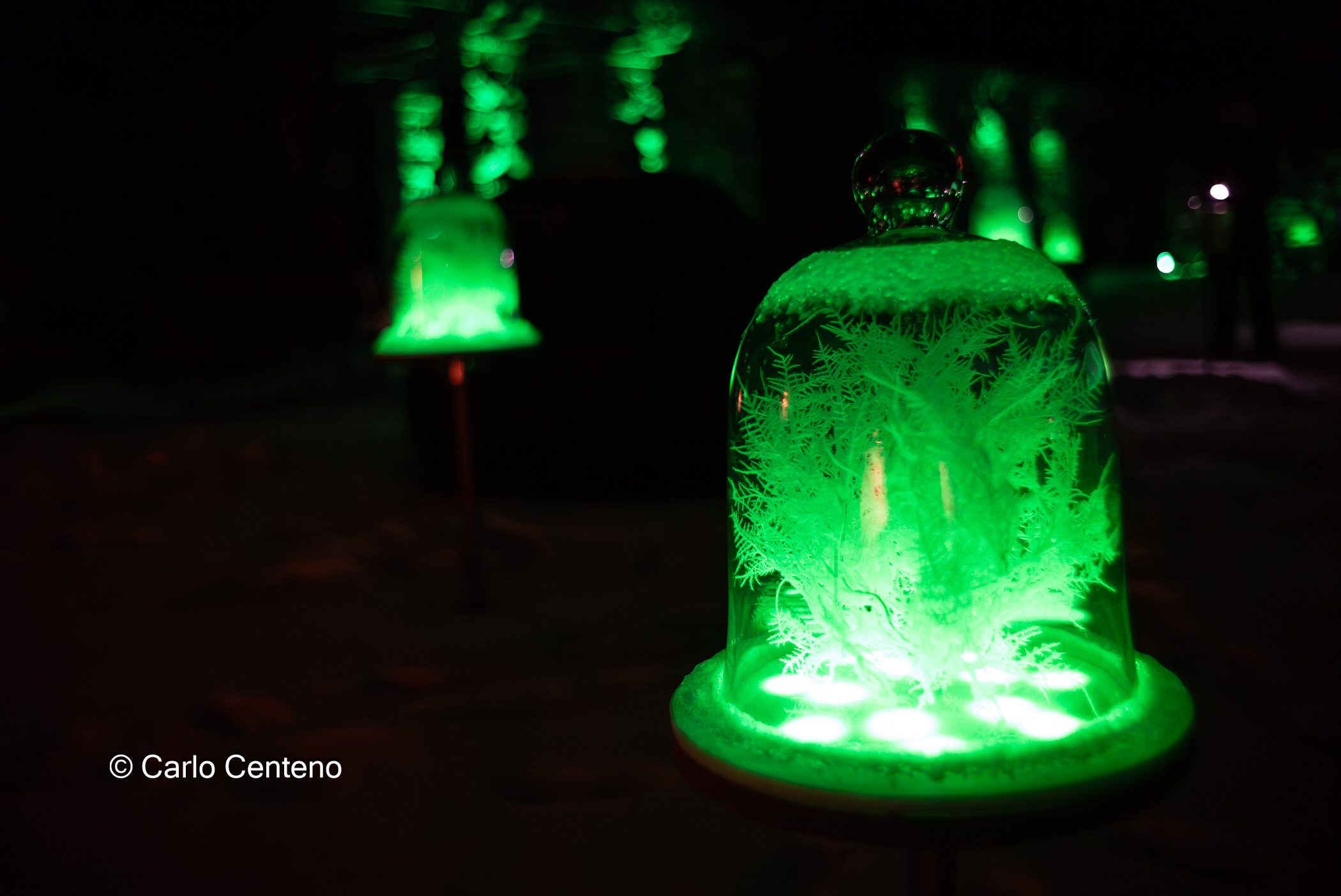
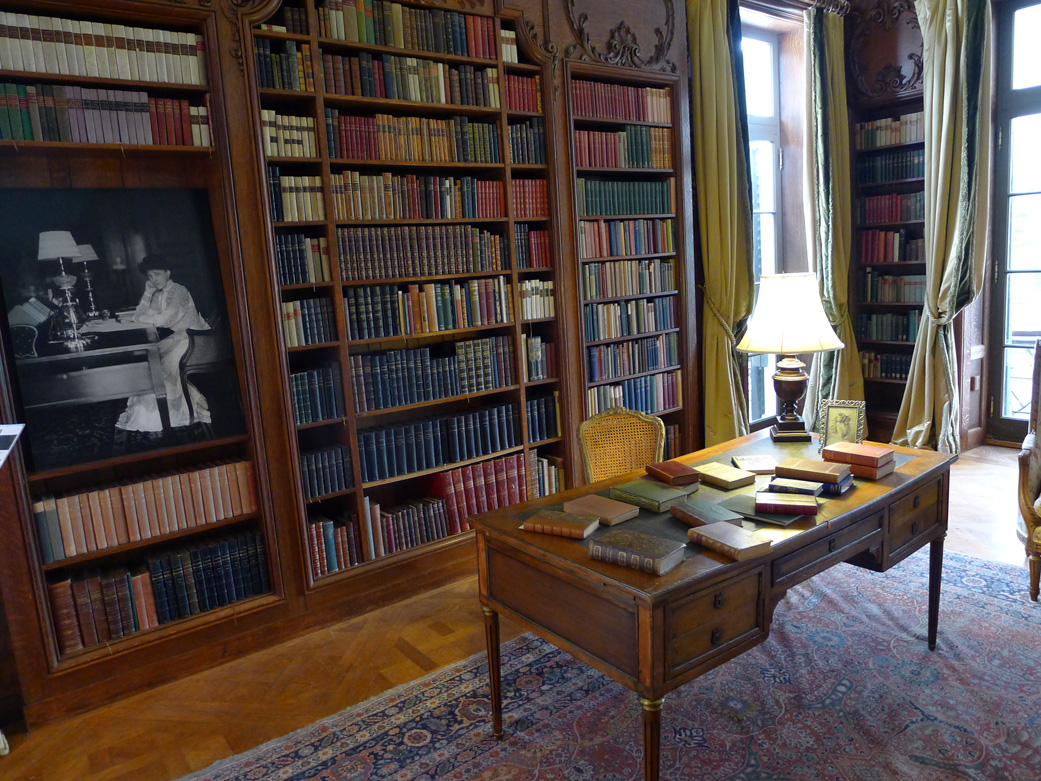
We’ve [me and my wife, MJ] made treks to the Berkshires all year long with additional stops during winter. Some of these stops included special outdoor exhibits of which 2 come to mind: The Mount, Edith Wharton’s home, and also at Naumkeag Estate. The photos posted here are from Nightwood, and it was a wonderful stroll along the garden pathways and woods at The Mount.
Appropriate winter clothing makes a big difference; it does get colder in the Berkshires. Key details: wool sweaters, base layers, even hand warmers. Along a mile-long path cutting through the woods and gardens, the exhibits appear like waypoints on a map. Each installation carries its own interpretation of light, while an original music composition aurally ties everything together.
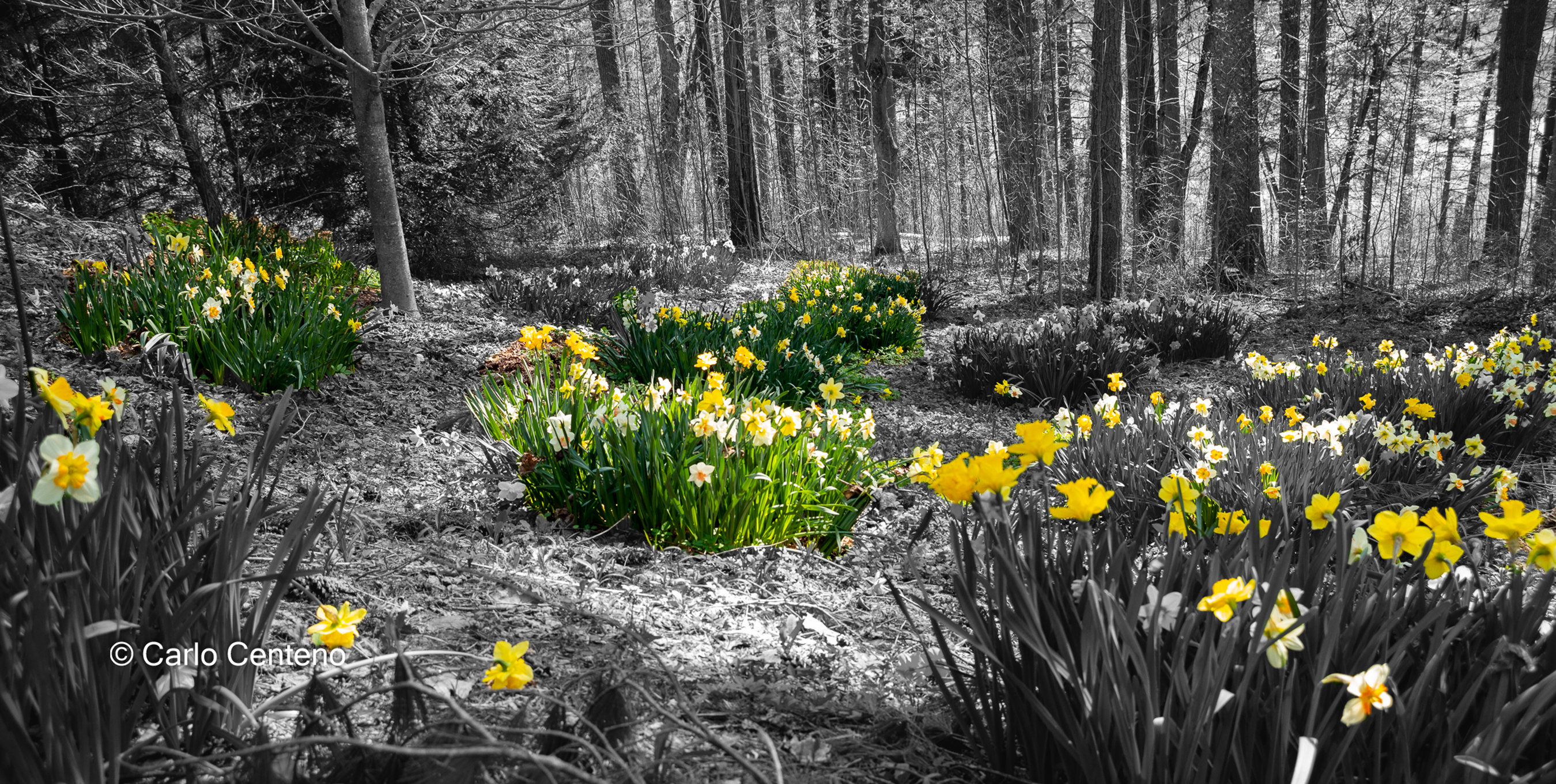
My interpretation of The Mount exhibit centered around the intensity of each installation, vis-a-vis the light itself. Using B&W images had provided [for me] a key, old-school tenet of imagery: simplicity allows interaction between the visitor, and the subject at hand. Put another way, monochromatic images transcend continuity. Color images offer validation to what we see because we readily see color. Yet color can be distracting. Not a slight, but just a matter of fact.
For me, I’m drawn to B&W images because of its tonal consistency. Black & white does not have the influence of color, and yet allows me to see the entire image and all its nuances.
I, along with others like color images , but there are times when color feels more like a distraction. A single color that’s part of a smaller detail is enough to pull you away from the whole and down into a rabbit’s hole. Still, B&W does have a way of binding together the elements that make up the photograph, all within the inimitable, ever valid black & white palette.
Keep an open mind. It matters when traveling to any destination that piques your curiosity. Whether it’s a neighboring state/province or an altogether different country, it requires elasticity in learning, appreciating and understanding. An open mind can open doors. It means possessing a willingness to be out of your comfort zone. And as you stand in your discomfort, your perspective may need adjustment or refinement. This is where you take the initiative to help others see your perspective. Naturally this requires staying attentive for the different position[s] you may encounter. It’s fine to disagree without being disagreeable.
Remind yourself that having an open mind tames the myopia that limits one’s ability to think beyond your horizon of possibility.
Arc de Triomphe
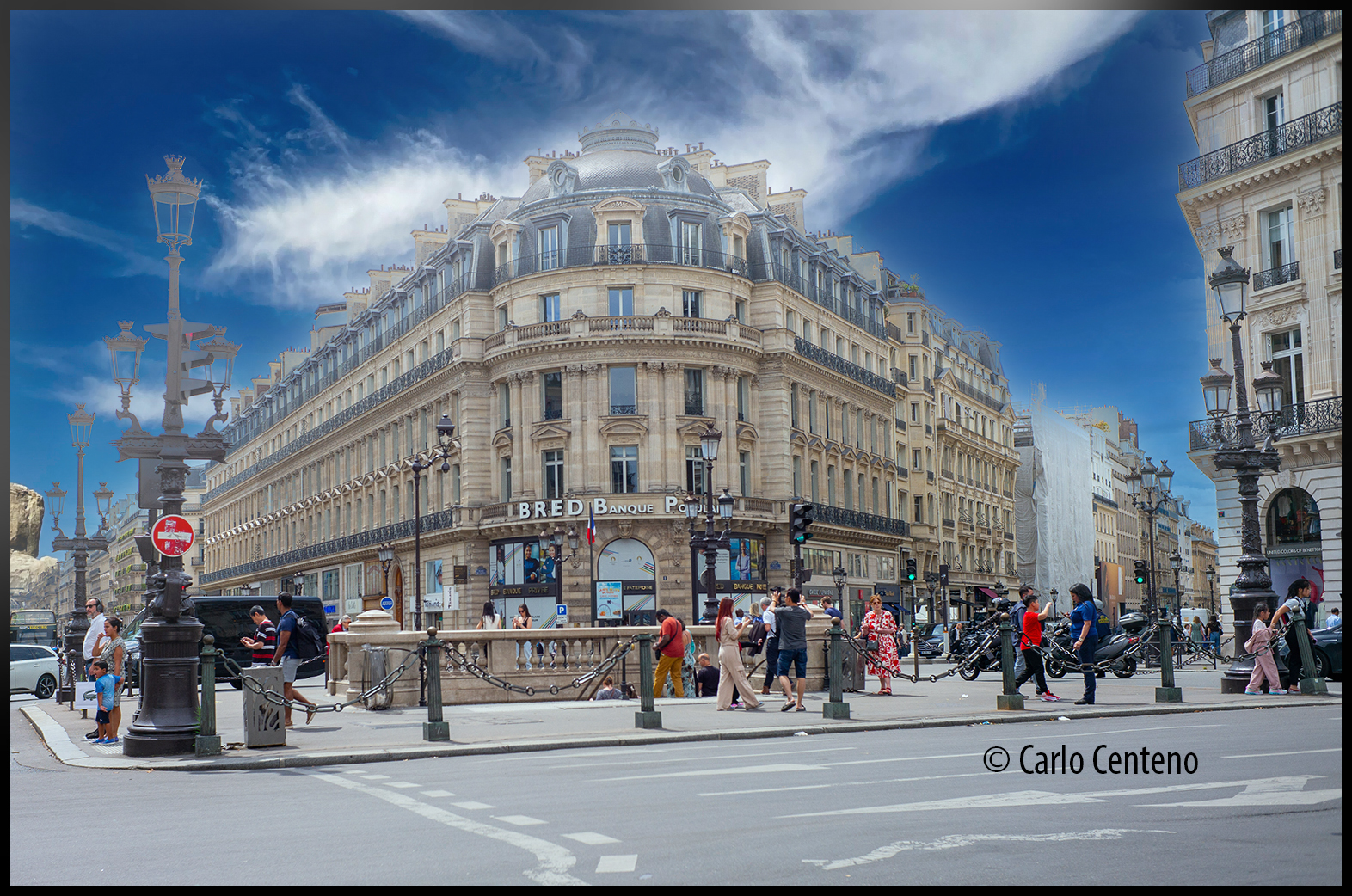
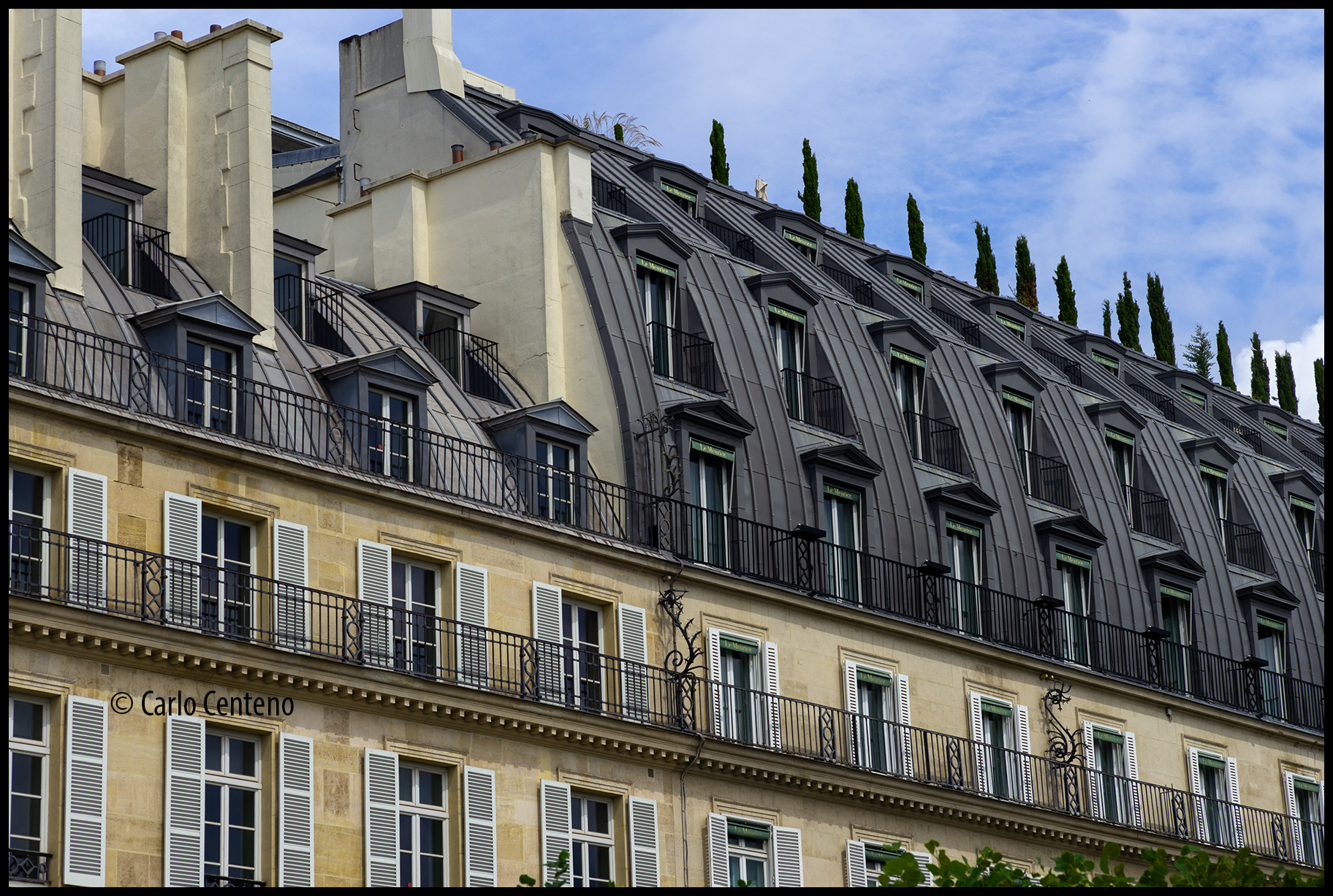
Eleven days in France this July made for quite a vacation. The coming of the summer Olympics turned Paris into a mixed bag of barricaded icons and walkways, detours and traffic. Our Parisian stay covered 3-days; not enough time to explore Paris, but 3 is better than none. A first visit to another city is as they say, an experience. Visually, aurally, olfactorily you cannot ignore the architecture, the gardens, the people, the language, the aroma of freshly baked croissants, baguettes and coffee and so on and so forth.
After Paris the next 8 days would be at Vignon-en-Quercy in southwest France. Fortunately, our flight back home was 7-days before the opening ceremonies, and we knew that more walkways and some open areas would be cordoned off. Predictably, logos and phrases proudly reminded of The Games coming to town. Still, nothing took away from our sense of discovery in this storied city.
We had thoughts of visiting the Louvre, Musee d’Orsay, among others, but the detours and limited access made it a physical and mental marathon. We were close to those museums and other points of interest as they say, but we unabashedly savored our quiet time in the Jardin des Tuileries, a garden between the Louvre and Place de Concorde. In a more relaxed pace, we enjoyed le Jardin and even took advantage of the cafes within the grounds. Seeing the Louvre from a different vantage point provided an unrushed appreciation for a 231 year old institution.
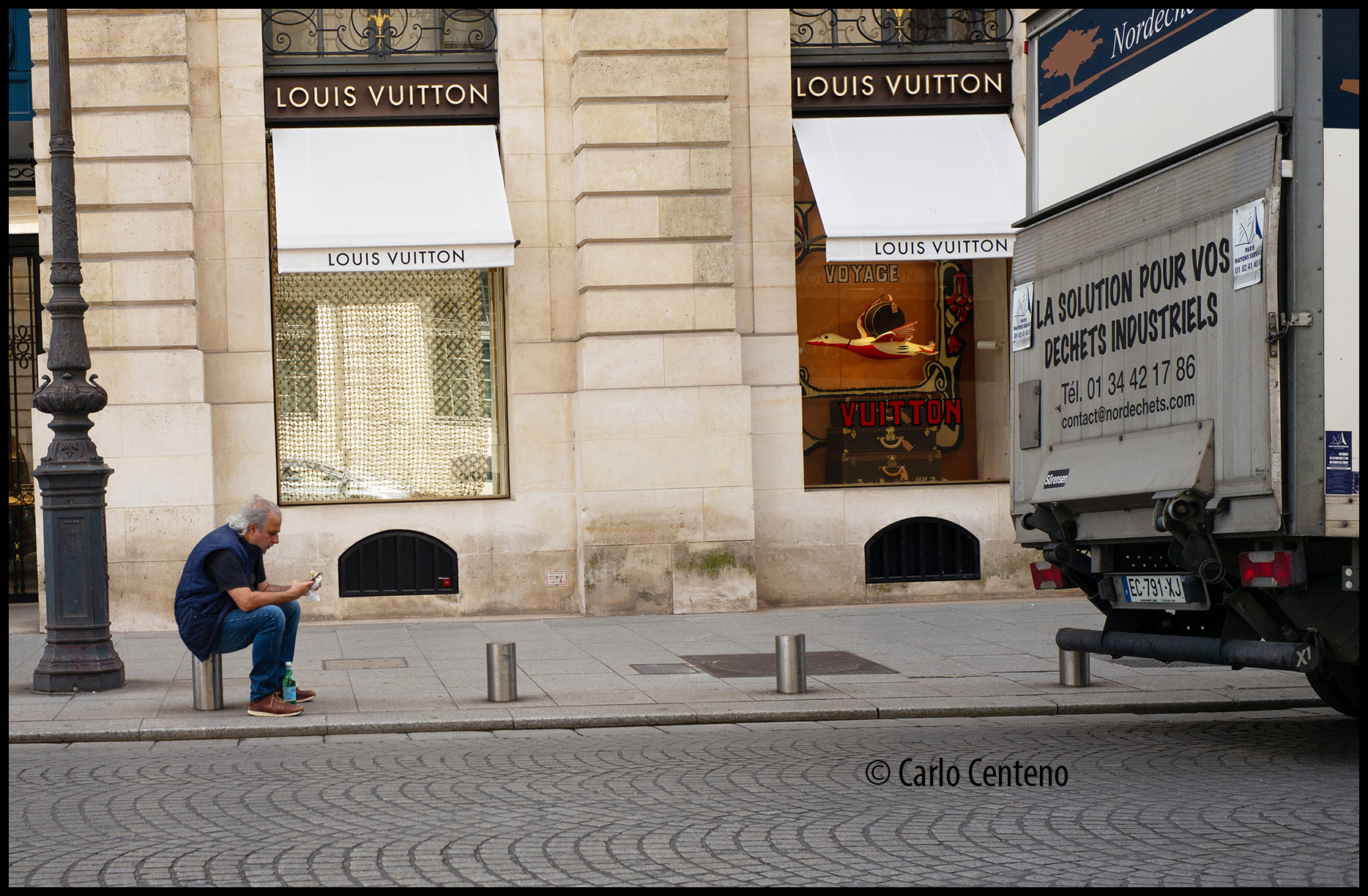
Le LouvreLa Place de Concorde/ courtesy Paris VisuelDetail de l’exteriur de Louis VittonPedestrians be Careful Cross in 2 steps
We thought of adding 2 more days in Paris. It would’ve certainly helped my french conversation, but other plans were already in place. Entering any business or eatery, saying bonjour is always helpful and polite. After the greeting, the most frequent words from my mouth were, Ou est…? or quelle direction est…? or pardonnez moi, sommes-nous pre du……? and of course, merci, bonne journee!
Our first morning, we walked to a bistro teeming with commuters and visitors. The menu on a sandwich board offered something we liked and I recognized: Petit déjeuner supreme ! Deux œufs [au choix] avec jamon et frommage, cafe, jus d’orange, baguette, croissant, confiture de fraises et salade. [Supreme breakfast! Two eggs any style with ham and cheese, coffee, orange juice, baguette, croissant, strawberry jam and salad].
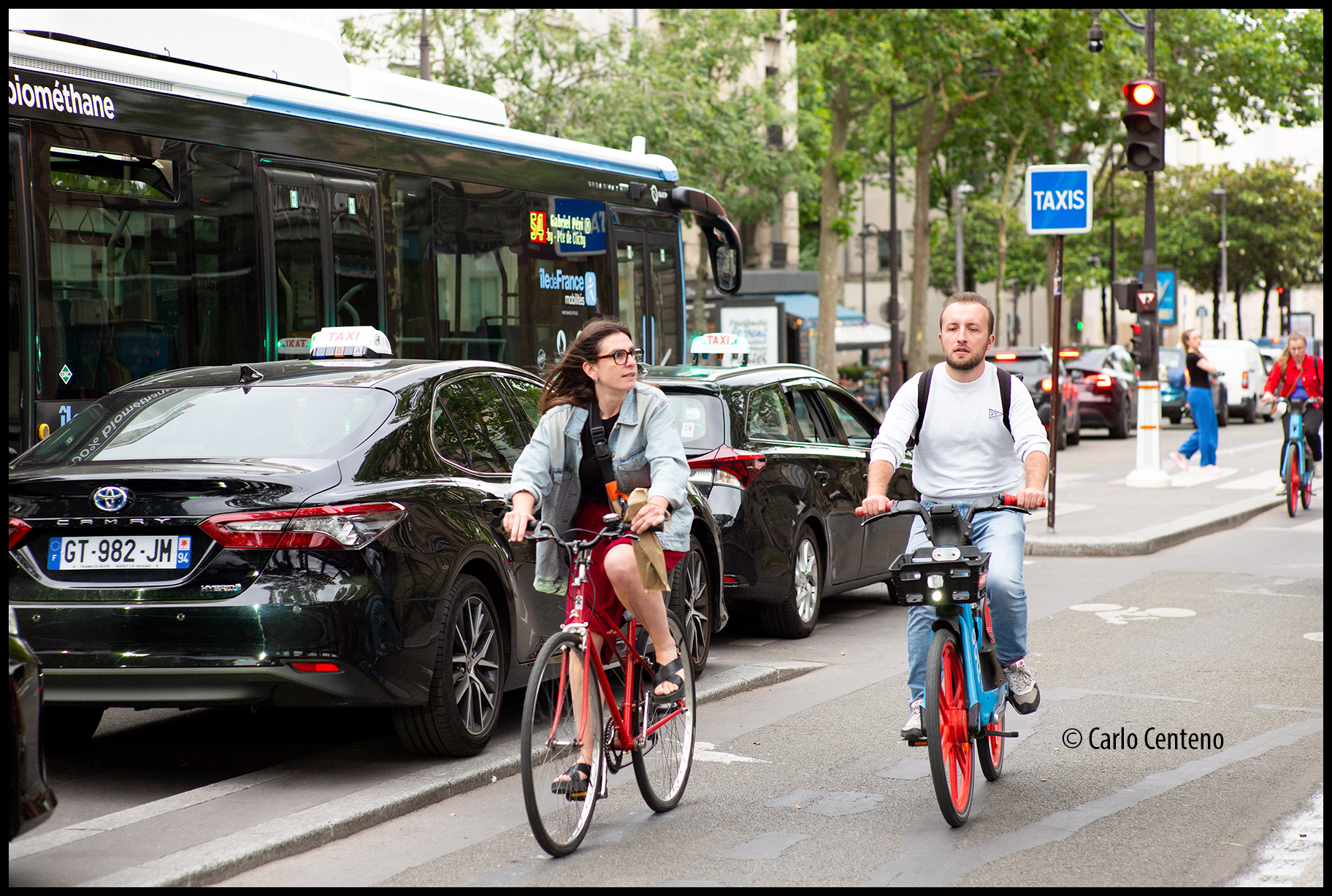
We sat outside among a cluster of small tables and chairs, but the waiter advised we sit inside, though not far from the open frontage. Il y a trop de fumee dehors. Too much smoke outside as cigarettes are popular in most of France. It was a perfect time to watch people going on with their lives: scooters and bicycles carried a cast of characters; small french cars ruled the streets alongside taxis and Ubers, motorcycles and buses.
Based on our waiter, my french was so-so. Monsieur, I speak and understand english; you do not have to speak french…. Ouch. Polite but humbling. As he turned toward the kitchen order-window, I mumbled, C’est dommage….it’s a pity, too bad.
“The solution for your industrial waste.”
NEXT VISIT: a week in the town of Vignon-en-Quercy [….See you there.] !!!
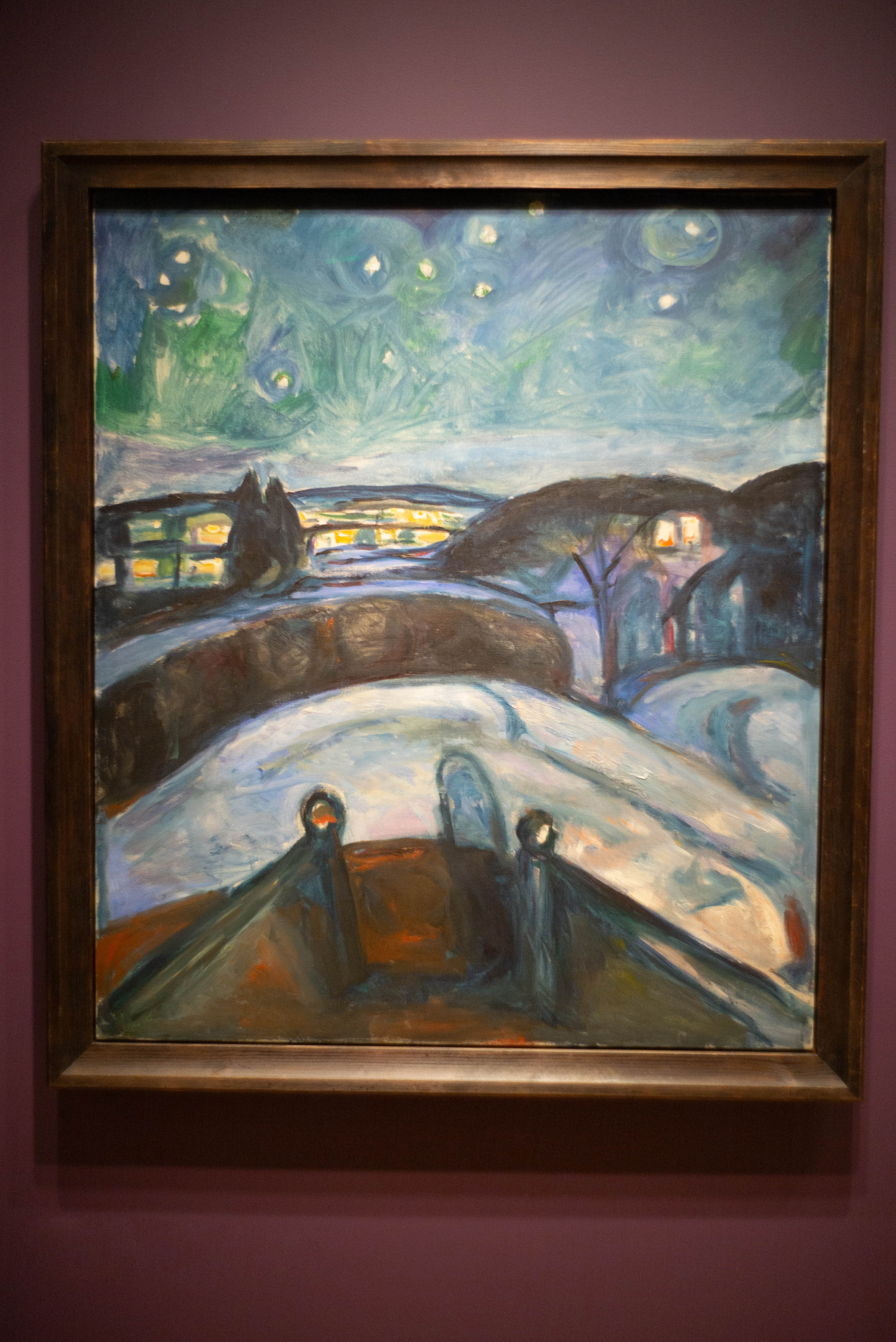
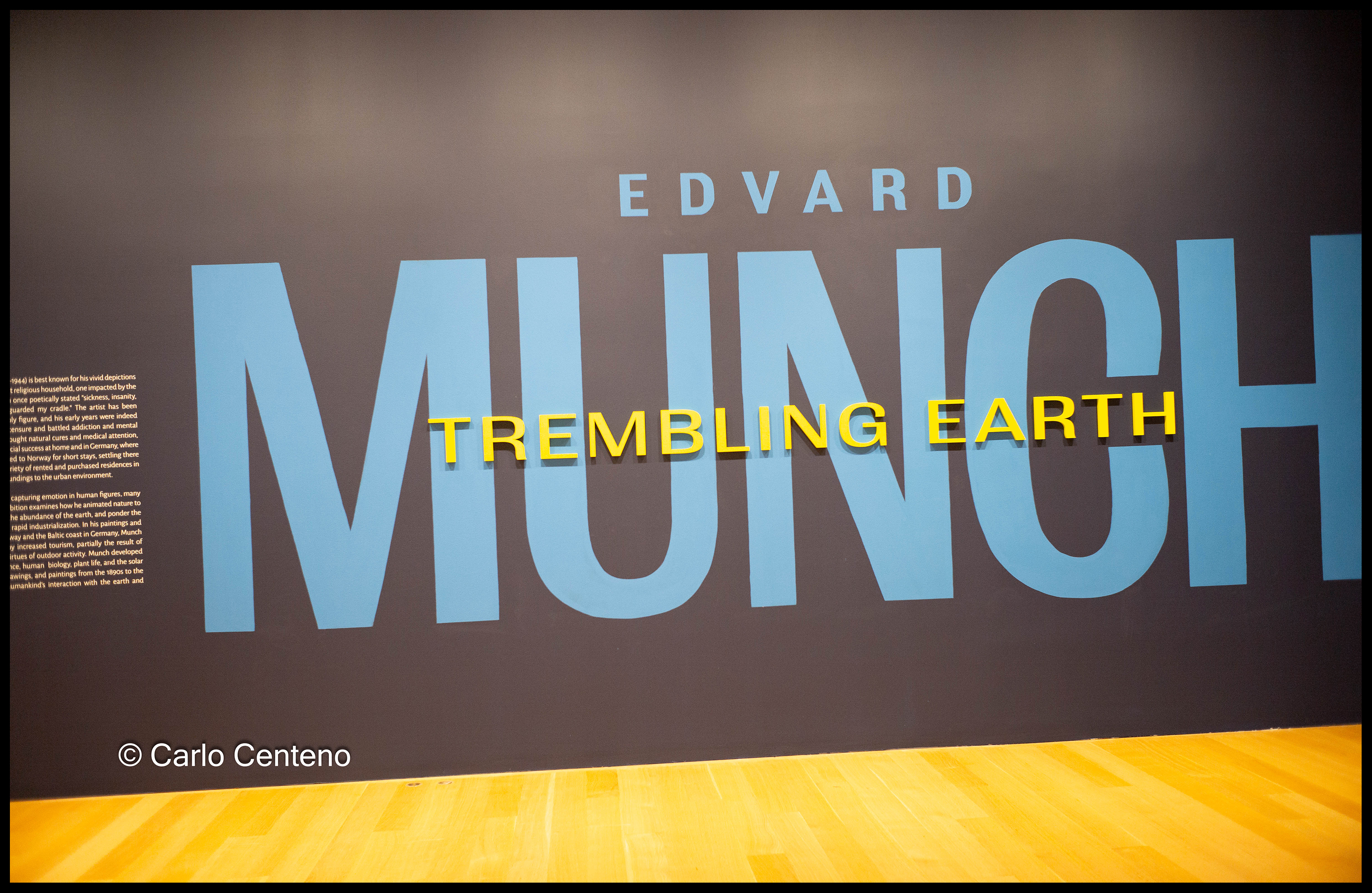
At the Clark Institute of Art, running through October 15, 2023, is a special exhibition, Edvard Munch: Trembling Earth. Munch’s [“Edward Moonk” Norwegian pronunciation] most recognizable, iconic painting is The Scream, and yet not many know of his other work which includes a number of self-portraits, prints, figure portraits and landscapes. The latter showed what he felt was a confluence of the natural world and humankind where nature provided a kind of salve that the urban environment could not deliver. The artist’s life contained the antagonists that shaped many of his creations: life and death; love and loss; loneliness and despair. And yet Munch as a protagonist, allowed us to see and feel the very antagonists that took hold of his deepest emotions.
I found the entire exhibit revealing if not eerily prescient. The power of art in all its forms allows us not to just see the obvious, but to measure if not ascertain a) what behooved the artist to produce his/her creation and b) what, if anything, draws your attention to the work?
Starry Night, 1922-24
While some of his paintings hint at Vincent van Gogh [1853-1890], there is a quality that makes Edvard Munch’s work stand apart: his apotheosis of anxiety, loneliness, longing and loss are indicated by the despair of his faceless human subjects. The hue of uncertainty and angst lay claim to troubled souls.
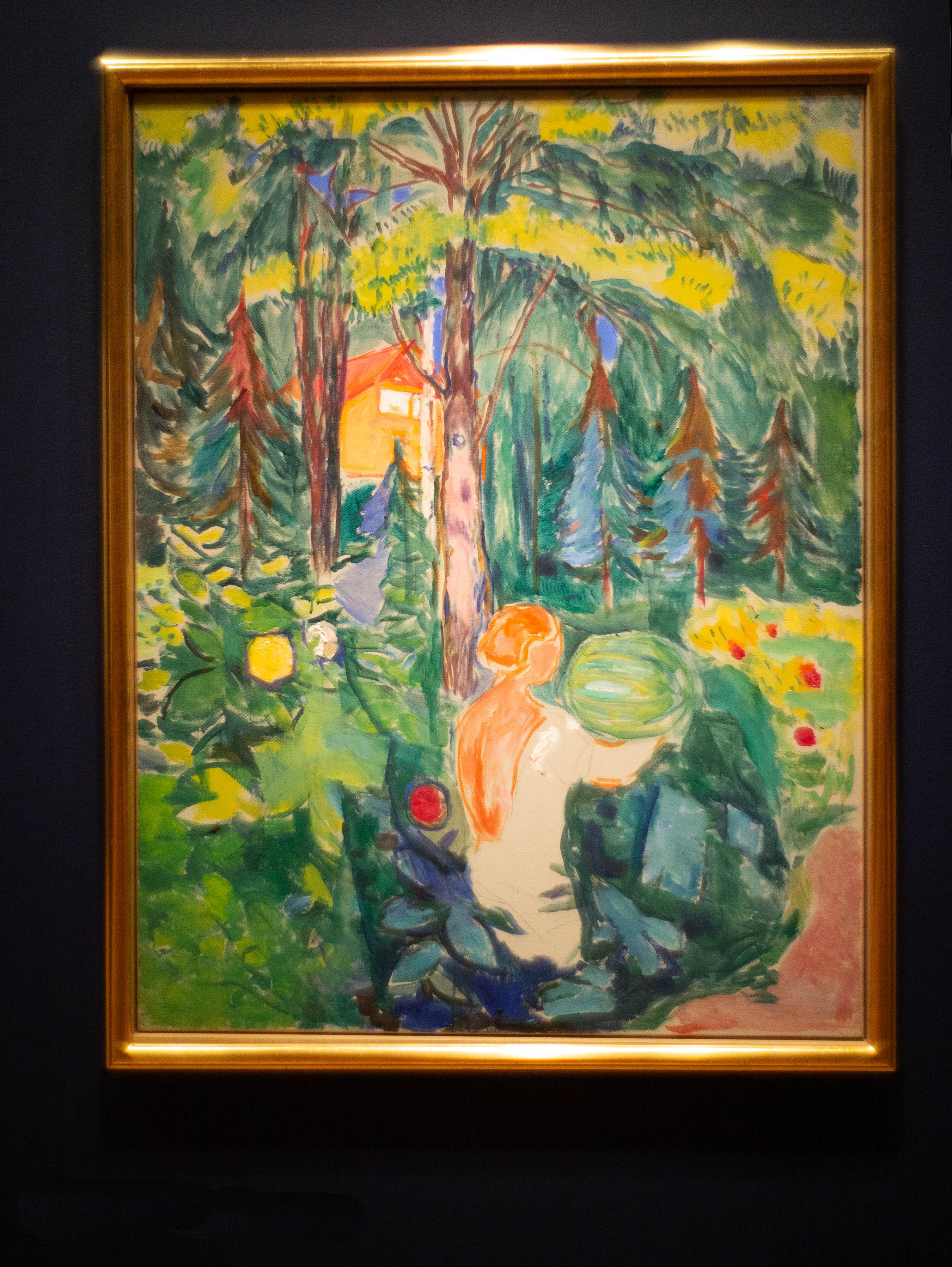
Woman with pumpkin, 1942
This is one of my favorite paintings, Woman with pumpkin. Its creation captures a sense of lost, and longing. The symbolism could be anything and everything. The pumpkin and the dark green color appear as if a person is holding the woman. Note the 3 “fingers” on the hip of the woman. In fact, the greenery next to the woman appears to be kneeling on its right knee, its “left leg” bent with a “foot” planted directly on the ground close to her back. Hence, the figure is resting its head on the woman’s right shoulder, the right arm suggesting a pillow.
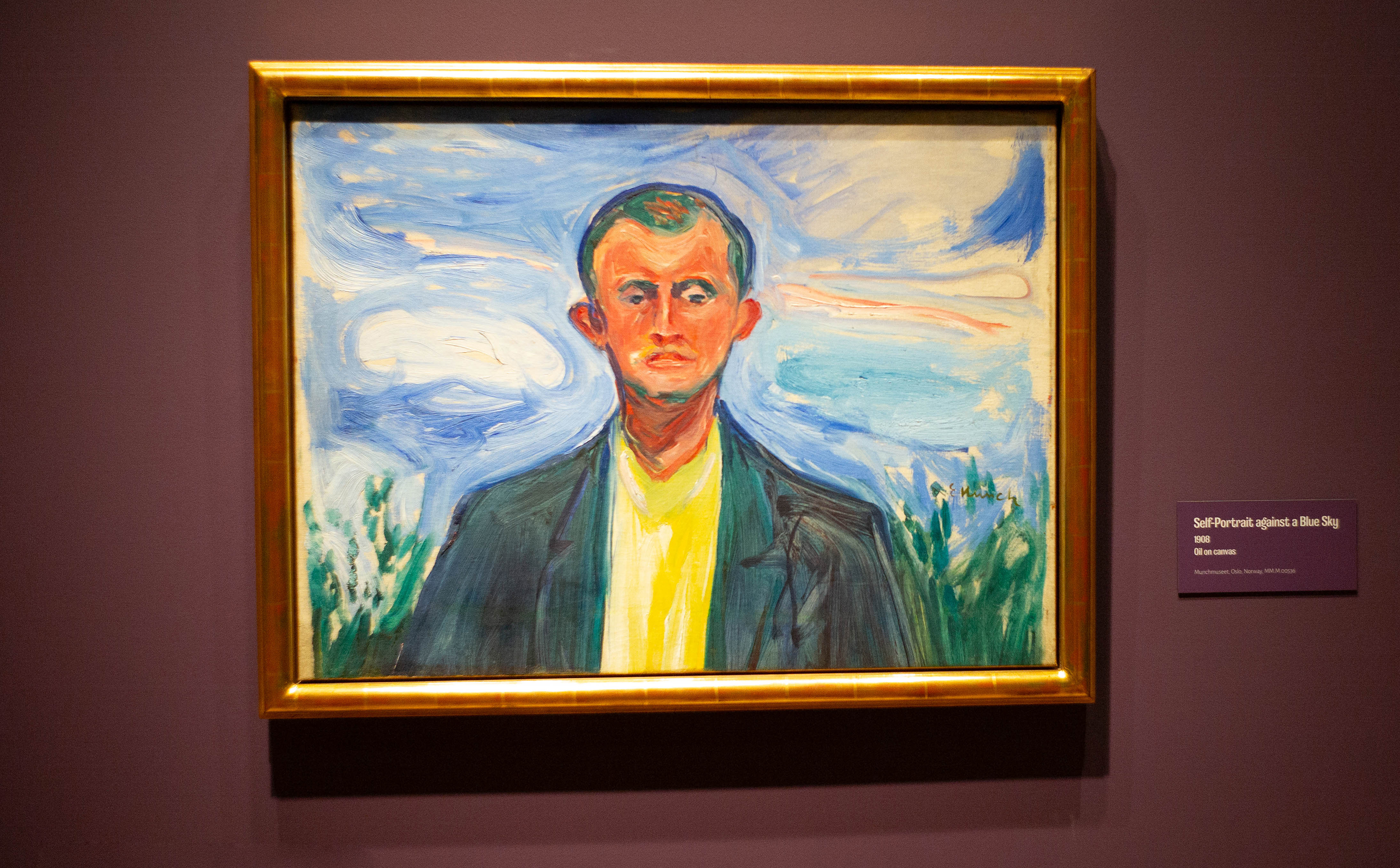
Self-portrait, 1908
Whatever you see and however you see it, Munch is a captivating study of conflict. You can feel it in most all of his works. The landscapes provide contrasts regarding our ability–and inability–to co-exist not only with the natural world, but with each other. Put another way, Munch is caught within an insatiable push-pull between the Id [our instincts], the Ego [reality] and the Superego [moral strength].
Self portrait with palette, 1926
No artist lives a life of order and predictability. It’s contrarian to that world of creativity and expression. Munch’s self-portraits demonstrate a fortitude within his reality that dices with the likes of the Id and the Superego. Each of us deal with the instability created by our instincts and morality, our actions and reactions, our angst and distress. In a way Munch’s paintings brings form to what is often abstract yet palpable, even vicarious and visceral.
It was home back in the day. Situated on 48 acres, the “cottage” contains 44 rooms.
Have you ever tried to look at something right in front of you and discern one particular detail. It could be anything: color, shape, texture, scale/size, any specific object and so forth. I’m referring to a single element that piques your attention, whether the element is large or small, plain looking or colorful, simple or complex by design. Naumkeag offers history, a feast for your senses and options to indulge in a location that’s an antithesis to our present-day way of living. So, with an unhurried pace, walk the grounds, examine the gardens, enjoy the vistas and of course the house that was the summer home of prominent lawyer, Joseph Choate and his wife, Caroline. They referred to their residence in Stockbridge, MA as a “cottage.” You don’t need to be a cognoscenti to appreciate landscape design, flowers, stonework, or architecture. No agenda, just a dose of quiet time in a locale that puts you in the Housatonic River Valley, a place in the Berkshires as pastoral as any you’ll find across New England.
Naumkeag is a cornucopia of details. You’re offered a buffet of elements that rightfully distract you from monitors, traffic, deadlines, meetings along with other indeterminate noises. Granted the elements–or distractions–are innocuous, there’s a realization that having these very details shrink the less important, stressful elements that occupy your mind. Well, at least in my mind.
Where’s my focus? Is it obvious to you? Can it as much be yours as it is mine?
You might say this is an exercise in discernment, a way of sharpening perceptions, a means to refocus on other details/elements that may lead you to another level of thinking. The process is still your own, but this time, you’ve given yourself the beginnings of a map that’s genuinely yours.
A benefit of these sorties is this sense of life copacetic; in spite of the routines and doldrums, there are moments that are the opposite of what ails us. In the world of art and the written word, we can see and feel just about anything. Having a sense of place, in this space and time, not in your past and where the future is not promised to any of us, the now matters. That’s it. Don’t waste it. Appreciate don’t pontificate.
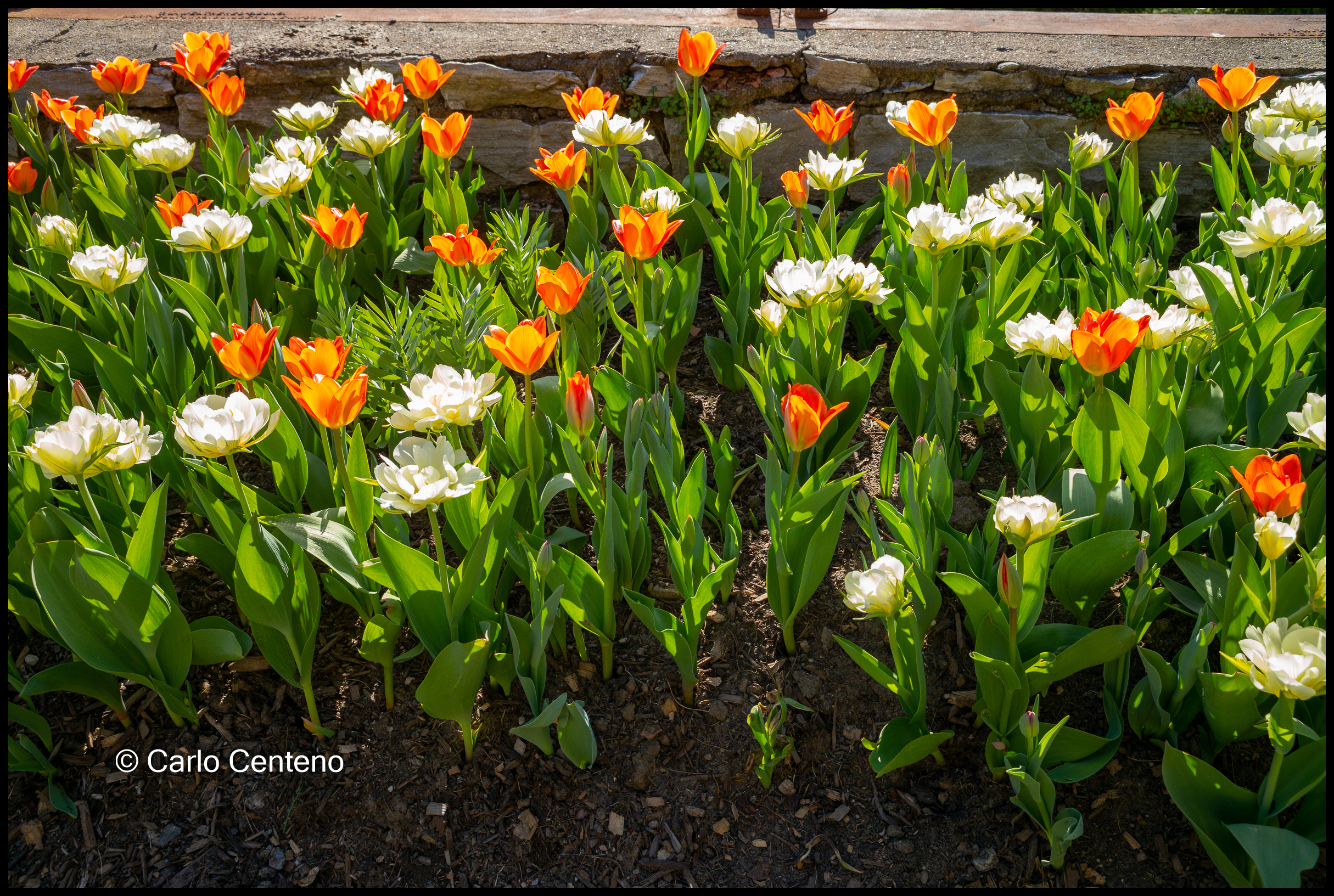
The exercise of pulling a detail out and away from everything else pushes me to consider and associate with another perspective of whatever detail I look at. The reds and yellows in the tulips appear even more intense when surrounded by the middle greys in the photographs. The broadleaf in one corner of the greenhouse looks healthy, in large part because of the depth of its green color. Nothing has changed really, and neither have the proprieties of the object or the surroundings. What’s changed is the manner in which you deconstruct details.
Those with a proclivity to capture details can notice more than what meets the eye. Beyond colors, tendrils of an iron chair, the gradation of a solid color to one of a lesser though similar hue, I tend to go toward an object, experience or what have you, that’s relevant to my personal history. You might say it’s akin to a word association game, a yin-yang of opposites as well as things similar. The associations can be personal, simple or complex, a source of light-heartedness or burdened echoes ruminating within your memory.
This is a modification of the immemorial saying, Stop and smell the roses [or tulips]. Instead, reframe your perspective: You can see the big picture, but details bring you closer to the value of the picture.
It’s been said that everything you needed to learn and know in order to get through a day was taught in kindergarten. That was the early-in-life primer, essentially a course in fundamentals: polite behavior, expressions of gratitude, common courtesy and common sense in all things you say and act upon. Some life lessons around loyalty, unconditional love, patience, trust, kindness–among others–were influenced by my dog, Humphrey. Naturally, various experiences with family, teachers/professors and good friends added to that mix as well, as well it should.
Humphrey
Humphrey was a miniature cockapoo, but there was nothing small in his character or demeanor. Simply put, he acted like he was the biggest, baddest, dog east of the Mississippi. He possessed a radar that had a way of measuring and reading the nature of most grown ups, and of course other four-legged creatures [read: neighborhood dogs he didn’t quite like]. I’ve heard it said that the size of the dog doesn’t matter as much as the size of its heart. And that little guy had a huge heart. Children were another story. He was comfortable around them. Humphrey was just as curious about kids, as the kids were with this little guy. Throughout his life, many thought Humphrey to be a puppy. In a sense he was that in many ways.
Our winter dress code.
It makes sense to me that the weight and burden of grief that comes from the loss of a pet correlates to the amount and type of affection you gave the pet, and vice versa. Reciprocity at its finest. Quite frankly, that equation is the same for family, significant others and close friends. When you truly care about someone or something, you give it your all, certainly your heart and soul as a minimum. MJ and I support each other in all of this. She did, indeed, have a big part in Humphrey’s life, as did our kids and grandkids. Those connections or bonds don’t disappear at death. Not surprisingly, we had thought about ways to extend Humphrey’s life, perhaps just a bit more care or special intervention would’ve helped, but time waits for no one. Second thoughts arose wondering if any intervention for Humphrey could still help him. I think part of understanding what love is revolves around one’s willingness to let go. We’d like to think that as the end drew closer, that that pup knew he added so much to our days, and vice versa. Life lessons arrive from many points. From the smallest of vignettes to those large and complex, there’s something one can glean from experience and interaction.
Two happy, ol’ dogs…
Not surprisingly, other events or milestones reach out and overwhelm us, including one in particular. About a week after Humphrey died, one of our daughters and her husband added to the number of grandchildren. Their second child–and our fifth grandchild–was a welcome sight!
Welcome, dear grandson…!
He was the salve to our sadness. The sounds and expressions of loss and affirmation differ. Death and grief are shadowed by life, not the other way around. That new baby dampened down some of the grief we’ve been carrying. The creation and arrival of a new life, affirms the reality that dying and being born are conditions each of us cannot deny. With one, comes the other.
Fate added another exclamation point to all of this. Just before the end of March, MJ’s sister suddenly passed away from heart failure made more complex by cancer. And just like that, death set us back yet again. Nostalgia, sadness, regret and second guessing returned in force. No sooner than when the new baby arrived home, MJ and I were thinking about an obituary and a funeral to attend in short order.
In all of this, I’m reminded of what MJ’s mom said about the passing away of loved ones: remember them on their birthdays, not just on the day they died. That notion has stuck by us for quite awhile now. With birthdays come celebrations, the gathering of family and friends, and an opportunity to reconnect with good times and the people who are and were a part of that. To auld lang syne, to “times that have gone by.” We can think of any number of experiences that raised a smile, a laugh, a few tears, but don’t mistake this as longing or living in the past. It’s really a time to be in the moment, a key one at that, to share recollections with those in attendance and in doing so, our connections to each other are again [or for the first time!] affirmed.
My take on all that’s happened is that our willingness to interact with each other can never be replaced with the efficiency of Facetime, Zoom Meetings, teleconferencing and any other present-day digital communication. The attributes of efficiency cannot separate us from emotions and empathy. There are lessons woven into experiences that can be shared, indeed as some should anyway. It’s what makes each of us a wholly unique, sentient being.
The peaks and valleys this past March, made clear that we need to nurture our connections to family and friends, to dogs and cats and pets, and to others outside our zones of comfort. Good or bad, joyful or sad, the confluence of your feelings shared with others enhances many of life’s lessons…
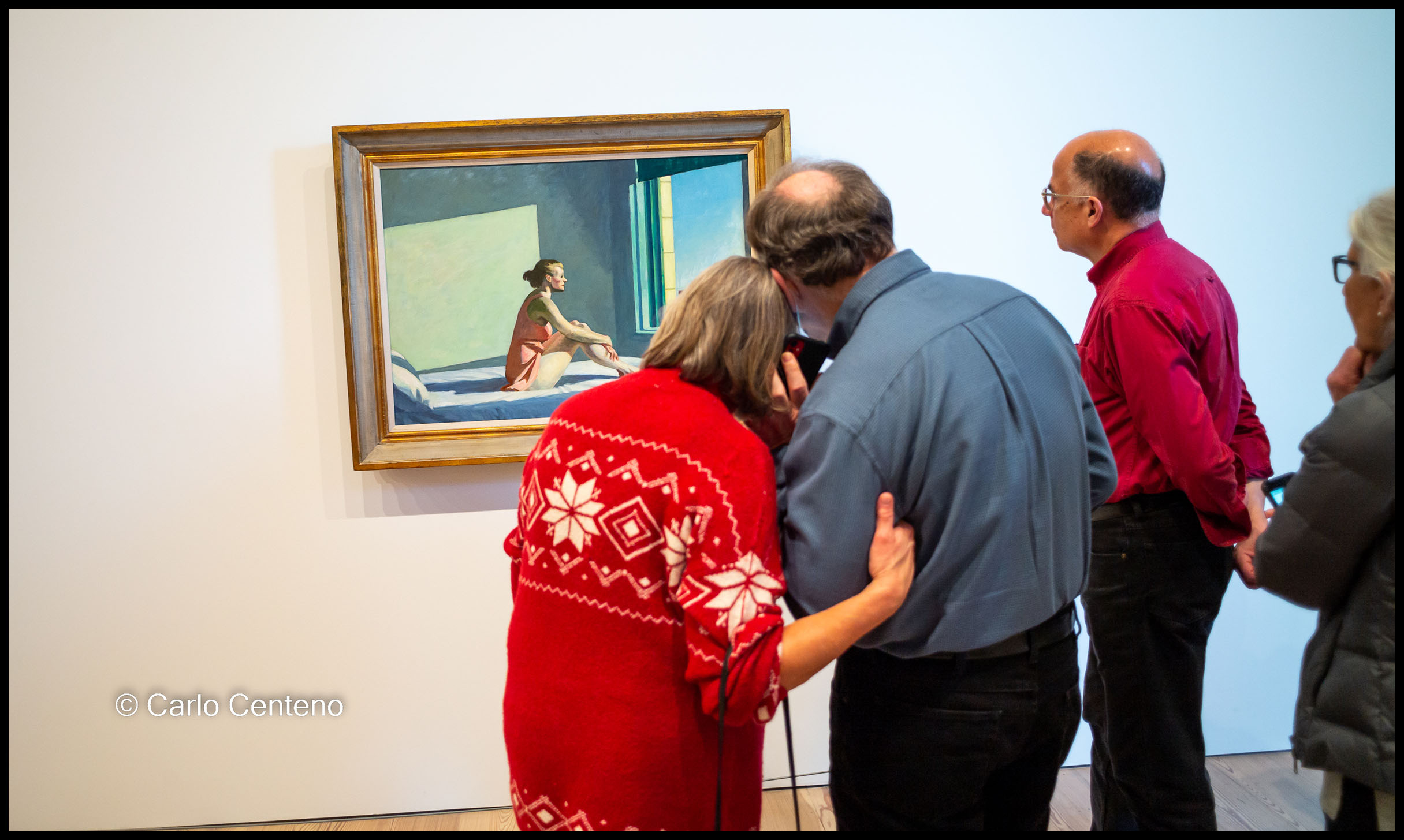
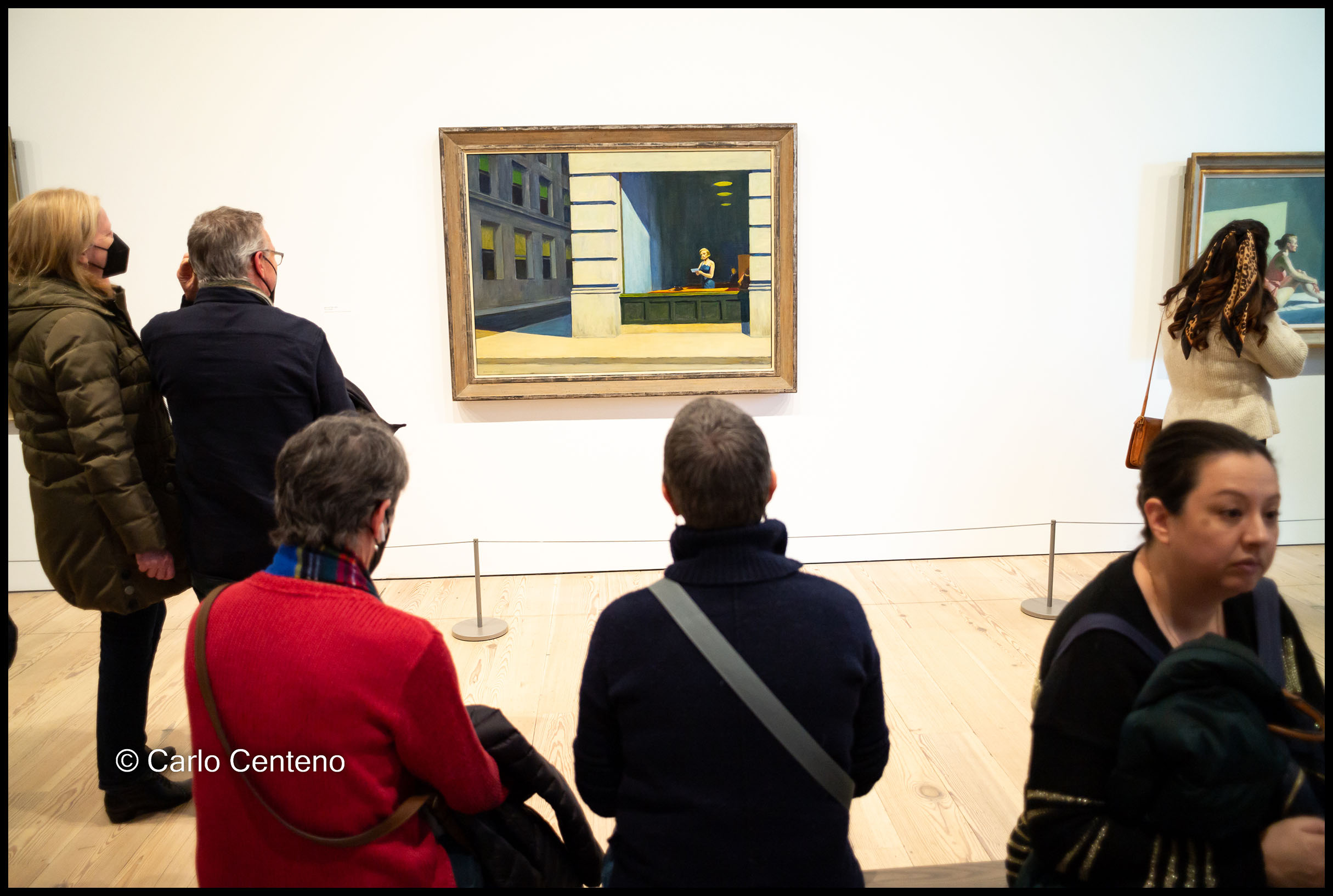
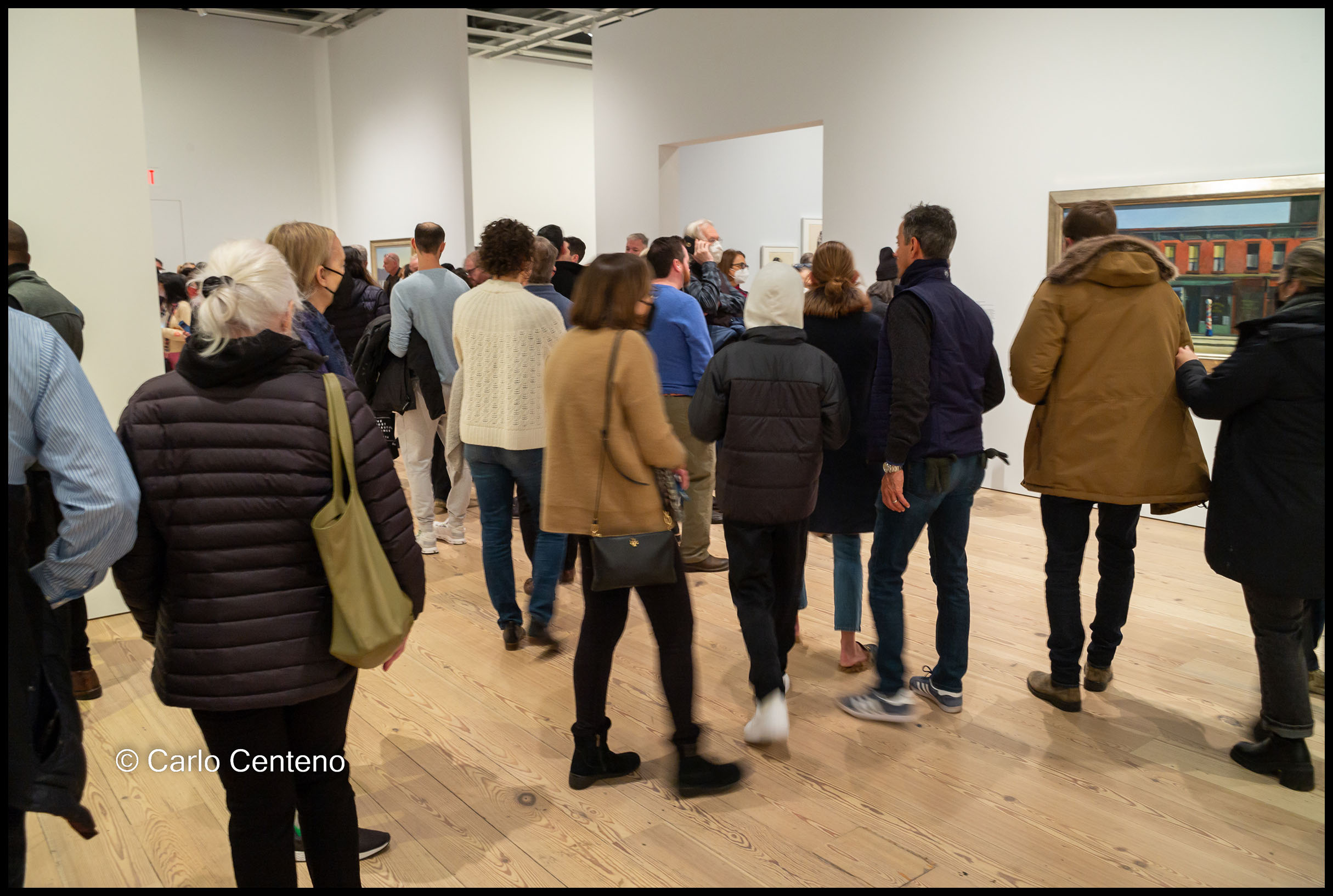
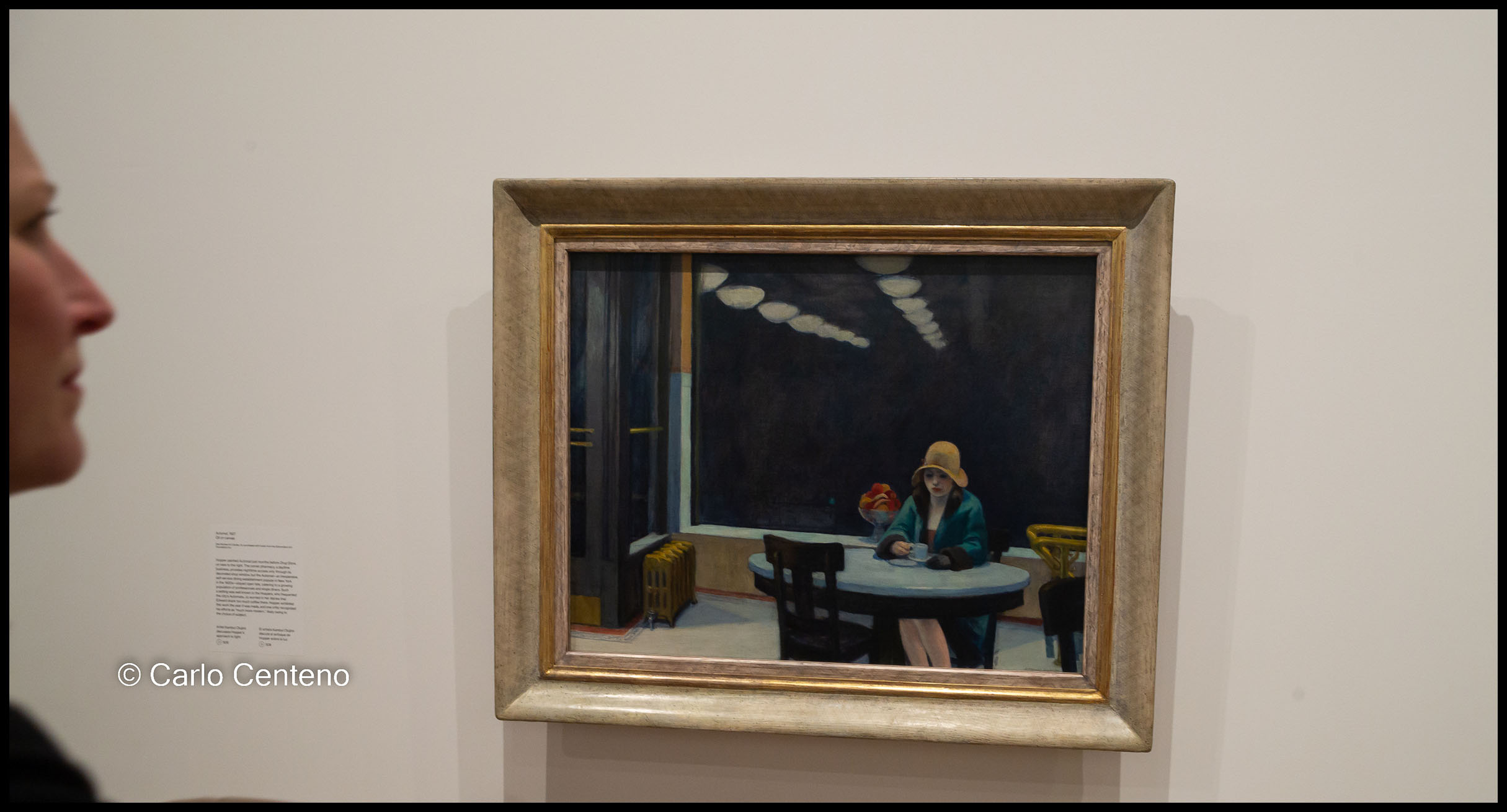
The Whitney Museum of American Art in NYC has a special exhibition of Edward Hopper, the American iconic painter of urban realism. The exhibit [October 19, 2022 to March 5, 2023] has a strong focus on the art he created during his years in New York City, a place he and his wife, Josephine, called home for six decades. Art in its many forms gains additional attention when a curated exhibit or installation comes to life. This exhibit in particular, has an energy, an aura all its own, and rightfully so. It is the amalgam of place, time period, subjects & themes, and of course the painter, that creates this palpable energy. Attending such an exhibit was made more interesting by the number of visitors who specifically chose Edward Hopper’s New York. For me the cacophony of conversations [often in a foreign language], the reactions and expressions all added to the experience. Out from the windy, brutal cold and into a cocoon of life, the next couple of hours felt theatrical.
The most dedicated, most creative, most influential.
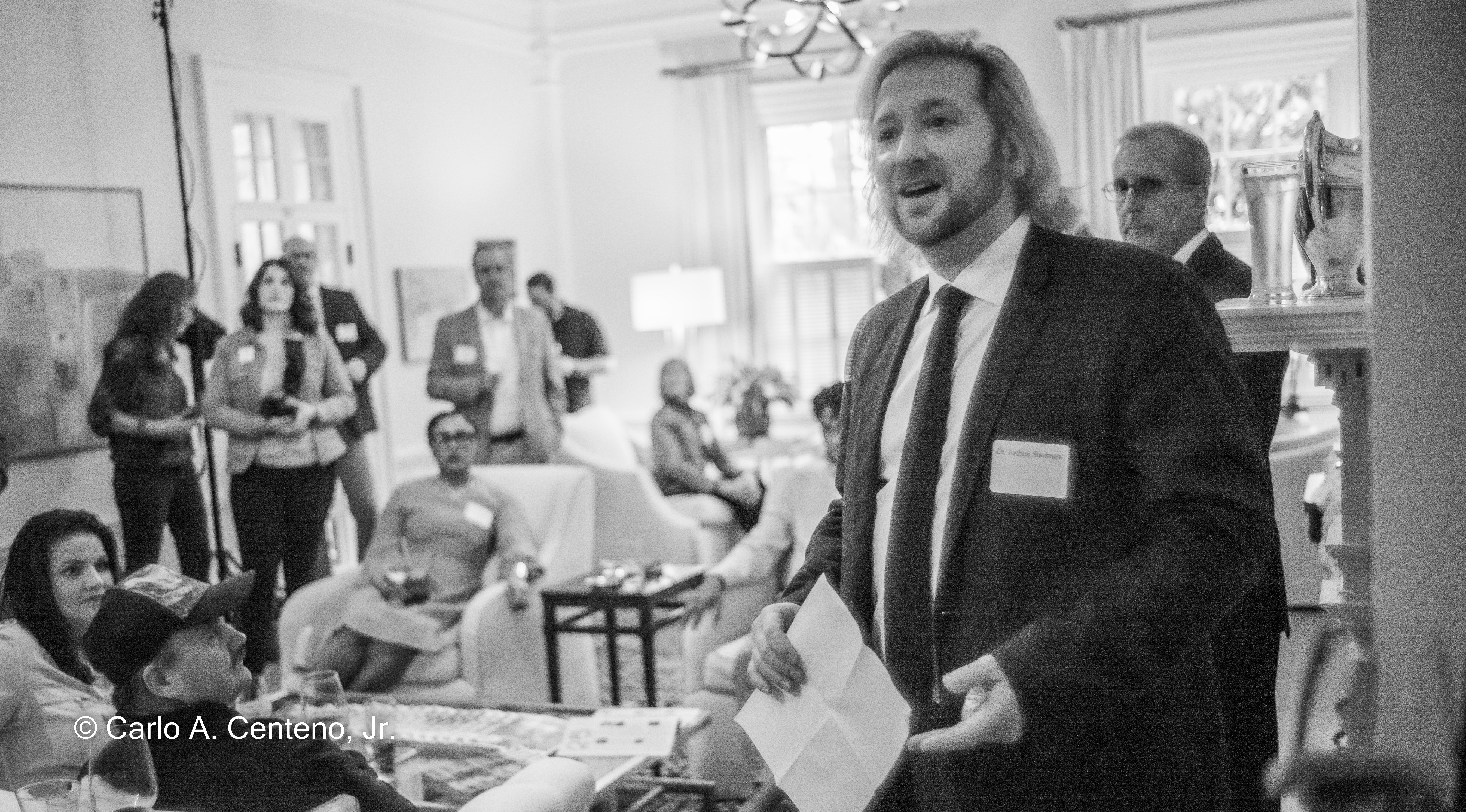
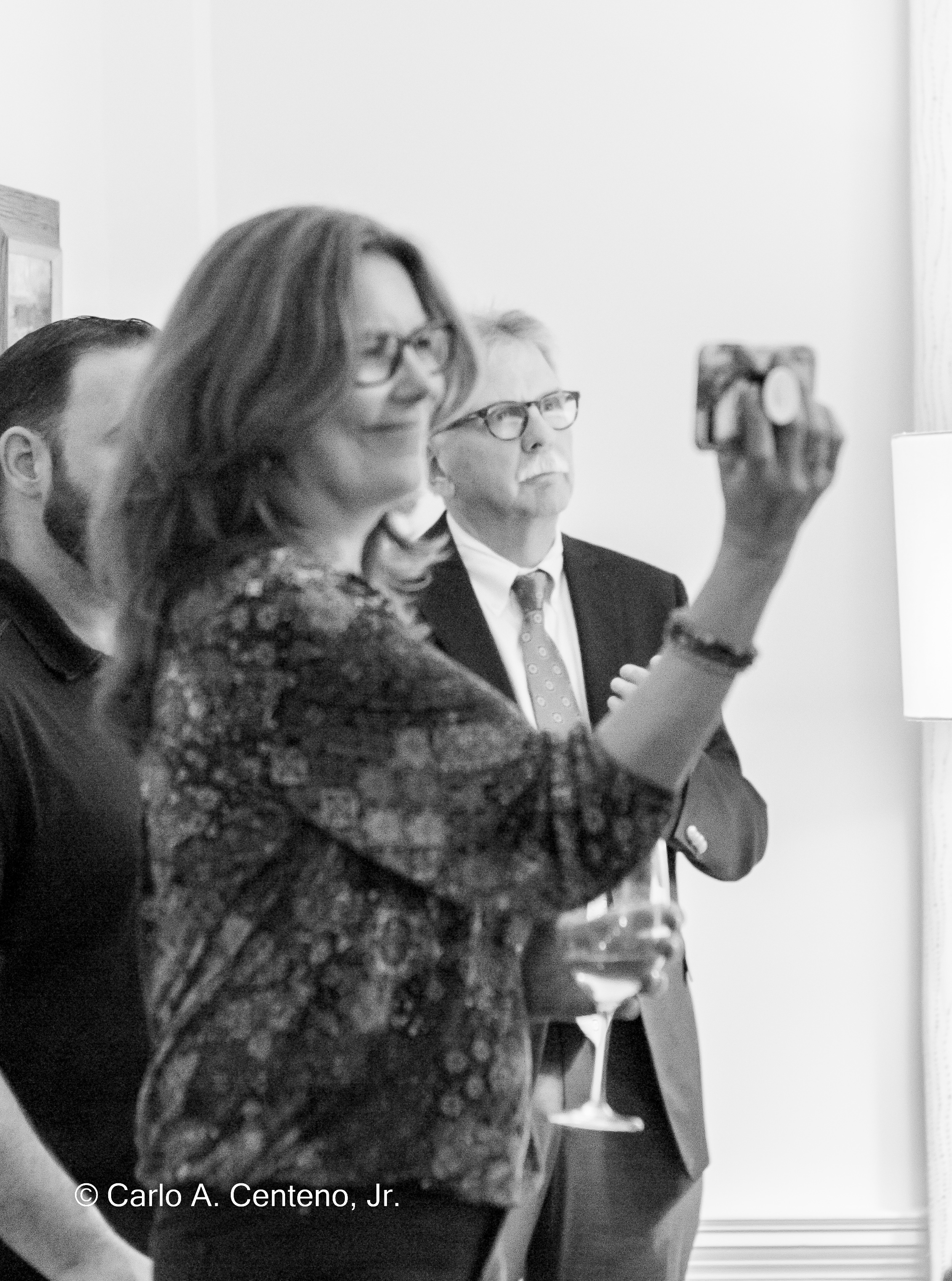
It’s fair to say that the Berkshires has a depth of culture, arts, eateries, education, health care, outdoor activities, community outreach and more, that can be as strong as other like-minded communities. The diversity of such offerings is all-encompassing and that’s clearly reflected in this year’s Berkshire 25. This is Berkshire Magazine’s annual selection of 25 individuals who have made life here feel more special, complete and worthwhile. That may seem like an exaggeration, but that’s due to the contributions from folks like the Berkshire 25 that make the region “the most beautiful place to live.”
Examine the roster of recipients. Their talents, soft skills, areas of expertise and so forth are as varied and diverse as the individuals themselves.
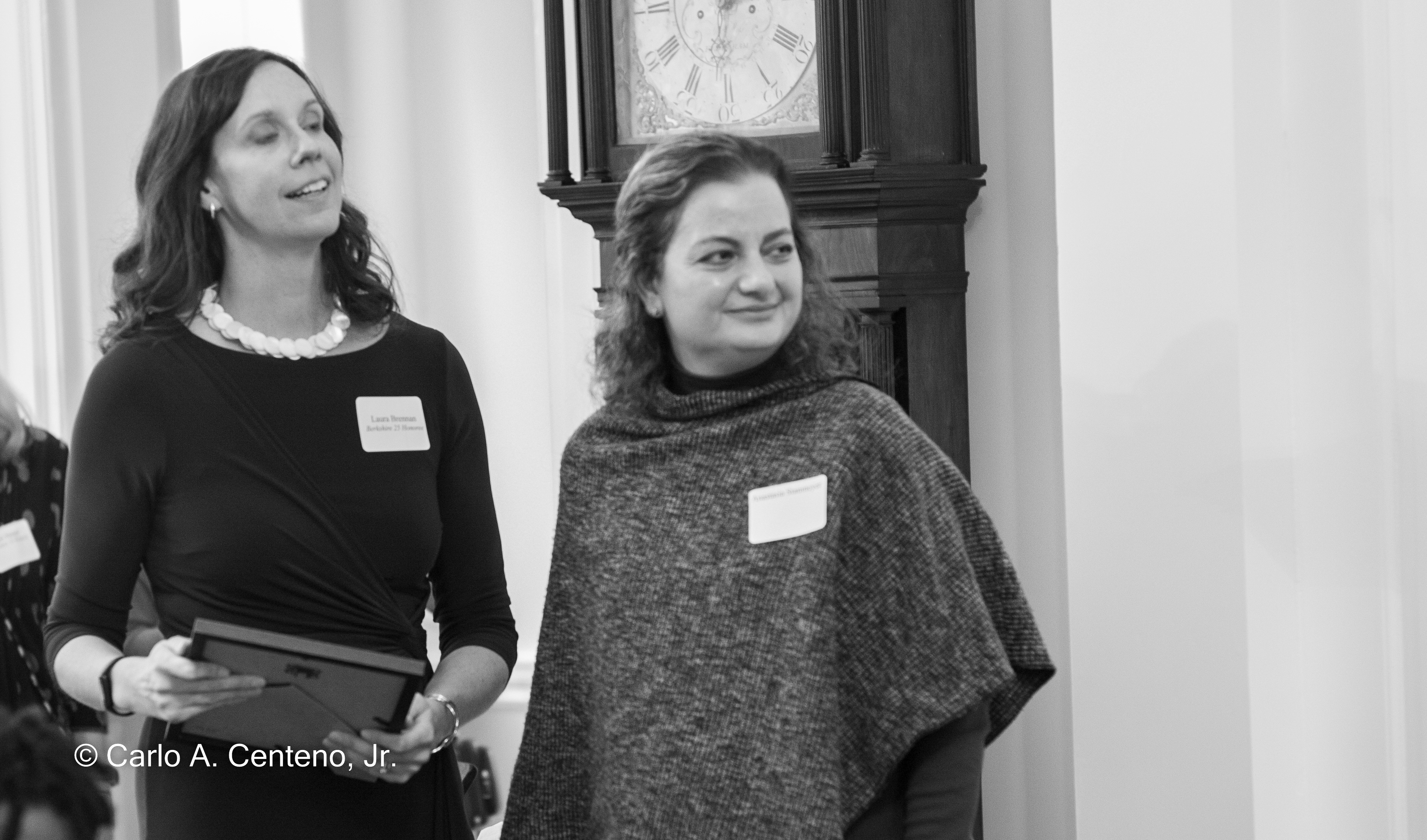
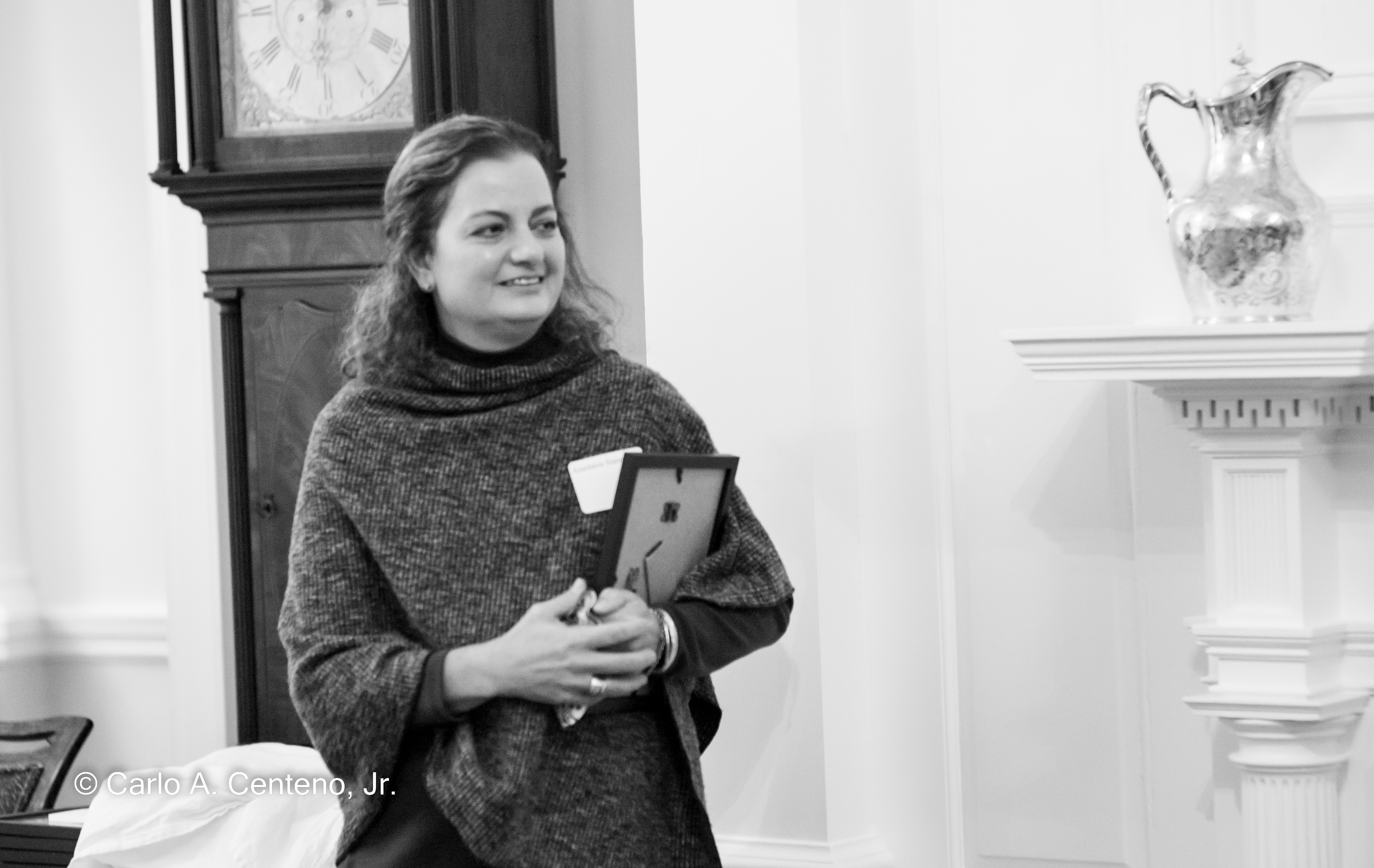
Honoree Ms. Laura Brennan [L] with editor-in-chief, Ms. Anastasia Stanmeyer
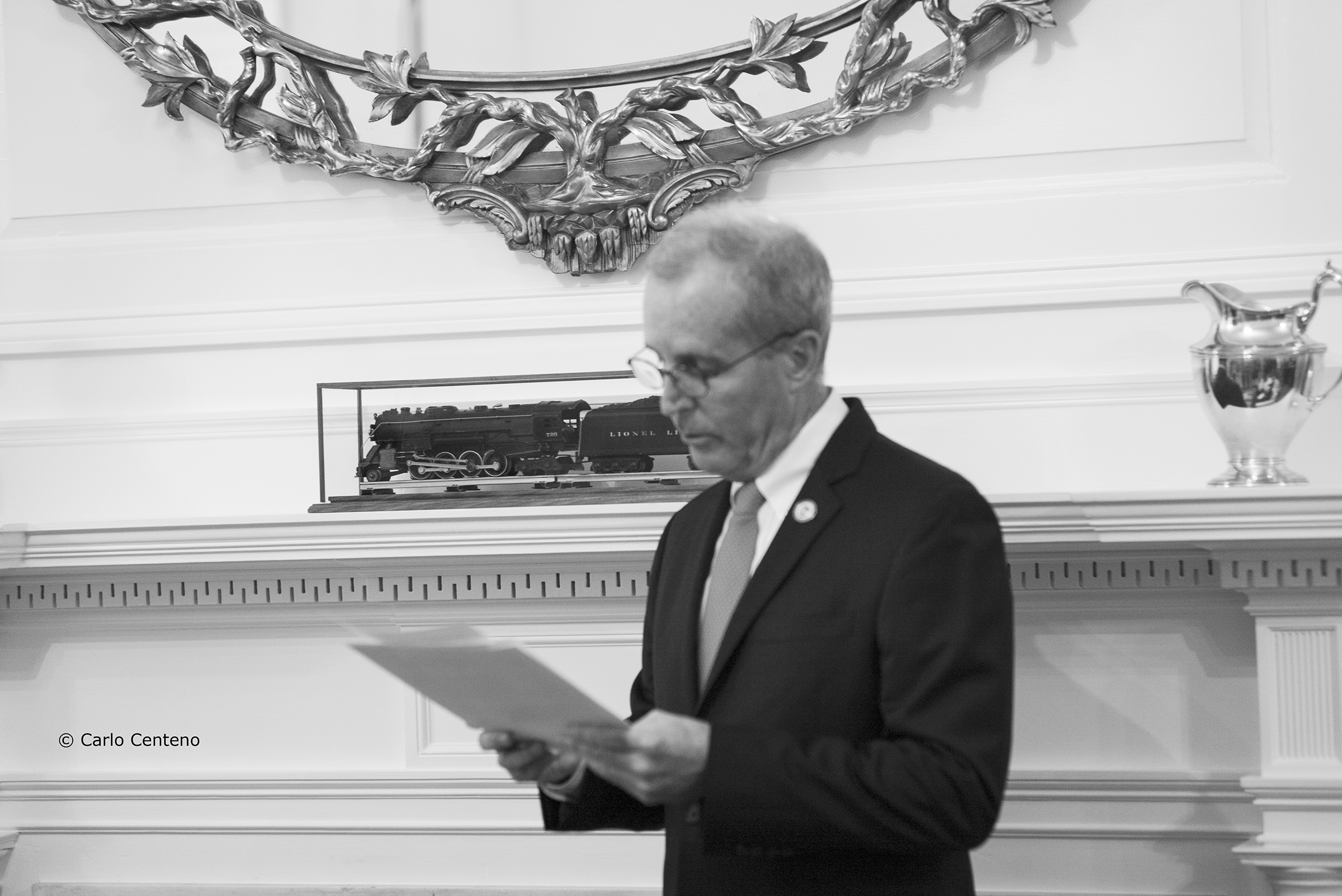
Ms. Maud Mandel, PhD, president of Williams College [below], graciously opened her home to host the event.
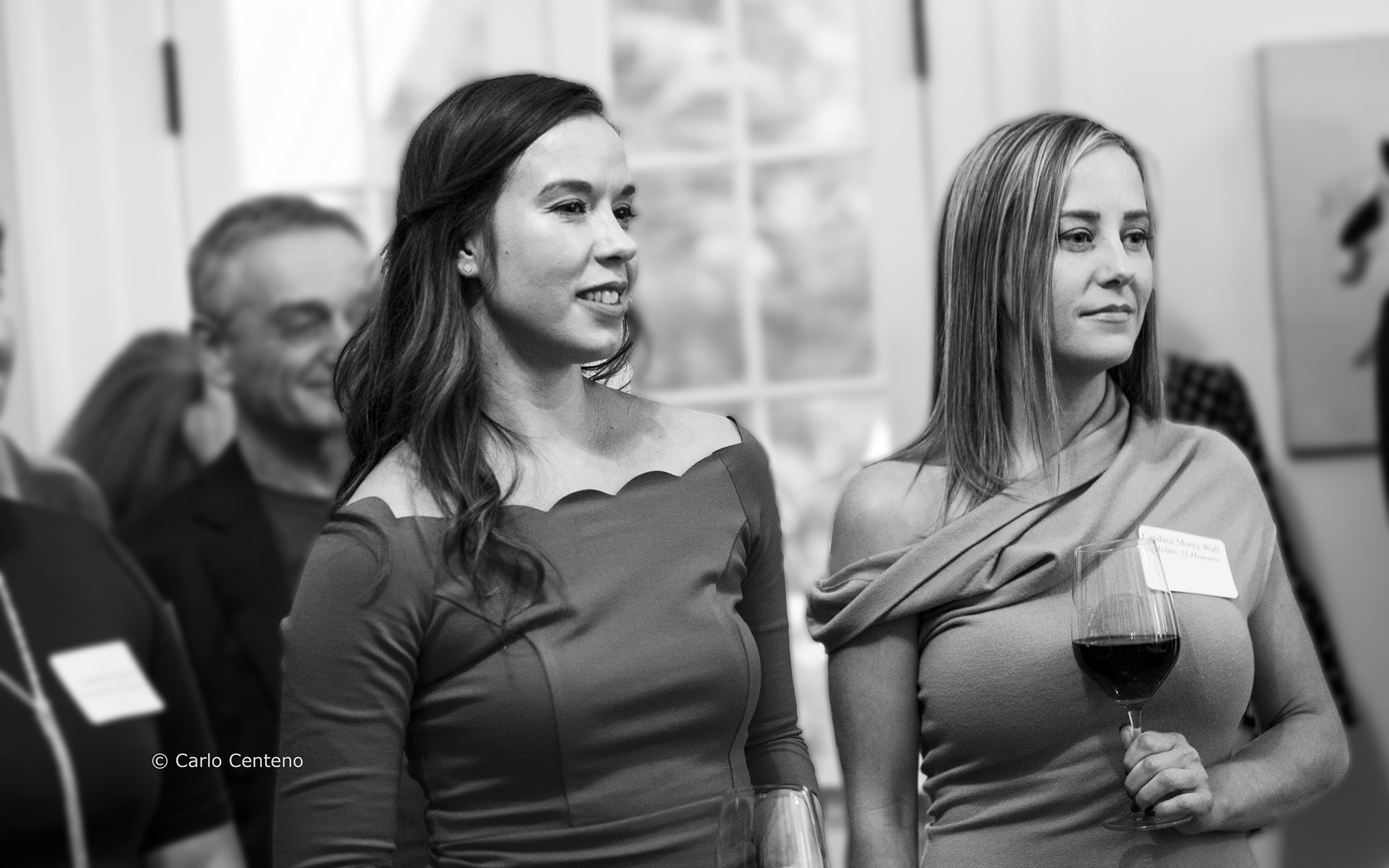
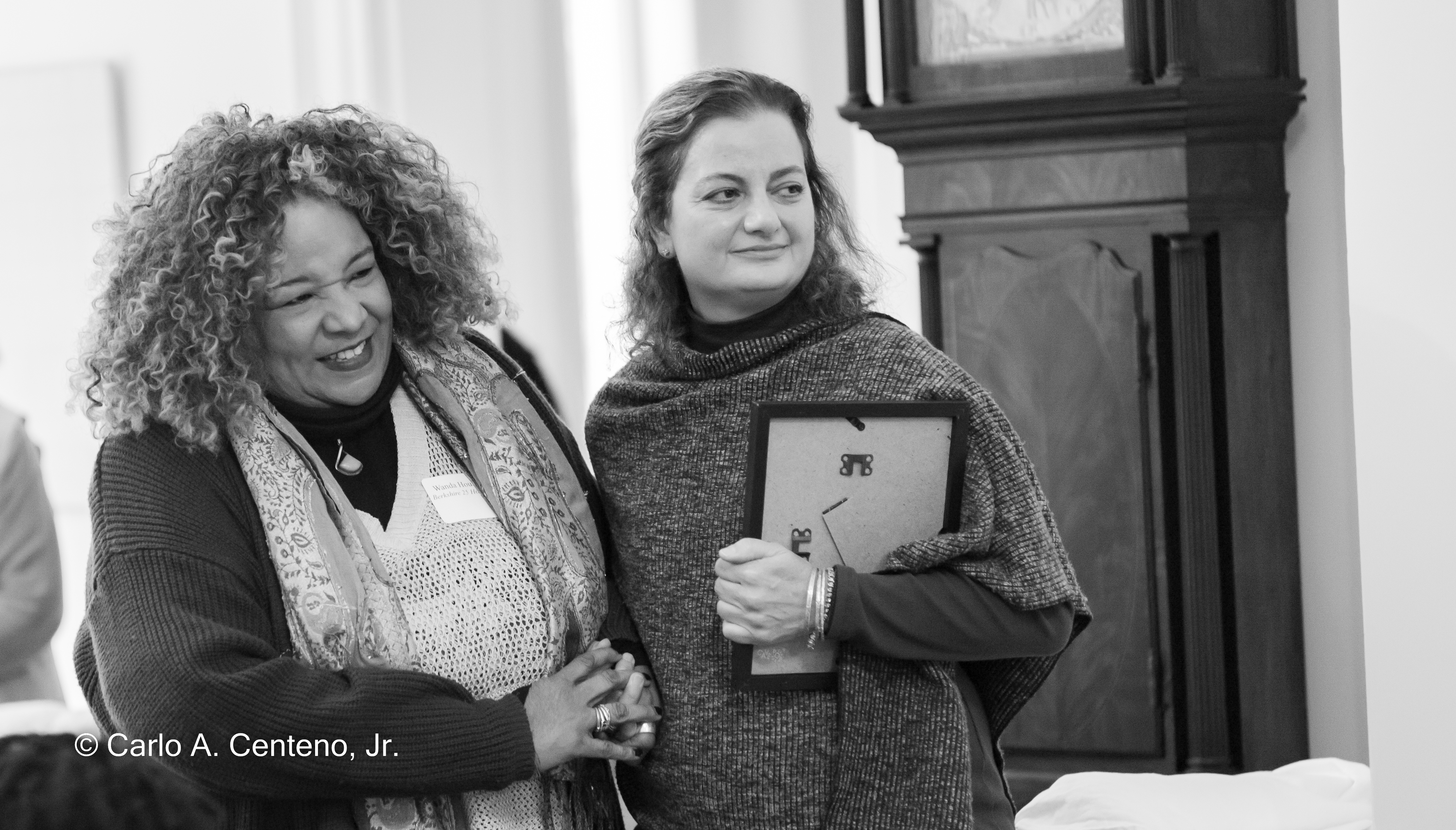
courtesy: Williams CollegeHonorees on the couch: L-R, Mr. Jack Brown; Marge & Ed BrideHonoree Ms. Mia Shephard [L]Honoree Ms. Candace Morey Wall [r][L] Honoree Ms. Wand HoustonRep. Smitty Pignatelli, an engaging & entertaining MC.Honoree Ms. Rachael Plaine
The cynics among us may feel that such occasions are self-serving, each designed to stroke egos or expand bragging rights. You can think that, but I believe no one that evening felt that notion at all. At the conclusion of the event, Rep. Pignatelli mentioned that these individuals represent the best of what people can do, that such care and outreach nurtures the magnetic vitality of the Berkshires. Lightheartedly, he added that politicians like to think that they drive a lot of what’s positive. However, he quickly reinforced that a lot of what makes a community/region attractive and inviting has to do with the very people who understand what it means to be selfless.
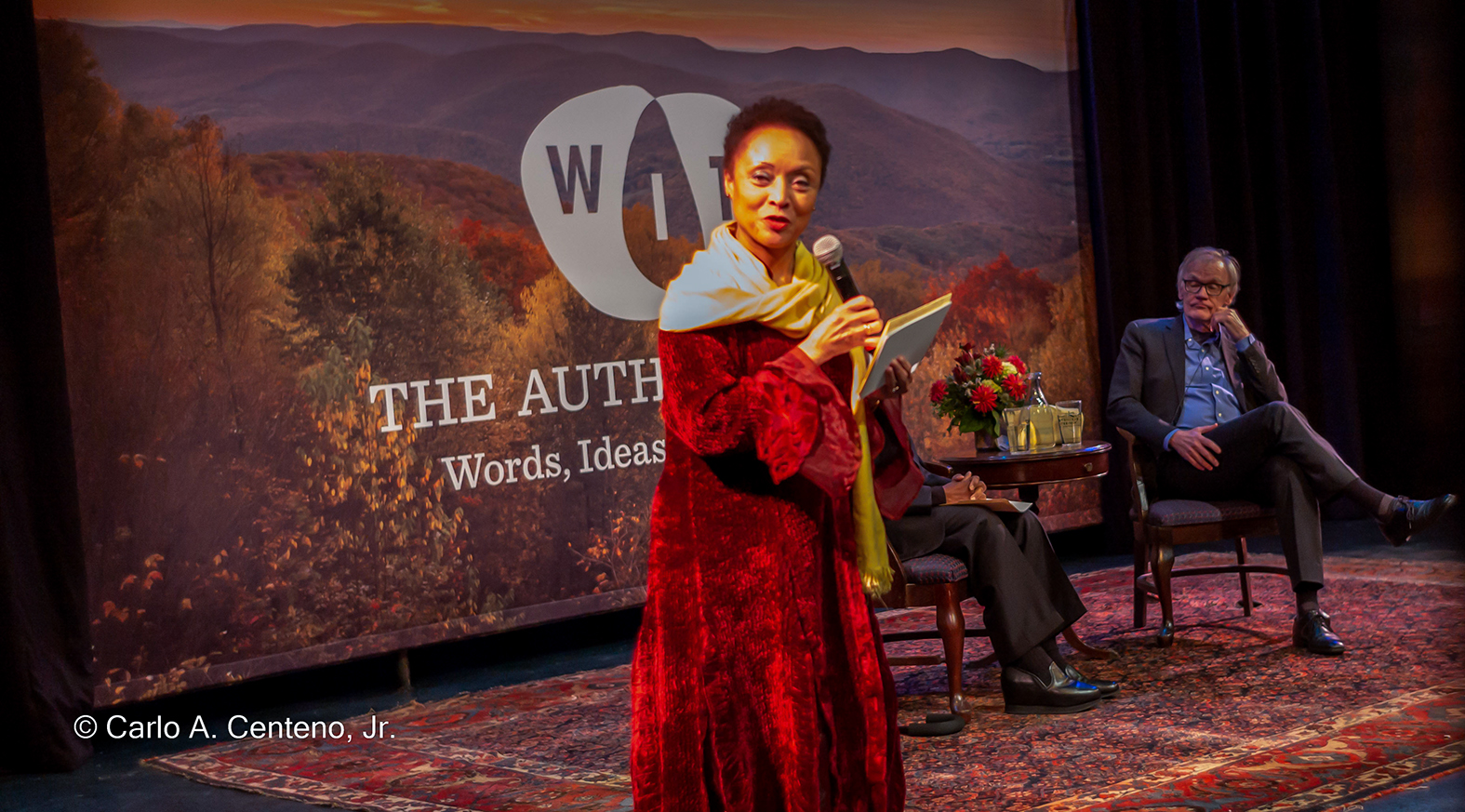
The inaugural 3-day, WIT Festival recently finished here in the Berkshires. Authors, journalists, novelists and playwrights gathered to engage participants in this year’s theme, Reimagining America. This was an opportunity to broaden one’s understanding of critical issues and concerns coursing through our current–and varied– socioeconomic and political points-of-view. The festival is the brainchild of The Authors Guild Foundation, the largest organization of its kind in the USA that “educates, supports and protects American writers across the country.” It’s been noted that the Authors Guild Foundation is “the sole group of its kind dedicated to empowering all U.S. authors.”
Ms. Lynn Boulger, executive director of the Authors Guild Foundation, welcoming authors, attendees, patrons and friends.
Berkshire County lies in western Massachusetts. Its rectangular shape stretches north-south with New York state at its west border, Connecticut to the south, Vermont to the north and to the east it borders with Hampden, Hampshire and Franklin counties. For many, the Berkshires is more than a destination: it’s a way of life.
Dan Brown, author of best-selling novels The Da Vinci Code and Angels & Demons.
Presentations/discussions took place at Shakespeare & Company in Lenox. For the most part, the 3-day festival sold out, however a roster of those wanting to attend were placed on a list just in case of cancellations. I did not hear of any registrants calling to back out.
Ms. Nikki Maniscalco, associate development manager, The Authors Guild Foundation.
I think the salient detail I took away was in finding a connection with the speakers. Whether through their anecdotes and experiences or with discussions that were enlightening or instructive, discovering these connections became visceral. The connections answer to or affirm my own perceptions, creative risks and even the most profound sentiments I keep close to the proverbial vest. As effective podcasts can be, for me there’s a lot more to glean from such happenings when they’re done in person. There’s an intimacy about gatherings as you hear, see and feel more than just commentary. And in that collective presence, you may pick up emotions inferred or otherwise demonstrated in tone, expressions and body language.
One cannot dodge a glance or ignore a gesture, or miss a light-hearted remark to loosen up a room. As good as podcasts are—and they have an important place in communications and education—being there does make a difference.
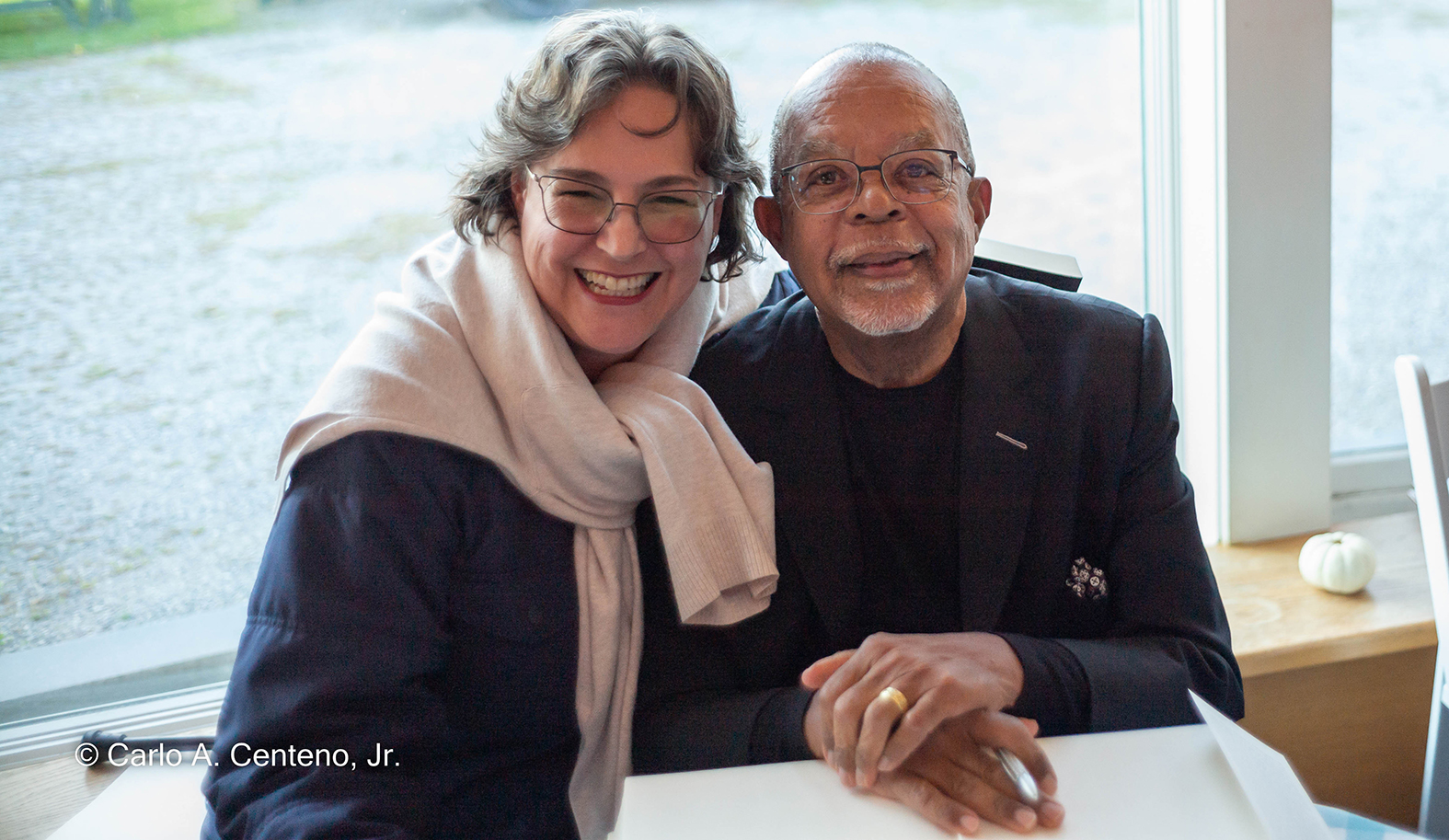
Henry Louis Gates, Jr.David W. Blight–Pulitzer Prize-winning author.
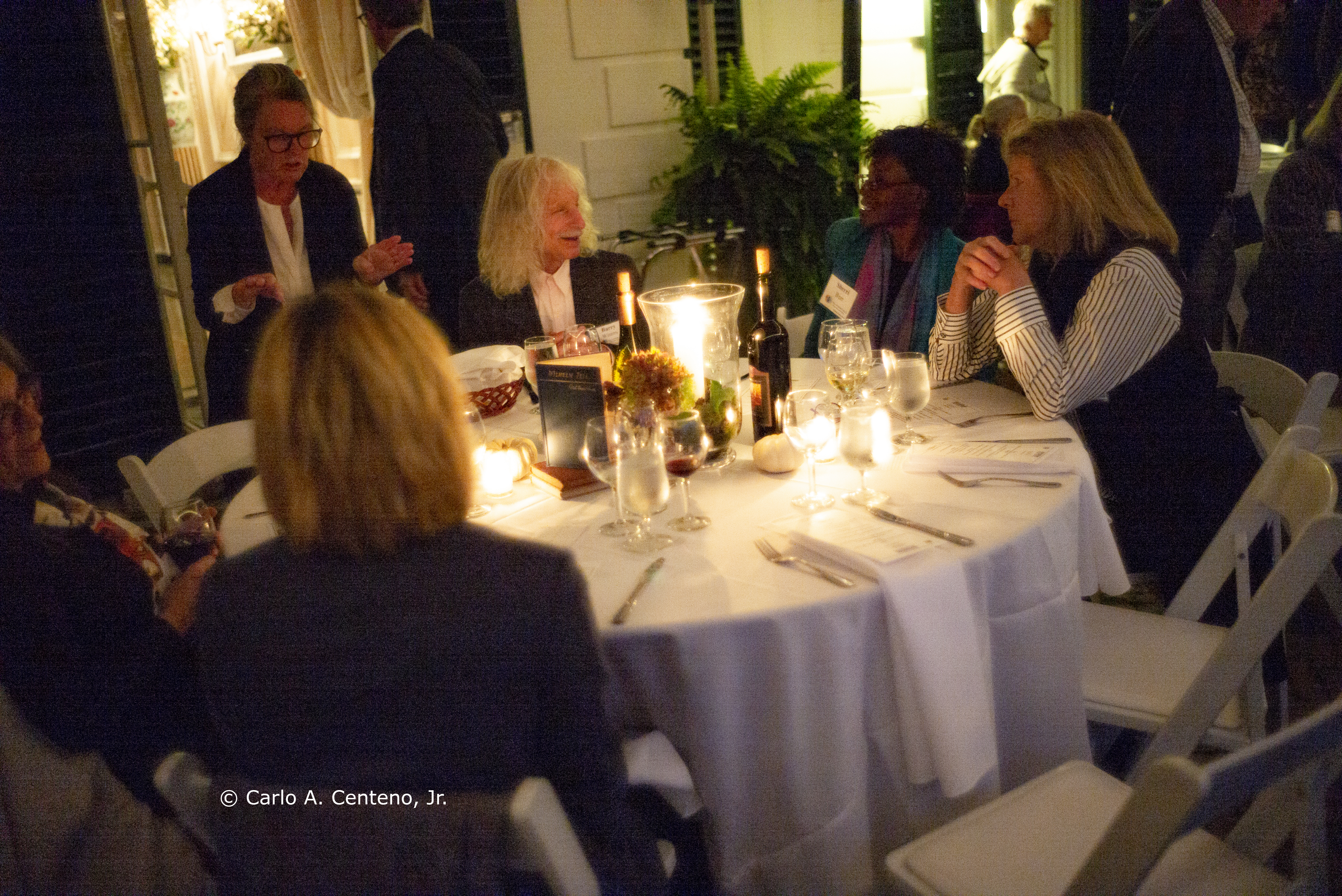
The dinner, served at The Mount: Home of Edith Wharton, was cleverly engaging. Instead of table numbers, the names of authors took their place. Your seat was placed at a designated table which bears the name of the author at the bottom of your name tag [Jean Cocteau] Your actual seat is marked by a small piece of paper with your name handwritten on it.
Each table had a visiting author/writer or playwrite to serve as a moderator. Our discussion started with introductions which quickly morphed into an eclectic blend of reality’s “top stories.” It didn’t take long to connect the dots. To hear one’s writing experience through the years did have a common denominator: persistence. No doubt I’d wager that most of the writers in the room have had to deal with many types of rejection. The cacophony of conversations, the tinkling of flatware against plates and the the intermittent sound of laughter made it clear that many, if not all, enjoyed being in this festival.
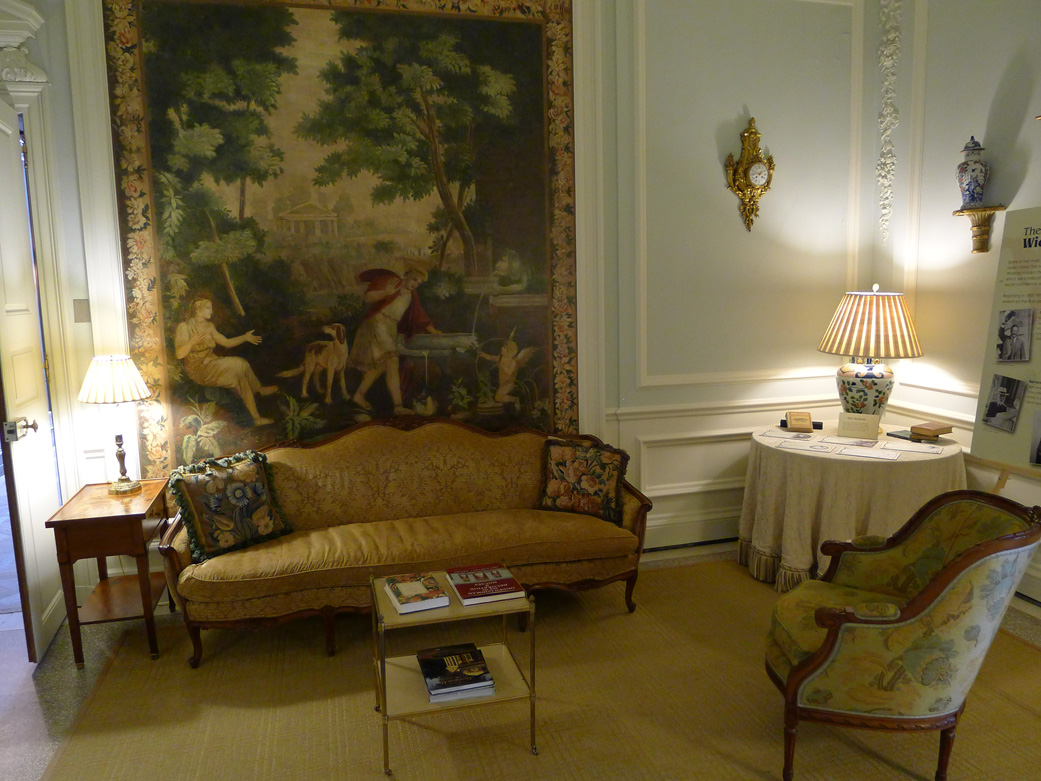
If you happen to visit the area, make a point of stopping at The Mount. Bear in mind that Ms. Wharton lived in that home. I marveled at the scale of its history, its art, design and much, much more .
All in all, I appreciated even more, the permanence and accessibility of books. They are tangible, finite in its content and physical features, yet infinitely capable of challenging your imagination and expectations. Such is the attractive symbiosis of humankind and the inanimate. Both are needed to create and sustain history, the arts, the sciences, and the stories that take shape into something palpable. A lot of my creative and professional work involves digital technologies. The past 2-years have made that more than obvious. Zoom meetings, laptops & desktops, flash drives and the always-on platforms in social media. We can access a myriad of things electronically, online of course, and the ease of that can make astringent our feeling and thinking from engaging in life that’s face-to-face. Books tend to provide the opposite for me. The pages in a novel can transport me to wherever. The sensory experience of turning and feeling pages are the toner that can spark my imagination and involvement in life. Recall Emily Dickinson’s poem, There is No Frigate Like a Book. To me it’s the leitmotif, that binds our imagination through the settings created by writers and authors. And I don’t need an app or device to open books.
As mentioned earlier, the Berkshires is more than a destination; for many, it’s a way of life.
There is no Frigate Like a Book There is no Frigate like a Book To take us Lands away, Nor any Coursers like a Page Of prancing Poetry – This Traverse may the poorest take Without oppress of Toll – How frugal is the Chariot That bears a Human soul. Emily Dickinson
Spring is springing though the thermometer begs to differ. I have one of those old-fashioned stick thermometers encased in a brass sleeve attached just outside a window. It read a chilly 41-F [5-C], at 8:23 this morning.
Whatever the temperature, we know that another season is here, although some of us are still bundled up. I think that’s better than huddling inside whining about the cold. In New England like the rest of the northeast, you expect the unexpected. An urban environment does have its share of color, especially those on display from flowering trees and shrubs. Yet I’m drawn to other colors which “pop” in front of me.
I find it a bit odd that not more people are out walking whether by themselves, or with a friend, or from behind a stroller or in the company of a dog. In most cases, it’s the dog walking the handler; I’m empathizing from the dog’s POV. More than likely, I have to keep on walking in order to see others coming and going to wherever they need to be. I need to continue my exploring and allow whatever creative divining rod I may possess to guide me.
It’s a bit ironic that in a city so large, not many were out. It wouldn’t surprise me that NYC could be mentioned as the city with the largest number of street photographers per square mile, whatever that number might be. Who knows, my sortie was on a so-so day at a time when more than not, folks just decided to stay put.
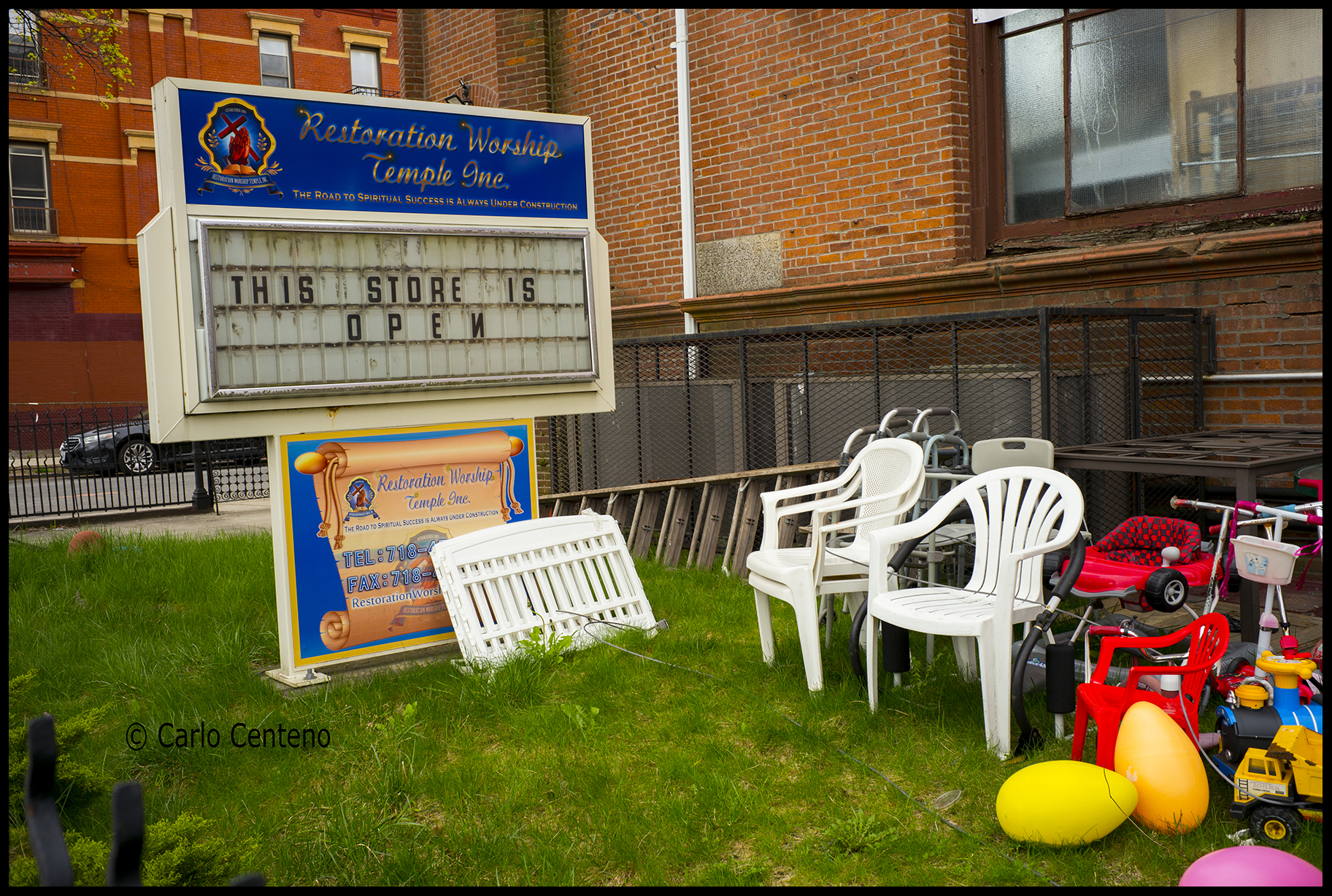
On the above marquis, the tagline to this church reads, “The road to spiritual success is always under construction.” For most of us, it means no one can attain spiritual success. This is akin to Sisyphus rolling his boulder uphill, only to fail when he comes so close to the top. His pathway to salvation is under construction in perpetuity.
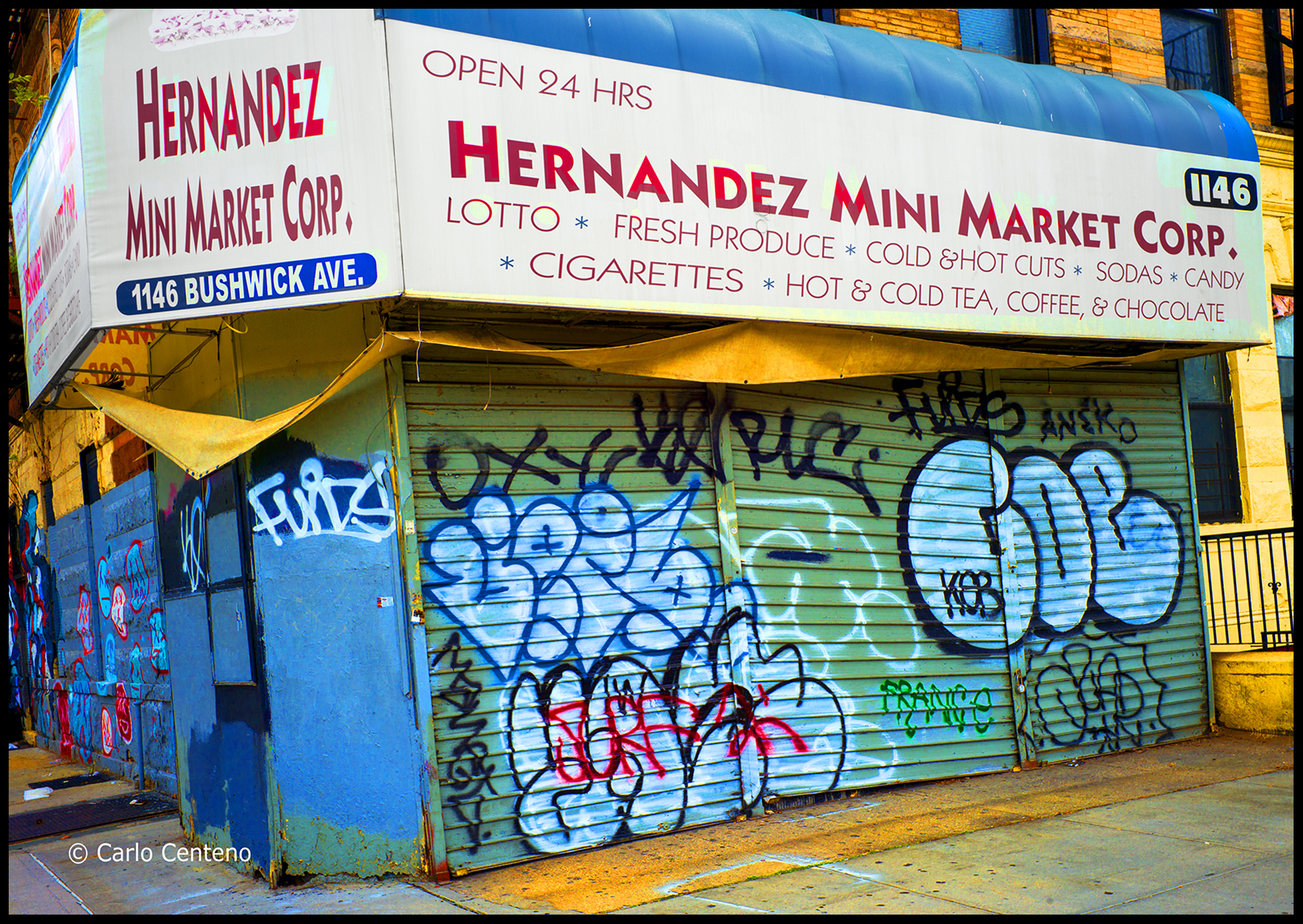
On a cold, windy January day, I took a walk to familiarize myself with another area of Brooklyn. As I do on such sorties, I have a camera in hand. It’s just an integral part of me carrying that, along with a fountain pen. In combination, perhaps an odd idiosyncrasy. Go figure.
There has been so much news about struggling businesses in an economy best described as uncertain if not scary. Regardless of your own standing, uncertainty feeds fear. It’s like that for many, even those who still have a job. There have been a myriad of changes in less than a year, and many of them are unprecedented as we know.
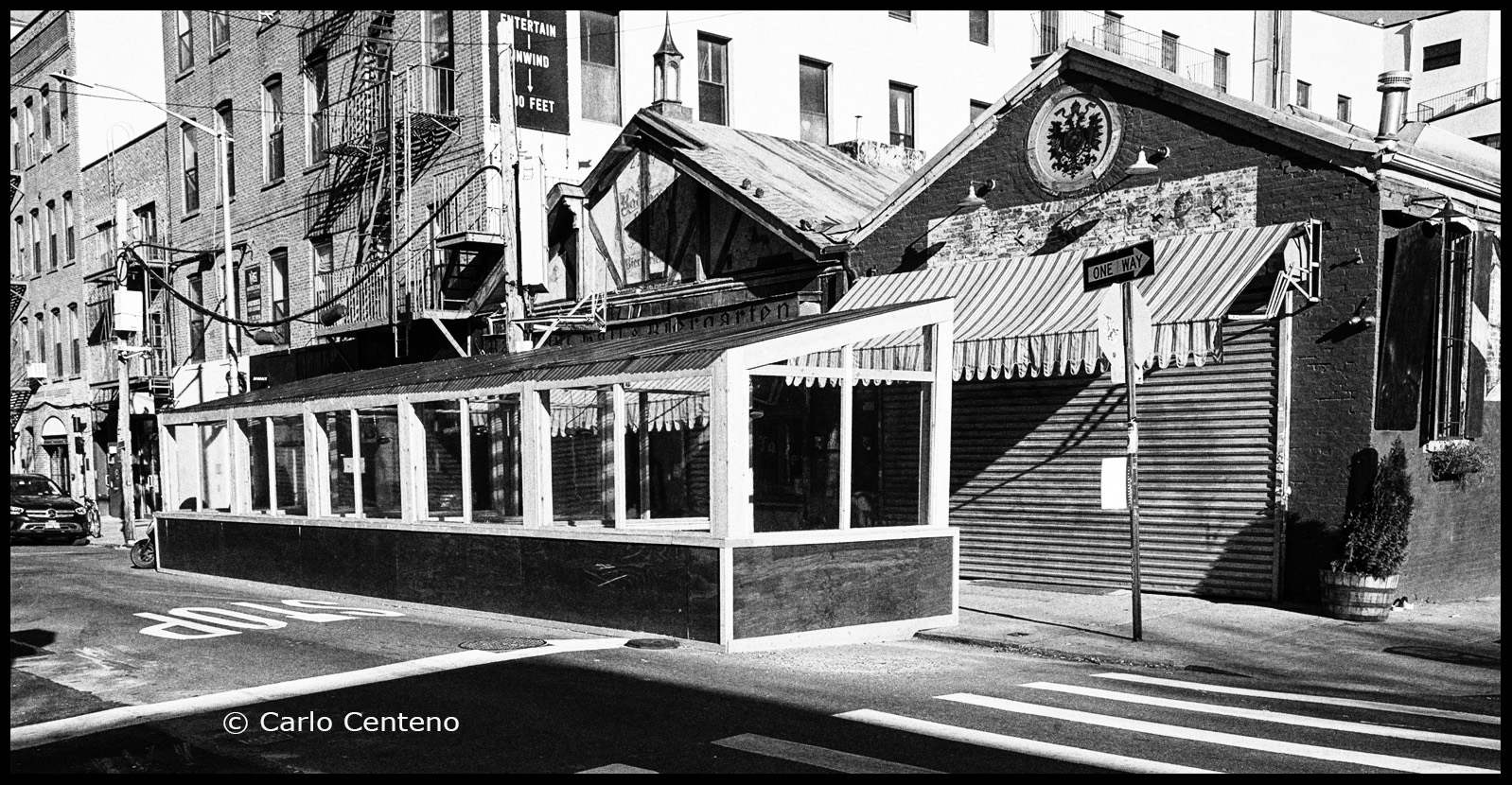
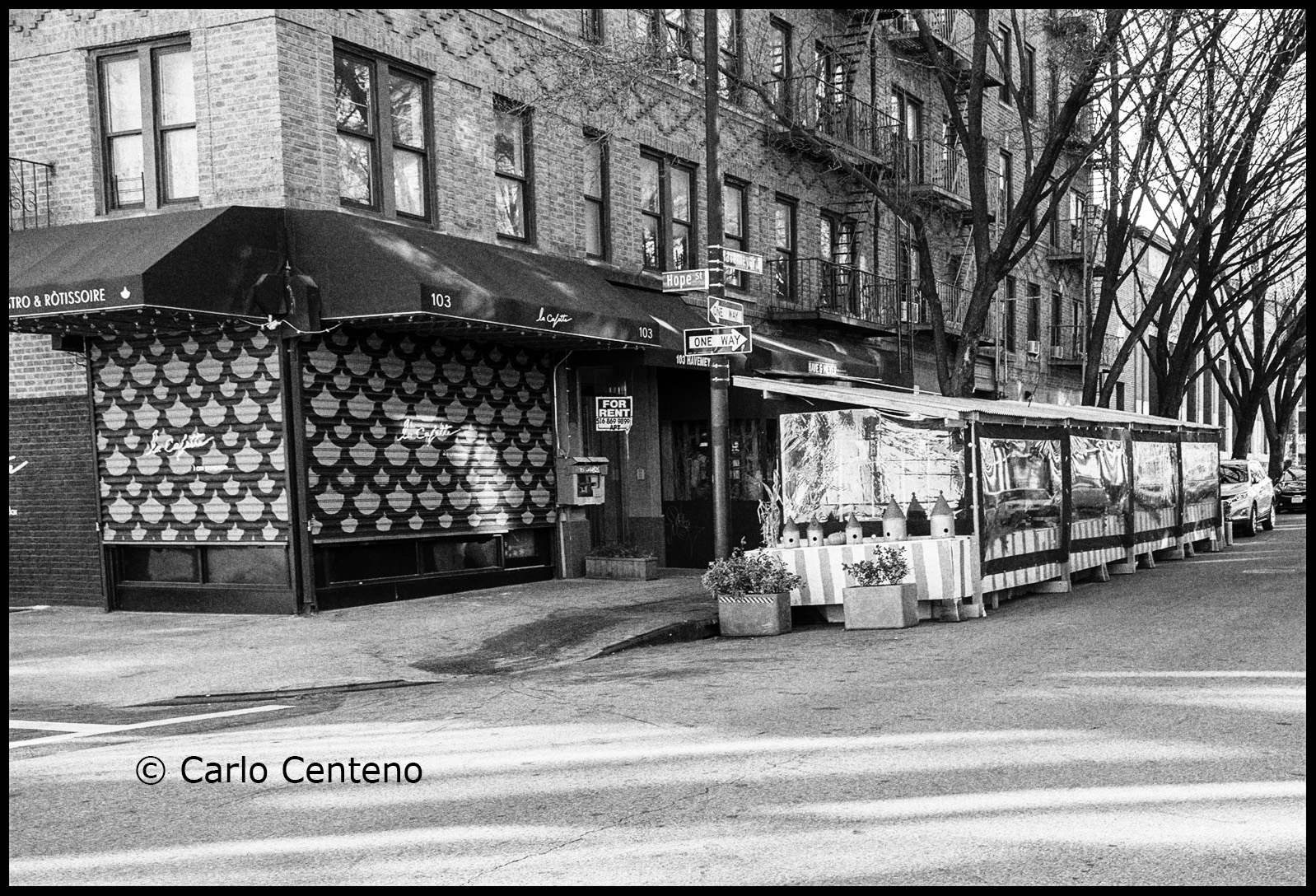
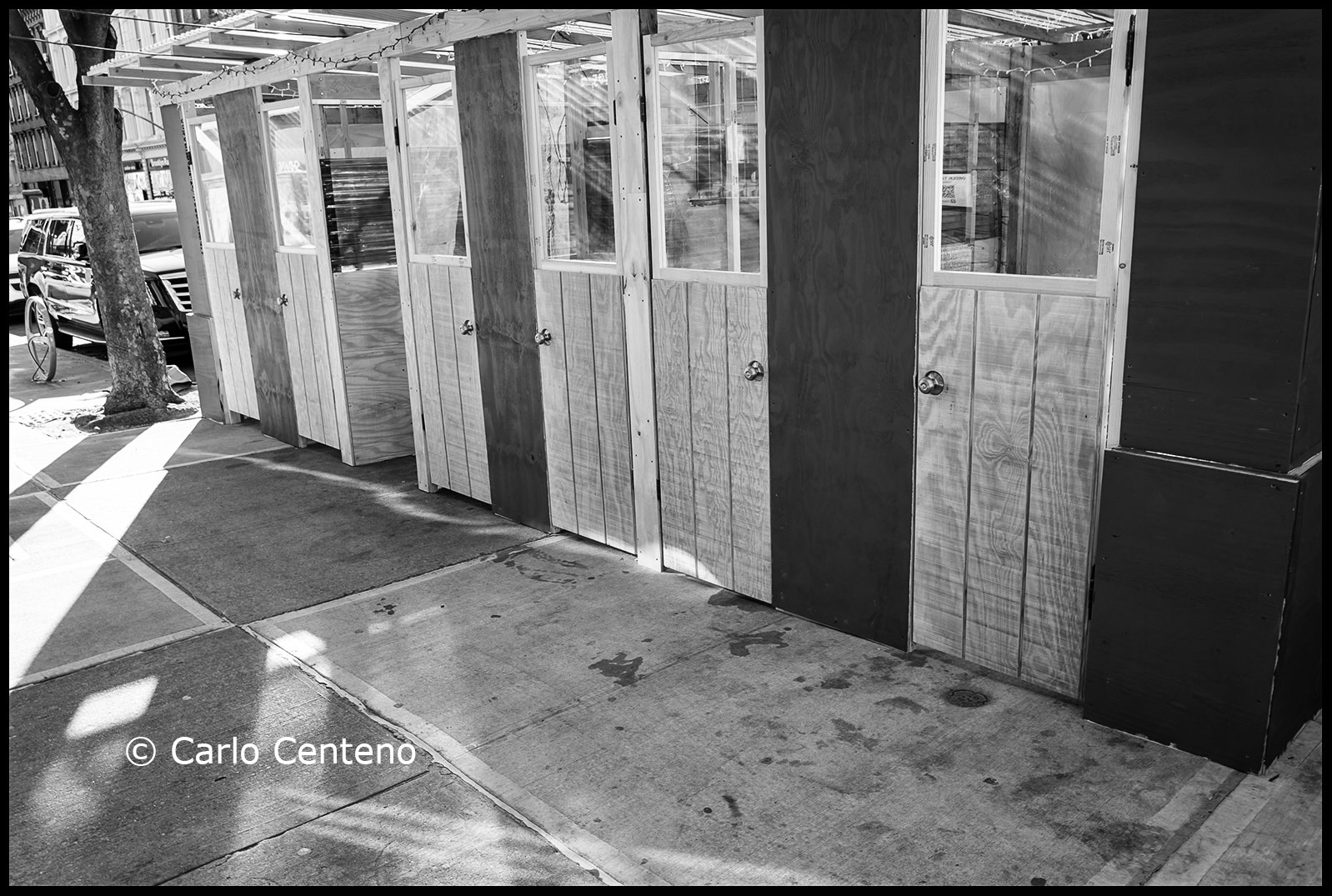
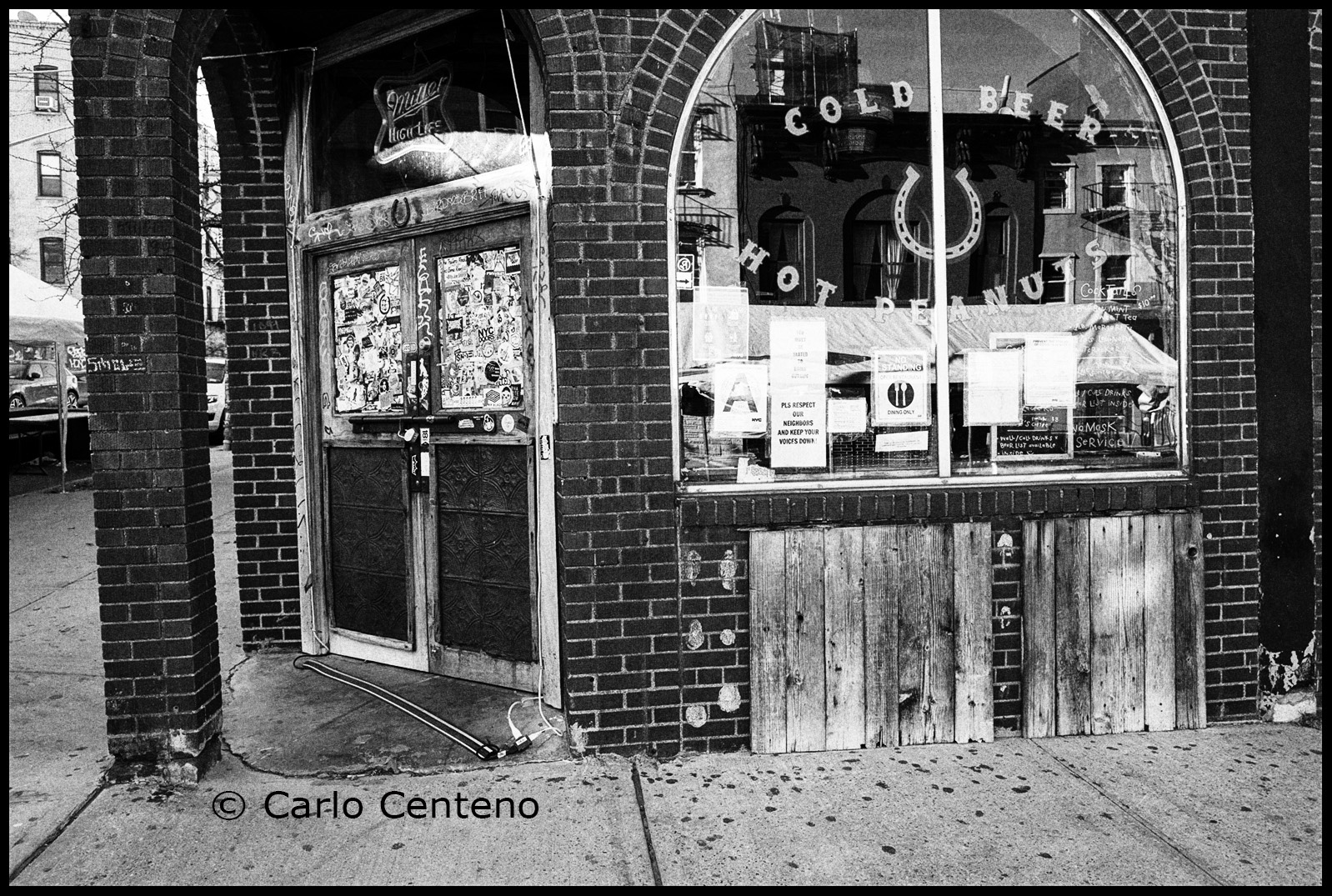
And yet I’m encouraged with the way businesses evolve, regardless of the risks and constraints of an unrelenting pandemic. Adaptation abounds. As I pass several restaurants and eateries small and large, I can’t help but notice the physical changes in these venues. Where there was once a length of curb used for parking has now been pre-empted by saw horses and orange pylons, cuts of plywood fashioned into walls and even structures with lockable doors, sliding windows, and other things that can make or break an outdoor dining experience. Being early in the day, most of these venues were still closed.
The way these dining improvisations unfold reminds me of a line from Shakespeare’s Richard III, which says,
Now is the winter of our discontent Made glorious summer by this sun of York;
Summer is still several months away, but we can long for it. For now, our discontent, our malaise and all that has transpired has made burdens to bear heavier by the frigid air. Winter can represent discontent, but I can also make an argument for the hot, unbearably humid days of summer offering the same.
Bricks and mortars have had to survive with 25% capacity. As anyone who owns a restaurant or pub will tell you, to survive is one thing, but to thrive means sustainability. And sustainability means recency and frequency of patrons through limited seating, curbside pick-up and delivery. All modes need to be deployed.
Let’s take the 80-20 rule, where 80% of a business is generated by 20% of the total customer base, and extrapolate to a pandemic index of sorts. I think if this entire 20% group supports their favorite restaurant, diner, food wagon or cart at least once a week for say the first 6 months of 2021, well, that recency and frequency in commerce and service could make a difference. For patrons, a feeling of outreach and support; for the eateries, a glimmer of hope and possibilities heretofore unseen if not improbable.
Perhaps my thinking is too simplistic, too unrefined and certainly enough to have my MBA stripped from my CV. But who am I not to think outside the box, to consider actions however “small” as things unworthy of effort and possibility? Because there’s enough doubt to go around these days, I’ll let Shakespeare have the last word:
Our doubts are traitors, and make us lose oft what we might win, by fearing to attempt…






































 Carlo Centeno