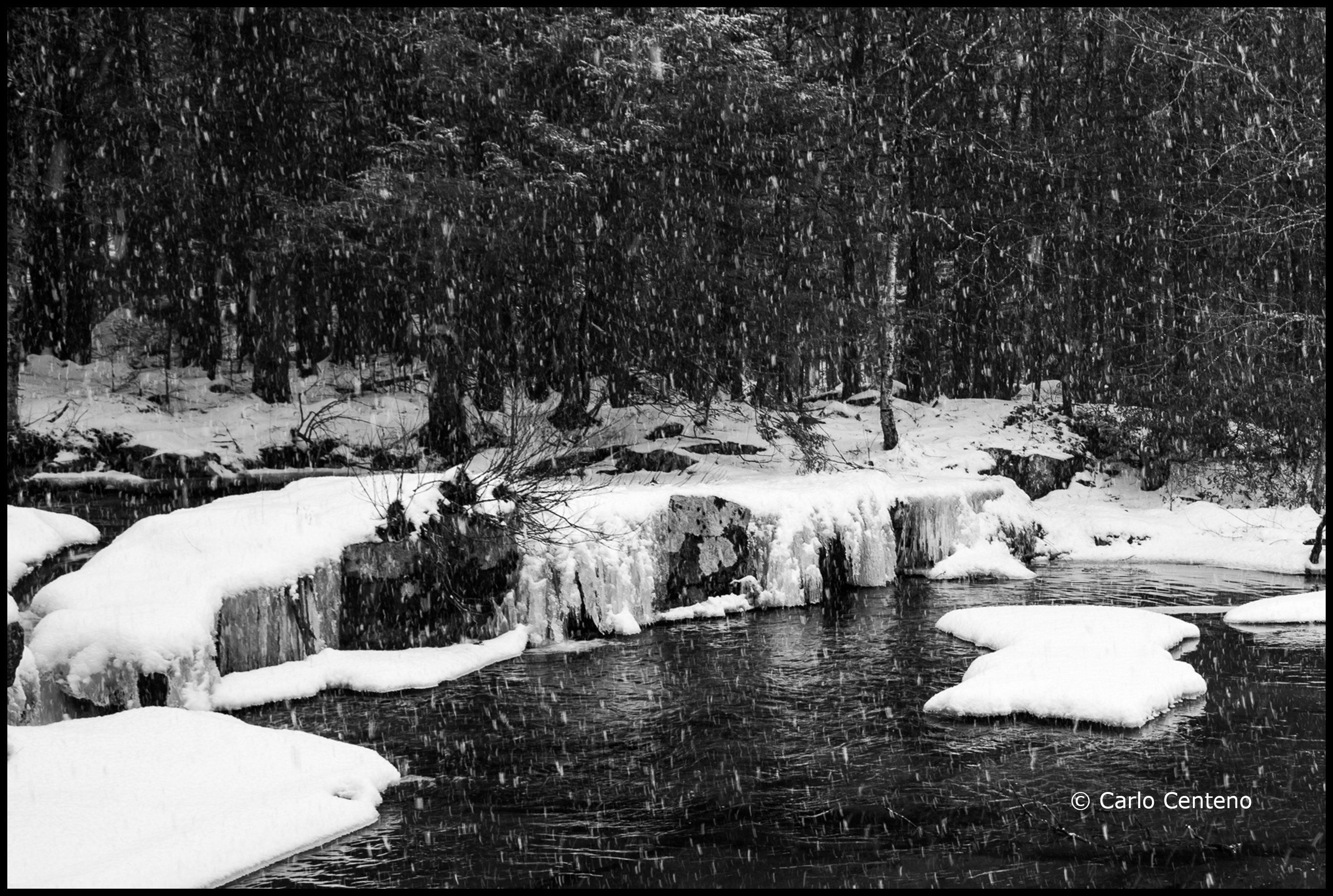
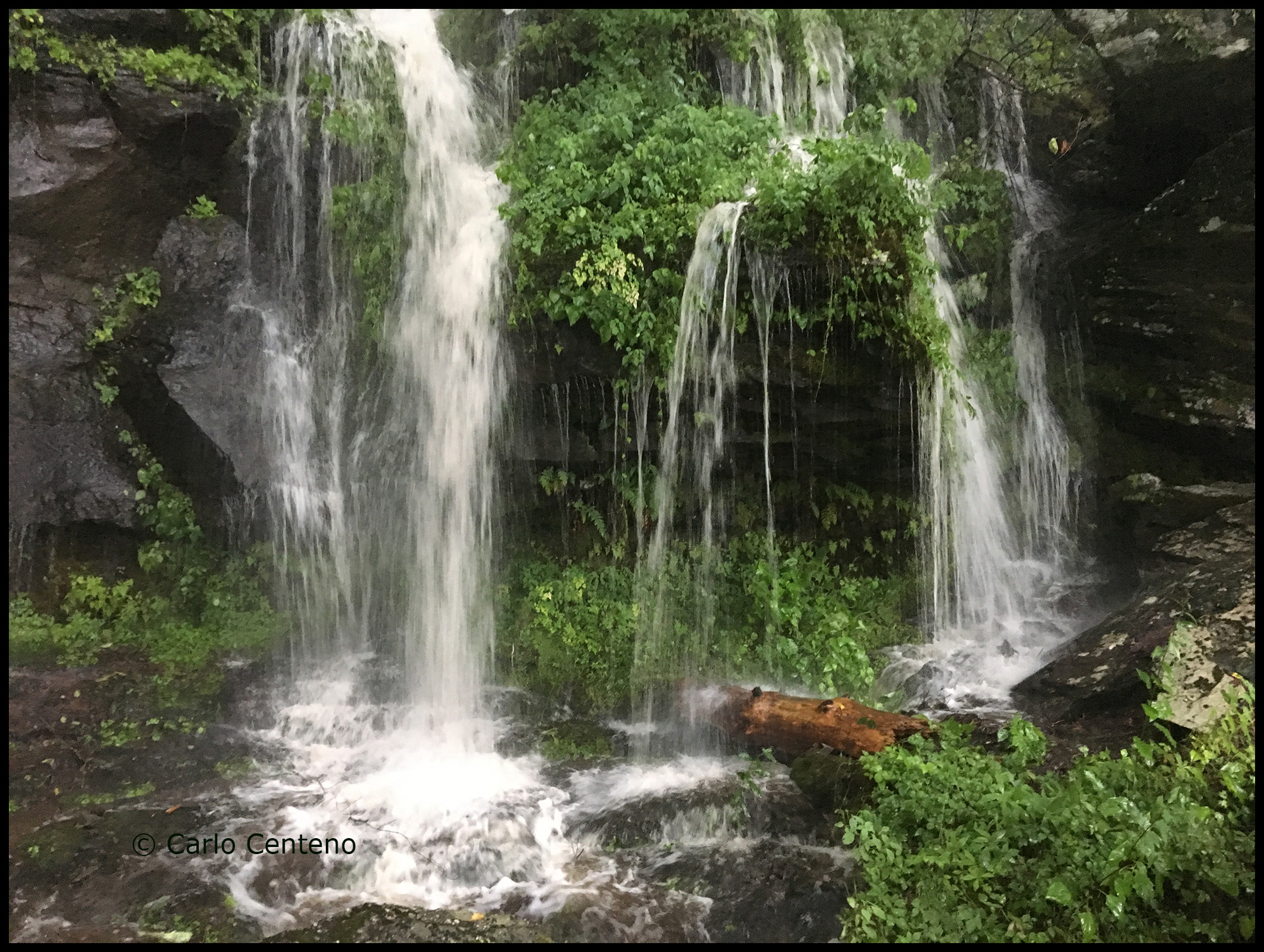
I was in a different bubble yesterday, away from the angst, the uncertainties, the frustration and disappointment of recent times. It was wonderfully quiet save the waterfall cascading over an edge some 20-yards away. That rushing sound had a soft, roundness to it, a barrier or suppressor of sorts that kept disheartening sentiments at bay.
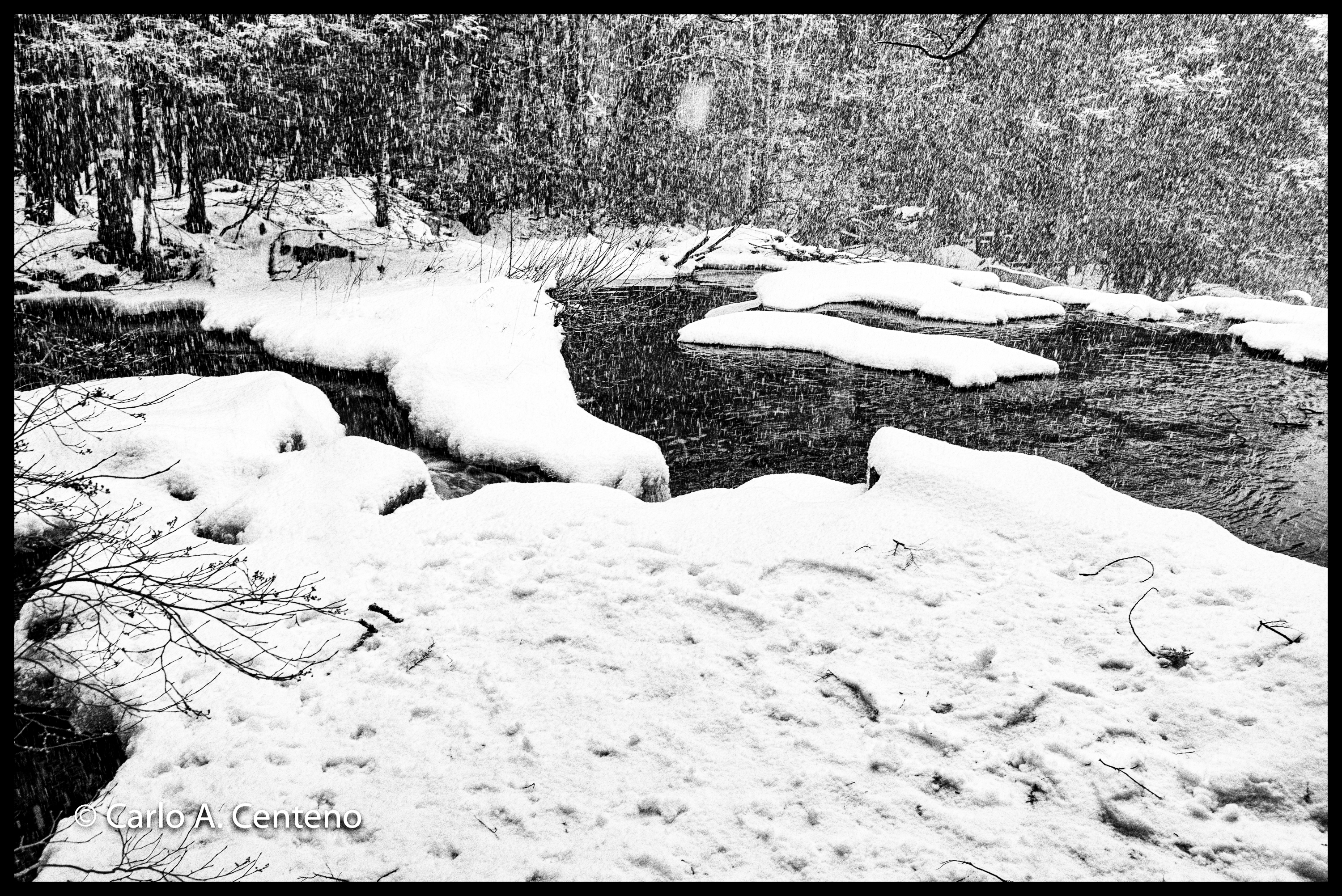
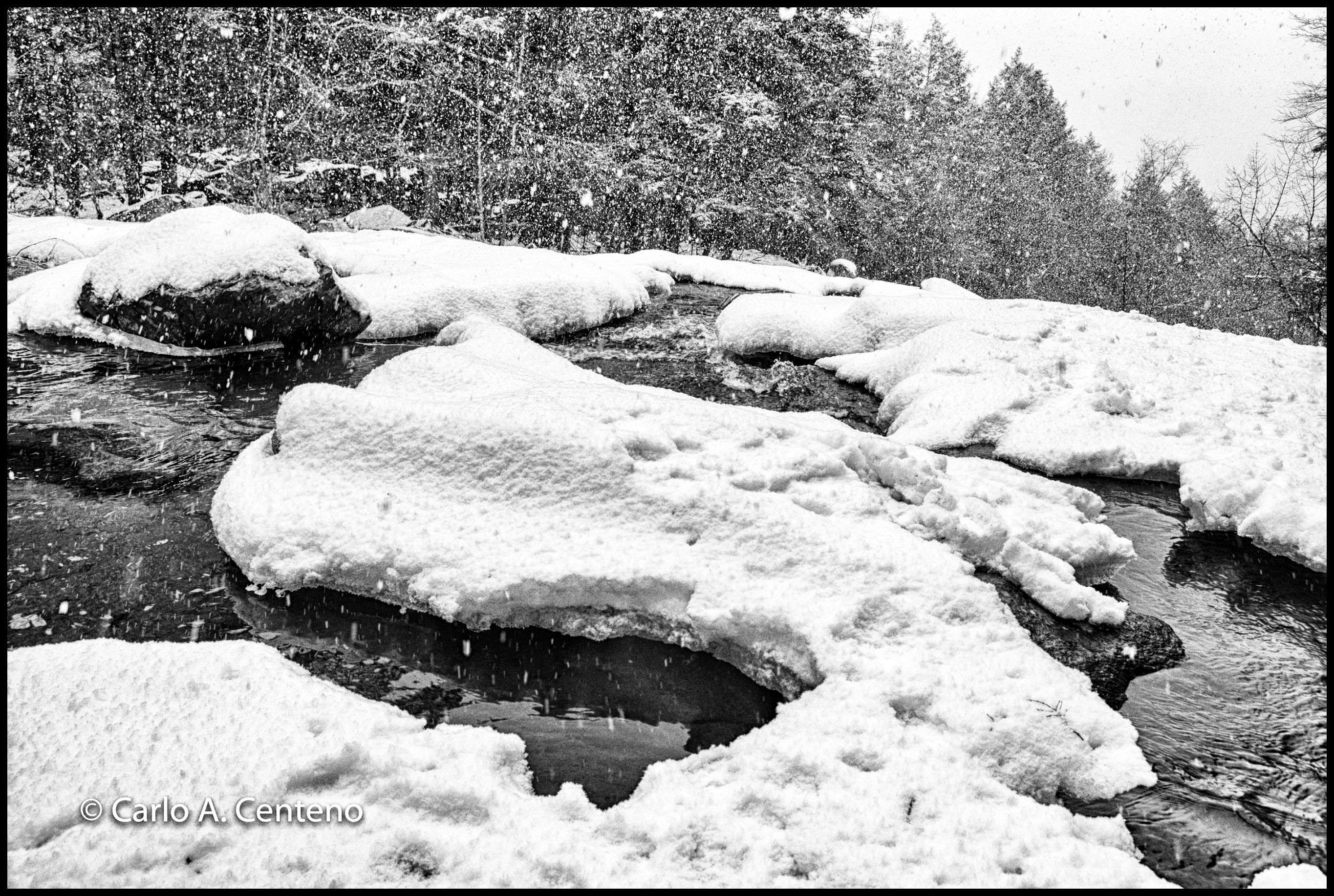
I was in a snow dome.
With 4-inches already on the ground, a sudden burst of flakes quietly fell, quickly dusting tree limbs as well as foot prints left by other visitors: someone in a Sorel, perhaps a size 10 1/2 which lay opposite the basket imprints from a hiking staff. Only one set of human footprints was there, the other prints from a deer, a squirrel, a group of birds and others I wasn’t sure of or missed altogether.
This kind of place—where the simplest of what is before and around you—covers the burrs of unhealthy tensions and feelings. Indeed, a blanket comes to mind when snow covers a landscape. On some days—for me anyway—it’s more like a comforter. A comforter does not align with what snow feels like. Visually however, is a different matter. There is loft, an expanse of uniformity and balance that can remind one of a comforter. The solitude, the absence of man-made noise, reinforces that sense of comfort. Within my snow dome comes a particular calm that allows me to think and feel purposefully and openly. I consider possibilities beyond the familiar and rote. I dwell beyond the probable, but lie in the realm of things that are possible. As Martin Luther King, Jr. noted:
“Put yourself in a state of mind where you say to yourself, ‘here is an opportunity for me to celebrate like never before by my own power, my own ability to get myself to do what is necessary.'”
The saying, “this quiet, this silence is deafening…” runs contrary to my time in this snow dome. I feel reassured, positive, even happy. Embraced by such stillness, you can hear yourself think. You can engage all your senses with minimal distraction. You come face-to-face with who you are and in spite of yourself, you can choose to dwell in what should have happened—and thus remain predictably the same as always—or take a contrarian step, one that could make a difference. I’ll let Martin Luther King, Jr. have the last word. He has captured an enduring leitmotif of the human condition:
“The soft-minded man always fears change. He feels security in the status quo and has an almost morbid fear of the new. For him, the greatest pain is the pain of something new.”
When it comes to recognizing things or acknowledging details from “the big picture,” several expressions come to mind, such as “….I couldn’t see the forest for the trees…..the devil is in the details.” My typical reaction after further scrutiny goes along the line of, “….oh, yeah, well…if it was a bear, it would’ve bit me…” Granted, through some Jumanji-esque manifestation, I would undoubtedly be covered with bite marks.
For me, nothing draws more attention than an infant. They change right before your eyes. Case in point: my granddaughter you see above, is all of one week young, and yet in the past several days, she has changed with little fanfare. Other times I marvel at her physical development. All of sudden, fingernails have grown, her eyelashes are longer and her eyes are clearer and probably tracking motion. Before too long, her onesies, and probably diapers too, will have to go up in size.
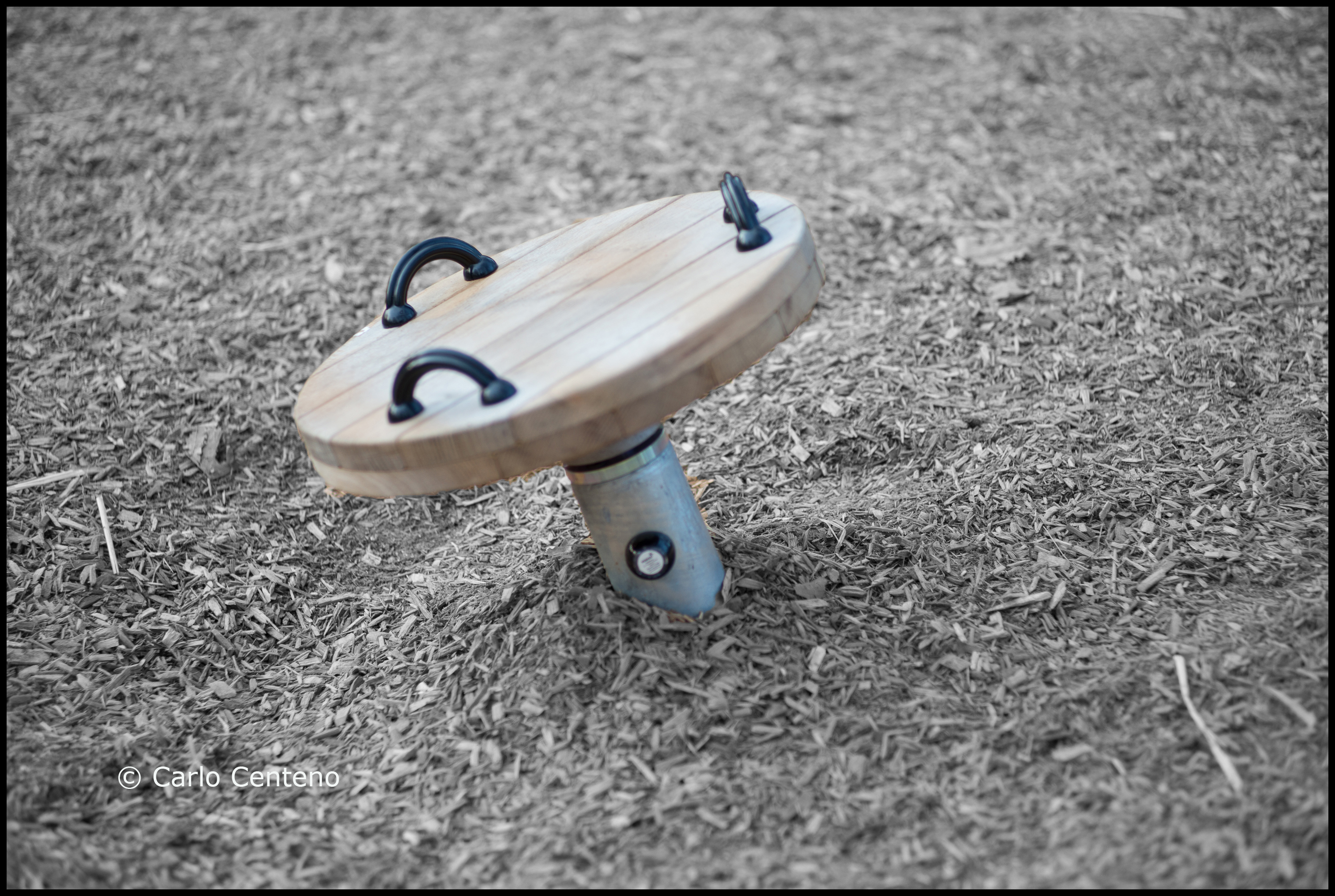
It’s a single-seat, wobbly merry-go-round.
From a distance, the spinning wheel looks like a badly installed table top for pre-schoolers. No, I didn’t demo this playground-attraction. For fearless children who repeatedly spin themselves silly, the attraction delivers. With dizziness in full force, a smile of wonder and novelty appear. Not surprisingly, none of the kids I saw walked straight and narrow upon getting off the spinner. Think wobbly and crooked on any given stride. It’s enough to make you nauseous just watching them weave across the playground.
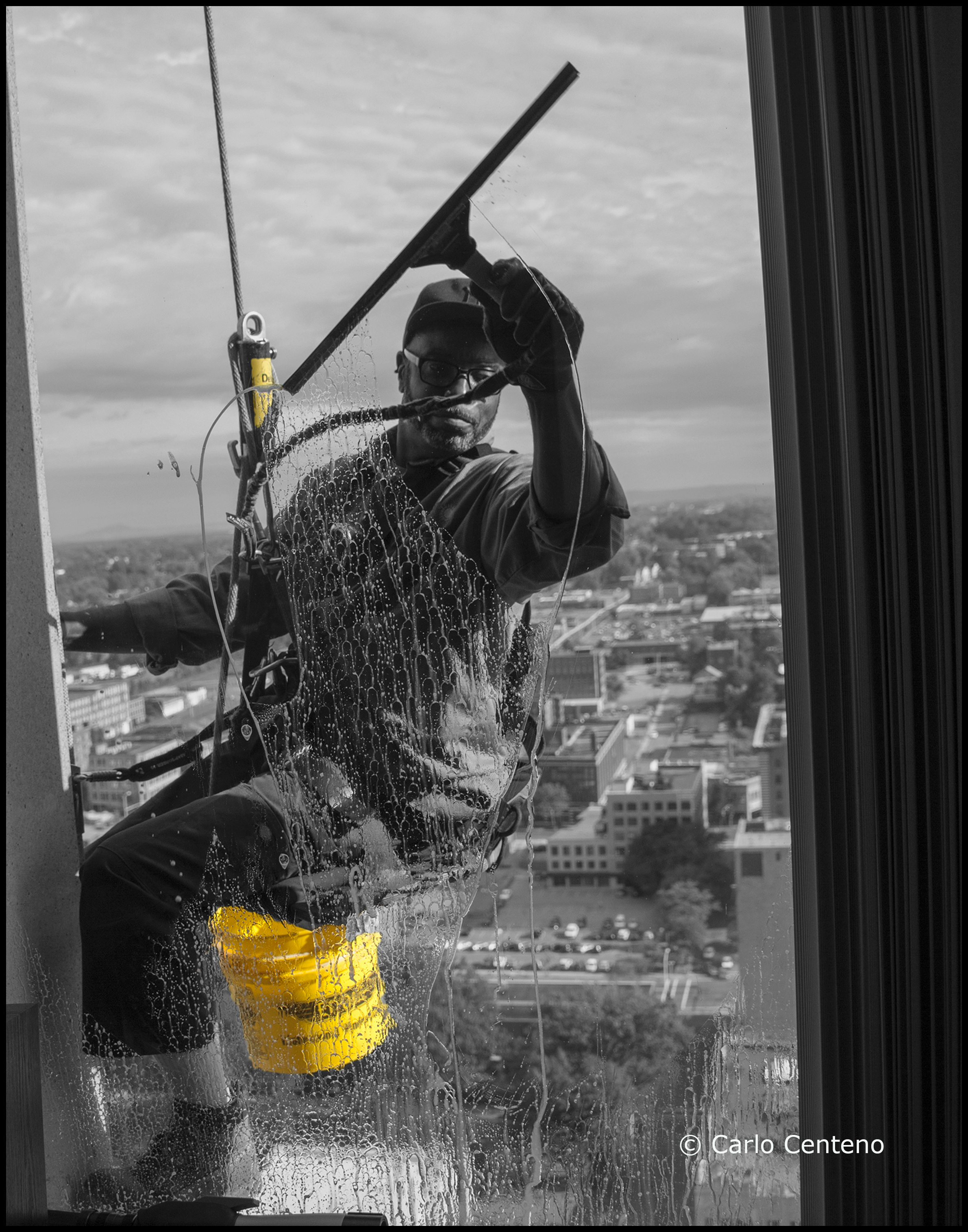
When you’re 25 floors above the street, strapped into a harness, wobbly doesn’t fit into the picture. I’ve seen these pros accomplish their tasks on breezy days, certainly when the weather is warmer than it is now. The color yellow stood out in large part because it was bright and the rest of the scene—originally in color—looked monochromatic. I also learned that 2-3 drops of dishwashing fluid into warm water makes for a thorough glass cleaner. There’s a detail worth noting…
I am convinced that modern life has boxed us in more so than we’d like. It’s part of the contemporary territory which includes both our professional and personal lives. There’s a surfeit of information, misinformation as well as disinformation. We have data that’s important, partially accurate or altogether inaccurate, the latter done purposely in order to deceive and create confusion.
The spaces outside and within our mind are under siege. This coronavirus pandemic has produced a variety of empty spaces in the form of closed businesses, a void born from a lost loved one, an even larger, emptiness created by becoming unemployed and losing our face-to-face social connections with friends and family. In addition we see meadows, forests and even arable acres, reshaped with new developments, new businesses, and right-of-way passages for utilities. These spaces, like others, will never resemble their former selves.
The modern mind is challenged with the illusory nature of augmented realities, misinterpreted online interactions, the CGI creations readily seen on the big and small screen and so on. I would wager that ruminating is a regular mental exercise for many, in ways that even the thinker didn’t think possible in the here and now. It’s not that such spaces are wanting for content. Some of the content in our heads is twisted and distorted, an unattractive morass of schadenfreude and unforgiving defenestrations toward those with authority, power and privilege.
A lot of good space has been replaced with some nasty creations, tangible and intangible, palpable and even unreasonable. We’re better than a lot of this, each of us capable of individual betterment. I remind myself in my own spaces of thinking and feeling that, at times it’s okay to be embarrassed in one’s journey to be genuine. I think it aids my ability to acknowledge what occupies my internal and external spaces other than what’s so obvious not only to myself, but to others. As in marketing, perception is reality: it’s not what you’re getting, but what you think you’re getting.
If there’s one thing obvious about marketing and advertising is that they attempt to shape your perception, to one of acceptance or revulsion. In this politically charged environment, I’d say most political advertising encompasses the latter. But we’re not going there today.
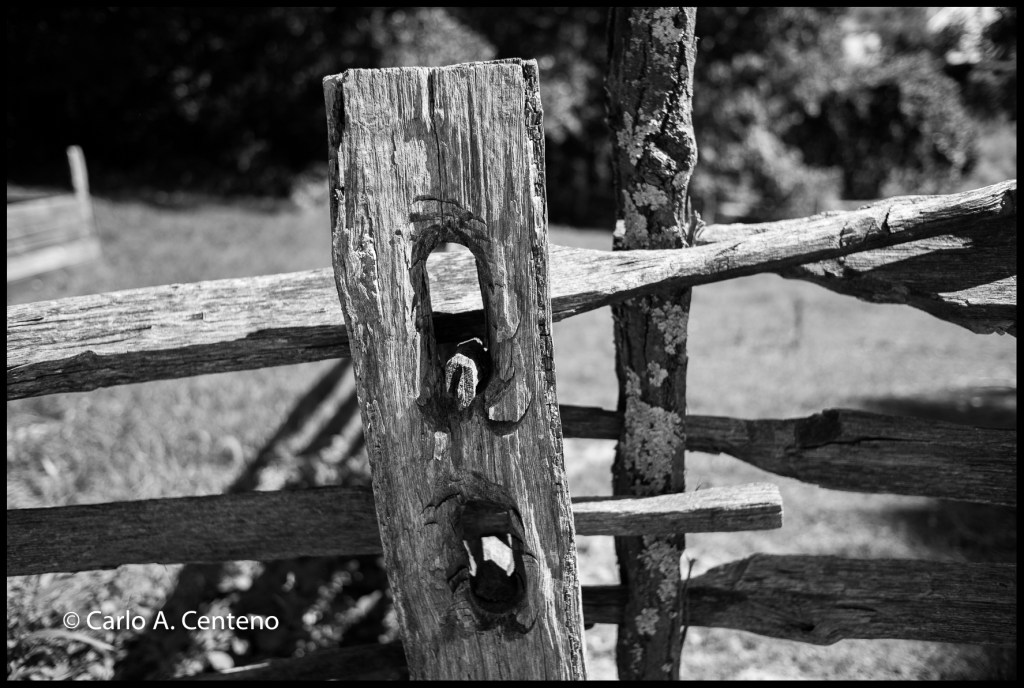
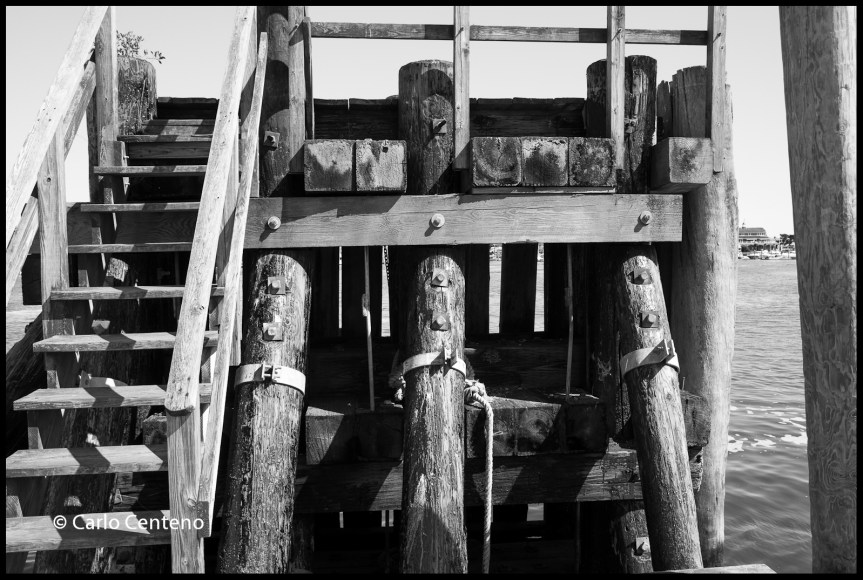
Here we have 2 wooden structures, one historical [circa 1800s], the other modern. Now, one may think that the modern structure offers more features: pressure treated wood, steel anchor collars, robust carriage bolts, nuts and washers [possibly even zinc treated to resist corrosion] etc. Well, it does have more features; it has to given its function. But it doesn’t mean it’s better than the simpler one, rather, the modern structure is built specifically for conditions and utility common to coastal areas. Both types share similar benefits albeit differentiated by design, materials and construction. Well, the purpose of the modern structure may be the same as our historical one, that is, to prevent something from entering or leaving a specified area, perhaps protecting one side more so than the other.
Before you clobber me with the apples-to-orange inequality of this comparison, the point I’m making is that consumers often equate features as benefits. If you’re anything but a design engineer, you may think that the metal anchors or collars wrapped around the angled stanchions may be unnecessary. However, if you live, perhaps even work along this shoreline, you would know that the tides and storm surges exert an astounding amount of pressure against barriers. The added strength of the collars is beneficial to the overall strength of the structure.
“This unit can do more than its closest competitor.”
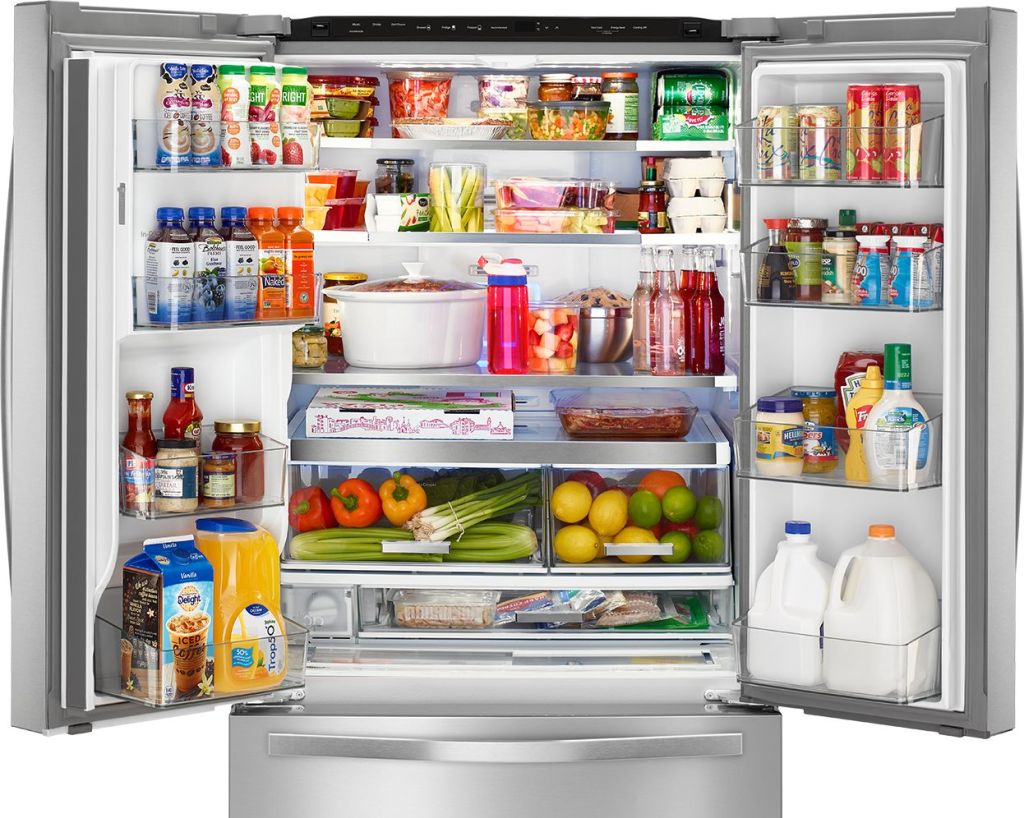
courtesy: Whirlpool
On a recent trip to one of the box stores, I couldn’t help but overhear a salesperson singing the amazing features of a particular dual-door refrigerator. NOTE: the courtesy photo is for illustration and is not the product being referenced herein. “…..with the app on your computer, that model can sense when it’s time to restock, bread or cheeses or certain vegetables or frozen dinners…” The technology, the artificial intelligence that’s coming to market, can be impressive. But will it work on my iPhone 6S or will I need an Android system? You know, my home fridge has an ice-maker, though it doesn’t automatically dispense into my glass when held below a special port. Mine? Open the freezer door and grab ice from the container, a container purchased separately, BUT, looks like it came with my fridge. Typically I empty two ice trays into that container, refill the trays with water and return to the freezer. In less than 10 minutes, you’ll have ice that’s just as good as what the cyborg-fridge can automatically deliver to your glass.
My hand is the delivery and presentation vehicle. And it works. No downloads, no firmware, no software….basically, I’m somewhere with basic technology versus, being nowhere or confused with this hi-tech stuff. Now, if I was that customer learning about the smart appliance in question, perhaps the dialogue would go something like this:
Salesperson: It’s an amazing piece of technology. It can monitor your food and beverage consumption, conveniently at your fingertips. You use an app on your smartphone.It’s a big plus for busy families. Me: That’s impressive, but it’s a feature that I don’t need or really want. Salesperson:You can even check it from just about anywhere in your house. That’s real convenience. Me: Actually, I find it more convenient doing it my way. Salesperson: And how’s that? Me: I walk into the kitchen, open the door and make note of what’s still there and what needs to be added onto the grocery list. Salesperson:How is that more convenient? Me: Well, it’s not just convenience for me, but a benefit. Salesperson:Oh….? Me: It’s called walking. For me that’s a benefit. I already do too much sitting at work. Salesperson: That’s a valid point, but not really helpful. I mean we’re talking about making your life simpler, by doing less chores, to get more time to do things you’d rather do.. Me: I’d rather get up and move. Besides, I get a chance to scope what’s not in there, but whether the shelves need cleaning or if an expiration date goes back to the Nixon administration. Salesperson:Wait, who’s Nixon…?Anyway, think of it as an evolution towards the future of appliances. You, the homeowner, can control all your appliances such as your TV, your A/V installations, the lights and the thermostats and so forth. Me: ….and without even breaking a sweat. Salesperson: Exactly. Me: Will people really adapt to this technology? I imagine someday my health insurance being able to buy data regarding my food preferences, and since I love ice cream, well, a dietician or cardiologist may take issue with that…who knows? Salesperson: Hey, well, hopefully that won’t be the case. I mean there’s a ton of places where information can be bought for marketing or research…that kinda stuff. Me: Of course….you know and I know that your actual mileage may vary…capisce? Salesperson: Ah, yeah, sure….have you seen the new washers and dryers that are out now?
I love Cape Cod. The season doesn’t matter, but late summer is often a great time. There’s less traffic and a more laid back atmosphere. The beaches and wharfs hold less people, though there are those hearty souls who continue their routines swimming parallel to the shore. I watch the few on the beaches, most in their chairs, some sitting or lying across a large towel. Others are involved in conversation or quietly engrossed with a book in hand. You can always count on walkers tracing their steps first one way, then on their return trip to a starting point. The most jubilant are often a dog and its owner. They’ve waited for the moment when the beach was available to them and their joy is clearly displayed. This is the kind of connection that’s about as simple and straightforward as it can get: get out and spend time with good friends, family, your dog—even yourself.
The men enjoying their cocktails aboard a boat speaks of many types of connections: family, work colleague, college room mate, best friend, and so forth. Between the “remember when….did you hear….whatever happened to…” are those moments of hilarity, some brought on by something long past, others in more recent times. Nostalgia connects with the present.
I love the Cape, especially for the many connections its made for me.
We don’t inherit the earth from our ancestors. We borrow it from our children. Native American proverb.
It seems much of the news these days revolves around weather. Just 3 weeks ago, a powerful storm tore through the northeast delivering colossal amounts of rain and dangerous winds. Add to that the trees ripped apart or from out-of-the-ground and it’s easy to understand why some think the “end is near.”
As this is being written, yet another hurricane struck the southern shores of Texas, Louisiana and Florida. There are other storms gathering strength off the west coast of Africa. The most recent forecast now shows 4 tropical storms in the Atlantic, each with the potential of becoming a hurricane.
There’s plenty of talk about technology in particular advancements in biochemistry and mechanical engineering that are directed to saving our planet. There can never be a one-size-fits-most strategy created from a laboratory, but we cannot rule out the scientific efforts behind such pursuits. There’s good reason to continue work on such technologies. However, we can learn a thing or two about “natural climate solutions.”
There’s a disquieting quality that follows catastrophic events: the eerie calm. It grates against my appreciation for a calm that I’m expecting, a calm based on softness, a level of assurance, inner peace and that sense of all is right in the world, even for just this moment. We appear to be experiencing less of that these days.
I’m reminded of a Judao-Christian saying, “The sin is not in failing, but in not trying.” Framed another way, there’s a lot of us carrying this sin of not trying.
Without a doubt, I am finding greater comfort being outside. From the backyard to destinations within a 2-hour drive, being outdoors is just about mandatory to keep my sense of self from being weighed down by the harsh reality festered by “insensitivities” of society as a whole.
The omnipresence of intolerance, indifference, ignorance, impropriety, apathy, hate, gratuitous violence on person and property and even more, is disheartening. Of greater significance is the increase of schadenfreude.
Enough already. Enough.
The outdoors is not my only sanctuary. I also find some relief, some comfort, some reduction of stress and disillusion through family and a handful of friends. And it’s not unusual to have some of these individuals with me on those occasions when the world is en route to hell-in-a-handbasket. Though as you might’ve gathered, I reserve the right to keep these individuals to myself. Some things are sacrosanct and will remain so. There are sound reasons for not sharing them here, and you know some of the reasons I’m sure.
But most can understand the power of the outdoors. In particular Native Americans—indeed the indigenous people of this planet who now inhabit small parcels of land that are but a shadow of times past—embody an understanding, acceptance and empathy for all that is nature, whether seen or not.
No, we haven’t lost paradise. Yet. We tempt fate, but I hope we can collectively muster the virtues and attributes we know make a difference for our future.
I’m hoping that at a different time in the future, many of the places I treasure as sanctuaries will remain “the same.”
With September upon us, there’s that sense summer is nearing its end. You wouldn’t think that on such a day as this: it’s warm, bright, a slight breeze and plenty of green just about everywhere you look.
Yet the season’s already changing. My morning start is just a little darker than what it was a month ago. Some of the maple trees are starting to turn color. Shorter days means Autumn is at its threshold.
When I need to have some distance from this maddening world, the outdoors provide a good dose of calm and reassurance. It can be more challenging in urban areas, but parks are a viable alternative. Get outside and realize the natural world accepts you as you are.
This pandemic has modified if not altogether changed, the way we mark the change in seasons. Traditionally we associate baseball as the “start” of summer, football the beginning of autumn, basketball and hockey mark winter’s arrival. But many of these traditional markers have started later than usual. As a consequence, our seasonal clocks are skewed. This has been compounded further by schools having different protocols for their first day. Is that day for virtual online learning or in person at the actual building?
The uncertainty of these times has made it very certain that the new choronovirus will be with us for a good while. Eventually—and hopefully—we will find the means to return as close to “normal” wherever possible, hopefully within next year. Figuratively, we’re running a marathon, an endurance race where—as many of you already know—demands stamina, pacing, patience and the willingness for self-sacrifice.
Our home these past 3.5 months has been a sanctuary for our daughter, two boys, a new born and our son-in-law. From quiet, predictable routines to a household filled with activities, remote schooling, and more, altogether this was a period of joyful noise and scattered stuff in, out and around the house.
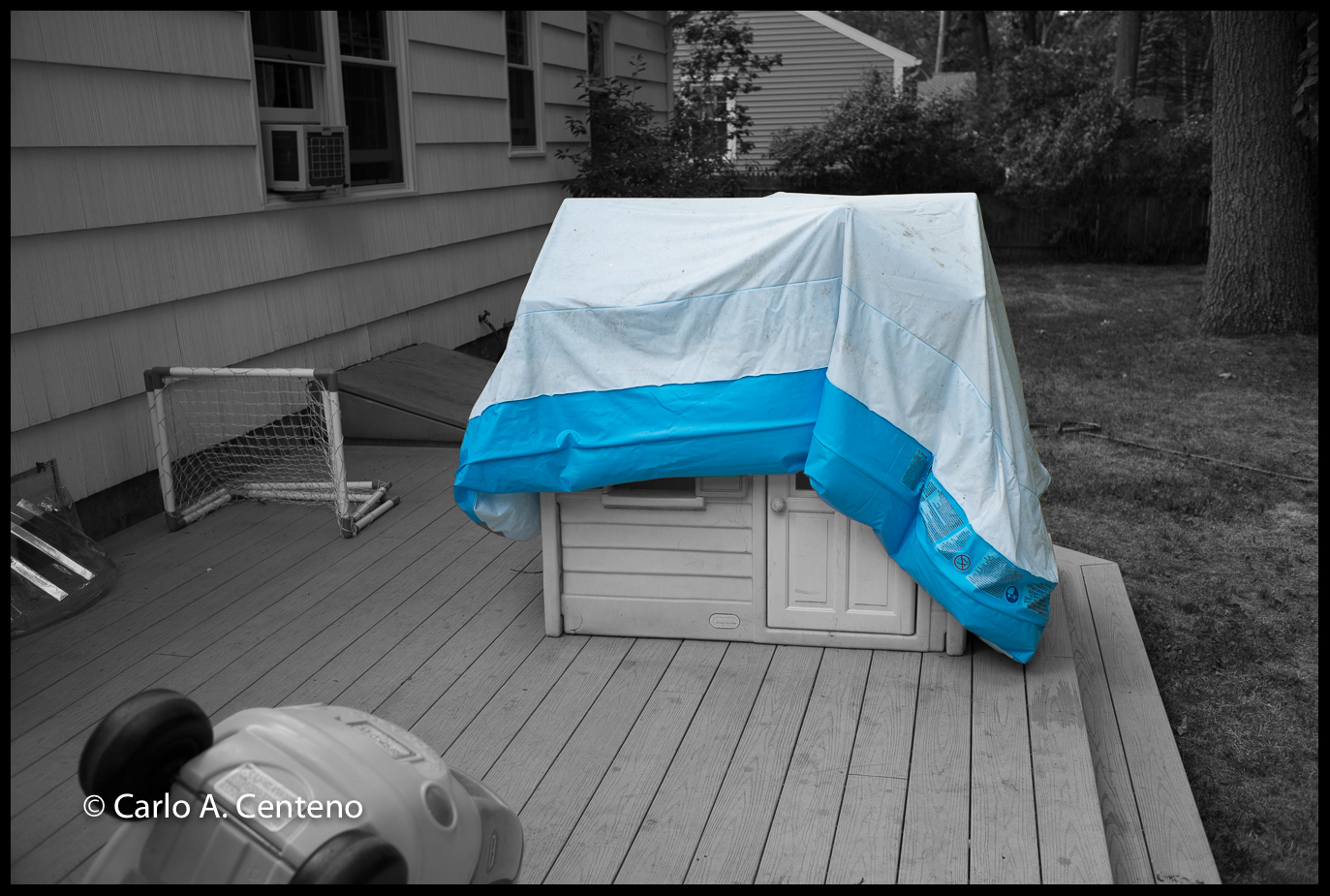
The boys were constantly in motion. The desire to explore, imagine, to experiment and be inventive was nothing short of remarkable. And while the boys did their best to pick up after themselves, they were far better engaging their playfulness, their devil-may-care personas, as evidenced by the scattered clothes, toys, and more, left on the deck, out in the lawn, on the slip’n slide water game or in the breezeway. The breezeway of course is the equivalent of an “airlock” that space that serves as a buffer to the kitchen that lies beyond.
And yet, clothing, LEGO toys in various stages of disassembly, wet sneakers et al, found their way onto the runner that marks the outer circle of the kitchen.
As of this writing, the house is once again quiet, sometimes much too quiet. Just before the 4th of July holiday, they returned home, to their own spaces and routines. It is as it should be. As much as we enjoyed our time together, all good things must come to an end.
The organizing, cleaning and picking up of stuff continues. I refer to the many pieces scattered around as shrapnel. To walk barefoot across the lawn is an exercise in uncoolness. The edges of a LEGO block, a broken piece of plastic, a spoon forgotten, all became suitable reminders that wearing footware during the clean-up phase should be mandatory.
It’s true that having grandchildren can be a terrific life stage. You love them to pieces, you revisit your own escapades from the past, your marvel at how your own parents managed the rambunctiousness of our youth. Whether it’s an afternoon or 3.5 months, those kids need to return to their parents, routines, friends and all that is their life beyond ours.
My previous post, Reliant on Memory [May 12, 2020], has opened one small but particular memory album. It opens to a time and place that transcends the meaning of simplicity, functionality or perhaps this phrase of accommodation, “Well, it’s how things are done here.”
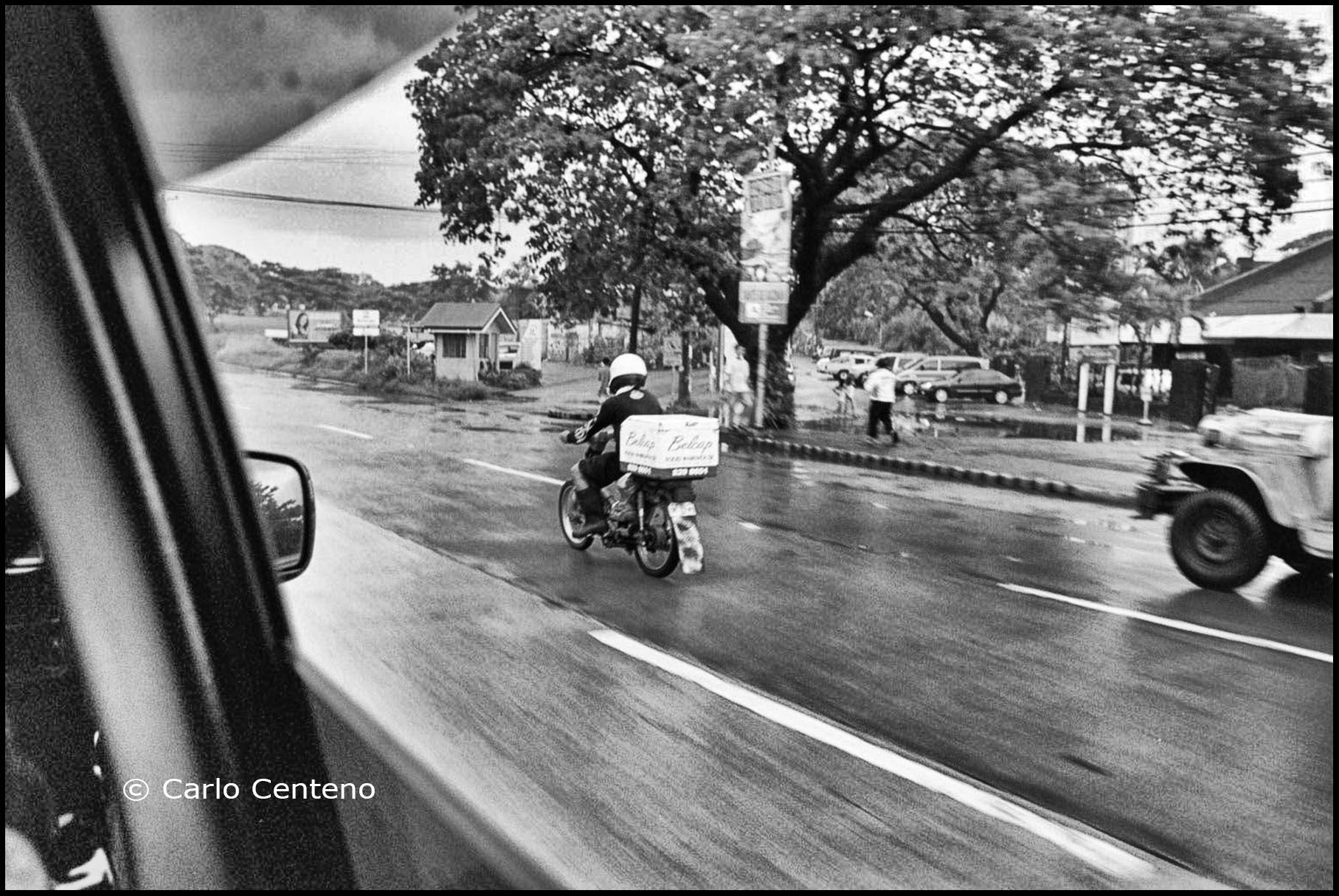
Single-cylinder motorbikes are common in the Philippines and much of southeast Asia. By day, it’s a mule, transporting cargo to places near and far. After work, it’s the family vehicle for many. It’s not an unusual sight to see a family or 3 or 4 on the bike. The smallest is atop the gas tank in a makeshift carrier, the others snugly huddled on the plank seat.
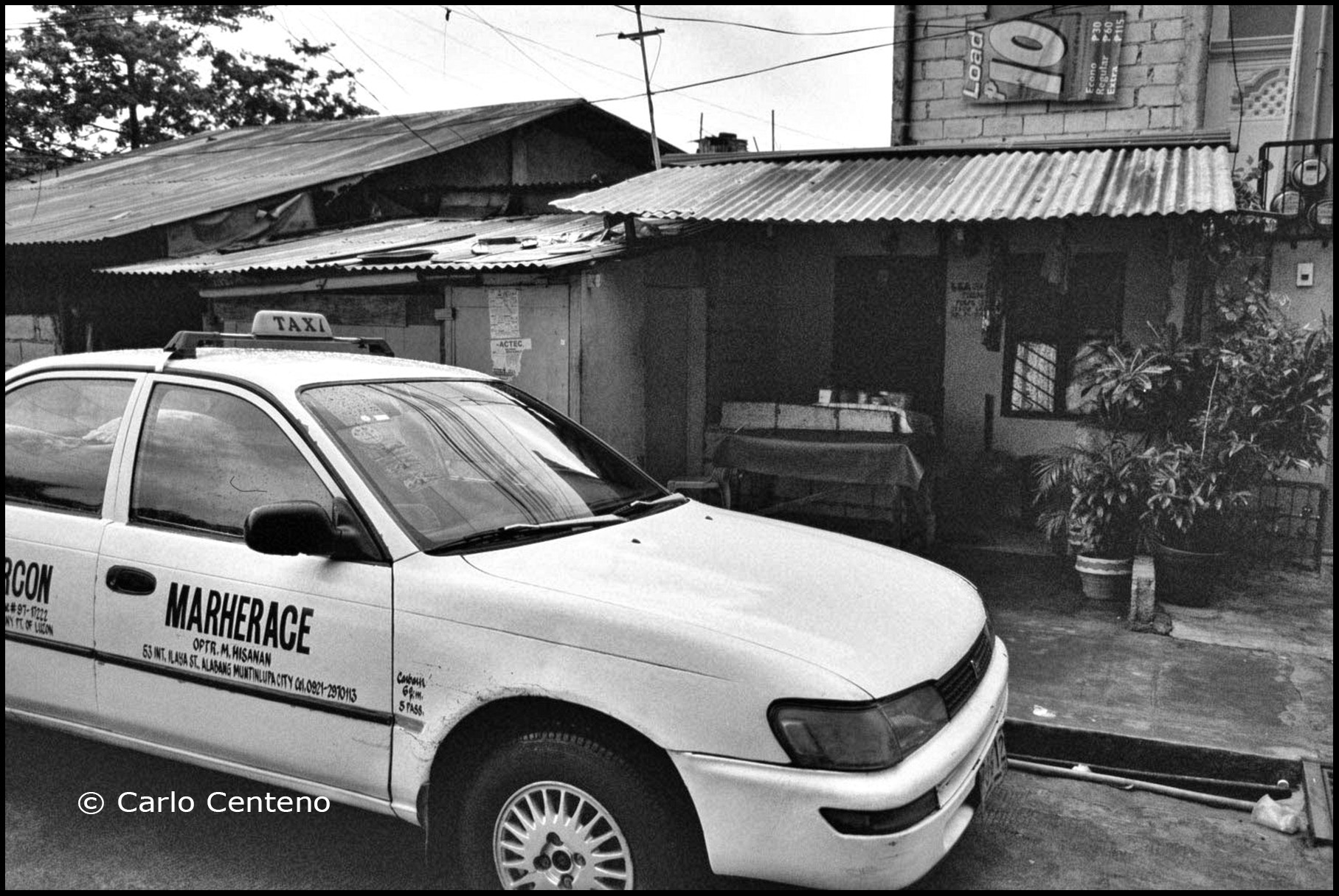
After dropping off a fare nearby, the driver took his lunch break. You’ll seldom see a sign, but a “karinderya” or canteen, is a form of home business. An average salary for a family of 4 is about P260,000 pesos. That’s $5,250 USD. “Ginagawa mo ang mayroon ka.” [You make do with what you have].
The Philippines has its share of supermarkets, but locals depend on small, family-owned vendors to deliver fresh product. Here a butcher makes ready some of the morning’s catch. Ice is a valued commodity in this tropical country. Not surprising, the food quality is excellent, but you need to know the best sources for seafood, poultry and other meats.
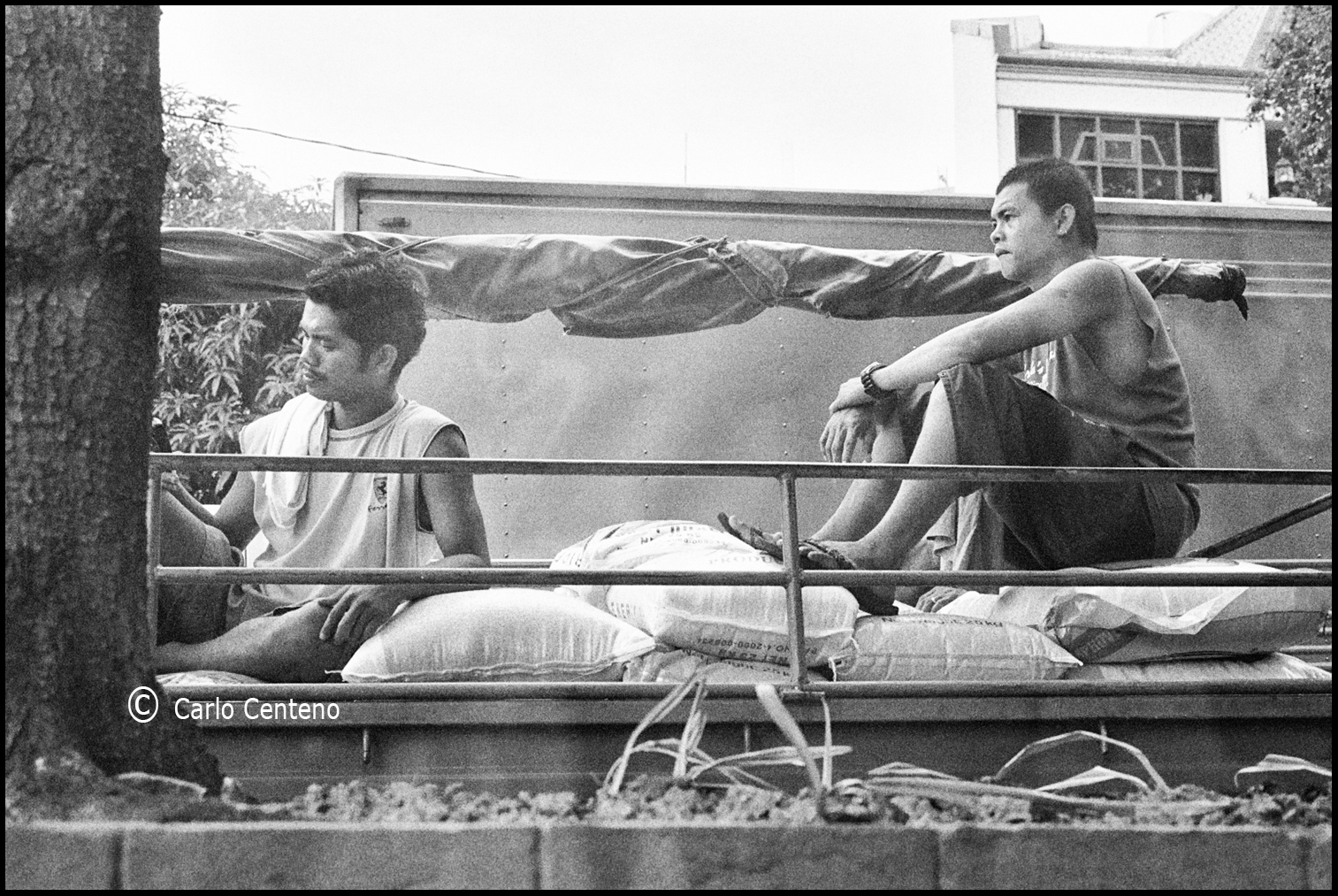
Two workers appear unfazed with the heat and humidity, while stuck in Manila’s infamous traffic. In any weather extreme, it’s critical to acclimate. I was fortunate to be in a car with its AC running at maximum. With temps at 95F [35C] and relative humidity pushing 70%, having an AC was paramount to survival.A Manila suburb. Ang ganda talaga sa mga lugar … [it’s really beautiful in places].
There are days that seem to fly by, while others feel like time has come almost to a standstill. I mention this because it doesn’t seem like 7-weeks have gone by since the new coronavirus forced us into a different way of working and living.
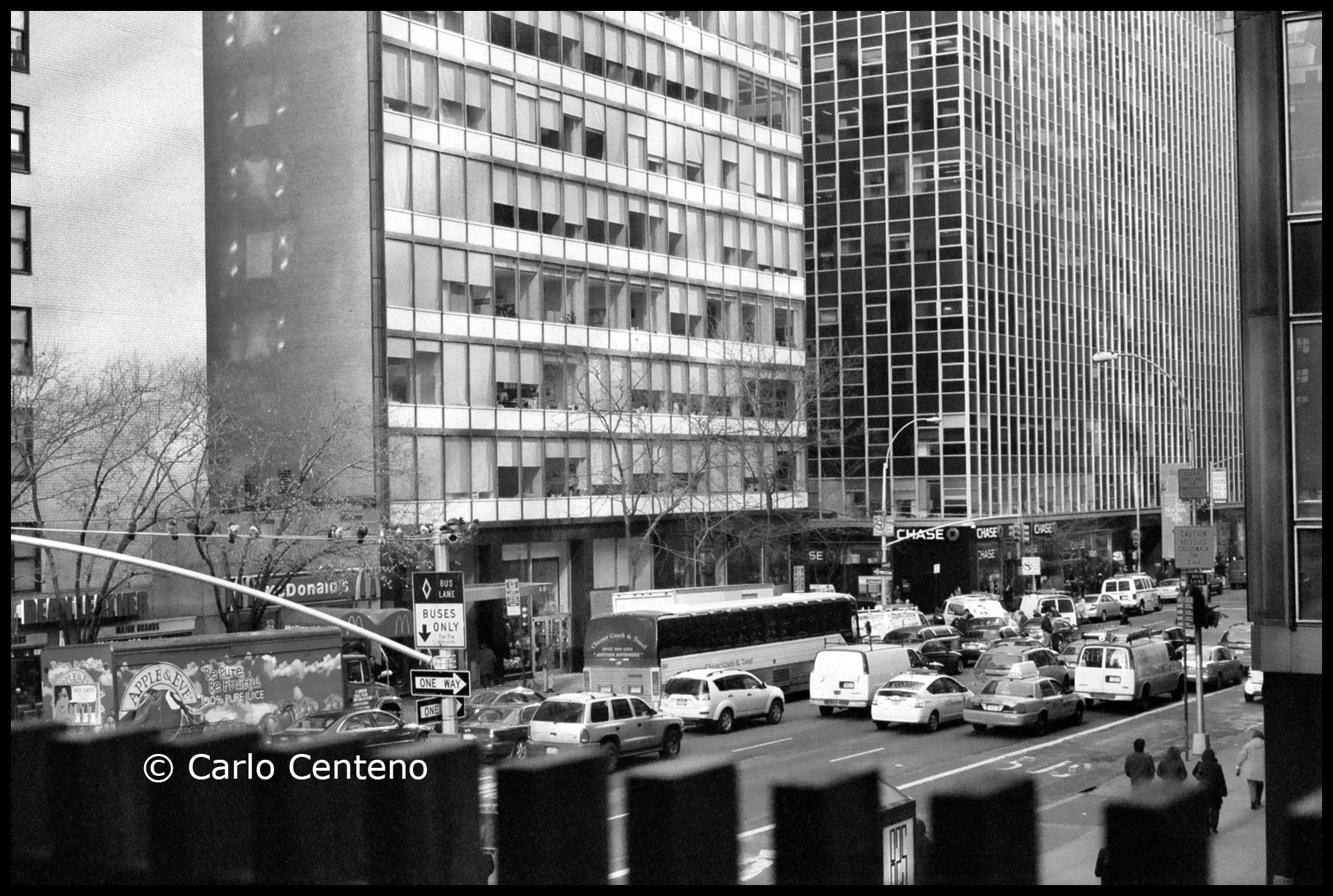
Manhattan Third Avenue 2007
Yet being removed almost two months from what was normal, there’s this juxtaposed sensation that it feels like forever and a day since we went about our usual routines. Time is relative, which simply means that when you’re waiting for something you want, it doesn’t come soon enough, whereas the opposite holds true for something you want nothing to do with.
I have read that the sense of smell is the strongest of our five senses in prompting a memory. It’s also—if memory serves me—the most accurate.
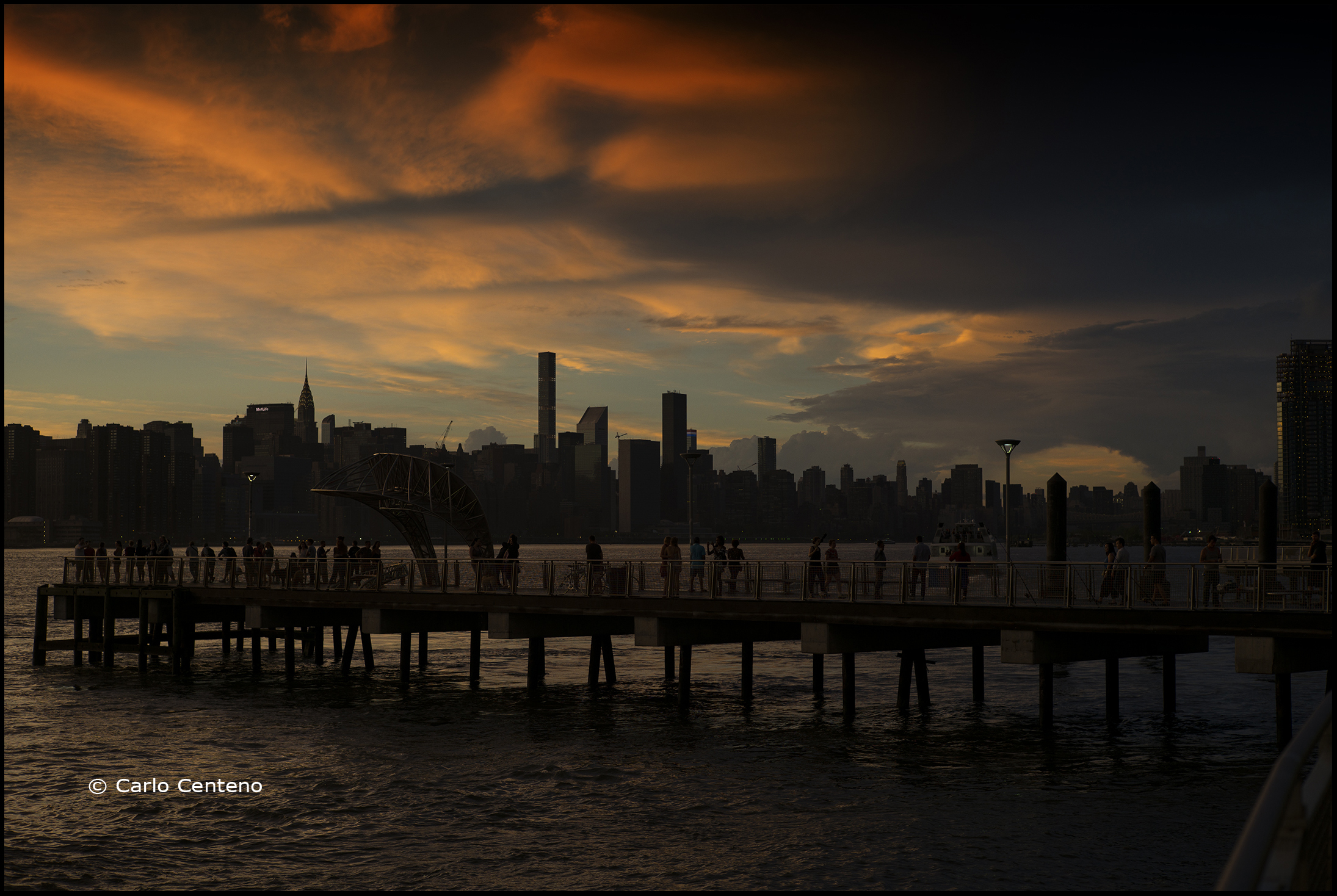
A quiet pause in NYC 2018. Photo credit: R.A. Centeno
Scientifically, that may hold true, but for me, sound and image are stronger drivers in resurfacing a memory. Music has a way of putting you back in a time and place with an immediacy that’s uncanny. “Wow. I remember when this song came out.” There may be some inaccuracies about say, the year or even the place, but whatever was important then, resurfaces as part of your remembering. Pieces may be foggy, but as other pieces emerge from that fog, the memory works to become a bit sharper.
Philadelphia 2018
There is a hint of nostalgia in all of this. I do wonder about the new normal and what it means not only for me, but for people I care about. I think retrospectively, of how moments in my past somehow provide a lift. The thoughts, the sensations, or whatever visceral vestige flows free from memory, are but markers of what has been, or what might’ve been.
Mimes, Hartford, CT 2015
Whether you sketch, photograph, perform, paint, sculpt, watercolor, write letters, fill a journal, fill a scrapbook, to be memory reliant means you need to be confident with your recollections. Doing any one of these activities, produces an invaluable form of connection. It’s why I love to write [journaling and letters] and to take photos [iPhone, various cameras] because these all help to anchor where I’ve been and to some degree, where I might be headed.
Family, Friends, Life-NYC 2019
Indeed, cherished memories are important for our overall wellness, but let’s remember to do things now, to remain connected yet in touch, so that such moments become screen clips thoughtfully stored in our memory albums.
In the past few hours, I’ve received news feeds about how the Coronavirus/COVID-19 has produced some benefits. The beneficiary of these plusses primarily go to our planet. And because it benefits the environment, we benefit as well. I’m sure you’ve come across some of these reports on your smartphones or your computer.
Mother Earth has put into motion her own stewardship campaign to save us from ourselves [the hope] and to help save the planet [the ultimate goal]. How it works is pretty straightforward: by reducing human mobility, you reduce the amount of energy used in manufacturing, production, travel and other areas of civilization. Is this outbreak a means by which Nature looks to heal its own ailments, ailments which we created?
The BBC filed this report early this morning [Thursday–May 19th].
More specifically, there has been a measurable reduction in VOC [volatile organic compounds] as well as many gases—-such as CO, CO2, methane just to name a fews.
And in northern Italy, the space satellite cannot lie. They are also privy to the science that shows a drop in air pollution.
Unfortunately, the majority of folks will return to their old and familiar ways. Still, it was nice to learn that for a short time, parts of our planet had a chance to be healthier. Can’t help but think just how much further we would be if each of us attacked pollution, waste and climate change the way we’re attacking the Coronavirus/COVID-19.

















 Carlo Centeno