Take it Outside.

“We love seeing your boards. They’re easy to read and understand. And they don’t have a lot of clutter.” Anecdotes are not reliable scientific measures, but word of mouth in this day and age does mean something to marketers and more specifically, consumers.
The number of drive by impressions depends on the location of your outdoor advertising and the message presented on that billboard. It helps further if your board stands next to a major route that’s regularly used all year long. By extension, we have a second board similar in concept, but unique in their message and brand positioning. So, we have 2 boards that run in rotation, that second board can be anywhere so as long as it’s on a major highway or road that allows for a reasonable “read.”

A lot of commuters, vacationers et al travel our interstates. Traveling north/south is straightforward from 95 in New Haven, CT then onto 91 right up to the Vermont border. The east/west channel has the Mass Pike [I-90] running from Boston all the way to eastern New York.
Springfield, MA’s DMA [Designated Market Area] is ranked 117 in the USA. A short 25 minutes south, is Hartford, CT, ranked 32.
We do get our share of leaf peekers, second home owners in Berkshire County, skiers, campers, fly-fishers, boaters, hikers and everything else in between.
Demographically speaking, there are key influencers and decision makers who receive multiple impressions from our messages.

But before any creative goes up, the content must deliver a quality that most viewers/drivers can identify with. As a brand, our firm is known for long-term strategies, growth, and a conservative though modern approach for reinforcing our values. And since our beginnings, we’ve positioned all our clients as the assets that matter; it dovetails with our commitment as fiduciaries: we work in the best interests of our clients.

We also partner with non-profits, either through co-branding or providing the space for however they’d like to use it. Any proposed artwork needs to go through our compliance & legal departments.

Travelling on the highway, you have less than 1/30 of second to glance at a board, any board. We make every effort to keep the content simple and relevant to our clients and prospects. There’s been no shortage of motifs to help develop content. For example, there’s been a growing interest with Artificial Intelligence [AI] and the world of autonomous electronics or in applications that can generate text that’s easy to read and perhaps follow. ChatGPT comes to mind. It’s not unusual in our digital world today where you could make it easier to create something that refines efficiency while reducing complexity. Robotics come to mind.

When I started here , I pushed for the use of white space because it adds, 1) a sense of calm & order, and 2) it delivers a focus that helps you think . David Ogilvy, the grandmaster of modern advertising and branding had a tenet that has stuck by me: “Keep it simple and do not talk down to your audience.” A lot of outdoor advertising is overloaded with info. It’s as if the strategy is to include as many benefits and attributes in the space. I refer to it as putting 10 lbs of “stuff” into a bag that holds only 5 lbs. Simple concepts are often better if only because they can be easier to remember.

As an advertiser, having the right message delivered in a relatable way means the viewer can identify with what’s being said. The short version of that is referred to as having “emotional ownership.”

When a message strikes a chord or brings forward a detail that sticks with you, then emotional ownership has taken hold.

Trompe l’oeil

Marketers and consumers share an underlying condition that produces second-guesses to decisions and even behaviors. In the realm of behaviorists, psychologists and therapists, this is often referred to as, cognitive dissonance.
Though the condition is often used in psychology/psychiatry, the right-brainers in marketing can take certain liberties in applying the essence of its definition to feelings and behaviors in our consumption-driven economy. What shapes your decisions and expectations when you buy something, work on a project or to make a single decision at a given time? What influences your “…on second thought, I better…?”

As I’ve noted in previous posts about marketing, it’s not what you’re actually receiving, but what you think you’re getting. This is a stretch, but at times I think some marketing is a form of trompe l’oeil. Are the cluster of lights actually on the bare trees?

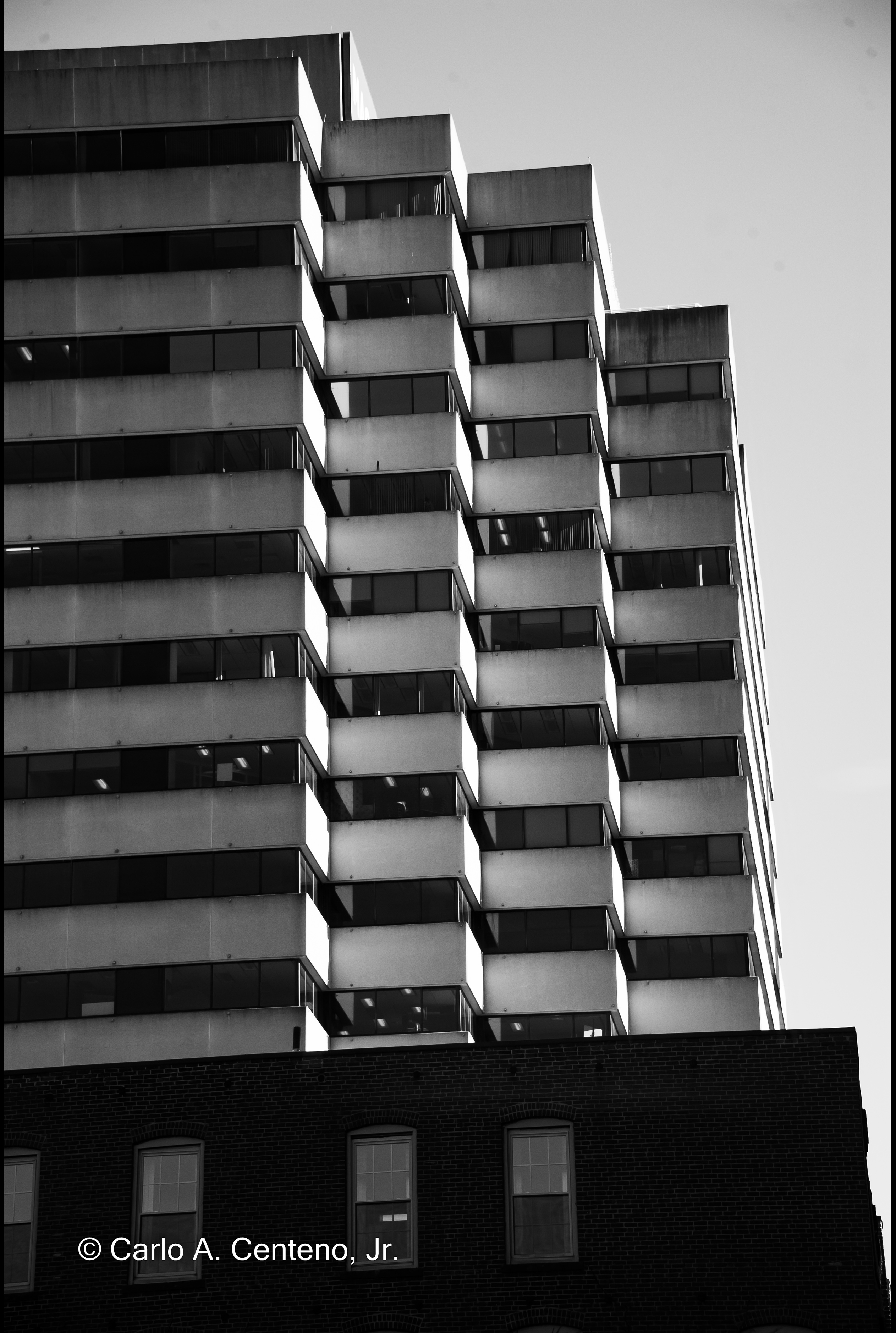
Like a product attribute [example: price equates to exclusivity…though it can certainly suggest something else]. Do the light projections draw your attention? Or do you first see the small cluster of lamps in the lower left? Are the lamps somewhere near the building? Or suspended close to it? Clearly direct sunlight is apparent on the face of the building. Which light source peaks your curiosity?

There are numerous examples of classic trompe l’oeil art such as the one painted by Sameul Dirksz van Hoogstraten entitled, Still-Life. It’s a timeless piece, one that can feel more contemporary than its 360- year age might suggest.

courtesy: ARt and Object commons
Still-Life, 1664 by Dutch painter Samuel Dirksz van Hoogstraten

Marketing can, indeed, fool your eye. The pima cotton sweater I saw in a catalog looked like a keeper….until I tried it on. Fortunately, returns are the norm for many online purchases.

Features & Benefits

If there’s one thing obvious about marketing and advertising is that they attempt to shape your perception, to one of acceptance or revulsion. In this politically charged environment, I’d say most political advertising encompasses the latter. But we’re not going there today.

Here we have 2 wooden structures, one historical [circa 1800s], the other modern. Now, one may think that the modern structure offers more features: pressure treated wood, steel anchor collars, robust carriage bolts, nuts and washers [possibly even zinc treated to resist corrosion] etc. Well, it does have more features; it has to given its function. But it doesn’t mean it’s better than the simpler one, rather, the modern structure is built specifically for conditions and utility common to coastal areas. Both types share similar benefits albeit differentiated by design, materials and construction.
Well, the purpose of the modern structure may be the same as our historical one, that is, to prevent something from entering or leaving a specified area, perhaps protecting one side more so than the other.

Before you clobber me with the apples-to-orange inequality of this comparison, the point I’m making is that consumers often equate features as benefits. If you’re anything but a design engineer, you may think that the metal anchors or collars wrapped around the angled stanchions may be unnecessary. However, if you live, perhaps even work along this shoreline, you would know that the tides and storm surges exert an astounding amount of pressure against barriers. The added strength of the collars is beneficial to the overall strength of the structure.

“This unit can do more than its closest competitor.”

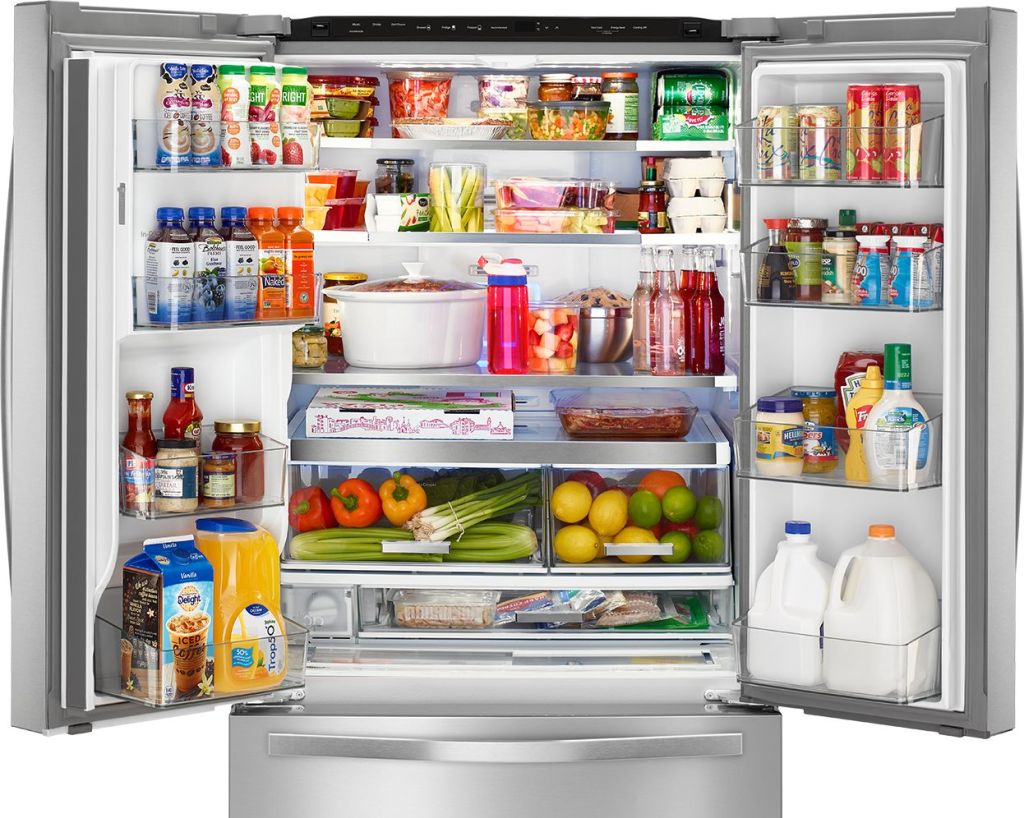
courtesy: Whirlpool

On a recent trip to one of the box stores, I couldn’t help but overhear a salesperson singing the amazing features of a particular dual-door refrigerator. NOTE: the courtesy photo is for illustration and is not the product being referenced herein.
“…..with the app on your computer, that model can sense when it’s time to restock, bread or cheeses or certain vegetables or frozen dinners…”
The technology, the artificial intelligence that’s coming to market, can be impressive. But will it work on my iPhone 6S or will I need an Android system?
You know, my home fridge has an ice-maker, though it doesn’t automatically dispense into my glass when held below a special port. Mine? Open the freezer door and grab ice from the container, a container purchased separately, BUT, looks like it came with my fridge. Typically I empty two ice trays into that container, refill the trays with water and return to the freezer. In less than 10 minutes, you’ll have ice that’s just as good as what the cyborg-fridge can automatically deliver to your glass.

My hand is the delivery and presentation vehicle. And it works. No downloads, no firmware, no software….basically, I’m somewhere with basic technology versus, being nowhere or confused with this hi-tech stuff. Now, if I was that customer learning about the smart appliance in question, perhaps the dialogue would go something like this:

Salesperson: It’s an amazing piece of technology. It can monitor your food and beverage consumption, conveniently at your fingertips. You use an app on your smartphone. It’s a big plus for busy families.
Me: That’s impressive, but it’s a feature that I don’t need or really want.
Salesperson: You can even check it from just about anywhere in your house. That’s real convenience.
Me: Actually, I find it more convenient doing it my way.
Salesperson: And how’s that?
Me: I walk into the kitchen, open the door and make note of what’s still there and what needs to be added onto the grocery list.
Salesperson: How is that more convenient?
Me: Well, it’s not just convenience for me, but a benefit.
Salesperson: Oh….?
Me: It’s called walking. For me that’s a benefit. I already do too much sitting at work.
Salesperson: That’s a valid point, but not really helpful. I mean we’re talking about making your life simpler, by doing less chores, to get more time to do things you’d rather do..
Me: I’d rather get up and move. Besides, I get a chance to scope what’s not in there, but whether the shelves need cleaning or if an expiration date goes back to the Nixon administration.
Salesperson: Wait, who’s Nixon…? Anyway, think of it as an evolution towards the future of appliances. You, the homeowner, can control all your appliances such as your TV, your A/V installations, the lights and the thermostats and so forth.
Me: ….and without even breaking a sweat.
Salesperson: Exactly.
Me: Will people really adapt to this technology? I imagine someday my health insurance being able to buy data regarding my food preferences, and since I love ice cream, well, a dietician or cardiologist may take issue with that…who knows?
Salesperson: Hey, well, hopefully that won’t be the case. I mean there’s a ton of places where information can be bought for marketing or research…that kinda stuff.
Me: Of course….you know and I know that your actual mileage may vary…capisce?
Salesperson: Ah, yeah, sure….have you seen the new washers and dryers that are out now?

Uncomplications

Is our evolutionary advancement driven, in part, by the creation of things increasingly complex? This home sitting stoically somewhere in London, is the antithesis of a modern home. You won’t find computer-controlled lights, security systems, or appliances seamlessly linked to an app on your phone or tablet. Think simple yet purposeful. Venerated in stature, an edifice devoid of pretense.

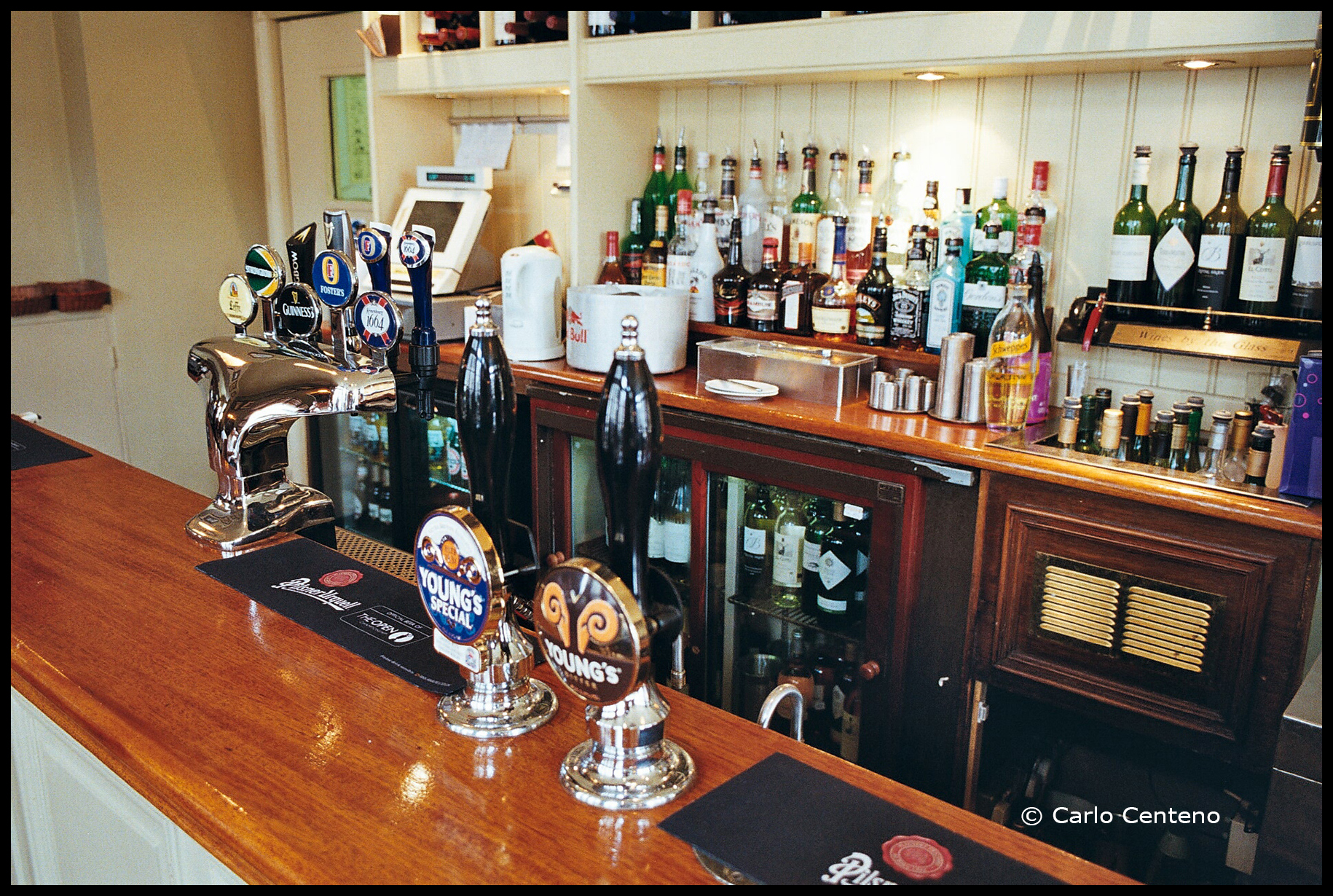
Similarly, this pub distills [pun intended] an uncomplicated persona. How so? Nowhere did I see a roster of specialty beers, ales, lagers, mixed drinks, martinis and so on. Visually, there’s a lot to draw your attention, but nothing approaching sensory overload. Six taps of beer, the usual suspects in liquor and I’m sure a wine list practical in scale and price points.

Ditto for this uncomplicated yet tasteful-looking bar. I’m all for imaginative thinking, but that’s a far cry from thinking that the latest and greatest is something we need. Novelty can make many things interesting, but the fascination can quickly fade.

Today, we’re seeing even more complexity in an already complex, confounding arena that is automobile manufacturing. Case in point, the steering wheel of Formula 1 race cars. It’s essentially a computer with a realm of adjustments a driver can make while racing. Granted, an F1 car is an extremely specialized machine, but we’re already witnessing technology trickling down to passenger cars: paddle shifting, adjustable suspension rates, electronically controlled ride height, dual clutch transmissions, electronic steering, throttle control and more.

Growing complexity effectively commoditizes our thinking. Artificial intelligence is no longer science fiction and this growing reliance, this transference or programming of cognition to things inanimate is troubling. Interestingly, the late Dr. Stephen Hawking once said that the rise of AI is utterly frightening. Why? AI advancement and its integration to our day-to-day living will reshape civilization and redefine humanity.

Uncomplications.

Have a face-to-face conversation [not Skype, not Facetime] with someone you value and keep in high regard. Pen a letter or card [not an IM, email or Tweet]. To feel good—really good—do something that will make another person smile, even laugh. We give too much of our time to monitors, hand-held devices, playlists, news feeds and much less to each other.


Data Management of the Highest Order


courtesy: engitech.en

I recently attended the Digital Marketing Summit for Financial Services & Advisors in NYC.  The sea-change in marketing as a science is nothing short of overwhelming. It’s not a stretch to feel data sets [Big Data] testing your senses of feasibility in order to select specific data that can help shape your marketing messages and strategies.

My fascination for everything that is Formula 1 is insatiable, including the way F1 teams develop new technologies to gain a competitive edge under the rules. In recent years, digital data procurement has become de rigueur , just as it has in marketing. There’s no escaping it, there’s no going back. The Summit was well attended, moderated with timely panels and break-out discussions; collectively the 2.5 days allowed me to get in over my head on various “How To….” and “Why Social Media is….” findings, benchmarks and strategies. Professionals from across the USA, Canada, Trinidad Tobago, Germany, England, and other countries were on hand.

The digital marketing and social media cognoscenti may know this already, but these are my Summit take-aways:

  • Be willing to experiment with your digital tactics, to try things and rule them in/out based on the experience & findings
  • Marketing, compliance, operations and client service represent the minimum of a purposeful “department” to keep your brand integrated in the customer experience. Working in silos will not provide insights or competitive advantages
  • It’s unreasonable to expect to have one, even two, IT professionals to manage the entirety that is digital marketing. You will need experts who specialize in a given field or discipline
  • Clients will expect “frictionless” and real-time interactions with financial services [Example: Amazon is testing AmazonGo, an app that allows you to physically walk into an Amazon store–bricks and mortar–select items  you want, and then walk out of the store. The app takes care of all the financial interactions that had just taken place, in real-time
  • Technology, however sophisticated, can never be a substitute, let alone a panacea, for person-to-person interaction

The diagram noted above is the [estimated] output of a Formula 1 car during practice at this year’s Malaysian GP. The data set is a representative overview of what the driver must know based on speed, gear selection, braking points, acceleration points, track sections and the use of the car’s DRS [Drag Reduction System] to optimize aerodynamics. That’s just a partial list. All told, an actual race sends 1.5 billion data samples to race engineers who monitor the action from their paddocks.

Having access to data sets is far different from the utilization of specific data sets that you believe can optimize your marketing strategy. Ultimately, two goals need to be accomplished: 1) is to consistently, authentically provide to the client the experience that your brand promises, and 2) to deliver on that promise profitably.

Standing Out

In a short period of time, a tsunami of products and services have overwhelmed our values to such a point that we’ve conditioned ourselves to expect the next version of something, to be better than the one we already have. But we’re not any happier or better in our day-to-day lives. Not all consumers consume as such.  There is a distinction between a collector and an accumulator.

Longmeadow–October 2017

The sheer number of branded products vying for our attention—and our money—is beyond words. Our attention spans are already fractured from our immersion in diversions and distractions. Is it any wonder that marketers are looking for that strategy which helps their brands to stand out, to be readily noticed and purchased, to be the “next best thing?”

So, how do we optimize the value of our brands, which by the way, also includes our personal brand?

Minimalism.

During my walkabout with camera in hand, I noticed in a meadow a particular detail that stood out: specs of white in an expanse of green, brown and yellow. If the meadow is a designated market area [DMA], the flora its products and services, then it’s easy to recognize the stand out among all the offerings. The simple, white flowers.

These flowers lack the colorful palette of warm yellows, reds and oranges, which is precisely the point. One color, was enough to make our “product” stand out from the rest of the other flowering plants. If we are to champion some level of emotional ownership for a brand, more is often not always better. In fact, the challenge becomes finding the single most relevant, genuine quality that deserves attention. That quality is a narrative that needs to be told.

That quality doesn’t need to be original [nothing is anymore, really], but must be genuine. The quality is accessible, identifiable, perhaps even an antidote to the distractions that contribute to our sensory overload. Marketing minimalism is the distillation of that particular quality that allows the brand to stand out. In this day and age of “reality-this-or-that,” there is a hunger for something far more genuine, more real, more tangible that removes us from our penchant to consume or accumulate things.

The Red Hat Society

There are some bumps in life that feel big–which is true–and then there are those bumps that we make much larger than we should. Studies have generally shown that once you get past the age of 50, your attitude, expectations and other attributes tend to improve. Translation: you’re happier about life because you recognize how far you’ve come. It’s often said that finding happiness and jettisoning the bad stuff can be made easier with help from family and friends.

Generally speaking—and regardless of gender—those 50 and older who say they have a “good, satisfying life” remain physically and mentally active, make a commitment to stay healthy, keep close contact with family and friends, and champion a strong, positive attitude. Enter the Red Hat Society.

Before “social media” became a common term, the RHS was already well into collective connectiveness. Like the innumerable groups we see on LinkedIn, such as  the social media marketing group and various others, there’s a roster of common interests and attributes for like-minded professionals. But even before any of this was created, we are first and foremost social beings that need social interaction. For the RHS, there are 3 attributes: you must be at least 50 years of age, a woman and have a joie de vivre.

It’s one thing to read about groups or societies that enrich your own life, but it can’t compare to being in the thick of things. Case in point: the RHS lunch gathering in the Round Table Room of the Algonquin Hotel. One of several chapters in the Tri-State area, these bon vivants gathered to reconnect, to discover new connections, but above all, to have some fun.

I heard conversations that can be filed under “status” with sub-folders, one each for the kids, the spouse/significant other, the job, the vacation, and more. While I’m certain there were sad discussions within the constant din, much of what I heard involved a good amount of chuckling and laughing. And it was contagious. I got a kick being an accidental listener and observer.

Rural Marketing

It’s a wonderful drive to get there. Along the way, you’ll see some of the most pastoral and picturesque landscapes that New England can offer.

The restaurant at South Face Sugarfarm is celebrating its last season. For over 30 years, the family has been serving a variety of New England breakfast fare to visitors from all over. Many visitors become regulars who then make the trip every Spring to partake of homemade waffles, pancakes and more. Naturally, the sugarfarm’s maple syrup is the siren that prompts visitors to make the trek. Ours is a leisurely one hour drive.

As far as I can remember, they didn’t do much advertising through the years. You might open a Thursday Lifestyle section of the local newspaper and see a small ad. That was it. No radio, TV, outdoor, direct mail and so on.
I suppose in its purest form, word-of-mouth marketing is its biggest champion in generating traffic. Whenever we’re there, it’s often crowded and if the weather is half-way decent, people who signed in for a table wait outside. We’ve since learned to go as early as possible. People don’t mind waiting; call it rural networking if you will, as you’ll hear introductions and conversations that could work just as well in a big city cafe.

The experience at South Face Sugerfarm Restaurant defines the brand. It’s consistently congenial, comfortable and more. The food is great of course. The service is very good and the overall feel is one of down-to-earth simplicity. Paper plates and plastic utensils are the order of the day. Everything else is home-made if not uniquely belonging to South Face.

On some visits, there’s a cacophony of “hellos” and “great to see you again” mixed in with small talk and the occasional hearty chuckle or a chorus of “No way!” The cozy dining room can be whisper calm one moment and bustling the next.

I know I’ll miss the drive up to little Ashfield, Massachusetts and miss the South Face restaurant even more. But this is New England and somewhere, another sugarhouse beckons an introduction.

CORRECTIONS: I received word from the owner that advertising was actually regularly done via newspapers in the area as well as on the online directory, massmaple.org as well as more recently on Facebook. My apologies for the error.

Marketing Idioms in the Snow

16 Feb Snow Spfld-0322

Everyday life is filled with idioms. Sometimes I think of them as bridges connecting a concept, a service, a product, even a person. After a snowfall, the gates open and I’m at the mercy of a brain that works to find a metaphor, an idiomatic expression, a slice each of the expected, unexpected and infrequently, something on the order of the unimaginable.

16 Feb Snow Spfld-0324

My favorite type of snow is the dry, fluffy stuff. It may not pack well to create a snowball or a snowman, but it’s easy to shovel off a driveway or brush off a car. For many skiers, fresh powder is nirvana: how can this get any better?

16 Feb Snow Spfld-0323

This kind of snowfall encourages you to look around. The cars are covered like blankets. Flat, open fields are akin to a slice of white bread. The trees look powdered by confectionary sugar. This kind of snow is a visible version of a special aura. Whatever is under the snow takes on another quality. Attributes of beauty, protection, secrecy, purity, freshness are some that come to mind. “Use _____ soap because it’s as pure as the driven snow.”

In this case, snow isn’t all that bad now, is it?

The home that becomes a house

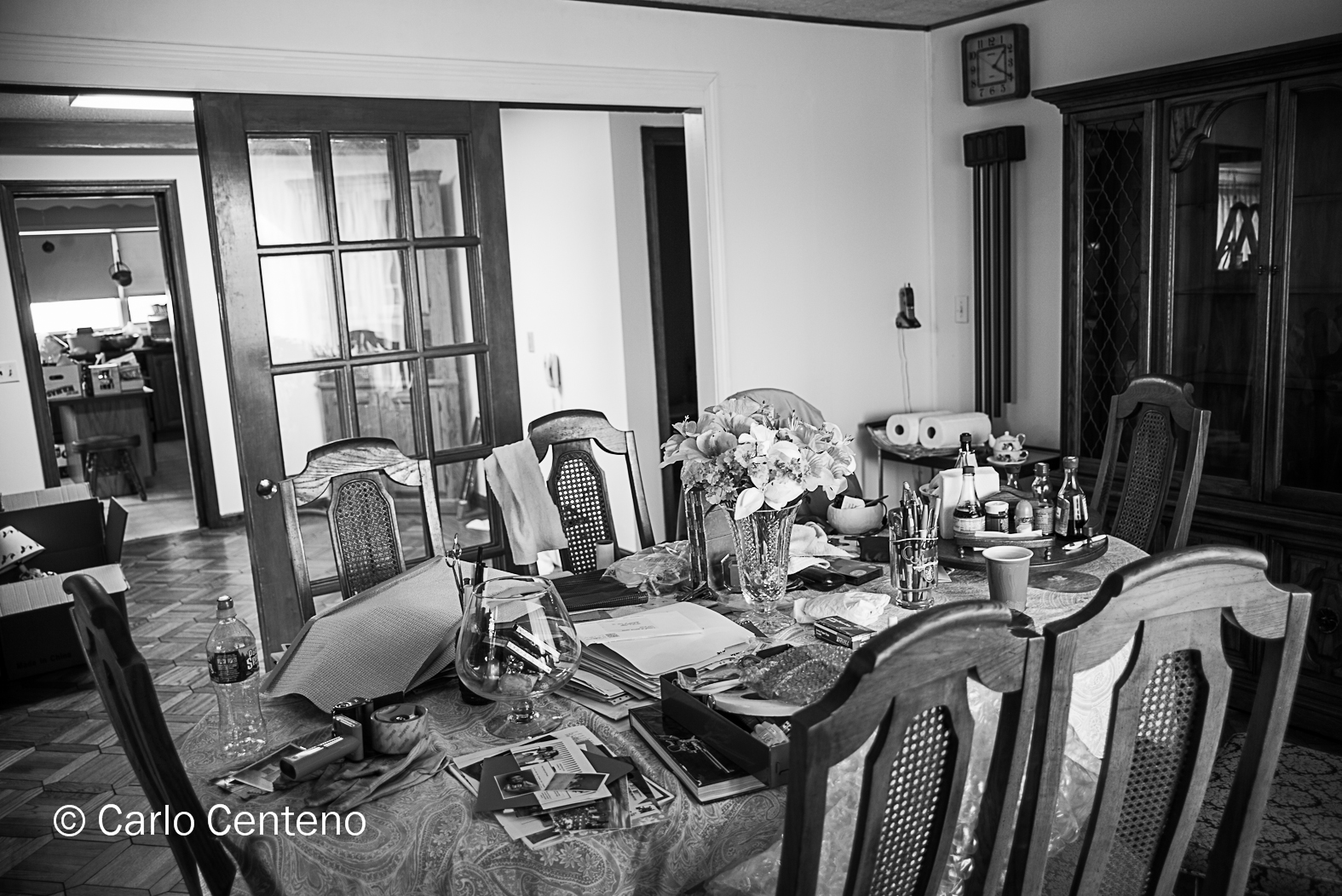
15 Homestead-1004999As is often said, the only constant in life is “change.” From the simple, to the complex, there’s an undeniable commonality about anything that changes: something is altered, modified, created or destroyed.

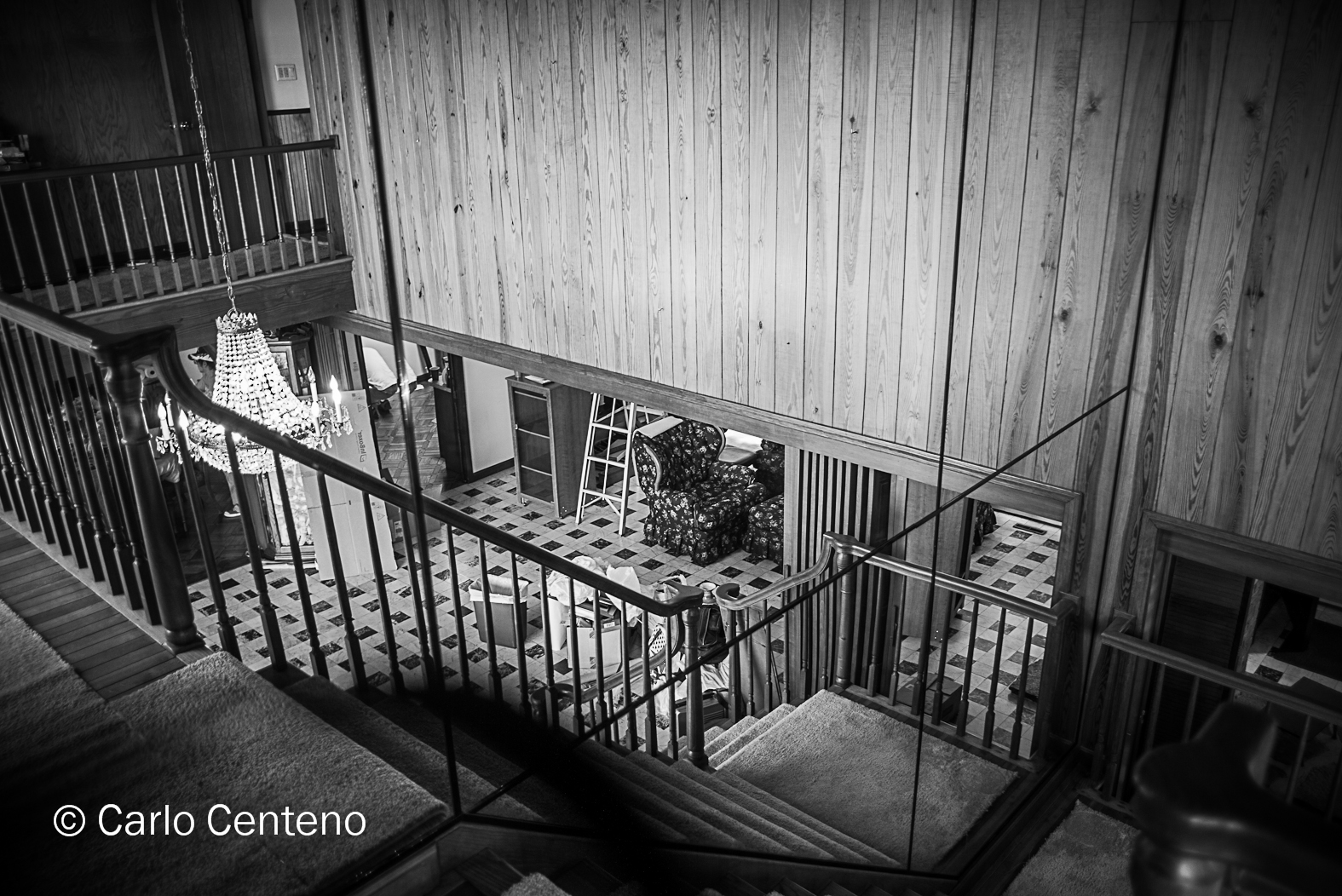
Such is the case when the Homestead recently sold. No longer a home, it is now a house, an empty canvas ready for what every new homeowner does to a key living space: change it to make it their own. In effect our ancestral abode has shed the attributes that made it our home. Think of a brand losing or morphing its attributes into qualities altogether different. Such qualities are not entirely alien, but changed enough to see and feel a difference from what was once a space all too familiar.

15 Homestead-1005000

It’s been decades since I lived at the Homestead full-time.  At present, I choose to recall good memories as the not-so-good memories dissolve into the negative space created by vacated furniture and other items. As noted in a lyric from a Carol King song, “…yesterday’s gone, but today remembers…”

15 Homestead-1005011


15 Homestead-1005008


15 Homestead-1005005


15 Homestead-1005003


15 Homestead-1004992


15 Homestead-1005002