Frisson…..it’s French for a chilling sensation, a shiver. It’s typically a pleasurable response to a stimuli that “moves you.” At times we refer to this reactive sensation as something that, “gives me the shivers.” You get goosebumps, you feel the small hairs on your arm or the back of your neck stand up, your breathing and pulse become quicker.
Frisson is that short-lived somewhat intense satisfaction often brought on by music, art, an event, a person, a book, essentially whatever it is you witness that generates a momentary elevation of pleasure. The brain and body experience something akin to adrenaline and dopamine reaching peak levels.
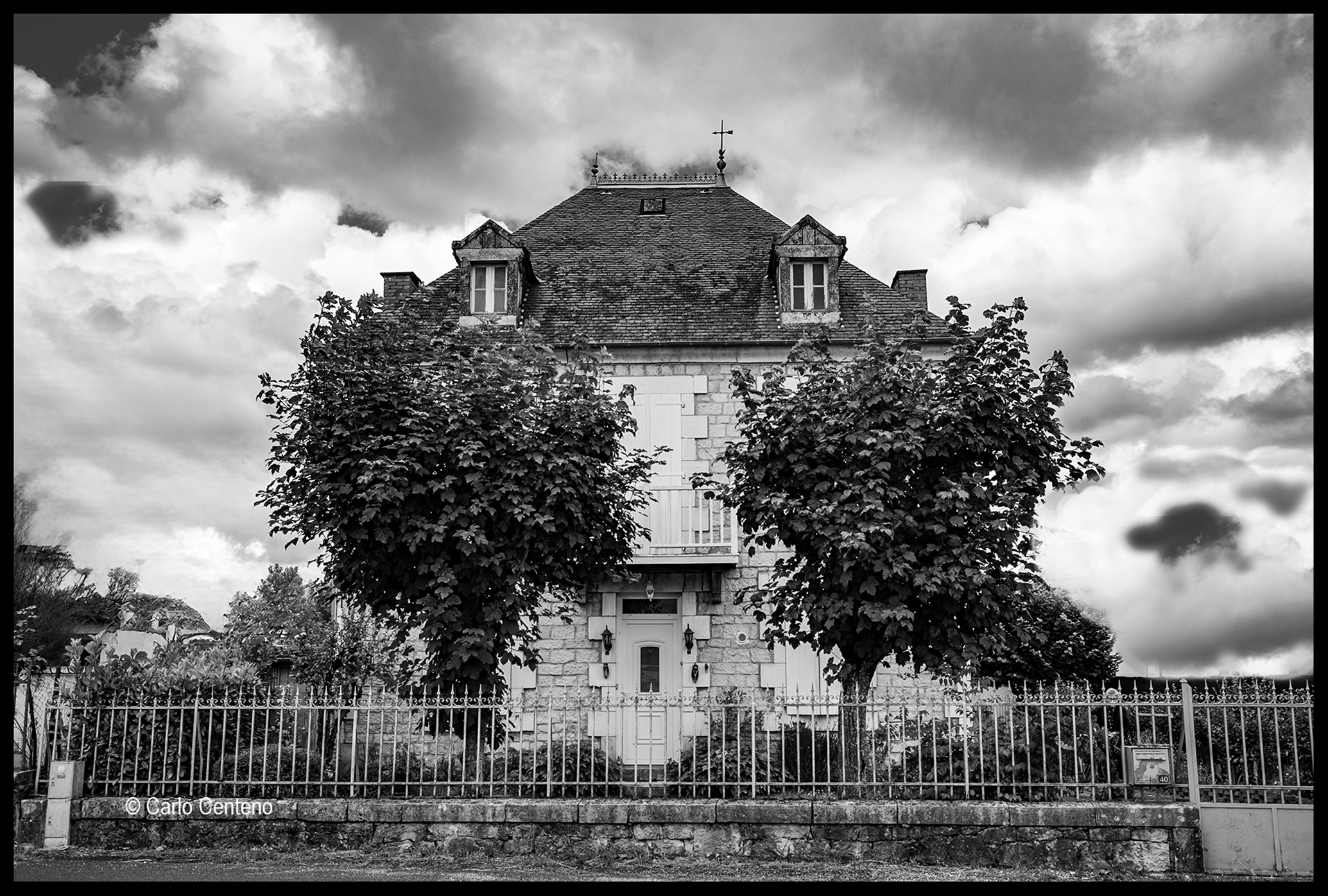
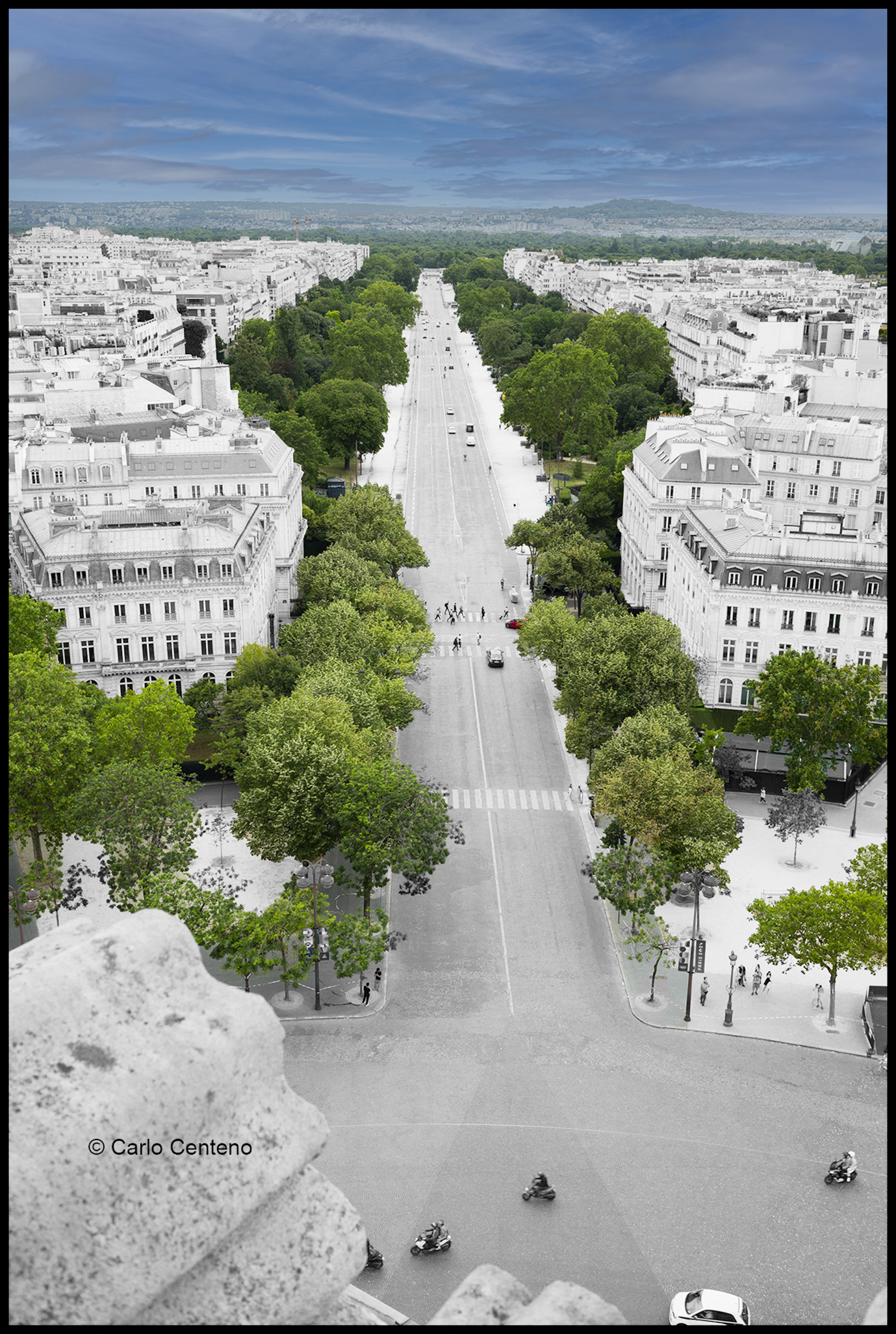
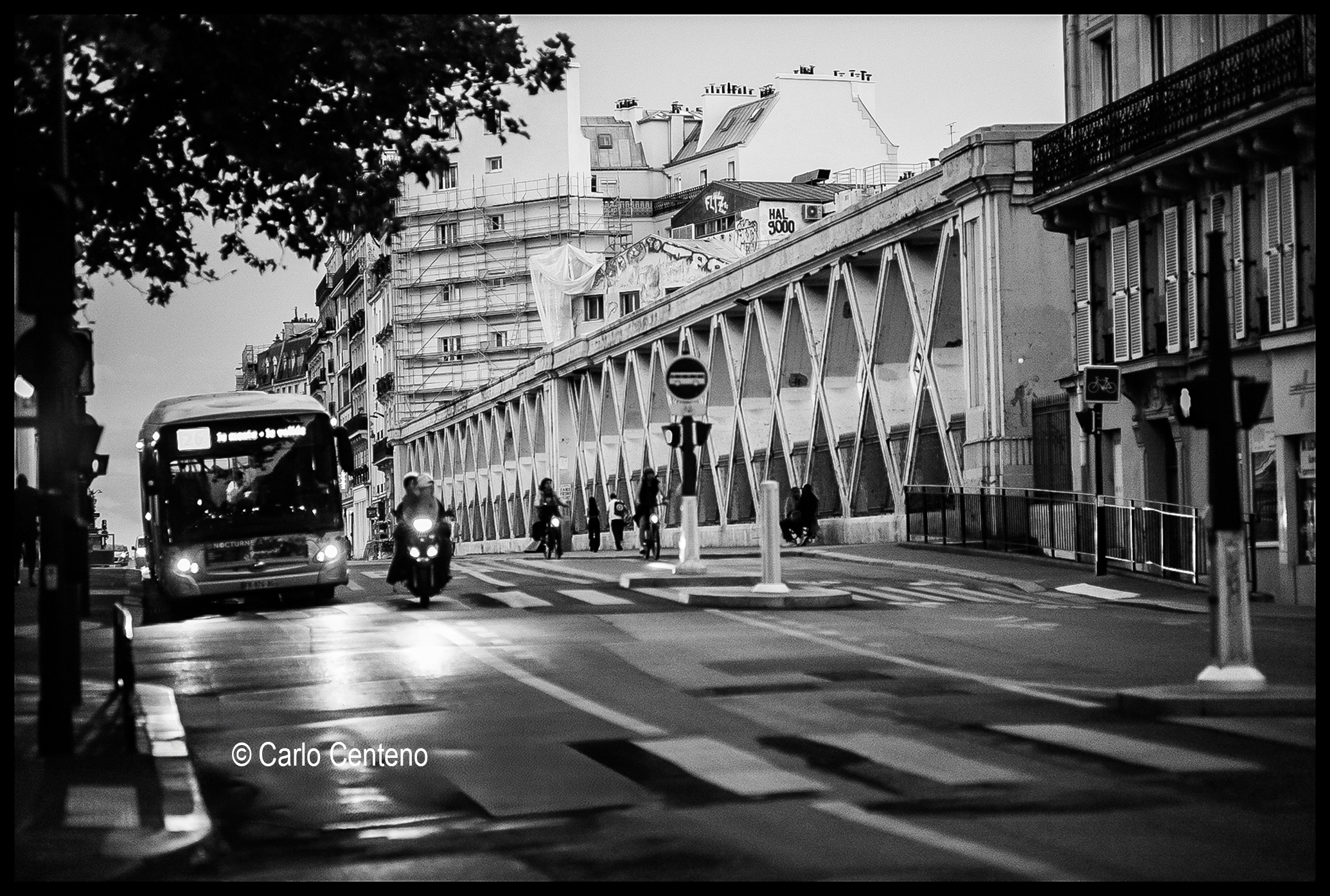
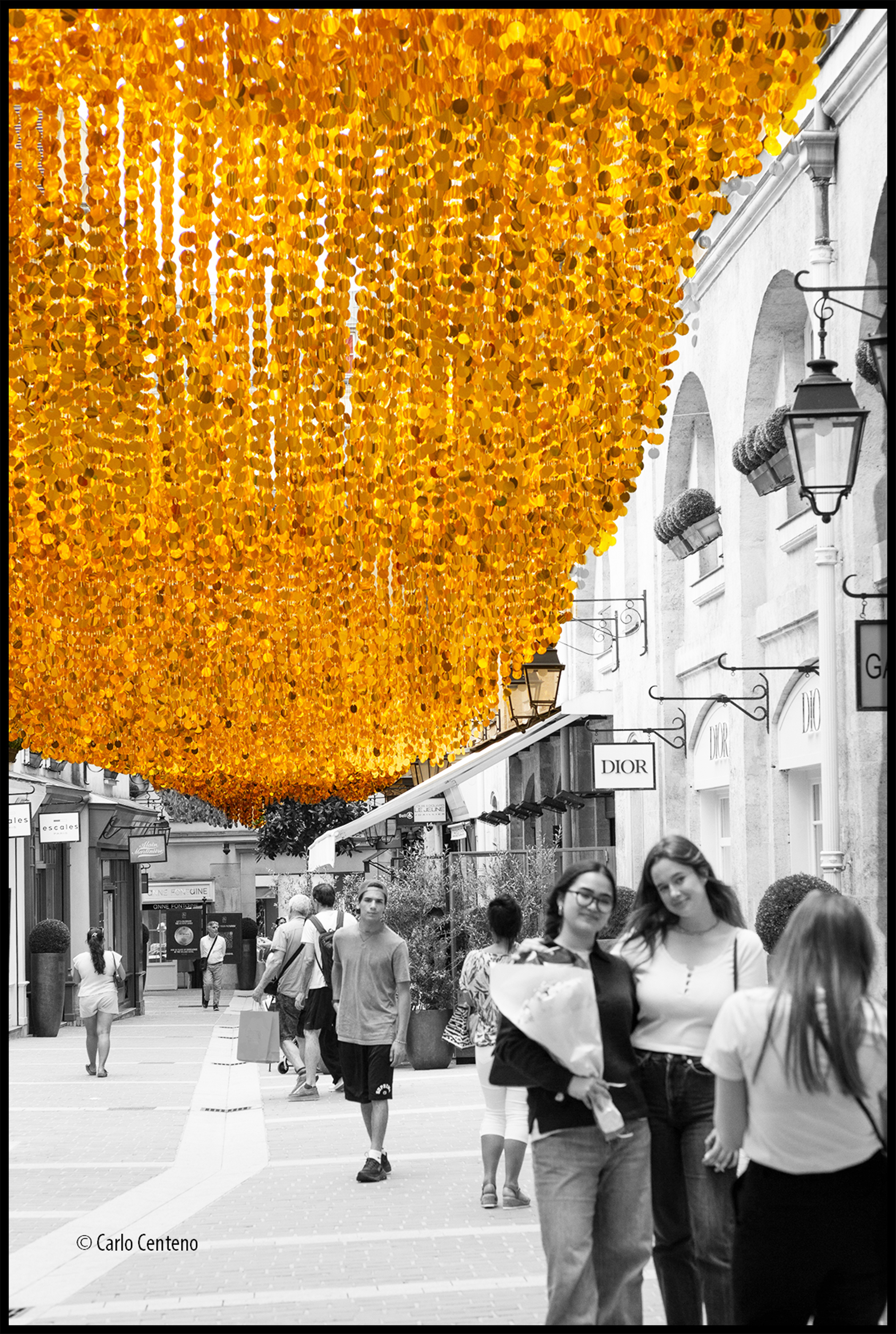
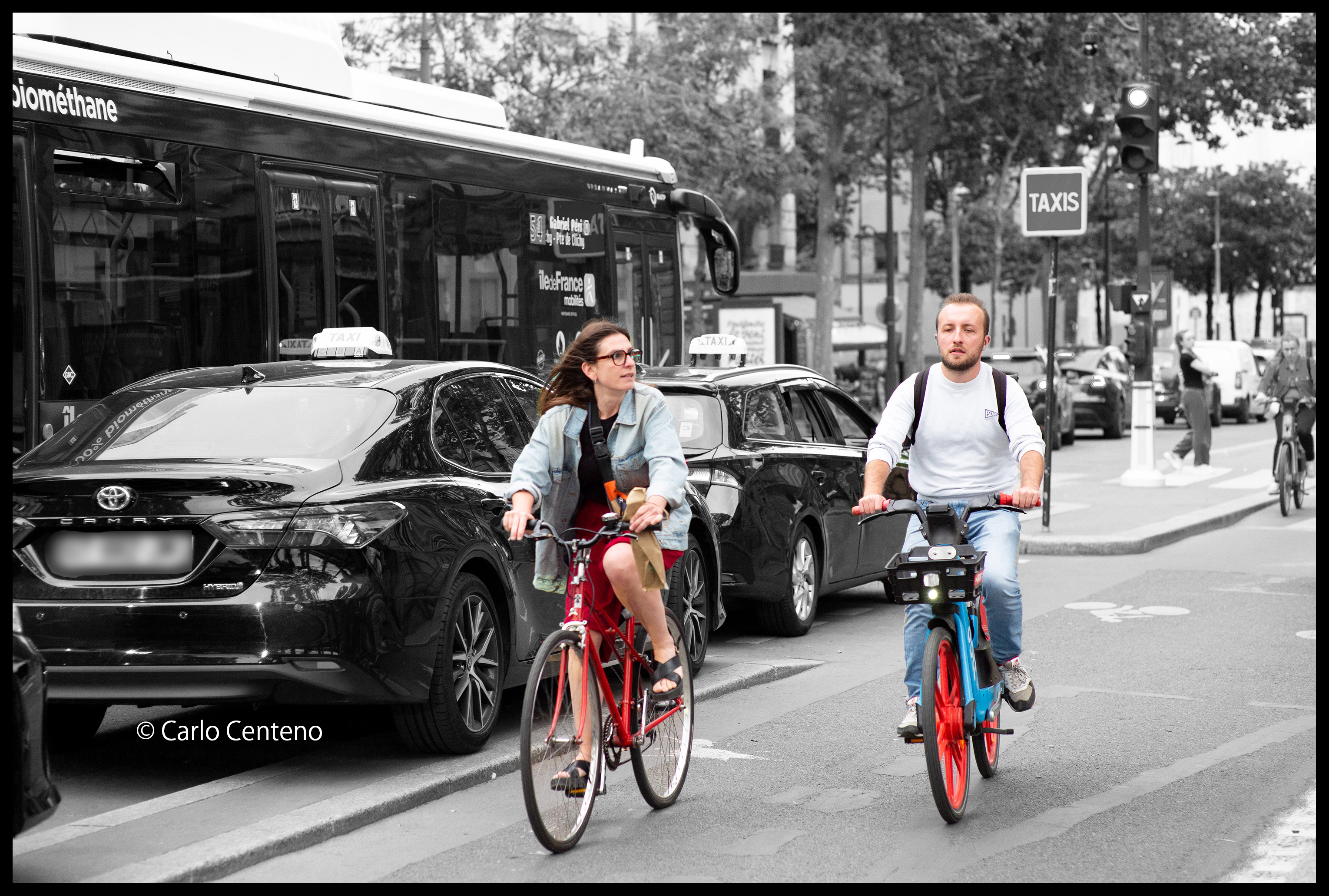
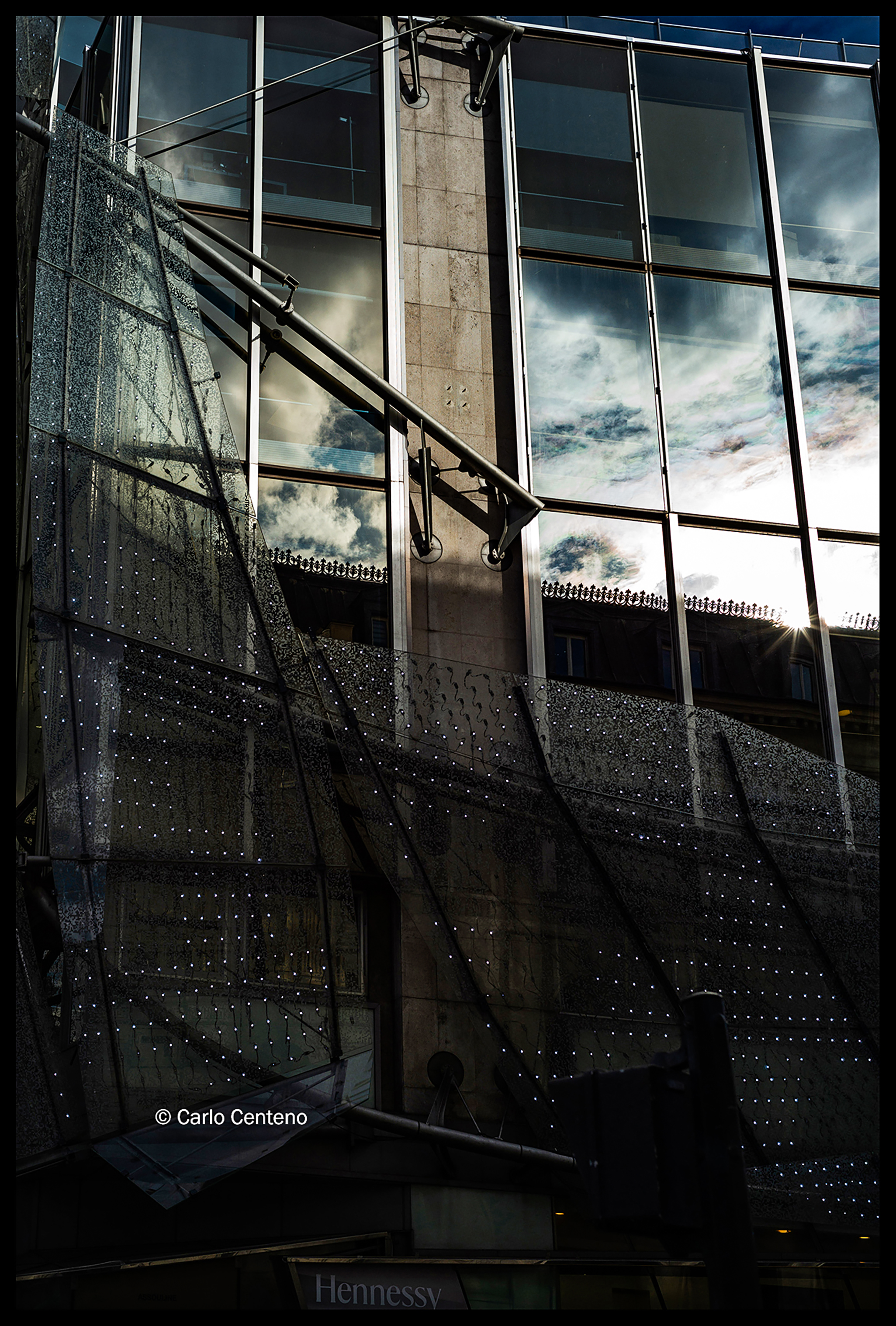
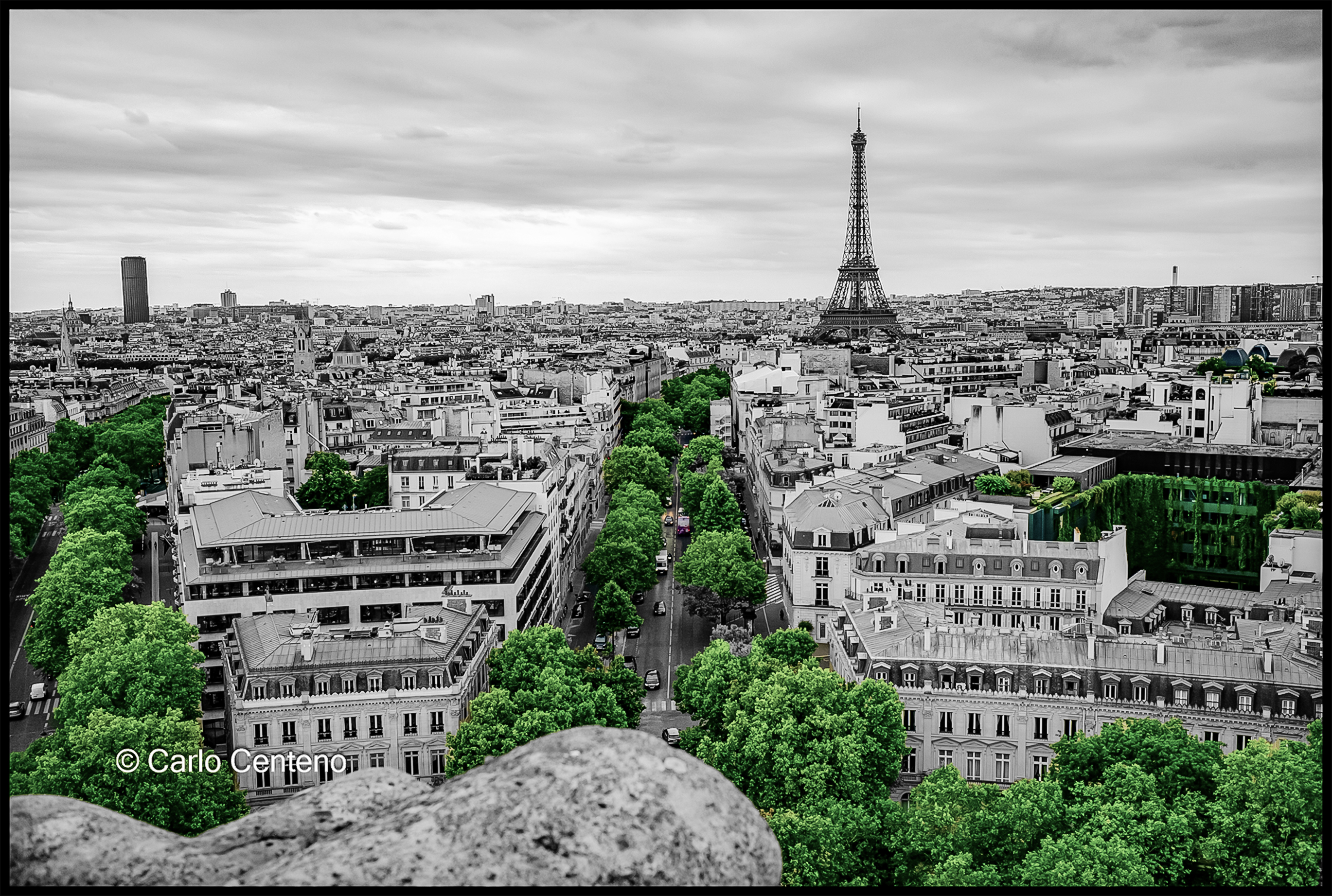
The following images are some of the “frissons” I felt while in France. I enjoyed the “shivers” and enjoy bringing them to life here. Hope you find something to like…..
“The sending of a letter constitutes a magic grasp upon the future.” Iris Murdock, CBE, DBE. Irish-born, British philosopher & novelist
“In our letters, we are recollecting and conversing with the soul, through both our friends and ourselves.” Thomas Moore Irish writer, social philosopher and in his lifetime, regarded as “Ireland’s national bard.”
“There is something special about holding a hand written letter. It carries the essence of the writer.” Jane Austen
I would suspect that the majority of readers who come across my blog do not write with a fountain pen. Not unusual and it’s okay. That’s just a factoid of our technology epoch. It’s been written that many are far more familiar with a screen, a QWERTY keyboard and now the exponential growth of AI. An observation, as well as a dirge, for the sentience and engagement of a communication method that some find impractical and inefficient.
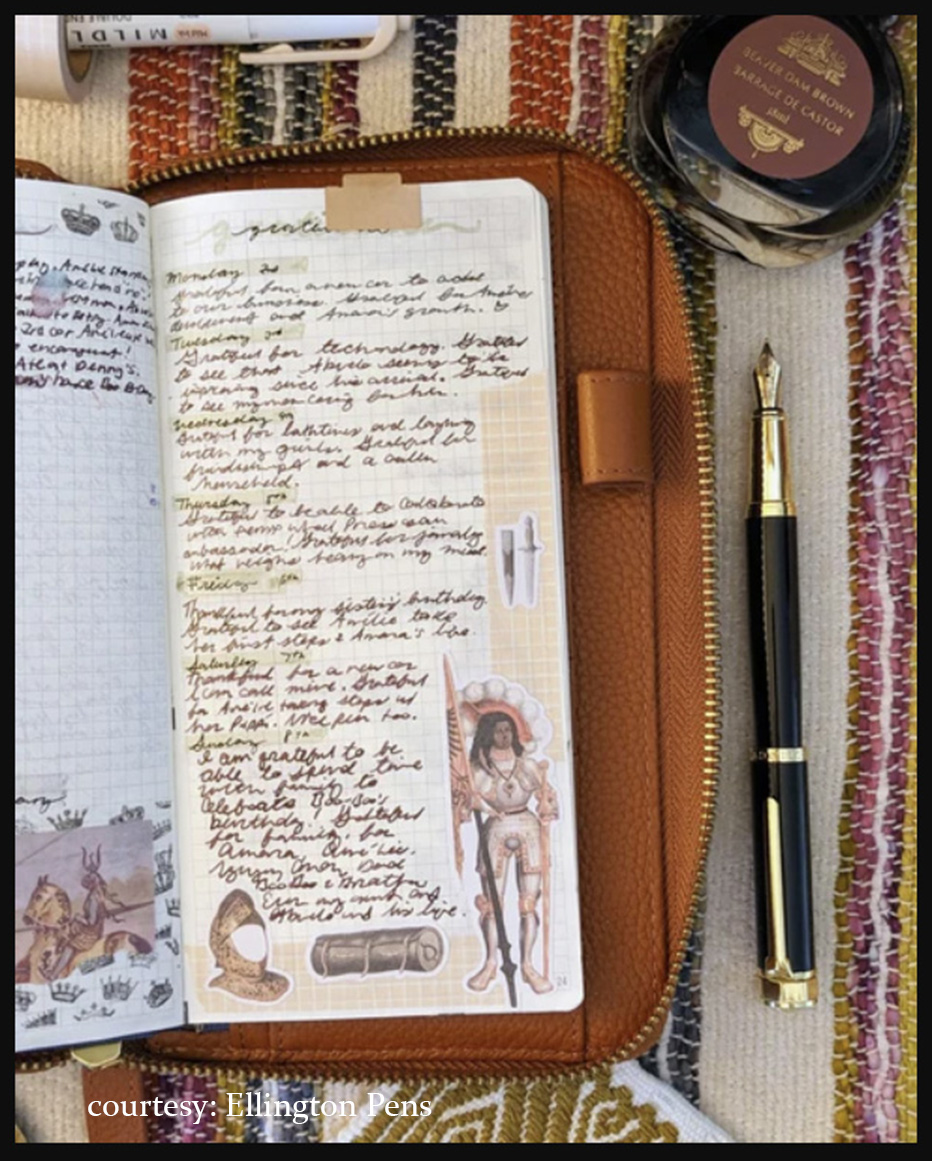
Yet on any given day or evening, I’m not far from paper and a pen filled with royal blue ink, ink drawn from a bottle and into a pen barrel via its nib and the piston residing in that barrel. Archaic, perhaps, yet some believe such things are unnecessary for our current state of living. What about the state of your life and the qualities that define its value…?
A frequent criticism is that using such a writing instrument is too slow, to use and get used to. Put another way, this is a communication method that requires your patience, your willingness to engage both mind and heart over a period of time. Handwriting is the articulation of thinking, learning, feeling and so much more.
I would be remiss if I did not include some of the toils in finding the right paper and ink that adds to the fascination of such a timeless way of expression. These 2 items are just part of the discovery process, one which needs your attention as you gain familiarity and traction to fountain pens, inks, types of paper and of course, writing. With a nod to digital technology, researching pens, paper and ink is far easier now than it has ever been.
Writing with ink and paper is slow, certainly slower compared to the speed in which we talk; and even that is a lot slower than our brains when we’re processing just about anything we can think of. Writing slowly does not correlate to slow thinking. Such writing encompasses thoughtful pauses, an examination of those and adjacent thoughts, whether abstract or tangible, even working to make what was just put to paper more lucid for anyone–including myself–to grasp.
If you’ve come this far, you might have wondered about the “Permanence in Paper” notion in the essay’s title. Paper and the writing it holds can survive over a long period of time. But I wonder about some of those pages bound or bundled together for centuries. Egyptian manuscripts written on Papyrus are some of the oldest known individual texts in existence. Their scrolls go back c. 2500 BCE, whereas paper in its earliest form appeared in China c. 105 CE. [Note: BCE stands for Before Common Era and CE represents Common Era. These are the secular versions of Before Christ (BC) and After Christ/Anno Domini].
I think of times in history when handwritten correspondence was the perhaps the most confident way to connect. I visualize piles of envelopes each with a letter, a notice or alert, even a photograph among other possibilities. There were many, many things in those letters, rote and topical. There was the weight of loss and longing, of anticipation and impatience, of a happiness that seems forever in arriving, or the gravity of profound grief relentless in its hold of sadness, regret and helplessness.
Books have been written describing letters that have been exchanged. John and Abigail Smith Adams regularly wrote to each other. They were well ahead of their time as they were reciprocal to each other for support and encouragement and more. Think of this: more than once, Mr. Adams stated in his letters that Ms. Adams was his “dearest partner” and a “stateswoman” worthy to be among the most astute of advisors and confidantes.
Queen Elizabeth 1 wrote upwards of “3,000 plus letters to her oldest daughter.” President Lincoln’s “letter to Widow Bixby” is as empathetic and demonstrative of any condolence letter addressing a mother’s loss. The King of Sweden, Gustav Vasa [1523-1560] wrote at least 1,000 letters according to records; the quantity filled 29 books.
Then there are the epistolary writers who crafted letter writing from letters available to the public. Their constructs of referring to letters within a story or a novel carried some significance to the protagonists, society, an ideal, a scandal and so on. Authors Mary Shelley [Frankenstein] and Bram Stoker [Dracula] were epistolary writers. They used letters as a vehicle to convey everything from discovery to fear, to hope and love. And to think that their stories with these references of hand written letters have to this day, remain relevant and thought provoking.
For those who already do as I do with pen and paper, well they know a few positives associated with this old-school way of communicating: for starters, no special apps or electronics are required.
Return to terra firma. A few pointers
Practically speaking, if this is your first foray, or re-entry to FP writing after a long sabbatical, you do not need a costly [above $25. USD] pen. You can obtain a fountain pen at a lower cost, but you get what you pay for. To start, select a universally adequate Medium nib. Nibs are made with steel or gold. Steel is more durable and gold has a feel all its own. The pen should come with a converter with the option of using universal ink cartridges. Color ink? That’s up to you.
Speaking of ink, the easiest brand [at least around here] anyway is a ubiquitous bottle of Parker “Quink” in black, blue-black or royal blue. I believe all but the black is water & spot-cleaner soluble in combination. Parker offers cartridges as well, useful when traveling and potentially not as messy as carrying bottled ink. The Parker cartridges are made for use in Parker pens, however, you can also use universal ink cartridges, which are shorter in length and just as functional as any other.
Paper. For initial practice, copy paper works, but it’s not ideal. You may experience blotching [when the paper sucks ink out of the pen creating spots]. And/or feathering, which is when the lines that make up your letters show tiny “feathers” coming from the main line that defines your letters. Ultimately, this will take some trial and error. Paperworks has a special sale of letter sized paper that may do the trick. Look for samplers that offer sheets of different weight papers. I cut these sheets in half and have a faux-Monarch size sheet I use for letters.
Etsy has a number of papers as well. Names such as Clairefontaine and Tomeo [fantastic quality from Japan] are just 2 of other manufacturers that offer incredible papers. I do recommend you stay with smooth finished sheets versus sheets that have texture. Trust me on that one suggestion. A smooth surface is more forgiving than one that has texture. Goulet Pens has a complete section/tab on everything that has to do with fountain pens, inks, nibs, paper et al.
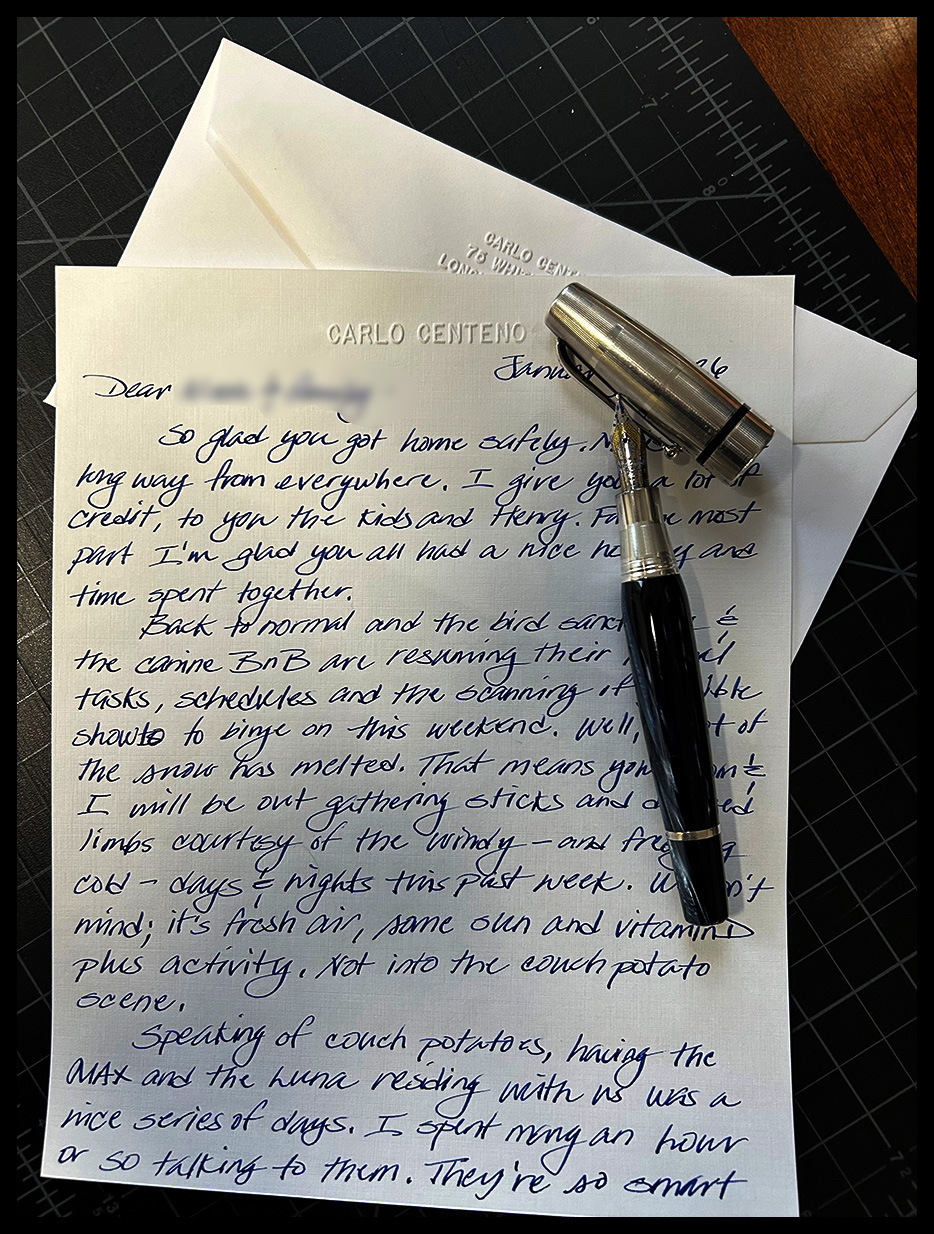
You can also create your own personalized cards, letters and envelopes using an embossing stamp. I use one for my return address on the flap of the envelope and the second I use to emboss my name at the “header” area at the top of my letter.
Here’s another resource that you may find useful in your journey:
Establish a schedule to write. Get yourself a journal and consider writing anything that comes to mind. A letter to your adolescent self or your current and future selves; notes about the _[skill]_in you that you want to improve. Essentially marry your thoughts to the fine motor skills that are important to clear writing. Legible writing is one thing, while illegible writing is but stepping stone that can lead you to letters, words, sentences and more with a character that’s yours and yours alone. Like learning an instrument, to be good at it, you need to have a plan, and you need to set aside time to make it work.
When you’re all in, the writing activity goes beyond movements of your wrist. Remember it’s your writing arm that carries the energy required to move synchronously across the paper & table top. Using your entire arm is necessary because it encourages good coordination and a focus. Another benefit is the wrist won’t do all the work, which means less repetitive stress to all those small tendons and cartilage, etc.
Left handers can fountain pen their way on & across paper. Take a look at scriveiner.com which contains a good amount of helpful details on what to look for.
Finally, I leave you with perhaps the wisest sentence in this top-heavy tome of questionable relevance:
“If people cannot write well, they cannot think well, and if they cannot think well, others will do their thinking for them”. George Orwell
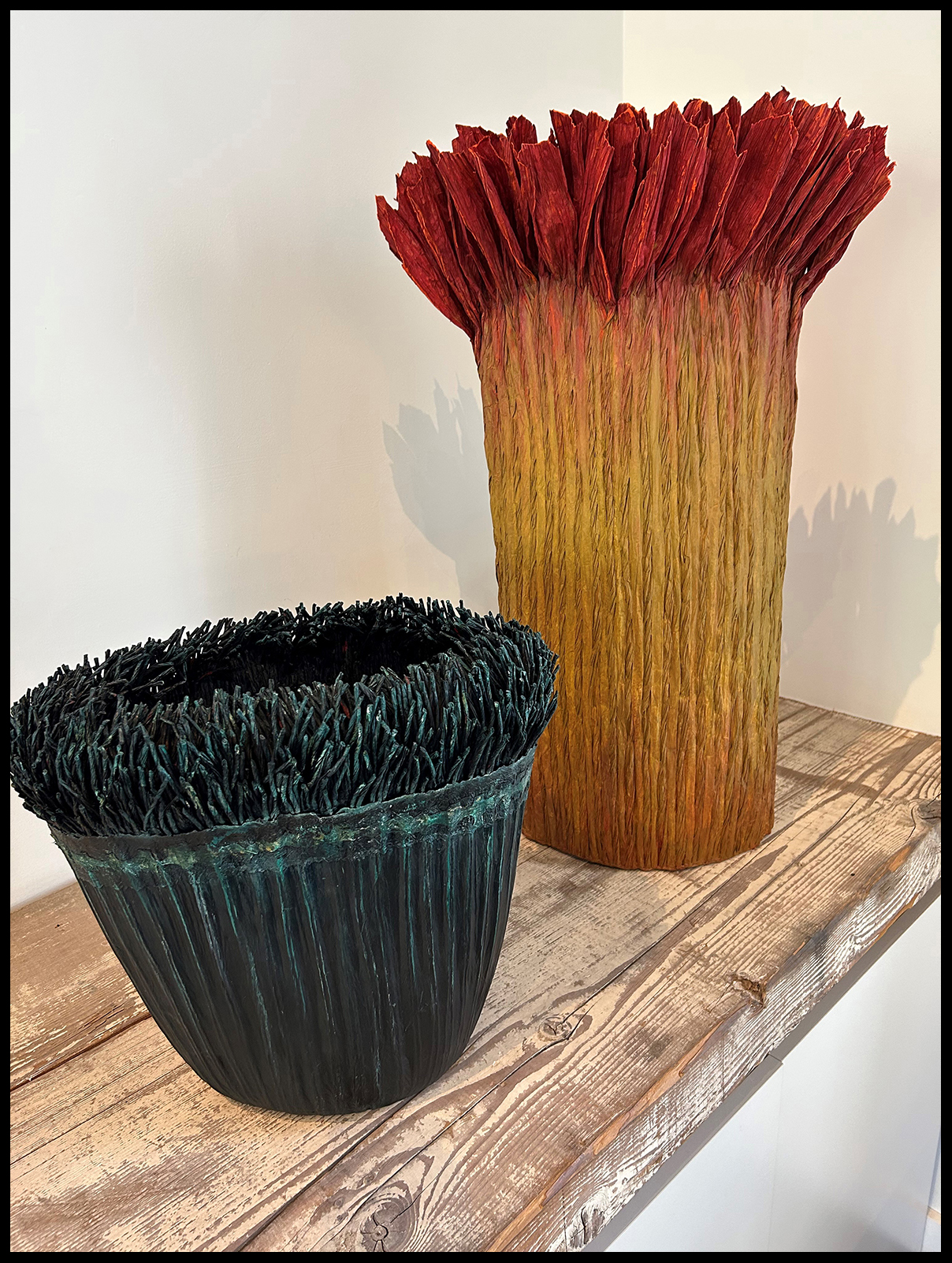
When you’re bogged down with writer’s block, creative fog, even brain freeze, what do you do to break free from its hold? Here’s one way to purge the hive of such impediments. Go to an opening, an art exhibit, perhaps one which deals in a medium that you know little of. In my case, think fabrics, paper and ceramics and other materials—either in combination—or crafted exclusively with fabric. An oversimplification, but a few photos can better illustrate the creations displayed at the exhibit, Beauty is Resistance, our Fall Art in the Barn Exhibtion. I was impressed with the inventiveness, originality, concept development, creativity, and overall execution of the various pieces.
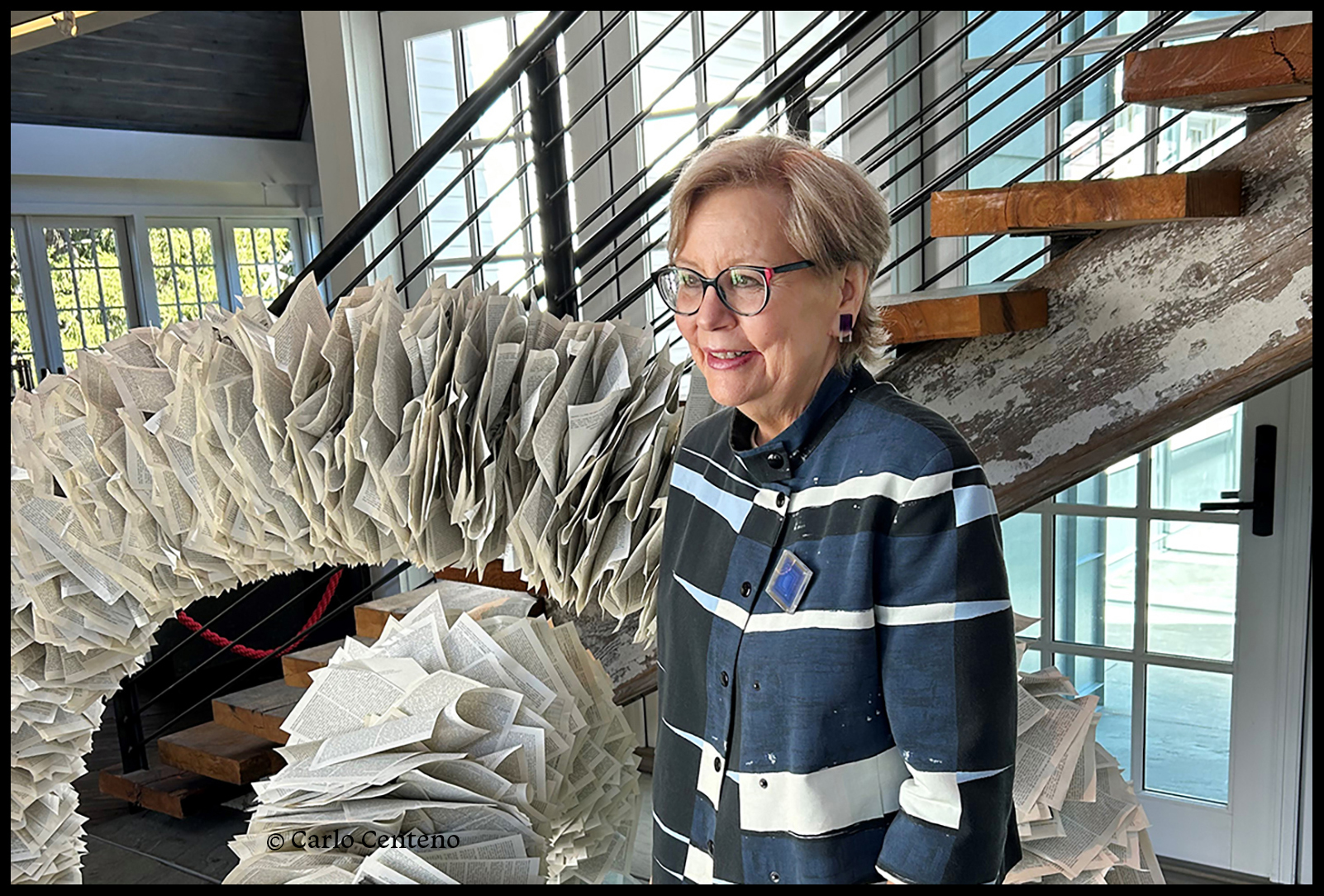
At browngrotta arts, co-curators Tom Grotta and Rhonda Brown have managed original art, crafted by internationally recognized artists for more than 3 decades. My “introduction” to the pieces of art at this exhibit was an A-1 engagement of diminishing my brain fog, creative block and so on. Neither words nor photos can describe the pieces. This is a case of what I actually see and feel is amazing, because of what is physically in front of me. A demonstrative be-in-the-moment activity, to say the least. So, please take a moment to peruse a small sampling of what was on display.
A special thank you to Tom Grotta and Rhonda Brown for their hospitality and sharing their knowledge about the artists, the scope of this exhibit and their anecdotes of life in international Art. Photography: courtesy of Tom Grotta. All rights for the images and the Art are those of the artists.
Home artist Lija Rage; mixed media, wooden sticks, linen and copper [2-panels; detail shown in second image].
From Chaos to Reality artist Aleksandra Stoyanov; sisal, cotton
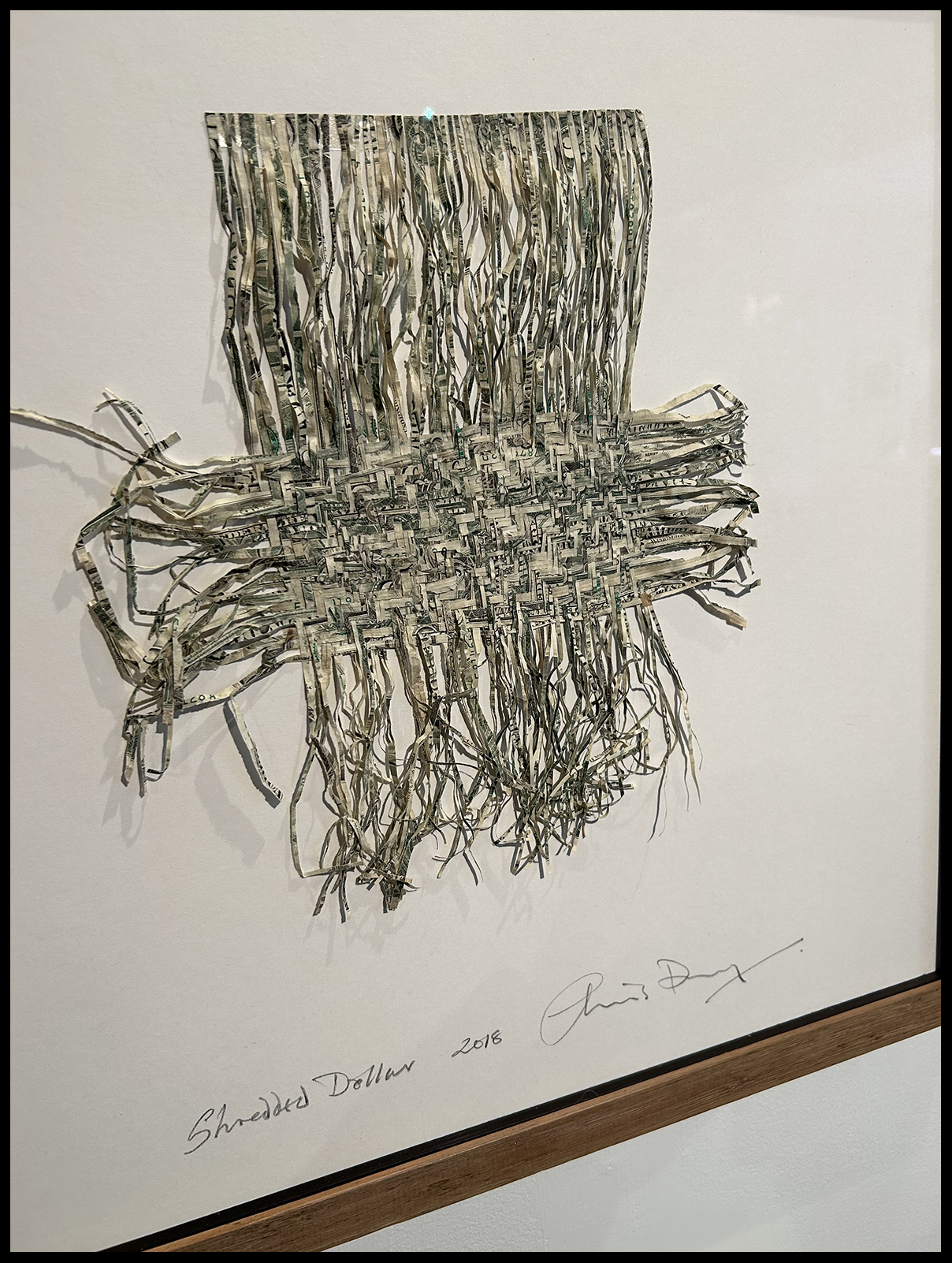
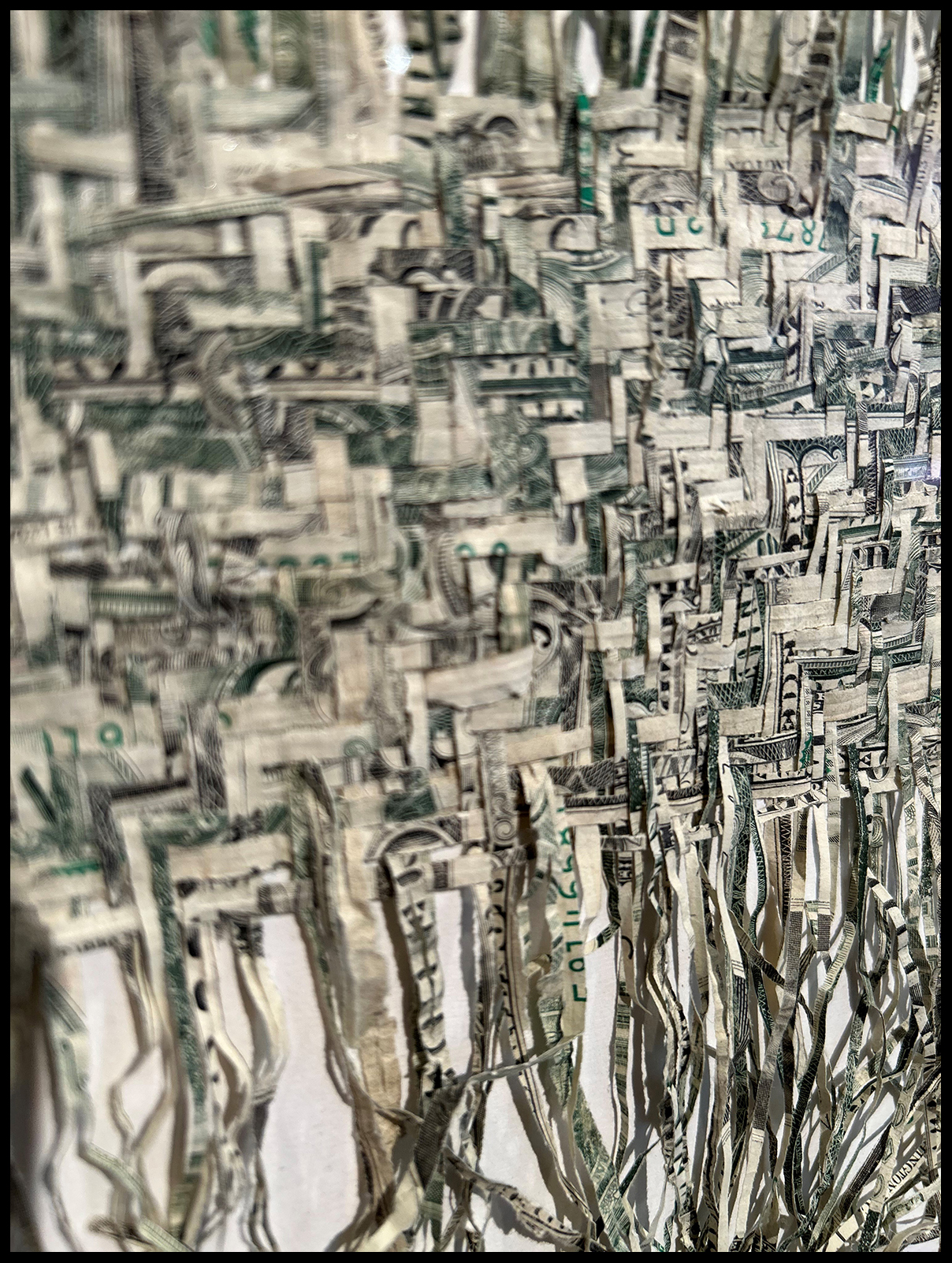
Shred dollar artist Chris Drury; US currency [detail shown below]
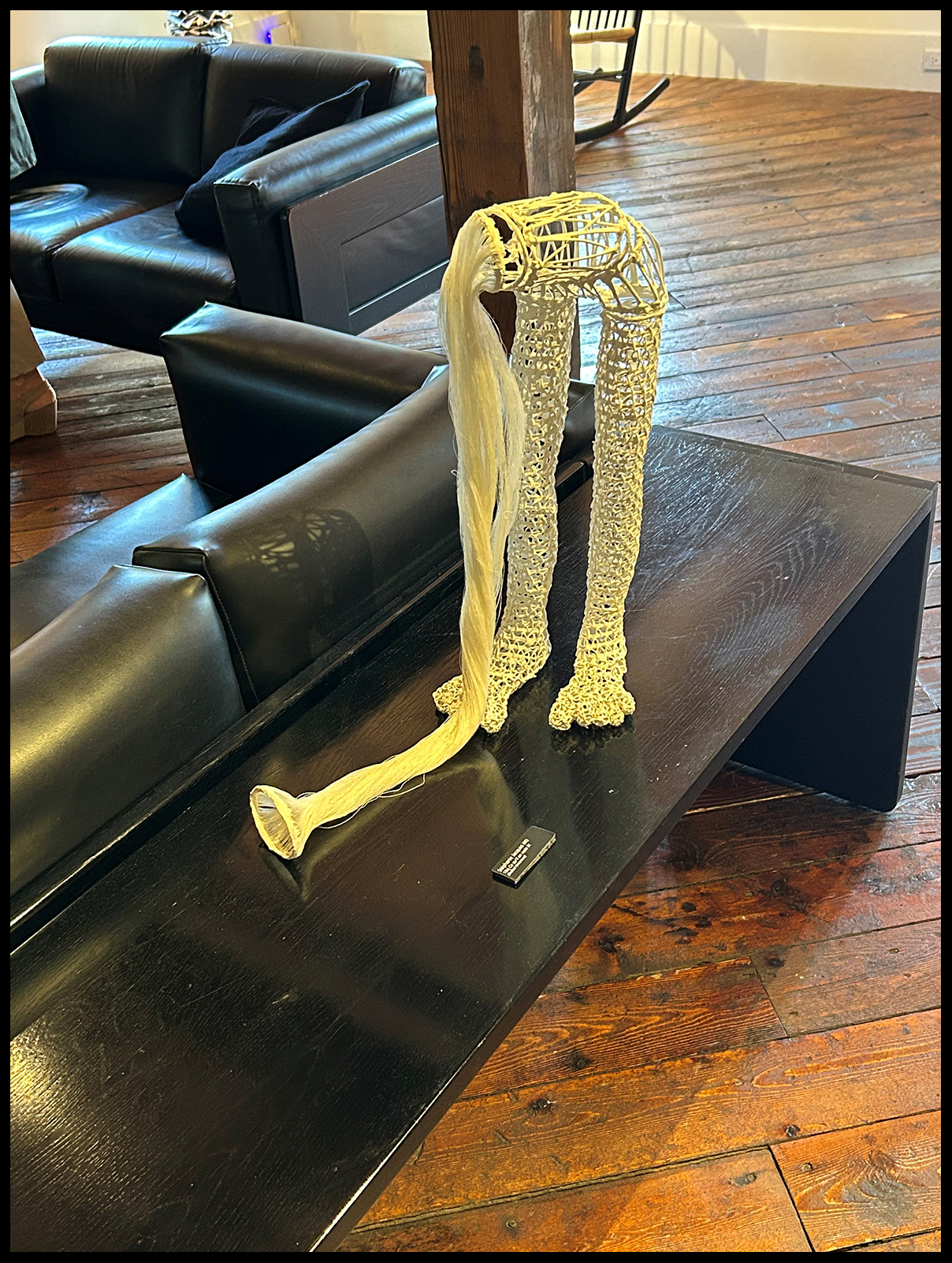
Female Husk II artist Anda Klancic; torso [from Momento Mori composition] with cone; palm tree bark, synthetic filament, acrylic, and metal wire
Ce qu’il en reste IX artist Stephanie Jacques; willow, gesso, linen thread
Flower Colors artist Mary Merkel-Hess; paper, cord, paper
Rhonda Brown co-curator
Tom Grotta co-curator
Photography a professional photographer, Tom Grotta created a display showcasing some of the literature and gear he has used through his ongoing career.
Time I spend at a museum of fine arts is about as cathartic an experience I can think of. Indeed, cathartic art is an emotional salve that can ease the burden of feelings that keep you down. For someone with dysthymia–like myself and others–engaging in positive activities helps mitigate the weight of dysthymia [Persistent Depressive Disorder]. PDD is not as well known as MDD [Major Depressive Disorder], but the former has less severe yet more persistent symptoms of depression.
With all that’s been bombarding us [unfortunately many instances are not positive] in our day-to-day, we can manage that which irks us and steer thought and action toward positive choices, which in turn can help generate positive thoughts and feelings. Some choices I lean to include blogging, letter writing, playing the piano, tennis, family time and more.
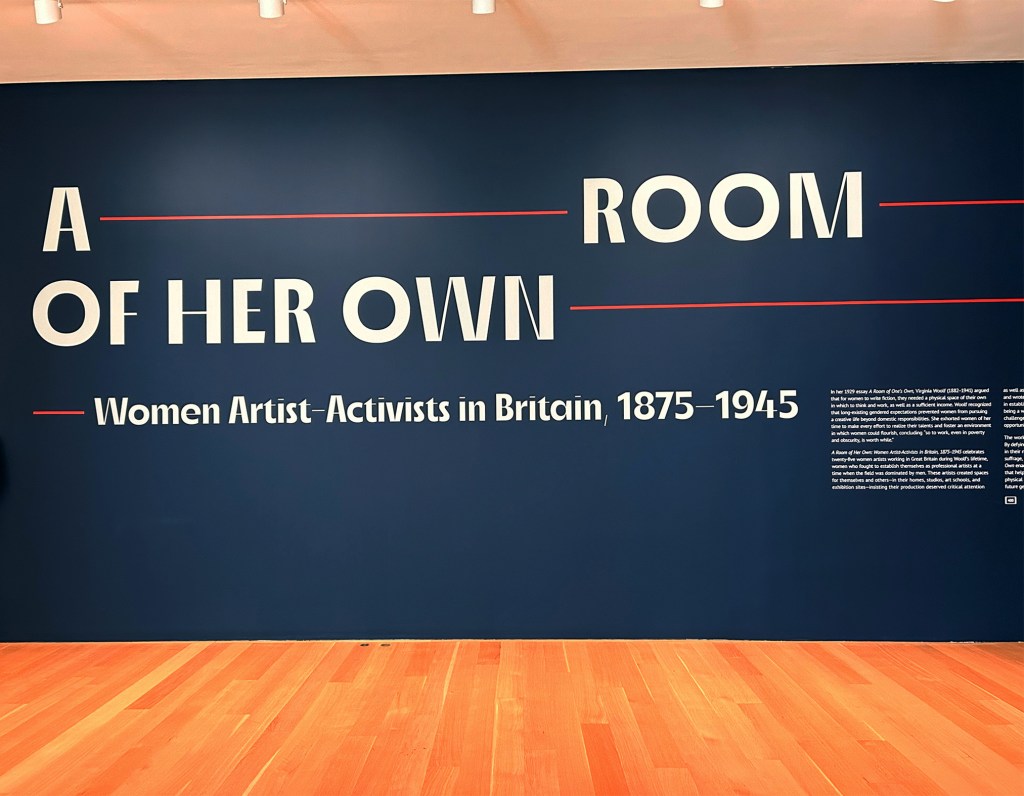
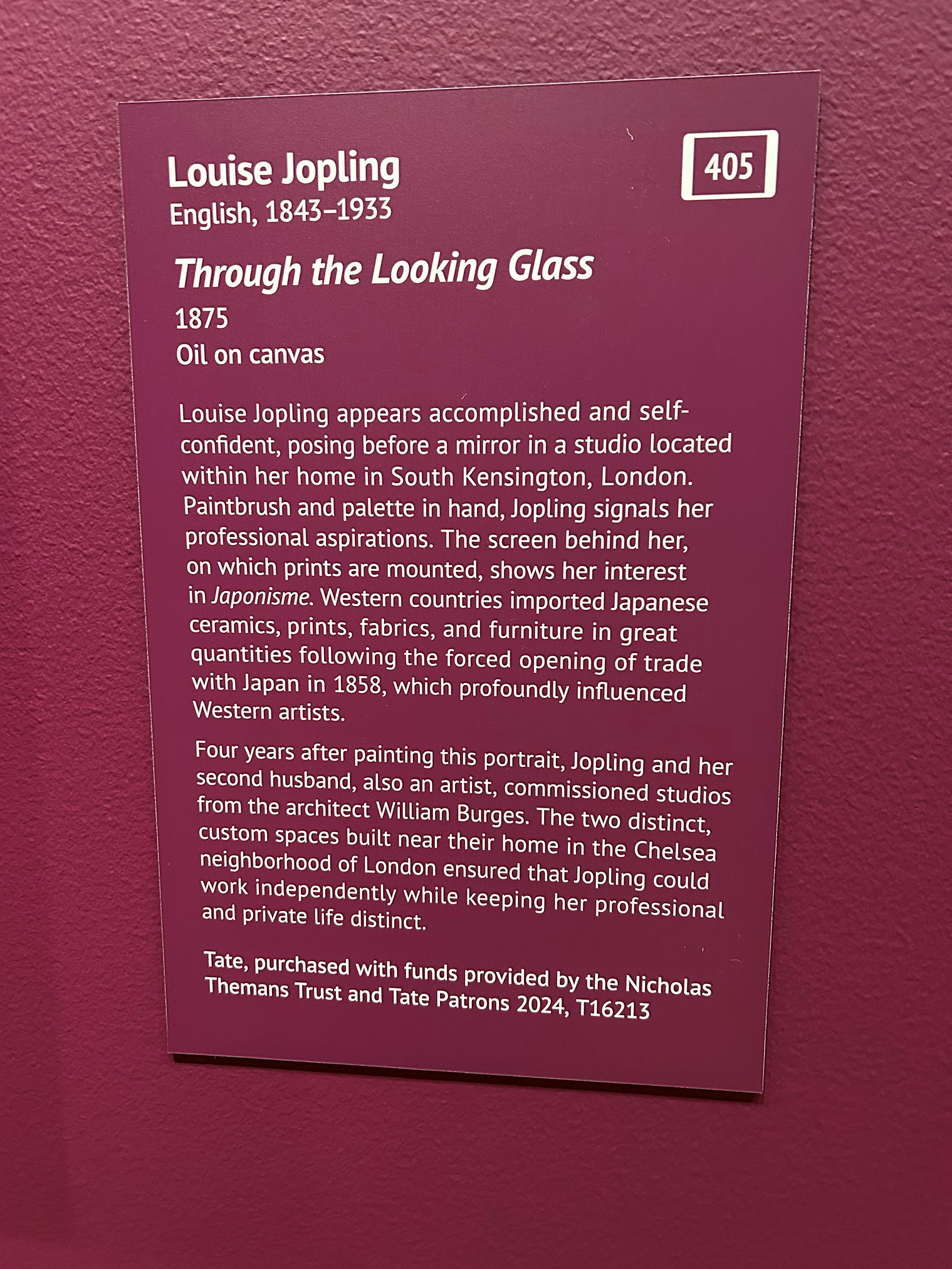
Recent family time with my 2 grown daughters, their husbands, children and their dogs percolated this thought: Both women and their spouses have full schedules with work, raising a family [includes a dog per family], volunteering etc. so then, how do these 2 women have a Room of One’s Own? I credit the exhibit now at the Clark Institute of Art, A Room of Her Own: Women Activists-Artists in Britain, 1875-1945, for germinating that thought surrounding my daughters. I encourage you to experience this exhibit; it runs until September 14, 2025.
The 1929 essay, A Room of One’s Own, was written by Virginia Woolf. You can see the tie between the title of the essay and the name of the exhibit. And if you read Ms. Woolf’s essay, all the better.
Photos taken, courtesy of Clark Institute of Art
Consider this post a “trailer” for the exhibit. It’s worth the trip, and not just for the love of art, but that of expanding our perspectives as well our own sensitivities toward women.
EPILOGUE For additional perspective with respect to women in the workforce please refer to the Women in the Workplace 10th anniversary report [published September 17, 2024 by McKinsey & Company]
I’ve come across a lot of A-words lately: amazing, atomic, artificial, augmented, abstract, auspicious, audacious, accountable, admirable, apathy, appreciation, affection, accomplished, alarming, Arctic, Antarctica, abysmal, appalling, anachronism and so forth. Like a daisy chain made of paper, these words are linked and yet each easily broken free by the slightest of tension. And while some connections may not make a whole lot of sense, there are reasons however small, that connections take place. Anxiety, lack of focus, melancholy, fear, joy, anticipation, distraction, etc. etc., the Yin-Yang of this is that the very same attributes that prompted the connections can be the same to break them. It depends on time and place. Context is everything.
Audacious. Approx. 35-degrees on a starboard bank.
The words come from various sources, anything and everything that shapes our life experience. With this exercise, the empirical nature of each word puts aside the rational, and instead embraces sentience, that ability to feeldepth of things experienced. It’s certain that others who feel existential—rightfully so in our fractured society—may feel embarrassed yet genuine. What could be more human than to feel concern about our current state of affairs [macro] and our relationships [micro]?
Anachronism. At the stable. The Mount: Edith Wharton’s summer residence.
I’m feeling abstract [visualize Cubism Art] and yet oddly auspicious because many things in life and living are not rational. We are prone to rely more on our senses, the very emotions that can either ruin or celebrate moments in our lives. Yes, I’d rather feel embarrassed and genuine versus being stymied with self-serving, deductive reasoning. The former brings a sense of order, the latter a chance to improve our emotional intelligence and increase a capacity to further understand each other.
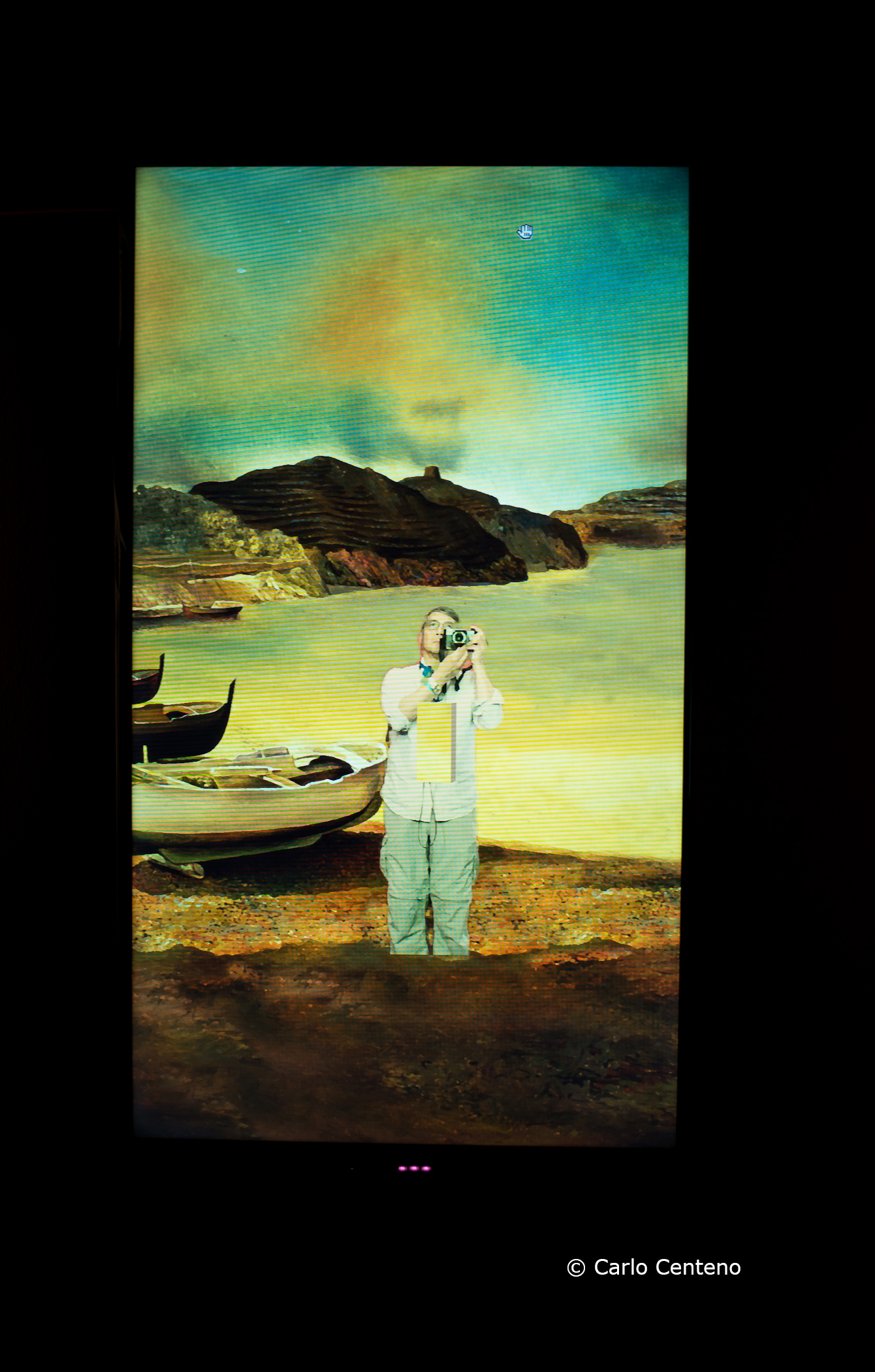
Abstract: The Slave Market & Disappearing Voltaire.
Life imitates Art, or is it Art imitates Life? Similarly in marketing, it’s not what you’re getting, but what you think you are getting. Perception is everything and even more so in the here and now. It’s a refrain that frequently echoes in my thinking.
Admirable.Augmented.Appreciation.Arctic-Antarctica: an aftermathAuspiciousAugmented.Affection…with my favorite “cup-of-tea”
There will be no “B” collection, existential-word-dump, involving any other letter, or a character for that matter. An exercise with one letter is enough for me, and probably for you as well.
In conversations, and things written, a question posed usually prompts us to reconsider a position we hold, maybe a perspective quite different from what’s already been established in our own thinking. This collage, this tapestry-of-a-post may not mean much to anyone, but it could be provocative enough to slightly encourage another perspective. Why not?
The seasons are moving quickly and as I get older my own temporal reality is based on just how fast time seems to go by. I lean towards the empirical and the sentient qualities of the here and now to help me keep it all together.
I never thought I´d grow up so fast so far. To know yourself is to let yourself be loved. Do you ever get me? Shower me with affection and I’ll return in kind. I have no hidden motive, I am blind. Do you ever get me?
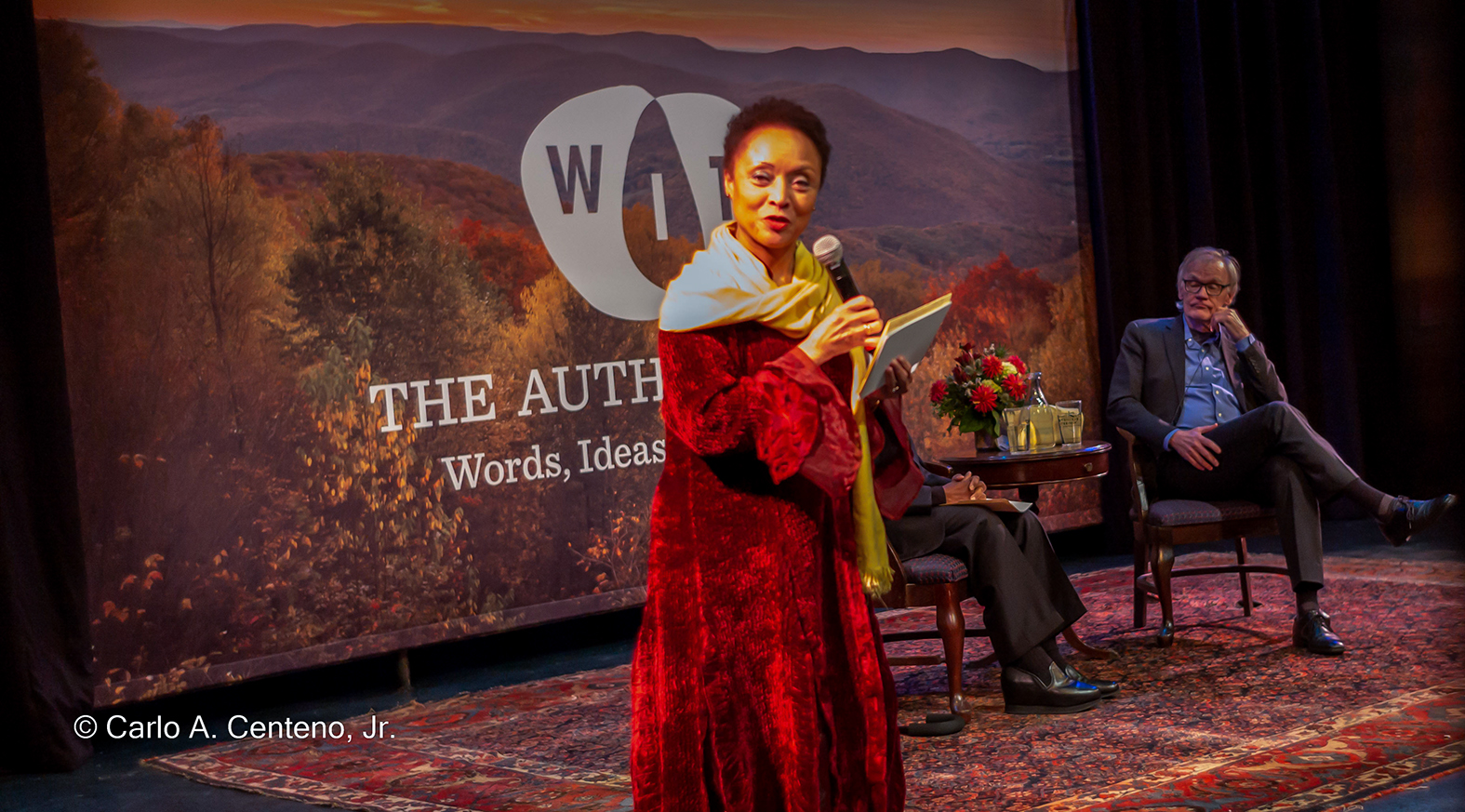
The inaugural 3-day, WIT Festival recently finished here in the Berkshires. Authors, journalists, novelists and playwrights gathered to engage participants in this year’s theme, Reimagining America. This was an opportunity to broaden one’s understanding of critical issues and concerns coursing through our current–and varied– socioeconomic and political points-of-view. The festival is the brainchild of The Authors Guild Foundation, the largest organization of its kind in the USA that “educates, supports and protects American writers across the country.” It’s been noted that the Authors Guild Foundation is “the sole group of its kind dedicated to empowering all U.S. authors.”
Ms. Lynn Boulger, executive director of the Authors Guild Foundation, welcoming authors, attendees, patrons and friends.
Berkshire County lies in western Massachusetts. Its rectangular shape stretches north-south with New York state at its west border, Connecticut to the south, Vermont to the north and to the east it borders with Hampden, Hampshire and Franklin counties. For many, the Berkshires is more than a destination: it’s a way of life.
Dan Brown, author of best-selling novels The Da Vinci Code and Angels & Demons.
Presentations/discussions took place at Shakespeare & Company in Lenox. For the most part, the 3-day festival sold out, however a roster of those wanting to attend were placed on a list just in case of cancellations. I did not hear of any registrants calling to back out.
Ms. Nikki Maniscalco, associate development manager, The Authors Guild Foundation.
I think the salient detail I took away was in finding a connection with the speakers. Whether through their anecdotes and experiences or with discussions that were enlightening or instructive, discovering these connections became visceral. The connections answer to or affirm my own perceptions, creative risks and even the most profound sentiments I keep close to the proverbial vest. As effective podcasts can be, for me there’s a lot more to glean from such happenings when they’re done in person. There’s an intimacy about gatherings as you hear, see and feel more than just commentary. And in that collective presence, you may pick up emotions inferred or otherwise demonstrated in tone, expressions and body language.
One cannot dodge a glance or ignore a gesture, or miss a light-hearted remark to loosen up a room. As good as podcasts are—and they have an important place in communications and education—being there does make a difference.
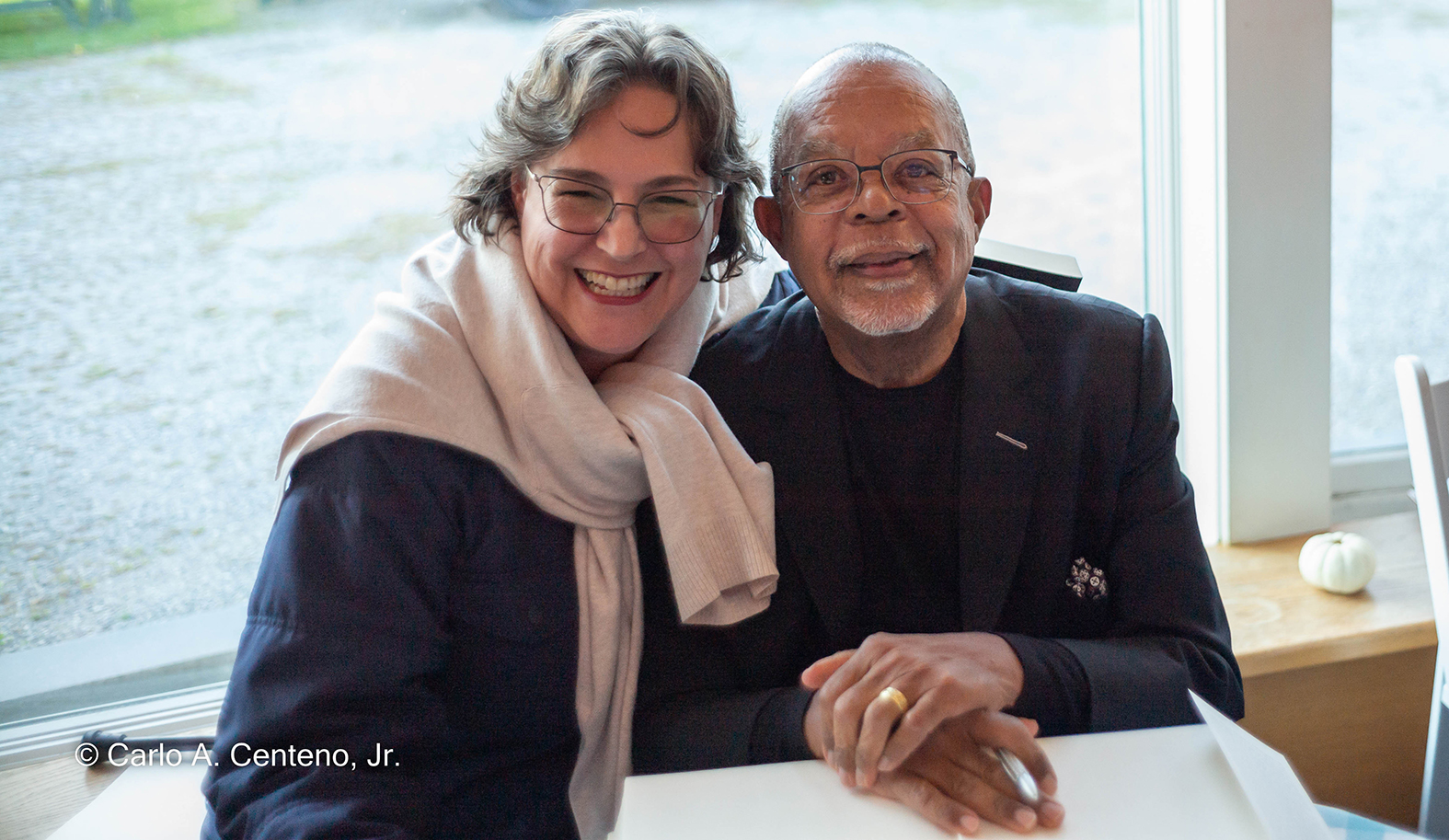
Henry Louis Gates, Jr.David W. Blight–Pulitzer Prize-winning author.
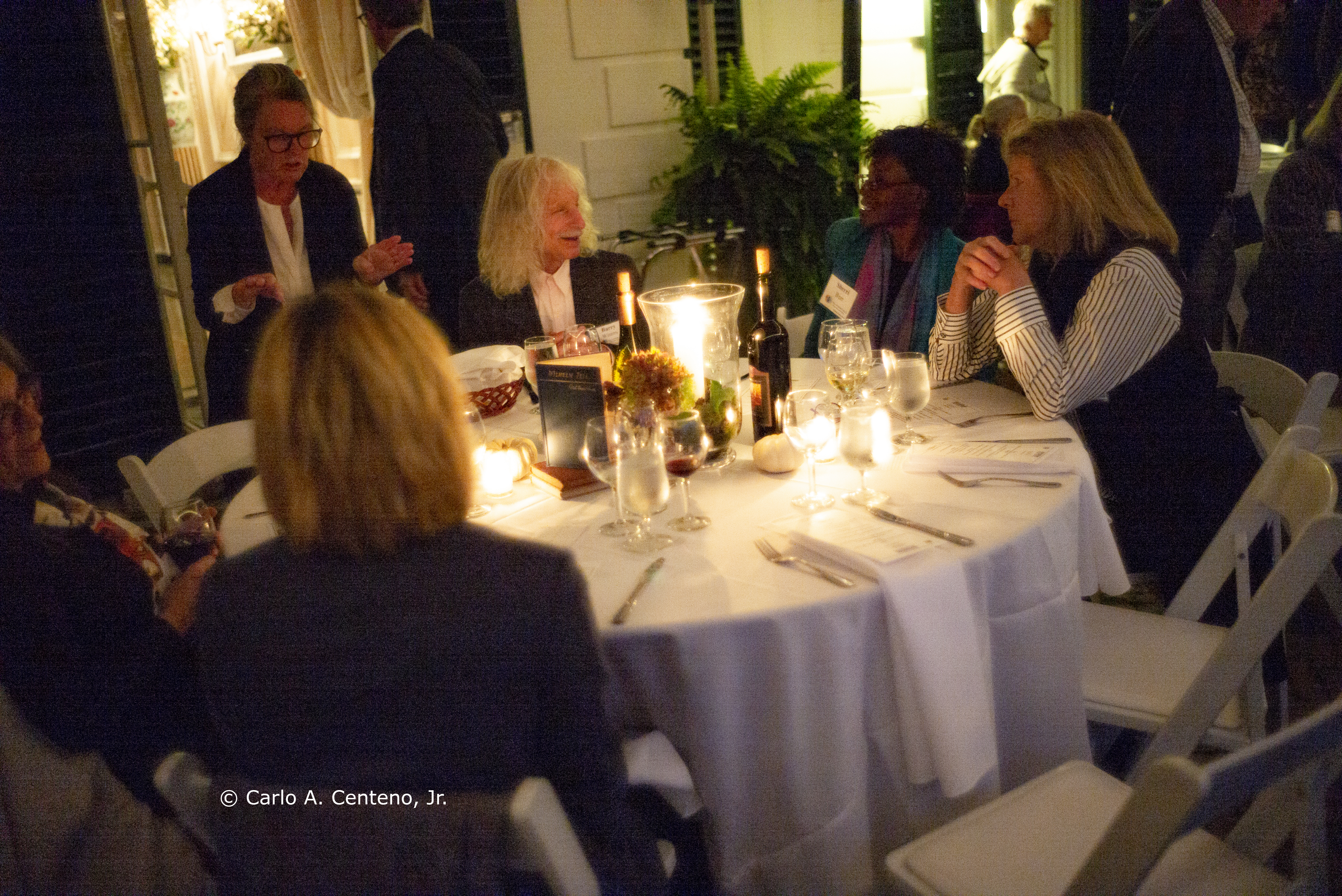
The dinner, served at The Mount: Home of Edith Wharton, was cleverly engaging. Instead of table numbers, the names of authors took their place. Your seat was placed at a designated table which bears the name of the author at the bottom of your name tag [Jean Cocteau] Your actual seat is marked by a small piece of paper with your name handwritten on it.
Each table had a visiting author/writer or playwrite to serve as a moderator. Our discussion started with introductions which quickly morphed into an eclectic blend of reality’s “top stories.” It didn’t take long to connect the dots. To hear one’s writing experience through the years did have a common denominator: persistence. No doubt I’d wager that most of the writers in the room have had to deal with many types of rejection. The cacophony of conversations, the tinkling of flatware against plates and the the intermittent sound of laughter made it clear that many, if not all, enjoyed being in this festival.
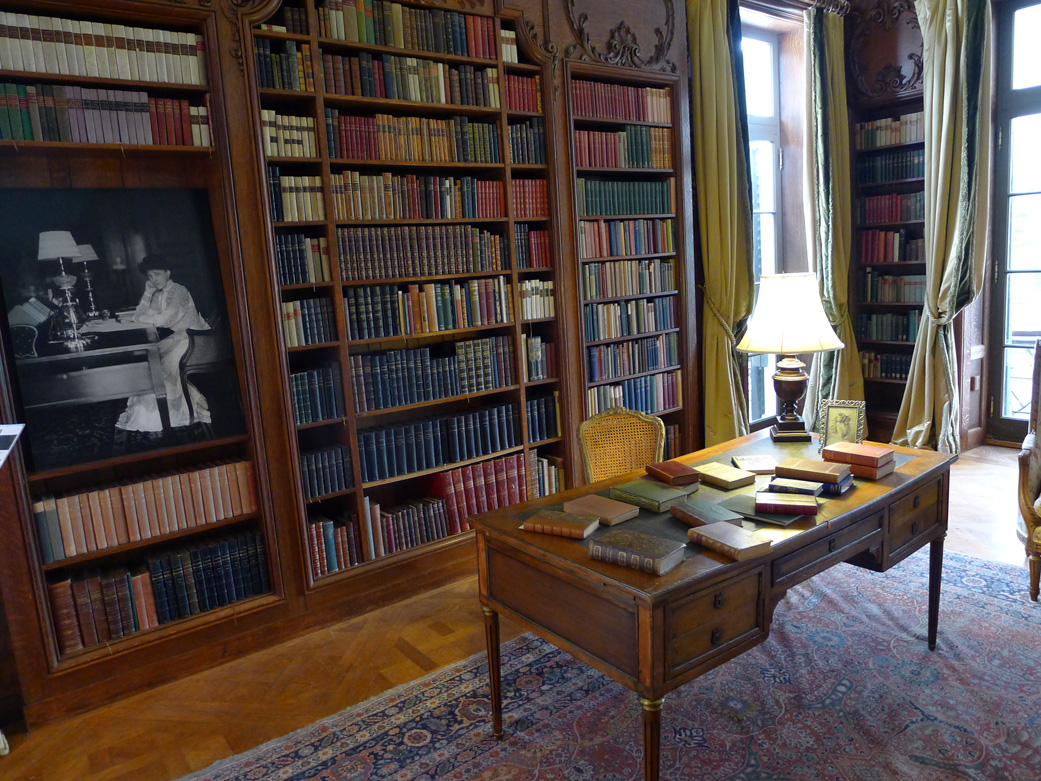
If you happen to visit the area, make a point of stopping at The Mount. Bear in mind that Ms. Wharton lived in that home. I marveled at the scale of its history, its art, design and much, much more .
All in all, I appreciated even more, the permanence and accessibility of books. They are tangible, finite in its content and physical features, yet infinitely capable of challenging your imagination and expectations. Such is the attractive symbiosis of humankind and the inanimate. Both are needed to create and sustain history, the arts, the sciences, and the stories that take shape into something palpable. A lot of my creative and professional work involves digital technologies. The past 2-years have made that more than obvious. Zoom meetings, laptops & desktops, flash drives and the always-on platforms in social media. We can access a myriad of things electronically, online of course, and the ease of that can make astringent our feeling and thinking from engaging in life that’s face-to-face. Books tend to provide the opposite for me. The pages in a novel can transport me to wherever. The sensory experience of turning and feeling pages are the toner that can spark my imagination and involvement in life. Recall Emily Dickinson’s poem, There is No Frigate Like a Book. To me it’s the leitmotif, that binds our imagination through the settings created by writers and authors. And I don’t need an app or device to open books.
As mentioned earlier, the Berkshires is more than a destination; for many, it’s a way of life.
There is no Frigate Like a Book There is no Frigate like a Book To take us Lands away, Nor any Coursers like a Page Of prancing Poetry – This Traverse may the poorest take Without oppress of Toll – How frugal is the Chariot That bears a Human soul. Emily Dickinson
Time, energy and focus are 3 KPIs [Key Performance Indicators] for mulitasking. And likely there are other indicators, and for those, I’ll need an ombudsman to help reset my already overloaded brain. In any one of these factors, you either have it, lose it or want it. For the most part, I’d say most people want them all, or to at least hold onto whatever’s in you.
However, multitasking is not really multitasking.
Ms. Nancy Napier, Ph.D. and contributor to Psychology Today identifies it more as “switch-tasking.” For decades we’ve heard that new electronics and computers and software are supposed to help make our professional lives much easier and faster, that’s rarely the case. Many of my marketing projects are open—actually minimized—on my screen. Perhaps “minimizing” those open windows and apps is in actually diluting the strength of your project[s]. Dr. Napier points out switching between projects is counter productive. In fact, it takes a good amount of time and energy to realign your mental details jumping from one open project to another. All of this creates stress [but we already knew that].
As Dr. Napier puts it, multitasking is mentally and physically rough on anyone. The mode of working start-stop-start-stop-restart becomes a catalyst for mistakes, inefficiency and time lost. As the saying goes, “Well, there’s 30-minutes I can’t get back.”
Did you happen to notice the bee in the first photo [the sunflower]? No, well, were you multitasking….excuse me, “switch tasking?”
……From a distance You look like my friend Even though we are at war. From a distance I just cannot comprehend What all this fighting’s for. From a distance There is harmony And it echoes through the land And it’s the hope of hopes It’s the love of loves It’s the heart of every man It’s the hope of hopes It’s the love of loves This is the song for every man. God is watching us God is watching us God is watching us From a distance.
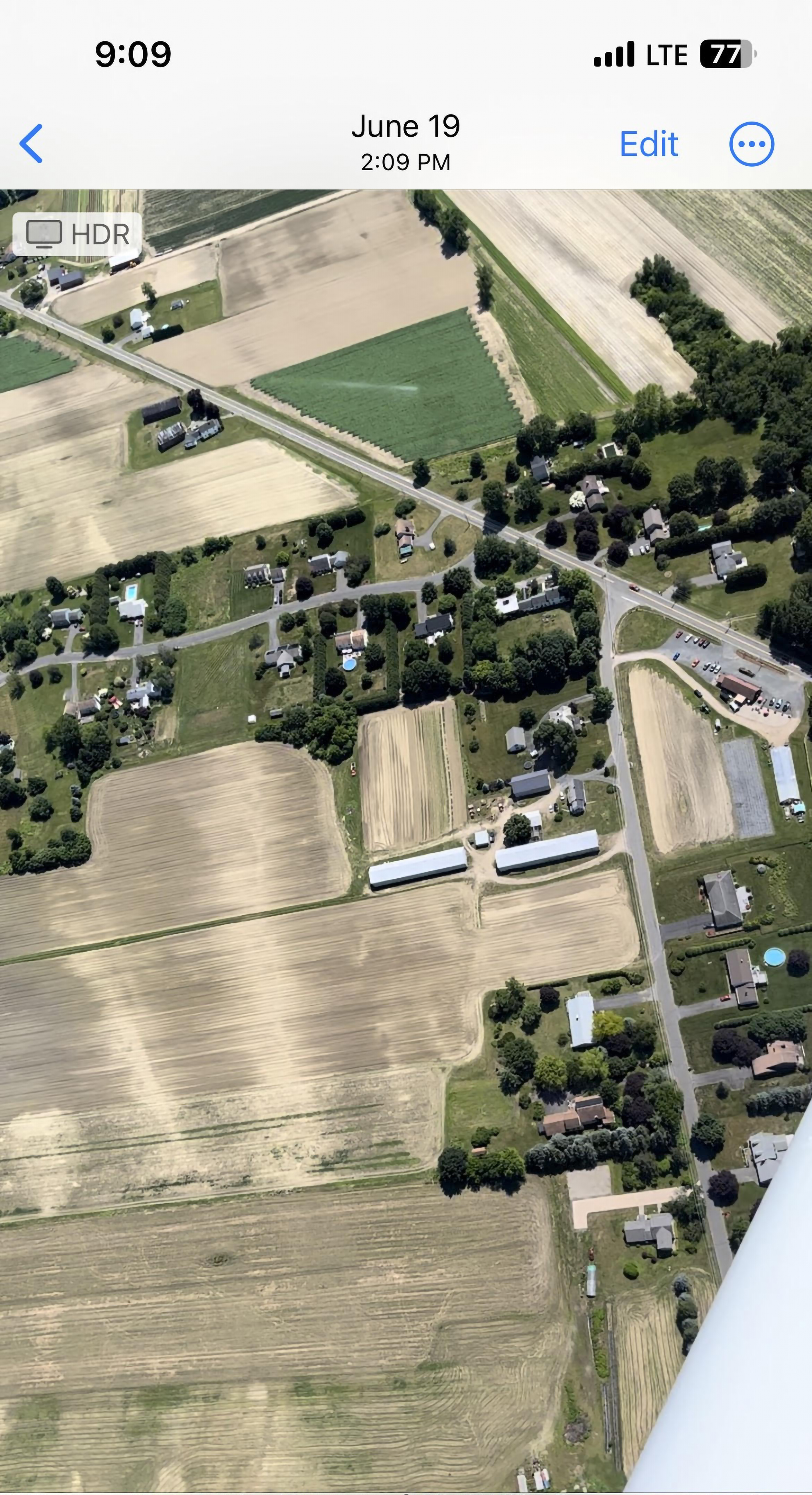
On a recent flight home, 2 songs came to mind. An epiphany of sorts became apparent as I looked down on Springfield, Massachusetts and Ski Sundown in New Hartford, Connecticut.
Ski Sundown in New Hartford, Connecticut
In light of the Ukraine-Russia war, it’s not a stretch to understand the effect of distance when watching something from afar. Things are not always as they seem, but up close, enough details emerge to create a clearer picture. Most of us see what’s happening from a distance, from the safety of our screens playing out “breaking news” of the terror and the maddening reality of one country imposing its incorrigible intentions on an independent nation.
At 29,000 feet [8,839 meters]
At altitude, it’s easy to “not see” the actualities of what’s coming and going at ground level. And yet what impacts me the most is how the innocents and defenders suffer and die, of how the children struggle to understand this detestation that arrived from nowhere. Modern journalism can report events as visceral and undiluted, anywhere at anytime. In that sense, we see more than what we want to.
I leave this post with the words Enjolras sang during the scene At the Barricades, from the musical, Les Miserables.
Do you hear the people sing? Singing a song of angry men? It is the music of a people Who will not be slaves again.
When the beating of your heart Echoes the beating of the drums. There is a life about to start When tomorrow comes.
Les Miserables by Victor Hugo Les Miserables, the London Musical, trademarked by Cameron Macintosh Overseas.
Not again. I can’t imagine the number of times I have thought of that remark let alone the times I’ve said it. I’ve been fortunate on many fronts and I’m more than grateful. The past 13-14 months or so, has been a journey of minor inconveniences compared to what others had to suffer through. I have no reason to complain. Then again with the Delta Variant on a rampage, I can’t help but wonder yet hope that common sense will prevail….
Two renaissance men: my son-in-law and his father.
I have a handful of avocations, each having one thing in common: I am comfortable when it’s me and myself involved. That sounds a bit self-absorbed, but it simply means I’m fine being alone. Being alone and lonely are two different things, obviously. Having alone time is important for one’s rejuvenation, at least for me. Photography, journaling, letter writing, playing the piano and fly-fishing are welcome pursuits for me. Granted the first and last distractions can be shared and done with others. On several occasions my wife, daughters and other family members have kept me company on nearby waters. Our fly rods might look like conductor batons in a free-for-all, an ensemble of asynchronous metronomes, where each length of graphite is tuned to the individual holder.
On those days when I’m out with a camera, my wife keeps me company. In the city, she waits for me to catch up when I stop to take a photo. After awhile though, the distance and the time it takes to catch up get a tad longer. On jaunts through the woods, the converse is true: our pace is calmer, slower than the one we use in the urban environment. Time takes its time [read: less frenetic] in natural spaces; and for me that’s how it should be.
To see something in the wild is often fleeting: the songbird you hear only to take flight once you actually see it; the whitetail deer that suddenly, inexplicably pops out from the background in what feels like a whisper’s distance, only to bound away just as you look to acknowledge its presence.
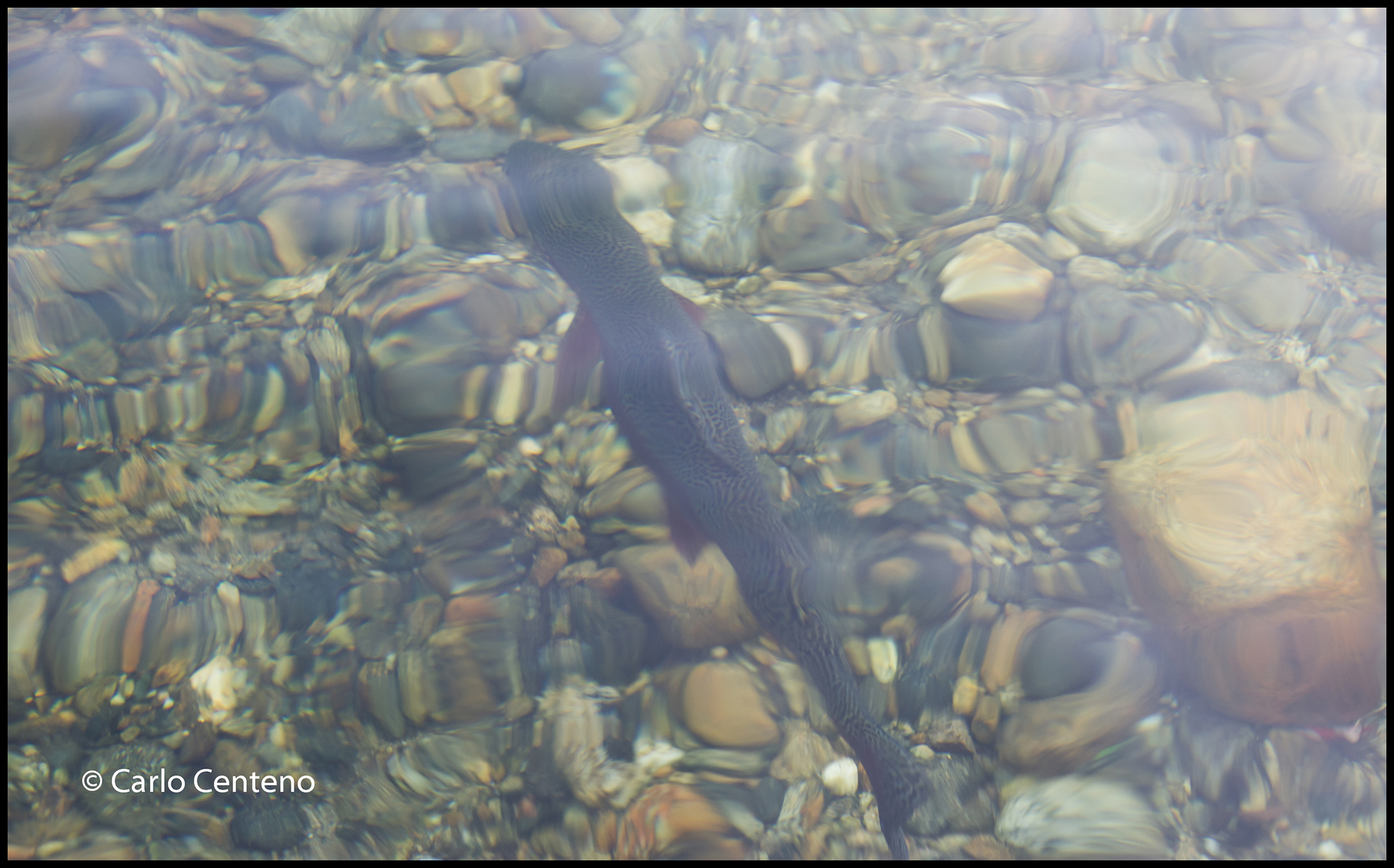
And then I’m handed a “pause” button. Fly-fishing can put a slight pause in what you’re looking at before the moment disappears. Having a landing net is an appreciation multiplier. It allows an opportunity to add a few seconds to really appreciate what you’re seeing. The Eastern Brook Trout is a jewel among fish. I never tire of catching this wild* freshwater creature that can only live in a healthy river or stream. Healthy, as in cold, clear and running. The existence of wild trout means the habitat we’re visiting is good for the fish and everything else that’s dependent on the river and surrounding area.
Ours is a symbiotic relationship with the natural world. Unfortunately, that relationship is out of balance and all things wild and natural are being short-changed by humankind’s behaviors. I find the safest social distance in the outdoors and the time there prompts me to examine the symbiotic and personal relationships I hold dear.
*wild versus native: a wild trout is one that’s been born in the very water it lives in. Wild trout/fish reproduce naturally in their habitat and sustain their populations. A native fish are those that have lived and thrived in areas that have had no or very little human interaction. A stocked fish is from a hatchery that’s typically managed by the state’s wildlife management.Regardless, please make an effort to carefully release these fish [a fly-fishing practice called catch-and-release]. It’s good for the neighborhoods we visit.
I started out in search of ordinary things How much of a tree bends in the wind I started telling the story without knowing the end I used to be darker, then I got lighter, then I got dark again Something too big to be seen was passing over and over me Well, it seemed like a routine case at first With the death of the shadow came a lightness of verse But the darkest of nights, in truth, still dazzles And I work myself until I’m frazzled I ended up in search of ordinary things Like how can a wave possibly be? I started running, and the concrete turned to sand I started running, and things didn’t pan out as planned In case things go poorly and I not return Remember the good things I’ve done In case things go poorly and I not return Remember the good things I’ve done Oh, oh, oh, oh-oh Done me in copyright Bill Callahan from the album, Sometimes I Wish We were an Eagle.
I’m told that feelings of nostalgia can be dangerous, dangerous in the sense that you can lose yourself enough to miss out on being in the moment. Possibly true, but in an attempt to put balance into my thinking here, I’d like to think that whatever and whenever nostalgia or recollections unapologetically come to mind—whether good, bad or ugly—I can use them to better appreciate what being in the moment means.
The lyrics to Bill Callahan‘s song, Jim Cain, never fails to stir something in me. Jim Cain was an American novelist, an author often referred to as the archetype of “hard-boiled novels.” Three of Cain’s novels found its way to the screen, each receiving critical acclaim: Double Indemnity, Mildred Pierce and The Postman Always Rings Twice.
The eponymous song is haunting yet contains elements or conditions which feel relevant. I make no claim to be an expert on Mr. Cain’s life or his work, and yet every time I listen to this specific song, sensations of deja vu slip in. Mr. Callahan’s style, his sound is wholly unique [IMHO], and indeed that character of voice and music composition reinforces key feelings in my ephemeral journey of 4 minutes, 39 seconds .
Several verses strike a chord [pun intended], however three lines ping my empathetic sensors:
I started running, and things didn’t pan out as planned In case things go poorly and I not return Remember the good things I’ve done
The photos in this gallery reach back 4 decades to a time that will always mean much to my personal and professional journeys. I’m convinced that most of us are running—some more determined than others—hoping to optimize careers, relationships, and of course, one’s sense of self. And yet in spite of shortcomings that can toss us off the saddle, we get up, and with additional effort we manage to return to the point where we stumbled. We carry on as we must.
When I look at these photos in the company of the music and lyrics of the aformentioned song, I recall the people, events and lessons which remain relevant. I’m reminded that many things in life are good and that some of that good is actually a product of my own doing or in collaboration with someone else or those in a group. Why reflect on the banal, the unpleasant, the incorrigible, among other soul-dampening sentiments? Because without them, you achieve little balance to various positives that fate hands you. Indeed there are plenty of those ill-feelings to weigh down our resolve to do better, day in-day out. Think back to an event ,a person, a vicissitude if you will, that later proved to be a turning point which led you to where you are now, or perhaps pushes you to finish a journey still in progress.
There are some years that snap and engage your entirety as a person, because it clarifies statements such as, “yup, been there, done that” to any number of realizations, each based on a chance or intention: “Yeah…that was stupid…and I’m not doing that again!” Over the years, we hear reprimands from parents, teachers and coaches, even our peers, which we in turn offer to our own children. I’d like to think that most reprimands are lessons filled with hope and expectation. We hope our young charges “get the message.”
To open archives of a time long ago produces a reawakening of feeling, dissonant and concordant. It all depends on context. My cohorts line up alongside nostalgia, in ways that yes, brings up yearning but also that understanding of, “I don’t think I would’ve made it this far if it weren’t for _________.” That blank line between “for” and the “.” has possibilities. For me, the ones I’ve chosen were life-changing. The elements of personalities, a moment in time–and especially at a specific point–are sealed. They are irrevocable and part of me.
Clearly on many levels, I am a better person because of such experiences. Throughout life, we move forward and as people and events become things of the past, of things which somehow shaped you, regardless of where you are and with plans you’ve made, you certainly have done good things worth remembering.
Spring is springing though the thermometer begs to differ. I have one of those old-fashioned stick thermometers encased in a brass sleeve attached just outside a window. It read a chilly 41-F [5-C], at 8:23 this morning.
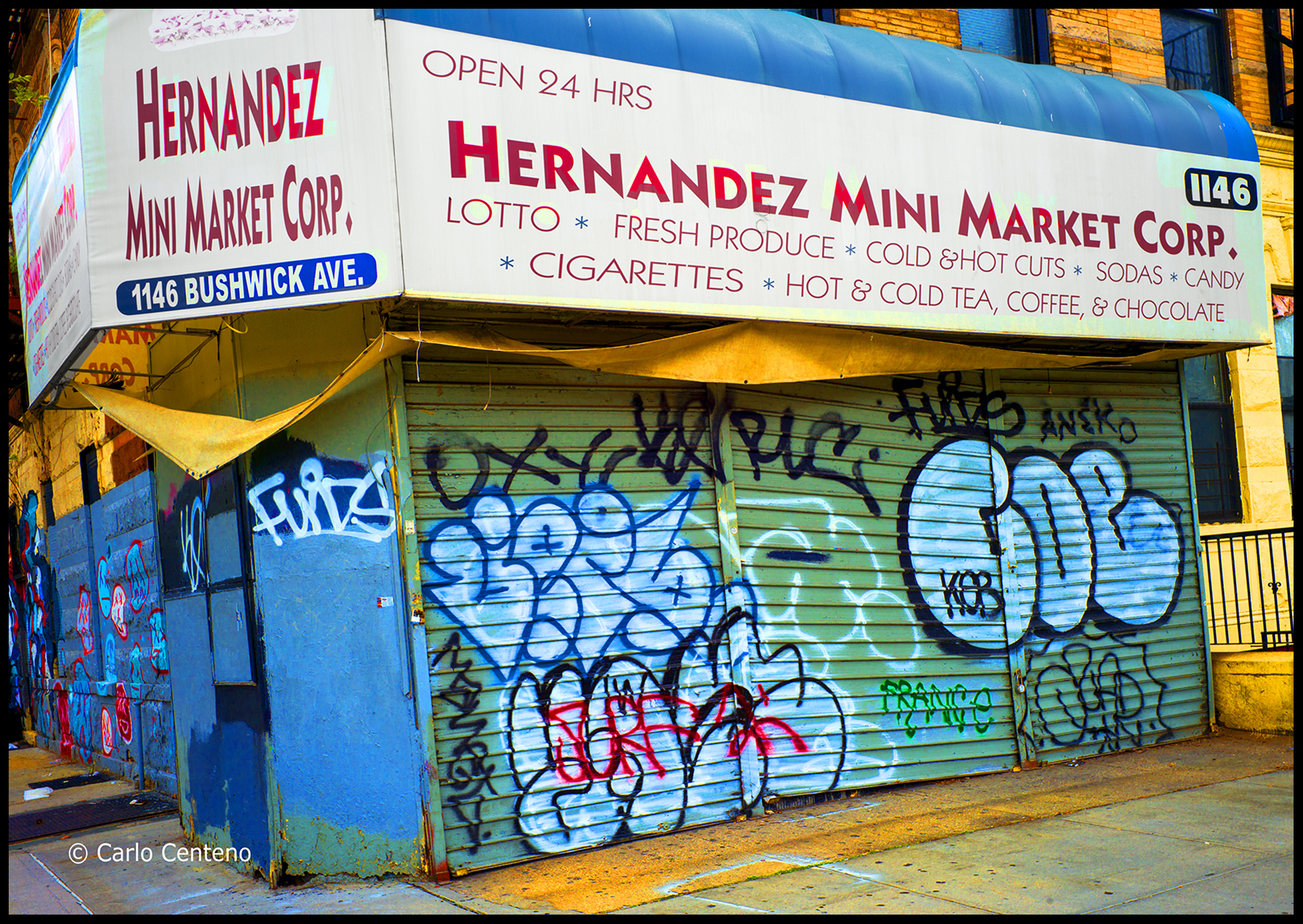
Whatever the temperature, we know that another season is here, although some of us are still bundled up. I think that’s better than huddling inside whining about the cold. In New England like the rest of the northeast, you expect the unexpected. An urban environment does have its share of color, especially those on display from flowering trees and shrubs. Yet I’m drawn to other colors which “pop” in front of me.
I find it a bit odd that not more people are out walking whether by themselves, or with a friend, or from behind a stroller or in the company of a dog. In most cases, it’s the dog walking the handler; I’m empathizing from the dog’s POV. More than likely, I have to keep on walking in order to see others coming and going to wherever they need to be. I need to continue my exploring and allow whatever creative divining rod I may possess to guide me.
It’s a bit ironic that in a city so large, not many were out. It wouldn’t surprise me that NYC could be mentioned as the city with the largest number of street photographers per square mile, whatever that number might be. Who knows, my sortie was on a so-so day at a time when more than not, folks just decided to stay put.
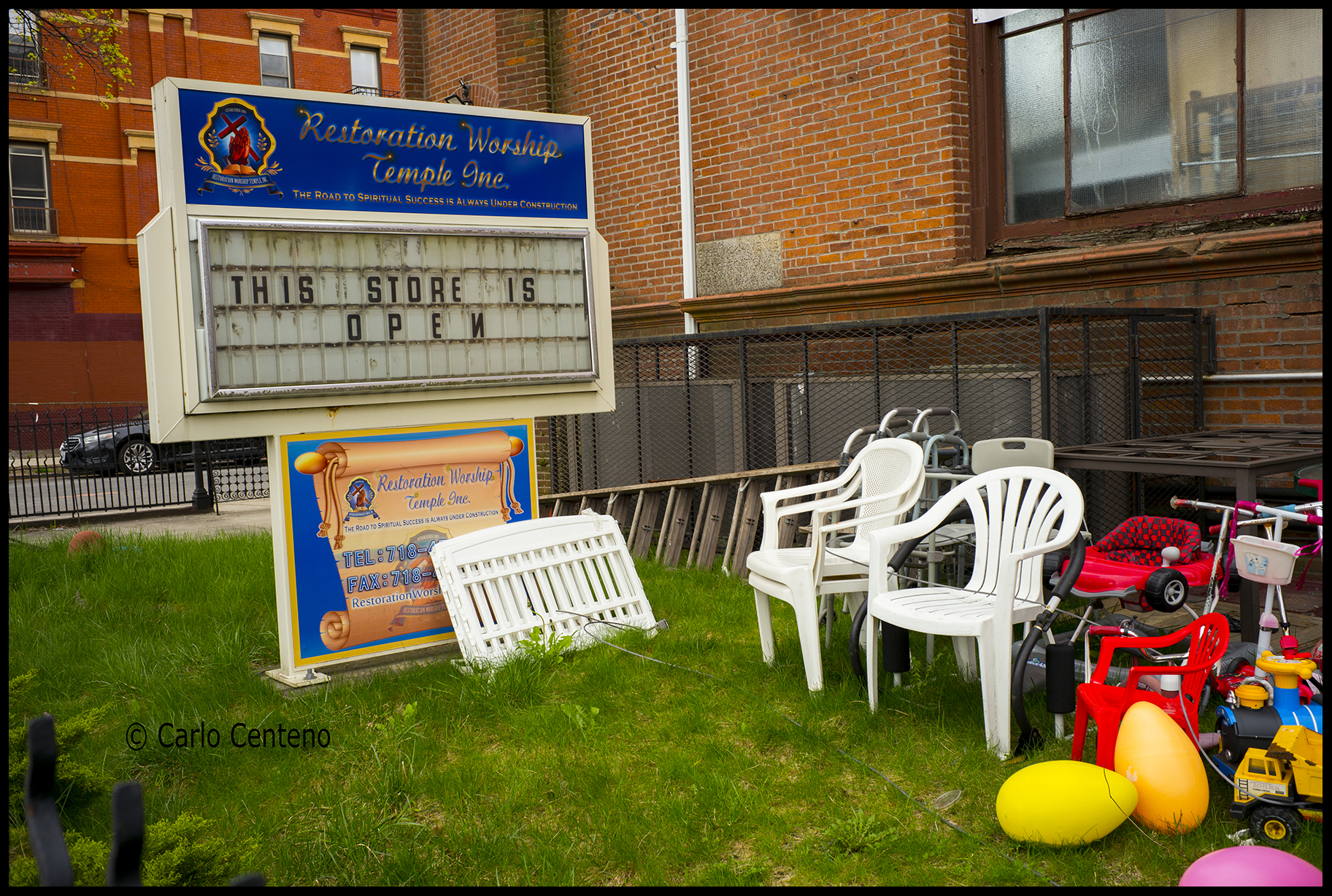
On the above marquis, the tagline to this church reads, “The road to spiritual success is always under construction.” For most of us, it means no one can attain spiritual success. This is akin to Sisyphus rolling his boulder uphill, only to fail when he comes so close to the top. His pathway to salvation is under construction in perpetuity.
A few of us have been [hand] writing for as long as we can remember. More specifically, letters, postcards and greeting cards. Conceit aside, I’m one of those anachronisms [I use fountain pens & bottled ink] and I enjoy writing in all its archaic forms.
Because of the pandemic, there’s a renewed interest in writing, whether a letter, in a journal, even on a page or two of plain paper. I find it all encouraging as voiced in this recent article in The Critic. Writing a letter isn’t what it used to be, but a few of us still find satisfaction in such a personal construct of thought and emotion. A part of me is contained therein. Some days, the pen skims across the paper and other times, it’s hard to get out the first sentence or two.
Decades from now, no one will need an app to read its content. Sentimental as it is, perhaps some of my family and friends will keep them in a shoe box of sorts. Each envelope containing a capsule of time and place.
A journal can capture and hold—albeit brief—a particular sentiment, an observation, an epiphany perhaps more. And like letters, there is an enduring permanence to what’s put into and left on the paper. In a recent [April 13, 2021] issue of the Wall Street Journal, staff writer Ellen Byron wrote, “How Journaling Can Help You Live Your Best Life.” The Byron article reads more like a primer on the hows and whys of writing and using a journal.
Journal writing is cathartic and offers a number of ways to express practically anything. I write to an alter-ego, directly to myself and at times even address myself in the third person. When I move myself from the “I” to “he,” the dynamic changes. Writing in the third person creates a buffer of sorts, a moat if you will which separates the person in the moment from the person that offers perspective.
A large part of the catharsis revolves around time slowing to a less frenetic cadence. The efficiency or speed of the digital realm fosters an expectation of click-it-now, get-it-now. Letters and journals are the antithesis of such expectations.
Go ahead. Take a pen and some paper and write something, anything, that comes to mind. What matters is you’ve made a decision to place part of yourself right in front of you.




























 Carlo Centeno