 If you’re curious, you’ll find my most recent post here.
Category: opinion
A Soiree of Symphonic Relevance

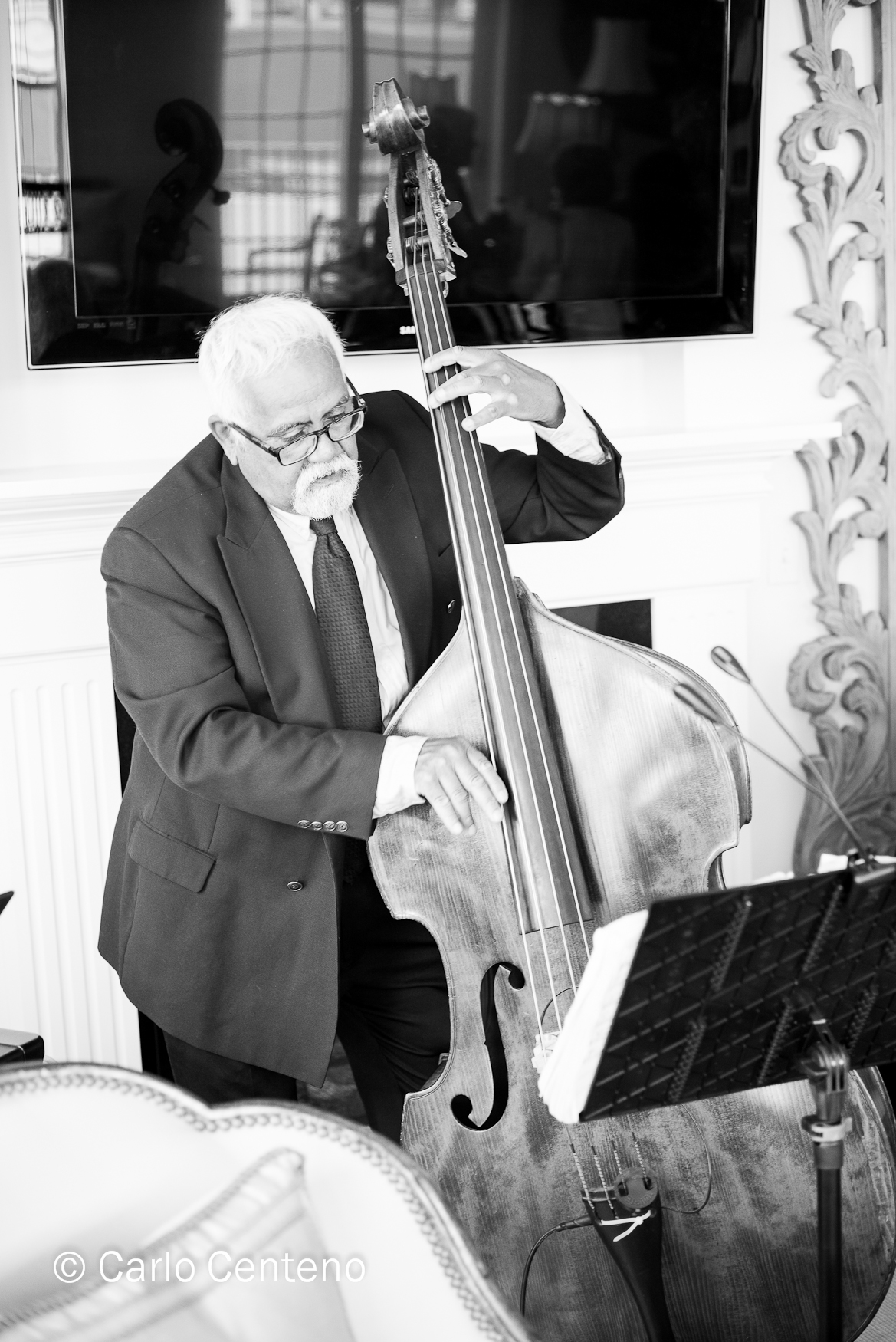
For approximately 2.5 hours on a beautiful summer night, Nancy and Jerry Hoffman graciously hosted an early evening function, one which acknowledged the generosity of patrons supporting the Hartford Symphony Orchestra.
Back in May during the annual gala for the HSO, one of the auction items was an evening spent at the Hoffman’s West Hartford penthouse. The lucky bidders/supporters were treated to jazz music and popular standards while hot and cold hors d’oeuvres were served and select wines and spirits were poured.
Enjoy the photo-essay [click on an indvidual photo for closer viewing].



![Frank Travis [L] and Pierre Guertin, former HSO Board Member and Past President.](https://carlocenteno.com/wp-content/uploads/2015/06/15-hoffman-symphony-1005366.jpg)






![[L-R] Barbara Hess, Frank Travis and Sharon Rizikow.](https://carlocenteno.com/wp-content/uploads/2015/06/15-hoffman-symphony-1005336.jpg)







A Marketing Department of One

Music Matters
In my line of work, you host, sponsor and get invited to a variety of events from various non-profit agencies and causes. Most everyone can understand donation requests in the form of food, clothing, footwear and safe housing. The need for basic items will not abate and is likely not to.
 This past weekend, my wife and I were invited by 2 wonderful friends to attend the annual Hartford Symphony BRAVO! gala to support the HSO and its various programs. This may sound like a declaration for music appreciation, perhaps it is because other than imagery, music is a vehicle that connects you to some of your most profund emotions: fear, joy, nostalgia, regret, anticipation, optimism, self-worth among others.
 Many galas are over the top [in a good way!], but if you get past the themes, decorative accoutrements, wine, main course, dessert and coffee/tea, there’s no wondering about the main purpose of these functions: to procure money and moral support.
 Ticket sales alone cannot support a symphony; that’s too much to expect in this day and age. I believe such was the case many years ago. Financial and moral support need not be mutually exclusive. Think in terms of helping children and young people. Like other major symphony orchestras, the HSO creates programs that encourages kids to become more involved with music. At the very least, to increase our involvement through time, talent, financial contributions or combinations thereof.
 We see many things connected to the arts falling away due to budget cuts. Materials, instruments, field trips, special visits/talks from artist themselves and so forth disappear. Like any other solid corporation, the HSO gives back to the community. In the case of the HSO, it’s more about teaching kids about the power of music. Neophytes are not the exclusive target audience; experienced student musicians also beneifit from music-focused programs and activities.
It’s not a stretch to think—and feel—that music matters.


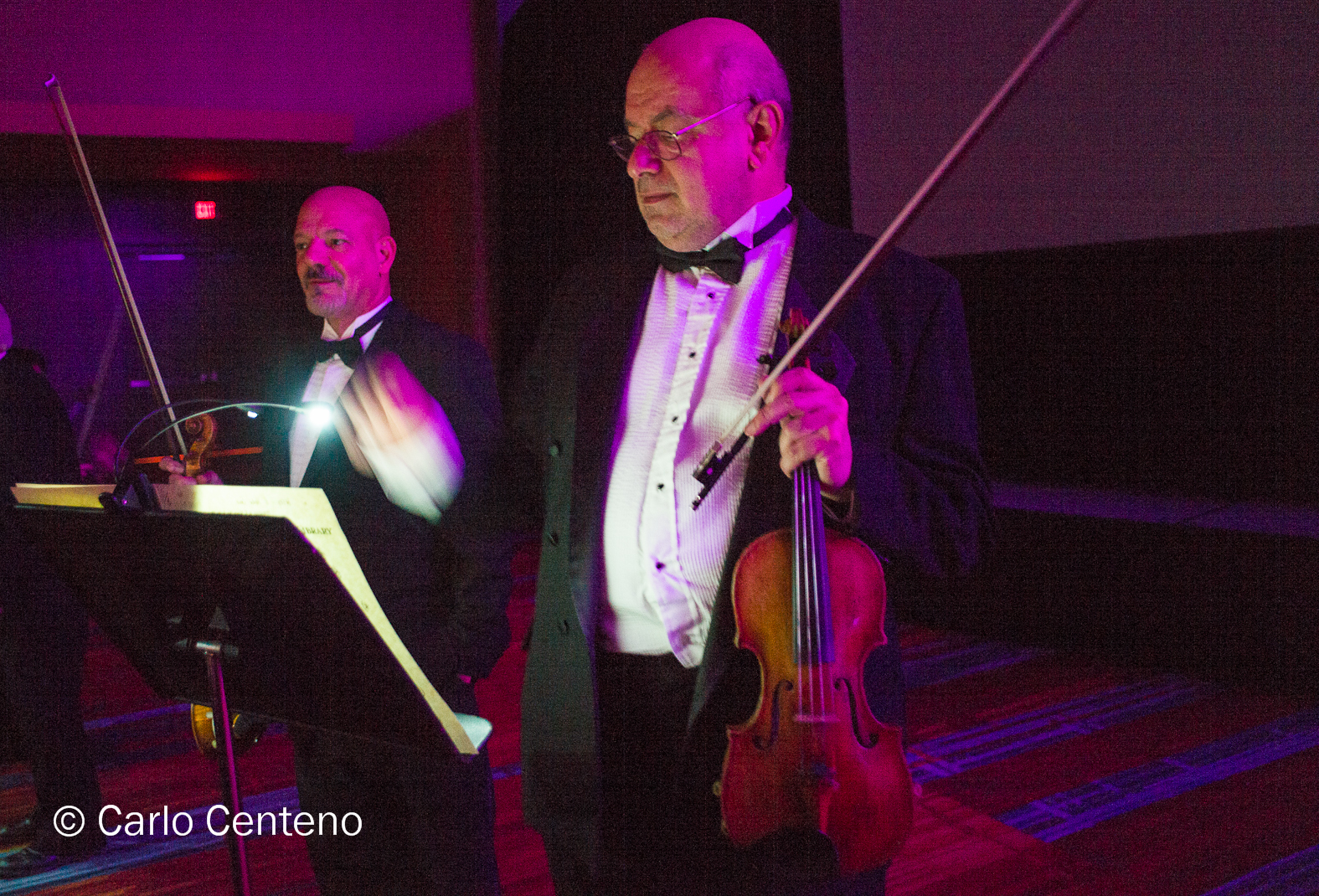




Technical: All images taken with a Leica M, Elmarit 28mm f/2.8 lens: ISO ranges from 400 to 3200.
Training to be happy, or, Does your bank account size matter?
In the November 10th issue of the Wall Street Journal was an article, Can Money Buy Happiness? I’m referencing the print edition though as most would know, you can find the article online [I’ve linked it in the first sentence]. The article doesn’t offer any real surprises; I found no epiphanies in the story. I did however, analyze my own sense of personal happiness. Perhaps because of my age, I’m seeing a closer link to happiness through the relationships I have as opposed to wanting for things I don’t have.

So, what then, can I proffer in the guise of enlightenment? Here’s my short list:
- What you have in your bank account is important, but the greater question is, what do you intend to do with it? I won’t disagree that having a lot of expendable money can be very nice, but money, like things, has an emphemeral quality.
- Personal happiness must start with yourself. Self-evident, but I think we underestimate our own value, or own physical and emotional net-worth. In our age of “Reality TV,” celebrity adulation and toxic levels of narcissism , comparisons are inevitable. Other folks appear to be happier than me. Remember that apperances can be deceiving.
- Training yourself to be happy [for me] starts and ends with a blessing. I think of so many who really cannot count on what I have: my health, my mobility, the use of all my senses, a roof over my head, 3 meals a day [often more], my friends, my family, a good sense of the person that I am or have come to be.
- The accumulation of possessions will inevitably either go static or possess its owners, even both. If you pursue material things, by the time you get to your nth handbag, pair of shoes, latest digital device, fancy watch, or what have you, all the other prior possessions of similar ilk will spend more time dormant, even forgotten, in boxes within a drawer among other things also delegated to second [or third, fourth], place.

Whenever I get caught up in comparisons, or wanting to get something to increase my happiness, I think of this guy. We all should be more childlike; all too often, we’re just plain childish. Life should be, can be, much simplier and thus happier.
Political Brands and Polarization
I can’t recall when branding became a cultural cutting tool. In the halcyon days of advertising [my window being the late sixties to the early 1980s], the marketing message focused more on benefits versus negatives. Today, there’s more when-compared-to-a-leading brand tactic in positioning an advertiser’s advantage or benefit to the consumer. Comparative advertising is not novel, however I sense a stronger delineation between two similar products or services vying for the same consumer’s attention. Negative advertising might be viewed as a type of comparative advertising. The first is more about having a superior product or service, while the latter is more about the inferior nature of the product or service.
My arrival at this junction of brand and polarization is the result of the frequent bombardment of political ads across the media spectrum: digital, print and broadcast. Political ads have never been pretty or pleasant as most I’d say are highly negative if not banal by nature. The few “wholesome” spots are done to show the humanity of a candidate. Strategists however,think delivering a negative message is the most effective way to discourage a voter from choosing an opponent. Make the other person look bad to make my candidate appear better is the thought process there.
As a result of this, I see more polarization across our diverse culture. It doesn’t matter if you’re a card-carrying democrat or republican or libertarian. Polticial divisions are no longer bordered with temperance or a reciprocal respect for one view over another. At the base of these divisions is a my way or no way kind of thinking.
But…now that mid-term elections in the USA are done, perhaps we can see something new from our federal and state governments, something that can provide some semblance of balance without taking advantage of one group over another, something that allows us to move forward instead of remaining entangled in ideological gridlock: compromise.
Personal Branding & a Jellyfish
Noted marine biologist, Edith Widder, Ph.D. has spent much of her life under water. She has in fact devoted her professional energy to creatures living in oceans so deep that the light of day will never reach them. On November 23, Dr. Widder will be giving a talk, open to the public, about her work on bioluminescence and marine life. I’m looking forward to it for a variety of reasons not the least being my curiosity and fascination for things different.
copyright Edith Widder
This photo is a good example of what she studies, specifically, bioluminescence. It’s that unique ability to generate light, light as the result of chemical reactions inside the organism. On the one hand, you have the image on the right side of the frame. It shows the jellyfish as it appears under natural light. The image on the left is the same animal but in suroundings totally devoid of light.
The point I’m getting to is this: is your personal brand consistent across work environments? Does it change in any way, and if so, is the change pronounced enough to be noticed? Think of mannerisms [behavior and comments] and appearance [attire and grooming].
I suspect that under extreme conditions, some people undergo changes that could leave others scratching their head. “When did he decide to wear really nice-looking suits?” However, for most of us, we don’t so much change our personal brand as much as we do tweaking it. We dial in some adjustments to reinforce an attribute or suggest another. A long time ago, I read somewhere—and it probably came from an Italian designer—that three things signal a person’s sense of accomplishment, confidence and purpose: a wristwatch, shoes and writing instrument. Interesting.
Regarding wristwatches, using mechanical watches—either hand wound or self-winding, reinforces to an erudite observer that the wearer has a sense about time’s importance. Mechanical watches require attention. A nice [Swiss, German, e.g.] automatic watch represents a high level of skill and expertise in watchmaking. Costs aside, I like to think that the wearer of such accessories has an awareness and appreciation for fine watchmaking. The same can be said of the other 2 items. A good pen—especially a fountain pen—speaks volumes about the user. And like the automatic wristwatch, observations cover both positive [learned, confident, assured, accomplished, e.g.] and negative [flashy, poor use of money, attention seeker, pretentious, e.g.]. I don’t think I need to elaborate on footwear at this point.
So then, what aspects of your personal brand are you fine tuning? Are the adjustments or changes subtle or dramatic in their expression….like our jellyfish?
 Carlo Centeno