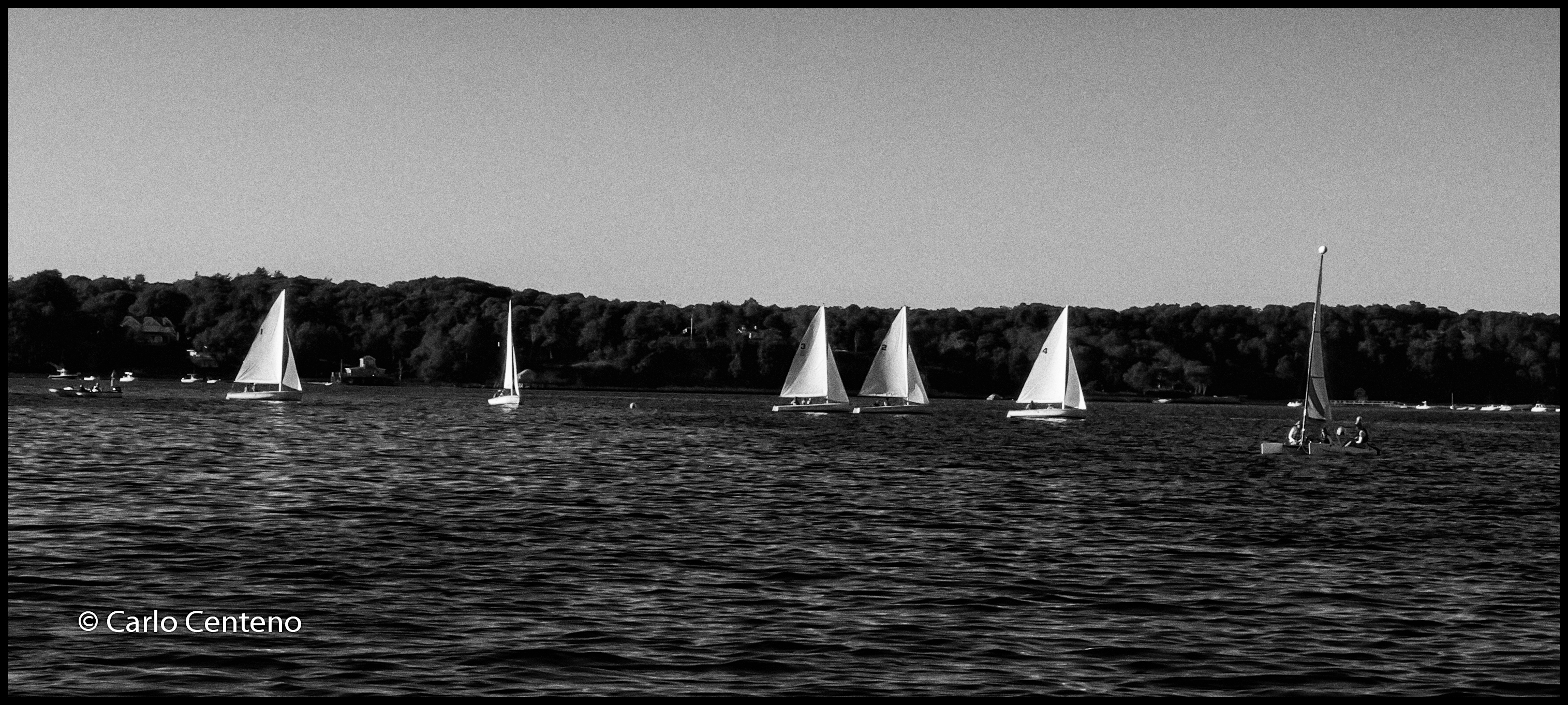
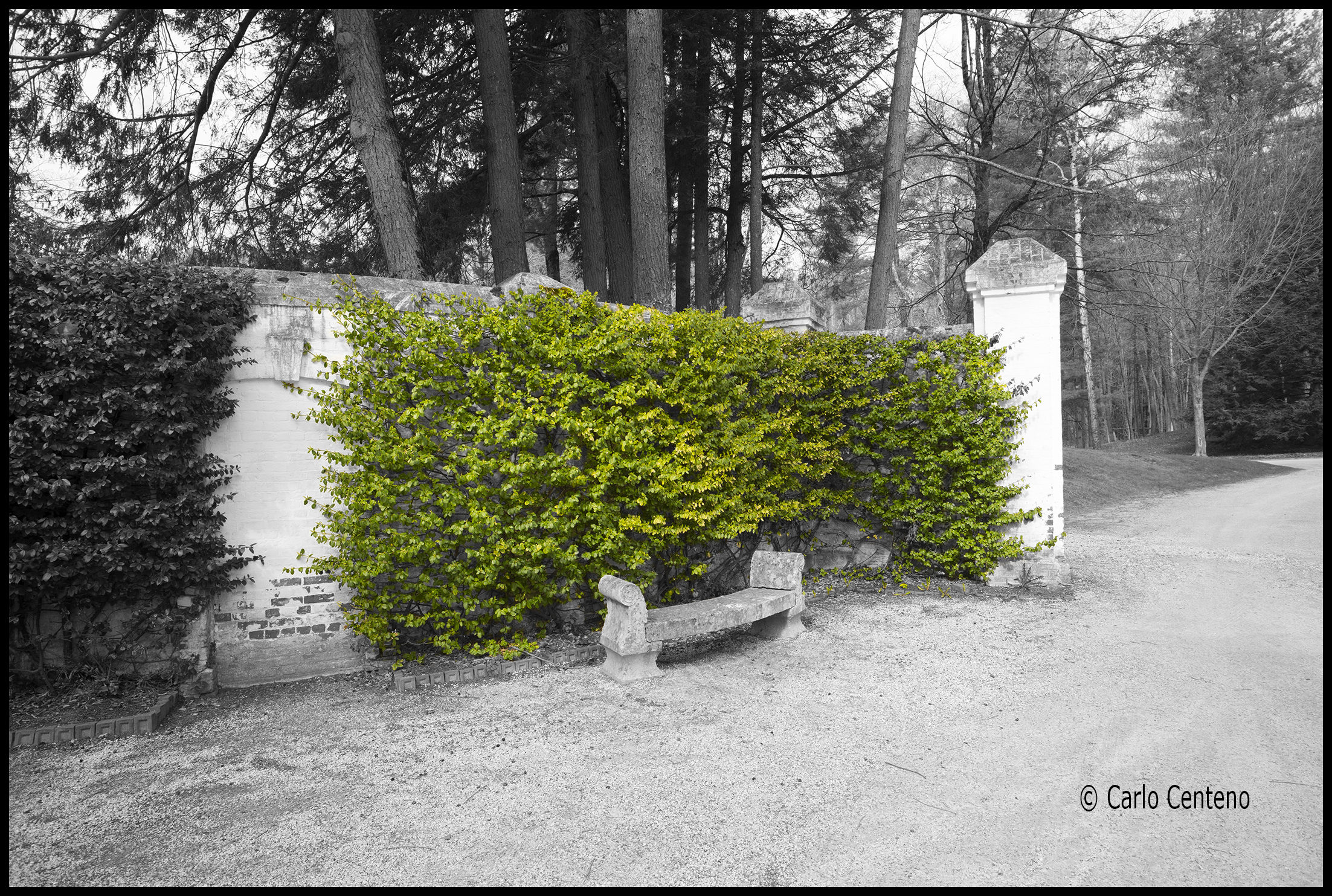
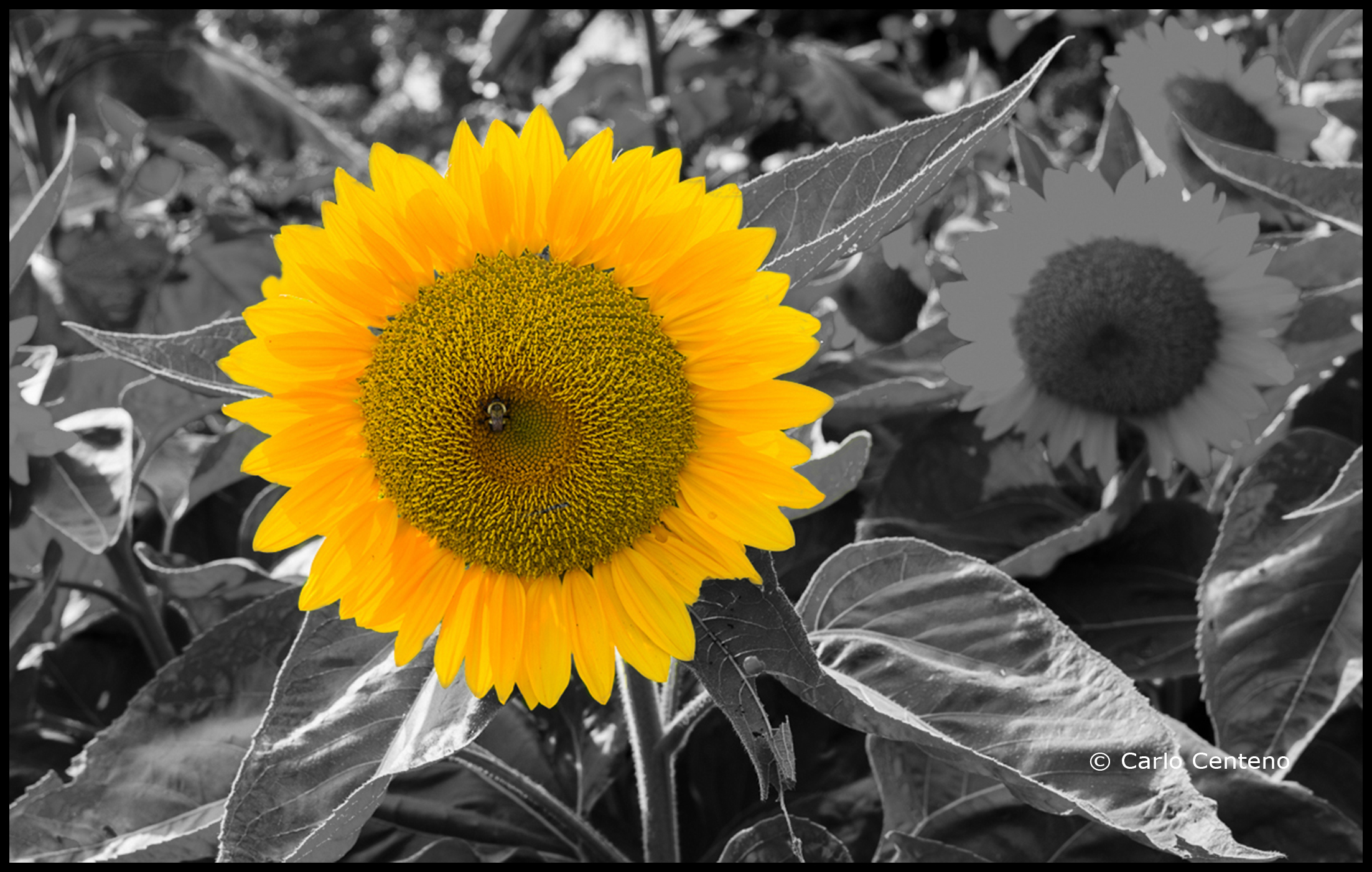
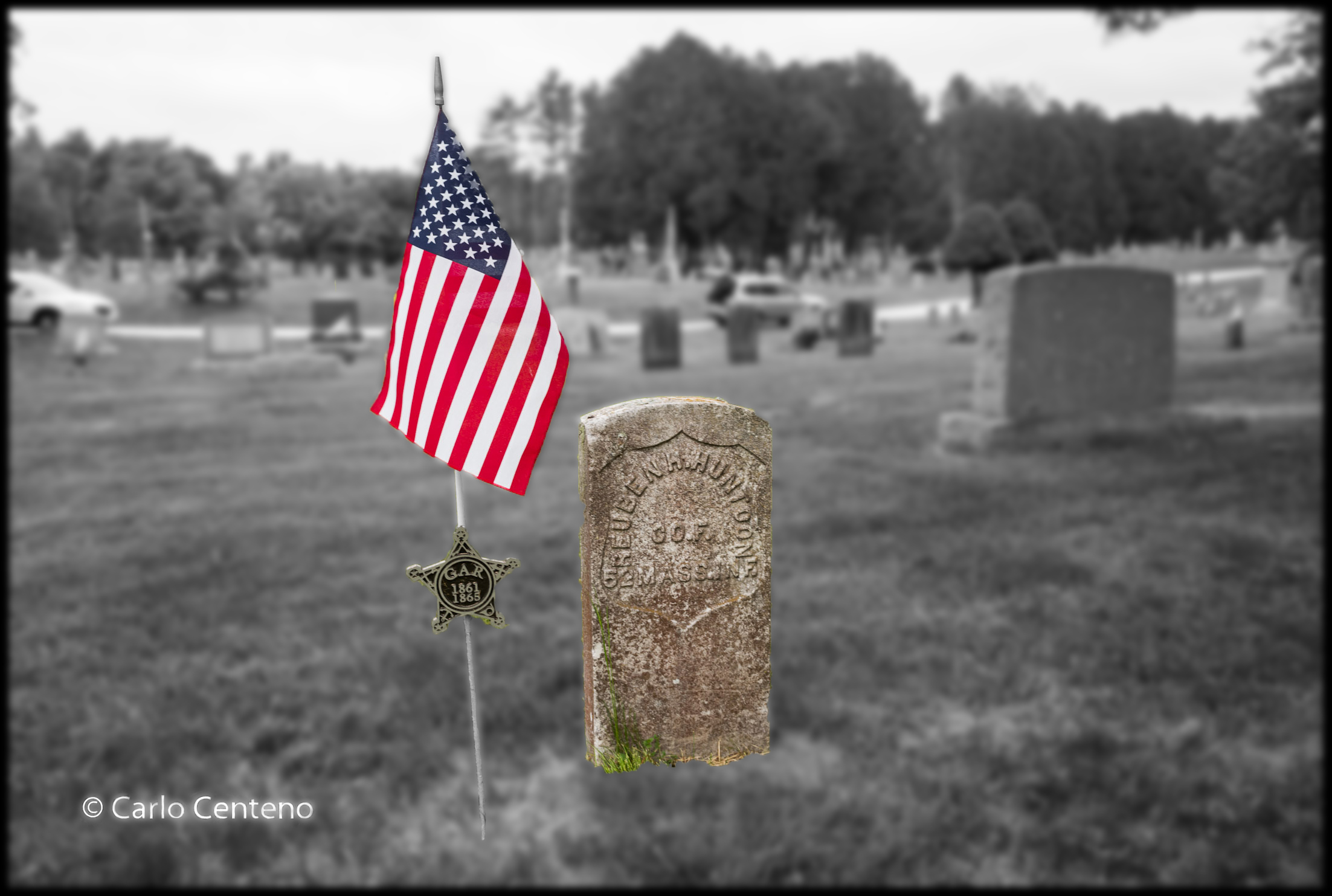
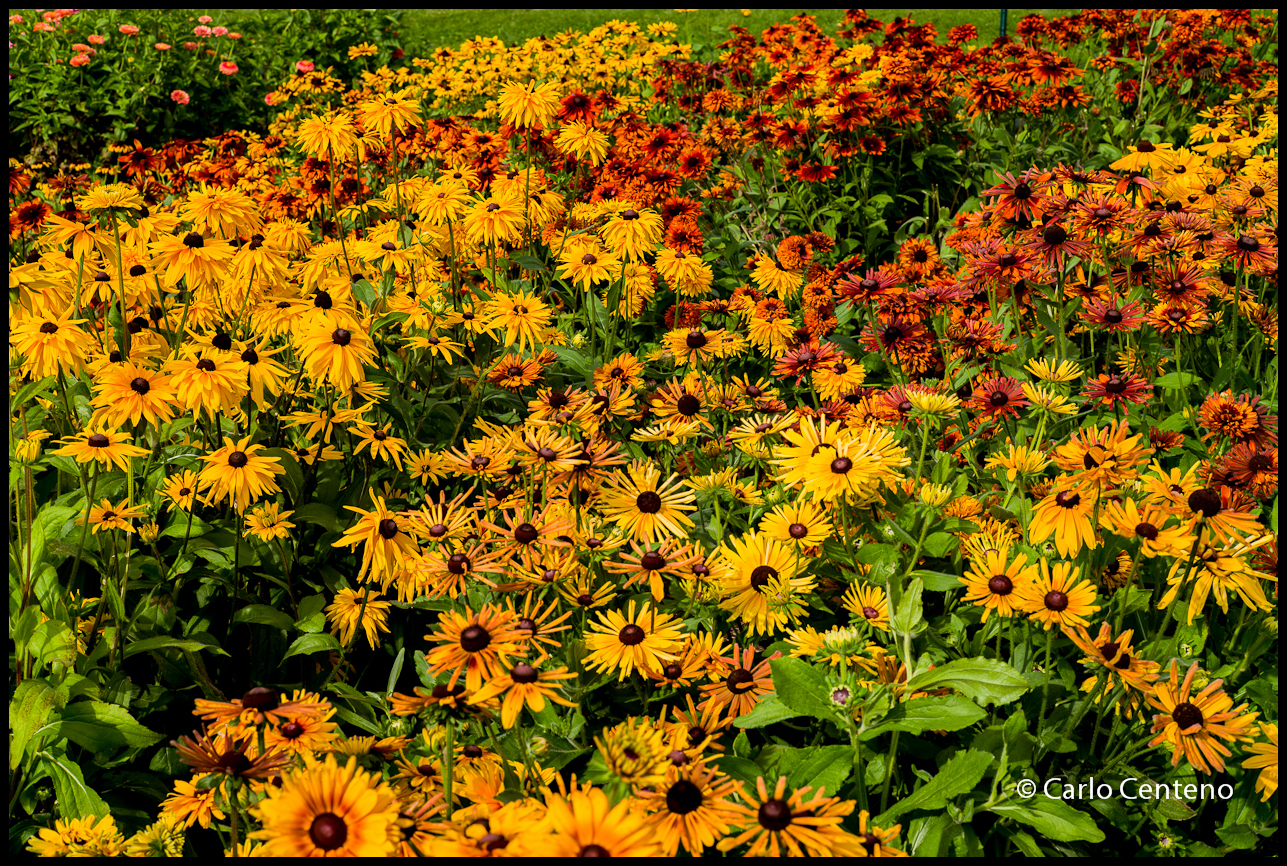
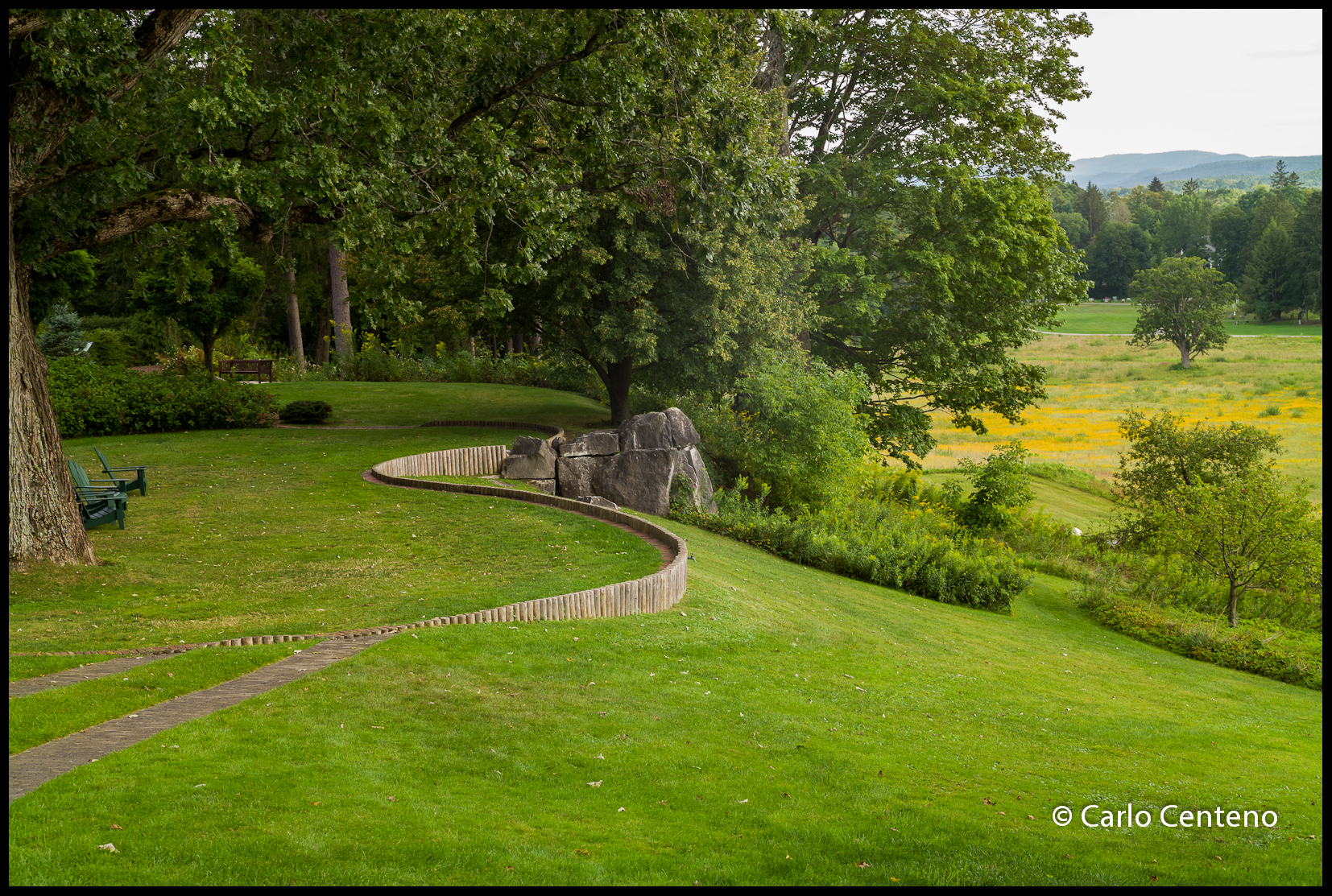
There’s an ageless argument in photography involving 2 camps, one staunchly defending B&W as “more real” than color images, and of course vice-versa. Who’s right? Or wrong?
My take on this may seem like a cop-out, but choosing one over the other because it’s “more real” doesn’t resonate with me. The interpretation of any photograph is highly personal, so regardless of an image presented in B&W or color–or combinations of both–what you feel makes the image real.
Some days, I see and feel things that tell me to shoot B&W. Similarly, it goes the other direction where my sensitivities lean to color, even one particular color.
Yet these images can confound the entire argument because of my resolute commitment to personally see or find things that prompts a connection. Are these photographs less real because of my choice in isolating or selecting an object, shape, color or theme?
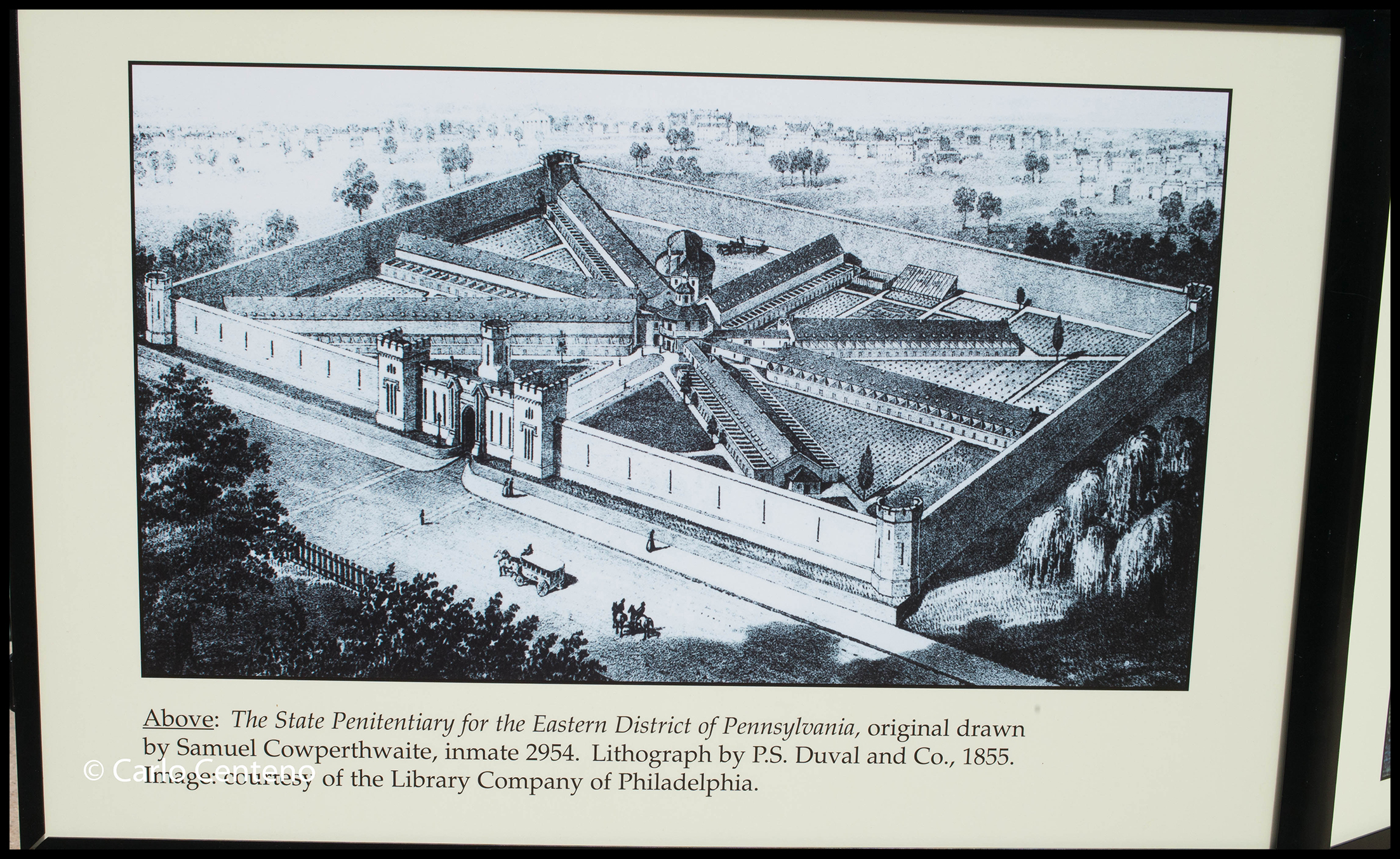
The prison in Philadelphia was built to help those find and practice penitence for whatever crime they committed. Human nature can be flexible and adaptable across time, however, incarceration and solitary confinement has a way of bringing ruin to flexibility and adaptation.
With that ruin, even the strongest of men—and women—lose their hearts, emotions, everything, to spiritual atrophy.
If marketing is the means to help us remember a brand and its benefits, then the marketing of such museums is to reinforce the unimaginable cruelty were capable of, and to keep alive the most powerful and universal of virtues that are love and hope.
In less than a week, the northeast USA got hit with another storm. While many are so tired of winter, many more are really done with snow and the cold and wanting spring to arrive. Now.
With close to 10 inches [25 cm] of wet, heavy, snow falling overnight, the next morning did not disappoint for people like me.
With nothing but stillness and silence all around me this morning, I thought of Dan Gurney, an incredible achiever by any standard, who said something to the effect of, “If you see something and can make it beautiful, but choose not to, what does that say about you?”
I recently attended the Digital Marketing Summit for Financial Services & Advisors in NYC. The sea-change in marketing as a science is nothing short of overwhelming. It’s not a stretch to feel data sets [Big Data] testing your senses of feasibility in order to select specific data that can help shape your marketing messages and strategies.
My fascination for everything that is Formula 1 is insatiable, including the way F1 teams develop new technologies to gain a competitive edge under the rules. In recent years, digital data procurement has become de rigueur , just as it has in marketing. There’s no escaping it, there’s no going back. The Summit was well attended, moderated with timely panels and break-out discussions; collectively the 2.5 days allowed me to get in over my head on various “How To….” and “Why Social Media is….” findings, benchmarks and strategies. Professionals from across the USA, Canada, Trinidad Tobago, Germany, England, and other countries were on hand.
The digital marketing and social media cognoscenti may know this already, but these are my Summit take-aways:
Be willing to experiment with your digital tactics, to try things and rule them in/out based on the experience & findings
Marketing, compliance, operations and client service represent the minimum of a purposeful “department” to keep your brand integrated in the customer experience. Working in silos will not provide insights or competitive advantages
It’s unreasonable to expect to have one, even two, IT professionals to manage the entirety that is digital marketing. You will need experts who specialize in a given field or discipline
Clients will expect “frictionless” and real-time interactions with financial services [Example: Amazon is testing AmazonGo, an app that allows you to physically walk into an Amazon store–bricks and mortar–select items you want, and then walk out of the store. The app takes care of all the financial interactions that had just taken place, in real-time
Technology, however sophisticated, can never be a substitute, let alone a panacea, for person-to-person interaction
The diagram noted above is the [estimated] output of a Formula 1 car during practice at this year’s Malaysian GP. The data set is a representative overview of what the driver must know based on speed, gear selection, braking points, acceleration points, track sections and the use of the car’s DRS [Drag Reduction System] to optimize aerodynamics. That’s just a partial list. All told, an actual race sends 1.5 billion data samples to race engineers who monitor the action from their paddocks.
Having access to data sets is far different from the utilization of specific data sets that you believe can optimize your marketing strategy. Ultimately, two goals need to be accomplished: 1) is to consistently, authentically provide to the client the experience that your brand promises, and 2) to deliver on that promise profitably.
In a short period of time, a tsunami of products and services have overwhelmed our values to such a point that we’ve conditioned ourselves to expect the next version of something, to be better than the one we already have. But we’re not any happier or better in our day-to-day lives. Not all consumers consume as such. There is a distinction between a collector and an accumulator.
Longmeadow–October 2017
The sheer number of branded products vying for our attention—and our money—is beyond words. Our attention spans are already fractured from our immersion in diversions and distractions. Is it any wonder that marketers are looking for that strategy which helps their brands to stand out, to be readily noticed and purchased, to be the “next best thing?”
So, how do we optimize the value of our brands, which by the way, also includes our personal brand?
Minimalism.
During my walkabout with camera in hand, I noticed in a meadow a particular detail that stood out: specs of white in an expanse of green, brown and yellow. If the meadow is a designated market area [DMA], the flora its products and services, then it’s easy to recognize the stand out among all the offerings. The simple, white flowers.
These flowers lack the colorful palette of warm yellows, reds and oranges, which is precisely the point. One color, was enough to make our “product” stand out from the rest of the other flowering plants. If we are to champion some level of emotional ownership for a brand, more is often not always better. In fact, the challenge becomes finding the single most relevant, genuine quality that deserves attention. That quality is a narrative that needs to be told.
That quality doesn’t need to be original [nothing is anymore, really], but must be genuine. The quality is accessible, identifiable, perhaps even an antidote to the distractions that contribute to our sensory overload. Marketing minimalism is the distillation of that particular quality that allows the brand to stand out. In this day and age of “reality-this-or-that,” there is a hunger for something far more genuine, more real, more tangible that removes us from our penchant to consume or accumulate things.
Road photography. Funny, in many ways when I look at things, this is how I “see” the detail or details I’m drawn to. It could be a color, a line, a shadow, a shape, a motion of some kind. Perhaps even combinations thereof…
On the road again Goin’ places that I’ve never been Seein’ things that I may never see again And I can’t wait to get on the road again
Johnny Cash & Willie Nelson
For me, one of the better ways to decrease the clutter in my head is to take a drive with camera in tow. Road photography. It should be a category of its own. Sometimes I have a location in mind, mostly I don’t. Where the road leads and the sun moves are my travel indicators. I chase the light, I welcome serendipity and I relish the freedom that time brings. Driving the back roads—especially those off the major interstates—offer catharsis. It works.
All of what’s happening this time of year places me in and around appropriate elements: temperature, quality of light, temperament, creativity, among others. I’ll admit, this is my favorite time of year, the cooler weather being a preference of mine. My take is that all of us—like the plants and trees and the critters—undergo if not experience changes. Subtle, dramatic, melancholic, joyous: it’s all there if we allow ourselves to be more open, and less encapsuled by the rote of day-to-day.
Not quite summer’s end, not really autumn yet, but the cusp that enjoins these 2 seasons is before us. I love this time of year.
Naumkeag is an incredible place because it allows me to dwell on and feel connected to matters taken for granted. There’s time and space to slow down, to think, to feel, to recognize that not all issues, concerns or problems are of utmost importance above anything or anyone else. Naumkeag is a sanctuary where the main characters are pastoral. The lead character has to be the quiet, the kind of quiet that tells us there is catharsis in solitude for the benefit of oneself.
There are many distractions, including things that are not here. Out of sight—out of mind: no tablets, no MP3 players, no traffic sounds be they from land or air. Space is one of several pleasant distractions, especially those spaces that encourage you to become part of the setting.
There are some bumps in life that feel big–which is true–and then there are those bumps that we make much larger than we should. Studies have generally shown that once you get past the age of 50, your attitude, expectations and other attributes tend to improve. Translation: you’re happier about life because you recognize how far you’ve come. It’s often said that finding happiness and jettisoning the bad stuff can be made easier with help from family and friends.
Generally speaking—and regardless of gender—those 50 and older who say they have a “good, satisfying life” remain physically and mentally active, make a commitment to stay healthy, keep close contact with family and friends, and champion a strong, positive attitude. Enter the Red Hat Society.
Before “social media” became a common term, the RHS was already well into collective connectiveness. Like the innumerable groups we see on LinkedIn, such as the social media marketing group and various others, there’s a roster of common interests and attributes for like-minded professionals. But even before any of this was created, we are first and foremost social beings that need social interaction. For the RHS, there are 3 attributes: you must be at least 50 years of age, a woman and have a joie de vivre.
It’s one thing to read about groups or societies that enrich your own life, but it can’t compare to being in the thick of things. Case in point: the RHS lunch gathering in the Round Table Room of the Algonquin Hotel. One of several chapters in the Tri-State area, these bon vivants gathered to reconnect, to discover new connections, but above all, to have some fun.
I heard conversations that can be filed under “status” with sub-folders, one each for the kids, the spouse/significant other, the job, the vacation, and more. While I’m certain there were sad discussions within the constant din, much of what I heard involved a good amount of chuckling and laughing. And it was contagious. I got a kick being an accidental listener and observer.
Sometime in the future, we’ll have 15-minutes of fame. Attributed to Pop Artist, Andy Warhol.
Fifteen: __seconds is a quarter of a minute; __minutes is a quarter of an hour; __miles is 24 kilometers; __kilometers is 9 miles. I think the most “famous” of 15s is the one attributed to Warhol. He may not have actually phrased it, but it’s certainly part of his cultural brand.
Fifteen Minutes of Fame is also a music project created by composer-producer, Robert Voisey. That, in and of itself, is a fascinating enterprise.
Sir Richard Branson defines his 15-minutes as “me time,” time he finds in each day exclusively for himself in order to reconnect, re-energize, refocus, etc.
What can you do with 15-minutes all to yourself? Some suggestions:
Write: in a journal [or start one]; a letter [to yourself, to someone that means the world to you, to someone who can influence positive changes, e.g.]; 15 words that bring a smile to your face
Learn and/or try: a new language [or improve on one that you last used in school or college]; to play an instrument; the practice of Yoga, meditation or Tai Chi; something, anything that you’ve wanted to explore, but it’s just out of your comfort zone
Turn your electronics off: and go outside and listen, engage your other senses of smell, touch, taste and sight
Reward yourself with a good thought, whatever that might be, and dwell on its possibilities…