Grey is Beautiful

As far as I can remember, B&W images have held my imagination firmly, yet inspirationally. Perhaps it’s how my brain’s wired, or the fact that my wired brain is getting older and thus prone to moments of unusual clarity. Maybe it’s about oxygen loss, electrolyte loss or that i’m just losing my mind.

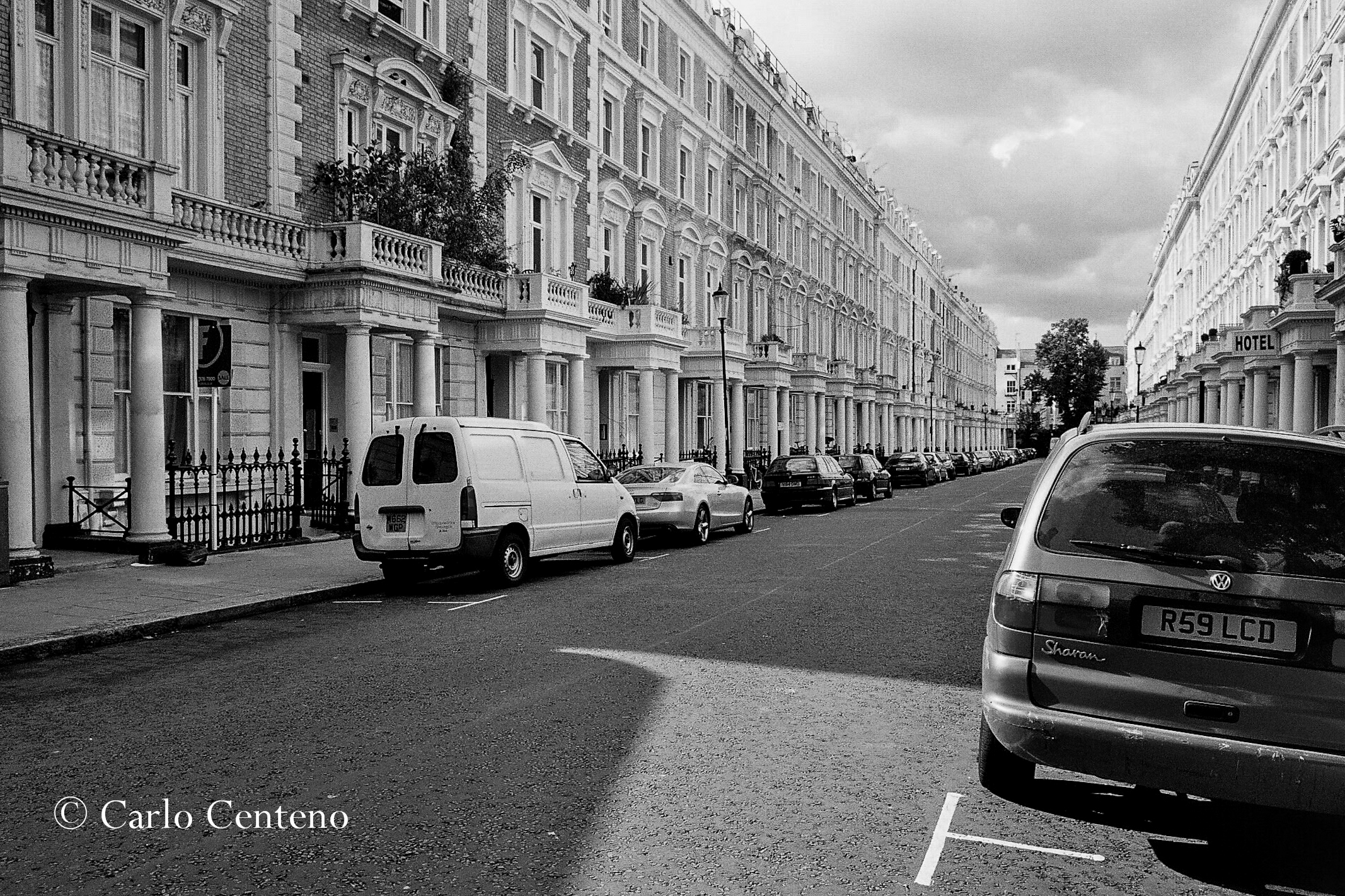
14 Clarke-BW-1004065Of late I’m remembering things in B&W, photographically speaking. Faces, places, things and so forth. If I close my eyes and remember an important event, more often than not I believe I can see the memory more clearly if it is, indeed, framed in B&W. I have no scientific explanation or simple rationale as to why, but such is the case. It doesn’t always happen, but when it does, I take notice.09-723 London-BW-2

Don’t start thinking that this brief treatise is about black and white being “more real” than color. That’s a tired argument made more exhausting when I’m among other photogs who present their case without first having the benefit of a glass of wine or beer…or both.

BW Chairs 2011 (1 of 1)

Grey in all its incomparable shades, levels of intensity and density and luminance, is a wonderously beautiful color.  To me, none of it is boring or trite or conveniently familiar. I embrace the liberty that black and white gives me; everything in front of me is unified. The brigthness or darkness provides the lightness and weight respectively of whatever subject is before you.

The photography of Elliott Erwitt—in particular his series on dogs—is unabashedly “light” in nature. Eisenstadt’s iconic image of sailor-kssing-nurse-in-Times Square becomes a beautiful expression of unbridled joy. Ralph Gibson’s images from his collection, Somnabulist, is a journey alongside light’s texture. Yes, there’s texture from the subjects in his images, but you can feel the intensity of his grey scale, an intensity that pushes one’s comfortable notion of contrast, modeling and depth to another level. Cliche sounding? Yes, but you can prove it to yourself by allowing yourself a different POV. For me, no discussion is complete without mentioning the grandfather of Grey as something beautiful: Ansel Adams. Whether it’s a postcard-sized image or a 30×40-inch print, there’s no denying an evocative appreciation of his creativity and understanding of how he feels for what’s in front of him!

13 Rockaways-1002533

Most of all, I sense that grey gives me an empirical appreciation of my life to date. Here’s what I mean: B&W and all its shades of grey acts as an emotional filter, allowing my most genuine feelings to surface. I can safely feel—whatever such feelings might be—at a “safe distance” yet feel a sense of inclusion, maybe even a connection, with the subject at hand. Remember that “subject’ doesn’t necessarily mean what’s tangible in front of you, but a quality that rises from your persona or sense of self.

I’m taken by grey. It’s so beautiful to me…

Political Brands and Polarization

I can’t recall when branding became a cultural cutting tool. In the halcyon days of advertising [my window being the late sixties to the early 1980s], the marketing message focused more on benefits versus negatives. Today, there’s more when-compared-to-a-leading brand tactic in positioning an advertiser’s advantage or benefit to the consumer. Comparative advertising is not novel, however I sense a stronger delineation between two similar products or services vying for the same consumer’s attention. Negative advertising might be viewed as a type of comparative advertising. The first is more about having a superior product or service, while the latter is more about the inferior nature of the product or service.

My arrival at this junction of brand and polarization is the result of the frequent bombardment of political ads across the media spectrum: digital, print and broadcast. Political ads have never been pretty or pleasant as most I’d say are highly negative if not banal by nature. The few “wholesome” spots are done to show the humanity of a candidate. Strategists however,think delivering a negative message is the most effective way to discourage a voter from choosing an opponent. Make the other person look bad to make my candidate appear better is the thought process there.

As a result of this, I see more polarization across our diverse culture. It doesn’t matter if you’re a card-carrying democrat or republican or libertarian. Polticial divisions are no longer bordered with temperance or a reciprocal respect for one view over another. At the base of these divisions is a my way or no way kind of thinking.

But…now that mid-term elections in the USA are done, perhaps we can see something new from our federal and state governments, something that can provide some semblance of balance without taking advantage of one group over another, something that allows us to move forward instead of remaining entangled in ideological gridlock: compromise.

Personal Branding & a Jellyfish

Noted marine biologist, Edith Widder, Ph.D. has spent much of her life under water. She has in fact devoted her professional energy to creatures living in oceans so deep that the light of day will never reach them. On November 23, Dr. Widder will be giving a talk, open to the public, about her work on bioluminescence and marine life. I’m looking forward to it for a variety of reasons not the least being my curiosity and fascination for things different.Bioluminescence-1

copyright Edith Widder


This photo is a good example of what she studies, specifically, bioluminescence. It’s that unique ability to generate light, light as the result of chemical reactions inside the organism. On the one hand, you have the image on the right side of the frame. It shows the jellyfish as it appears under natural light. The image on the left is the same animal but in suroundings totally devoid of light.

The point I’m getting to is this: is your personal brand consistent across work environments? Does it change in any way, and if so, is the change pronounced enough to be noticed? Think of mannerisms [behavior and comments] and appearance [attire and grooming].

I suspect that under extreme conditions, some people undergo changes that could leave others scratching their head. “When did he decide to wear really nice-looking suits?”  However, for most of us, we don’t so much change our personal brand as much as we do tweaking it. We dial in some adjustments to reinforce an attribute or suggest another. A long time ago, I read somewhere—and it probably came from an Italian designer—that three things signal a person’s sense of accomplishment, confidence and purpose: a wristwatch, shoes and writing instrument.  Interesting.

Regarding wristwatches, using mechanical watches—either hand wound or self-winding, reinforces to an erudite observer that the wearer has a sense about time’s importance. Mechanical watches require attention. A nice [Swiss, German, e.g.] automatic watch represents a high level of skill and expertise in watchmaking. Costs aside, I like to think that the wearer of such accessories has an awareness and appreciation for fine watchmaking. The same can be said of the other 2 items. A good pen—especially a fountain pen—speaks volumes about the user. And like the automatic wristwatch, observations cover both positive [learned, confident, assured, accomplished, e.g.] and negative [flashy, poor use of money, attention seeker, pretentious, e.g.]. I don’t think I need to elaborate on footwear at this point.

So then, what aspects of your personal brand are you fine tuning? Are the adjustments or changes subtle or dramatic in their expression….like our jellyfish?