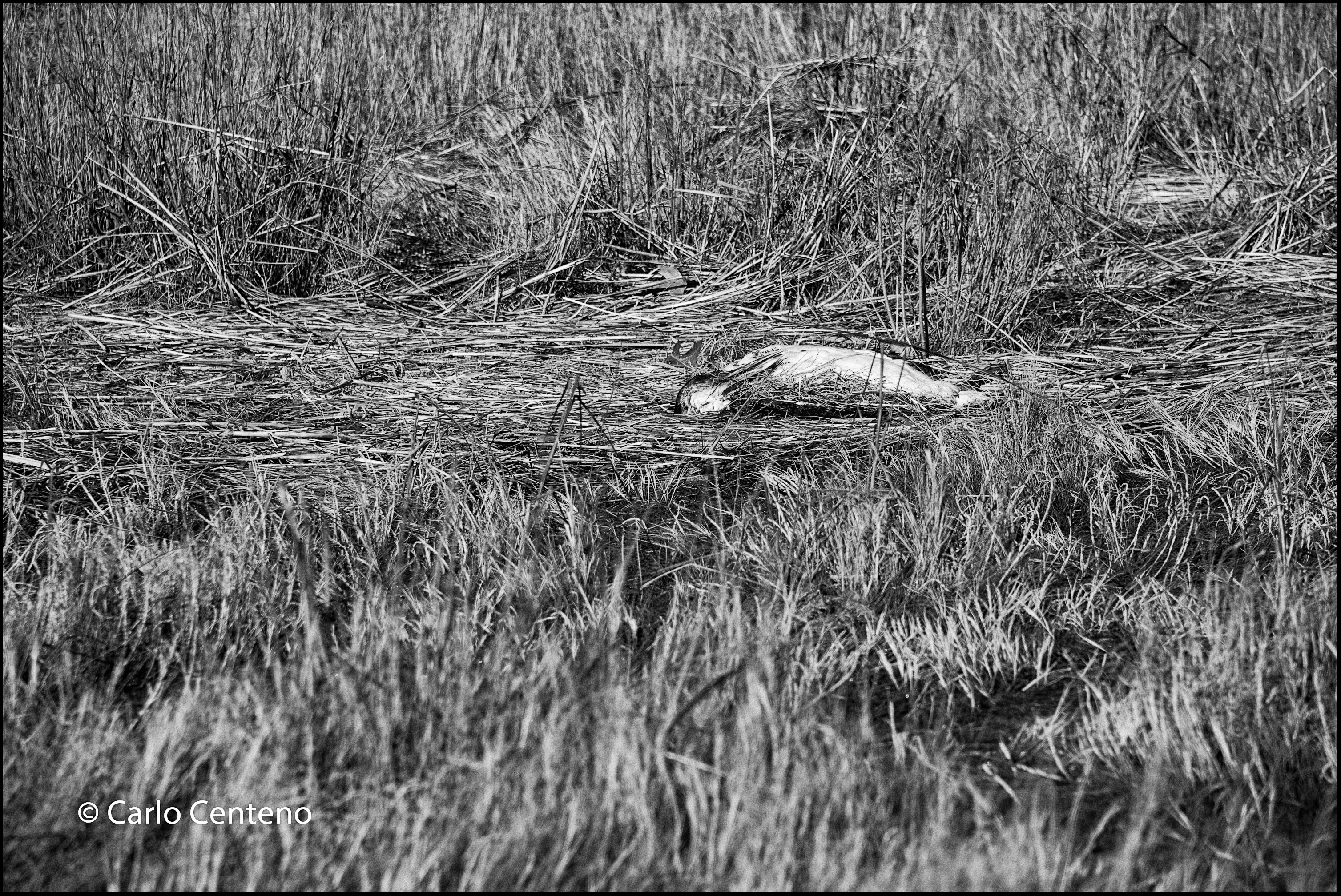
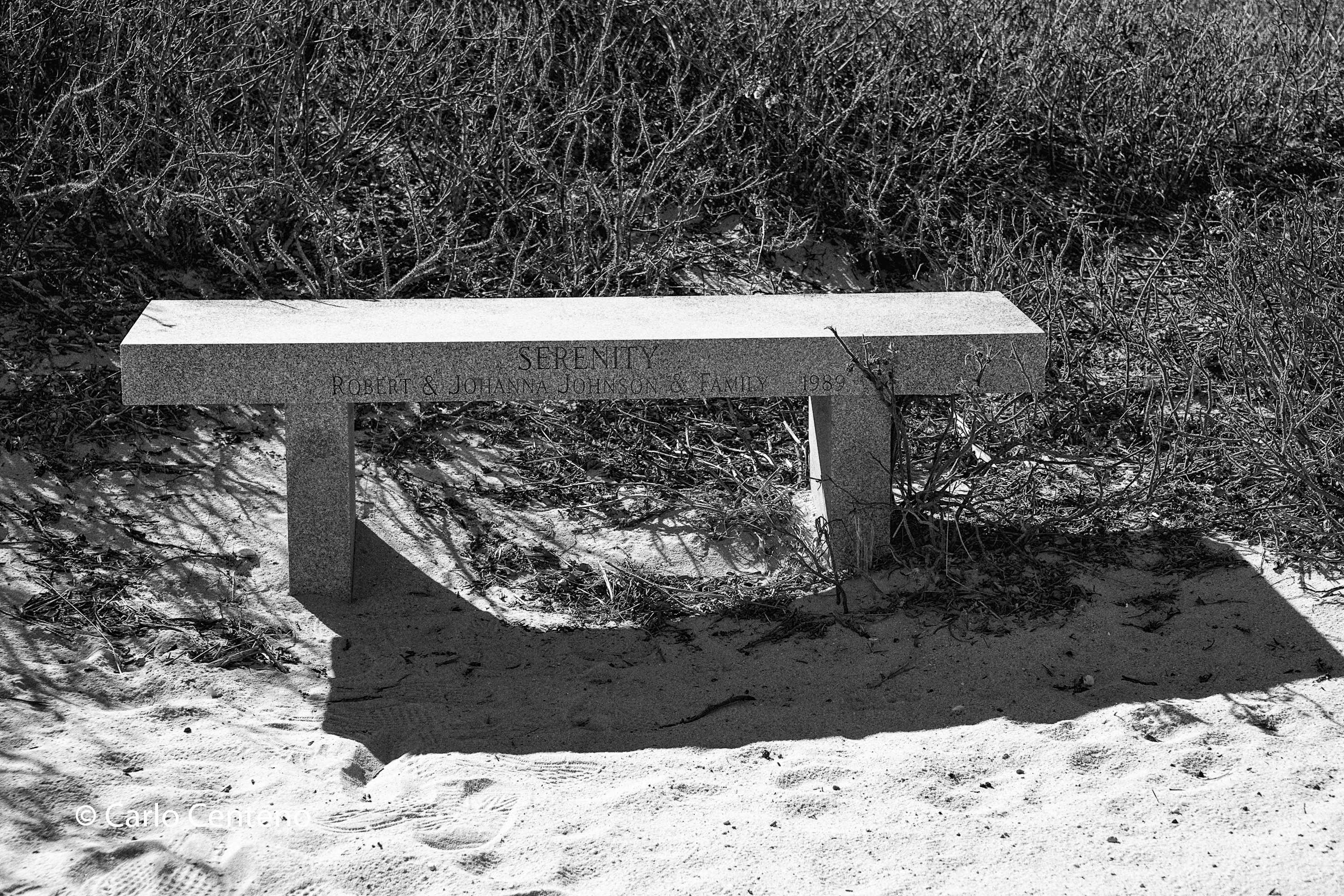
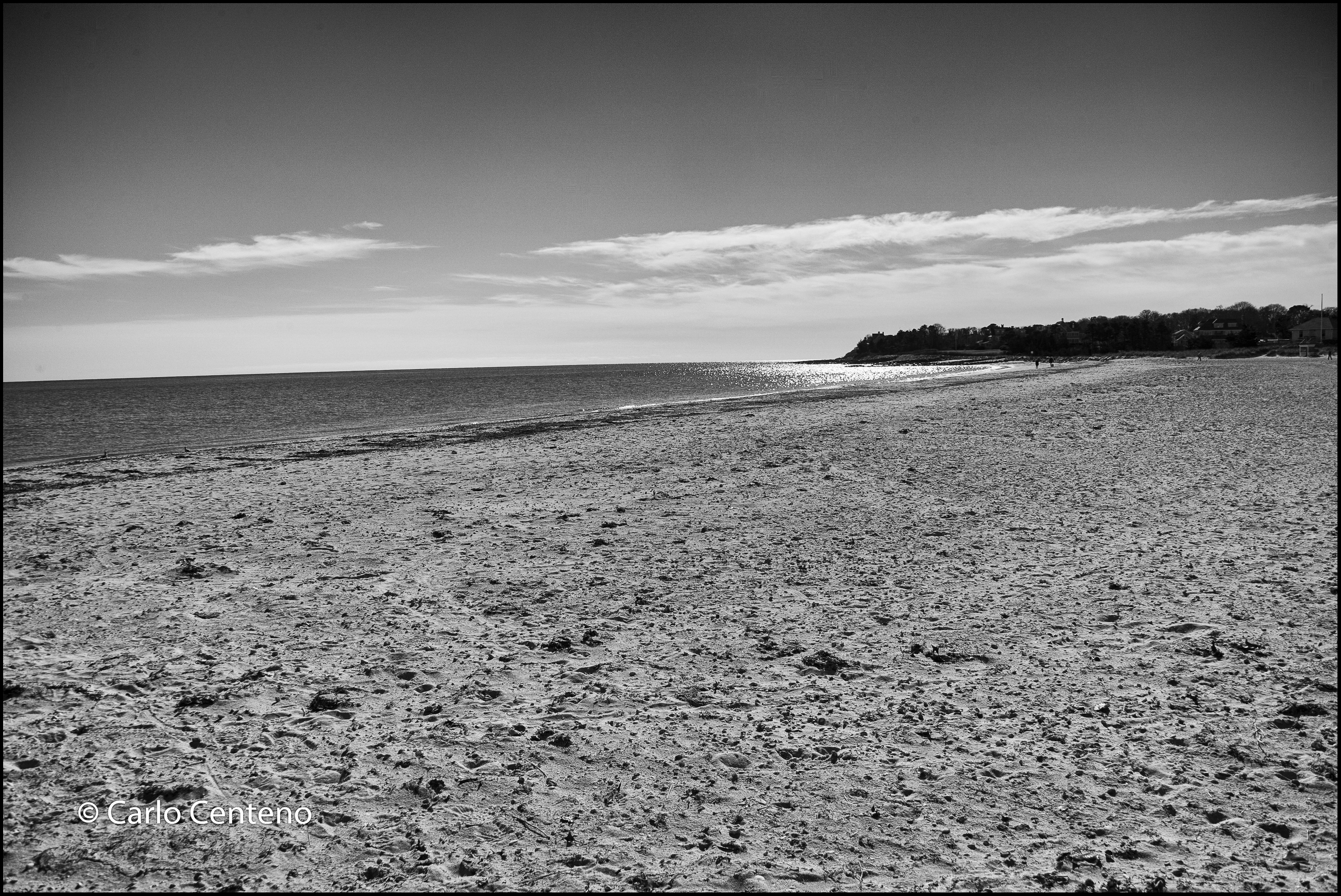
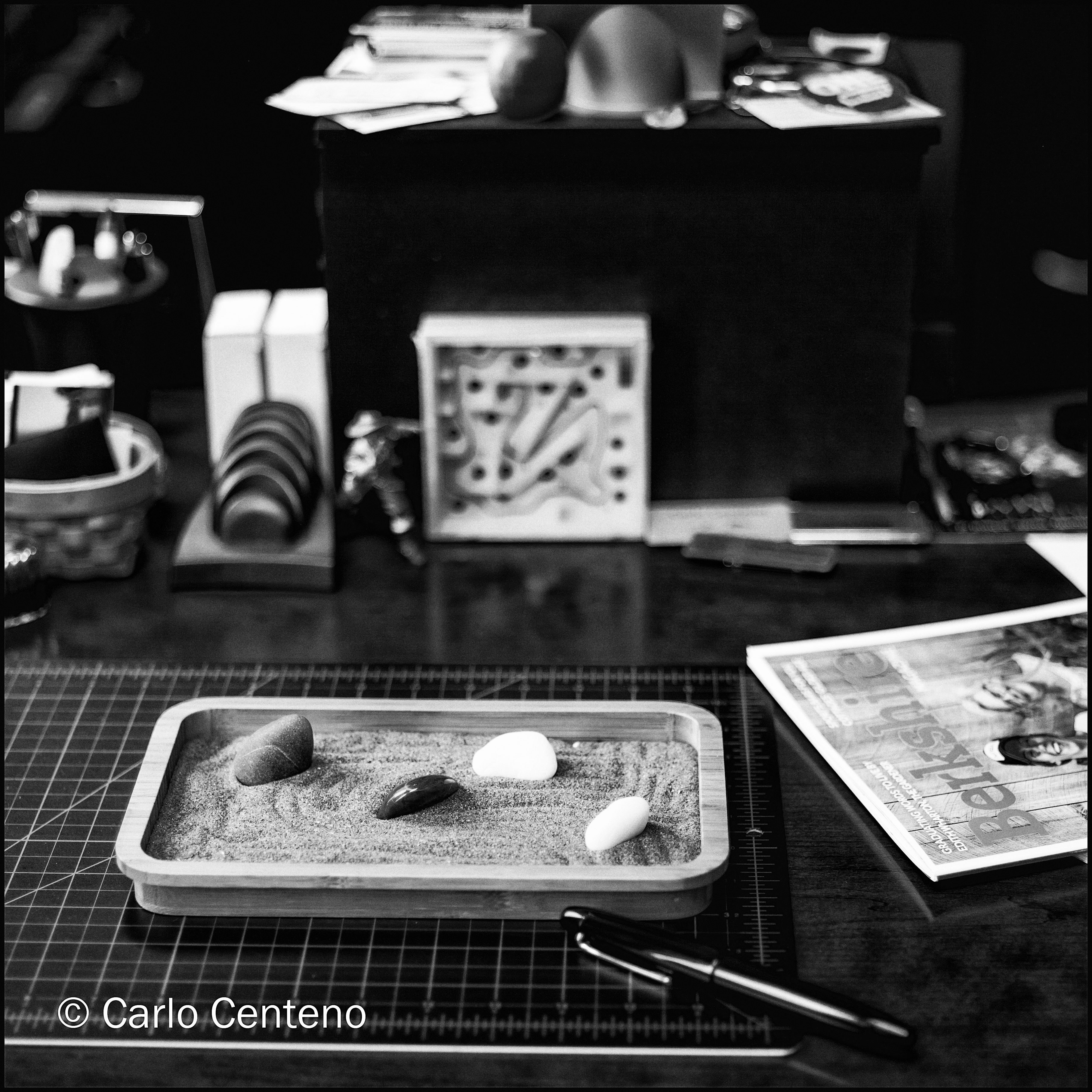
Dark, grey afternoons…

For all the misery and inconveniences really bad weather creates, storms have a unique appeal to me. They are fascinating creations. In the most dire of circumstances the devastation they leave behind is nothing short of incomprehensible, humbling and frightening.

On the other hand, bad weather has a way of fine tuning me to a mode that captures and enables the ephemeral: in one moment, a gentle falling rain suddenly becomes heavy, rampant, even vindictive in the force and quantity of water that dowses everything.

No sooner than the rain pummels the landscape, the water is then swept away, transitioned to a drizzle that moves ahead of a foggy veil suspended just behind the now gentle shower. I think of the various weather possibilities as moods, from the bright sunny days [hope, optimism, gratitude, e.g.] to the dull grey of a threatening sky ready to let loose its worse [depression, angst, regret, e.g.]. Weather figuratively produces such an array of moods.

Dark, grey afternoons carry a weight [wind, water, ice, snow, heat et al] that can lay to waste your surroundings as well as your inner landscape. Yet when I pick up my camera or take pen and journal to hand, I remind myself that things change. Storms have their beginnings and an end. And what happens in between can—and will—wreak havoc on the most carefully laid plans and intentions.
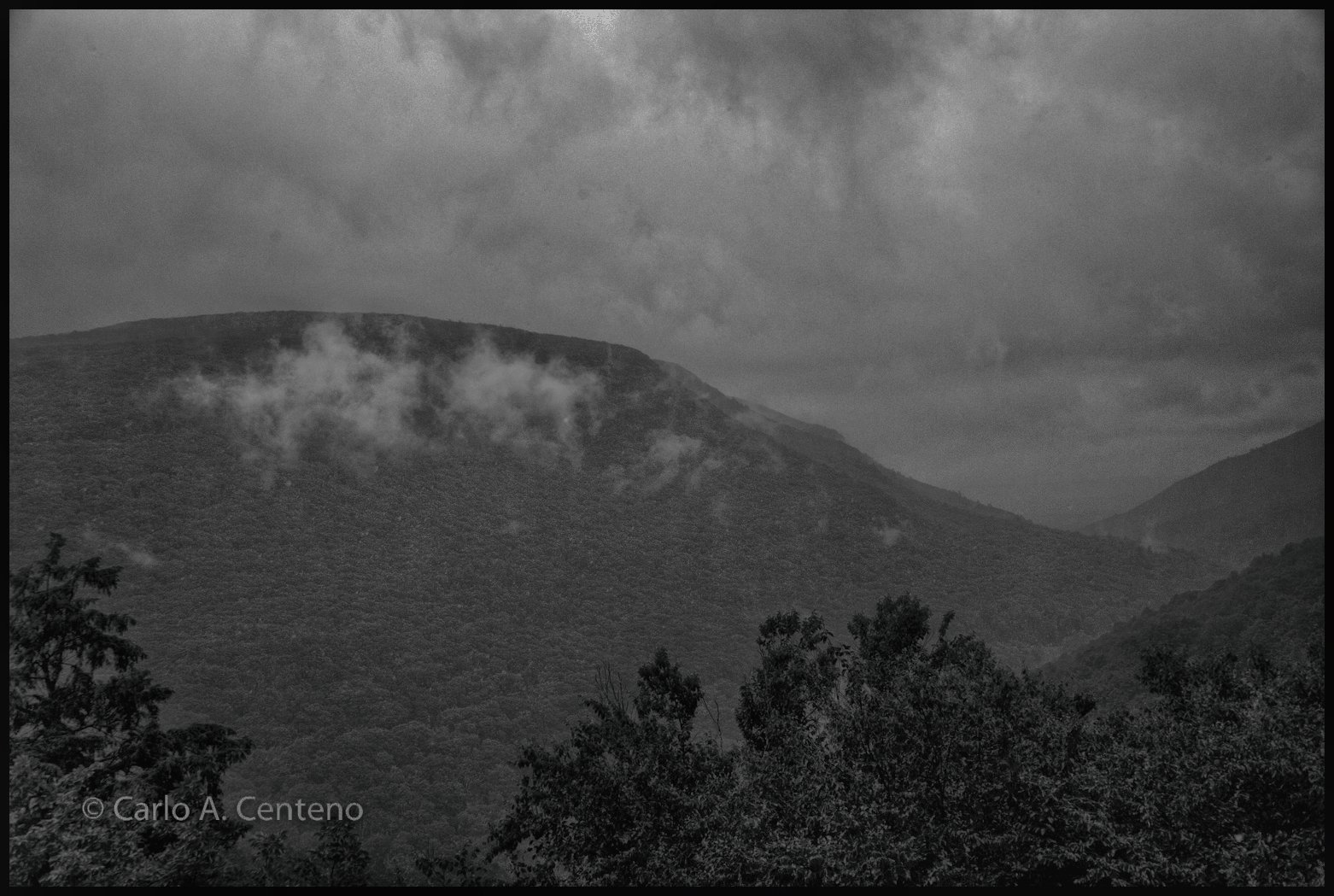
Events, like storms, are markers in time. And having a marker delineates a “before” and “after.”  What were you doing just before the storm hit? Where were you? We often have a stronger temporal sense of change whenever nature throws us the worse. Similarly, we celebrate when the change is for the better; some days are referred to as “picture-perfect…like a perfect postcard if you will.

The prologue to dark, grey afternoons can be a harbinger of bad stuff yet to arrive.  Still, I look at these harbingers for what they are: a dramatic dance of fleeting light, of varied grey swatches which masks greens, yellows and blue, of movements brought on by high wind speeds and even a gentle breeze.

Weather, in all its forms, is a fulcrum on our impressions of just how good or bad our day is doing.


Aftermath

The uncertainty of these times has made it very certain that the new choronovirus will be with us for a good while. Eventually—and hopefully—we will find the means to return as close to “normal” wherever possible, hopefully within next year. Figuratively, we’re running a marathon, an endurance race where—as many of you already know—demands stamina, pacing, patience and the willingness for self-sacrifice.

Our home these past 3.5 months has been a sanctuary for our daughter, two boys, a new born and our son-in-law. From quiet, predictable routines to a household filled with activities, remote schooling, and more, altogether this was a period of joyful noise and scattered stuff in, out and around the house.

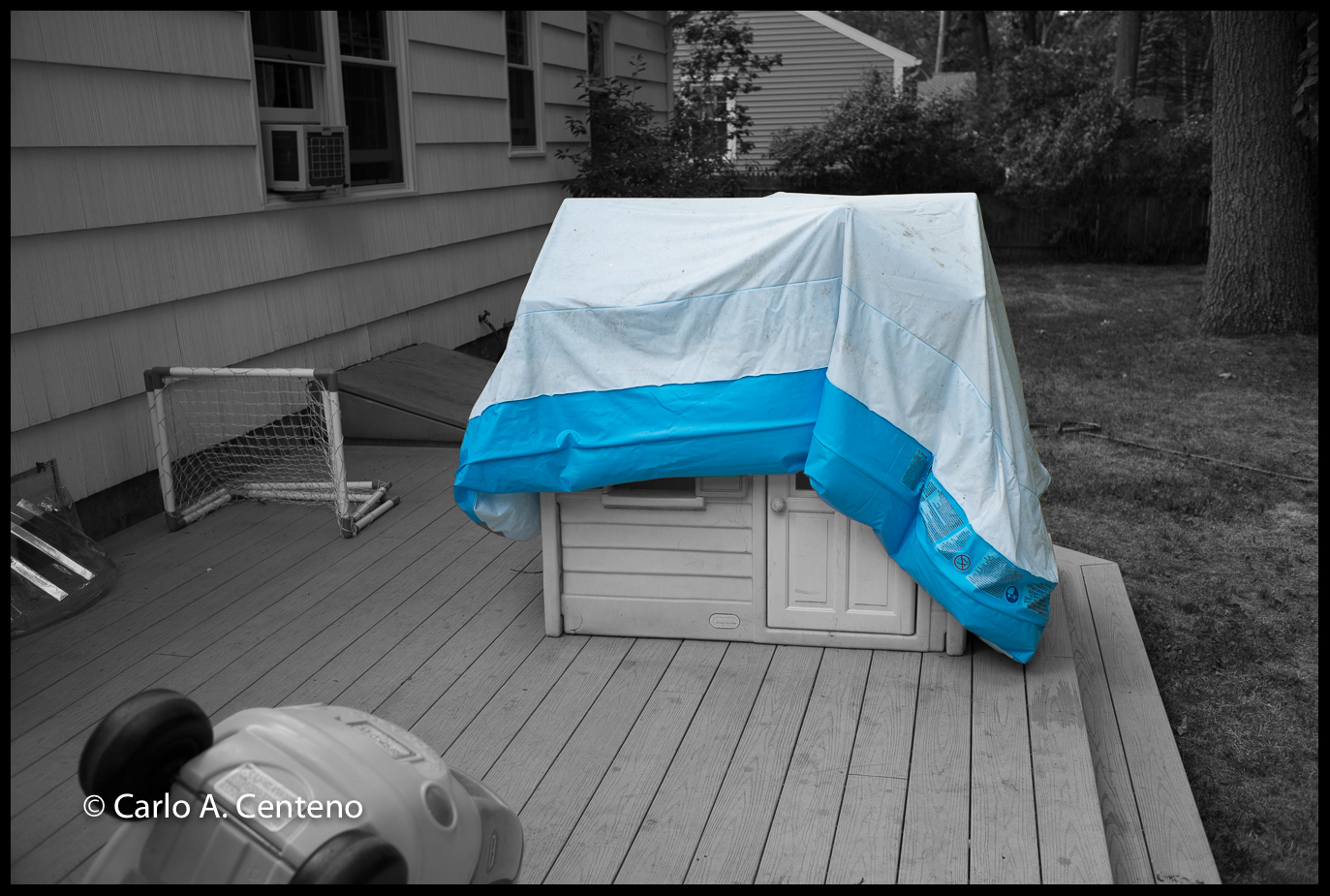
The boys were constantly in motion. The desire to explore, imagine, to experiment and be inventive was nothing short of  remarkable. And while the boys did their best to pick up after themselves, they were far better engaging their playfulness, their devil-may-care personas, as evidenced by the scattered clothes, toys, and more, left on the deck, out in the lawn, on the slip’n slide water game or in the breezeway. The breezeway of course is the equivalent of an “airlock” that space that serves as a buffer to the kitchen that lies beyond.
And yet, clothing, LEGO toys in various stages of disassembly, wet sneakers et al, found their way onto the runner that marks the outer circle of the kitchen.

As of this writing, the house is once again quiet, sometimes much too quiet. Just before the 4th of July holiday, they returned home, to their own spaces and routines.  It is as it should be. As much as we enjoyed our time together, all good things must come to an end.
The organizing, cleaning and picking up of stuff continues. I refer to the many pieces scattered around as shrapnel. To walk barefoot across the lawn is an exercise in uncoolness. The edges of a LEGO block, a broken piece of plastic, a spoon forgotten, all became suitable reminders that wearing footware during the clean-up phase should be mandatory.

It’s true that having grandchildren can be a terrific life stage. You love them to pieces, you revisit your own escapades from the past, your marvel at how your own parents managed the rambunctiousness of our youth. Whether it’s an afternoon or 3.5 months, those kids need to return to their parents, routines, friends and all that is their life beyond ours.


Reliant on Memory

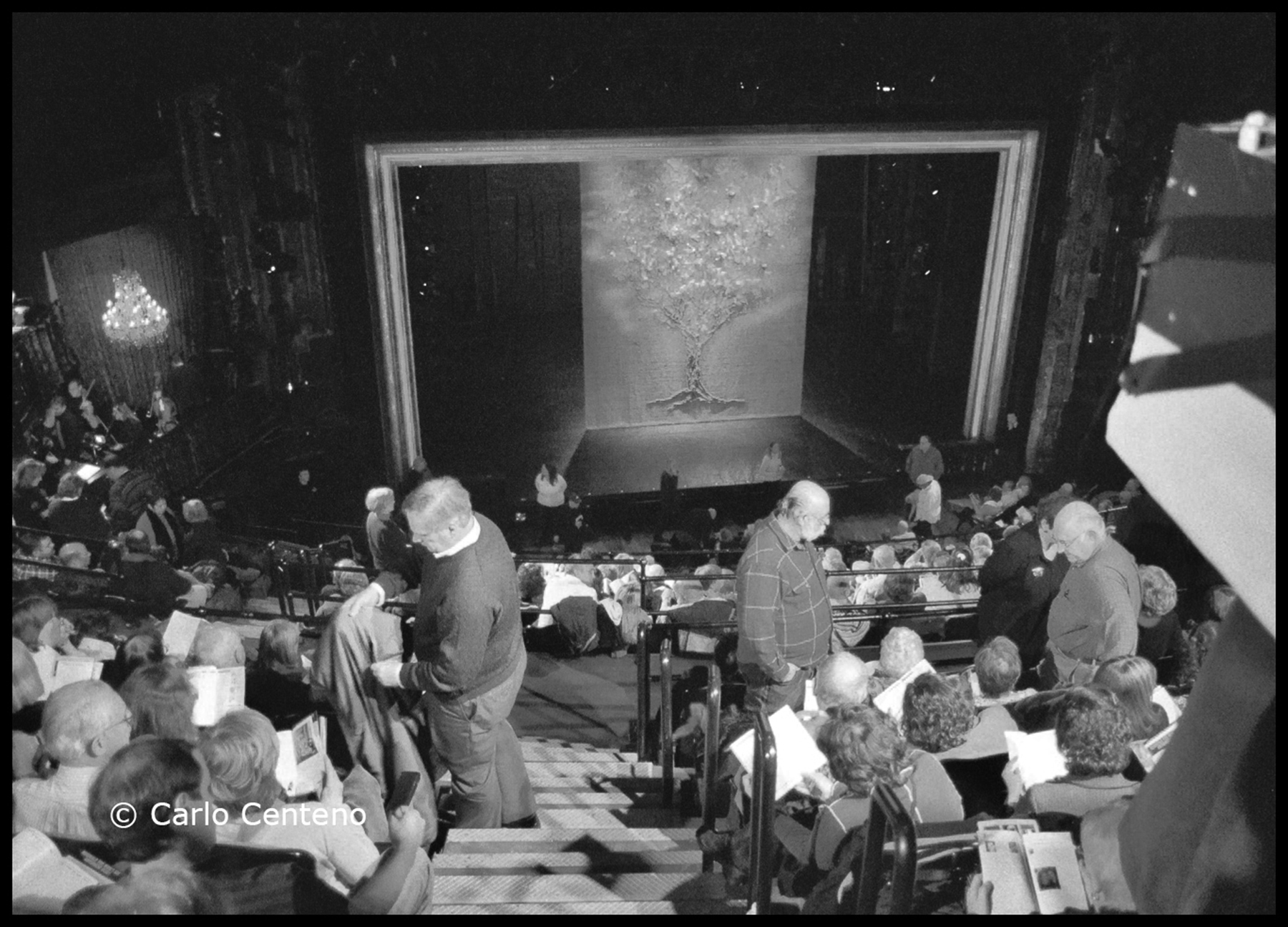
Broadway–2007

There are days that seem to fly by, while others feel like time has come almost to a standstill. I mention this because it doesn’t seem like 7-weeks have gone by since the new coronavirus forced us into a different way of working and living.

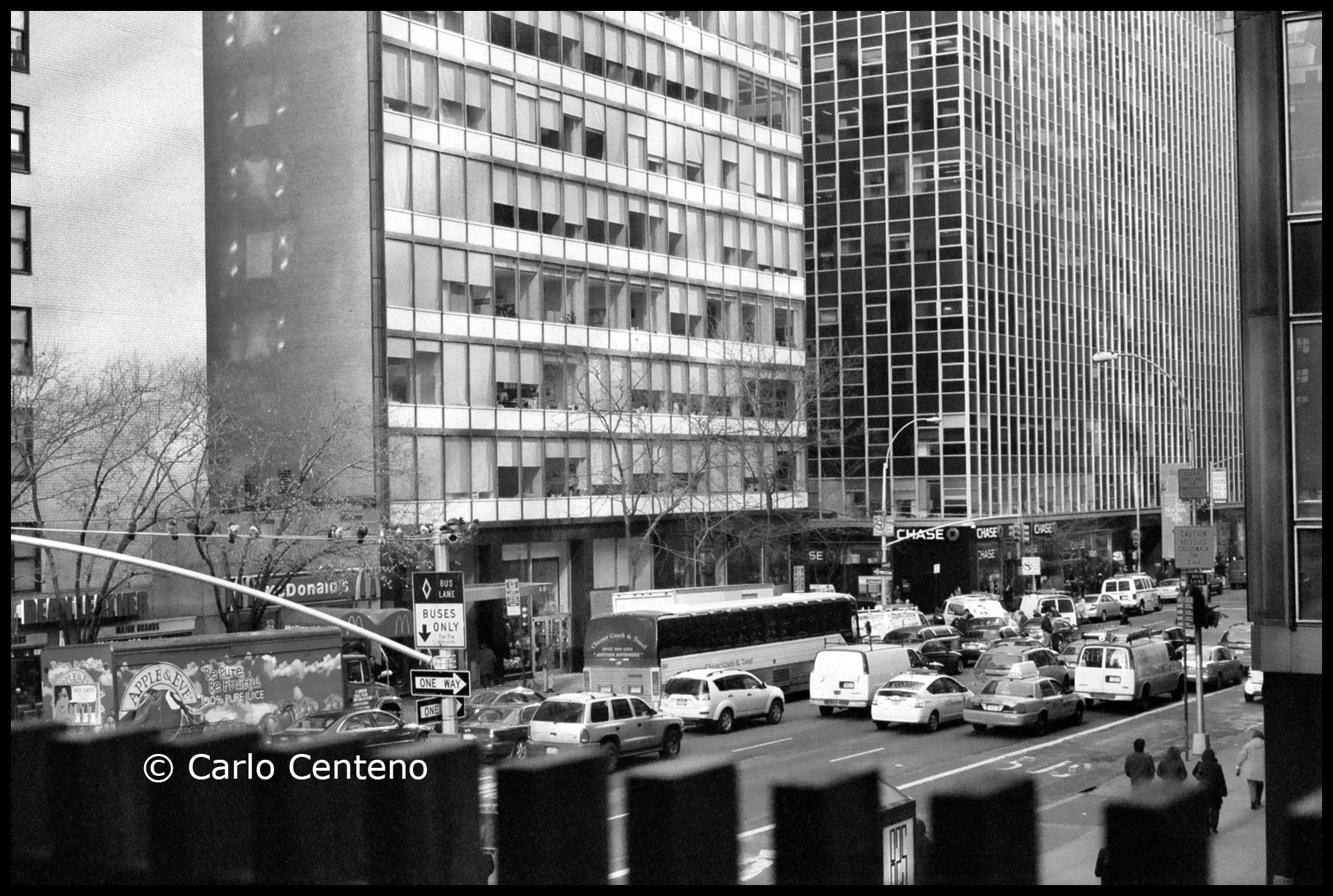
Manhattan Third Avenue 2007

Yet being removed almost two months from what was normal, there’s this juxtaposed sensation that it feels like forever and a day since we went about our usual routines. Time is relative, which simply means that when you’re waiting for something you want, it doesn’t come soon enough, whereas the opposite holds true for something you want nothing to do with.

I have read that the sense of smell is the strongest of our five senses in prompting a memory. It’s also—if memory serves me—the most accurate.

A quiet pause in NYC 2018. Photo credit: R.A. Centeno

Scientifically, that may hold true, but for me, sound and image are stronger drivers in resurfacing a memory. Music has a way of putting you back in a time and place with an immediacy that’s uncanny. “Wow. I remember when this song came out.” There may be some inaccuracies about say, the year or even the place, but whatever was important then, resurfaces as part of your remembering.  Pieces may be foggy, but as other pieces emerge from that fog, the memory works to become a bit sharper.

Philadelphia 2018

There is a hint of nostalgia in all of this. I do wonder about the new normal and what it means not only for me, but for people I care about. I think retrospectively, of how moments in my past somehow provide a lift. The thoughts, the sensations, or whatever visceral vestige flows free from memory, are but markers of what has been, or what might’ve been.

Mimes, Hartford, CT 2015

Whether you sketch, photograph, perform, paint, sculpt, watercolor, write letters, fill a journal, fill a scrapbook, to be memory reliant means you need to be confident with your recollections. Doing any one of these activities, produces an invaluable form of connection. It’s why I love to write [journaling and letters] and to take photos [iPhone, various cameras] because these all help to anchor where I’ve been and to some degree, where I might be headed.

Family, Friends, Life-NYC 2019

Indeed, cherished memories are important for our overall wellness, but let’s remember to do things now, to remain connected yet in touch, so that such moments become screen clips thoughtfully stored in our memory albums.

Enlightenment

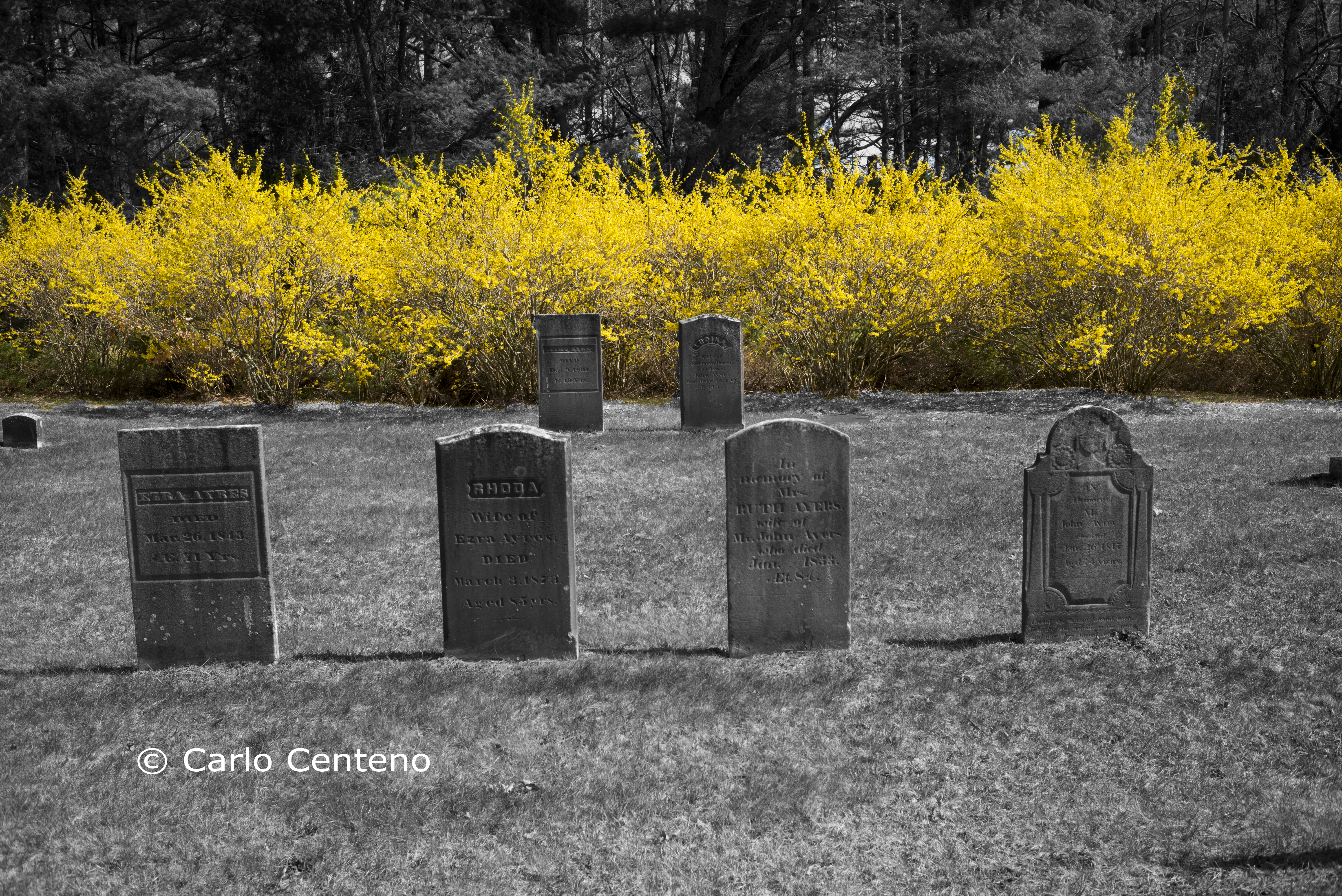
Generations of my wife’s family are interred in a local cemetery, a cemetery that honors among others, veterans, the ordinary, the extraordinary and in particular, the residents who lived in one of the 4 towns that were evacuated in order to create the Quabbin Reservoir.  The reservoir was built to provide potable water to those living in and around Boston.

Anyway, MJ’s family lived in the town of Prescott, which like the other towns in Dana, Enfield and Greenwich now lie about 151-feet [46-meters] beneath the water’s surface.

Yes, we are at the mercy of the new coronavirus and the possibility of becoming ill with COVID-19. However we must put things into perspective, because there are many dealing with far heavier, more costly burdens that pale to what some of us may deem a hardship. The majority of us are dealing with  inconveniences; yet others are fighting for their lives. The residents of the Swift River Valley left homes and homesteads, jobs, family and friends and most certainly a way of life.

Last week there was the amazing story of the Bello family. A couple with 3 young children, the father, Jim, teetering on life’s edge fighting COVID-19. It’s an amazingly powerful, somber treatise about love, faith, and unwavering determination in the face of incomprehensible odds.

If cabin fever makes one feel a bit cuckoo, then get out and do something. Take a drive into the country, take a walk on a trail, visit a landmark, break out the camera, the hiking shaft, the binoculars, the bicycle and more. With the majority of us driving less, you may have heard there’s less air pollution. For the introvert, having so much quiet and alone time could be a godsend. The opposite holds true to the extrovert dealing with social withdrawal.

There are times when we  feel enlightened by some cause, an emotion, an observation, anything from the mundane to the spectacular can prompt this feeling.  Walking through the cemetery renewed a sense of purpose in me, an awareness of who I am and what I should do versus what I can do. To the rest of the world, I am just another being among millions of others. So what?

I suppose relishing my time—essentially doing nothing—allowed me to have a more acute perspective on being mindful.  Perhaps I was due for a spiritual tune-up, and I think got one. A better way to feel enlightened is to think of it this way:  “If you want to feel good about yourself, do something good for someone else.”  My spinning instructor always says that after a class.

Be well. Stay healthy.

April 1, 2020

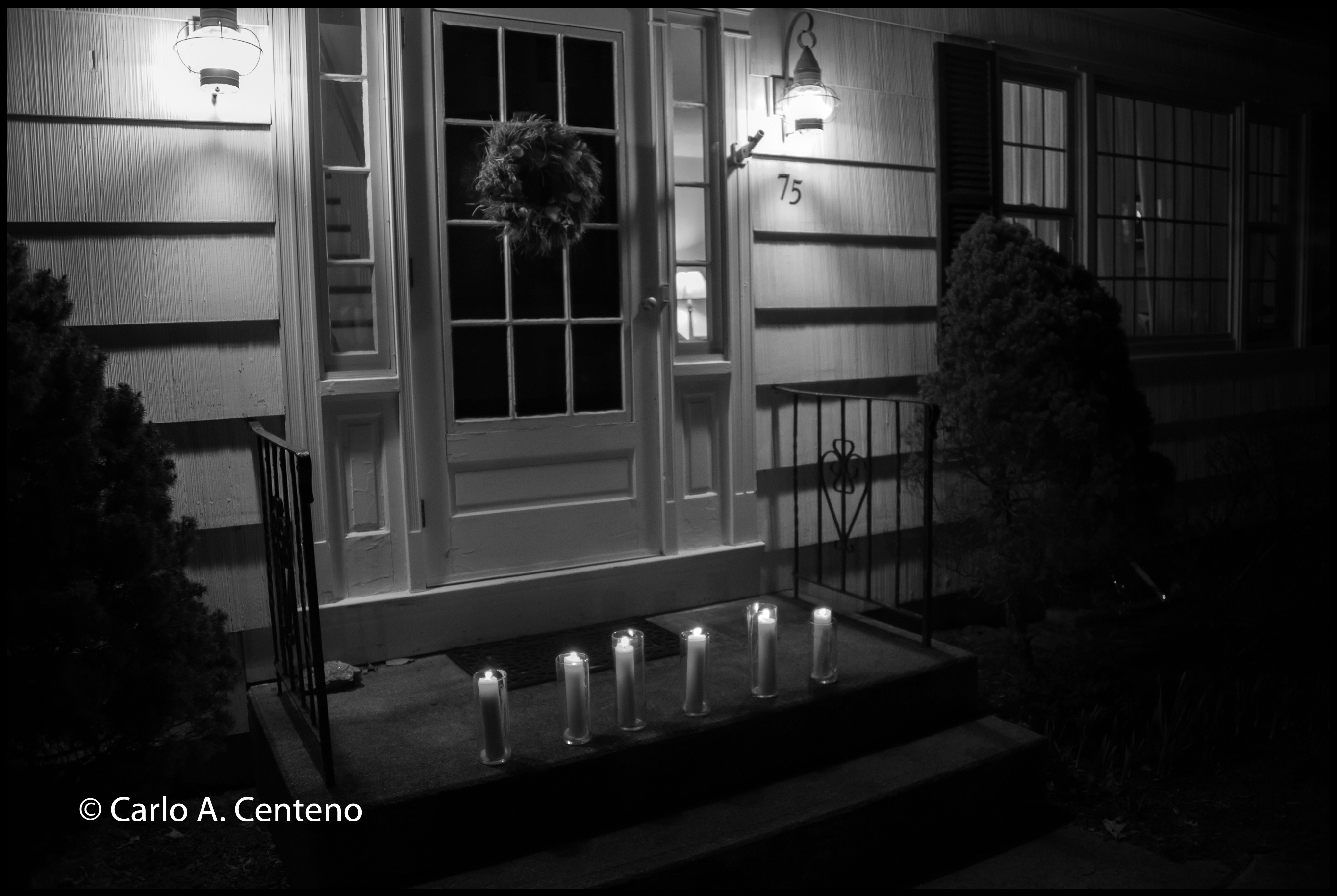
A good friend sent a text message saying that today—as a way of expressing our gratitude to first responders and healthcare workers—we should set some candles in front of our homes, and light them at 7:00 pm.

I know several healthcare professionals. Two couples are close friends. They’re bon vivants, emphasis on ‘bon’; we enjoy dining out [or in] to catch up, laugh, share and wonder about the vicissitudes that have changed the way we live, think, feel and behave.  The friendships run so deep they’re essentially family.  Actually, any one of these friends could take the place of a hundred bad relatives and acquaintances.

Three of the healthcare professionals on my roster are family. There’s my sister-in-law, an office administrator who works in a practice made up of general practitioners and hospitalists; my brother, an educator and primary care M.D., is up to his eyeballs in northern New Jersey; and my father, a retired vascular surgeon, is hunkered down in Florida.

Like most of us these days, we’re also hunkered down. We’re out of sight. In a metaphorical sense, if the virus can’t “see” us, then it can’t infect us. That’s very simplistic, but you get the idea.

Time and again I’ve heard comparisons to war, that the very people on the front lines are in a fight unlike any other.  We know that, but we have very little visceral sense of the actualities playing out in crowded hospital rooms, hallways, ICU wards and all the places where the sick and the caregivers are equally overwhelmed. To say we’re being in the moment cannot compare to being there, to be immersed in the chaos unfolding right in front of you.

Whether you believe in karma or life existential, God, or something that is in effect, bigger than oneself, all that’s in motion is connected to each of us. Is it ironic that this pandemic is playing out during humankind’s most pious weeks on the calendar?

A lit candle—a universal and timeless symbol of hope, gratitude, peace, sorrow, love, contrition—is also an icon for life.


Quiet

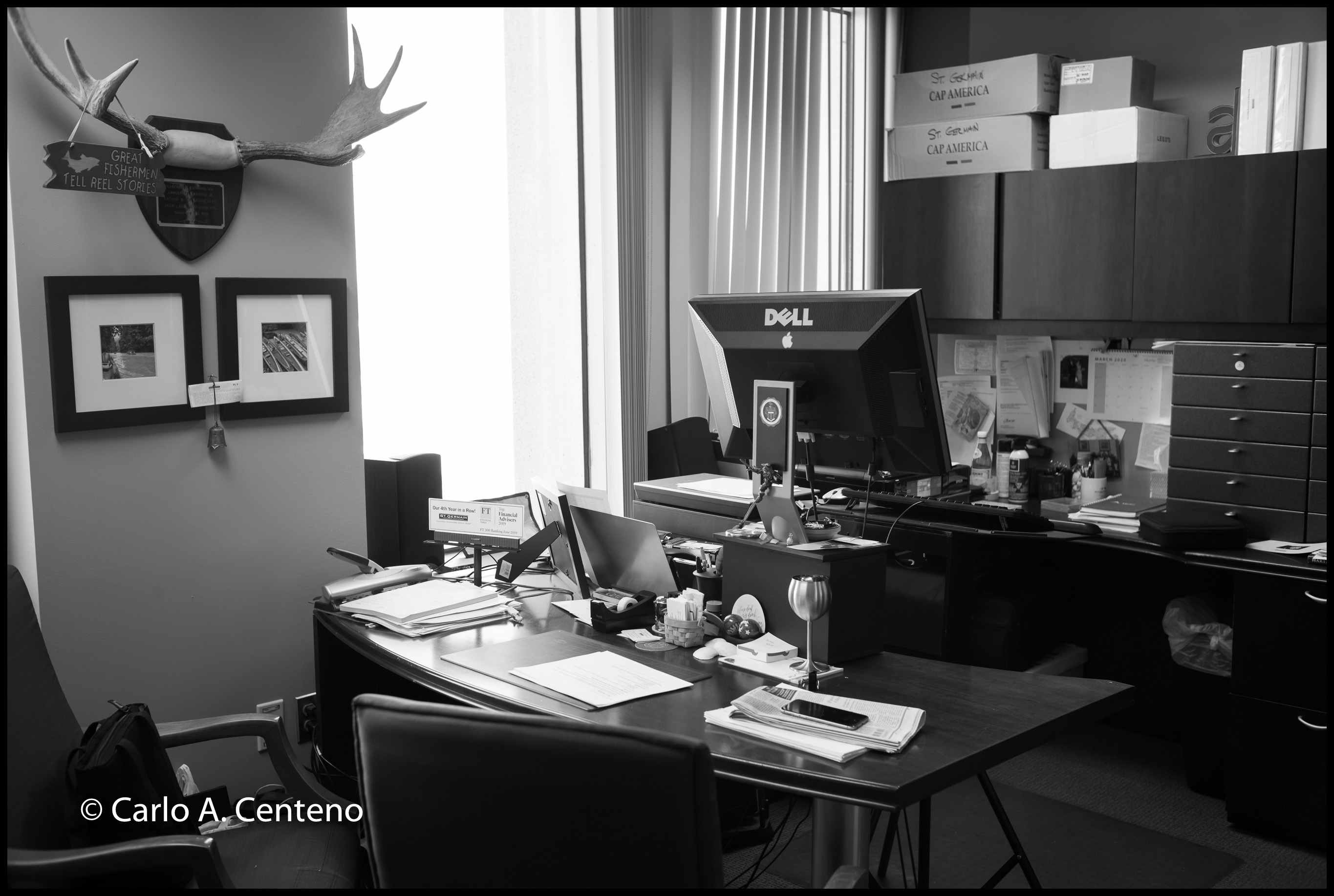
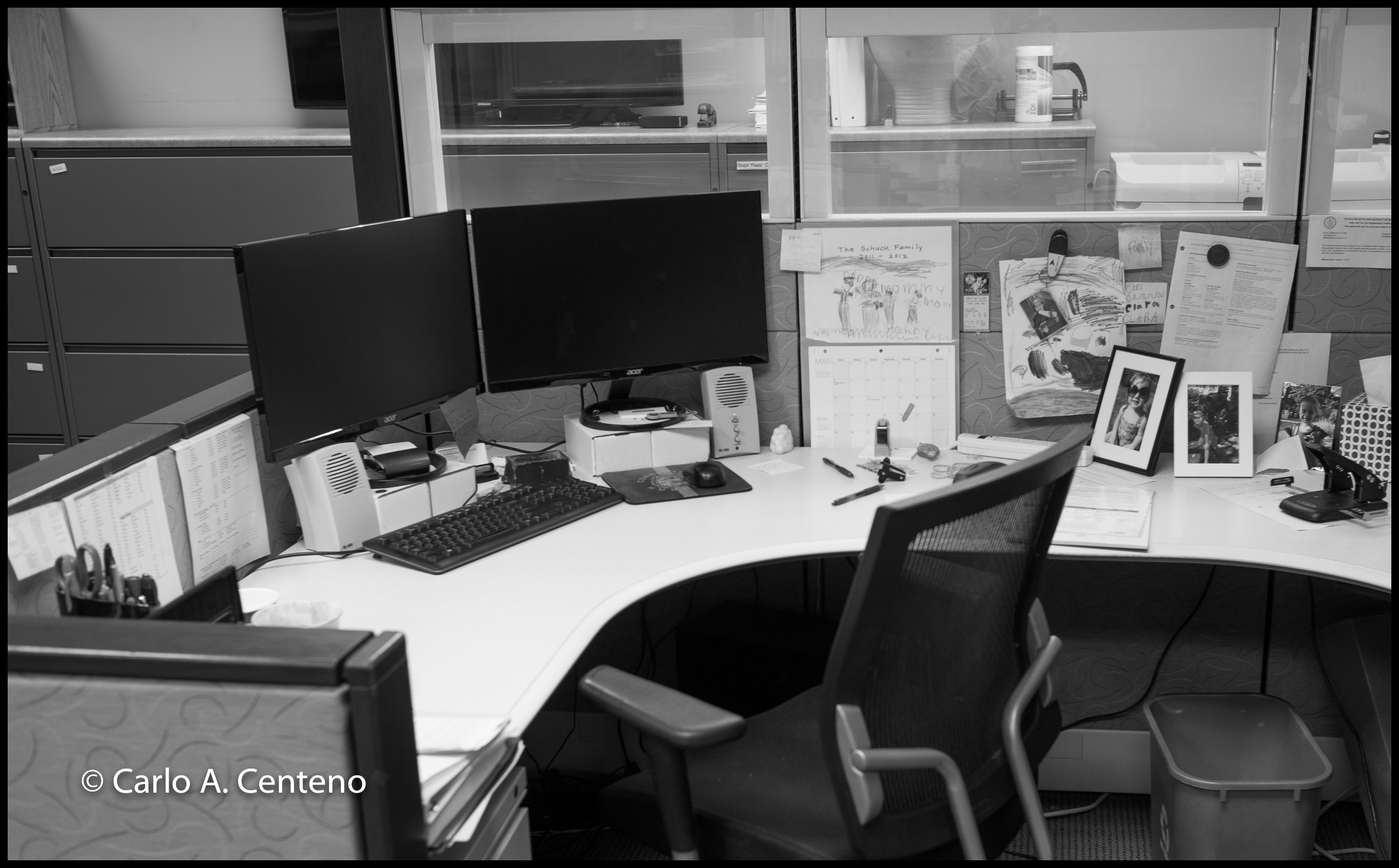
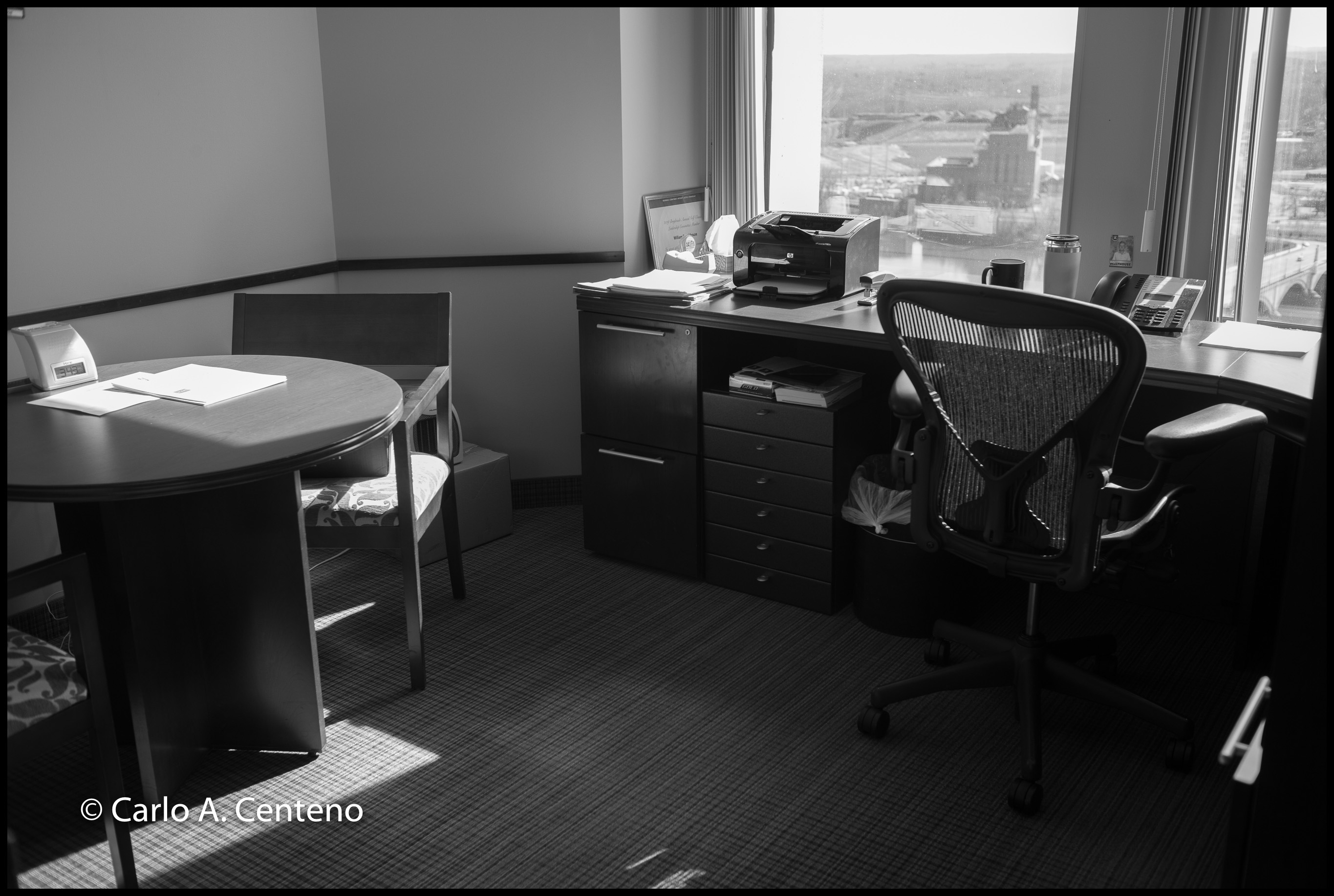
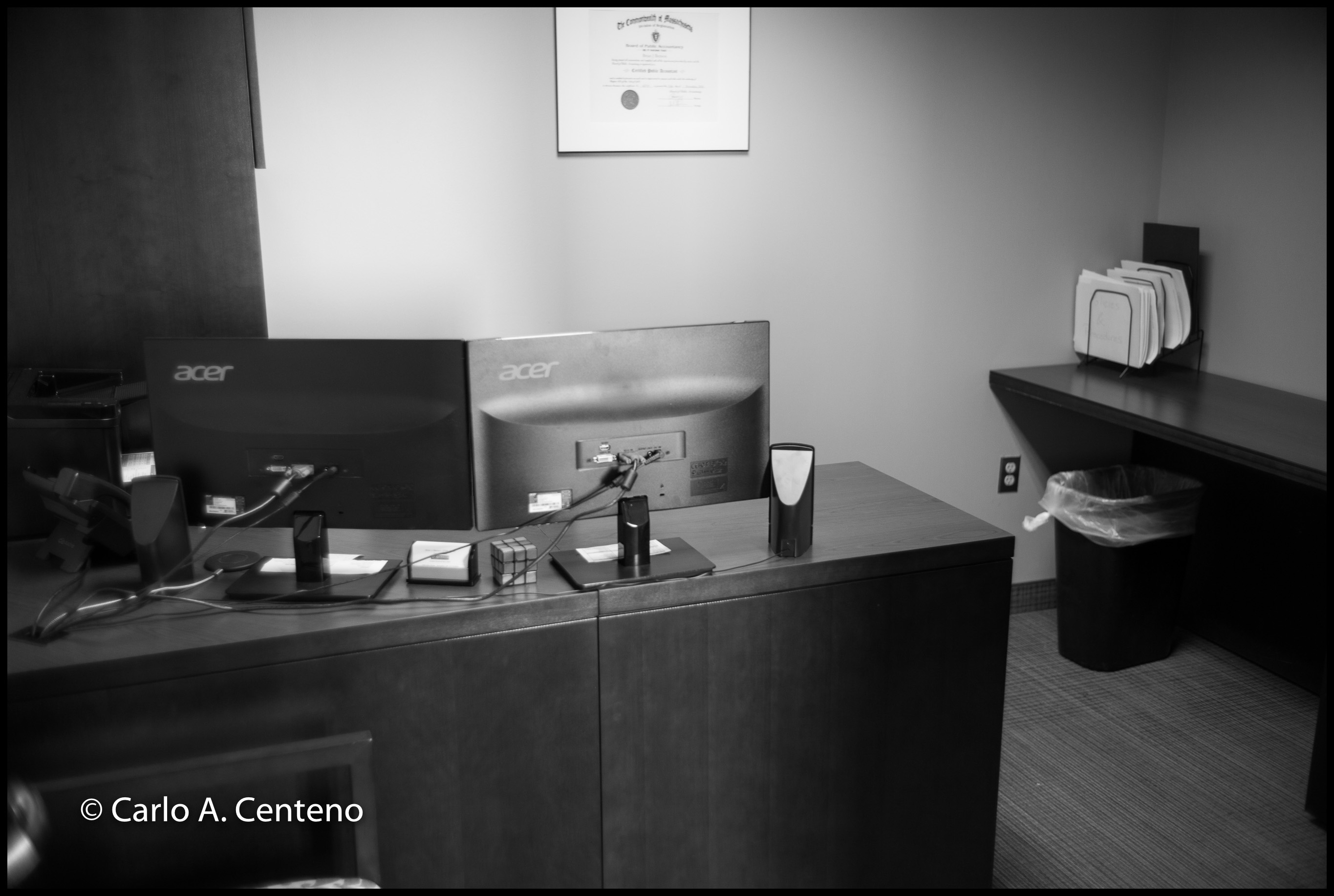
Our Office: 3-weeks into the work-from-home mandate

For many of you seeing this post, the images are pretty droll. But for others, they are vignettes of time standing still. Those who work from home can identify with this temporal bookmark: a stasis of space rendered incomplete by the obvious absence of the worker that usually occupies that space.

We are a small firm, all told 29-strong. The majority of us have been working here for at least 10-years.  Such employment longevity can be unusual in our current modern world, a world measured by thru-put, output, speed and running changes all in an effort to gain some competitive edge or level of differentiation in the marketplace.

I’m a department of one, whereas others have at least 2 workers in their department.  My point being is that I’m only as good as the people around me. So I rely on their perspective, understanding and emotional ownership [if so prompted] of the marketing and advertising concepts, images, copy and other content that shape our brand. They are my soundboards, proofers, editors and contributors.

The spaces presented here have a functional importance, which individually and corporately, make the firm succeed. In the end though, it’s the people that define our culture, indeed all cultures. The latest technologies and operating systems are all well and good. Each of us—replete with idiosyncracies, quirks, things positive and negative—add immeasurably to our collective professional mission.

You won’t see anyone in the photos, but if you look closely enough, you may get a sense of their significance.

Winter Warmth

Though overcast, there’s a familiar brightness to the grey overhead. It looks and feels like snow is in the air.  Forecasts notwithstanding, we’re expecting to get clobbered here in the northeast with record-cold temperatures.

Winter is en route.

Yet, in spite of this aura of grey that spills over the city, if we look close enough you can find various levels of warmth. Many of the objects seen, displayed and taken for granted in the roteness of our days can hint at or suggest a touch of warmth.

And while warm colors, hues and even some words or phrases can suggest some attribute of warmth, cold weather, specifically very cold weather, adds a bit of insouciance.

If you’ve spent most of your life in the northeast, a good number of you then understand finding this warmth. As the saying goes, “If you don’t like the weather, just wait a few minutes.”

Countenance

In 2005, PBS aired a series entitled, “American Masters” which showcased the work of legendary if not ground breaking artists. I enjoyed watching the series, but one program struck a chord: Richard Avedon: Darkness and Light.

One comment in particular stuck with me. Essentially, Avedon mentioned “the landscape of the human face.”  Lines, creases, smooth or rough, dark or light and every combination in between, a person’s countenance says a few things about an individual’s life journey and current life stage.

Dali

Many artists come to mind when the genre of surrealism becomes a topic for discussion–or bone of contention–but Salvador Felipe Jacinto Dali y Domenech is one that occupies a notable position in the annals of imaginative imagery and surrealistic interpretation.

The Slave Market & Disappearing Voltaire

If your preferences lean toward realism, then Dali can and will, leave you wondering why such creations are in a museum, indeed, an eponymous one at that. Art is Art and its value depends on so many areas of technical and aesthetic measures. For the rest of us mortals, subjective interpretation is all we can muster. I overheard someone trying to understand one of his paintings and his somber remark was, “Salvador Deviant.”

Portrait of deceased brother if he lived to be an adult.

Art is what you make of it. It means you can be apathetic, sympathetic, curious, appreciative, angry, happy, bewildered, uncertain, confident, disappointed, insulted, overwhelmed, inspired or even validated.

You have to appreciate his creative genius when you’re pulled into one of his canvases only to be taken aback  when the image changes. In one moment you see 2 nuns, then a blink later, you suddenly see a face made in part by the same 2 nuns [cf first image above for Voltaire].

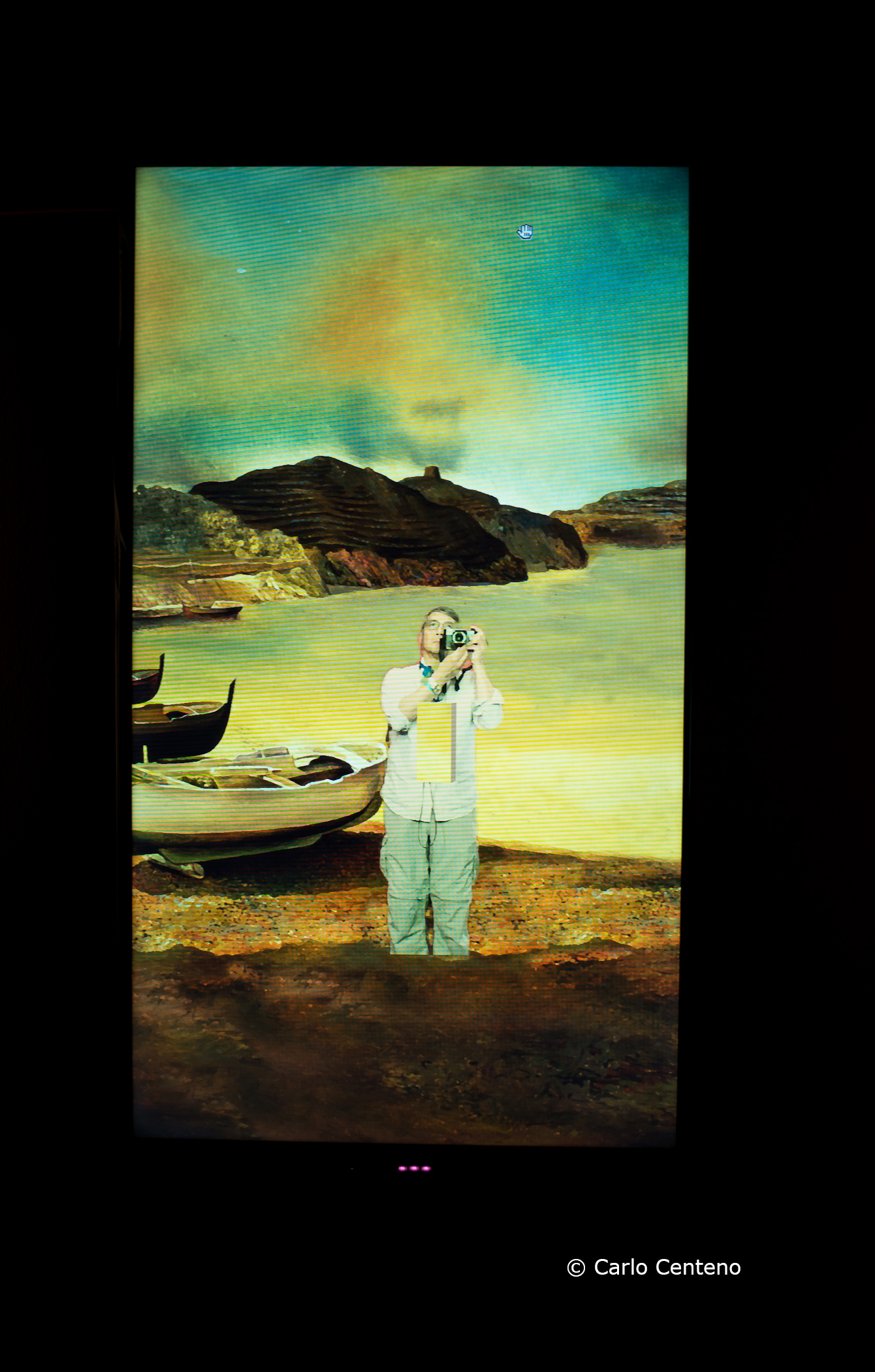
Interactive self-portrait.

My self-portrait is an interesting take on a photo booth, but one more entertaining if not interesting.  In a way I’m borrowing a slice of time from Dali’s world. A simple souvenir for me,  though I suspect Dali would’ve seen a leitmotif kindred to the impertinence and sarcasm of his painting, Persistence of Memory.

North

A few days ago, the cold felt punishing. Yes, I have preference for cold versus hot days, but when the air is already cold at zero degrees Fahrenheit, then enhanced with a windchill of -15, well, that may be enough to reconsider that preference.

I’m fortunate that I can retreat to places where the cold and wind don’t feel as threatening. From the safety of these retreats, I philosophize on the dual sides of nature, of how something that can appear simple and beautiful and minimal can deliver a reality check powerful enough to humble any aesthete caught up in winter’s vanity.

Do you get the feeling that winter provides a sense of calm? The calm I speak of provides a level of reassurance. This winter calm is a metaphorical blanket, one which acts like a shield from unwelcome and sometimes sudden vicissitudes. Such a blanket stops–albeit briefly–the weariness of having to deal with things that keep us from finding a particular quiet.

And when the quiet is welcoming, the alone time is curative…