Change in Venue…

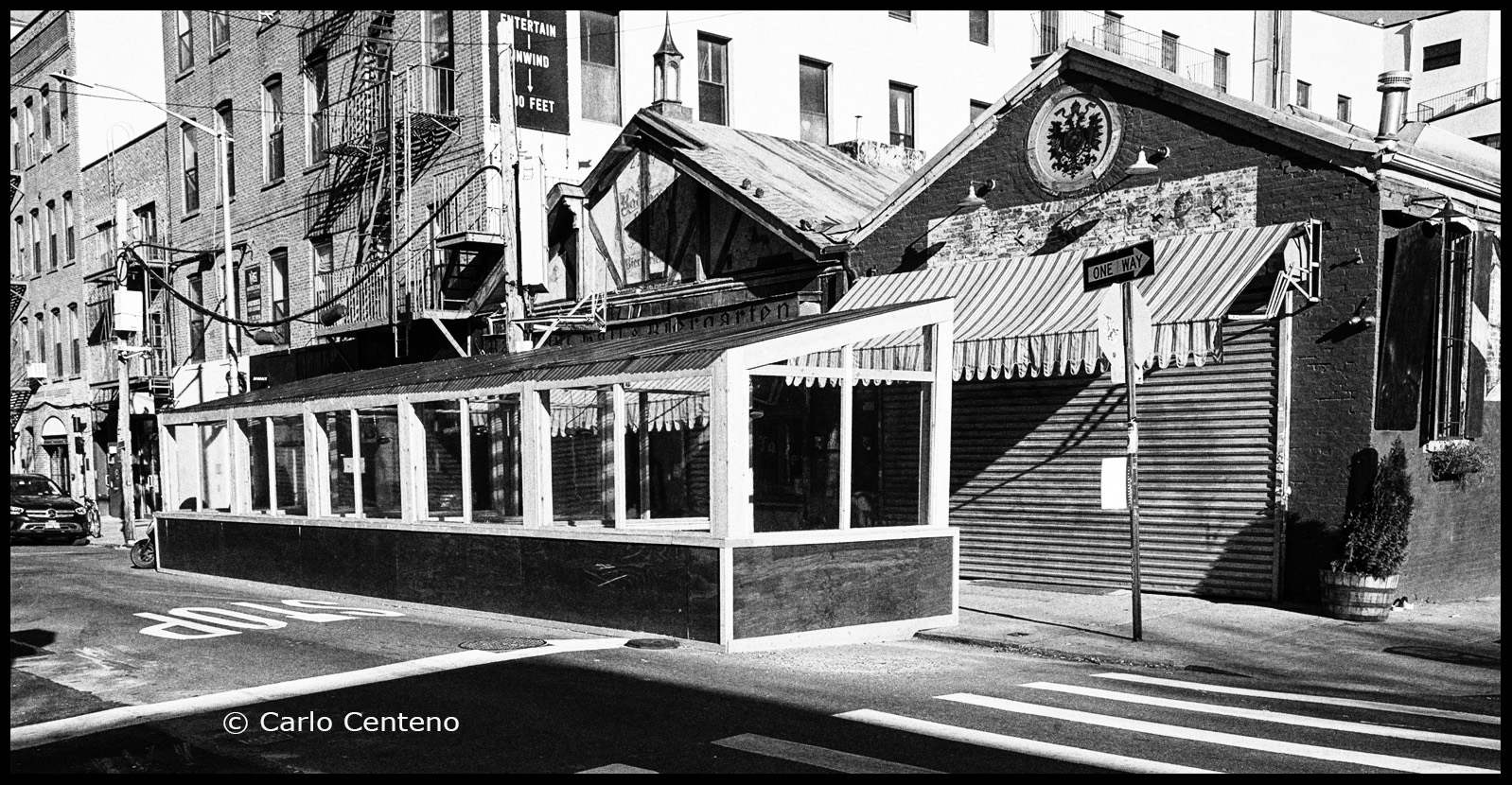
On a cold, windy January day, I took a walk to familiarize myself with another area of Brooklyn. As I do on such sorties, I have a camera in hand. It’s just an integral part of me carrying that, along with a fountain pen. In combination, perhaps an odd idiosyncrasy. Go figure.

There has been so much news about struggling businesses in an economy best described as uncertain if not scary. Regardless of your own standing, uncertainty feeds fear. It’s like that for many, even those who still have a job. There have been a myriad of changes in less than a year, and many of them are unprecedented as we know.

And yet I’m encouraged with the way businesses evolve, regardless of the risks and constraints of an unrelenting pandemic. Adaptation abounds. As I pass several restaurants and eateries small and large, I can’t help but notice the physical changes in these venues. Where there was once a length of curb used for parking has now been pre-empted by saw horses and orange pylons, cuts of plywood fashioned into walls and even structures with lockable doors, sliding windows, and other things that can make or break an outdoor dining experience. Being early in the day, most of these venues were still closed.

The way these dining improvisations unfold reminds me of a line from Shakespeare’s Richard III, which says,

Now is the winter of our discontent
Made glorious summer by this sun of York;

Summer is still several months away, but we can long for it. For now, our discontent, our malaise and all that has transpired has made burdens to bear heavier by the frigid air. Winter can represent discontent, but I can also make an argument for the hot, unbearably humid days of summer offering the same.

Bricks and mortars have had to survive with 25% capacity. As anyone who owns a restaurant or pub will tell you, to survive is one thing, but to thrive means sustainability. And sustainability means recency and frequency of patrons through limited seating, curbside pick-up and delivery. All modes need to be deployed.

Let’s take the 80-20 rule, where 80% of a business is generated by 20% of the total customer base, and extrapolate to a pandemic index of sorts. I think if this entire 20% group supports their favorite restaurant, diner, food wagon or cart at least once a week for say the first 6 months of 2021, well, that recency and frequency in commerce and service could make a difference. For patrons, a feeling of outreach and support; for the eateries, a glimmer of hope and possibilities heretofore unseen if not improbable.

Perhaps my thinking is too simplistic, too unrefined and certainly enough to have my MBA stripped from my CV. But who am I not to think outside the box, to consider actions however “small” as things unworthy of effort and possibility? Because there’s enough doubt to go around these days, I’ll let Shakespeare have the last word:

Our doubts are traitors, and make us lose oft what we might win, by fearing to attempt…

Features & Benefits

If there’s one thing obvious about marketing and advertising is that they attempt to shape your perception, to one of acceptance or revulsion. In this politically charged environment, I’d say most political advertising encompasses the latter. But we’re not going there today.

Here we have 2 wooden structures, one historical [circa 1800s], the other modern. Now, one may think that the modern structure offers more features: pressure treated wood, steel anchor collars, robust carriage bolts, nuts and washers [possibly even zinc treated to resist corrosion] etc. Well, it does have more features; it has to given its function. But it doesn’t mean it’s better than the simpler one, rather, the modern structure is built specifically for conditions and utility common to coastal areas. Both types share similar benefits albeit differentiated by design, materials and construction.
Well, the purpose of the modern structure may be the same as our historical one, that is, to prevent something from entering or leaving a specified area, perhaps protecting one side more so than the other.

Before you clobber me with the apples-to-orange inequality of this comparison, the point I’m making is that consumers often equate features as benefits. If you’re anything but a design engineer, you may think that the metal anchors or collars wrapped around the angled stanchions may be unnecessary. However, if you live, perhaps even work along this shoreline, you would know that the tides and storm surges exert an astounding amount of pressure against barriers. The added strength of the collars is beneficial to the overall strength of the structure.

“This unit can do more than its closest competitor.”

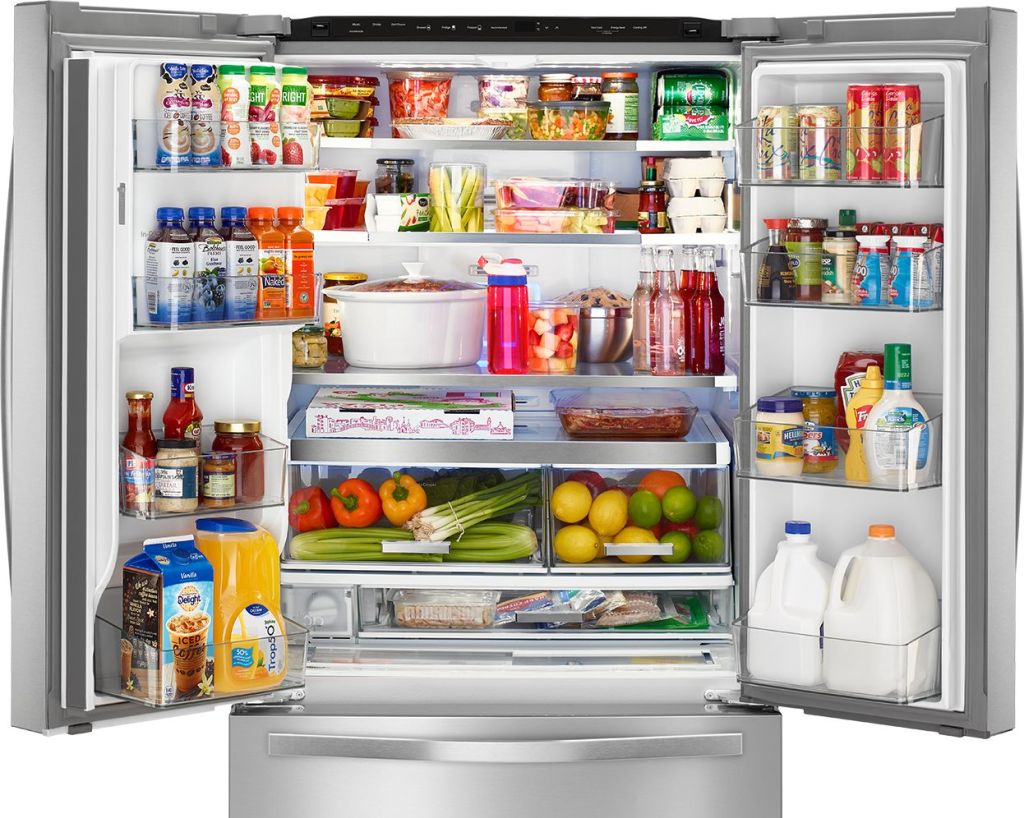
courtesy: Whirlpool

On a recent trip to one of the box stores, I couldn’t help but overhear a salesperson singing the amazing features of a particular dual-door refrigerator. NOTE: the courtesy photo is for illustration and is not the product being referenced herein.
“…..with the app on your computer, that model can sense when it’s time to restock, bread or cheeses or certain vegetables or frozen dinners…”
The technology, the artificial intelligence that’s coming to market, can be impressive. But will it work on my iPhone 6S or will I need an Android system?
You know, my home fridge has an ice-maker, though it doesn’t automatically dispense into my glass when held below a special port. Mine? Open the freezer door and grab ice from the container, a container purchased separately, BUT, looks like it came with my fridge. Typically I empty two ice trays into that container, refill the trays with water and return to the freezer. In less than 10 minutes, you’ll have ice that’s just as good as what the cyborg-fridge can automatically deliver to your glass.

My hand is the delivery and presentation vehicle. And it works. No downloads, no firmware, no software….basically, I’m somewhere with basic technology versus, being nowhere or confused with this hi-tech stuff. Now, if I was that customer learning about the smart appliance in question, perhaps the dialogue would go something like this:

Salesperson: It’s an amazing piece of technology. It can monitor your food and beverage consumption, conveniently at your fingertips. You use an app on your smartphone. It’s a big plus for busy families.
Me: That’s impressive, but it’s a feature that I don’t need or really want.
Salesperson: You can even check it from just about anywhere in your house. That’s real convenience.
Me: Actually, I find it more convenient doing it my way.
Salesperson: And how’s that?
Me: I walk into the kitchen, open the door and make note of what’s still there and what needs to be added onto the grocery list.
Salesperson: How is that more convenient?
Me: Well, it’s not just convenience for me, but a benefit.
Salesperson: Oh….?
Me: It’s called walking. For me that’s a benefit. I already do too much sitting at work.
Salesperson: That’s a valid point, but not really helpful. I mean we’re talking about making your life simpler, by doing less chores, to get more time to do things you’d rather do..
Me: I’d rather get up and move. Besides, I get a chance to scope what’s not in there, but whether the shelves need cleaning or if an expiration date goes back to the Nixon administration.
Salesperson: Wait, who’s Nixon…? Anyway, think of it as an evolution towards the future of appliances. You, the homeowner, can control all your appliances such as your TV, your A/V installations, the lights and the thermostats and so forth.
Me: ….and without even breaking a sweat.
Salesperson: Exactly.
Me: Will people really adapt to this technology? I imagine someday my health insurance being able to buy data regarding my food preferences, and since I love ice cream, well, a dietician or cardiologist may take issue with that…who knows?
Salesperson: Hey, well, hopefully that won’t be the case. I mean there’s a ton of places where information can be bought for marketing or research…that kinda stuff.
Me: Of course….you know and I know that your actual mileage may vary…capisce?
Salesperson: Ah, yeah, sure….have you seen the new washers and dryers that are out now?