Light Chaser

Am I the only one–if not one of the very few–that doesn’t object to the return of “Eastern Standard Time” in New England?

I refer to this change as back to “real time” much to the chagrin of most everyone around me. There are plusses and minuses–like everything else–but for me, this is not a big deal and I for one like that extra hour of sleep.

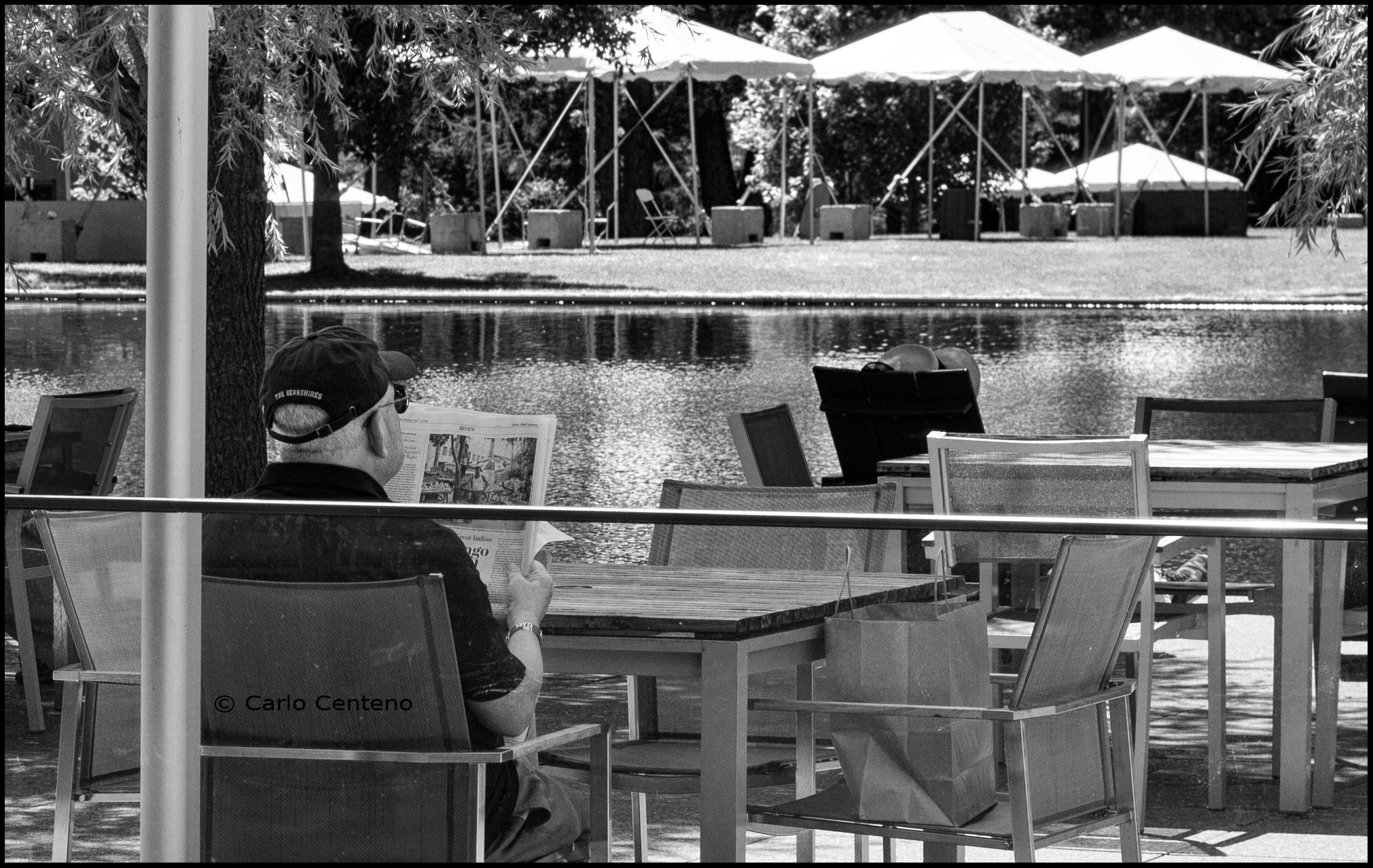
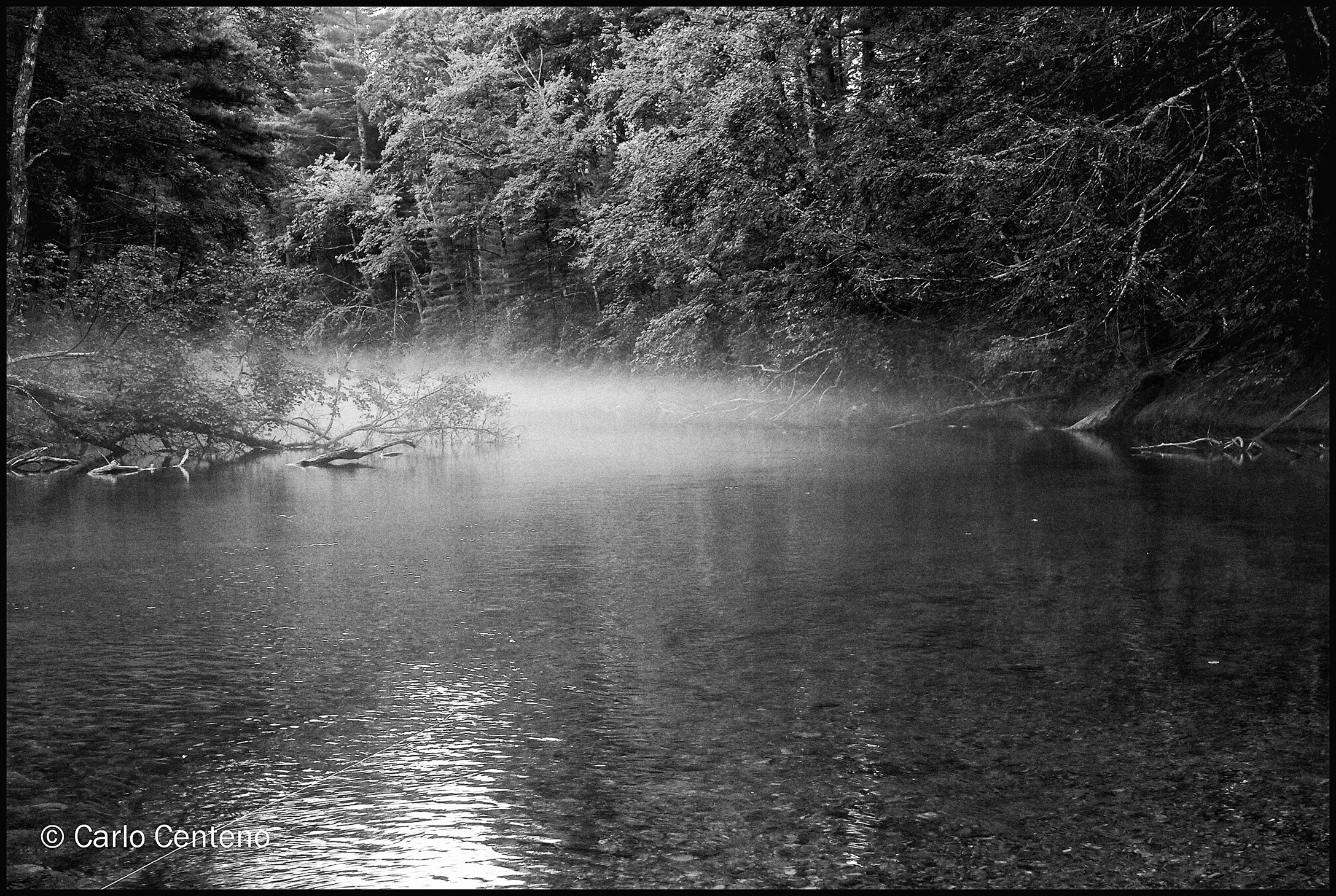
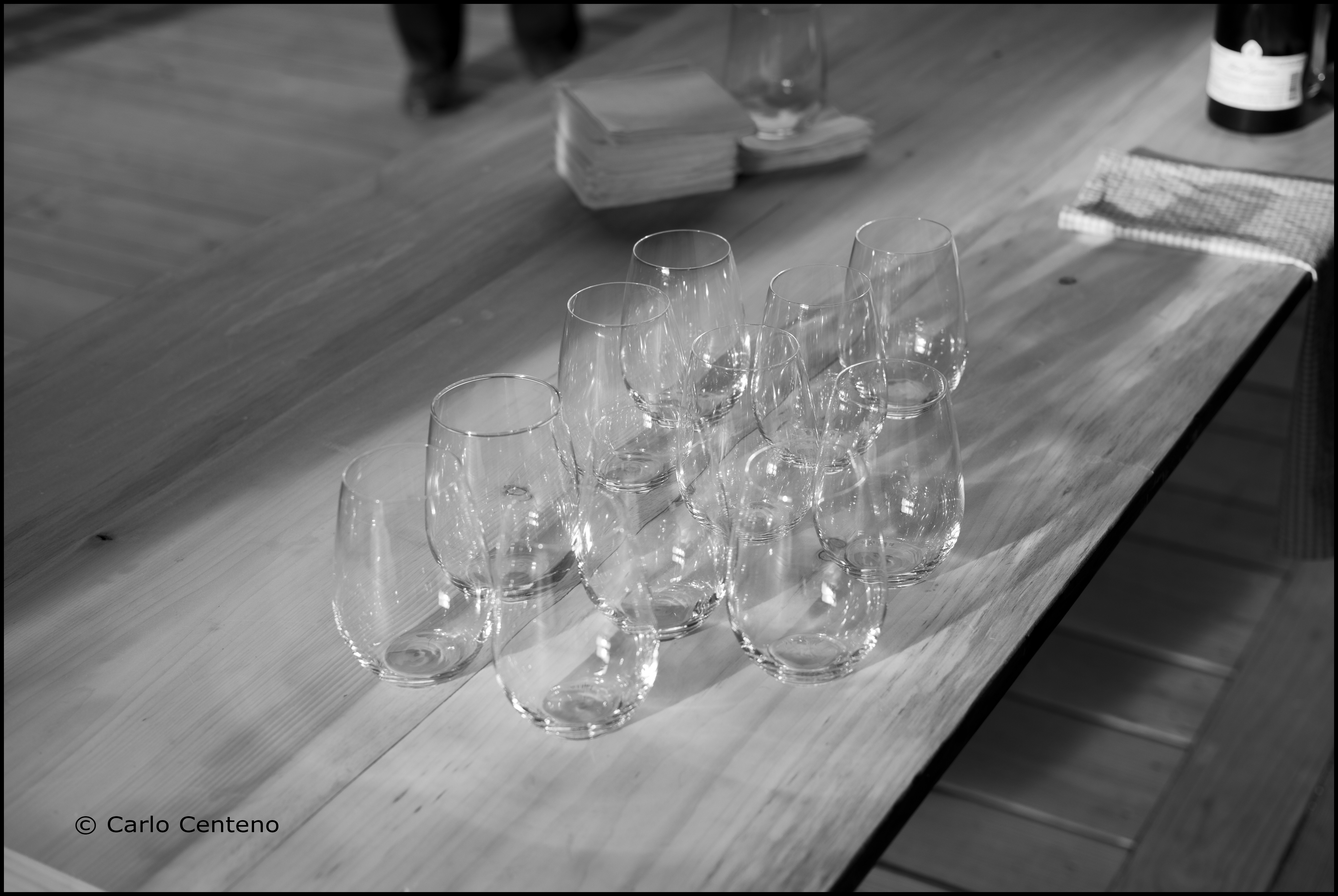
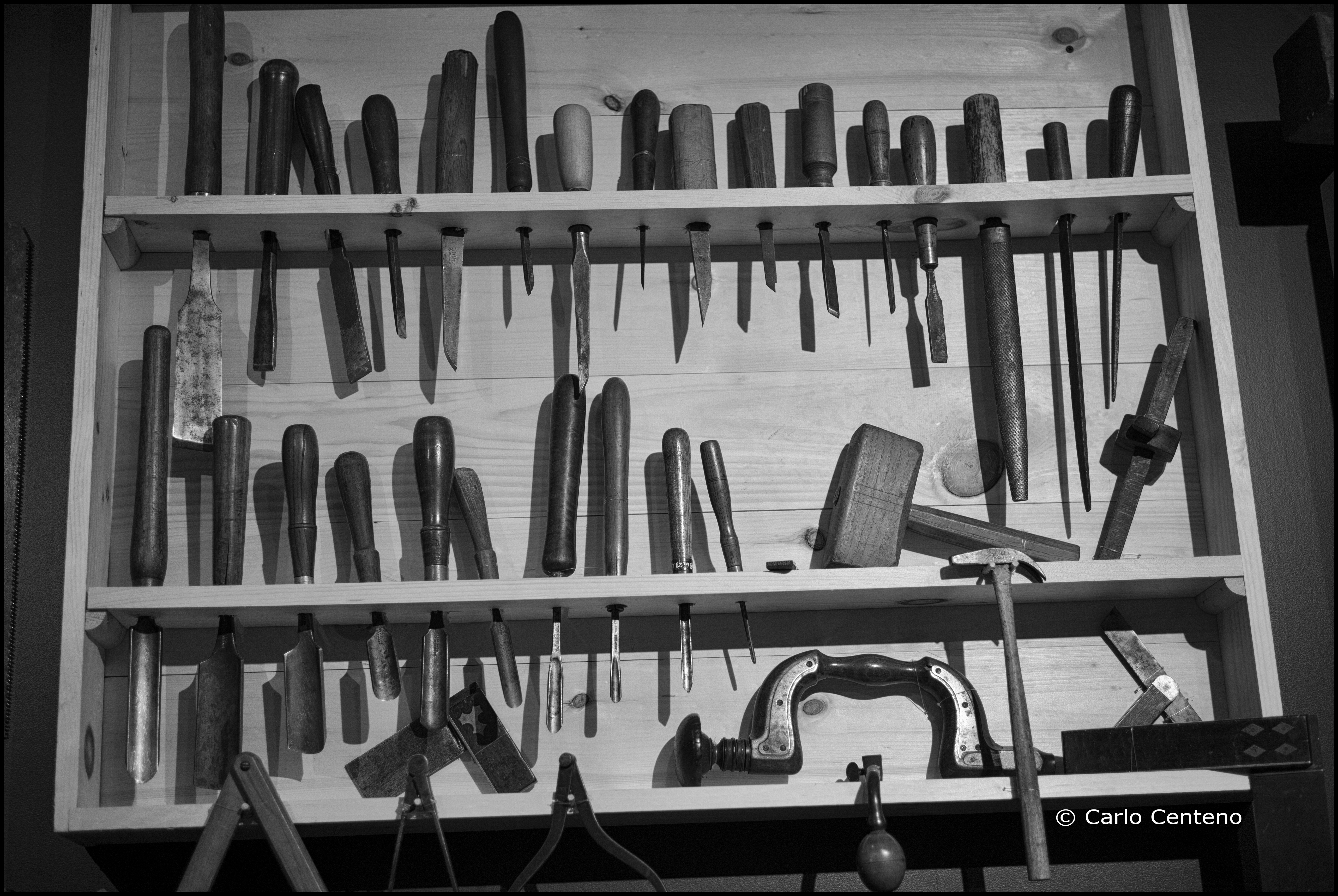
Chasing the light with a camera in hand is very therapeutic for me.  The time of day, whether early or late, contains a salve that takes the edge off my depression.
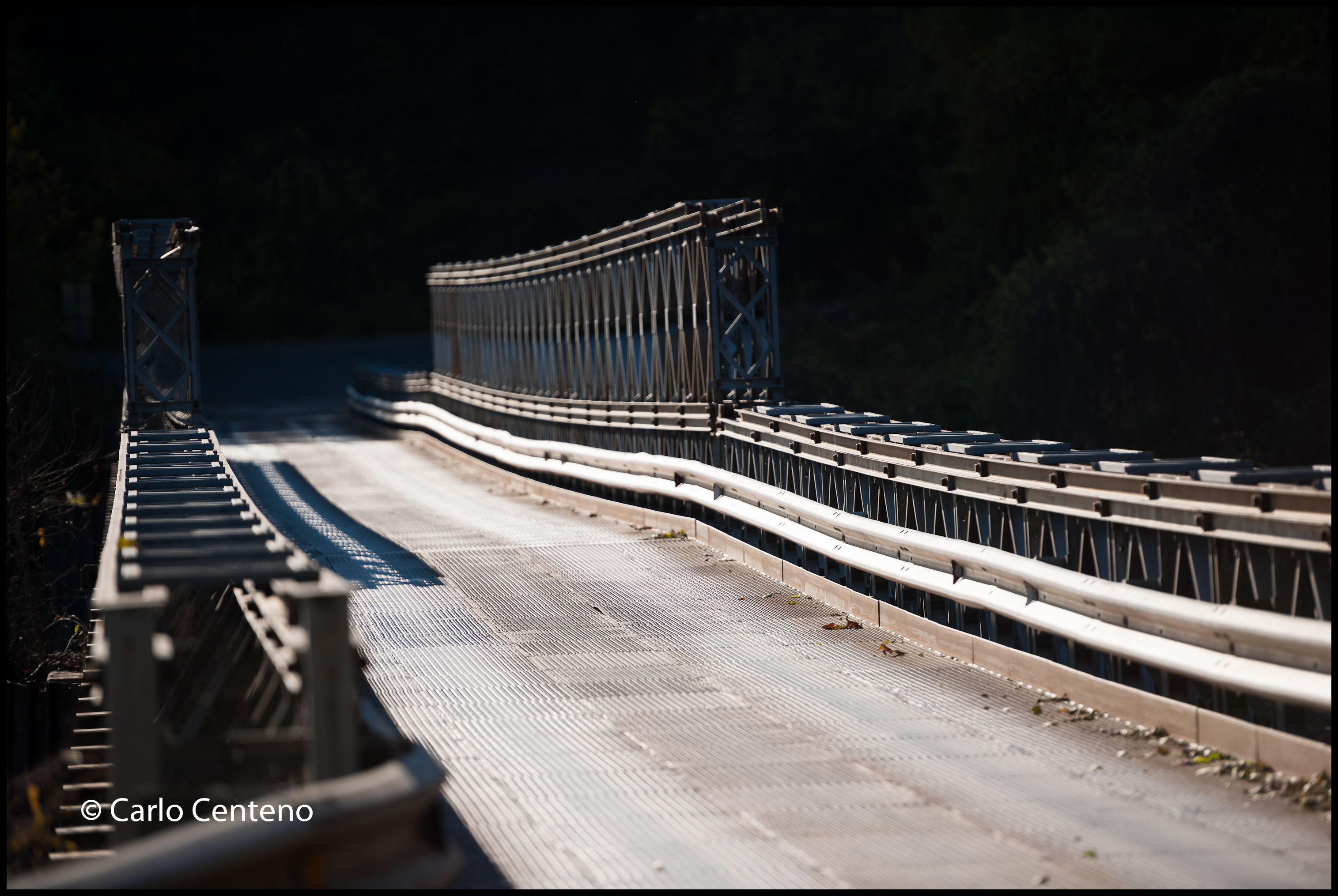
Light can be a fantastic muse. It’s never exactly the same yet it can provide similar if not familiar feelings for one person to the next.  I love chasing the light…


It is what it isn’t…

Contrary to the expression, “it is what it is,” I’m reminded that many things in our day-to-day lives aren’t what they appear to be.  What it is, is often isn’t.
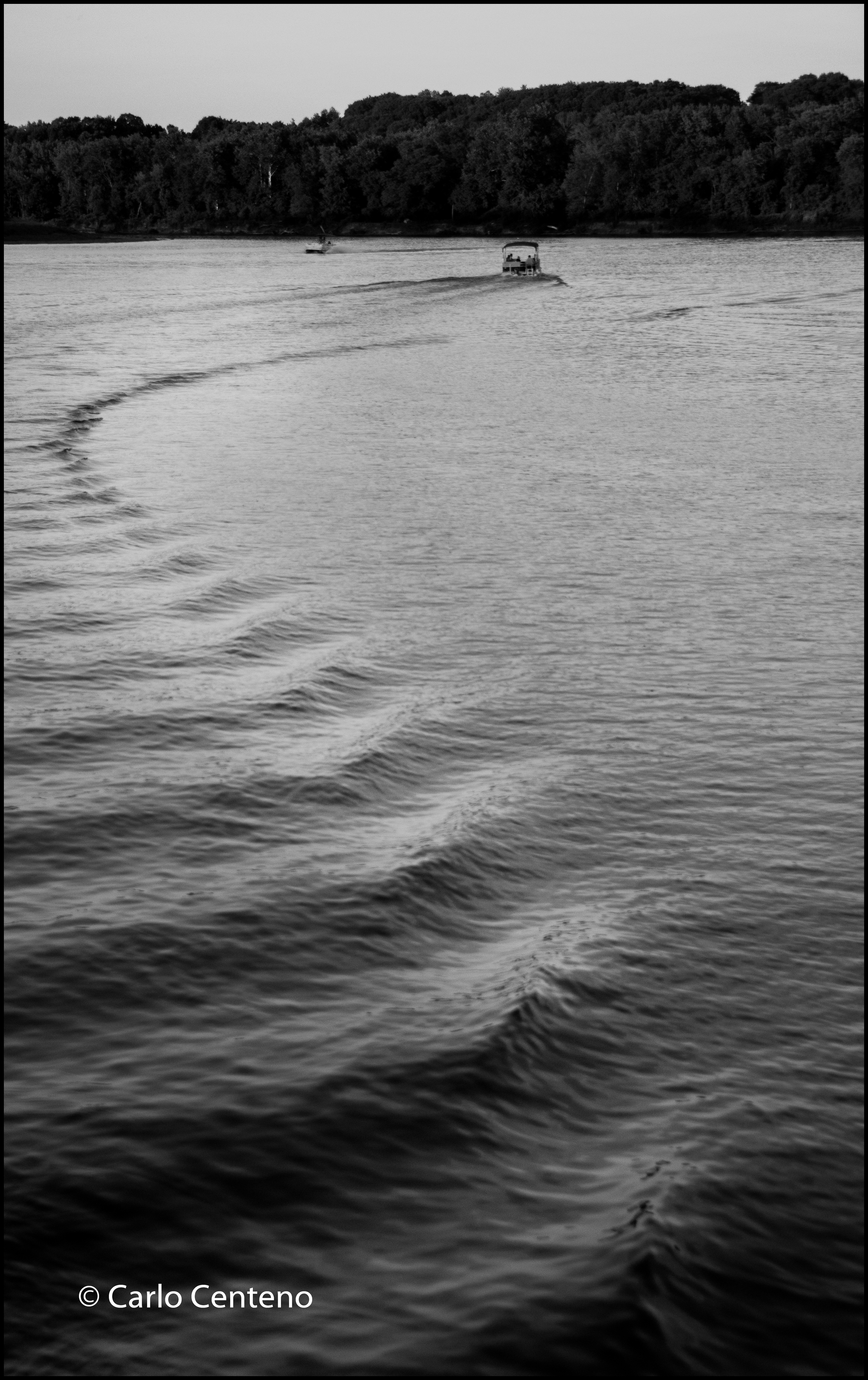
It comes in many forms, but this spectre of self-doubt, worth, value, meaning, purpose,etc. is more apparent now than ever. We may not say or admit to it, but I sense many from all walks of life are experiencing an existential crisis.

We may not feel smart enough. Or attractive enough. We may think, “why don’t I have more of what he/she has?”  The forces of social media, the rise of celebrity status, the persistent beat of consumption, the increasingly divisive discourse of “I’m right, you’re wrong” all contribute to this hunger for meaning and purpose.

But the larger question shouldn’t be, “why are so many things messed up?” Ask yourself, “what can I do to make life a little easier for someone else?” At the end of every spinning class, our instructor encourages us with these directives: believe that you can do what you plan to do and if you want to feel good about yourself, do something good for someone else.

Splashes of Light

Those who live close to the 66th circle of latitude have it tough. This is  the area of earth known as the Arctic Circle. Brutally low temperatures notwithstanding, the brevity of available daylight 6-7 months of the year would be the metaphorical stake-in-the-chest for me.

While light is essential to vision, perception, photosynthesis and so forth, on any given day light can also trigger a variety of feelings.

You can argue that what one sees in a photograph is more variants of shade and hue than actual light. Like 2 sides of a coin, you can defend one POV over another, but there’s no denying the fascination some of us have for how light can enlighten…

Strength Revealed: The End

The following completes the story I started on May 25, Strength Revealed.

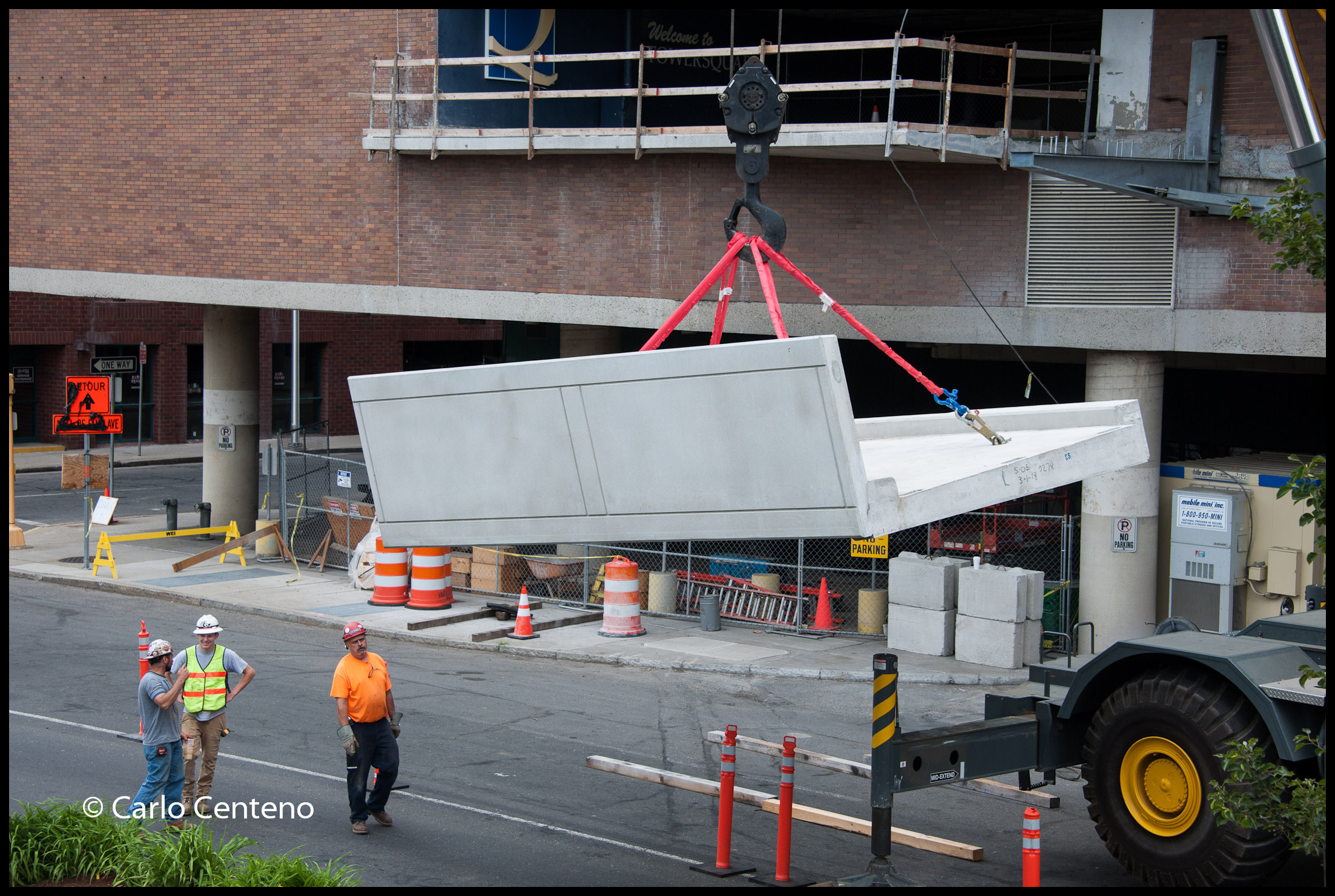
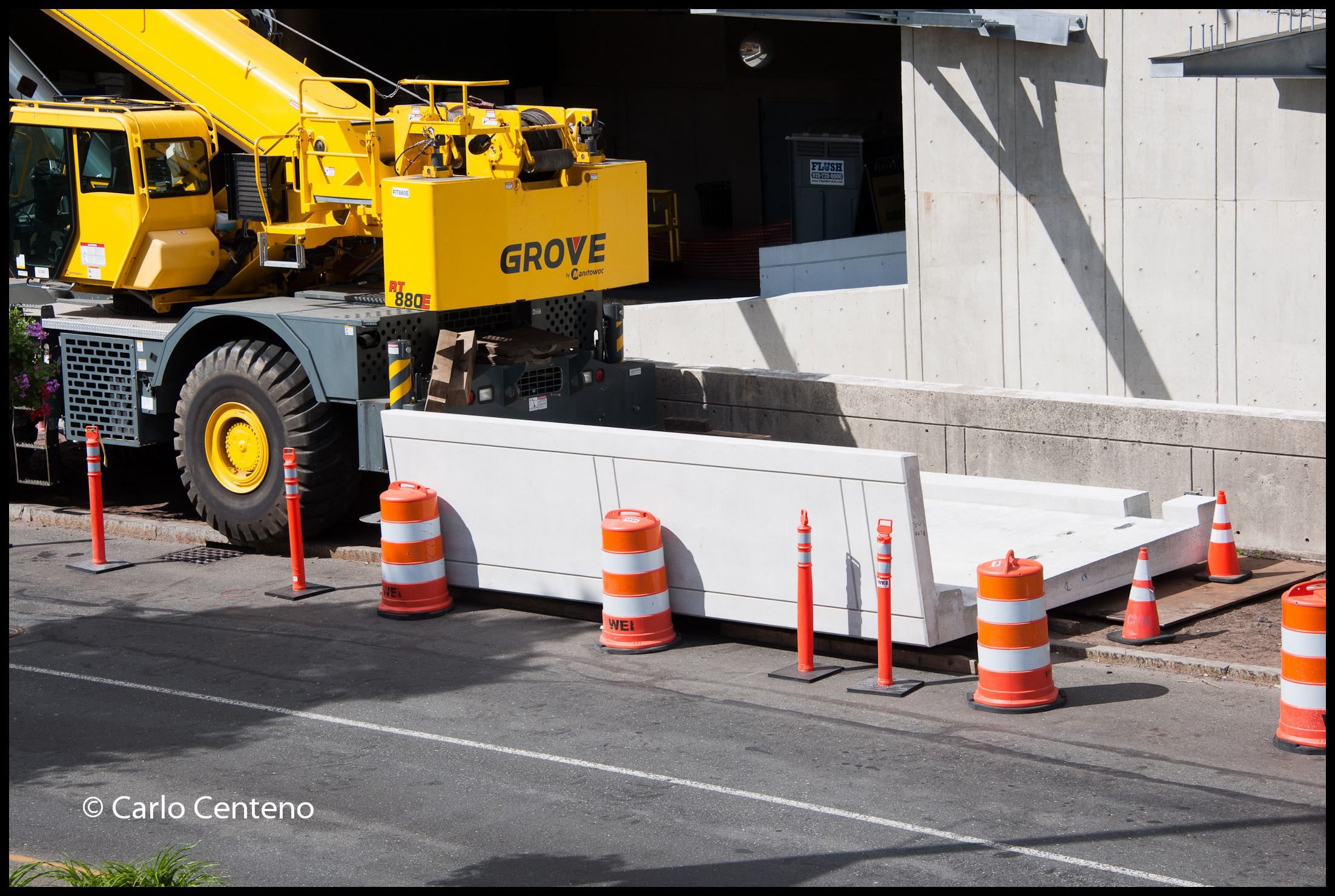
One reinforced cement section delivered to site…

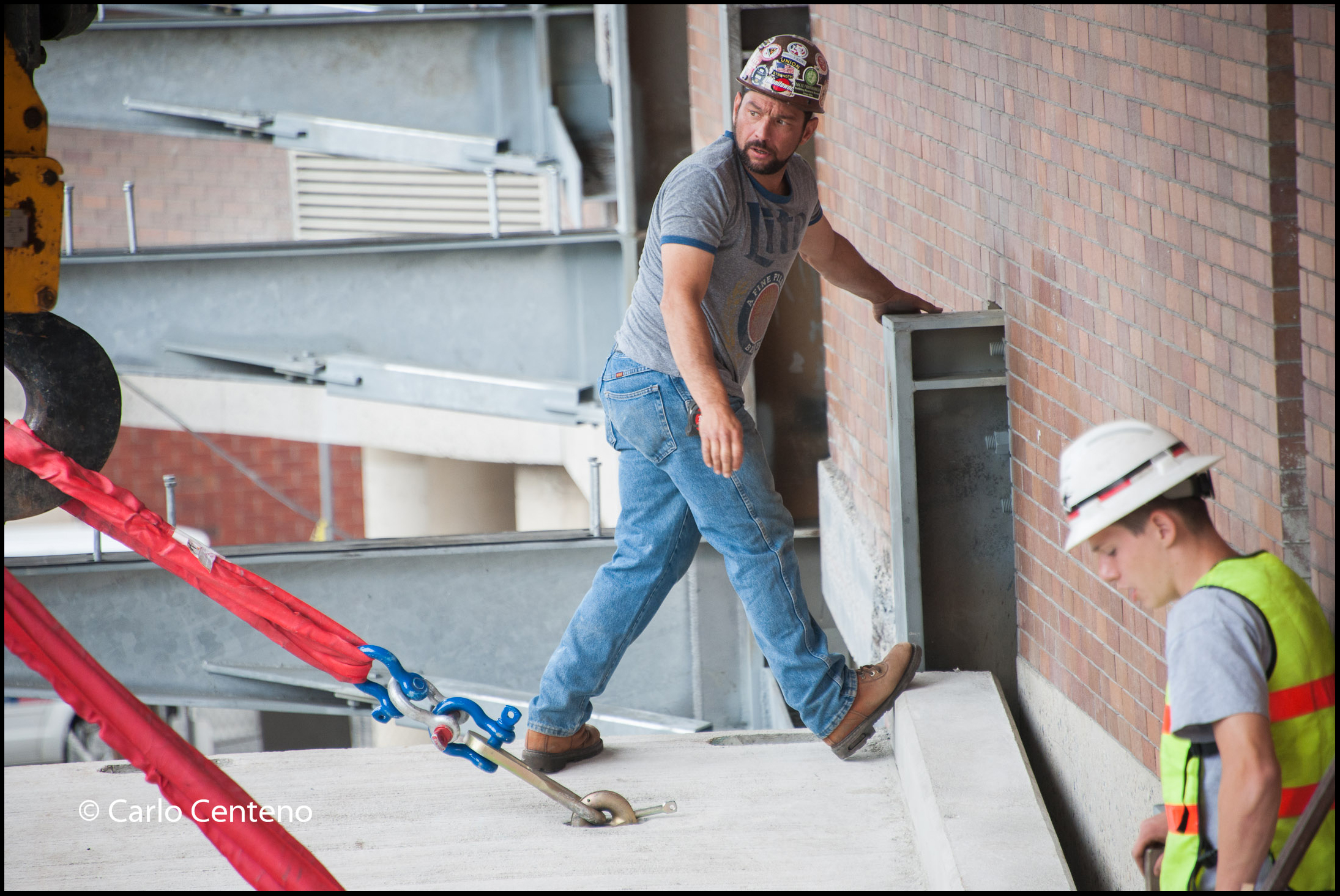
I don’t know the actual weight, but it required 2 cranes to cradle this section into position…

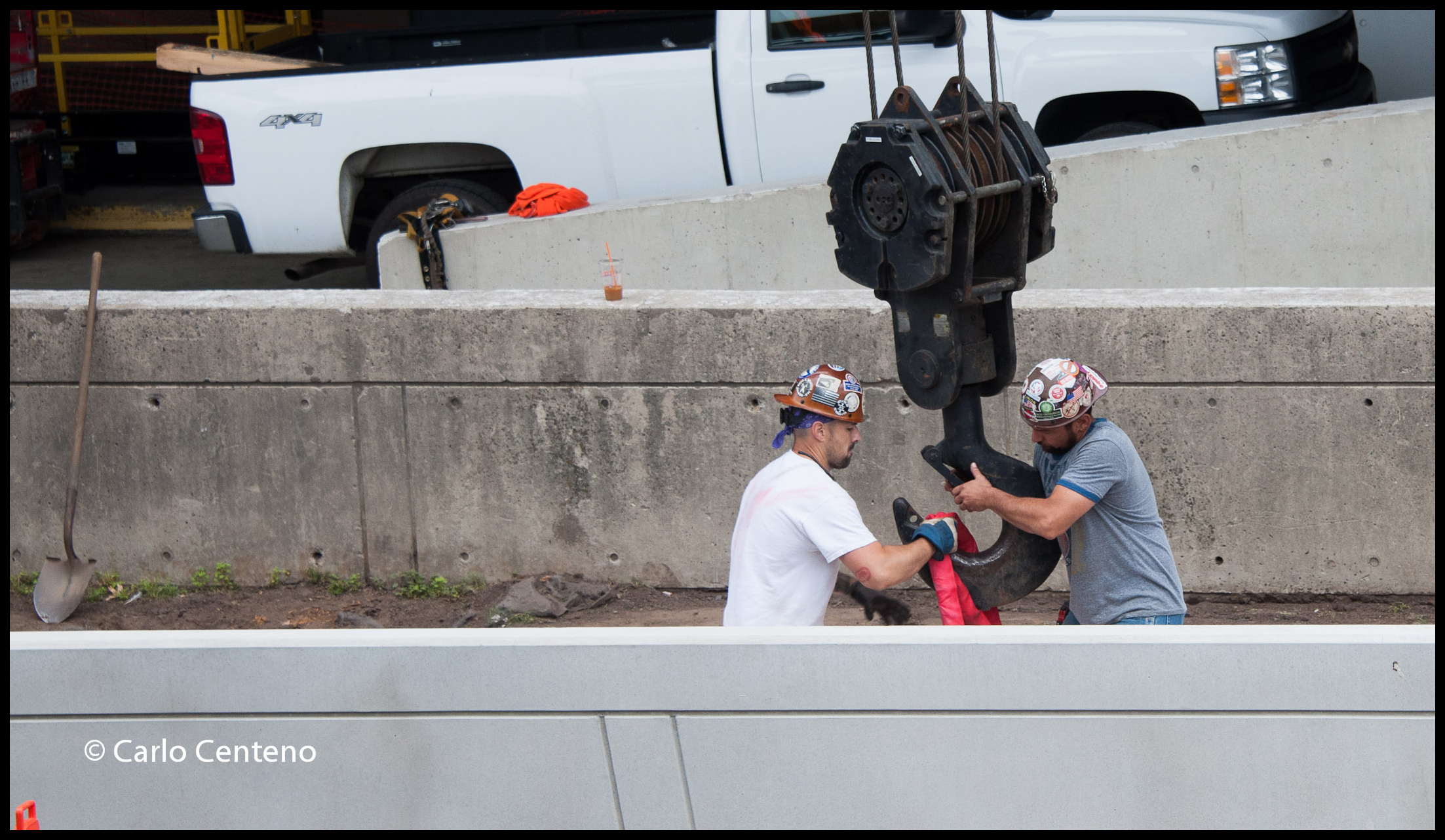
Steel cables, hook, pulleys, etc.

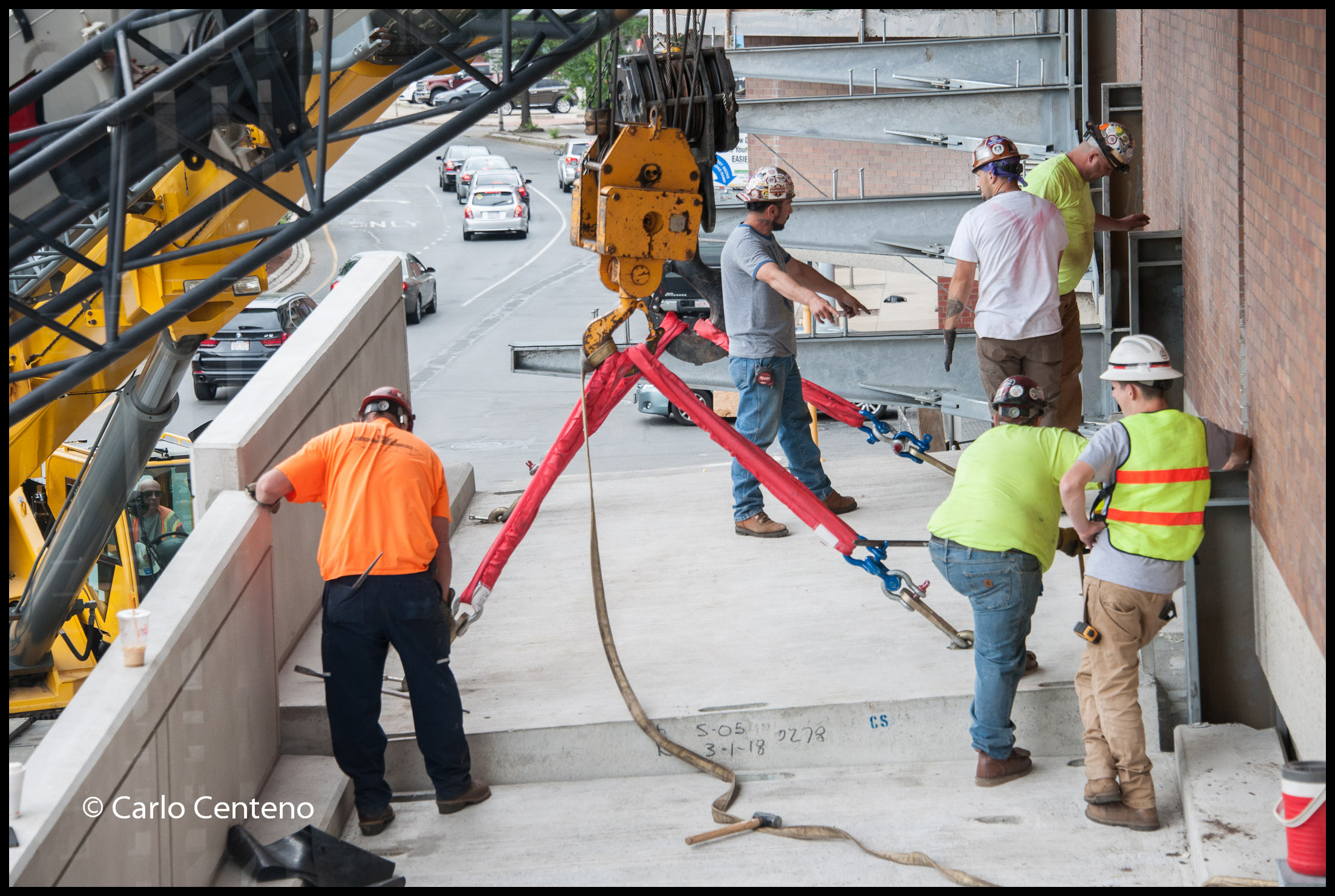
One crane just barely…barely…cleared the overhang of the first parking deck…


Seeking Selectivity

There’s an ageless argument in photography involving 2 camps, one staunchly defending B&W as “more real” than color images, and of course vice-versa.  Who’s right? Or wrong?

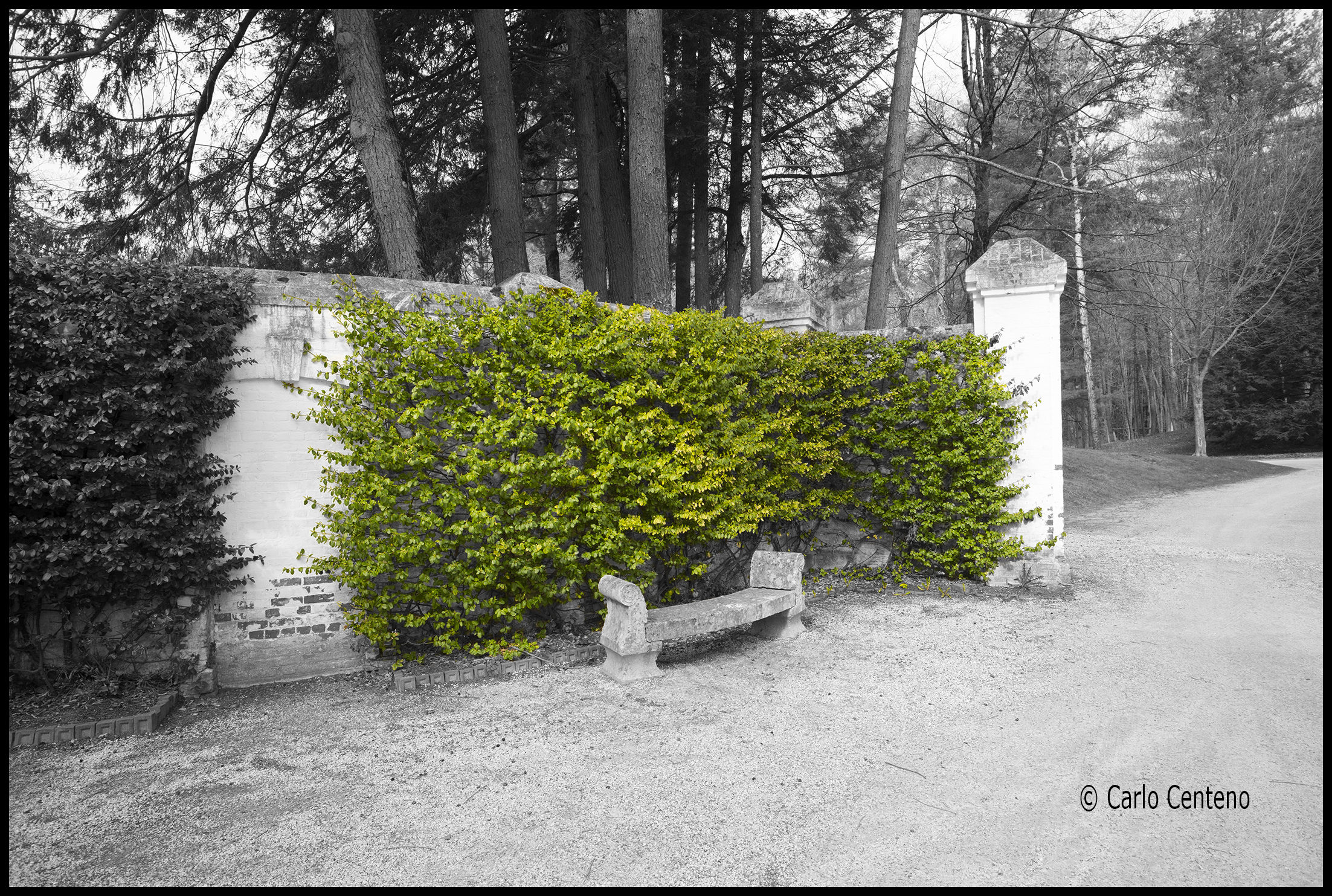
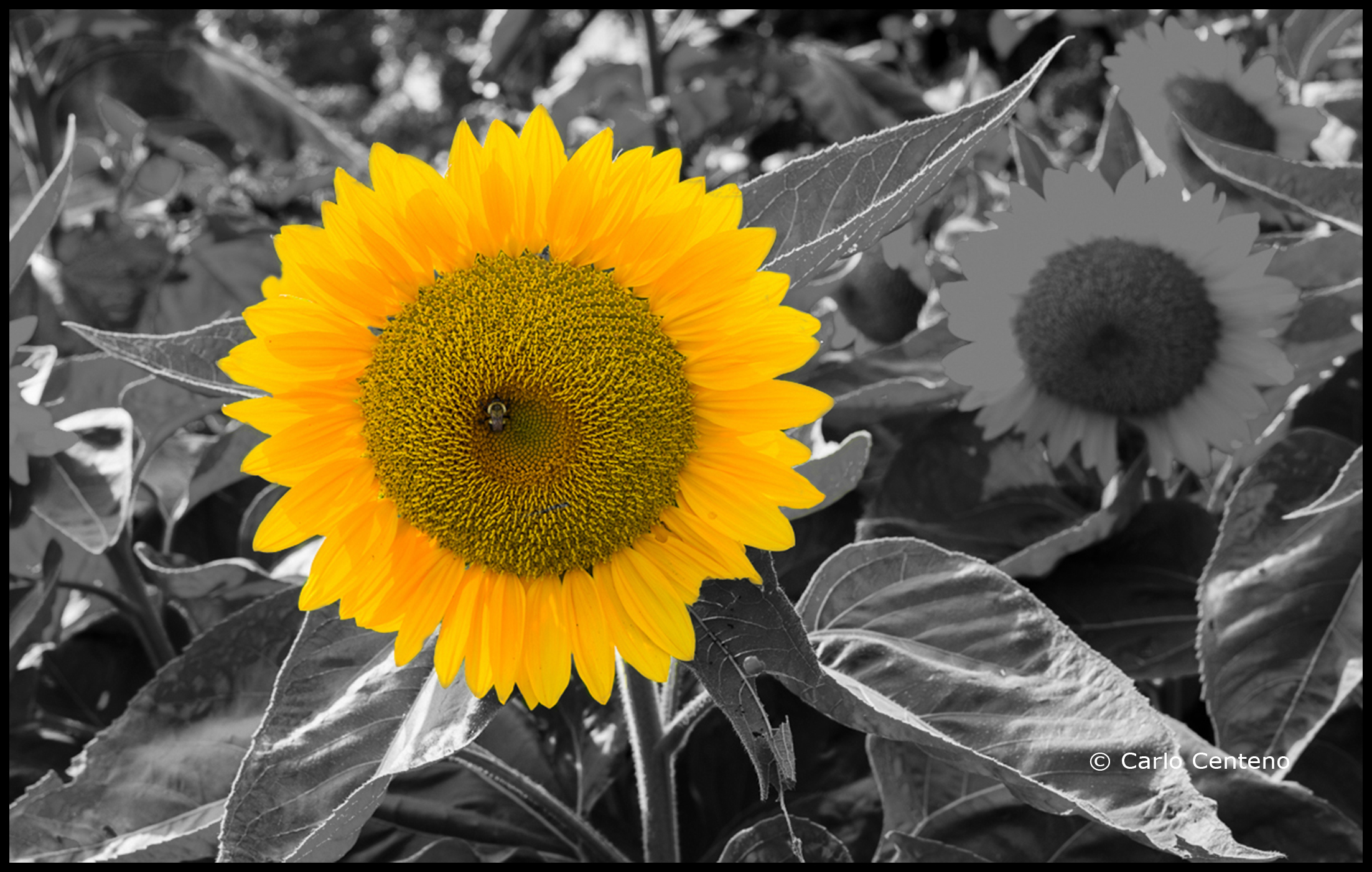
My take on this may seem like a cop-out, but choosing one over the other because it’s “more real” doesn’t resonate with me. The interpretation of any photograph is highly personal, so regardless of an image presented in B&W or color–or combinations of both–what you feel makes the image real.

Some days, I see and feel things that tell me to shoot B&W. Similarly, it goes the other direction where my sensitivities lean to color, even one particular color.

Yet these images can confound the entire argument because of my resolute commitment to personally see or find things that prompts a connection. Are these photographs less real because of my choice in isolating or selecting an object, shape, color or theme?

Strength Revealed

The primary entrance ramp to our office garage is undergoing a major rebuild. I spoke with one of the engineers who told me the short version of what needs to be done. What amazed me most was not the materials being used [steel], but the forces impressed on each steel structure to make sure everything stays in place.

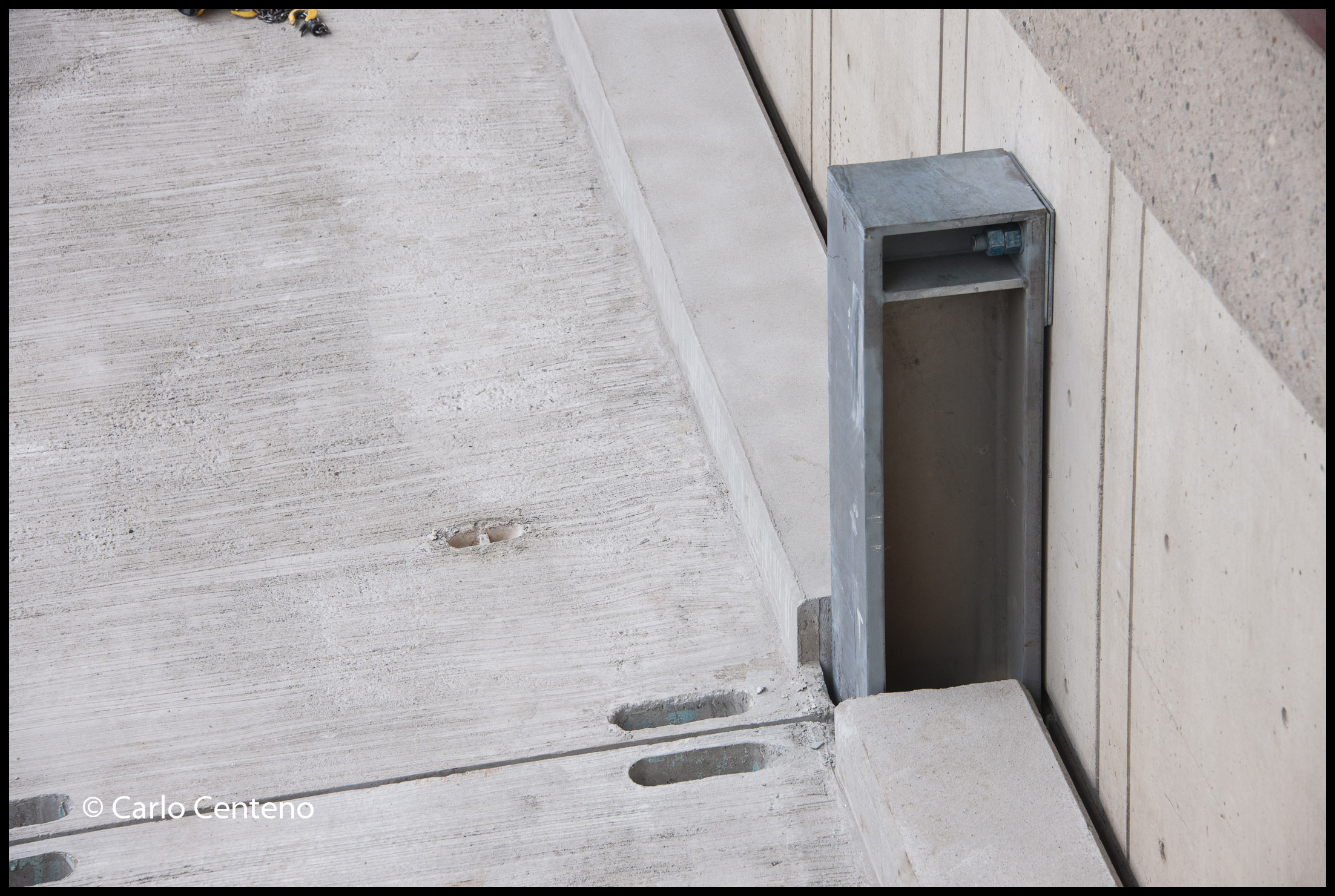
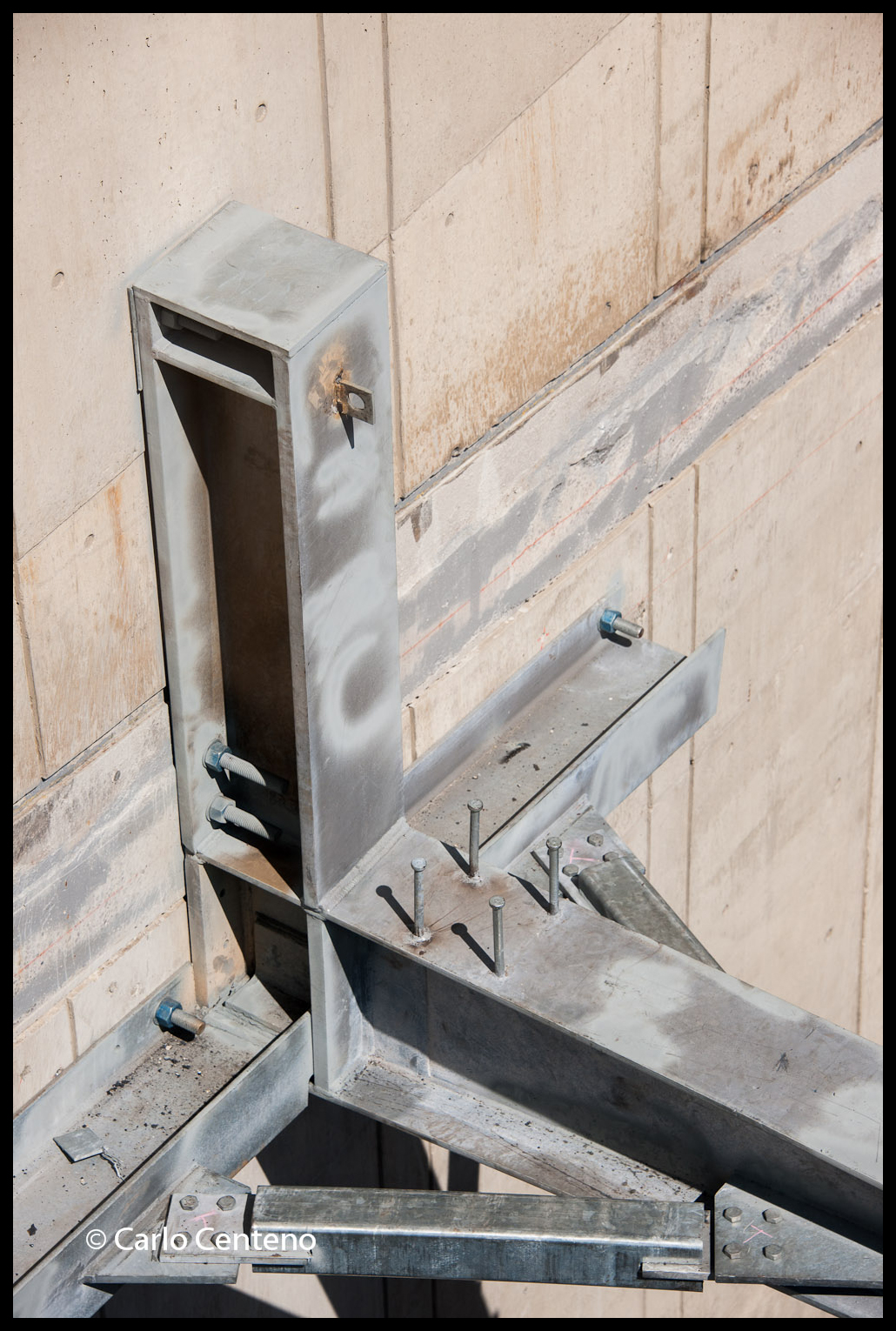
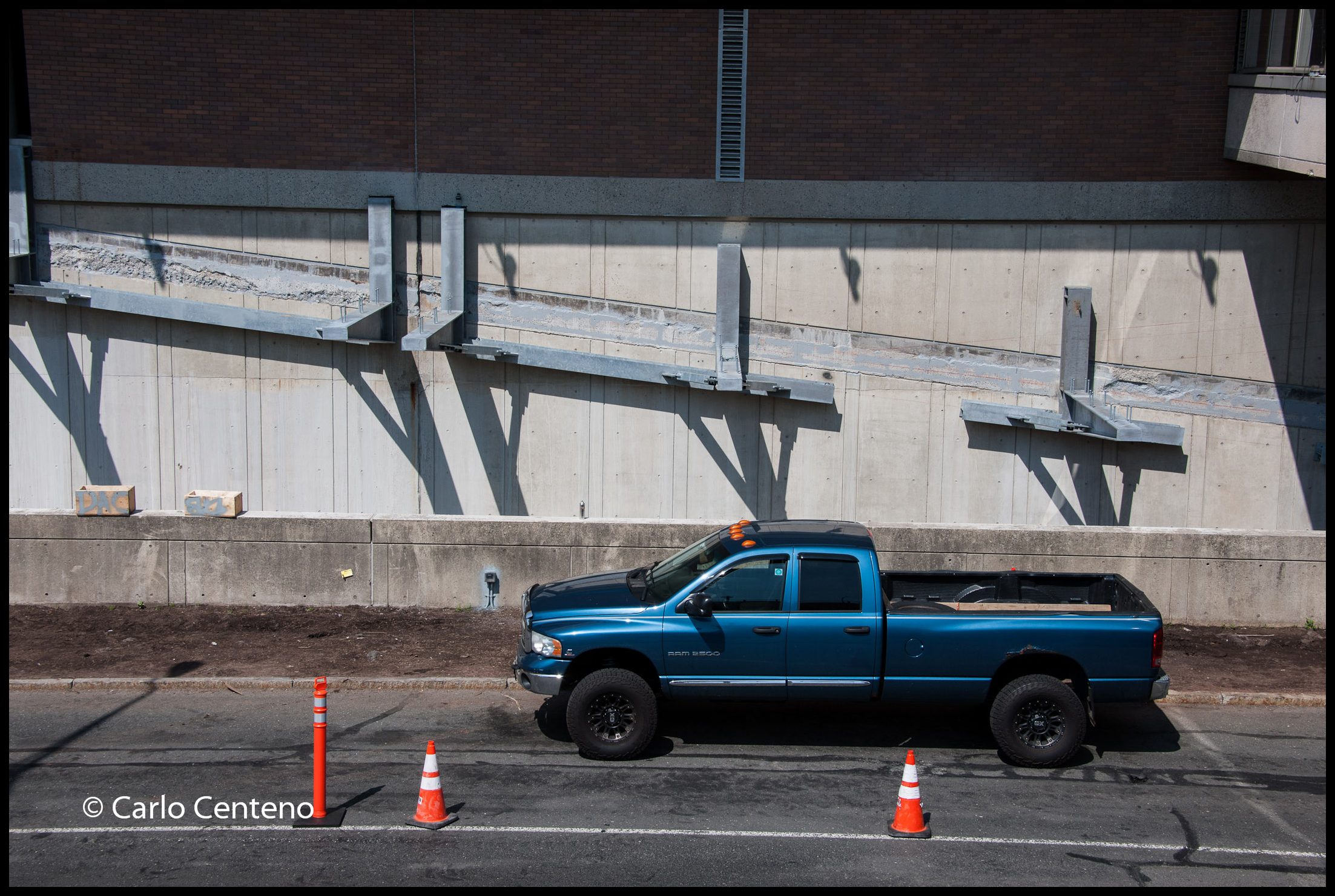
The “L” brackets look like overgrown shelf brackets. They’re attached to  the side of the building with bolts that run through to the other side.

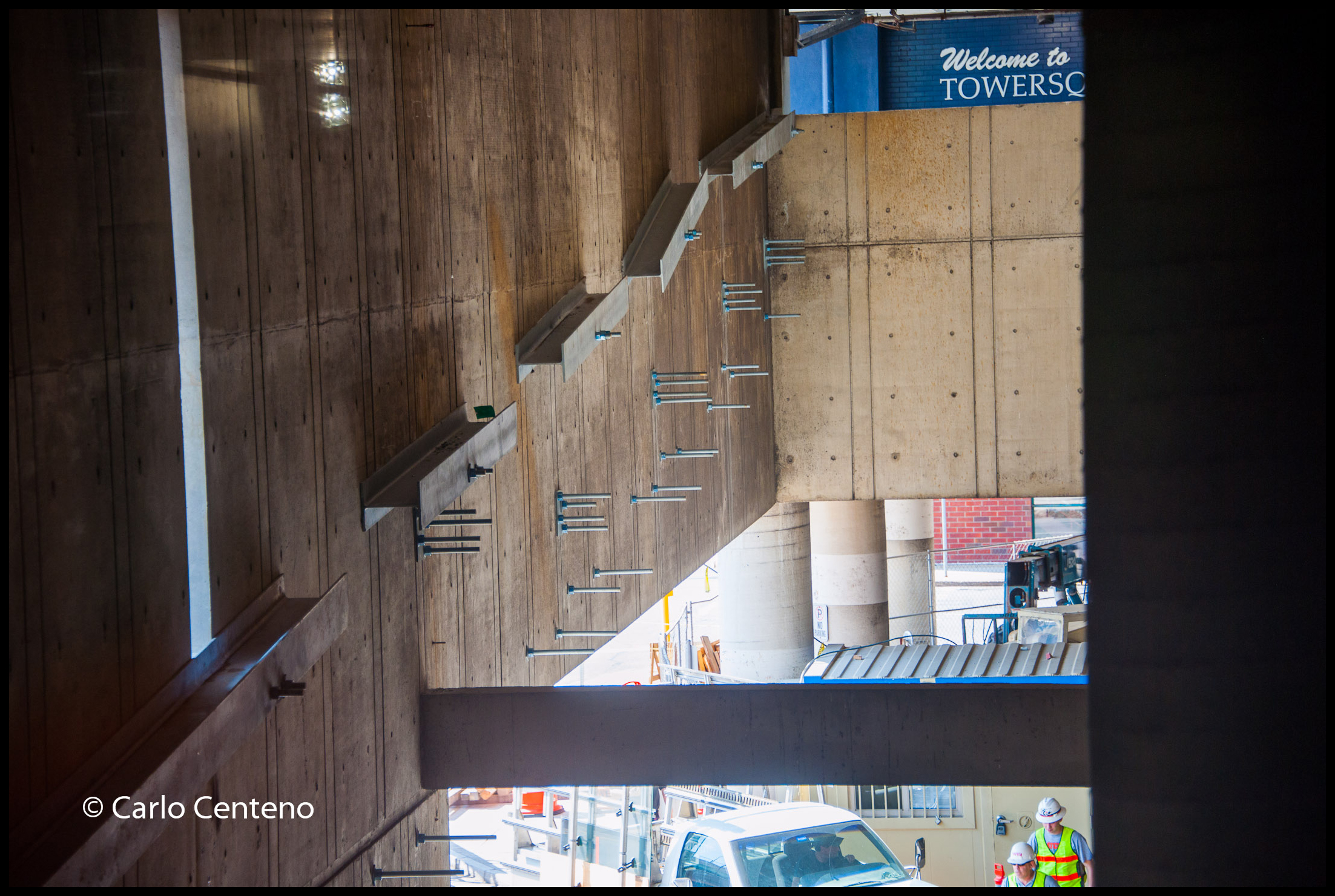
The top part of each cantilever [the “L” bracket] is also bolted to a length of I-beam steel. The beams look like tracks with missing sections; nothing though is missing here on the inside of that ramp wall. In engineer-speak, “form follows function.”

The panels that are the ramps are also big and heavy. Very heavy. One of the challenges is where and how to position a crane to offload a panel. Parts of the street are suspect because of storage rooms and passages lying beneath. The weight of the crane, the truck and equipment can very well “drop” into a hole of its own making.

An anchor point for the ramp…

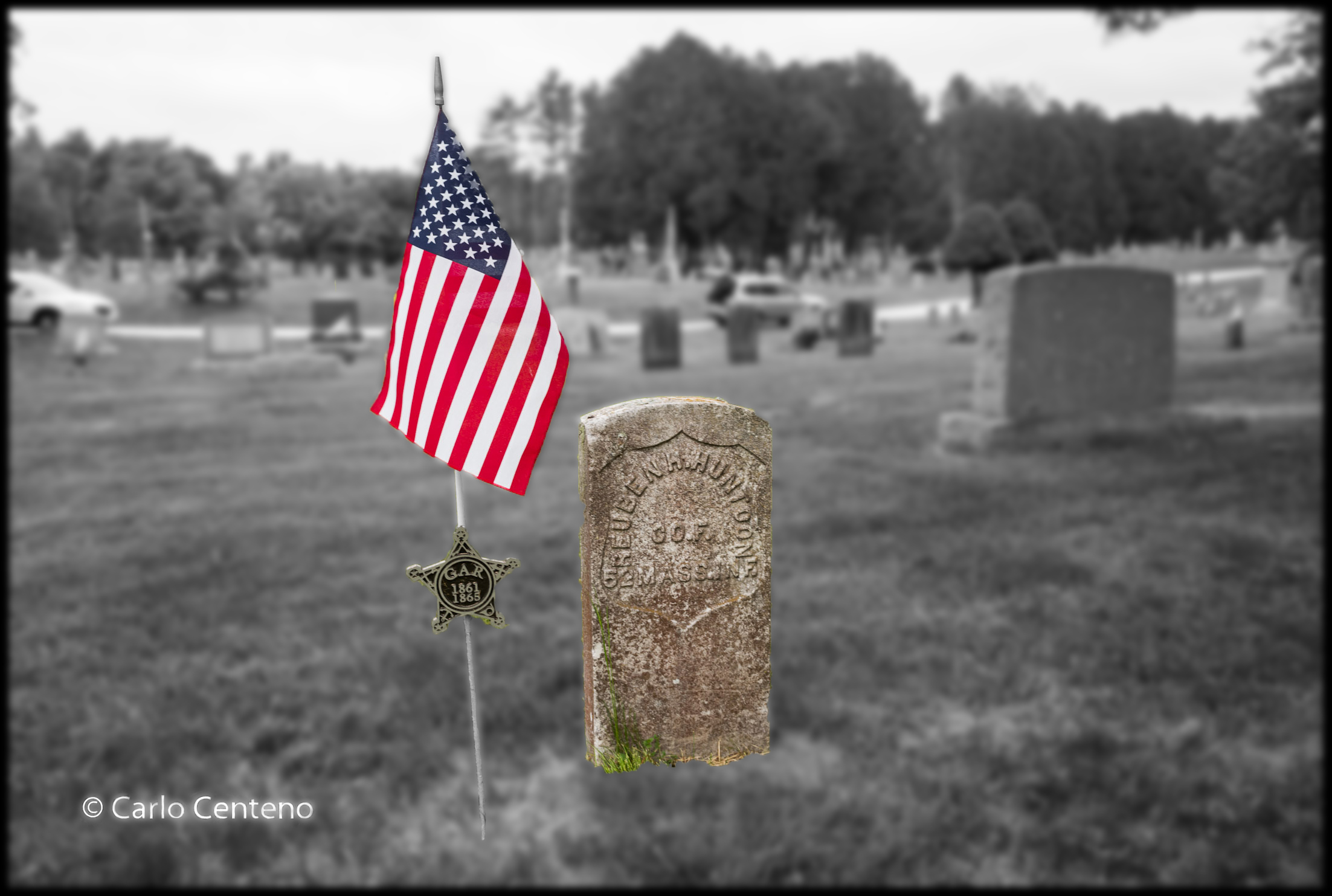
A Somber Trait

Much of human history is peppered with a notion that when we don’t understand the unknown, we become defensive, fearful and hesitant. Granted the opposite is also true; we can become bold, curious and willing to take a chance. There’s a dichotomy between assumptions and reactions.  The sentiments in the plaque attest to these notions. Just where you straddle this dichotomous line depends on how you define yourself.

A commencement address given a few years ago might shed some light on my post. It was delivered by Tim Minchin, an alum of the University of Western Australia. His career path is one created by an awareness for all things sentient. Minchin reminds me of my own college journey in liberal arts; I found such great value in what and how you feel in terms of art, music, literature, philosophy and all those disciplines of study that pre-dated this notion that mindfulness and empathy and emotional intelligence are somehow new constructs of our modern, western world.

In his comments, his last 3 points made in impression of sorts:

#7) define yourself with what you love, not what you hate; #9) respect people with less power than you, and #9) don’t rush…

Are you leaning more to one side or the other of that dichotomous line…?