“My Better Self”

12 FoliageRNB-1001281

The wife-husband duo of Alaina Moore and Patrick Riley are the indie pop group, Tennis. The music and lyrics to “My Better Self” is a heart-felt, rhythmic poem about several things, not the least being how we struggle with words to bring clarity to how and what we feel. This is my favorite stanza, which also happens to be the bridge of the song:

If I don’t use words
Then each sound goes unheard
Utterly senseless without nouns and verbs
But symbols suggest they are fit to possess
A purposely function
That cannot be met

Copyright-All Rights Reserved, Alaina Moore and Patrick Riley


Demographic Segmentation & Marketing

15 Trinity College-1005298

I learned early on in my career that market segmentation is but one level of segmentation. I think of the process as one of differentiation. Demographic segmentation requires specificity in a cultural subset. In other words, you don’t place spanish-speaking people as solely spaniards any more than those speaking french as frenchmen.

The subset is of material importance. Spanish-speaking people come from many places other than Spain, ergo the same for french-speaking people living elsewhere than France. Think Puerto Rico, Mexico, Columbia, Dominican Republic for the former and Quebec, Monaco, Ivory Coast and Belgium for the latter.

There has been a tremendous amount of buzz regarding LGBT civil rights. Ireland is the first country that recognizes same-sex marriage after its citizens voted it so just this past May. Caitlyn Jenner is a household name and we’re likely to hear a lot more about the former Bruce Jenner’s transgender journey.
15 Trinity College-1005250

So, what does this have to do with marketing? For me, plenty.

First and foremost, we’re dealing with a community of people. Many countries treat LGBT people like criminals. In no uncertain terms, being lesbian, gay, bisexual or transgender puts you on death row in several countries. So, tell me where’s the real crime taking place?

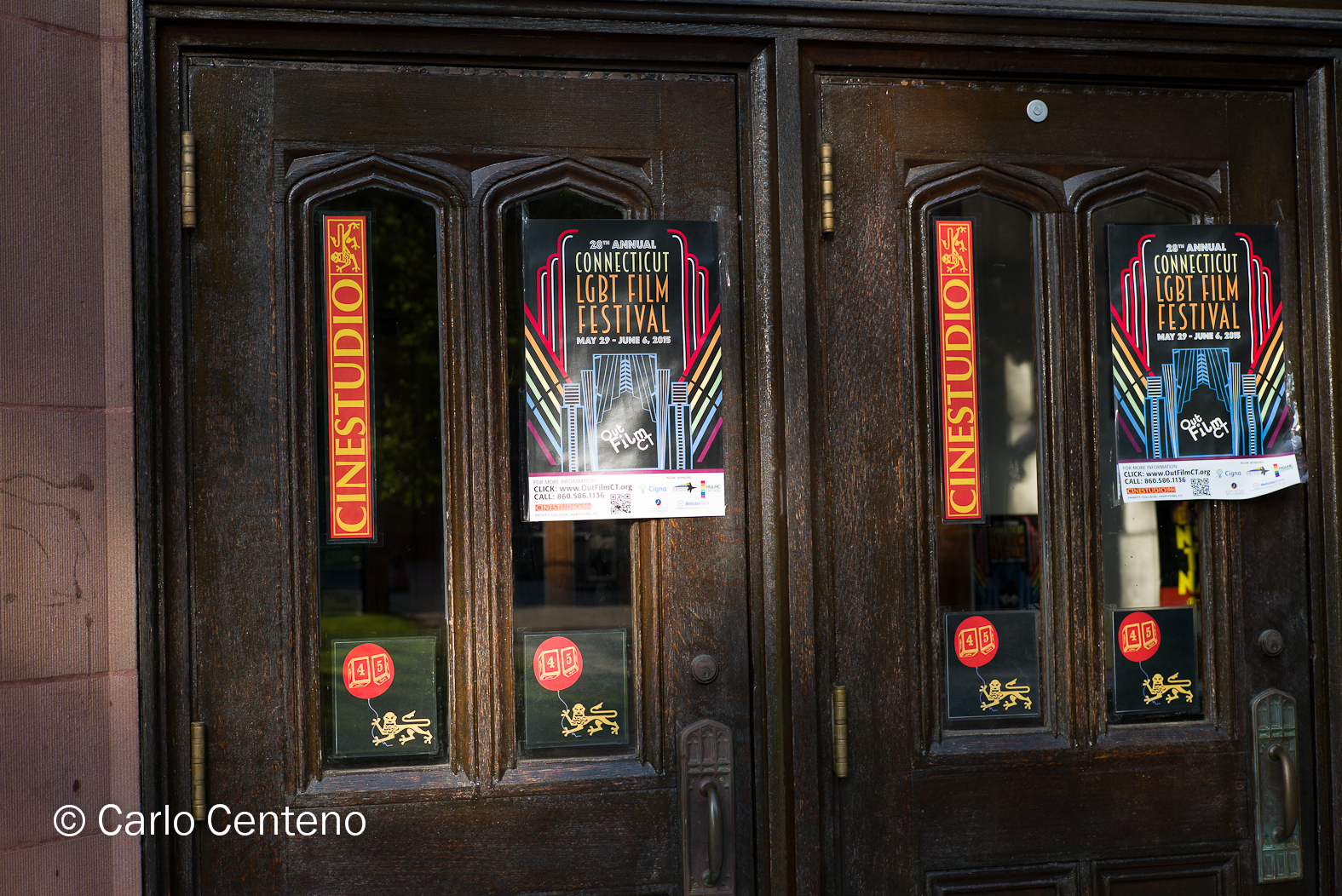
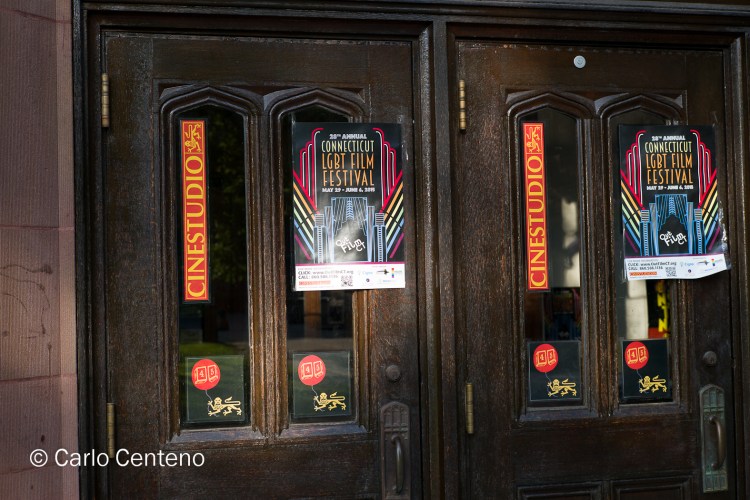
I recently attended a screening at the 28th Annual Outfilm CT Film Festival held on the beautiful campus of Trinity College in Hartford, Connecticut. From May 9th to June 6th, controversy, art, education, tolerance, intolerance, inclusion, love, forgiveness, the banal and the beautiful were expressed across a variety of films, short and of feature length. The films I watched provided a temporal take on LGBT concerns as well as the eternal qualities of love, acceptance and foregiveness.

There’s also the economic take that cannot be ignored. LGBT folks are contributors and consumers. Some hold high-level positions in business [Tim Cook, CEO of Apple, e.g.] Yes, the human costs are invaluable, however the economic costs can be calculated. If you need more information, this recent article from The Atlantic can shed more light on the value of the LGBT economy.

15 Trinity College-1005289

How important is the LGBT community? Here’s the short list of corporate sponsors of the Outfilm CT Film Festival: Pratty & Whitney; CIGNA; The Hartford; AARP; Aetna; Baccardi; Barefoot Wines, among others…like the firm I work with.

In addition to other key designations and credentials, Michael Matty, the President of St. Germain Investment Management, holds the following: Accredited Domestic Partner Advisor [ADPA]. While segmentation is important in marketing analysis, inclusion holds its own relevance as well.

Untitled

15 January-003
As much as I do like shooting digital, I admit a soft spot for all things analog. My roots are in film photography so that has something to do with all of this fascination for the old. I hope film never goes away; wishful thinking, but such is the march of technology. For now, wherever I can find film—some reasonably priced—then I’ll fetch a couple of rolls or so. Outdated film is fair game as they produce a different feel altogether. I think we get too hung up on histograms and color balance so much so that we dampen our feelings for what photography can bring to us.


15 January-002


With winter’s short days, I get pulled into the boldness of both light and shadow. And when the weather is just uncooperative—really windy, extremely cold, etc.—I’ll get involved with film, a light meter, a medium format camera and sometimes a tripod. 

15 January-006


15 January-005

Selfies and Brand Perception

Categorically speaking, the selfie is one of the top elements populating sites today. Somewhere in our digital world, popular media has put the spotlight on this ubiqituous “self portrait.” As much as I like coming across a selfie here and there, my preferences for this form of actualization is more personal if not deliberately planned. Not to say that a selfie cannot be personal for the sender or subject. Certainly to each his/her own; I’m in the minority as I don’t send or post selfies unless they’re for family. I suppose people who make selfies and photo bombs part of their daily life think nothing more of them. Thus, I can appreciate the spontaneity and the fun aspect of creating and sending them.

If selfies are genuine windows to our inner selves, then I’d think common sense should prevail. A selfie taken with pals in front of a questionable location will not play well. One example is the selfie of a twenty- or thirty-something doing same, with a brown bear in the background. If I recall, the location was in Alaska at a place popular with tourists and brown bears. The bear was just 30 or 50 yards [27 to 45 meters] away. That’s too close for an apex predator that can reach speeds of up to 35 mph [56 kph] in 100 yards [90 meters]. Safety considerations aside, think in terms of centers of influence [COF] who happen to catch a glimpse of the image.That being the case, the question then becomes:

What does a selfie say about you?

All that you consistently do and say is part of your brand. Variations to such, well, that’s another posting altogether, expecially variations that put you on an orbit other than the one you and others know you’re on.

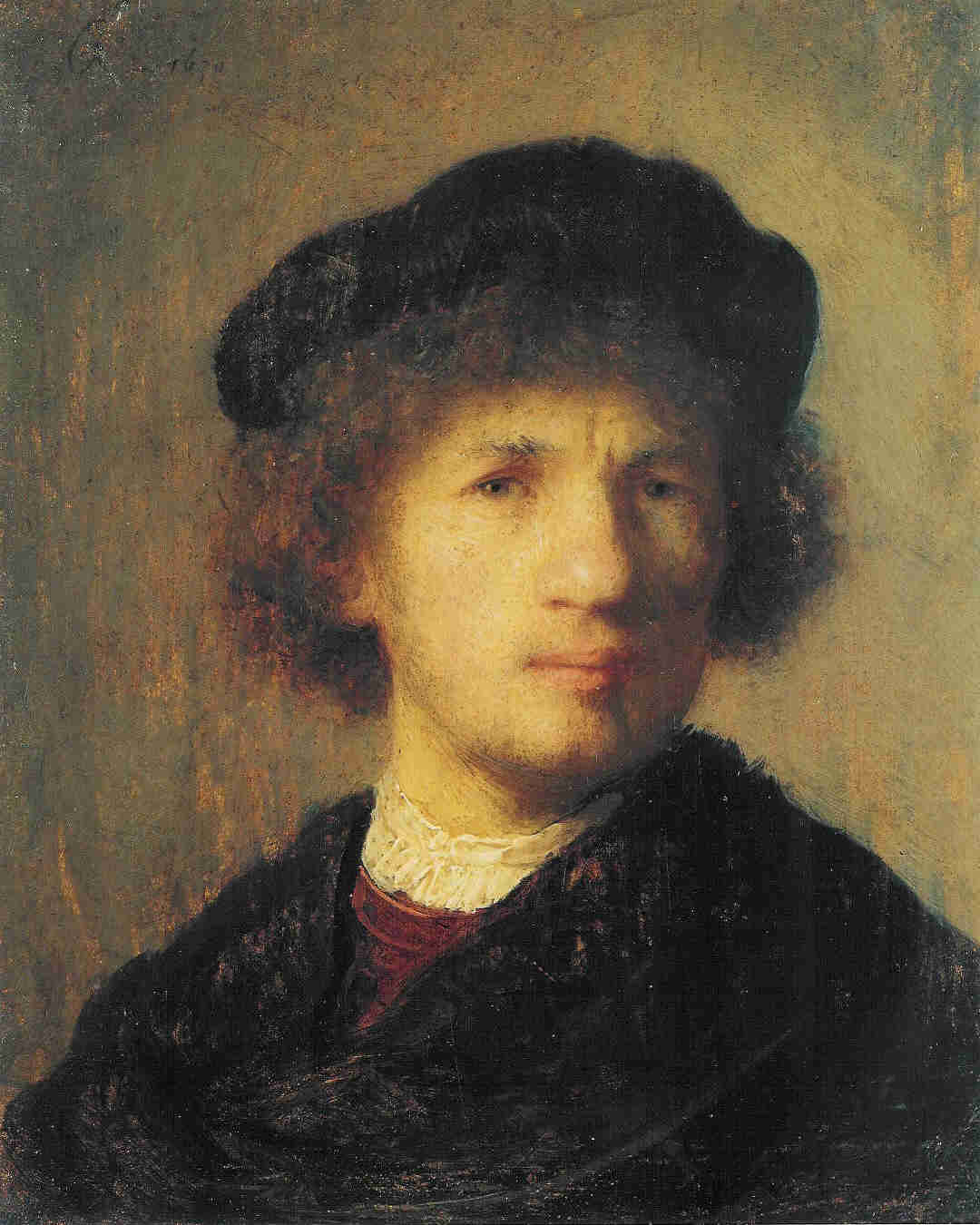
If selfies are self-portraits and thus a physical extension of one’s personna, then I can surmise that one individual is the champion of such image making: Rembrandt van Rijn [1606-1669]

courtesy: The National Museum of Stockholm

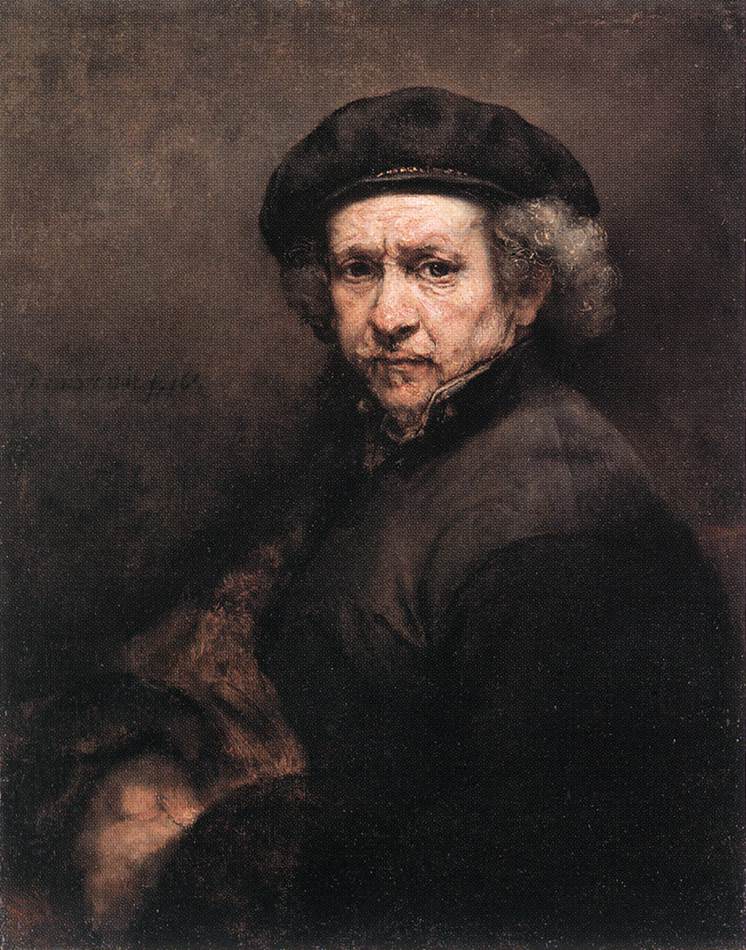
Not only was Rembrandt a Dutch master, he was a creative genius. His “selfies” had much to say about the genius he possessed. He imbued the intangible [his sense of purpose, his focus, his sophistication, e.g.] alongside the tangible [his style of attire, its texture and color; his facial expression, his eyes and hands, e.g.]

courtesy: National Gallery of Art, Washington, DC

Yes, I’m certain there are other artists who can stand alongside Rembrandt, but he owns the niche.

courtesy: Frick Collection

With age, his selfies contain more detail and texture. There is a quiet confidence—almost regal in tone—that radiates off the canvas. In all of these portraits shown here, the subject is both an aristocrat and an artist, the benefactor and the painter, the model and the creator.

Rembrandt_Self_Portrait_1669
Bequest of Benjamin Altman

There are other artists who have done self-portraits, that we know, but none have the power of Rembrandt’s canvases. Noted photographer Richard Avedon mentioned that he loved doing portraits because the face is a landscape that tells a story. Just as Rembrandt’s portraits offer something about his brand, so can yours, in this case, the selfie.

But be warned about where you send/post your selfies. You might forget what went where; while others will remember exactly where to retrieve them.

Training to be happy, or, Does your bank account size matter?

In the November 10th issue of the Wall Street Journal was an article, Can Money Buy Happiness? I’m referencing the print edition though as most would know, you can find the article online [I’ve linked it in the first sentence]. The article doesn’t offer any real surprises; I found no epiphanies in the story. I did however, analyze my own sense of personal happiness. Perhaps because of my age, I’m seeing a closer link to happiness through the relationships I have as opposed to wanting for things I don’t have.

Brooklyn 6-23-2013-1002221


So, what then, can I proffer in the guise of enlightenment? Here’s my short list:

  • What you have in your bank account is important, but the greater question is, what do you intend to do with it? I won’t disagree that having a lot of expendable money can be very nice, but money, like things, has an emphemeral quality.
  • Personal happiness must start with yourself. Self-evident, but I think we underestimate our own value, or own physical and emotional net-worth. In our age of “Reality TV,” celebrity adulation and toxic levels of narcissism , comparisons are inevitable. Other folks appear to be happier than me. Remember that apperances can be deceiving.
  • Training yourself to be happy [for me] starts and ends with a blessing. I think of so many who really cannot count on what I have: my health, my mobility, the use of all my senses, a roof over my head, 3 meals a day [often more], my friends, my family, a good sense of the person that I am or have come to be.
  • The accumulation of possessions will inevitably either go static or possess its owners, even both. If you pursue material things, by the time you get to your nth handbag, pair of shoes, latest digital device, fancy watch, or what have you, all the other prior possessions of similar ilk will spend more time dormant, even forgotten, in boxes within a drawer among other things also delegated to second [or third, fourth], place.

14 Grover CR 6-21-1003945


Whenever I get caught up in comparisons, or wanting to get something to increase my happiness, I think of this guy. We all should be more childlike; all too often, we’re just plain childish. Life should be, can be, much simplier and thus happier.