Late Bloomers

With all due respect to prodigies, I’ve looked at the histories of a variety of late bloomers, some familiar in stature, and of course others whom I’ve never heard of.

Let’s start with an author I think many readers will recognize: Bram Stoker. Yes, THE Bram Stoker, author of Dracula. Prior to the publication of his novel, Stoker worked at various jobs, the longest being that of a personal assistant and manager to noted stage actor, Sir Henry Irving. BTW, he was the first entertainer to be knighted for his contribution to theatre. This friendship started in 1896, when Stoker wrote a glowing review of Irving’s performance in a play. For about 20 years, he managed his affairs, tended to his day-to-day schedules and demands. The following year, Bram Stoker penned his literary masterpiece, Dracula.

When Irving read the novel, he thought little of it, even more so when Stoker thought his friend would take the lead role in a stage version of Dracula. Biographer Barbara Belford‘s book, Bram Stoker and the Man who was Dracula surmised that Stoker’s anti-hero was based on the conceited, self-absorbed, unpleasant person that was Irving. Irving’s pernicious behavior was relentless, and yet Stoker somehow prevailed. Irving’s repudiation of Dracula was his biggest loss, a loss forged in the theatrical history of the late 19th century.
Bram Stoker was 50 years old when he penned Dracula

For the sake of brevity, the rest to follow will be brief.

TONI MORRISON
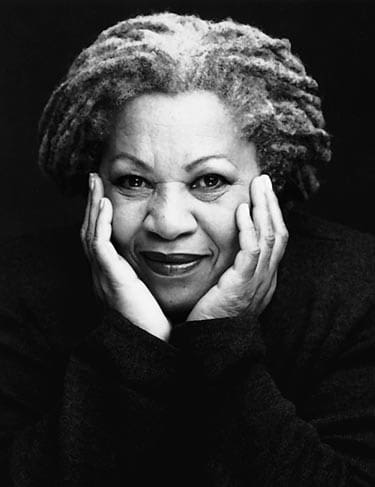
Toni Morrison, an American writer was a long-time literature professor as well as an editor for Random House. Literature meant a lot to here; she is well recognized for her writing of the life experiences of Black women and life in the U.S.
She was 39 years old when she published her first book, The Bluest Eyes in 1970. Here second novel, Sula, was nominated for the American Book Award.
Morrison received the Pulitzer Prize for Beloved in 1987 and in 1993, she was the first Black woman to receive the Nobel Prize for Literature.

FRANK McCOURT

McCourt’s first book was published when he was 66 years old. Angela’s Ashes won the Pulitzer Prize for autobiography/biography in 1997. The memoir was also recognized with the National Book Critics Award, the LA Times Book Award and the Exclusive Books Boeke Prize to first time novelists.

GRANDMA MOSES (Anna Mary Robertson Moses)
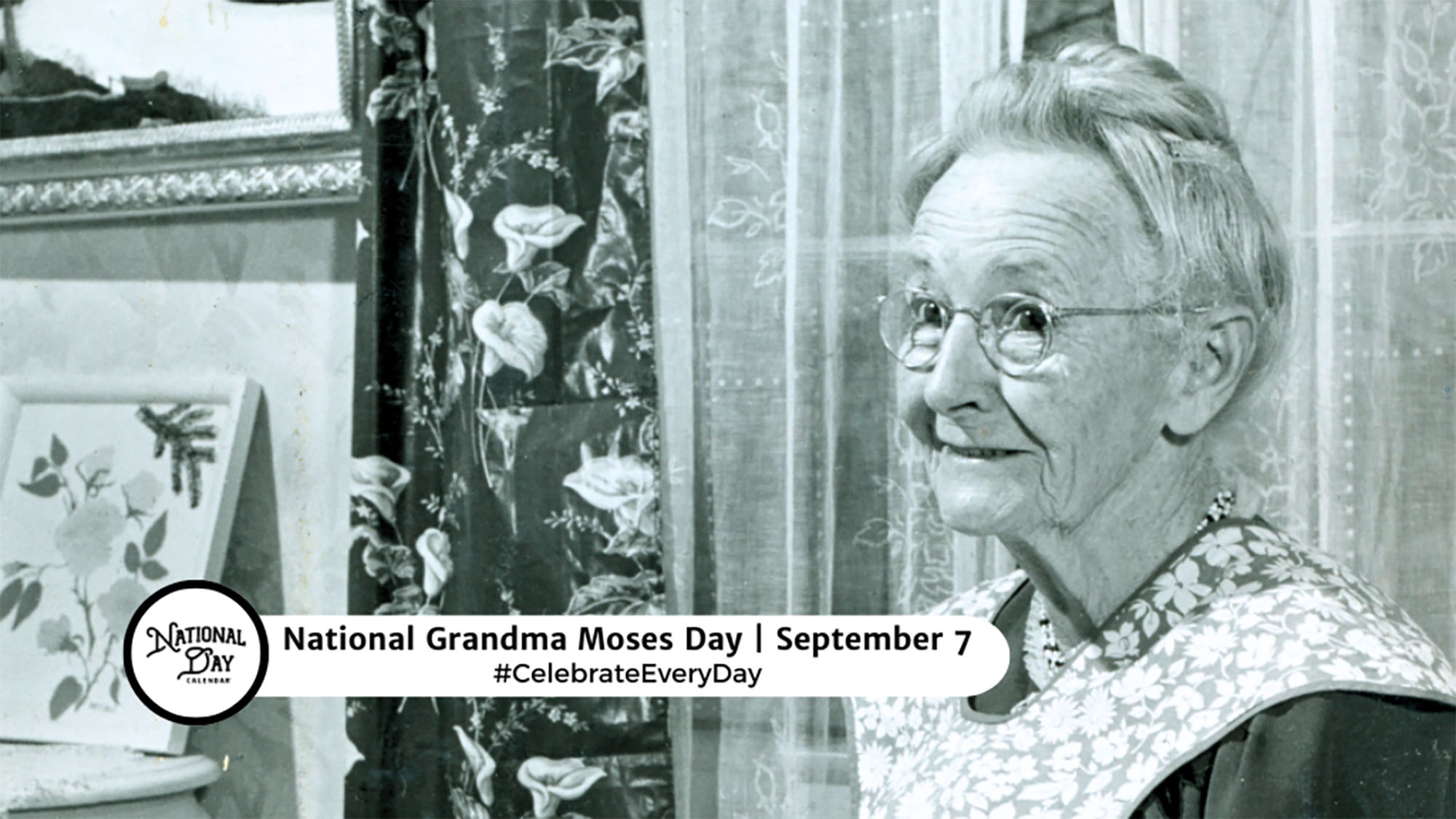

Ms. Moses was a celebrated American painter. She was noted for her needlework however, arthritis jettisoned that activity. Ms. Moses started painting at the age of 75. Her nostalgic style and depictions of rural life caught the attention of a collector and others, including large department stores who wanted to exhibit her work. Internationally, her work gained the interest of storied museums and galleries. A symbol of life in rural America, she passed away at 101, at the zenith of her painting creativity.

LAURA INGALLS WILDER
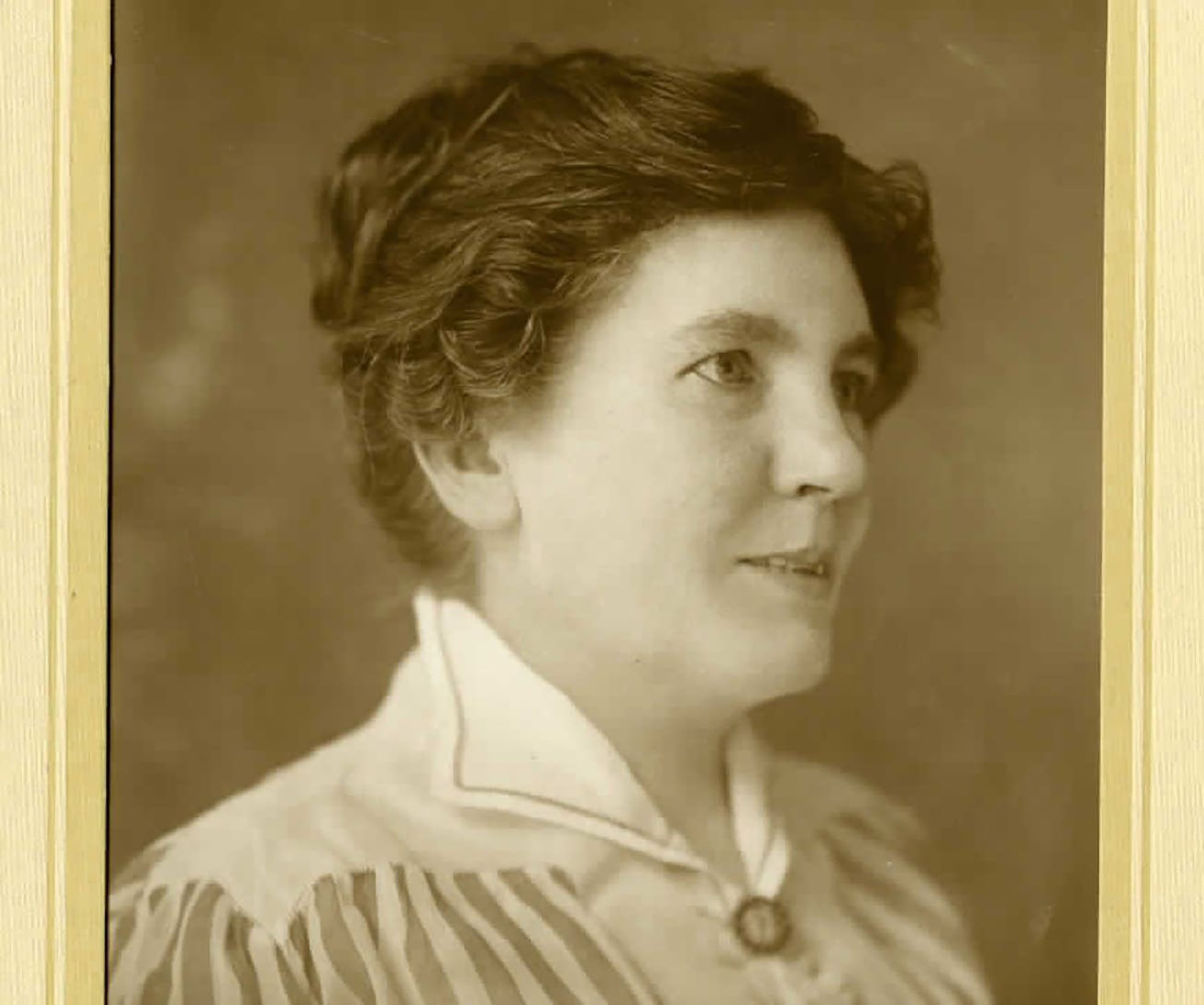
Laura Ingalls Wilder was a teacher, journalist, writer & columnist. Her life experiences were the subject material for her books, collectively a tome of perseverance, hardship and the challenges of farm life .She started writing her book series, Little House on the Prairie, when she was in her 60s. That first book, Little House in the Big Woods, was about her childhood. The Little house on the Prairie was Wilder’s eponymous version that proved popular in many TV households.

VERA WANG

Vera Wang had a successful career as a journalist and figure skater, but in her 40s, she started what would become a fashion empire that encompassed haute couture, high-end wedding gowns and licensed beauty products and home accessories.

NORMAN MACLEAN
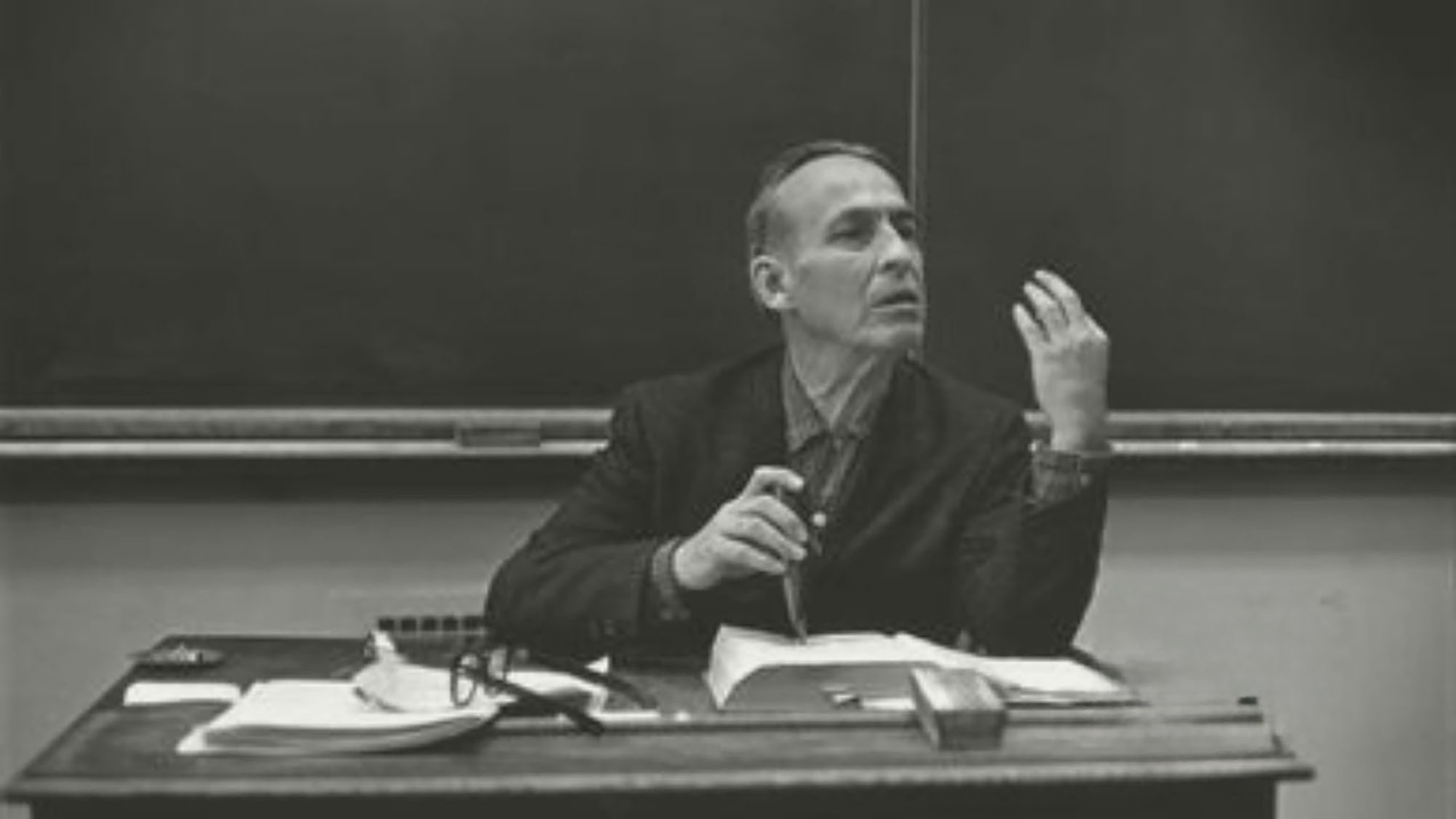
I can identify with this individual: lover of writing, literature and fly fishing. An English professor, Dr. Maclean attended Dartmouth College and earned his Ph.D. at the University of Chicago where he taught for 47 years until his retirement in 1973. His most celebrated, and only book, A River Runs Through It, was published in 1976.
He was 74 years old.

SALLY KRAWCHECK

Already a success on Wall Street, Krawcheck has long known that women clients were underserved by the wealth & financial management industry. She sensed that many women were not part of the discussions pertinent to financial management and more. So, she opened her own firm: Ellevest. She was 52 when she started her company that catered to women.

COLONEL SANDERS

A creative thinker, relentless believer, and one who demonstrated an enduring persistence, Harland Sanders is forever known as the southern gentleman who reinvented “home-cooked” southern-style chicken.
Colonel Sanders was in his 60s when he finally achieved his renowned chicken recipe and his first Kentucky Fried Chicken franchise.

And there are so many others. If you’d like to share your short list, drop me a note. Thank you!

Attentive to Details

When it comes to recognizing things or acknowledging details from “the big picture,” several expressions come to mind, such as “….I couldn’t see the forest for the trees…..the devil is in the details.” My typical reaction after further scrutiny goes along the line of, “….oh, yeah, well…if it was a bear, it would’ve bit me…” Granted, through some Jumanji-esque manifestation, I would undoubtedly be covered with bite marks.

For me, nothing draws more attention than an infant. They change right before your eyes. Case in point: my granddaughter you see above, is all of one week young, and yet in the past several days, she has changed with little fanfare. Other times I marvel at her physical development. All of sudden, fingernails have grown, her eyelashes are longer and her eyes are clearer and probably tracking motion. Before too long, her onesies, and probably diapers too, will have to go up in size.

It’s a single-seat, wobbly merry-go-round.

From a distance, the spinning wheel looks like a badly installed table top for pre-schoolers. No, I didn’t demo this playground-attraction. For fearless children who repeatedly spin themselves silly, the attraction delivers. With dizziness in full force, a smile of wonder and novelty appear. Not surprisingly, none of the kids I saw walked straight and narrow upon getting off the spinner. Think wobbly and crooked on any given stride. It’s enough to make you nauseous just watching them weave across the playground.

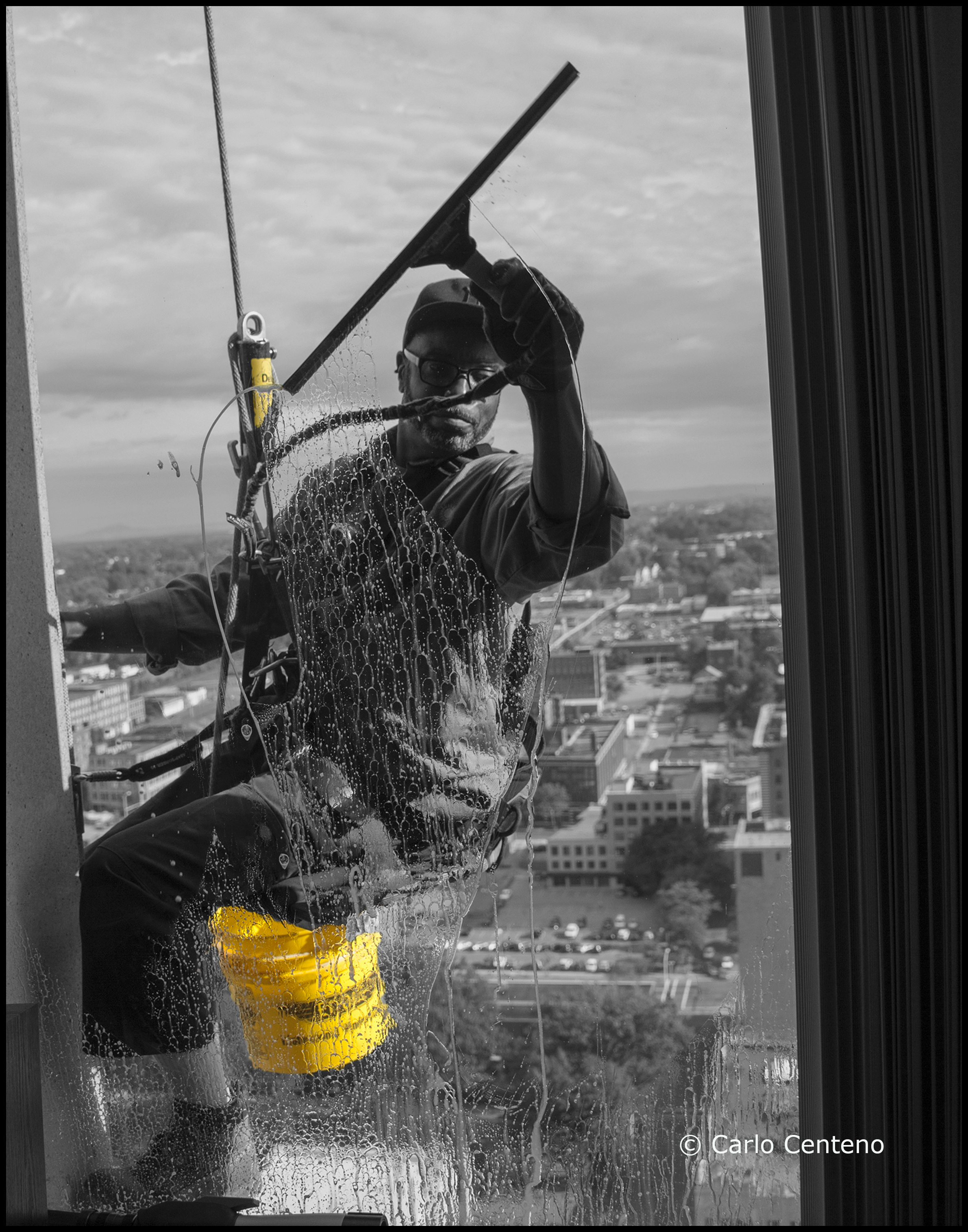
When you’re 25 floors above the street, strapped into a harness, wobbly doesn’t fit into the picture. I’ve seen these pros accomplish their tasks on breezy days, certainly when the weather is warmer than it is now. The color yellow stood out in large part because it was bright and the rest of the scene—originally in color—looked monochromatic. I also learned that 2-3 drops of dishwashing fluid into warm water makes for a thorough glass cleaner. There’s a detail worth noting…

Details

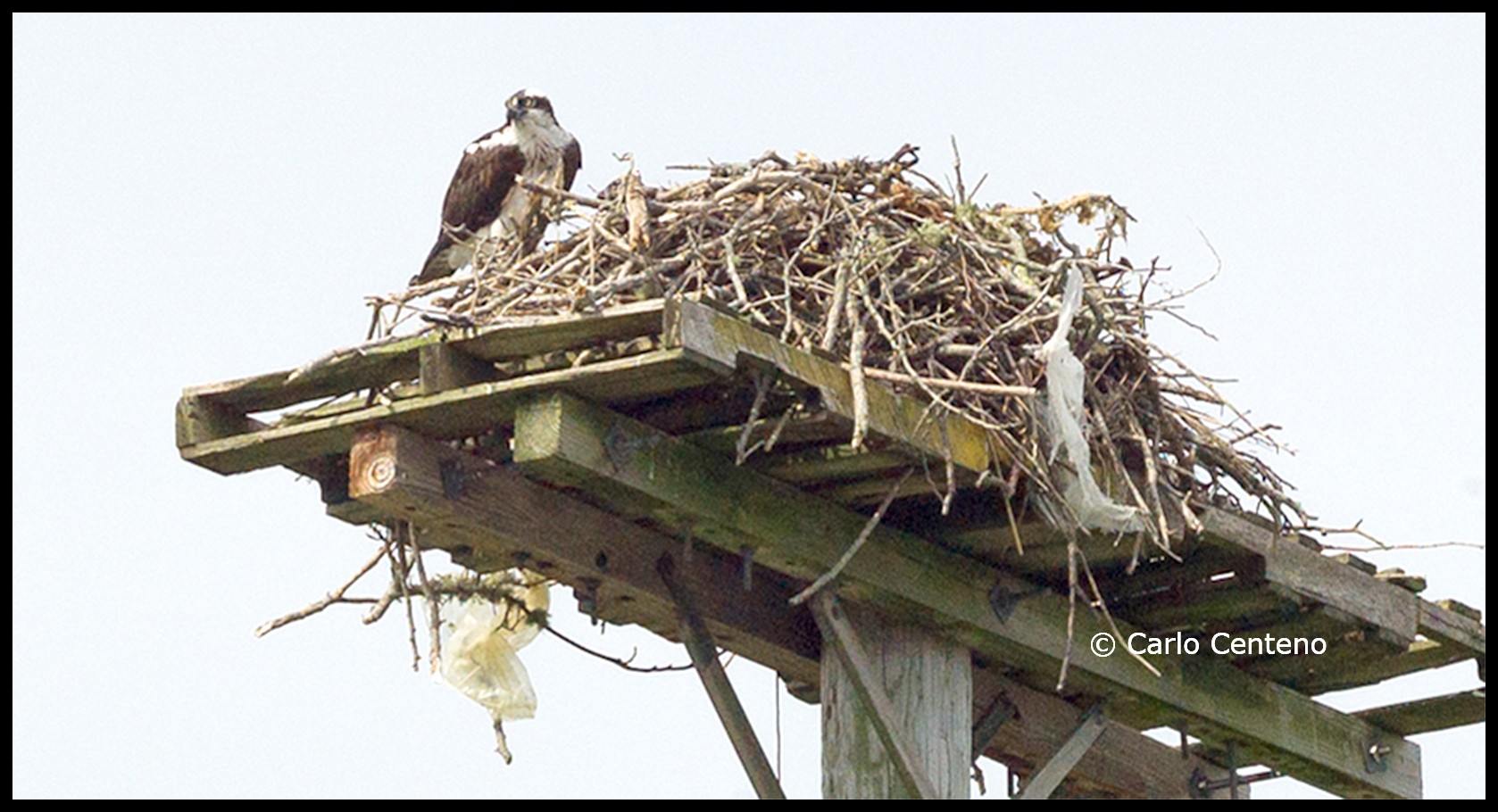
A static photograph of an Osprey doesn’t say much about the grace and power of this winged predator. Like many of her cousins, these sharp-eyed birds of prey manifest the attributes to which we ascribe to: a sense of purpose, focus, determination, endurance, patience, where at most we, strive to procure or refine 2 or 3 from that list.

I’m not a birdwatcher nor bird photographer. These serendipitous images were taken during a walk along a beach. In spite of an overcast, somewhat foggy-ish, misty day, you could discern the silhouette as well as the contrast in its feathers. Notice the plumage in a brownish-black to a grayish white, the sharply hooked beak, the yellow of the eyes, the elasticity of its neck—or at least a hint of that feature.

Look at the nest and you may notice other details. Two plastic bags entangled with the nest, one on the right of the photo, the other dangling from an edge closest to the Osprey. I’m certain there are other man-made pieces entwined or even trapped within the pile of twigs they call home.

We can get hung up on details on just about anything. Like a trompe l’oeil, what we see varies from one person to the next. In my case, I noticed those bags right after seeing the Osprey. You may have seen it the opposite way and yet others may have taken a bit longer to realize the incongruous detail.
These days, we’re bombarded with too many things which ad weight onto our anxieties. We can—and should—work to step back from such things and realize that in spite of the current discord, there are other details worth looking at, even searching for.

Space

I am convinced that modern life has boxed us in more so than we’d like. It’s part of the contemporary territory which includes both our professional and personal lives. There’s a surfeit of information, misinformation as well as disinformation. We have data that’s important, partially accurate or altogether inaccurate, the latter done purposely in order to deceive and create confusion.

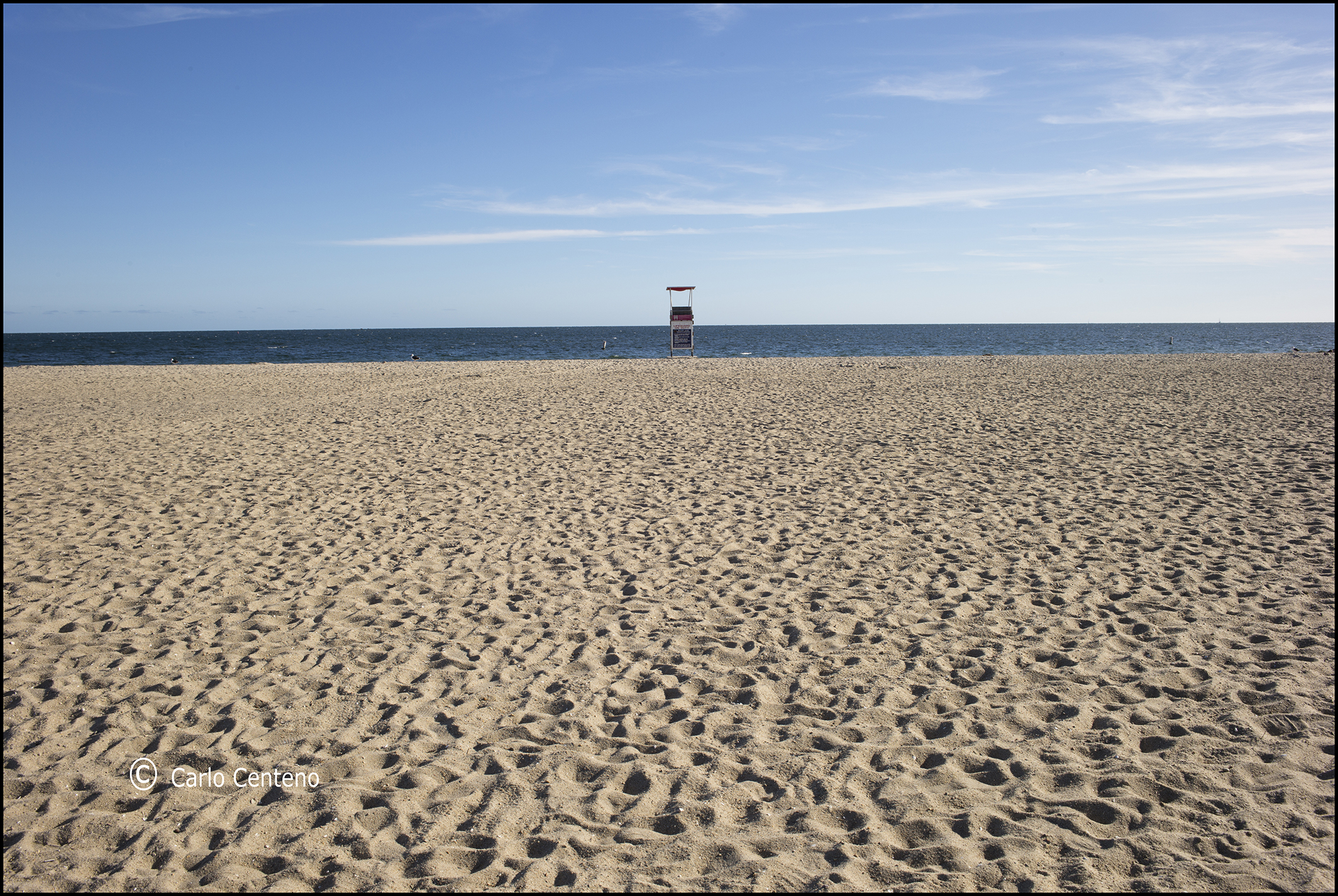
The spaces outside and within our mind are under siege. This coronavirus pandemic has produced a variety of empty spaces in the form of closed businesses, a void born from a lost loved one, an even larger, emptiness created by becoming unemployed and losing our face-to-face social connections with friends and family.
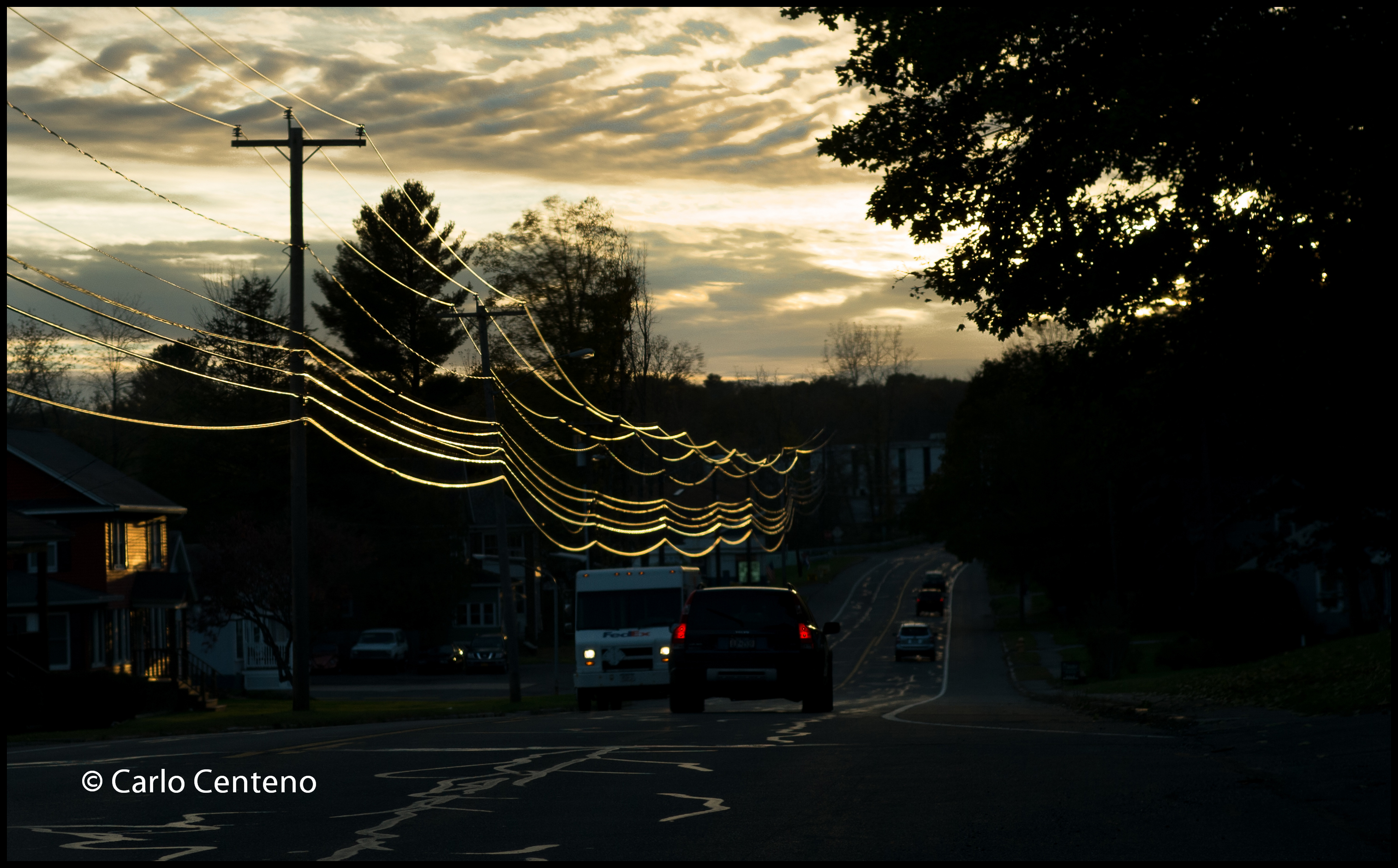
In addition we see meadows, forests and even arable acres, reshaped with new developments, new businesses, and right-of-way passages for utilities. These spaces, like others, will never resemble their former selves.

The modern mind is challenged with the illusory nature of augmented realities, misinterpreted online interactions, the CGI creations readily seen on the big and small screen and so on. I would wager that ruminating is a regular mental exercise for many, in ways that even the thinker didn’t think possible in the here and now.
It’s not that such spaces are wanting for content. Some of the content in our heads is twisted and distorted, an unattractive morass of schadenfreude and unforgiving defenestrations toward those with authority, power and privilege.

A lot of good space has been replaced with some nasty creations, tangible and intangible, palpable and even unreasonable.
We’re better than a lot of this, each of us capable of individual betterment. I remind myself in my own spaces of thinking and feeling that, at times it’s okay to be embarrassed in one’s journey to be genuine. I think it aids my ability to acknowledge what occupies my internal and external spaces other than what’s so obvious not only to myself, but to others.
As in marketing, perception is reality: it’s not what you’re getting, but what you think you’re getting.