The Red Hat Society

There are some bumps in life that feel big–which is true–and then there are those bumps that we make much larger than we should. Studies have generally shown that once you get past the age of 50, your attitude, expectations and other attributes tend to improve. Translation: you’re happier about life because you recognize how far you’ve come. It’s often said that finding happiness and jettisoning the bad stuff can be made easier with help from family and friends.

Generally speaking—and regardless of gender—those 50 and older who say they have a “good, satisfying life” remain physically and mentally active, make a commitment to stay healthy, keep close contact with family and friends, and champion a strong, positive attitude. Enter the Red Hat Society.

Before “social media” became a common term, the RHS was already well into collective connectiveness. Like the innumerable groups we see on LinkedIn, such as  the social media marketing group and various others, there’s a roster of common interests and attributes for like-minded professionals. But even before any of this was created, we are first and foremost social beings that need social interaction. For the RHS, there are 3 attributes: you must be at least 50 years of age, a woman and have a joie de vivre.

It’s one thing to read about groups or societies that enrich your own life, but it can’t compare to being in the thick of things. Case in point: the RHS lunch gathering in the Round Table Room of the Algonquin Hotel. One of several chapters in the Tri-State area, these bon vivants gathered to reconnect, to discover new connections, but above all, to have some fun.

I heard conversations that can be filed under “status” with sub-folders, one each for the kids, the spouse/significant other, the job, the vacation, and more. While I’m certain there were sad discussions within the constant din, much of what I heard involved a good amount of chuckling and laughing. And it was contagious. I got a kick being an accidental listener and observer.

Totalitarian Sentiments


Creating confluence, understanding & compromise 101. Photo: C. Centeno

We have met the enemy and they are us.  Circa 1960s: Walt Kelly from his comic strip, Pogo, in reference to the US involvement in Vietnam. The phrase is a variation from Naval Commander Oliver Hazard Perry whom, in the late 1790s said, “We have met the enemy and they are ours.”

Our sociological positions on culture, tolerance, honest communication, integrity, decorum and humility have fallen to new lows. Some of us—in particular those with the loudest and most obstinate of postures and voices—have created as well as promoted an intractable reality that has altered our ability and willingness to freely express our thoughts and feelings across many subjects.

Fueled by emotion, group think, individual perceptions and more, it’s become de rigueur to put someone down [shouting, shaming, name calling, e.g.] just to make a point. What concerns me is while someone can possibly make a point, the counterpoint is summarily dismissed. Its dismissal is total, a product of a scorched earth mentality that leaves no room for perspective, for critical thinking and even a chance, however small, to understand the meaning of the counterpoint let alone the person or persons expressing the counterpoint.

We not only agree to disagree, but we do so in disagreeable fashion. We create diatribe instead of discussion, insults in lieu of perspectives, bombast as proper elocution.

I leave you to ponder on William Faulkner:

“I believe that humankind will not merely endure: we will prevail. We are immortal, not because we alone among creatures have an inexhaustible voice, but because we possess a soul, a spirit capable of compassion and sacrifice and endurance.”

Processing engagements

During a recent trip to Old Sturbridge Village, I came upon this roped-off exhibit of a beautiful, portable, writing desk with written pages fanned across its top. I imagined how the owner and writer of those materials may have looked like. This gentleman seemed to fit the bill.

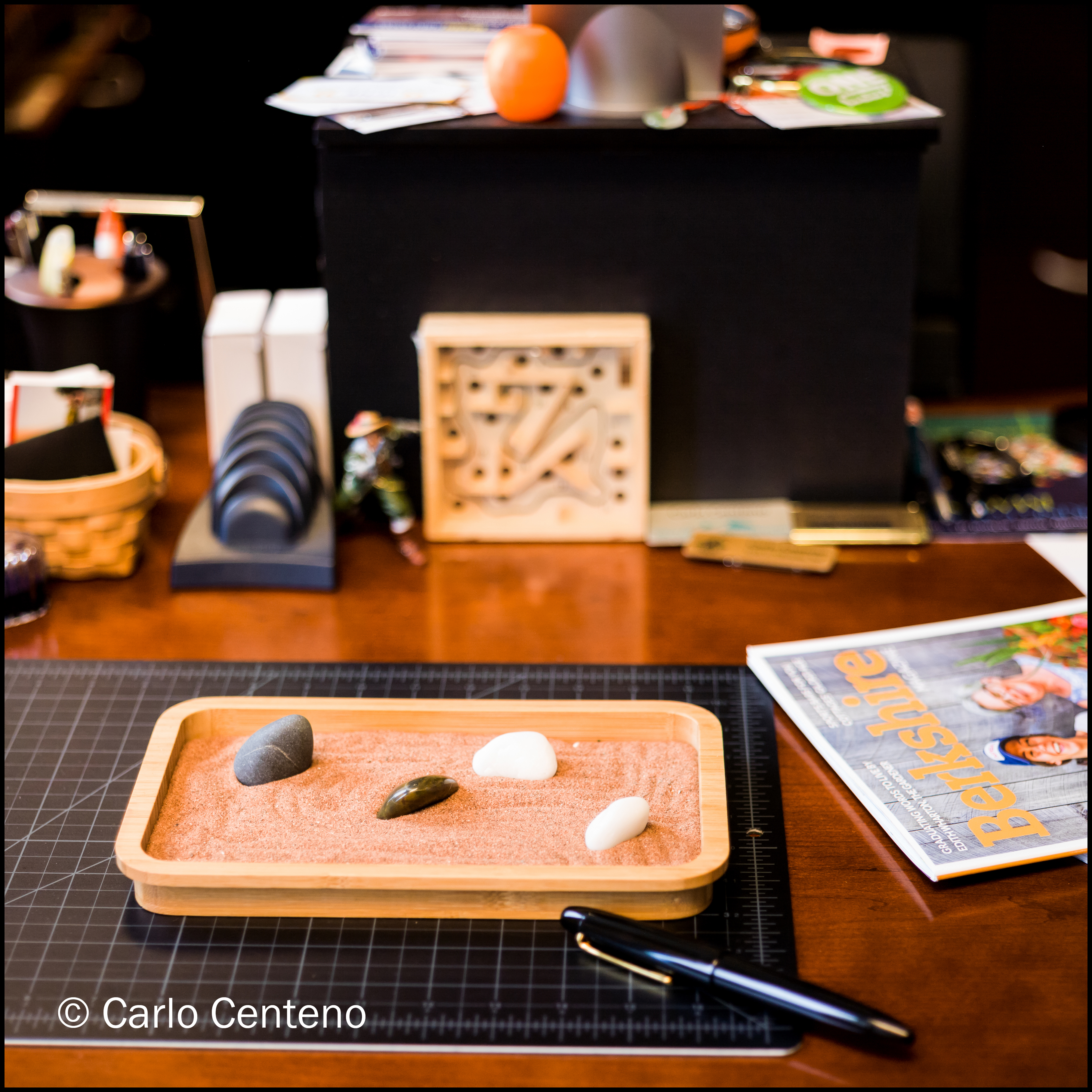
I can appreciate the time and effort it takes to hand-write many things. I’m at odds with my peers, being one who cherishes writing [letters, journaling, e.g.] with a fountain pen no less. It does require your attention. The efficiency of computers is a boon to creating content, from tweets to long essays and dissertations. The use of all types of computers is standard for our developed societies.

But why do we need to process things so quickly? It’s a rhetorical question, certainly, but not without practical considerations. We marvel at how fast technology processes both the simple and the very complex. However, you lose [at least for me] that joie de vivre of the moment. Being attentive in the moment is quite different from being momentarily attentive.

And I see too much of this momentary attentiveness in many. How so? In a restaurant, you can see some couples more attentive to their smart phones than each other. In parks, in museums, in the lobbies of theatres, offices and yes, even in our cars, the siren of that handheld is overwhelming. The device in our hand responds quickly, in “real” time, then with a thumb stroke, we’re onto another screen for something else.

For me though, I feel better connected when I’m engaged with just about any process that requires a bit more attention, time and effort. Yes, I admit an app can make things easier and interesting. But for me, the process of being engaged and attentive to tasks and to processing information just isn’t the same when a person is with me.

Immutable Across Time


I have often wondered how two lovers can be true to each other if they don’t know how to write…Your letters present to me a perfect picture of your everyday life, they are almost as good as if you were sitting on my knees with your arms around my neck and telling me how naughty you have been during the day and sealing each sweet avowal with an elliptical kiss…

Washington A. Roebling, from a letter written to his fiancee,  Emily Warren, April 1, 1864

In the First Person

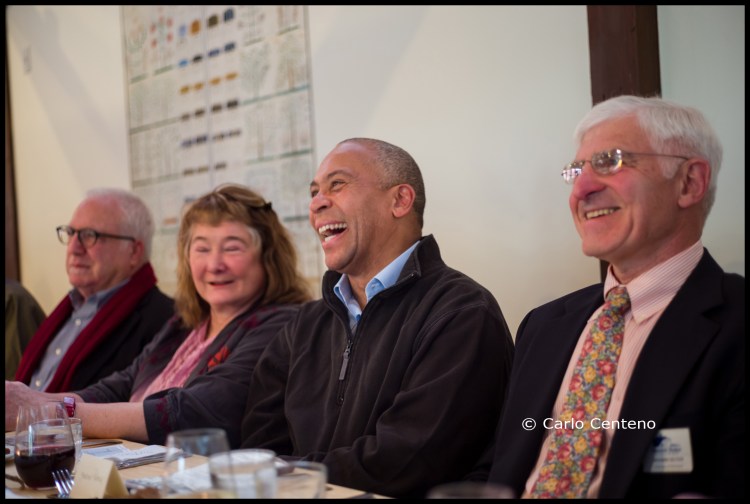
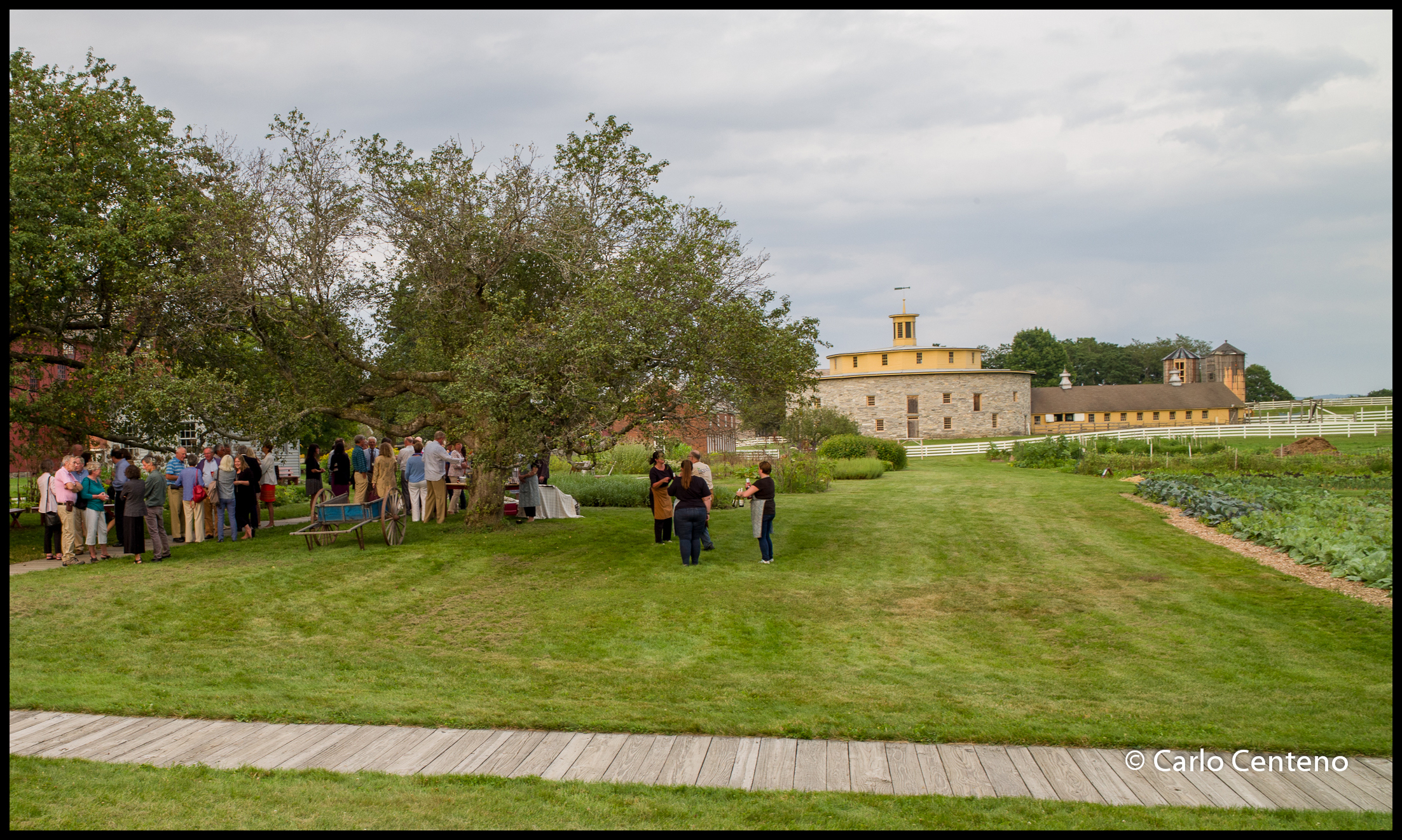
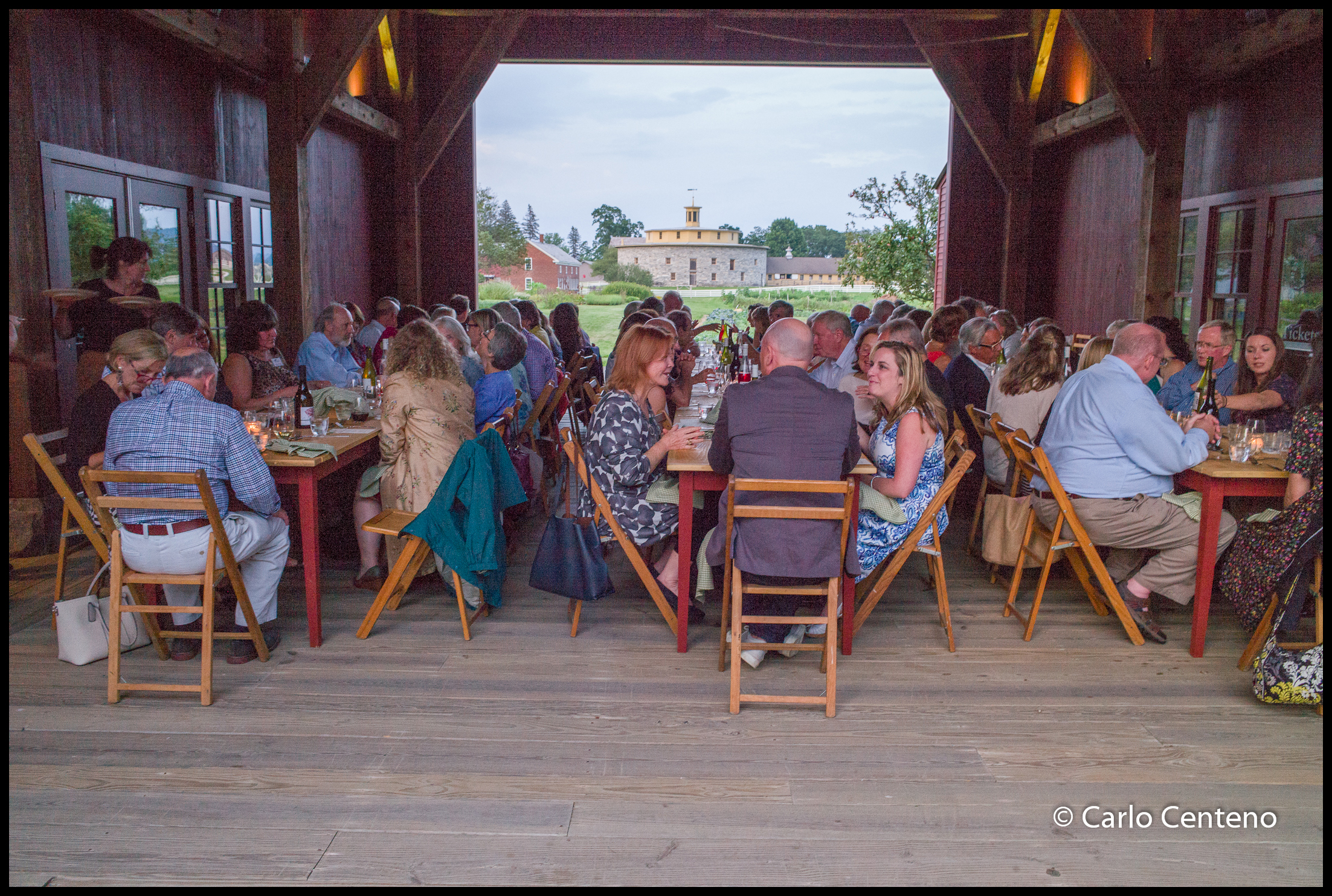
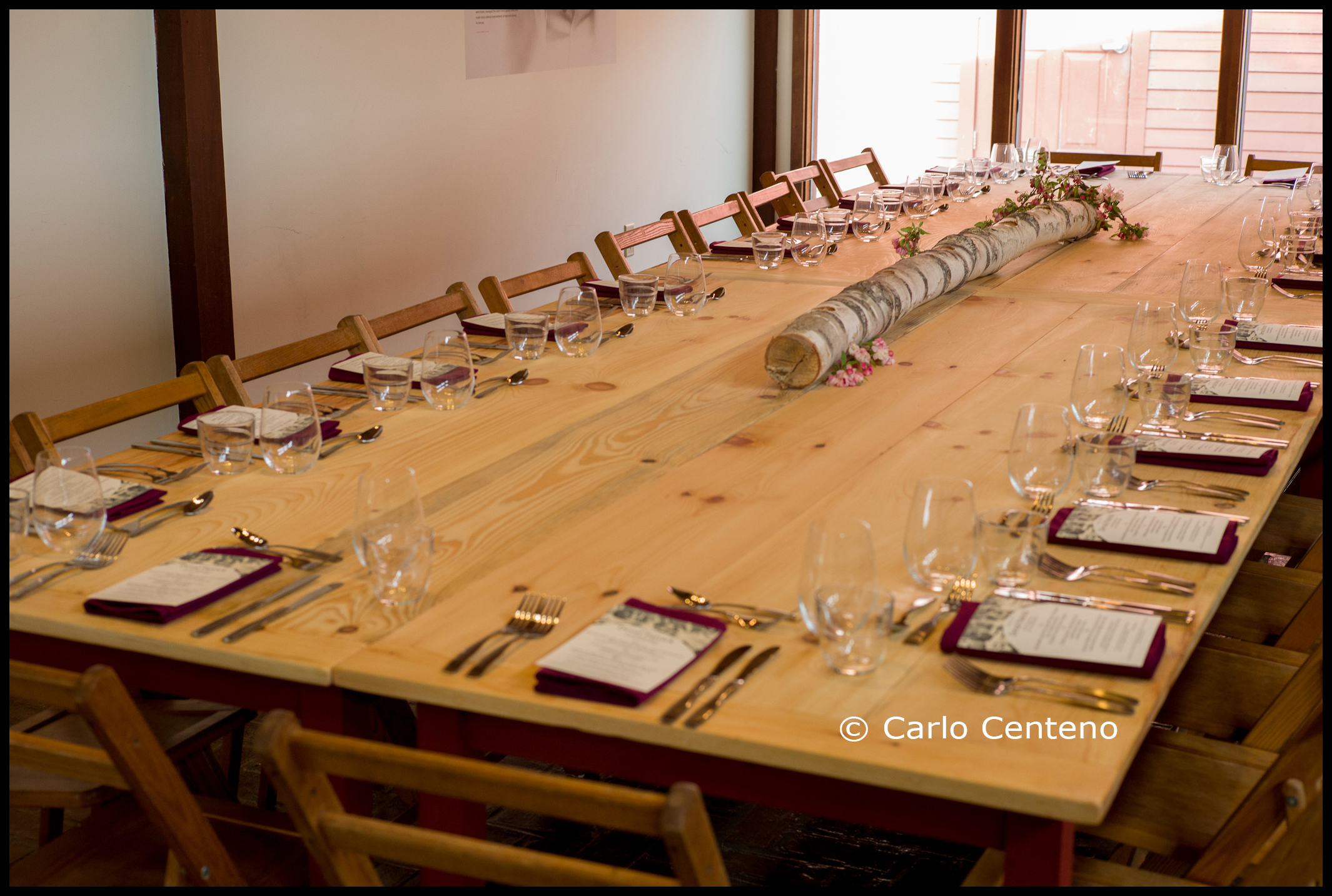
Hancock Shaker Village recently held the first of 4 dinners involving noted thinkers and authors.  The Food for Thought program involves a monthly dinner May thru August, and invites folks to “feed your mind, body and soul…with an illuminating author.” The first dinner quickly sold out as 76 signed on to chat and dine with former Massachusetts governor, Deval Patrick. Within an ambiance shaped by the Shakers [who established this Village in the 1700s] the evening proved intimate, friendly, and grounded. In light of our current political climate, I suppose anything could’ve happened regarding a discussion of Mr. Patrick’s life politique; politics has been a lightning rod of recent times, as we all know, attracting more negativity to the point of consternation and frustration.
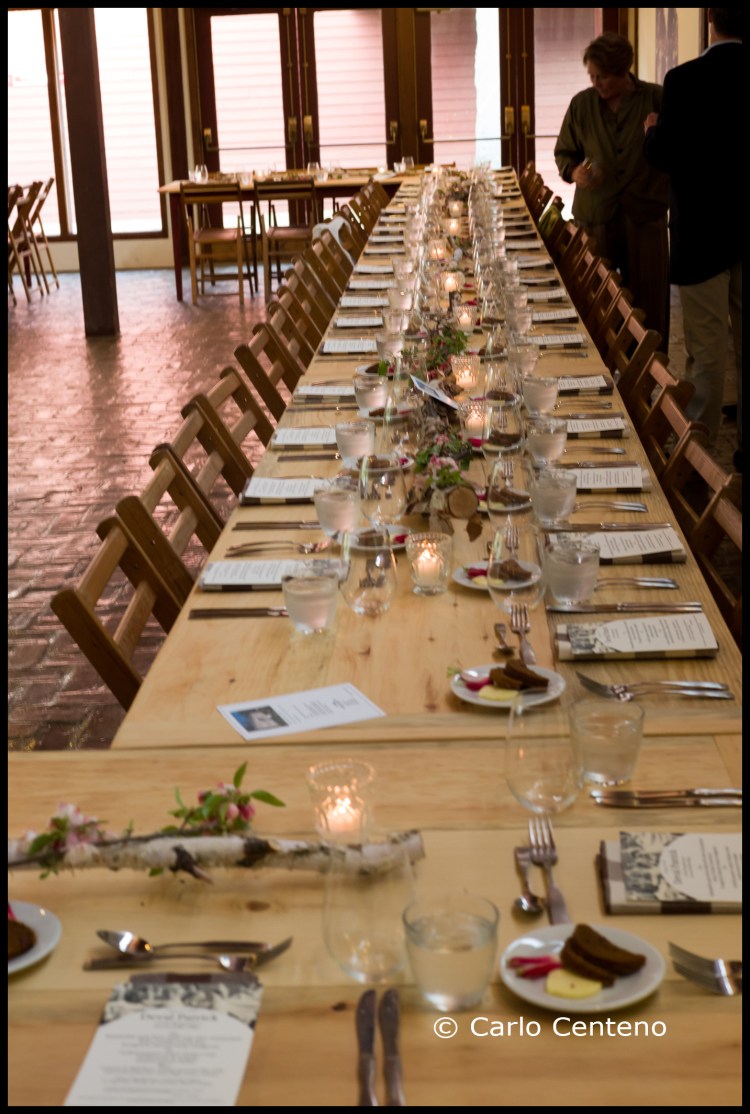
That wasn’t the case here. Instead, I was reminded of the importance, indeed the significance, of seeing things in person and to hear experiences in the first person.  We are so immersed, so much more involved with our digital devices that I think we’ve lost touch on how to converse with verve, clarity, honesty, expression, sensitivity, empathy, integrity, patience, consideration, reciprocity and more.  It’s a sad state of affairs and while this is a gross generalization, therein lies a truism in my previous sentence: many of us spend too much precious time eyeball-to-eyeball, hand-to-hand with a keyboard, a touch screen and/or ear buds.

In this setting, we conversed with Mr. Patrick and listened to what he had to say. He was genuine and unpretentious in his greetings with old friends and in acknowledging the company of new faces. In a space that consisted of movers and shakers and critical thinkers from the Berkshires and beyond, it would’ve been all too easy to spot someone posturing. No, we all possessed a quality common to each in that room regardless of social or professional standing. We were–and still are–sentient beings, vessels filled with doubts about freedom of speech, decorum, political bipartisanship, populism, nationalism, etcetera ad nauseum.

Yes, having access to commentary and perspective through YouTube, Vimeo, Aeon, TED Talks and others is timely, convenient and important, but I, personally, feel that being there, of  being part of the gathering, is a different experience from those encountered online. When you’re surrounded by the event, you are indeed, part of the event. Many things become visceral and palpable, vulnerable and accessible, sensuous and profound. And while many communications can be paused or saved or added-to-my-view list, I’m reminded that with such gatherings, Life has no pause or rewind buttons. You are in the moment, beguiling a terrific gathering albeit brief.