Frisson…..it’s French for a chilling sensation, a shiver. It’s typically a pleasurable response to a stimuli that “moves you.” At times we refer to this reactive sensation as something that, “gives me the shivers.” You get goosebumps, you feel the small hairs on your arm or the back of your neck stand up, your breathing and pulse become quicker.
Frisson is that short-lived somewhat intense satisfaction often brought on by music, art, an event, a person, a book, essentially whatever it is you witness that generates a momentary elevation of pleasure. The brain and body experience something akin to adrenaline and dopamine reaching peak levels.
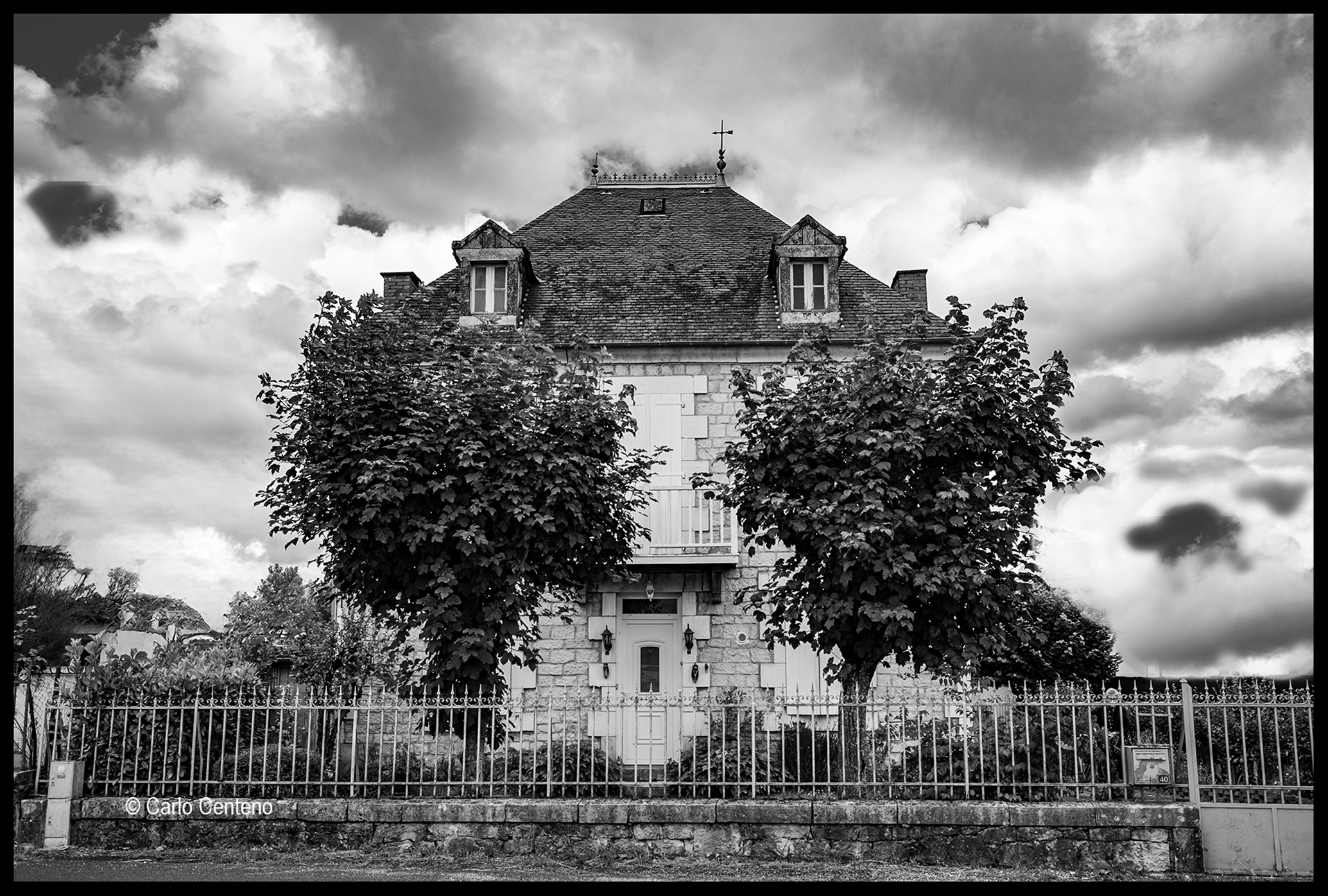
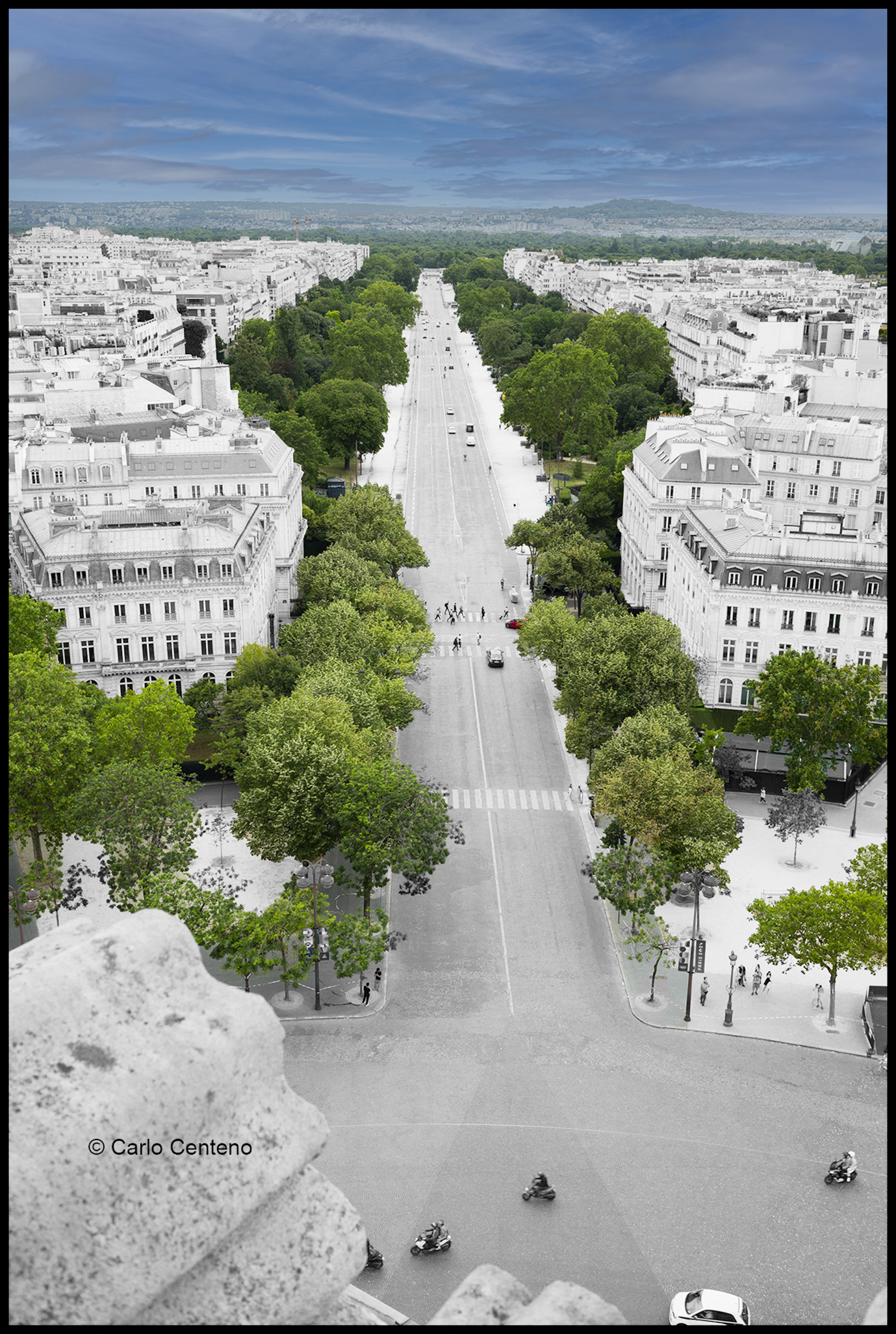
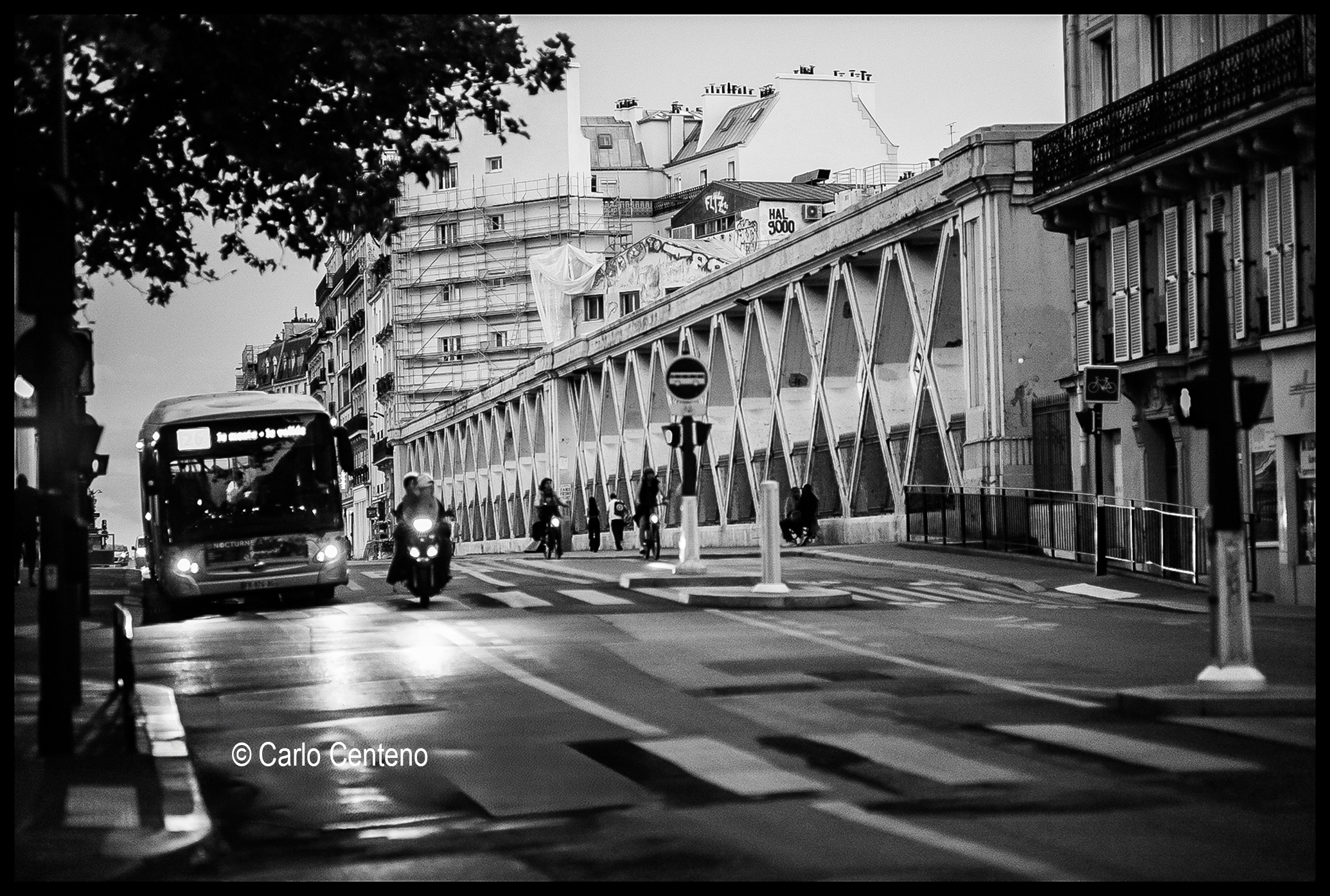
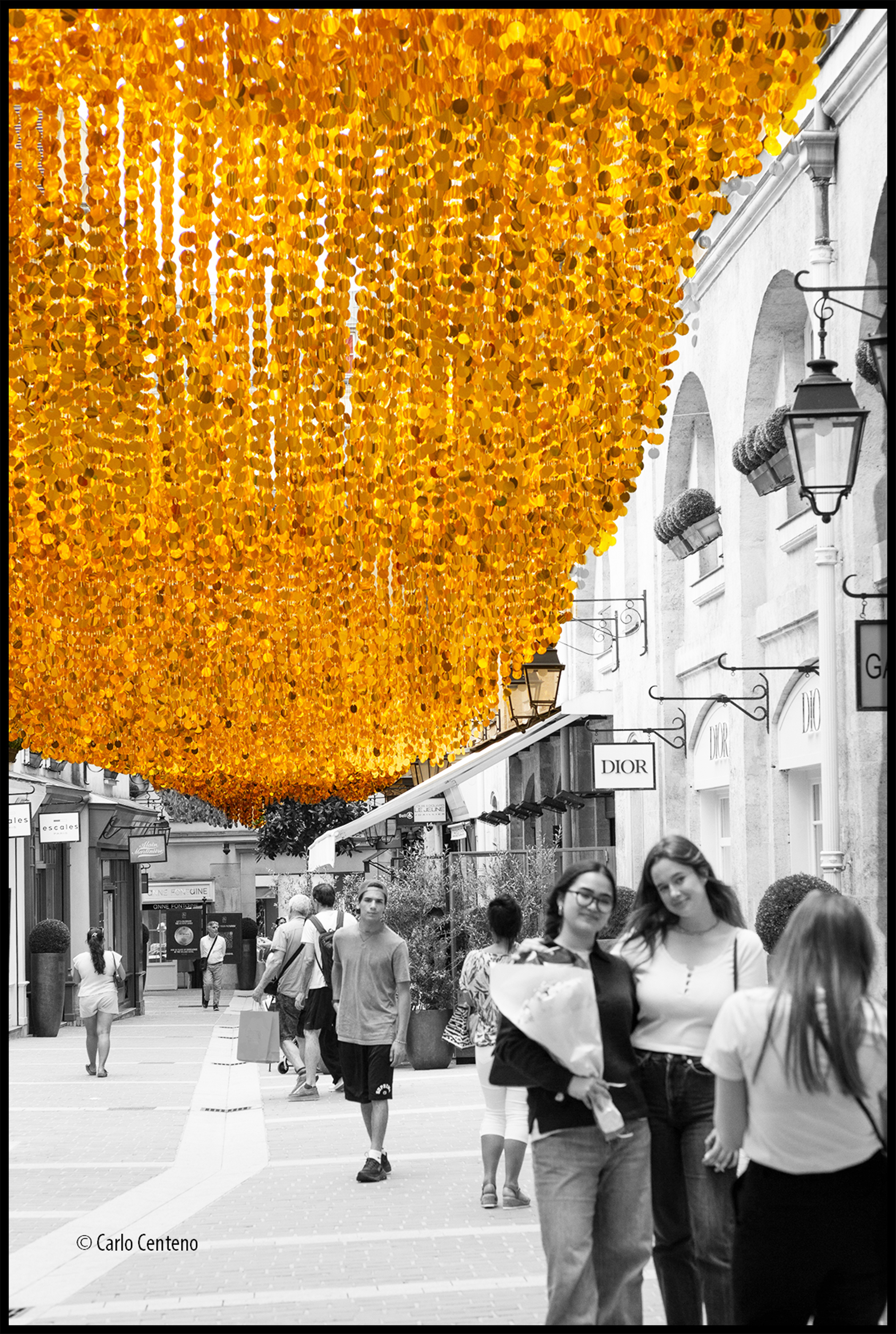
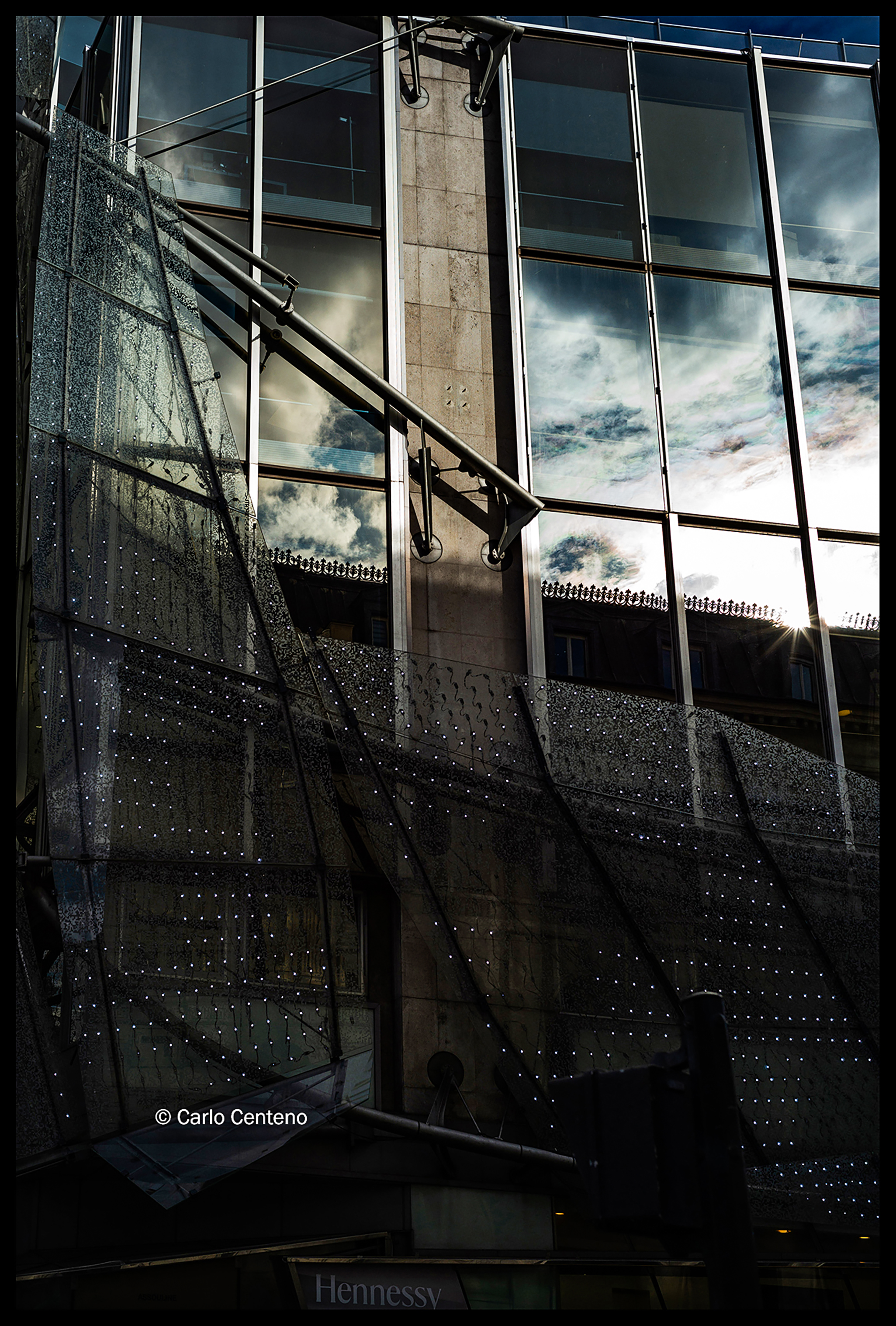
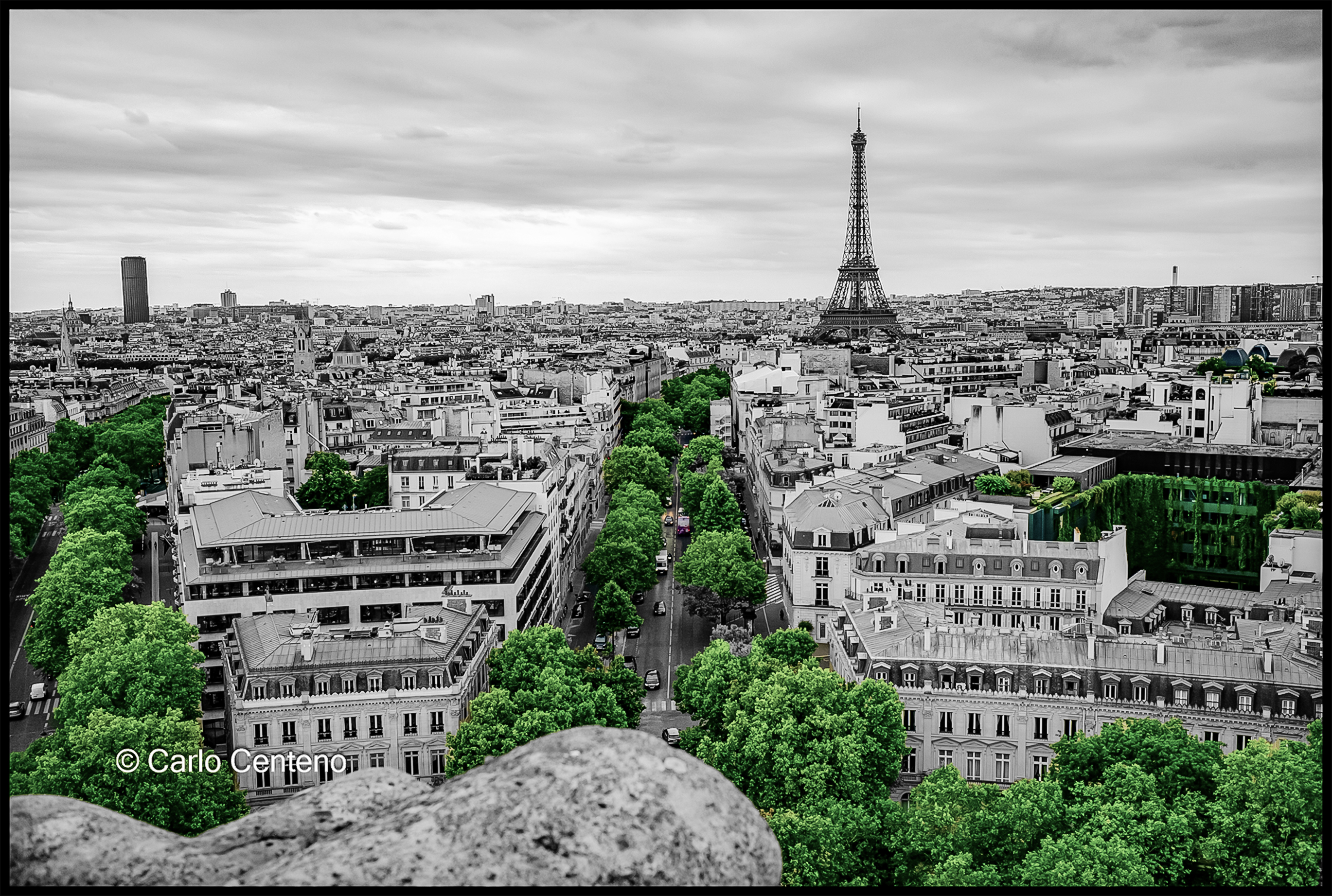
The following images are some of the “frissons” I felt while in France. I enjoyed the “shivers” and enjoy bringing them to life here. Hope you find something to like…..
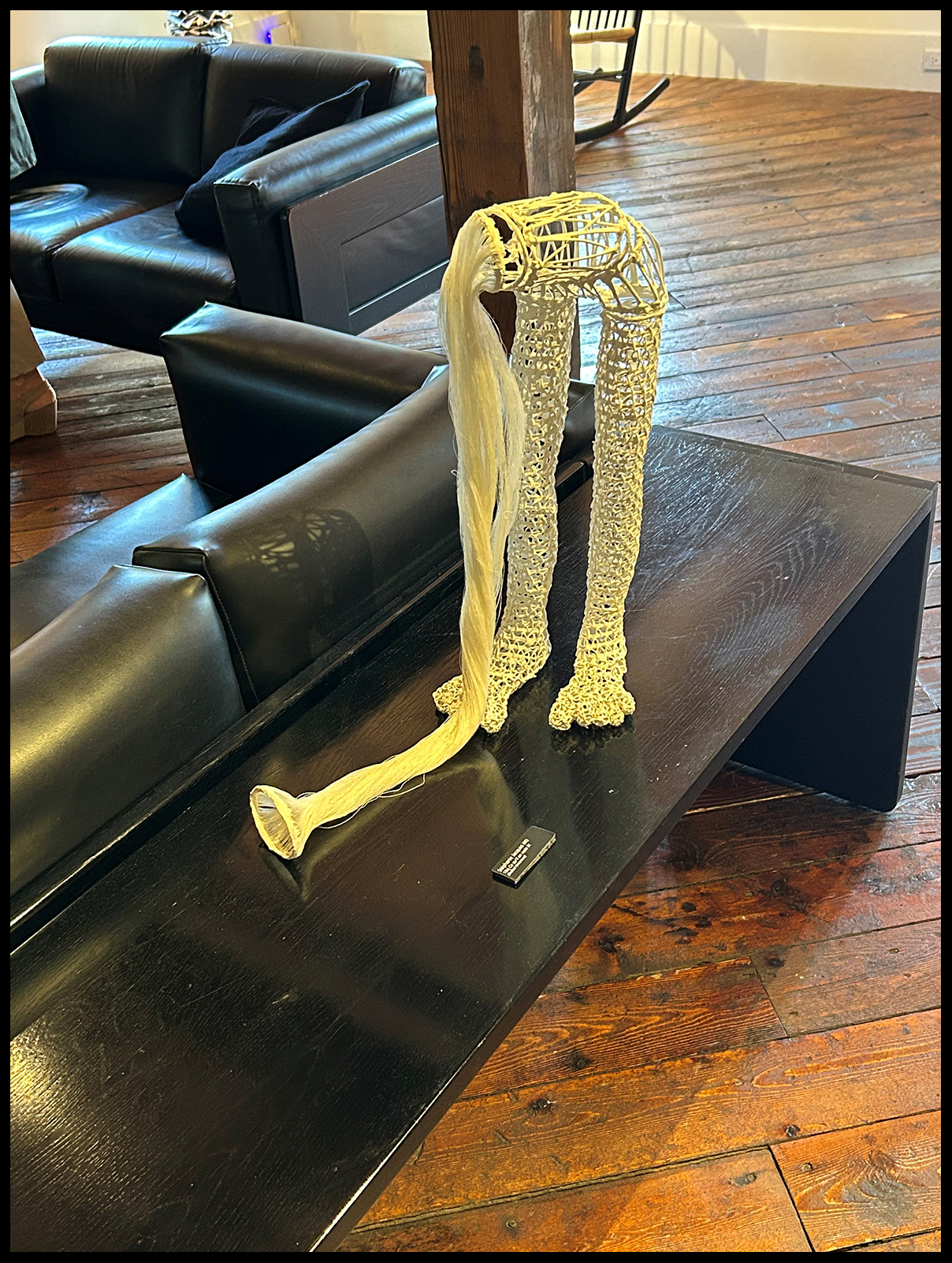
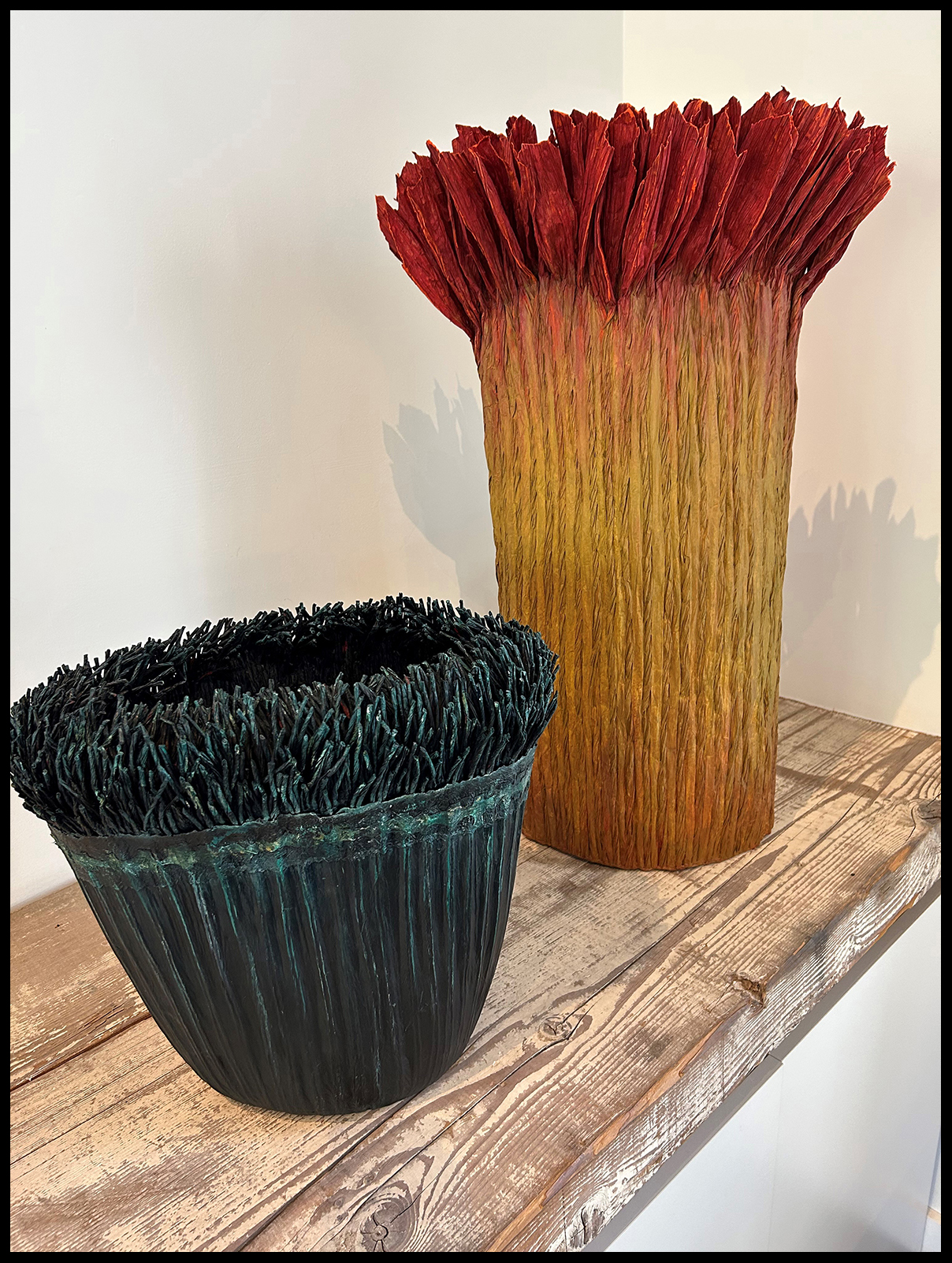
When you’re bogged down with writer’s block, creative fog, even brain freeze, what do you do to break free from its hold? Here’s one way to purge the hive of such impediments. Go to an opening, an art exhibit, perhaps one which deals in a medium that you know little of. In my case, think fabrics, paper and ceramics and other materials—either in combination—or crafted exclusively with fabric. An oversimplification, but a few photos can better illustrate the creations displayed at the exhibit, Beauty is Resistance, our Fall Art in the Barn Exhibtion. I was impressed with the inventiveness, originality, concept development, creativity, and overall execution of the various pieces.
At browngrotta arts, co-curators Tom Grotta and Rhonda Brown have managed original art, crafted by internationally recognized artists for more than 3 decades. My “introduction” to the pieces of art at this exhibit was an A-1 engagement of diminishing my brain fog, creative block and so on. Neither words nor photos can describe the pieces. This is a case of what I actually see and feel is amazing, because of what is physically in front of me. A demonstrative be-in-the-moment activity, to say the least. So, please take a moment to peruse a small sampling of what was on display.
A special thank you to Tom Grotta and Rhonda Brown for their hospitality and sharing their knowledge about the artists, the scope of this exhibit and their anecdotes of life in international Art. Photography: courtesy of Tom Grotta. All rights for the images and the Art are those of the artists.
Home artist Lija Rage; mixed media, wooden sticks, linen and copper [2-panels; detail shown in second image].
From Chaos to Reality artist Aleksandra Stoyanov; sisal, cotton
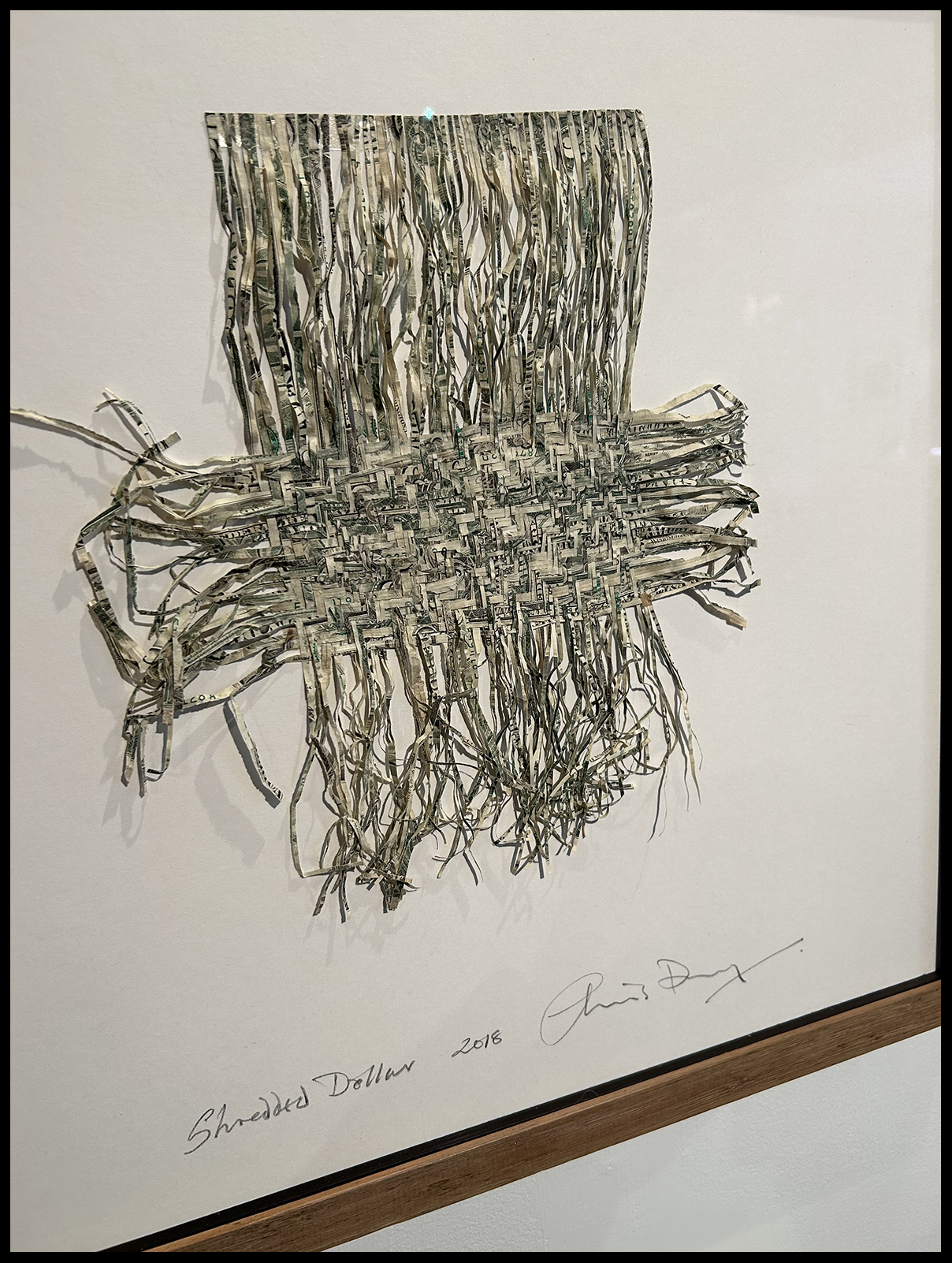
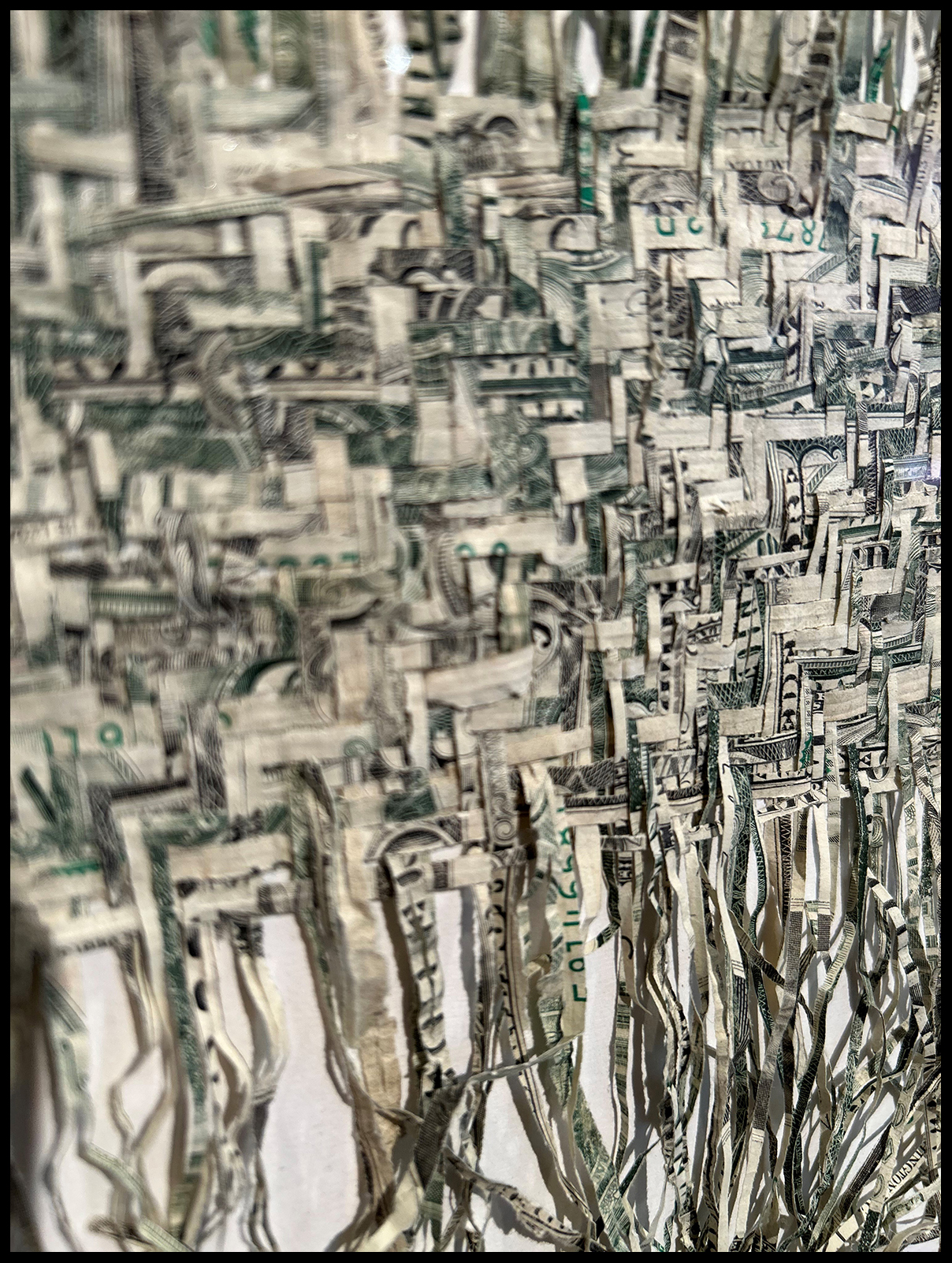
Shred dollar artist Chris Drury; US currency [detail shown below]
Female Husk II artist Anda Klancic; torso [from Momento Mori composition] with cone; palm tree bark, synthetic filament, acrylic, and metal wire
Ce qu’il en reste IX artist Stephanie Jacques; willow, gesso, linen thread
Flower Colors artist Mary Merkel-Hess; paper, cord, paper
Rhonda Brown co-curator
Tom Grotta co-curator
Photography a professional photographer, Tom Grotta created a display showcasing some of the literature and gear he has used through his ongoing career.
With all due respect to prodigies, I’ve looked at the histories of a variety of late bloomers, some familiar in stature, and of course others whom I’ve never heard of.
Let’s start with an author I think many readers will recognize: Bram Stoker. Yes, THE Bram Stoker, author of Dracula. Prior to the publication of his novel, Stoker worked at various jobs, the longest being that of a personal assistant and manager to noted stage actor, Sir Henry Irving. BTW, he was the first entertainer to be knighted for his contribution to theatre. This friendship started in 1896, when Stoker wrote a glowing review of Irving’s performance in a play. For about 20 years, he managed his affairs, tended to his day-to-day schedules and demands. The following year, Bram Stoker penned his literary masterpiece, Dracula.
When Irving read the novel, he thought little of it, even more so when Stoker thought his friend would take the lead role in a stage version of Dracula. Biographer Barbara Belford‘s book, Bram Stoker and the Man who was Dracula surmised that Stoker’s anti-hero was based on the conceited, self-absorbed, unpleasant person that was Irving. Irving’s pernicious behavior was relentless, and yet Stoker somehow prevailed. Irving’s repudiation of Dracula was his biggest loss, a loss forged in the theatrical history of the late 19th century. Bram Stoker was 50 years old when he penned Dracula
For the sake of brevity, the rest to follow will be brief.
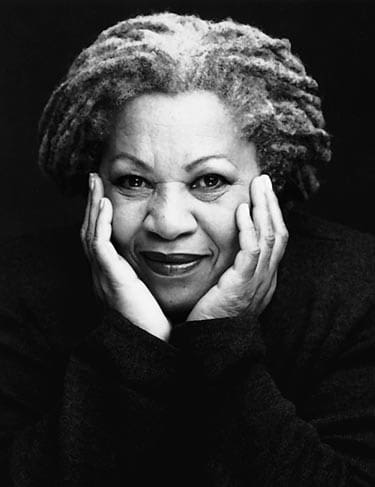
TONI MORRISON
Toni Morrison, an American writer was a long-time literature professor as well as an editor for Random House. Literature meant a lot to here; she is well recognized for her writing of the life experiences of Black women and life in the U.S. She was 39 years old when she published her first book, The Bluest Eyes in 1970. Here second novel, Sula, was nominated for the American Book Award. Morrison received the Pulitzer Prize for Beloved in 1987 and in 1993, she was the first Black woman to receive the Nobel Prize for Literature.
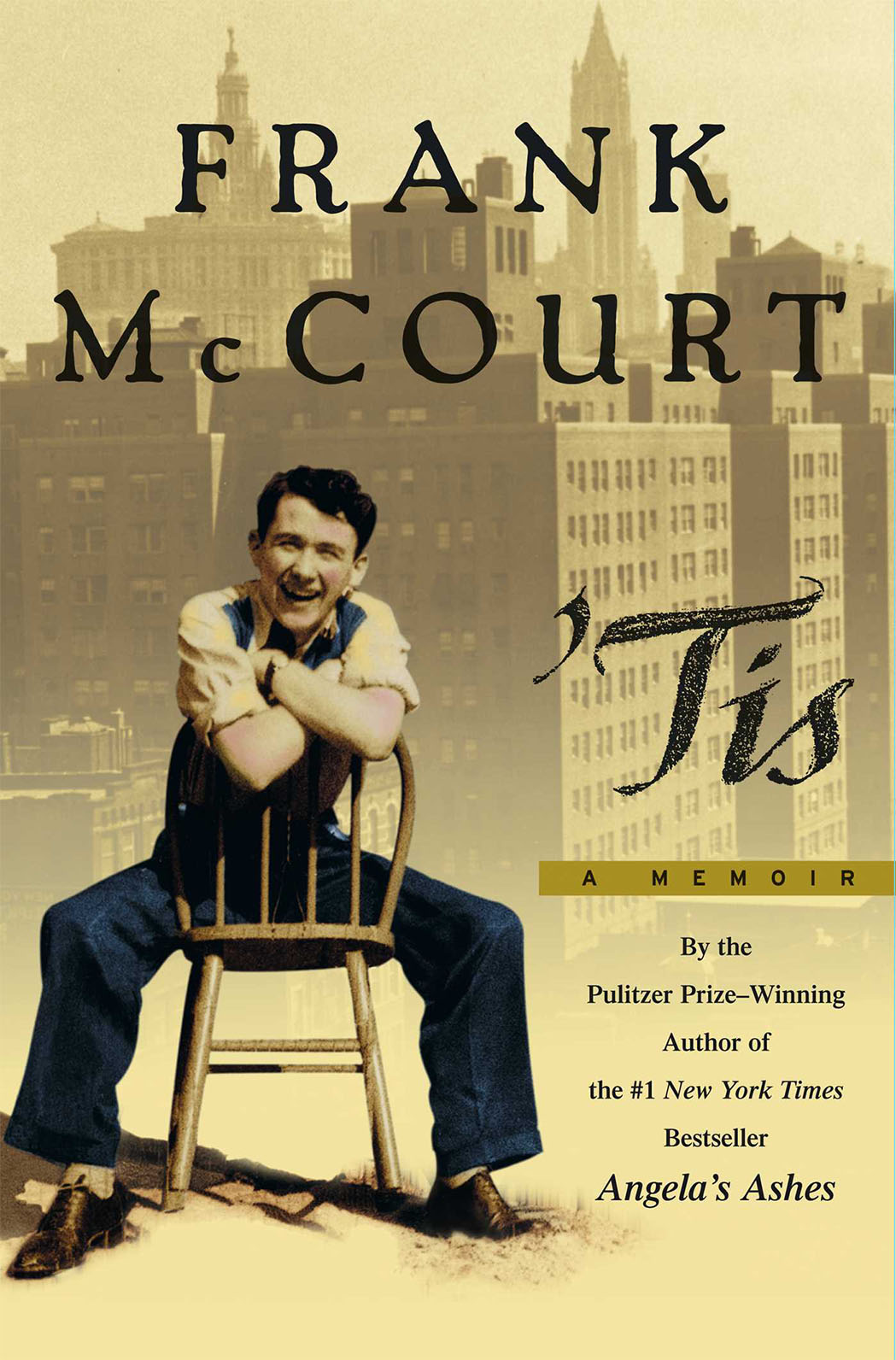
FRANK McCOURT
McCourt’s first book was published when he was 66 years old. Angela’s Ashes won the Pulitzer Prize for autobiography/biography in 1997. The memoir was also recognized with the National Book Critics Award, the LA Times Book Award and the Exclusive Books Boeke Prize to first time novelists.
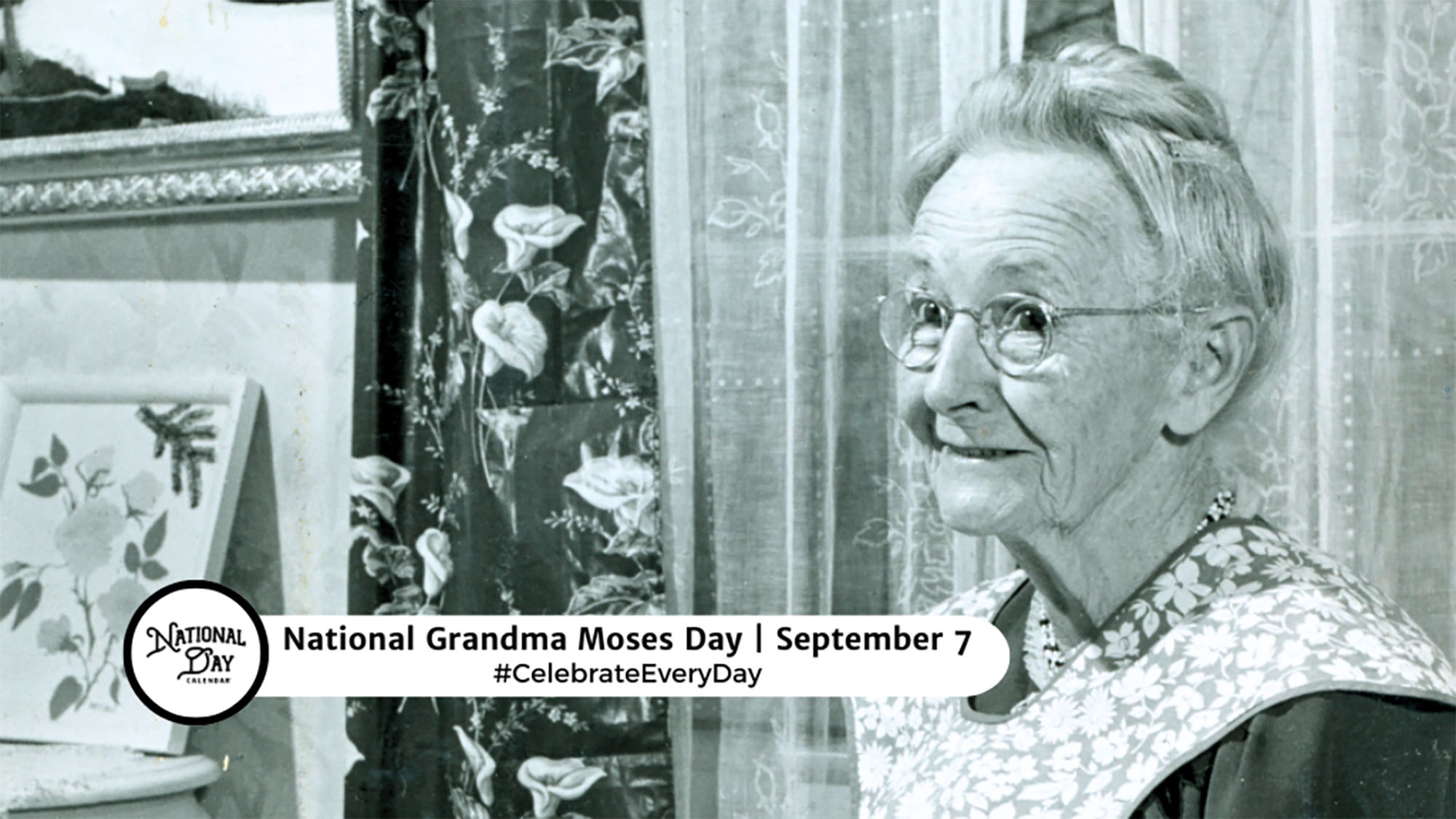
GRANDMA MOSES (Anna Mary Robertson Moses)
Ms. Moses was a celebrated American painter. She was noted for her needlework however, arthritis jettisoned that activity. Ms. Moses started painting at the age of 75. Her nostalgic style and depictions of rural life caught the attention of a collector and others, including large department stores who wanted to exhibit her work. Internationally, her work gained the interest of storied museums and galleries. A symbol of life in rural America, she passed away at 101, at the zenith of her painting creativity.
LAURA INGALLS WILDER
Laura Ingalls Wilder was a teacher, journalist, writer & columnist. Her life experiences were the subject material for her books, collectively a tome of perseverance, hardship and the challenges of farm life .She started writing her book series, Little House on the Prairie, when she was in her 60s. That first book, Little House in the Big Woods, was about her childhood. The Little house on the Prairie was Wilder’s eponymous version that proved popular in many TV households.
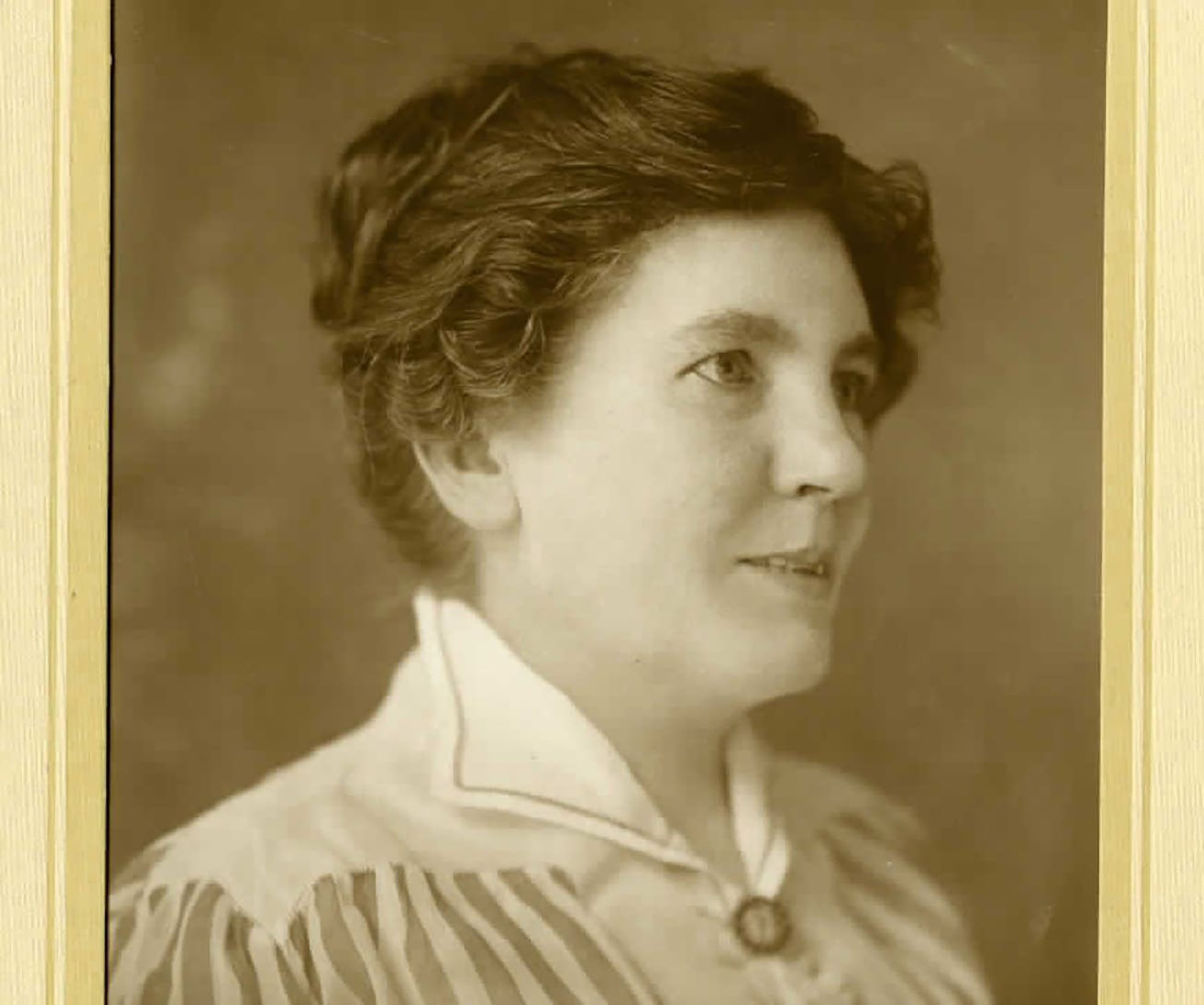
VERA WANG
Vera Wang had a successful career as a journalist and figure skater, but in her 40s, she started what would become a fashion empire that encompassed haute couture, high-end wedding gowns and licensed beauty products and home accessories.
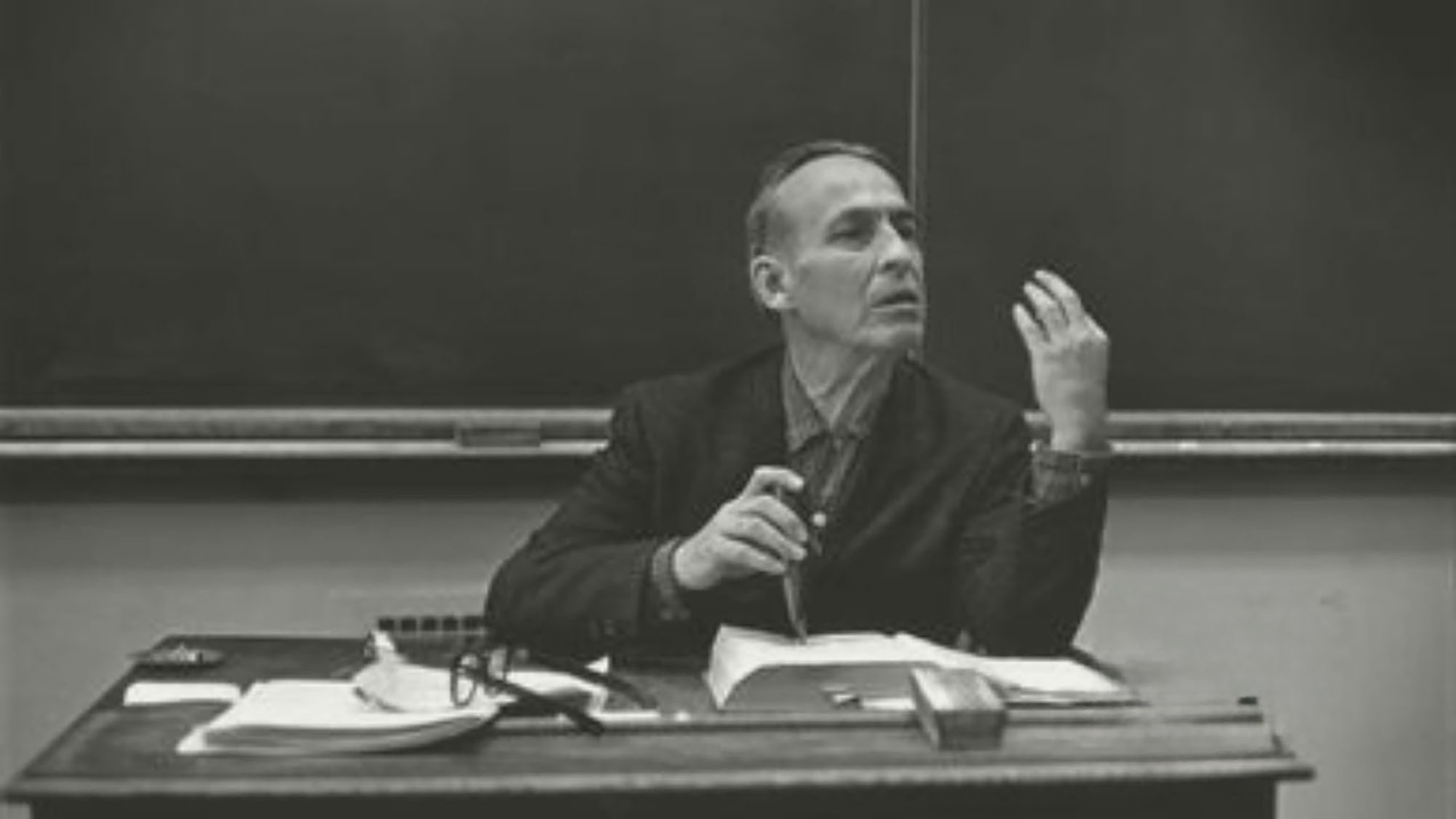
NORMAN MACLEAN
I can identify with this individual: lover of writing, literature and fly fishing. An English professor, Dr. Maclean attended Dartmouth College and earned his Ph.D. at the University of Chicago where he taught for 47 years until his retirement in 1973. His most celebrated, and only book, A River Runs Through It, was published in 1976. He was 74 years old.
SALLY KRAWCHECK
Already a success on Wall Street, Krawcheck has long known that women clients were underserved by the wealth & financial management industry. She sensed that many women were not part of the discussions pertinent to financial management and more. So, she opened her own firm: Ellevest. She was 52 when she started her company that catered to women.
COLONEL SANDERS
A creative thinker, relentless believer, and one who demonstrated an enduring persistence, Harland Sanders is forever known as the southern gentleman who reinvented “home-cooked” southern-style chicken. Colonel Sanders was in his 60s when he finally achieved his renowned chicken recipe and his first Kentucky Fried Chicken franchise.
And there are so many others. If you’d like to share your short list, drop me a note. Thank you!
Time I spend at a museum of fine arts is about as cathartic an experience I can think of. Indeed, cathartic art is an emotional salve that can ease the burden of feelings that keep you down. For someone with dysthymia–like myself and others–engaging in positive activities helps mitigate the weight of dysthymia [Persistent Depressive Disorder]. PDD is not as well known as MDD [Major Depressive Disorder], but the former has less severe yet more persistent symptoms of depression.
With all that’s been bombarding us [unfortunately many instances are not positive] in our day-to-day, we can manage that which irks us and steer thought and action toward positive choices, which in turn can help generate positive thoughts and feelings. Some choices I lean to include blogging, letter writing, playing the piano, tennis, family time and more.
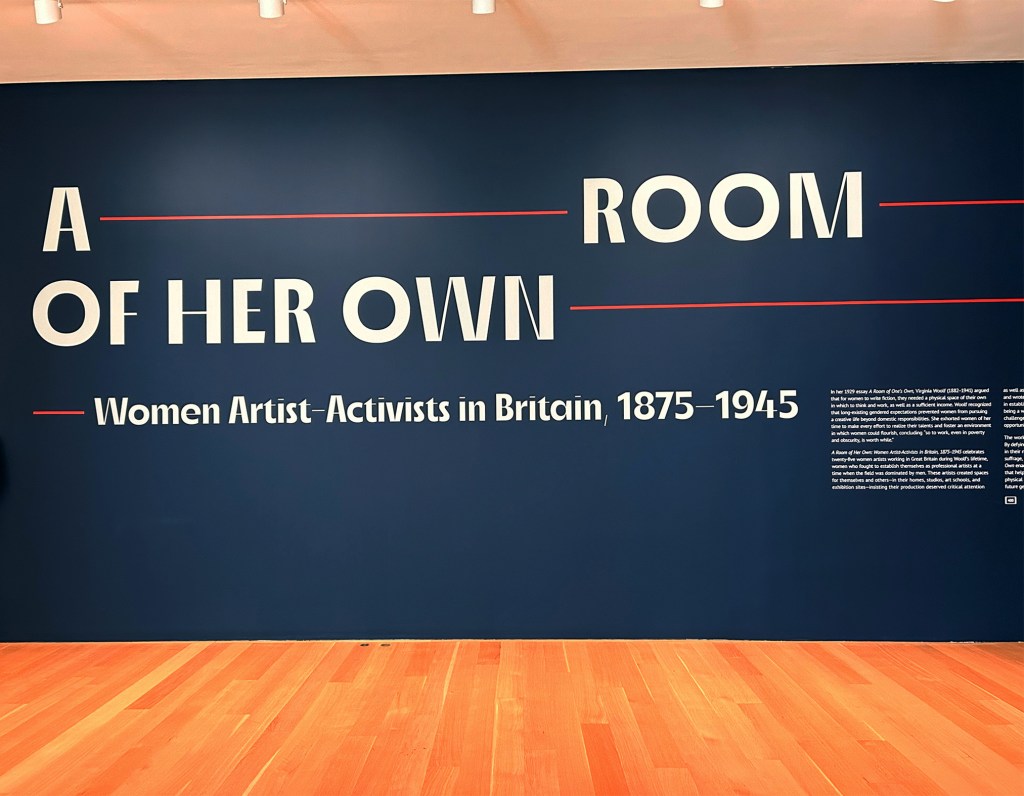
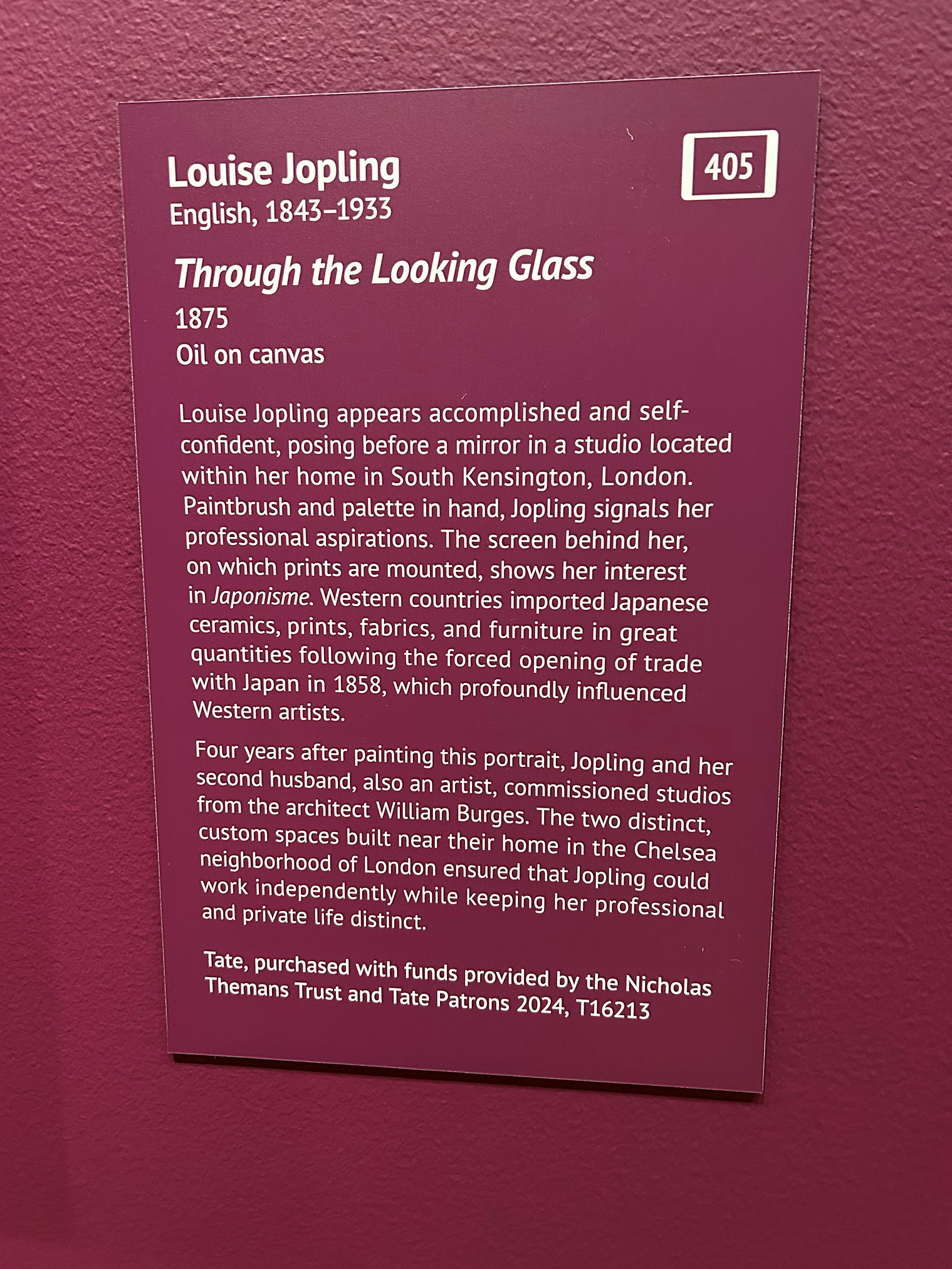
Recent family time with my 2 grown daughters, their husbands, children and their dogs percolated this thought: Both women and their spouses have full schedules with work, raising a family [includes a dog per family], volunteering etc. so then, how do these 2 women have a Room of One’s Own? I credit the exhibit now at the Clark Institute of Art, A Room of Her Own: Women Activists-Artists in Britain, 1875-1945, for germinating that thought surrounding my daughters. I encourage you to experience this exhibit; it runs until September 14, 2025.
The 1929 essay, A Room of One’s Own, was written by Virginia Woolf. You can see the tie between the title of the essay and the name of the exhibit. And if you read Ms. Woolf’s essay, all the better.
Photos taken, courtesy of Clark Institute of Art
Consider this post a “trailer” for the exhibit. It’s worth the trip, and not just for the love of art, but that of expanding our perspectives as well our own sensitivities toward women.
EPILOGUE For additional perspective with respect to women in the workforce please refer to the Women in the Workplace 10th anniversary report [published September 17, 2024 by McKinsey & Company]
It happens each year: Spring. It is perhaps the season that celebrates its affinity with renewal, new starts, opportunities, hope and personal rejuvenation. For the past 12-years, The Springfield Museum has held a unique exhibition that acknowledges some of these nuances of change, transitions, challenges, renewal et al.
courtesy Michelle & Donald D’Amour Museum of Fine Arts
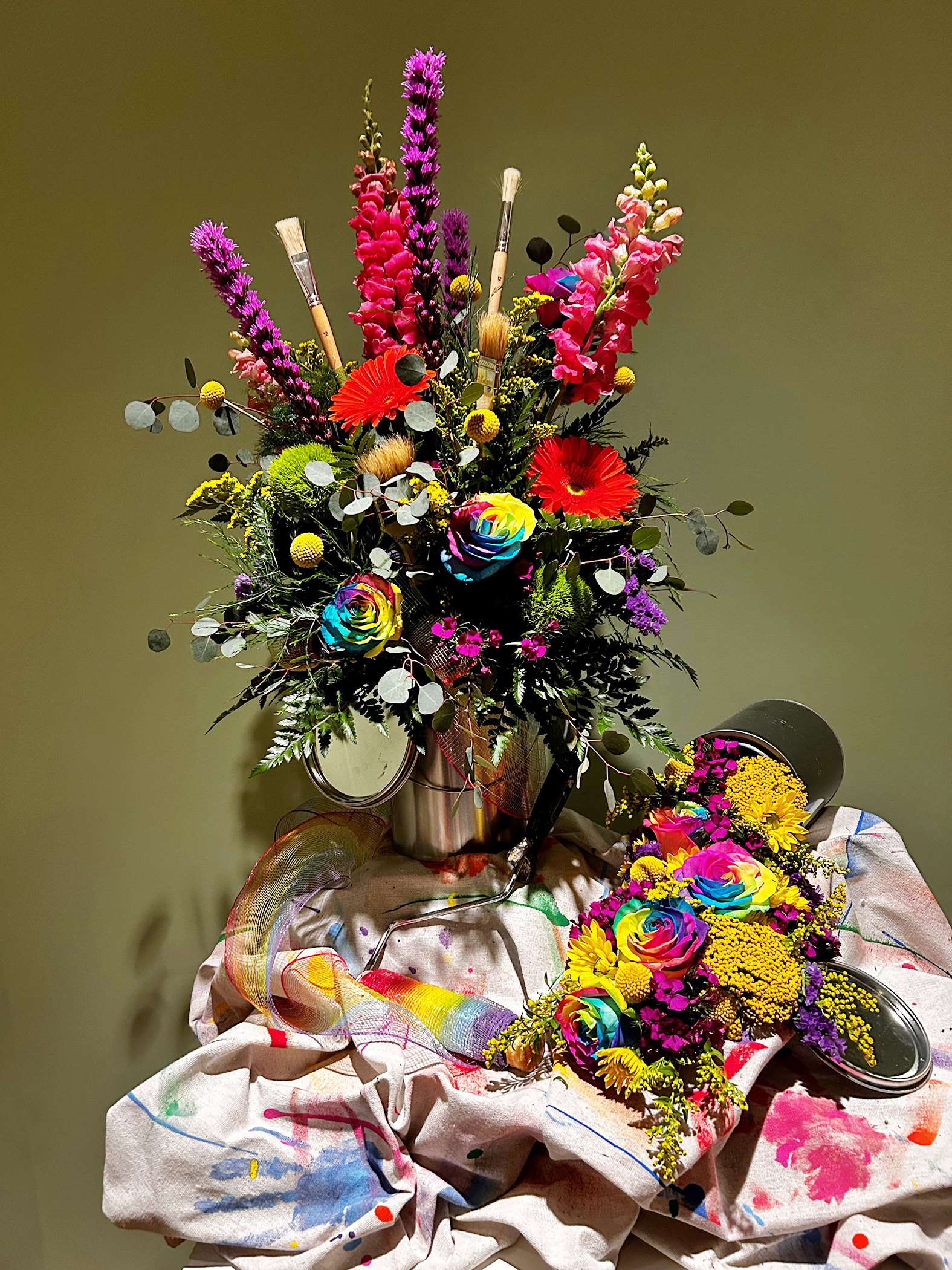
In each of the four museums that make up the Springfield Quadrangle, members of gardening clubs and florists based around the area created arrangements of colors, textures and other details in a manner that would intersect with a selected painting or other creation within the museums.
The creativity range was as eclectic and electric as anything I’ve seen, simply because of the relationship that attempted to “unify” two discreetly different pieces of art.
The juxtaposed subjects provided depth, perspective and of course relevance through the use of color and hues, manifestations of the blending of material, thread size, color, props, textures and so forth.
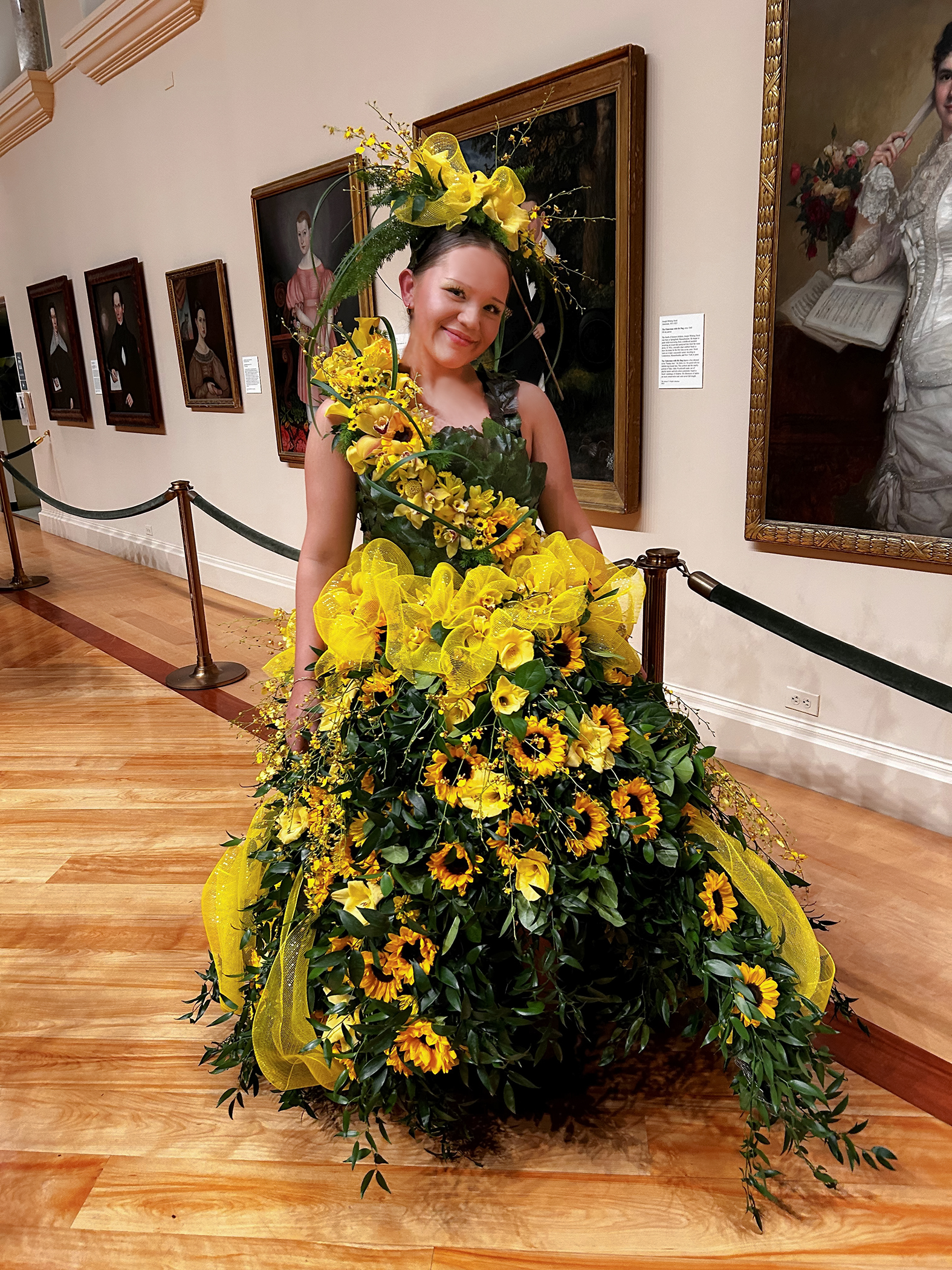
Some arrangements did not have a direct connection to a piece of art in the gallery. My sense is that such arrangements–such as the one displayed above–were created to compliment art already sitting in that room.
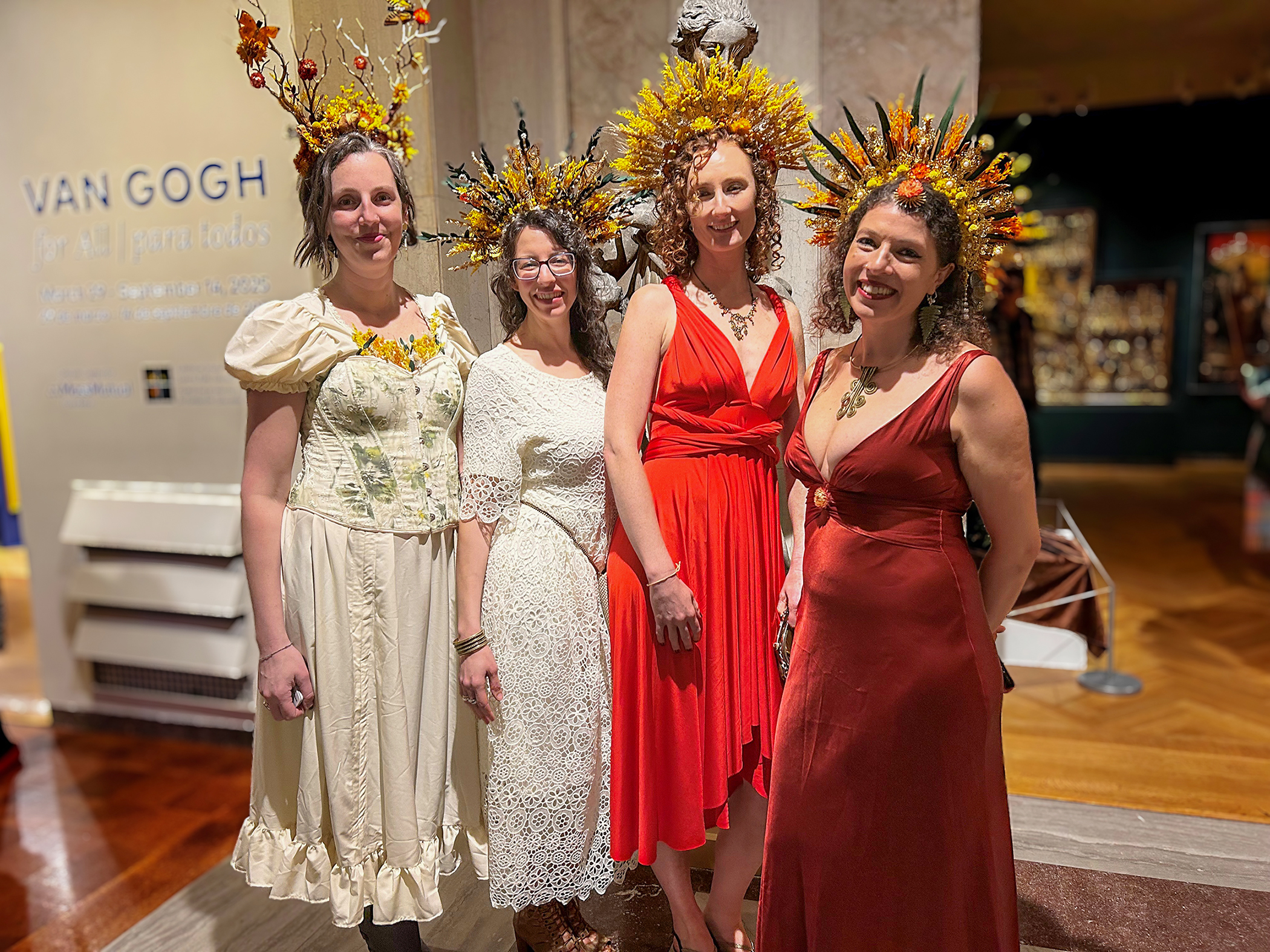
From headwear and accessories to…..
….gowns made entirely of real greens and flowers, the creativity was beyond words! Next April 2026, should be an interesting installation! See you then.
I’ll admit that it can take a lot out of you when winter conditions pin indicators below the norm [temperature, wind chill], or above the line [accumulation and severity of snow/freezing rain/sleet]. By February, a good number of folks are pining for—some hoping through a telekinetic event—the arrival of spring. Yet in spite of our incongruous sentiments about winter, its been said that residents of Scandinavian countries can make the best of it. Perhaps their overall acceptance of this perennial cold, snow and short days has something to do with the their countries having “the happiest people in the world.” Is there an attitude, a perception that we’re altogether missing? Warmer clothing compared to ours?
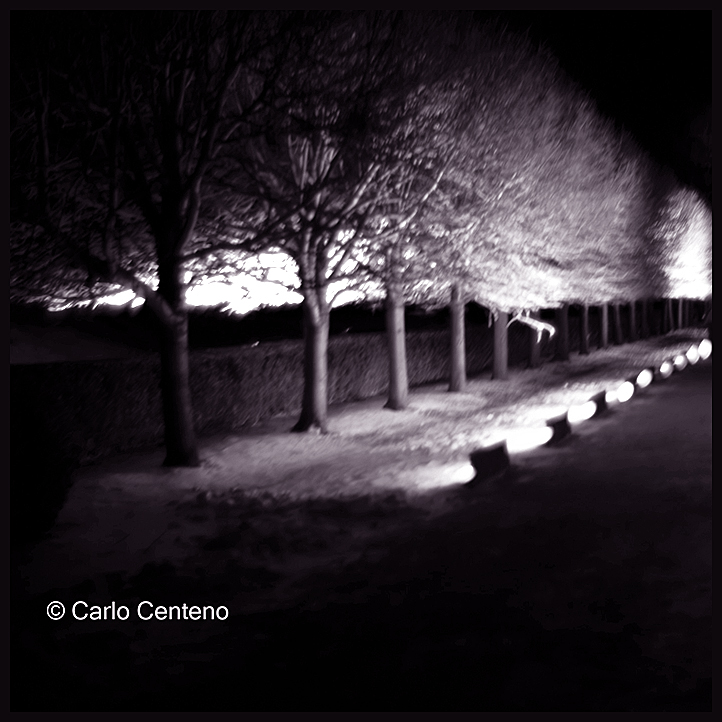
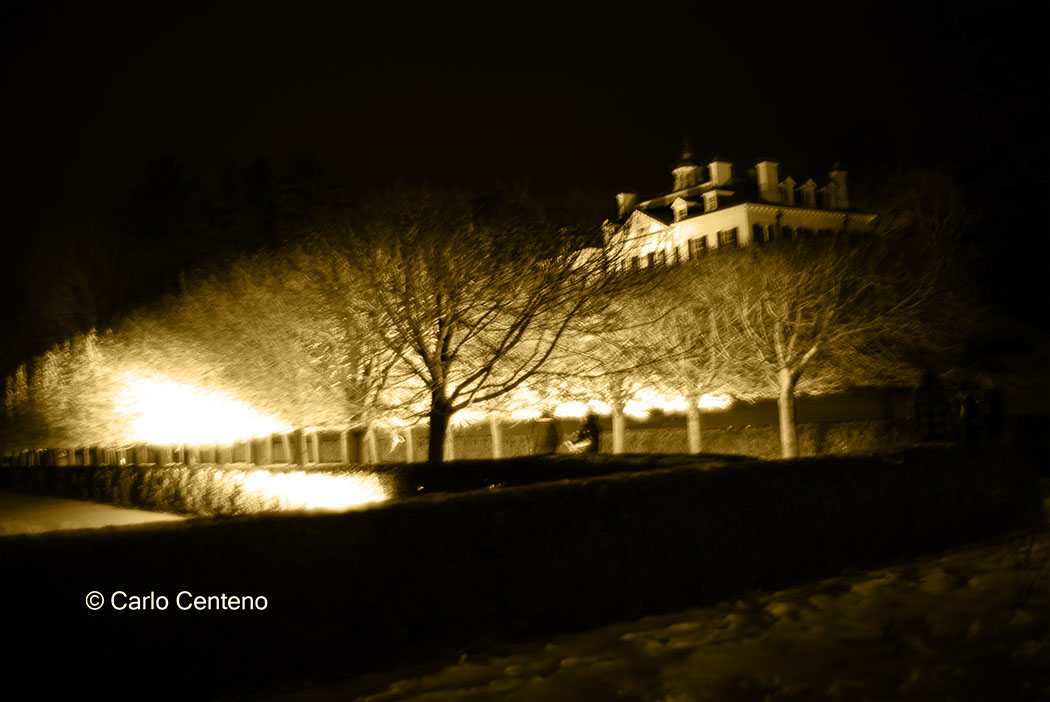
We’ve [me and my wife, MJ] made treks to the Berkshires all year long with additional stops during winter. Some of these stops included special outdoor exhibits of which 2 come to mind: The Mount, Edith Wharton’s home, and also at Naumkeag Estate. The photos posted here are from Nightwood, and it was a wonderful stroll along the garden pathways and woods at The Mount.
Appropriate winter clothing makes a big difference; it does get colder in the Berkshires. Key details: wool sweaters, base layers, even hand warmers. Along a mile-long path cutting through the woods and gardens, the exhibits appear like waypoints on a map. Each installation carries its own interpretation of light, while an original music composition aurally ties everything together.
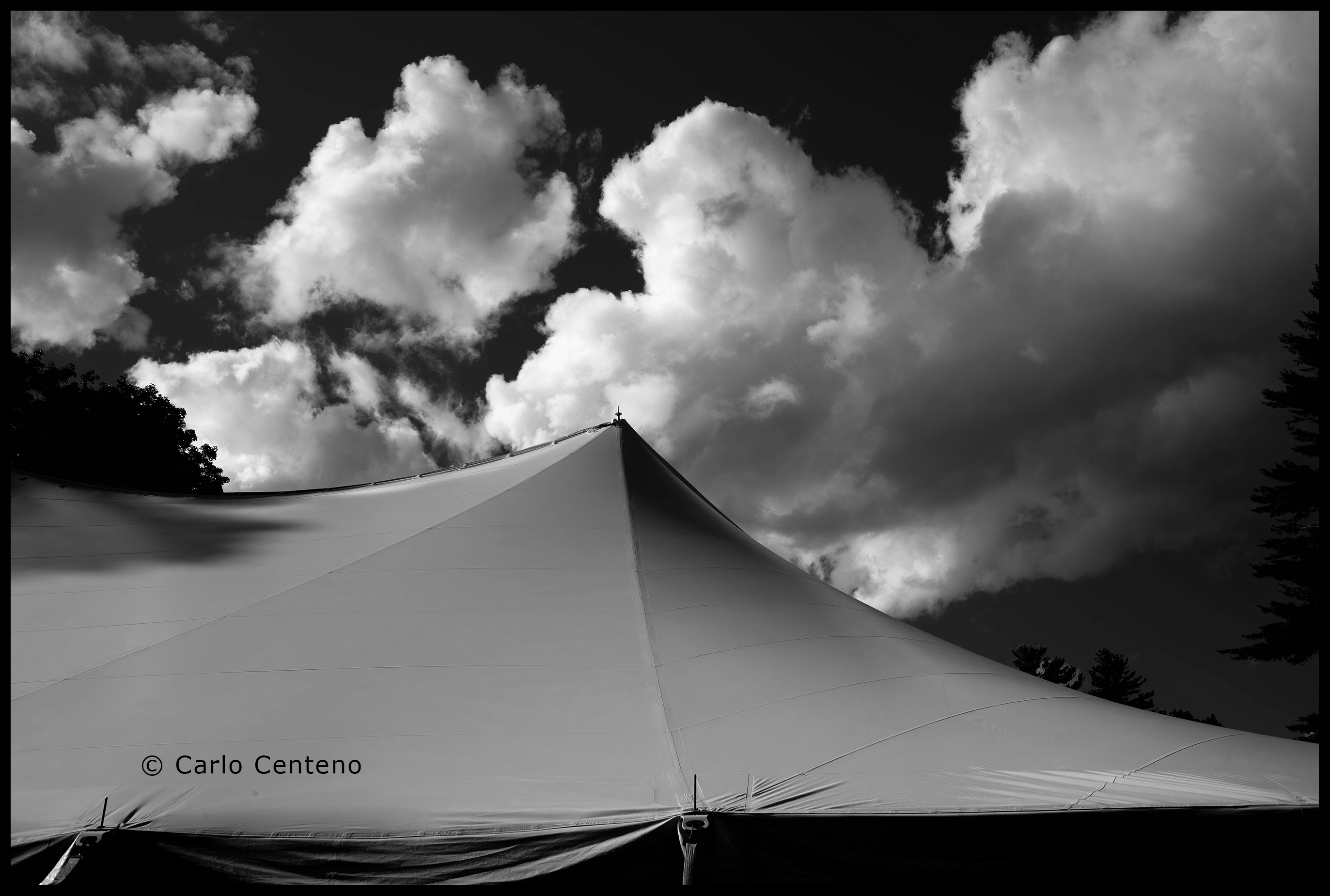
My interpretation of The Mount exhibit centered around the intensity of each installation, vis-a-vis the light itself. Using B&W images had provided [for me] a key, old-school tenet of imagery: simplicity allows interaction between the visitor, and the subject at hand. Put another way, monochromatic images transcend continuity. Color images offer validation to what we see because we readily see color. Yet color can be distracting. Not a slight, but just a matter of fact.
For me, I’m drawn to B&W images because of its tonal consistency. Black & white does not have the influence of color, and yet allows me to see the entire image and all its nuances.
I, along with others like color images , but there are times when color feels more like a distraction. A single color that’s part of a smaller detail is enough to pull you away from the whole and down into a rabbit’s hole. Still, B&W does have a way of binding together the elements that make up the photograph, all within the inimitable, ever valid black & white palette.
I’ve come across a lot of A-words lately: amazing, atomic, artificial, augmented, abstract, auspicious, audacious, accountable, admirable, apathy, appreciation, affection, accomplished, alarming, Arctic, Antarctica, abysmal, appalling, anachronism and so forth. Like a daisy chain made of paper, these words are linked and yet each easily broken free by the slightest of tension. And while some connections may not make a whole lot of sense, there are reasons however small, that connections take place. Anxiety, lack of focus, melancholy, fear, joy, anticipation, distraction, etc. etc., the Yin-Yang of this is that the very same attributes that prompted the connections can be the same to break them. It depends on time and place. Context is everything.
Audacious. Approx. 35-degrees on a starboard bank.
The words come from various sources, anything and everything that shapes our life experience. With this exercise, the empirical nature of each word puts aside the rational, and instead embraces sentience, that ability to feeldepth of things experienced. It’s certain that others who feel existential—rightfully so in our fractured society—may feel embarrassed yet genuine. What could be more human than to feel concern about our current state of affairs [macro] and our relationships [micro]?
Anachronism. At the stable. The Mount: Edith Wharton’s summer residence.
I’m feeling abstract [visualize Cubism Art] and yet oddly auspicious because many things in life and living are not rational. We are prone to rely more on our senses, the very emotions that can either ruin or celebrate moments in our lives. Yes, I’d rather feel embarrassed and genuine versus being stymied with self-serving, deductive reasoning. The former brings a sense of order, the latter a chance to improve our emotional intelligence and increase a capacity to further understand each other.
Abstract: The Slave Market & Disappearing Voltaire.
Life imitates Art, or is it Art imitates Life? Similarly in marketing, it’s not what you’re getting, but what you think you are getting. Perception is everything and even more so in the here and now. It’s a refrain that frequently echoes in my thinking.
Admirable.Augmented.Appreciation.Arctic-Antarctica: an aftermathAuspiciousAugmented.Affection…with my favorite “cup-of-tea”
There will be no “B” collection, existential-word-dump, involving any other letter, or a character for that matter. An exercise with one letter is enough for me, and probably for you as well.
In conversations, and things written, a question posed usually prompts us to reconsider a position we hold, maybe a perspective quite different from what’s already been established in our own thinking. This collage, this tapestry-of-a-post may not mean much to anyone, but it could be provocative enough to slightly encourage another perspective. Why not?
The seasons are moving quickly and as I get older my own temporal reality is based on just how fast time seems to go by. I lean towards the empirical and the sentient qualities of the here and now to help me keep it all together.
I never thought I´d grow up so fast so far. To know yourself is to let yourself be loved. Do you ever get me? Shower me with affection and I’ll return in kind. I have no hidden motive, I am blind. Do you ever get me?
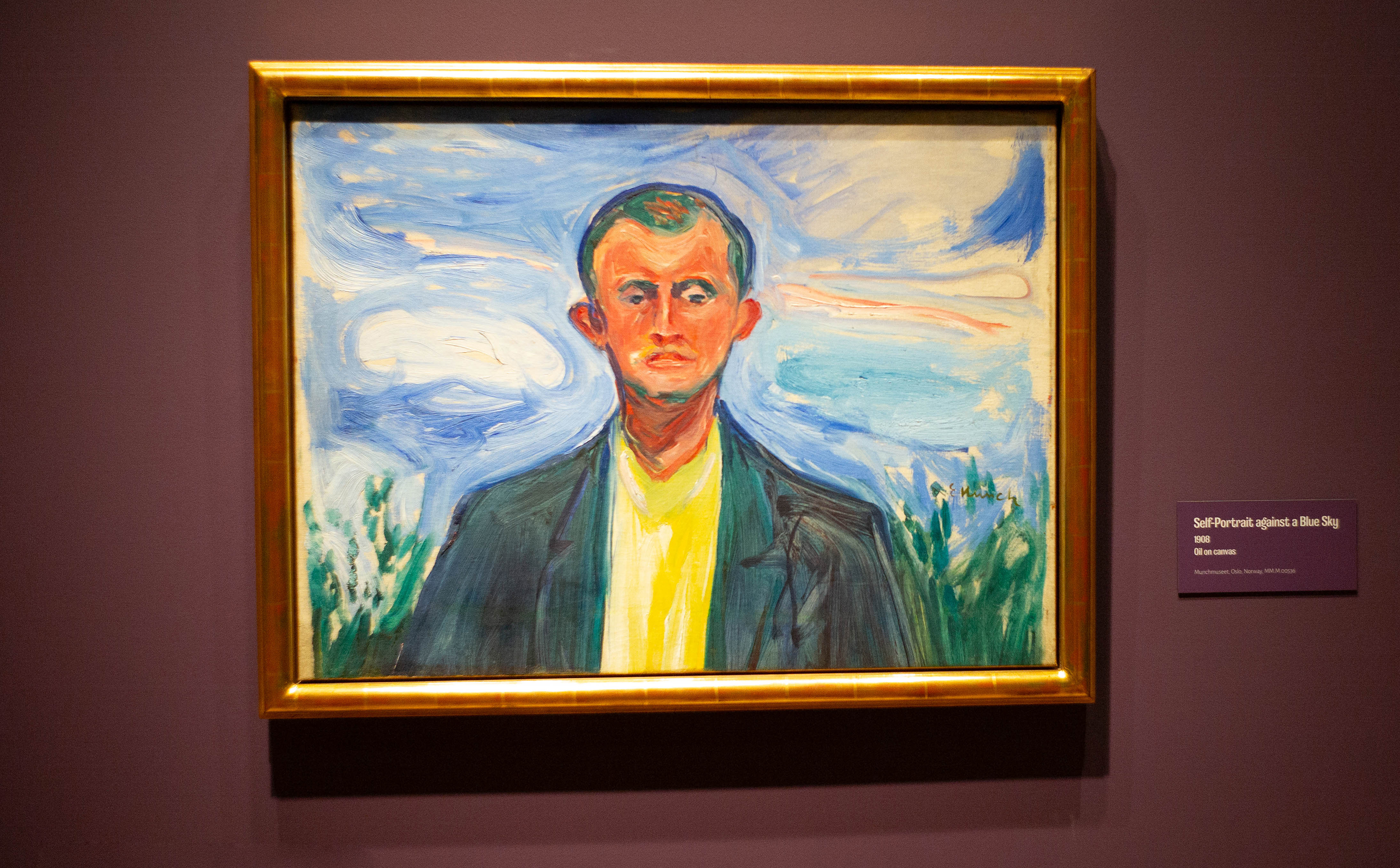
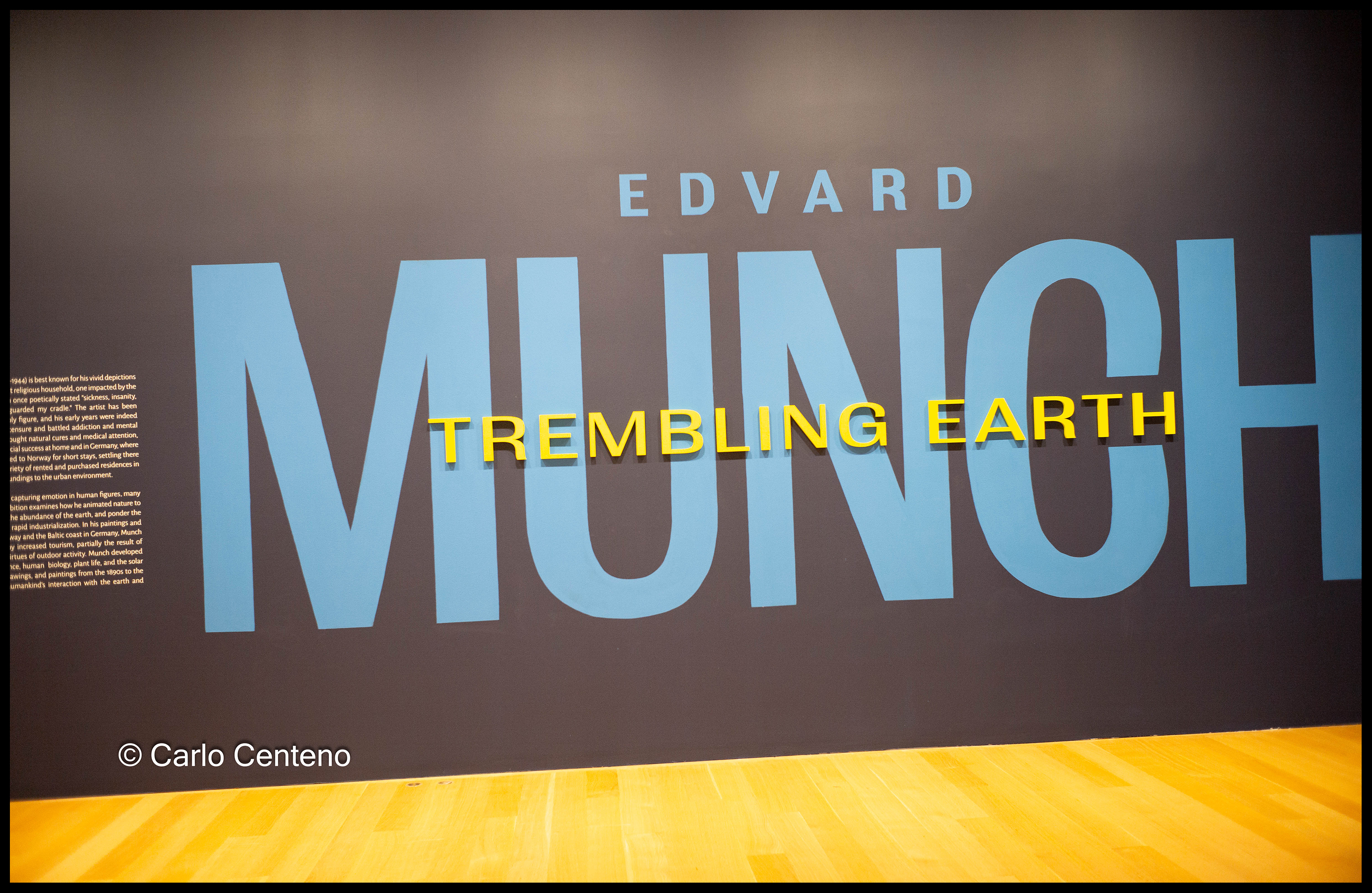
At the Clark Institute of Art, running through October 15, 2023, is a special exhibition, Edvard Munch: Trembling Earth. Munch’s [“Edward Moonk” Norwegian pronunciation] most recognizable, iconic painting is The Scream, and yet not many know of his other work which includes a number of self-portraits, prints, figure portraits and landscapes. The latter showed what he felt was a confluence of the natural world and humankind where nature provided a kind of salve that the urban environment could not deliver. The artist’s life contained the antagonists that shaped many of his creations: life and death; love and loss; loneliness and despair. And yet Munch as a protagonist, allowed us to see and feel the very antagonists that took hold of his deepest emotions.
I found the entire exhibit revealing if not eerily prescient. The power of art in all its forms allows us not to just see the obvious, but to measure if not ascertain a) what behooved the artist to produce his/her creation and b) what, if anything, draws your attention to the work?
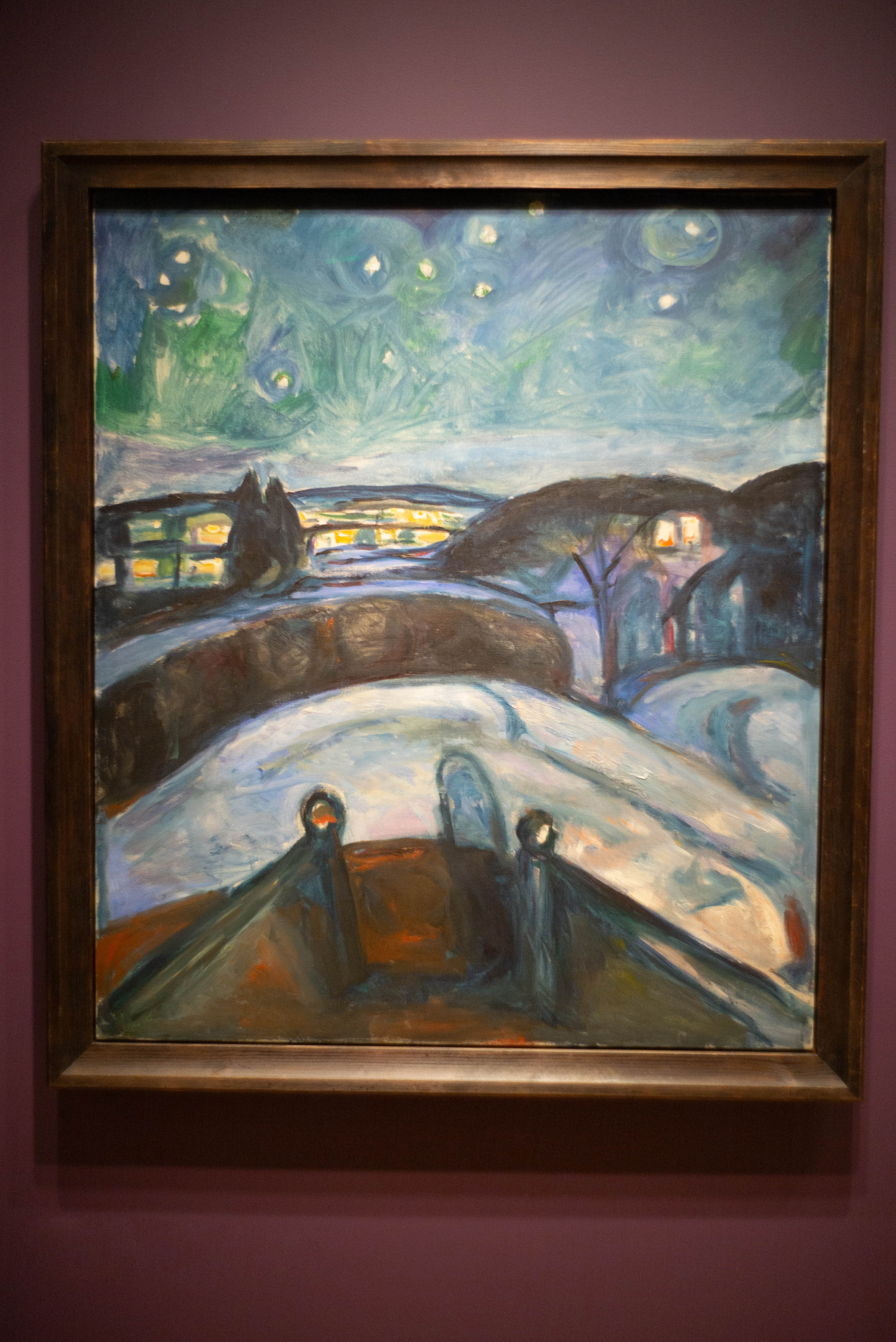
Starry Night, 1922-24
While some of his paintings hint at Vincent van Gogh [1853-1890], there is a quality that makes Edvard Munch’s work stand apart: his apotheosis of anxiety, loneliness, longing and loss are indicated by the despair of his faceless human subjects. The hue of uncertainty and angst lay claim to troubled souls.
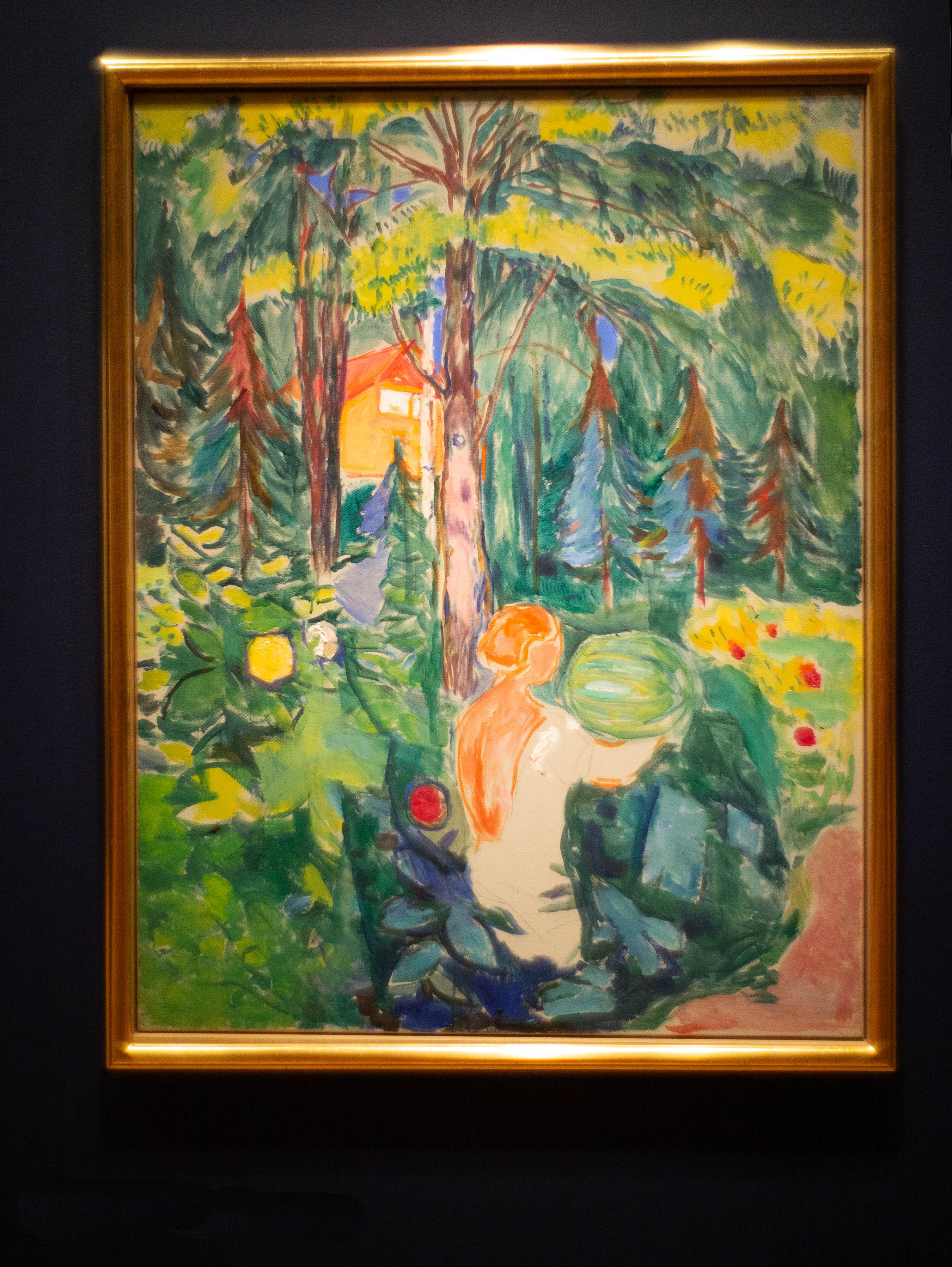
Woman with pumpkin, 1942
This is one of my favorite paintings, Woman with pumpkin. Its creation captures a sense of lost, and longing. The symbolism could be anything and everything. The pumpkin and the dark green color appear as if a person is holding the woman. Note the 3 “fingers” on the hip of the woman. In fact, the greenery next to the woman appears to be kneeling on its right knee, its “left leg” bent with a “foot” planted directly on the ground close to her back. Hence, the figure is resting its head on the woman’s right shoulder, the right arm suggesting a pillow.
Self-portrait, 1908
Whatever you see and however you see it, Munch is a captivating study of conflict. You can feel it in most all of his works. The landscapes provide contrasts regarding our ability–and inability–to co-exist not only with the natural world, but with each other. Put another way, Munch is caught within an insatiable push-pull between the Id [our instincts], the Ego [reality] and the Superego [moral strength].
Self portrait with palette, 1926
No artist lives a life of order and predictability. It’s contrarian to that world of creativity and expression. Munch’s self-portraits demonstrate a fortitude within his reality that dices with the likes of the Id and the Superego. Each of us deal with the instability created by our instincts and morality, our actions and reactions, our angst and distress. In a way Munch’s paintings brings form to what is often abstract yet palpable, even vicarious and visceral.
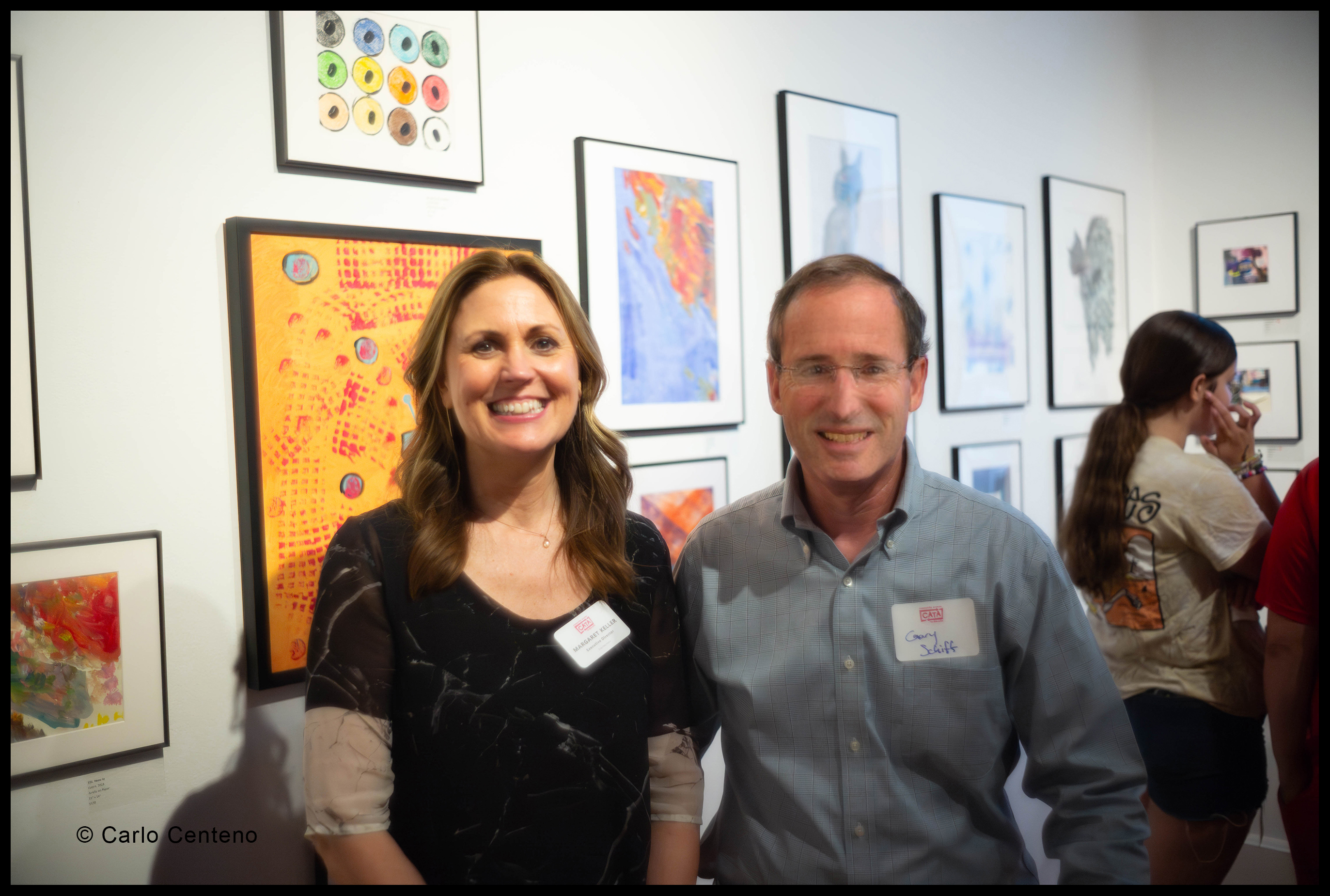
The Community Access to the Arts [CATA] never ceases to amaze me. Meaning, “the creativity of the artists at CATA is as exemplary, as contemporary and modern as Art can be.”
The artistic abilities of the artists represent their thoughts, feelings, perspectives and perceptions that are as strong and perceptible as any artist could produce. From perfunctory to profound, energetic to calm and peaceful, there’s a lot being expressed on the gallery walls. Perhaps the most obvious being that these artists–with disabilities–clearly have a way to express themselves.
Margaret Keller with Gary Schiff, Managing Director, October Mountain Financial Advisors.
This opening recently took place at the Lichtenstein Art Center in Pittsfield, MA. Most all of the paintings are for sale and the artists receive a commission for their work. This show has much to offer, from small to very large using water color, oil, acrylic and ink painted onto wood, stretched canvas and other media.
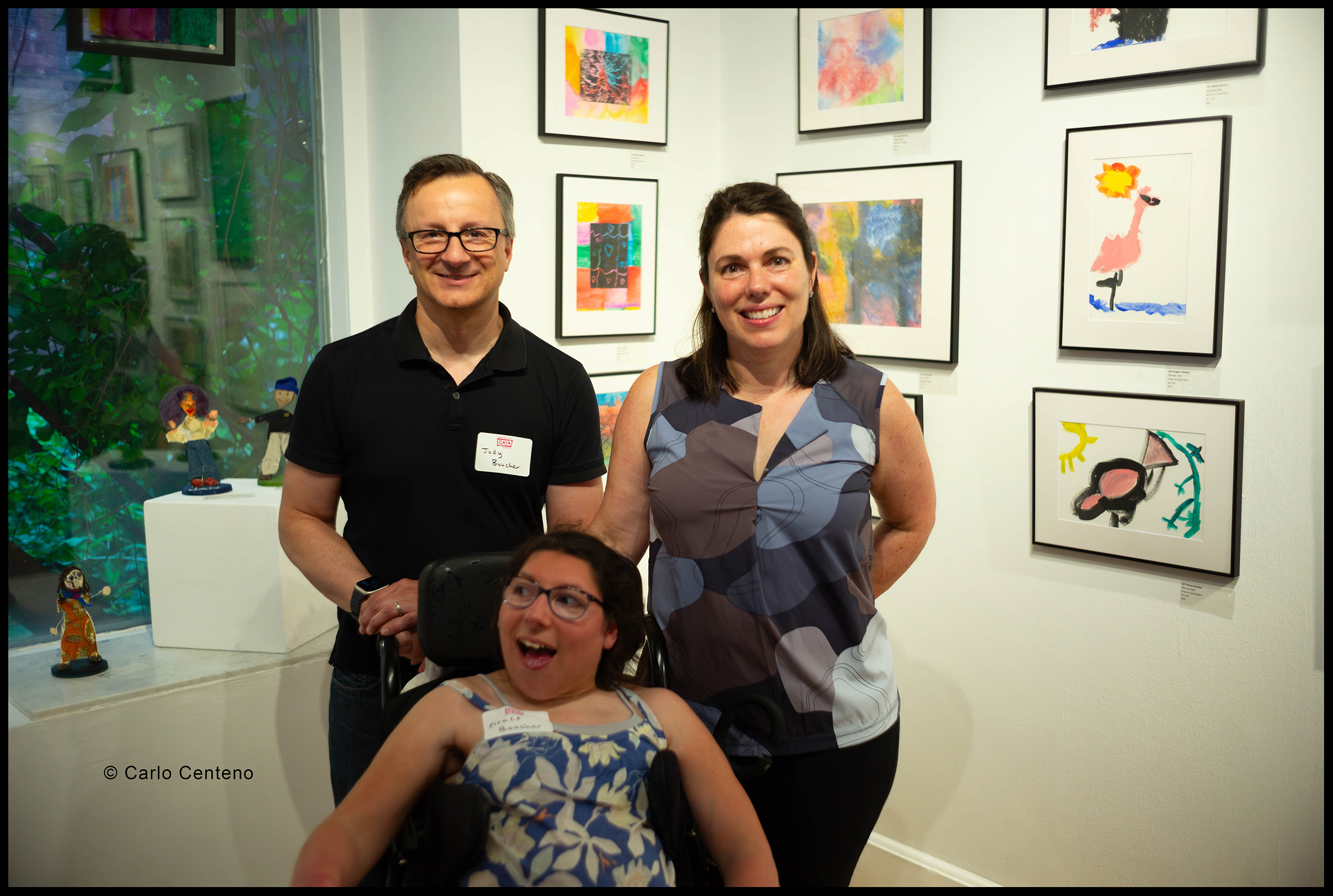
CATA artist Grace Boucher with parents.
Outside the gallery a boatload of rain just kept falling. It felt undeniably tropical; one moment a light rain, then clear, only to have everything overwhelmed by yet another heavy cloudburst accompanied by thunder and lightning. And yet the space was filled with friends, parents & guardians of some of the artists and loyal patrons and art lovers.
Kelly Galvins, CATA Program Director-Agency Programs
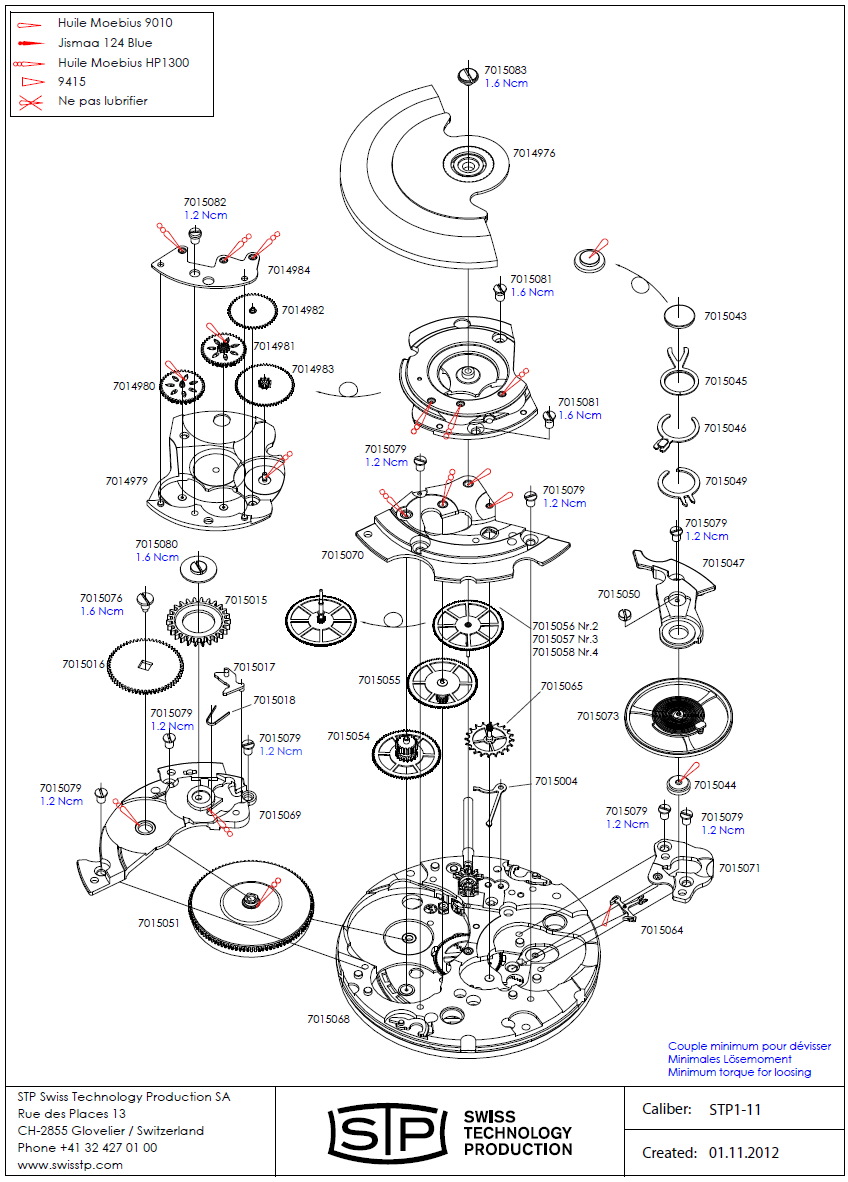
The success of any such gatherings depend a lot on those in charge of details. We all know that. I think of automatic watches, and how well they function. This organization [CATA] is akin to the dynamic of the workings of an automatic watch, self-winding [automatic] or hand winding only.
credit: Swiss Technologies Production
The sum of the parts is greater than the whole. Every component has a function, some specialized while others are a standard part to ensure the watch’s ultimate function.
credit: Patek-Philippe SA Geneve
Every person shaping an event matters. Just as an automatic watch requires springs, levers, meter wheels, escape & driver cannon pinions and so forth.
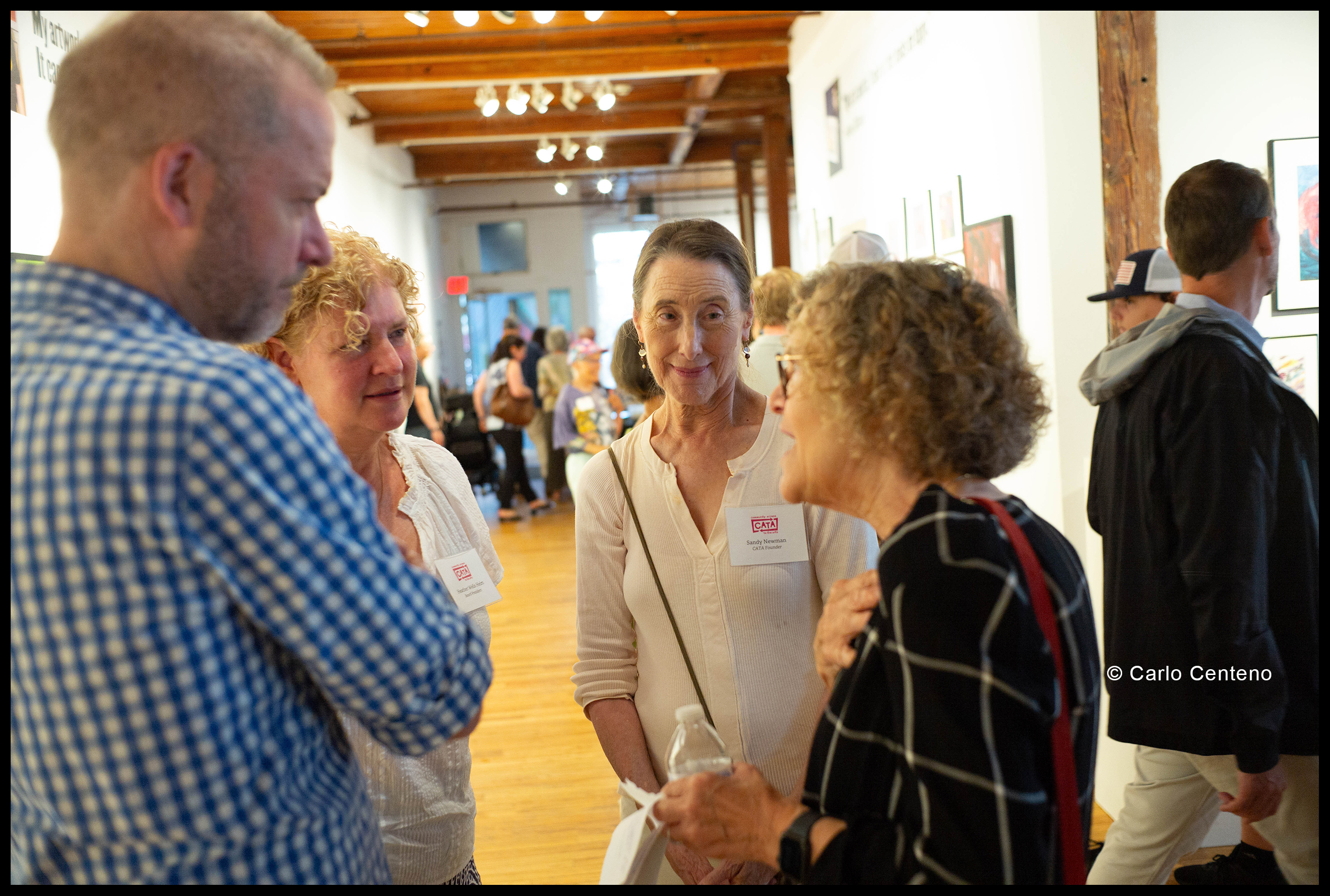
[center] Ms. Sandy Newman-CATA Founder
There needs to be synchronous relationships for many things to work: autos, machines, computers, watches and people. That quality of interaction relies on the functional capability of the part [or persons] involved.
Kara Smith, CATA Program Director [studios].Ms. Michelle Goodman-CATA artist.
Meanwhile, there’s all this chatter about Artificial Intelligence [AI] with its potential and failings. Regulation? Monetization? Security? A bona fide threat to originality or something that can expand our ways of learning? In the end–and I do mean “The End”–nothing matters more than the people we love and care about, the interactions in gatherings familiar and new, and the way we contribute to being in the moment.
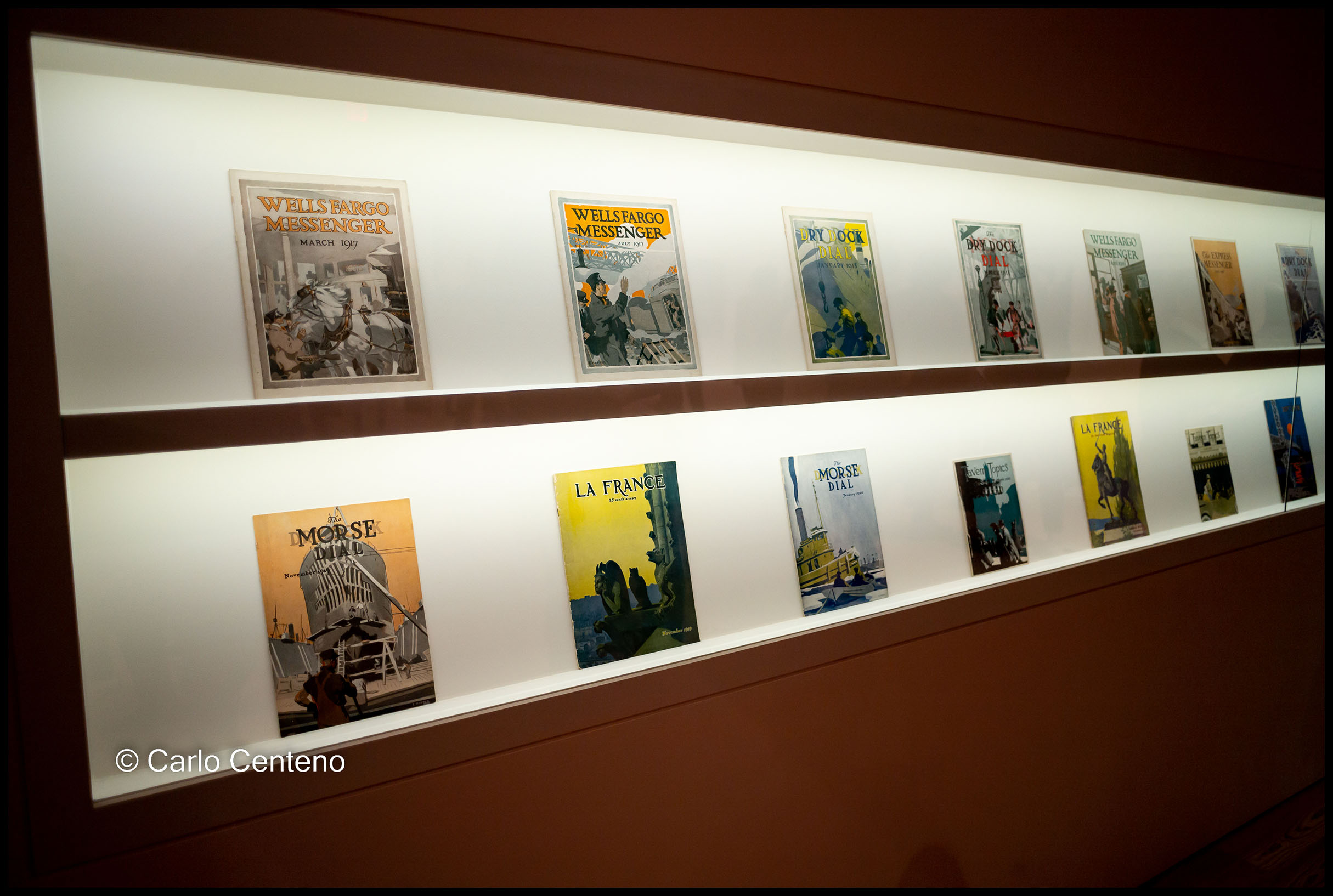
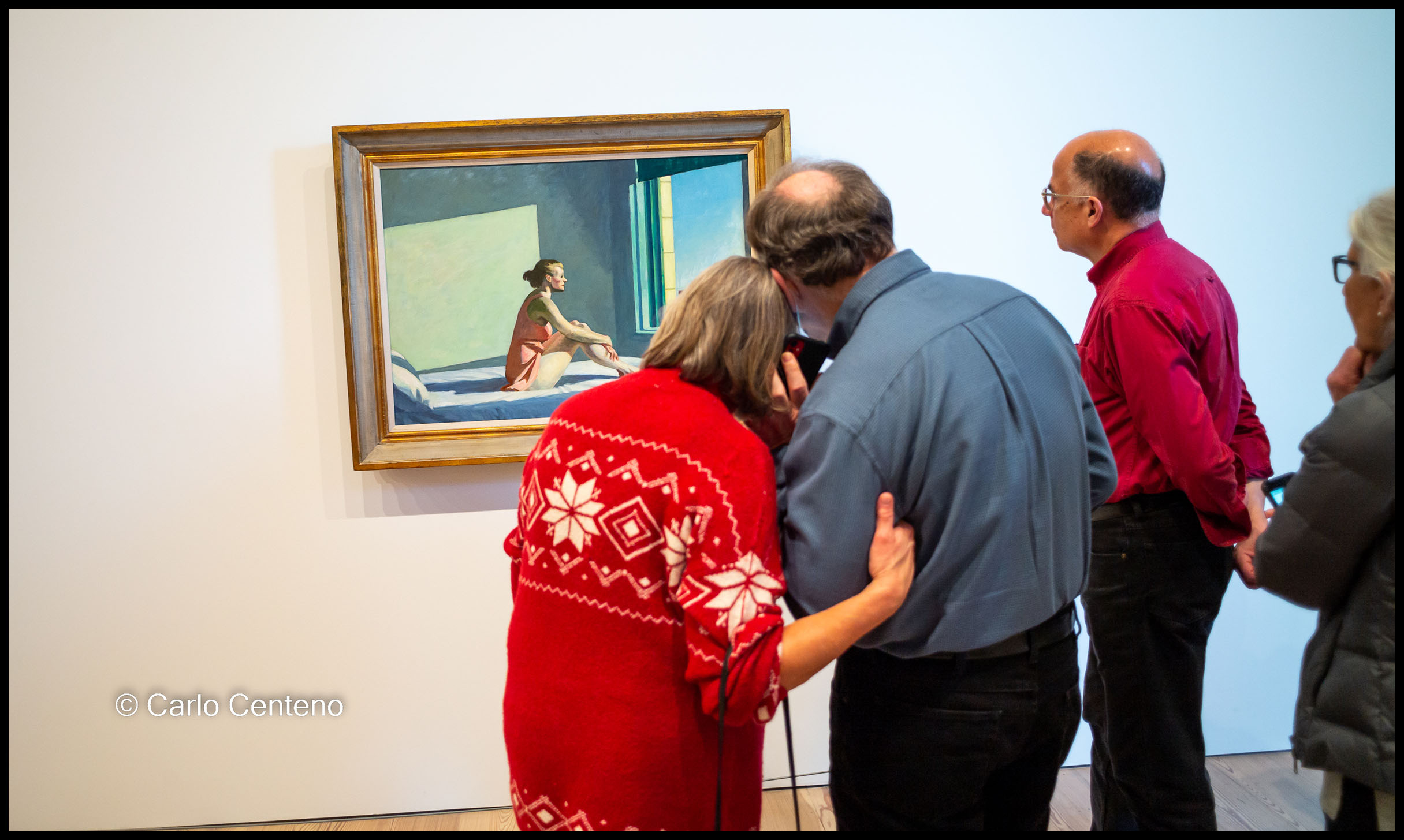
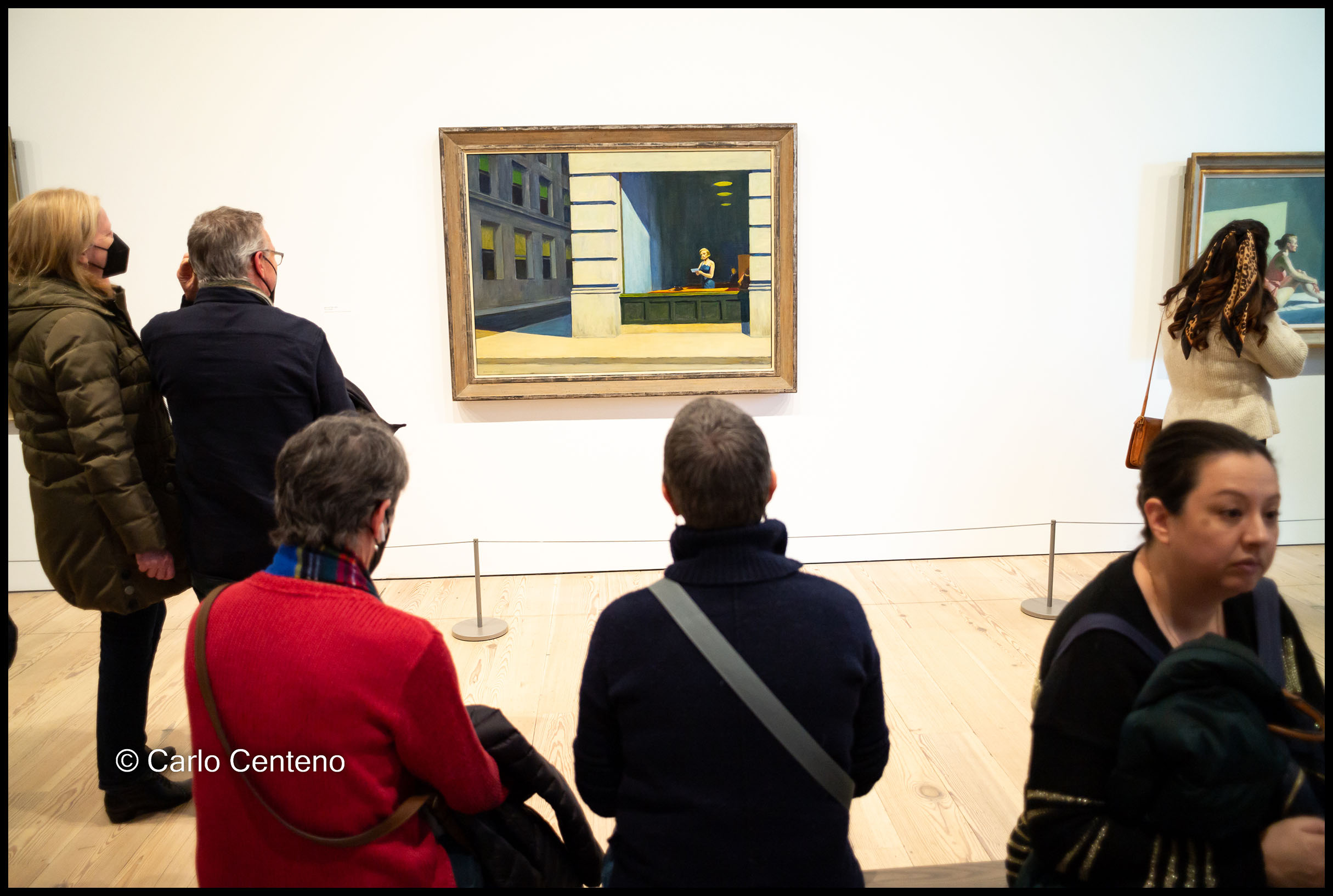
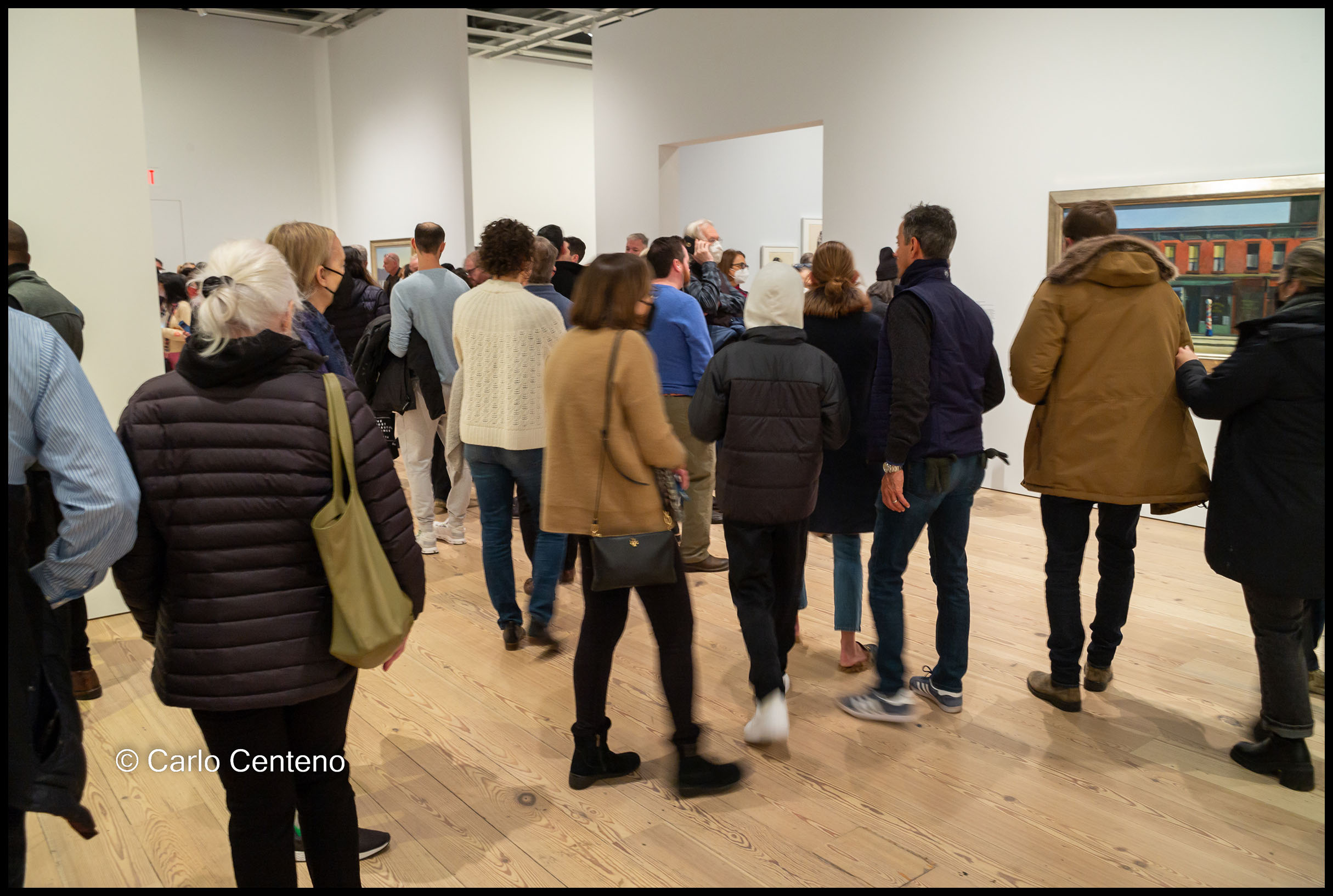
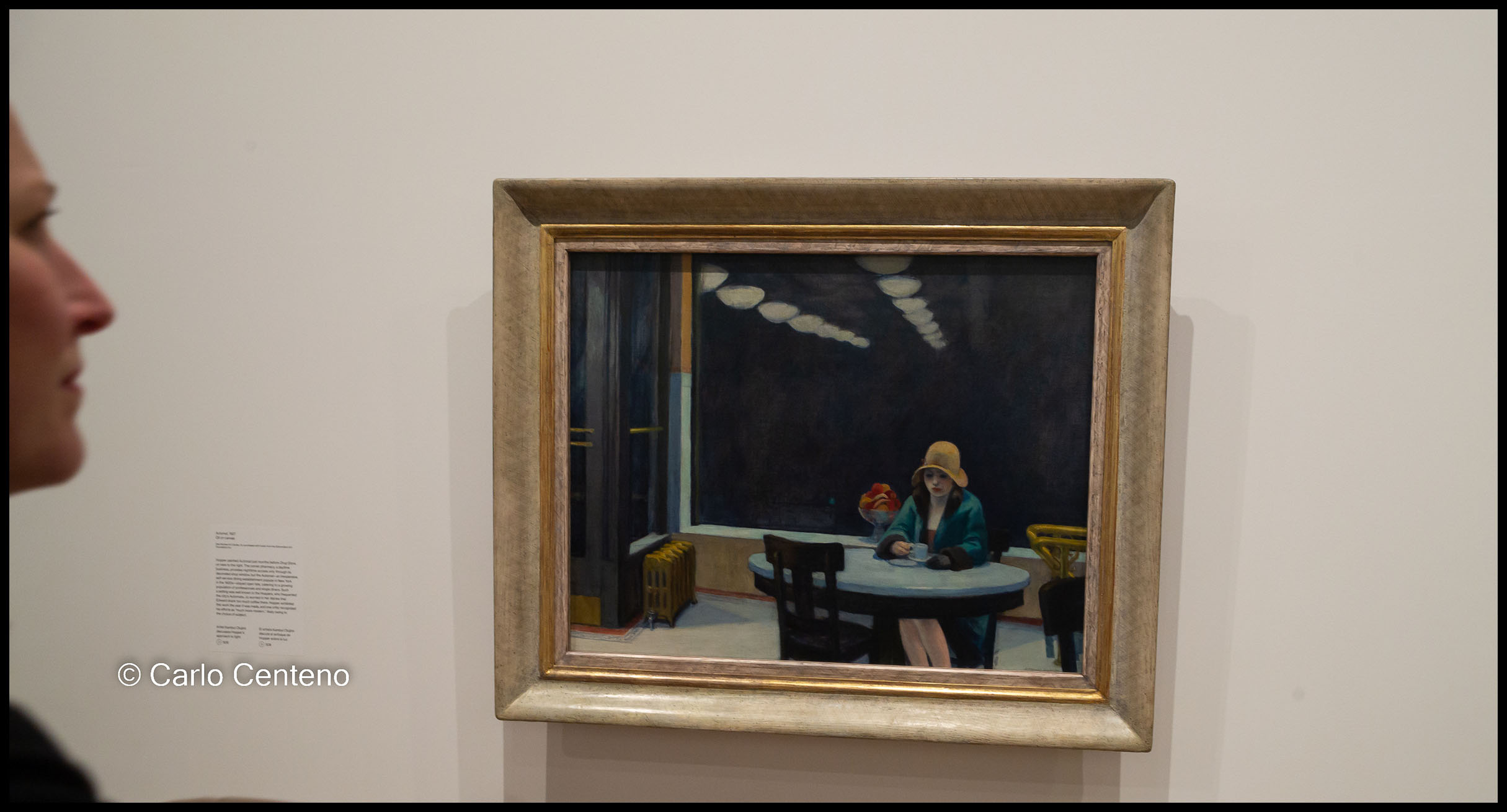
The Whitney Museum of American Art in NYC has a special exhibition of Edward Hopper, the American iconic painter of urban realism. The exhibit [October 19, 2022 to March 5, 2023] has a strong focus on the art he created during his years in New York City, a place he and his wife, Josephine, called home for six decades. Art in its many forms gains additional attention when a curated exhibit or installation comes to life. This exhibit in particular, has an energy, an aura all its own, and rightfully so. It is the amalgam of place, time period, subjects & themes, and of course the painter, that creates this palpable energy. Attending such an exhibit was made more interesting by the number of visitors who specifically chose Edward Hopper’s New York. For me the cacophony of conversations [often in a foreign language], the reactions and expressions all added to the experience. Out from the windy, brutal cold and into a cocoon of life, the next couple of hours felt theatrical.



































 Carlo Centeno