Give credit where credit is due. The fine-art book, Somnabulist created by photographer Ralph Gibson in 1970, was where I first saw the word, somnabulist. His fascination with discovery and the realm of things abstract made for different if not interesting images. My take was when reality is cojoined with one’s dreams, it’s a means to an end: achieving success, finding calm, reducing stress, maintaining good health, nurturing family and friends and so forth. The following images are dreamscapes of sorts. They’re a far cry from Mr. Gibson’s B&W prints. As in life—that is in being “awake”—light, shadow, colors and the dark all have a role in both dreams and living. One is allegorical, the other experiential. Or even both?
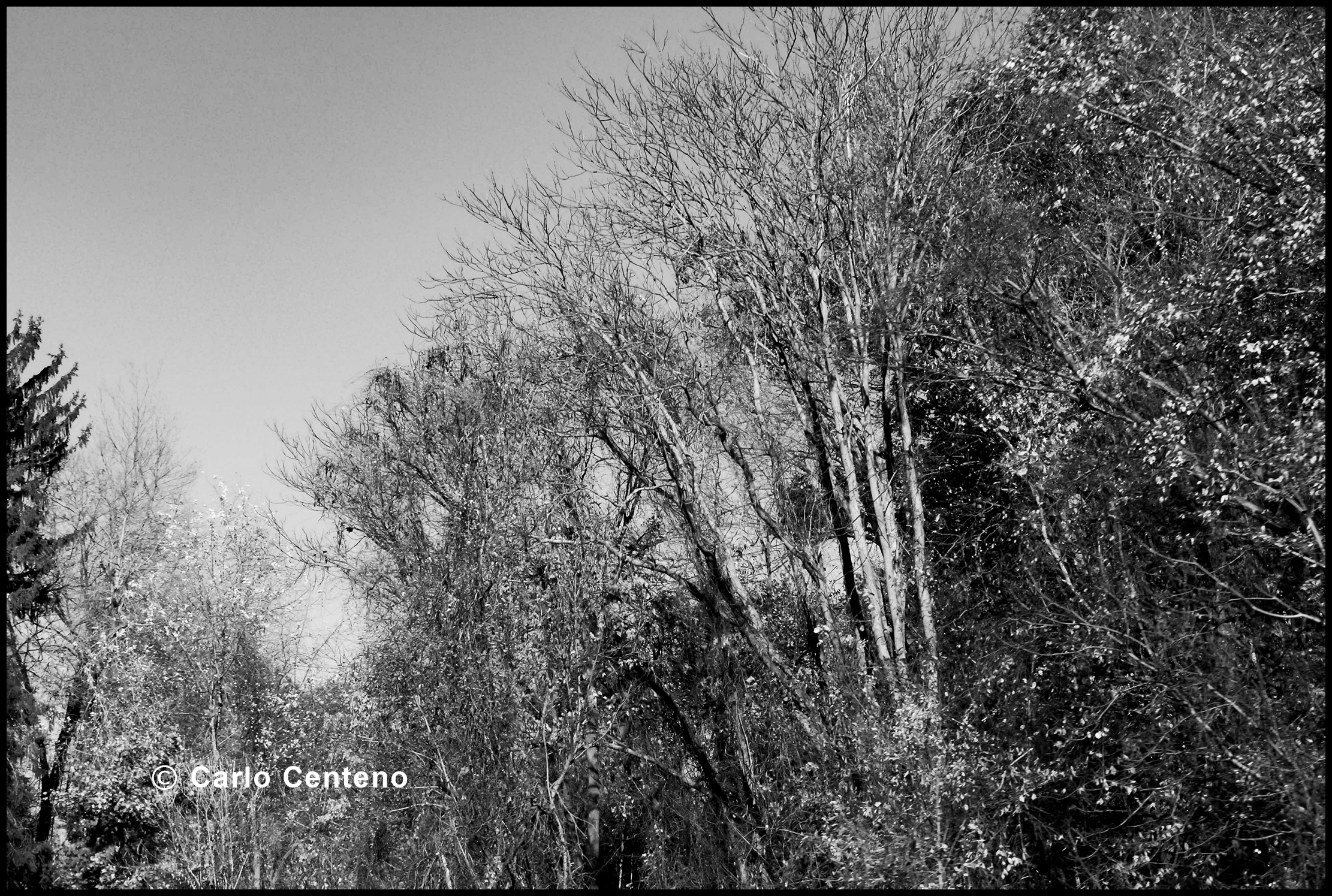
The changing seasons has a way of rebooting my perspectives on life’s moving parts. It’s also an opportunity for me to find, even create, connections that could lead me to alternate choices about work and family, problems and challenges, as well as my own professional and personal goals. The fall suggests possibilities with a palette of colors where each one suggests a sentiment to whatever I’m feeling or thinking. More often than not, I make one, perhaps 2 attachments of color to an idea, an attitude, or even a condition that’s been entrenched in a mood of some sort which I cannot correlate or let go of. However, when the maples, birch, oaks and other trees reveal their once covered limbs, I see a “wireframe” ready for a season of open air, of white space and a period of quiet and rest. Once again, it’s a reboot of sorts given the visual clues of autumn.
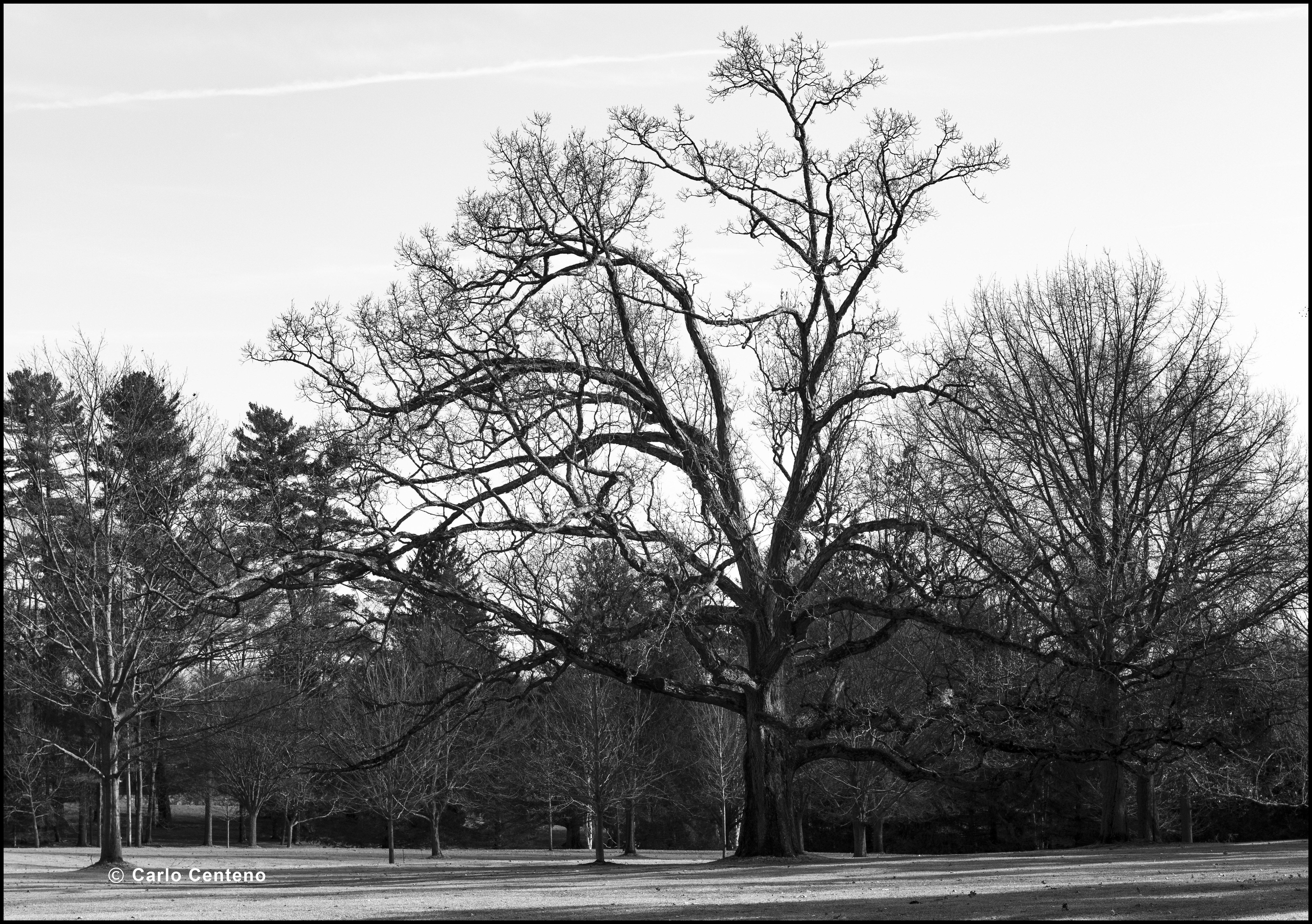
From a distance these bare trees take on an innocuous albeit familiar appearance. You realize that these wireframes silhouetted against a grey forest floor or an overcast sky has the potential to stimulate your way of visualizing beyond the obvious and the rote. Late fall and bare trees are midwives to modified or new byways to thinking and feeling.
Such possibilities make bare trees special. True, this past autumn the colors were fantastic, vibrant, even spectacular, more so than years past as far as I can tell. That festival of color has its own cathartic energy. Compared to just a few weeks ago, these now dormant, quiet trees are a type of dopamine, a suitable follow-on for my busy “monkey-mind.” There’s a levity and sense of calm with bare trees that’s akin to starting anew and refreshed. The trees are steadfast and immobile and yet there’s a fluid-like form that draws your attention. And because you can see between the branches, openings of various shapes and dimensions become apparent. That white space becomes a cocoon for imagination and emotion, of things improbable that feel possible if only in theoretical form. What can you jettison from your mind into those spaces now in front of you? There are things each of us can let go of.
Many of the trees are straight up and down although the oaks and maples have a grace manifested by the sweeping reach of higher branches. The silhouette of these branches appear as arms with a soft curve, its ends like fingers gently reaching for the sky.
Late fall and bare trees are markers of change. In its most obvious forms, it means shorter days, cooler temperatures, fantastic light and shadow and a time change. The latter is likely the least wanted change this time of year. And yet the markers also remind us that still more change is to come. Some welcome winter [like me] and others can’t wait for spring. In a personal way bare trees are anthropomorphic. They go through cycles of change just as we do with our life stages. And as in life, some of the bare trees will remain so in the months ahead. Just as some of us will, our own thoughts and feelings leaving our physical selves. Bare trees can mirror our own life qualities season to season. Or maybe it’s the other way around; after all, trees have long existed before we arrived.
The most dedicated, most creative, most influential.
It’s fair to say that the Berkshires has a depth of culture, arts, eateries, education, health care, outdoor activities, community outreach and more, that can be as strong as other like-minded communities. The diversity of such offerings is all-encompassing and that’s clearly reflected in this year’s Berkshire 25. This is Berkshire Magazine’s annual selection of 25 individuals who have made life here feel more special, complete and worthwhile. That may seem like an exaggeration, but that’s due to the contributions from folks like the Berkshire 25 that make the region “the most beautiful place to live.”
Examine the roster of recipients. Their talents, soft skills, areas of expertise and so forth are as varied and diverse as the individuals themselves.
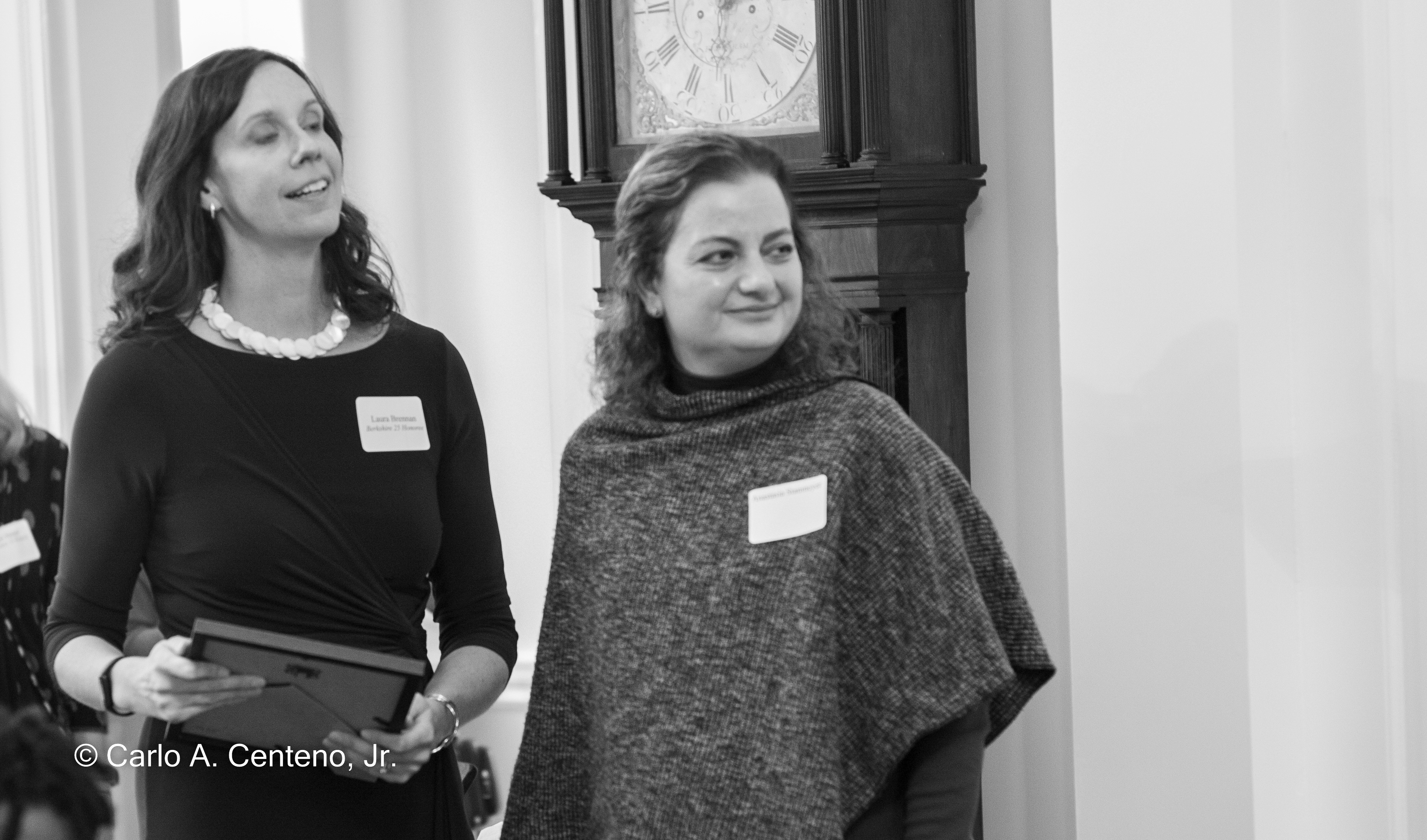
Honoree Ms. Laura Brennan [L] with editor-in-chief, Ms. Anastasia Stanmeyer
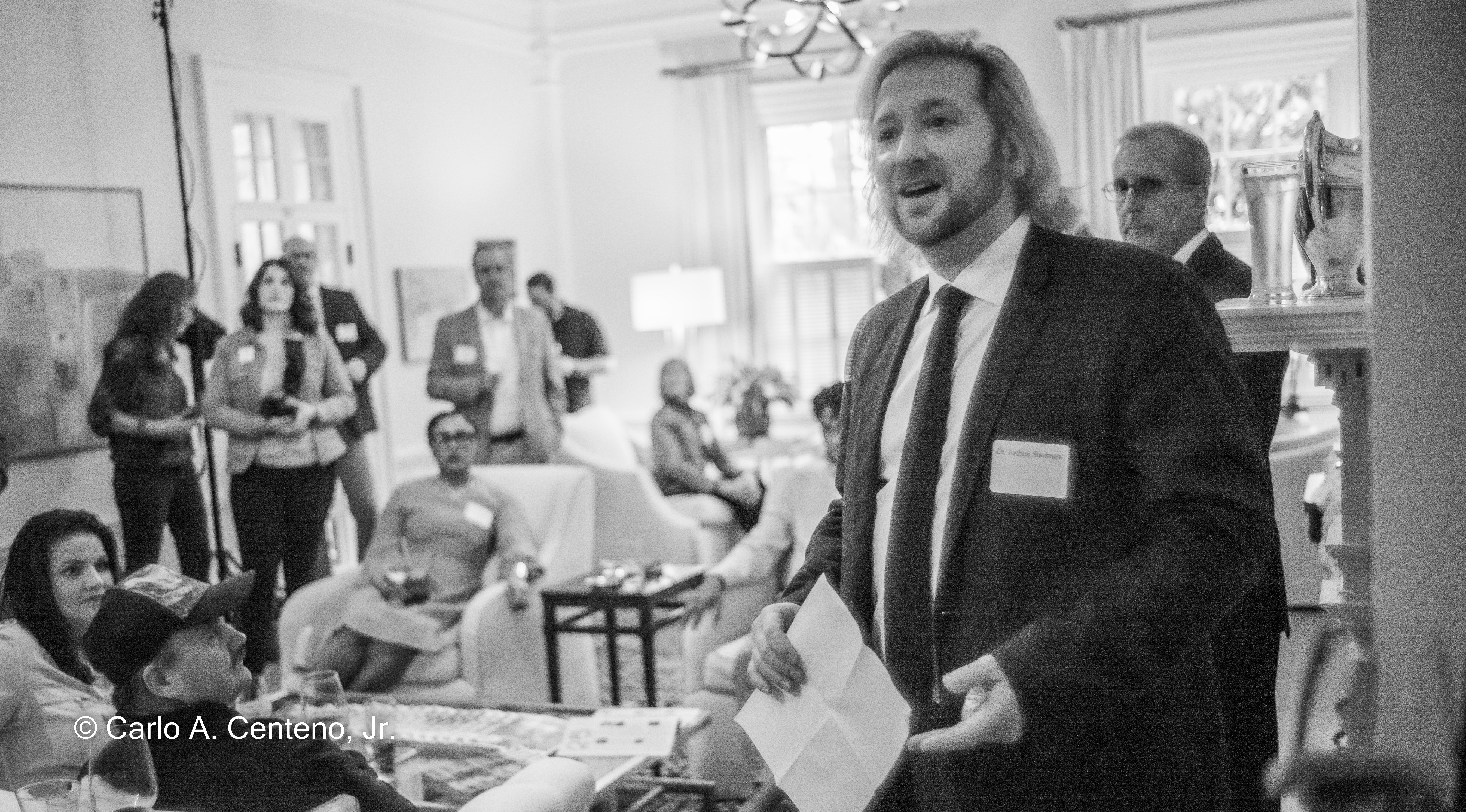
Ms. Maud Mandel, PhD, president of Williams College [below], graciously opened her home to host the event.
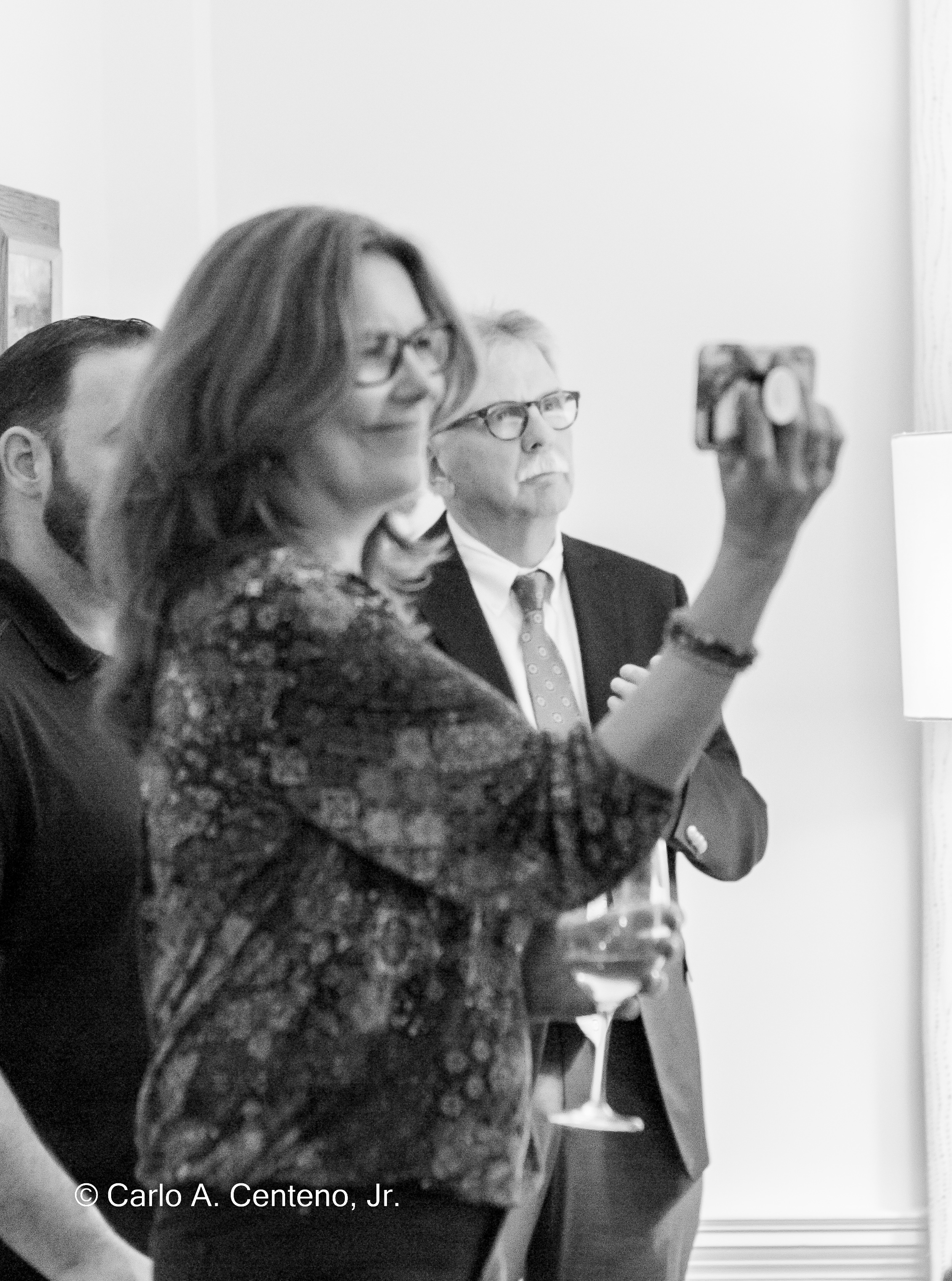
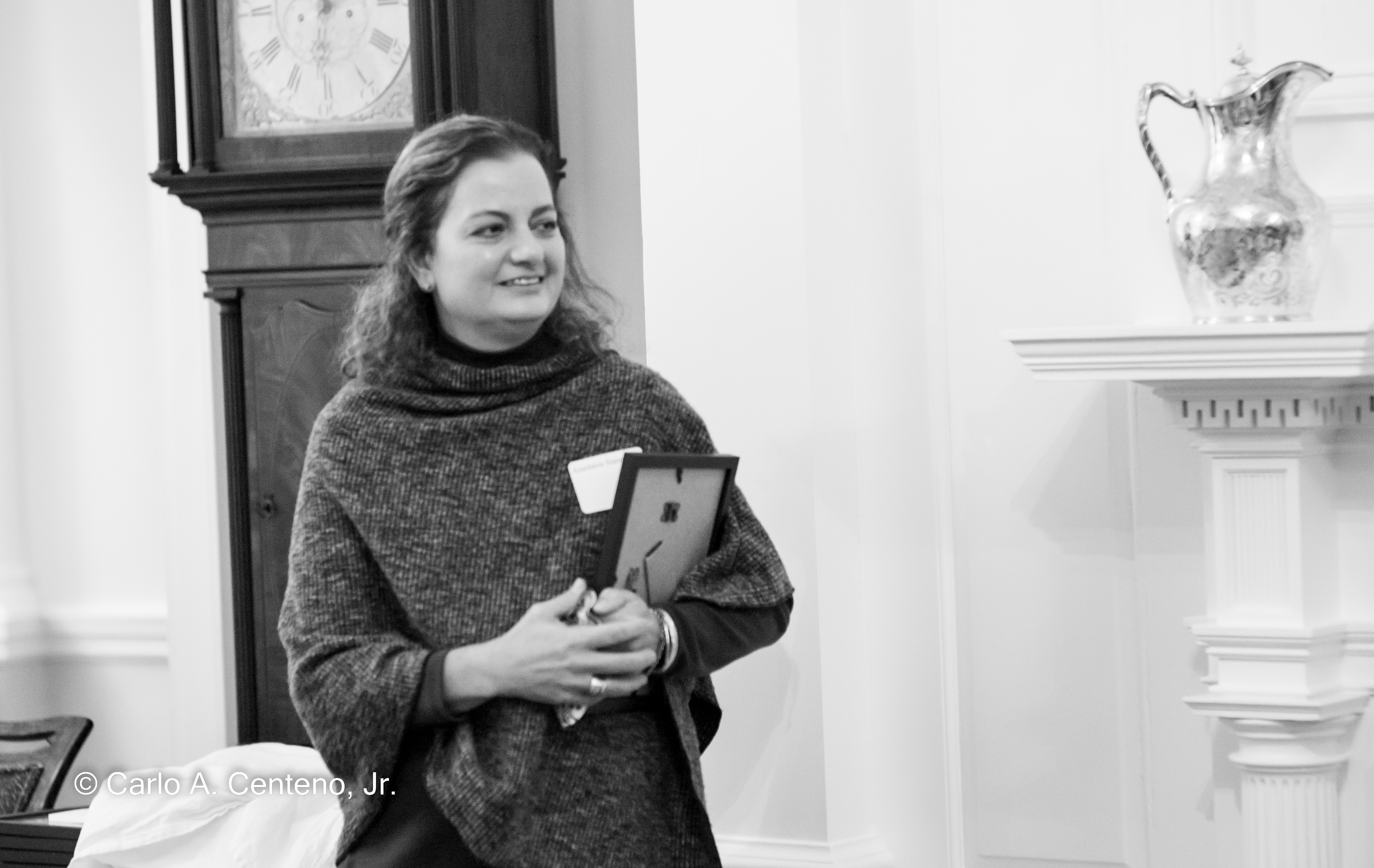
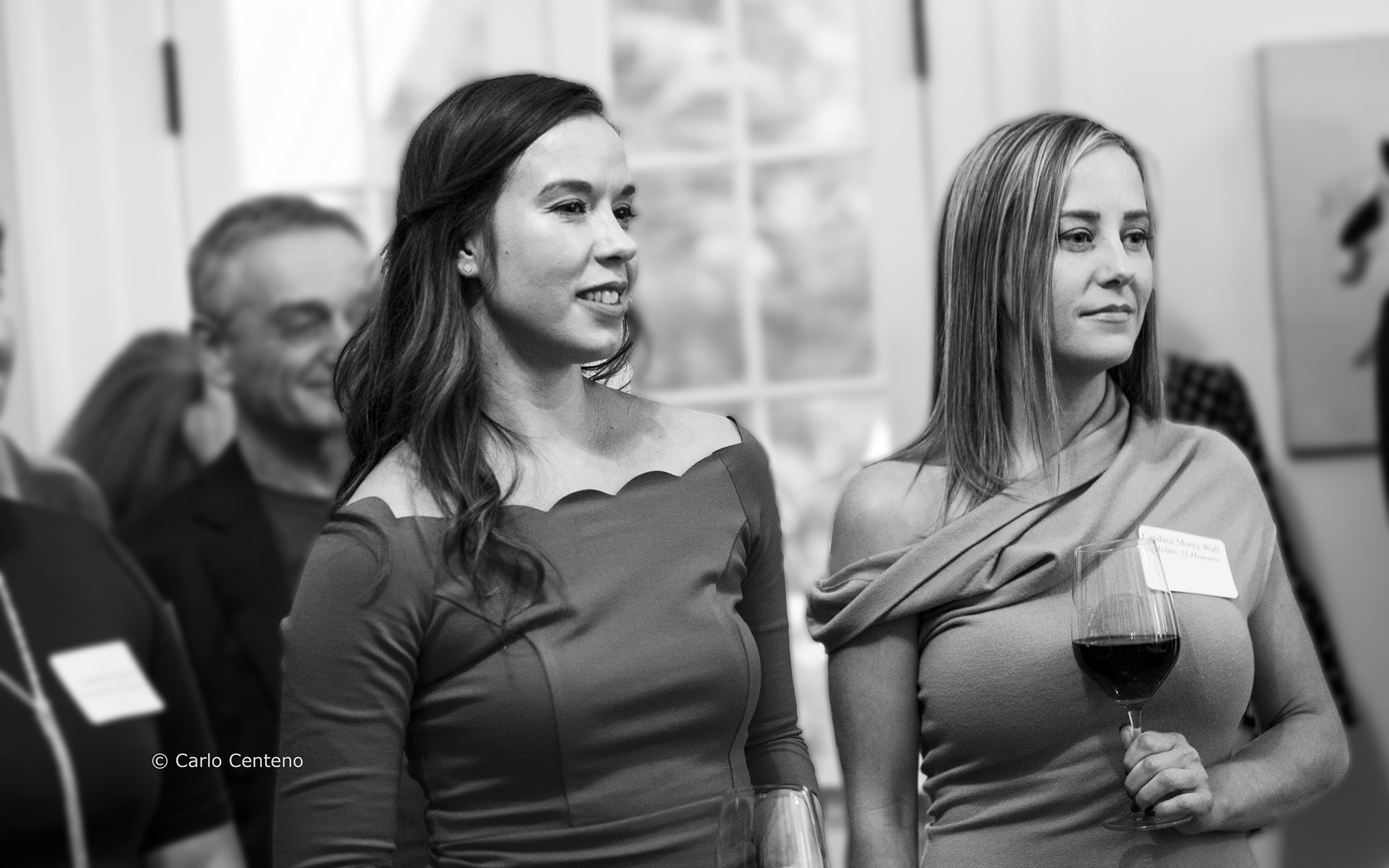
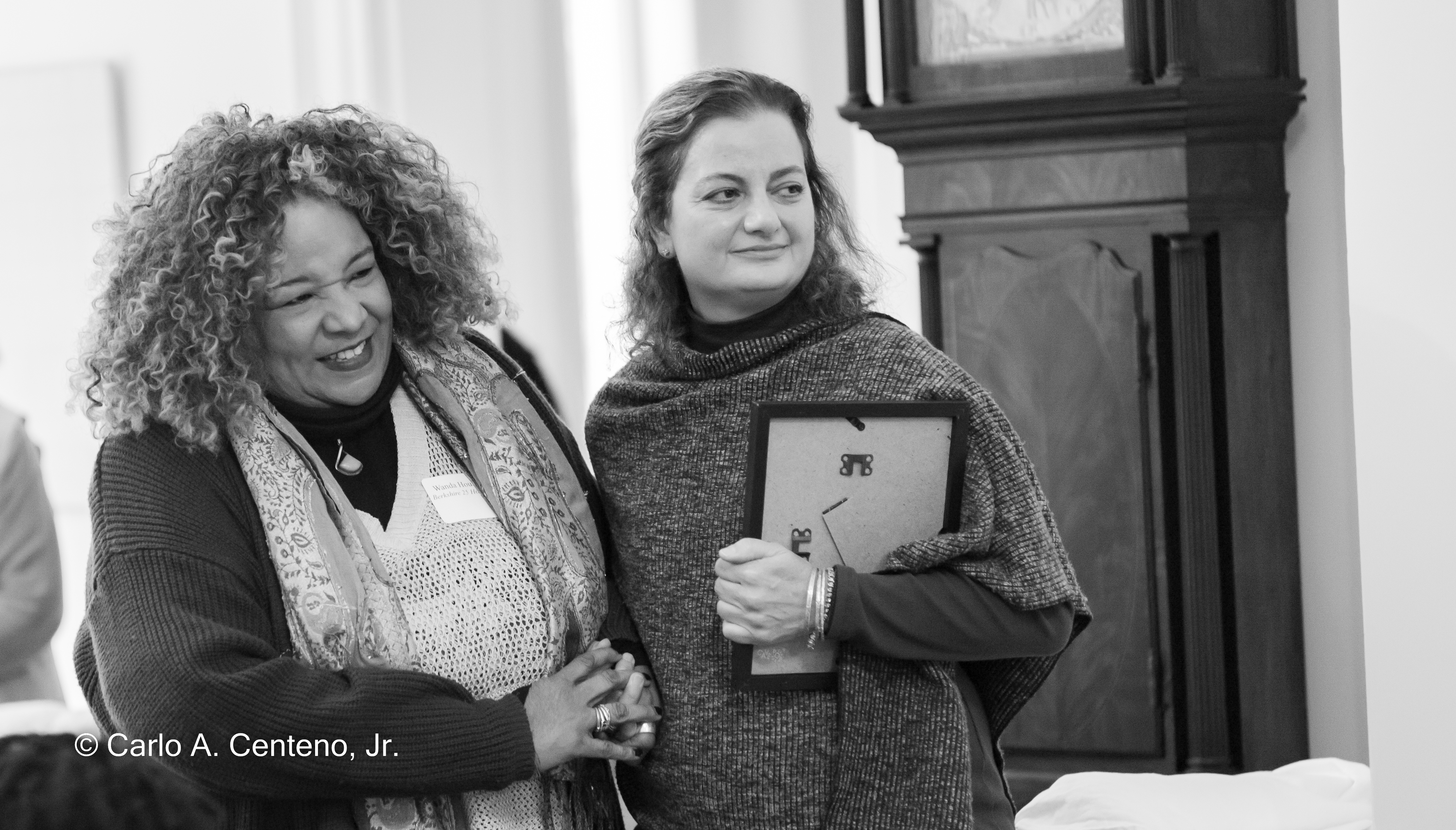
courtesy: Williams CollegeHonorees on the couch: L-R, Mr. Jack Brown; Marge & Ed BrideHonoree Ms. Mia Shephard [L]Honoree Ms. Candace Morey Wall [r][L] Honoree Ms. Wand HoustonRep. Smitty Pignatelli, an engaging & entertaining MC.Honoree Ms. Rachael Plaine
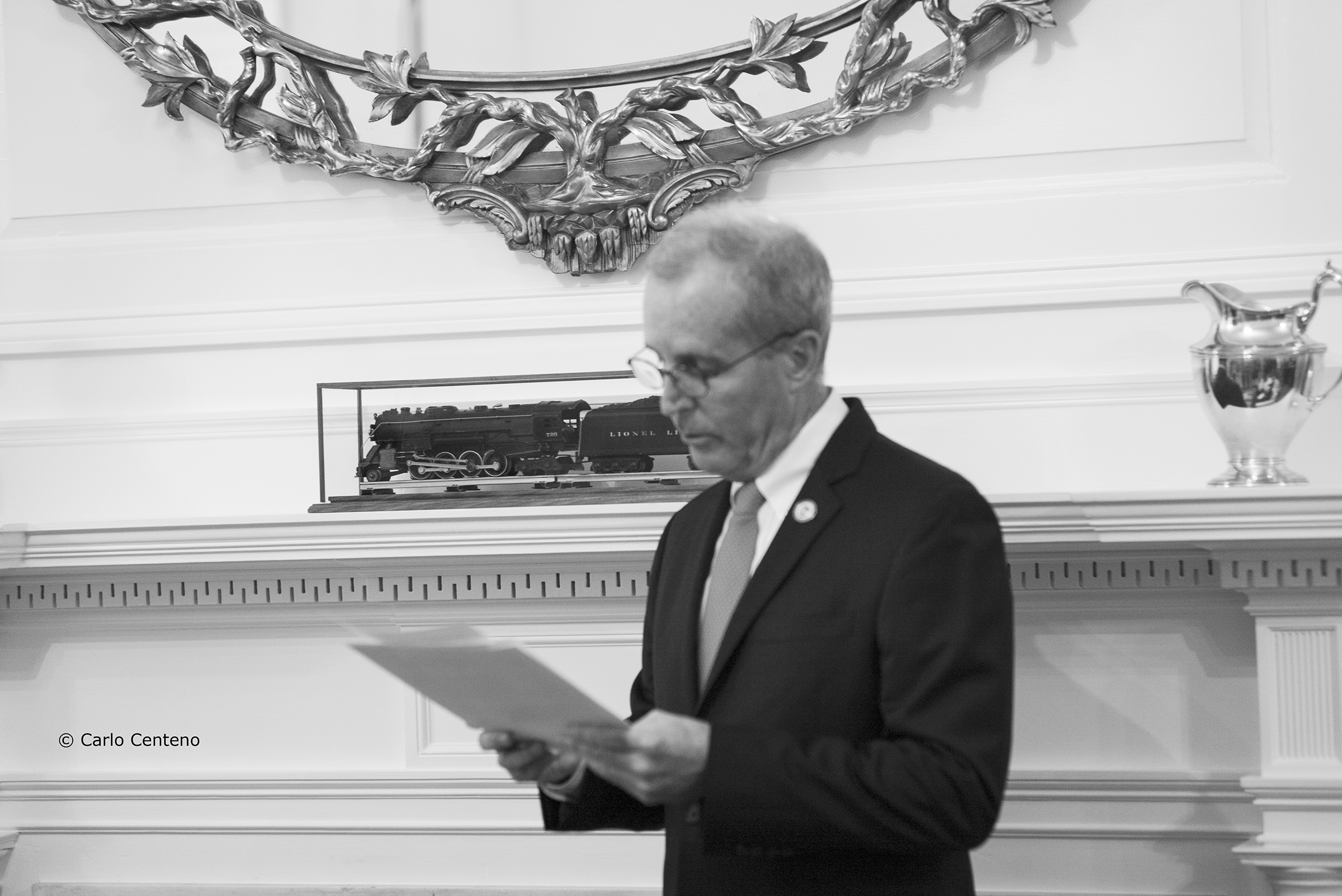
The cynics among us may feel that such occasions are self-serving, each designed to stroke egos or expand bragging rights. You can think that, but I believe no one that evening felt that notion at all. At the conclusion of the event, Rep. Pignatelli mentioned that these individuals represent the best of what people can do, that such care and outreach nurtures the magnetic vitality of the Berkshires. Lightheartedly, he added that politicians like to think that they drive a lot of what’s positive. However, he quickly reinforced that a lot of what makes a community/region attractive and inviting has to do with the very people who understand what it means to be selfless.
What a strange, odyssey we are on. Are we in the initial stages of a pre-dystopian epoch? That’s an unnerving take on our tomorrows. I am as guilty as the next for failing to live in the moment. Thus you could–and perhaps should–interrupt my ruminating about the past while also worrying about the future.
No one can undo history and the future is not promised to any of us. So, it’s the here and now, the very present moment where we consciously or rotely go through our lives with purpose or with routine motions of day-to-day life.
Fly fishing for many, for me, is part of life. Time spent on the water delivers familiar notions of preparation, anticipation and the knowledge that the day is, quite frankly, a gift. With all that’s going on in the world, I would say most readers looking at this are doing much better than many others. And having the gift, a day such as being able to go fly fishing is one that should not be taken for granted. Getting to a favorite spot–whether somewhat new or all-too-familiar–jump starts my awareness for the here, for the right now. For those few important things that are usurped by the ephemeral things that entangle us, yes, we all need to live in the present moment!
So, on this Independence Day weekend, take a chance. Make the most of whatever day you have. Any one is a gift. Even when things go awry [I fell into the water moments after releasing this trout!], or not according to plan [I could’ve left the water empty handed but for the wet clothes that chilled me to the bone!] , don’t dwell on what might’ve-could’ve-should’ve happened. That’s done.
I think you’d be much better off acknowledging how far you’ve come.
And for the aspiring fly-fisher, that beautiful brown was caught and released on an an unusually cool late June, mid-morning [10:00 am?]. The details: o I used a #16 pheasant’s tail nymph I tied with a barbless Partridge hook [unweighted]; o tied to a 5X fluoro tippet about 2-to 2 1/2 -feet in length; o attached to a tippet ring on a 6-foot furled dacron [?] leader; o to a 4WF fly line; o spooled onto a Grey’s cassette reel with #20-backing o all collaborating with a Winston Biiix 9-foot 4WT fly rod
I am an odd person out. I’m certain I shared this in a previous post, namely that winter, the shorter days, the snow and the cold don’t bother me the way I know it really bothers a lot of other people. However, when freezing rain, relentless winds from the north and sleet show up, doubts perk up about my relationship with winter. My enjoyment of this season is greatly enhanced by a few other small details: no biting insects, most nasty smells are frozen in place, it’s easier to layer up to stay warm versus shedding attire to get cool. Fireplaces are invaluable for the way they comfort our weary minds and bodies. And then there’s the light. By late October, shorter days manifest that longing for days that end at 9:30 in the evening, versus 4:15 in the afternoon. But for me on any given day, winter light can be nothing short of amazing [well, to my eyes anyway].
For those enamored with snow, it doesn’t matter how you enjoy it, just as long as you get out to enjoy it. Snowshoes. Boards. Skis [alpine and cross country]. Insulated tie-up boots [aka “moon boots”]. Building snow forts, a snowman/woman/sculpture. Tubes, sleds, and toboggans. They all generate smiles at one time or another.
Even the most ardent worshipper of other seasons can understand why winter can be a favorite. There’s a sense of solitude, even in the busiest of urban environments. Indeed most folks are rushing—as it’s often said—to get out of the cold, to get inside to warm up. And yet there are those who look to get out to be invigorated by the cold air. When it’s cold, it’s only natural that you move to stay warm: motion generates heat and heat consumes calories and the consumption of calories means soothing cups of hot coffee, hot chocolate, hot soup, hot tea among other choices awaiting your selection. Admittedly, it is bliss having such hot consumables balance out the chill at the end of a day. The yin-yang of warm & cold becomes apparent.
A cold drink can bookend a hot summer day just as a hot toddy can on a cold winter day. This radiating cocktail of hot water, lemon, honey and a bit of whiskey is also hydrating, indeed soothing since it’s a drink perfect for sipping.
Cold light, winter light, is especially sharp when it reaches across a landscape as far as you can see. The shadows are longer and details stand out like bas-relief etched into tree trunks. On ski trails, the tendrils left by carving skis add to that dimension of depth, or even height, as if lengths of dark thread randomly lie atop the snow.
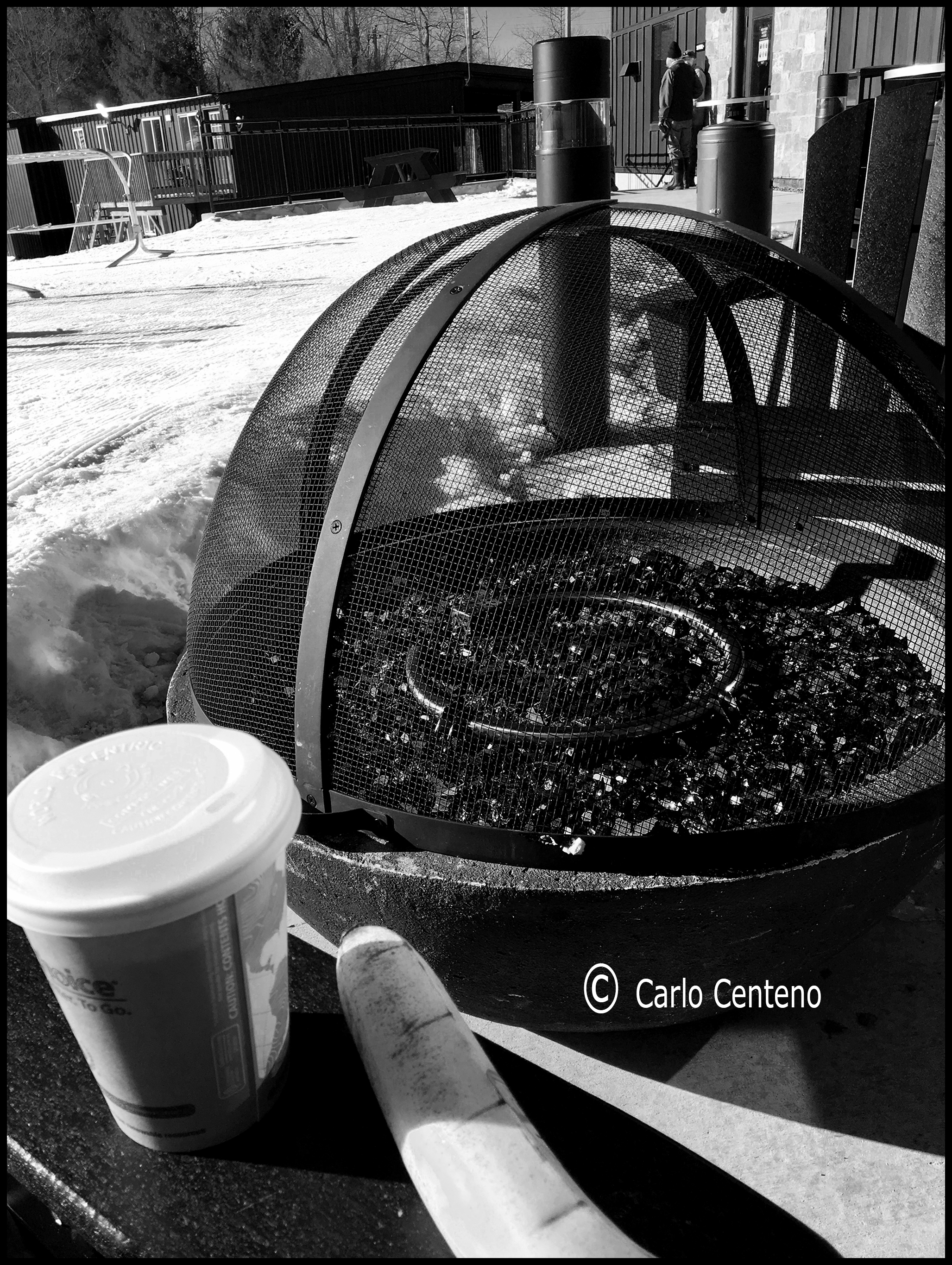
Winter’s light—especially later in the day—can feel cathartic and the sun’s warmth enhances this catharsis. A cup of hot chocolate, a banana, a comfy, large Maine Adirondack chair and a pit fire are all good company.
A benefit of changing seasons is precisely that: change. Here in New England, the 4 seasons do more than adjust amounts of daylight, colors of sunrise and sunset, the appearance/disappearance of flora, the transitions of both diurnal and nocturnal activities, owing in part to the amount of daylight/nightlight available for particular pursuits from tennis to star gazing. The change in seasons are as much physical as they are metaphysical, philosophical and experiential. The seasons are what you make them to be.
25th Floor–Just after a rainstorm
Often my cleansing breaths are interpreted as sighs of disappointment, or relief, a reaction to someone or something that gives purchase to both feelings. Since the arrival of Covid, I’ve made a conscious effort to use more cleansing breaths. I’m reminding myself there are far worse things to be disappointed with, and using some calming behaviors can make a difference.
25th Floor–North
The benefits of regularly using cleansing breaths has a way of taking edges off of things [vis a vis, the stress produced by today’s level of uncertainty]. Deep breaths and exhales do have physical and mental benefits. Gentle stretches [another cleansing breath, please] coupled with a proactive mindset that focuses on out with the bad, and in with the good has a lasting effect on our overall demeanor.
Ground Floor–Cape Cod
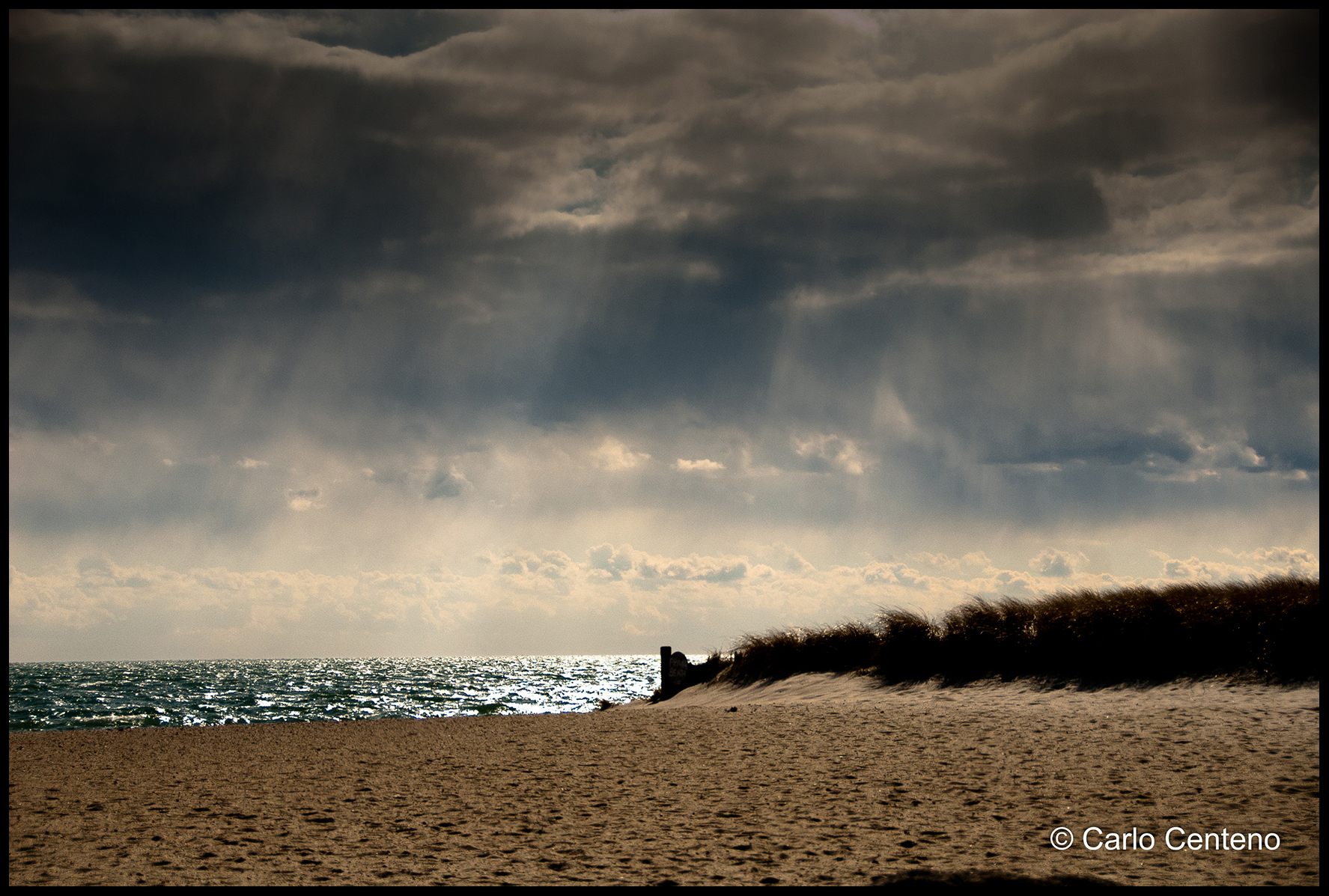
By extension, whenever I see a changing sky—especially one with clouds or on windy days—I attribute these shifts of clouds and air to cleansing breaths. However these are done by Mother Nature on behalf of our troubled planet. Earth is having a hard time rejuvenating much of what humankind has taken for granted, even wasted or destroyed.
Colorado
Whenever I’m out and about, feeling that need for solitude and distraction-free thinking, I load up on cleansing breaths and allow myself the chance to attain “groundedness” a term, I believe, coined by Stephen Hayes, Ph.D., professor of psychology at the University of Nevada. To avoid any confusion, I’ll merely say that attaining a semblance of groundedness means accepting and facing the here and now [however uncomfortable], and to make a commitment or shift of working on things that can mentally/emotionally help you.
Boulder, CO at sunset
The simplest example I can think of is this feeling or acceptance that one’s worklife/career is a dead end and wouldn’t be a dead end if the company your worked for was “better.” There are a myriad of other reasons to choose from. Instead of losing yourself and using up energy on this discontent, nurture a way to make yourself stand out. This isn’t about writing the great American novel or closing on a stupendous sale; it’s more in the line of working from your known strengths to optimize your “here-and-now” going forward.
Nantucket Island, Massachusetts
Now, before you do anything else, take that cleansing breath….
For a few days toward the end of October, there was some fuss about turning back our clocks one hour. The running complaint focused on days getting shorter even though we “gain” an hour of time. Early darkness just made things, well, darker, physically and qualitatively; it gets darker outside and for some, darker within one’s psyche.
I suppose I’m the odd person out; I shouldn’t “suppose” as I am an odd person with such things. Sunsets that announce evenings arriving earlier is not a big deal for me. Like some form of line dancing flitting across the horizon, once again daylight and night trade places, and time marches on without losing a single beat.
Whether it’s 4:30 in the afternoon or 8:30 at night, I don’t tire of sunsets. Some are dramatic in their intensity and expanse, others are less so, their palate of warm colors as soothing and inviting as those found in an impressionist painting.
There’s nothing standard about this light that quickly dissolves into shadows of dark blue and greys. The one constant I’ve felt through the years has been the brevity of the light which morphs an hour before and up to sunset. The times are few when I don’t have a camera by my side, yet on those days when I don’t, I sometimes forget about today’s most ubiquitous of cameras, the ones found in today’s smartphones. And they are amazing tools for photography, videography and more.
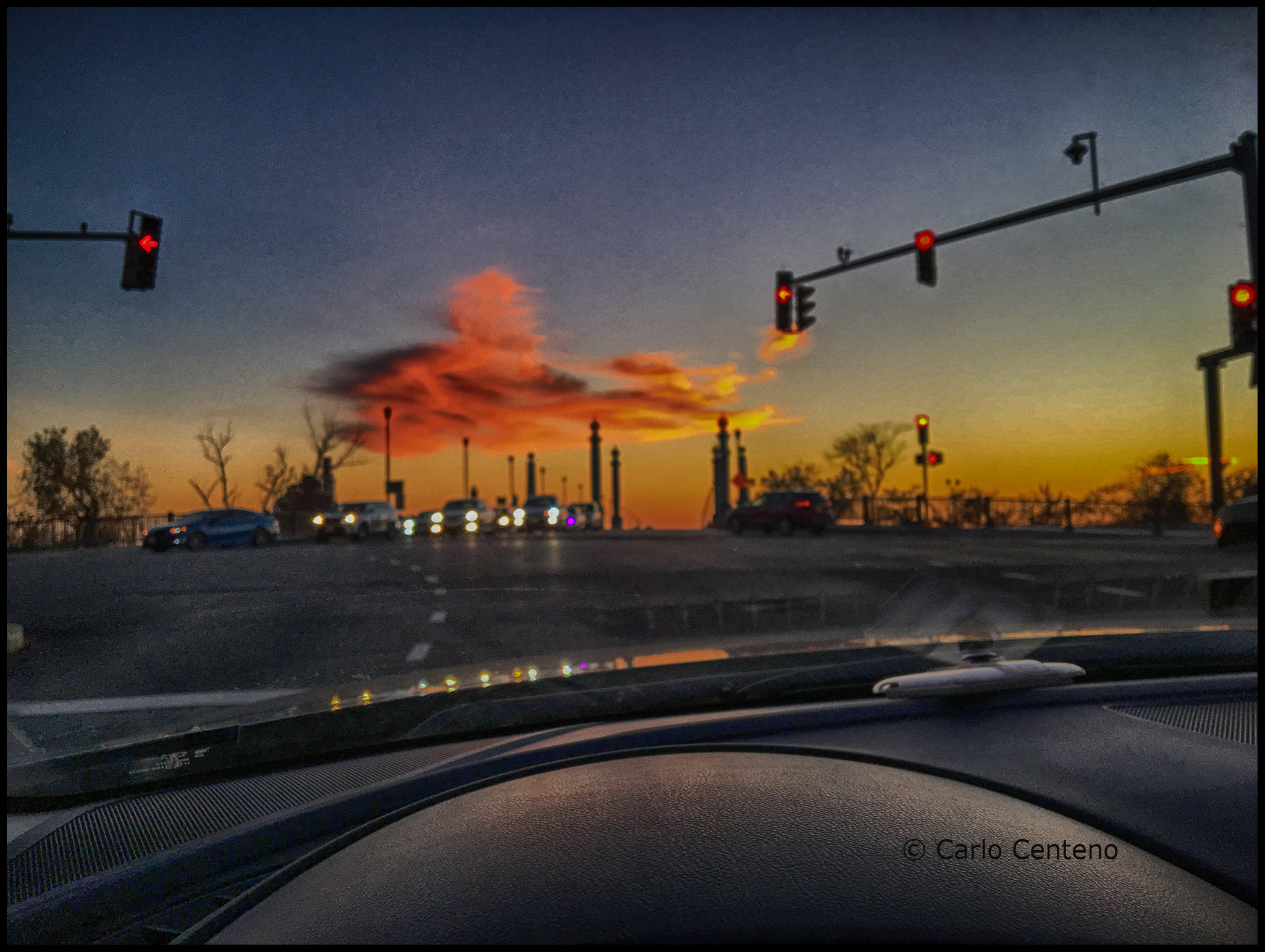
The photograph shown here was taken within that half-hour before sunset. The way the light and shadows shifted was a process all too short, perhaps as short as the traffic light that changed to green shortly after I took one photo. Figures. The one time I hoped for a few more seconds stopped at a red light just wasn’t there.
For the various times we use our phones to take a photo, we hope that one shot becomes the money shot. We want just one, a really good one, which connects with everything and anything that courses through our thinking and feeling. I relish the feeling of making this particular shot. The stoplight, the headlights, the reflections on the car hood, the gradations of orange and yellow, blue and grey are a surprising though welcome confluence of order.
A confluence of order. We can use some of that in the here and now regardless of whatever time or GMT standards we’re in.
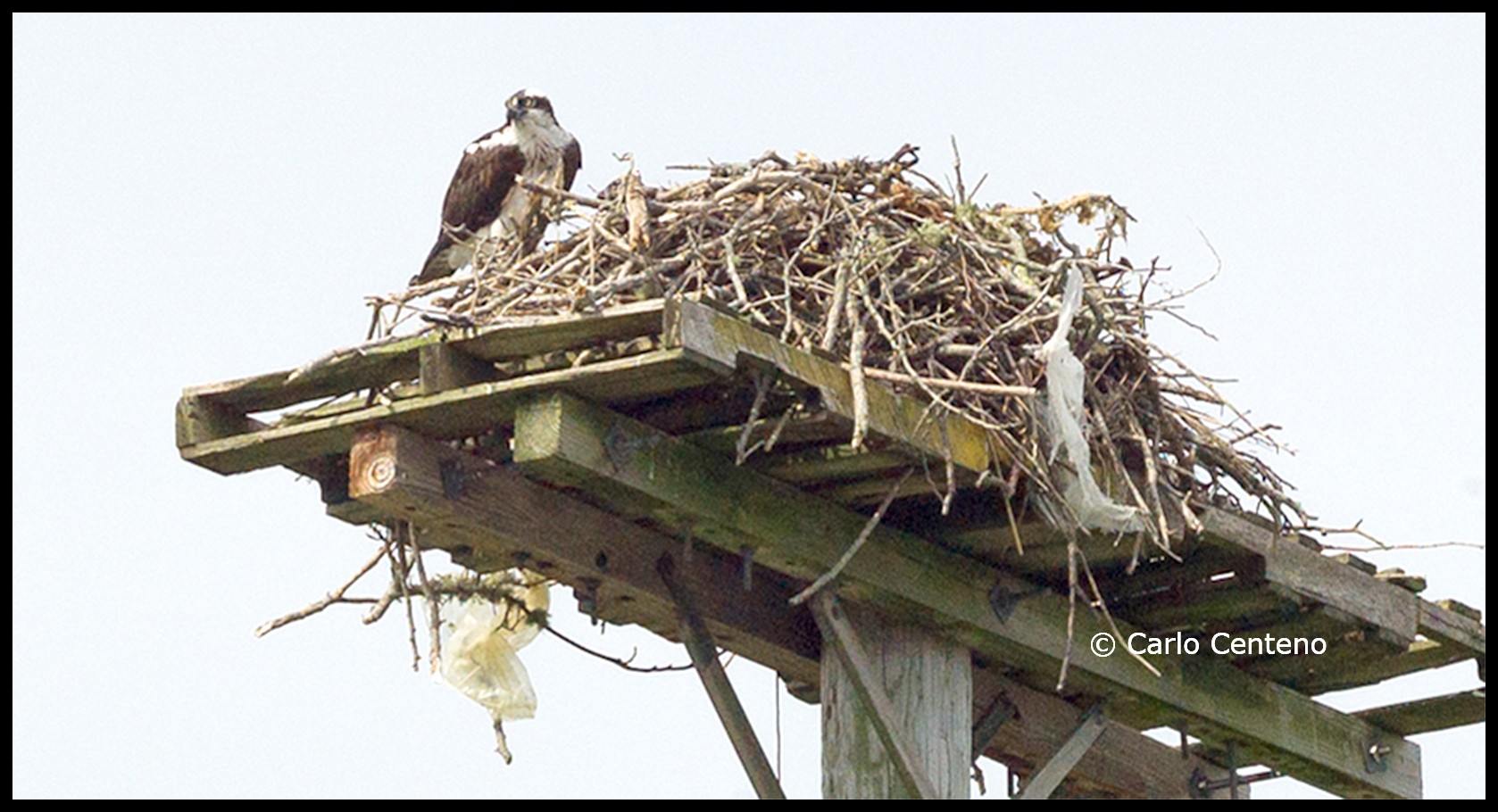
A static photograph of an Osprey doesn’t say much about the grace and power of this winged predator. Like many of her cousins, these sharp-eyed birds of prey manifest the attributes to which we ascribe to: a sense of purpose, focus, determination, endurance, patience, where at most we, strive to procure or refine 2 or 3 from that list.
I’m not a birdwatcher nor bird photographer. These serendipitous images were taken during a walk along a beach. In spite of an overcast, somewhat foggy-ish, misty day, you could discern the silhouette as well as the contrast in its feathers. Notice the plumage in a brownish-black to a grayish white, the sharply hooked beak, the yellow of the eyes, the elasticity of its neck—or at least a hint of that feature.
Look at the nest and you may notice other details. Two plastic bags entangled with the nest, one on the right of the photo, the other dangling from an edge closest to the Osprey. I’m certain there are other man-made pieces entwined or even trapped within the pile of twigs they call home.
We can get hung up on details on just about anything. Like a trompe l’oeil, what we see varies from one person to the next. In my case, I noticed those bags right after seeing the Osprey. You may have seen it the opposite way and yet others may have taken a bit longer to realize the incongruous detail. These days, we’re bombarded with too many things which ad weight onto our anxieties. We can—and should—work to step back from such things and realize that in spite of the current discord, there are other details worth looking at, even searching for.
Autumn is my favorite season for a variety of reasons: the cooler, drier air is both invigorating and refreshing, the quality of light is remarkable, at times appearing clearer on even overcast days. Even time feels slower with a more gentle cadence though by mid-November, I wonder how it went by so quickly. Certainly it goes without saying that the foliage change can be magical, even personally restorative.
Many years ago, I attended a photojournalism workshop at what was then called The Maine Photographic Workshops in Camden, now known as Maine Media Workshop located in Rockport, a mere stone’s throw from Camden. Located half-way up the coast of Maine, the town of Camden sits next to Penobscot Bay. I haven’t been back since, so I hope it hasn’t lost its New England charm. It was quaint, quiet and photogenic to be sure. You can glean techniques and technical knowledge from more places today than back then [now a surfeit of info sits on the web]. Convenience is nice, but for me, being engaged with a like-minded person is all the more rewarding. Levels of inspiration come to me when I visit an exhibition, a gallery or listen to or converse with a speaker whose work clearly validates that person’s passion for his/her choices.
I was fortunate to have heard and seen in person Jay Maisel, Ernst Haas and Dick Durrance. Titans of their craft, I learned more than just technique, but a whole lot more about this passion to see things in a new way, to transcend the connections of light, color, subject, interpretation and meaning. My brain needed to do some real lifting and learning, and was thus able to do so when my soul became the catalyst to assist with that lifting and learning.
I like to think of seasonal transitions as a form of recalibration. It’s more than a reset, because to reset anything is effectively returning to its default state. Recalibration is a nuance in alignment. If I’m not sure of what I’m feeling when I look through a viewfinder, I move a few or more steps to one side or another, as well as toward or away from my subject. Recalibrating.
There are similarities in writing, but they’re a bigger challenge for me to describe. I suppose the very title of this post lends itself to recalibrating: adjust the “color” of your words such as tone, passive versus active voice, even a tweak in aliteration to keep your narrative—and your thinking—interesting.
Autumn just doesn’t land here in the northeast; when it does arrive it’s akin to that sense of belonging, of knowing that your journey—in spite of personal hills and valleys—continues with the expected and as well as the unexpected. I like all the seasons, but fall is the one which captures the zeitgeist of the rest of the calendar. It’s a short period of time, that in its most fundamental form, feels like the comfort food that’s been sorely missing for more than half the year.
If there’s one thing obvious about marketing and advertising is that they attempt to shape your perception, to one of acceptance or revulsion. In this politically charged environment, I’d say most political advertising encompasses the latter. But we’re not going there today.
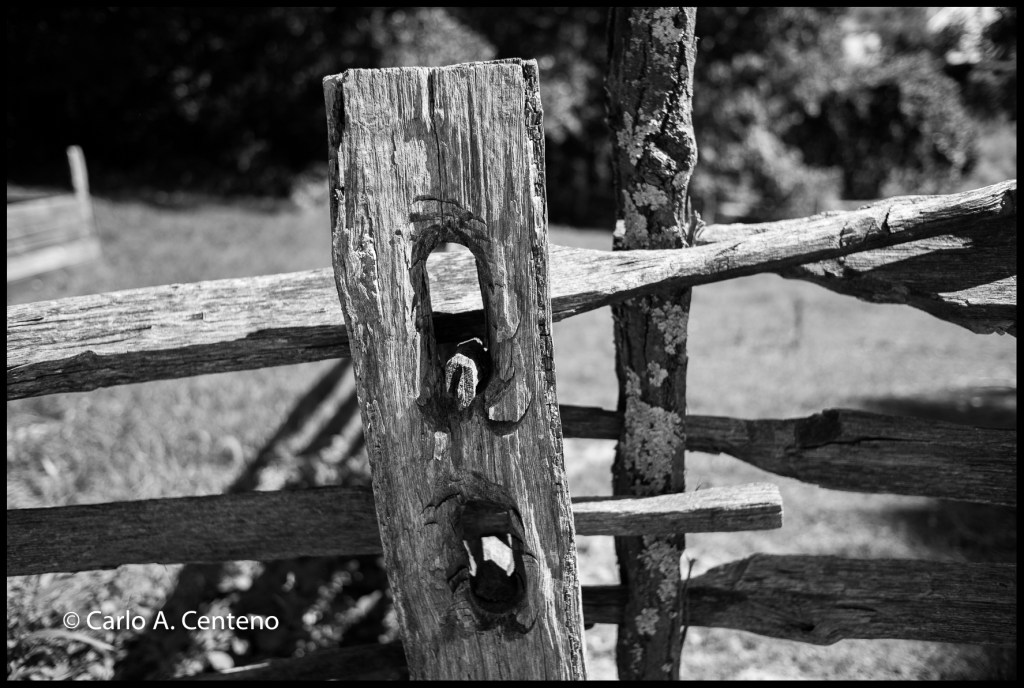
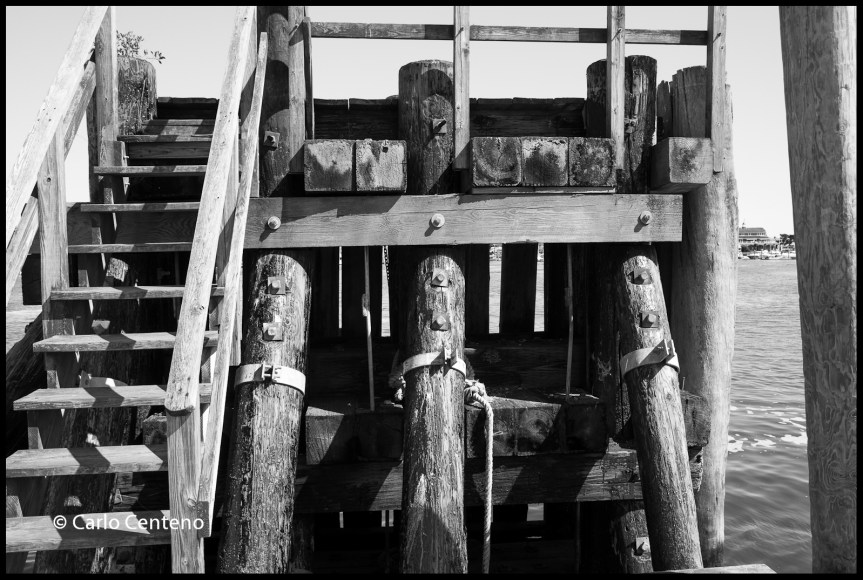
Here we have 2 wooden structures, one historical [circa 1800s], the other modern. Now, one may think that the modern structure offers more features: pressure treated wood, steel anchor collars, robust carriage bolts, nuts and washers [possibly even zinc treated to resist corrosion] etc. Well, it does have more features; it has to given its function. But it doesn’t mean it’s better than the simpler one, rather, the modern structure is built specifically for conditions and utility common to coastal areas. Both types share similar benefits albeit differentiated by design, materials and construction. Well, the purpose of the modern structure may be the same as our historical one, that is, to prevent something from entering or leaving a specified area, perhaps protecting one side more so than the other.
Before you clobber me with the apples-to-orange inequality of this comparison, the point I’m making is that consumers often equate features as benefits. If you’re anything but a design engineer, you may think that the metal anchors or collars wrapped around the angled stanchions may be unnecessary. However, if you live, perhaps even work along this shoreline, you would know that the tides and storm surges exert an astounding amount of pressure against barriers. The added strength of the collars is beneficial to the overall strength of the structure.
“This unit can do more than its closest competitor.”
courtesy: Whirlpool
On a recent trip to one of the box stores, I couldn’t help but overhear a salesperson singing the amazing features of a particular dual-door refrigerator. NOTE: the courtesy photo is for illustration and is not the product being referenced herein. “…..with the app on your computer, that model can sense when it’s time to restock, bread or cheeses or certain vegetables or frozen dinners…” The technology, the artificial intelligence that’s coming to market, can be impressive. But will it work on my iPhone 6S or will I need an Android system? You know, my home fridge has an ice-maker, though it doesn’t automatically dispense into my glass when held below a special port. Mine? Open the freezer door and grab ice from the container, a container purchased separately, BUT, looks like it came with my fridge. Typically I empty two ice trays into that container, refill the trays with water and return to the freezer. In less than 10 minutes, you’ll have ice that’s just as good as what the cyborg-fridge can automatically deliver to your glass.
My hand is the delivery and presentation vehicle. And it works. No downloads, no firmware, no software….basically, I’m somewhere with basic technology versus, being nowhere or confused with this hi-tech stuff. Now, if I was that customer learning about the smart appliance in question, perhaps the dialogue would go something like this:
Salesperson: It’s an amazing piece of technology. It can monitor your food and beverage consumption, conveniently at your fingertips. You use an app on your smartphone.It’s a big plus for busy families. Me: That’s impressive, but it’s a feature that I don’t need or really want. Salesperson:You can even check it from just about anywhere in your house. That’s real convenience. Me: Actually, I find it more convenient doing it my way. Salesperson: And how’s that? Me: I walk into the kitchen, open the door and make note of what’s still there and what needs to be added onto the grocery list. Salesperson:How is that more convenient? Me: Well, it’s not just convenience for me, but a benefit. Salesperson:Oh….? Me: It’s called walking. For me that’s a benefit. I already do too much sitting at work. Salesperson: That’s a valid point, but not really helpful. I mean we’re talking about making your life simpler, by doing less chores, to get more time to do things you’d rather do.. Me: I’d rather get up and move. Besides, I get a chance to scope what’s not in there, but whether the shelves need cleaning or if an expiration date goes back to the Nixon administration. Salesperson:Wait, who’s Nixon…?Anyway, think of it as an evolution towards the future of appliances. You, the homeowner, can control all your appliances such as your TV, your A/V installations, the lights and the thermostats and so forth. Me: ….and without even breaking a sweat. Salesperson: Exactly. Me: Will people really adapt to this technology? I imagine someday my health insurance being able to buy data regarding my food preferences, and since I love ice cream, well, a dietician or cardiologist may take issue with that…who knows? Salesperson: Hey, well, hopefully that won’t be the case. I mean there’s a ton of places where information can be bought for marketing or research…that kinda stuff. Me: Of course….you know and I know that your actual mileage may vary…capisce? Salesperson: Ah, yeah, sure….have you seen the new washers and dryers that are out now?
We don’t inherit the earth from our ancestors. We borrow it from our children. Native American proverb.
It seems much of the news these days revolves around weather. Just 3 weeks ago, a powerful storm tore through the northeast delivering colossal amounts of rain and dangerous winds. Add to that the trees ripped apart or from out-of-the-ground and it’s easy to understand why some think the “end is near.”
As this is being written, yet another hurricane struck the southern shores of Texas, Louisiana and Florida. There are other storms gathering strength off the west coast of Africa. The most recent forecast now shows 4 tropical storms in the Atlantic, each with the potential of becoming a hurricane.
There’s plenty of talk about technology in particular advancements in biochemistry and mechanical engineering that are directed to saving our planet. There can never be a one-size-fits-most strategy created from a laboratory, but we cannot rule out the scientific efforts behind such pursuits. There’s good reason to continue work on such technologies. However, we can learn a thing or two about “natural climate solutions.”
There’s a disquieting quality that follows catastrophic events: the eerie calm. It grates against my appreciation for a calm that I’m expecting, a calm based on softness, a level of assurance, inner peace and that sense of all is right in the world, even for just this moment. We appear to be experiencing less of that these days.
I’m reminded of a Judao-Christian saying, “The sin is not in failing, but in not trying.” Framed another way, there’s a lot of us carrying this sin of not trying.






















 Carlo Centeno