It’s Latin for “unconquered” or “undefeated.” But its relevance to this post touches on perseverance, faith, courage, patience and an existential strength boldly expressed in a timeless–as well as timely–poem.
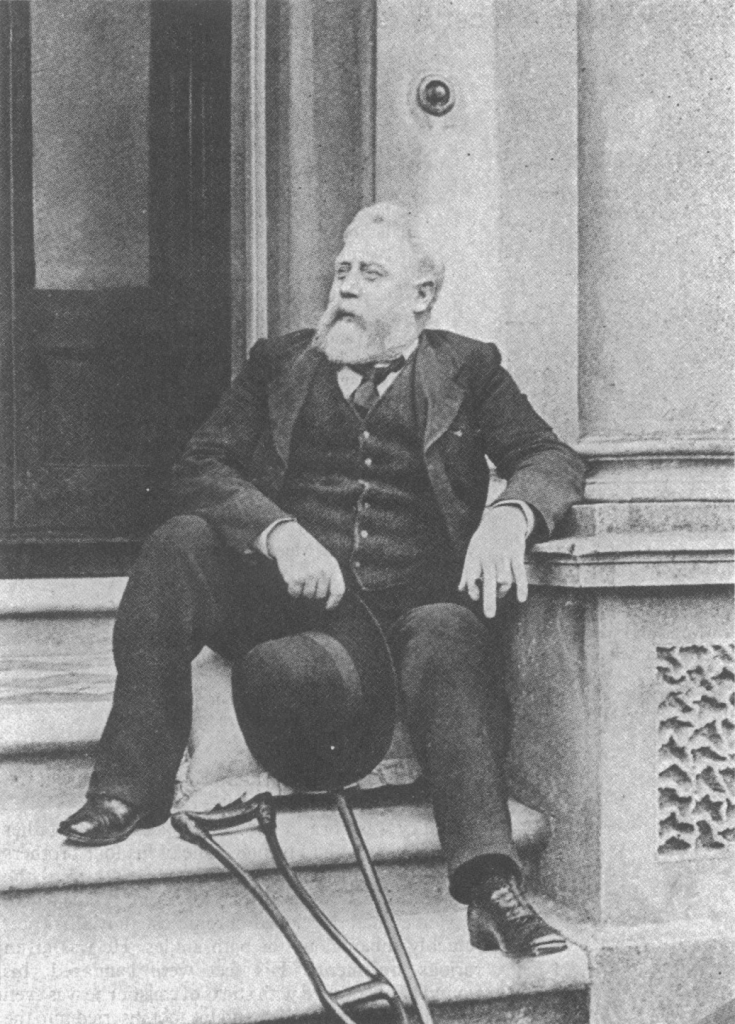
The renowned British poet, William Ernest Henley [1849-1903] survived TB, an experience that influenced his creation of “impressionistic poems.” His fight against tuberculosis of the bone cost him his left leg; were it not for the inventive talents of his surgeon, Joseph Lister, MD, the TB would’ve have taken his right leg as well. His ordeal kept him confined to an infirmary in Edinburgh for 20 months. Eighteen of his poems came from his recovery time at the infirmary.
This poem has been the inspiration for many dreaming of the nearly impossible, the unreachable. The intensity of its focus toward attaining some goal can be similar to managing something you prefer to avoid. In either case it’s very personal. The demons that keep you from accomplishing a goal are the same that make it hard for you to jettison something you want removed from your memory, to stop a habit, to avoid temptations that can put you in dire straits, physically and spiritually. Yet at one time or another, those who rigorously work and prepare for such mind-boggling pursuits or drastic disengagements are the likes of someone you know, perhaps even yourself. HopefulIy I can be counted as one of those who understands, even assimilate an experience, that could be associated with Invictus.
In spite of Mr. Henley’s 20-month struggle against the disease, he composed his most famous poem, Invictus, along with several books of poetry. His life was a poem of resilience and fortitude, of being a husband and father, of being a peer to other poets and writers, on also becoming a writer, lecturer as well as an overlord to a disability that could not separate him from his work or Life.
The highly-regarded critic, Leslie Stephen had some of Henley’s “infirmary” poems published in Cornhill Magazine, a monthly Victorian publication and literary journal. It was a respected monthly magazine with a large circulation. Its contributors included George Eliot, Henry James, William Thackeray, John Ruskin among other celebrated writers.
When Mr. Stephen travelled to Edinburgh to deliver a lecture, he made it a point to visit Mr. Henley. Another young writer, Robert Louis Stevenson, accompanied Mr. Stephen during that visit and it started a ten-year friendship between Mr. Henley and the young novelist from Scotland. After Stevenson’s publishing of Treasure Island, it was revealed that the inimitable pirate with the wooden leg, Long John Silver, was inspired by his friend, William Ernest Henley.
I’m certain there are number of individuals who have rightfully earned the right to call Invictus their own anthem, a Purple Heart that nurtures their spirit and to persevere.
“I am the master of my fate, the captain of my soul.”

