Modern Soliloquy

Back in the day, “soliloquy” was a word associated with theatre. There have been some powerful, mindful soliloquys, many found in English Literature. William Shakespeare and Robert Browning come to mind; the former for his plays, Browning for his poetry.

I find myself tuning into my inner self with soliloquys. These are not conversations to me, but a way to be honest with myself. In the process, I voice [in my head…..not out loud]. the deepest feelings which need to be brought out from the inner sanctum of my soul. These sentiments, perceptions and more, represent a personal unspoken anthology of emotions which remain exclusive to myself. Everyone should try their own form of soliloquy. You become the subject as well as the audience. The orator speaks to the most relevant, but private person in his/her life.

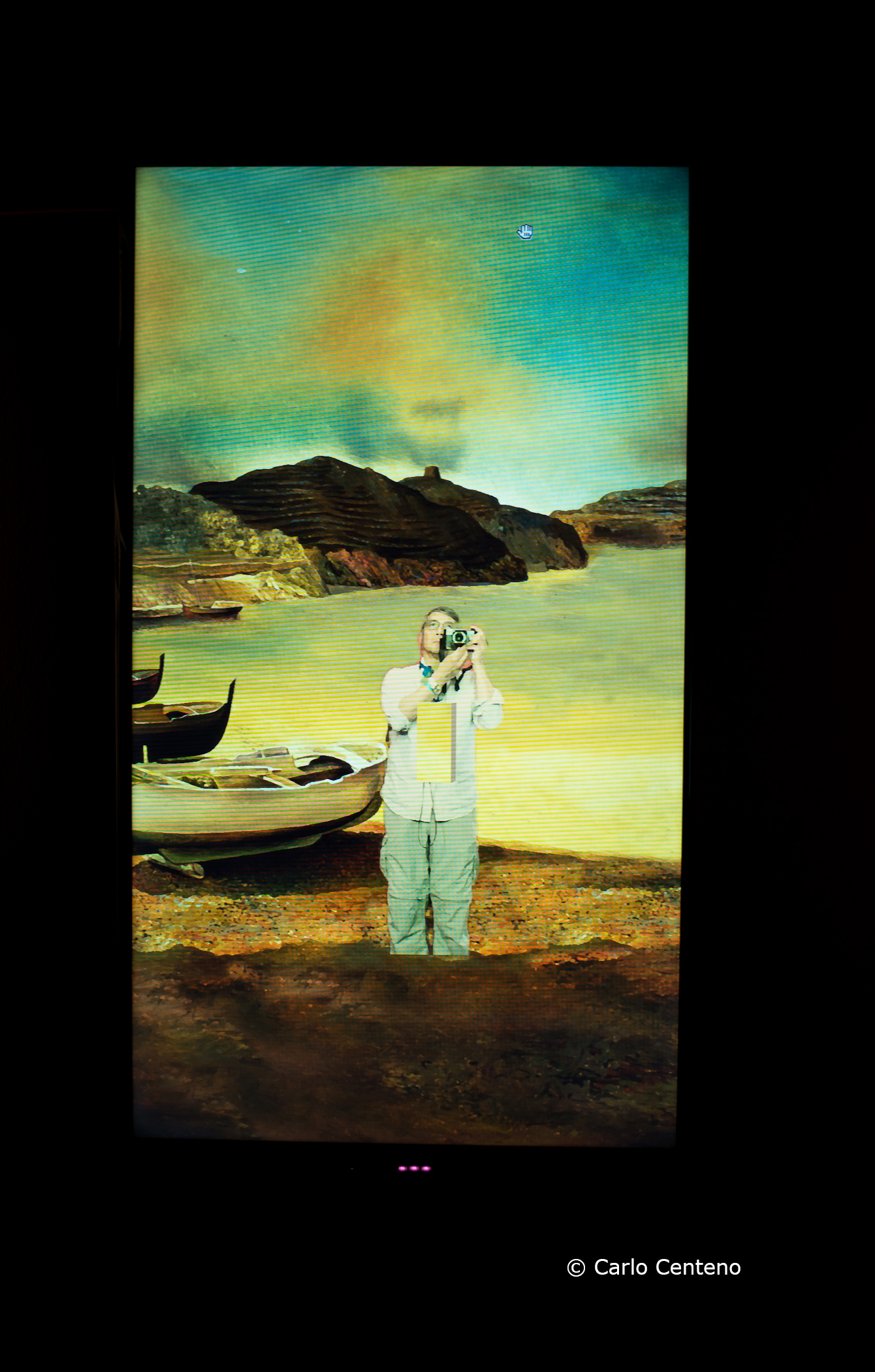
A recent trip to the Massachusetts Museum of Contemporary Art [MassMOCA] located in North Adams, MA is one location that gave an opportunity for reflection and acknowledgement. Come to think of it, most any museum makes a strong location for a soliloquy. Other alternatives abound: a beach, a park, a forest, a solitary space, even a space filled with people. The options are varied, but I do believe, like the soliloquys expressed in plays, poems and so forth, a place relatively quiet proves hospitable to many. A calm atmosphere is a priori given the breadth of one’s soliloquy.

Where ever you stand, and what ever you see, there lies a confluence of provocations that may come to the forefront of your thinking or introspection. The time stamp—from which these thoughts come from—depends on its significance: an early relationship gone awry; a current relationship that seems too good to be true; the unknown realm in choosing one option over another; the challenge of working through options in light of a chronic condition that will not stop let alone disappear. There’s a universe of profound feeling and thinking we can only imagine.

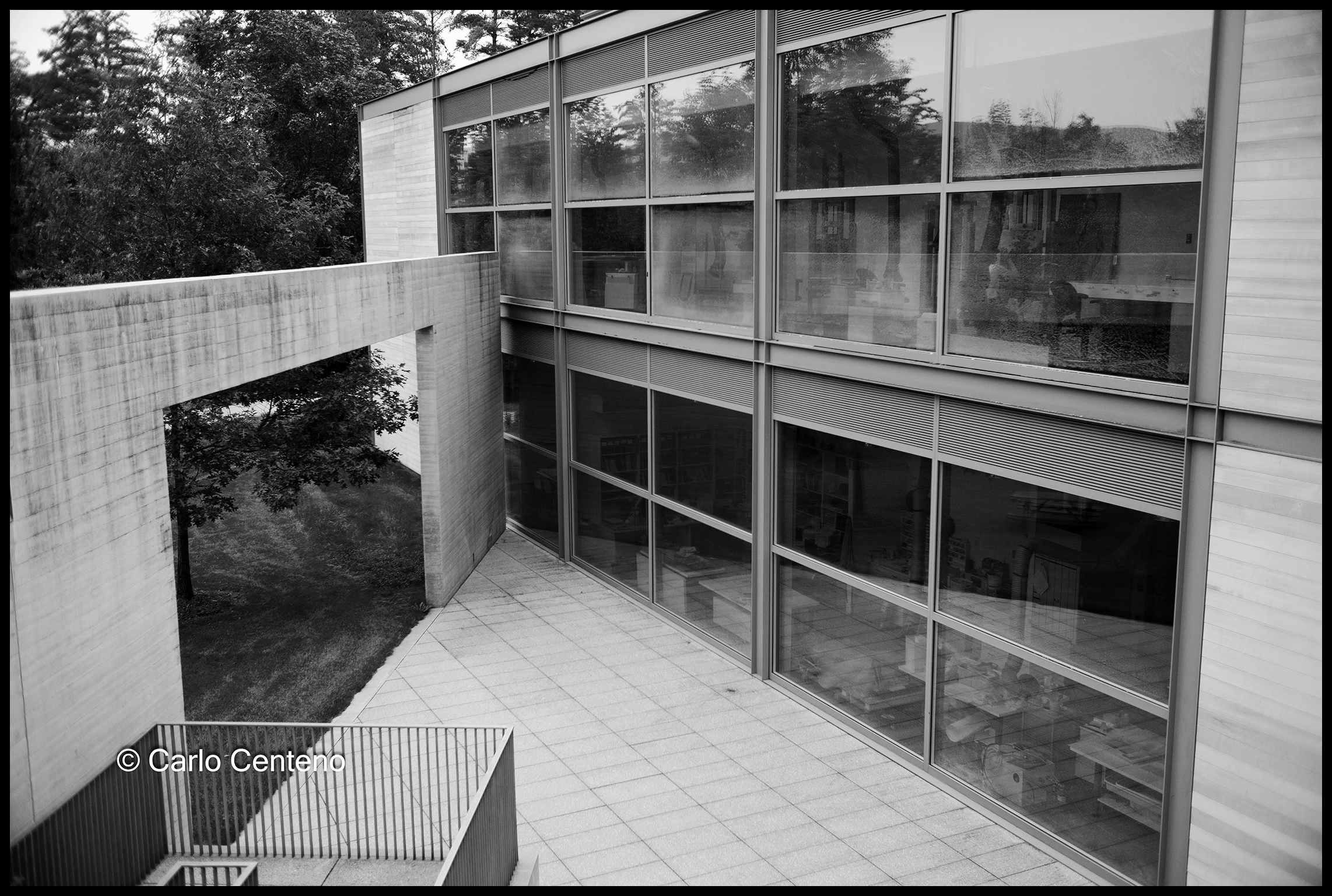
The above photos are from the MassMoCa’s permanent exhibit, The Boiler House. When you walk into the building, you’re visually overwhelmed with the scale and the number of boilers, pipes, connectors and vents that course over the entire space. If there ever was a place that made me feel Lilliputian, this is at the top of my list.
The Boiler House is the facility that provided heat to all the space before it became MassMoCa. There are several floors, though I believe only the first 2 are open for visitors.
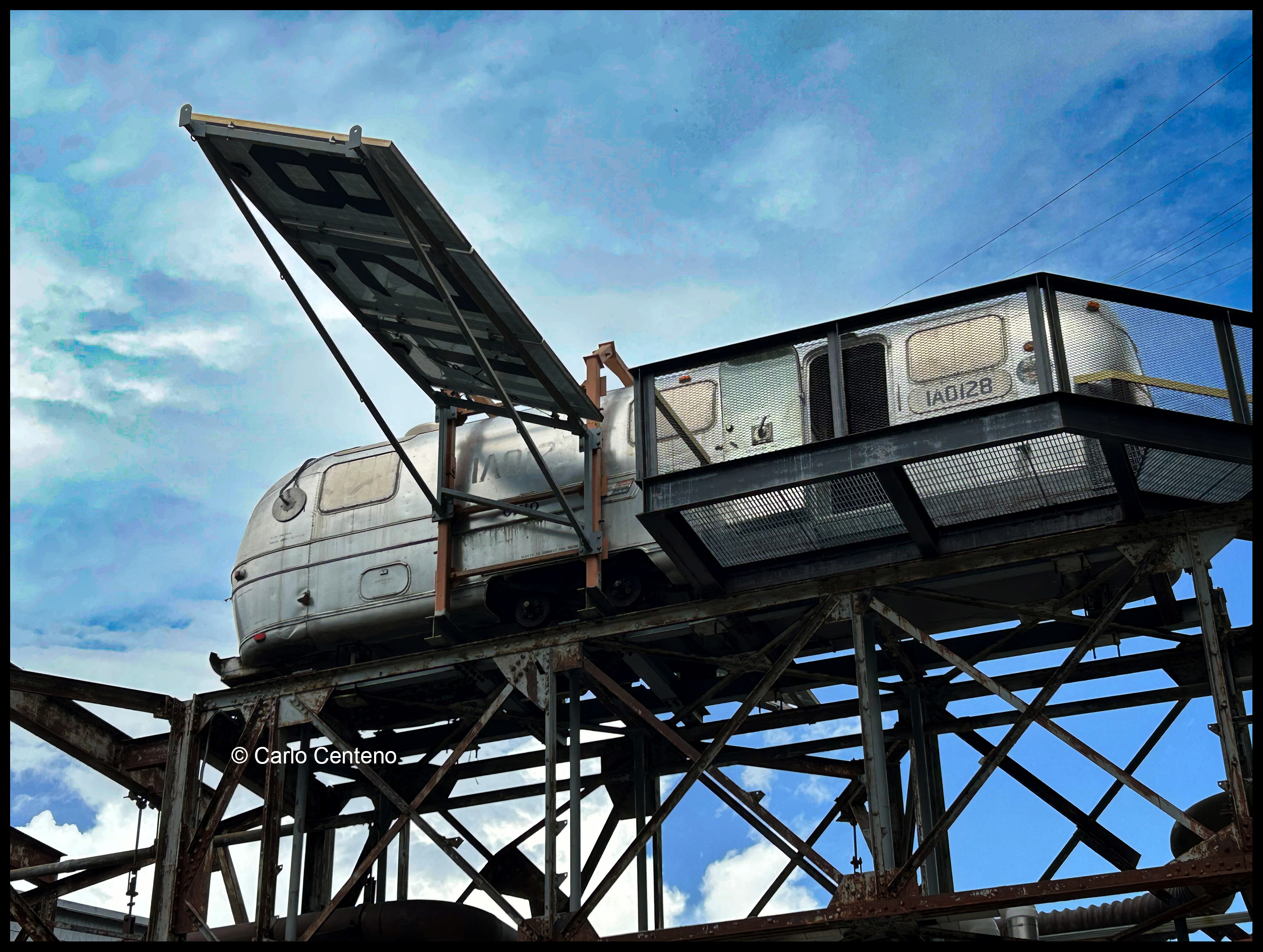
Suspended on tracks next to the Boiler House is an Airstream trailer. A walkway takes you to and from the Airstream to the Boiler House. This is the work of Michael Oatman, entitled “All Utopias Fell.”
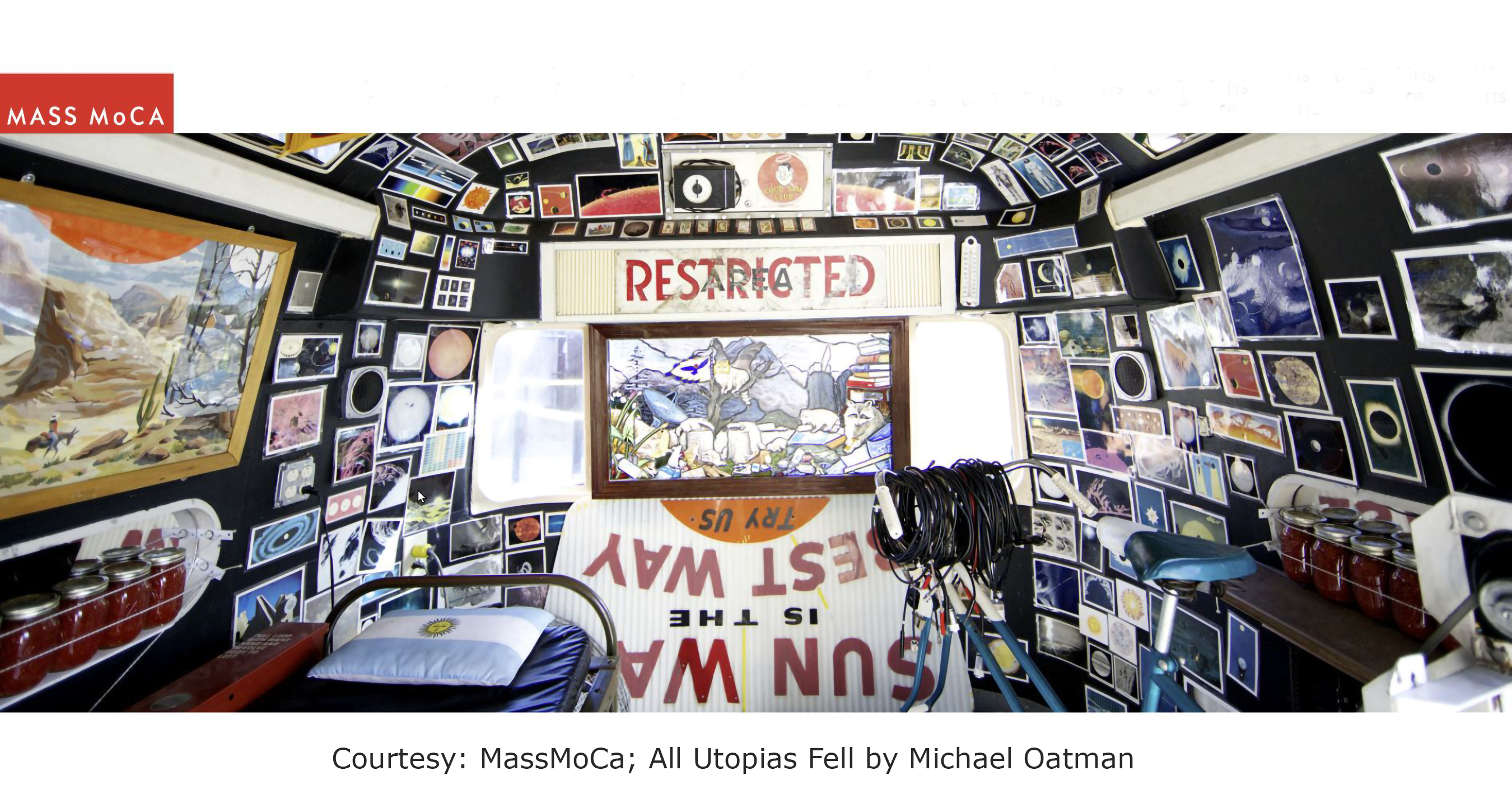
A common theme in my soliloquy is this search for order and purpose, or a clarification of both. This is a challenge as I tend to overthink, excessively evaluate one over the other.
Upon entering the Airstream, a myriad of visual elements reach out to you. It’s as if each photo, drawing, sign, piece of paper, object and so much more want to make mental impressions on you, as in right now. This is sensory overload and perhaps a metaphor for the soliloquy stirring in your thinking. It’s as if each piece could be a catalyst for a specific thought process. And once that piece or pieces enters your thinking, you start that introspection or make it progress to another level.

There are several “Why this?” and “What ifs?” within the profound, introspective construct of choices and decisions that are created. The certainty of being your own person, unique and unduplicated by any other, is that choices and decisions you make create the questions that begin with “why” or “what.” And while you and others are individuals in that singular sense, the framework of questioning is common for everyone, but ancillary circumstances are bound to differ between people.

Dr. Faustus, the play written by English dramatist Christopher Marlowe, revolves around the angst of Dr. Faustus agreeing to surrender his soul to the devil in exchange for magical powers. His soliloquy in the last hour before that exchange, is one which poses questions and conditions had the choices Dr. Faustus made were different. Once made, the commitment is binding, non-negotiable. There are no pause, stop or rewind buttons in life.

Shakespeare’s Hamlet is the quintessential soliloquy in my opinion. With new realities [and previous uncertainties] playing out today, themes of life & death, the meaning of our purpose and existence, mortality and vengeance are wonderfully distilled into words that examines all that can detract or enhance our existence.

I came across the last photo as I finished my visit to the Boiler House. It dawned on me that this effigy is a personification of someone covered with details that make up her/his soliloquy.

Festival of Flowers

courtesy Michelle & Donald D’Amour Museum of Fine Arts

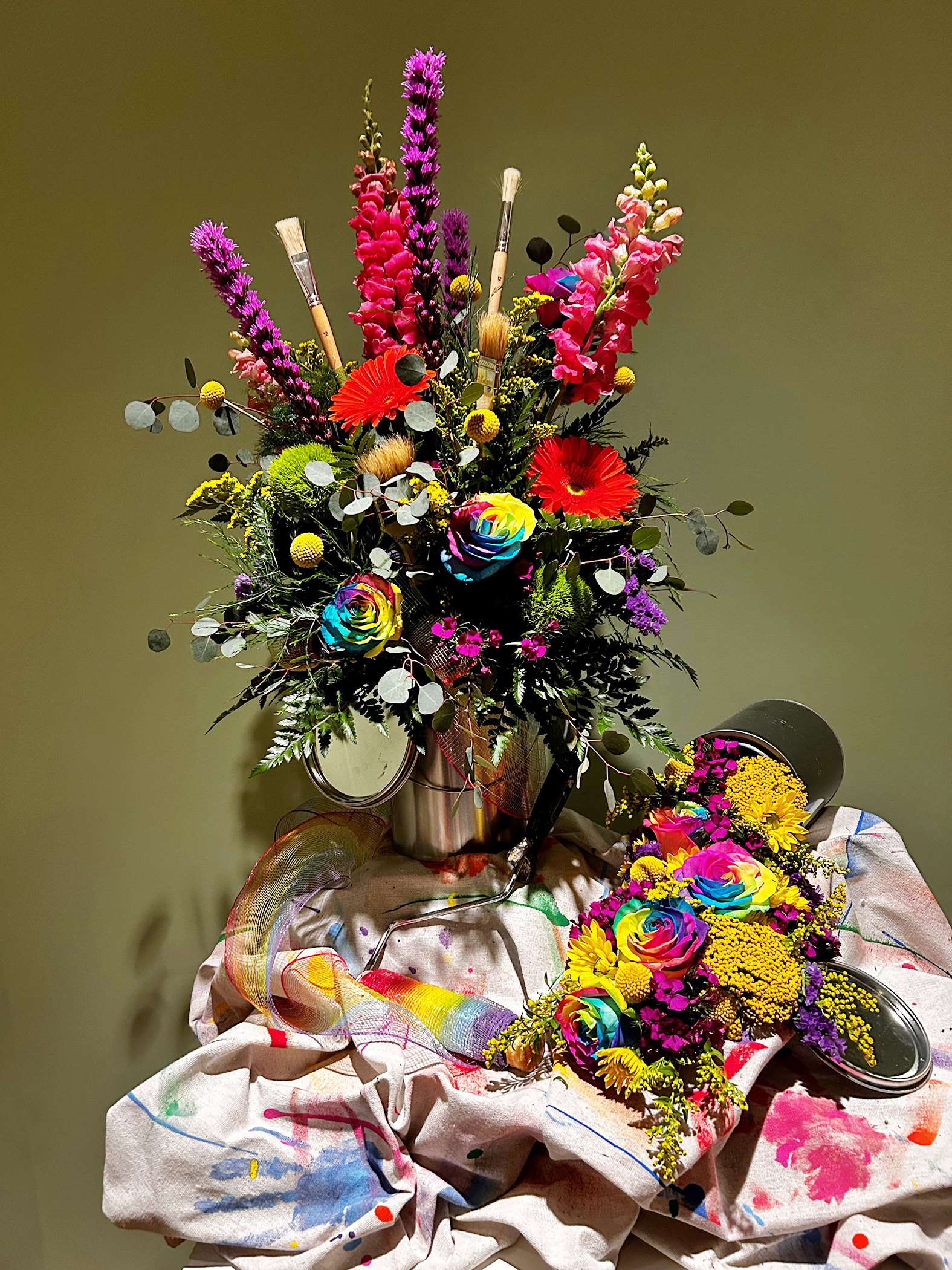
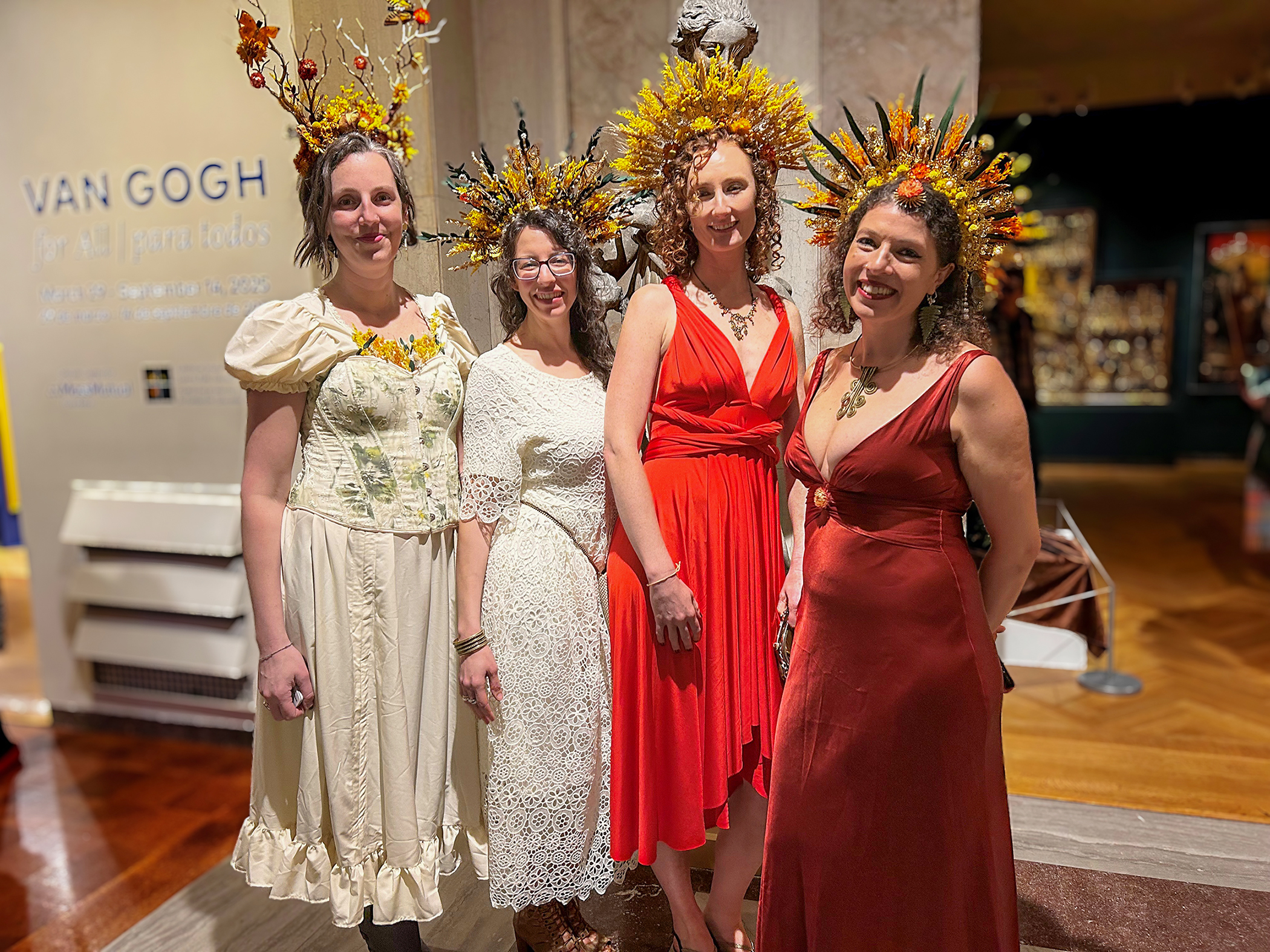
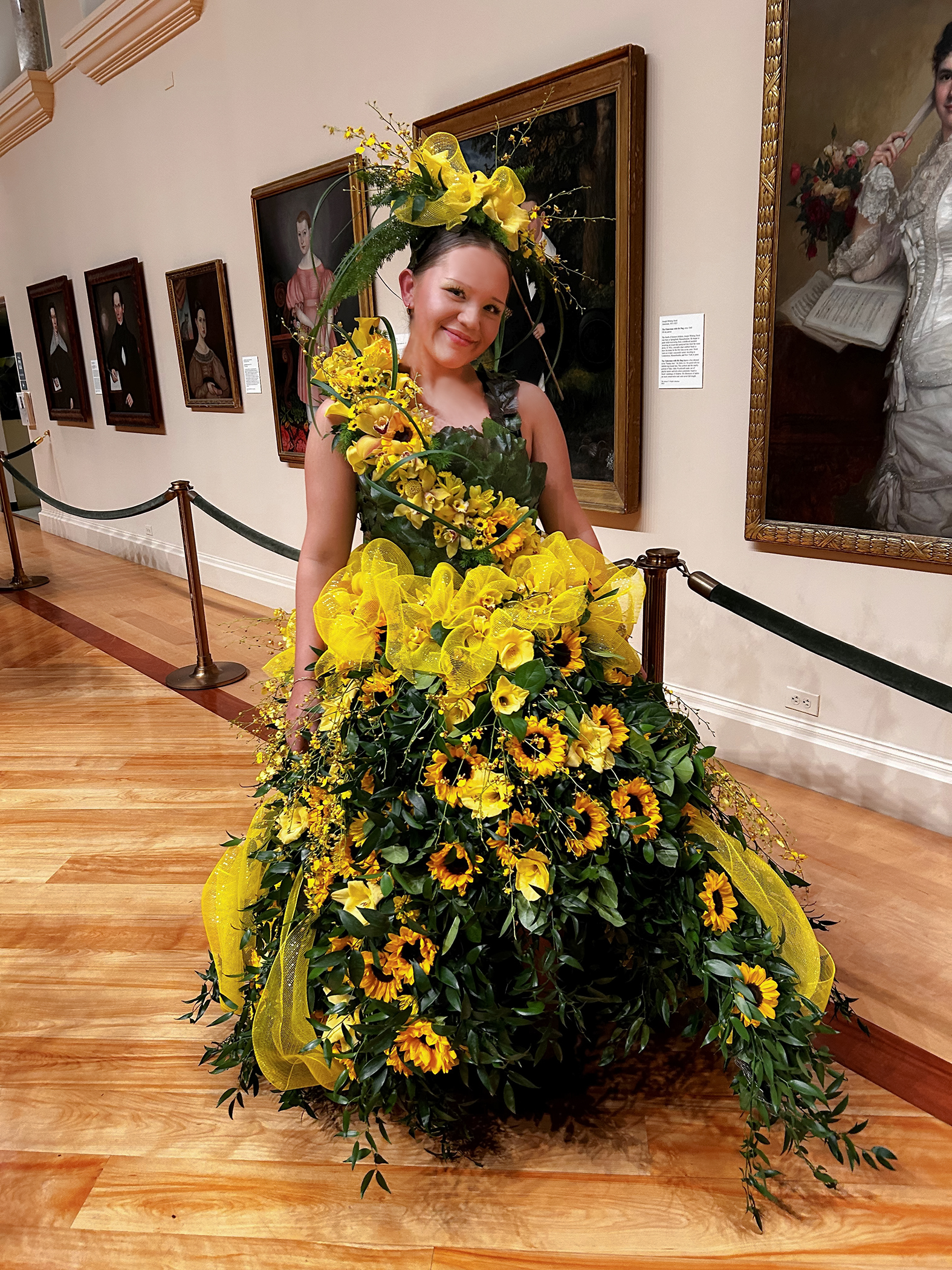
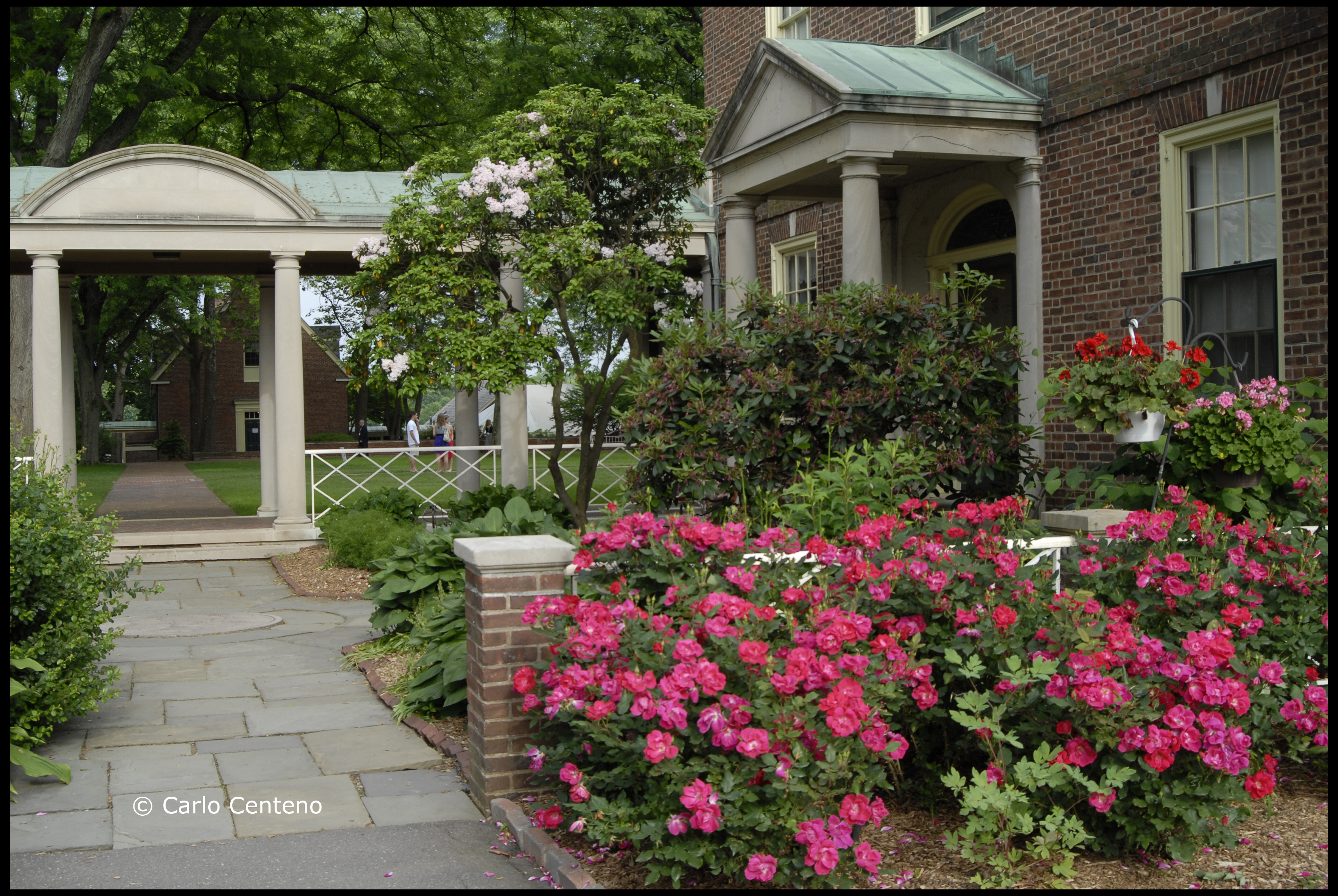
In each of the four museums that make up the Springfield Quadrangle, members of gardening clubs and florists based around the area created arrangements of colors, textures and other details in a manner that would intersect with a selected painting or other creation within the museums.

The creativity range was as eclectic and electric as anything I’ve seen, simply because of the relationship that attempted to “unify” two discreetly different pieces of art.

The juxtaposed subjects provided depth, perspective and of course relevance through the use of color and hues, manifestations of the blending of material, thread size, color, props, textures and so forth.

Some arrangements did not have a direct connection to a piece of art in the gallery. My sense is that such arrangements–such as the one displayed above–were created to compliment art already sitting in that room.
From headwear and accessories to…..

….gowns made entirely of real greens and flowers, the creativity was beyond words! Next April 2026, should be an interesting installation! See you then.

Winter Light

[Dylan Thomas, poet; Do not go gentle into that good night.]

Do not go gentle into that good night,
Old age should burn and rave at close of day;
Rage, rage against the dying of the light.

Though wise men at their end know dark is right,
Because their words had forked no lightning they
Do not go gentle into that good night.

Grave men, near death, who see with blinding sight
Blind eyes could blaze like meteors and be gay,
Rage, rage against the dying of the light.

And you, my father, there on the sad height,
Curse, bless, me now with your fierce tears, I pray.
Do not go gentle into that good night.
Rage, rage against the dying of the light.

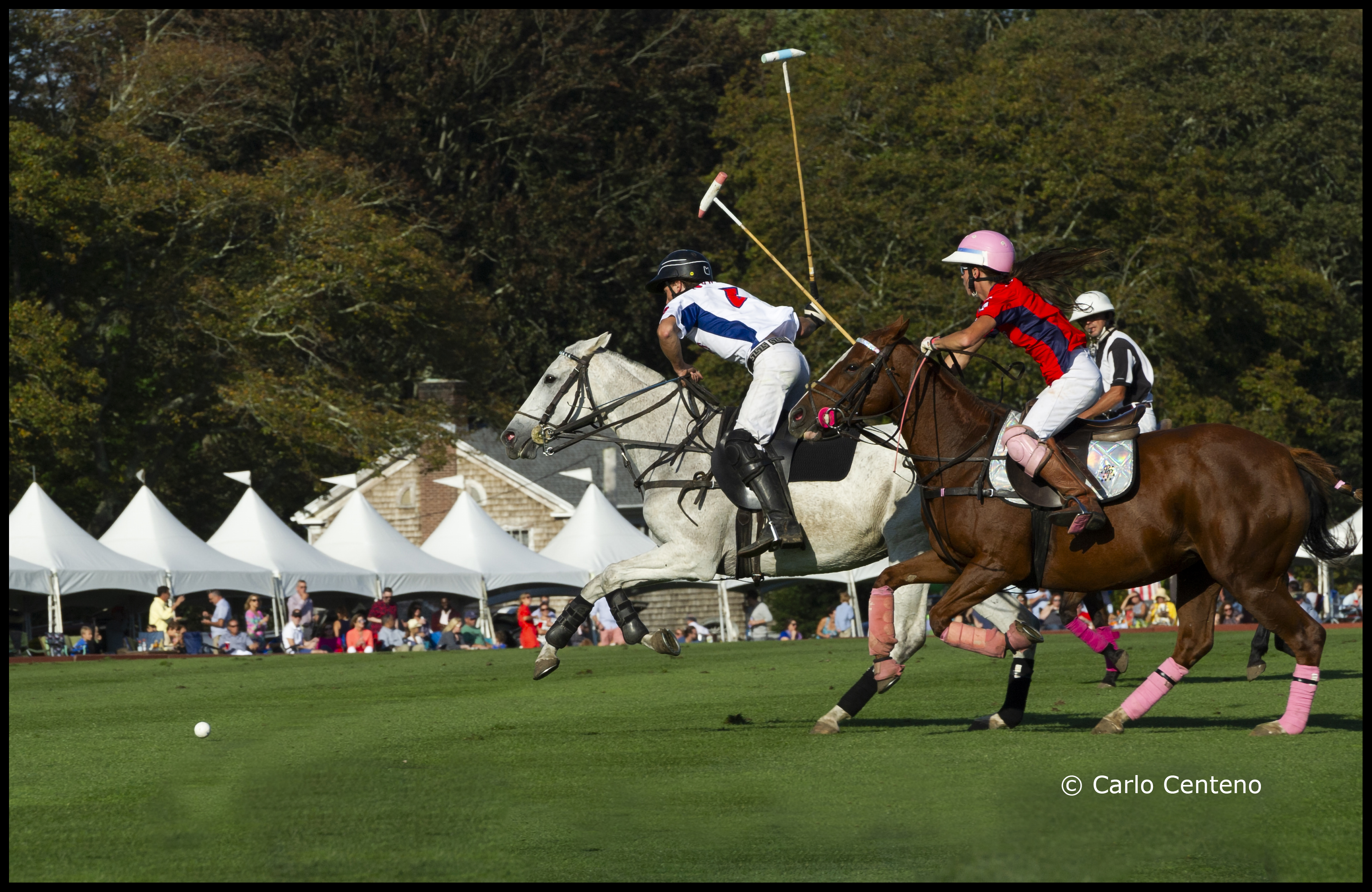
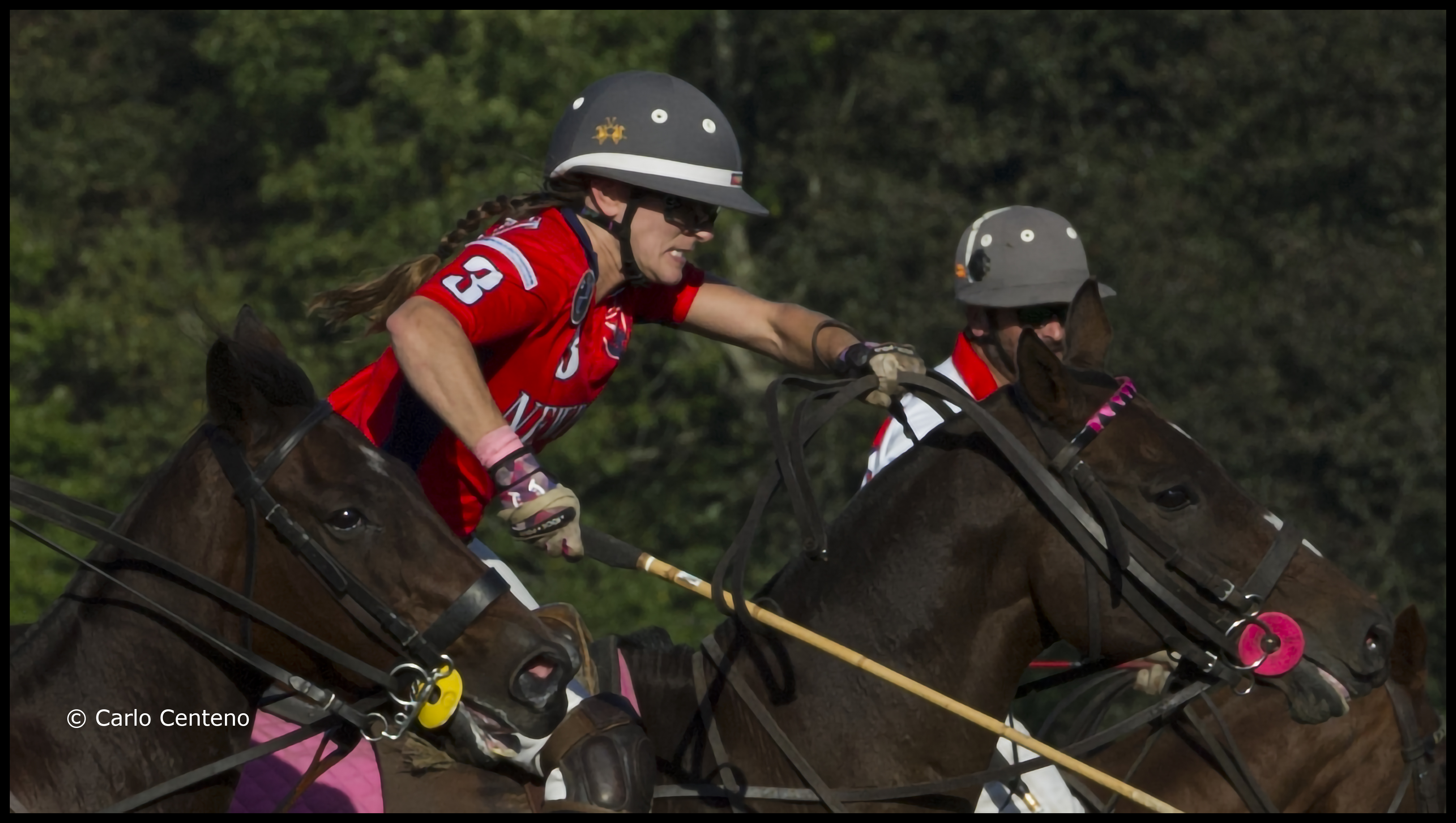
Each Rider Matters

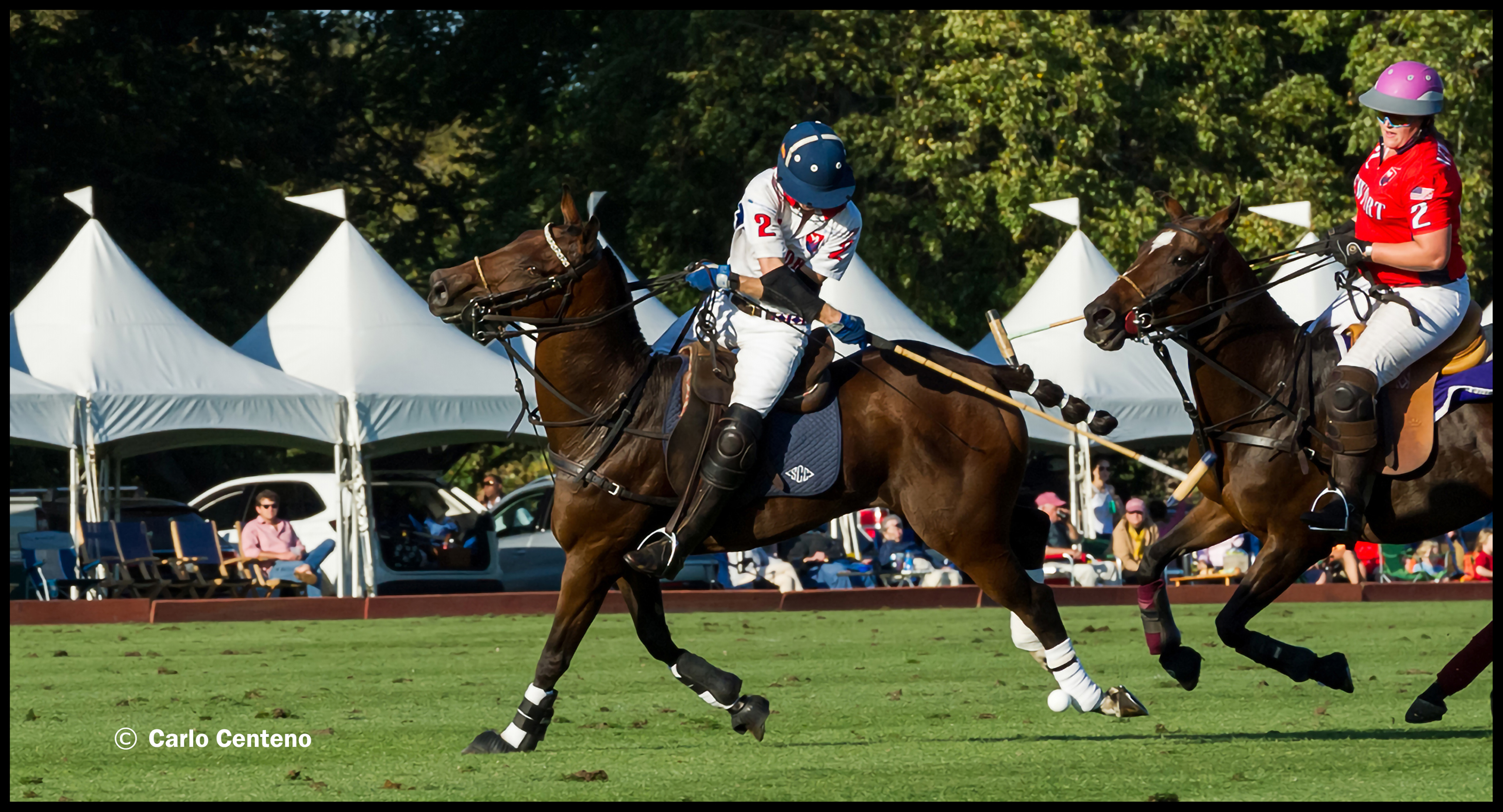
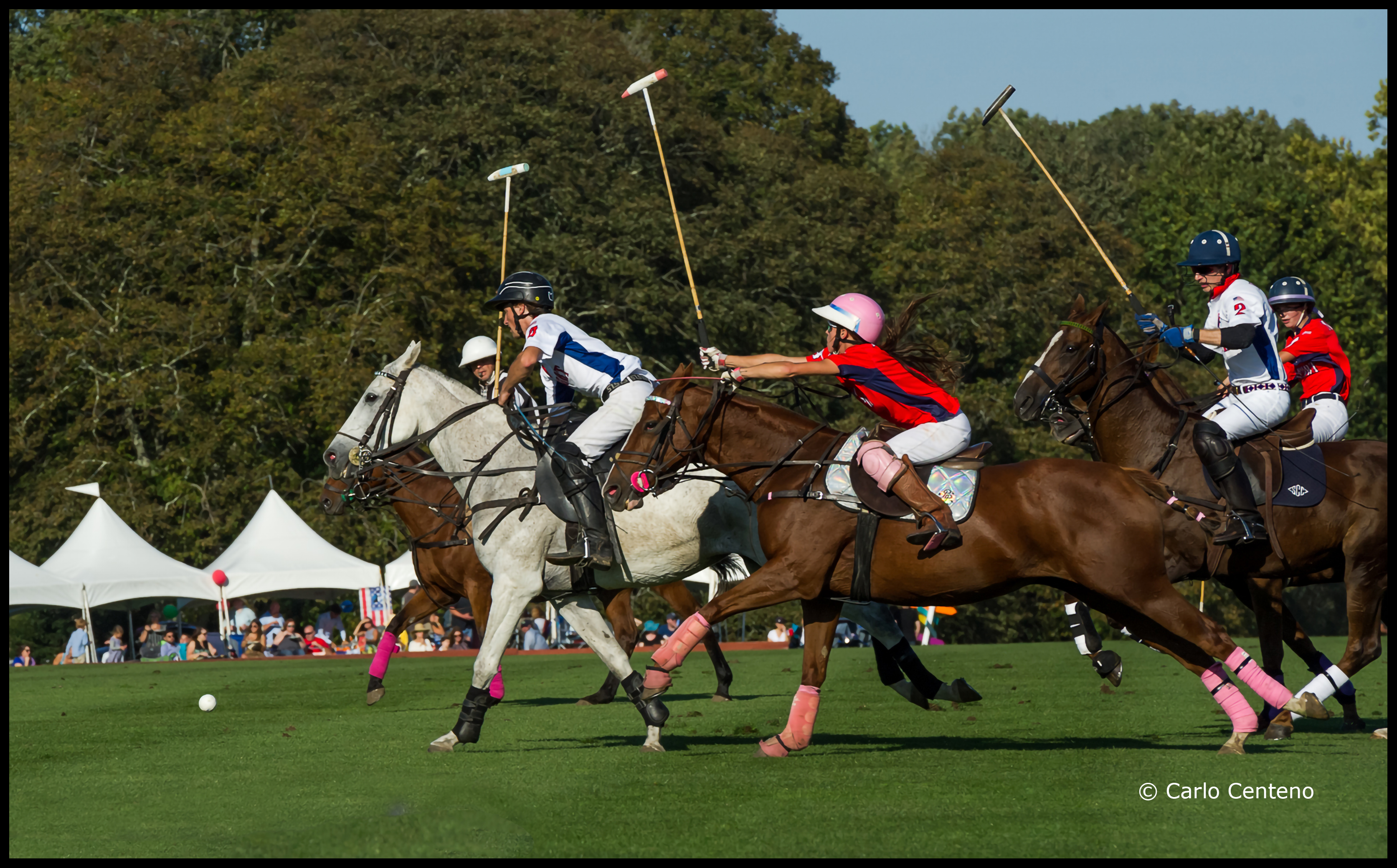
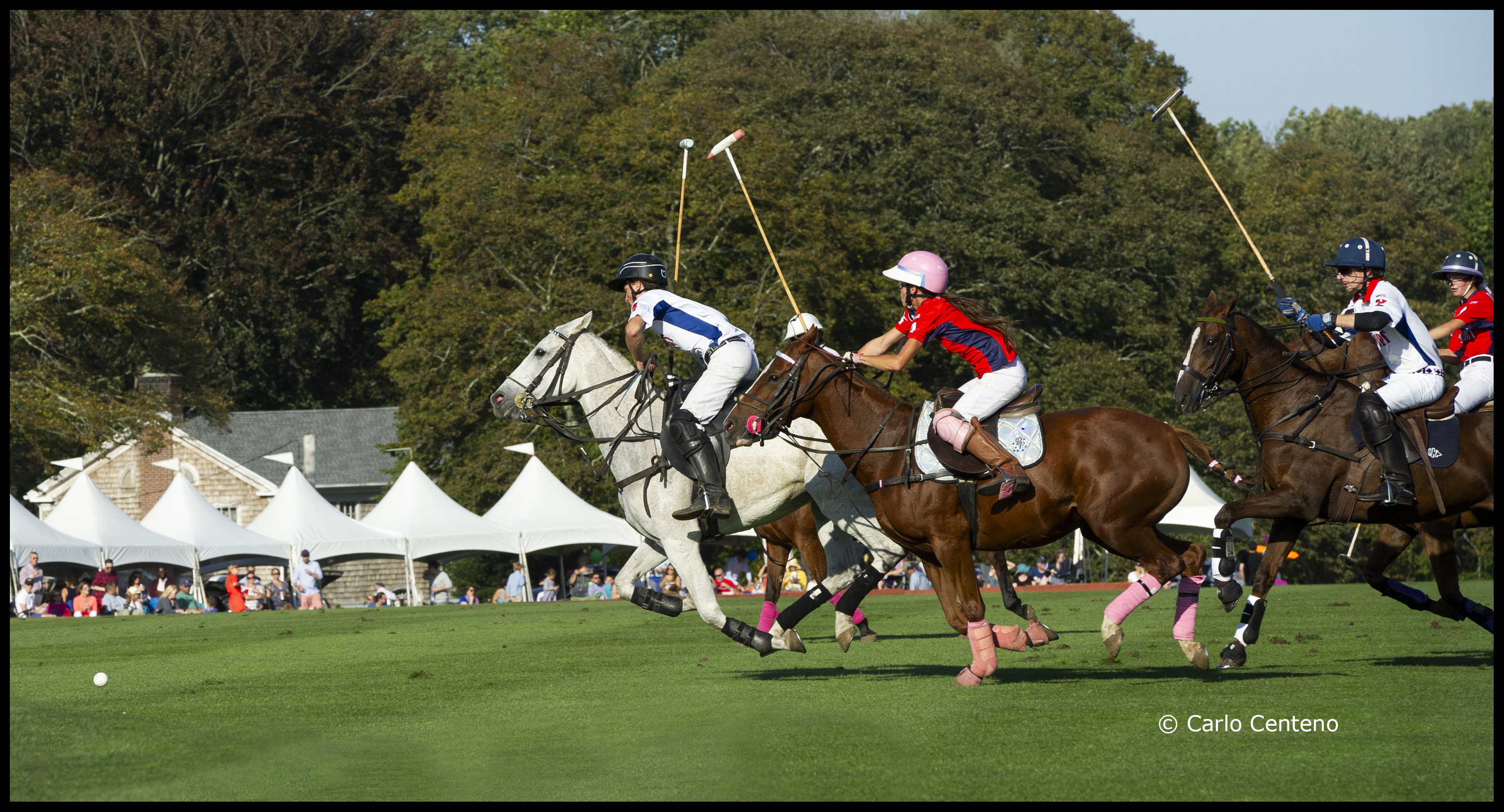
Those who play team sports understand the overall utility that is teamwork. No great mystery there. The many endeavors we encounter in Life often function better when we work in groups. From hobbies and clubs to those in line-work and the C-suite, we often rely on someone else to help complete a project or task.
Granted some tasks are regularly completed by one person, and such tasks can be specialized inasmuch that that one person is THE best person to do the job. Without her/him, the end result may not meet expectations.
To a great degree–individual efforts aside–you’re only as good as the people you work with.
A special thank you to David Schultz for his hospitality at Newport Polo.

The A Collection

I’ve come across a lot of A-words lately: amazing, atomic, artificial, augmented, abstract, auspicious, audacious, accountable, admirable, apathy, appreciation, affection, accomplished, alarming, Arctic, Antarctica, abysmal, appalling, anachronism and so forth.
Like a daisy chain made of paper, these words are linked and yet each easily broken free by the slightest of tension. And while some connections may not make a whole lot of sense, there are reasons however small, that connections take place. Anxiety, lack of focus, melancholy, fear, joy, anticipation, distraction, etc. etc., the Yin-Yang of this is that the very same attributes that prompted the connections can be the same to break them.
It depends on time and place. Context is everything.

Audacious. Approx. 35-degrees on a starboard bank.

The words come from various sources, anything and everything that shapes our life experience. With this exercise, the empirical nature of each word puts aside the rational, and instead embraces sentience, that ability to feel depth of things experienced.
It’s certain that others who feel existential—rightfully so in our fractured society—may feel embarrassed yet genuine. What could be more human than to feel concern about our current state of affairs [macro] and our relationships [micro]?

Anachronism. At the stable. The Mount: Edith Wharton’s summer residence.

I’m feeling abstract [visualize Cubism Art] and yet oddly auspicious because many things in life and living are not rational. We are prone to rely more on our senses, the very emotions that can either ruin or celebrate moments in our lives.
Yes, I’d rather feel embarrassed and genuine versus being stymied with self-serving, deductive reasoning. The former brings a sense of order, the latter a chance to improve our emotional intelligence and increase a capacity to further understand each other.

Abstract: The Slave Market & Disappearing Voltaire.

Life imitates Art, or is it Art imitates Life? Similarly in marketing, it’s not what you’re getting, but what you think you are getting. Perception is everything and even more so in the here and now. It’s a refrain that frequently echoes in my thinking.

Admirable.
Augmented.
Appreciation.
Arctic-Antarctica: an aftermath
Auspicious

There will be no “B” collection, existential-word-dump, involving any other letter, or a character for that matter. An exercise with one letter is enough for me, and probably for you as well.

In conversations, and things written, a question posed usually prompts us to reconsider a position we hold, maybe a perspective quite different from what’s already been established in our own thinking. This collage, this tapestry-of-a-post may not mean much to anyone, but it could be provocative enough to slightly encourage another perspective. Why not?

The seasons are moving quickly and as I get older my own temporal reality is based on just how fast time seems to go by. I lean towards the empirical and the sentient qualities of the here and now to help me keep it all together.

I never thought I´d grow up so fast so far.
To know yourself is to let yourself be loved.
Do you ever get me?
Shower me with affection and I’ll return in kind.
I have no hidden motive, I am blind.

Do you ever get me?

All rights reserved. Copyright. Ben Watt

Gatherings

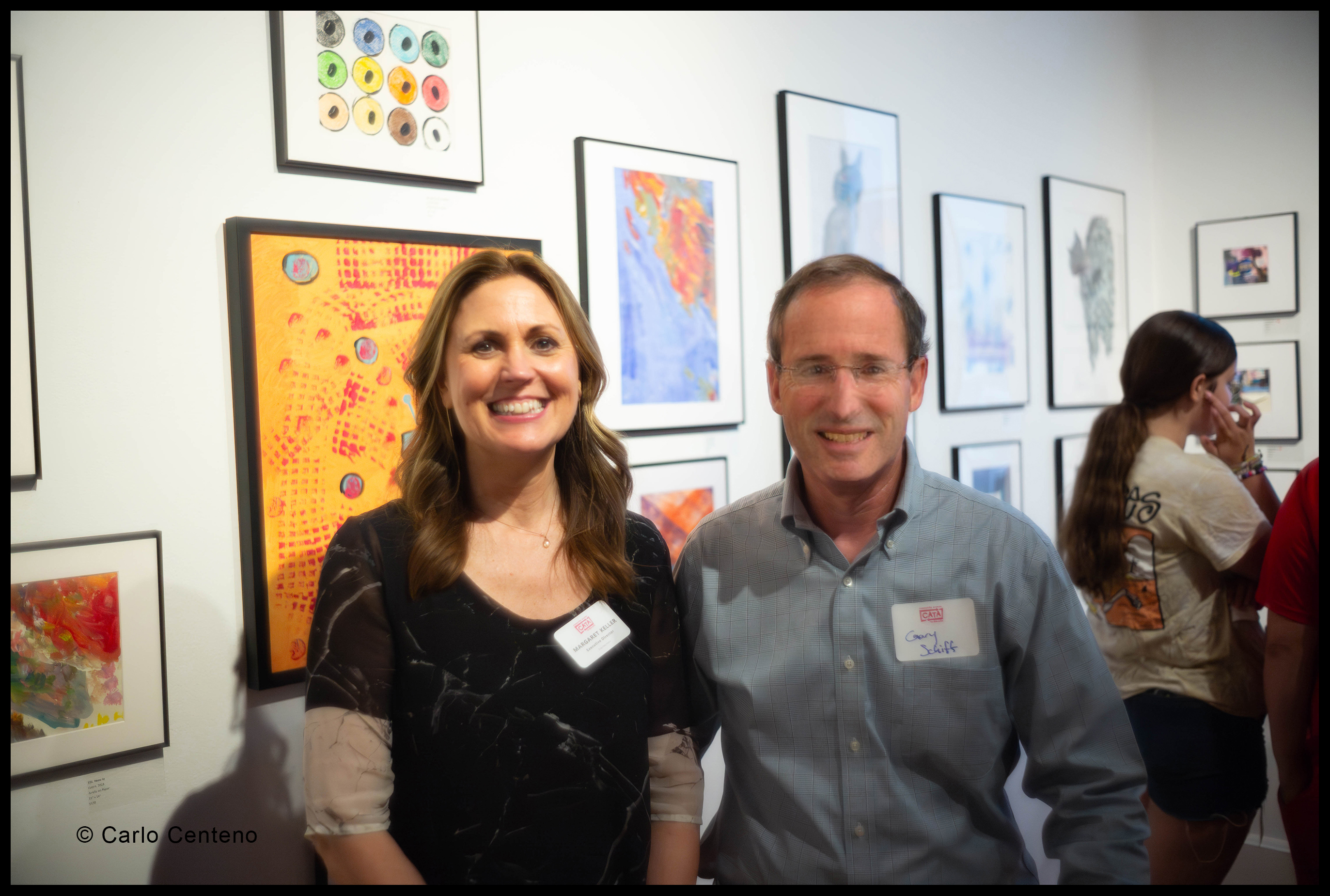
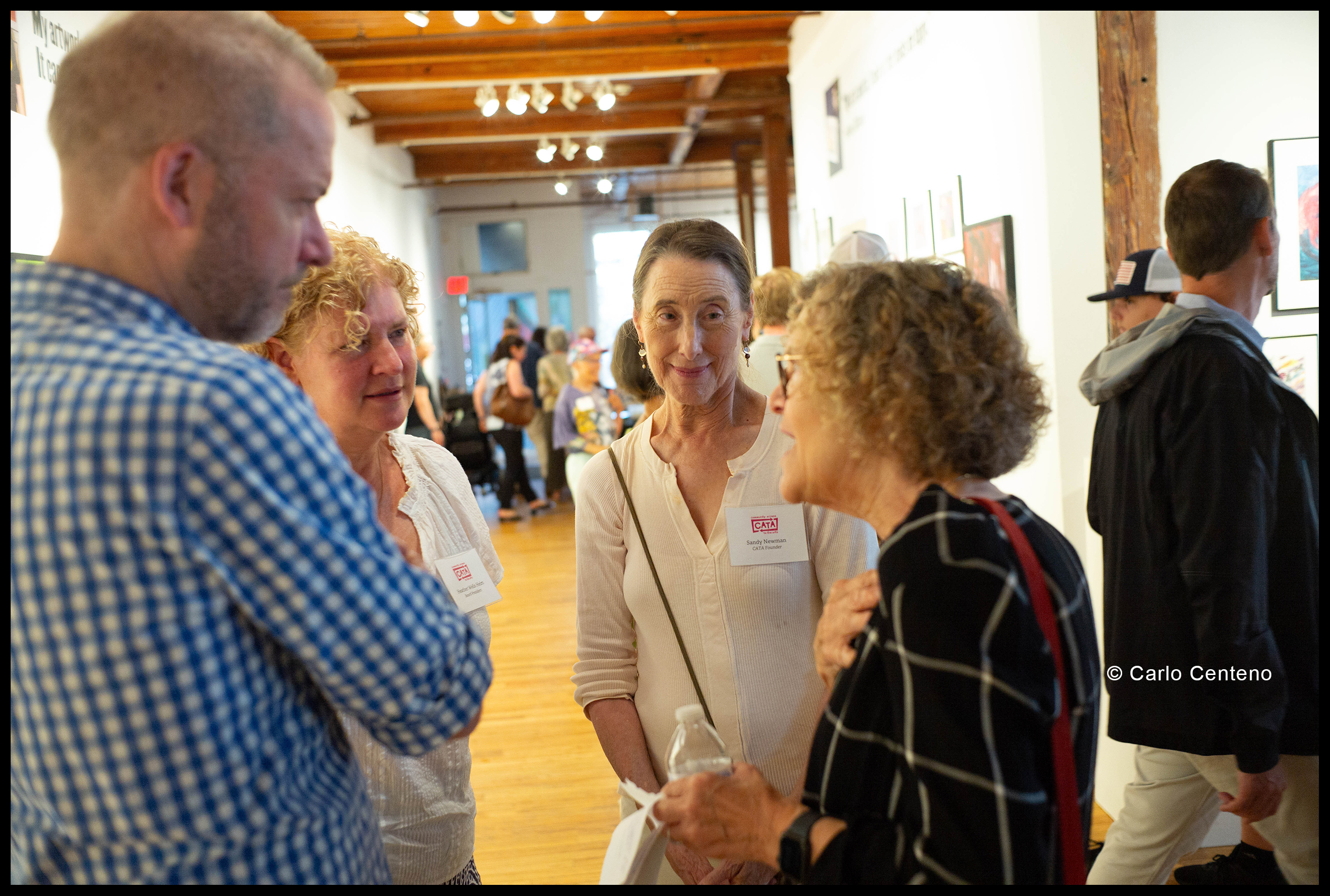
Margaret Keller, Executive Director, CATA.

The Community Access to the Arts [CATA] never ceases to amaze me. Meaning, “the creativity of the artists at CATA is as exemplary, as contemporary and modern as Art can be.”

The artistic abilities of the artists represent their thoughts, feelings, perspectives and perceptions that are as strong and perceptible as any artist could produce. From perfunctory to profound, energetic to calm and peaceful, there’s a lot being expressed on the gallery walls. Perhaps the most obvious being that these artists–with disabilities–clearly have a way to express themselves.

Margaret Keller with Gary Schiff, Managing Director, October Mountain Financial Advisors.

This opening recently took place at the Lichtenstein Art Center in Pittsfield, MA. Most all of the paintings are for sale and the artists receive a commission for their work. This show has much to offer, from small to very large using water color, oil, acrylic and ink painted onto wood, stretched canvas and other media.

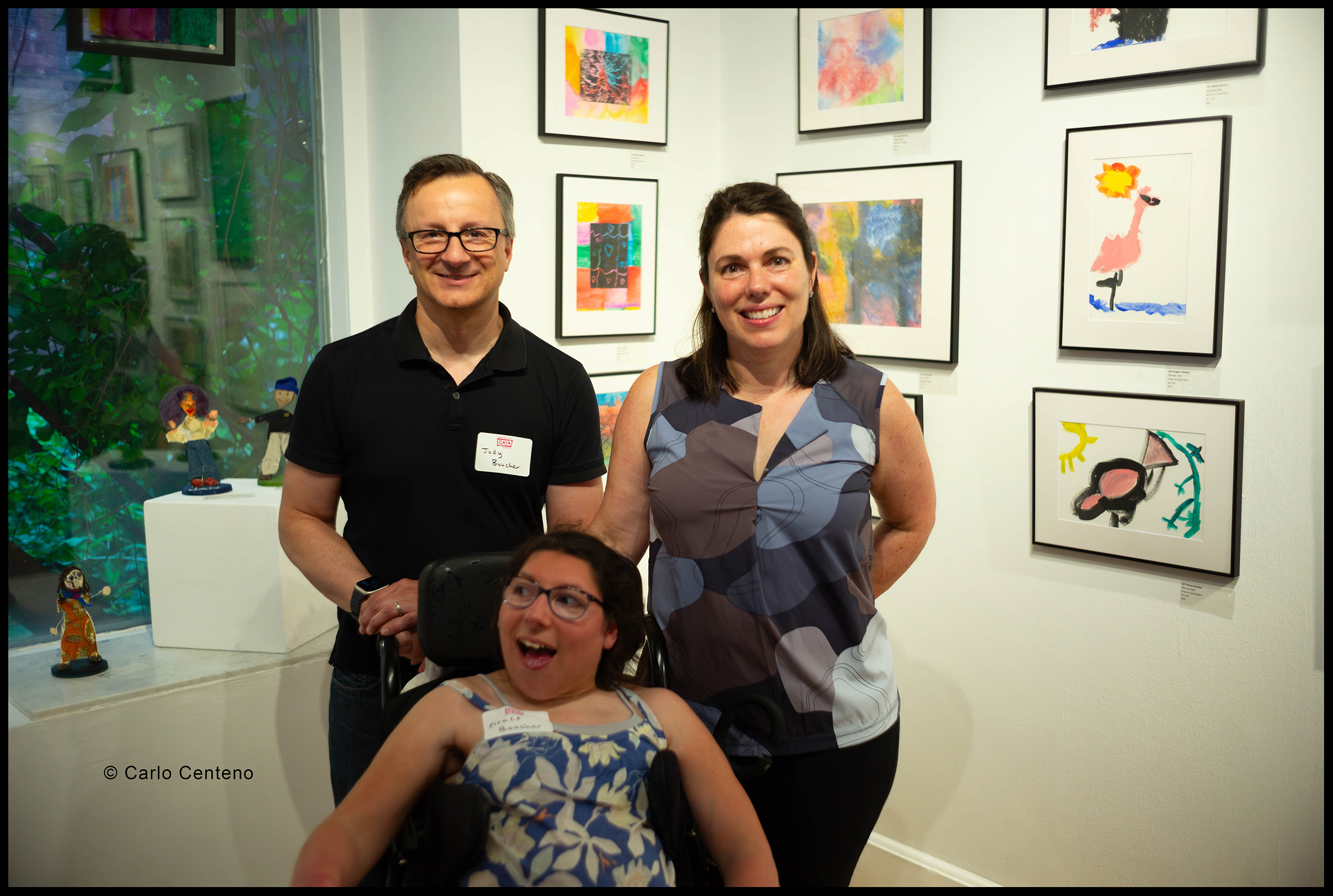
CATA artist Grace Boucher with parents.

Outside the gallery a boatload of rain just kept falling. It felt undeniably tropical; one moment a light rain, then clear, only to have everything overwhelmed by yet another heavy cloudburst accompanied by thunder and lightning. And yet the space was filled with friends, parents & guardians of some of the artists and loyal patrons and art lovers.

Kelly Galvins, CATA Program Director-Agency Programs

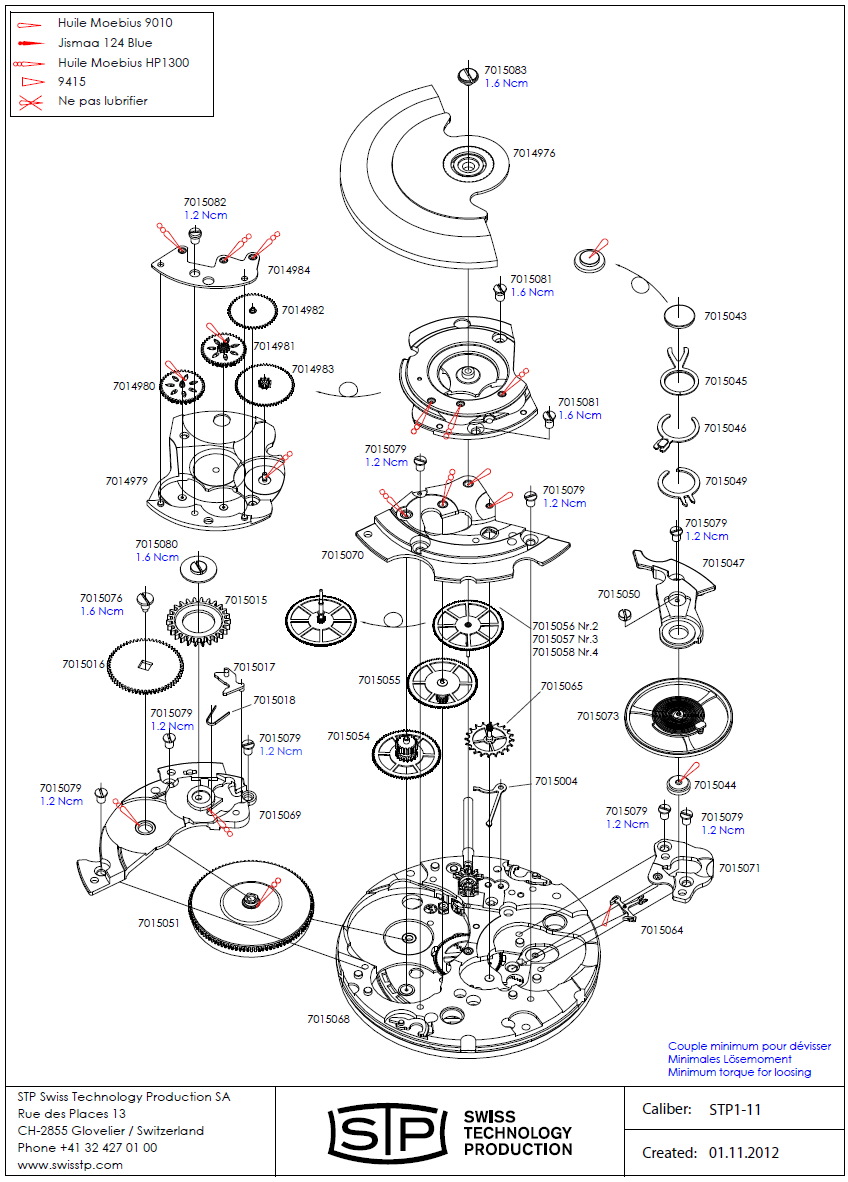
The success of any such gatherings depend a lot on those in charge of details. We all know that. I think of automatic watches, and how well they function. This organization [CATA] is akin to the dynamic of the workings of an automatic watch, self-winding [automatic] or hand winding only.

credit: Swiss Technologies Production

The sum of the parts is greater than the whole. Every component has a function, some specialized while others are a standard part to ensure the watch’s ultimate function.

credit: Patek-Philippe SA Geneve

Every person shaping an event matters. Just as an automatic watch requires springs, levers, meter wheels, escape & driver cannon pinions and so forth.

[center] Ms. Sandy Newman-CATA Founder

There needs to be synchronous relationships for many things to work: autos, machines, computers, watches and people. That quality of interaction relies on the functional capability of the part [or persons] involved.

Kara Smith, CATA Program Director [studios].
Ms. Michelle Goodman-CATA artist.

Meanwhile, there’s all this chatter about Artificial Intelligence [AI] with its potential and failings. Regulation? Monetization? Security? A bona fide threat to originality or something that can expand our ways of learning? In the end–and I do mean “The End”–nothing matters more than the people we love and care about, the interactions in gatherings familiar and new, and the way we contribute to being in the moment.

Tell me, what do you really see…?

You can think of this post as part 2 of my previous one from about a week ago, Get Closer…but then again, what follows could be superfluous. Maybe. Each day our routines bring us across many familiar and common objects. Most of what we see barely catches our attention. A lot falls under the category of habitual repetition. However, if you put that aside, the what you see notion can change things.
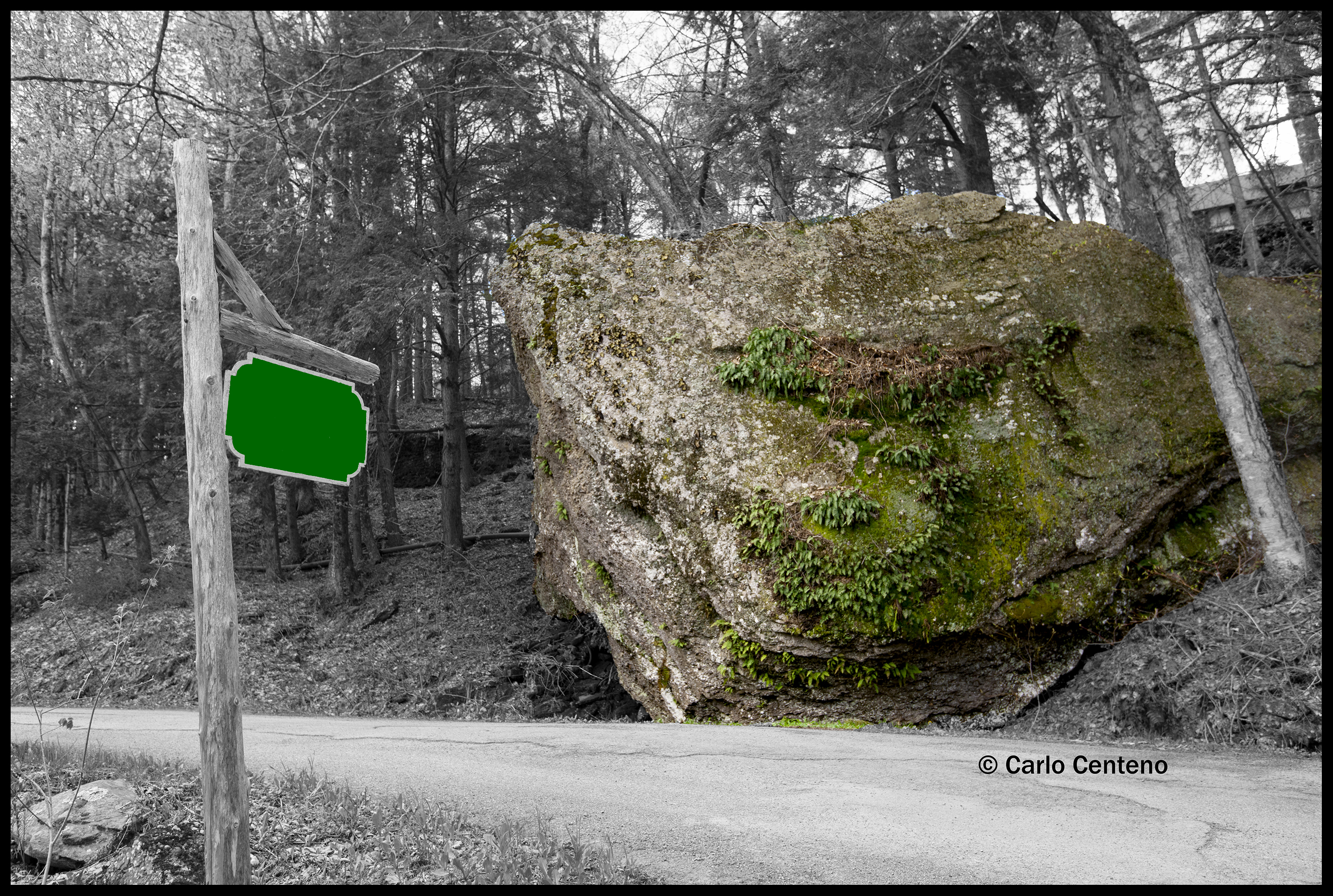
Anyway, regardless of which direction you’d be walking, you can’t miss the humongous rock, pictured above, resting next to a dirt road.
On a 1:1 scale, the size of this layered wonder from the Ice Age is massive. Around it and along the road, various homes stand proud against the various inclines, each perhaps possessing an immunity to gravity. Most of these homes have been around for generations.

“Follow the road up to the top. The vista is spectacular and you’re likely to get some good photos. Look for Pebble Rock Hill Road and keep an eye out for an unusual pebble.” Pebble’s eponymous road invites travelers to head to the top. Of course while on route, I had to stop to examine that “pebble” leaning into the hill.
I’m reminded of Jonathan Swift’s timeless novel, Gulliver’s Travels. In his travels, our protagonist arrives at Lilliput where all its inhabitants–are quite small–whereas Gulliver is a giant. This timeless tome may not be a summer beach read, but the arc of the novel deals with the vagaries of politics, the human condition, scatological humor and so forth. BTW, the first and only time I heard the word “scatological” was during my high-school sophomore class in English Literature. Go figure, and go Google it. The novel was first published in 1726.

Yes, this large home has a “stream” running beneath it. A natural source for white-noise to help the household sleep, perhaps?

Close to 300 years later, I’m certain Mr. Swift would have asked the same question of us: tell me, what do you really see…? There are times when I’m so immersed with what’s in front of me that when the camera comes up, I’m [figuratively] within the frame, scanning everything in the viewfinder.
Where’s the photo? Why am I taking a photo? What do I feel? What do I see if anything other than the obvious? Is it worth it?

Back in the days of film, most of us were pretty frugal with the number of frames we took of any subject let alone everything else. There were no preview screens to check on what you and the camera were looking at. Polaroid cameras were the analog version of confirming a shot. Today, however, it seems that others have already introduced their own Polaroid type-instant films.
When I developed my B&W films, the process felt rote at times, but when the timer was close to the end, my feelings changed to ones of anticipation, expectation and doubt.
It’s different today, obviously, but waiting and expecting to see B&W negatives had an aura all its own. Time gained additional significance because each frame was but one slice of a moment.
Digital capture can take the same slice of time, but it also offers instantaneous validation and the opportunity to take a good a number of retakes, each being instantly accessible to view. Picture taking has certainly evolved; I know many who have a boatload of jpegs on their mobile phones and tablets. A lot.
There’s some truth about the way film cameras slow down the picture-taking process; and for a group of film devotees, you could say it does something similar to some of our behaviors.

Sunset
Same location on the same day just minutes after the photo above….
Done for the day, Mother Liberty eyes the loading/unloading cranes at rest.

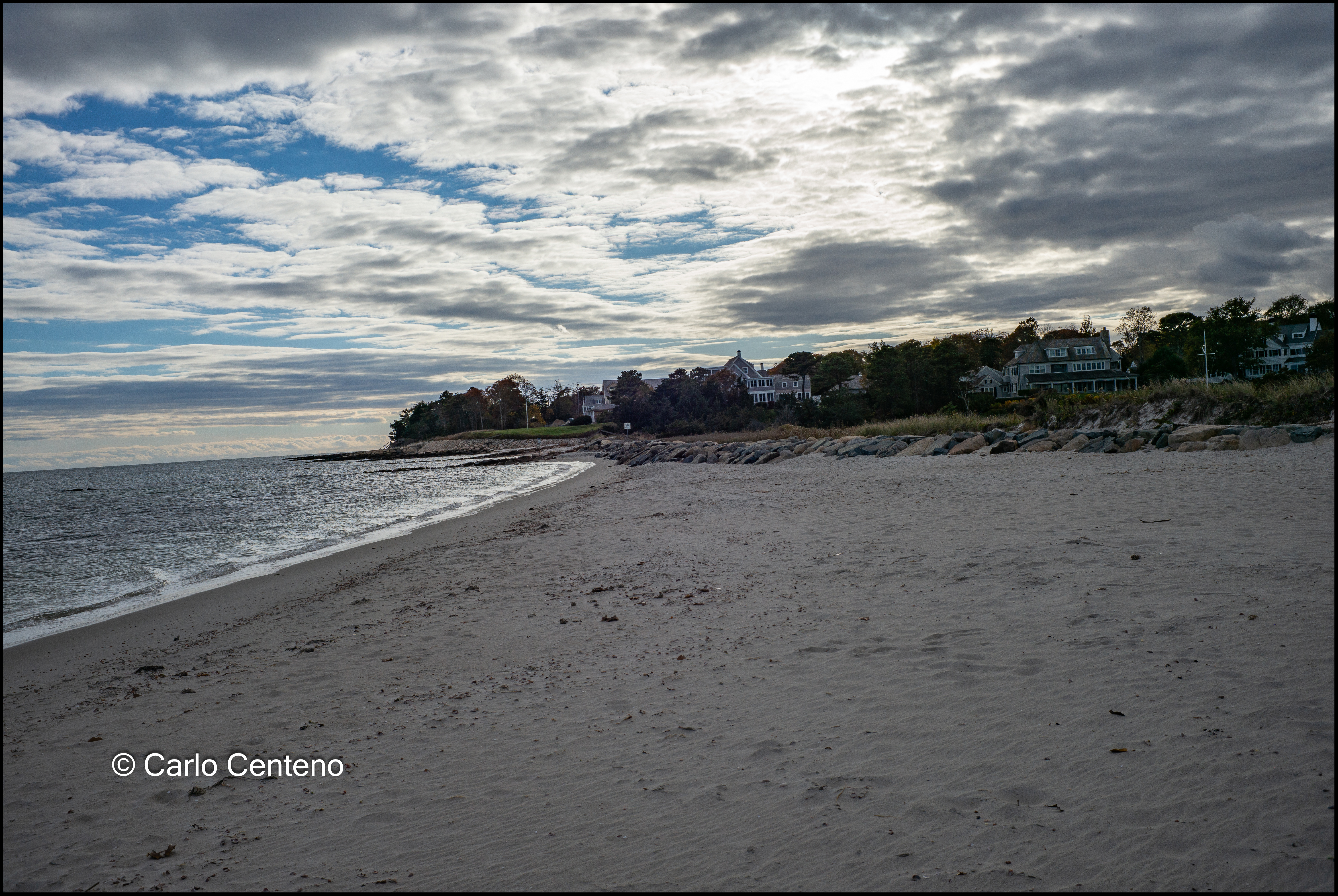
Sunsets and sunrises have been with us time immemorial. With or without a camera, they fascinate us. It’s all about the light and the way it changes–and rather quickly–to the familiar sunny or cloudy sky. The sky then becomes its usual self, an unevern canvas of grey or light grey with that hint of white. All of those visual details make it beautiful: a clear sky, dramatic skies, a storm or front already heading our way, along with whatever feelings that may surface to shape our visceral self.
Here’s to all our moments in our 24-hour lives, and to the details we discover that adds something to the way we see things.

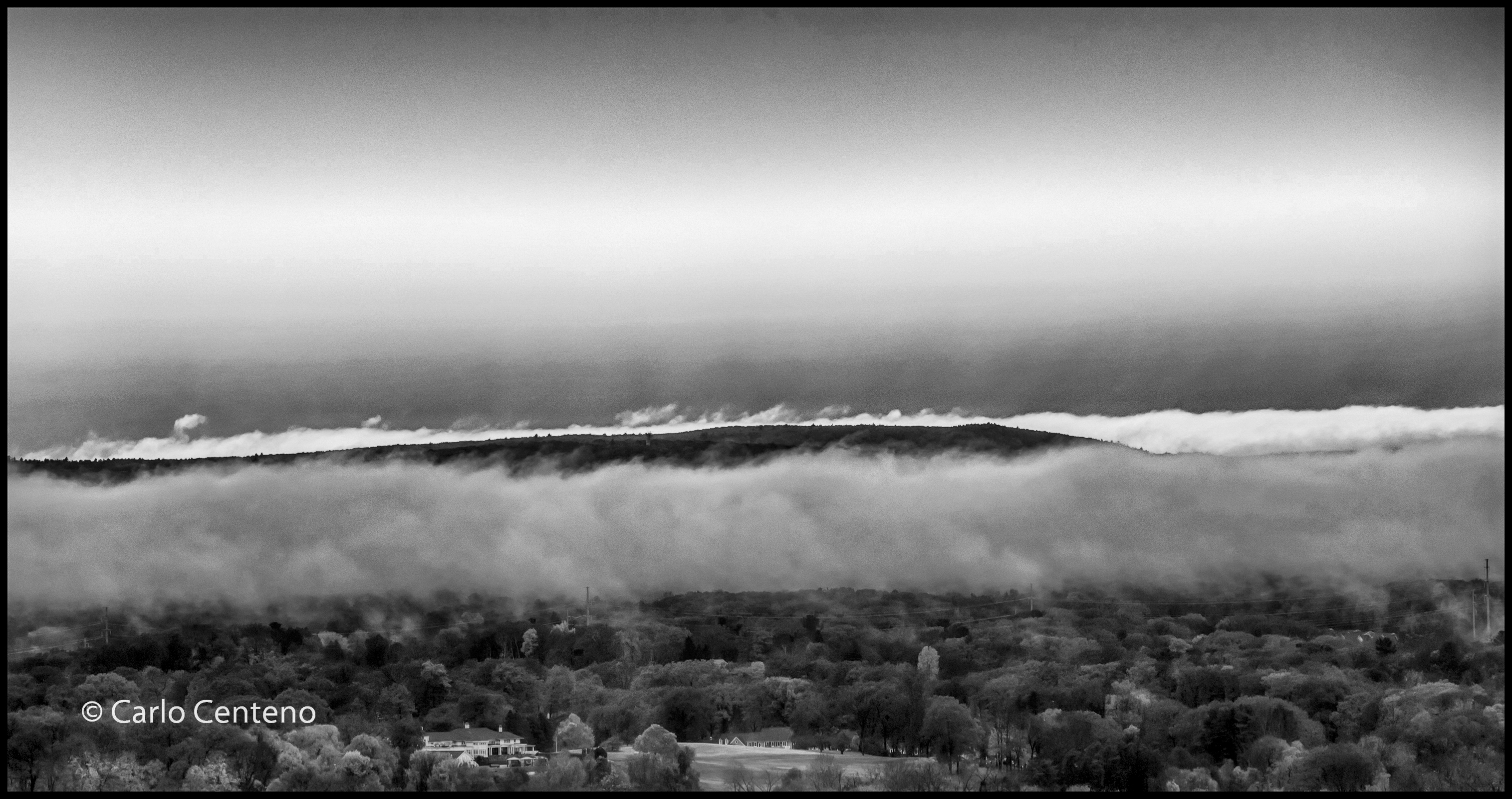
…and when that fog does lift…

Observation and interpretation of anything is very subjective though in commercial and advertising work, that which is deemed creative and acceptable are often determined by the art director, sometimes by the account supervisor on behalf of a client. Actually, the person who has the last word is often not the illustrator, photographer, videographer, writer–or in today’s parlance–the content editor. In my experience, the buck stops at the client’s desk….and oddly enough at a desk occupied by someone with a tangential connection to the project, perhaps rare, but it happens. “I think it’s clever, why don’t we run with it?’

Now, if the creators of verse and image are the clients, then the advent of blogs and vlogs have given these clients the control to post final versions of whatever is being created. To have complete creative control is nothing short of invigorating if not self-serving. Being both client and creator is double-edged; not surprisingly, creators can be the hardest of critics, at times being so critical of their own efforts and results that projects crawl to a stop. Paralysis-by-analysis, imposter syndrome, go figure.
So, when your creative fog lifts don’t meander thinking you’ll encounter an epiphany. Yes, at times that does happen when the creative block lifts, and you’re greeted by some nugget of an idea. If you’re the creator and the client, then it’s incumbent upon both personas to look at your product/content with equal scrutiny. Both minds, while driven by other factors, do have a common intersection. Think of 2 circles, one overlapping the other. In that small, shaded area is where the diaspora of sales, marketing, advertising and more are all blended together.

I think of that creative block, that fog, as a layer temporarily covering my creative line-of-sight. It does lift, so be ready.

Fog aka creative block

This is the view from my office. Because this window faces north, changes in weather often come this way, and today was no exception. A front was slowly moving through bringing with it some drizzle if not showers and a pinch of wet snow for good measure.
I go through some days feeling creatively barren, as if covered with a fog. My brain cannot keep focus of what’s important, nor can it generate a spark of an idea. I’d welcome a nugget of thought that morphs into a theme, a sentence, a paragraph and even a photograph.

When that kind of fog moves in, I used to double down on my brain as if I could purposefully, indeed consciously command by merely thinking, “I need something to work with here! Get it off the ground.” A couple mugs of green tea or coffee later, nothing appears on my creative radar.
And so I apply a way of thinking and visualizing to help reveal something/anything beneath that fog. I imagine what’s lying beneath not only my creative fog, but the cloak draped outside my window. Somehow the symbiosis of such processing helps clear my brain fog. It doesn’t reveal something monumental; it’s not a Eureka! moment at all. Some real right-brain elbow juice comes into play. I’m from the school that believes there’s no such thing as a “dumb idea or answer.” Possibilities abound depending on your attitude.

The transition time varies, sometimes in an hour, other times a day or 2 later. I suppose other efforts have probably taken longer to render that creative crumb-of-an idea or concept. If I knew how to sketch, perhaps it would be easier and at times faster to arrive at the idea. However, it’s just the way this person works. Not very exciting. The excitement–if you can call it that–is more a feeling of relief and satisfaction.

Whether I’m looking at a blank sheet of paper, a clean page in my journal or through a camera viewfinder [yes, very old school this guy], I sometimes think of Occam’s razor, a philosophy that states when troubled with competing solutions or ideas for a desired outcome, often the simplest version is the very solution that makes sense.

An American Artist

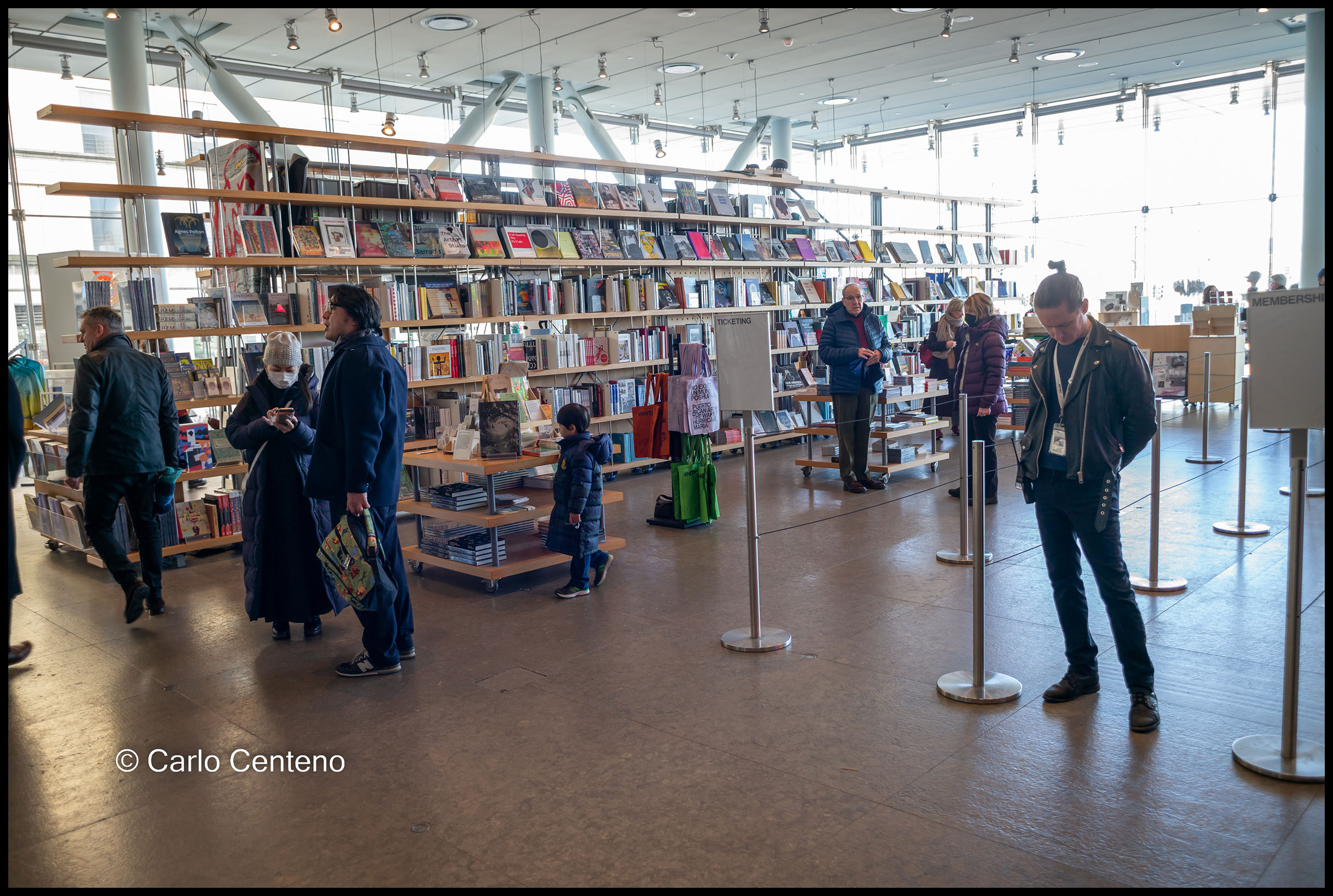
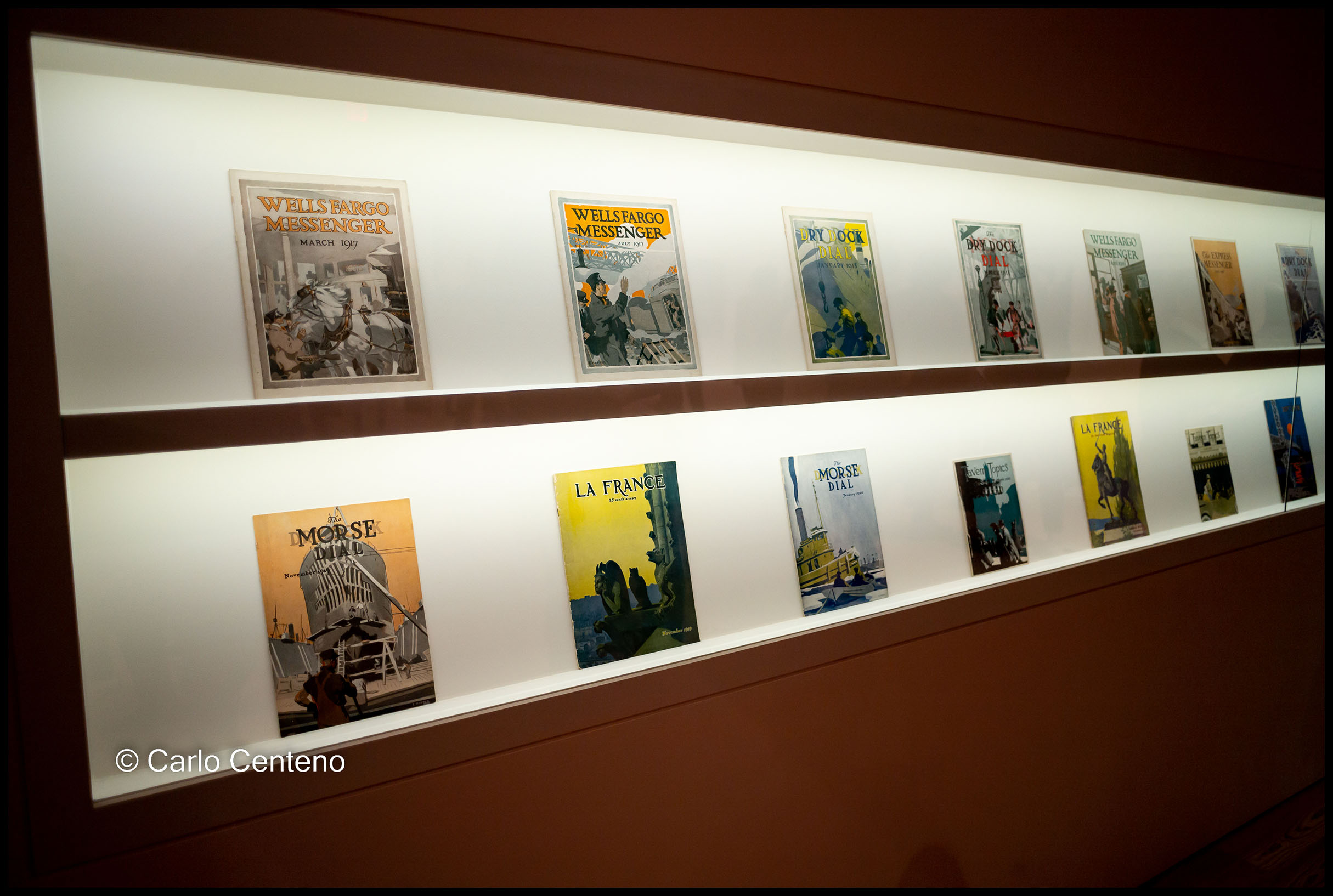
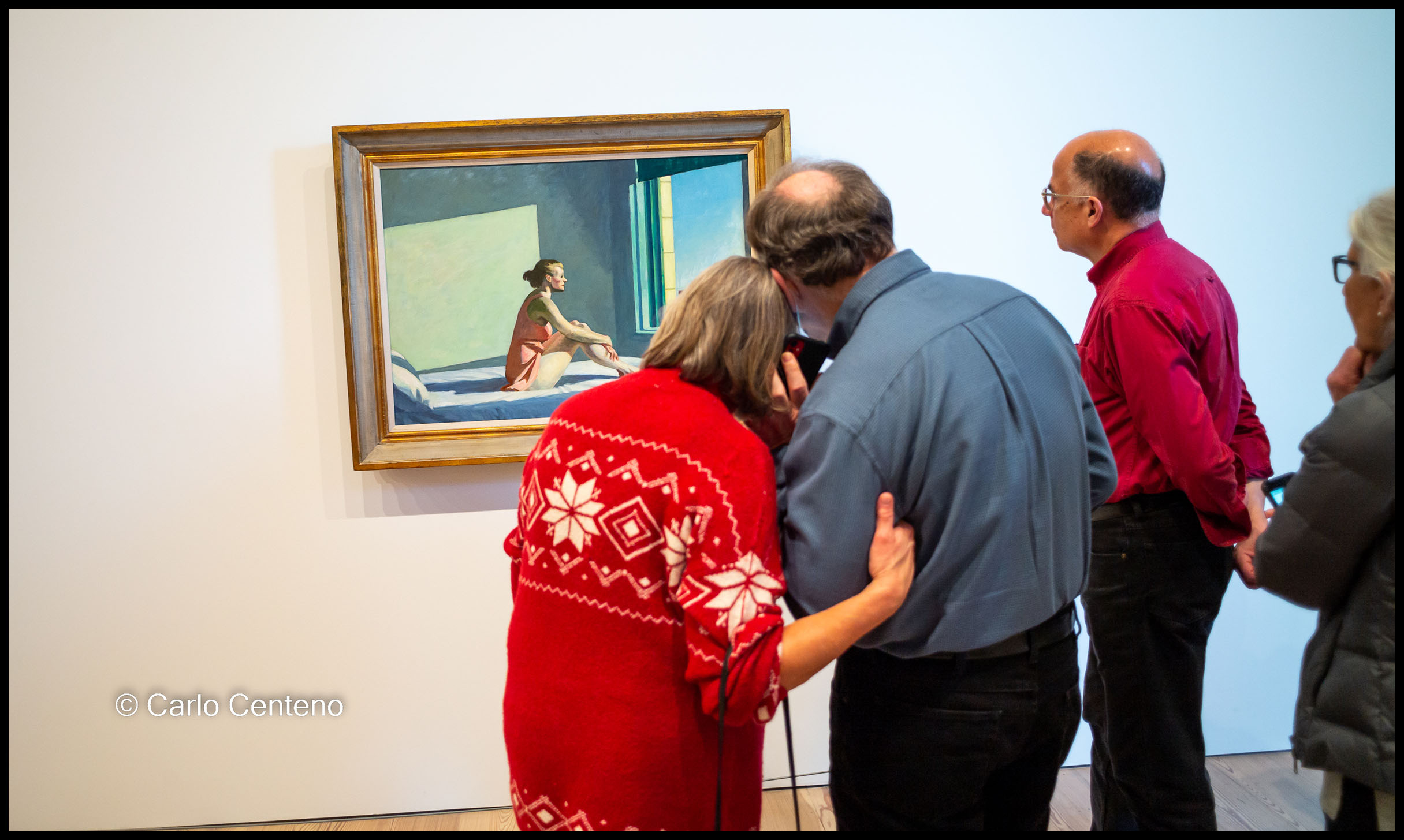
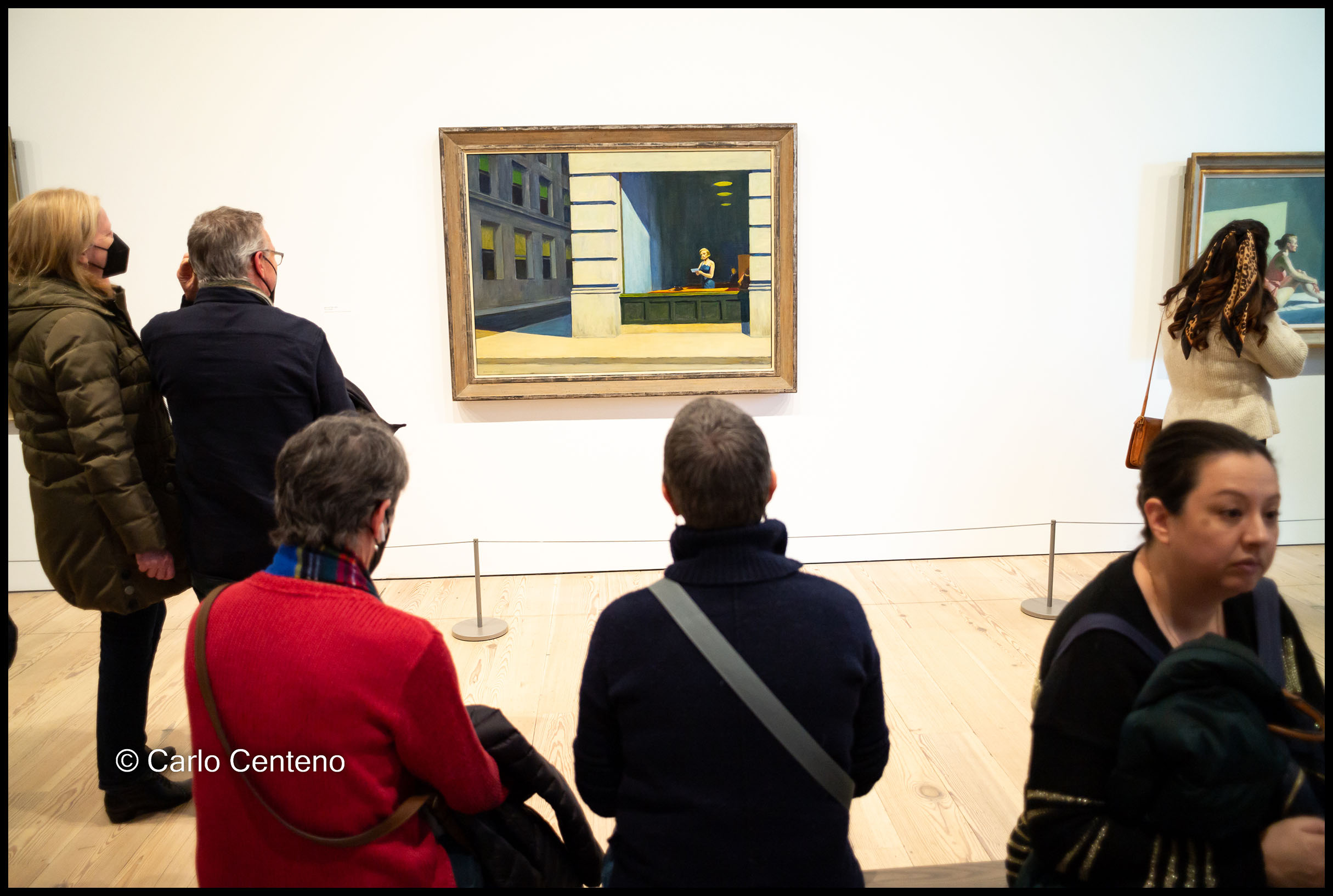
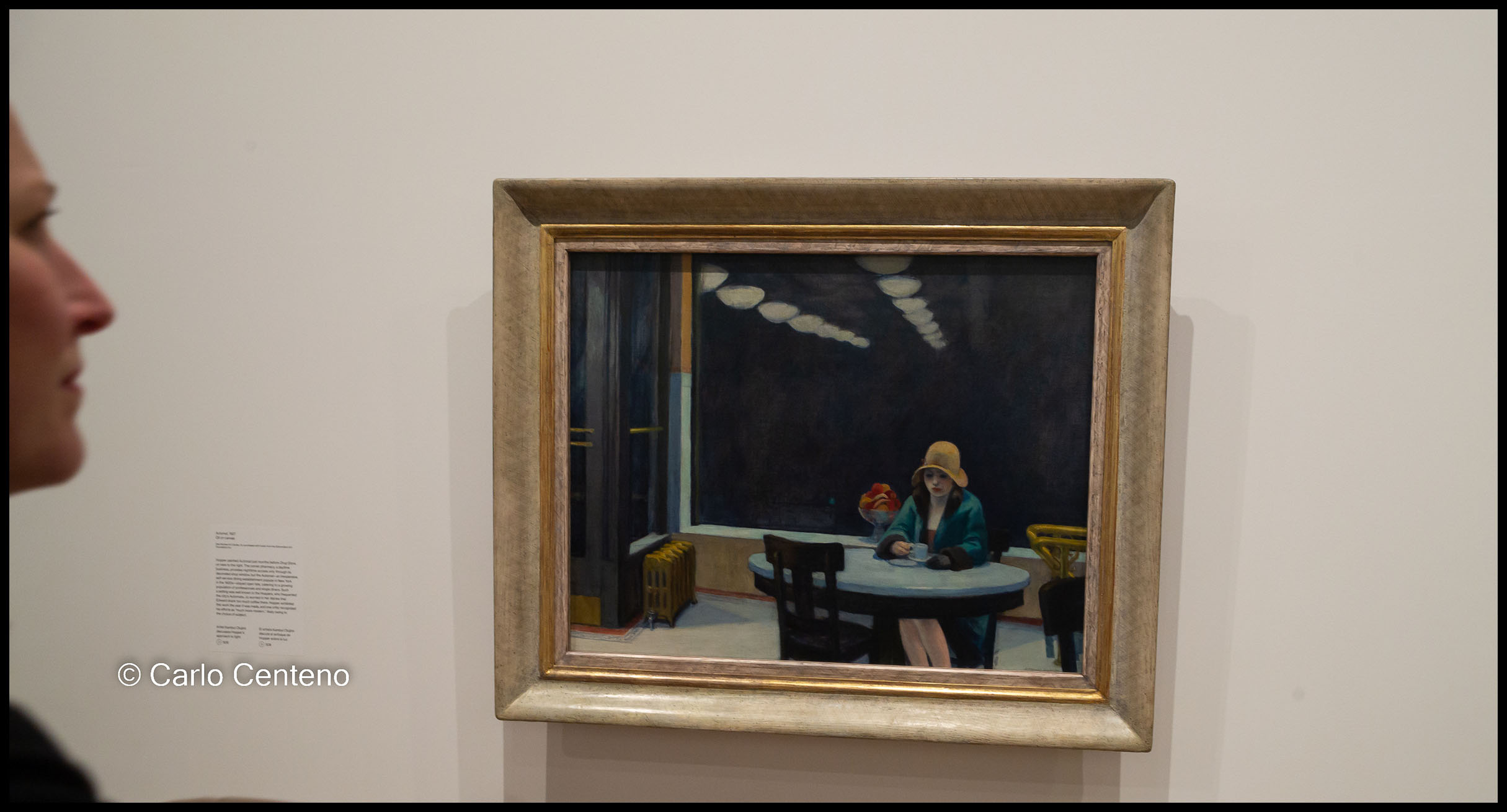
The Whitney Museum of American Art in NYC has a special exhibition of Edward Hopper, the American iconic painter of urban realism. The exhibit [October 19, 2022 to March 5, 2023] has a strong focus on the art he created during his years in New York City, a place he and his wife, Josephine, called home for six decades.
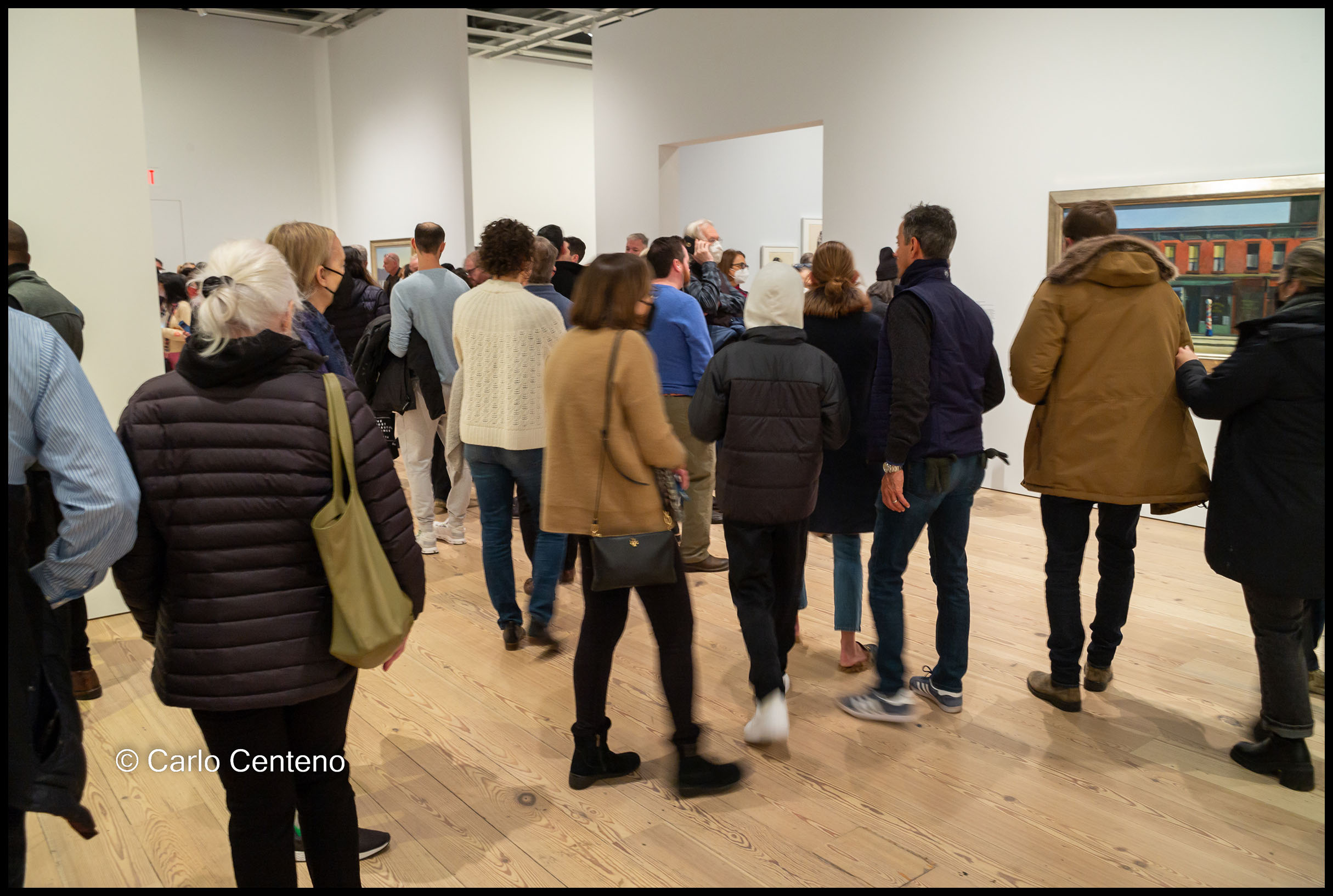
Art in its many forms gains additional attention when a curated exhibit or installation comes to life. This exhibit in particular, has an energy, an aura all its own, and rightfully so. It is the amalgam of place, time period, subjects & themes, and of course the painter, that creates this palpable energy.
Attending such an exhibit was made more interesting by the number of visitors who specifically chose Edward Hopper’s New York. For me the cacophony of conversations [often in a foreign language], the reactions and expressions all added to the experience. Out from the windy, brutal cold and into a cocoon of life, the next couple of hours felt theatrical.