Discovering Creativity in Art: A Personal Experience

When you’re bogged down with writer’s block, creative fog, even brain freeze, what do you do to break free from its hold? Here’s one way to purge the hive of such impediments. Go to an opening, an art exhibit, perhaps one which deals in a medium that you know little of. In my case, think fabrics, paper and ceramics and other materials—either in combination—or crafted exclusively with fabric. An oversimplification, but a few photos can better illustrate the creations displayed at the exhibit, Beauty is Resistance, our Fall Art in the Barn Exhibtion. I was impressed with the inventiveness, originality, concept development, creativity, and overall execution of the various pieces.

At browngrotta arts, co-curators Tom Grotta and Rhonda Brown have managed original art, crafted by internationally recognized artists for more than 3 decades. My “introduction” to the pieces of art at this exhibit was an A-1 engagement of diminishing my brain fog, creative block and so on. Neither words nor photos can describe the pieces. This is a case of what I actually see and feel is amazing, because of what is physically in front of me. A demonstrative be-in-the-moment activity, to say the least.
So, please take a moment to peruse a small sampling of what was on display.

A special thank you to Tom Grotta and Rhonda Brown for their hospitality and sharing their knowledge about the artists, the scope of this exhibit and their anecdotes of life in international Art. Photography: courtesy of Tom Grotta. All rights for the images and the Art are those of the artists.

Home artist Lija Rage; mixed media, wooden sticks, linen and copper [2-panels; detail shown in second image].

From Chaos to Reality artist Aleksandra Stoyanov; sisal, cotton

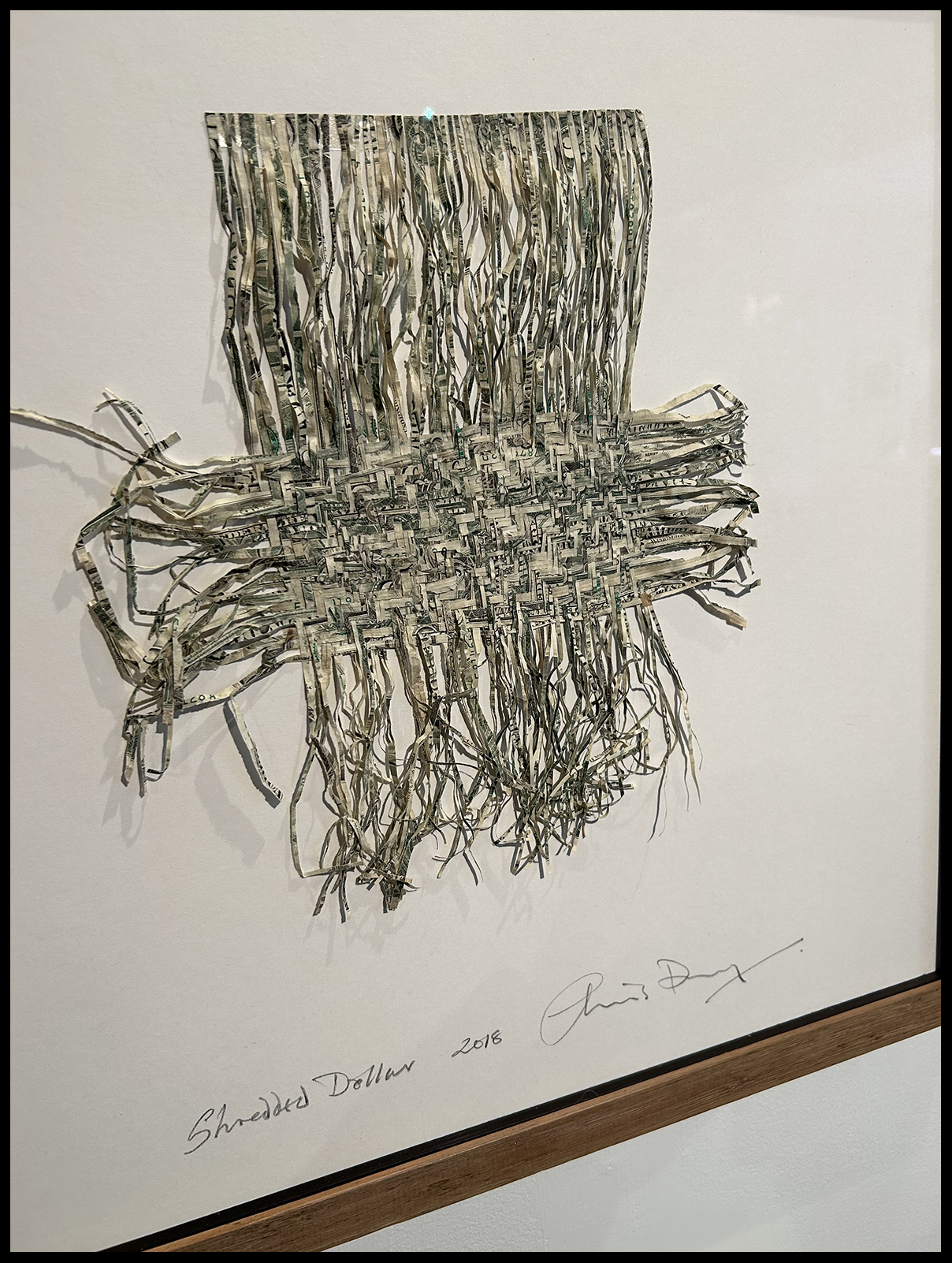
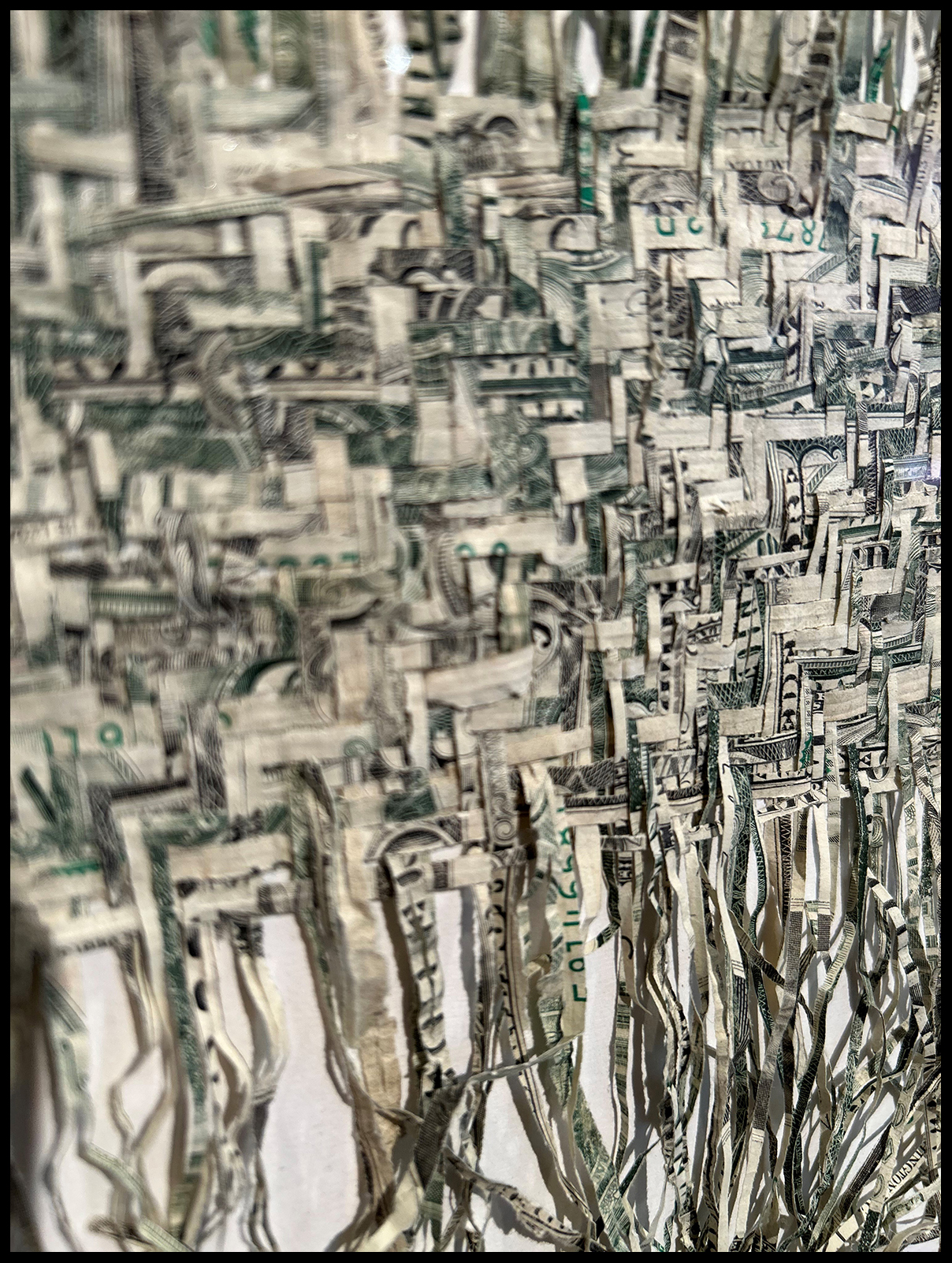
Shred dollar artist Chris Drury; US currency [detail shown below]
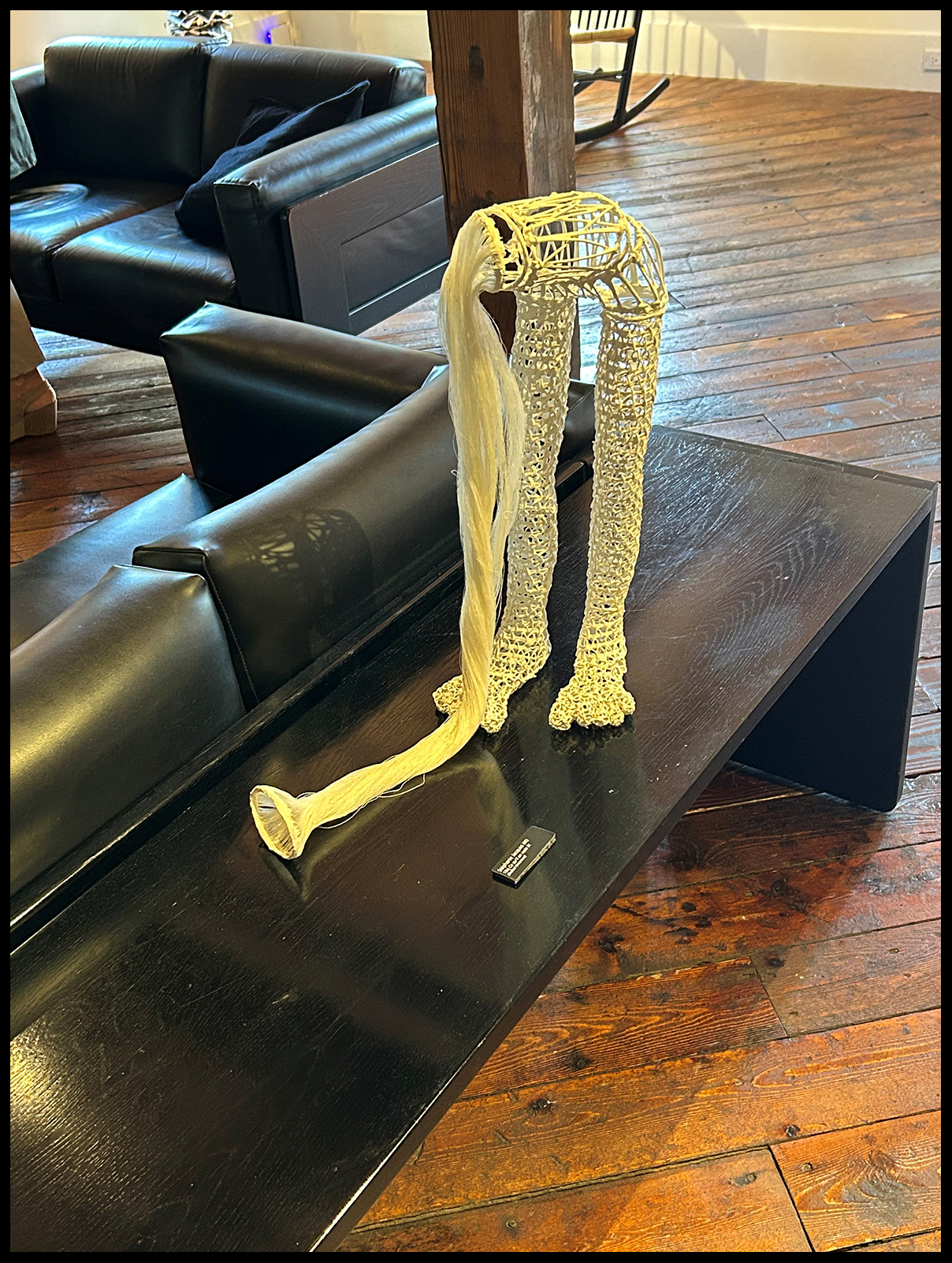
Female Husk II artist Anda Klancic; torso [from Momento Mori composition] with cone; palm tree bark, synthetic filament, acrylic, and metal wire

Ce qu’il en reste IX artist Stephanie Jacques; willow, gesso, linen thread
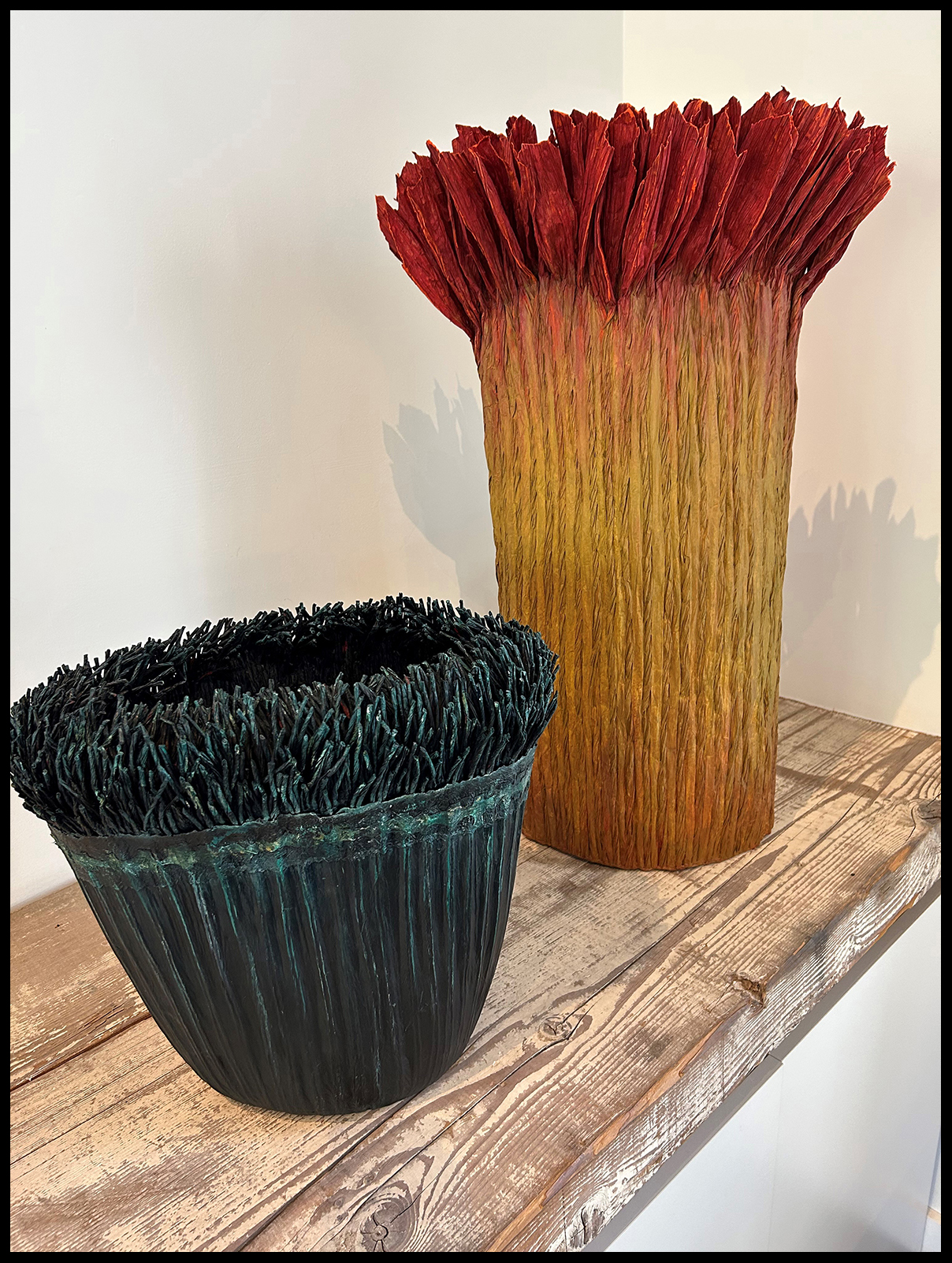
Flower Colors artist Mary Merkel-Hess; paper, cord, paper
Rhonda Brown co-curator
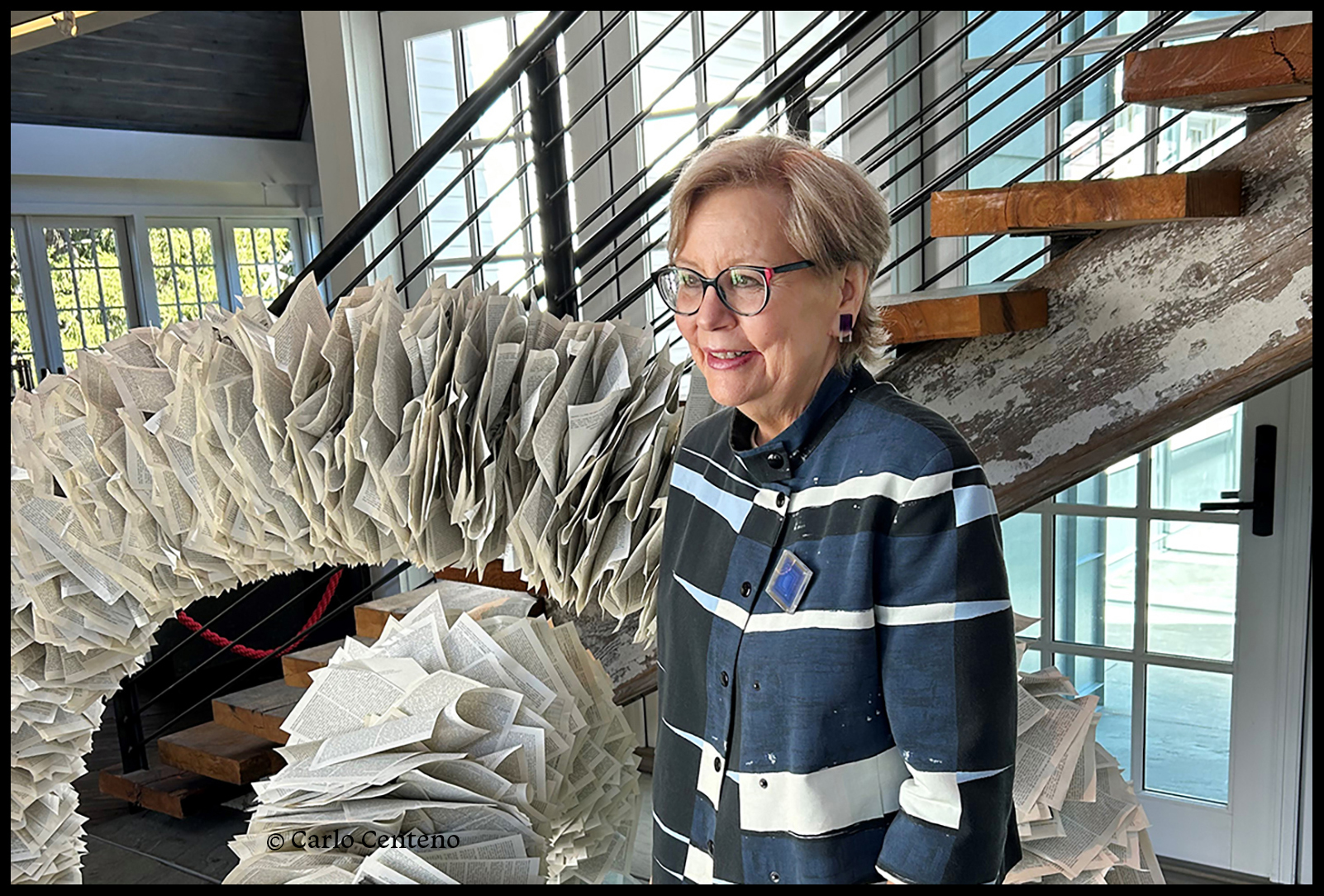
Tom Grotta co-curator

Photography a professional photographer, Tom Grotta created a display showcasing some of the literature and gear he has used through his ongoing career.

Navigating Dystopia: Finding Hope in Uncertainty

In our current state of dystopia, many of us choose to distance ourselves from news media in all its forms. All that noise creates too much anxiety, along with all the other discomforts that accompany “news and information.” We are exposed to a colossus of news briefs, articles and “breaking news at this hour” enough to ignite [or bore] the minds of writers/authors well versed in our state of fear, hopelessness, frustration, suffering et al.

Misery knows no bounds, but so does hope and happiness.

Relevance and purpose can hold both good and bad in thoughts and actions, but your choice in one or the other adjectives relies in your beliefs and values that help you deal with your day-to-day. You may not realize–or even think about–your own stoic qualities.

Consider the opening paragraph of Charles Dickens A Tale of Two Cities.

“It was the best of times, it was the worst of times, it was the age of wisdom, it was the age of foolishness, it was the epoch of belief, it was the epoch of incredulity, it was the season of Light, it was the season of Darkness, it was the spring of hope, it was the winter of despair, we had everything before us, we had nothing before us, we were all going direct to Heaven, we were all going direct the other way–in short, the period was so far like the present period that some of its noisiest authorities insisted on its being received, for good or for evil, in the superlative degree of comparison only.”

When you realize you can’t control everything, but manage the ones you can, then you’re in a better place than many others.

Festival of Flowers

courtesy Michelle & Donald D’Amour Museum of Fine Arts

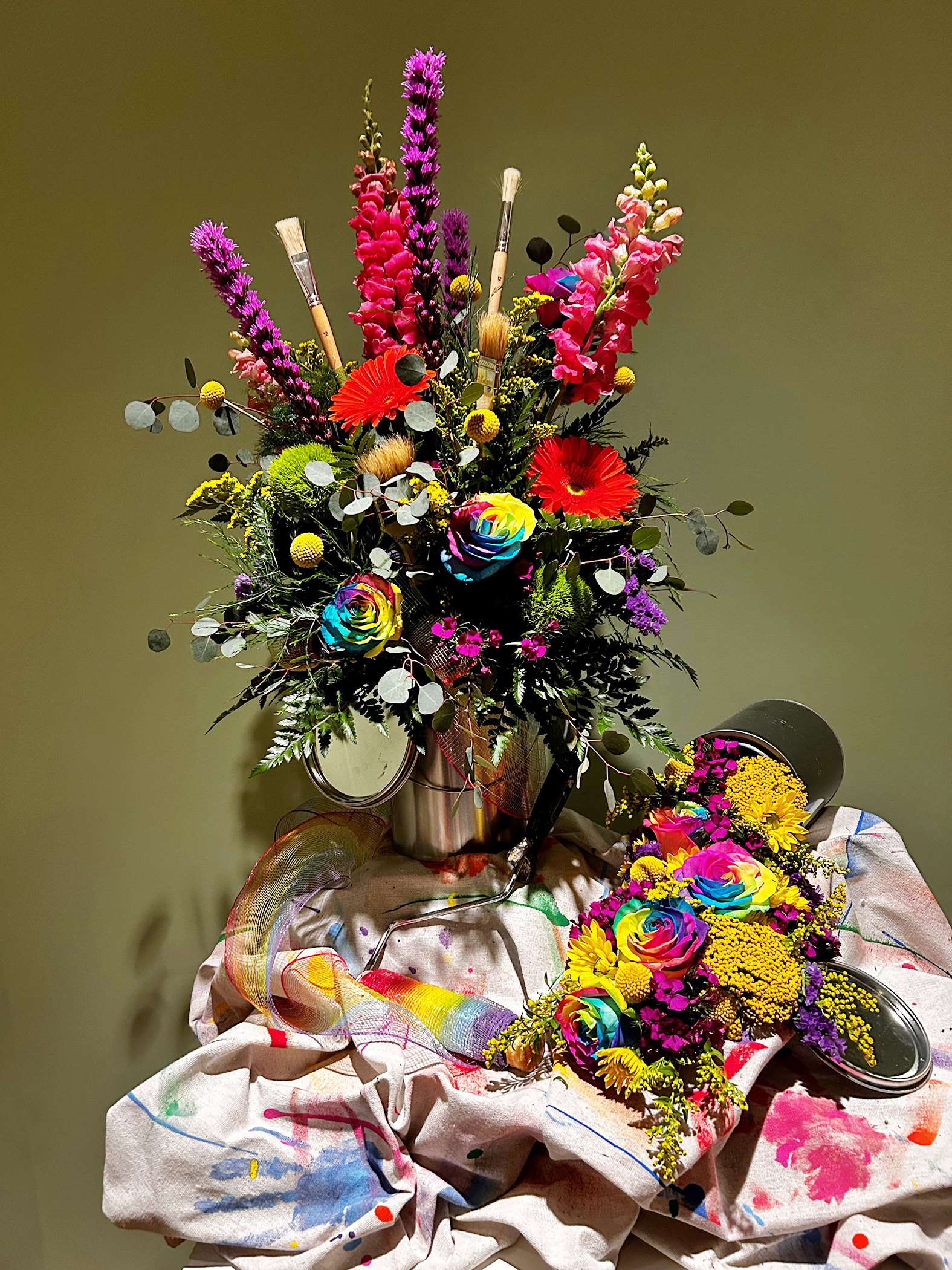
In each of the four museums that make up the Springfield Quadrangle, members of gardening clubs and florists based around the area created arrangements of colors, textures and other details in a manner that would intersect with a selected painting or other creation within the museums.

The creativity range was as eclectic and electric as anything I’ve seen, simply because of the relationship that attempted to “unify” two discreetly different pieces of art.

The juxtaposed subjects provided depth, perspective and of course relevance through the use of color and hues, manifestations of the blending of material, thread size, color, props, textures and so forth.

Some arrangements did not have a direct connection to a piece of art in the gallery. My sense is that such arrangements–such as the one displayed above–were created to compliment art already sitting in that room.

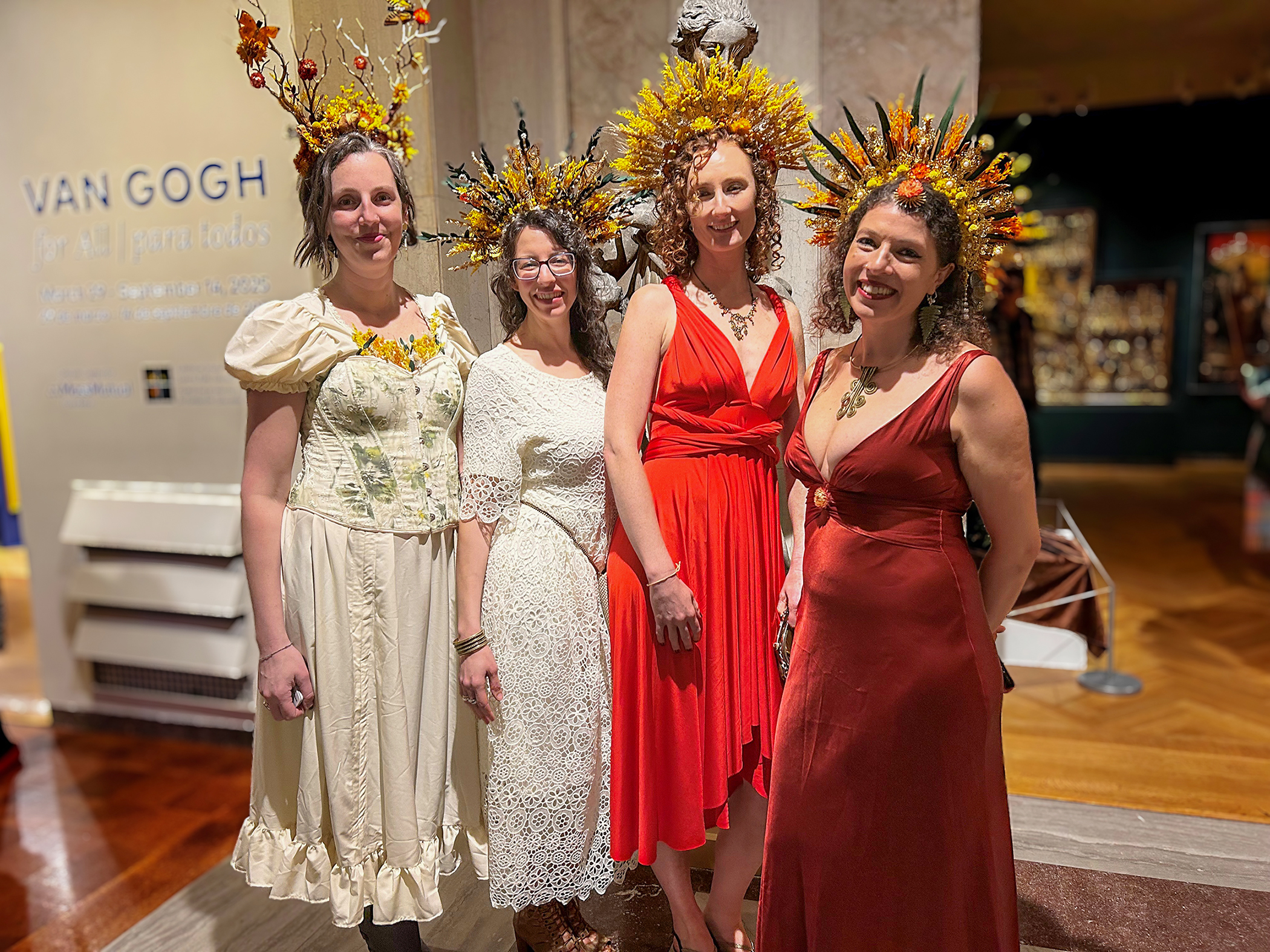
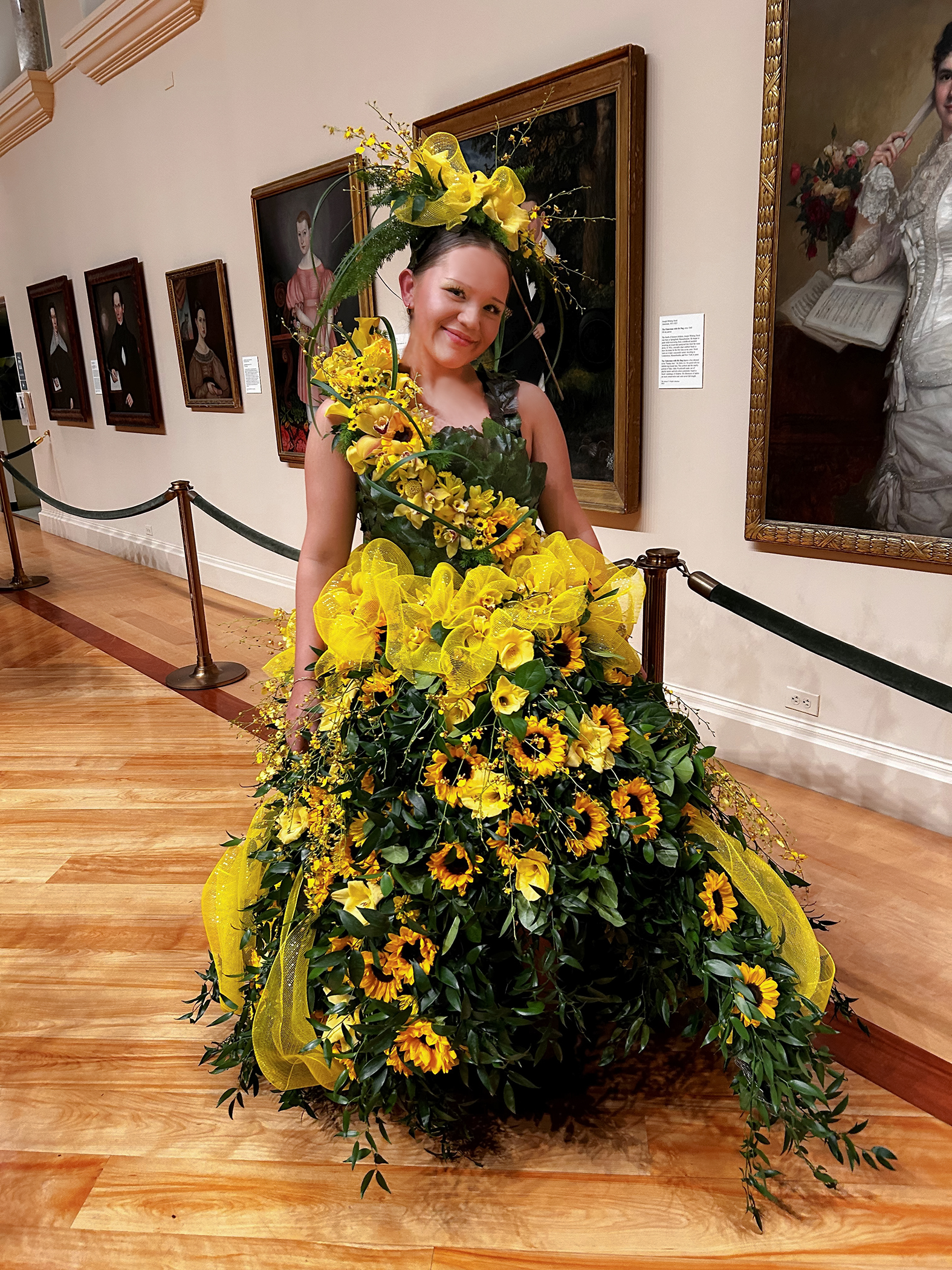
From headwear and accessories to…..

….gowns made entirely of real greens and flowers, the creativity was beyond words! Next April 2026, should be an interesting installation! See you then.

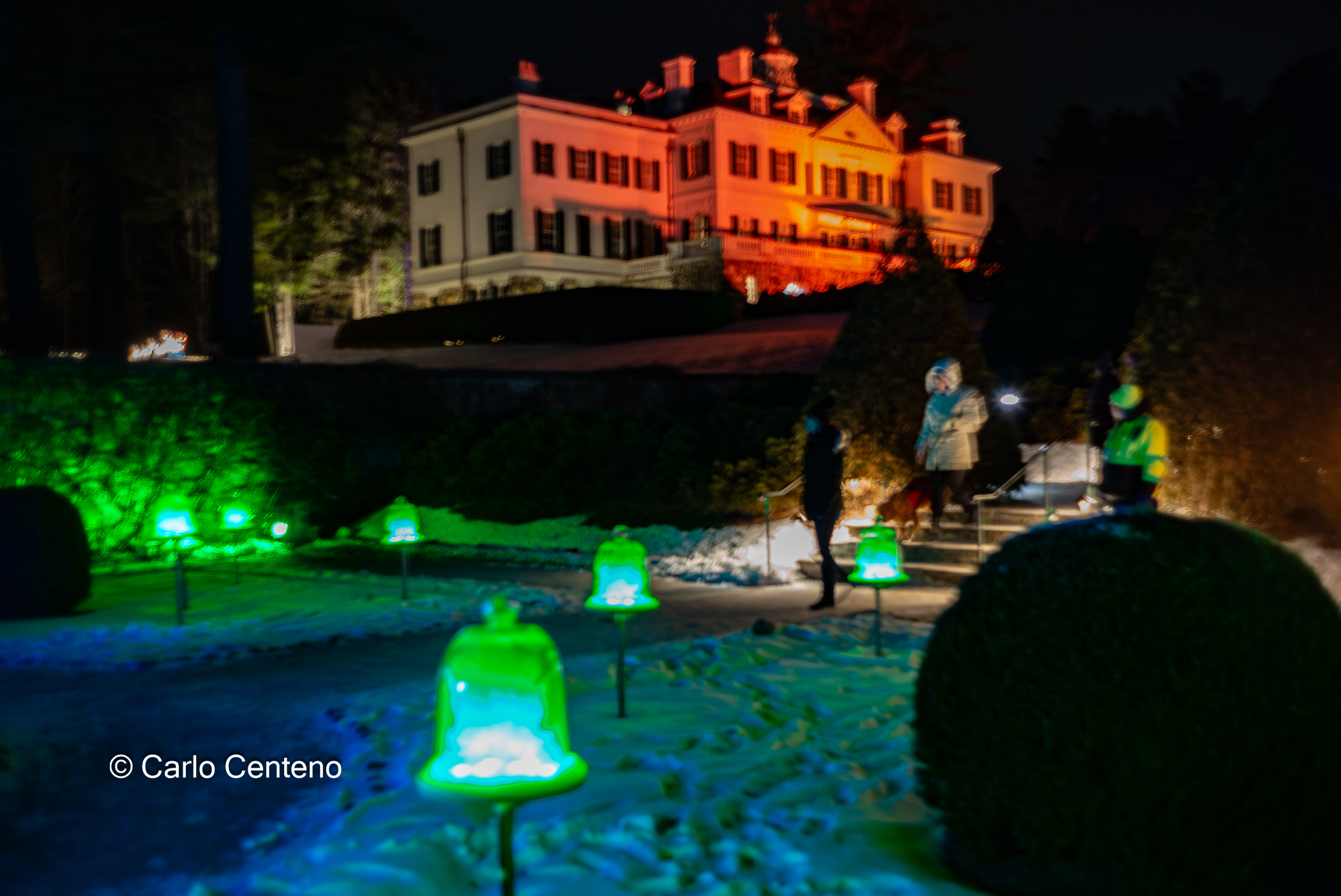
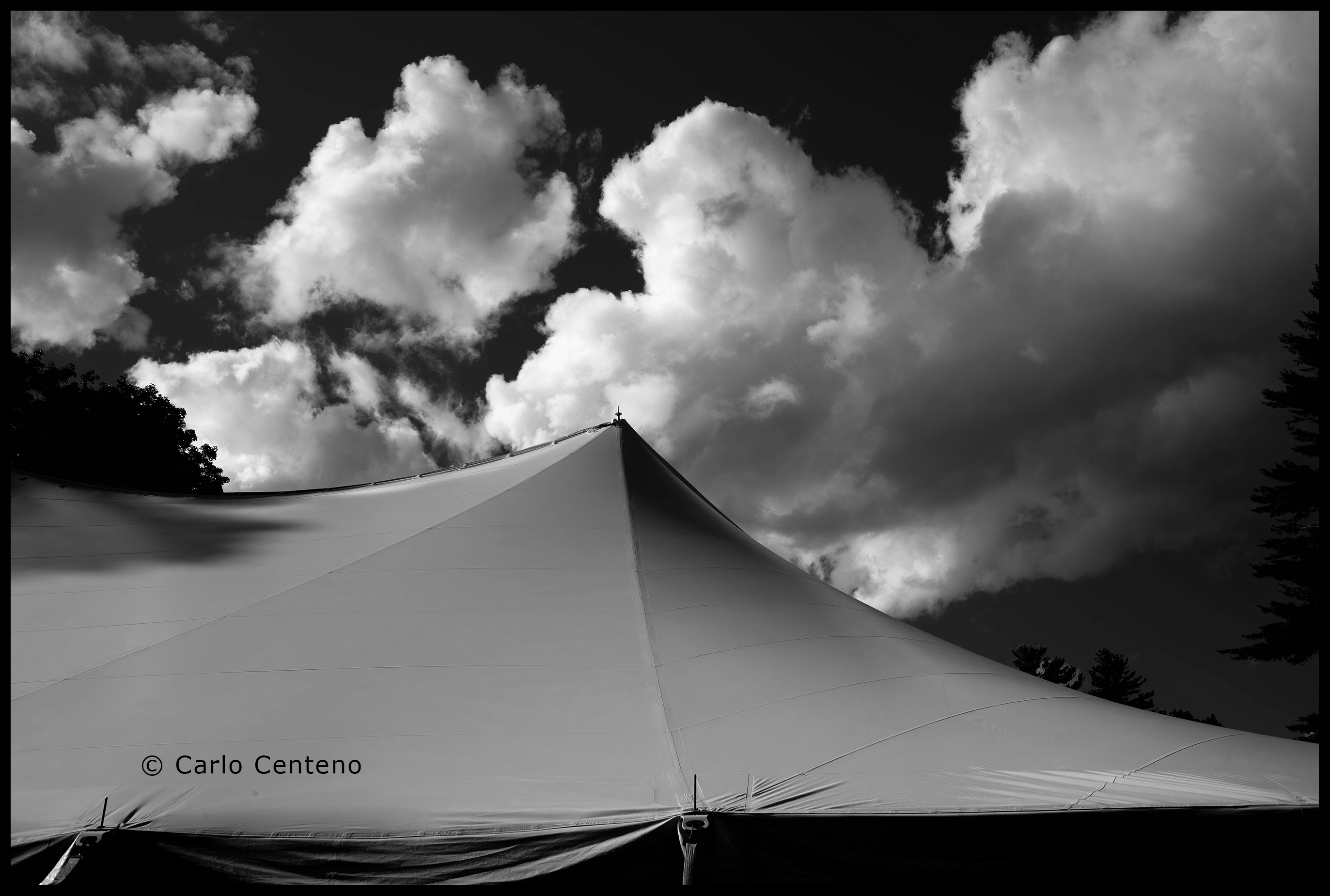
WinterLight-2

I’ll admit that it can take a lot out of you when winter conditions pin indicators below the norm [temperature, wind chill], or above the line [accumulation and severity of snow/freezing rain/sleet]. By February, a good number of folks are pining for—some hoping through a telekinetic event—the arrival of spring.
Yet in spite of our incongruous sentiments about winter, its been said that residents of Scandinavian countries can make the best of it.
Perhaps their overall acceptance of this perennial cold, snow and short days has something to do with the their countries having “the happiest people in the world.” Is there an attitude, a perception that we’re altogether missing? Warmer clothing compared to ours?

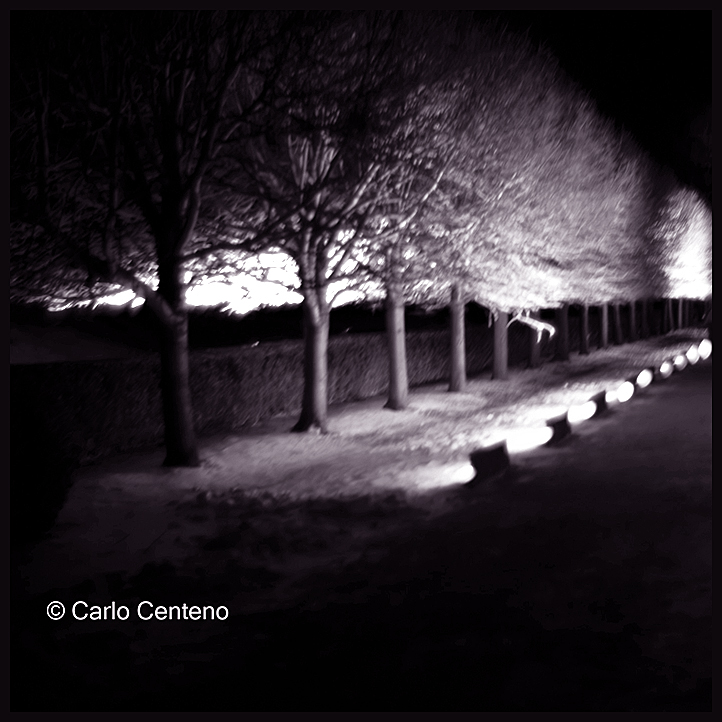
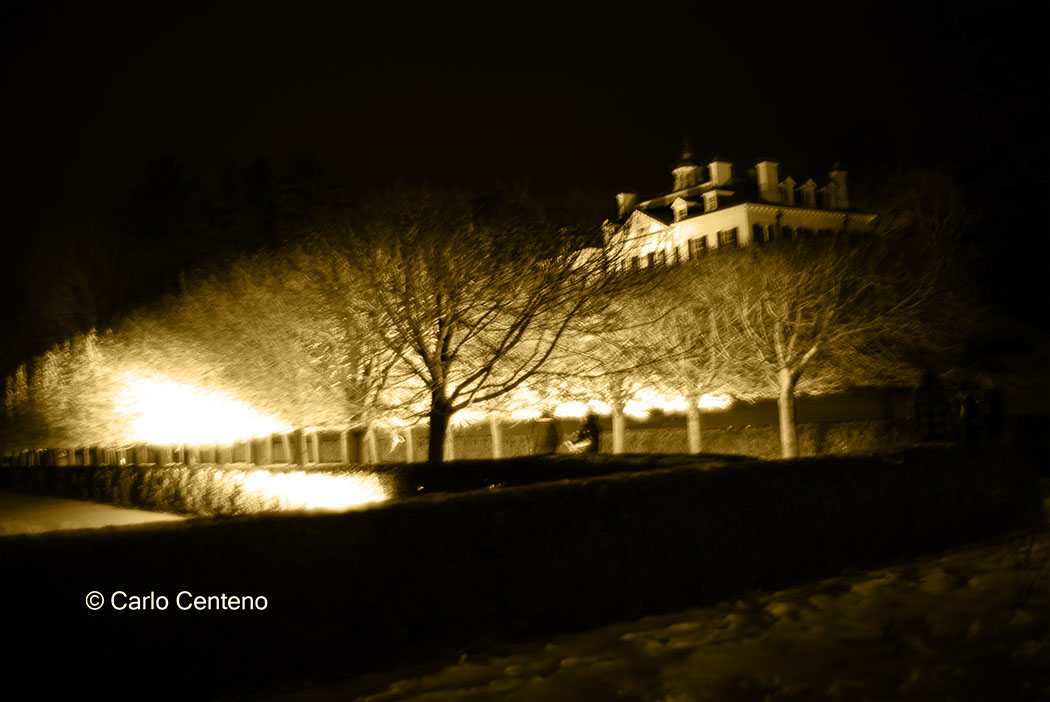
We’ve [me and my wife, MJ] made treks to the Berkshires all year long with additional stops during winter. Some of these stops included special outdoor exhibits of which 2 come to mind: The Mount, Edith Wharton’s home, and also at Naumkeag Estate. The photos posted here are from Nightwood, and it was a wonderful stroll along the garden pathways and woods at The Mount.
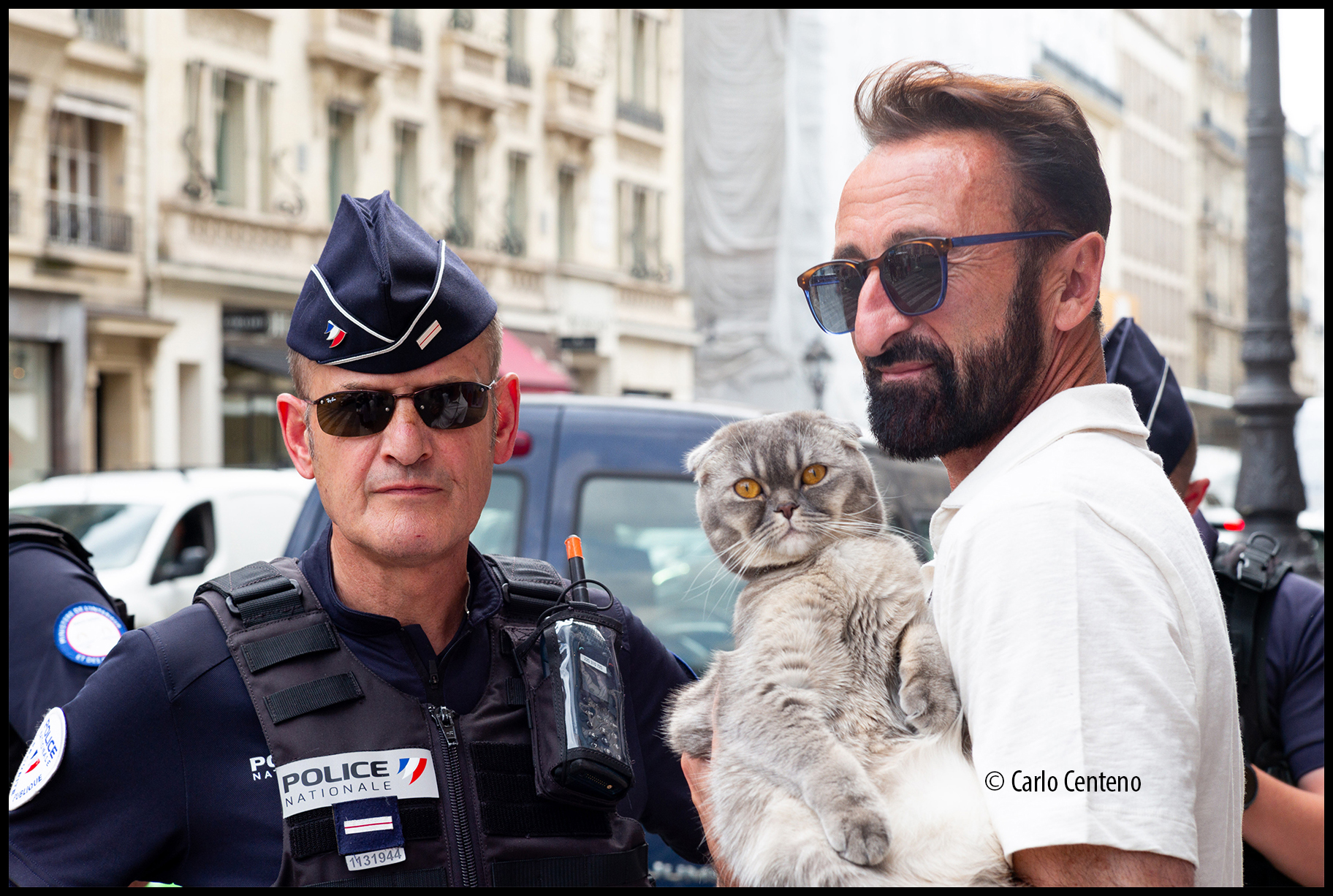
Appropriate winter clothing makes a big difference; it does get colder in the Berkshires. Key details: wool sweaters, base layers, even hand warmers.
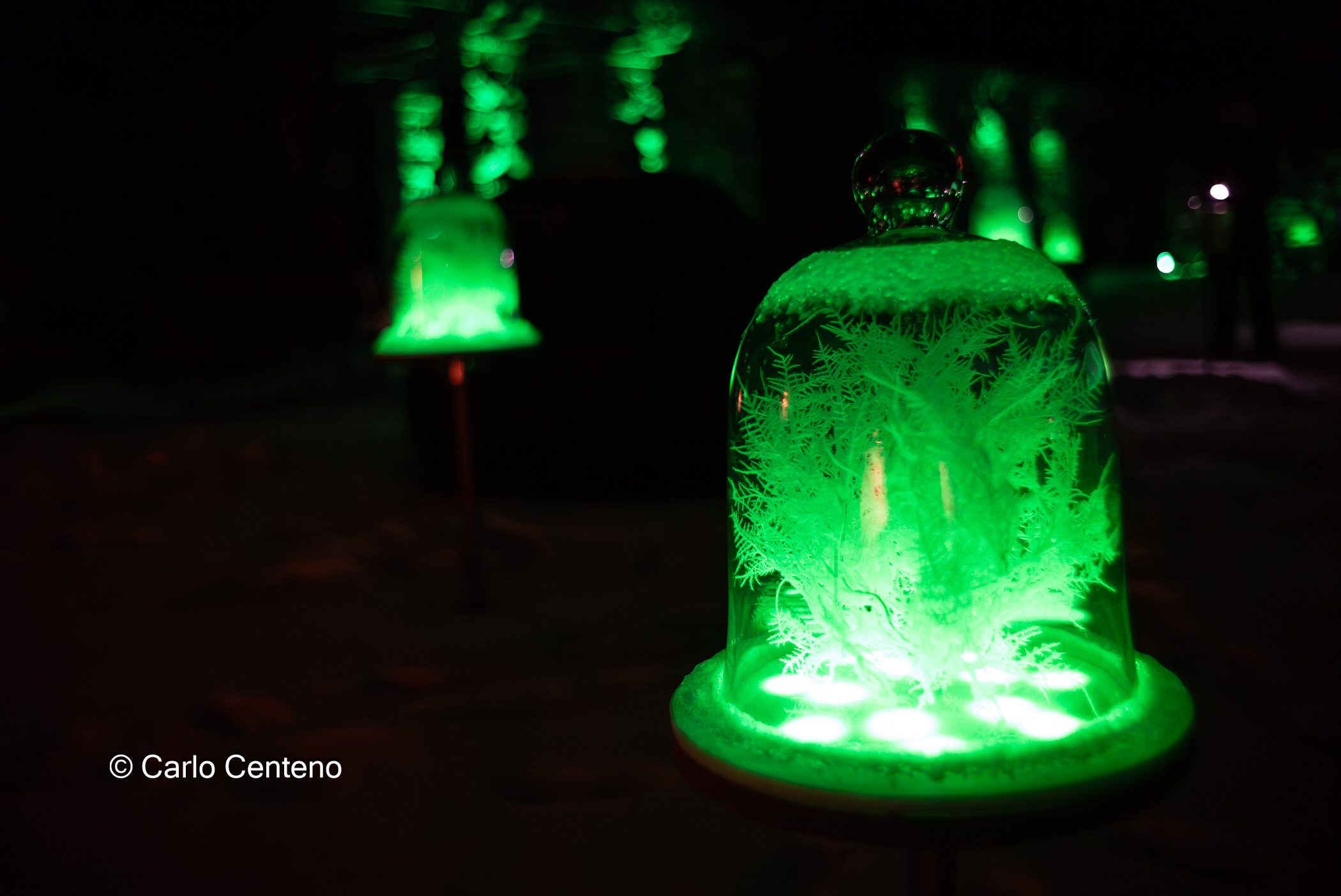
Along a mile-long path cutting through the woods and gardens, the exhibits appear like waypoints on a map. Each installation carries its own interpretation of light, while an original music composition aurally ties everything together.

My interpretation of The Mount exhibit centered around the intensity of each installation, vis-a-vis the light itself. Using B&W images had provided [for me] a key, old-school tenet of imagery: simplicity allows interaction between the visitor, and the subject at hand. Put another way, monochromatic images transcend continuity. Color images offer validation to what we see because we readily see color. Yet color can be distracting. Not a slight, but just a matter of fact.
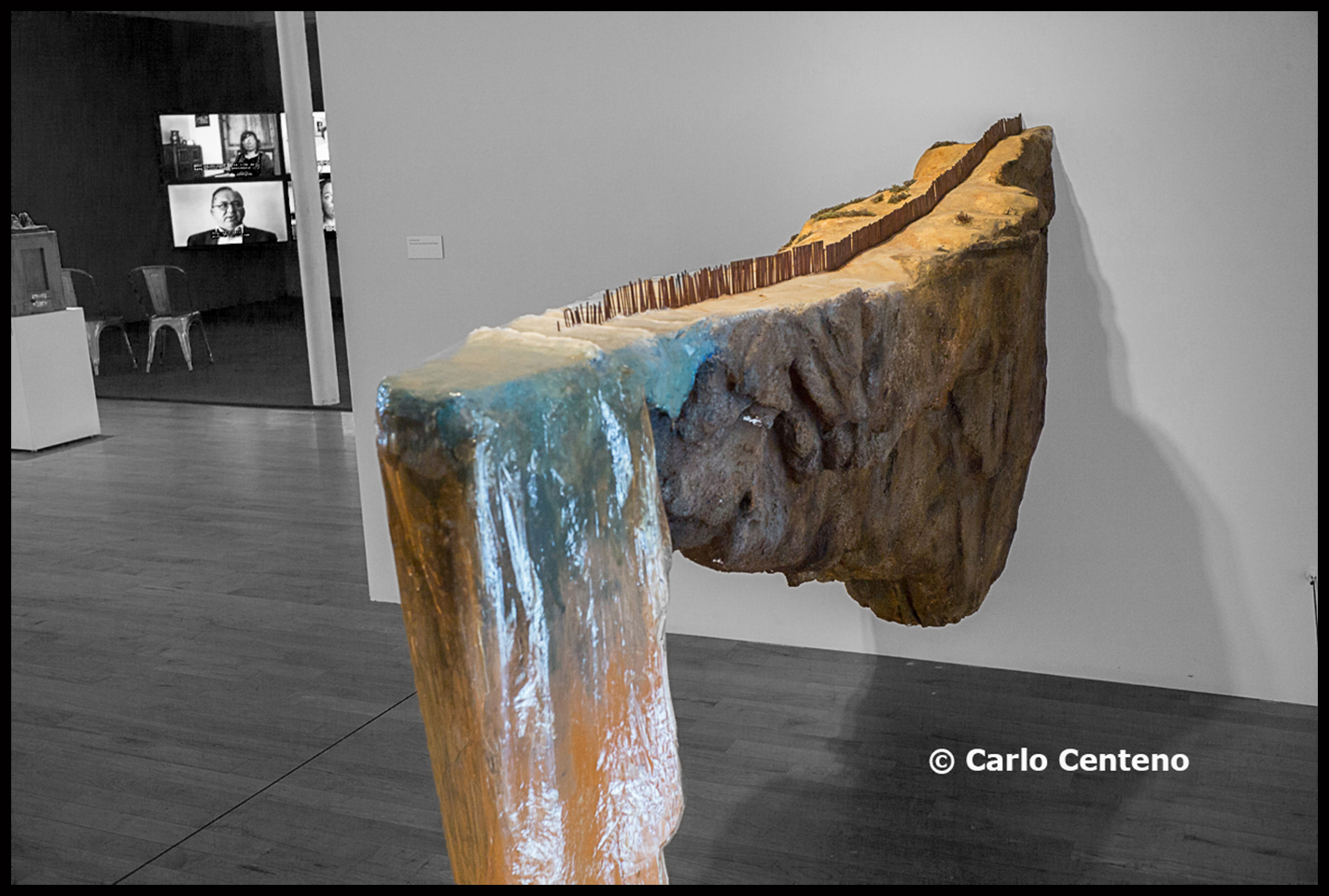
For me, I’m drawn to B&W images because of its tonal consistency. Black & white does not have the influence of color, and yet allows me to see the entire image and all its nuances.

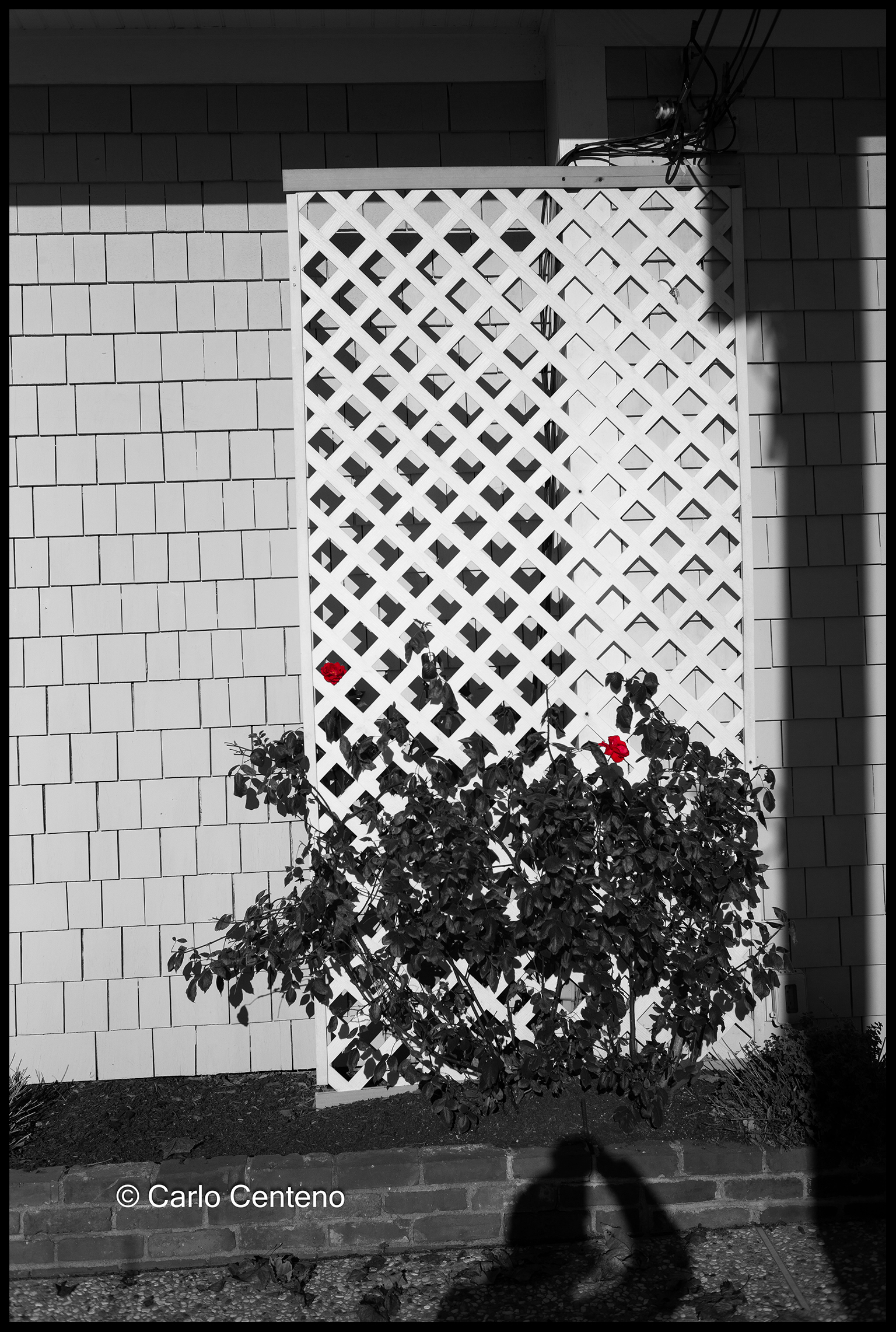
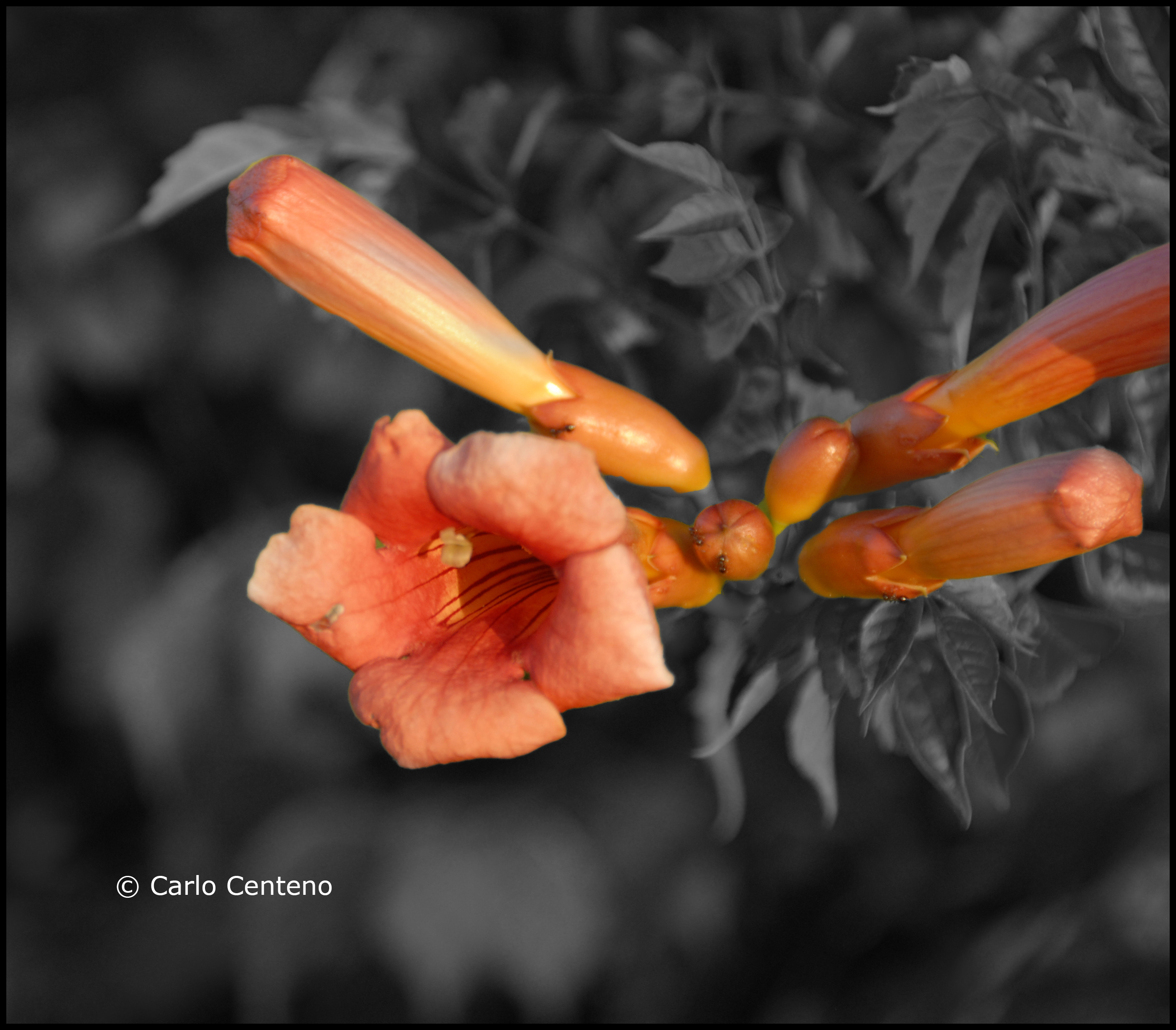
I, along with others like color images , but there are times when color feels more like a distraction. A single color that’s part of a smaller detail is enough to pull you away from the whole and down into a rabbit’s hole. Still, B&W does have a way of binding together the elements that make up the photograph, all within the inimitable, ever valid black & white palette.

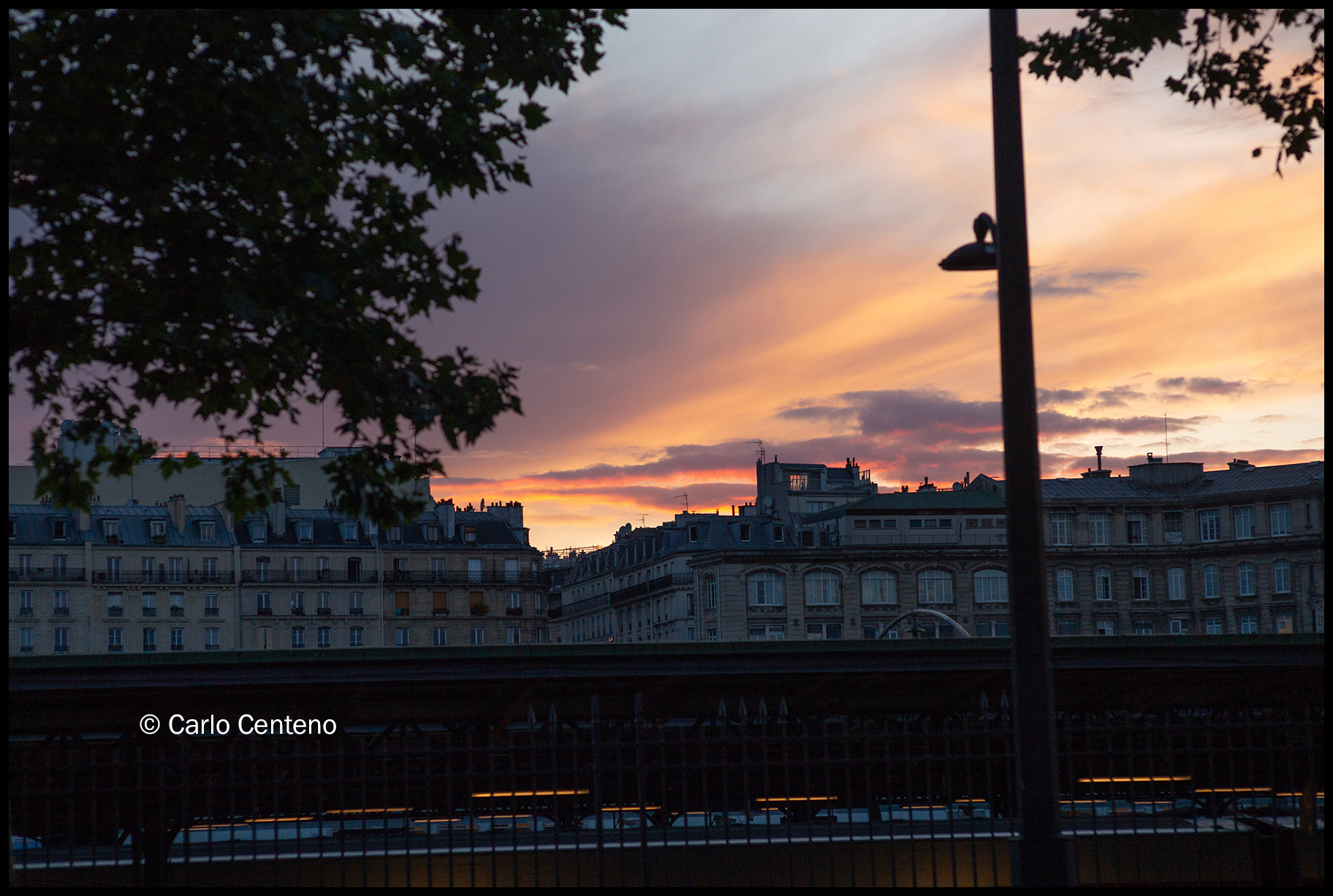
Un Point de vue Parisien

A Parisien Perspective

Keep an open mind. It matters when traveling to any destination that piques your curiosity. Whether it’s a neighboring state/province or an altogether different country, it requires elasticity in learning, appreciating and understanding. An open mind can open doors. It means possessing a willingness to be out of your comfort zone. And as you stand in your discomfort, your perspective may need adjustment or refinement. This is where you take the initiative to help others see your perspective. Naturally this requires staying attentive for the different position[s] you may encounter. It’s fine to disagree without being disagreeable.

Remind yourself that having an open mind tames the myopia that limits one’s ability to think beyond your horizon of possibility.

Arc de Triomphe

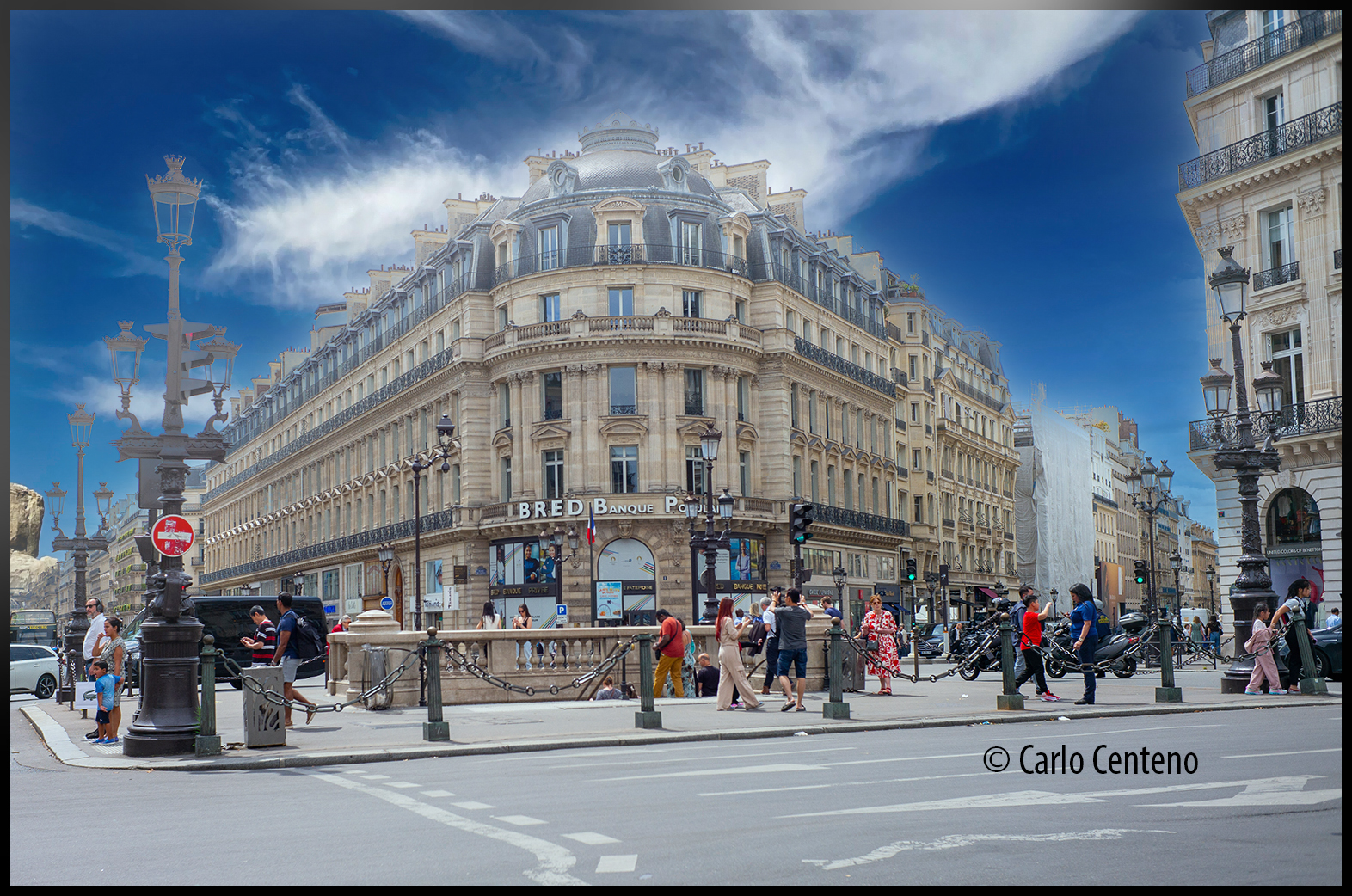
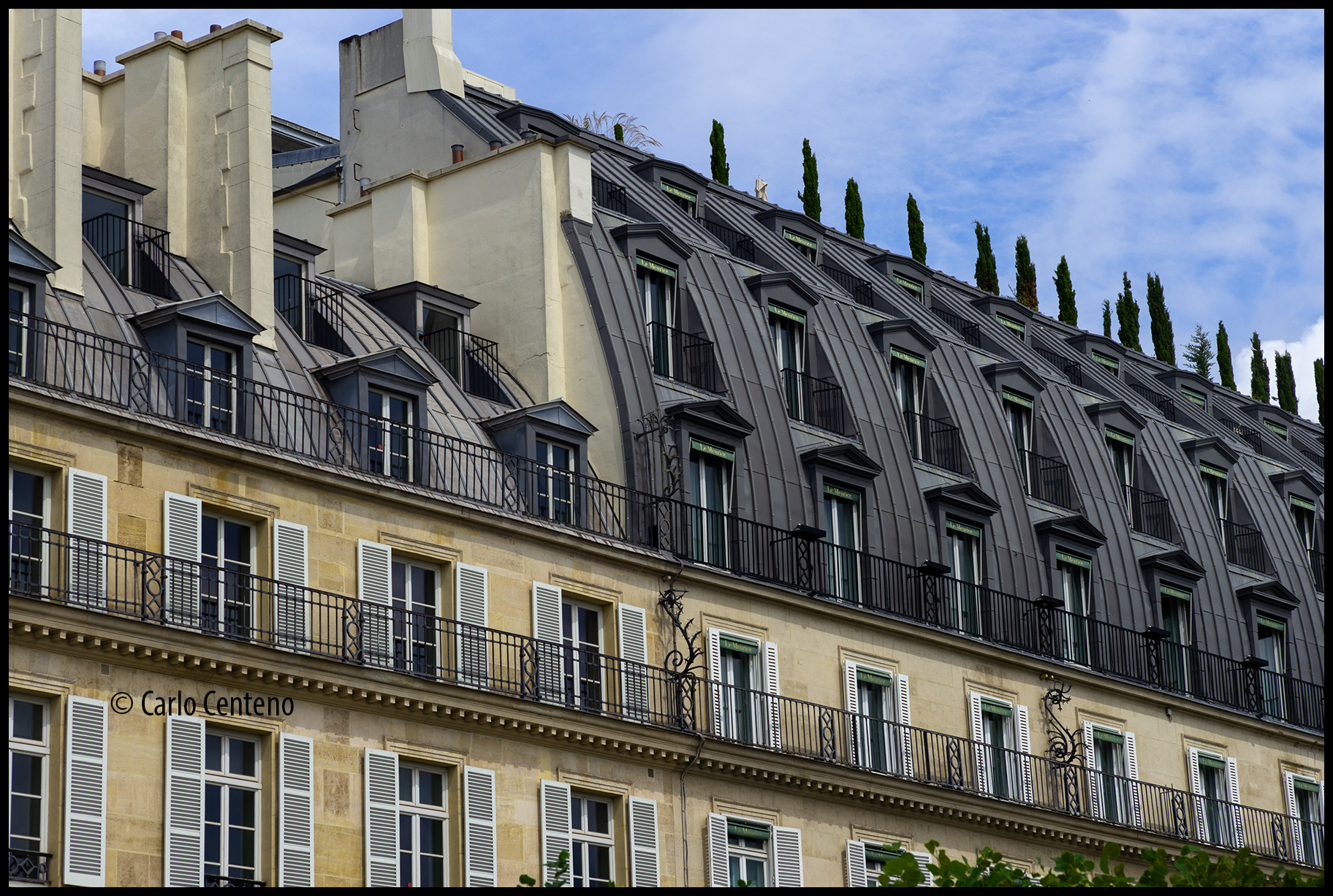
Eleven days in France this July made for quite a vacation. The coming of the summer Olympics turned Paris into a mixed bag of barricaded icons and walkways, detours and traffic. Our Parisian stay covered 3-days; not enough time to explore Paris, but 3 is better than none. A first visit to another city is as they say, an experience. Visually, aurally, olfactorily you cannot ignore the architecture, the gardens, the people, the language, the aroma of freshly baked croissants, baguettes and coffee and so on and so forth.

After Paris the next 8 days would be at Vignon-en-Quercy in southwest France. Fortunately, our flight back home was 7-days before the opening ceremonies, and we knew that more walkways and some open areas would be cordoned off. Predictably, logos and phrases proudly reminded of The Games coming to town. Still, nothing took away from our sense of discovery in this storied city.

We had thoughts of visiting the Louvre, Musee d’Orsay, among others, but the detours and limited access made it a physical and mental marathon. We were close to those museums and other points of interest as they say, but we unabashedly savored our quiet time in the Jardin des Tuileries, a garden between the Louvre and Place de Concorde. In a more relaxed pace, we enjoyed le Jardin and even took advantage of the cafes within the grounds. Seeing the Louvre from a different vantage point provided an unrushed appreciation for a 231 year old institution.

Le Louvre
La Place de Concorde/ courtesy Paris Visuel
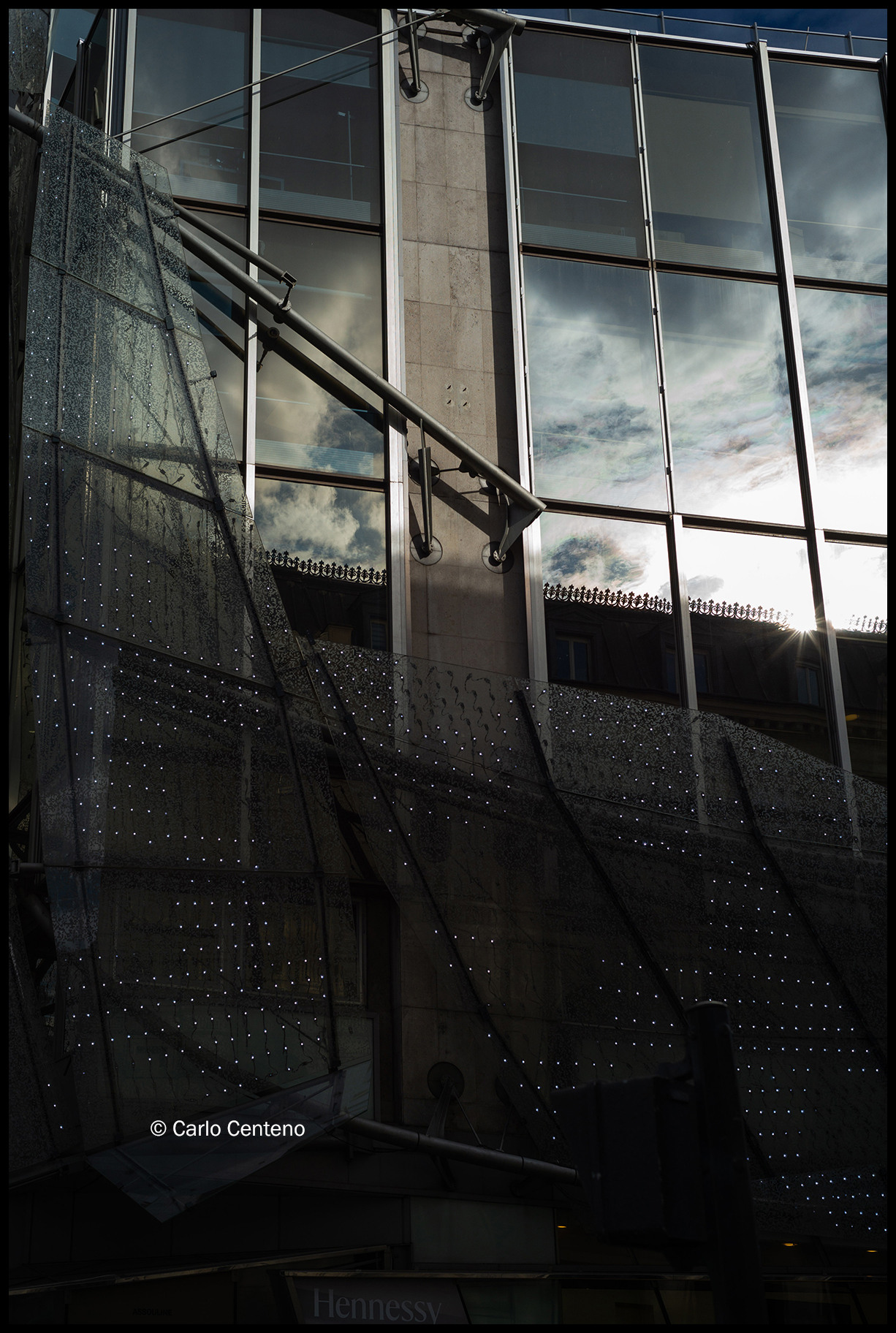
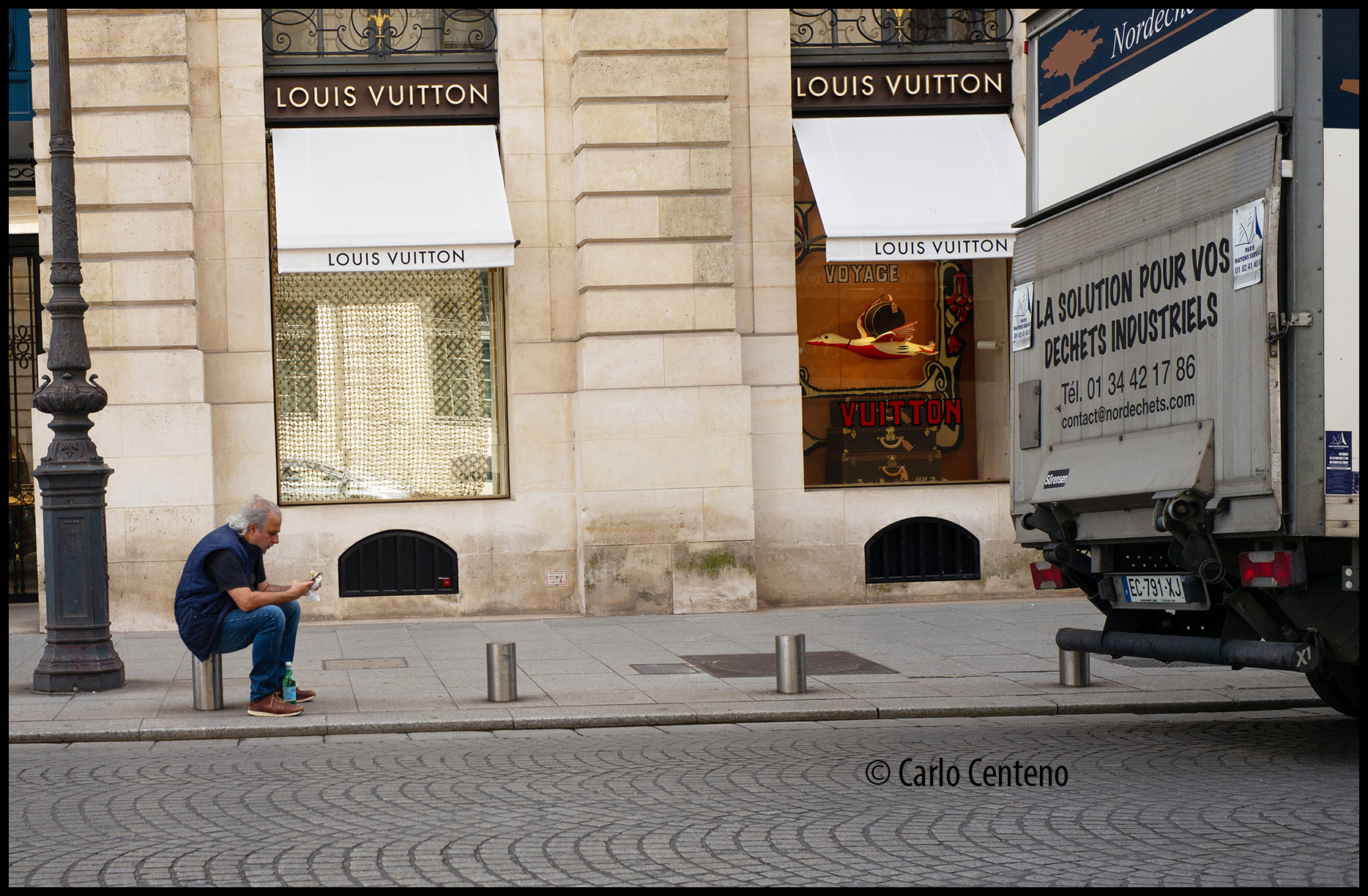
Detail de l’exteriur de Louis Vitton
Pedestrians be Careful Cross in 2 steps

We thought of adding 2 more days in Paris. It would’ve certainly helped my french conversation, but other plans were already in place. Entering any business or eatery, saying bonjour is always helpful and polite. After the greeting, the most frequent words from my mouth were, Ou est…? or quelle direction est…? or pardonnez moi, sommes-nous pre du……? and of course, merci, bonne journee!

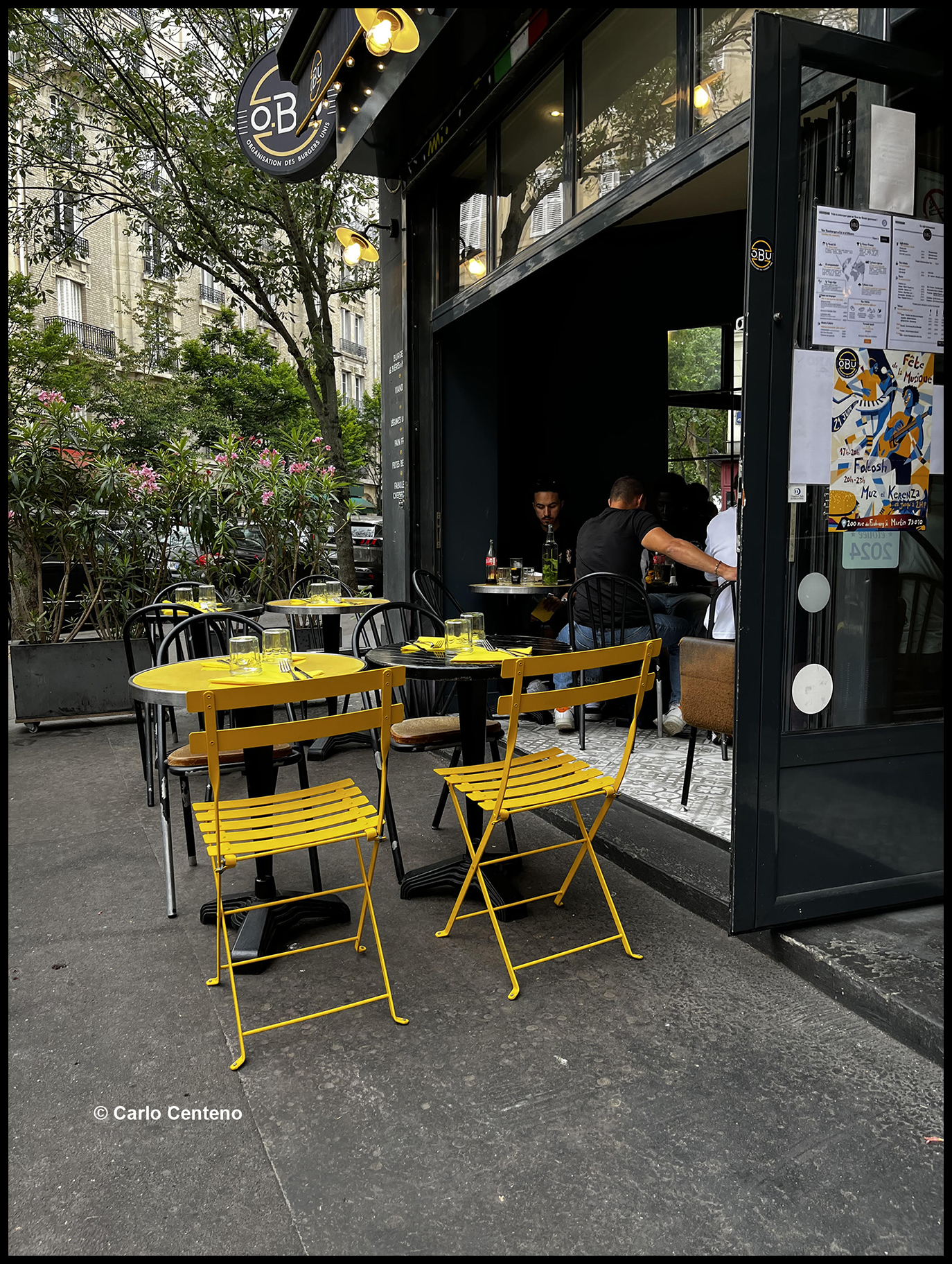
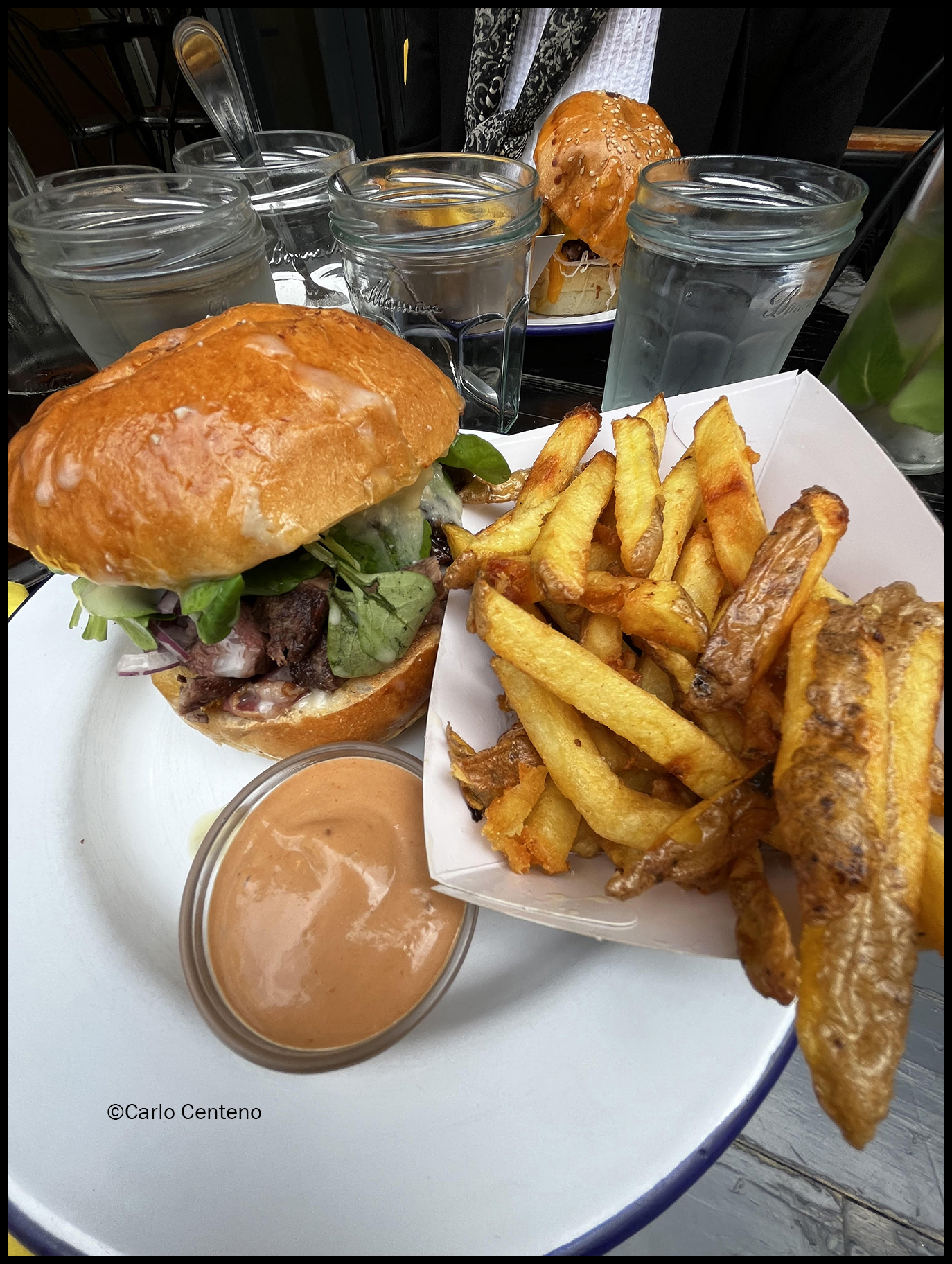
Our first morning, we walked to a bistro teeming with commuters and visitors. The menu on a sandwich board offered something we liked and I recognized: Petit déjeuner supreme ! Deux œufs [au choix] avec jamon et frommage, cafe, jus d’orange, baguette, croissant, confiture de fraises et salade. [Supreme breakfast! Two eggs any style with ham and cheese, coffee, orange juice, baguette, croissant, strawberry jam and salad].

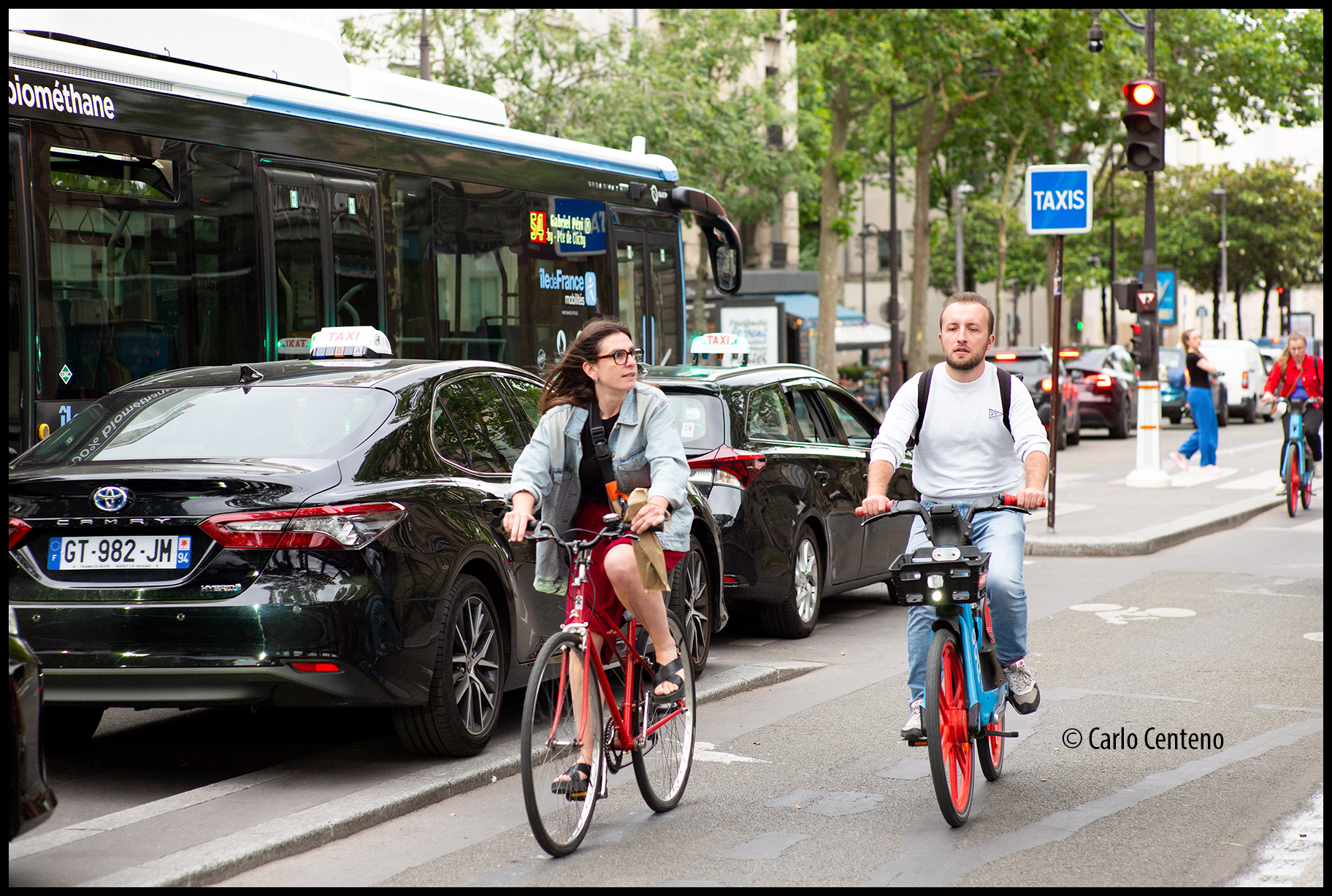
We sat outside among a cluster of small tables and chairs, but the waiter advised we sit inside, though not far from the open frontage. Il y a trop de fumee dehors. Too much smoke outside as cigarettes are popular in most of France. It was a perfect time to watch people going on with their lives: scooters and bicycles carried a cast of characters; small french cars ruled the streets alongside taxis and Ubers, motorcycles and buses.

Based on our waiter, my french was so-so. Monsieur, I speak and understand english; you do not have to speak french…. Ouch. Polite but humbling. As he turned toward the kitchen order-window, I mumbled, C’est dommage….it’s a pity, too bad.

“The solution for your industrial waste.”

NEXT VISIT: a week in the town of Vignon-en-Quercy [….See you there.] !!!

Pursuing Longevity

The British Medical Journal [BMJ] is a one of the world’s most respected and referenced publications on everything that deals with human health, wellness, disease and fields of medicine. Imre J. P. Loefler, MD [1929-1977] was a frequent contributor and an accomplished surgeon, conservationist and writer.

I came across one of his BMJ articles, “Is Longevity a Sustainable Goal?” archived in the U.S. National Library of Medicine [NLM]. The points he made in his article 22-years ago are as timely now as it was in 2002. But are they….?

Immortality and longevity are 2 distinct subjects, where the former is a philosophical if not spiritual notion that an individual has a soul that exists in perpetuity. It’s a construct that moves aside the real limitations of the physical self. Longevity is a span of time in one’s life or a specific span such as a career or avocation. You can draw parallels to both nouns, but longevity poses the question to many other things in our lives: how much longer will this car/fence/water heater/ roof last…? Assuming one’s in reasonably good health, there’s the question of, how much longer will I, or can I, live….?

In terms of our human life, common denominators hinge on several factors that can impact a decision. We understand the variability of culture, country, diet, healthcare among a myriad of other attributes and factors, which play roles in the longevity equation. And yet there are several things that gnaw into my own sense of self, and in the process posits this Jekyll-and-Hyde aspect that is very much entangled with our human existence. Results for the greater good, and bad ones created to our detriment. I’d like to think on the whole that we as living beings understand the moral zenith, which is all things living deserve to live out their lives. While we like to think that some things in life contain order and purpose, a much larger question is this: Is the quest to prolong one’s life a mission to extend life, or is it to ameliorate guilt and sadness expressed by friends, relatives, colleagues, etc. at a time when that life is so close to expiring? Who’s right? What are the “side effects” of prolonged life for family, society, resource utilization….the very survival of our planet?

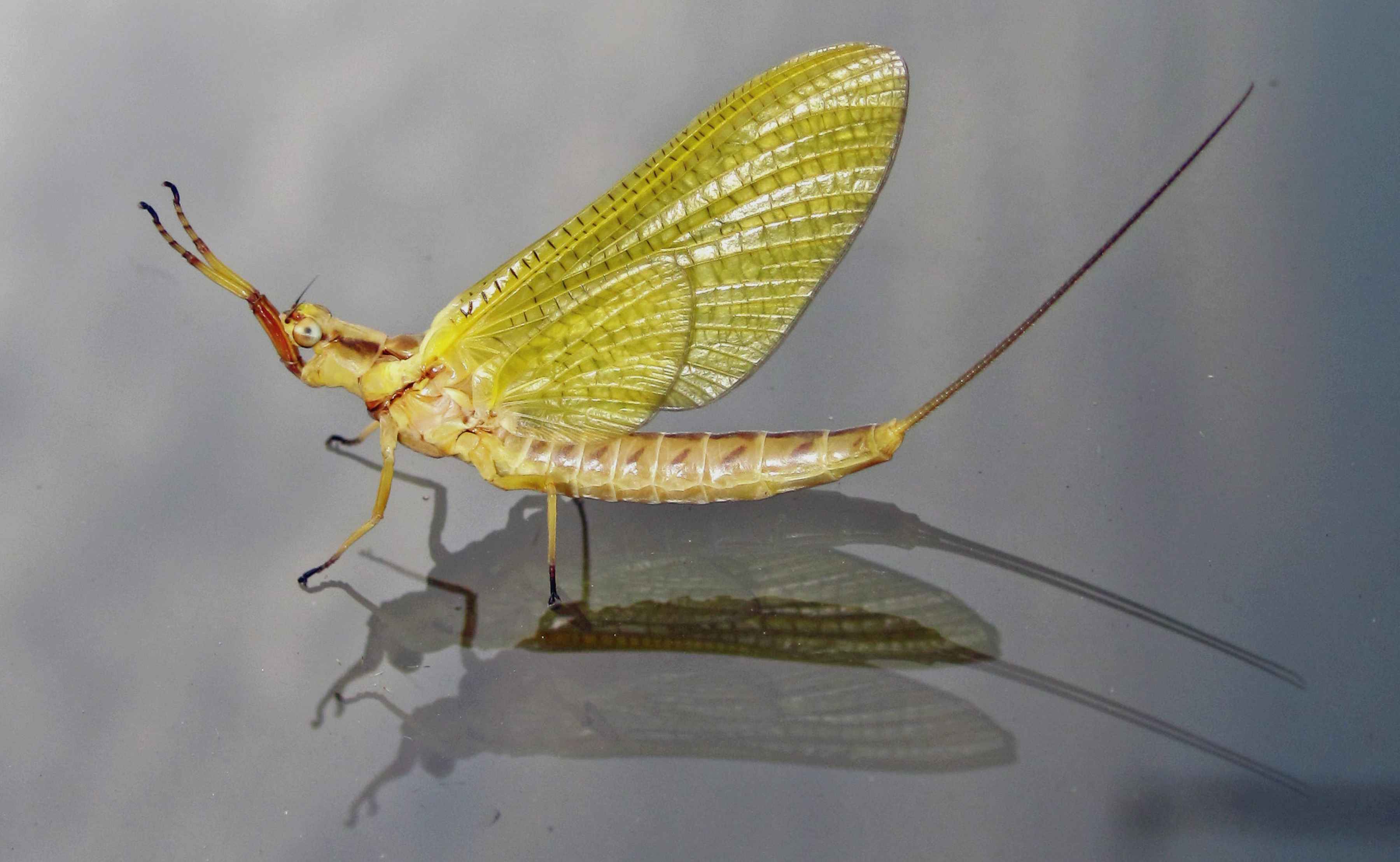
Mayfly-ephemoroptera courtesy: Fly-fish Circle

From the brevity of a Mayfly [some adults have a 5-minute lifespan] to the Galapagos Turtle [100 plus years], Nature–for the most part–has the first right of refusal regarding the lifespan of all living things. We just don’t know when it expires. We do know that medical technology is finding ways to prolong life. As more and more discoveries point to the possibility of prolonging life, where is the end point?

Ultimately, prolonging life boils down to not only diet, sleep, exercise, preventive measures and so forth, but the details at the smallest and likely most complex of things microscopic. Think things at the cellular level and the knowledge we glean from things such as DNA and mRNA.

In 2020, French microbiologist Emmanuelle Charpentier, PhD and US biochemist Jennifer Doudna, PhD received the Nobel Prize in Chemistry for discovering the CRISPR/CAS 9 genetic scissors. They are the first women’s team to earn a Nobel prize. For us mortals, it means there is now an extremely precise way of changing the DNA in plants, animals and microorganisms. Taking that to the next level, it means near endless possibilities that can help those involved in the Life Sciences: research in potential cures for the most virulent and deadly of diseases can now be scrutinized by their genomes and subsequently altered.

Can you imagine the 2 most obvious yet divergent results from genetic modification? One modification for the greater good [cure for ALS, Alzheimer’s Disease, cancer, e.g.], the other for something wholly individualistic [changing genes for eye-color, height, e.g.]. And who determines areas or potential end-results as intractable?

I’ll let Dr. Loefler have the last word on this:

Ultimately, the pursuit of longevity as a cultural goal lacks moral content and can be regarded as a form of hedonism. All great religions and all great philosophies would have agreed that the question of how long one lived was subordinate to the question of how one lived and what someone had done with his or her life. Nowadays, however, there seems to be one agreement only: that to live longer and longer is a good thing. Vouchsafing a long life for everyone seems to be the driving force of contemporary world culture. The consequences need to be pondered.

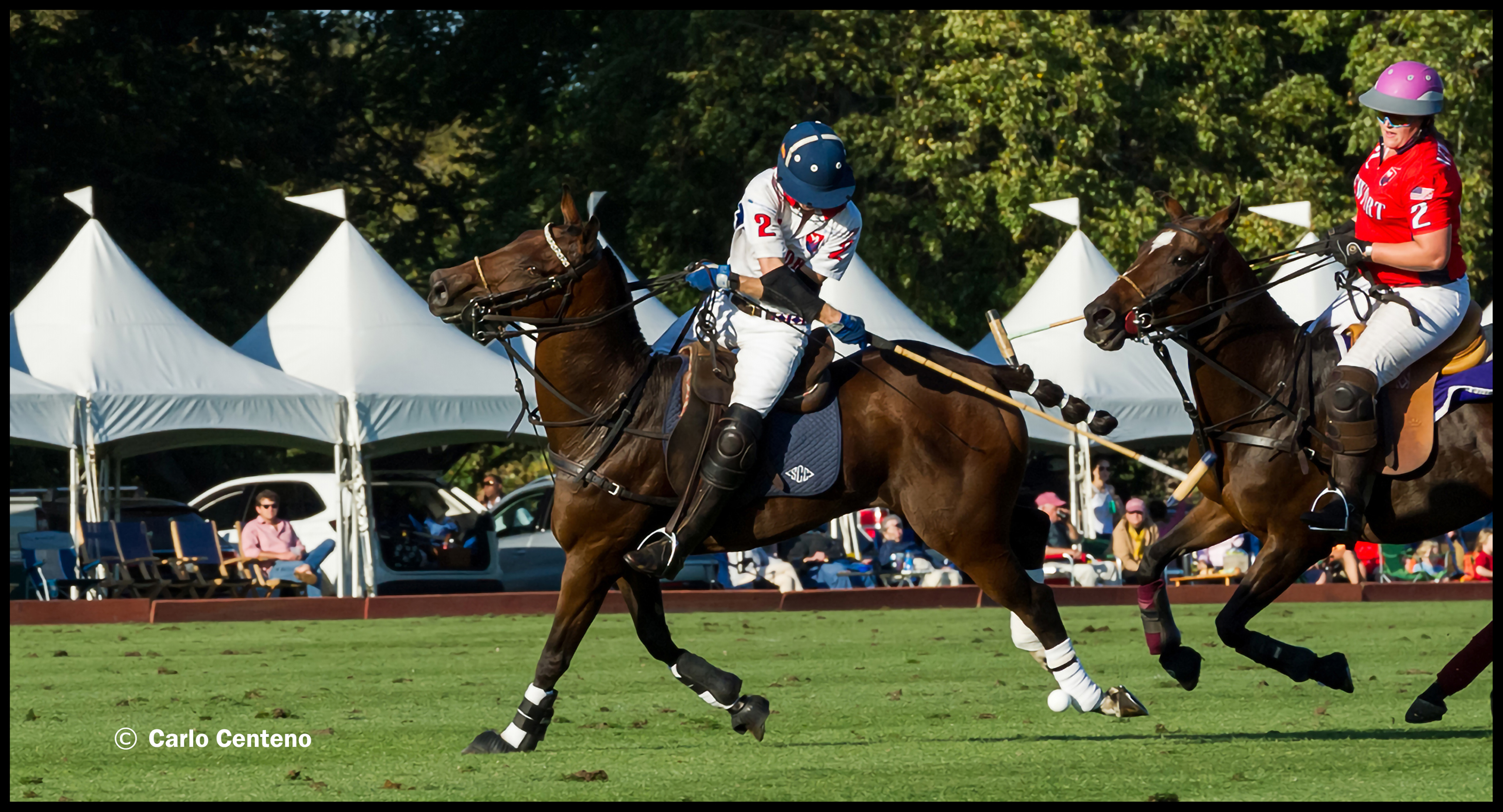
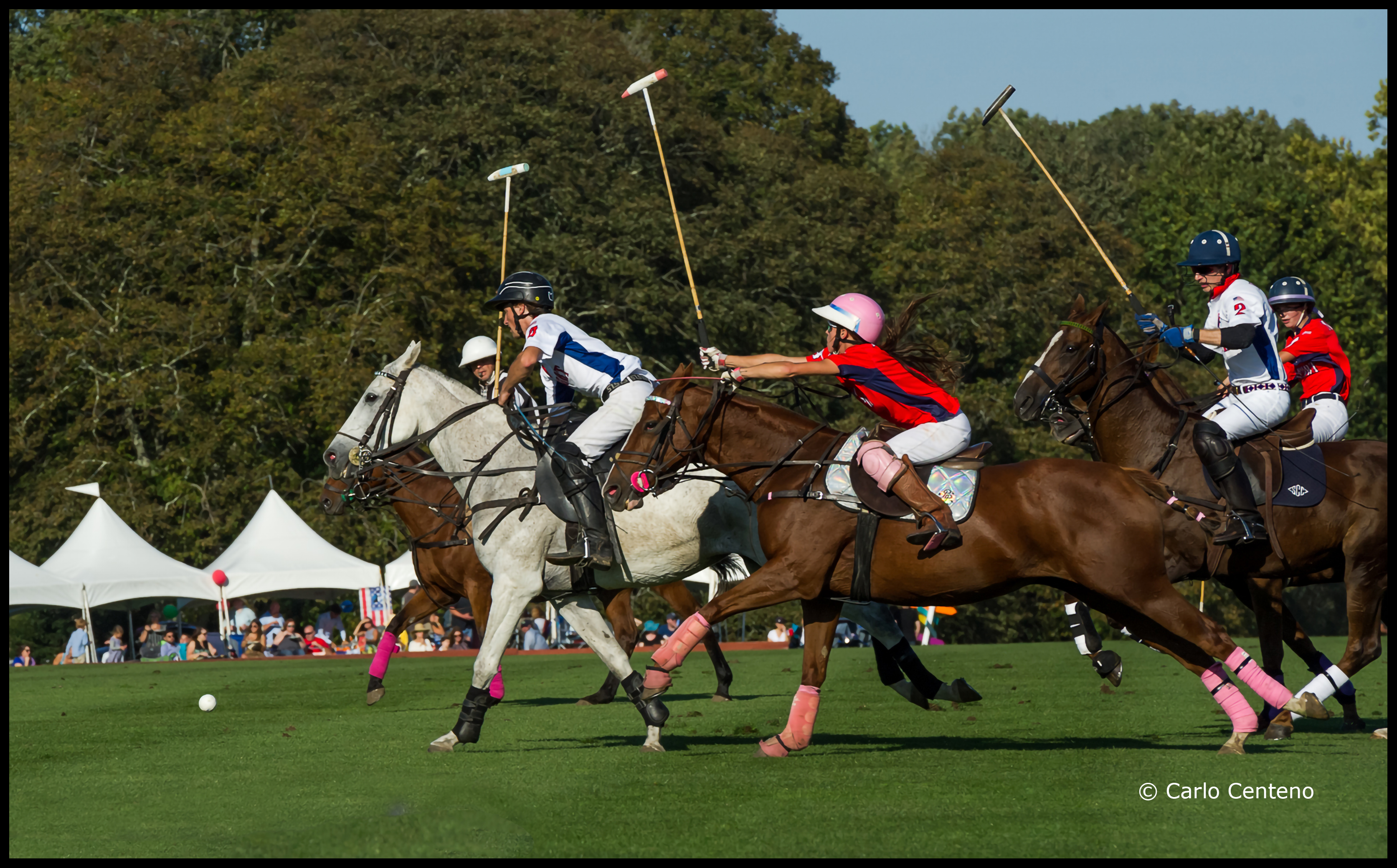
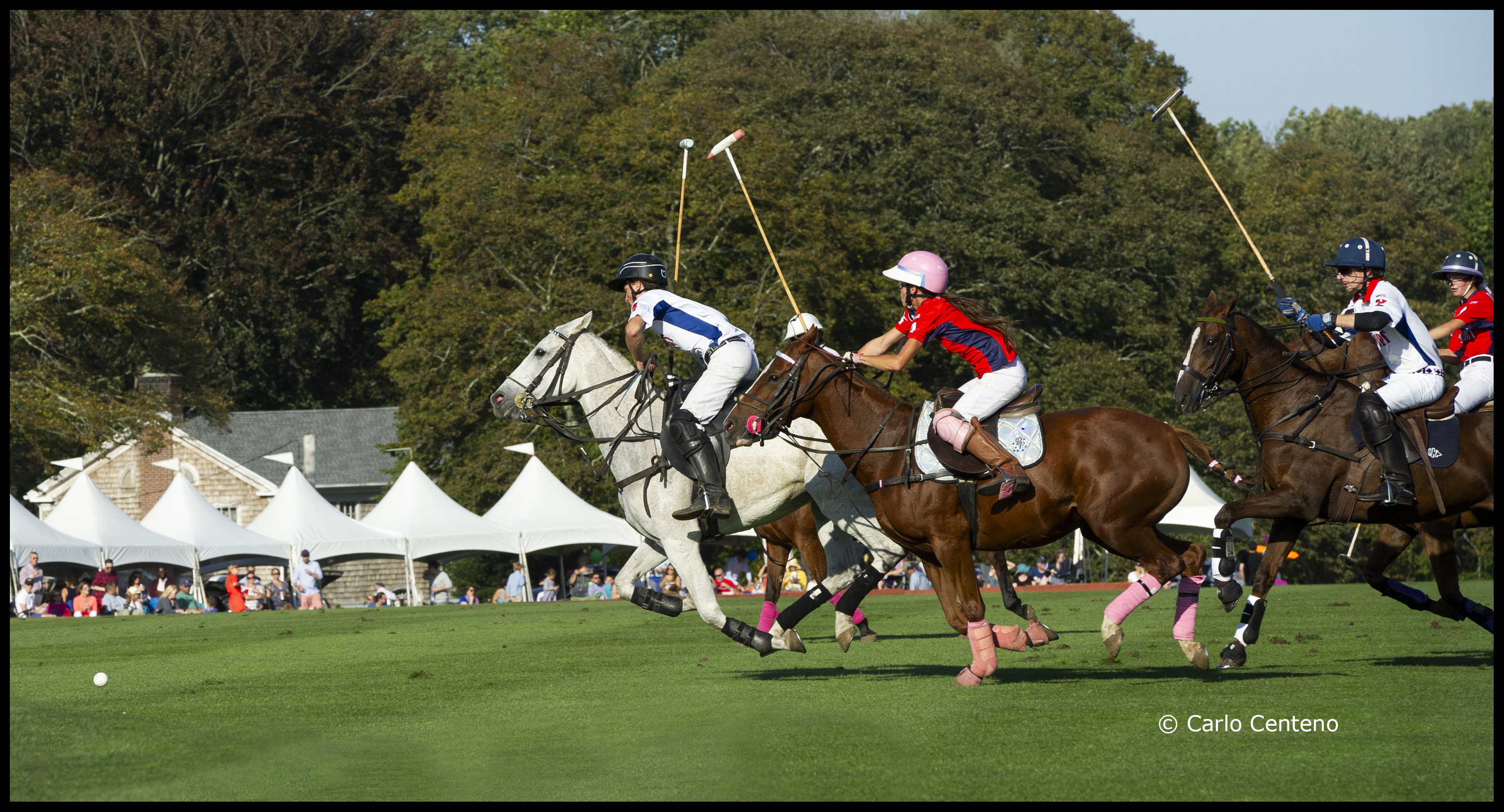
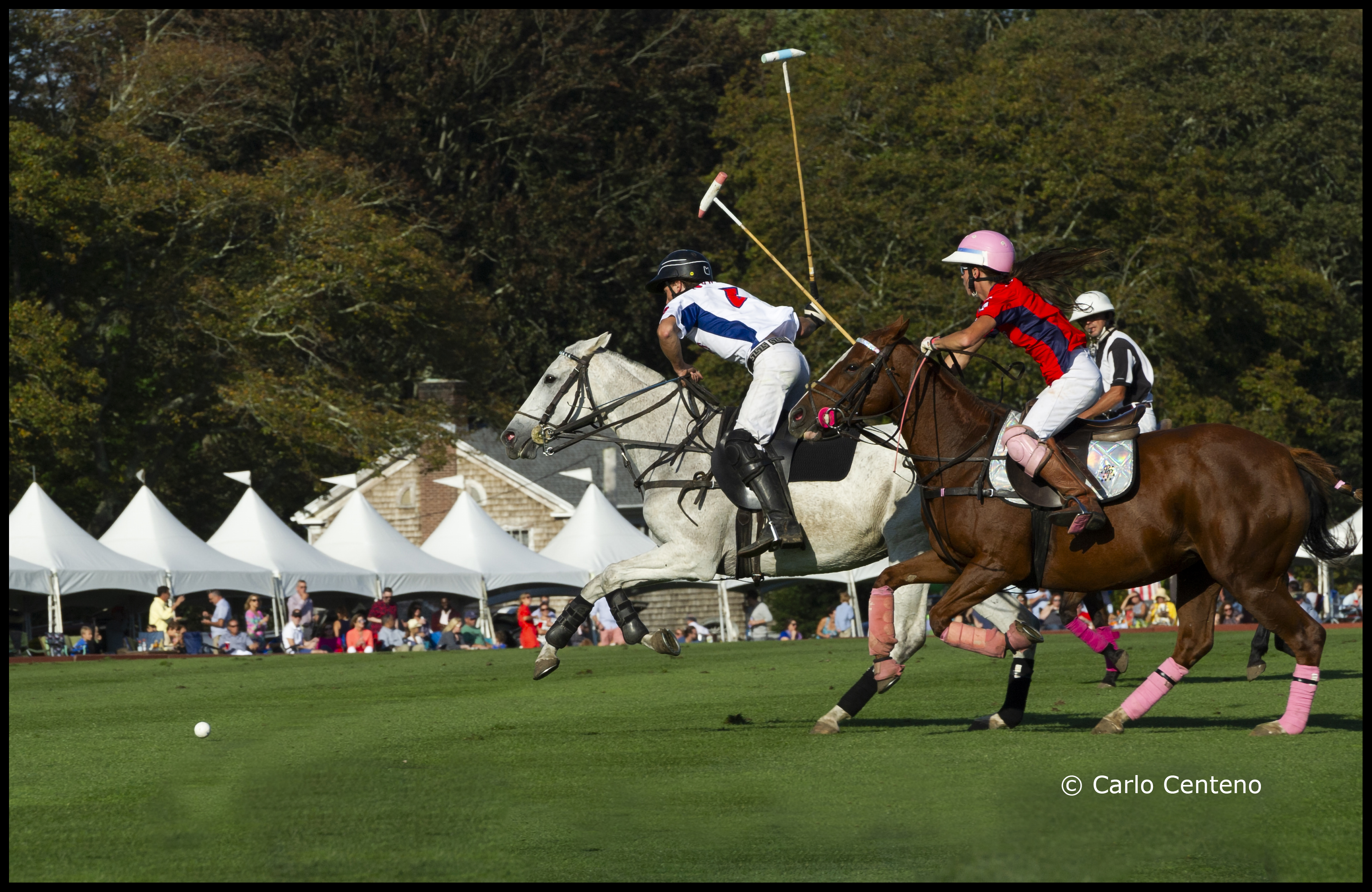
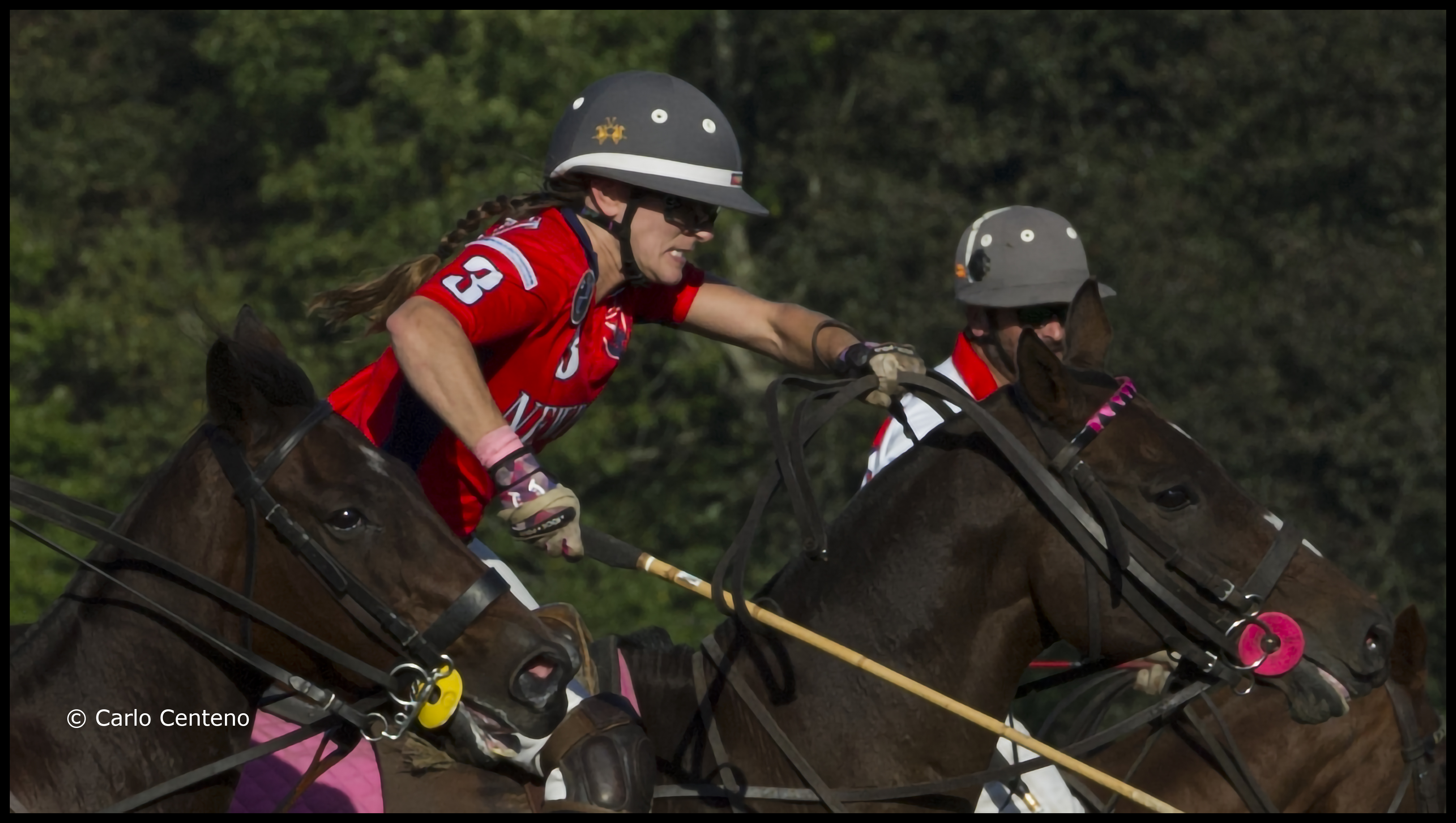
Each Rider Matters

Those who play team sports understand the overall utility that is teamwork. No great mystery there. The many endeavors we encounter in Life often function better when we work in groups. From hobbies and clubs to those in line-work and the C-suite, we often rely on someone else to help complete a project or task.
Granted some tasks are regularly completed by one person, and such tasks can be specialized inasmuch that that one person is THE best person to do the job. Without her/him, the end result may not meet expectations.
To a great degree–individual efforts aside–you’re only as good as the people you work with.
A special thank you to David Schultz for his hospitality at Newport Polo.

The A Collection

I’ve come across a lot of A-words lately: amazing, atomic, artificial, augmented, abstract, auspicious, audacious, accountable, admirable, apathy, appreciation, affection, accomplished, alarming, Arctic, Antarctica, abysmal, appalling, anachronism and so forth.
Like a daisy chain made of paper, these words are linked and yet each easily broken free by the slightest of tension. And while some connections may not make a whole lot of sense, there are reasons however small, that connections take place. Anxiety, lack of focus, melancholy, fear, joy, anticipation, distraction, etc. etc., the Yin-Yang of this is that the very same attributes that prompted the connections can be the same to break them.
It depends on time and place. Context is everything.

Audacious. Approx. 35-degrees on a starboard bank.

The words come from various sources, anything and everything that shapes our life experience. With this exercise, the empirical nature of each word puts aside the rational, and instead embraces sentience, that ability to feel depth of things experienced.
It’s certain that others who feel existential—rightfully so in our fractured society—may feel embarrassed yet genuine. What could be more human than to feel concern about our current state of affairs [macro] and our relationships [micro]?

Anachronism. At the stable. The Mount: Edith Wharton’s summer residence.

I’m feeling abstract [visualize Cubism Art] and yet oddly auspicious because many things in life and living are not rational. We are prone to rely more on our senses, the very emotions that can either ruin or celebrate moments in our lives.
Yes, I’d rather feel embarrassed and genuine versus being stymied with self-serving, deductive reasoning. The former brings a sense of order, the latter a chance to improve our emotional intelligence and increase a capacity to further understand each other.

Abstract: The Slave Market & Disappearing Voltaire.

Life imitates Art, or is it Art imitates Life? Similarly in marketing, it’s not what you’re getting, but what you think you are getting. Perception is everything and even more so in the here and now. It’s a refrain that frequently echoes in my thinking.

Admirable.
Augmented.
Appreciation.
Arctic-Antarctica: an aftermath
Auspicious

There will be no “B” collection, existential-word-dump, involving any other letter, or a character for that matter. An exercise with one letter is enough for me, and probably for you as well.

In conversations, and things written, a question posed usually prompts us to reconsider a position we hold, maybe a perspective quite different from what’s already been established in our own thinking. This collage, this tapestry-of-a-post may not mean much to anyone, but it could be provocative enough to slightly encourage another perspective. Why not?

The seasons are moving quickly and as I get older my own temporal reality is based on just how fast time seems to go by. I lean towards the empirical and the sentient qualities of the here and now to help me keep it all together.

I never thought I´d grow up so fast so far.
To know yourself is to let yourself be loved.
Do you ever get me?
Shower me with affection and I’ll return in kind.
I have no hidden motive, I am blind.

Do you ever get me?

All rights reserved. Copyright. Ben Watt

Edvard Munch

The Storm, 1893

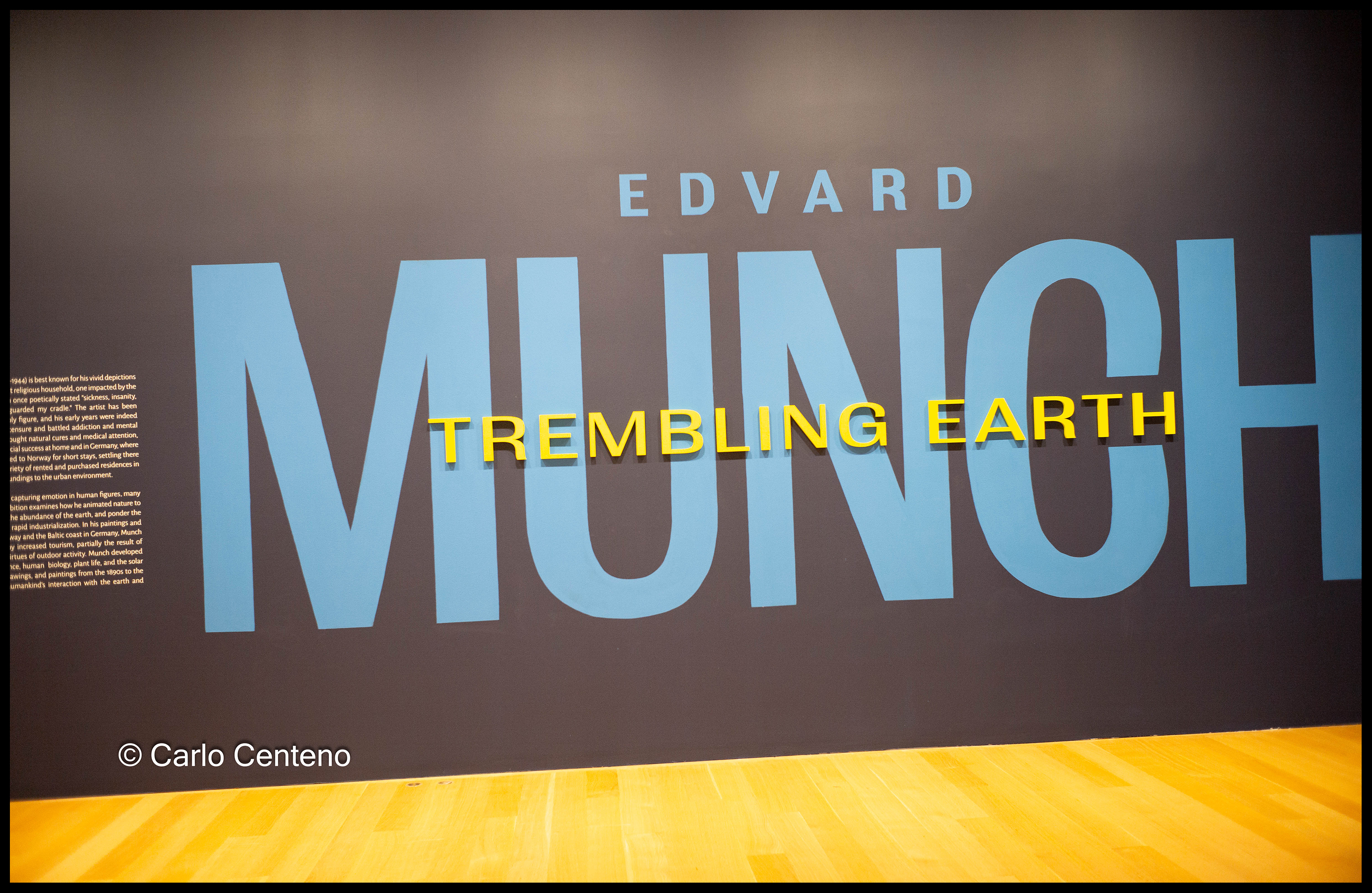
At the Clark Institute of Art, running through October 15, 2023, is a special exhibition, Edvard Munch: Trembling Earth. Munch’s [“Edward Moonk” Norwegian pronunciation] most recognizable, iconic painting is The Scream, and yet not many know of his other work which includes a number of self-portraits, prints, figure portraits and landscapes. The latter showed what he felt was a confluence of the natural world and humankind where nature provided a kind of salve that the urban environment could not deliver. The artist’s life contained the antagonists that shaped many of his creations: life and death; love and loss; loneliness and despair. And yet Munch as a protagonist, allowed us to see and feel the very antagonists that took hold of his deepest emotions.

I found the entire exhibit revealing if not eerily prescient. The power of art in all its forms allows us not to just see the obvious, but to measure if not ascertain a) what behooved the artist to produce his/her creation and b) what, if anything, draws your attention to the work?

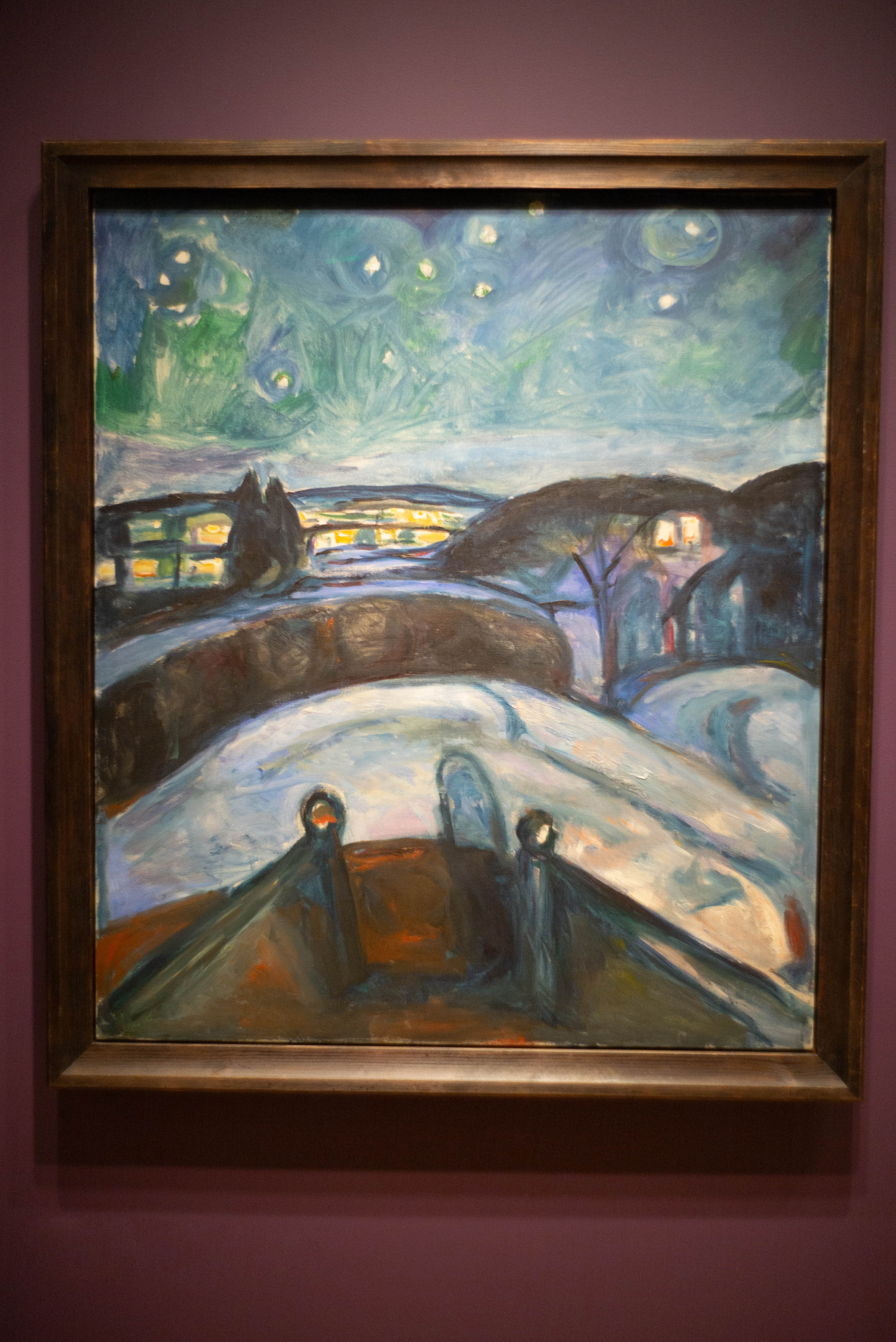
Starry Night, 1922-24

While some of his paintings hint at Vincent van Gogh [1853-1890], there is a quality that makes Edvard Munch’s work stand apart: his apotheosis of anxiety, loneliness, longing and loss are indicated by the despair of his faceless human subjects. The hue of uncertainty and angst lay claim to troubled souls.

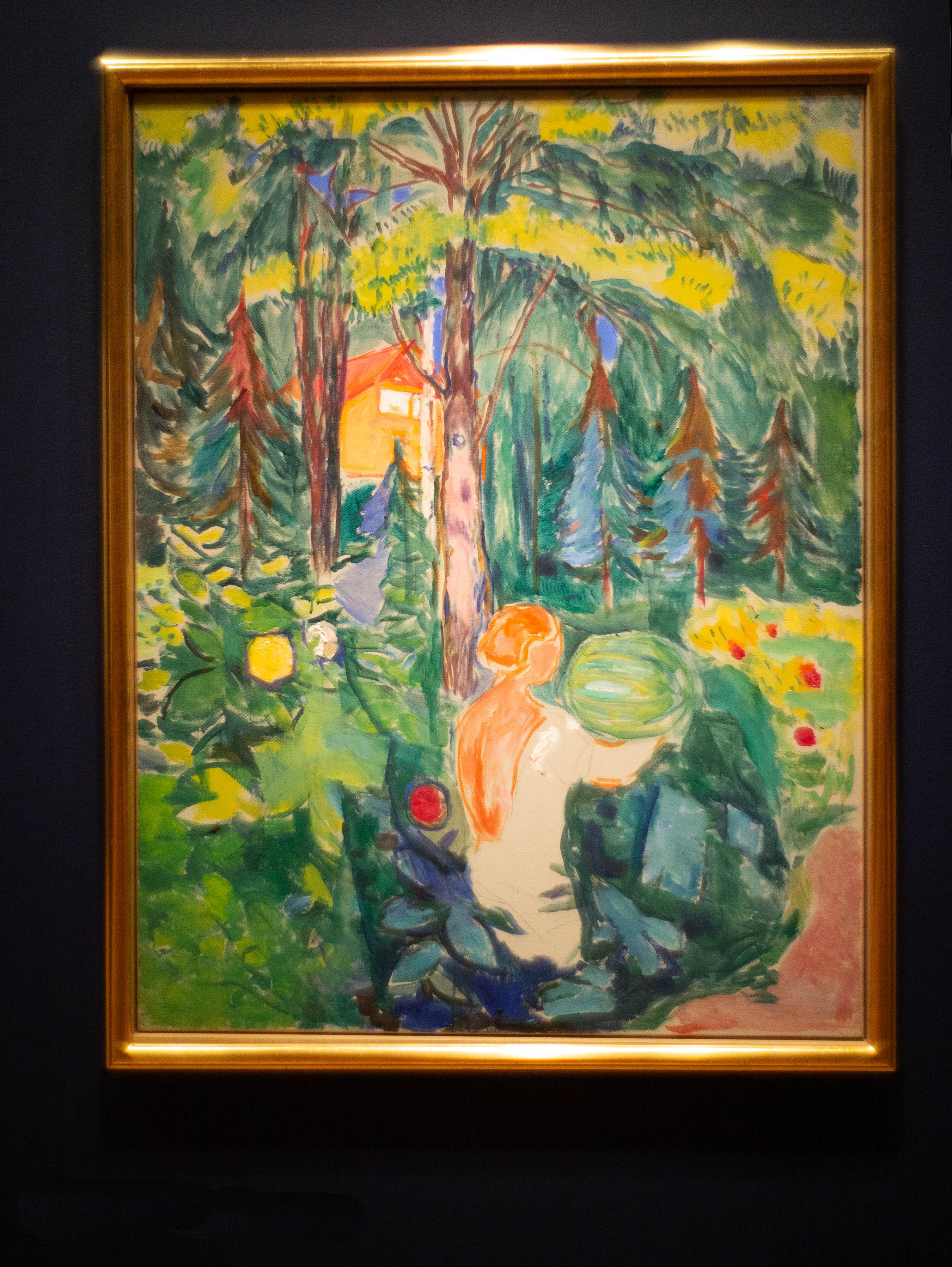
Woman with pumpkin, 1942

This is one of my favorite paintings, Woman with pumpkin. Its creation captures a sense of lost, and longing. The symbolism could be anything and everything. The pumpkin and the dark green color appear as if a person is holding the woman. Note the 3 “fingers” on the hip of the woman. In fact, the greenery next to the woman appears to be kneeling on its right knee, its “left leg” bent with a “foot” planted directly on the ground close to her back. Hence, the figure is resting its head on the woman’s right shoulder, the right arm suggesting a pillow.

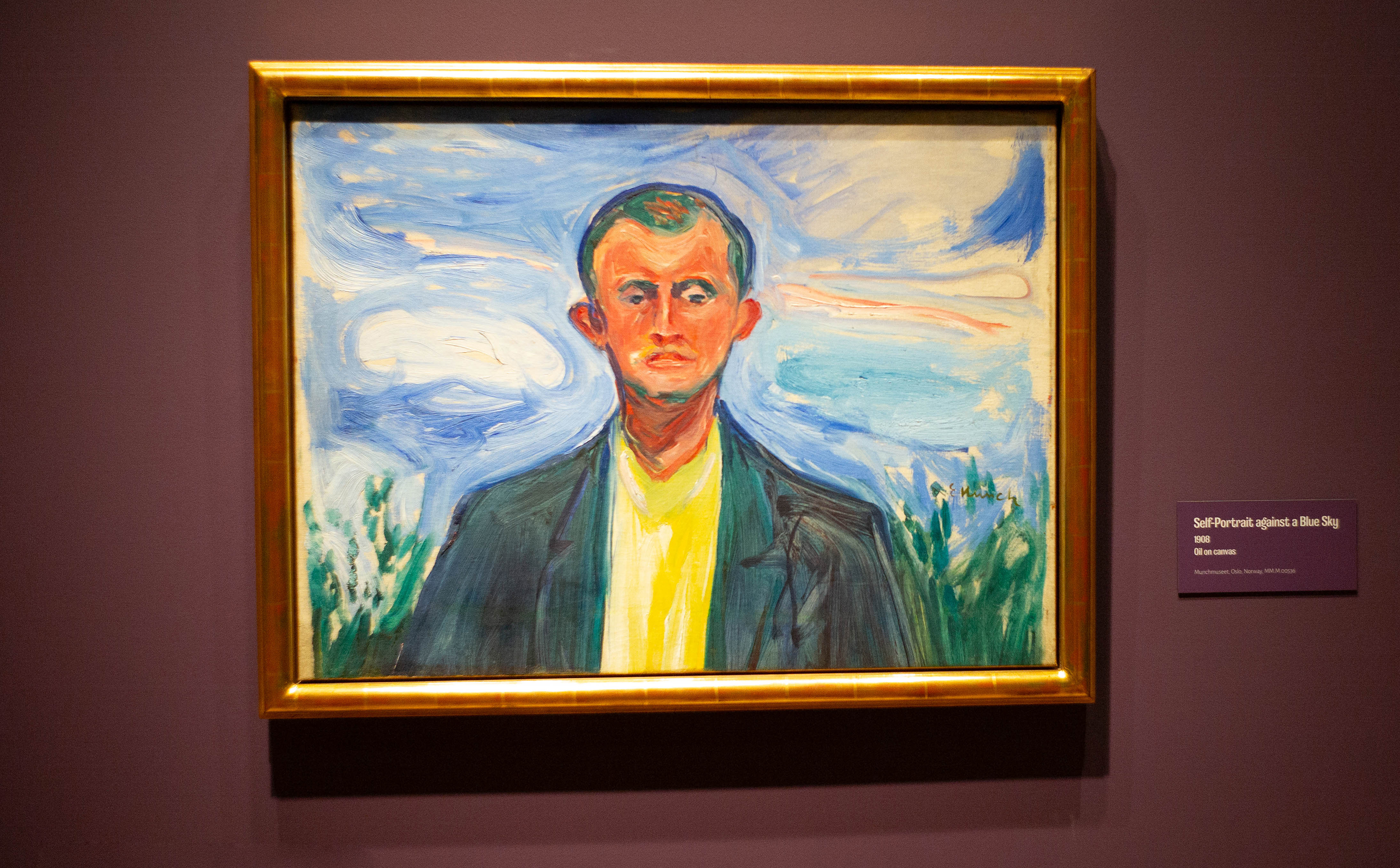
Self-portrait, 1908

Whatever you see and however you see it, Munch is a captivating study of conflict. You can feel it in most all of his works. The landscapes provide contrasts regarding our ability–and inability–to co-exist not only with the natural world, but with each other. Put another way, Munch is caught within an insatiable push-pull between the Id [our instincts], the Ego [reality] and the Superego [moral strength].

Self portrait with palette, 1926

No artist lives a life of order and predictability. It’s contrarian to that world of creativity and expression. Munch’s self-portraits demonstrate a fortitude within his reality that dices with the likes of the Id and the Superego. Each of us deal with the instability created by our instincts and morality, our actions and reactions, our angst and distress. In a way Munch’s paintings brings form to what is often abstract yet palpable, even vicarious and visceral.

.