Modern Soliloquy

Back in the day, “soliloquy” was a word associated with theatre. There have been some powerful, mindful soliloquys, many found in English Literature. William Shakespeare and Robert Browning come to mind; the former for his plays, Browning for his poetry.

I find myself tuning into my inner self with soliloquys. These are not conversations to me, but a way to be honest with myself. In the process, I voice [in my head…..not out loud]. the deepest feelings which need to be brought out from the inner sanctum of my soul. These sentiments, perceptions and more, represent a personal unspoken anthology of emotions which remain exclusive to myself. Everyone should try their own form of soliloquy. You become the subject as well as the audience. The orator speaks to the most relevant, but private person in his/her life.

A recent trip to the Massachusetts Museum of Contemporary Art [MassMOCA] located in North Adams, MA is one location that gave an opportunity for reflection and acknowledgement. Come to think of it, most any museum makes a strong location for a soliloquy. Other alternatives abound: a beach, a park, a forest, a solitary space, even a space filled with people. The options are varied, but I do believe, like the soliloquys expressed in plays, poems and so forth, a place relatively quiet proves hospitable to many. A calm atmosphere is a priori given the breadth of one’s soliloquy.

Where ever you stand, and what ever you see, there lies a confluence of provocations that may come to the forefront of your thinking or introspection. The time stamp—from which these thoughts come from—depends on its significance: an early relationship gone awry; a current relationship that seems too good to be true; the unknown realm in choosing one option over another; the challenge of working through options in light of a chronic condition that will not stop let alone disappear. There’s a universe of profound feeling and thinking we can only imagine.

The above photos are from the MassMoCa’s permanent exhibit, The Boiler House. When you walk into the building, you’re visually overwhelmed with the scale and the number of boilers, pipes, connectors and vents that course over the entire space. If there ever was a place that made me feel Lilliputian, this is at the top of my list.
The Boiler House is the facility that provided heat to all the space before it became MassMoCa. There are several floors, though I believe only the first 2 are open for visitors.
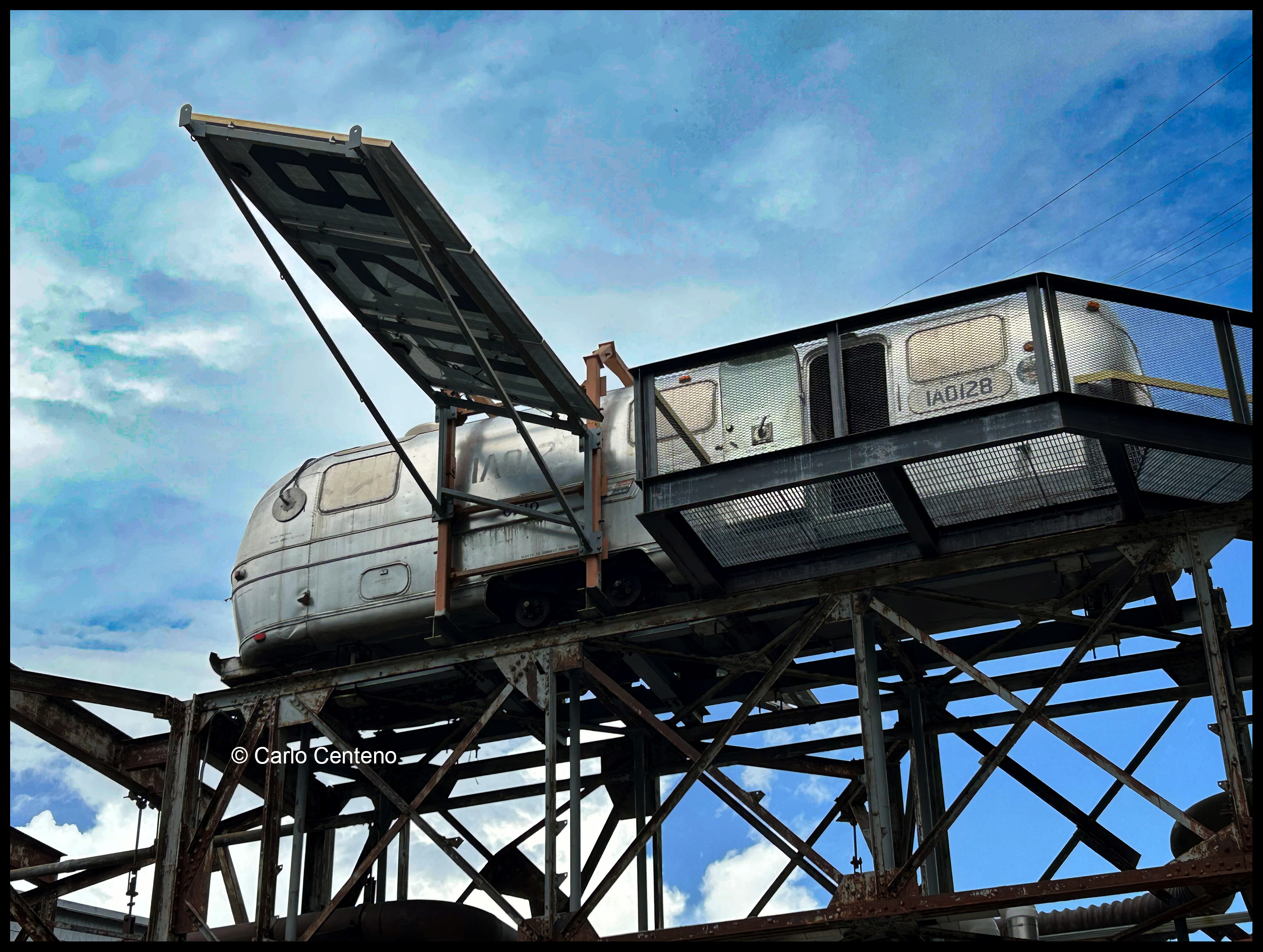
Suspended on tracks next to the Boiler House is an Airstream trailer. A walkway takes you to and from the Airstream to the Boiler House. This is the work of Michael Oatman, entitled “All Utopias Fell.”
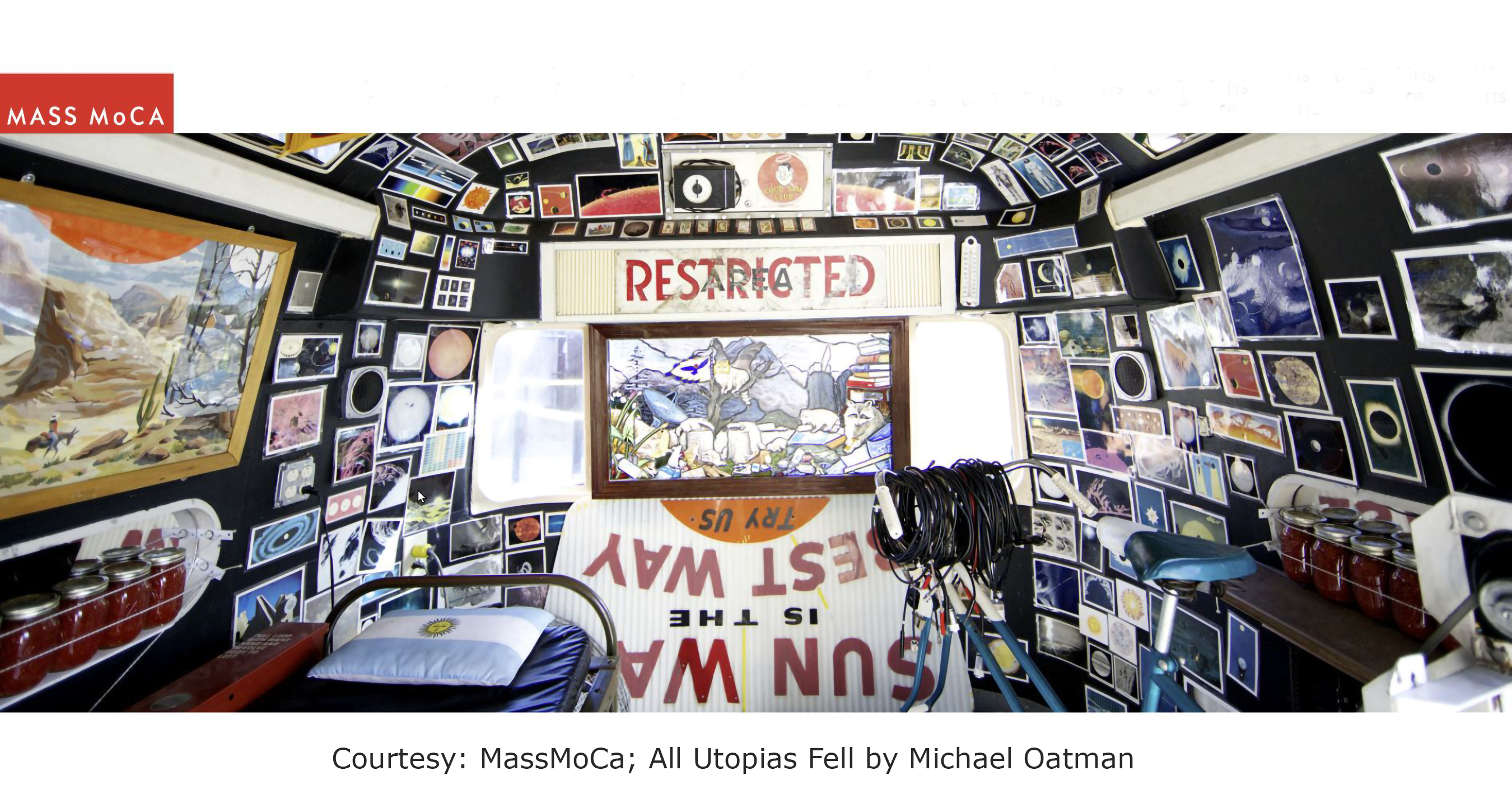
A common theme in my soliloquy is this search for order and purpose, or a clarification of both. This is a challenge as I tend to overthink, excessively evaluate one over the other.
Upon entering the Airstream, a myriad of visual elements reach out to you. It’s as if each photo, drawing, sign, piece of paper, object and so much more want to make mental impressions on you, as in right now. This is sensory overload and perhaps a metaphor for the soliloquy stirring in your thinking. It’s as if each piece could be a catalyst for a specific thought process. And once that piece or pieces enters your thinking, you start that introspection or make it progress to another level.

There are several “Why this?” and “What ifs?” within the profound, introspective construct of choices and decisions that are created. The certainty of being your own person, unique and unduplicated by any other, is that choices and decisions you make create the questions that begin with “why” or “what.” And while you and others are individuals in that singular sense, the framework of questioning is common for everyone, but ancillary circumstances are bound to differ between people.

Dr. Faustus, the play written by English dramatist Christopher Marlowe, revolves around the angst of Dr. Faustus agreeing to surrender his soul to the devil in exchange for magical powers. His soliloquy in the last hour before that exchange, is one which poses questions and conditions had the choices Dr. Faustus made were different. Once made, the commitment is binding, non-negotiable. There are no pause, stop or rewind buttons in life.

Shakespeare’s Hamlet is the quintessential soliloquy in my opinion. With new realities [and previous uncertainties] playing out today, themes of life & death, the meaning of our purpose and existence, mortality and vengeance are wonderfully distilled into words that examines all that can detract or enhance our existence.

I came across the last photo as I finished my visit to the Boiler House. It dawned on me that this effigy is a personification of someone covered with details that make up her/his soliloquy.

Face-to-Face

I suppose any season is good for “time travel.”  Case in point: The Hancock Shaker Village in Pittsfield, Massachusetts. Throughout New England and other parts of the country, living museums provide a chance to feel what we could only imagine.

Such places serve to remind us of what we have. Or what we’ve lost.

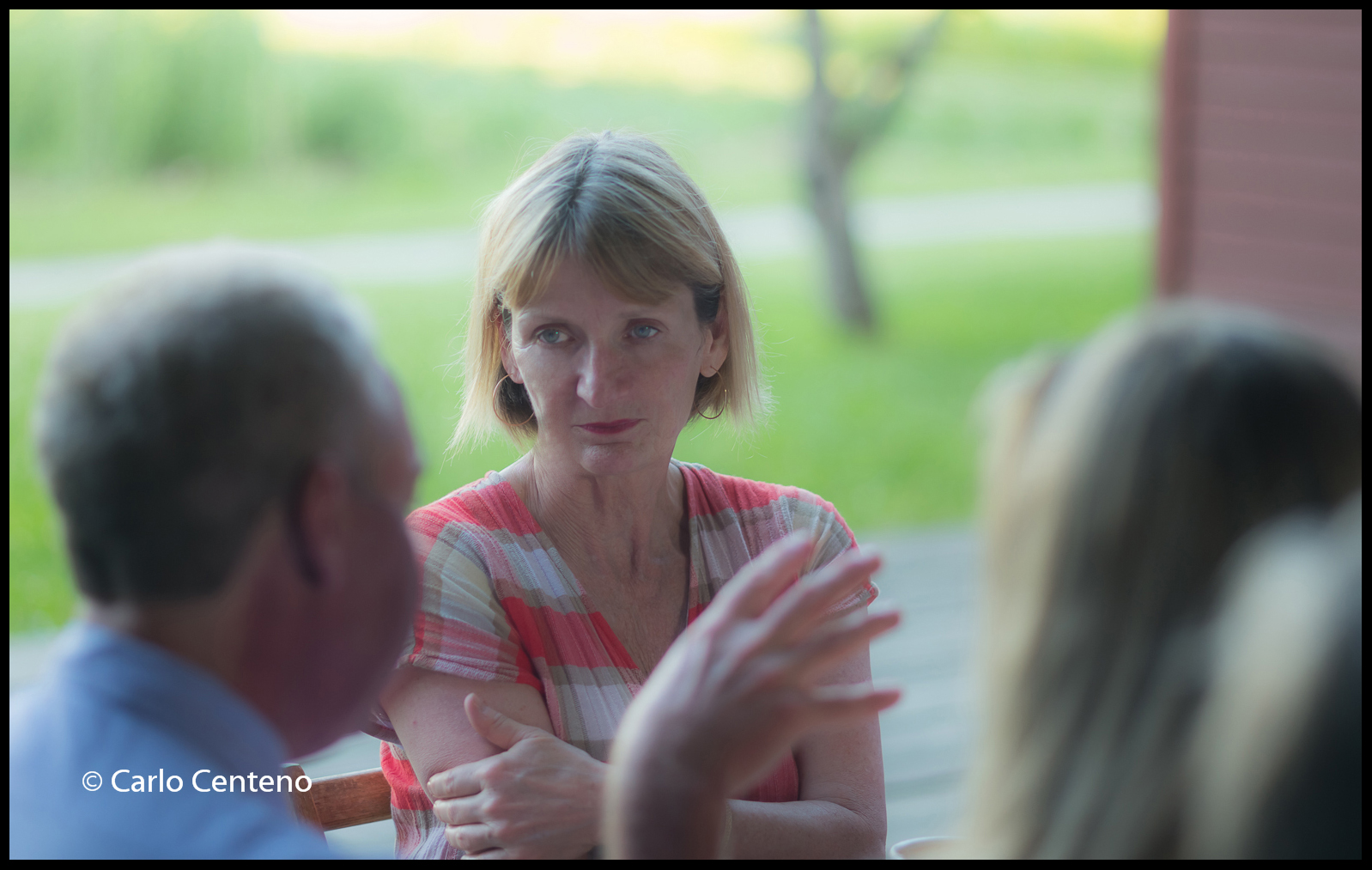
On a particular Saturday evening, I was reminded of the power of conversation. The Shakers traditionally have family dinners, meaning you sit at a table–often a rather long one–and enjoy supper together.  This particular night came via the Food for Thought series, a HSV summer event whereby one sits and enjoys a gourmet farm-to-table dinner and conversation. From June thru August, an author is invited to dine, discuss and engage about a recent book that she/he has published.

Traveler, award winning writer, bestselling author, Mr. Simon Winchester.

The narratives can be compelling. Unsurprisingly, there’s the conversation of getting-to-know a bit more about a person, not the least being the author who’s about to recount a journey of research, writing, editing and more.

Like the author, the guests had their own experiences to share. Most were familiar [snippets of life’s journey from a father-mother-engineer-lawyer-financial manager-medical doctor, e.g.], and others were fascinating to hear and talk about. In attendance was a young student of epidemiology, and I should have talked with him beyond his academic CV [Princeton, then John Hopkins].  It would’ve been fascinating to hear more about the rise of diseases and other ailments that can quickly wreak havoc on populations around the world.

The beauty of talking face-to-face is that beyond the words you hear, you’re also emotionally involved. Expressions, gestures and tone each hint at nuances that can be missed when engrossed with email and text messages.

I enjoy the various digital communication platforms and they can be timely if not helpful. However, there’s still something to be said about connecting with people face-to-face. And that kind of connection can make such a difference in your comings and goings day in, day out.


A Somber Trait

Much of human history is peppered with a notion that when we don’t understand the unknown, we become defensive, fearful and hesitant. Granted the opposite is also true; we can become bold, curious and willing to take a chance. There’s a dichotomy between assumptions and reactions.  The sentiments in the plaque attest to these notions. Just where you straddle this dichotomous line depends on how you define yourself.

A commencement address given a few years ago might shed some light on my post. It was delivered by Tim Minchin, an alum of the University of Western Australia. His career path is one created by an awareness for all things sentient. Minchin reminds me of my own college journey in liberal arts; I found such great value in what and how you feel in terms of art, music, literature, philosophy and all those disciplines of study that pre-dated this notion that mindfulness and empathy and emotional intelligence are somehow new constructs of our modern, western world.

In his comments, his last 3 points made in impression of sorts:

#7) define yourself with what you love, not what you hate; #9) respect people with less power than you, and #9) don’t rush…

Are you leaning more to one side or the other of that dichotomous line…?

The [early] Morning After

In less than a week, the northeast USA got hit with another storm. While many are so tired of winter, many more are really done with snow and the cold and wanting spring to arrive. Now.

With close to 10 inches [25 cm] of wet, heavy, snow falling overnight, the next morning did not disappoint for people like me.

With nothing but stillness and silence all around me this morning, I thought of Dan Gurney, an incredible achiever by any standard, who said something to the effect of, “If you see something and can make it beautiful, but choose not to, what does that say about you?”


An Enduring Perspective

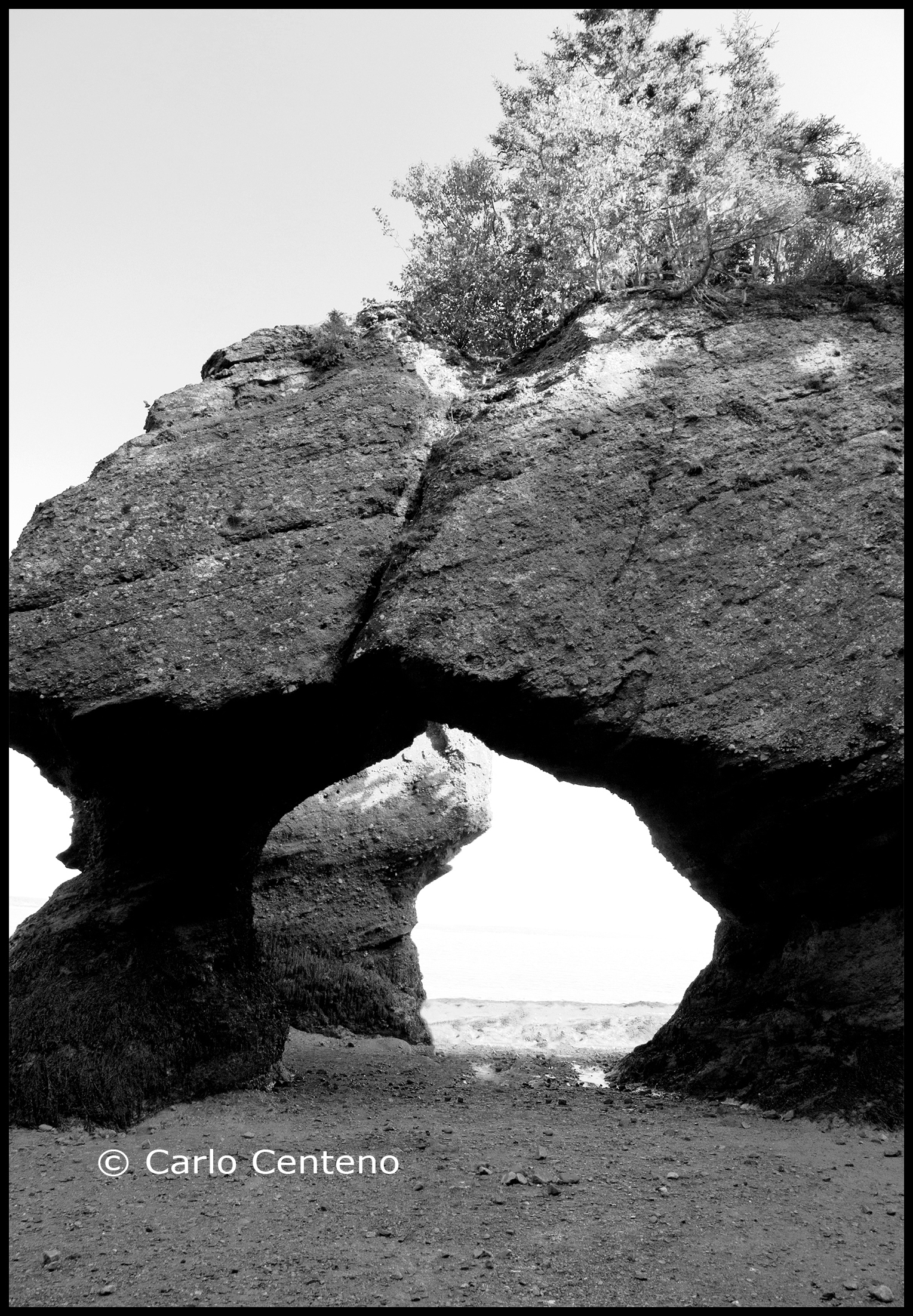
Vertical dimensions and shapes provide seminal perspectives. The Bay of Fundy is such a place to feel them. It claims to have the highest tidal range on the planet, on average rising and falling 56 feet [17 meters], twice a day.

While the tides run relatively constant, the power of moving water creates an impermanence to the landscape. The land changes albeit slowly. And of course, we physically change too, though on a timeline far shorter than these “monuments.” These amazing structures will outlast me, which is to say they’ll still deliver an enduring perspective to others who might be standing on the very spots when I took these photos.


Sea Air

Summer vacation is a staple for one’s own sense of stability. In most cases, one or two days I’m doing work—either by choice or a directive from someone who signs the checks—even though it’s work I try to avoid from usurping vacation days. At the C-level of management, there’s always a part of your vacation that is, indeed, a “working vacation.”

Anyway, I make the effort to still my mind and settle the angst of all that is life. It’s not always related to work as there are things in life that can be much more demanding of time, energy and other resources.

I posted an article on my LinkedIn page, “A Short Guide to Finding Quiet,” and this post is related to that article. However, what I’m sharing here is far more personal. There are places that are quiet and then there are really quiet places, the kind you savor and want to bottle for another day.

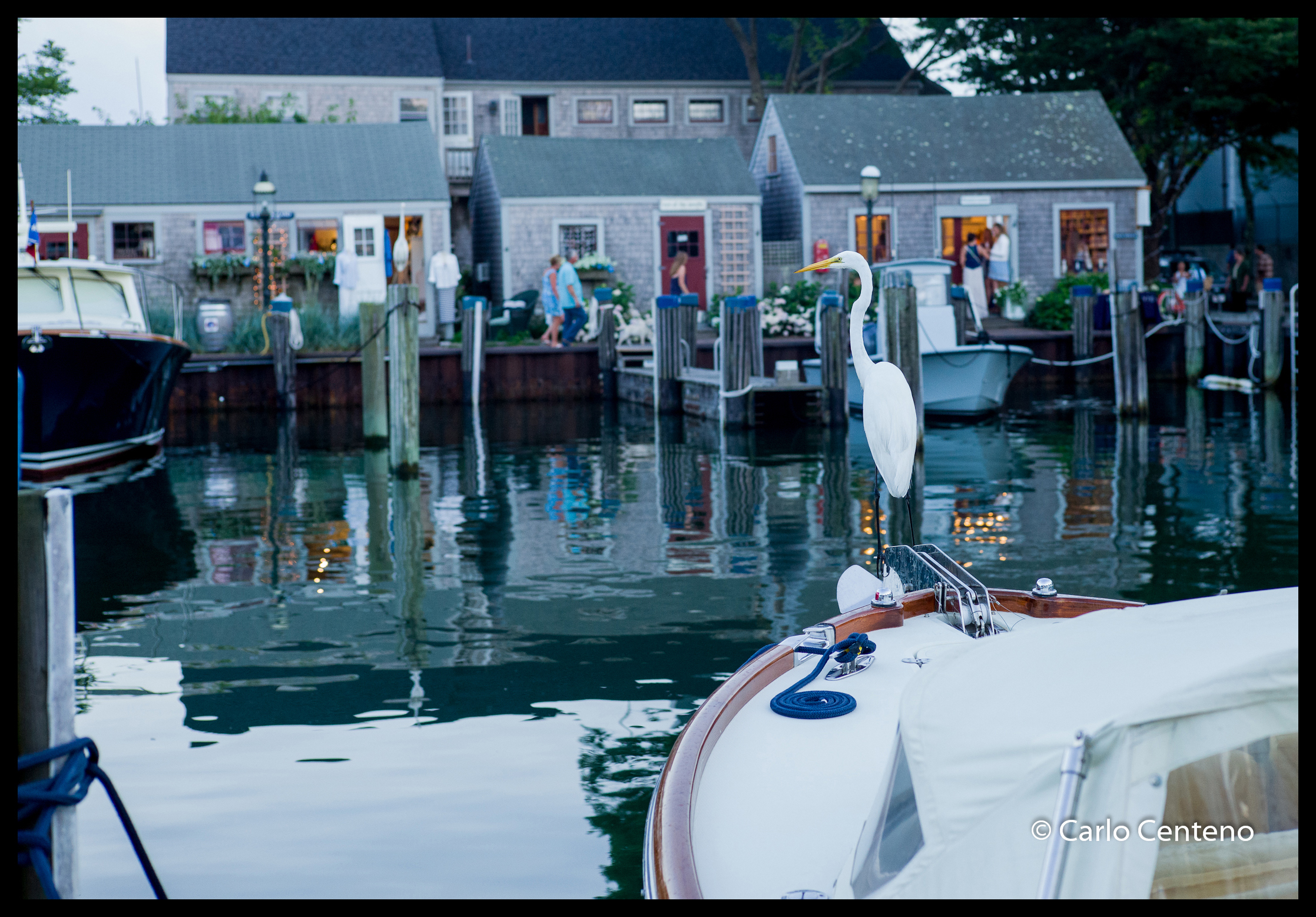
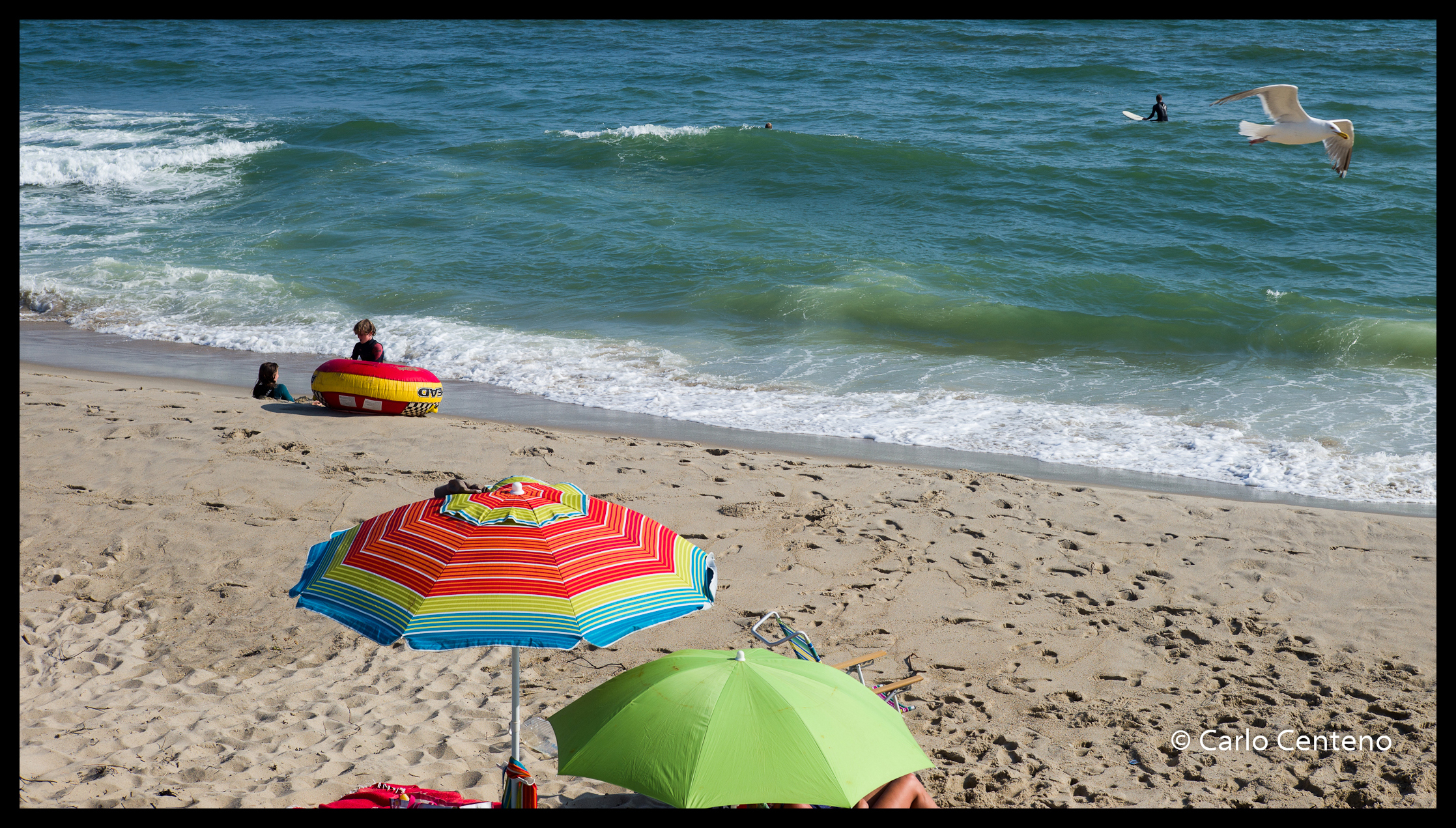
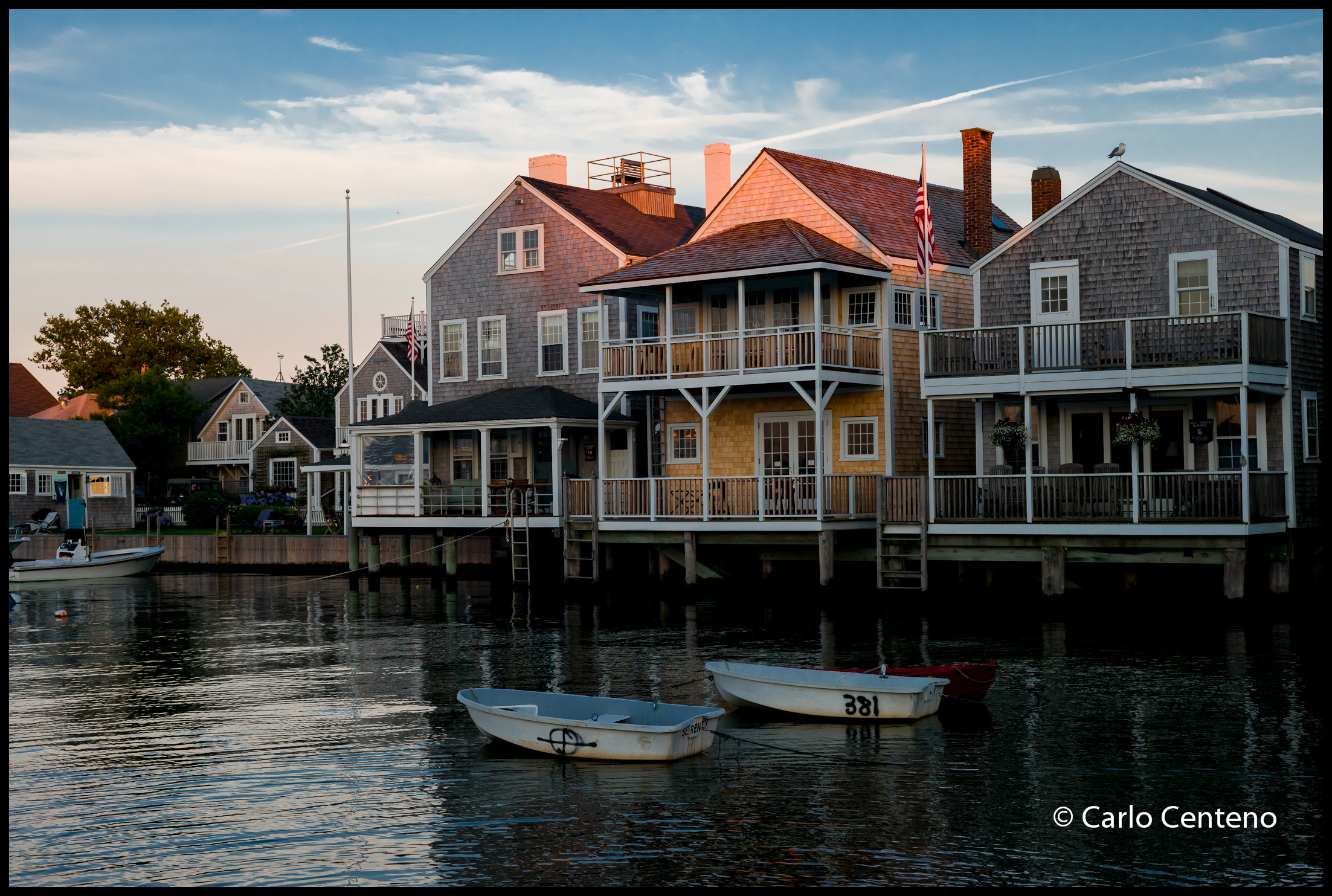
Living in New England means you’re never far from the ocean. I like that. The sea air has therapeutic properties, but when coupled with with the kind of quiet that only Nature can produce, well, then the properties take on added qualities, qualities that make you breathe deeper, think slower if not kinder and move about in less harried fashion.

The sounds of a breeze cutting across tall sea grass, the distant cry of a gull, the “wooshing” sound of water rolling onto the beach, the rthymic slapping of a wake against the side of a boat. All are folded into “sea air.”

If your summer vacation isn’t near the ocean, then I’m sure there are quiet places that are unique to wherever you’re headed. You can make them your own too.

Chrysalis

15 Fushima-P1020904

Some call it a creative block. With credit to Franz Kafka, I feel a lot like a chrysalis because there’s something in me dying to get out, to be expressed and heard. How many times have we sat [or stood] at our work stations wondering how-in-$%@!!-name can we get something done. Where are the words, the concepts, the visual elements that when properly assembled, delivers the key message? The message can be one of benefit, of productivity, of prophylaxis, or of exclusivity. You get the idea.

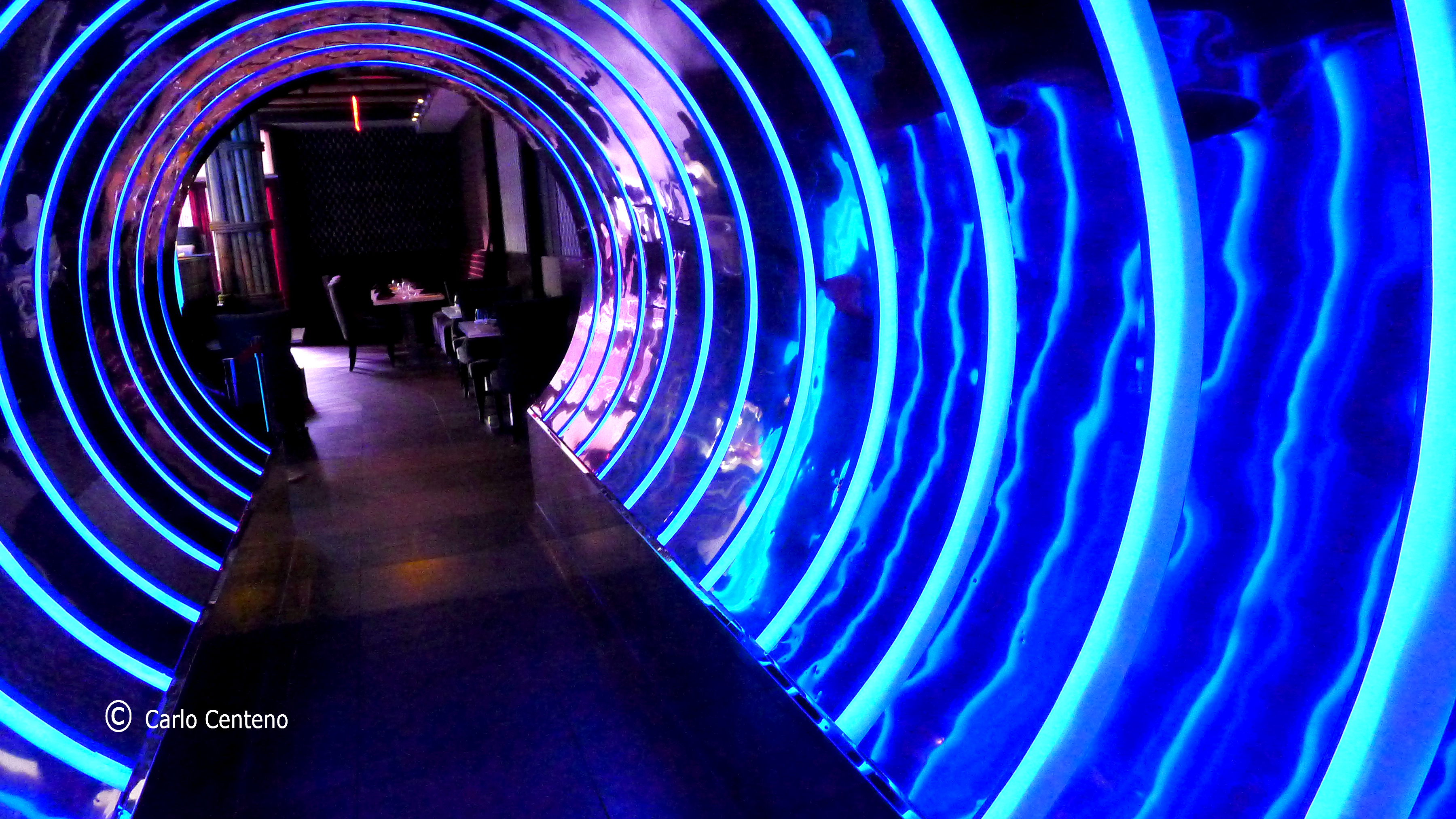
Of course, all of this is figurative, but I would say that the photo of the tunnel suggests that I can see a “way out,” but I’m a bit unsure of how to get there. I’m inside the chrysalis, evolving, developing a collection of ideas, hoping to create something altogether different if not unique.