Frisson…..it’s French for a chilling sensation, a shiver. It’s typically a pleasurable response to a stimuli that “moves you.” At times we refer to this reactive sensation as something that, “gives me the shivers.” You get goosebumps, you feel the small hairs on your arm or the back of your neck stand up, your breathing and pulse become quicker.
Frisson is that short-lived somewhat intense satisfaction often brought on by music, art, an event, a person, a book, essentially whatever it is you witness that generates a momentary elevation of pleasure. The brain and body experience something akin to adrenaline and dopamine reaching peak levels.
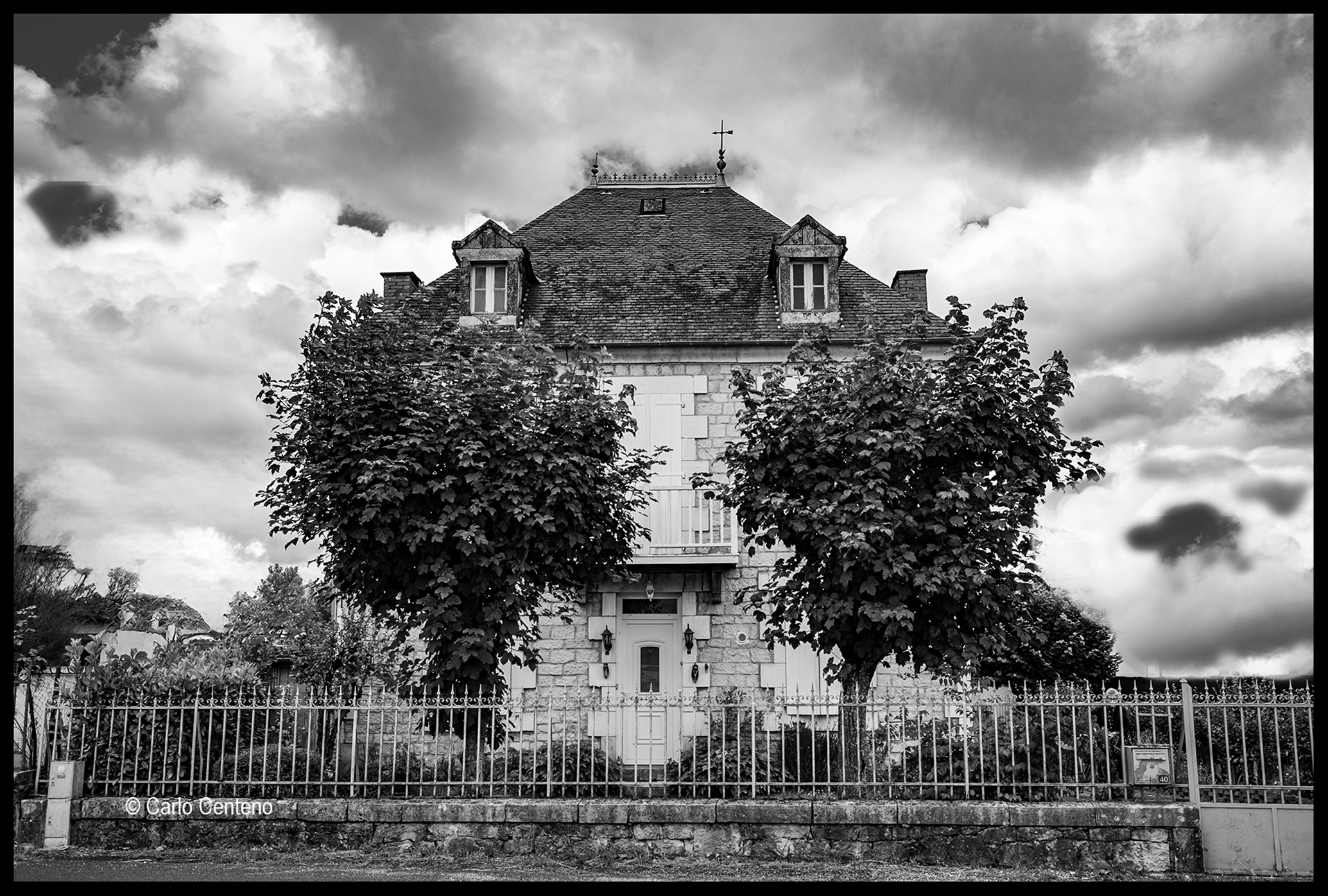
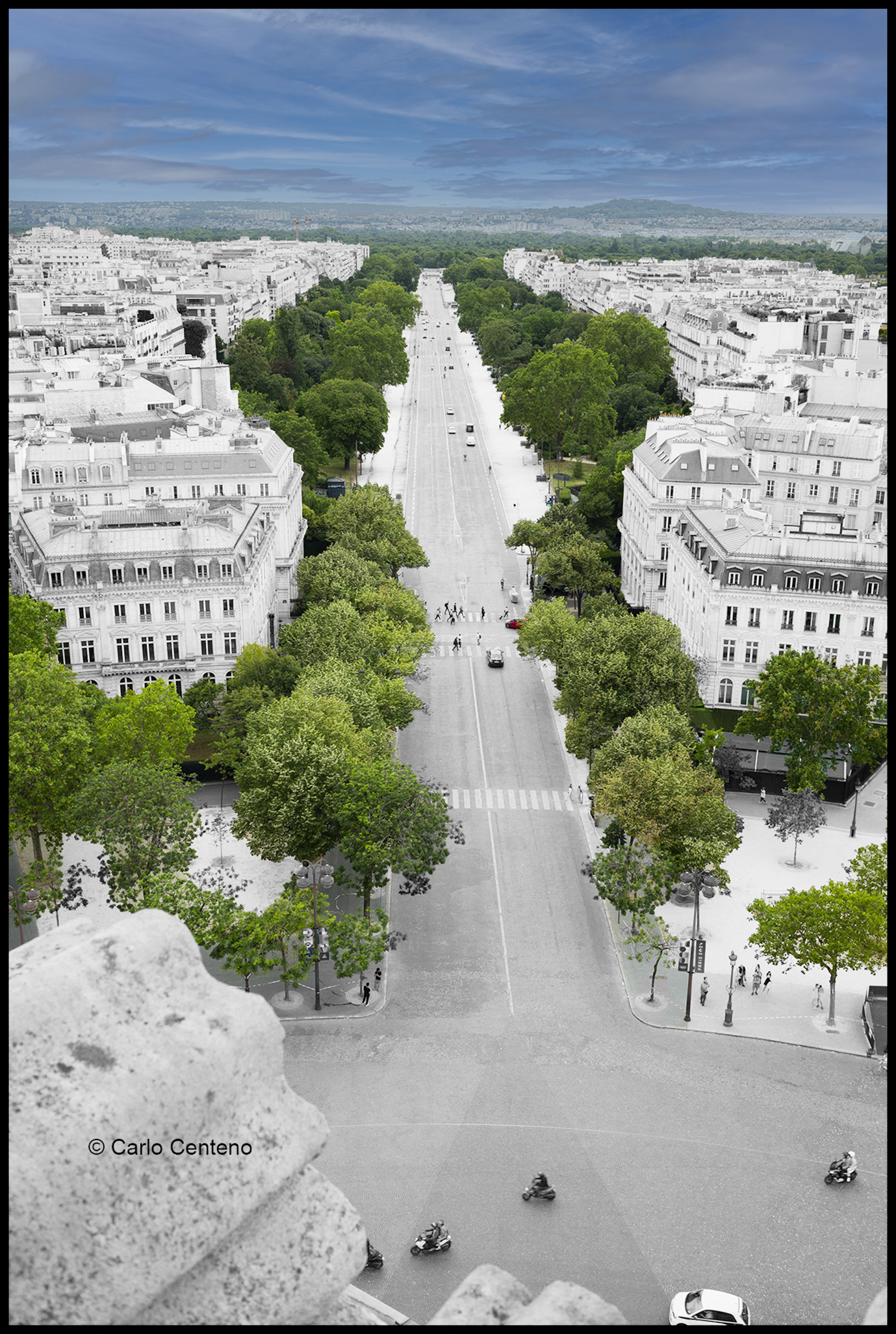
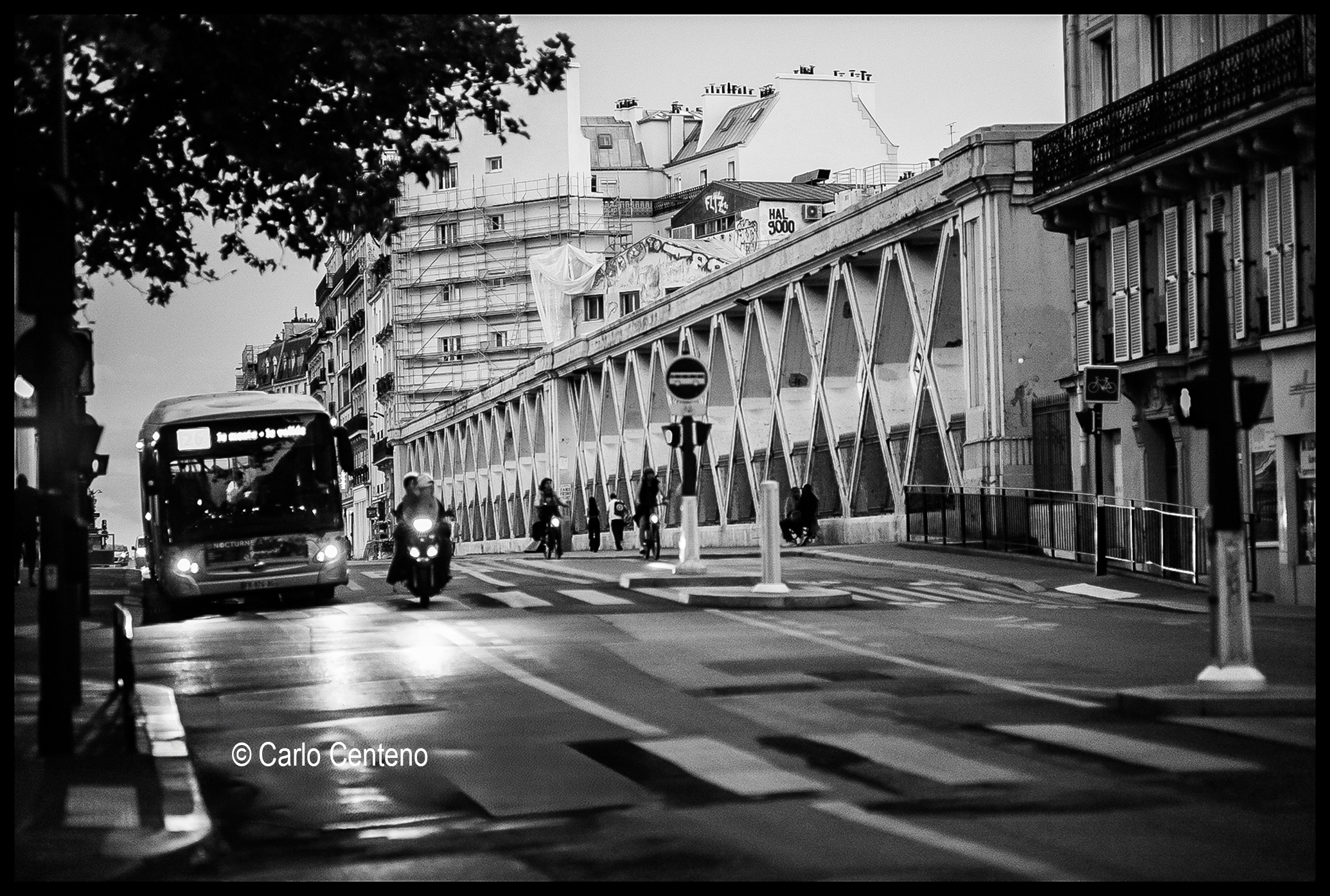
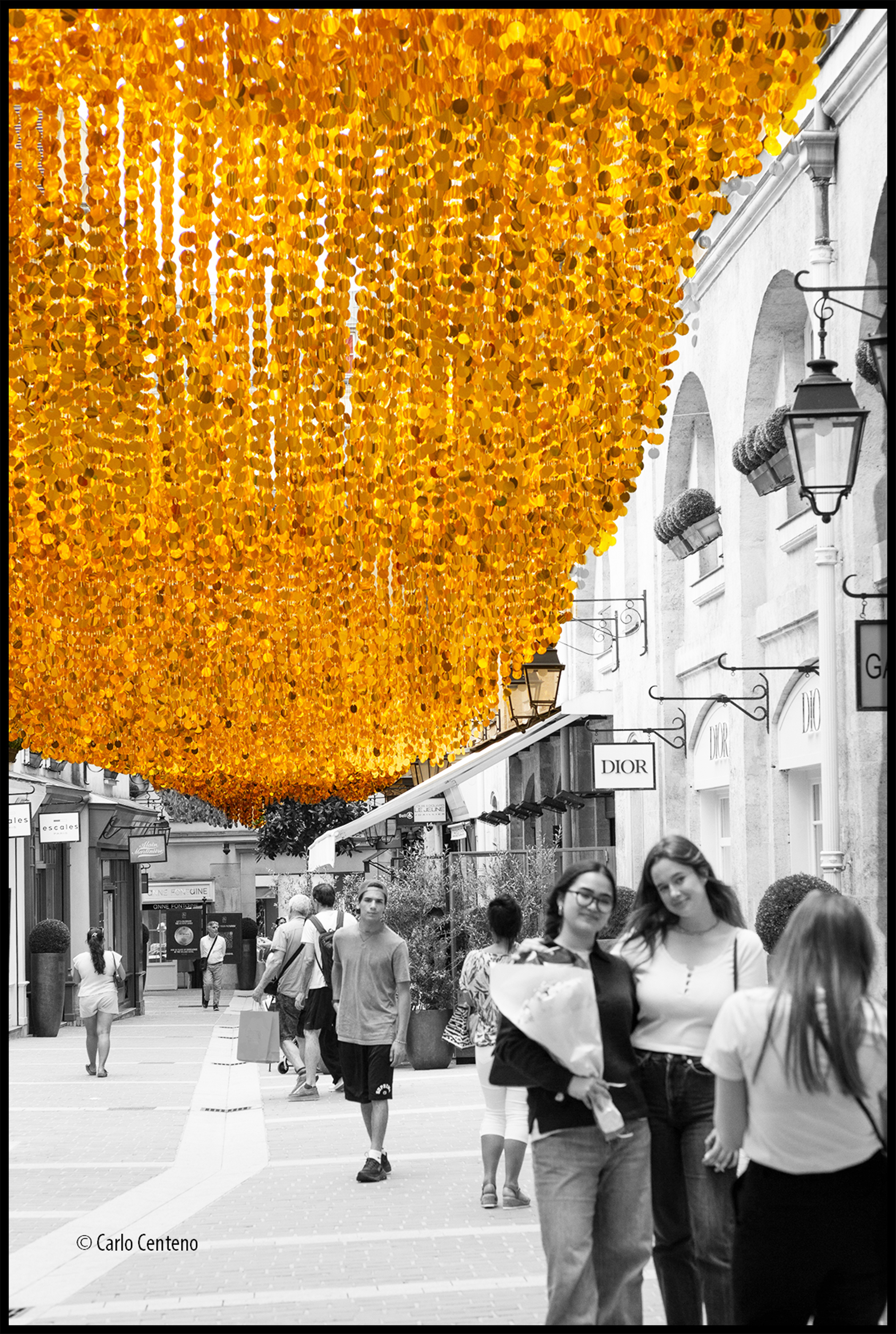
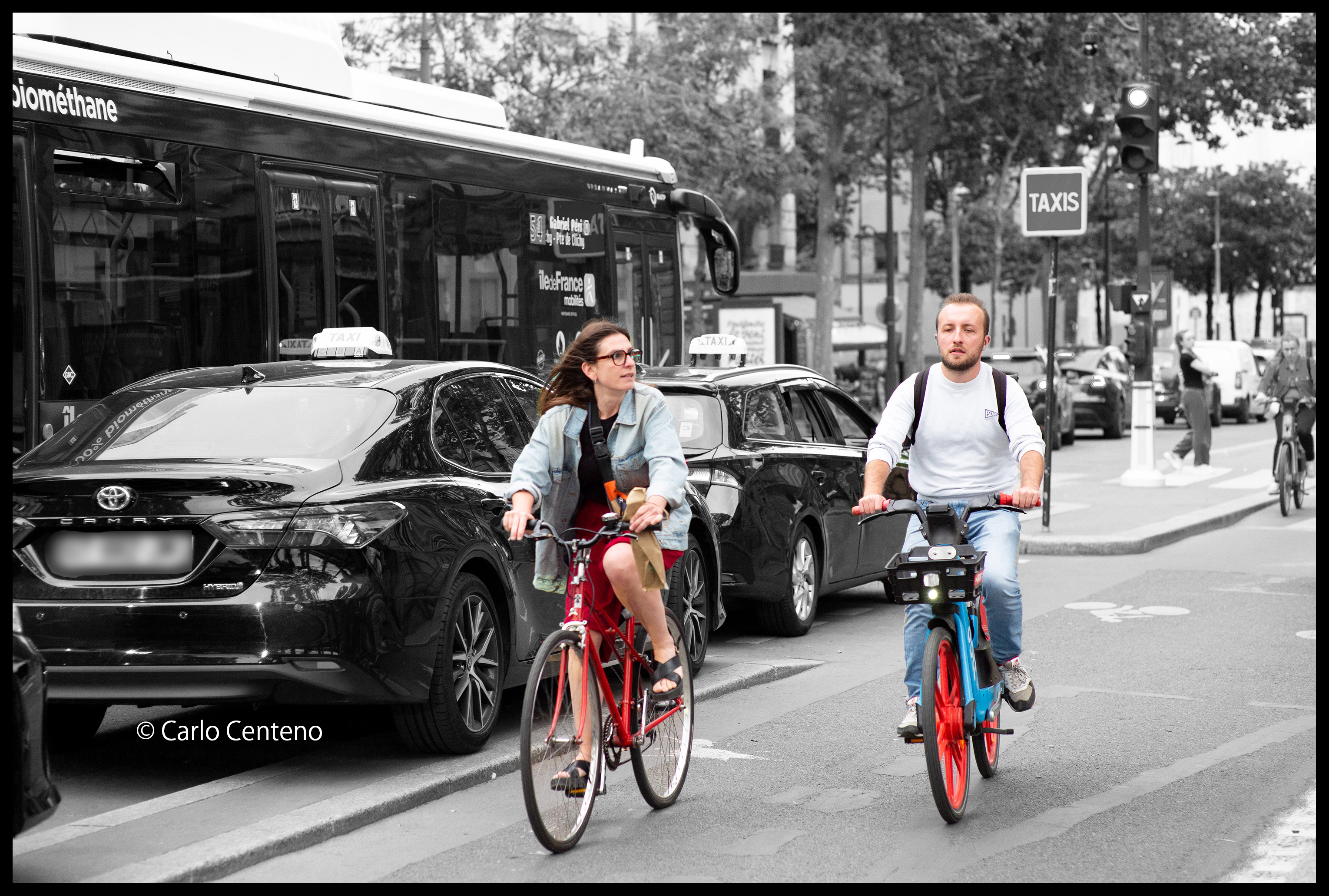
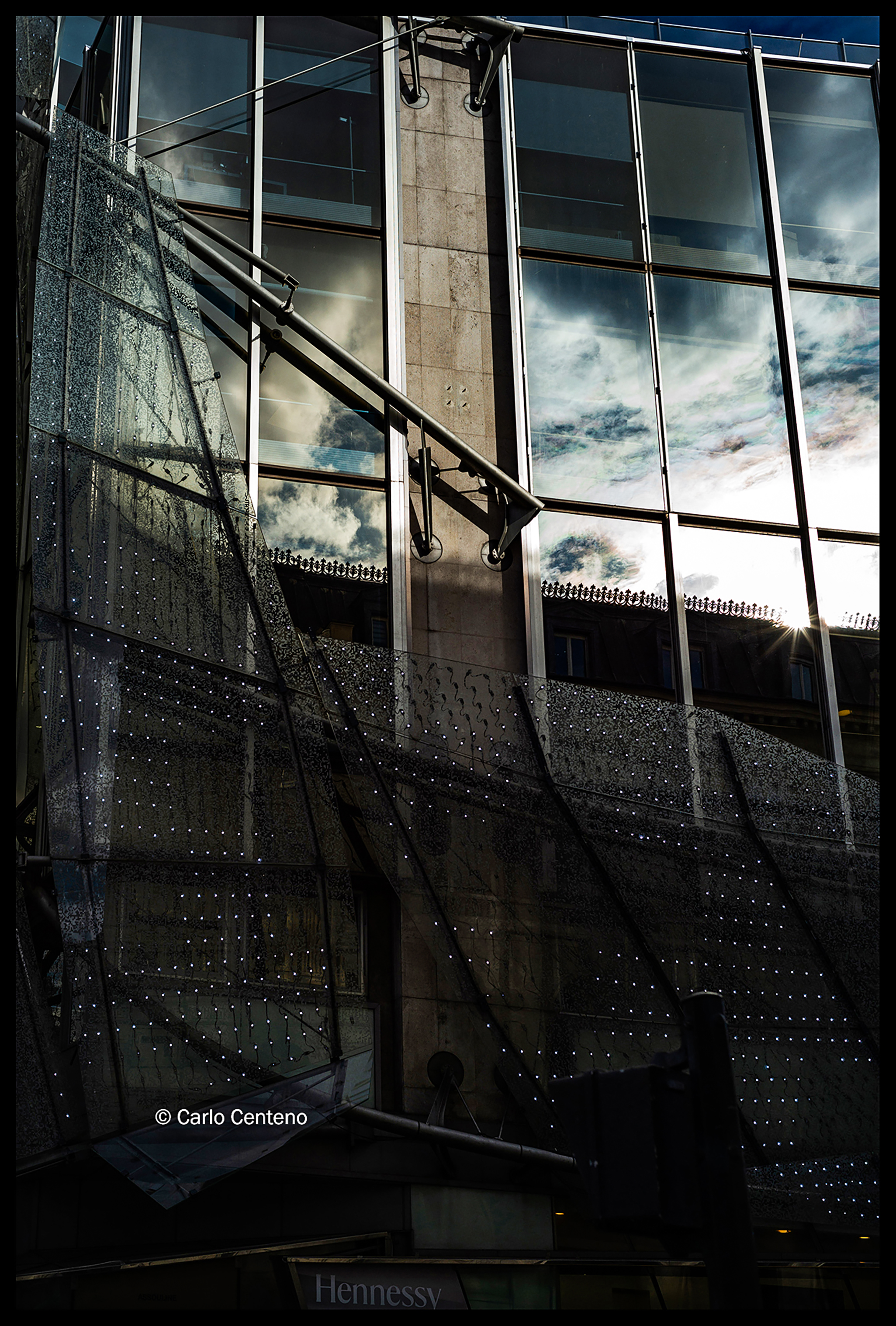
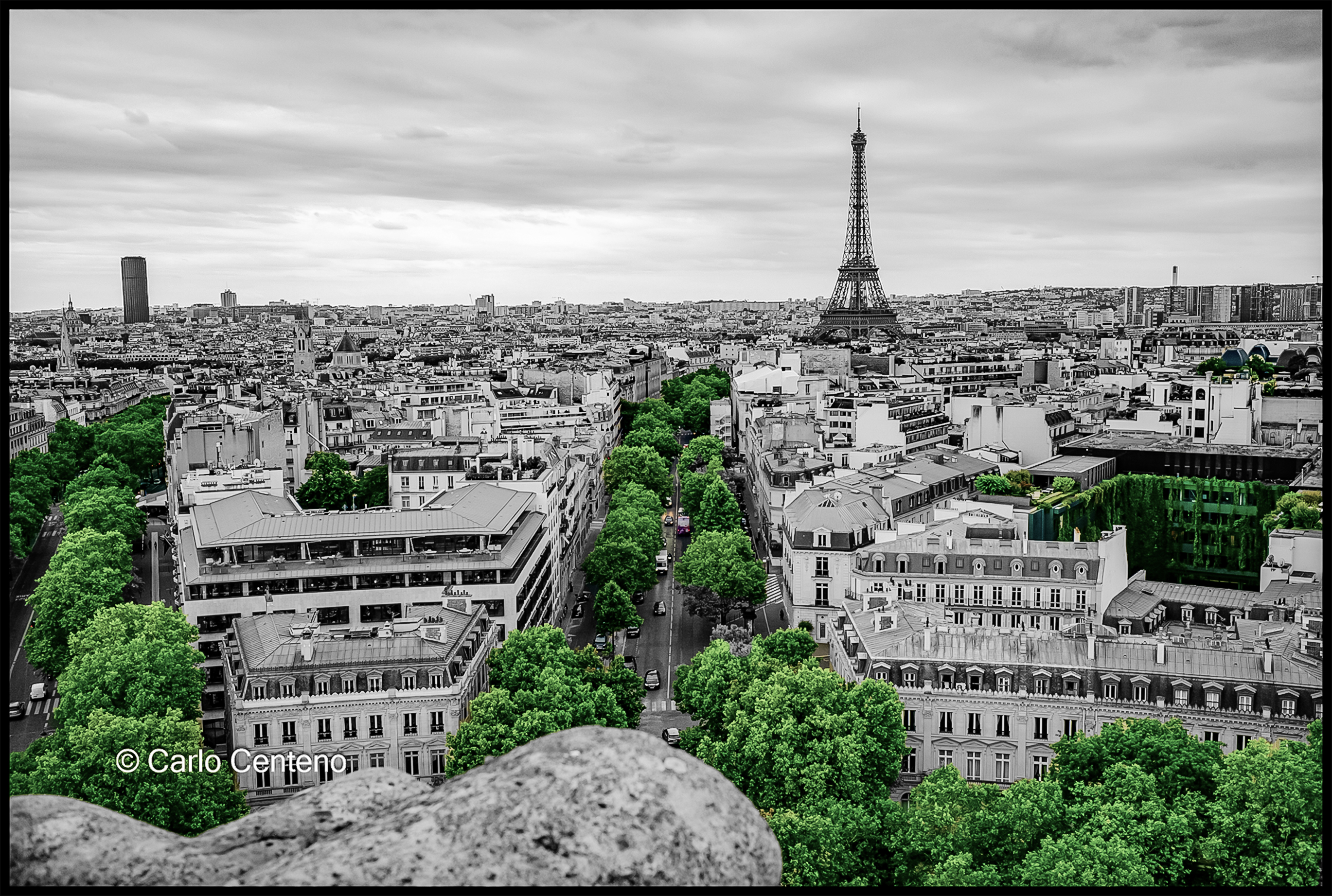
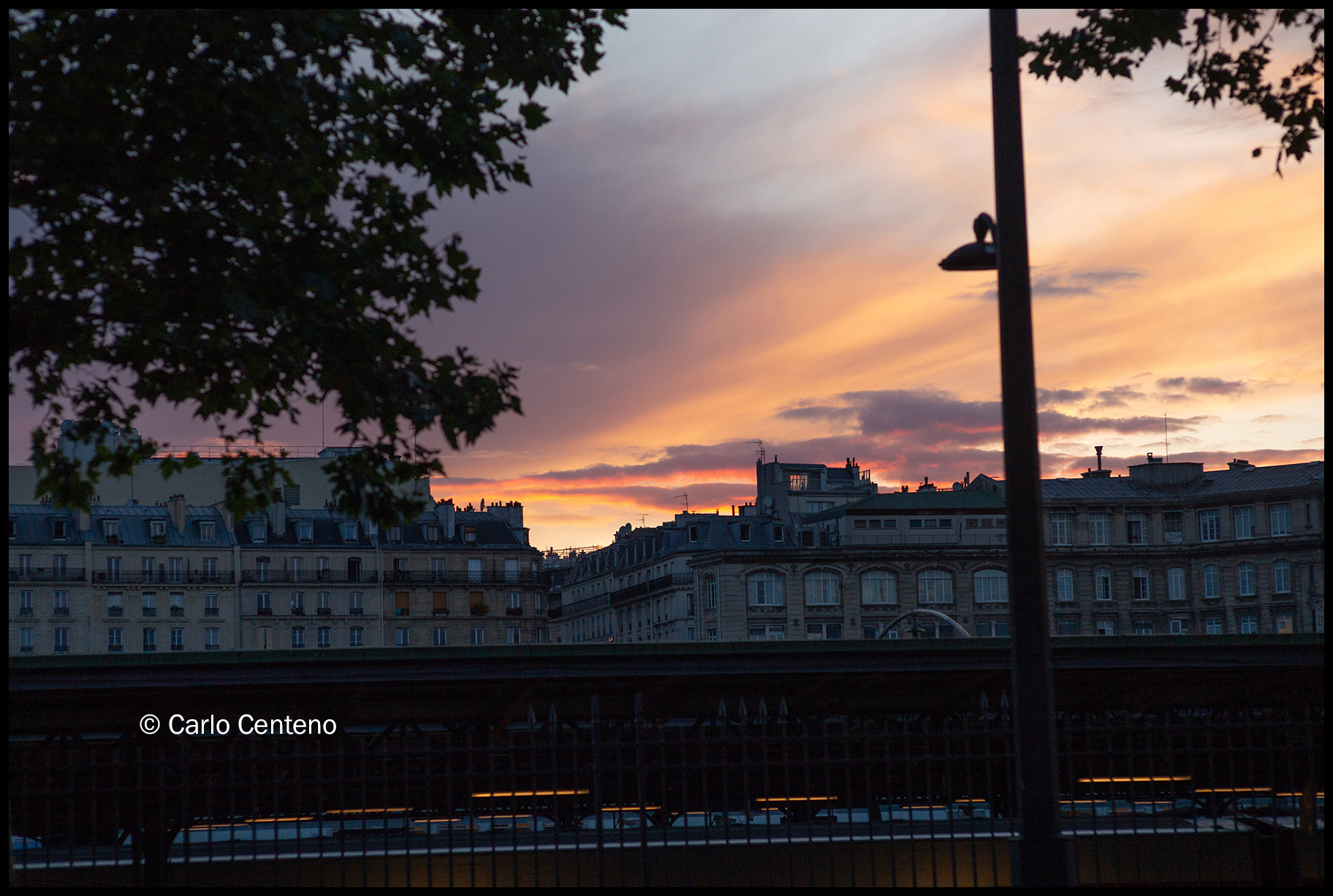
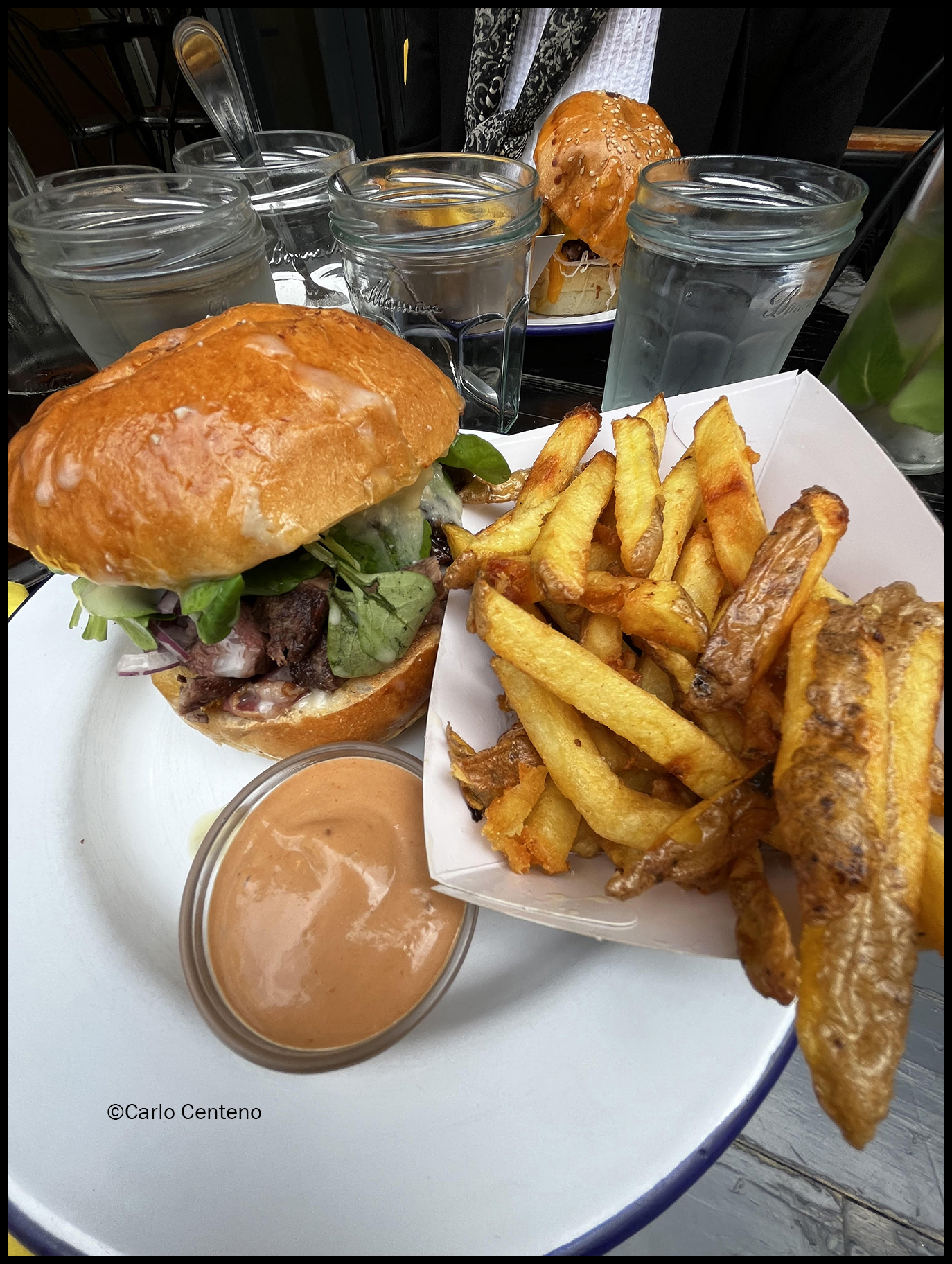
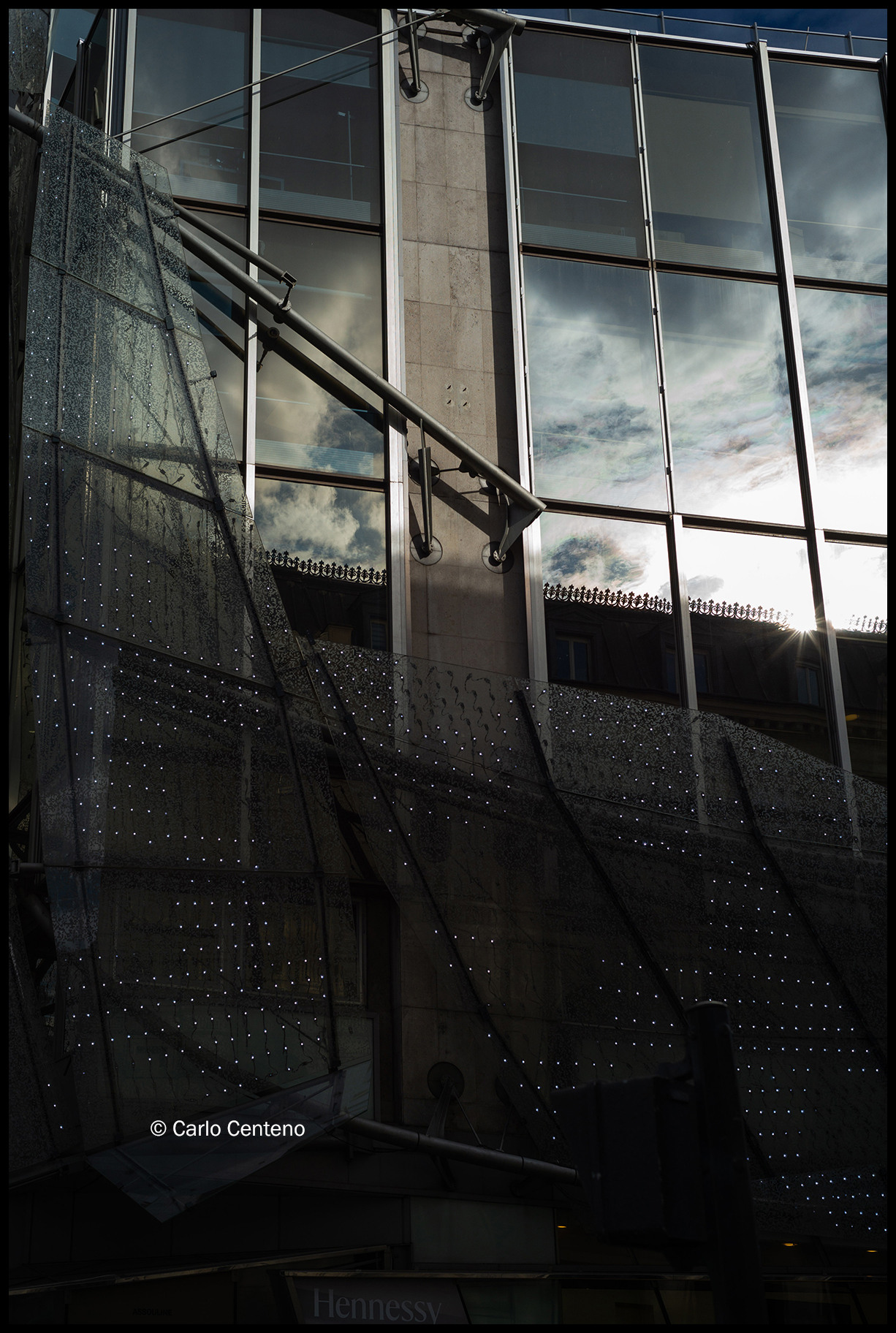
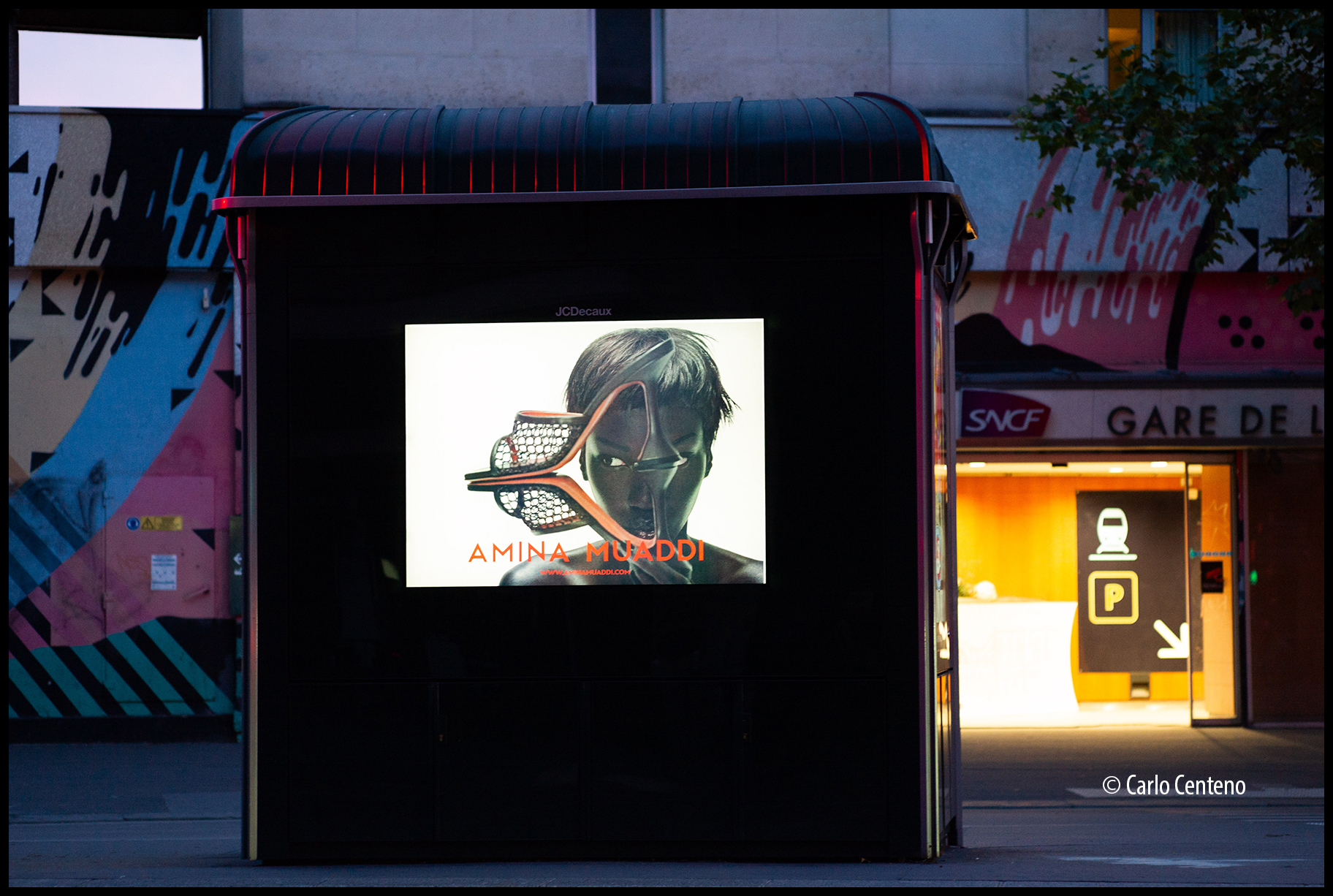
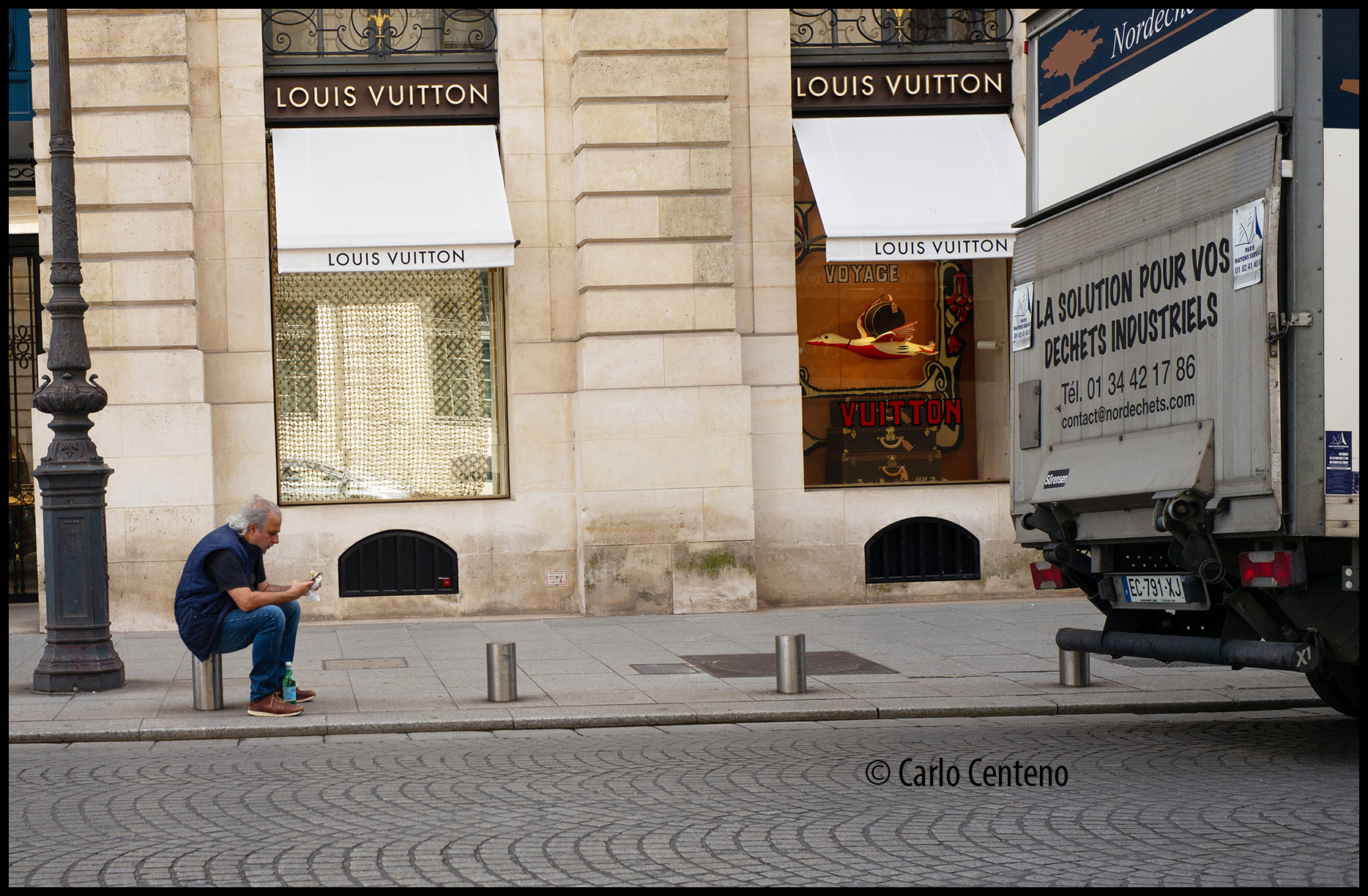
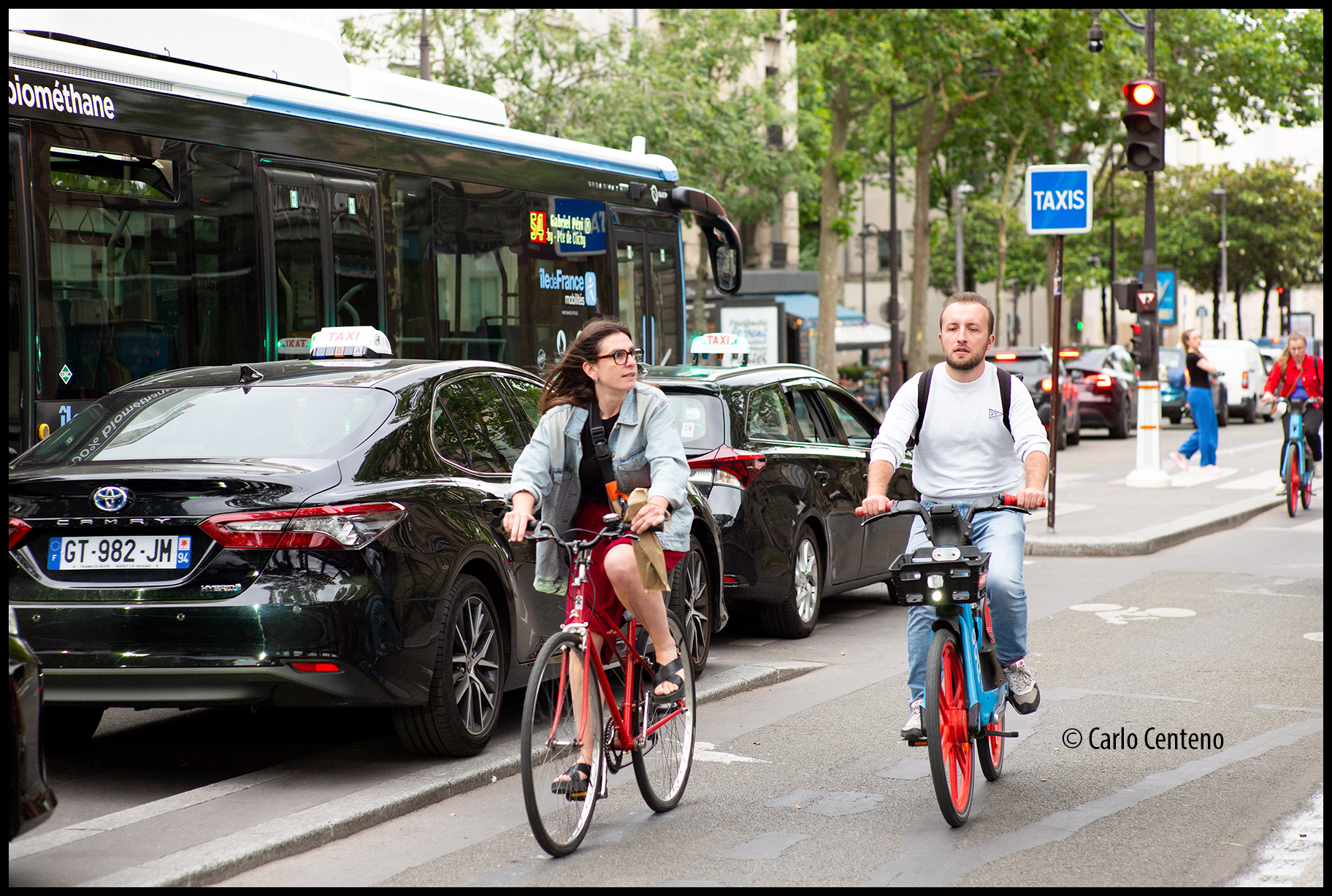
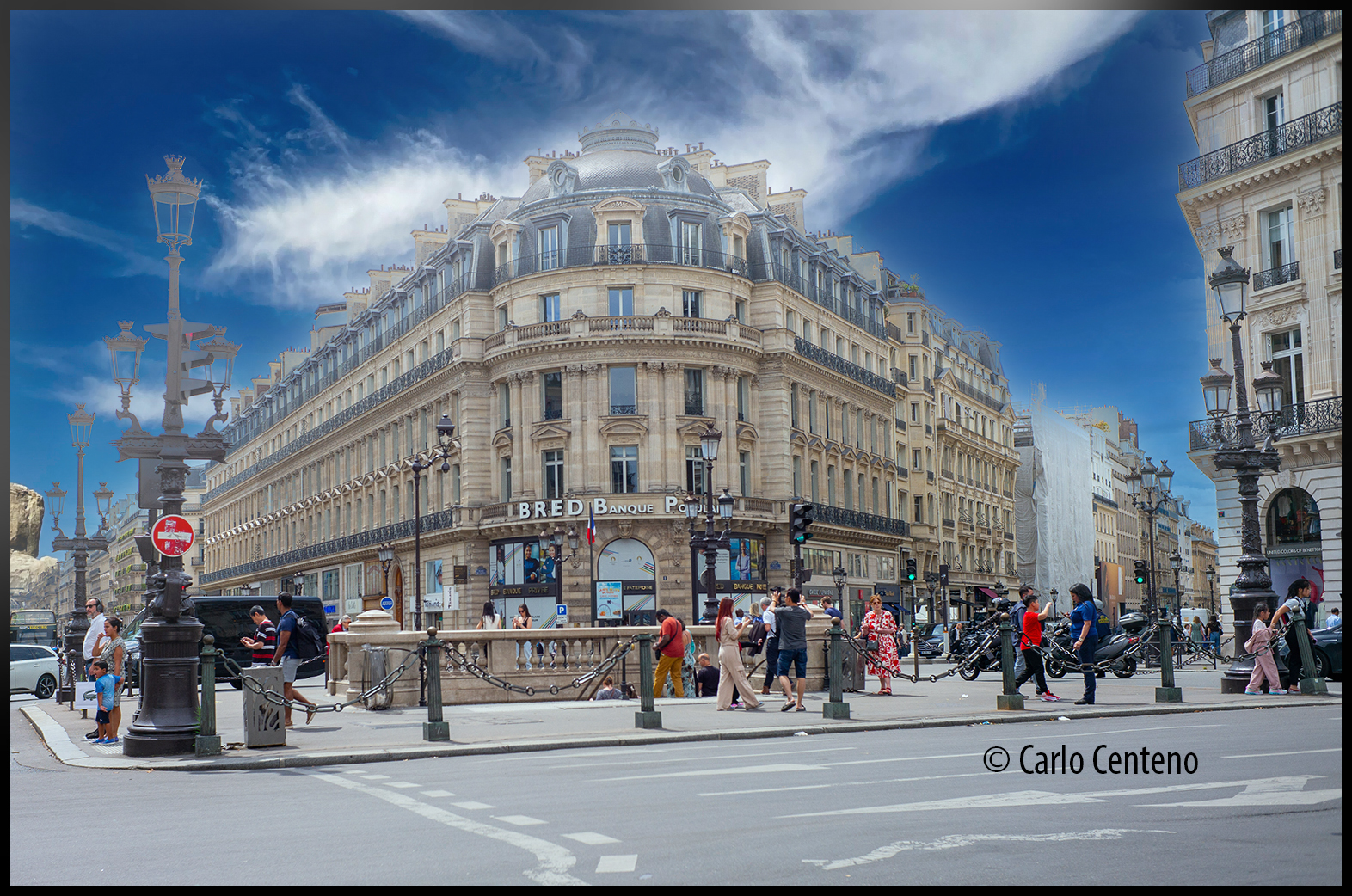
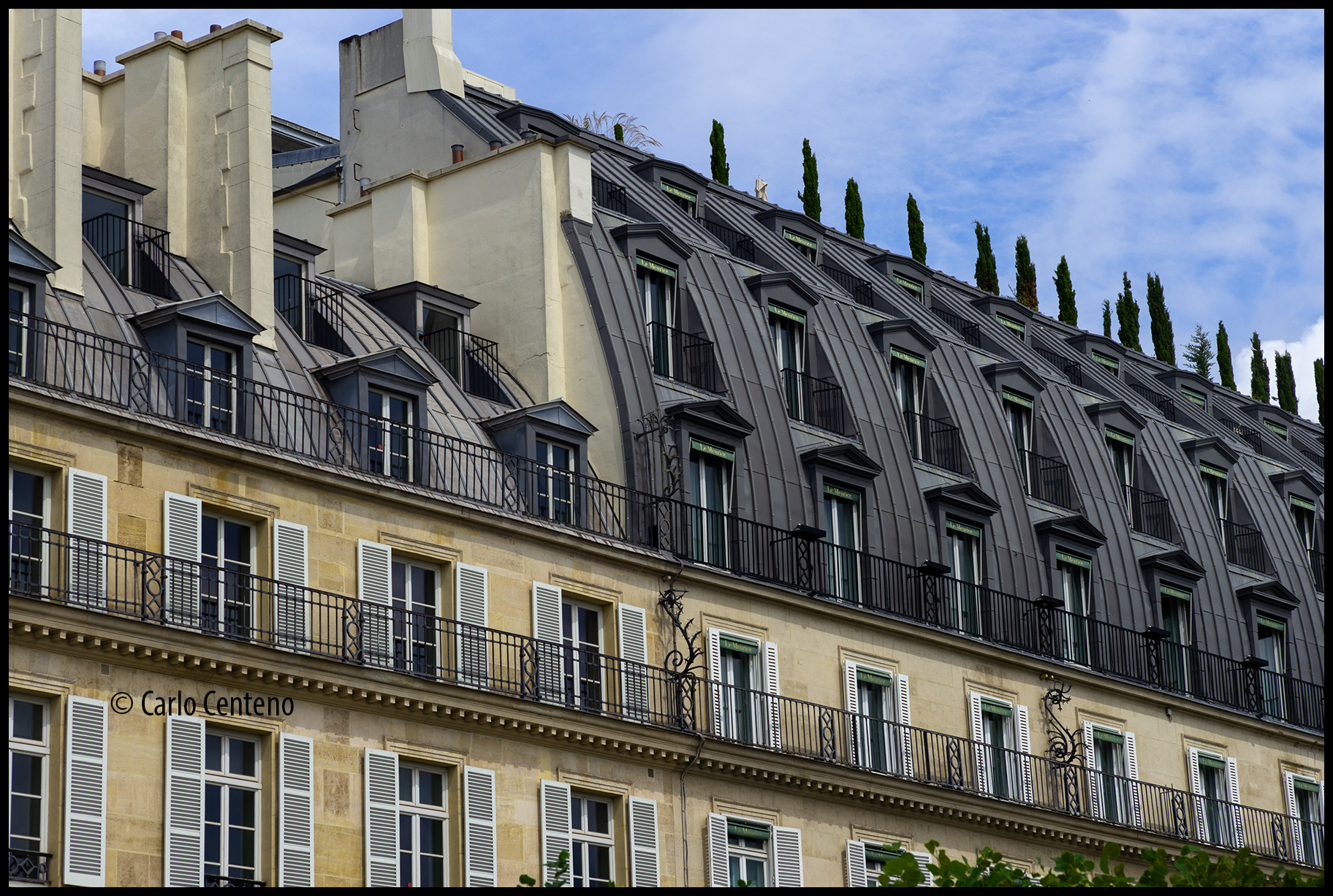
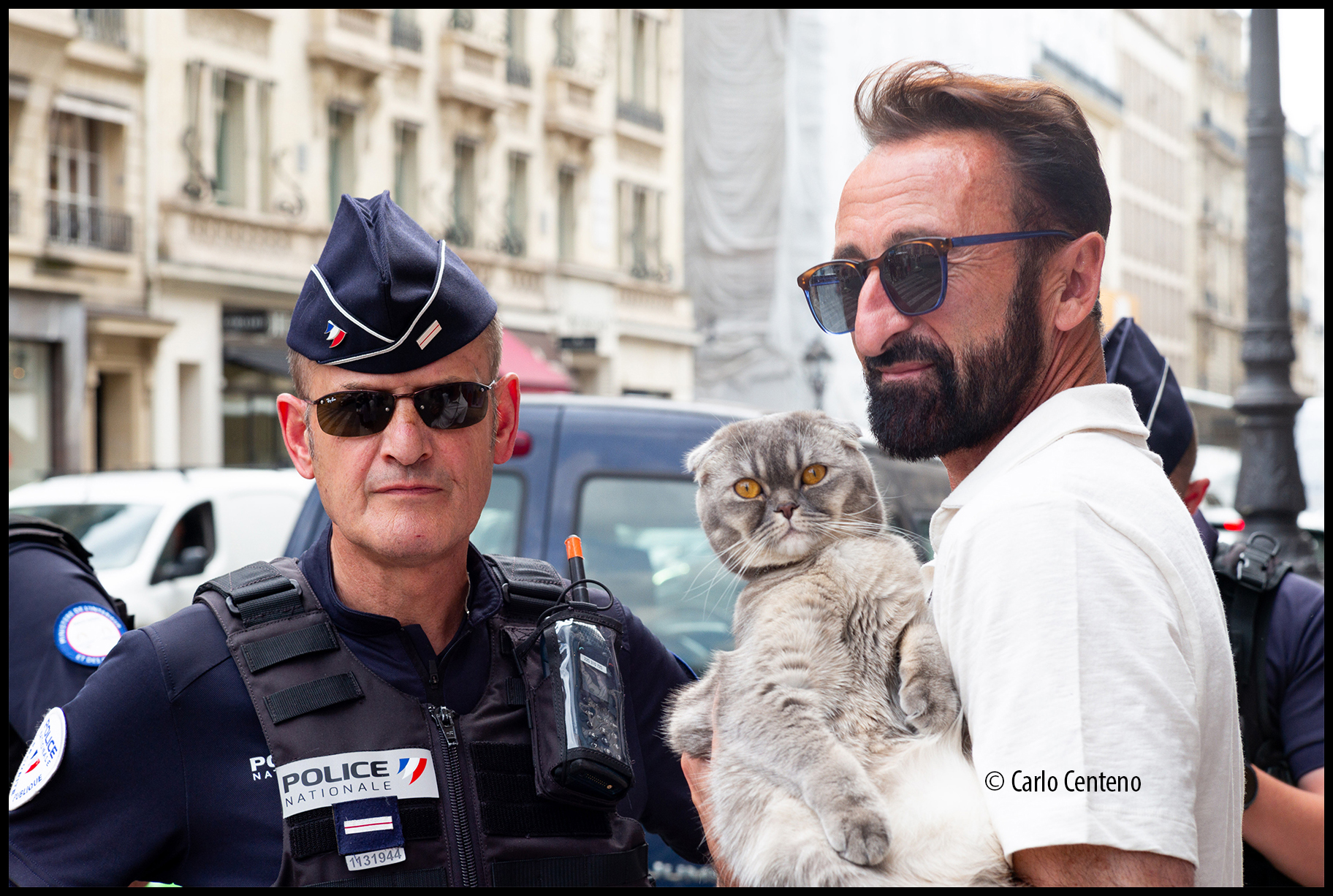
The following images are some of the “frissons” I felt while in France. I enjoyed the “shivers” and enjoy bringing them to life here. Hope you find something to like…..
When you’re bogged down with writer’s block, creative fog, even brain freeze, what do you do to break free from its hold? Here’s one way to purge the hive of such impediments. Go to an opening, an art exhibit, perhaps one which deals in a medium that you know little of. In my case, think fabrics, paper and ceramics and other materials—either in combination—or crafted exclusively with fabric. An oversimplification, but a few photos can better illustrate the creations displayed at the exhibit, Beauty is Resistance, our Fall Art in the Barn Exhibtion. I was impressed with the inventiveness, originality, concept development, creativity, and overall execution of the various pieces.
At browngrotta arts, co-curators Tom Grotta and Rhonda Brown have managed original art, crafted by internationally recognized artists for more than 3 decades. My “introduction” to the pieces of art at this exhibit was an A-1 engagement of diminishing my brain fog, creative block and so on. Neither words nor photos can describe the pieces. This is a case of what I actually see and feel is amazing, because of what is physically in front of me. A demonstrative be-in-the-moment activity, to say the least. So, please take a moment to peruse a small sampling of what was on display.
A special thank you to Tom Grotta and Rhonda Brown for their hospitality and sharing their knowledge about the artists, the scope of this exhibit and their anecdotes of life in international Art. Photography: courtesy of Tom Grotta. All rights for the images and the Art are those of the artists.
Home artist Lija Rage; mixed media, wooden sticks, linen and copper [2-panels; detail shown in second image].
From Chaos to Reality artist Aleksandra Stoyanov; sisal, cotton
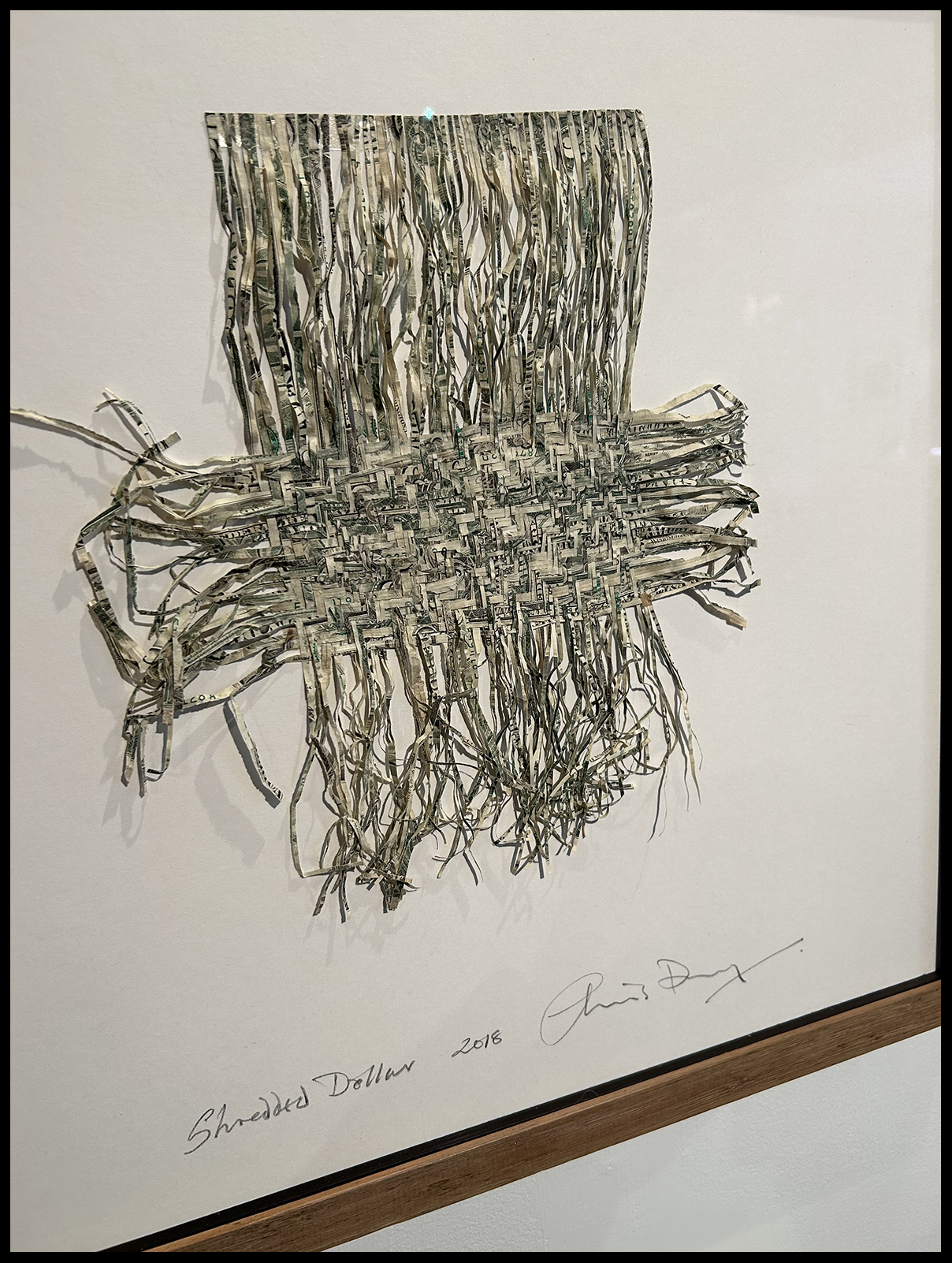
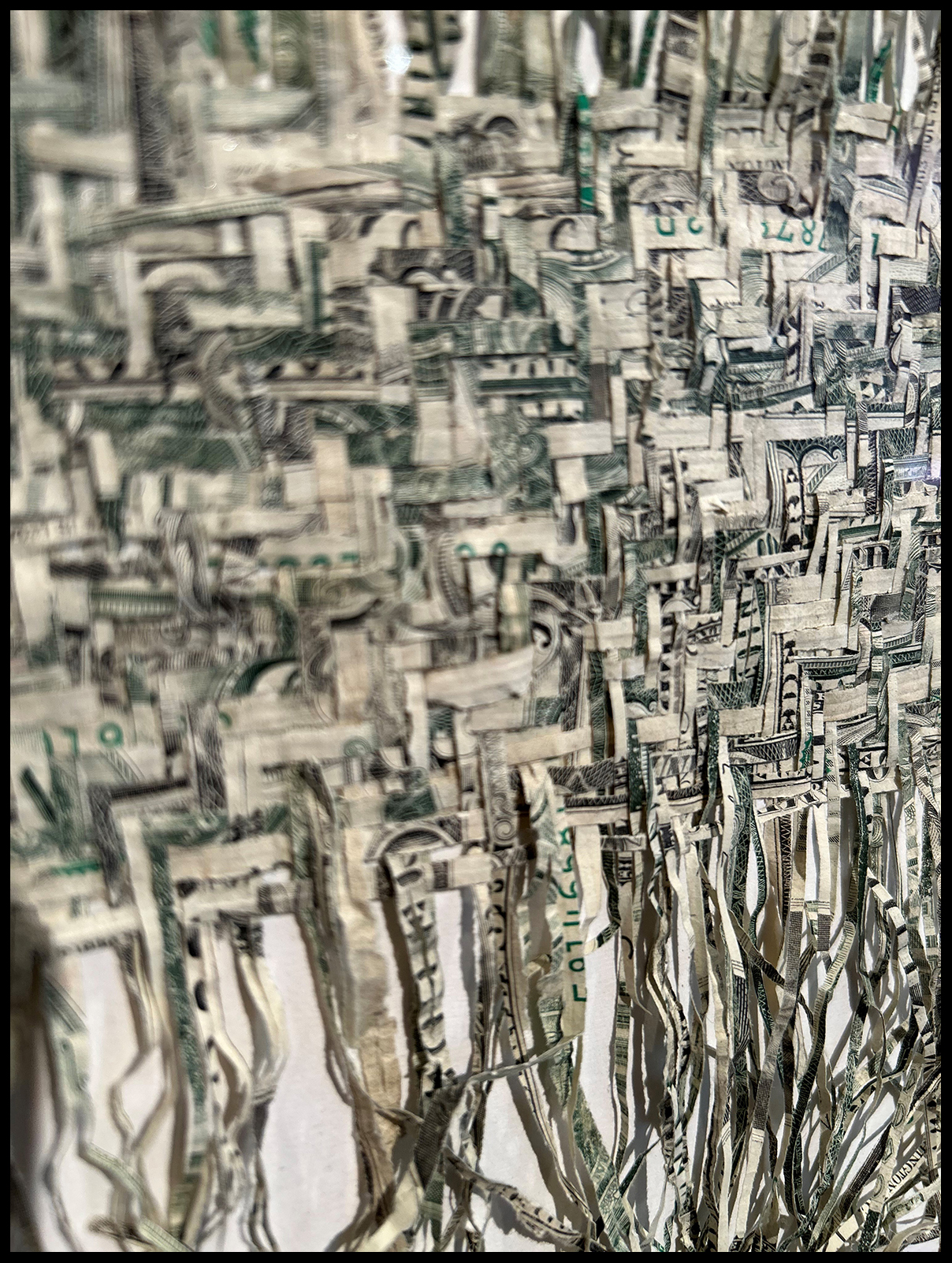
Shred dollar artist Chris Drury; US currency [detail shown below]
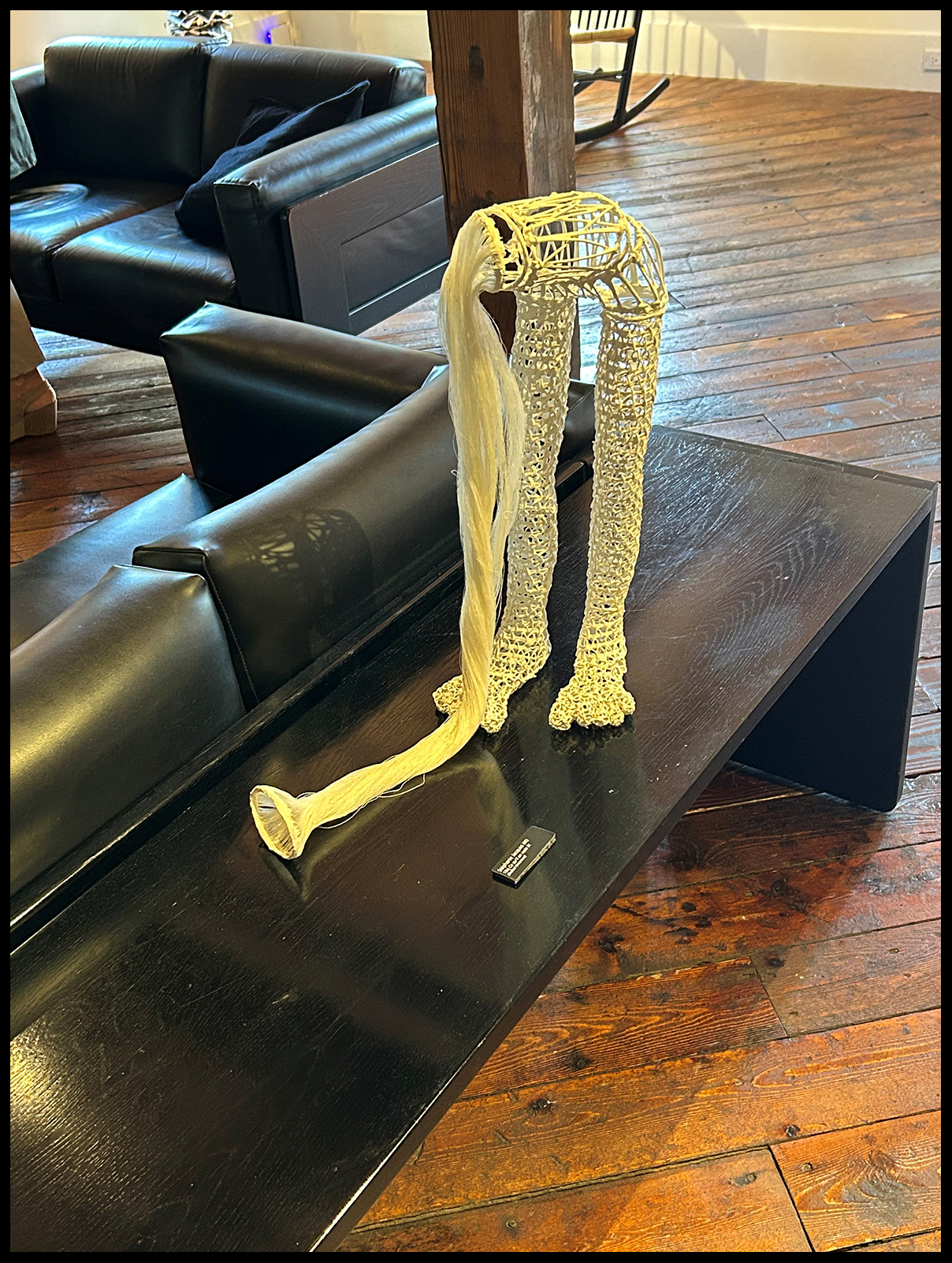
Female Husk II artist Anda Klancic; torso [from Momento Mori composition] with cone; palm tree bark, synthetic filament, acrylic, and metal wire
Ce qu’il en reste IX artist Stephanie Jacques; willow, gesso, linen thread
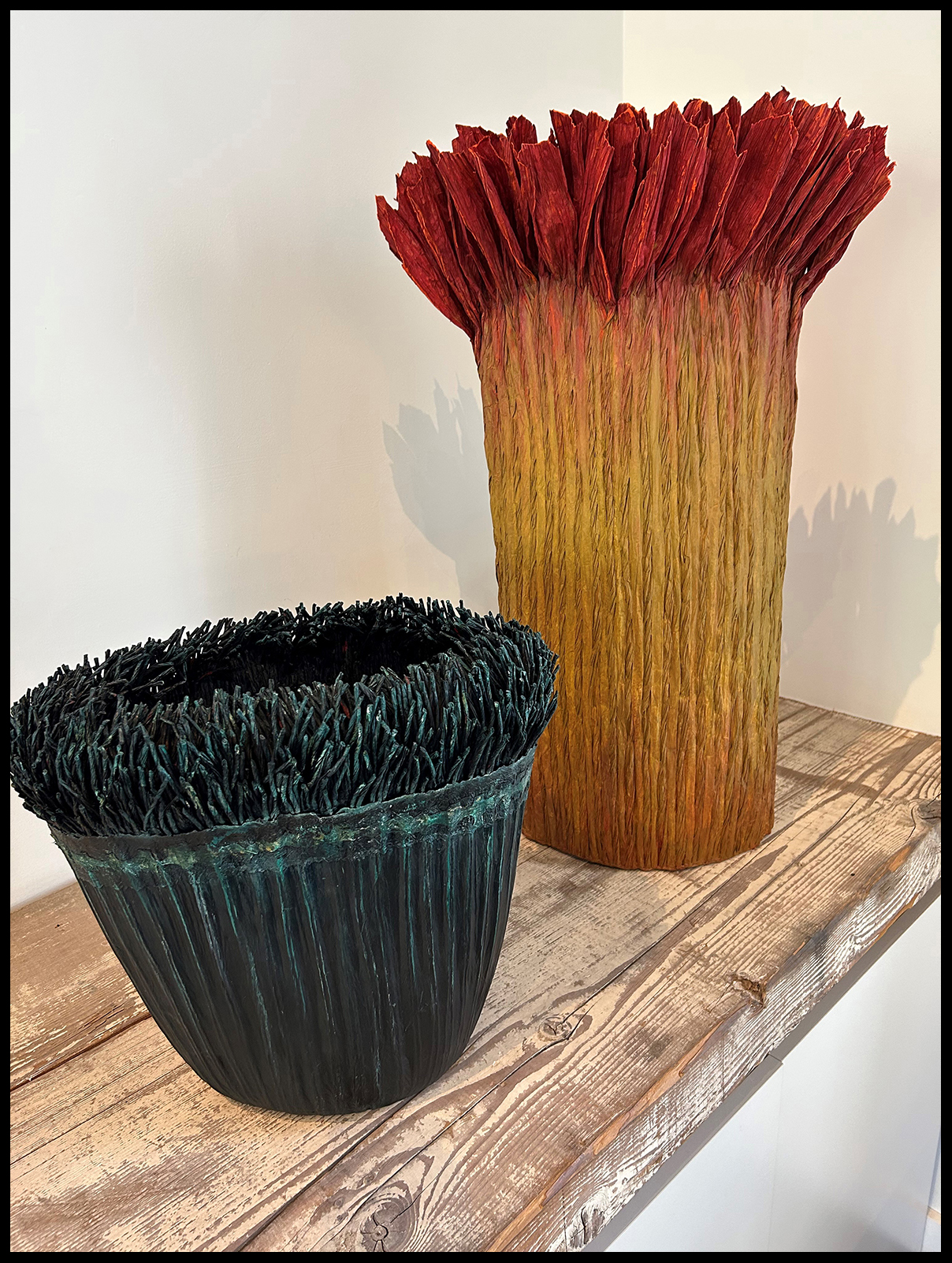
Flower Colors artist Mary Merkel-Hess; paper, cord, paper
Rhonda Brown co-curator
Tom Grotta co-curator
Photography a professional photographer, Tom Grotta created a display showcasing some of the literature and gear he has used through his ongoing career.
Back in the day, “soliloquy” was a word associated with theatre. There have been some powerful, mindful soliloquys, many found in English Literature. William Shakespeare and Robert Browning come to mind; the former for his plays, Browning for his poetry.
I find myself tuning into my inner self with soliloquys. These are not conversations to me, but a way to be honest with myself. In the process, I voice [in my head…..not out loud]. the deepest feelings which need to be brought out from the inner sanctum of my soul. These sentiments, perceptions and more, represent a personal unspoken anthology of emotions which remain exclusive to myself. Everyone should try their own form of soliloquy. You become the subject as well as the audience. The orator speaks to the most relevant, but private person in his/her life.
A recent trip to the Massachusetts Museum of Contemporary Art [MassMOCA] located in North Adams, MA is one location that gave an opportunity for reflection and acknowledgement. Come to think of it, most any museum makes a strong location for a soliloquy. Other alternatives abound: a beach, a park, a forest, a solitary space, even a space filled with people. The options are varied, but I do believe, like the soliloquys expressed in plays, poems and so forth, a place relatively quiet proves hospitable to many. A calm atmosphere is a priori given the breadth of one’s soliloquy.
Where ever you stand, and what ever you see, there lies a confluence of provocations that may come to the forefront of your thinking or introspection. The time stamp—from which these thoughts come from—depends on its significance: an early relationship gone awry; a current relationship that seems too good to be true; the unknown realm in choosing one option over another; the challenge of working through options in light of a chronic condition that will not stop let alone disappear. There’s a universe of profound feeling and thinking we can only imagine.
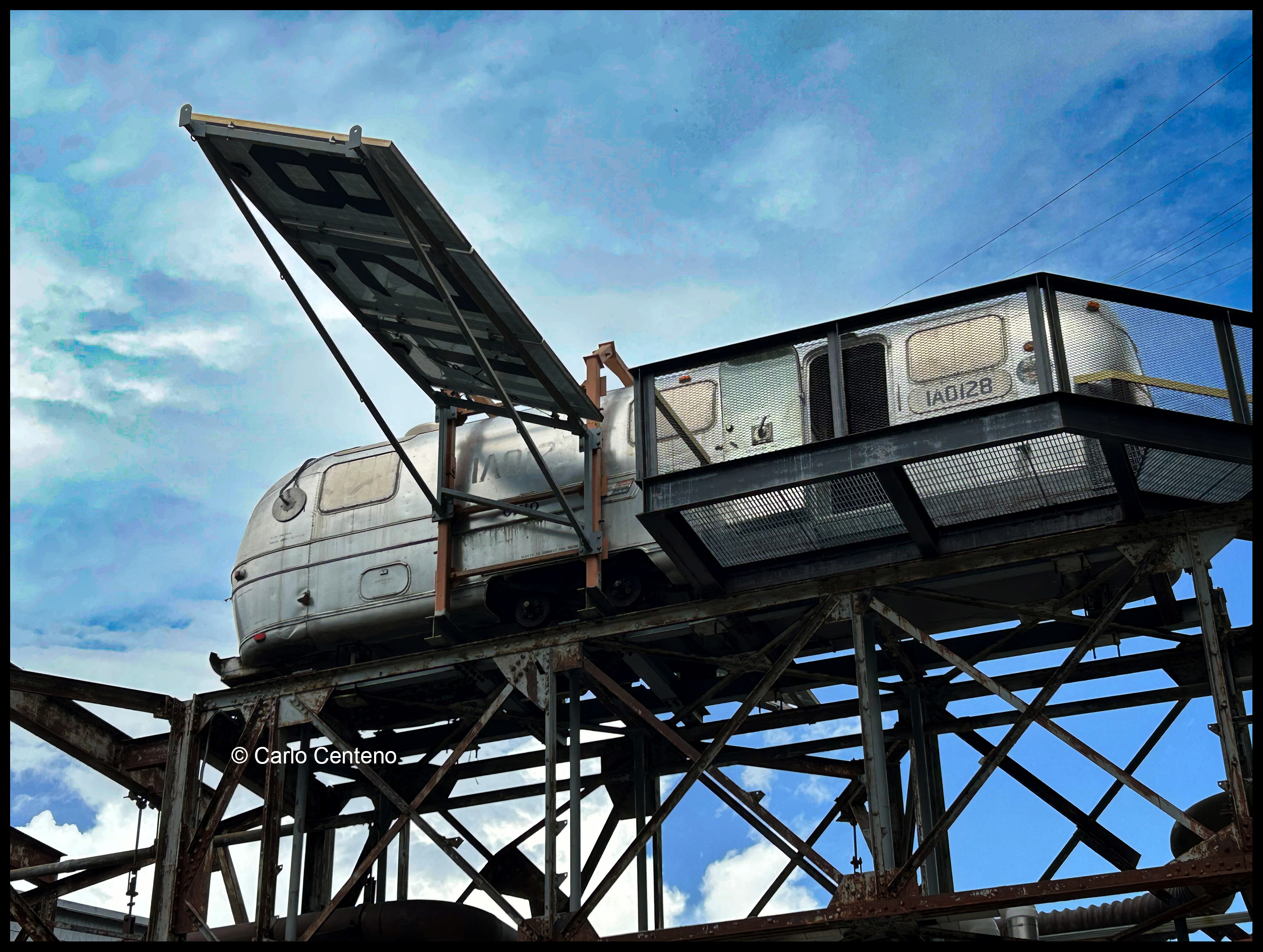
The above photos are from the MassMoCa’s permanent exhibit, The Boiler House. When you walk into the building, you’re visually overwhelmed with the scale and the number of boilers, pipes, connectors and vents that course over the entire space. If there ever was a place that made me feel Lilliputian, this is at the top of my list. The Boiler House is the facility that provided heat to all the space before it became MassMoCa. There are several floors, though I believe only the first 2 are open for visitors.
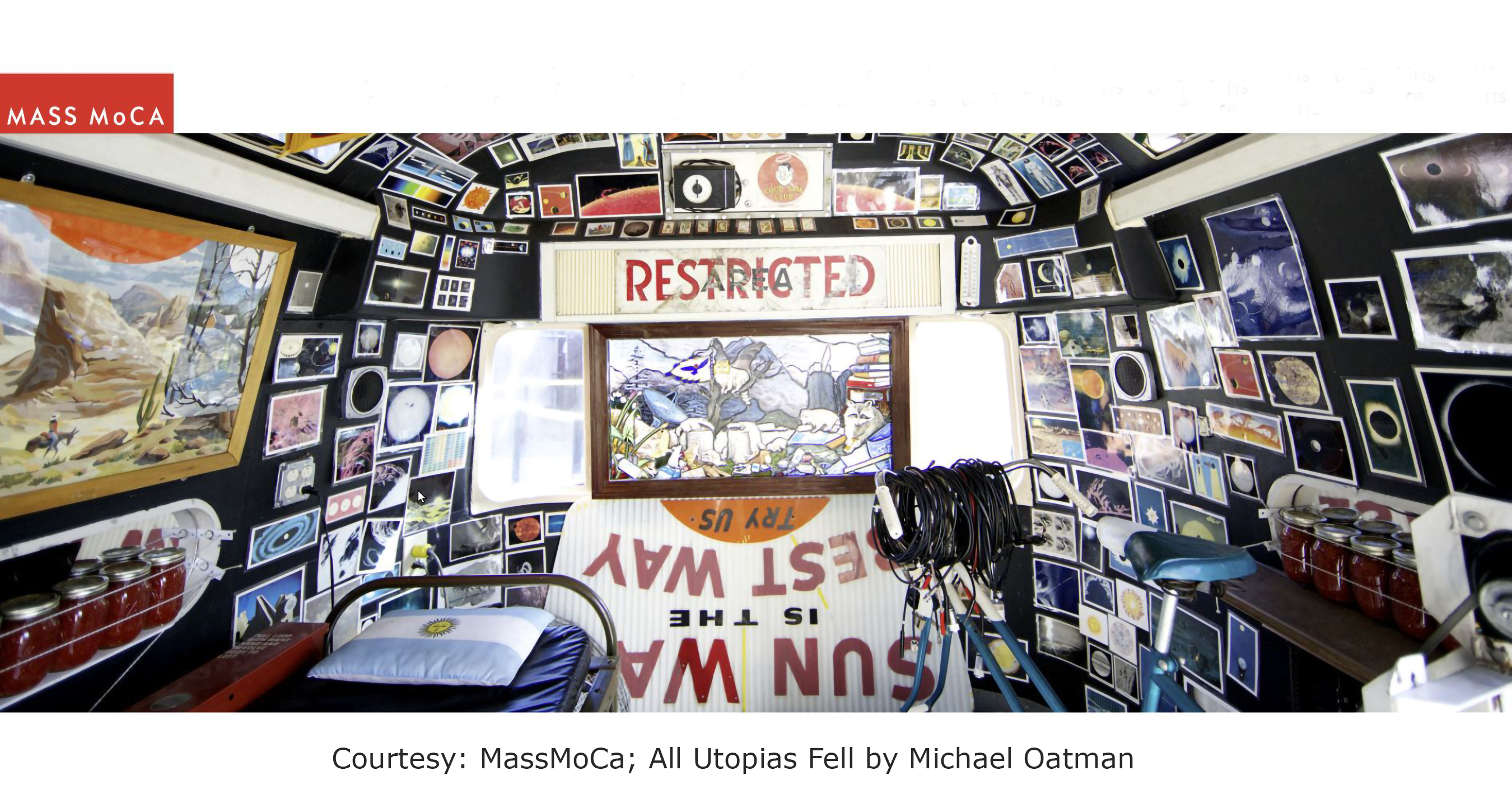
Suspended on tracks next to the Boiler House is an Airstream trailer. A walkway takes you to and from the Airstream to the Boiler House. This is the work of Michael Oatman, entitled “All Utopias Fell.”
A common theme in my soliloquy is this search for order and purpose, or a clarification of both. This is a challenge as I tend to overthink, excessively evaluate one over the other. Upon entering the Airstream, a myriad of visual elements reach out to you. It’s as if each photo, drawing, sign, piece of paper, object and so much more want to make mental impressions on you, as in right now. This is sensory overload and perhaps a metaphor for the soliloquy stirring in your thinking. It’s as if each piece could be a catalyst for a specific thought process. And once that piece or pieces enters your thinking, you start that introspection or make it progress to another level.
There are several “Why this?” and “What ifs?” within the profound, introspective construct of choices and decisions that are created. The certainty of being your own person, unique and unduplicated by any other, is that choices and decisions you make create the questions that begin with “why” or “what.” And while you and others are individuals in that singular sense, the framework of questioning is common for everyone, but ancillary circumstances are bound to differ between people.
Dr. Faustus, the play written by English dramatist Christopher Marlowe, revolves around the angst of Dr. Faustus agreeing to surrender his soul to the devil in exchange for magical powers. His soliloquy in the last hour before that exchange, is one which poses questions and conditions had the choices Dr. Faustus made were different. Once made, the commitment is binding, non-negotiable. There are no pause, stop or rewind buttons in life.
Shakespeare’s Hamlet is the quintessential soliloquy in my opinion. With new realities [and previous uncertainties] playing out today, themes of life & death, the meaning of our purpose and existence, mortality and vengeance are wonderfully distilled into words that examines all that can detract or enhance our existence.
I came across the last photo as I finished my visit to the Boiler House. It dawned on me that this effigy is a personification of someone covered with details that make up her/his soliloquy.
Keep an open mind. It matters when traveling to any destination that piques your curiosity. Whether it’s a neighboring state/province or an altogether different country, it requires elasticity in learning, appreciating and understanding. An open mind can open doors. It means possessing a willingness to be out of your comfort zone. And as you stand in your discomfort, your perspective may need adjustment or refinement. This is where you take the initiative to help others see your perspective. Naturally this requires staying attentive for the different position[s] you may encounter. It’s fine to disagree without being disagreeable.
Remind yourself that having an open mind tames the myopia that limits one’s ability to think beyond your horizon of possibility.
Arc de Triomphe
Eleven days in France this July made for quite a vacation. The coming of the summer Olympics turned Paris into a mixed bag of barricaded icons and walkways, detours and traffic. Our Parisian stay covered 3-days; not enough time to explore Paris, but 3 is better than none. A first visit to another city is as they say, an experience. Visually, aurally, olfactorily you cannot ignore the architecture, the gardens, the people, the language, the aroma of freshly baked croissants, baguettes and coffee and so on and so forth.
After Paris the next 8 days would be at Vignon-en-Quercy in southwest France. Fortunately, our flight back home was 7-days before the opening ceremonies, and we knew that more walkways and some open areas would be cordoned off. Predictably, logos and phrases proudly reminded of The Games coming to town. Still, nothing took away from our sense of discovery in this storied city.
We had thoughts of visiting the Louvre, Musee d’Orsay, among others, but the detours and limited access made it a physical and mental marathon. We were close to those museums and other points of interest as they say, but we unabashedly savored our quiet time in the Jardin des Tuileries, a garden between the Louvre and Place de Concorde. In a more relaxed pace, we enjoyed le Jardin and even took advantage of the cafes within the grounds. Seeing the Louvre from a different vantage point provided an unrushed appreciation for a 231 year old institution.
Le LouvreLa Place de Concorde/ courtesy Paris VisuelDetail de l’exteriur de Louis VittonPedestrians be Careful Cross in 2 steps
We thought of adding 2 more days in Paris. It would’ve certainly helped my french conversation, but other plans were already in place. Entering any business or eatery, saying bonjour is always helpful and polite. After the greeting, the most frequent words from my mouth were, Ou est…? or quelle direction est…? or pardonnez moi, sommes-nous pre du……? and of course, merci, bonne journee!
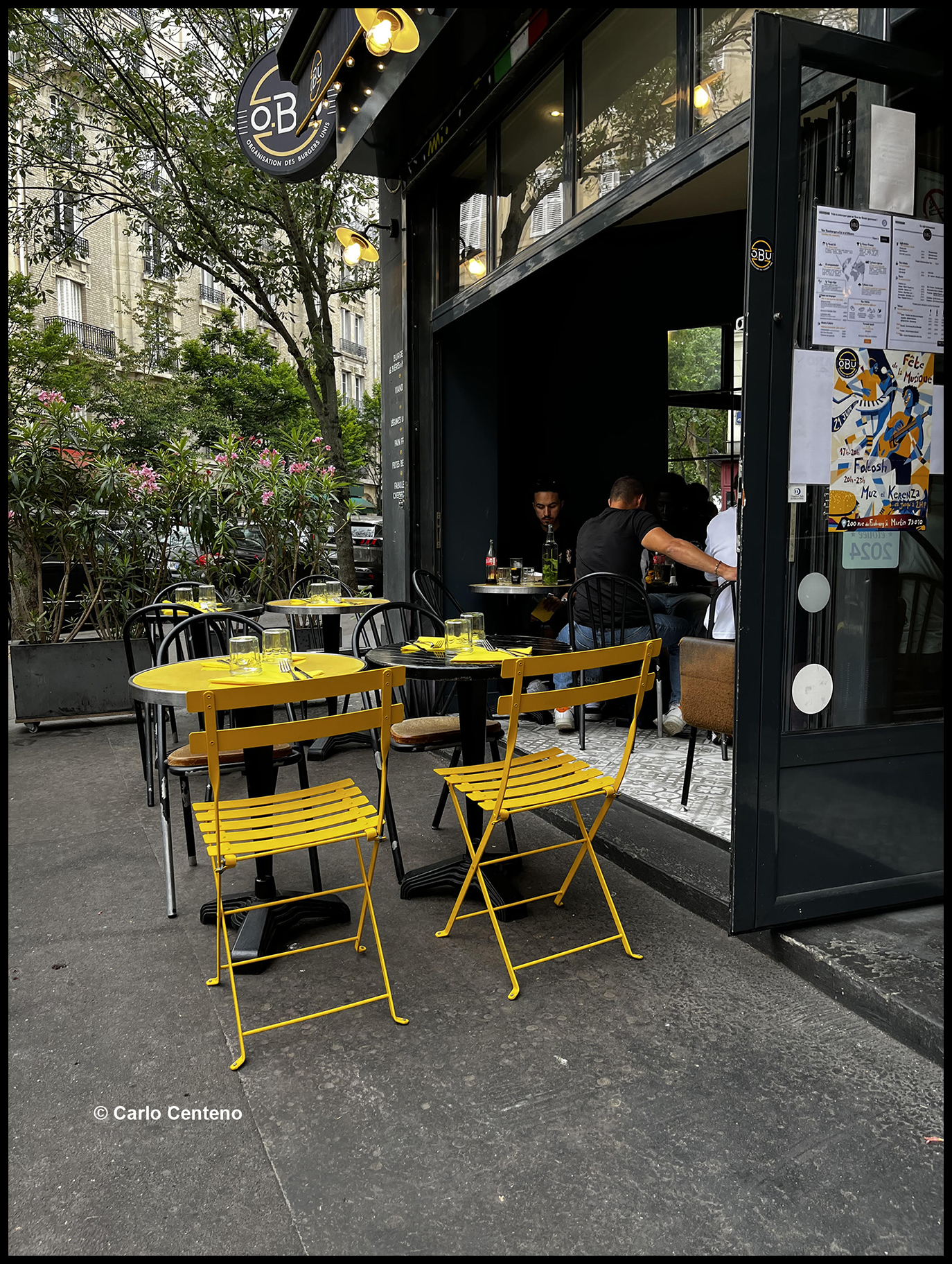
Our first morning, we walked to a bistro teeming with commuters and visitors. The menu on a sandwich board offered something we liked and I recognized: Petit déjeuner supreme ! Deux œufs [au choix] avec jamon et frommage, cafe, jus d’orange, baguette, croissant, confiture de fraises et salade. [Supreme breakfast! Two eggs any style with ham and cheese, coffee, orange juice, baguette, croissant, strawberry jam and salad].
We sat outside among a cluster of small tables and chairs, but the waiter advised we sit inside, though not far from the open frontage. Il y a trop de fumee dehors. Too much smoke outside as cigarettes are popular in most of France. It was a perfect time to watch people going on with their lives: scooters and bicycles carried a cast of characters; small french cars ruled the streets alongside taxis and Ubers, motorcycles and buses.
Based on our waiter, my french was so-so. Monsieur, I speak and understand english; you do not have to speak french…. Ouch. Polite but humbling. As he turned toward the kitchen order-window, I mumbled, C’est dommage….it’s a pity, too bad.
“The solution for your industrial waste.”
NEXT VISIT: a week in the town of Vignon-en-Quercy [….See you there.] !!!
I am convinced that modern life has boxed us in more so than we’d like. It’s part of the contemporary territory which includes both our professional and personal lives. There’s a surfeit of information, misinformation as well as disinformation. We have data that’s important, partially accurate or altogether inaccurate, the latter done purposely in order to deceive and create confusion.
The spaces outside and within our mind are under siege. This coronavirus pandemic has produced a variety of empty spaces in the form of closed businesses, a void born from a lost loved one, an even larger, emptiness created by becoming unemployed and losing our face-to-face social connections with friends and family. In addition we see meadows, forests and even arable acres, reshaped with new developments, new businesses, and right-of-way passages for utilities. These spaces, like others, will never resemble their former selves.
The modern mind is challenged with the illusory nature of augmented realities, misinterpreted online interactions, the CGI creations readily seen on the big and small screen and so on. I would wager that ruminating is a regular mental exercise for many, in ways that even the thinker didn’t think possible in the here and now. It’s not that such spaces are wanting for content. Some of the content in our heads is twisted and distorted, an unattractive morass of schadenfreude and unforgiving defenestrations toward those with authority, power and privilege.
A lot of good space has been replaced with some nasty creations, tangible and intangible, palpable and even unreasonable. We’re better than a lot of this, each of us capable of individual betterment. I remind myself in my own spaces of thinking and feeling that, at times it’s okay to be embarrassed in one’s journey to be genuine. I think it aids my ability to acknowledge what occupies my internal and external spaces other than what’s so obvious not only to myself, but to others. As in marketing, perception is reality: it’s not what you’re getting, but what you think you’re getting.
Autumn is my favorite season for a variety of reasons: the cooler, drier air is both invigorating and refreshing, the quality of light is remarkable, at times appearing clearer on even overcast days. Even time feels slower with a more gentle cadence though by mid-November, I wonder how it went by so quickly. Certainly it goes without saying that the foliage change can be magical, even personally restorative.
Many years ago, I attended a photojournalism workshop at what was then called The Maine Photographic Workshops in Camden, now known as Maine Media Workshop located in Rockport, a mere stone’s throw from Camden. Located half-way up the coast of Maine, the town of Camden sits next to Penobscot Bay. I haven’t been back since, so I hope it hasn’t lost its New England charm. It was quaint, quiet and photogenic to be sure. You can glean techniques and technical knowledge from more places today than back then [now a surfeit of info sits on the web]. Convenience is nice, but for me, being engaged with a like-minded person is all the more rewarding. Levels of inspiration come to me when I visit an exhibition, a gallery or listen to or converse with a speaker whose work clearly validates that person’s passion for his/her choices.
I was fortunate to have heard and seen in person Jay Maisel, Ernst Haas and Dick Durrance. Titans of their craft, I learned more than just technique, but a whole lot more about this passion to see things in a new way, to transcend the connections of light, color, subject, interpretation and meaning. My brain needed to do some real lifting and learning, and was thus able to do so when my soul became the catalyst to assist with that lifting and learning.
I like to think of seasonal transitions as a form of recalibration. It’s more than a reset, because to reset anything is effectively returning to its default state. Recalibration is a nuance in alignment. If I’m not sure of what I’m feeling when I look through a viewfinder, I move a few or more steps to one side or another, as well as toward or away from my subject. Recalibrating.
There are similarities in writing, but they’re a bigger challenge for me to describe. I suppose the very title of this post lends itself to recalibrating: adjust the “color” of your words such as tone, passive versus active voice, even a tweak in aliteration to keep your narrative—and your thinking—interesting.
Autumn just doesn’t land here in the northeast; when it does arrive it’s akin to that sense of belonging, of knowing that your journey—in spite of personal hills and valleys—continues with the expected and as well as the unexpected. I like all the seasons, but fall is the one which captures the zeitgeist of the rest of the calendar. It’s a short period of time, that in its most fundamental form, feels like the comfort food that’s been sorely missing for more than half the year.
If there’s one thing obvious about marketing and advertising is that they attempt to shape your perception, to one of acceptance or revulsion. In this politically charged environment, I’d say most political advertising encompasses the latter. But we’re not going there today.
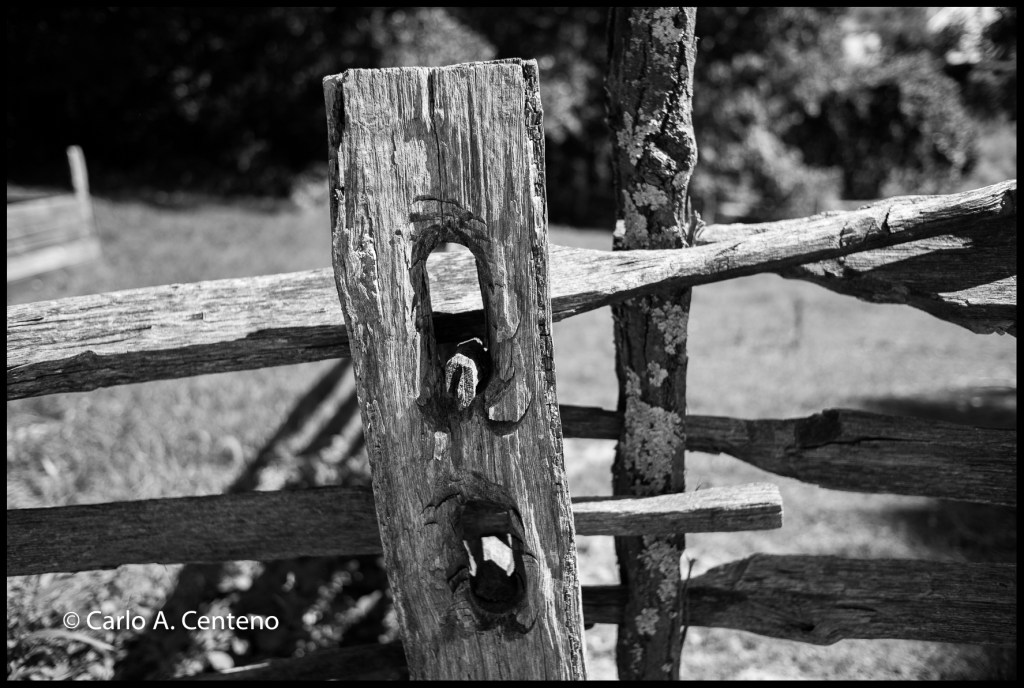
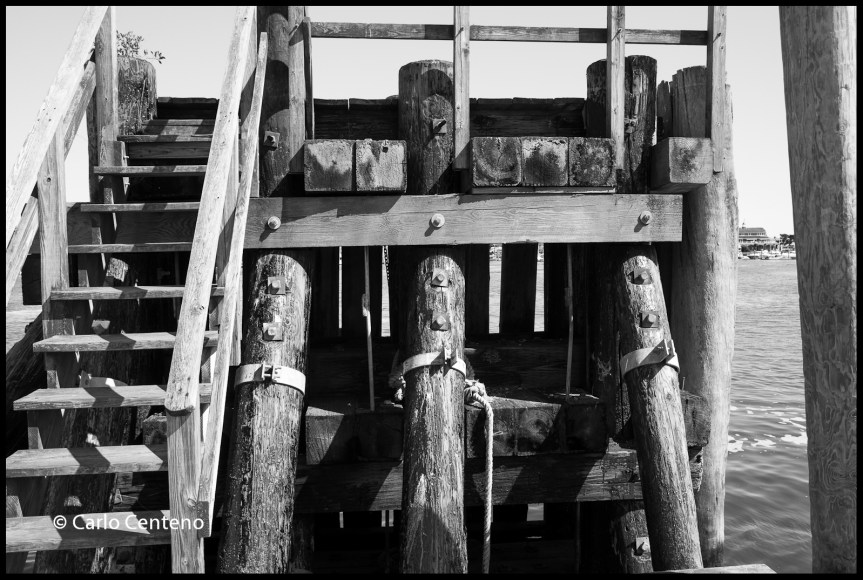
Here we have 2 wooden structures, one historical [circa 1800s], the other modern. Now, one may think that the modern structure offers more features: pressure treated wood, steel anchor collars, robust carriage bolts, nuts and washers [possibly even zinc treated to resist corrosion] etc. Well, it does have more features; it has to given its function. But it doesn’t mean it’s better than the simpler one, rather, the modern structure is built specifically for conditions and utility common to coastal areas. Both types share similar benefits albeit differentiated by design, materials and construction. Well, the purpose of the modern structure may be the same as our historical one, that is, to prevent something from entering or leaving a specified area, perhaps protecting one side more so than the other.
Before you clobber me with the apples-to-orange inequality of this comparison, the point I’m making is that consumers often equate features as benefits. If you’re anything but a design engineer, you may think that the metal anchors or collars wrapped around the angled stanchions may be unnecessary. However, if you live, perhaps even work along this shoreline, you would know that the tides and storm surges exert an astounding amount of pressure against barriers. The added strength of the collars is beneficial to the overall strength of the structure.
“This unit can do more than its closest competitor.”
courtesy: Whirlpool
On a recent trip to one of the box stores, I couldn’t help but overhear a salesperson singing the amazing features of a particular dual-door refrigerator. NOTE: the courtesy photo is for illustration and is not the product being referenced herein. “…..with the app on your computer, that model can sense when it’s time to restock, bread or cheeses or certain vegetables or frozen dinners…” The technology, the artificial intelligence that’s coming to market, can be impressive. But will it work on my iPhone 6S or will I need an Android system? You know, my home fridge has an ice-maker, though it doesn’t automatically dispense into my glass when held below a special port. Mine? Open the freezer door and grab ice from the container, a container purchased separately, BUT, looks like it came with my fridge. Typically I empty two ice trays into that container, refill the trays with water and return to the freezer. In less than 10 minutes, you’ll have ice that’s just as good as what the cyborg-fridge can automatically deliver to your glass.
My hand is the delivery and presentation vehicle. And it works. No downloads, no firmware, no software….basically, I’m somewhere with basic technology versus, being nowhere or confused with this hi-tech stuff. Now, if I was that customer learning about the smart appliance in question, perhaps the dialogue would go something like this:
Salesperson: It’s an amazing piece of technology. It can monitor your food and beverage consumption, conveniently at your fingertips. You use an app on your smartphone.It’s a big plus for busy families. Me: That’s impressive, but it’s a feature that I don’t need or really want. Salesperson:You can even check it from just about anywhere in your house. That’s real convenience. Me: Actually, I find it more convenient doing it my way. Salesperson: And how’s that? Me: I walk into the kitchen, open the door and make note of what’s still there and what needs to be added onto the grocery list. Salesperson:How is that more convenient? Me: Well, it’s not just convenience for me, but a benefit. Salesperson:Oh….? Me: It’s called walking. For me that’s a benefit. I already do too much sitting at work. Salesperson: That’s a valid point, but not really helpful. I mean we’re talking about making your life simpler, by doing less chores, to get more time to do things you’d rather do.. Me: I’d rather get up and move. Besides, I get a chance to scope what’s not in there, but whether the shelves need cleaning or if an expiration date goes back to the Nixon administration. Salesperson:Wait, who’s Nixon…?Anyway, think of it as an evolution towards the future of appliances. You, the homeowner, can control all your appliances such as your TV, your A/V installations, the lights and the thermostats and so forth. Me: ….and without even breaking a sweat. Salesperson: Exactly. Me: Will people really adapt to this technology? I imagine someday my health insurance being able to buy data regarding my food preferences, and since I love ice cream, well, a dietician or cardiologist may take issue with that…who knows? Salesperson: Hey, well, hopefully that won’t be the case. I mean there’s a ton of places where information can be bought for marketing or research…that kinda stuff. Me: Of course….you know and I know that your actual mileage may vary…capisce? Salesperson: Ah, yeah, sure….have you seen the new washers and dryers that are out now?
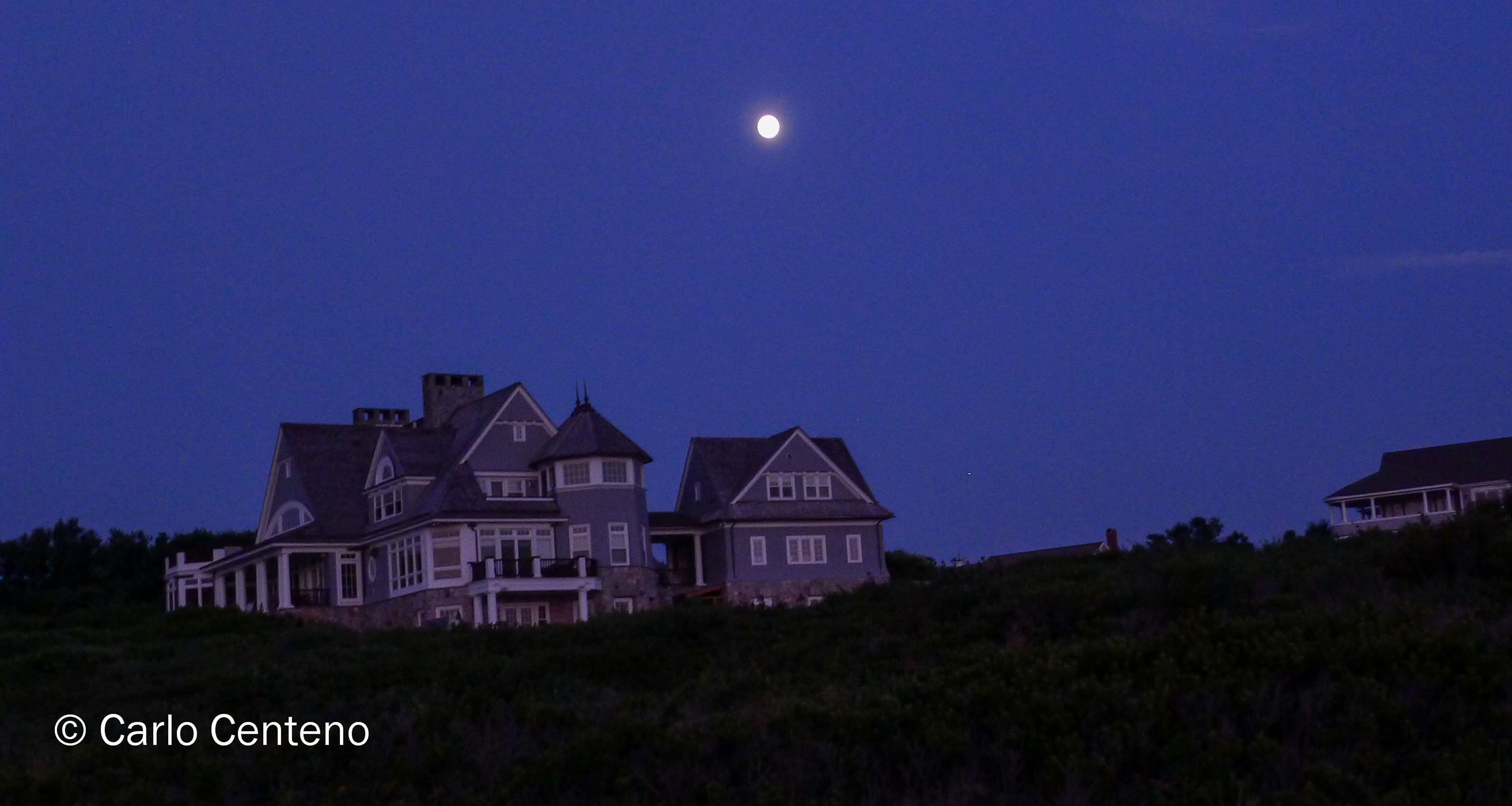
One of the most enjoyable aspects of the summer are nights on a quiet beach.
I’ve seen people fish, practice yoga, walk or run—sometimes with a dog—but the one activity I enjoy is the calm associated with doing nothing. The “nothing” I savor has more to do with my surroundings. This may sound oh so simplistic, but you haven’t lived until you’ve spent a late night on a moon-filled evening, at a beach where the sounds and smells of ocean, the wind and even an open fire embrace you. It’s even nicer when you share such moments with people you care about…



















 Carlo Centeno