Frisson…..it’s French for a chilling sensation, a shiver. It’s typically a pleasurable response to a stimuli that “moves you.” At times we refer to this reactive sensation as something that, “gives me the shivers.” You get goosebumps, you feel the small hairs on your arm or the back of your neck stand up, your breathing and pulse become quicker.
Frisson is that short-lived somewhat intense satisfaction often brought on by music, art, an event, a person, a book, essentially whatever it is you witness that generates a momentary elevation of pleasure. The brain and body experience something akin to adrenaline and dopamine reaching peak levels.
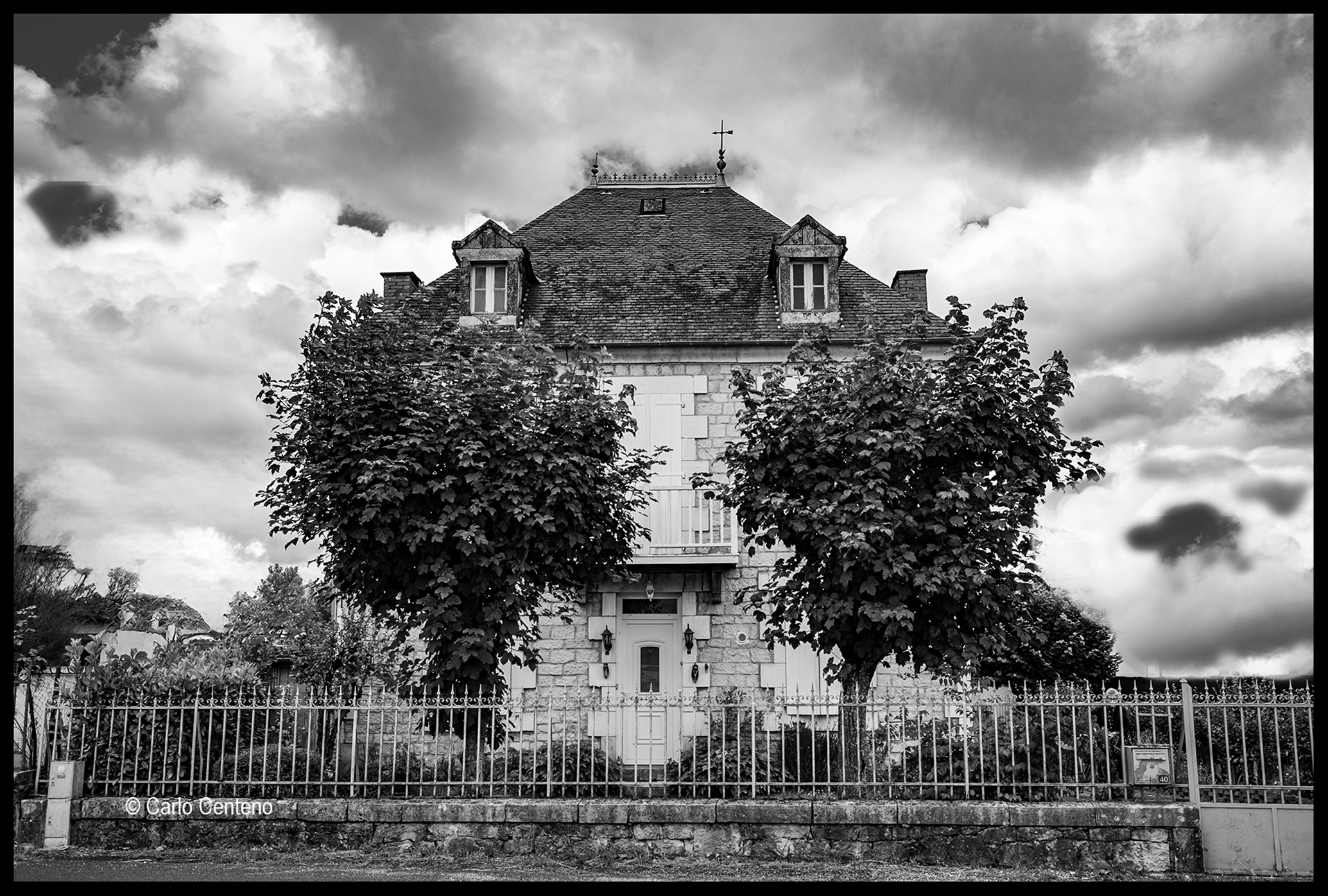
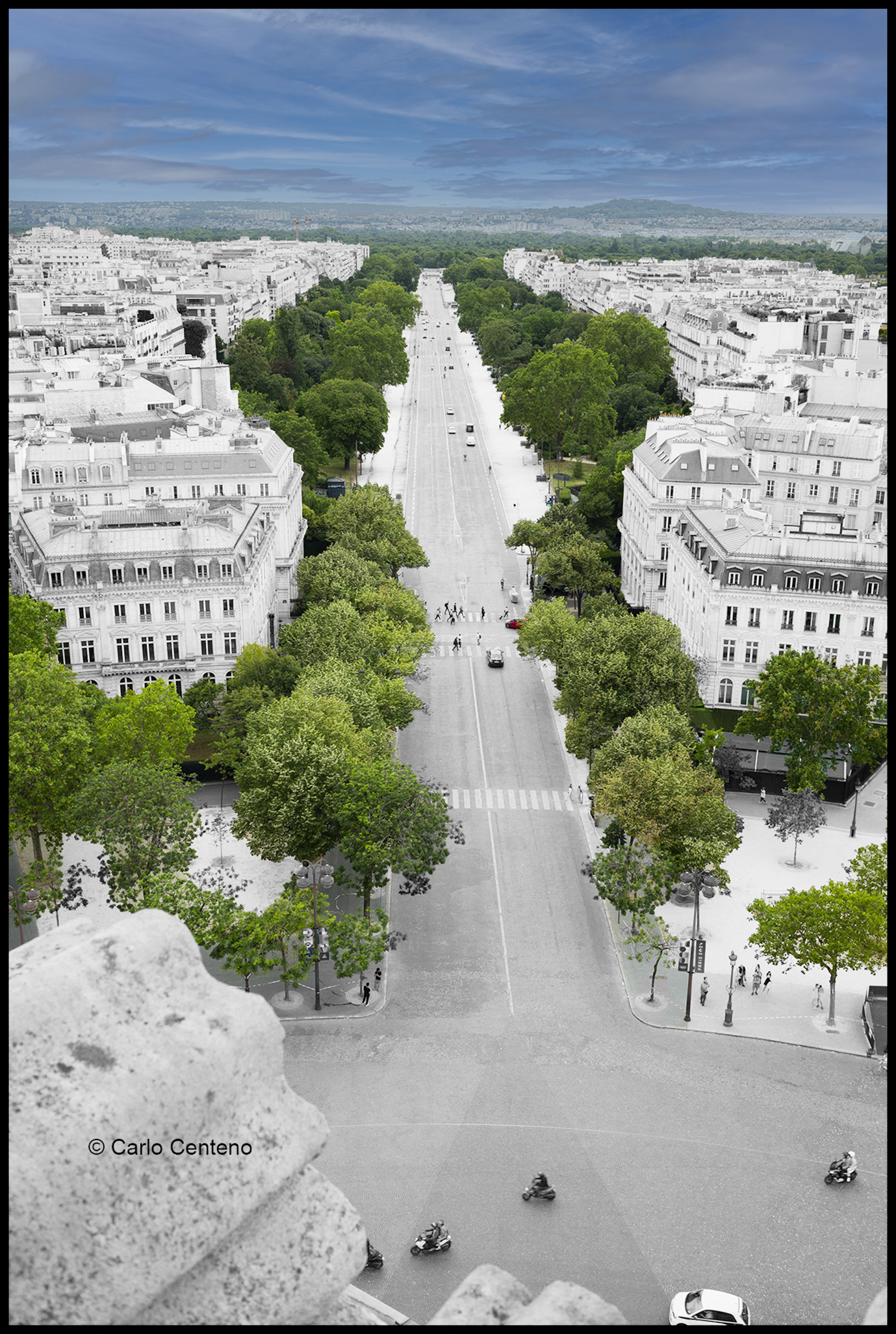
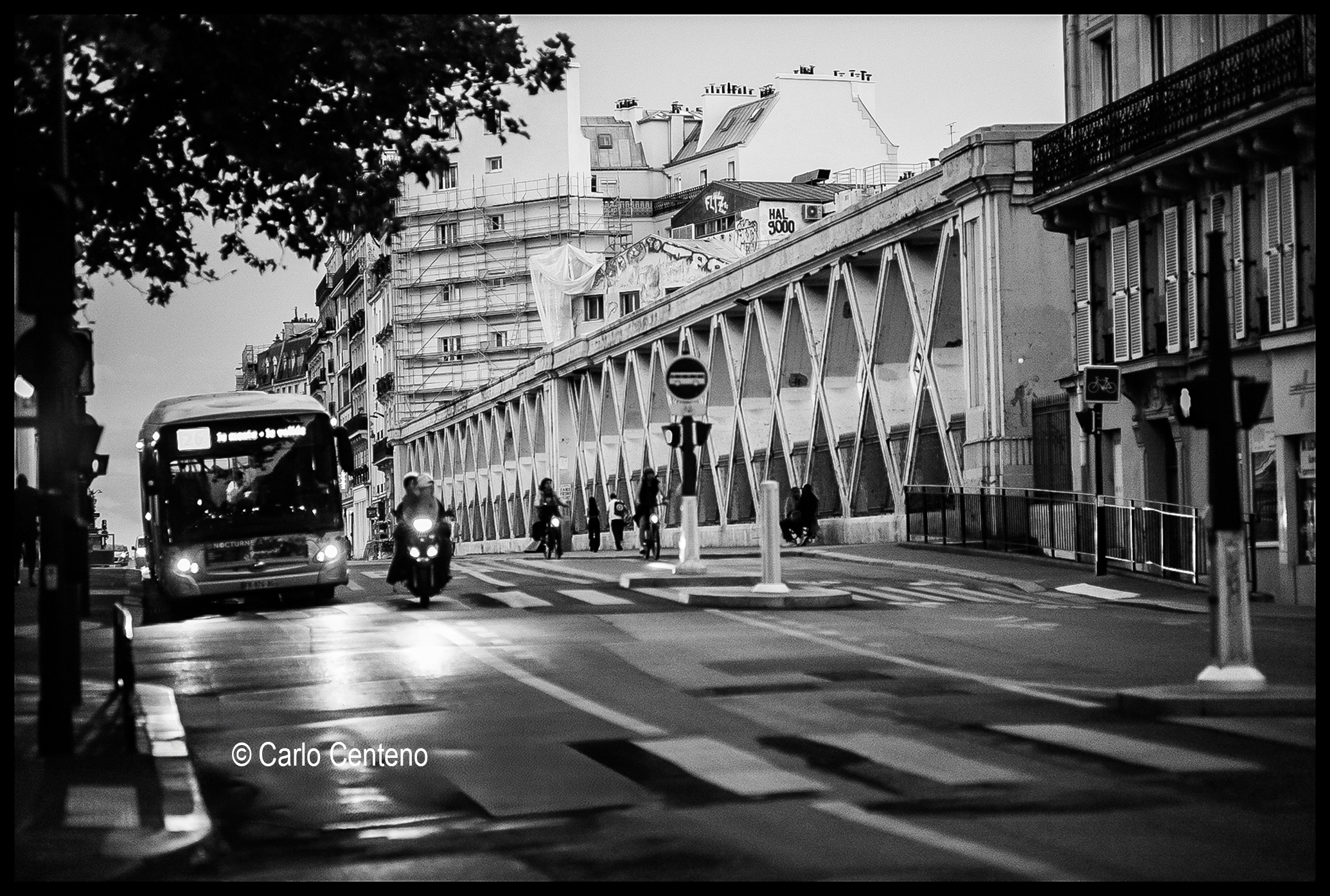
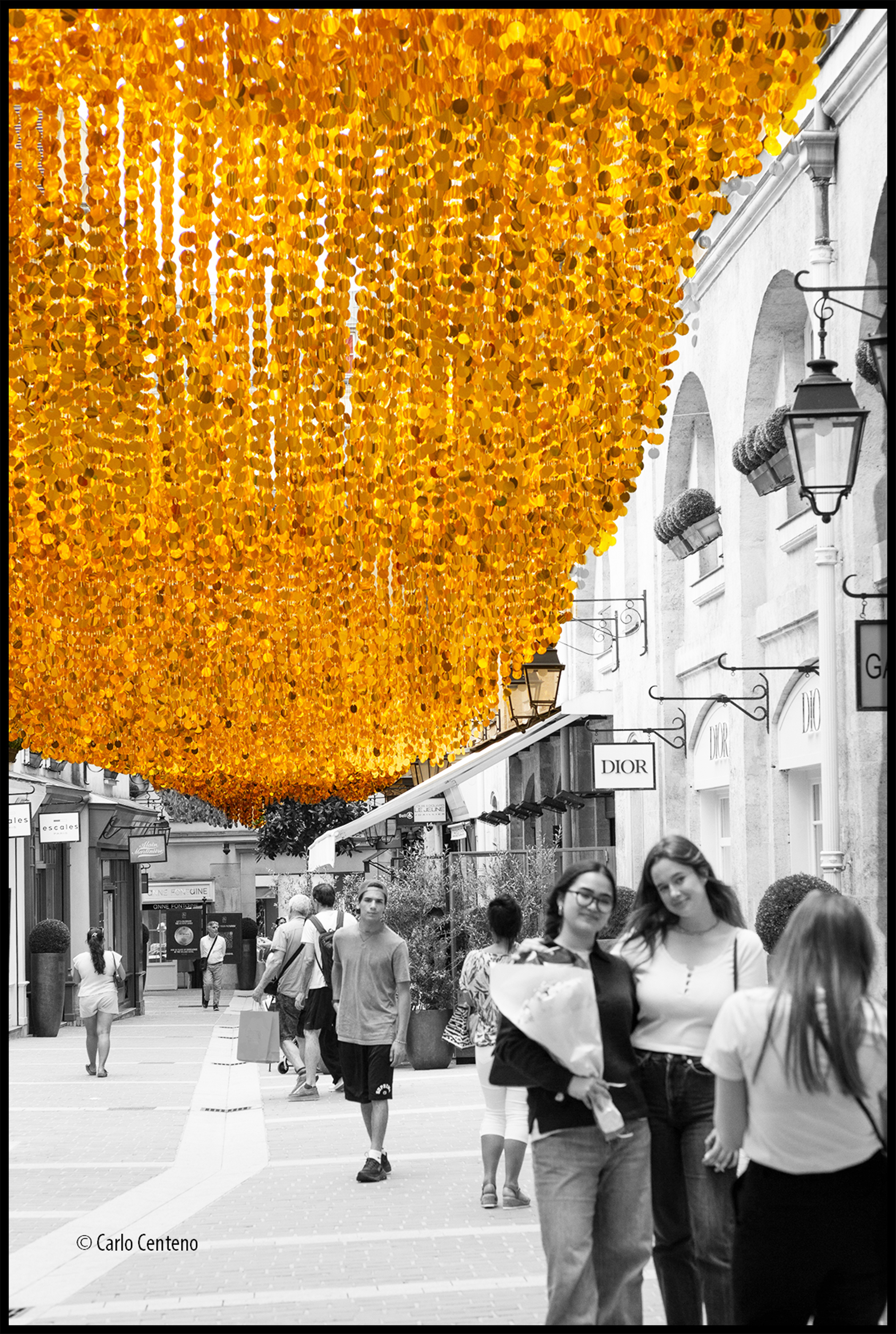
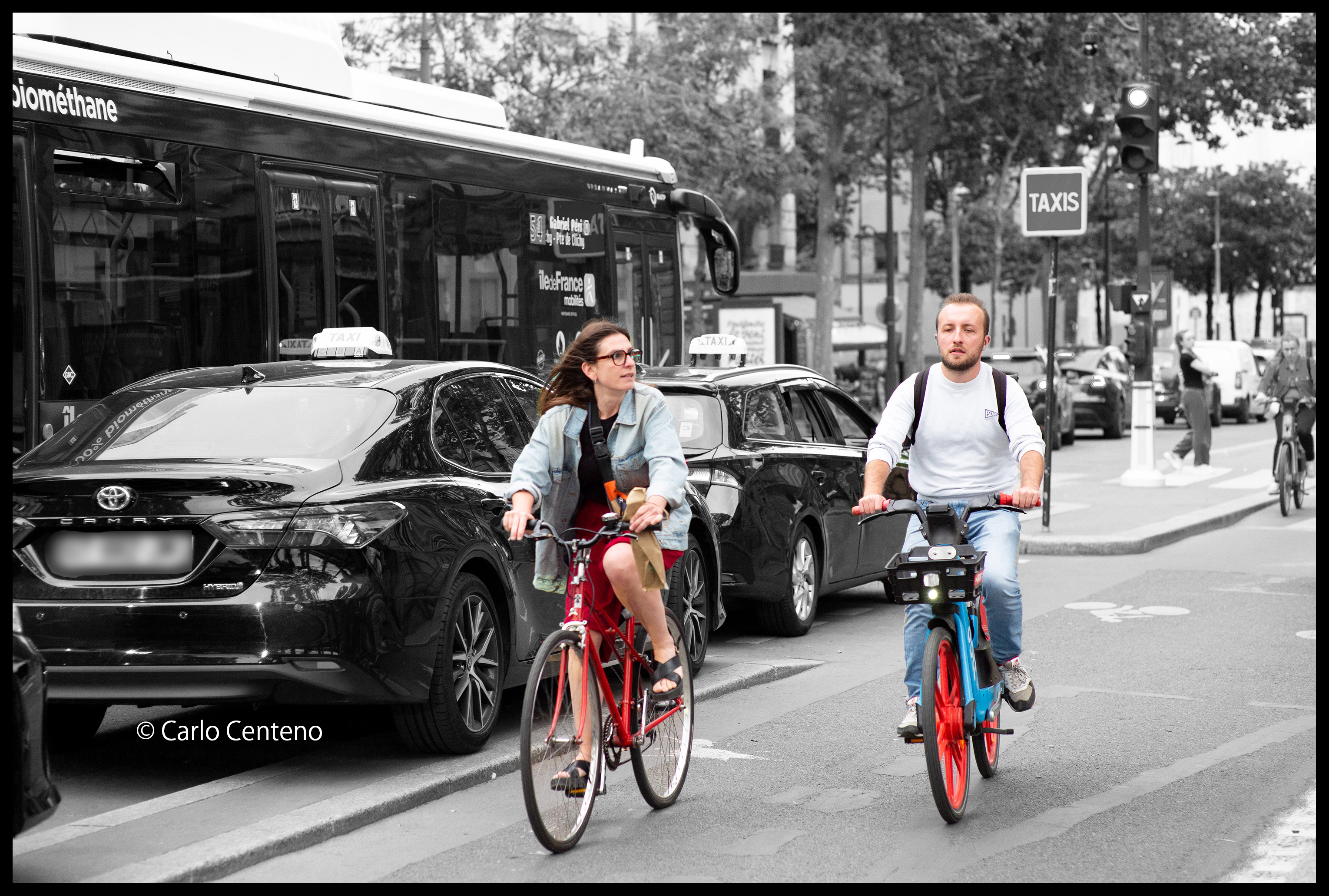
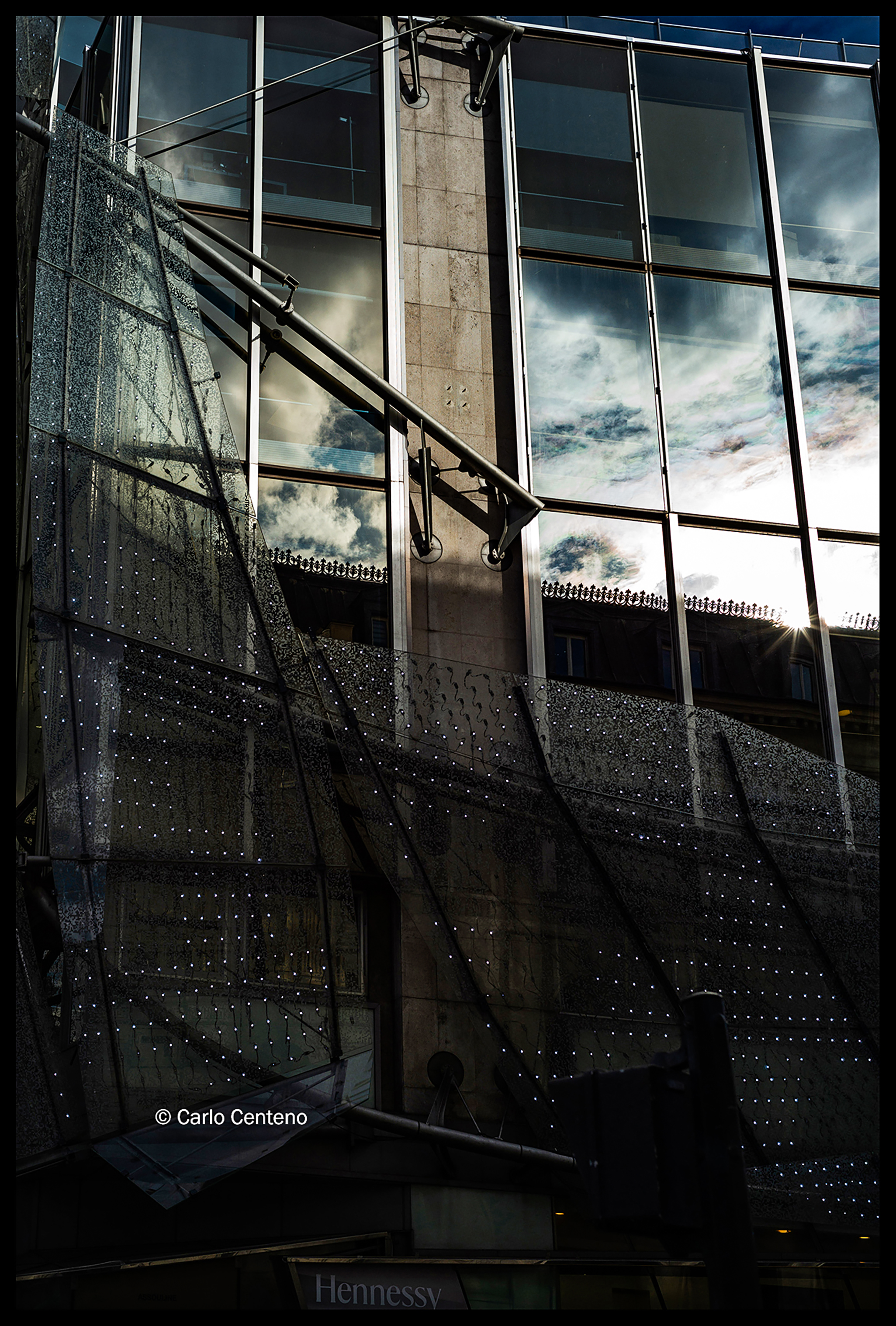
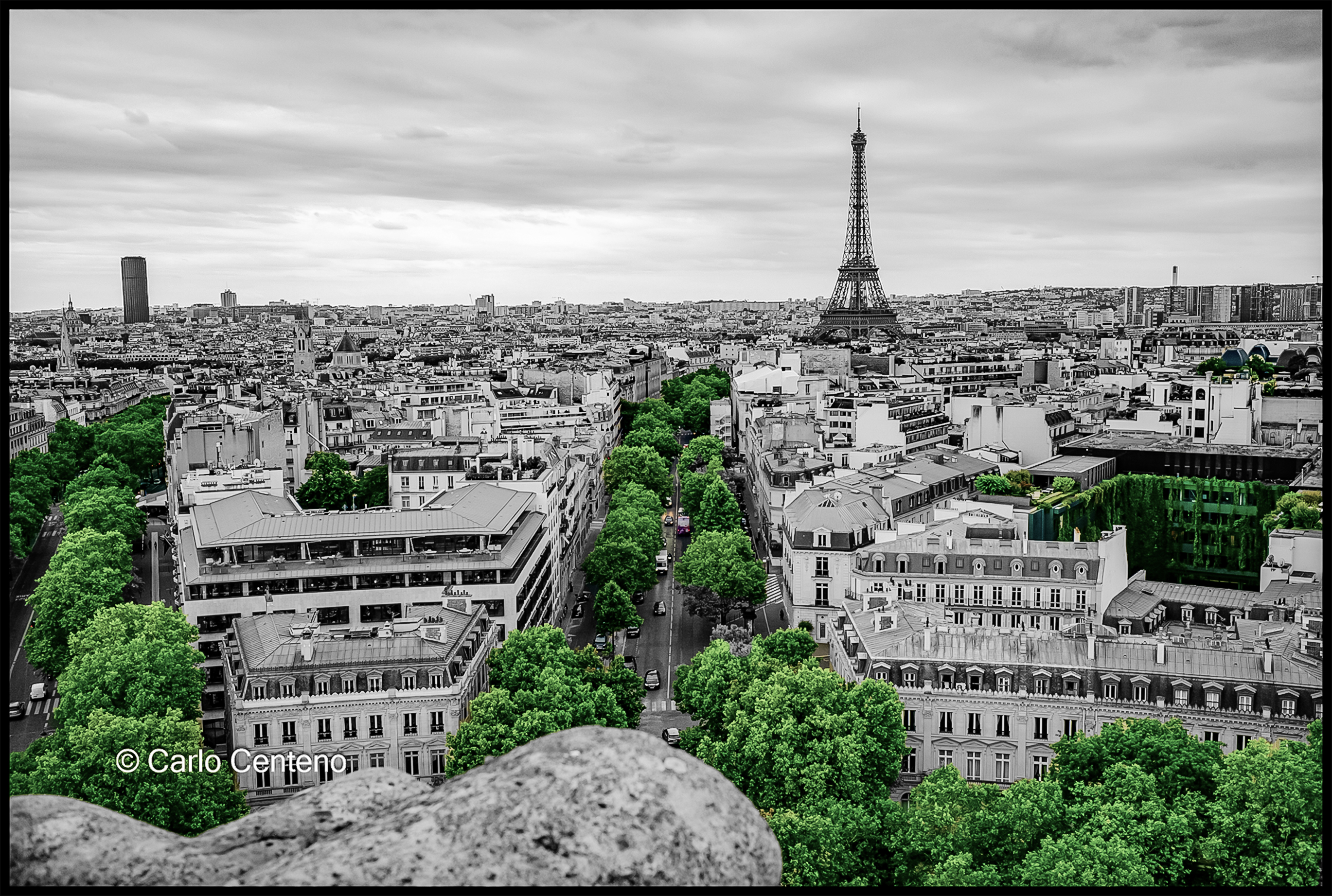
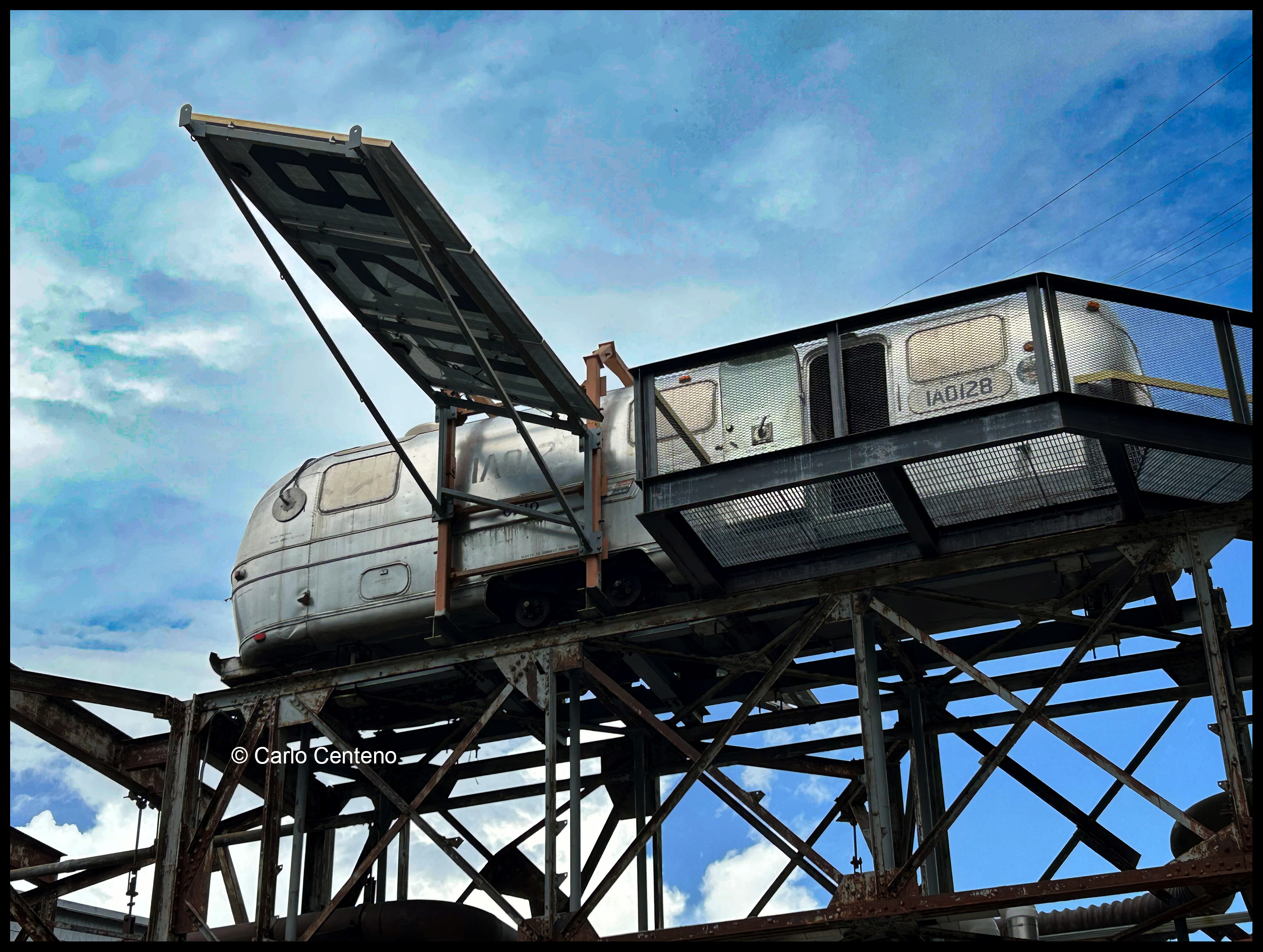
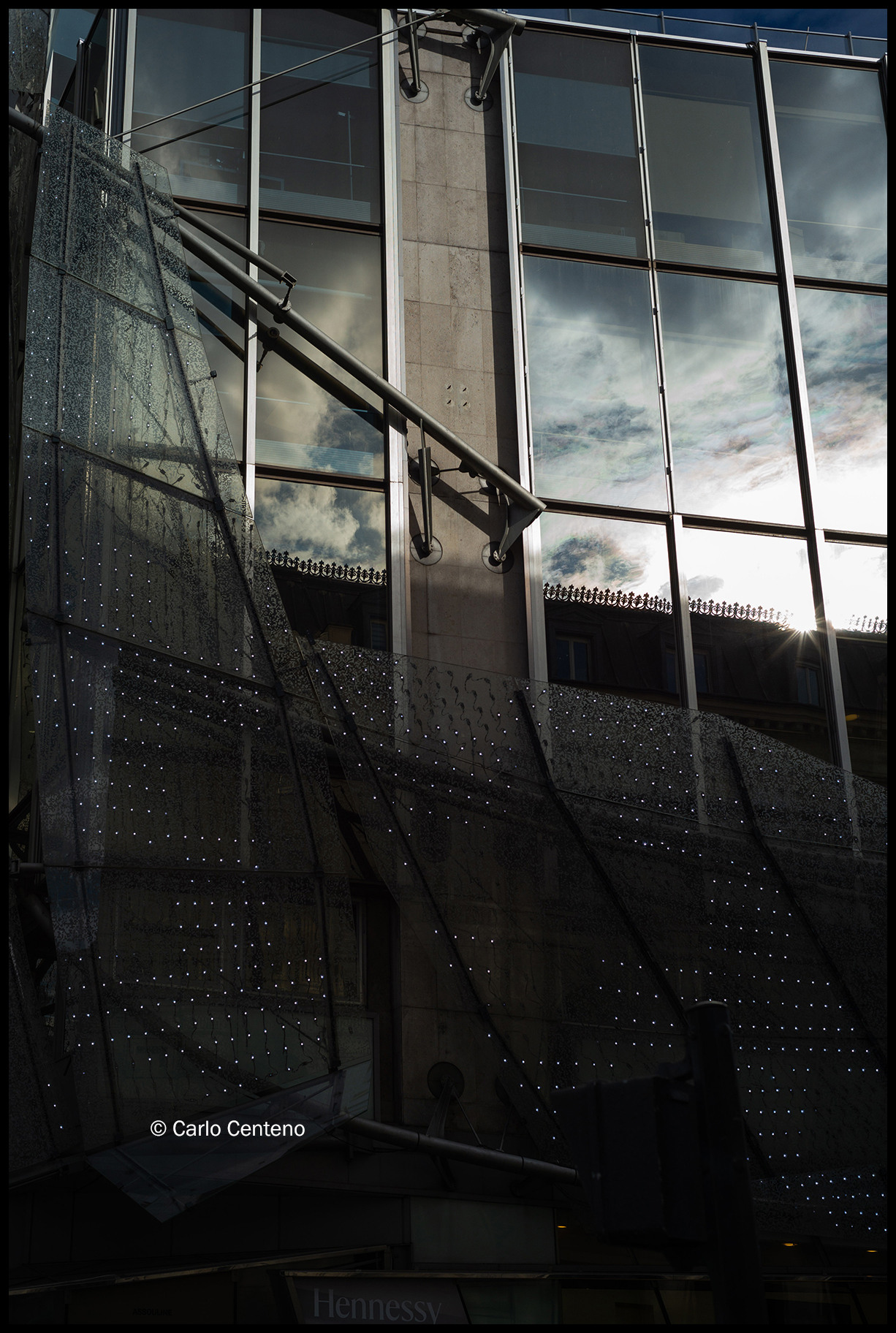
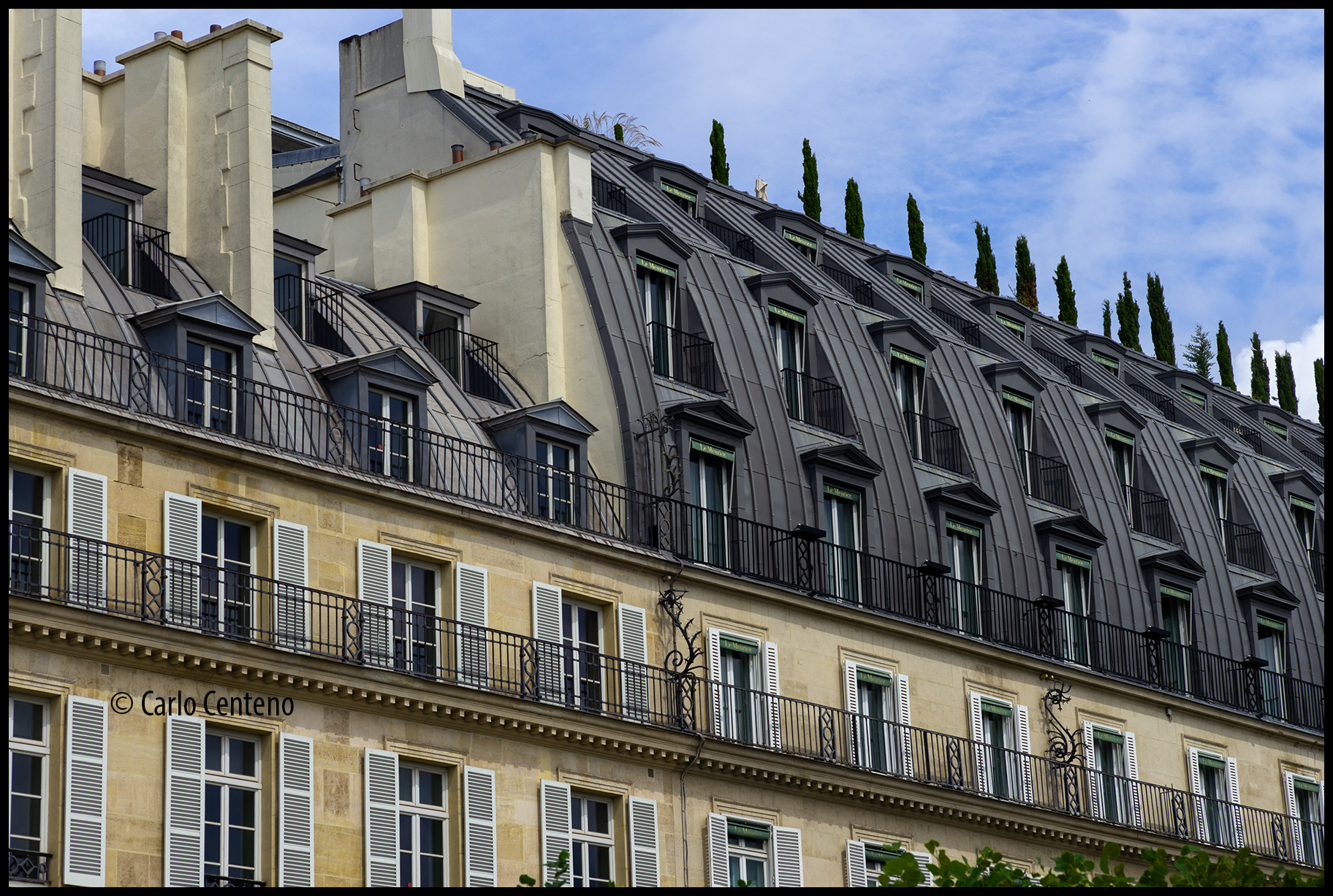
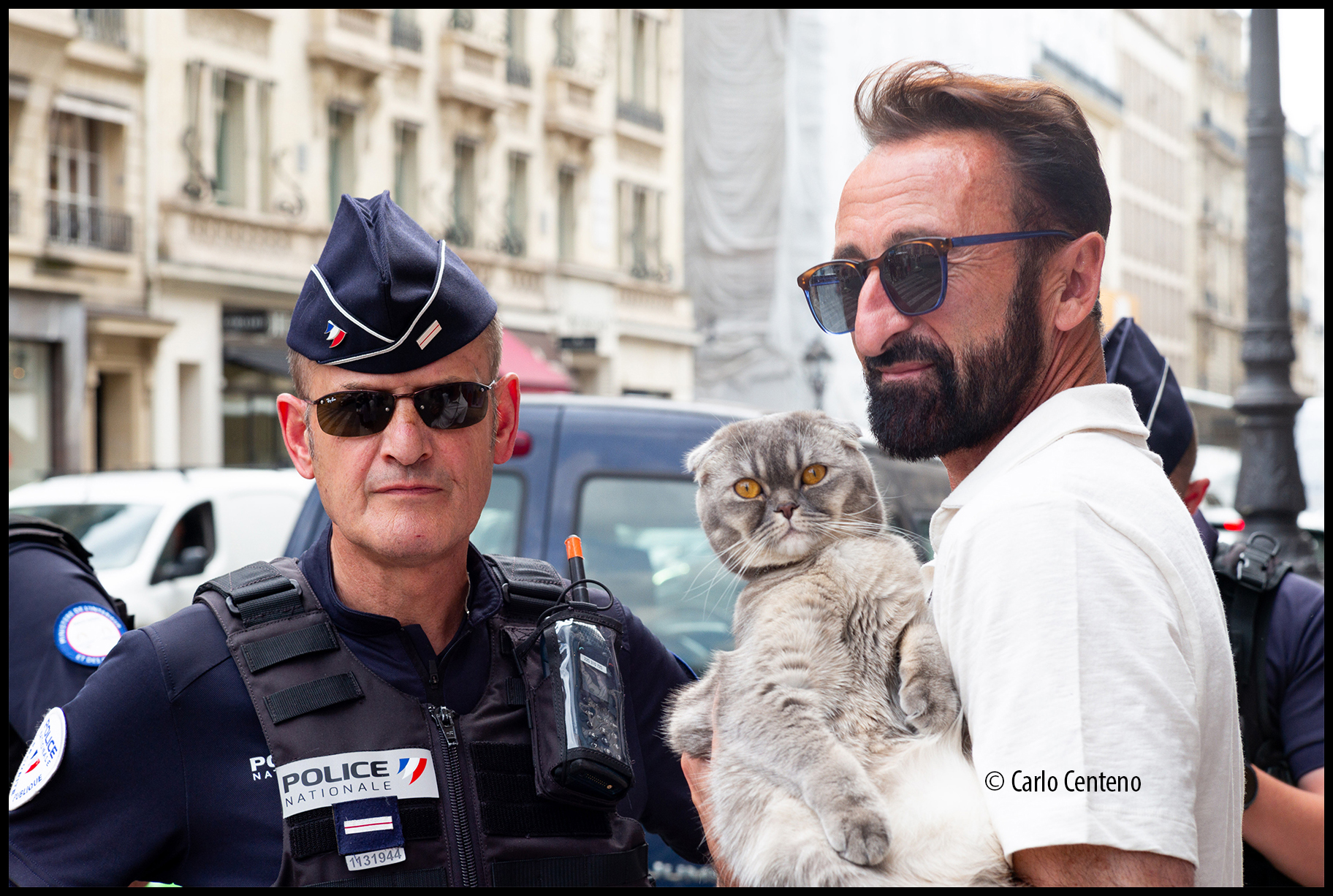
The following images are some of the “frissons” I felt while in France. I enjoyed the “shivers” and enjoy bringing them to life here. Hope you find something to like…..
Back in the day, “soliloquy” was a word associated with theatre. There have been some powerful, mindful soliloquys, many found in English Literature. William Shakespeare and Robert Browning come to mind; the former for his plays, Browning for his poetry.
I find myself tuning into my inner self with soliloquys. These are not conversations to me, but a way to be honest with myself. In the process, I voice [in my head…..not out loud]. the deepest feelings which need to be brought out from the inner sanctum of my soul. These sentiments, perceptions and more, represent a personal unspoken anthology of emotions which remain exclusive to myself. Everyone should try their own form of soliloquy. You become the subject as well as the audience. The orator speaks to the most relevant, but private person in his/her life.
A recent trip to the Massachusetts Museum of Contemporary Art [MassMOCA] located in North Adams, MA is one location that gave an opportunity for reflection and acknowledgement. Come to think of it, most any museum makes a strong location for a soliloquy. Other alternatives abound: a beach, a park, a forest, a solitary space, even a space filled with people. The options are varied, but I do believe, like the soliloquys expressed in plays, poems and so forth, a place relatively quiet proves hospitable to many. A calm atmosphere is a priori given the breadth of one’s soliloquy.
Where ever you stand, and what ever you see, there lies a confluence of provocations that may come to the forefront of your thinking or introspection. The time stamp—from which these thoughts come from—depends on its significance: an early relationship gone awry; a current relationship that seems too good to be true; the unknown realm in choosing one option over another; the challenge of working through options in light of a chronic condition that will not stop let alone disappear. There’s a universe of profound feeling and thinking we can only imagine.
The above photos are from the MassMoCa’s permanent exhibit, The Boiler House. When you walk into the building, you’re visually overwhelmed with the scale and the number of boilers, pipes, connectors and vents that course over the entire space. If there ever was a place that made me feel Lilliputian, this is at the top of my list. The Boiler House is the facility that provided heat to all the space before it became MassMoCa. There are several floors, though I believe only the first 2 are open for visitors.
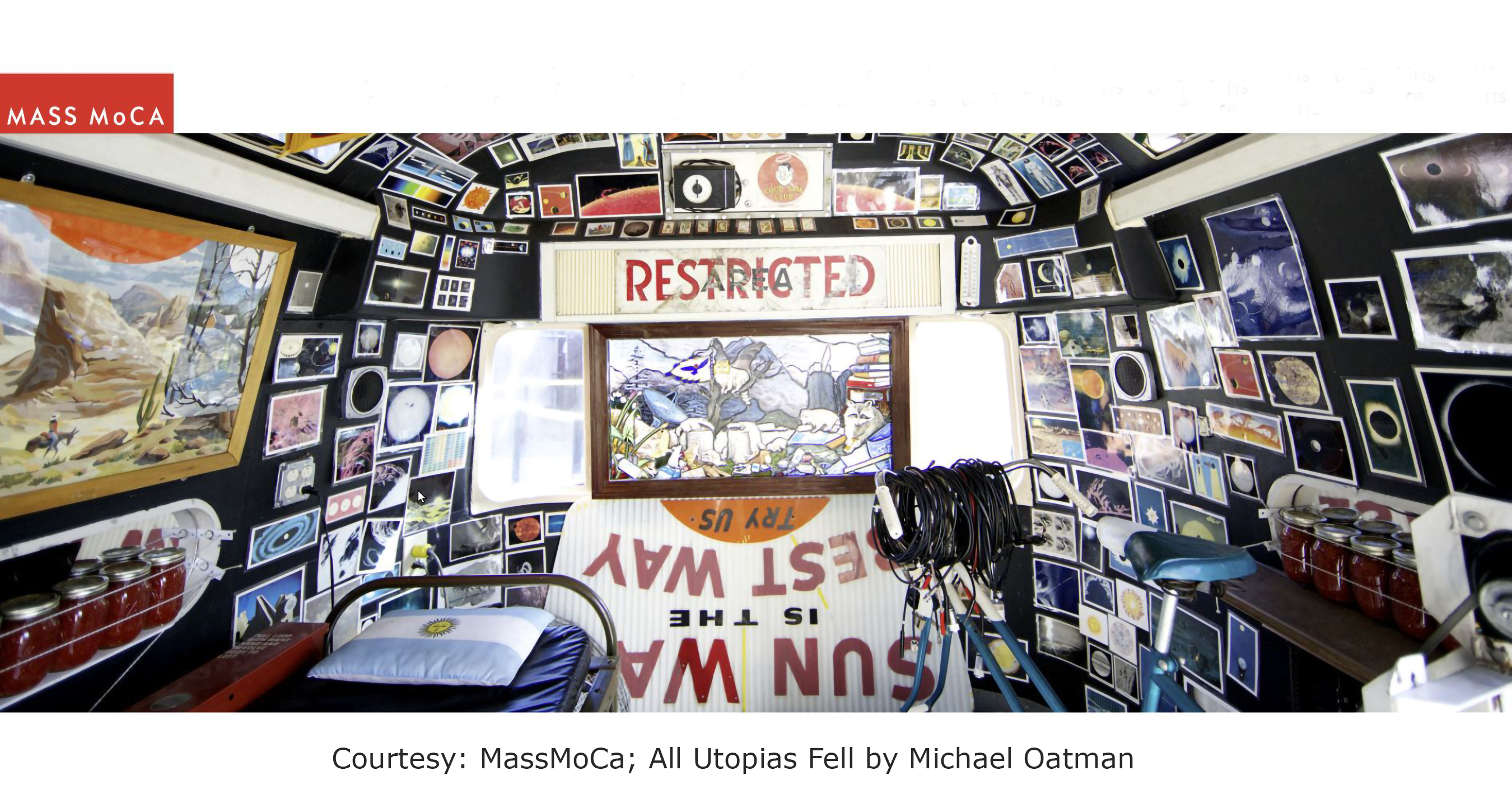
Suspended on tracks next to the Boiler House is an Airstream trailer. A walkway takes you to and from the Airstream to the Boiler House. This is the work of Michael Oatman, entitled “All Utopias Fell.”
A common theme in my soliloquy is this search for order and purpose, or a clarification of both. This is a challenge as I tend to overthink, excessively evaluate one over the other. Upon entering the Airstream, a myriad of visual elements reach out to you. It’s as if each photo, drawing, sign, piece of paper, object and so much more want to make mental impressions on you, as in right now. This is sensory overload and perhaps a metaphor for the soliloquy stirring in your thinking. It’s as if each piece could be a catalyst for a specific thought process. And once that piece or pieces enters your thinking, you start that introspection or make it progress to another level.
There are several “Why this?” and “What ifs?” within the profound, introspective construct of choices and decisions that are created. The certainty of being your own person, unique and unduplicated by any other, is that choices and decisions you make create the questions that begin with “why” or “what.” And while you and others are individuals in that singular sense, the framework of questioning is common for everyone, but ancillary circumstances are bound to differ between people.
Dr. Faustus, the play written by English dramatist Christopher Marlowe, revolves around the angst of Dr. Faustus agreeing to surrender his soul to the devil in exchange for magical powers. His soliloquy in the last hour before that exchange, is one which poses questions and conditions had the choices Dr. Faustus made were different. Once made, the commitment is binding, non-negotiable. There are no pause, stop or rewind buttons in life.
Shakespeare’s Hamlet is the quintessential soliloquy in my opinion. With new realities [and previous uncertainties] playing out today, themes of life & death, the meaning of our purpose and existence, mortality and vengeance are wonderfully distilled into words that examines all that can detract or enhance our existence.
I came across the last photo as I finished my visit to the Boiler House. It dawned on me that this effigy is a personification of someone covered with details that make up her/his soliloquy.
In our current state of dystopia, many of us choose to distance ourselves from news media in all its forms. All that noise creates too much anxiety, along with all the other discomforts that accompany “news and information.” We are exposed to a colossus of news briefs, articles and “breaking news at this hour” enough to ignite [or bore] the minds of writers/authors well versed in our state of fear, hopelessness, frustration, suffering et al.
Misery knows no bounds, but so does hope and happiness.
Relevance and purpose can hold both good and bad in thoughts and actions, but your choice in one or the other adjectives relies in your beliefs and values that help you deal with your day-to-day. You may not realize–or even think about–your own stoic qualities.
Consider the opening paragraph of Charles Dickens A Tale of Two Cities.
“It was the best of times, it was the worst of times, it was the age of wisdom, it was the age of foolishness, it was the epoch of belief, it was the epoch of incredulity, it was the season of Light, it was the season of Darkness, it was the spring of hope, it was the winter of despair, we had everything before us, we had nothing before us, we were all going direct to Heaven, we were all going direct the other way–in short, the period was so far like the present period that some of its noisiest authorities insisted on its being received, for good or for evil, in the superlative degree of comparison only.”
When you realize you can’t control everything, but manage the ones you can, then you’re in a better place than many others.
It happens each year: Spring. It is perhaps the season that celebrates its affinity with renewal, new starts, opportunities, hope and personal rejuvenation. For the past 12-years, The Springfield Museum has held a unique exhibition that acknowledges some of these nuances of change, transitions, challenges, renewal et al.
courtesy Michelle & Donald D’Amour Museum of Fine Arts
In each of the four museums that make up the Springfield Quadrangle, members of gardening clubs and florists based around the area created arrangements of colors, textures and other details in a manner that would intersect with a selected painting or other creation within the museums.
The creativity range was as eclectic and electric as anything I’ve seen, simply because of the relationship that attempted to “unify” two discreetly different pieces of art.
The juxtaposed subjects provided depth, perspective and of course relevance through the use of color and hues, manifestations of the blending of material, thread size, color, props, textures and so forth.
Some arrangements did not have a direct connection to a piece of art in the gallery. My sense is that such arrangements–such as the one displayed above–were created to compliment art already sitting in that room.
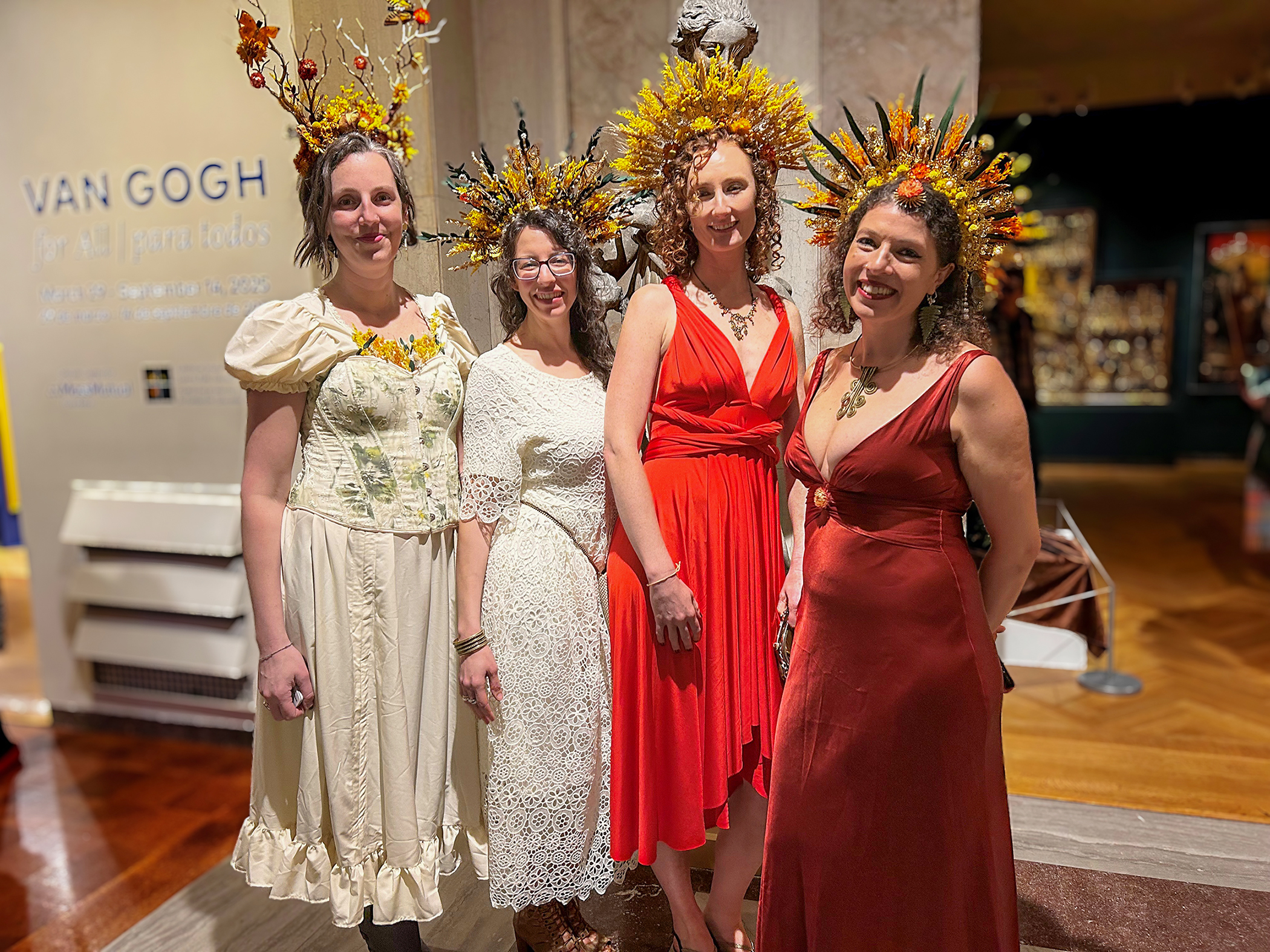
From headwear and accessories to…..
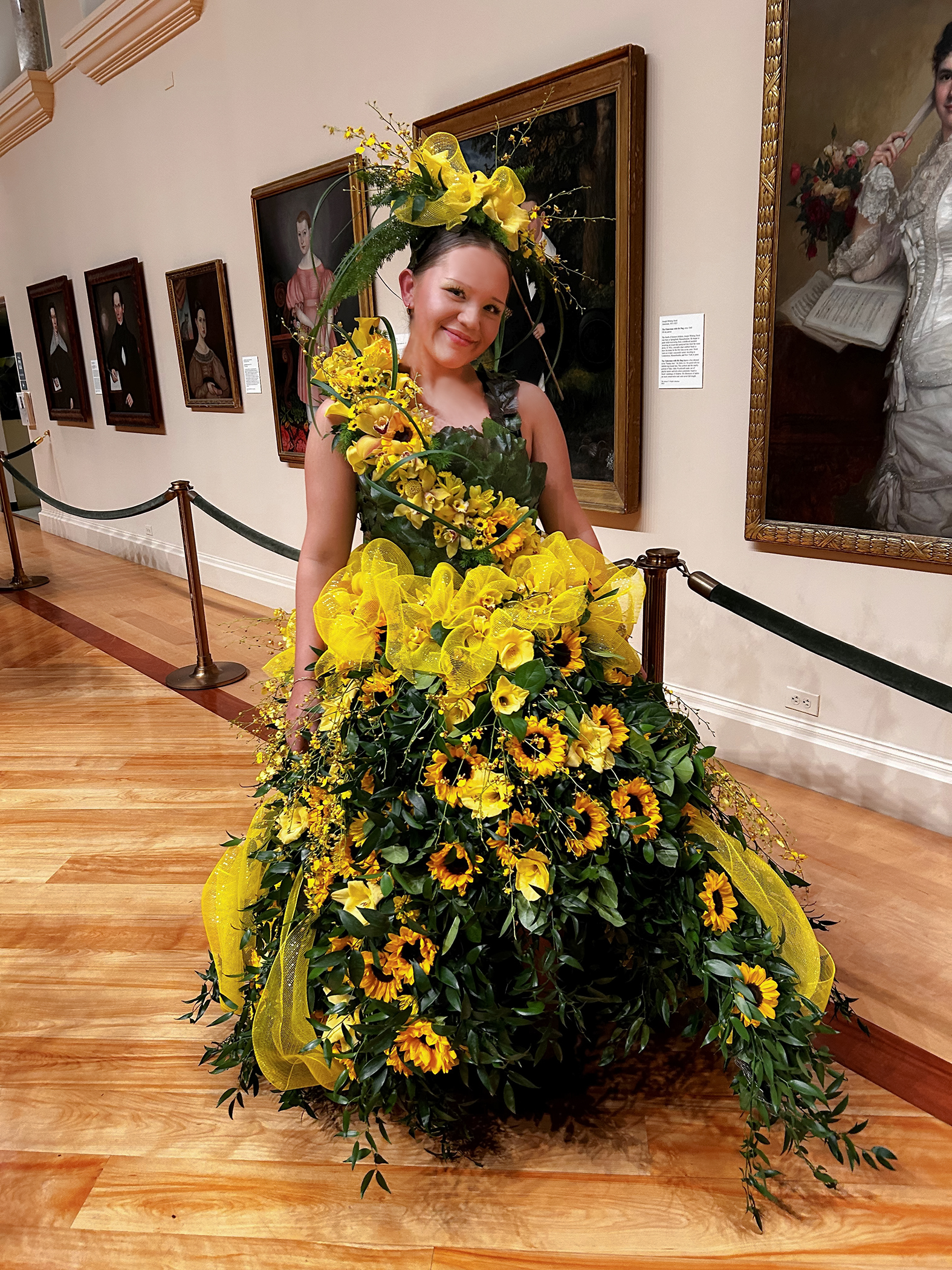
….gowns made entirely of real greens and flowers, the creativity was beyond words! Next April 2026, should be an interesting installation! See you then.
I’ll admit that it can take a lot out of you when winter conditions pin indicators below the norm [temperature, wind chill], or above the line [accumulation and severity of snow/freezing rain/sleet]. By February, a good number of folks are pining for—some hoping through a telekinetic event—the arrival of spring. Yet in spite of our incongruous sentiments about winter, its been said that residents of Scandinavian countries can make the best of it. Perhaps their overall acceptance of this perennial cold, snow and short days has something to do with the their countries having “the happiest people in the world.” Is there an attitude, a perception that we’re altogether missing? Warmer clothing compared to ours?
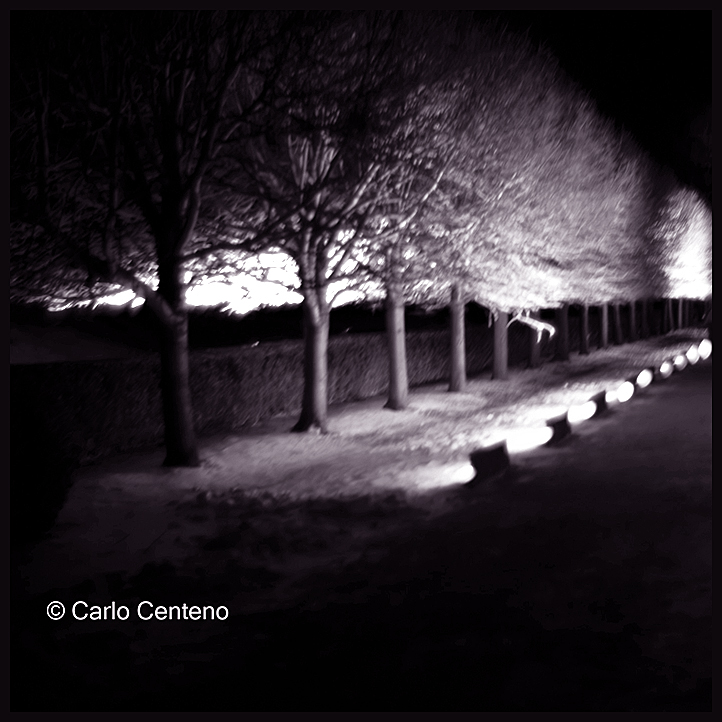
We’ve [me and my wife, MJ] made treks to the Berkshires all year long with additional stops during winter. Some of these stops included special outdoor exhibits of which 2 come to mind: The Mount, Edith Wharton’s home, and also at Naumkeag Estate. The photos posted here are from Nightwood, and it was a wonderful stroll along the garden pathways and woods at The Mount.
Appropriate winter clothing makes a big difference; it does get colder in the Berkshires. Key details: wool sweaters, base layers, even hand warmers. Along a mile-long path cutting through the woods and gardens, the exhibits appear like waypoints on a map. Each installation carries its own interpretation of light, while an original music composition aurally ties everything together.
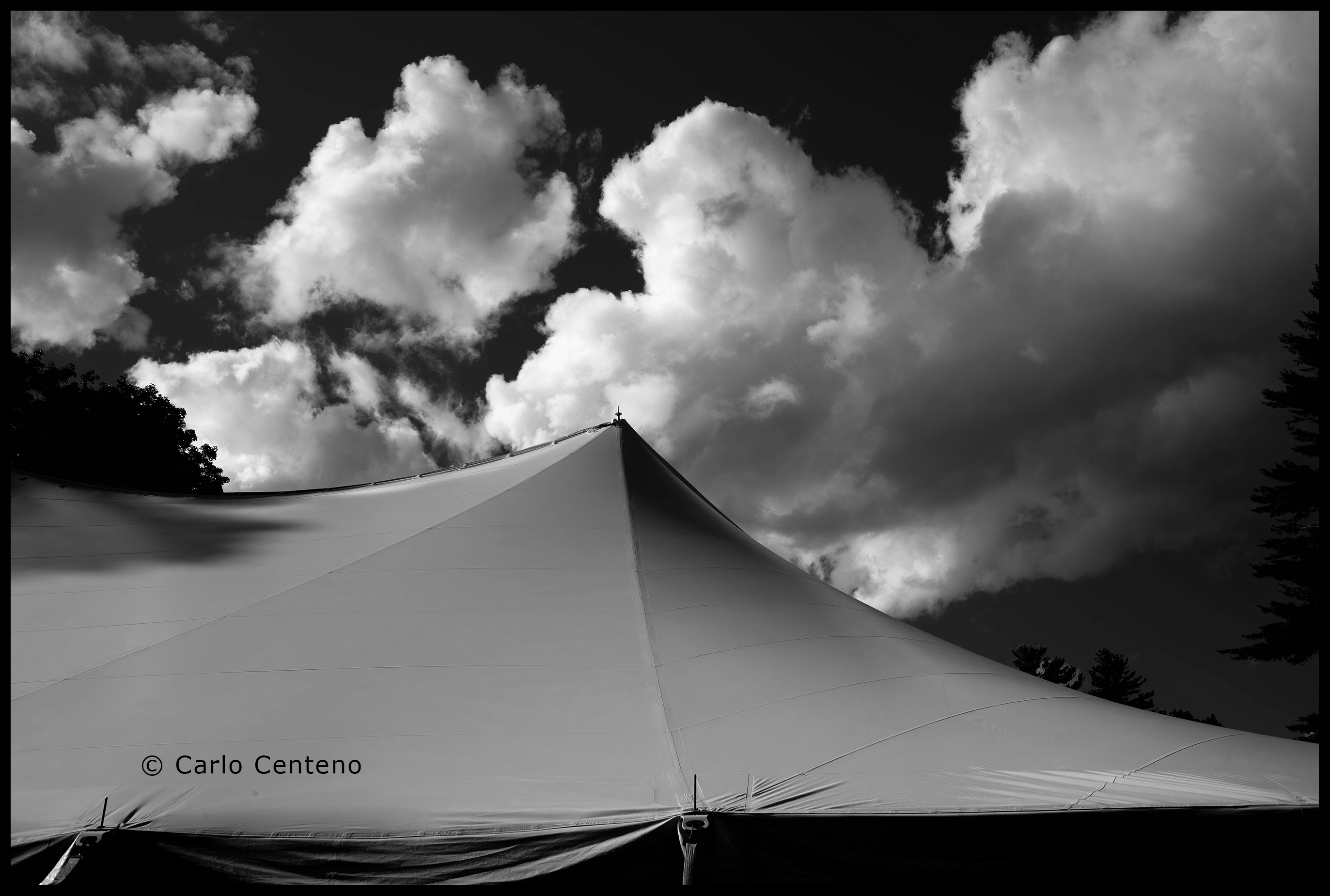
My interpretation of The Mount exhibit centered around the intensity of each installation, vis-a-vis the light itself. Using B&W images had provided [for me] a key, old-school tenet of imagery: simplicity allows interaction between the visitor, and the subject at hand. Put another way, monochromatic images transcend continuity. Color images offer validation to what we see because we readily see color. Yet color can be distracting. Not a slight, but just a matter of fact.
For me, I’m drawn to B&W images because of its tonal consistency. Black & white does not have the influence of color, and yet allows me to see the entire image and all its nuances.
I, along with others like color images , but there are times when color feels more like a distraction. A single color that’s part of a smaller detail is enough to pull you away from the whole and down into a rabbit’s hole. Still, B&W does have a way of binding together the elements that make up the photograph, all within the inimitable, ever valid black & white palette.
[Dylan Thomas, poet; Do not go gentle into that good night.]
Do not go gentle into that good night, Old age should burn and rave at close of day; Rage, rage against the dying of the light.
Though wise men at their end know dark is right, Because their words had forked no lightning they Do not go gentle into that good night.
Grave men, near death, who see with blinding sight Blind eyes could blaze like meteors and be gay, Rage, rage against the dying of the light.
And you, my father, there on the sad height, Curse, bless, me now with your fierce tears, I pray. Do not go gentle into that good night. Rage, rage against the dying of the light.
I’m not alone on this one, but it seems that many channels of communication [discussions, social media and various online postings, news media, e.g.] are quite inhospitable. Of course not all content is an incorrigible exaggeration, but it does seem that we’ve gone myopic of a rule that involves interaction and in particular, discussion, between different POVs. Essentially, such discussions are cleaved in 2. There are some instances where discussions cannot abide with the adage, One can disagree without being disagreeable.
Ironically, much of what we do that makes us feel lost, infuriated and misunderstood is, indeed, something that’s very human. And of course, we can be intractable and obstinate just as we can be manageable and flexible. It’s been said that politics and elections are catalysts to conditions of inflexibility, among other reactions and situations.
Consciousness Fine Tuned
Being aware of yourself and how you think about everything around you is uniquely yours. There are a few theories which attempt to explain consciousness, but one written by a researcher at Boston University School of Medicine is one which mortals like me can comprehend. The end of October has rendered our landscape into a wonderful palette of autumnal colors: the reds, orange, yellows and hues in between are as beautiful as I’ve ever seen. I share this because watching and/or listening to the news is taking the wind out of my sails. So, to fine tune [or tune out] the bad vibes plaguing airwaves, print, and online, I retreat to places where I can hear my thoughts and submit to various feelings coursing through my consciousness.
You could say that I’m “rebooting” my consciousness, but I feel it’s more like a “recalibrating” effort to keep my sanity more or less where it’s supposed to be. The quiet and calm of places such as these act like a rheostat where mood, color, the smell of the air and so on can be dialed up or down or not at all. In doing so, I’m reminded that the angst raging between factions entrenched in ideologies are obstacles for realizing a common good. The greater good lies dormant, restrained with indifference and the stubborn personas that make life uncomfortable.
There’s no denying the subjectivity of consciousness, but there are constructs within it which allow for common ground. Without those common constructs co-existence would be, in a word, Sisyphian.
I look to writing and chasing the light, feeling immersed with either one or both, to purge distress, sadness, loss of concentration, etc. Certainly, when your mind is busy with something good, a good that pulls you away from angst, then jump in. I won’t be chagrined by situations beyond my reach. It’s a waste of energy and time grinding about things I cannot control. That’s easier said than done, but I remind myself to ruminate less on what weighs me down and instead examine alternatives that have helped me before.
Can anyone deflect dissonance long enough to find even the smallest gesture or comment that closes distance and transforms distraction into possibility?
I relish the 4-seasons here in New England. I have preferences for the times in a year that are cooler and less humid, but I also welcome activities and distractions that come with the other seasons: longer daylight hours, trips to Cape Cod in Massachusetts [salt water and salty air are genuinely therapeutic], visits to the Berkshires and so forth.
How do you take care of your sense of–or even recalibrate–consciousness?
Keep an open mind. It matters when traveling to any destination that piques your curiosity. Whether it’s a neighboring state/province or an altogether different country, it requires elasticity in learning, appreciating and understanding. An open mind can open doors. It means possessing a willingness to be out of your comfort zone. And as you stand in your discomfort, your perspective may need adjustment or refinement. This is where you take the initiative to help others see your perspective. Naturally this requires staying attentive for the different position[s] you may encounter. It’s fine to disagree without being disagreeable.
Remind yourself that having an open mind tames the myopia that limits one’s ability to think beyond your horizon of possibility.
Arc de Triomphe
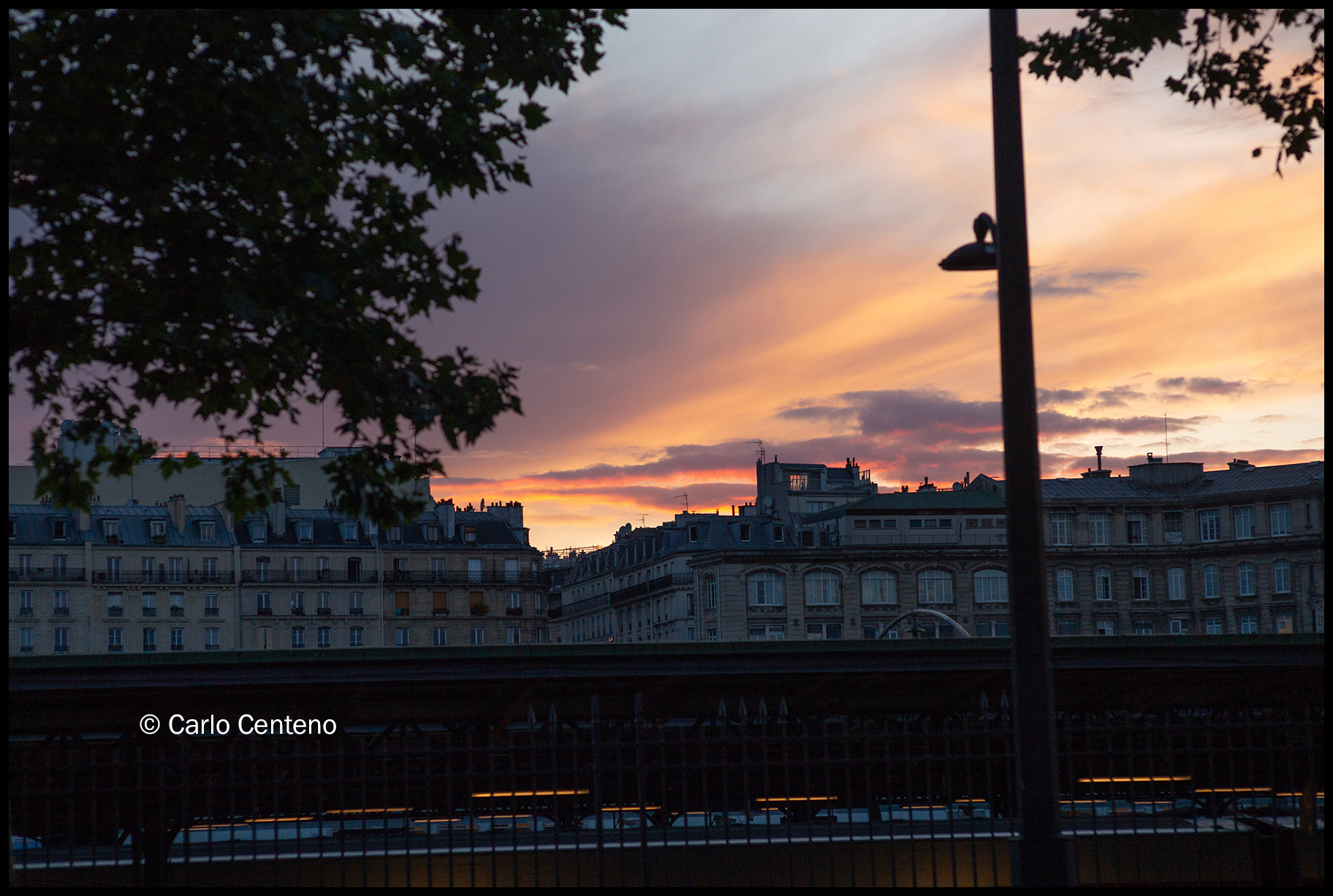
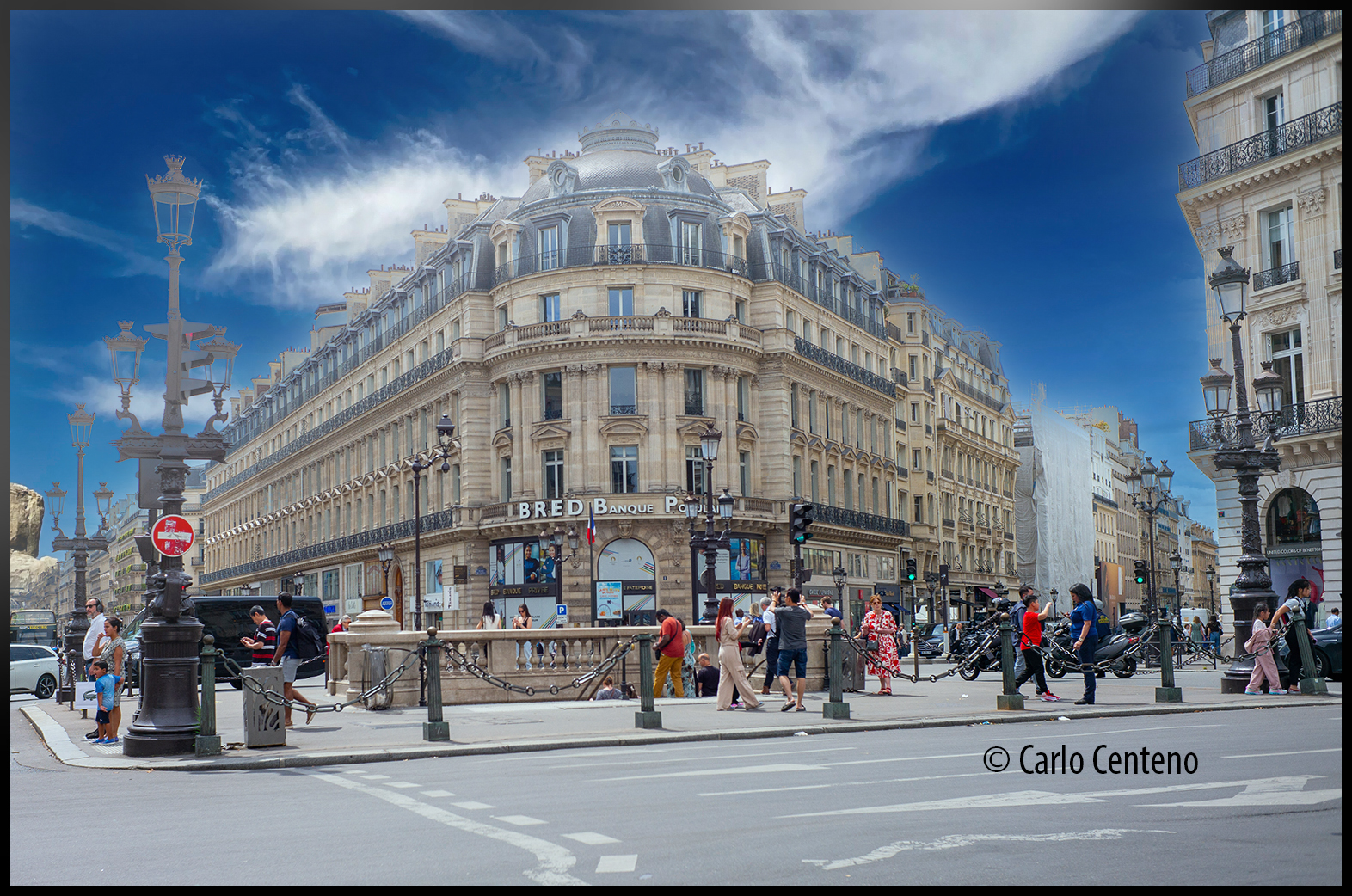
Eleven days in France this July made for quite a vacation. The coming of the summer Olympics turned Paris into a mixed bag of barricaded icons and walkways, detours and traffic. Our Parisian stay covered 3-days; not enough time to explore Paris, but 3 is better than none. A first visit to another city is as they say, an experience. Visually, aurally, olfactorily you cannot ignore the architecture, the gardens, the people, the language, the aroma of freshly baked croissants, baguettes and coffee and so on and so forth.
After Paris the next 8 days would be at Vignon-en-Quercy in southwest France. Fortunately, our flight back home was 7-days before the opening ceremonies, and we knew that more walkways and some open areas would be cordoned off. Predictably, logos and phrases proudly reminded of The Games coming to town. Still, nothing took away from our sense of discovery in this storied city.
We had thoughts of visiting the Louvre, Musee d’Orsay, among others, but the detours and limited access made it a physical and mental marathon. We were close to those museums and other points of interest as they say, but we unabashedly savored our quiet time in the Jardin des Tuileries, a garden between the Louvre and Place de Concorde. In a more relaxed pace, we enjoyed le Jardin and even took advantage of the cafes within the grounds. Seeing the Louvre from a different vantage point provided an unrushed appreciation for a 231 year old institution.
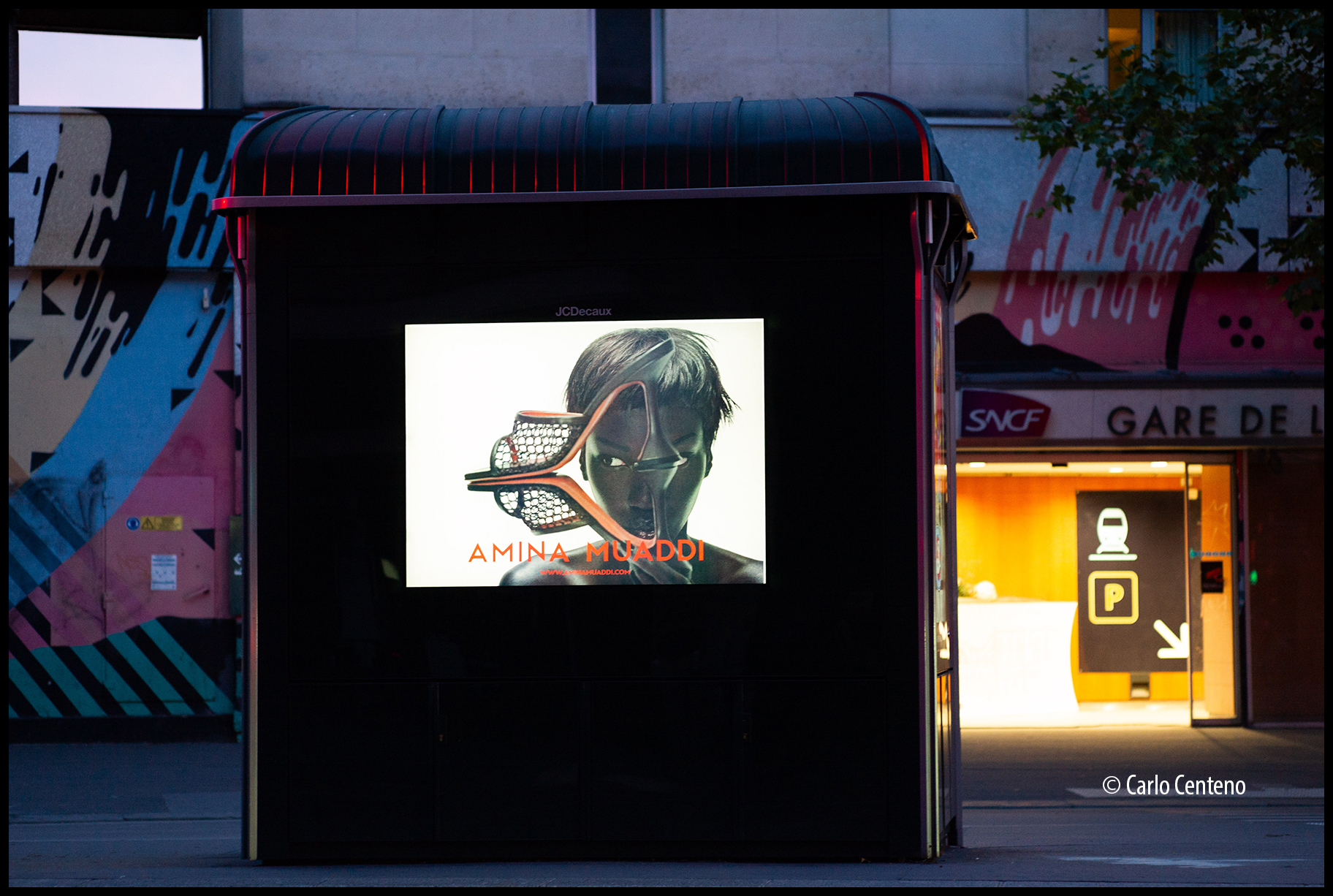
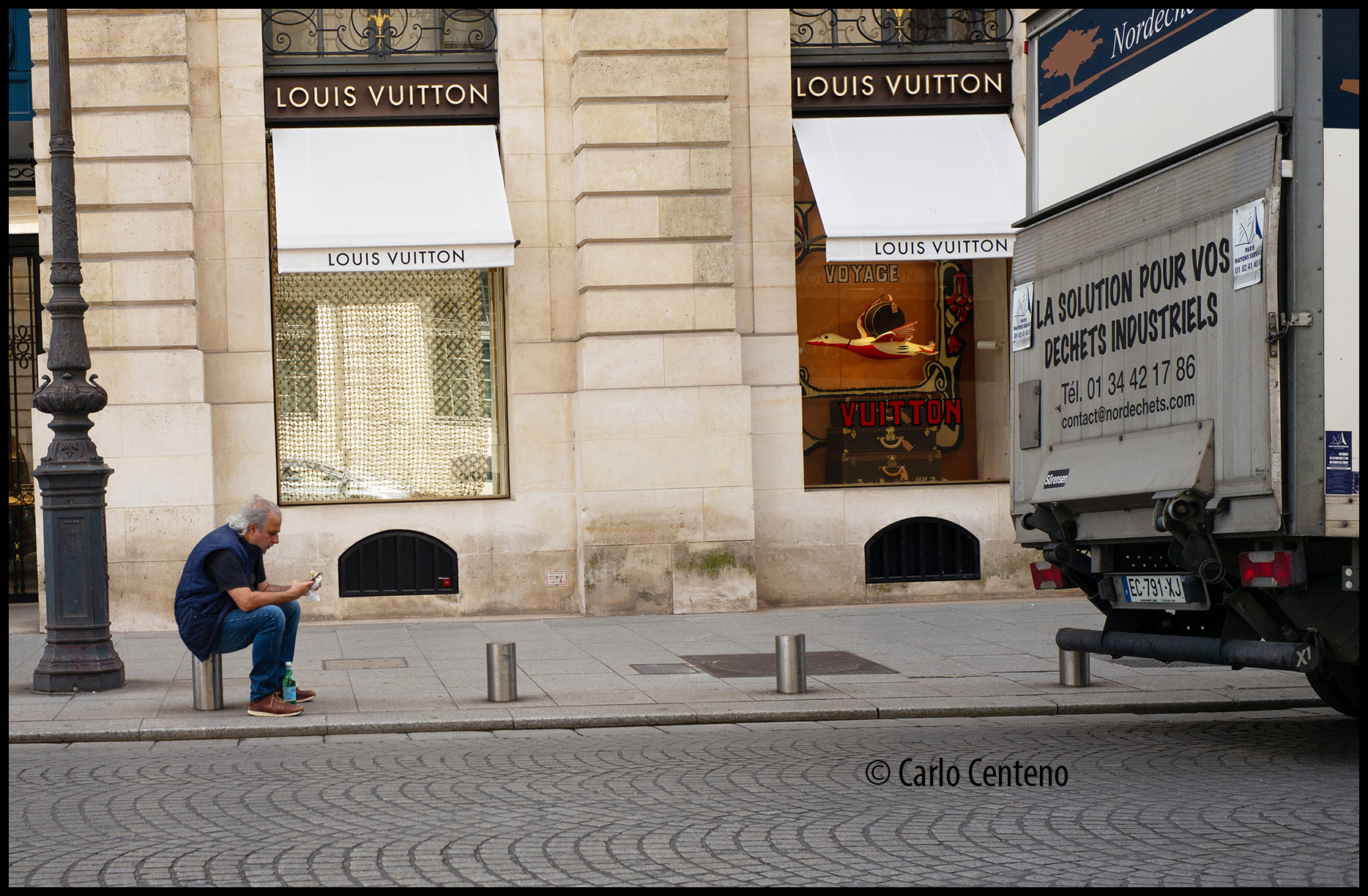
Le LouvreLa Place de Concorde/ courtesy Paris VisuelDetail de l’exteriur de Louis VittonPedestrians be Careful Cross in 2 steps
We thought of adding 2 more days in Paris. It would’ve certainly helped my french conversation, but other plans were already in place. Entering any business or eatery, saying bonjour is always helpful and polite. After the greeting, the most frequent words from my mouth were, Ou est…? or quelle direction est…? or pardonnez moi, sommes-nous pre du……? and of course, merci, bonne journee!
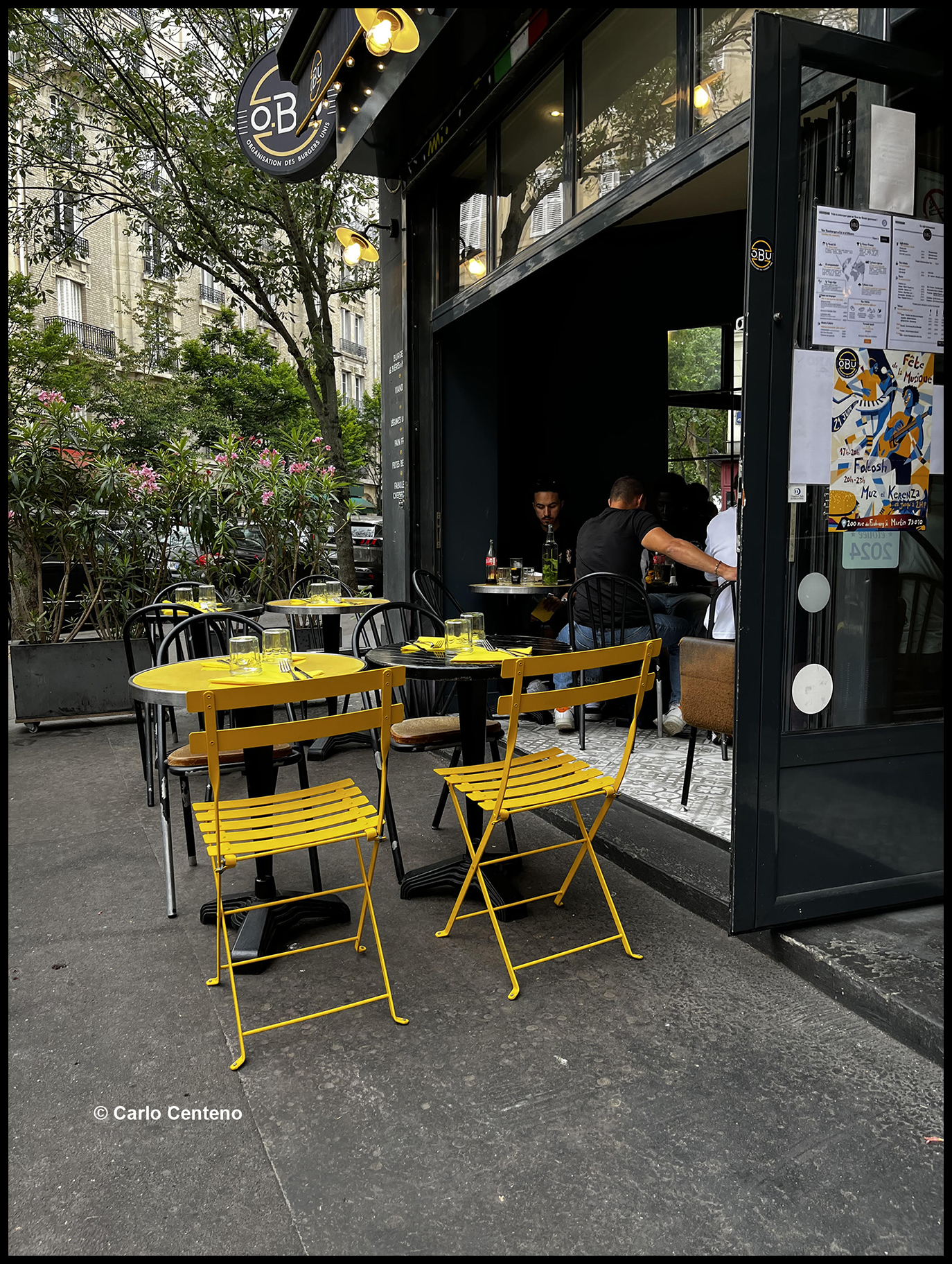
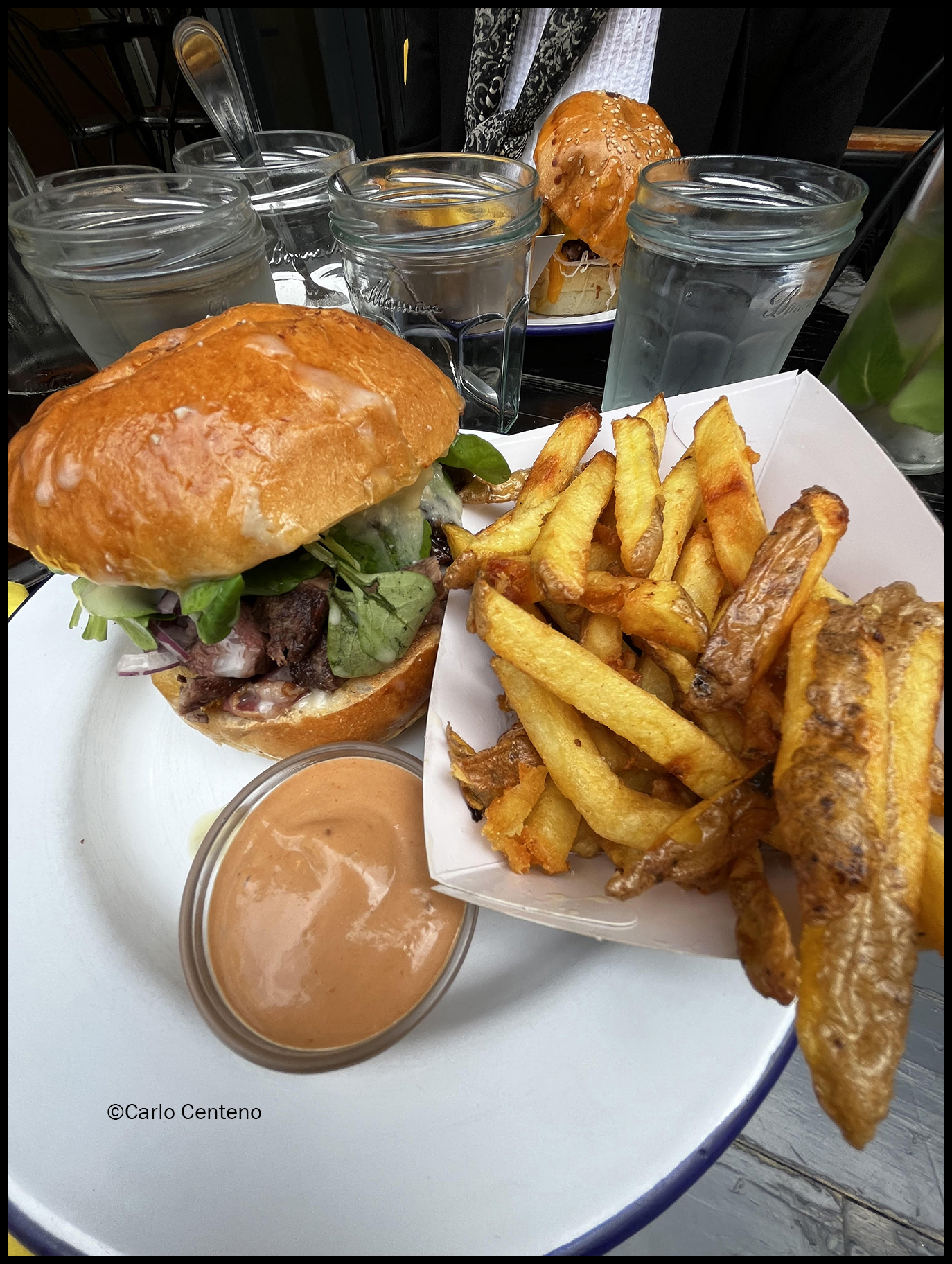
Our first morning, we walked to a bistro teeming with commuters and visitors. The menu on a sandwich board offered something we liked and I recognized: Petit déjeuner supreme ! Deux œufs [au choix] avec jamon et frommage, cafe, jus d’orange, baguette, croissant, confiture de fraises et salade. [Supreme breakfast! Two eggs any style with ham and cheese, coffee, orange juice, baguette, croissant, strawberry jam and salad].
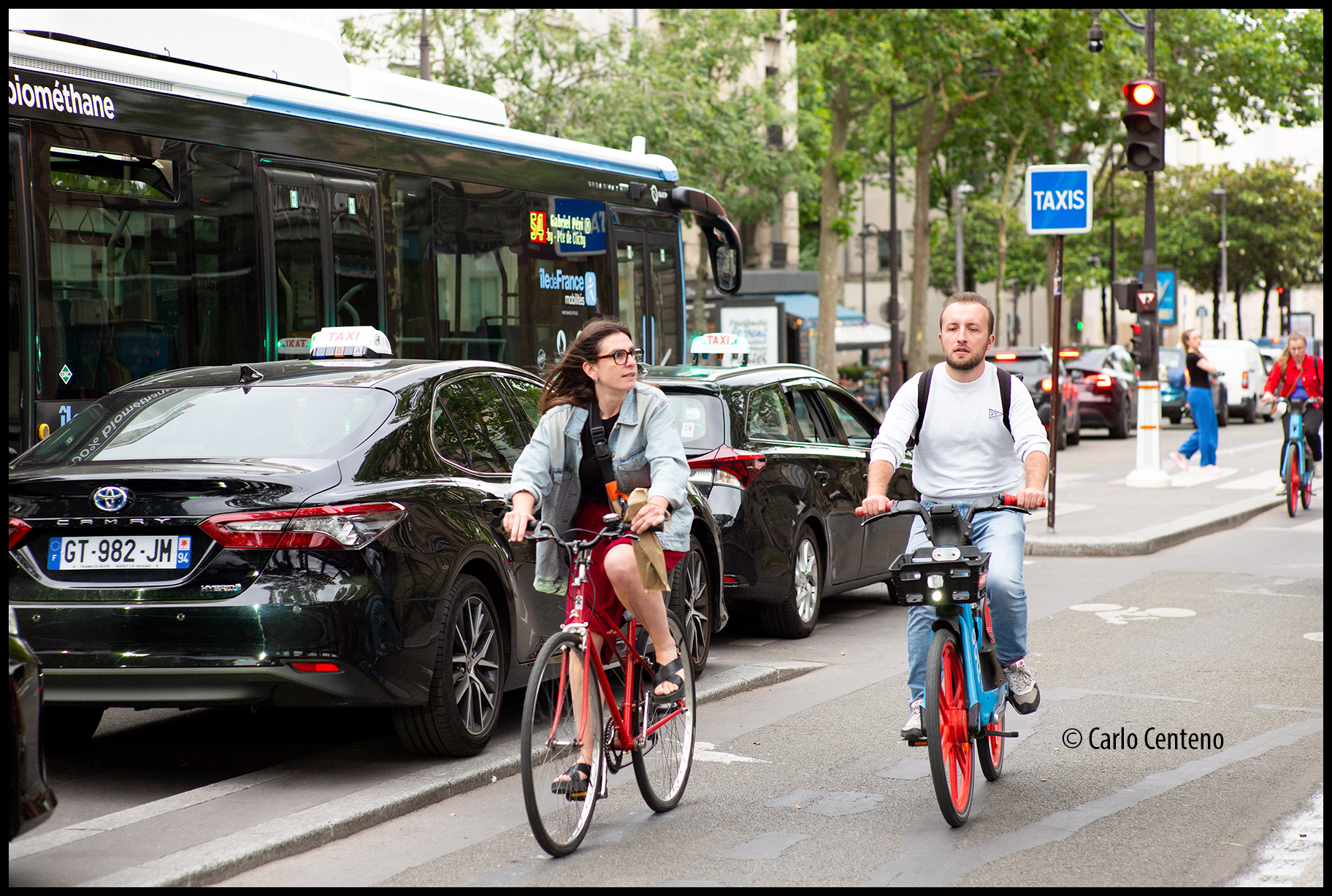
We sat outside among a cluster of small tables and chairs, but the waiter advised we sit inside, though not far from the open frontage. Il y a trop de fumee dehors. Too much smoke outside as cigarettes are popular in most of France. It was a perfect time to watch people going on with their lives: scooters and bicycles carried a cast of characters; small french cars ruled the streets alongside taxis and Ubers, motorcycles and buses.
Based on our waiter, my french was so-so. Monsieur, I speak and understand english; you do not have to speak french…. Ouch. Polite but humbling. As he turned toward the kitchen order-window, I mumbled, C’est dommage….it’s a pity, too bad.
“The solution for your industrial waste.”
NEXT VISIT: a week in the town of Vignon-en-Quercy [….See you there.] !!!
The British Medical Journal [BMJ] is a one of the world’s most respected and referenced publications on everything that deals with human health, wellness, disease and fields of medicine. Imre J. P. Loefler, MD [1929-1977] was a frequent contributor and an accomplished surgeon, conservationist and writer.
I came across one of his BMJ articles, “Is Longevity a Sustainable Goal?” archived in the U.S. National Library of Medicine [NLM]. The points he made in his article 22-years ago are as timely now as it was in 2002. But are they….?
Immortality and longevity are 2 distinct subjects, where the former is a philosophical if not spiritual notion that an individual has a soul that exists in perpetuity. It’s a construct that moves aside the real limitations of the physical self. Longevity is a span of time in one’s life or a specific span such as a career or avocation. You can draw parallels to both nouns, but longevity poses the question to many other things in our lives: how much longer will this car/fence/water heater/ roof last…? Assuming one’s in reasonably good health, there’s the question of, how much longer will I, or can I, live….?
In terms of our human life, common denominators hinge on several factors that can impact a decision. We understand the variability of culture, country, diet, healthcare among a myriad of other attributes and factors, which play roles in the longevity equation. And yet there are several things that gnaw into my own sense of self, and in the process posits this Jekyll-and-Hyde aspect that is very much entangled with our human existence. Results for the greater good, and bad ones created to our detriment. I’d like to think on the whole that we as living beings understand the moral zenith, which is all things living deserve to live out their lives. While we like to think that some things in life contain order and purpose, a much larger question is this: Is the quest to prolong one’s life a mission to extend life, or is it to ameliorate guilt and sadness expressed by friends, relatives, colleagues, etc. at a time when that life is so close to expiring? Who’s right? What are the “side effects” of prolonged life for family, society, resource utilization….the very survival of our planet?
Mayfly-ephemoroptera courtesy: Fly-fish Circle
From the brevity of a Mayfly [some adults have a 5-minute lifespan] to the Galapagos Turtle [100 plus years], Nature–for the most part–has the first right of refusal regarding the lifespan of all living things. We just don’t know when it expires. We do know that medical technology is finding ways to prolong life. As more and more discoveries point to the possibility of prolonging life, where is the end point?
Ultimately, prolonging life boils down to not only diet, sleep, exercise, preventive measures and so forth, but the details at the smallest and likely most complex of things microscopic. Think things at the cellular level and the knowledge we glean from things such as DNA and mRNA.
In 2020, French microbiologist Emmanuelle Charpentier, PhD and US biochemist Jennifer Doudna, PhD received the Nobel Prize in Chemistry for discovering the CRISPR/CAS 9 genetic scissors. They are the first women’s team to earn a Nobel prize. For us mortals, it means there is now an extremely precise way of changing the DNA in plants, animals and microorganisms. Taking that to the next level, it means near endless possibilities that can help those involved in the Life Sciences: research in potential cures for the most virulent and deadly of diseases can now be scrutinized by their genomes and subsequently altered.
Can you imagine the 2 most obvious yet divergent results from genetic modification? One modification for the greater good [cure for ALS, Alzheimer’s Disease, cancer, e.g.], the other for something wholly individualistic [changing genes for eye-color, height, e.g.]. And who determines areas or potential end-results as intractable?
I’ll let Dr. Loefler have the last word on this:
“Ultimately, the pursuit of longevity as a cultural goal lacks moral content and can be regarded as a form of hedonism. All great religions and all great philosophies would have agreed that the question of how long one lived was subordinate to the question of how one lived and what someone had done with his or her life. Nowadays, however, there seems to be one agreement only: that to live longer and longer is a good thing. Vouchsafing a long life for everyone seems to be the driving force of contemporary world culture. The consequences need to be pondered.“
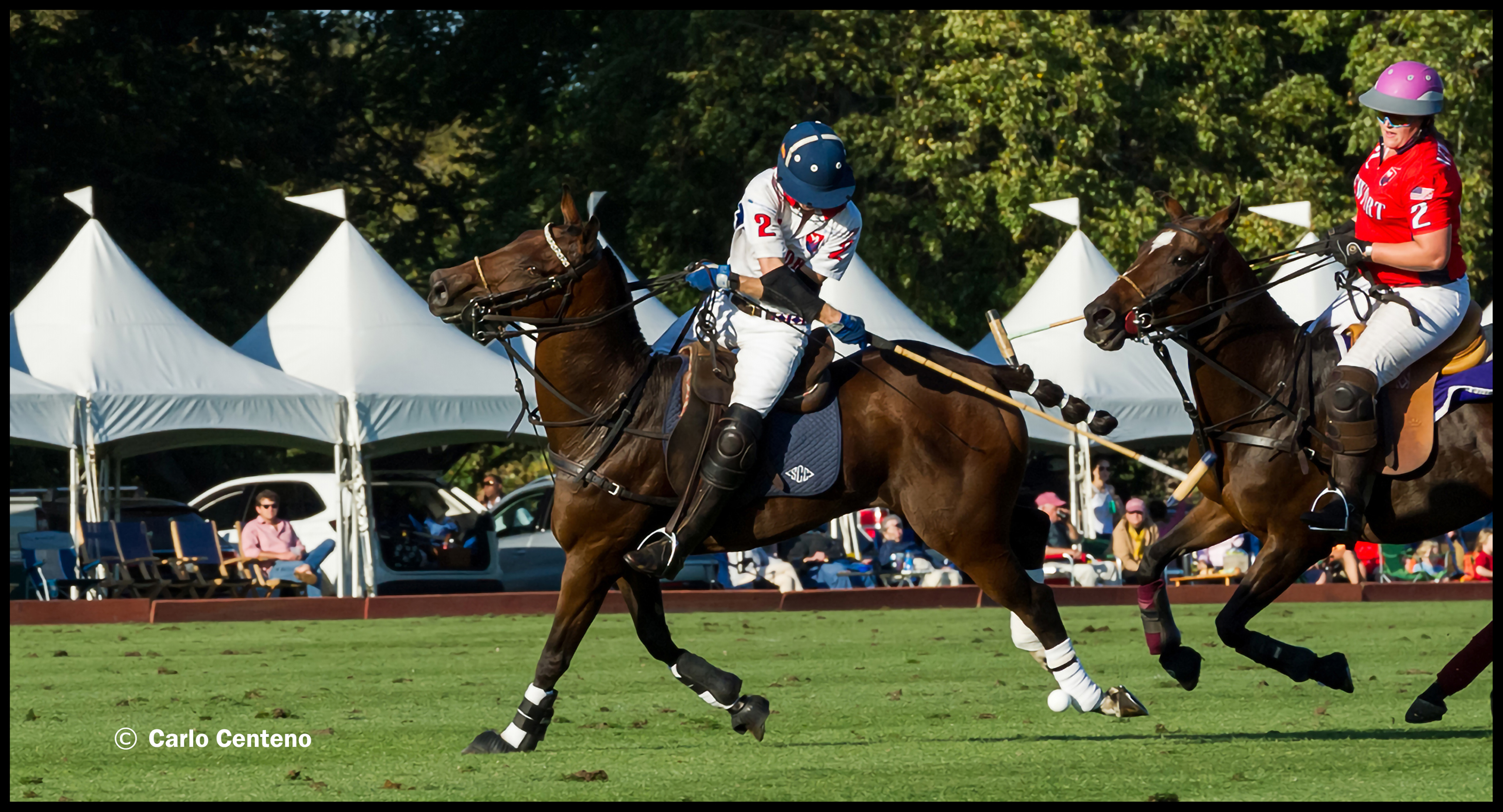
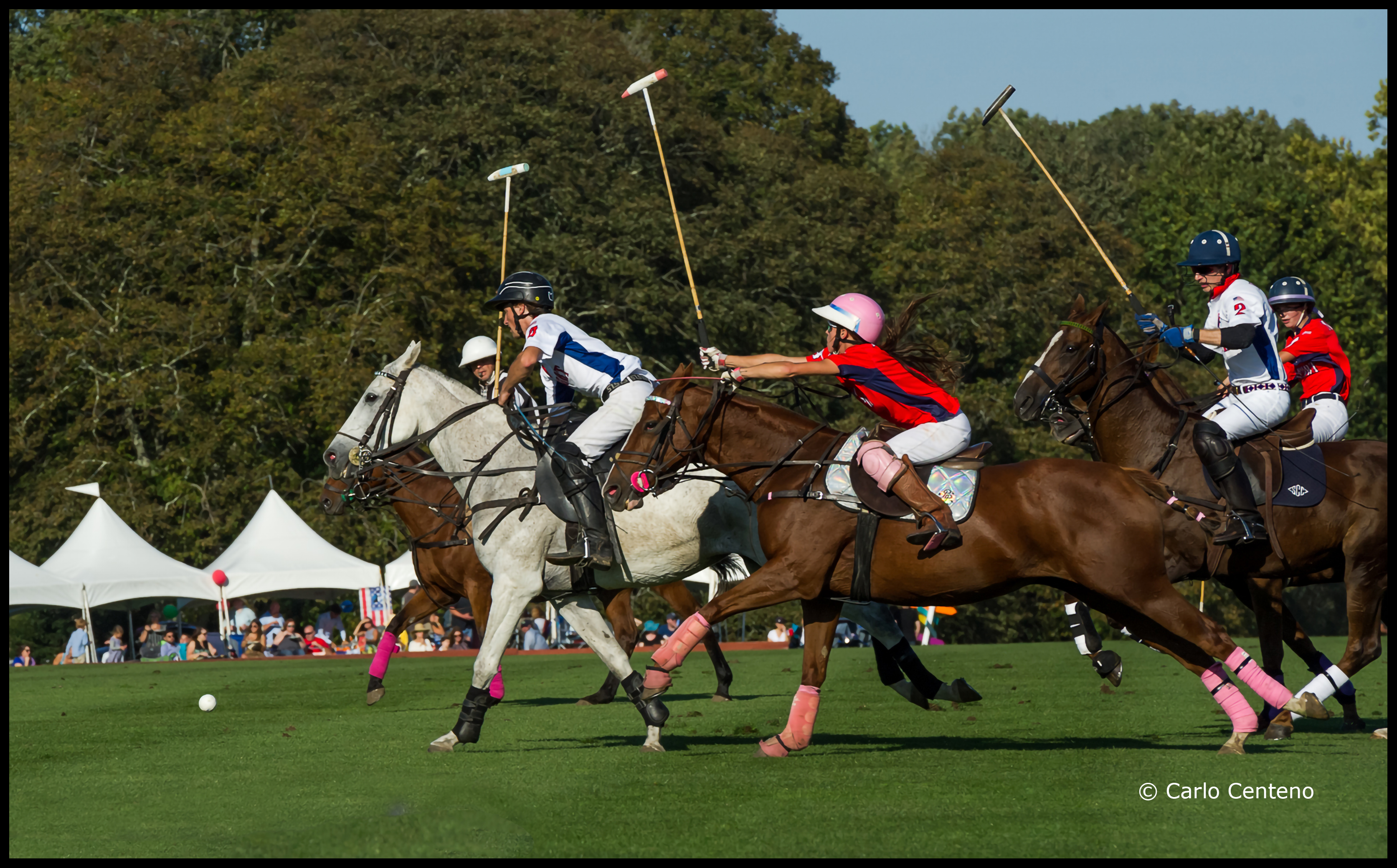
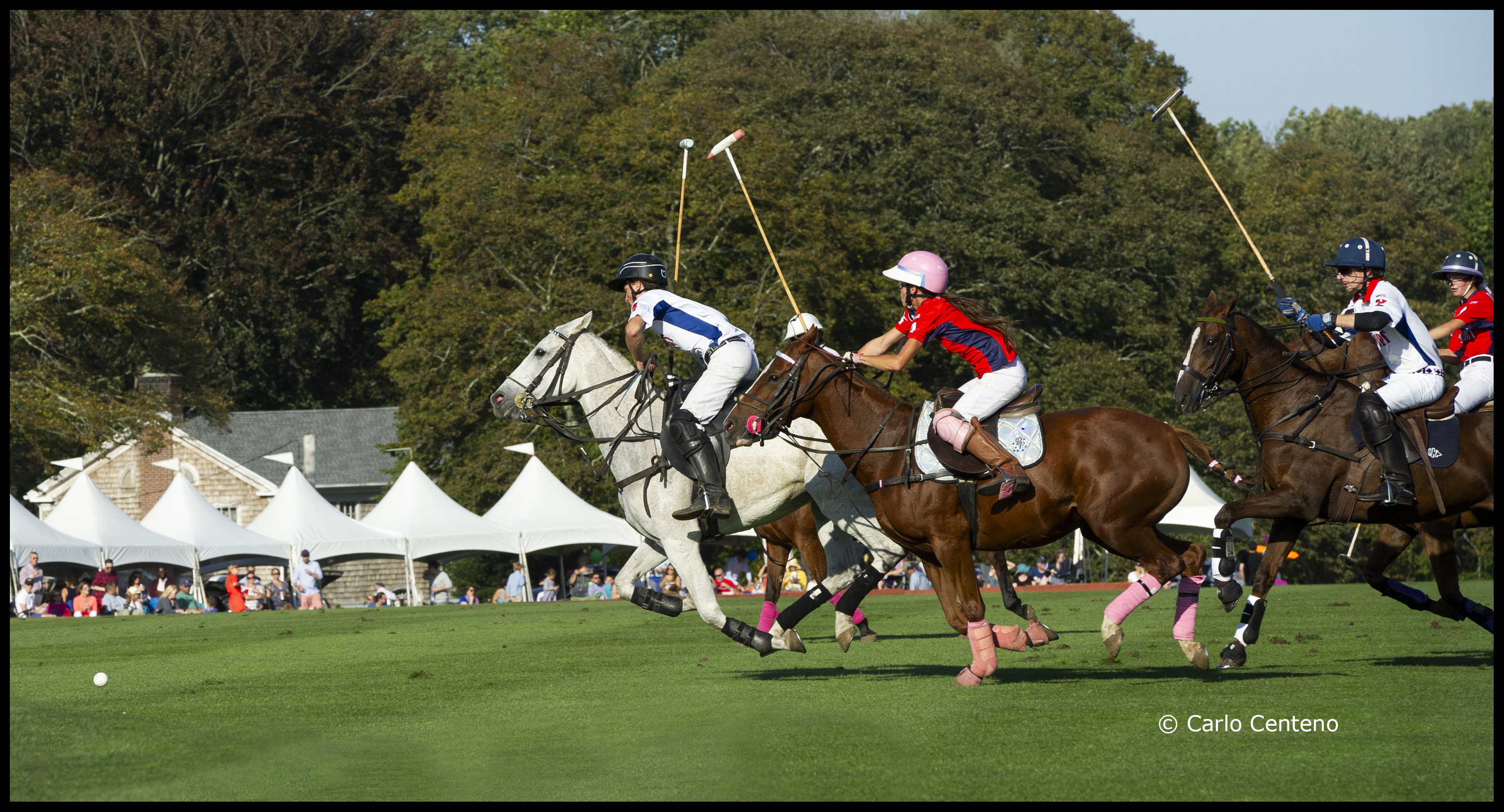
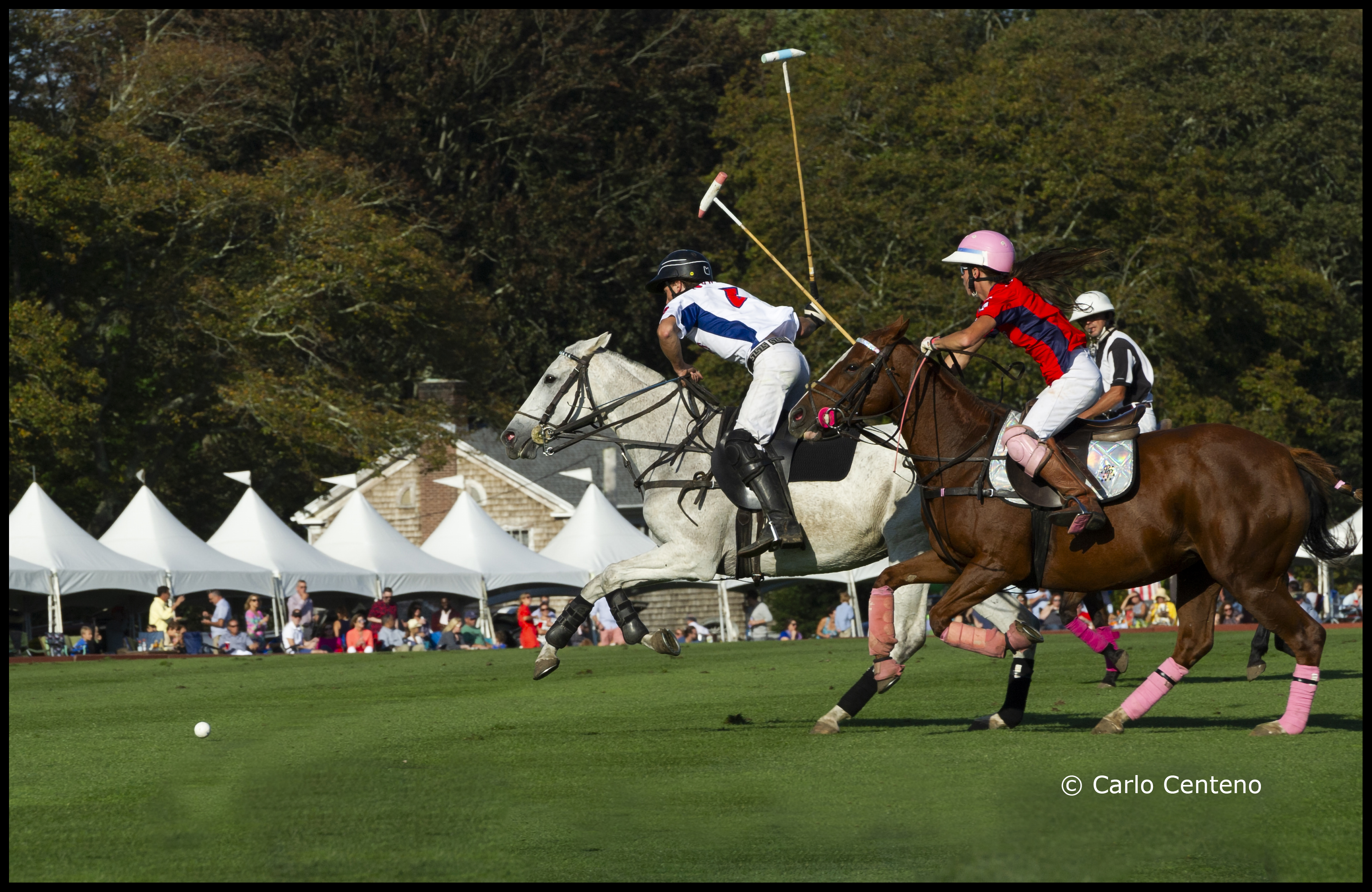
Those who play team sports understand the overall utility that is teamwork. No great mystery there. The many endeavors we encounter in Life often function better when we work in groups. From hobbies and clubs to those in line-work and the C-suite, we often rely on someone else to help complete a project or task. Granted some tasks are regularly completed by one person, and such tasks can be specialized inasmuch that that one person is THE best person to do the job. Without her/him, the end result may not meet expectations. To a great degree–individual efforts aside–you’re only as good as the people you work with. A special thank you to David Schultz for his hospitality at Newport Polo.
I’ve come across a lot of A-words lately: amazing, atomic, artificial, augmented, abstract, auspicious, audacious, accountable, admirable, apathy, appreciation, affection, accomplished, alarming, Arctic, Antarctica, abysmal, appalling, anachronism and so forth. Like a daisy chain made of paper, these words are linked and yet each easily broken free by the slightest of tension. And while some connections may not make a whole lot of sense, there are reasons however small, that connections take place. Anxiety, lack of focus, melancholy, fear, joy, anticipation, distraction, etc. etc., the Yin-Yang of this is that the very same attributes that prompted the connections can be the same to break them. It depends on time and place. Context is everything.
Audacious. Approx. 35-degrees on a starboard bank.
The words come from various sources, anything and everything that shapes our life experience. With this exercise, the empirical nature of each word puts aside the rational, and instead embraces sentience, that ability to feeldepth of things experienced. It’s certain that others who feel existential—rightfully so in our fractured society—may feel embarrassed yet genuine. What could be more human than to feel concern about our current state of affairs [macro] and our relationships [micro]?
Anachronism. At the stable. The Mount: Edith Wharton’s summer residence.
I’m feeling abstract [visualize Cubism Art] and yet oddly auspicious because many things in life and living are not rational. We are prone to rely more on our senses, the very emotions that can either ruin or celebrate moments in our lives. Yes, I’d rather feel embarrassed and genuine versus being stymied with self-serving, deductive reasoning. The former brings a sense of order, the latter a chance to improve our emotional intelligence and increase a capacity to further understand each other.
Abstract: The Slave Market & Disappearing Voltaire.
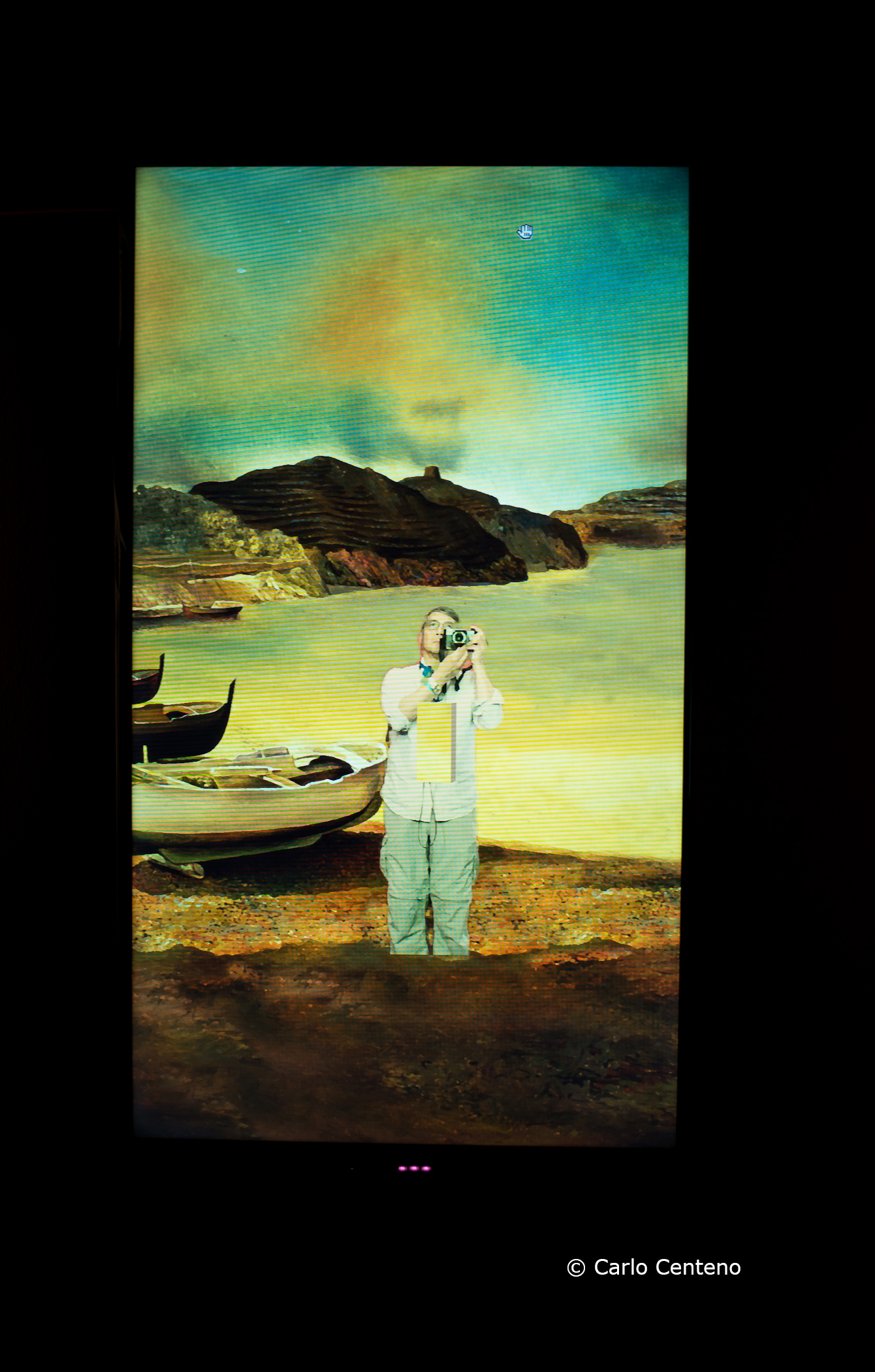
Life imitates Art, or is it Art imitates Life? Similarly in marketing, it’s not what you’re getting, but what you think you are getting. Perception is everything and even more so in the here and now. It’s a refrain that frequently echoes in my thinking.
Admirable.Augmented.Appreciation.Arctic-Antarctica: an aftermathAuspiciousAugmented.Affection…with my favorite “cup-of-tea”
There will be no “B” collection, existential-word-dump, involving any other letter, or a character for that matter. An exercise with one letter is enough for me, and probably for you as well.
In conversations, and things written, a question posed usually prompts us to reconsider a position we hold, maybe a perspective quite different from what’s already been established in our own thinking. This collage, this tapestry-of-a-post may not mean much to anyone, but it could be provocative enough to slightly encourage another perspective. Why not?
The seasons are moving quickly and as I get older my own temporal reality is based on just how fast time seems to go by. I lean towards the empirical and the sentient qualities of the here and now to help me keep it all together.
I never thought I´d grow up so fast so far. To know yourself is to let yourself be loved. Do you ever get me? Shower me with affection and I’ll return in kind. I have no hidden motive, I am blind. Do you ever get me?







































 Carlo Centeno